| Study Period | 2019 - 2030 |
| Base Year For Estimation | 2024 |
| Forecast Data Period | 2025 - 2030 |
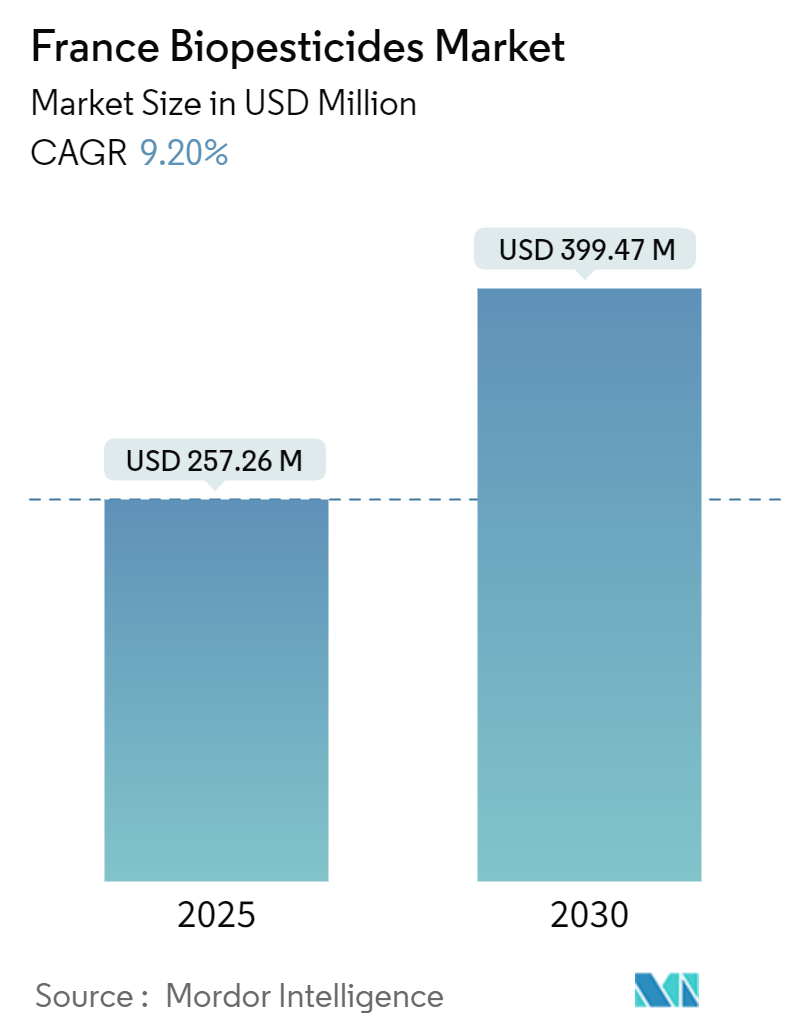
| Market Size (2025) | USD 257.26 Million |
| Market Size (2030) | USD 399.47 Million |
| CAGR (2025 - 2030) | 9.20% |
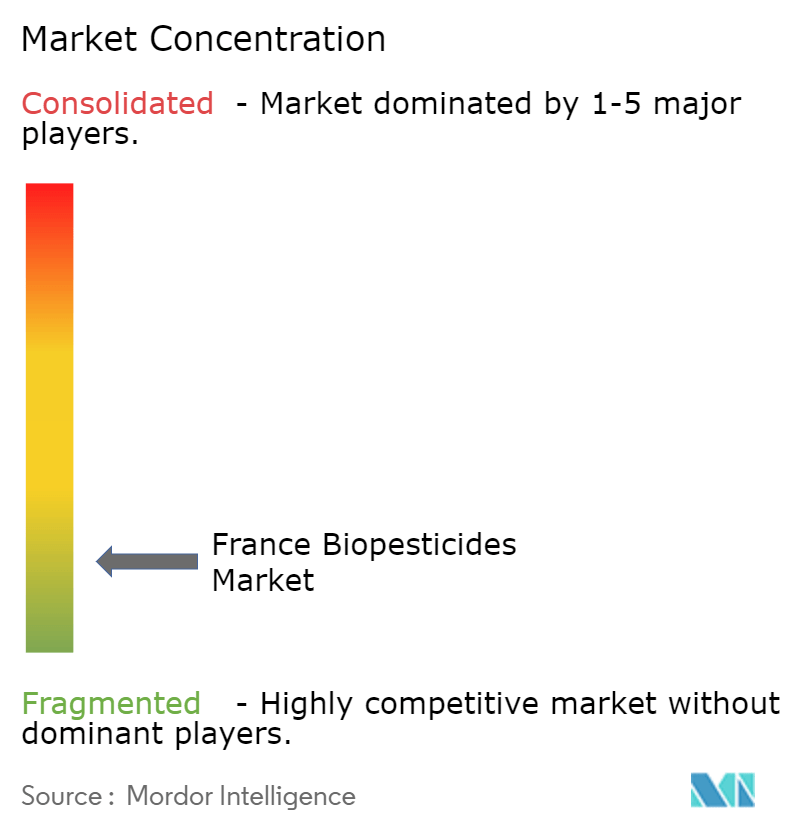
| Market Concentration | Low |
Major Players
*Disclaimer: Major Players sorted in no particular order |
France Biopesticides Market Analysis by Mordor Intelligence
The France Biopesticides Market size is estimated at USD 257.26 million in 2025, and is expected to reach USD 399.47 million by 2030, at a CAGR of 9.20% during the forecast period (2025-2030).
The adverse effects of synthetic chemical pesticides, including soil degradation and harm to non-target organisms, have raised environmental concerns. Increasing public awareness about health risks from chemical pesticide residues in food has driven demand for safer alternatives like biopesticides. These products, derived from natural materials such as plants, bacteria, and fungi, offer eco-friendly solutions with minimal toxicity, aligning with France's sustainability objectives. France's International Strategy for Food Security, Nutrition, and Sustainable Agriculture (2019-2024) supports the development of sustainable agricultural and food systems.
Advancements in microbial biopesticide technology have enhanced product effectiveness against pests. The implementation of integrated pest management (IPM) systems has further increased biopesticide usage alongside other environmentally friendly practices. The France Egalim law aims to promote biopesticide development, targeting a 50% reduction in phytopharmaceutical product use by 2025. However, according to the report "Integrated pest management, a snapshot of action across the EU," IPM adoption in France remains limited despite promotion by EU and French authorities and its demonstrated benefits for farmers and the environment.
France Biopesticides Market Trends and Insights
Growing Demand for Organic Food Products
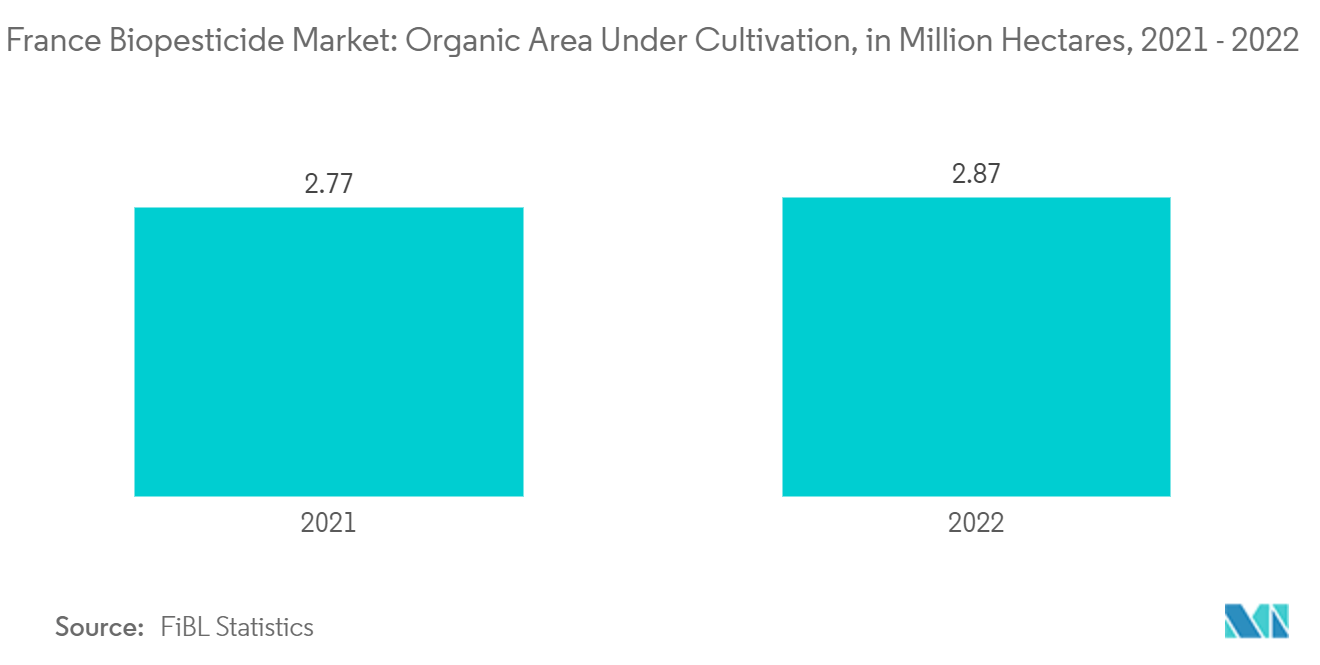
The increasing demand for organic food products in France has significantly influenced organic farming practices. Biopesticides play a crucial role in organic agriculture, as organic farming systems prohibit the use of synthetic pesticides. Farmers are adopting biopesticides due to consumer preferences for organic and residue-free food, along with the higher prices commanded by organic products. According to FiBL Statistics, France's organic cultivation area expanded from 2.77 million hectares in 2021 to 2.87 million hectares in 2022, contributing to the growth of the country's biopesticide market.
The Horeca sector reported increased organic food sales due to higher consumer demand. In 2022, food purchases in canteens reached EUR 445 million (USD 467.9 million), representing an 18% increase from the previous year, with organic food accounting for 7% of total sales. The European Union 2021-2022 organic regulations mandate clear labeling of organic products, including the origin of agricultural raw materials. These regulations continue to drive biopesticide usage among farmers, as biopesticides remain essential components in organic agricultural production.
Understand The Key Trends Shaping This Market
Download PDF
High Adoption in Crop Based Application
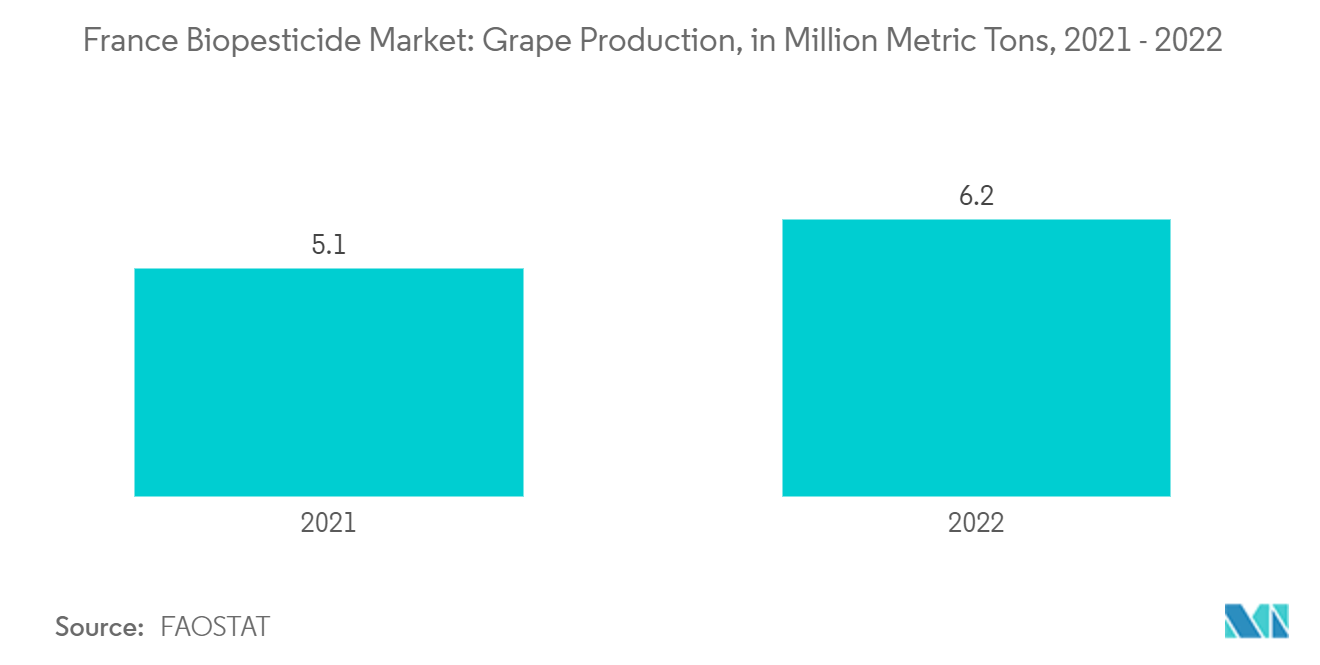
France's agricultural sector, particularly in vineyards, fruits, and vegetables, has experienced increased biopesticide adoption. French viticulture extensively uses bio fungicides to manage fungal diseases while maintaining wine quality. These biofungicides help control pathogens such as powdery mildew, downy mildew, and botrytis, which can significantly impact grape quality and yield. FAOSTAT data shows that grape production reached 6.2 million metric tons in 2022, a 22.2% increase from 5.1 million metric tons in 2021. This substantial production increase correlates with grape farmers' widespread adoption of biopesticides and improved agricultural practices. While the grape cultivation area slightly decreased from 757.8 thousand hectares in 2021 to 757.55 thousand hectares in 2022, grape yields increased significantly from 6,694.9 kg per hectare to 8,184.2 kg per hectare in the same period, demonstrating enhanced agricultural efficiency.
Biopesticides target specific pests and diseases without affecting beneficial organisms, resulting in improved crop health and yields. These biological control agents include natural substances, beneficial microorganisms, and plant-incorporated protectants that offer sustainable pest management solutions. The expansion of France's food crop industry, stringent regulations on chemical pesticides, and increasing consumer demand for pesticide residue-free food are anticipated to drive further biopesticide adoption among farmers. This shift towards biological pest control aligns with France's commitment to sustainable agriculture and environmental protection.
Get Analysis on Important Geographic Markets
Download PDF
Competitive Landscape
The French biopesticides market has a fragmented structure. Major players in the market include Bayer CropScience, BASF SE, Novozymes A.S., Corteva Agriscience, Koppert Biological Systems, and Lallemand Inc. Companies in the market compete through new product launches and strategic initiatives to increase their market share.
France Biopesticides Industry Leaders
-
BASF SE
-
Corteva Agriscience
-
Koppert Biological System
-
Novonesis
-
Bayer CropScience
- *Disclaimer: Major Players sorted in no particular order
Need More Details on Market Players and Competitors?
Download PDF
Recent Industry Developments
- December 2024: Koppert and Amoeba, an industrial Greentech company, signed a Memorandum of Understanding (MOU) to launch a biofungicide solution in the market. The companies developed AXPERA, an amoeba lysate-based biofungicide designed to combat fungal diseases in crops.
- April 2024: Bayer has signed an agreement with AlphaBio Control, for an exclusive license to a new biological insecticide. The bioinsecticide targets coleoptera insects, including the cabbage stem flea beetle (CSFB). This pest damages oilseed rape crops during the growing season and can cause seedling death. The beetle is prevalent across Europe, particularly in France.
You Can Purchase Parts Of This Report. Check Out Prices For Specific Sections
Get Price Break-up Now
France Biopesticides Market Report Scope
Biopesticides are natural pesticides derived from plants, microbes, or minerals that provide environmentally friendly pest control solutions. The France biopesticides market is segmented by type (bioherbicides, organic residues, bioinsecticides, biofungicides, and others) and by application (crop-based and non-crop-based). The crop-based applications include grains and cereals, oilseeds, fruits and vegetables, and non-crop based include turf and ornamental grass. The report provides market size and forecasts in USD for all segments.
Type
| Bio-Herbicides |
| Organic residues |
| Bio-Insecticides |
| Bio-Fungicides |
| Others |
Application
| Crop Based | Cereals |
| Legumes | |
| Fruits and Vegetables | |
| Others | |
| Non Crop Based | Turf & Ornamental Grass |
| Others |
| Type | Bio-Herbicides | |
| Organic residues | ||
| Bio-Insecticides | ||
| Bio-Fungicides | ||
| Others | ||
| Application | Crop Based | Cereals |
| Legumes | ||
| Fruits and Vegetables | ||
| Others | ||
| Non Crop Based | Turf & Ornamental Grass | |
| Others | ||
Need A Different Region or Segment?
Customize Now
Key Questions Answered in the Report
How big is the France Biopesticides Market?
The France Biopesticides Market size is expected to reach USD 257.26 million in 2025 and grow at a CAGR of 9.20% to reach USD 399.47 million by 2030.
What is the current France Biopesticides Market size?
In 2025, the France Biopesticides Market size is expected to reach USD 257.26 million.
Who are the key players in France Biopesticides Market?
BASF SE, Corteva Agriscience, Koppert Biological System, Novonesis and Bayer CropScience are the major companies operating in the France Biopesticides Market.
What years does this France Biopesticides Market cover, and what was the market size in 2024?
In 2024, the France Biopesticides Market size was estimated at USD 233.59 million. The report covers the France Biopesticides Market historical market size for years: 2019, 2020, 2021, 2022, 2023 and 2024. The report also forecasts the France Biopesticides Market size for years: 2025, 2026, 2027, 2028, 2029 and 2030.
Page last updated on:
France Biopesticides Market Report
Statistics for the 2025 France Biopesticides market share, size and revenue growth rate, created by Mordor Intelligence™ Industry Reports. France Biopesticides analysis includes a market forecast outlook for 2025 to 2030 and historical overview. Get a sample of this industry analysis as a free report PDF download.