
Women's Health Diagnostics Market Size and Share
Market Overview
| Study Period | 2020 - 2031 |
|---|---|
| Market Size (2026) | USD 32.68 Billion |
| Market Size (2031) | USD 44.42 Billion |
| Growth Rate (2026 - 2031) | 6.33 % |
| Fastest Growing Market | Asia-Pacific |
| Largest Market | North America |
| Market Concentration | Medium |
Major Players *Disclaimer: Major Players sorted in no particular order Image © Mordor Intelligence. Reuse requires attribution under CC BY 4.0. | |
Women's Health Diagnostics Market Analysis by Mordor Intelligence
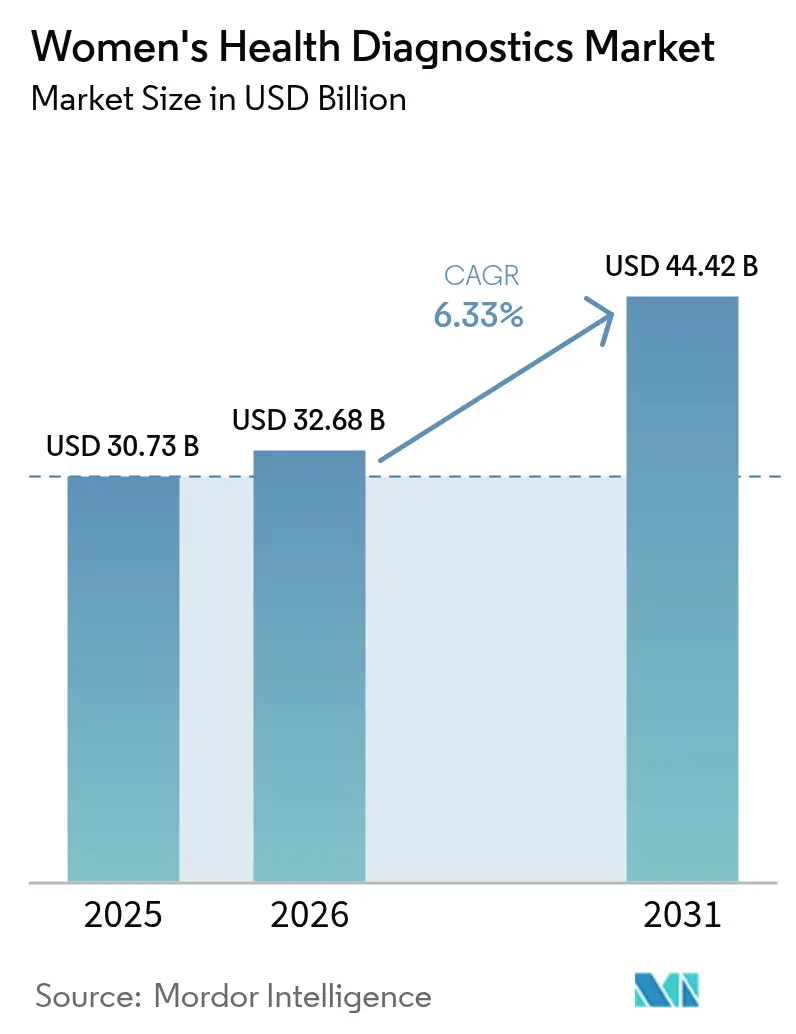
The Women's Health Diagnostics Market size was valued at USD 30.73 billion in 2025 and estimated to grow from USD 32.68 billion in 2026 to reach USD 44.42 billion by 2031, at a CAGR of 6.33% during the forecast period (2026-2031).
Uptake of AI-enabled screening tools, streamlined pathways for laboratory-developed tests, and growing employer investment in preventive benefits will keep the women’s health diagnostics market on a steady growth path through the end of the decade. North America continues to anchor the field with 38.26% revenue in 2024, yet Asia-Pacific is advancing fastest as infrastructure spending and public awareness programs lift test volumes. Molecular assays are raising diagnostic accuracy for breast, cervical, and infectious diseases, while tele-health–facilitated self-collection models chip away at traditional access barriers. Competitive intensity is rising as multi-national device makers embed artificial intelligence across imaging and in-vitro platforms, even as fem-tech startups win share in direct-to-consumer channels.
Key Report Takeaways
- By product category, diagnostic tests led with 54.21% of the women’s health diagnostics market share in 2025, while genetic & genomic panels are on course for a 9.10% CAGR through 2031.
- By technology, immunoassays accounted for 31.55% of the women’s health diagnostics market size in 2025, while AI-enabled analytics is projected to post an 8.22% CAGR through 2031.
- By application, breast cancer testing held 41.30% of the women’s health diagnostics market size in 2025, whereas infectious disease panels are moving at a 7.60% CAGR to 2031.
- By end user, hospitals and diagnostic centers retained 69.05% of 2025 revenue, but home-care and self-testing are forecast to expand at 10.95% CAGR over 2026-2031.
- By geography, North America led with 37.90% share of the women’s health diagnostics market in 2025; Asia Pacific is projected to post an 9.60% CAGR between 2026 and 2031.
Note: Market size and forecast figures in this report are generated using Mordor Intelligence’s proprietary estimation framework, updated with the latest available data and insights as of 2026.
Market Trends and Insights
Drivers Impact Analysis of Women's Health Diagnostics Market*
| Driver | (~) % Impact on CAGR Forecast | Geographic Relevance | Impact Timeline |
|---|---|---|---|
| Rising Incidence of Chronic & Lifestyle Disorders | +1.2% | North America, Europe, Global | Medium term (2-4 years) |
| Growing Number of Diagnostic & Imaging Centres | +0.8% | Asia-Pacific, Middle East & Africa | Short term (≤ 2 years) |
| Increased Adoption of POC & Rapid Diagnostic Tests | +1.5% | North America, Europe, Global | Short term (≤ 2 years) |
| Tele-Health Enabled At-Home Self-Collection Kits | +1.1% | North America, Europe, Asia-Pacific | Medium term (2-4 years) |
| AI-Based Breast-Density Analytics Boosting Reimbursement | +0.9% | North America, Europe | Long term (≥ 4 years) |
| Employer-Sponsored Fem-Tech Benefits Accelerating Demand | +0.6% | North America, Global | Medium term (2-4 years) |
| Source: Mordor Intelligence | |||
Rising Incidence of Chronic & Lifestyle Disorders
The global growth in obesity, diabetes, and hormone-related cancers is translating into greater demand for early detection tools that can identify disease before symptoms appear. Cardiometabolic risk factors elevate female vulnerability to breast and endometrial cancers, prompting clinicians to widen screening protocols beyond age-based criteria.[1] Health ministries in Europe and North America now reimburse combined mammography and genetic panels for high-risk women, boosting test volumes across hospital networks. Wearable biosensors are being trialed to detect metabolic changes in real time, creating fresh datasets for predictive algorithms. As women’s lifespans lengthen, the clinical imperative to manage chronic disease upstream will continue to propel the women’s health diagnostics market.
Increased Adoption of POC & Rapid Diagnostic Tests
Point-of-care platforms shorten diagnostic cycles from days to minutes, making it easier to treat infections before complications arise. The FDA’s 2025 clearance of the first OTC molecular test for chlamydia, gonorrhea, and trichomoniasis allows consumers to perform triple-pathogen screening at home and receive results in 30 minutes.[2] Mobile clinics in rural U.S. counties now deploy portable PCR units for same-day pelvic inflammatory disease management, while European pharmacies have introduced CLIA-waived pregnancy-related preeclampsia assays. Fast turnaround times minimize follow-up loss, improve antimicrobial stewardship, and help payers avoid costly late-stage interventions, reinforcing the positive impact on the women’s health diagnostics market.
Tele-Health Enabled At-Home Self-Collection Kits
Self-collection of cervical or vaginal samples closes a critical access gap for women who face logistical, cultural, or privacy barriers. Roche’s HPV self-collection system, cleared in Canada in 2024, demonstrated 99.9% sample adequacy and high user satisfaction in real-world rollouts.[3] National health systems are mailing kits to women overdue for screening, with tele-nurse support for result interpretation. Integration into electronic health records ensures clinicians receive actionable data without overburdening laboratory workflows. Similar models are emerging in Asia-Pacific, where smartphone registration and QR code logistics speed turnaround. By extending reach while maintaining clinical sensitivity, self-collection reinforces the shift toward patient-centered care within the women’s health diagnostics market.
AI-Based Breast-Density Analytics Boosting Reimbursement
Dense breast tissue masks malignancies, leading to missed diagnoses under conventional mammography. AI algorithms now quantify density automatically and flag suspicious areas for secondary review, improving detection by 20% and trimming recall rates by 30% in community clinics. Beginning in late-2024, U.S. providers must document breast density in every mammogram report, creating a standardized path for payer reimbursement. Early evidence of cost-effectiveness is prompting insurers to cover supplementary ultrasound or MRI in high-density cases, further expanding the women’s health diagnostics market size in breast imaging. Sustainably higher reimbursement is incentivizing hospitals to upgrade workstations and radiologist training, which should cement AI as a clinical mainstay over the forecast horizon.
Restraints Impact Analysis of Women's Health Diagnostics Market*
| Restraint | (~) % Impact on CAGR Forecast | Geographic Relevance | Impact Timeline |
|---|---|---|---|
| High Cost of Diagnostic Imaging Systems | -0.7% | Global, Emerging Markets | Long term (≥ 4 years) |
| Stringent Regulatory Guidelines | -0.5% | North America, Europe, Global | Medium term (2-4 years) |
| Data-Privacy Concerns Over DTC Genetic Testing | -0.4% | North America, Europe, Global | Short term (≤ 2 years) |
| Lack of Sex-Specific AI Training Datasets | -0.3% | Global | Long term (≥ 4 years) |
| Source: Mordor Intelligence | |||
High Cost of Diagnostic Imaging Systems
Capital expenditure for MRI and advanced ultrasound can exceed USD 2 million per unit, a figure that challenges hospitals in emerging economies. Currency depreciation and import tariffs inflate acquisition costs, slowing replacement cycles and limiting geographic coverage. Although vendor financing and public-private partnerships are easing budget constraints, many facilities still operate analog systems that lack AI readiness. Elevated ownership costs thus temper the near-term rollout of cutting-edge modalities, creating a moderate drag on the global women’s health diagnostics market CAGR.
Data-Privacy Concerns Over DTC Genetic Testing
Direct-to-consumer labs collect vast genomic datasets that can expose sensitive reproductive information. Investigations into unauthorized data sharing have resulted in multimillion-dollar settlements and heightened public scrutiny. Legislators in the United States and European Union are weighing stricter consent rules and opt-out rights, and several states now require confirmatory testing before clinical use of consumer genomic data. Worries about privacy are prompting some women to cancel purchase plans, slowing order growth in a segment otherwise primed for rapid expansion. Market participants are responding with secure cloud architectures and transparent data-use policies, but lingering uncertainty could restrain sales during the forecast period.
*Our forecasts treat driver/restraint impacts as directional, not additive. The impact forecasts reflect baseline growth, mix effects, and variable interactions.
Women's Health Diagnostics Market Segment Analysis
By Product Type:
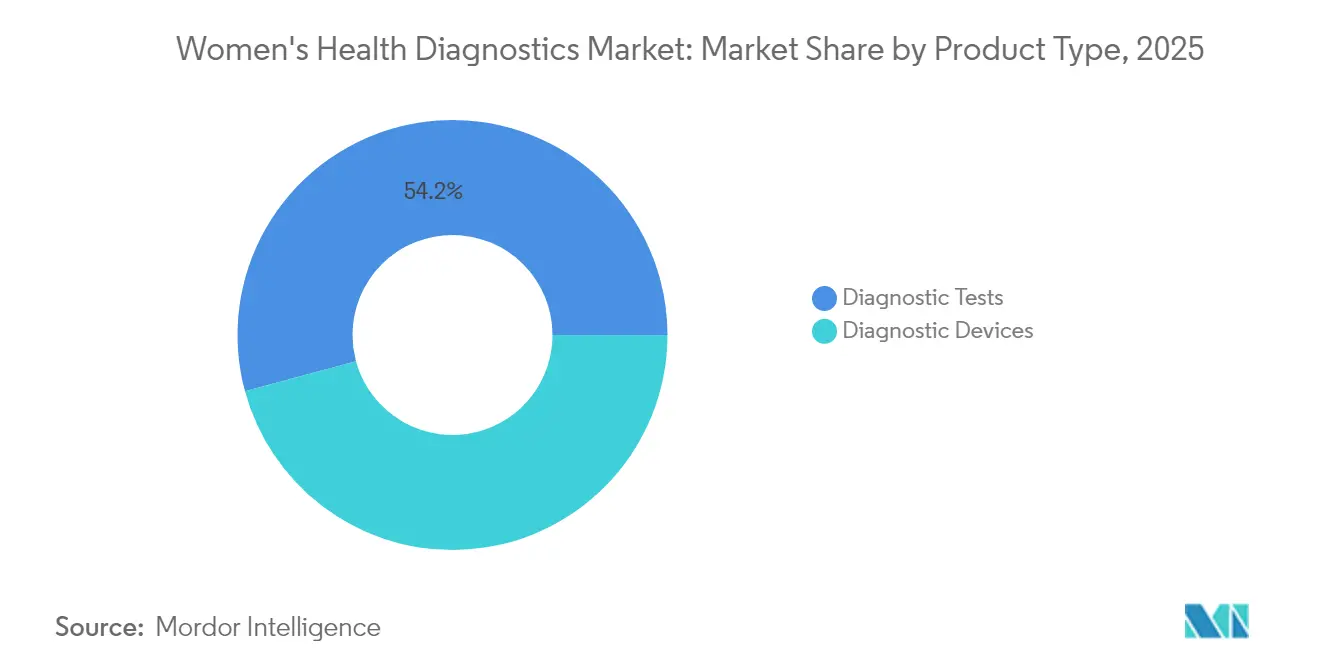
Diagnostic Tests Lead Market EvolutionDiagnostic tests generated the majority of revenue, accounting for 54.21% of the women’s health diagnostics market in 2025. Molecular platforms are popular because they deliver multiplex detection of sexually transmitted infections, hereditary cancer mutations, and prenatal anomalies in a single run. High-throughput PCR systems equipped with sample-to-answer cartridges are now standard in many reference labs, reducing hands-on time and supporting same-day therapy initiation. Genetic and genomic panels represent the quickest-expanding product line at a 9.10% CAGR, mainly due to broader insurance coverage for BRCA and Lynch syndrome screening. Demand for digital pregnancy and ovulation tests remains steady, as smartphone linkages offer cycle tracking and tele-consultation portals.
Diagnostic devices held the remaining 45.79% share, led by AI-capable mammography, ultrasound, and bone densitometry equipment. Automated breast ultrasound systems integrate 3D reconstruction and density scoring, cutting scan time and operator variability. Biopsy tools are upgrading to vacuum-assisted needle designs that limit tissue trauma, and guided navigation software helps clinicians sample lesions with sub-millimeter precision. Over the forecast window, bundled device-and-software sales will allow manufacturers to cross-sell analytics modules, reinforcing their recurring revenue streams within the women’s health diagnostics market.

By Technology:
AI-Enabled Analytics Drive InnovationImmunoassays remained the most significant technology slice at 31.55% in 2025, valued for their versatility in hormone, oncology, and infectious disease testing. Continuous improvements in chemiluminescent substrates have shortened assay times to under 15 minutes, making them practical triage tools in emergency settings. Meanwhile, AI-enabled analytics is climbing fastest with an 8.22% CAGR, propelled by FDA clearances for algorithmic breast density and risk scoring. Deployment of cloud-based machine learning pipelines lets small clinics process imaging data without heavy on-premises hardware, democratizing access to advanced analytics.
Molecular diagnostics remains a powerhouse segment, thanks to loop-mediated isothermal amplification and CRISPR-based detection formats suited for decentralized testing. Imaging technology is not standing still: vendors are adding deep-learning reconstruction that improves image clarity at lower radiation doses. Together, these advances are widening clinical indications and boosting throughput, sustaining momentum in the women’s health diagnostics market.
By Application:
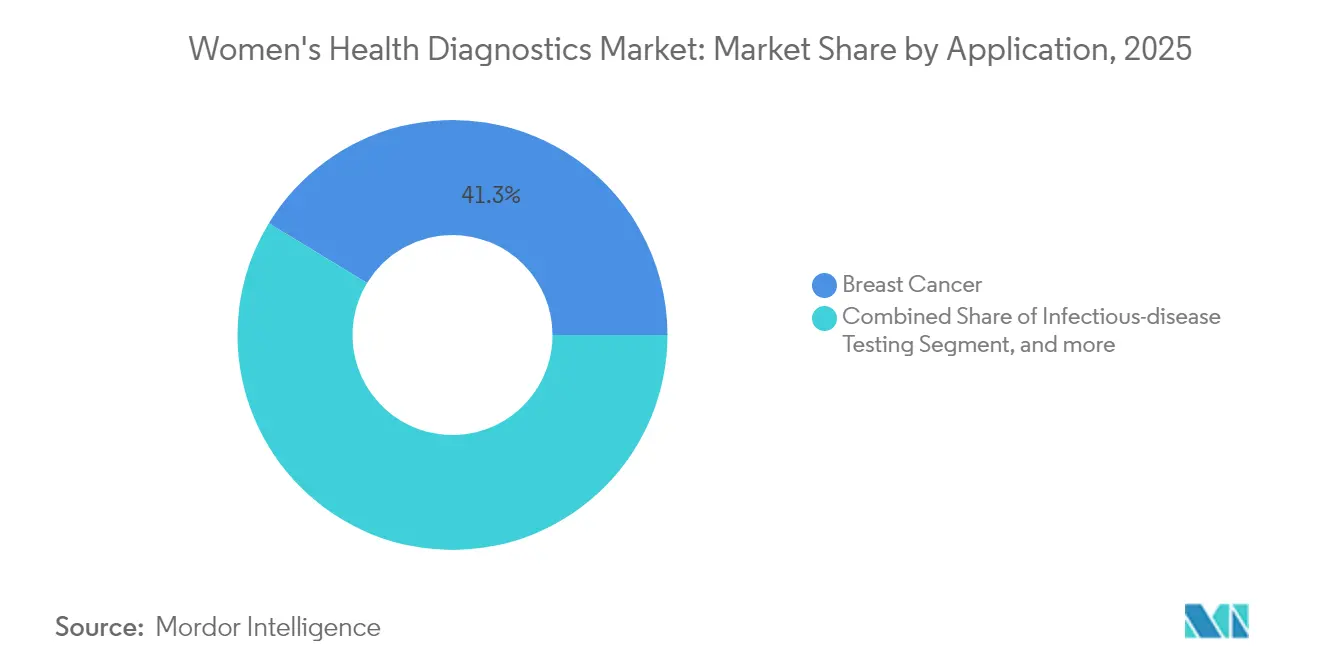
Breast Cancer Dominates, Infectious Disease AcceleratesBreast cancer screening continued to command 41.30% of 2025 revenue, reflecting nationwide mammography mandates and growing use of adjunct modalities for dense-breast populations. AI triage cuts radiologist workload by flagging normal studies, allowing more focus on complex cases. Infection-related applications are expanding quickest at 7.60% CAGR, driven by global STI prevention programs and the rollout of decentralized molecular assays.
Employer-funded virtual care bundles that integrate hormonal tracking and genetic counseling benefit pregnancy and fertility monitoring. Long underutilized osteoporosis diagnostics are gaining visibility as clinicians screen peri-menopausal women earlier to curb fragility fracture risk.
By End User:
Home-Care Segment Transforms Market DynamicsHospitals and diagnostics centers still captured 69.05% of 2025 spend, leveraging established infrastructure and cross-disciplinary expertise. High-volume imaging suites exploit economies of scale to deliver more affordable breast cancer and obstetric scans. Yet the home-care and self-testing group is advancing at 10.95% CAGR as regulatory bodies green-light consumer sampling kits and tele-medicine portals.
Employers are supplementing insurance plans with preventive screening vouchers, lowering out-of-pocket costs for staff and encouraging early detection. This shift decentralizes service delivery and introduces new data flows into clinical workflows, broadening revenue opportunities across the women’s health diagnostics industry.
Geography Analysis
North America Women's Health Diagnostics Market
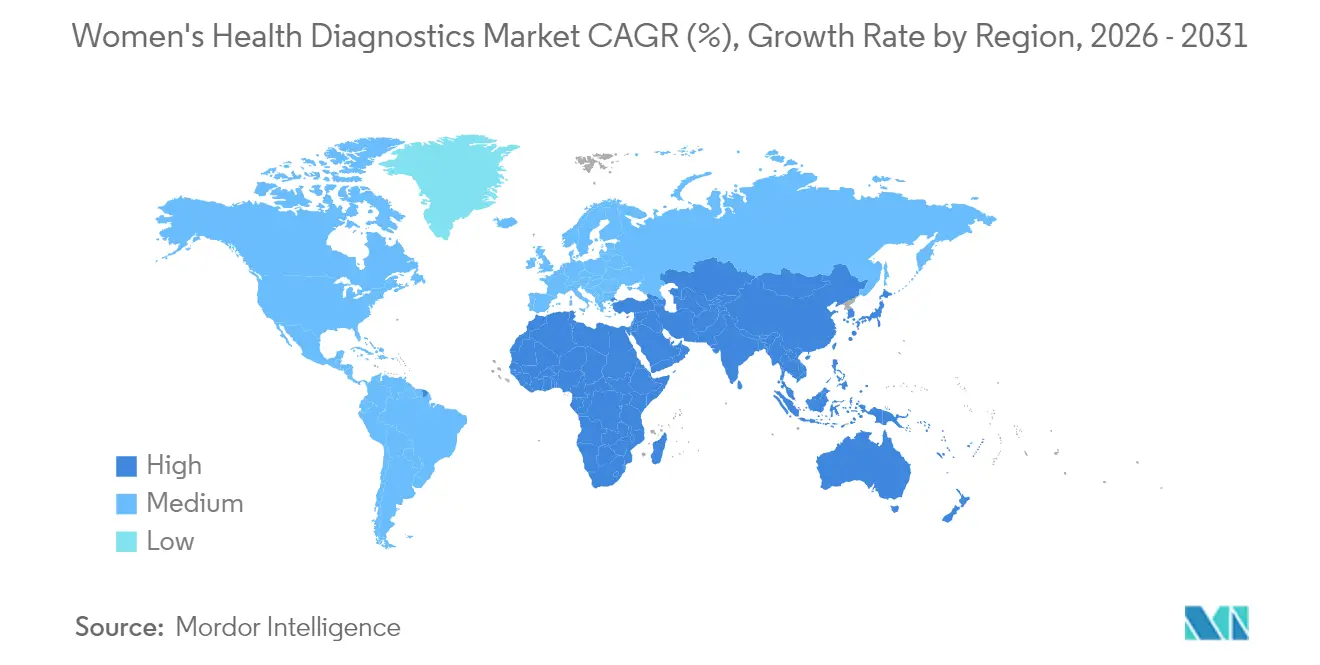
North America led with 37.90% of 2025 revenue, underpinned by robust reimbursement policies and a steady cadence of FDA approvals that pull innovation from bench to bedside faster than any other region. United States insurers expanded coverage for AI-assisted mammography after mandated breast density reporting took effect in 2024. Canada’s HPV self-collection launch is lifting cervical screening compliance among underserved groups.
APAC Women's Health Diagnostics Market
Asia-Pacific posted the quickest regional climb at a 9.60% CAGR, extending the women’s health diagnostics market into populous countries that previously lacked widespread screening infrastructure. China subsidizes rural imaging vans and genomic tumor-profiling grants, and Japan’s top private insurers now cover AI-assisted ultrasound for dense-breast patients. India is leveraging telemedicine platforms integrated with point-of-care PCR to reach remote villages, narrowing the urban-rural detection gap. Startups across Singapore, South Korea, and Australia are focusing on menstrual health analytics and fertility assessment, injecting local flavor into product pipelines.
Europe Women's Health Diagnostics Market
Europe maintains a balanced position with established national screening programs that keep test volumes steady. Germany and the United Kingdom are leading adopters of cloud-based PACS linked to AI engines, while France is piloting bundled breast and ovarian cancer genetic screening in public hospitals. Southern European countries are harmonizing LDT validation processes in anticipation of the EU In-Vitro Diagnostic Regulation transition, protecting patient safety and sustaining trust. Together, these initiatives reinforce the long-term resilience of the women’s health diagnostics market across the continent.
Regulatory Landscape
Regulation is pushing women’s health diagnostics toward more decentralized, higher-throughput testing, with the United States and European Union largely setting the compliance pace for global manufacturers. In the United States, FDA oversight covers IVD clearances and special controls for point-of-care platforms, alongside CDRH’s Health of Women Program, which focuses on device performance and evidence generation for female populations. In April 2026, Waters Corporation received FDA clearance for an at-home cervical cancer screening workflow via the Onclarity HPV Self-Collection Kit, and FDA approved the BD Onclarity HPV Assay with extended genotyping. Together, these approvals reflect a more defined pathway for pairing home sampling with regulated laboratory testing.
In Europe, the IVDR transition continues to drive operational and documentation requirements, particularly for legacy IVD portfolios used in women’s health screening. May 2026 marked key administrative thresholds tied to maintaining extended transition periods for certain legacy Class C IVDs and added compliance steps around EU device databases, increasing the need for Notified Body engagement and standardized post-market processes. In parallel, MDR/IVDR guidance activity by EU bodies (including MDCG outputs) is reinforcing expectations for clinical evidence and quality management, shaping how assay makers and imaging-adjacent software providers sequence launches across EU member states versus faster-moving FDA pathways.
Competitive Landscape
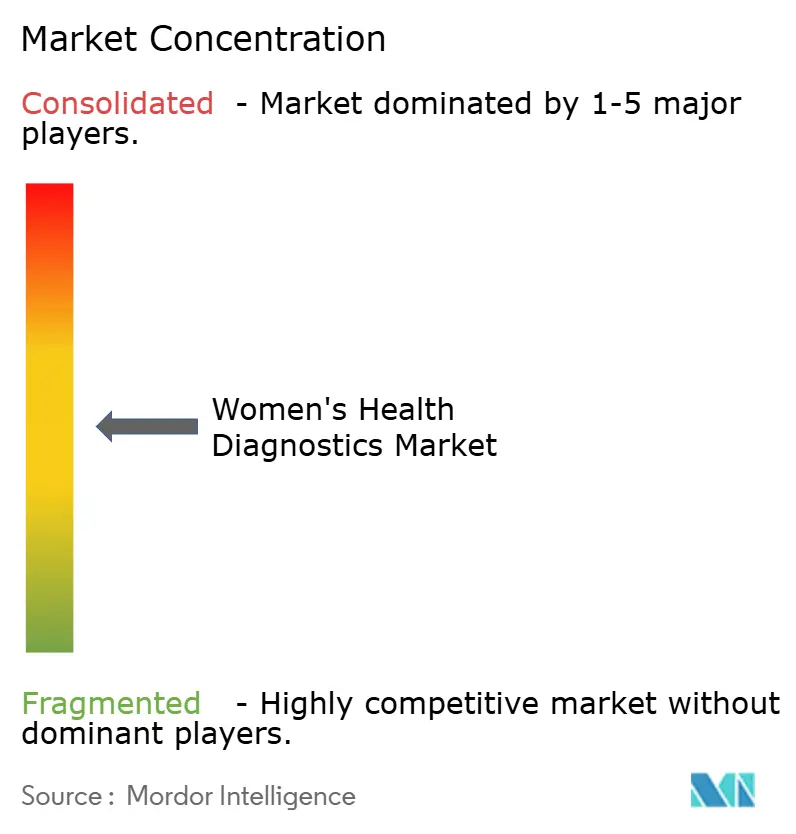
The women’s health diagnostics market shows moderate concentration, with global leaders Abbott, Roche, and Hologic supplying a broad suite of assays, imaging systems, and informatics platforms. Their geographic reach and R&D budgets facilitate early entry into high-growth segments such as AI-guided imaging and multiplex PCR. Hologic recently acquired a minimally invasive fibroid treatment firm to enrich its interventional portfolio, complementing its dominance in cervical cancer diagnostics.
Strategic alliances with AI specialists are accelerating product differentiation. GE HealthCare partnered with RadNet to deploy cloud-native mammography algorithms, cutting false positives and enabling value-based reimbursement models. Siemens Healthineers launched an AI-powered ultrasound series that automates fetal biometrics, improving consistency across obstetric clinics. These moves indicate an arms race to integrate software-as-a-medical-device, ensuring continued relevance amid rising digital competition.
Nimble fem-tech startups are carving out direct-to-consumer niches in fertility tracking, menopause monitoring, and at-home STI testing. Partnerships with big-box retailers and tele-health providers are giving these newcomers rapid market access, though data privacy compliance remains a hurdle. Incumbent manufacturers are countering by releasing FDA-cleared self-collection kits under familiar brand umbrellas, leveraging trust to retain share. As new entrants push innovation cycles faster, incumbents must balance hardware revenue with subscription-based analytics, shaping the next phase of competition in the women’s health diagnostics industry.
Women's Health Diagnostics Industry Leaders
-
Quest Diagnostics Inc.
-
Siemens Healthineers AG
-
Hologic Inc.
-
F. Hoffmann-La Roche AG
-
PerkinElmer Inc.
- *Disclaimer: Major Players sorted in no particular order
Women's Health Diagnostics Market Companies Covered in this Report
- Abbott Laboratories
- Beckton Dickinson
- bioMérieux
- Carestream Health
- Roche
- GE Healthcare
- Hologic
- Koninklijke Philips
- Siemens Healthineers
- Fresenius
- Quest Diagnostics
- PerkinElmer
- Myriad Genetics
- Procter & Gamble
- Thermo Fisher Scientific
- Cepheid (Danaher)
- The Cooper Companies
- FUJIFILM
- LumiraDx
- Everlywell
- Mankind Pharma
- Butterfly Network
Market Opportunities and Future Outlook
At-home and near-patient women’s health testing remains a practical whitespace where regulatory clearances and submissions are clarifying commercialization playbooks. The April 2026 FDA clearance of Waters’ Onclarity HPV Self-Collection Kit, together with an FDA-approved HPV assay with extended genotyping, shows a concrete route for combining self-collection with validated lab analysis. This supports new service models for women overdue for screening and aligns with employer-sponsored preventive benefits. Separately, bioMérieux’s June 2026 dual 510(k) and CLIA waiver submission for the BIOFIRE SPOTFIRE Vaginitis Panel points to continued momentum to shift syndromic women’s health infection testing from central laboratories toward point-of-care settings, where turnaround time and immediate treatment decisions directly affect adoption.
A second opportunity area is clinical triage augmentation, where conventional pathways can leave gaps, particularly within gynecologic conditions and oncology screening workflows. July 2026 NHS-facing deployments of AI-enabled blood tests for gynecological cancers, announced by multiple NHS trusts, indicate a procurement route for algorithm-supported diagnostics that can be integrated upstream of imaging and specialist referral for providers managing capacity constraints. At the same time, emerging multiomic and blood-based approaches for conditions such as endometriosis, alongside formal FDA pathway intent (de novo submission plans reported in July 2026), point to a development corridor for non-imaging diagnostics that can sit alongside existing imaging and immunoassay workflows rather than displacing them outright.
Recent Industry Developments in Women's Health Diagnostics Market
- July 2026: Hologic secured CE-IVDR marking to expand the Aptima HPV test labeling to include a self-collected sample claim for cervical cancer screening. The update supports broader deployment of self-collection pathways within regulated EU frameworks and adds a commercial lever for programs targeting women who remain underscreened.
- June 2026: Siemens Healthineers received FDA clearance for contrast-enhanced mammography (CEM) and CEM biopsy capabilities for the Mammomat B.brilliant mammography system. This strengthens the role of advanced mammography in diagnostic workups, raising competitive intensity in breast imaging workflows where vendors bundle hardware with software-enabled capabilities.
- March 2025: FDA granted marketing authorization for Visby Medical Women’s Sexual Health Test, described as the first home-use molecular assay for chlamydia, gonorrhea, and trichomoniasis with results in about 30 minutes and no prescription requirement. The authorization broadened consumer access to STI testing and accelerated demand for sample-to-answer molecular platforms that can operate outside traditional laboratories.
Women's Health Diagnostics Market Report Scope and Research Methodology
Market Definition and Coverage
This market covers the value of diagnostic tests and diagnostic devices used to screen, detect, and monitor conditions that primarily impact women, across clinical and home care settings, and across major geographies.
Scope exclusions: Wellness-only testing that is not used for medical screening or diagnosis, and purely therapeutic products without a diagnostic function, are not counted.
Segments Covered in This Report
- By Product Type
- Diagnostic Devices
- Biopsy Devices
- Imaging & Monitoring Systems
- Digital & AI-enabled Imaging Workstations
- Diagnostic Tests
- Breast-cancer Testing
- PAP & HPV Tests
- Pregnancy & Ovulation Tests
- Infectious-disease Tests
- Genetic & Genomic Panels
- Other Tests
- Diagnostic Devices
- By Technology
- Immunoassay
- Molecular Diagnostics
- Imaging
- AI-enabled Analytics
- By Application
- Breast Cancer
- Infectious-disease Testing
- Osteoporosis
- Pregnancy & Fertility
- Sexually Transmitted Diseases
- Other Applications
- By End User
- Hospitals & Diagnostic Centres
- Home-care / Self-testing
- Corporate / Occupational Health Programs
- By Geography
- North America
- United States
- Canada
- Mexico
- Europe
- Germany
- United Kingdom
- France
- Italy
- Spain
- Rest of Europe
- Asia-Pacific
- China
- Japan
- India
- Australia
- South Korea
- Rest of Asia-Pacific
- Middle East & Africa
- GCC
- South Africa
- Rest of Middle East & Africa
- South America
- Brazil
- Argentina
- Rest of South America
- North America
Data Sources, Market Sizing, and Validation
Desk Research
Desk research starts by mapping the demand side and the testing pathways that drive volumes in women-focused screening and diagnostic workups. We rely on public and official sources such as the World Health Organization, the US Centers for Disease Control and Prevention, the National Cancer Institute, and national statistics offices for population, disease burden, and screening guidance indicators that shape test utilization.
To align volumes with what is delivered through care sites, we also review sources such as OECD health statistics, peer reviewed clinical journals, and government or public payer publications that discuss screening coverage and testing practices. These inputs are cross-checked with company filings, investor presentations, reputable press, and selective paid subscriptions for company financials and news intelligence, plus patent databases for technology direction. The examples above are illustrative only, and other public sources were also used for data collection, validation, and clarification during the work.
Primary Interviews and Surveys
Primary work focuses on talking with stakeholders across the value chain, including diagnostics product leaders, lab and hospital administrators, clinicians involved in screening programs, and distributor or channel managers. We also check differences in testing patterns across APAC, EMEA, and the Americas to confirm and adjust assumptions around adoption, pricing movement, and the setting of care.
Distribution of primary research fieldwork respondents
| Company type | Respondent position | Region |
|---|---|---|
| Top tier: 27% | CXOs: 15% | APAC: 47% |
| Mid tier: 57% | Functional/Unit leaders: 32% | EMEA: 35% |
| Smaller Players: 16% | Managers: 53% | Americas: 18% |
Market-Sizing & Forecasting
Sizing is built using a top-down approach where women-specific screening and diagnostic demand pools are reconstructed from epidemiology, screening coverage, and care access indicators, and then translated into test volumes by application. Once the demand pool is shaped, pricing is applied using typical reimbursement ranges and observed average selling price direction for test kits, reagents, and devices, with adjustments for setting of care.
To keep the totals realistic, we corroborate the outcome with selective bottom-up approximations such as sampled supplier revenue splits, channel checks with labs and hospital procurement teams, and a few ASP x volume sanity checks for high-usage areas like infectious disease testing and pregnancy and fertility testing. Inputs that matter most in this market include screening participation rates for breast and cervical cancer programs, STI testing frequency, fertility workup volumes, installed base and replacement cycles for diagnostic devices, and the share of testing performed in hospital and diagnostic centers versus home care.
For forecasting, scenario analysis is used around two or three practical demand cases, and the year-to-year trajectory is then smoothed using trend-based methods that reflect expected adoption and pricing movement. When a local data series is missing, we bridge the gap using regional proxies, guideline timing, and expert feedback, and then recheck the resulting penetration rates to avoid unrealistic jumps.
Data Validation & Update Cycle
Validation is done through stepwise checks so the model stays consistent across applications, end users, and regions. We compare outputs with independent signals such as screening program coverage, testing utilization trends discussed in public health reporting, and revenue direction visible in public filings, and then review any large variances before sign-off.
If an assumption moves sharply, such as a guideline change or a major shift in testing practice, the team re-contacts sources to confirm what is changing and how fast it is being adopted. Reports are refreshed annually, and interim updates are made when material events impact pricing, testing volumes, or access. Before delivery, a final pass is completed so clients receive the latest updated view.
Mordor Intelligence's Womens Health Diagnostics Market Estimate Compared With Other Published Estimates
Published market sizes for womens health diagnostics can vary quite a bit, even when the topic name looks similar. The differences usually come from what each study counts as diagnostics, which year is treated as the anchor, and how pricing and utilization are projected forward.
By checking application level testing volumes and refreshing technology mix and ASP assumptions each cycle, Mordor Intelligence keeps the total tied to diagnostic tests and diagnostic devices used in women-focused screening and monitoring, rather than including adjacent consumer wellness testing that is not used for medical diagnosis.
Benchmark comparison
| Source | Market Size | Gaps in Research Methodology |
|---|---|---|
| Mordor Intelligence | USD 32.68 B (2026) | |
| Global Consultancy A | USD 22.13 B (2025) | Anchors the model to an earlier year and uses a shorter forecast window, which can understate later-period adoption for molecular diagnostics and home-use testing, and it may also treat some application buckets at a higher level without end-user splits. |
| Industry Publisher B | USD 27.07 B (2025) | Uses a different base year and can apply alternate regional pricing progression and utilization assumptions, which shifts the blended global ASP and changes how quickly imaging and lab testing shares move over time. |
Taken together, the spread is mostly explained by scope boundaries, base year selection, and how utilization and pricing are carried into forecast years. Our method stays traceable because the total can be walked back to clear demand indicators, practical price checks, and consistency reviews across applications and regions.
Key Questions Answered in the Report
How large is the women’s health diagnostics market in 2026?
The women’s health diagnostics market size stands at USD 32.68 billion in 2026, with a projection to reach USD 44.42 billion by 2031.
What is the expected growth rate for women’s health diagnostics to 2031?
The market is forecast to expand at a 6.33% CAGR over the 2026-2031 period.
Which product category currently drives most revenue?
Diagnostic tests lead, generating 54.21% of 2025 revenue thanks to molecular platforms that cover infections, cancer markers, and prenatal conditions.
Which application area is growing fastest?
Infectious disease panels, supported by expanded STI screening and new at-home tests, are advancing at a 7.60% CAGR.
Why is Asia-Pacific considered the most attractive growth region?
Healthcare infrastructure investments, national screening campaigns, and a burgeoning tele-health sector are together driving a 9.60% regional CAGR.
How are AI tools influencing breast cancer diagnostics?
AI algorithms now quantify breast density and flag suspicious lesions, improving detection by 20% and reducing unnecessary recalls by 30%, leading payers to reimburse advanced imaging workflows.