
Wireless ECG Devices Market Size and Share
Market Overview
| Study Period | 2020 - 2031 |
|---|---|
| Market Size (2026) | USD 5.82 Billion |
| Market Size (2031) | USD 9.38 Billion |
| Growth Rate (2026 - 2031) | 10.02 % |
| Fastest Growing Market | Asia-Pacific |
| Largest Market | North America |
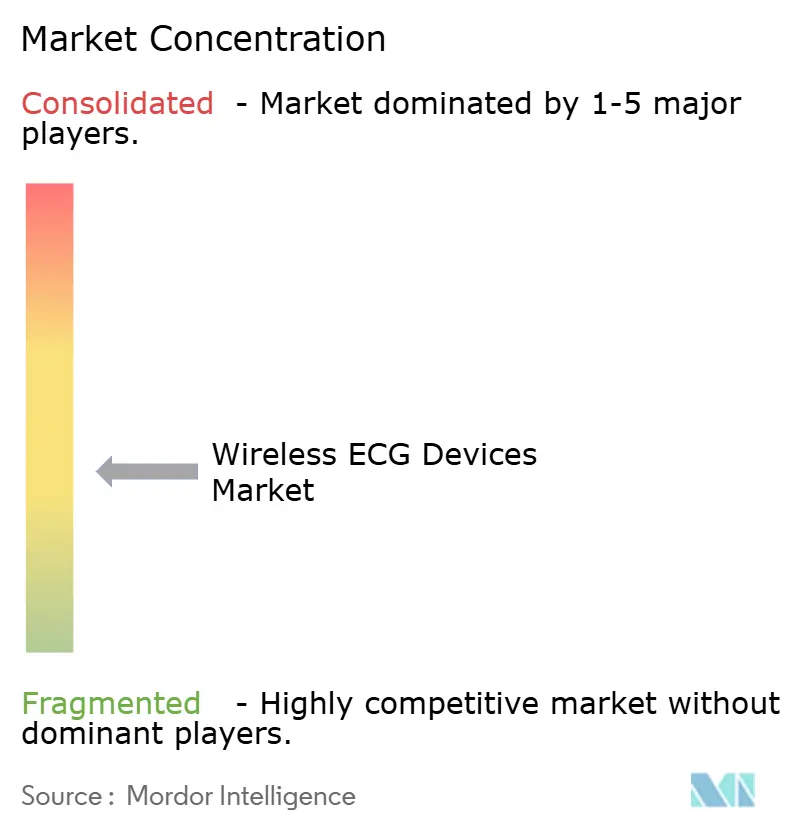
| Market Concentration | Medium |
Major Players *Disclaimer: Major Players sorted in no particular order Image © Mordor Intelligence. Reuse requires attribution under CC BY 4.0. | |
Wireless ECG Devices Market Analysis by Mordor Intelligence
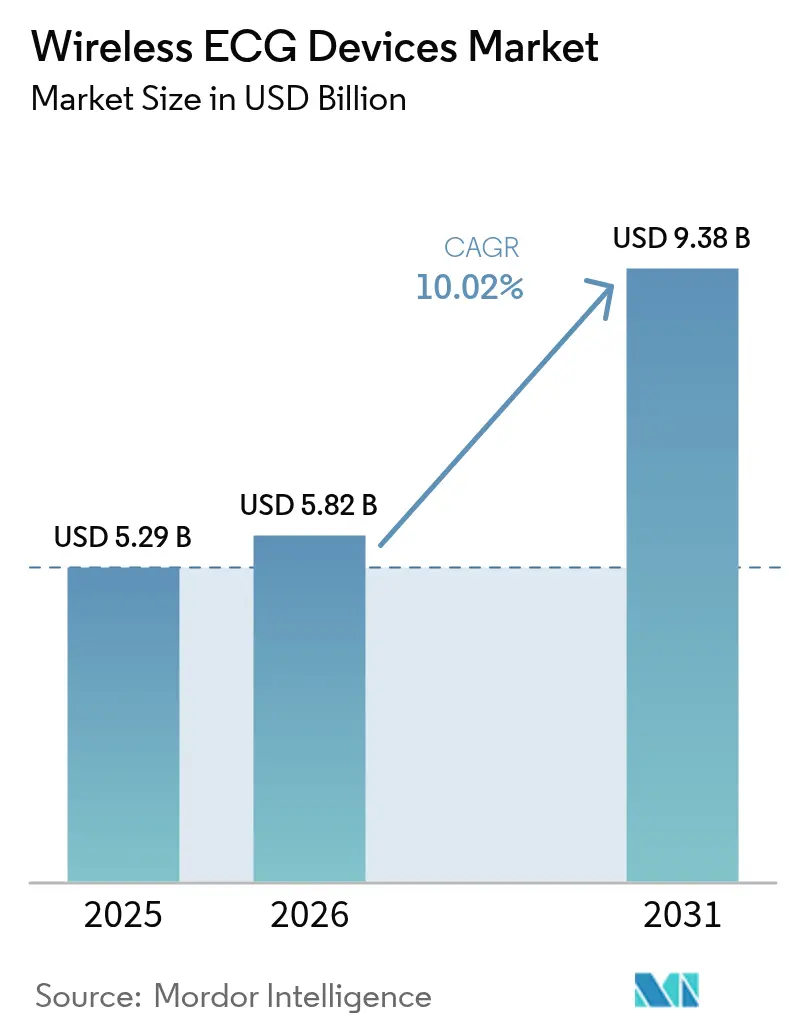
The wireless ECG devices market size is expected to grow from USD 5.29 billion in 2025 to USD 5.82 billion in 2026 and is forecast to reach USD 9.38 billion by 2031 at 10.02% CAGR over 2026-2031. Strong demand for autonomous cardiac monitoring in aging populations, policy-led telehealth expansion, and continued cost erosion in ultra-low-power chipsets keep the wireless ECG devices market on a double-digit growth path. Diagnostic-grade, multi-lead form factors move quickly into ambulatory care as regulatory confidence improves. Asia-Pacific leads incremental unit demand as local approval fast-tracks compress launch timelines for domestic brands, while North American growth takes on a steadier pace amid reimbursement complexity and market maturity. Competitive dynamics favor vendors that pair AI-driven analytics with battery-life extensions that reduce patient drop-outs, setting a high bar for new entrants focused only on hardware innovation.
Key Report Takeaways
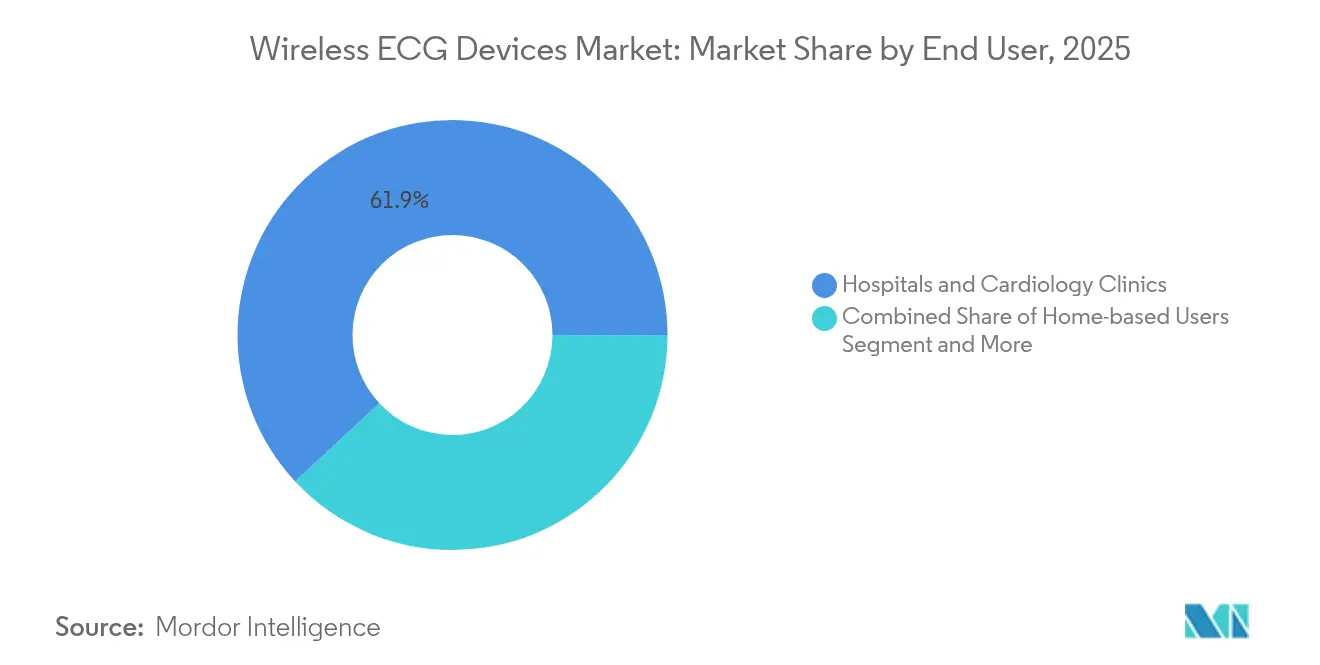
- By end user, hospitals and cardiology clinics captured 61.94% of the wireless ECG devices market share in 2025, whereas home-based users are expanding at an 18.35% CAGR through 2031.
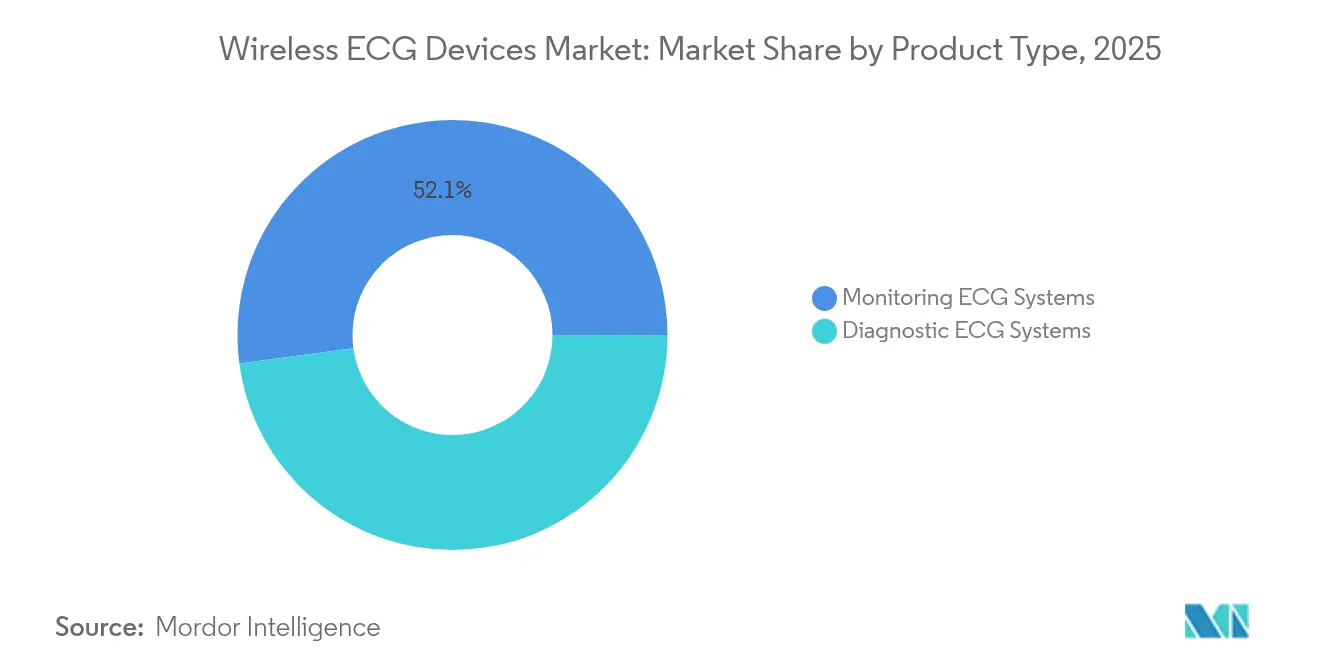
- By product type, monitoring ECG systems led with 52.12% share in 2025; diagnostic ECG systems are advancing at a 12.07% CAGR through 2031.
- By lead type, single-lead devices accounted for 46.05% of the wireless ECG devices market size in 2025, while ≥12-lead systems are forecast to grow at 13.72% CAGR during 2026-2031.
- By connectivity, cellular / eSIM-enabled models commanded 45.88% share in 2025 and hybrid BLE + cellular devices are set to post a 15.52% CAGR to 2031.
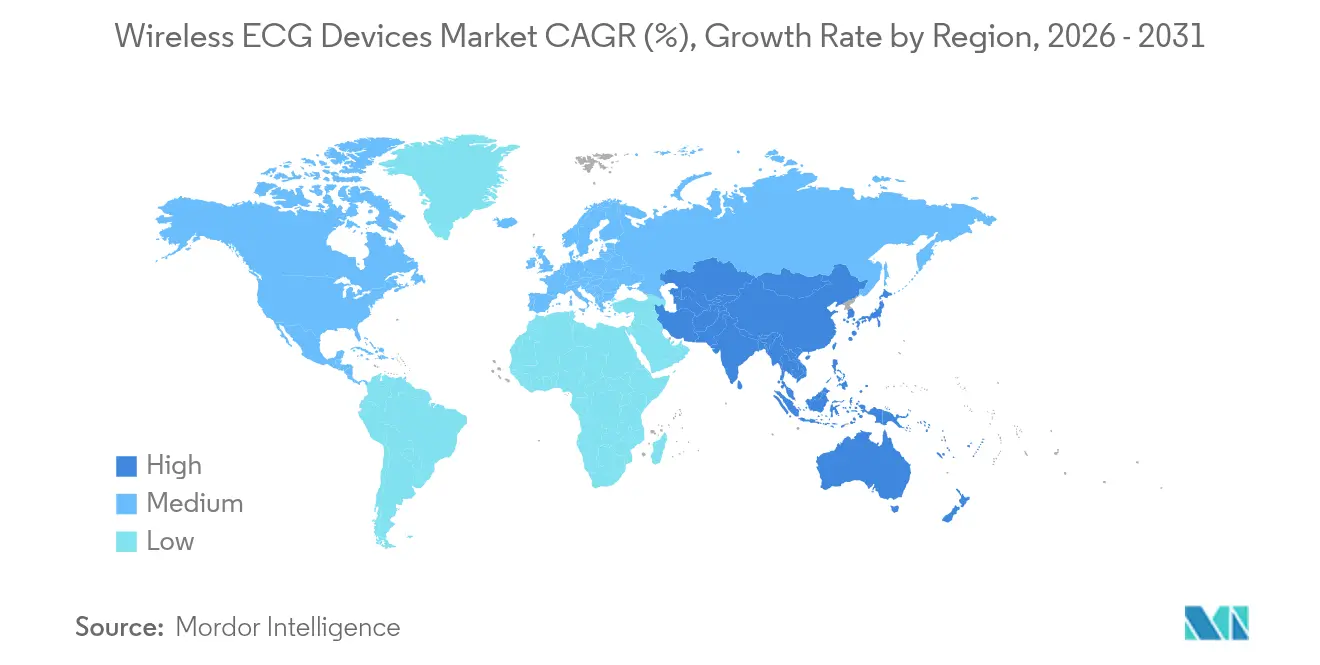
- By geography, North America retained 41.10% revenue share in 2025, whereas Asia-Pacific is projected to compound at 15.61% over the forecast horizon.
Note: Market size and forecast figures in this report are generated using Mordor Intelligence’s proprietary estimation framework, updated with the latest available data and insights as of 2026.
Market Trends and Insights
Drivers Impact Analysis of Wireless ECG Devices Market*
| Driver | (~) % Impact on CAGR Forecast | Geographic Relevance | Impact Timeline |
|---|---|---|---|
| Rising geriatric population and CVD prevalence | +2.1% | North America, Europe, global spillover | Long term (≥ 4 years) |
| Telehealth reimbursement expansion | +1.8% | North America, EU core, extending to Asia-Pacific | Medium term (2-4 years) |
| Cost decline of Bluetooth Low-Energy chipsets | +1.4% | Global, APAC production advantage | Short term (≤ 2 years) |
| AI-enabled adaptive compression lengthens battery life | +1.6% | North America, China early adopters | Medium term (2-4 years) |
| China Class III domestic fast-track | +0.9% | China, wider Southeast Asia | Short term (≤ 2 years) |
| Employer-funded cardiac-wellness programs | +1.2% | North America, EU, emerging Asia-Pacific | Medium term (2-4 years) |
| Source: Mordor Intelligence | |||
AI-Enabled Adaptive Compression Lengthens Battery Life
Adaptive compression algorithms reduce wireless data volume by as much as 85% without degrading ECG signal clarity. On-device inference now classifies beat quality in real time and transmits only clinically relevant waveforms, extending operational life from two days to as long as fourteen. This change lowers abandonment rates that previously exceeded 30% in long-term studies[1]. Device makers pair the algorithms with sub-10-µA sleep-mode microcontrollers and advanced lithium-polymer chemistries, bringing multi-lead diagnostic patches into week-long monitoring windows. The technology directly fuels the diagnostic systems segment that is growing at 12.25% CAGR. Battery-life gains also allow hospitals to redeploy staff away from recharging logistics and toward clinical interpretation, tightening total cost of ownership.
Tele-Health Reimbursement Expansion
CMS added remote ECG monitoring to codes 99453–99458 and 99091 in 2024, enabling USD 60–120 in monthly billables per patient episode[2]. Medicaid parity now spans 38 states and most large commercial payers honor similar rates. Providers deploy cellular eSIM devices to satisfy continuous connectivity criteria embedded in the codes. Administrative overhead still rises because each payer enforces unique documentation thresholds, but revenue visibility stabilizes adoption roadmaps for integrated-delivery networks. The reimbursement change underpins the 18.87% CAGR logged by home-based users, a cohort that already reports higher satisfaction scores than in-clinic monitoring.
Cost Decline of Bluetooth Low-Energy Chipsets
Average selling price for medical-grade BLE SoCs fell roughly 40% between 2022 and 2024 as foundry utilization improved and mid-tier fabs joined the addressable market. Sub-USD 2 monolithic designs integrate cryptographic accelerators, allowing smaller brands to pass FDA cybersecurity tests without discrete security coprocessors. Reduced material costs push manufacturing bill-of-materials below USD 100 for single-lead devices, widening price elasticity in employer wellness programs. Asia-Pacific contract manufacturers leverage the lower component outlay to deliver private-label devices for export, sharpening regional price competition that benefits payers seeking scale deployment at predictable per-member costs.
China's Class III Domestic Fast-Track for Wearable ECGs
In 2024 the NMPA cut time-to-market for domestically produced Class III cardiac monitors to eight-twelve months, nearly halving previous timelines. Domestic champions such as Huawei and OPPO responded with twelve device approvals in 2024, compared with three for foreign brands. Local players now match Western competitors in 12-lead accuracy while bundling devices with cloud analytics that conform to China’s health-data residency rules. The accelerated authorizations catalyze Asia-Pacific’s 15.82% CAGR, create local employment, and set a precedent other emerging markets may emulate to spur indigenous med-tech ecosystems.
Restraints Impact Analysis of Wireless ECG Devices Market*
| Restraint | (~) % Impact on CAGR Forecast | Geographic Relevance | Impact Timeline |
|---|---|---|---|
| Complex and fragmented reimbursement for RPM codes | -1.3% | North America, EU, emerging Asia-Pacific | Medium term (2-4 years) |
| Data-privacy and cybersecurity liabilities | -0.9% | Global, strongest in EU and California | Long term (≥ 4 years) |
| Dry-electrode dermatitis driving patch abandonment | -0.7% | Global, all long-duration users | Short term (≤ 2 years) |
| 2025 U.S. tariff surge on medical electronics sub-assemblies | -0.6% | U.S. market, indirect global effect | Short term (≤ 2 years) |
| Source: Mordor Intelligence | |||
Complex and Fragmented Reimbursement for RPM Codes
Clinicians juggle multiple codes—99453–99458, 99091, 99490–99491—each demanding different enrollment milestones and review frequencies. Small cardiology practices report two-four hours of monthly paperwork per monitored patient, eroding the economic upside[3]. Variability across state Medicaid programs adds extra layers of checks. Rural providers, already short-staffed, often choose to defer remote ECG initiatives despite device affordability gains. Market participants that offer integrated billing services alongside hardware gain tactical advantage by removing frontline administrative pain points.
Data-Privacy / Cybersecurity Liabilities
FDA device submissions after January 2024 must include a Secure Product Development Framework detailing encryption, patch management, and coordinated disclosure. EU MDR and GDPR layer on region-specific breach-notification obligations, and the California Privacy Rights Act raises U.S. state-level stakes. Smaller manufacturers lacking in-house security personnel outsource to consultancies, pushing per-device cost structures higher. Reported intrusions on connected medical devices rose 45% year-over-year, sustaining risk-based premiums on product liability insurance. Hospital buyers respond by mandating penetration-test certificates prior to procurement, elongating sales cycles.
*Our forecasts treat driver/restraint impacts as directional, not additive. The impact forecasts reflect baseline growth, mix effects, and variable interactions.
Wireless ECG Devices Market Segment Analysis
By Product Type:
Diagnostic Systems Drive Premium GrowthDiagnostic devices generated 12.07% CAGR because providers increasingly prescribe ambulatory 12-lead studies to capture intermittent events. Monitoring systems accounted for 52.12% of the wireless ECG devices market size in 2025 owing to established chronic-care reimbursement. Payers approve extended diagnostic sessions when AI triage keeps cardiologist time under defined thresholds, aligning clinical benefit with cost controls. Players integrate cloud-based algorithms that flag only pathology-suspect intervals, slashing data overload and physician fatigue. Diagnostic patches also gain traction in corporate wellness stress tests, widening addressable demand beyond hospital networks. Meanwhile, monitoring devices retain volume leadership due to routine use in heart-failure programs that mandate daily rhythm checks. Revenue mix therefore tilts toward premium diagnostic platforms even as unit growth remains solid in traditional monitoring.
Enhanced microelectrode arrays allow diagnostic wearables to achieve signal-to-noise ratios once limited to tethered hospital carts. Combined with edge AI packetization, remote 12-lead traces arrive at cardiology dashboards without latency spikes, preventing critical-path delays. Market entrants differentiate with clinician-friendly portals that synthesize weeks’ worth of data into color-coded event summaries. These workflow improvements elevate adoption inside community hospitals striving to match tertiary-care standards. Beyond revenue, diagnostic use stabilizes device replacement cycles at higher average selling prices, supporting sustainable R&D budgets that keep the wireless ECG devices market on its innovation trajectory.

By Lead Type:
Multi-Lead Systems Capture Clinical PremiumSingle-lead wearables held 46.05% market share in 2025 because consumer wellness buyers prioritize low cost and ease of use. However, ≥ 12-lead solutions are compounding at 13.72% on the strength of clinical indispensability in ischemia and complex arrhythmia detection. Payers increasingly reimburse multi-lead ambulatory studies once traditional Holter loops miss transient pathologies, solidifying the premium tier. Vendors offset higher component counts with modular board designs and shared firmware stacks that streamline regulatory change-control filings. Algorithm vendors supply vector-reconstruction engines that extract additional leads mathematically, yet cardiologists still favor true hardware-based multi-lead fidelity for actionable diagnosis.
Lead-count choice also shapes service-level agreements. Hospitals negotiate uptime commitments measured in diagnostic-grade minutes, making redundant-lead grids attractive for compliance. In direct consumer channels, single-lead models adopt auto-referral features that nudge users toward clinical consults, thereby feeding multi-lead product pipelines. The resulting segmentation keeps both price points viable but shifts profit pools toward multi-lead innovators with proprietary signal-processing IP. Unit economics improve further when cloud storage moves to tiered retention plans, enabling differentiated subscription tiers that monetize multi-lead data richness.
By End User:
Home-Based Adoption Accelerates Healthcare TransformationHome-based users post the fastest 18.35% CAGR as patients opt for comfort and payers eye reductions in re-admission penalties. Hospitals and cardiology clinics still controlled 61.94% of the wireless ECG devices market size in 2025, supported by procedural bundling and integration with existing electronic health record systems. Telehealth portals simplify patient onboarding, letting nurses provision devices during discharge and track adherence on unified dashboards. Evidence shows emergency-department visits decrease when remote alerts route anomalies to on-call cardiologists within fifteen minutes, reinforcing insurer approval for home pathways. Training modules in multiple languages help caregivers correctly re-seat electrodes, mitigating data gaps from improper wear.
Ambulatory centers serve as operational hubs that coordinate device logistics, interpret data, and escalate findings, thereby relieving hospital telemetry units. Employers also deploy take-home patches during high-stress projects, extending the device footprint beyond traditional healthcare settings. The contractual mix diversifies vendor revenue, distributing risk and stabilizing cash flow even if hospital capital budgets tighten. As device software matures, at-home platforms evolve into full cardiac dashboards that integrate blood-pressure cuffs and pulse oximeters, deepening engagement and blurring boundaries with broader remote-patient-monitoring ecosystems.
By Connectivity:
Hybrid Solutions Address Coverage GapsCellular / eSIM wearables delivered 45.88% share in 2025, verifying their role as the backbone of reimbursable RPM programs that require nonstop data links. Hybrid BLE + cellular devices, growing at 15.52% CAGR, answer drop-zone risk by failing over to smartphone relays or mobile networks on the fly. Firmware now executes connection-quality scoring every few seconds and shifts modes before packet loss breaches clinical thresholds. This resilience resonates with providers who need 95%+ data continuity for quality measures. BLE-only units survive in wellness kits and regions with universal smartphone penetration, but payers remain cautious about reimbursing modalities susceptible to RF blind spots.
Cost modeling shows that adding a global LTE Cat-M1 module raises bill-of-materials by only USD 4 when volumes exceed 1 million units annually, making redundancy financially palatable. Vendors collaborate with virtual-network operators to pool SIM profiles, slashing roaming fees for cross-border clinical trials. Regulatory bodies view dual-path connectivity as risk mitigation, potentially accelerating 510(k) decision cycles that favor hybrid designs. The approach positions manufacturers well for forthcoming Low-Earth-Orbit satellite add-ons that promise universal coverage, future-proofing device fleets and cementing hybrid architecture as the market default.
Geography Analysis
North America Wireless ECG Devices Market
North America retained 41.10% of revenue in 2025, supported by mature hospital telemetry infrastructure, but CAGRs taper as saturation rises and administrative billing burden persists. The wireless ECG devices market remains steady because payer incentives still favor readmission reduction, yet smaller practices slow rollouts until coding clarity improves. Canada pilots nationwide RPM reimbursement in cardiology, mirroring early U.S. models but leveraging single-payer efficiencies. Mexico’s social-security system tests subsidized patches in rural clinics, aiming to extend specialist reach across underserved areas.
APAC Wireless ECG Devices Market
Asia-Pacific grows at a brisk 15.61% CAGR, anchored by China’s policy tailwinds and manufacturing self-reliance. NMPA fast-track approvals shorten commercialization cycles, inviting rapid iteration and local price drops. Japan’s super-aged society drives continuous monitoring adoption in home-nursing programs, while South Korea pairs 5G infrastructure with AI triage engines to streamline cardiology consult queues. India gains momentum through public-private partnerships that combine low-cost devices with community health workers, although infrastructure variability keeps uptake uneven across states. Australia and Southeast Asian nations leverage remote-area grants to supply wearables in indigenous and island communities, validating export potential for ruggedized designs.
Europe, LATAM and Middle East Wireless ECG Devices Market
Europe sits between mature and growth profiles. Northern markets integrate ECG telemetry into long-term disease-management budgets, whereas Southern regions prioritize cost containment but trial low-lead patches for high-risk groups. GDPR compliance pushes vendors to host data inside EU borders, shaping procurement towards suppliers with in-region cloud partners. Germany’s statutory insurers reimburse diagnostic patches once physician associations ratify workflow guidelines, raising baseline demand. The United Kingdom—post-Brexit—aligns its approval timings with MHRA processes that run parallel to FDA pathways, giving local startups a domestic launch pad. Outside the triad, Latin America and the Middle East start small pilots, usually grant-financed, signaling future demand once infrastructure and purchasing power converge.
Regulatory Landscape
Wireless ECG devices used for clinical diagnosis and remote patient monitoring typically enter the United States via the FDA 510(k) pathway, with growing scrutiny on software documentation for analytics-driven functions. After January 2024, FDA submissions for connected devices required a Secure Product Development Framework that lays out cybersecurity controls, including encryption, vulnerability management, and patching processes. This raises the compliance bar for device makers shipping cellular or hybrid-connected ECG patches and monitors.
In Europe, wireless ECG manufacturers face dual compliance that pairs EU Medical Device Regulation (MDR) requirements for clinical evidence and post-market surveillance with radio and connectivity obligations. As of August 2025, the EU Radio Equipment Directive (RED) cybersecurity-related requirements for connected devices (including privacy and fraud protection provisions) became active, adding more work for technical files for products using Bluetooth and cellular modules alongside ECG sensing and analytics.
Competitive Landscape
The market balances moderate fragmentation with intensifying consolidation moves. Traditional med-tech firms, consumer electronics giants, and niche cardiac-monitoring specialists each pursue distinct playbooks. Clinical incumbents refine 12-lead accuracy and hospital software integration, directing capex toward AI-powered decision support. Tech conglomerates emphasize sleek form factors and wellness ecosystem tie-ins; Apple gained FDA clearance for atrial fibrillation detection in its watch line and funnels data into physician dashboards under negotiated APIs. Mid-size entrants position hybrid models that straddle clinical and consumer realms, often bundling interpretation services to offset hardware commoditization.
Strategic partnerships flourish, for example between device makers and cloud hyperscalers that offer HIPAA-compliant storage plus analytics pipelines. Domestic Chinese firms leverage regulatory pedigree to compete on home turf, then export to Belt and Road partner countries. European players differentiate through privacy-first architecture, satisfying GDPR-centric procurement. Across the board, AI algorithm investment outpaces pure hardware refresh cycles, signaling that software stickiness is the next battleground. Vendor roadmaps list cybersecurity certifications and battery-life milestones as board-level KPIs, reflecting the post-2024 compliance landscape. Optional subscription analytics and tiered cloud retention embed recurring revenue streams, buffering manufacturers from hardware price erosion.
Serving pediatrics and occupational health remains underserved. Few patches accommodate smaller thoracic profiles or safety helmets. Startups developing flexible-circuit electrodes and child-specific arrhythmia classifiers court early-stage venture funds. Large device makers monitor these niches for bolt-on acquisitions that can accelerate cross-segment expansion. Overall, winning portfolios combine multi-lead fidelity, connectivity redundancy, and AI-filtered alert precision that lowers clinician workload, a trifecta hard for single-dimension competitors to match.
Wireless ECG Devices Industry Leaders
-
Nihon Kohden
-
Medtronic PLC
-
GE Healthcare
-
Aerotel Medical Systems
-
AliveCor
- *Disclaimer: Major Players sorted in no particular order
Wireless ECG Devices Market Companies Covered in this Report
- Abbott Laboratories
- Aerotel Medical Systems
- AliveCor
- Apple
- Bittium Corporation
- CardioComm Solutions
- Contec Medical Systems
- GE Healthcare
- iRhythm Technologies
- Medtronic
- Nihon Kohden
- Koninklijke Philips
- Preventice (Boston Scientific)
- Qardio Inc.
- Schiller
- Vital Connect
- Withings
- ZOLL Medical
Market Opportunities and Future Outlook
Clinical-grade patch and wearable ECG offerings continue to expand as more vendors clear U.S. regulatory gates and pair devices with automated interpretation workflows. In 2026, multiple wearable ECG products received FDA 510(k) clearance, including Smwmed, Inc.'s Rhythm Master ECG Patch (April 2026) and Seers mobiCARE wearable ECG testing device (June 2026), which supports continued activity across ambulatory monitoring and diagnostic use cases spanning single-lead through multi-lead form factors.
Opportunity is concentrated in turnkey deployments that reduce clinician workload by combining wearable hardware with validated analytics and reporting designed for reimbursable remote monitoring programs. A July 2026 multi-year partnership between AccurKardia and Wellysis to integrate automated analytics with the Wellysis S-Patch underscores demand for device-plus-software bundles, while hospital operations scaling also supports broader deployments of continuous monitoring beyond ICU settings, as illustrated by Apollo Hospitals implementing AI-powered continuous patient monitoring across 150 inpatient beds in Madurai, India (July 2026).
Recent Industry Developments in Wireless ECG Devices Market
- July 2026: AccurKardia and Wellysis entered a multi-year strategic partnership to integrate AccurKardia's automated cardiac analytics with the Wellysis S-Patch wearable ECG monitor for the U.S. clinical market. The combination supports end-to-end offerings that pair wearable collection with automated interpretation, aligning with provider workflows that depend on timely event triage and scalable reporting.
- August 2025: InfoBionic.Ai received FDA 510(k) clearance for its MoMe ARC 1-Lead Patch, adding a longer-duration configuration for continuous ECG collection. The clearance enables broader ambulatory monitoring programs by extending wear time and helping providers capture intermittent arrhythmias with fewer device swaps.
- June 2024: Clario secured FDA 510(k) clearance for its SpiroSphere integrated with the wireless COR-12 ECG device for decentralized clinical trials. This expanded the toolset for remote data capture in trial settings and reinforced the role of wireless multi-parameter and ECG-enabled platforms in distributed study designs.
Wireless ECG Devices Market Report Scope and Research Methodology
Market Definition and Coverage
For this study, the wireless ECG devices market includes ECG recording and monitoring devices that capture cardiac signals and transmit data using wireless connectivity for clinical or home-based monitoring and diagnosis.
Scope exclusions: We exclude hospital IT systems that only store or visualize ECG data (without a device sale) and purely wired ECG units that do not support wireless data transfer.
Segments Covered in This Report
- By Product Type
- Monitoring ECG Systems
- Remote Data Monitoring
- Event Monitoring
- Continuous Monitoring Systems
- Diagnostic ECG Systems
- Rest ECG Systems
- Stress ECG Systems
- Holter ECG Systems
- Monitoring ECG Systems
- By Lead Type
- Single-lead
- 3-6 lead
- Greater Than 12-lead
- By End User
- Hospitals & Cardiology Clinics
- Home-based Users
- Ambulatory Surgical & Diagnostic Centers
- By Connectivity
- Bluetooth-only
- Cellular / eSIM-enabled
- Hybrid (BLE + Cellular)
- Geography
- North America
- United States
- Canada
- Mexico
- Europe
- Germany
- United Kingdom
- France
- Italy
- Spain
- Rest of Europe
- Asia-Pacific
- China
- Japan
- India
- Australia
- South Korea
- Rest of Asia-Pacific
- Middle East and Africa
- GCC
- South Africa
- Rest of Middle East and Africa
- South America
- Brazil
- Argentina
- Rest of South America
- North America
Data Sources, Market Sizing, and Validation
Desk Research
Desk research was used to map the disease and testing backdrop, and to understand how remote cardiac monitoring is being adopted across care settings. We referenced public sources such as the US CDC, WHO cardiovascular disease statistics, US FDA device databases and safety notices, and CMS coverage and reimbursement updates to anchor the demand environment.
To tighten the commercial view, we also reviewed company filings, annual reports, investor decks, product documentation, and reputable press coverage to understand device positioning, pricing bands, and launch timing. Where appropriate, we used a paid subscription database for company financials, news, and patent lookups so changes in product portfolios were not missed. The desk sources listed here are illustrative and not exhaustive, and many other public references were also used to validate data and resolve gaps.
Primary Interviews and Surveys
Primary work focused on validating what is counted as a wireless ECG device sale, and how demand differs across hospitals, diagnostic centers, and home-based monitoring pathways. We spoke with manufacturers, channel partners, and clinical stakeholders across major regions to stress-test assumptions on unit mix, replacement cycles, and pricing moves, then reconciled any gaps observed in the desk research.
Distribution of primary research fieldwork respondents
| Company type | Respondent position | Region |
|---|---|---|
| Top tier: 34% | CXOs: 12% | APAC: 48% |
| Mid tier: 52% | Functional/Unit leaders: 42% | EMEA: 33% |
| Smaller Players: 14% | Managers: 46% | Americas: 19% |
Market-Sizing & Forecasting
Sizing starts with a top-down build where the addressable ECG testing and monitoring demand pool is reconstructed using cardiovascular prevalence signals, diagnostic testing patterns, and the share that is realistically served by wireless-enabled devices. To keep the model practical, we use inputs such as ambulatory and home-monitoring adoption, average selling price ranges by device form factor, replacement and upgrade cycles, wireless connectivity penetration (Bluetooth, Wi-Fi, cellular), and the direction of reimbursement or payer coverage across key countries.
After the top-line value is formed, results are corroborated with selective bottom-up approximations, including sampled supplier revenue splits, channel checks on unit volumes, and simple ASP x volume math for geographies where public indicators are clearer. When coverage is uneven, gaps are handled using proxies like procedure volumes and installed base refresh timing, then adjusted based on what interviewees describe in current purchasing behavior. For forecasting, scenario analysis is used so pricing pressure, reimbursement changes, and new device launches can be flexed, followed by checks against the CAGR range and demand signals shared by market participants.
Data Validation & Update Cycle
Validation is done by comparing model outputs against independent signals such as regulatory clearance pace, reimbursement direction, and reported demand commentary from companies, and then reconciling any large variances. Where anomalies appear, we review them in a second analyst pass so unit assumptions, currency conversion timing, and one-off effects are corrected before sign-off.
The report is refreshed on an annual cycle, and interim updates are made when material events occur, such as a major reimbursement shift or a meaningful product recall. Before delivery, a fresh review is completed to re-check the latest public updates and re-contact sources if any key assumption has moved.
Mordor Intelligence's Wireless Ecg Devices Market Size Compared Against Other Published Estimates
Published market sizes for wireless ECG devices can look far apart because authors count different device categories, apply different base years, and use different pricing and volume logic when device mix is changing.
Key gaps usually come from what is treated as a device revenue versus what is treated as a monitoring program, and from how quickly ASP erosion and higher home-use volumes are assumed to occur. The table points to scope and year anchoring as the largest drivers, and under Mordor Intelligence's scope the value reflects wireless ECG devices sold as products, with connectivity-enabled monitoring and diagnostic ECG systems included only when the device itself performs ECG capture and wireless transmission. This avoids adding broader remote monitoring services.
Benchmark comparison
| Source | Market Size | Gaps in Research Methodology |
|---|---|---|
| Mordor Intelligence | USD 5.82 B (2026) | |
| Global Consultancy A | USD 2.66 B (2025) | Uses a different base year and a broader product-type grouping, and the sizing approach appears more conservative on near-term adoption of wireless ECG in clinical workflows and home monitoring. |
| Trade Journal B | USD 2.43 B (2024) | Starts from an earlier base year with a narrower counted category set in parts of the market and applies a lower implied unit ramp, which can understate value when wireless connectivity penetration is rising. |
Taken together, the comparison suggests that scope boundaries and time anchoring explain most of the variance, more than any single growth assumption. Our method stays traceable to demand signals, device mix, and pricing logic, which makes the number easier to repeat and update as market conditions change.
Key Questions Answered in the Report
What is the 2026 valuation for the wireless ECG devices market?
The market is valued at USD 5.82 billion in 2026.
Which region is expanding fastest in wireless ECG adoption?
Asia-Pacific is registering a 15.61% CAGR, the highest regional growth rate.
Which end-user category is advancing most quickly?
Home-based users are growing at an 18.35% CAGR through 2031.
How dominant are monitoring systems versus diagnostic systems?
Monitoring systems hold 52.12% of 2025 revenue, while diagnostic systems are expanding more rapidly at 12.07% CAGR.
Why are hybrid BLE + cellular devices gaining popularity?
They offer connectivity redundancy, supporting uninterrupted data flow required in reimbursable RPM programs.