
Wipes Market Size and Share
Market Overview
| Study Period | 2021 - 2031 |
|---|---|
| Market Size (2026) | USD 18.81 Billion |
| Market Size (2031) | USD 21.54 Billion |
| Growth Rate (2026 - 2031) | 2.75 % |
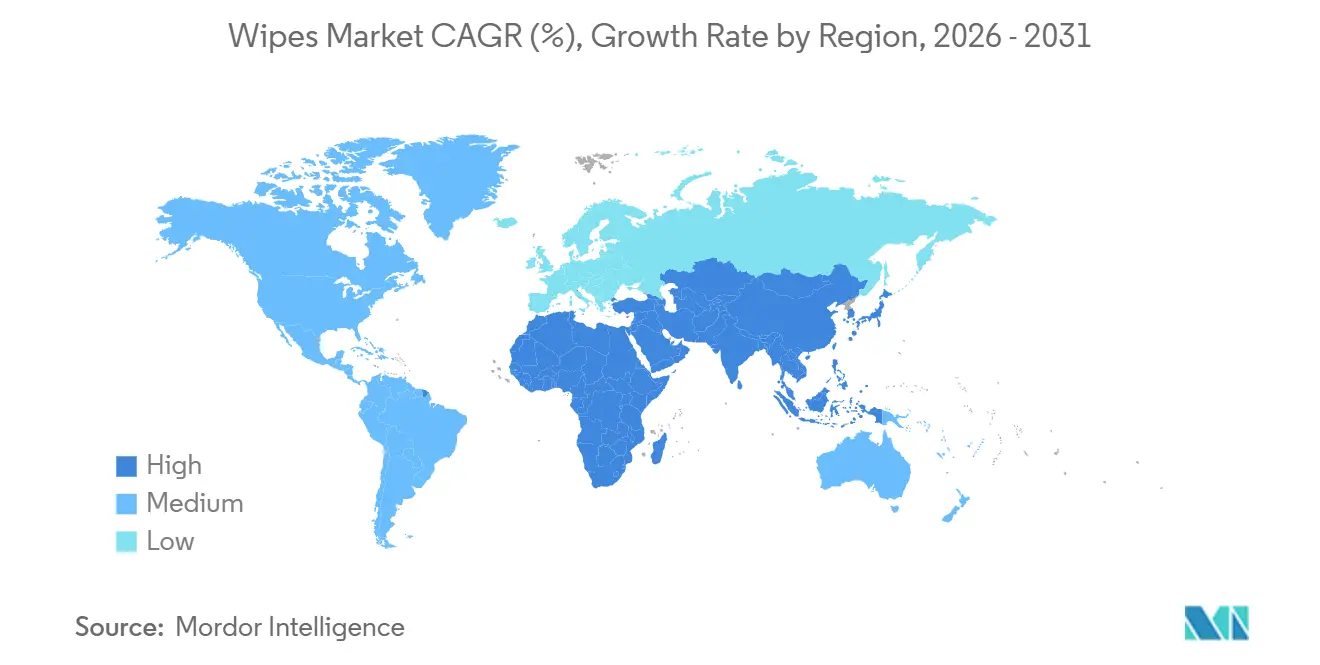
| Fastest Growing Market | Asia Pacific |
| Largest Market | North America |
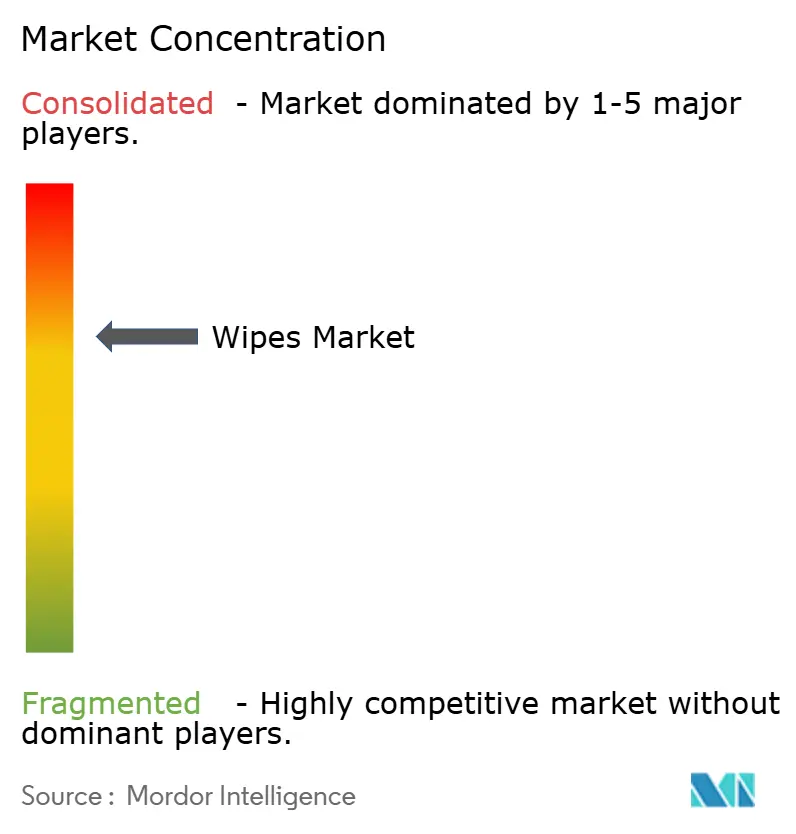
| Market Concentration | Medium |
Major Players
*Disclaimer: Major Players sorted in no particular order Image © Mordor Intelligence. Reuse requires attribution under CC BY 4.0. |
|
Wipes Market Analysis by Mordor Intelligence
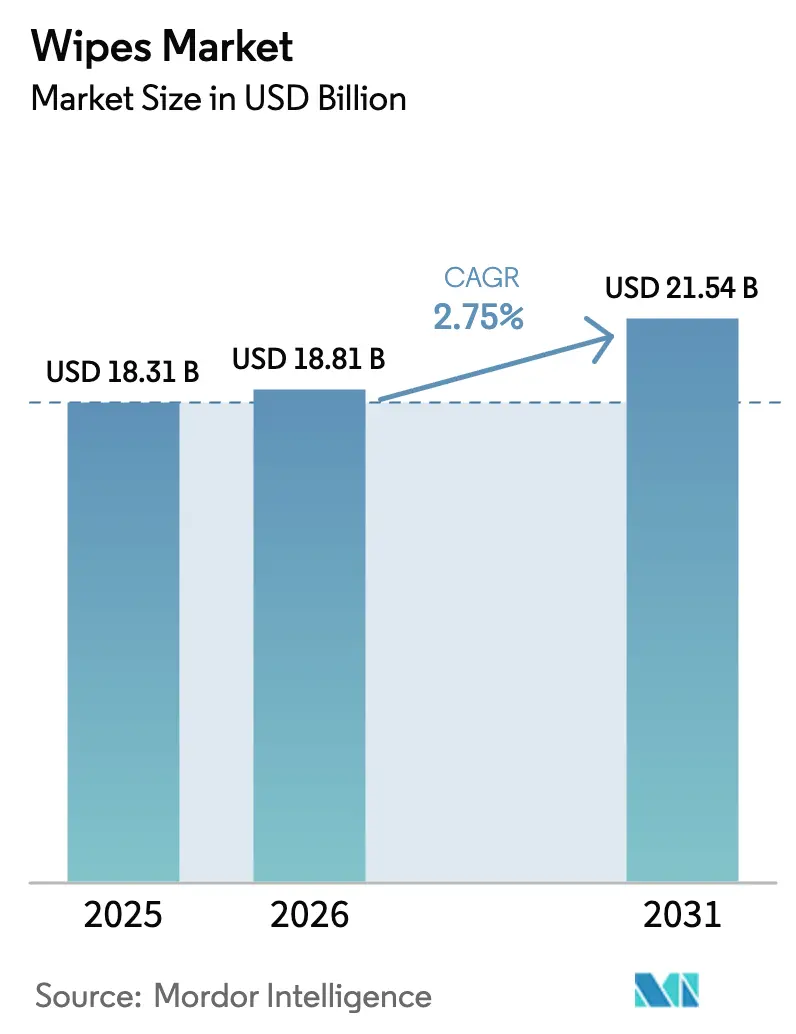
The Wipes Market was valued at USD 18.31 billion in 2025 and is projected to grow from USD 18.81 billion in 2026 to USD 21.54 billion by 2031, registering a CAGR of 2.75% during the forecast period (2026-2031). This growth is driven by increased awareness of hygiene and sanitation, a rising preference for portable and time-efficient cleaning solutions, and the widespread use of wipes in personal care, surface cleaning, and professional sanitation. The industry is also shifting toward higher-performance and safer formulations, with innovations focusing on enhanced substrate strength and softness, skin-friendly formulations for sensitive users, and improved functional attributes such as antibacterial properties, odor control, and multi-surface applicability. Additionally, sustainability concerns are reshaping the market, driving the adoption of biodegradable, compostable, and plastic-free materials.
Key Report Takeaways
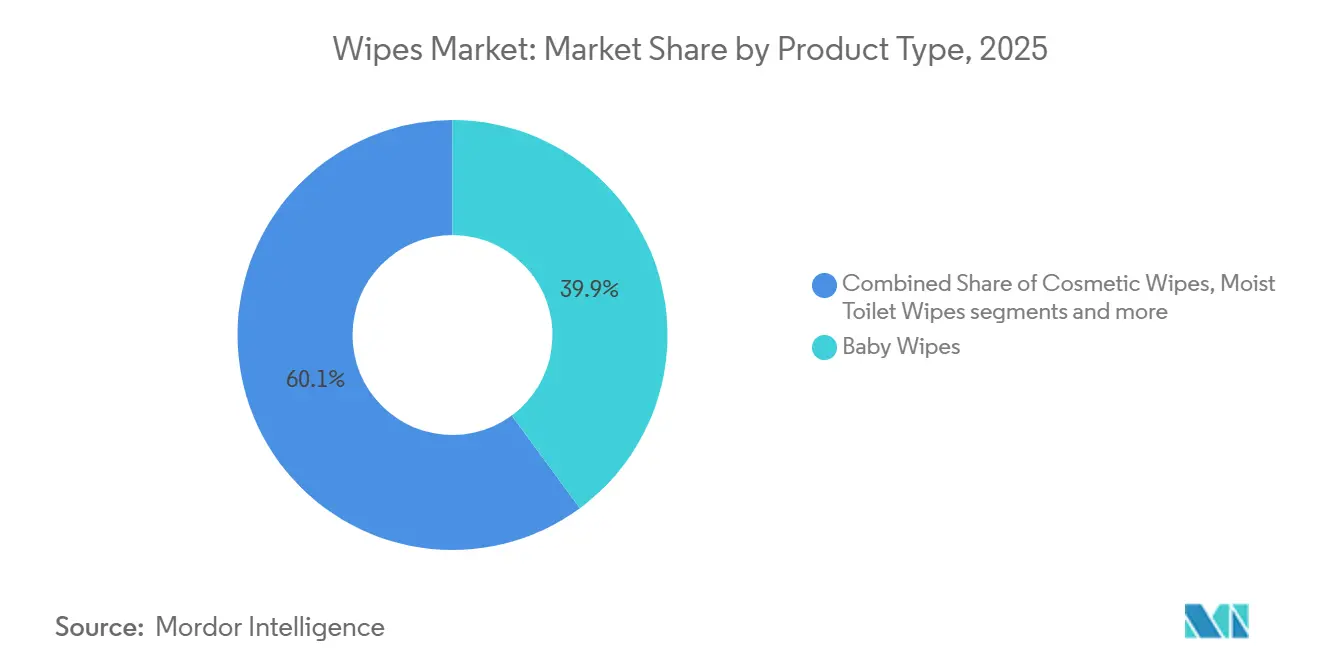
- By product type, baby wipes led with 39.86% of 2025 revenue, while moist toilet wipes posted the highest projected 2.83% CAGR to 2031.
- By ingredient, conventional formulations held 68.01% share of the 2025 global wipes market size, but natural and organic variants are projected to expand at a 2.96% CAGR through 2031.
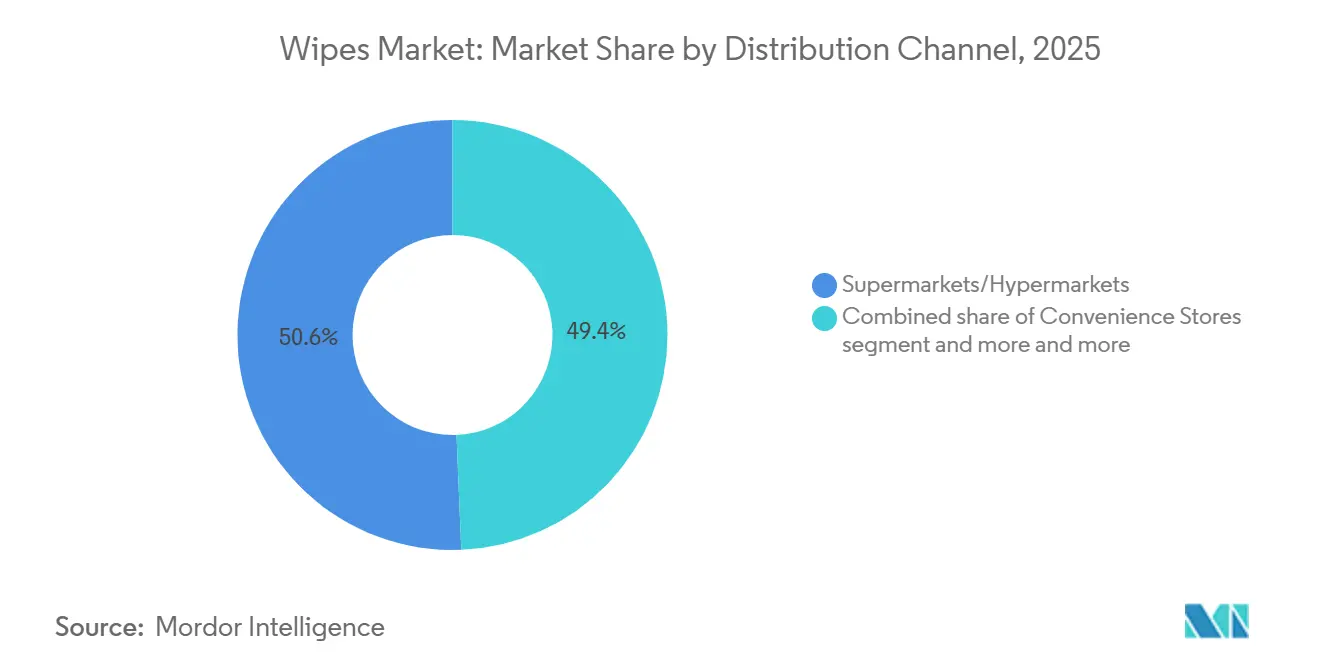
- By distribution channel, supermarkets and hypermarkets captured 50.65% of the global wipes market share in 2025, whereas online retail is advancing at a 3.34% CAGR over 2026-2031.
- By geography, North America commanded 40.19% revenue share in 2025, while Asia-Pacific is set to record the fastest 3.81% CAGR to 2031.
Note: Market size and forecast figures in this report are generated using Mordor Intelligence’s proprietary estimation framework, updated with the latest available data and insights as of January 2026.
Market Trends and Insights
Drivers Impact Analysis of Wipes Market*
| Driver | (~) % Impact on CAGR Forecast | Geographic Relevance | Impact Timeline |
|---|---|---|---|
| Rising hygiene and sanitation awareness | +0.8% | Global, with elevated intensity in Asia-Pacific and Middle East and Africa | Medium term (2-4 years) |
| Product innovation and advanced formulations | +0.6% | North America and Europe core, spill-over to Asia-Pacific | Long term (≥ 4 years) |
| Rising female workforce is driving the market growth | +0.5% | Asia-Pacific core, Latin America emerging | Long term (≥ 4 years) |
| Shift toward sustainable and eco‑friendly solutions | +0.4% | Europe and North America regulatory-led, Asia-Pacific consumer-driven | Medium term (2-4 years) |
| Branding, marketing and product awareness | +0.3% | Global, digital-first in North America and Europe | Short term (≤ 2 years) |
| Increasing preference for skin‑friendly and dermatologically tested formulations | +0.2% | North America and Europe, expanding to urban Asia-Pacific | Medium term (2-4 years) |
| Source: Mordor Intelligence | |||
Rising hygiene and sanitation awareness
Increasing awareness of hygiene and sanitation has become a key driver of the global wipes market, significantly influencing consumer behavior and institutional hygiene practices worldwide. Greater emphasis on personal cleanliness, surface disinfection, and germ prevention, accelerated by global public health events and reinforced by ongoing awareness campaigns, has made the use of wipes a routine part of daily life. Consumers now perceive wipes as a primary preventive hygiene solution rather than an occasional convenience product, leading to increased usage across baby care, personal hygiene, household cleaning, and on-the-go applications. Similarly, institutional environments such as hospitals, clinics, schools, offices, hospitality venues, and public transportation systems have strengthened sanitation protocols, incorporating disinfectant and cleaning wipes into their standard procedures. The portability and single-use nature of wipes meet heightened hygiene standards by reducing cross-contamination risks compared to reusable cleaning tools. Additionally, growing awareness of skin-safe hygiene has driven demand for dermatologically tested, alcohol-free, and sensitive-skin formulations, particularly among families with infants and elderly individuals.
Product innovation and advanced formulations
Product innovation and advanced formulations are key growth drivers in the global wipes market, as manufacturers focus on enhancing performance, skin safety, and sensory appeal to meet increasing consumer expectations. As wipes evolve from basic cleaning products to skin-contact hygiene solutions, advancements in substrate technology, lotion chemistry, and product design have become critical for competitive differentiation. Companies are prioritizing the development of softer and stronger nonwoven fibers, improved absorbency, pH-balanced and minimal-ingredient formulations, and dermatologically tested solutions to address concerns related to skin irritation, sensitivity, and safety for daily use, particularly in baby and personal care segments. Advanced formulations also support multifunctionality, enabling wipes to provide cleansing, moisturizing, and protective benefits in a single product, thereby increasing usage frequency and enhancing value perception. For example, in September 2025, WaterWipes introduced a new line of stronger, softer wipes specifically designed for sensitive skin. This updated range featured an embossed pattern made from finer, softer fibers, improving both cleansing efficiency and comfort while reinforcing the brand’s positioning for sensitive skin.
Rising female workforce is driving the market growth
The increasing participation of women in the workforce is significantly contributing to the growth of the global wipes market by influencing household routines, childcare practices, and hygiene product preferences. As more women engage in full-time and part-time employment, the demand for time-efficient and convenient solutions in daily care and cleaning activities has risen. Working women, particularly mothers, are increasingly adopting wipes as convenient, ready-to-use hygiene solutions for baby care, personal hygiene, household cleaning, and on-the-go needs. This reduces reliance on more time-consuming alternatives such as cloth cleaning and repeated water use. Consequently, this shift has led to higher consumption frequency and sustained demand for wipes across various product categories. Additionally, the growing female workforce is driving demand for multipurpose and travel-friendly formats, bulk packaging, and subscription-based purchasing options, which cater to busy schedules and predictable replenishment requirements. This trend is supported by labor participation data. According to the Bureau of Labor Statistics, the female employment rate reached 55.2% in 2024, underscoring the influence of working women on consumption patterns [1]Source: Bureau of Labor Statistics, "Employment rate of women in the United States", bls.gov.
Shift toward sustainable and eco‑friendly solutions
The growing emphasis on sustainable and eco-friendly solutions is driving significant growth in the global wipes market. Consumers, regulators, and retailers are increasingly prioritizing environmental responsibility alongside product performance. Concerns over plastic pollution, microplastics in waterways, and sewage blockages caused by conventional synthetic-fiber wipes have led to a rising demand for biodegradable, compostable, and plastic-free alternatives. This trend is particularly prominent in the baby wipes and personal care segments, where sustainability is associated with gentleness, purity, and long-term health safety. Manufacturers are addressing these concerns by redesigning substrates with cellulose- and plant-based fibers, reducing synthetic binders, and incorporating naturally derived, skin-conditioning ingredients that align with clean-label and eco-conscious preferences. For example, in July 2024, Kudos introduced compostable and biodegradable wipes made from sustainably harvested trees. These wipes are infused with skin-safe ingredients such as apple fruit extract and glycerin, providing a soft and gentle cleansing experience for babies while reinforcing their sustainability credentials.
Restraints Impact Analysis of Wipes Market*
| Restraint | (~) % Impact on CAGR Forecast | Geographic Relevance | Impact Timeline |
|---|---|---|---|
| Environmental concerns and sustainability issues | -0.4% | Europe and North America regulatory-led, global consumer | Medium term (2-4 years) |
| Regulatory restrictions and compliance burden | -0.2% | Europe core, North America and Asia-Pacific emerging | Long term (≥ 4 years) |
| Fluctuating raw material prices | -0.3% | Global, with acute impact in import-dependent regions | Short term (≤ 2 years) |
| Competition from alternative cleaning products | -0.2% | Global, digital-first in North America and Europe | Medium term (2-4 years) |
| Source: Mordor Intelligence | |||
Environmental concerns and sustainability issues
Environmental concerns and sustainability challenges have emerged as a critical restraint on the global wipes market, particularly for conventional wet wipes made from synthetic fibers and non-biodegradable plastics. Growing awareness of plastic pollution, microplastic release, and wastewater system blockages caused by improper disposal of wipes has significantly heightened public scrutiny and diminished consumer confidence in traditional products. Municipal authorities and environmental organizations across various regions have repeatedly highlighted the substantial role of wipes in sewage clogging and fatberg formation, further intensifying negative consumer sentiment and driving stricter disposal practices. These sustainability concerns have resulted in escalating regulatory pressures, with governments enforcing more stringent labeling requirements, mandatory plastic-content disclosures, and outright bans on specific wipe formulations, thereby creating substantial compliance challenges for manufacturers.
Regulatory restrictions and compliance burden
Regulatory restrictions and compliance requirements pose significant challenges to the global wipes market, increasing complexity, costs, and operational risks across product development, manufacturing, labeling, and distribution. Governments and regulatory bodies are intensifying oversight on wipes due to concerns related to plastic content, flushability claims, chemical safety, and environmental impact. This forces manufacturers to navigate evolving and often fragmented regulatory frameworks across different regions. Regulations addressing cosmetic safety, biocidal claims, wastewater compatibility, and environmental labeling demand extensive testing, documentation, and third-party certification, thereby extending the time-to-market for new products. In regions such as Europe, stricter environmental legislation, particularly concerning plastic reduction and microplastic control, requires manufacturers to reformulate existing products or discontinue non-compliant lines entirely. Additionally, the need to align with sustainability goals and consumer demand for eco-friendly products further amplifies the pressure on manufacturers to innovate while adhering to regulatory standards.
*Our forecasts treat driver/restraint impacts as directional, not additive. The impact forecasts reflect baseline growth, mix effects, and variable interactions.
Wipes Market Segment Analysis
By Product Type:
Baby Wipes Anchor Revenue, Toilet Wipes Gain ShareBaby wipes are projected to account for 39.86% of total market revenue in 2025, reflecting their strong and sustained dominance. This growth is driven by their necessity for hygiene, frequent daily usage, and ongoing product innovation. Considered an essential caregiving product rather than a discretionary item, baby wipes maintain consistent demand among households with infants and toddlers. Their usage extends beyond diaper changes to general skin cleansing, hand and face wiping, and on-the-go hygiene, significantly increasing per-capita consumption. Additionally, heightened parental awareness regarding infant skin health has bolstered demand for gentle, hypoallergenic, alcohol-free, fragrance-free, and dermatologically tested formulations. These attributes position baby wipes as a safer alternative to water and cloth in various settings. Furthermore, the increasing availability of eco-friendly and biodegradable baby wipes has attracted environmentally conscious consumers, further driving market growth.
Moist toilet wipes are expected to grow at a CAGR of 2.83% through 2031, driven by changing hygiene habits, product repositioning, and increasing adoption beyond traditional toilet paper usage. Consumers are associating moist toilet wipes with enhanced personal cleanliness, comfort, and skin care, particularly for sensitive skin, elderly users, and individuals with medical or mobility-related needs. Compared to dry toilet paper, moist wipes are perceived as more effective for thorough cleansing, encouraging a gradual shift toward combined usage rather than complete substitution. Product innovation has been critical in sustaining growth, with manufacturers introducing flushable variants, biodegradable substrates, pH-balanced formulations, and alcohol- and fragrance-free options to address skin sensitivity and environmental concerns. Additionally, the growing emphasis on sustainable and environmentally friendly products has led to the development of compostable and plastic-free moist wipes, appealing to eco-conscious consumers and supporting long-term market expansion.


By Ingredient:
Conventional Formulations Dominate, Natural Variants AccelerateConventional formulations are projected to account for 68.01% of the total market share in 2025, underscoring their continued dominance. This is attributed to established consumer trust, cost-effective performance, and broad functional reliability across various end-use segments. Typically formulated with standard preservatives, surfactants, fragrances, and antimicrobial agents, conventional wipes offer proven efficacy in cleaning, sanitization, and skin cleansing. These attributes make them the preferred choice for mass-market applications, including baby care, household cleaning, personal hygiene, and institutional use. Their long shelf life, strong microbial protection, and consistent performance under diverse storage and climatic conditions support large-scale distribution across retail, healthcare, hospitality, and commercial cleaning channels.
Natural and organic wipes are expected to grow at a CAGR of 2.96% through 2031, driven by a structural shift in consumer priorities toward ingredient transparency, skin safety, and environmental responsibility. This trend is particularly evident in the baby care and personal hygiene segments. Parents and health-conscious consumers are increasingly avoiding synthetic preservatives, alcohol, parabens, and artificial fragrances due to concerns about skin irritation, allergies, and long-term exposure. This has created sustained demand for wipes formulated with plant-based fibers, minimal ingredients, and gentle cleansing agents. For example, in November 2025, Popees Baby Care launched premium organic bamboo wipes. These wipes are formulated with pure water derived from 100% organic bamboo and are free from alcohol and added fragrances. The product features 60 GSM ultra-soft wipes that are dermatologically tested, addressing parental concerns about skin safety, dryness, and irritation.
By Distribution Channel:
E-Commerce Outpaces Brick-and-MortarSupermarkets and hypermarkets are projected to account for 50.65% of the total distribution share in 2025, highlighting their role as the primary purchase channel for everyday hygiene products. This dominance is attributed to high product visibility, a broad assortment of offerings, and the consumer trust associated with organized retail formats. These outlets function as one-stop destinations where wipes are strategically placed across various aisles, including baby care, personal hygiene, household cleaning, and healthcare, promoting impulse purchases and cross-category buying. The ability to physically compare brands, formulations, pack sizes, and price points enhances consumer confidence, particularly in sensitive categories such as baby and personal care wipes. Additionally, these retail formats support high-volume sales through bulk packs, value bundles, and multi-pack promotions, aligning with the frequent and repeat-purchase nature of wipes.
Online retail channels, expanding at a CAGR of 3.34% through 2031 and outpacing brick-and-mortar formats by a full percentage point, are becoming a significant growth driver for the global wipes market. This growth is fueled by changing consumer purchasing behavior, the convenience of digital platforms, and evolving retail ecosystems. Consumers increasingly prefer online platforms for purchasing wipes due to the ease of repeat ordering, access to a wider product assortment, and detailed product information, particularly for sensitive categories such as baby wipes, natural formulations, and specialty hygiene wipes. The rapid expansion of digital commerce infrastructure further supports this trend. For example, according to the United States Census Bureau, e-commerce sales reached USD 310.3 billion in Q3 2025, underscoring the scale and normalization of online purchasing behavior [2]Source: United States Census Bureau, "Quarterly Retail E-Commerce Sales", census.gov. Additionally, targeted digital promotions, personalized recommendations, and influencer-driven marketing on e-commerce platforms are enhancing brand discovery and conversion rates for wipes.
Geography Analysis
North America Wipes Market
North America holding 40.19% of the global wipes market revenue in 2025 reflects the region’s mature consumption patterns, strong hygiene culture, and deep penetration of wipes across baby care, personal hygiene, household cleaning, and healthcare applications. High awareness of infection prevention, routine use of disinfectant and personal wipes, and strong institutional demand from hospitals, long-term care facilities, offices, and hospitality sectors underpin sustained volumes. The region also benefits from brand-led innovation, premium product adoption, and widespread availability across supermarkets, pharmacies, and online platforms. Consumers in North America are early adopters of value-added features such as dermatologically tested formulations, sensitive-skin variants, and multipurpose wipes, supporting higher average selling prices and reinforcing the region’s revenue leadership.
APAC Wipes Market
In contrast, Asia-Pacific is the fastest-growing regional market, expanding at a CAGR of 3.81% through 2031, driven by rapid urbanization, expanding middle-class populations, and accelerating development of e-commerce infrastructure. Urban lifestyles and longer commuting times are increasing demand for on-the-go hygiene solutions, while rising health awareness is supporting the adoption of baby wipes, personal care wipes, and household disinfectant wipes across both metropolitan and tier-2 cities. The region is also seeing strong momentum from digital-first retail models, with online marketplaces and quick-commerce platforms improving product accessibility and repeat purchasing. Local manufacturers and multinational brands are actively tailoring formulations, pack sizes, and pricing strategies to suit diverse climatic conditions, skin sensitivities, and cultural hygiene practices, enabling the Asia-Pacific to outperform other regions in growth momentum.
Europe Wipes Market
Europe, meanwhile, is playing a pivotal role in reshaping global wipes standards through regulatory leadership, particularly around sustainability and plastic reduction. Environmental concerns related to microplastics, wastewater blockages, and non-biodegradable substrates have prompted stricter oversight of wipe composition and labeling. This regulatory direction is influencing not only regional product portfolios but also global formulation strategies, as multinational brands seek harmonization across markets. For instance, in November 2025, the Department of Agriculture, Environment and Rural Affairs (DAERA) announced new regulations prohibiting the sale and supply of wet wipes containing plastic, with limited exemptions for business-to-business supply and medical use [3]Source: Department of Agriculture, Environment and Rural Affairs (DAERA), "New rules to ban sale and supply of plastic wet wipes being introduced", daera-ni.gov.uk. Such measures are accelerating innovation in plastic-free, biodegradable, and cellulose-based wipes, positioning Europe as a global benchmark for environmentally responsible wipes manufacturing and compliance.

Regulatory Landscape
Regulation in the wipes market is tightening around plastic content, flushability/disposal claims, and environmental marketing. This is pushing manufacturers toward plastic-free substrates, clearer labeling, and stronger substantiation files. In the European Union, Directive (EU) 2019/904 (Single-Use Plastics Directive) and Implementing Regulation (EU) 2020/2151 require harmonized package markings for certain single-use plastic products, including wet wipes. That approach reinforces standardized consumer-facing disposal messaging (such as Do Not Flush) and raises compliance attention for products sold across multiple member states.
The United Kingdom is moving from labeling controls to product supply restrictions for plastic-containing wet wipes. The Environmental Protection (Wet Wipes Containing Plastic) (England) Regulations 2025 set a ban on the supply and sale of wet wipes containing plastic from 19 May 2027, and Scotland followed with The Environmental Protection (Wet Wipes Containing Plastic) (Scotland) Regulations 2026, which come into force on 11 August 2027. In the United States, the Federal Trade Commission Green Guides (16 CFR Part 260) continue to shape substantiation for environmental claims. The proposed WIPPES Act (H.R. 2964) also points to potential federal requirements for Do Not Flush labeling on premoistened, nonwoven disposable wipes, which would add another layer of cross-market label governance if enacted.
Competitive Landscape
The global wipes market demonstrates moderate consolidation, with a mix of large multinational corporations and numerous regional and niche manufacturers. Prominent companies such as Procter & Gamble Company, Kimberly-Clark Corporation, Essity AB, Diamond Wipes International Inc., and Unilever PLC hold strong market positions. These firms leverage extensive brand portfolios, global distribution networks, and robust manufacturing capabilities. High brand trust, particularly in baby care, personal hygiene, and household wipes, enables these companies to secure significant shelf space in supermarkets, pharmacies, and online platforms. Their scale provides cost efficiencies, consistent product quality, and the ability to rapidly introduce innovations across multiple regions, creating competitive barriers for smaller market entrants.
Despite the dominance of major players, opportunities exist in specific niches, particularly in flushable wipes formats and institutional channels. Increasing regulatory scrutiny regarding plastic content and sewage compatibility has driven demand for genuinely flushable, fiber-based wipes that comply with wastewater safety standards, an area where many current products face credibility issues. Additionally, institutional demand from healthcare facilities, offices, hospitality venues, and industrial workplaces is growing due to stricter hygiene protocols and professional cleaning standards. This segment prioritizes large-volume packs, contract-based supply arrangements, and performance-oriented formulations, offering growth potential for both established companies and specialized manufacturers capable of meeting compliance and performance requirements. Regional players and private-label brands are increasingly targeting these niches to differentiate themselves from mass-market consumer products.
Technological innovation is a critical factor influencing product performance and sustainability in the wipes market. Leading companies are investing in advancements in nonwoven substrate technology, including biodegradable fibers, plastic-free materials, and higher GSM fabrics that enhance softness, strength, and absorbency. Innovations in lotion chemistry, such as pH-balanced formulations, reduced preservative systems, and skin-barrier-supporting ingredients, are improving safety and efficacy, particularly for baby and sensitive-skin applications. Furthermore, packaging innovations, including improved resealability, tubeless dispensing, and smart labeling, are enhancing shelf life and user convenience. As environmental regulations become stricter and consumer expectations rise, the ability to integrate technology-driven sustainability, performance, and compliance is increasingly shaping market leadership and long-term competitiveness in the global wipes market.
Wipes Industry Leaders
-
Procter & Gamble Company
-
Kimberly-Clark Corporation
-
Essity AB
-
Diamond Wipes International Inc.
-
Unilever PLC
- *Disclaimer: Major Players sorted in no particular order
Wipes Market Companies Covered in this Report
- Procter & Gamble Company
- Kimberly-Clark Corporation
- Essity AB
- Johnson & Johnson
- Diamond Wipes International Inc.
- Unilever PLC
- Unicharm Corporation
- The Clorox Company
- Reckitt Benckiser Group PLC
- Suominen Corporation
- Rockline Industries, Inc.
- La Fresh Group Inc.
- Dude Products Inc.
- Nice-Pak Products, Inc.
- Medline Industries LP
- Dreumex BV
- Berkshire Corporation
- Albaad Massuot Yitzhak Ltd.
- Hangzhou C&S Paper Co.
- Gojo Industries, Inc.

Market Opportunities and Future Outlook
An opportunity area is the scale-up of plastic-free and biodegradable wipe substrates that fit disposal and flushability scrutiny, particularly for moist toilet wipes and other categories exposed to wastewater-system concerns. This shift is being reinforced by specific capacity and technology moves. In May 2026, ANDRITZ announced a Wetlace line for Dalian Ruiguang (China) to expand flushable, biodegradable wipe capacity to 40,000 tons per year. In May 2026, Kruger Nonwovens ordered an ANDRITZ Wetlace hybrid line for a new Quebec (Canada) facility positioned for plastic-free and chemical-free wipes. Equipment investments like these expand the reformulation path for brands and private label away from plastic-containing substrates, while maintaining performance and processability.
Manufacturing productivity and hygienic converting capability are also key near-term whitespace areas, especially as product mix shifts toward premium and sensitive-skin formulations that require tighter contamination control and consistent dosing. In July 2026, IMA Teknoweb launched the Exige third-generation cross-fold wet wipes converting line, citing speeds up to 3,000 wipes per minute and improved hygienic design, which supports higher-throughput production and faster changeovers for multi-SKU portfolios. Investment footprints focused on biodegradable fibers add supply optionality as well. In June 2026, WIPEX New Materials signed an agreement for an RMB 110 million (around USD 15.5 million) intelligent manufacturing campus in Haining, China, targeting biodegradable fiber products with a stated 6,000 tonnes per year output by 2028. Together, these moves support deeper product segmentation (plastic-free, sensitive-skin, and flushability-credible formats) and strengthen the case for differentiated, substantiable claims under tightening labeling and environmental-marketing scrutiny.
Recent Industry Developments in Wipes Market
- July 2026: Kimberly-Clark and Suzano launched Arbex as an independent tissue and hygiene entity, with a footprint described as 22 manufacturing sites across 14 countries. The structure concentrates international tissue and hygiene assets under a dedicated platform, supporting portfolio focus and operational coordination across multiple wipes-adjacent hygiene channels.
- May 2026: ANDRITZ announced it will supply a Wetlace production line to Dalian Ruiguang in China to expand capacity for flushable, biodegradable wipes to 40,000 tons per year, with startup planned for the end of 2026. The investment strengthens the supply base for pulp-based, dispersible substrates aligned with rising scrutiny of plastic content and flushability claims.
- September 2025: WaterWipes introduced a new line positioned as stronger and softer, featuring an embossed pattern made from finer, softer fibers to improve cleaning performance while targeting sensitive-skin use cases. The launch highlights ongoing substrate-led premiumization in baby and personal care wipes.


Wipes Market Report Scope and Research Methodology
Market Definition and Coverage
The wipes market is defined as revenue generated from single-use, nonwoven or fabric wipe products sold in pre-moistened or dry form for cleaning and hygiene across consumer, institutional, and industrial settings.
Scope exclusions: Industrial shop towels and bulk roll wipers sold as raw substrate material are excluded from the market size.
Segments Covered in This Report
-
By Product Type
- Baby Wipes
- Cosmetic Wipes
- Moist Toilet Wipes
- Home Care Wipes
- Others
-
By Ingredient
- Conventional
- Natural/Organic
-
By Distribution Channel
- Supermarkets/Hypermarkets
- Convenience/Grocery Stores
- Online Retail Stores
- Other Distribution Channels
-
By Geography
-
North America
- United States
- Canada
- Mexico
- Rest of North America
-
Europe
- Germany
- United Kingdom
- Italy
- France
- Spain
- Netherlands
- Poland
- Belgium
- Sweden
- Rest of Europe
-
Asia-Pacific
- China
- India
- Japan
- Australia
- Indonesia
- South Korea
- Thailand
- Singapore
- Rest of Asia-Pacific
-
South America
- Brazil
- Argentina
- Colombia
- Chile
- Peru
- Rest of South America
-
Middle East and Africa
- South Africa
- Saudi Arabia
- United Arab Emirates
- Nigeria
- Egypt
- Morocco
- Turkey
- Rest of Middle East and Africa
-
North America
Data Sources, Market Sizing, and Validation
Desk Research
Desk work started by mapping how wipes are produced, sold, and labeled, then matching that to measurable indicators that remain available year over year. Public sources including US Census Bureau manufacturing and trade tables, UN Comtrade customs statistics, and Eurostat production and trade series, plus standards and guidance from bodies such as ISO and the US EPA, were used to anchor the demand and supply story.
To keep the model workable, we also reviewed company annual reports, investor presentations, and earnings transcripts to understand pricing behavior and mix shifts between personal care, home care, and institutional use. For cross-checking, patent databases were reviewed for substrate and formulation activity, and paid subscriptions were used for company financials and intelligence and for shipment-level import and export checks where relevant. These examples are illustrative only, and other public sources were also used for data collection, validation, and research clarification.
Primary Interviews and Surveys
Primary work focused on confirming how a wipe sale is treated in practice, and on stress-testing assumptions that desk sources do not fully reveal. Examples include typical price bands, channel margins, and substitution toward tissue, towels, and spray plus cloth routines. Interviews covered manufacturers, converters, distributors, and large buyers across the Americas, EMEA, and APAC so assumptions could be checked across usage settings and regulatory climates.
Distribution of primary research fieldwork respondents
| Company type | Respondent position | Region |
|---|---|---|
| Top tier: 25% | CXOs: 14% | APAC: 43% |
| Mid tier: 61% | Functional/Unit leaders: 32% | EMEA: 33% |
| Smaller Players: 14% | Managers: 54% | Americas: 24% |
Market-Sizing & Forecasting
Sizing used a top-down and bottom-up approach. The top-down view was built by reconstructing the demand pool from personal care and cleaning consumption signals, production and trade movements for nonwovens and finished wipes, and channel-level pricing patterns. After that view was constructed, it was checked using selective bottom-up approximations such as rolling up sampled supplier revenues, multiplying sampled average selling price by estimated volumes, and validating typical distributor markups before final totals were set.
Key inputs in the model included changes in population cohorts linked to baby and adult care usage, household and institutional hygiene intensity, penetration of pre-moistened formats versus dry wipes, average pack sizes, and price per wipe movement. Trade flows were also used to flag net importing or exporting regions. For forecasting, scenario analysis was used, and demand drivers were tied to an outlook that primary respondents considered most likely, including how quickly sustainability-led material shifts and labeling changes affect product mix. Where direct bottom-up data was missing for smaller markets, gaps were handled using proxy indicators such as per-capita consumption ranges, import dependency, and retailer channel mix, then revisited with interview feedback.
Data Validation & Update Cycle
Outputs were validated through multiple checks to ensure the numbers did not rely on a single line of logic. Implied consumption and per-capita usage were compared against known category behavior, price and margin assumptions were tested against what was heard in interviews, and year-to-year changes were reviewed to flag any jumps that did not align with macro or trade signals.
Before sign-off, the model goes through step-by-step analyst reviews that include variance checks by region and by use setting, followed by re-contact triggers when a key assumption changes or when new public data shifts the range. Reports are refreshed annually, and interim updates are done when material events occur, such as major regulatory actions, raw material price shocks, or large capacity additions. Right before delivery, a final pass is completed so clients receive the most current view.
Mordor Intelligence's Wipes Market Size Measured Against Other Published Estimates
Different sources often show different wipes market values because they may count different product boundaries, use different pricing points in the value chain, and apply different timing for currency conversion and inflation. It is also common for one source to size retail sales, while another tracks first commercial sale value, which can change the total even if volumes are similar.
Retail sales signals and nonwoven substrate consumption volumes are two checks used to keep Mordor Intelligence's estimate tied to first-sale pricing for single-use wipes, while excluding shop towels and raw roll wipers that can inflate broader totals. Differences also come from how pack size mix is treated, whether institutional disinfecting formats are fully included, and how often price per wipe assumptions are refreshed when channel mix shifts.
Benchmark comparison
| Source | Market Size | Gaps in Research Methodology |
|---|---|---|
| Mordor Intelligence | USD 18.81 B (2026) | |
| Industry Data Publisher A | USD 23.06 B (2024) | Uses retail sales value for nonwoven wipes, which typically includes downstream retail margins and can sit above a first-sale pricing view. The base year is also earlier, so the price level and mix period are different. |
| Research Publisher B | USD 23.10 B (2025) | Scope wording is broader and not explicit on exclusions such as shop towels or raw roll wipers, which can lift totals beyond single-use wipe packs. Longer-range growth assumptions on penetration and price progression can also push the base year value upward when applied across regions. |
The spread mainly comes from retail versus first-sale pricing, how tightly shop towels and raw substrate are screened out, and which year is used for currency and pricing normalization. With clear inputs like trade movement, usage cohorts, and price per wipe ranges, the market size stays traceable to real signals and can be repeated when new data arrives.


Key Questions Answered in the Report
What is the current value of the global wipes market?
The global wipes market was valued at USD 18.81 billion in 2026.
Which product segment is growing fastest?
Moist toilet wipes are advancing at a 2.83% CAGR between 2026 and 2031.
How fast is online retail growing within wipes distribution?
Online channels are forecasted to experience sustained growth, achieving a projected CAGR of 3.34% during 2026-2031.
Which region shows the quickest growth?
Asia-Pacific leads with a 3.81% CAGR during 2026-2031, driven by urbanization and digital commerce expansion.
Page last updated on:


 Your data is secure and never sold or shared.


