
Viral Vector And Plasmid DNA Manufacturing Market Size and Share
Market Overview
| Study Period | 2020 - 2031 |
|---|---|
| Market Size (2026) | USD 2.92 Billion |
| Market Size (2031) | USD 9.43 Billion |
| Growth Rate (2026 - 2031) | 26.44 % |
| Fastest Growing Market | Asia Pacific |
| Largest Market | North America |
| Market Concentration | Medium |
Major Players *Disclaimer: Major Players sorted in no particular order Image © Mordor Intelligence. Reuse requires attribution under CC BY 4.0. | |
Viral Vector And Plasmid DNA Manufacturing Market Analysis by Mordor Intelligence
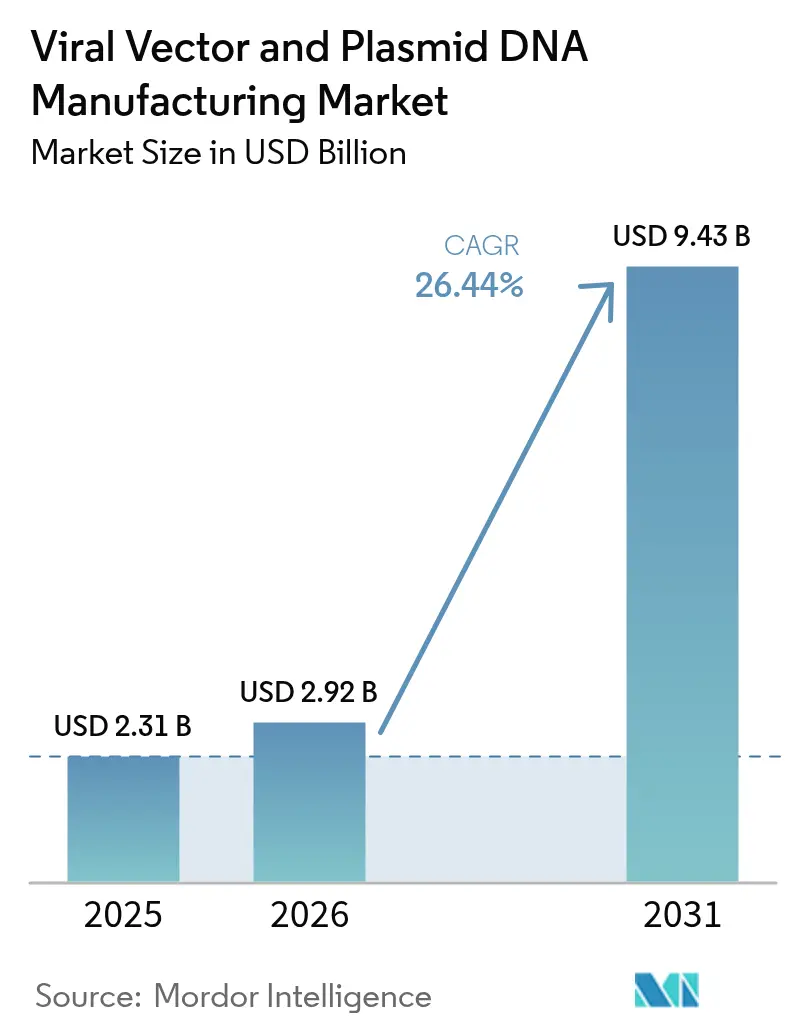
The viral vectors and plasmid DNA manufacturing market size in 2026 is estimated at USD 2.92 billion, growing from 2025 value of USD 2.31 billion with 2031 projections showing USD 9.43 billion, growing at 26.44% CAGR over 2026-2031. Demand accelerates as more gene therapies win regulatory approvals, personalized medicine becomes routine, and production technologies mature enough for commercial scale. Supply remains tight because global GMP capacity lags sharply behind the clinical pipeline, pushing sponsors toward specialized CDMOs and spurring wave after wave of facility expansions and acquisitions. Viral vectors continue to dominate shipments, yet non-viral approaches gain traction as developers try to curb cost, simplify scale-up, and limit immunogenicity. North America retains leadership in approvals and spend, but Asia-Pacific attracts the next tranche of factories as governments fund local biologics hubs and innovators chase lower operating outlays.
Key Report Takeaways
- By product type, viral vectors led with 54.92% of the viral vectors and plasmid DNA manufacturing market share in 2025, while non-viral vectors are projected to grow at a 29.12% CAGR to 2031.
- By application, cancer accounted for 48.21% share of the viral vectors and plasmid DNA manufacturing market size in 2025, whereas infectious diseases are advancing at a 29.58% CAGR through 2031.
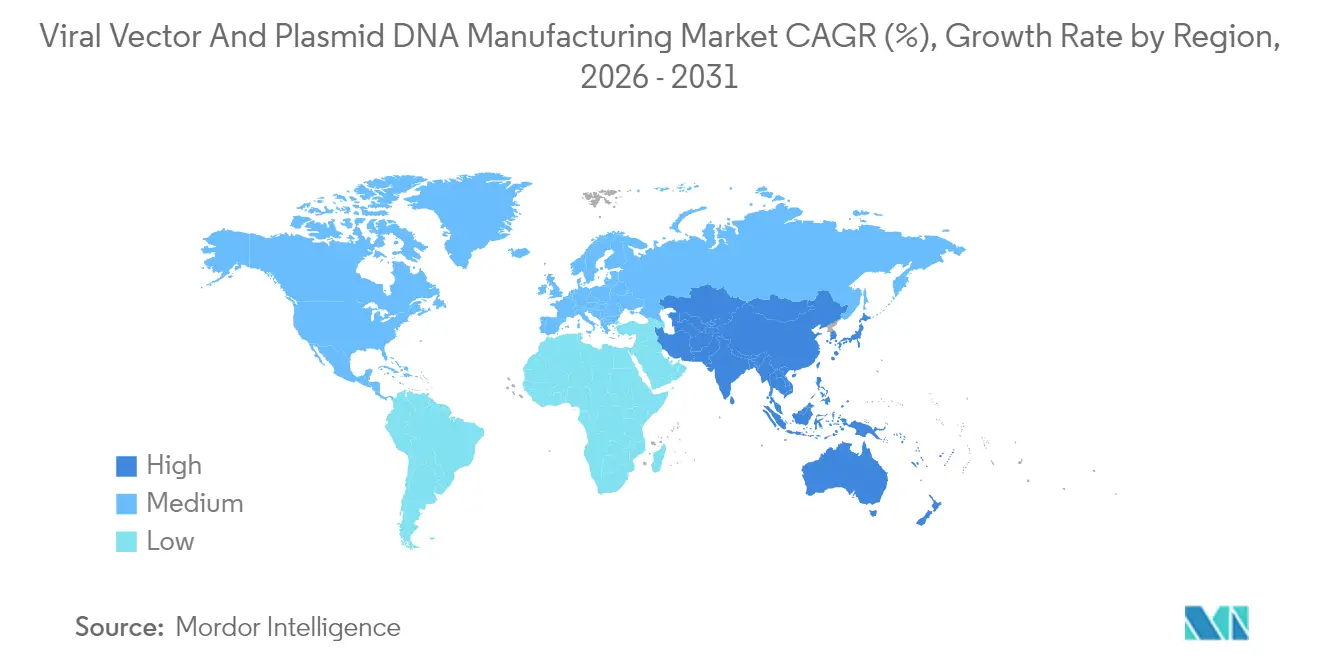
- By geography, North America held 42.11% revenue share in 2025; Asia-Pacific is set to expand at a 28.02% CAGR during 2026-2031.
Note: Market size and forecast figures in this report are generated using Mordor Intelligence’s proprietary estimation framework, updated with the latest available data and insights as of 2026.
Global Viral Vector And Plasmid DNA Manufacturing Market Trends and Insights
Drivers Impact Analysis*
| Driver | % Impact on CAGR Forecast | Geographic Relevance | Impact Timeline |
|---|---|---|---|
| Rising incidence of genetic and chronic diseases | +4.2% | Global, with higher prevalence in developed markets | Long term (≥ 4 years) |
| Growing pipeline of gene and cell therapies | +6.8% | North America and Europe leading; Asia-Pacific emerging | Medium term (2-4 years) |
| Expanding adoption of viral vectors in vaccines and novel modalities | +5.1% | Global, pandemic-driven acceleration | Short term (≤ 2 years) |
| Increasing outsourcing to specialized CDMOs | +3.9% | North America & Europe core; expanding worldwide | Medium term (2-4 years) |
| Technological advancements in scalable vector production platforms | +4.7% | Technology hubs in US, EU and Asia-Pacific | Long term (≥ 4 years) |
| Supportive regulatory and funding environment for advanced therapies | +2.5% | Primarily developed markets, spreading to emerging regions | Medium term (2-4 years) |
| Source: Mordor Intelligence | |||
Rising Incidence of Genetic and Chronic Diseases
More patients receive precise diagnoses for rare genetic disorders and chronic conditions, and many of those indications now have either approved or late-stage gene therapies in view. Recently cleared products such as Zevaskyn and Kebilidi show that authorities are willing to green-light advanced treatments for historically intractable illnesses, driving steady vector demand. The epidemiological transition toward older populations amplifies chronic disease prevalence, creating a durable pool of candidates for one-time gene replacement. Rare-disease incentives, including streamlined reviews and market exclusivity, further fortify the outlook. Combined, these factors add material volume to the viral vectors and plasmid DNA manufacturing market.
Growing Pipeline of Gene and Cell Therapies
More than 2,000 gene-therapy programs now populate global registries, with adeno-associated viruses (AAV) still the most common payload. The FDA’s Platform Technology Designation for Sarepta’s rAAVrh74 template encourages reuse of well-characterized vectors, cutting both cost and timeline[1]. Drug makers have followed with bricks-and-mortar commitments such as Novartis’ EUR 40 million EU vector plant, ensuring slots for late-stage assets . Developers that secure capacity early can move rapidly from Phase II data to launch. The steady clinical queue therefore locks in multi-year production visibility and underpins expansion across the viral vectors and plasmid DNA manufacturing market.
Expanding Adoption of Viral Vectors in Vaccines and Novel Modalities
COVID-19 validated viral vectors for rapid vaccine scale-up, and platforms now target endemic pathogens and therapeutic vaccines. New adenoviral serotypes and capsid engineering help skirt pre-existing immunity, while bovine adenoviruses deliver promising intranasal responses. Lentiviral constructs venture into inhaled formulations for cystic fibrosis, and AAVs increasingly serve as vectored immunotherapies that drive robust, durable immunity. These non-oncology use cases diversify revenue streams and support continued factory builds across the viral vectors and plasmid DNA manufacturing market.
Technological Advancements in Scalable Vector Production Platforms
Single-use bioreactors, continuous purification, and digital twins shorten turnaround and trim contamination risk. Platform workflows can slash viral-vector cost of goods by as much as 40% while preserving potency. Real-time capacitance sensing tightens process control, raising yields and easing batch-to-batch variation[2]. Machine-learning engines from firms like Dyno Therapeutics re-engineer capsids for higher payload and lower dose. Collectively, these tools unlock greater volume and lower unit cost for the viral vectors and plasmid DNA manufacturing market.
Restraints Impact Analysis*
| Restraints Impact Analysis | (~) % Impact on CAGR Forecast | Geographic Relevance | Impact Timeline |
|---|---|---|---|
| High manufacturing and capital costs | -3.8% | Global, with greater impact on emerging markets | Medium term (2-4 years) |
| Limited global GMP production capacity | -4.2% | Worldwide shortage, regional variations | Short term (≤ 2 years) |
| Complex and evolving regulatory requirements | -2.7% | Most pronounced in multi-jurisdictional programs | Medium term (2-4 years) |
| Supply-chain dependence on specialized raw materials | -2.3% | Global, especially where import lead-times are long | Short term (≤ 2 years) |
| Source: Mordor Intelligence | |||
High Manufacturing and Capital Costs
A single gene-therapy course can cost USD 1 million, and viral vector inputs often consume up to 40% of that bill[3]. While Brazil showed a path to USD 35,000 CAR-T pricing through local production, most health systems struggle to pay at scale. Outcome-based contracts help spread risk, but smaller biotech firms still face heavy upfront investment to secure slots or build plants. Automation and standardized platforms promise relief, yet they require multimillion-dollar capital outlays that only deep-pocketed sponsors can afford. These costs temper penetration of the viral vectors and plasmid DNA manufacturing market, especially in lower-income regions.
Limited Global GMP Production Capacity
Industry surveys suggest available viral raw material meets under 1% of future global vector demand. Mega-projects like Fujifilm Diosynth’s USD 8 billion build and Samsung Biologics’ Plant 5 help but cannot close the gap quickly. Supply chain kinks, from specialized resins to trained staff, exacerbate delays. Developers therefore lock in CDMO agreements years before pivotal readouts, creating barriers for newer entrants and raising program risk. The mismatch constrains throughput for the viral vectors and plasmid DNA manufacturing market until additional capacity comes online.
*Our forecasts treat driver/restraint impacts as directional, not additive. The impact forecasts reflect baseline growth, mix effects, and variable interactions.
Segment Analysis
By Product Type: Viral Vectors Dominate Despite Non-Viral Momentum
Viral vectors accounted for 54.92% of the viral vectors and plasmid DNA manufacturing market in 2025, supported by well-established regulatory precedents and strong transfection efficiency. Non-viral vectors deliver the fastest 29.12% CAGR through 2031, propelled by lipid nanoparticles, polymer conjugates, and electroporation systems that bypass immunity hurdles. Plasmid DNA remains the backbone for both categories, serving as the starting template for viral assembly and as the therapeutic construct in direct injection approaches.
The viral vectors and plasmid DNA manufacturing market size for viral vectors is projected to widen further as newly approved products such as Casgevy and Elevidys transition to commercial scale. AAV and lentiviral lines dominate oncology and rare-disease pipelines thanks to durable expression and tissue tropism. Yet manufacturing complexity keeps cost high, motivating drug sponsors to trial scalable non-viral carriers. Lipid nanoparticle expertise gained in mRNA COVID-19 vaccines can be leveraged for plasmid and siRNA delivery, helping non-viral methods chip away at share. Partnerships between nanoparticle specialists and legacy biologics CDMOs have already started to expand total factory utilization, indicating that both modalities will coexist within the viral vectors and plasmid DNA manufacturing market.

By Application: Cancer Continues to Lead as Infectious Disease Surges
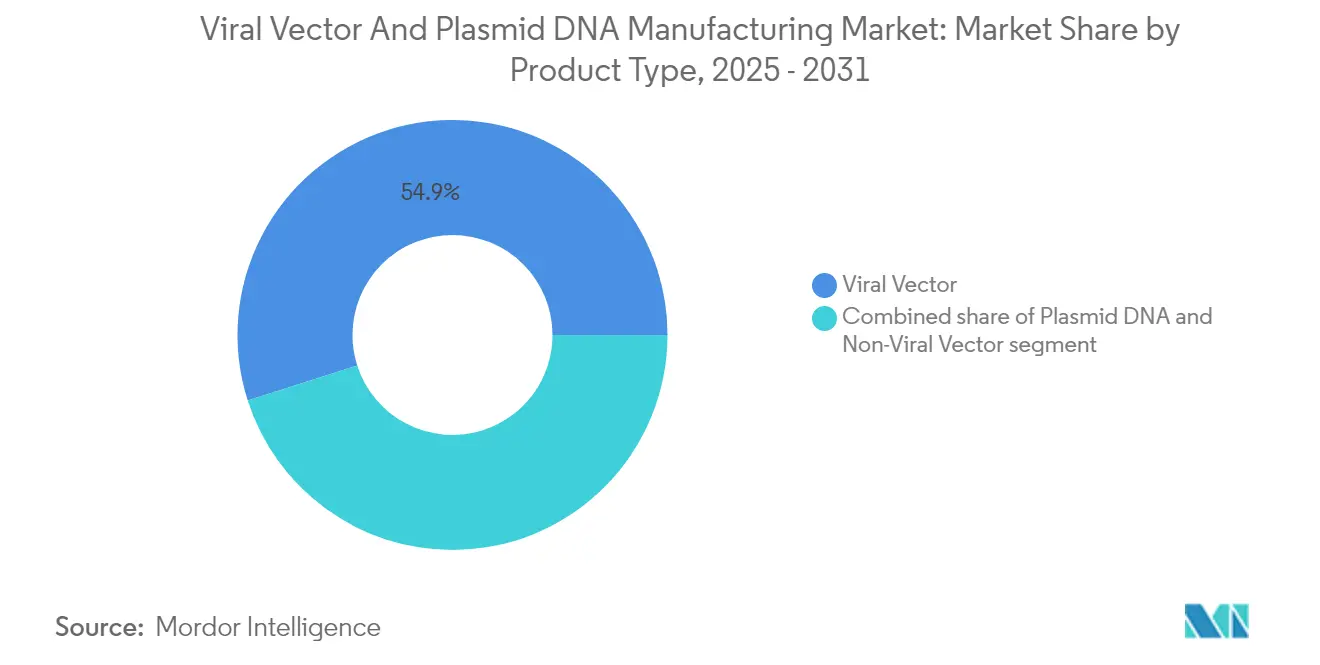
Cancer represented 48.21% of 2025 revenue, anchored by commercial CAR-T therapies and a full slate of autologous constructs entering pivotal trials. Infectious disease applications show the swiftest 29.58% CAGR through 2031, as adenoviral and AAV vaccine backbones remain central to pandemic preparedness programs. Gene-replacement products for ophthalmic and neurologic disorders add further depth, yet their absolute volumes stay modest relative to oncology and vaccines.
The viral vectors and plasmid DNA manufacturing market size tied to cancer indications is forecast to rise steadily because multiple solid-tumor CAR-T and TCR products approach launch. Cost pressure triggers process intensification and automated cell-handling lines, boosting vector demand in parallel. On the infectious-disease front, governments stockpile next-generation vector vaccines to guard against respiratory viruses and emerging zoonoses, providing predictable offtake. These twin growth engines give manufacturers confidence to extend capacity, reinforcing the virtuous cycle that underpins the viral vectors and plasmid DNA manufacturing market.
Geography Analysis
North America controlled 42.11% of 2025 revenue, sustained by FDA leadership, large venture funding pools, and a deep clinical-trial ecosystem. Major transactions like Lonza’s USD 1.2 billion takeover of a Vacaville plant and Charles River’s purchase of Vigene Biosciences illustrate the region’s appetite for vertical integration. Skilled labor shortages and raw-material chokepoints do persist, but concerted workforce programs and reshoring incentives aim to close gaps. Overall, the viral vectors and plasmid DNA manufacturing market still finds its highest pricing and most reliable regulatory pathway in the United States.
Asia-Pacific shows the strongest 28.02% CAGR outlook as multinational firms and domestic champions build new suites in China, South Korea, India, and Australia. VectorBuilder’s USD 500 million Guangzhou campus and WuXi Biologics’ continual expansions reflect Beijing’s emphasis on localizing critical modalities, while India’s Bharat Biotech commits USD 75 million to its inaugural CGT plant. Regional authorities streamline approvals and offer tax credits, bringing down cost per liter and widening patient access. These moves rapidly enlarge the viral vectors and plasmid DNA manufacturing market in the region and diversify global supply lines.
Europe retains a mature yet evolving position. EMA guidelines give predictable review timelines, and cross-border consortia channel Horizon Europe funds into advanced-therapy infrastructure. Novartis’ EUR 40 million Slovenian vector expansion underscores corporate confidence despite reimbursement variations across member states. Post-Brexit, the United Kingdom pursues parallel regulatory schemes to stay attractive for trials and manufacturing. Latin America and Middle East/Africa trail in absolute terms, but Brazil’s cost-effectiveness breakthroughs and Gulf sovereign investment vehicles hint at fresh capacity additions. Collectively, geographical diversification spreads risk and adds resilience to the viral vectors and plasmid DNA manufacturing market.
Regulatory Landscape
In the United States, viral vector and plasmid DNA manufacturing for advanced therapies sits under FDA cGMP expectations (including FD&C Act section 501(a)(2)(B)) and product-specific CMC requirements for biologics and gene therapies. In May 2026, the FDA released final guidance on Chemistry, Manufacturing, and Controls (CMC) flexibilities for developing human cellular and gene therapy products. The guidance reinforces a phase-appropriate approach to control strategies, comparability, and documentation, which directly affects how sponsors scale plasmids and vectors from clinical to BLA readiness.
In Europe, ATMP manufacturing expectations continue to evolve through EudraLex Volume 4 and ATMP-specific GMP. The European Medicines Agency (EMA) initiated work toward revising Part IV (GMP specific to ATMPs), with a first draft revision anticipated in 2026. The draft revision adds emphasis on contamination control concepts, closed and automated systems, and risk-based approaches, which influence facility design and batch release testing strategies. Across major regions, ICH Q5A(R2) remains a key harmonized reference for viral safety evaluation of biotechnology products derived from human or animal cell lines, shaping upstream cell banking, adventitious agent controls, and viral clearance expectations relevant to vector manufacturing.
Value Chain Analysis
The value chain starts with plasmid design and sourcing of critical raw materials (enzymes, nucleotides, cell banks, media, resins, single-use assemblies), followed by GMP plasmid DNA production (often in E. coli), release testing, and use as a key starting material for viral vector generation. Vector production then moves through upstream steps (commonly transient transfection with multiple plasmids for AAV or lentiviral systems, or producer-cell approaches), downstream purification and concentration, extensive analytical characterization (identity, potency, full/empty capsid profiling where applicable, impurities), and final fill-finish and cold-chain distribution to cell therapy or gene therapy drug product manufacturing sites. Because many developers do not maintain in-house suites, CDMOs increasingly bundle process development, GMP manufacturing, and regulatory support to reduce tech transfer friction and shorten lead times.
The main bottlenecks cluster around plasmid supply, upstream yield limits, purification efficiency, and the time and cost burden of analytical testing and comparability. Platform innovation is targeting these constraints by reducing plasmid intensity and standardizing workflows, including single-plasmid and stable producer cell line strategies aimed at lowering raw material consumption and variability compared with multi-plasmid transient transfection. At the same time, the chain is being reinforced through vertical integration (plasmid-to-vector offerings), increased use of single-use and closed systems, and localized capacity additions to reduce exposure to specialized consumable shortages and long import lead times.
Competitive Landscape
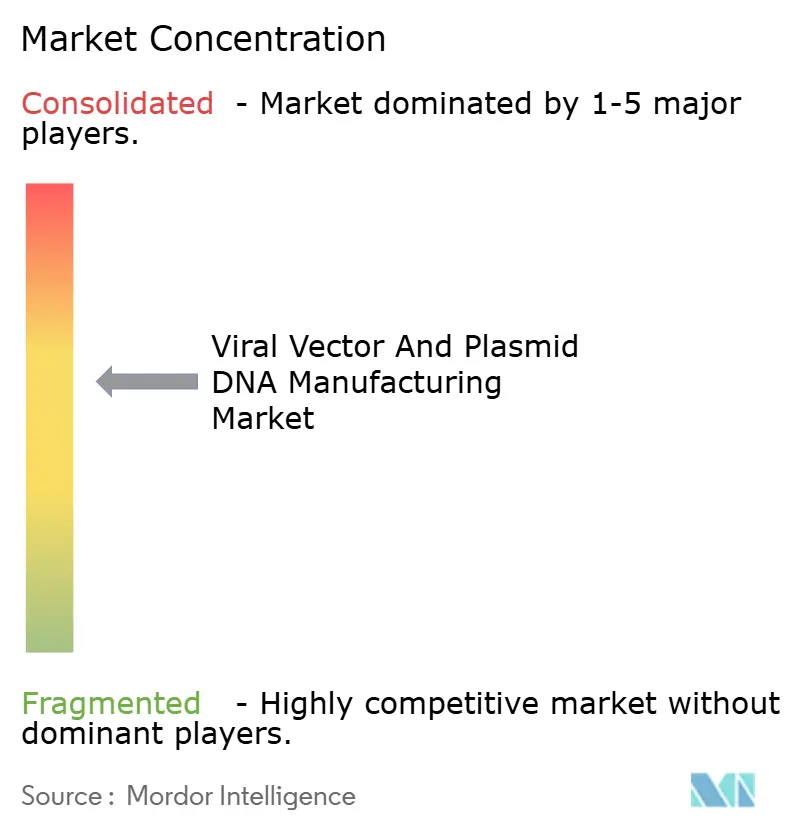
The viral vectors and plasmid DNA manufacturing market is moderately fragmented. Integrated CDMOs such as Lonza, Thermo Fisher Scientific, and Catalent command premium pricing because they combine process development, GMP suites, and regulatory support. Mid-tier specialists like Oxford Biomedica and AGC Biologics target specific vector families to differentiate on know-how. Capacity decisions increasingly shape competitive positioning, and firms with spare clean-room slots often dictate timelines for smaller developers.
M&A activity remains brisk. Merck KGaA bought Mirus Bio for USD 600 million, adding transfection reagents that improve upstream titers. Charles River folded Vigene Biosciences into its network to offer seamless discovery-to-commercial services. These deals compress supply chains and promise faster tech-transfer turnarounds, attributes prized by venture-backed biotech firms. Strategic alliances also proliferate. Cytiva joined forces with Cellular Origins to commercialize a modular cell-therapy production platform, blending single-use hardware and digital analytics to shrink footprints and labor overhead.
Disruptors push new models. Dyno Therapeutics applies AI for rational capsid design, seeking licensing royalties rather than plant ownership. Asia-Pacific CDMOs advertise 30%-plus cost savings against Western peers, though sponsors weigh geopolitical and IP concerns. Thermo Fisher’s 2024 decision to exit certain vector services exposed the operational complexity involved and temporarily tightened supply, giving remaining competitors pricing power. Overall, innovation depth and capital intensity ensure that scale players preserve an edge, but nimble newcomers can still win share by solving specific pain points within the viral vectors and plasmid DNA manufacturing market.
Viral Vector And Plasmid DNA Manufacturing Industry Leaders
-
Lonza Group
-
Thermo Fisher Scientific, Inc.
-
Catalent Inc.
-
Oxford Biomedica
-
Fujifilm Diosynth Biotechnologies
- *Disclaimer: Major Players sorted in no particular order
Market Opportunities and Future Outlook
The key whitespace is at the intersection of capacity, industrialization, and regulatory-ready process standardization, especially for late-stage AAV and lentiviral programs where sponsors need repeatable commercial-scale output and robust comparability packages. Recent investments provide evidence of this shift. ProBio opened a 128,000 sq ft GMP facility in Hopewell, New Jersey (June 2025) to support plasmid DNA and viral vector (AAV/LVV) production. SK pharmteco announced CGMP qualification of a commercial-scale viral vector site in Corbeil-Essonnes, France (March 2026), featuring 12 single-use bioreactors (50 L to 1,000 L) and stated capacity for 40 CGMP batches annually. Together, these actions reinforce demand for end-to-end manufacturing slots and for providers that can combine plasmid supply, vector production, and high-throughput QC under one quality system.
Process and data tooling is another opportunity area with visible adoption signals. FDA finalization of CMC flexibilities for cell and gene therapies (May 2026) raises the bar for well-justified control strategies and lifecycle comparability, favoring manufacturers that can operationalize digital batch records, strong analytics, and standardized platform documentation across programs. Separately, CDMOs and therapy developers have highlighted AI-assisted vector design and process optimization use cases, including discussions at BIO 2026 involving companies such as Kriya, Opus, and Epicrispr. These examples point to near-term spend on software-enabled yield improvement, variability reduction, and right-first-time tech transfer. Geographic diversification also remains an execution-driven opportunity as Asia-Pacific builds out lower-cost hubs while Western markets expand capacity for regulated supply, increasing the need for harmonized quality frameworks and dual-sourcing of critical starting materials such as plasmid DNA.
Recent Industry Developments
- May 2026: Lonza launched the Xcite AAV stable producer cell line platform to reduce manufacturing complexity versus transient transfection and support higher-titer AAV production. The platform-centric approach targets industrialization needs for late-stage programs and shifts CDMO differentiation toward repeatable, scalable upstream performance.
- December 2025: Thermo Fisher Scientific expanded its Gibco Bacto portfolio with next-generation chemically defined media aimed at improving E. coli productivity for plasmid DNA and recombinant production workflows. Tighter raw material definition supports batch consistency and aligns with rising regulatory scrutiny on starting materials and process variability.
- October 2025: Oxford Biomedica acquired a commercial-scale viral vector manufacturing facility in Durham, North Carolina, expanding its US footprint and adding capacity designed for regulated production. The acquisition strengthens supply optionality for sponsors that need North America-based manufacturing and accelerates the build-out of commercial-scale vector slots.
Research Methodology Framework and Report Scope
Market Definition and Coverage
This market covers revenue generated from cGMP manufacturing of viral vectors and therapeutic grade plasmid DNA used to make gene therapies, cell therapies, and nucleic acid vaccines. It includes process development, production, and release testing activities that are part of supply.
Scope exclusions: research-only or diagnostic-grade vectors and plasmids produced outside cGMP settings are not counted.
Segmentation Overview
- By Product Type
- Plasmid DNA
- Viral Vector
- Non-Viral Vector
- By Application
- Cancer
- Genetic Disorders
- Infectious Diseases
- Ophthalmic Disorders
- Neurological Disorders
- Other Applications
- Geography
- North America
- United States
- Canada
- Mexico
- Europe
- Germany
- United Kingdom
- France
- Italy
- Spain
- Rest of Europe
- Asia-Pacific
- China
- Japan
- India
- Australia
- South Korea
- Rest of Asia-Pacific
- Middle East & Africa
- GCC
- South Africa
- Rest of Middle East & Africa
- South America
- Brazil
- Argentina
- Rest of South America
- North America
Data Sources, Market Sizing, and Validation
Desk Research
Desk research was used to set the market boundaries, build a first view of demand drivers, and align assumptions with how this supply chain operates in practice. We leaned on public sources such as the US FDA databases, EMA public assessment reports, ClinicalTrials.gov, WHO references on biologics and vaccines, and OECD health data, to frame therapy activity and approvals by geography.
To convert that context into usable inputs, we also reviewed company filings, investor presentations, and press releases on capacity expansions, plus association publications covering cell and gene therapy manufacturing. In a few cases, a paid subscription for company financials and another for patent intelligence were used to cross-check revenue exposure, technology shifts, and timelines. These examples are not exhaustive, and we also used other public sources for data collection, validation, and clarification.
Primary Interviews and Surveys
Primary work focused on expert interviews and structured surveys with manufacturing leaders, process development teams, QA and regulatory staff, and procurement stakeholders who buy or plan vector and plasmid capacity. Because this is a global market, inputs were checked across major producing and consuming regions, and then used to confirm utilization patterns, pricing logic, and the typical split between clinical and commercial demand.
Distribution of primary research fieldwork respondents
| Company type | Respondent position | Region |
|---|---|---|
| Top tier: 36% | CXOs: 21% | APAC: 50% |
| Mid tier: 43% | Functional/Unit leaders: 21% | EMEA: 32% |
| Smaller Players: 21% | Managers: 58% | Americas: 18% |
Market-Sizing & Forecasting
Sizing starts with a top-down build that ties demand to observable development activity and manufacturing intensity. Clinical and commercial gene therapy and vaccine pipelines are translated into expected batch volumes and capacity needs. That demand pool is then converted into revenue using practical price and mix assumptions, and the totals are corroborated with selective bottom-up checks such as sampled price-per-batch signals, service line mix, and supplier roll-ups where disclosures allow it.
Key inputs for this market include vector type mix (AAV, lentiviral, adenoviral, and others), the share of programs moving from preclinical to clinical phases, manufacturing success rates and rework, capacity expansions and utilization levels, and the expected shift from clinical to commercial lots. For forecasting to stay explainable, we rely mainly on scenario analysis, supported by expert views on near-term capacity tightness, average price progression, and the likely pace of approvals. Where bottom-up visibility is incomplete, gaps are handled by using conservative ranges for pricing and utilization and then narrowing them through interview feedback and consistency checks against publicly visible pipeline momentum.
Data Validation & Update Cycle
Validation is done through step-by-step cross-checks so the final number is not dependent on a single input. Model outputs are compared against independent signals such as therapy pipeline counts, public manufacturing expansion announcements, and the implied revenue-per-capacity ranges. Outliers are reviewed and corrected before sign-off.
Before estimates are finalized, assumptions that can swing results, such as utilization and price ramps, are rechecked through follow-up outreach when variance is high. Reports are refreshed annually, and interim updates are done when material events occur, including major approvals, capacity additions, or policy changes. Right before delivery, a final analyst pass is completed so clients receive the latest updated view.
Mordor Intelligence's Viral Vectors and Plasmid Dna Manufacturing Market Size Compared With Other Published Estimates
Published market sizes for viral vectors and plasmid DNA manufacturing often differ, even when the topic name looks similar, because the boundary conditions are not consistent across studies. The main drivers are usually which grades are counted, whether the value includes only cGMP supply or also research and tooling volumes, and how pricing is treated as programs move into larger scale production.
By tracking cGMP-only revenue signals and refreshing pipeline-to-batch conversion assumptions with interviews, Mordor Intelligence keeps the total anchored to therapeutic manufacturing demand rather than broad lab-grade activity. A second gap driver is how studies handle price and mix, where some models apply a flat average price across vector types, while others separate AAV and lentiviral workflows and reflect different yield and release testing burdens. Timing also matters because currency conversion cutoffs and the update cadence can shift the stated current-year value.
Benchmark comparison
| Source | Market Size | Gaps in Research Methodology |
|---|---|---|
| Mordor Intelligence | USD 2.92 B (2026) | |
| Global Consultancy A | USD 6.38 B (2024) | Uses an earlier base year and a wider value pool that appears to include broader manufacturing-related revenues beyond cGMP therapeutic supply, which lifts the starting market size. |
| Industry Publisher B | USD 7.36 B (2026) | Likely applies a broader service scope and higher blended pricing across workflows, and may count adjacent activities that are not strictly viral vector or plasmid cGMP manufacturing. |
The comparison shows that most of the spread comes from scope and pricing treatment rather than a simple math error. When the market is limited to cGMP therapeutic manufacturing and checked against pipeline-to-capacity logic, the estimate stays traceable to clear demand indicators and can be repeated with the same set of steps.
Key Questions Answered in the Report
What is the projected size of the viral vectors and plasmid DNA manufacturing market in 2031?
The market is forecast to reach USD 9.43 billion by 2031, expanding at a 26.44% CAGR.
Which product category currently leads the market?
Viral vectors lead with 54.92% share in 2025, supported by regulatory familiarity and high gene-delivery efficiency.
Why is Asia-Pacific the fastest-growing region?
Cost-competitive manufacturing, government incentives, and rising therapeutic demand drive a 28.02% CAGR in Asia-Pacific.
What is the biggest bottleneck facing manufacturers today?
Limited global GMP capacity meets under 1% of projected demand, creating multi-year wait times for production slots.
How are companies addressing high manufacturing costs?
Firms invest in single-use systems, standardized platform processes, and outcome-based pricing models to reduce cost of goods.
Which application segment is expected to grow fastest through 2031?
Infectious disease applications are forecast to expand at a 29.58% CAGR as governments prepare for future pandemics.