
Global Viral Clearance Services Market Size and Share
Market Overview
| Study Period | 2020 - 2031 |
|---|---|
| Market Size (2026) | USD 1.1 Billion |
| Market Size (2031) | USD 2.21 Billion |
| Growth Rate (2026 - 2031) | 14.89 % |
| Fastest Growing Market | Asia Pacific |
| Largest Market | North America |
| Market Concentration | Medium |
Major Players *Disclaimer: Major Players sorted in no particular order Image © Mordor Intelligence. Reuse requires attribution under CC BY 4.0. | |
Global Viral Clearance Services Market Analysis by Mordor Intelligence
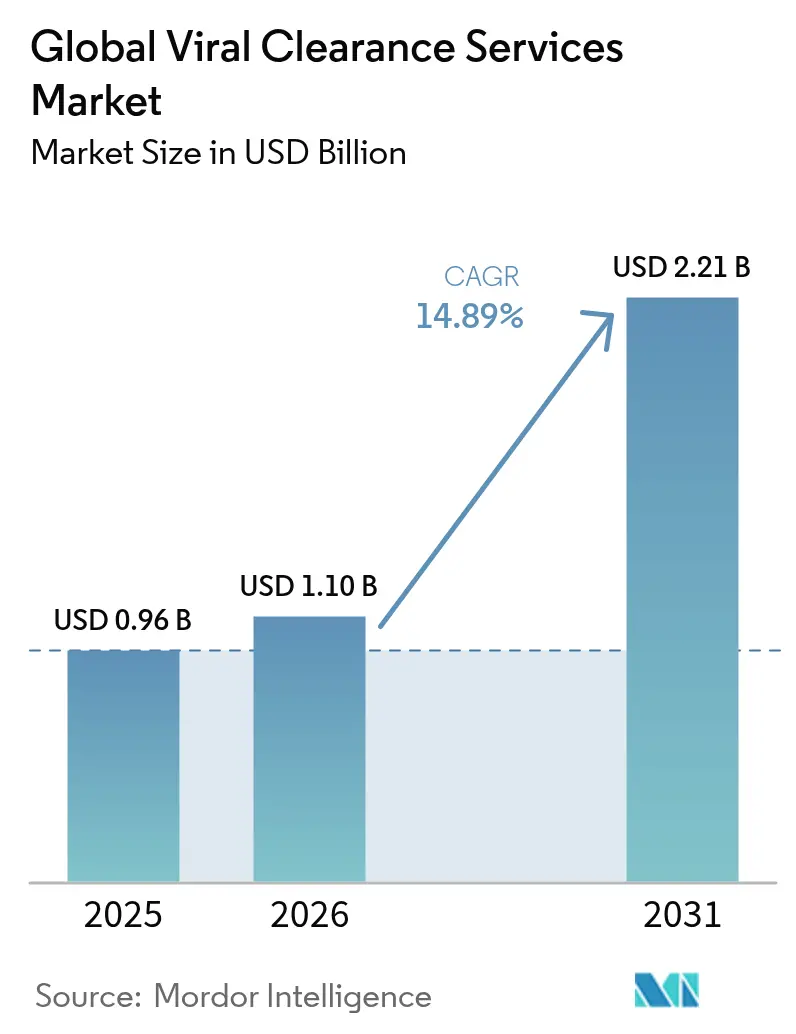
The viral clearance services market size is expected to grow from USD 0.96 billion in 2025 to USD 1.10 billion in 2026 and is forecast to reach USD 2.21 billion by 2031 at 14.89% CAGR over 2026-2031. The doubling trajectory reflects surging demand for viral safety validation across biologics, vaccines, and advanced modalities such as cell and gene therapies. Platform-based validation encouraged by the United States Food and Drug Administration’s (FDA) Q5A(R2) update has shortened study timelines, turning viral clearance from a compliance checkbox into a strategic enabler of faster product launches fda.gov. Rapid expansion of adeno-associated virus (AAV) and lentiviral vector pipelines has further magnified the need for bespoke protocols, while outsourcing to specialist contract development and manufacturing organizations (CDMOs) accelerates capacity growth.
Key growth catalysts include the global renaissance in large-molecule manufacturing, harmonized regulatory frameworks across major markets, and the steady industrialization of continuous bioprocessing. Competitive dynamics are reshaping as traditional equipment vendors extend into services and specialist contract research organizations (CROs) buy manufacturing assets to provide end-to-end offerings. Despite a robust outlook, cost-intensive multi-virus studies, shortages of skilled biosafety personnel, and fragmented guidance for novel modalities pose headwinds.
Key Report Takeaways
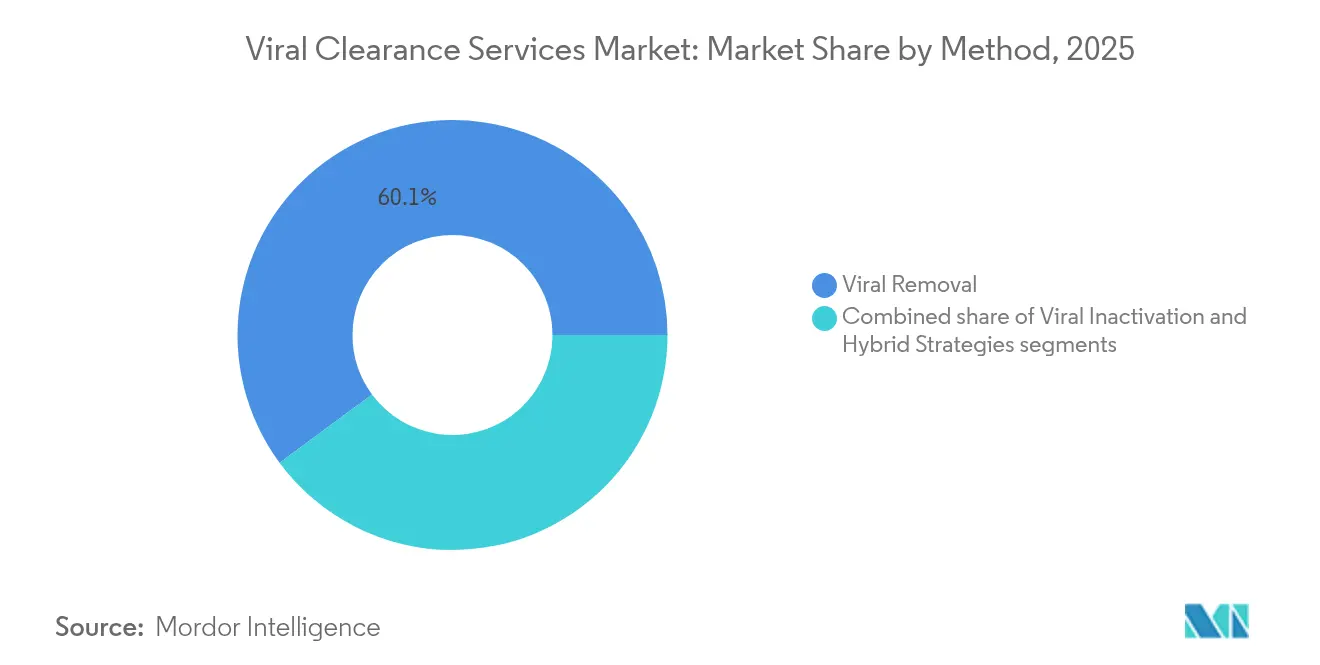
- By methodology, viral removal techniques held a 60.12% share of the viral clearance services market in 2025, while hybrid strategies are projected to grow at a 16.79% CAGR to 2031.
- By application, recombinant proteins led with 43.10% revenue share in 2025; gene and cell therapies are forecast to expand at an 17.95% CAGR through 2031.
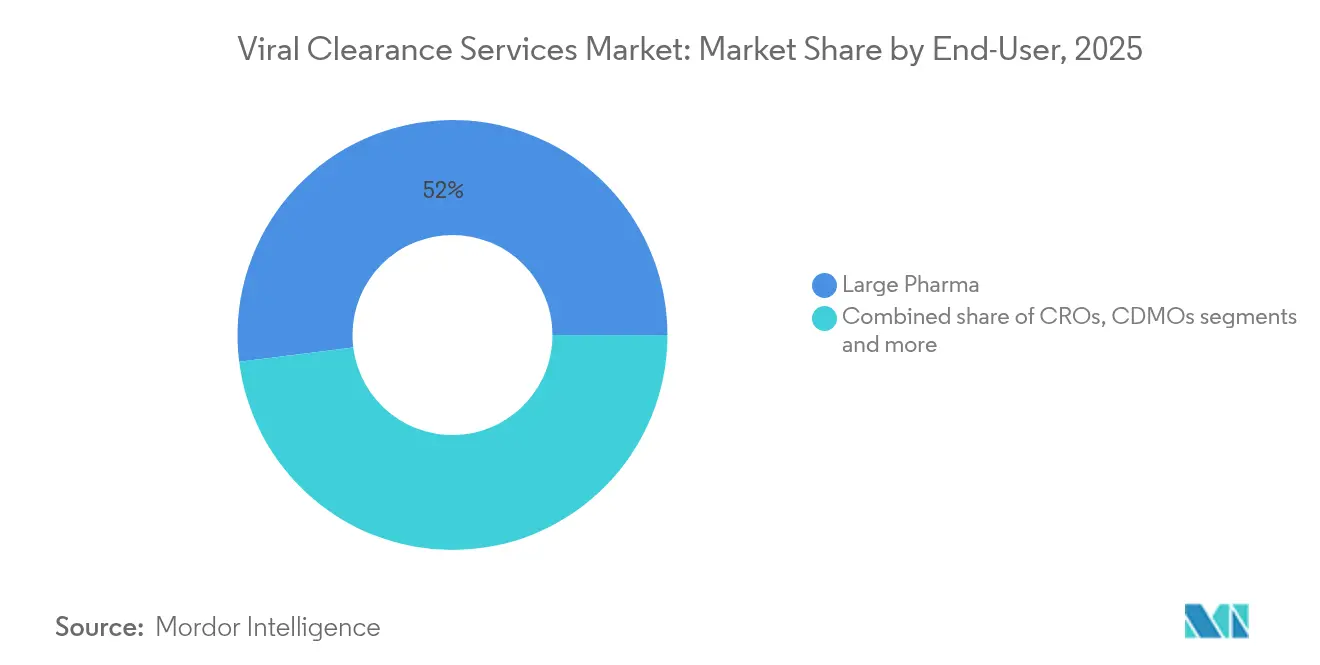
- By end-user, large pharmaceutical companies accounted for 51.98% of the viral clearance services market share in 2025, but CDMOs record the fastest projected CAGR at 16.63% through 2031.
- By geography, North America commanded 38.85% of the viral clearance services market size in 2025, whereas Asia Pacific is advancing at a 16.22% CAGR to 2031.
Note: Market size and forecast figures in this report are generated using Mordor Intelligence’s proprietary estimation framework, updated with the latest available data and insights as of 2026.
Market Trends and Insights
Drivers Impact Analysis of Global Viral Clearance Services Market*
| Driver | (~) % Impact on CAGR Forecast | Geographic Relevance | Impact Timeline |
|---|---|---|---|
| Rising demand for viral safety validation in large-molecule manufacturing | +3.2% | Global, with concentration in North America & EU | Medium term (2-4 years) |
| Expanding biologics & biosimilar pipeline worldwide | +2.8% | Global, with emerging market acceleration in APAC | Long term (≥ 4 years) |
| Cell & gene therapy boom requiring bespoke protocols | +2.7% | Global, with regulatory leadership in US & EU | Long term (≥ 4 years) |
| Outsourcing surge to specialist CRO/CDMOs | +2.1% | North America & EU core, spill-over to APAC | Short term (≤ 2 years) |
| Continuous bioprocessing drives in-line clearance technologies | +1.9% | North America & EU, early adoption in select APAC markets | Medium term (2-4 years) |
| AI-enabled predictive validation platforms shorten study timelines | +1.5% | North America & EU, gradual APAC adoption | Medium term (2-4 years) |
| Source: Mordor Intelligence | |||
Rising Demand for Viral Safety Validation in Large-Molecule Manufacturing
Large-molecule production has shifted viral clearance upstream into process design. FDA guidance[1] now rewards platform approaches, letting manufacturers reuse clearance data across monoclonal antibody programs while preserving safety. Continuous bioprocessing lines incorporate in-line virus filters that provide real-time assurance, improving yields and lowering re-validation costs. Companies with such integrated capabilities launch products sooner and limit regulatory queries, turning viral clearance capacity into a clear competitive advantage. Equipment innovators have responded with high-flux filters that safeguard product quality without compromising throughput.
Expanding Biologics & Biosimilar Pipeline Worldwide
More than 700 gene therapies and hundreds of biosimilars are under development, and each new entrant needs rigorous clearance. International Council for Harmonisation (ICH) efforts have standardized requirements so that a single validation package can underpin submissions on multiple continents. Service providers therefore capture a larger slice of development budgets. Eurofins Scientific, for example, has reported a rebound in large contracted studies and allocated additional capacity[2] to viral safety work.
Cell & Gene Therapy Boom Requiring Bespoke Protocols
AAV, lentiviral, and oncolytic platforms demand protocols tuned to vector size, envelope structure, and tissue tropism. The FDA’s approval of therapies like BEQVEZ for hemophilia B underscores the maturing regulatory path, yet every new vector serotype can trigger novel safety questions. Lonza and Charles River now market vector-specific clearance panels that cut weeks off development time while maintaining global compliance. These bespoke services position providers to capture premium pricing as the gene therapy wave gains momentum.
Outsourcing Surge to Specialist CRO/CDMOs
Biopharma companies increasingly view in-house viral clearance suites as non-core, opting instead for CDMOs that run hundreds of studies annually. This model delivers economies of scale, gives smaller biotech firms instant access to seasoned virologists, and buffers large firms against sudden project surges. Merck’s USD 600 million acquisition of Mirus Bio and Charles River’s USD 292.5 million purchase of Vigene Biosciences exemplify the vertical integration shaping the viral clearance services market.
Restraints Impact Analysis of Global Viral Clearance Services Market*
| Restraint | % Impact on CAGR Forecast | Geographic Relevance | Impact Timeline |
|---|---|---|---|
| High cost & complexity of multi-virus validation studies | -2.4% | Global, with acute impact in emerging markets | Short term (≤ 2 years) |
| Shortage of skilled virology and biosafety workforce | -1.8% | North America & EU primarily, emerging in APAC | Medium term (2-4 years) |
| Fragmented global guidance for novel modalities (e.g., AAV) | -1.2% | Global, with regulatory leadership gaps in emerging markets | Long term (≥ 4 years) |
| Supply-chain gaps in qualified model viruses & reference standards | -0.9% | Global, with concentration risks in specialized suppliers | Short term (≤ 2 years) |
| Source: Mordor Intelligence | |||
High Cost & Complexity of Multi-Virus Validation Studies
Comprehensive studies often involve three to five model viruses, each tested across multiple process steps. The total research outlays range from USD 500,000 to USD 2 million, straining smaller biotech budgets and deterring innovators in resource-limited regions. Reagent supply chains are fragile, with long lead times for qualified seed stocks. Service providers are countering costs by adopting non-infectious surrogates and data-rich platform validations that regulators now accept.
Shortage of Skilled Virology and Biosafety Workforce
Demand for experienced virologists has outstripped supply by 42% since 2018, according to sector analyses. Retirements in the public-health laboratory system exacerbate the gap, while academic pipelines struggle to keep pace. Firms are automating routine assays and partnering with universities on fast-track certification programs, yet talent scarcity continues to limit global capacity additions.
*Our forecasts treat driver/restraint impacts as directional, not additive. The impact forecasts reflect baseline growth, mix effects, and variable interactions.
Global Viral Clearance Services Market Segment Analysis
By Method:
Hybrid Strategies Drive InnovationViral removal methods captured 60.12% of the viral clearance services market size in 2025, reaffirming their status as the backbone of bioprocess safety. Chromatography, depth filtration, and virus-retentive membranes deliver predictable log-reduction values across monoclonal antibodies and recombinant proteins. Continuous downstream trains now weave these steps into single-use, closed systems that maintain sterility while minimizing hold times.
Hybrid strategies, though accounting for a smaller base, are growing at 16.79% CAGR through 2031 and are reshaping service portfolios. Providers integrate solvent/detergent inactivation, low-pH hold, and UV-C irradiation with physical removal in deliberate sequences that address both enveloped and non-enveloped threats. Asahi Kasei’s Planova FG1 filter demonstrates how high-flux membranes accelerate throughput without sacrificing virus log-reduction factors. The viral clearance services market size for hybrid protocols is projected to expand from USD 140 million in 2025 to USD 355 million in 2031, underscoring industry appetite for multimodal resilience.
Second-generation hybrids layer high-pressure processing or nanofiltration onto legacy steps to combat robust parvoviruses. AI-guided design tools suggest optimal step combinations, reducing experimental runs by up to 30%. These innovations enhance predictability and support regulators’ push toward risk-based, science-driven validation frameworks. As continuous manufacturing gains traction, providers able to integrate hybrid modules inline will gain share at the expense of batch-oriented competitors.

By Application:
Gene Therapies Reshape Validation ParadigmsRecombinant proteins held 43.10% of the viral clearance services market share in 2025, benefiting from standardized platform studies that cover multiple antibody variants. Segment efficiencies stem from shared capture, polishing, and viral reduction trains that lower marginal costs per molecule.
Gene and cell therapies, however, are expanding at an 17.95% CAGR and will reach an estimated 29.35% of the overall viral clearance services market size by 2031. AAV manufacturing shifts from adherent to suspension systems, achieving 85-95% vector recovery while imposing stringent removal of replication-competent particles. Each new serotype may necessitate fresh clearance data, limiting economies of scale but driving premium service demand. Providers offer vector-specific virus spiking panels and replicate-competent AAV assays to satisfy regulators in the United States and European Union.
Monoclonal antibodies continue steady demand as next-generation formats such as bispecifics enter clinical phases, yet clearance expectations remain familiar, easing provider workloads. Tissue- and blood-derived products require orthogonal inactivation methods to counter endogenous viruses. Vaccine manufacturers seek balance between antigen integrity and pathogen inactivation, leaning on solvent/detergent or UV-C steps combined with filtration.
By End-User:
CDMOs Capture Outsourcing WaveLarge pharmaceutical companies accounted for 51.98% of viral clearance services market share in 2025, leveraging in-house biosafety labs alongside selective outsourcing for surge capacity. Internal capabilities ensure proprietary process know-how remains confidential while preserving scheduling flexibility for late-stage programs.
CDMOs, though smaller today, are outpacing all other segments at 16.63% CAGR. Massive deals such as Lonza’s USD 1.2 billion purchase of Roche’s Vacaville site have added reactor volume and biosafety suites primed for outsourced work. The viral clearance services market size attributable to CDMOs is forecast to grow from USD 270 million in 2025 to USD 680 million in 2031. Small and mid-size biotech firms gravitate toward CDMOs to avoid capital-intensive BSL-2/3 labs and to tap veteran virologists who can navigate multiple regulatory jurisdictions. CROs with specialized assay portfolios attract early-stage innovators, while academic centers focus on method development and workforce training rather than high-throughput commercial work.
Geography Analysis
North America Viral Clearance Services Market
North America controlled 38.85% of the viral clearance services market in 2025 and remains the global nexus for regulatory leadership, venture funding, and large-scale plant expansions. Fujifilm’s USD 1.2 billion North Carolina project will triple bioreactor output by 2031, creating new demand for integrated clearance validation. Robust supply networks for qualified model viruses, plus proximity to FDA reviewers, enhance the region’s strategic importance. The viral clearance services market size in North America is expected to climb from USD 380 million in 2025 to USD 800 million in 2031.
Europe Viral Clearance Services Market
Europe maintains a substantial presence underpinned by the European Medicines Agency’s comprehensive viral safety guidance and the European Commission’s 2024 biotechnology strategy. Roche’s €90 million gene therapy hub in Germany and Novartis’s €40 million vector facility in Slovenia expand regional capacity. Yet Europe’s multi-country regulatory landscape and rising labor costs temper growth to single-digit CAGRs, keeping its share stable rather than expansionary.
APAC Viral Clearance Services Market
Asia Pacific is the fastest mover, advancing at a 16.22% CAGR. China’s decision to lift foreign ownership limits for cell and gene therapy within free-trade zones and Japan’s expedited Sakigake pathway shorten approval windows and attract multinational sponsors. Regional CDMOs like WuXi Biologics and Takara Bio are investing in vector suites and high-capacity virus filtration trains. The viral clearance services market size in Asia Pacific is projected to leap from USD 210 million in 2025 to USD 518 million by 2031, closing the gap with established Western hubs. Talent shortages persist, yet government grants and university partnerships aim to broaden the virology talent pool.

Regulatory Landscape
The regulatory environment for viral clearance services is anchored in ICH Q5A(R2), which modernizes viral safety evaluation requirements for biotechnology products derived from cell lines of human or animal origin, and formalizes quantitative expectations for virus removal and inactivation plus the submission packages used across major agencies. The FDA issued Q5A(R2) guidance in January 2024, and EMA implemented ICH Q5A(R2) as a Step 5 guideline effective June 14, 2024, reinforcing risk-based study design and the role of orthogonal clearance across downstream process steps.
Q5A(R2) also creates an explicit basis for platform and prior-knowledge approaches for well-characterized modalities such as monoclonal antibodies, provided sponsors demonstrate comparability and mechanistic consistency. This reduces redundant study execution while keeping dossier robustness. Broader global alignment is still underway as additional regulators adopt the guideline, including Australia’s Therapeutic Goods Administration (TGA), which adopted ICH Q5A(R2) in March 2025 for regulatory submissions, widening the set of jurisdictions where CRO/CDMO viral clearance packages can be reused with fewer region-specific redesigns.
Value Chain Analysis
The value chain starts with biopharma sponsors (including large pharma, biotech, and CDMOs) defining a viral safety strategy aligned to ICH Q5A(R2), then transferring process knowledge and representative materials into a service workflow. Specialized CROs and testing organizations such as Charles River Laboratories, Eurofins, Minaris Advanced Testing, Merck (Sigma-Aldrich), and Texcell execute study design and downscale model development, then run virus spiking studies across unit operations (chromatography, low-pH holds, solvent/detergent, nanofiltration) and analytical testing (for example, infectivity-based assays such as TCID50 and molecular assays such as qPCR). The process ends with validated reports and regulatory-ready documentation.
Key upstream inputs include qualified model viruses and reference standards, fit-for-purpose single-use consumables and filtration media supplied or specified by the sponsor, and access to biosafety infrastructure and trained virology personnel at the testing provider. Scheduling and reagent availability can constrain capacity because multi-virus studies are material- and labor-intensive, so providers differentiate with standardized study templates, hybrid service models (full service versus sponsor-operated steps within the providers facilities), and multi-site lab networks that support regional communication and agency familiarity across FDA and EMA jurisdictions.
Competitive Landscape
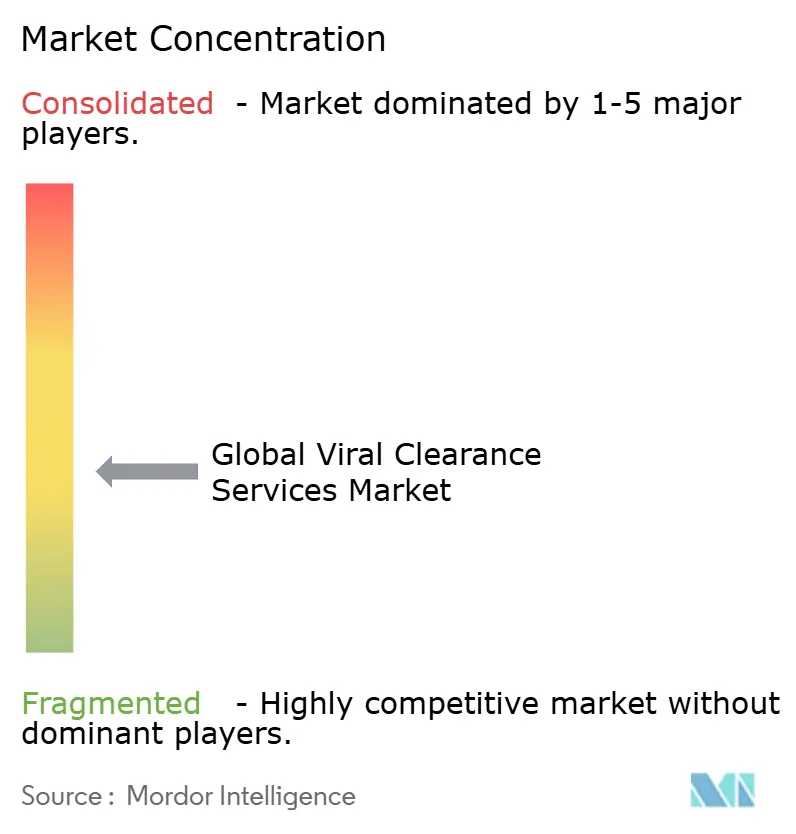
The viral clearance services market is moderately fragmented but trending toward consolidation as boundary lines blur between equipment suppliers, testing laboratories, and full-service CDMOs. Merck’s purchase of Mirus Bio for USD 600 million secures vector expertise, while Charles River’s USD 292.5 million buyout of Vigene Biosciences adds CGMP vector production to an already extensive safety testing portfolio. Such deals create one-stop shops that appeal to gene therapy sponsors needing both GMP vectors and clearance validation under one roof.
Technology leadership serves as a differentiator. Asahi Kasei’s next-generation FG1 filter, AI-guided protocol design platforms, and continuous processing modules offer measurable time and cost savings, raising customers' switching barriers. Providers that marry proprietary filters with in-house virology labs can lock in multi-year master service agreements.
White-space opportunities are richest in bespoke modalities—oncolytic viruses, mRNA, and personalized cell therapies—where standardized approaches fall short. Specialist players using machine learning to forecast clearance robustness or digital twins to simulate virus removal before wet-lab work are emerging challengers. Strategic alliances between niche AI firms and established CDMOs accelerate the commercialization of such tools.
Pricing competition remains rational owing to high technical complexity and regulator scrutiny, yet tier-2 providers in Asia are offering bundled packages to capture cost-sensitive projects. Intellectual-property protection, data integrity, and global regulatory track records continue to influence sponsor selection.
Global Viral Clearance Services Industry Leaders
-
Charles River Laboratories
-
Lonza Group
-
Merck KGaA
-
Texcell SA
-
WuXi AppTec
- *Disclaimer: Major Players sorted in no particular order
Global Viral Clearance Services Market Companies Covered in this Report
- BioOutsource Ltd (Sartorius)
- BIOSCIENCE LABORATORIES
- BSL BioService
- Catalent
- Charles River
- Clean Cells
- Creative Biolabs
- Cygnus Technologies
- Eurofins
- FUJIFILM
- Lonza Group
- Merck
- Microbac Laboratories
- Pall Corporation (Cytiva)
- Sartorius
- SGS
- Texcell
- Vironova
- ViruSure GmbH
- WuXi App Tec
Market Opportunities and Future Outlook
Q5A(R2) expands practical whitespace for providers that can operationalize platform-based validations for well-characterized products, while also delivering risk-based, modality-specific study designs for advanced therapies including AAV and baculovirus systems. This combination supports demand for offerings that reduce late-stage submission friction, particularly where viral clearance work is initiated late and development timelines extend due to typical study durations of several months. Providers that pair classical clearance validation with newer virus detection workflows, such as NGS-enabled adventitious virus detection for cell banks and cell-based samples, can capture budgets as sponsors modernize viral safety packages.
Capacity additions and site upgrades are also immediate entry points for new programs and for sponsors seeking alternative scheduling options across regions. Examples include Minaris expanding its Philadelphia viral clearance laboratory with four additional client suites, a 25% throughput increase, and Charles River adding new viral clearance laboratory space in Cologne, Germany starting in Q2 2026, both aimed at reducing throughput constraints that can delay regulatory submissions. Beyond expansion, differentiated protocols for vectors, including bespoke panels for gene and cell therapies, remain a high-value area, especially when sponsors require tailored virus spiking designs and replicate-competent virus assays beyond established monoclonal antibody templates.
Recent Industry Developments in Global Viral Clearance Services Market
- June 2026: WuXi Biologics reported that its Suzhou Biosafety Testing Center received a fourth consecutive EMA GMP certification, supporting marketing authorization applications for 19 biologics. The certification strengthens WuXi Biologics position as an in-scope provider of compliant biosafety and viral safety testing for products targeting Europe and reinforces the role of audited quality systems as a competitive barrier.
- March 2026: Minaris launched AgentSCREEN, a GMP-qualified NGS platform for adventitious virus detection in cell banks and cell-based samples, citing a 28-day turnaround time. The move broadens viral safety offerings beyond classical clearance validation and supports sponsors seeking modernized, data-rich packages aligned with risk-based expectations under ICH Q5A(R2).
- October 2024: Asahi Kasei Medical launched the Planova FG1 virus removal filter with higher flux and enhanced retention for biotherapeutics. Higher-throughput virus filtration supports process intensification and helps service providers and manufacturers reduce cycle times while maintaining robust viral reduction performance.
Global Viral Clearance Services Market Report Scope and Research Methodology
Market Definition and Coverage
For this study, the viral clearance services market covers outsourced laboratory services used to demonstrate viral safety in biologics and advanced therapies, including study design, execution, and reporting for virus removal and inactivation steps.
Scope exclusions: Excludes captive in-house sponsor testing and stand-alone sales of virus filtration consumables or equipment.
Segments Covered in This Report
- By Method
- Viral Removal
- Chromatography
- Protein A Capture
- Ion-Exchange
- Affinity & Mixed-Mode
- Filtration
- Nanofiltration
- Depth Filtration
- Membrane Adsorbers
- Precipitation (PEG/Ethanol)
- Chromatography
- Viral Inactivation
- Solvent/Detergent Treatment
- Low-pH Incubation
- UV-C Irradiation
- Heat / Pasteurization
- High-Pressure Processing
- Hybrid Strategies
- Viral Removal
- By Application
- Recombinant Proteins
- Monoclonal Antibodies
- Tissue & Blood-derived Products
- Vaccines
- Gene & Cell Therapies
- Viral Vectors
- Other Applications
- By End-User
- Large Pharma
- Small & Mid-size Biotech
- Contract Development & Manufacturing Organizations (CDMOs)
- Contract Research & Testing Organizations (CROs)
- Academic & Government Research Institutes
- By Geography
- North America
- United States
- Canada
- Mexico
- Europe
- Germany
- United Kingdom
- France
- Italy
- Spain
- Rest of Europe
- Asia-Pacific
- China
- India
- Japan
- Australia
- South Korea
- Rest of Asia-Pacific
- Middle East and Africa
- GCC
- South Africa
- Rest of Middle East and Africa
- South America
- Brazil
- Argentina
- Rest of South America
- North America
Data Sources, Market Sizing, and Validation
Desk Research
Desk work starts with building the demand pool and the rules that govern viral safety work, since service revenue follows what regulators and manufacturing pipelines require. We refer to public guidance and reference material from bodies such as the FDA and EMA, along with ICH viral safety guidelines, to understand when studies are triggered and what elements are typically expected in filings.
To size and sanity check the market, we also review public statistics and scientific sources that point to biologics activity and process changes that often create repeat viral clearance work. Examples include CDC updates, World Bank health and R&D indicators, and peer reviewed journals on bioprocessing and viral safety. Company filings, investor presentations, press releases, and conference materials are used to map service offerings and geographic footprints, and a paid subscription for company financials and intelligence is used selectively where disclosures are limited to structure revenue comparisons. These desk sources are illustrative and not exhaustive, and many other public references are used to validate details and close data gaps.
Primary Interviews and Surveys
Primary inputs come from interviews and structured surveys with service providers, bioprocess consultants, quality leaders, and procurement roles at biologics manufacturers, so we can confirm typical study volumes, outsourcing share, and pricing logic for major study types. As demand is global, respondents are balanced across APAC, EMEA, and the Americas to test differences in regulatory timing, pipeline maturity, and CDMO usage.
Distribution of primary research fieldwork respondents
| Company type | Respondent position | Region |
|---|---|---|
| Top tier: 34% | CXOs: 15% | APAC: 47% |
| Mid tier: 47% | Functional/Unit leaders: 26% | EMEA: 31% |
| Smaller Players: 19% | Managers: 59% | Americas: 22% |
Market-Sizing & Forecasting
Sizing is built using a top-down approach where biologics manufacturing activity and the associated viral safety work are reconstructed into an addressable service revenue pool, and then split by region using observed outsourcing patterns. Inputs that are tracked include the pace of biologics and advanced modality pipeline progression, the frequency of process changes and scale-ups that require re-validation, the typical mix of virus removal versus inactivation studies, average project turnaround times, and prevailing service pricing ranges by study complexity.
Once the totals are formed, the numbers are corroborated using selective bottom-up checks, such as sampled pricing multiplied by estimated annual study volumes, plus channel checks on outsourcing shares at CDMOs and specialist labs. Where direct volume signals are thin, gaps are handled by using conservative ranges agreed in interviews and then narrowing them after cross-checking against public pipeline and capacity indicators. For forecasting, scenario analysis is used so that adoption shifts across newer modalities and regulatory update timing can be reflected without forcing one straight-line assumption across all regions and applications.
Data Validation & Update Cycle
Outputs are validated through multiple checks so that one noisy input does not drive the final value. We compare modeled revenue pools against independent signals like biologics development activity, capacity additions, and observed pricing direction, and then investigate variances that fall outside expected ranges.
Before sign-off, the model and assumptions go through stepwise internal review, and follow-up calls are triggered when a key parameter shifts or when a data point conflicts with other evidence. The report is refreshed annually, and interim adjustments are made when material events occur, such as meaningful regulatory changes or sharp pipeline swings. Right before publication, a final review pass is completed so clients receive an updated view based on the latest available information.
Mordor Intelligence's Viral Clearance Services Market Size Measured Against Other Published Estimates
Published market sizes for viral clearance services can look far apart, even when they reference similar lab activities, because each estimate draws its boundaries and price logic a bit differently. The spread usually comes from what is counted as a service versus a product, whether in-house testing is treated as part of the market, and how the current year is aligned to the underlying study period.
Key gap drivers in this market are commonly tied to inclusion of virus filtration consumables, bundling of adjacent bioprocess testing services, and how multi-year contracts are converted into annual revenue, which can inflate or compress a single year. Currency timing also matters because a meaningful share of work is billed locally and then converted to USD, so constant FX versus spot FX can shift the total.
Benchmark comparison
| Source | Market Size | Gaps in Research Methodology |
|---|---|---|
| Mordor Intelligence | USD 1.10 B (2026) | |
| Industry Publisher A | USD 0.93 B (2025) | Uses a different base year and can understate demand if outsourcing share assumptions lag the recent rise in CDMO-led biologics manufacturing. |
| Research Publisher B | USD 1.12 B (2024) | Base year is earlier, and the build may blend in broader viral clearance activities across adjacent testing workflows, which changes the service-only revenue boundary. |
The table shows that the current-year values move mainly with base year choice and what gets treated as a service line item. In Mordor Intelligence's model, the total is limited to outsourced study design, execution, and reporting for virus removal and inactivation, and it leaves out captive in-house testing and stand-alone filtration consumables. This keeps the estimate tied to billable service revenue that can be repeatedly validated.
Key Questions Answered in the Report
What regulatory change is reshaping viral clearance strategies?
The FDA’s Q5A(R2) update endorses risk-based, platform validation, allowing data reuse across multiple biologics and shortening overall development timelines.
Which viral clearance methodology is currently favored in commercial bioprocessing?
Chromatography and depth-filtration steps remain the industry’s preferred foundation because they deliver predictable log-reduction values and integrate easily with closed, single-use downstream trains.
How is outsourcing influencing competitive dynamics among service providers?
Biopharma sponsors increasingly rely on CDMOs for biosafety studies, prompting high-value acquisitions that bundle vector production with clearance testing under one contract.
What technological innovation is boosting efficiency in virus removal?
Next-generation high-flux filters such as Planova FG1 increase throughput without sacrificing retention, supporting continuous processing workflows in large-molecule manufacturing.
Which talent challenge is constraining capacity expansion?
A global shortage of experienced virologists and biosafety professionals is delaying facility ramps and prompting firms to invest in automation and university partnerships for workforce development.
How are cell and gene therapies altering viral clearance requirements?
Vector-specific risks in AAV and lentiviral platforms demand bespoke clearance panels and replicate-competent virus assays that go beyond traditional monoclonal antibody protocols.