
Market Overview
| Study Period | 2021 - 2032 |
|---|---|
| Forecast Data Period | 2027 - 2032 |
| Base Year Market Size (2026) | USD 223.78 Million |
| Market Size (2027) | USD 231.67 Million |
| Market Size (2032) | USD 275.53 Million |
| Growth Rate (2027 - 2032) | 3.52 % |
| Market Concentration | Medium |
Major Players *Disclaimer: Major Players sorted in no particular order Image © Mordor Intelligence. Reuse requires attribution under CC BY 4.0. | |
Vietnam Diabetes Drugs Market Analysis by Mordor Intelligence
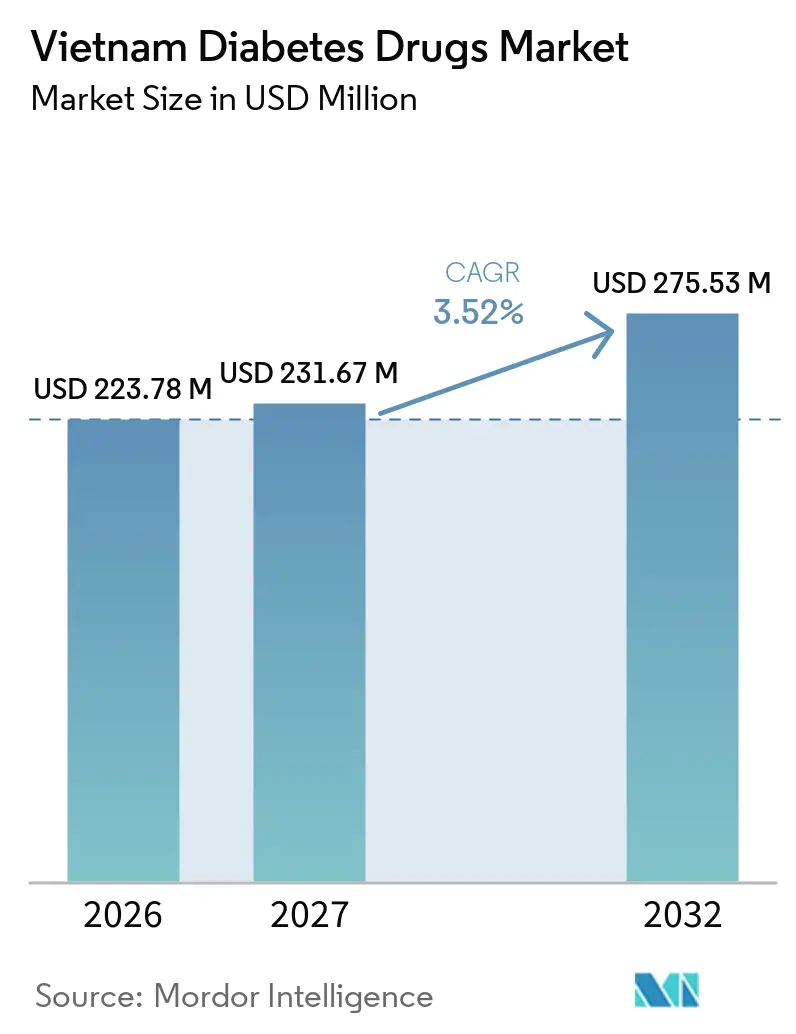
The Vietnam Diabetes Drugs Market size is expected to increase from USD 223.78 million in 2026 to USD 231.67 million in 2027 and reach USD 275.53 million by 2032, growing at a CAGR of 3.52% over 2027-2032.
Vietnam has effectively stopped transmission of the COVID-19 outbreak since the outset, with no deaths for months. Since then, however, the fourth wave of the COVID-19 outbreak has wreaked devastation on Vietnam. According to the Ministry of Health, Vietnam has seen four waves of the COVID-19 epidemic (MOH).
COVID-19 (coronavirus disease) has been found as a highly infectious viral infection caused by coronavirus-2 that produces severe acute respiratory syndrome (SARS-CoV-2). Diabetes is a major risk factor for fatal COVID-19 outcomes. Diabetes patients are vulnerable to infection due to hyperglycemia, impaired immune function, vascular issues, and comorbidities such as hypertension, dyslipidemia, and cardiovascular disease. Furthermore, angiotensin-converting enzyme 2 (ACE2) is a SARS-CoV-2 receptor in humans. As a result, angiotensin-converting enzyme (ACE) inhibitors must be used with caution in diabetic individuals. COVID-19 severity and mortality were significantly higher in diabetics than in non-diabetics. As a result, diabetics should exercise caution during the COVID-19 epidemic.
COVID-19 (coronavirus disease) has been found as a highly infectious viral infection caused by coronavirus-2 that produces severe acute respiratory syndrome (SARS-CoV-2). Diabetes is a major risk factor for fatal COVID-19 outcomes. Diabetes patients are vulnerable to infection due to hyperglycemia, impaired immune function, vascular issues, and comorbidities such as hypertension, dyslipidemia, and cardiovascular disease. Furthermore, angiotensin-converting enzyme 2 (ACE2) is a SARS-CoV-2 receptor in humans. As a result, angiotensin-converting enzyme (ACE) inhibitors must be used with caution in diabetic individuals. COVID-19 severity and mortality were significantly higher in diabetics than in non-diabetics. As a result, diabetics should exercise caution during the COVID-19 epidemic.
Vietnam has witnessed a growing burden of diabetes, driven by urbanization, lifestyle changes, and an aging population. According to the International Diabetes Federation (IDF), approximately 2.5 million adults aged 20-79 years were living with diabetes in Vietnam in 2024, compared with 1.7 million in 2011. Furthermore, nearly 37.8% of diabetes cases remain undiagnosed, highlighting a significant treatment gap and the need for improved disease management. The rising diabetic population, coupled with increasing awareness and diagnosis rates, is driving demand for diabetes therapeutics and insulin products across the country.
Note: Market numbers in this report are based on Mordor Intelligence's proprietary estimation framework, which combines nine months of actuals with Q4 projections for base year 2026.
Vietnam Diabetes Drugs Market Trends and Insights
Oral-Anti Diabetes Drugs is Having the Highest Market Share in the Current Year.
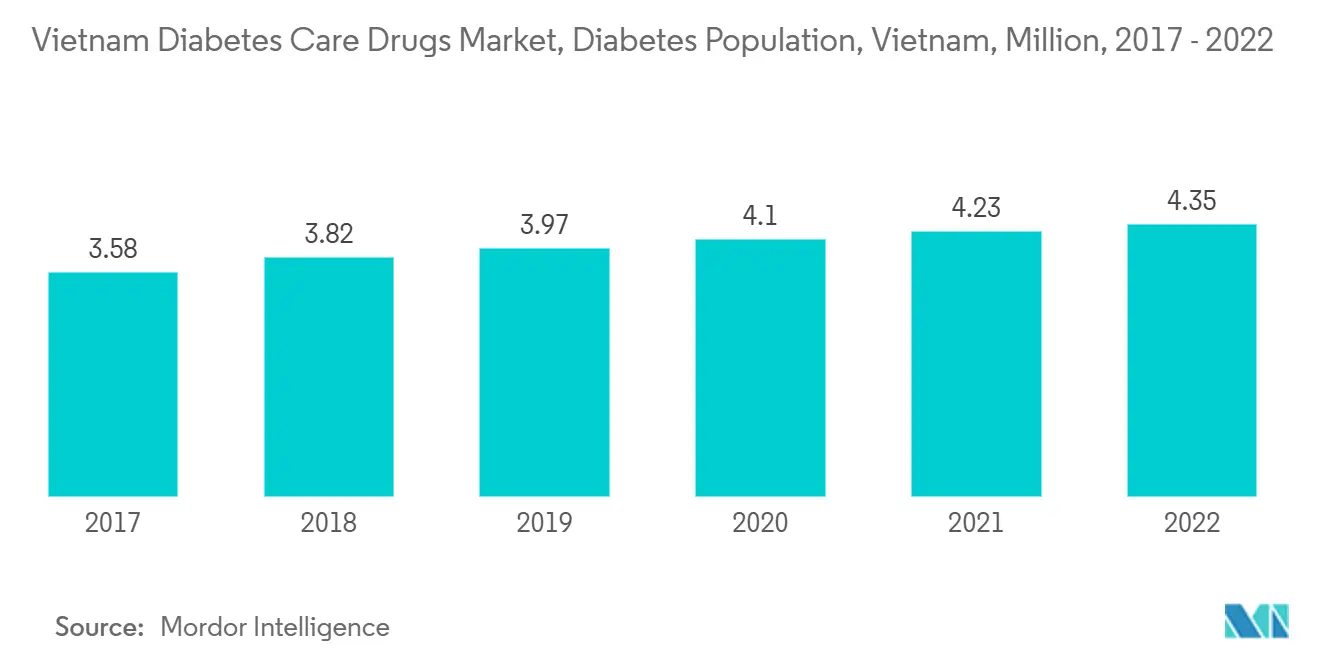
The oral anti-diabetic drugs segment is expected to increase, registering a CAGR of over 4.7% during the forecast period, mainly due to the demand from the diabetes population, which was more than 4.2 million by the end of the current year.
Health insurance was implemented in Vietnam over a decade ago, but coverage remains limited. Vietnam is a low- to middle-income country, with a GDP per capita of about USD 4310. As a result, the cost of diabetes treatment exerts major pressure on a patient's family budget. Vietnam is a low- to middle-income country, with a GDP per capita of about USD 4310. As a result, the cost of diabetes treatment exerts major pressure on a patient's family budget. Diabetes medication is affordable in HCMC as compared to the cost of treating other chronic diseases such as infectious, cardiovascular, and renal issues. The country's elderly population has put a strain on the healthcare system as well as social security services and regulations. As a result, the government must adopt new policy initiatives to lessen the burden of diabetes treatment and healthcare expenditures.
Vietnam is aiming to achieve universal health insurance coverage and has decentralized the management of health to lower levels of the country's administrative structure.
Each institution in Vietnam uses the Ministry of Health's guidelines for pricing different drugs to create their unique bids. Some of these costs were up to six times those found on the worldwide market. The purchase of branded drugs vs. generics influences facility spending in Vietnam and, hence, on the individual and/or the insurance system. Diabetes is recognized in Vietnam as a public health burden, and public health officials have taken steps to alleviate the burden. The diabetes burden in Vietnam is the outcome of several epidemiologic trends and factors. Diabetes has the potential to become an epidemic, imposing massive public health and economic burdens on Vietnam. Although the prevalence of diabetes in rural regions remains low, it is increasing. Diabetes is as common in large cities as it is in the rest of the Western world.
Through the Vietnam government's encouragement, the usage of management devices increased over the forecast period.
Increasing Diabetes population in Vietnam
Diabetes is one of the four main non-communicable diseases (NCDs), and its global incidence has increased substantially in recent years. Diabetes is increasing at a rate of roughly 6.23% per year in Vietnam, and it has become a severe health and economic burden for Vietnamese society. Economic growth and societal changes have an influence on disease patterns ranging from infectious illnesses to noncommunicable diseases, with diabetes being one of Vietnam's seven leading causes of death and disability. Obesity prevalence in Vietnam remains relatively low, despite significant increases over the last decade, notably in the last five years. There has been a significant shift in food patterns, which corresponds to changes in the obesity prevalence rate. In Vietnam, cigarette smoking is a major risk factor for diabetes. According to a new meta-analysis, cigarette smokers are 44% more likely to get diabetes than nonsmokers. Although cigarette smoking is common among Vietnamese males, the trend is downward. Diabetes prevalence rates are rising in correlation with changes in risk factors such as obesity and a Westernized food pattern. Diabetes is typically thought to be avoidable via lifestyle modifications such as good food and regular physical activity, although additional study is needed to support this hypothesis for the Vietnamese community.
In Vietnam, insulin and oral diabetic medications are subject to a 5% import tariff and a 5% VAT. Mark-ups across the supply chain raise the price in the public and private sectors for individuals without health insurance.
Thus, owing to the above factors, it is expected to drive market growth over the forecast period.
Competitive Landscape
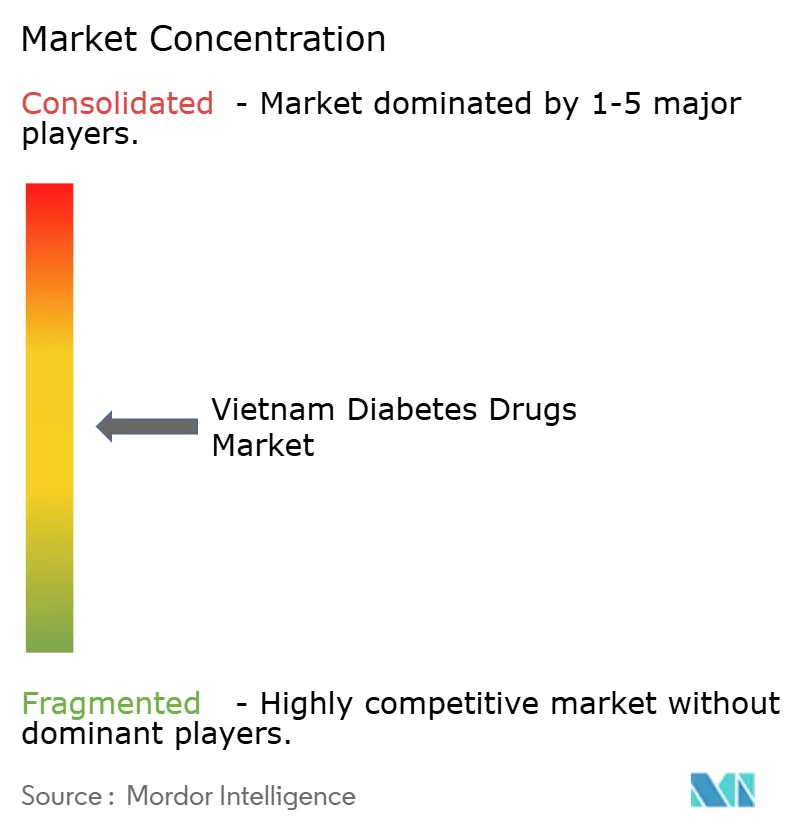
The Vietnam diabetes drugs market is moderately fragmented, with few significant and generic players. The insulin and Sglt-2 drug markets are dominated by a few major players, like Novo Nordisk, Sanofi, AstraZeneca, and Bristol-Myers Squibb. The market for oral drugs like sulfonylureas and meglitinides comprises more generic players. The intensity of competition among the players is high, as each player is striving to develop new drugs and offer them at competitive pricing. Furthermore, to increase their market shares, players are tapping into new markets, especially emerging economies where the demand is very high compared to the supply.
Vietnam Diabetes Drugs Industry Leaders
-
Eli Lilly
-
Boehringer Ingelheim
-
Astrazeneca
-
Sanofi
-
NovoNordisk
- *Disclaimer: Major Players sorted in no particular order
Market Opportunities and Future Outlook
With the Vietnam diabetes drugs market at USD 223.77 million in 2026, improving access and affordability remains a key theme across insulin, oral anti-diabetics, and newer classes, particularly given the report's emphasis on rising diabetes burden and family out-of-pocket sensitivity. The practical levers for manufacturers and distributors are tied to policy and system initiatives that expand coverage and tighten procurement and product registration discipline, which affects continuity of supply and competitive pricing across hospital and retail channels.
Recent policy updates and partnership activity also create clearer routes for market participation beyond product promotion. The Ministry of Health issued Circular 12/2025/TT-BYT covering registration and marketing authorization processes for drugs and medicinal ingredients, supporting clearer lifecycle management for branded drugs and generics and encouraging companies to plan local regulatory operations more systematically. Separately, Vietnam Investment Review reporting on AstraZeneca Vietnam's engagement with the Ministry of Health around new healthcare financing approaches, including supplemental insurance and risk-sharing mechanisms, points to opportunities for structured access programs, outcomes-based agreements, and broader patient support models that can extend to diabetes therapies where affordability and adherence are recurring constraints.
Recent Industry Developments
- June 2026: Sanofi-Aventis Vietnam Co., Ltd. signed a three-year Memorandum of Understanding (2026 - 2029) with the National Institute for Control of Vaccines and Biologicals (NICVB) to enhance vaccine testing and control capabilities. The regulatory and quality control alignment supports more robust pharma supply chains in Vietnam. Strengthening domestic regulatory collaboration may increase local manufacturing and distribution efficiencies affecting diabetes drug access indirectly.
- November 2025: Sanofi-Aventis Vietnam signed a memorandum of understanding (MoU) with Nhân Dân Gia Định Hospital to strengthen collaboration in cardiovascular diseases, diabetes, and influenza. The agreement supports hospital-channel collaboration for chronic disease management. Locally integrated care initiatives may expand patient access to Sanofi's diabetes-related therapies in Vietnam.
- July 2025: Novo Nordisk Vietnam Ltd. completed its first direct shipment of products to Vietnam as a fully-recognised Foreign Invested Enterprise (FIE), enabling independent import of its medical products. The direct import capability supports access to diabetes therapeutics in the country. Expanding local presence may improve pricing and availability for Novo Nordisk's diabetes portfolio.
Research Methodology Framework and Report Scope
Market Definition and Coverage
This market captures the value of prescription medicines used to treat diabetes in Vietnam, counted at manufacturer level and reflected as sales into the local healthcare and pharmacy supply chain.
Scope exclusions: It excludes diabetes devices, consumer wellness supplements, and non-drug spending such as diagnostics, hospital services, and monitoring consumables.
Segmentation Overview
- Oral Anti-diabetic Drugs
- Biguanides
- Metformin
- Alpha-Glucosidase Inhibitors
- Alpha-Glucosidase Inhibitors
- Dopamine D2 receptor agonist
- Bromocriptin
- SGLT-2 inhibitors
- Invokana (Canagliflozin)
- Jardiance (Empagliflozin)
- Farxiga/Forxiga (Dapagliflozin)
- Suglat (Ipragliflozin)
- DPP-4 inhibitors
- Onglyza (Saxagliptin)
- Tradjenta (Linagliptin)
- Vipidia/Nesina(Alogliptin)
- Galvus (Vildagliptin)
- Sulfonylureas
- Sulfonylureas
- Meglitinides
- Meglitinides
- Biguanides
- Insulin Drugs
- Basal or Long Acting Insulins
- Lantus (Insulin Glargine)
- Levemir (Insulin Detemir)
- Toujeo (Insulin Glargine)
- Tresiba (Insulin Degludec)
- Basaglar (Insulin Glargine)
- Bolus or Fast Acting Insulins
- NovoRapid/Novolog (Insulin Aspart)
- Humalog (Insulin Lispro)
- Apidra (Insulin Glulisine)
- Traditional Human Insulins
- Novolin/Actrapid/Insulatard
- Humulin
- Insuman
- Biosimilar Insulins
- Insulin Glargine Biosimilars
- Human Insulin Biosimilars
- Basal or Long Acting Insulins
- Combination Drugs
- Insulin combinations
- NovoMix (Biphasic Insulin Aspart)
- Ryzodeg (Insulin Degludec and Insulin Aspart)
- Xultophy (Insulin Degludec and Liraglutide)
- Oral Combinations
- Janumet (Sitagliptin and Metformin)
- Insulin combinations
- Non-Insulin Injectable Drugs
- GLP-1 receptor agonists
- Victoza (Liraglutide)
- Byetta (Exenatide)
- Bydureon (Exenatide)
- Trulicity (Dulaglutide)
- Lyxumia (Lixisenatide)
- Amylin Analogue
- Symlin (Pramlintide)
- GLP-1 receptor agonists
Data Sources, Market Sizing, and Validation
Desk Research
To set the market boundaries correctly, we start by reviewing public health and epidemiology references that describe the treatment need in Vietnam and how care pathways are organized. Sources used for this include, for example, World Health Organization country health statistics, International Diabetes Federation diabetes atlas updates, Vietnam Ministry of Health guidance for diabetes diagnosis and treatment, and General Statistics Office of Vietnam population and age structure releases.
We then use secondary sources that help translate demand signals into drug spending patterns, such as Vietnam Social Security and health insurance related publications, import and export trade statistics for relevant pharmaceutical categories, and peer reviewed studies on diabetes medication dispensing trends. Company annual reports, investor presentations, and reputable local press coverage are also used to cross check product availability, therapy adoption, and price direction, with support from paid subscriptions for company financials and intelligence plus news and financials where it is needed. The desk sources listed here are illustrative only, and other public references were also used for data collection, validation, and clarification during the workstream.
Primary Interviews and Surveys
Primary work is used to pressure test the sizing logic with people who see real prescribing and purchasing behavior, such as endocrinologists, hospital pharmacists, distributors, and pharmacy channel managers. We also speak with reimbursement and procurement focused respondents so that pricing, tender dynamics, and switching between therapy classes can be validated across Vietnam's major urban centers and secondary provinces.
Distribution of primary research fieldwork respondents
| Company type | Respondent position |
|---|---|
| Top tier: 32% | CXOs: 19% |
| Mid tier: 47% | Functional/Unit leaders: 38% |
| Smaller Players: 21% | Managers: 43% |
Market-Sizing & Forecasting
Our market model starts from a top-down demand pool, where the treated diabetes population is built up and then allocated by therapy mix, which is then converted into value using typical dosing and annual cost of therapy ranges for Vietnam. To keep the output grounded, selective bottom-up checks are run using sampled price points and volume proxies from distributor and channel discussions, followed by adjustments when the two views do not align.
Key inputs used in the model include diagnosed and treated prevalence by age band, insulin uptake versus oral therapy share, the pace of newer class adoption (such as SGLT2 inhibitors and GLP-1 based therapies where relevant), reimbursement coverage and tender behavior in public hospitals, and observed price movement from genericization and reference pricing. Where direct volume signals are thin for smaller provinces or newer therapies, gaps are handled through peer hospital analogs and conservative penetration ramps that are rechecked during expert calls.
For forecasting, we rely mainly on scenario analysis tied to diabetes prevalence growth, treatment intensification rates, and expected reimbursement stability, and then we apply smoothing to avoid unrealistic step changes in annual values. Assumptions are reviewed with interviewees so that the final forecast reflects what prescribers and buyers see as plausible over the study period.
Data Validation & Update Cycle
Validation is handled through multiple checks so the final numbers are internally consistent and aligned with external signals. We compare outputs against independent indicators such as diabetes burden trends, reported medicine spending patterns, and channel feedback on therapy shifts, and then anomalies are investigated before sign off.
A second analyst reviews the model structure, input ranges, and year over year movements so that arithmetic and logic errors get caught early. Reports are refreshed annually, and interim updates are completed when material events occur, for example major reimbursement changes or large pricing resets. Before delivery, a final pass is performed to reflect the most recent public data and what we heard in the latest re-contacts.
Mordor Intelligence's Vietnam Diabetes Drugs Market Size Measured Against Other Published Estimates
Published values for Vietnam diabetes drugs often do not match because each publisher draws the market line differently and uses different assumptions for pricing and what part of the care pathway is counted. Differences also come from the year chosen as the base, how currency conversion is handled, and how quickly models are updated after reimbursement or tender changes.
The biggest gap drivers in this market usually relate to whether estimates include devices and broader diabetes care spend, whether they count only retail pharmacy sales or also hospital procurement, and whether newer injectable classes are assumed to scale up quickly without local access checks. Some models rely on aggressive price and penetration ramps, while others apply static therapy mix splits for several years, which can understate switching from older oral drugs to newer options.
Benchmark comparison
| Source | Market Size | Gaps in Research Methodology |
|---|---|---|
| Mordor Intelligence | USD 216.16 M (2025) | |
| Trade Journal A | USD 425.53 M (2022) | This figure is closer to total diabetes treatment expenditure from claims data, where drugs are a large component but the reported total can also reflect broader care costs and mixed settings rather than diabetes medicines only. |
| Industry Publisher B | USD 208.45 M (2026) | This estimate appears to use a single current year value with a long horizon CAGR, with limited visibility on Vietnam specific therapy mix shifts and on how hospital tenders and reimbursement constraints affect realized pricing. |
The spread is mainly explained by what is being counted and how price and access are translated into revenue, rather than by small math differences. When the spend is limited to diabetes medicines and checked against hospital procurement patterns and therapy class switching, devices and broader treatment costs stay out of scope, which is how the total is kept consistent with Mordor Intelligence.
Key Questions Answered in the Report
How big is the Vietnam Diabetes Drugs Market?
The Vietnam Diabetes Drugs Market size is expected to reach USD 231.67 million in 2027 and grow at a CAGR of 3.52% to reach USD 275.53 million by 2032.
What is the Vietnam Diabetes Drugs Market size in 2026?
In 2026, the Vietnam Diabetes Drugs Market size is expected to reach USD 223.78 million.
Who are the key players in Vietnam Diabetes Drugs Market?
Eli Lilly, Boehringer Ingelheim, Astrazeneca, Sanofi and NovoNordisk are the major companies operating in the Vietnam Diabetes Drugs Market.
What years does this Vietnam Diabetes Drugs Market cover, and what was the market size in 2025?
In 2025, the Vietnam Diabetes Drugs Market size was estimated at USD 216.15 million. The report covers the Vietnam Diabetes Drugs Market historical market size for years: 2021, 2022, 2023, 2024, 2025, and 2026. The report also forecasts the Vietnam Diabetes Drugs Market size for years: 2027, 2028, 2029, 2030, 2031, and 2032.