
Veterinary Ultrasound Devices Market Size and Share
Market Overview
| Study Period | 2020 - 2031 |
|---|---|
| Market Size (2026) | USD 515.64 Million |
| Market Size (2031) | USD 724.90 Million |
| Growth Rate (2026 - 2031) | 7.05 % |
| Fastest Growing Market | Asia-Pacific |
| Largest Market | North America |
| Market Concentration | Medium |
Major Players *Disclaimer: Major Players sorted in no particular order Image © Mordor Intelligence. Reuse requires attribution under CC BY 4.0. | |
Veterinary Ultrasound Devices Market Analysis by Mordor Intelligence
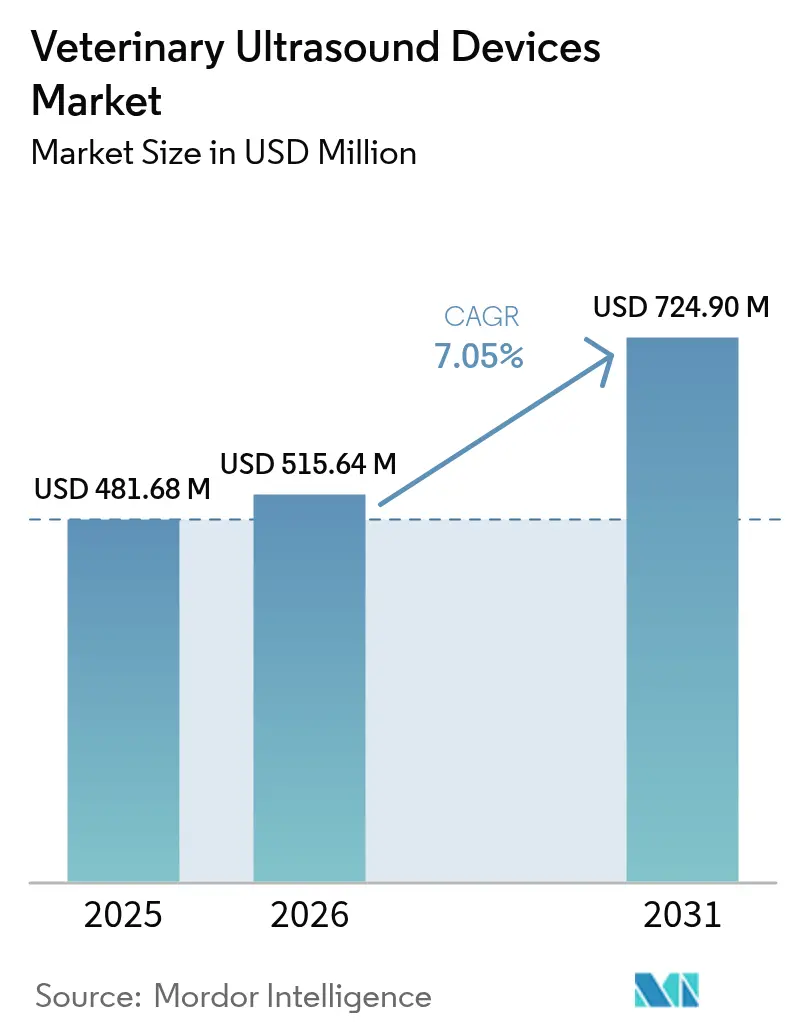
The Veterinary Ultrasound Devices Market size is expected to increase from USD 481.68 million in 2025 to USD 515.64 million in 2026 and reach USD 724.90 million by 2031, growing at a CAGR of 7.05% over 2026-2031.
Rising pet healthcare spending, corporate consolidation of primary-care clinics, and lower-cost handheld probes are broadening access to point-of-care imaging in companion animals. Livestock producers rely on ultrasound to tighten breeding intervals, and demand for Doppler platforms is escalating as cardiology protocols become routine in dogs, cats, and performance horses. The European Union’s Cyber Resilience Act is already shaping product roadmaps by mandating long-term software support, a requirement that favors vendors with established cybersecurity teams. Meanwhile, subscription and leasing options are easing capital barriers for small practices, keeping replacement cycles brisk even in price-sensitive regions.
Key Report Takeaways
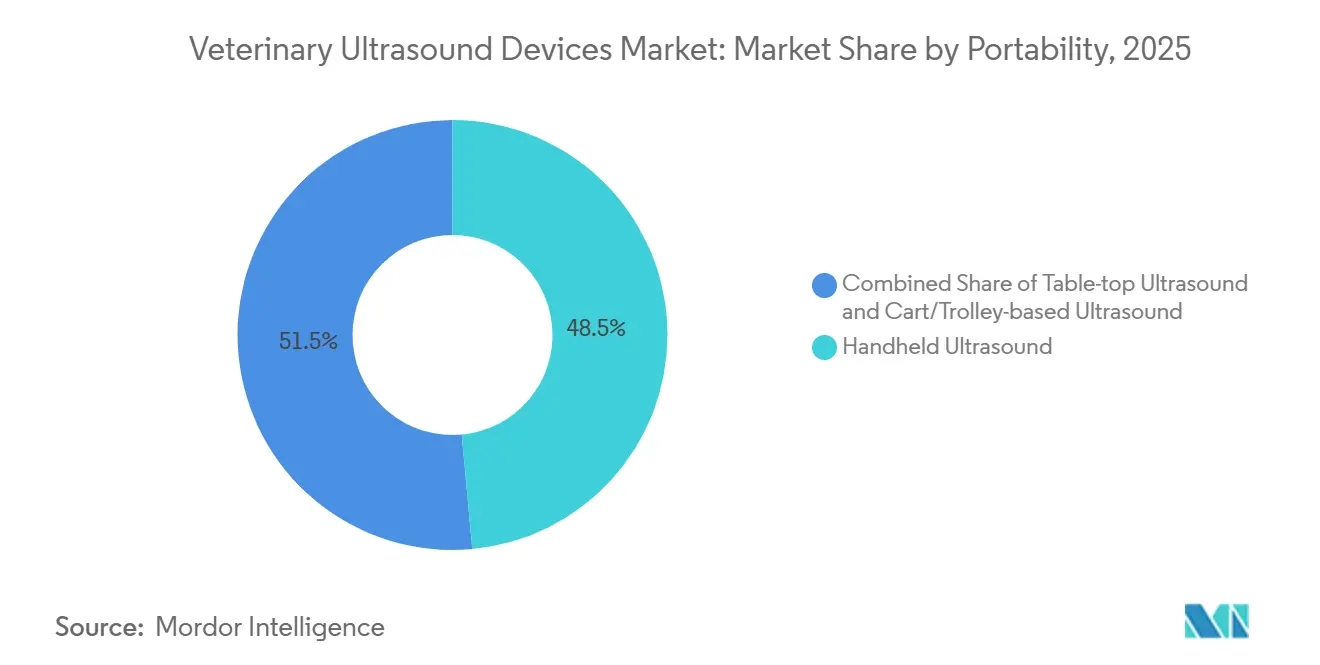
- By portability, cart-based systems led the veterinary ultrasound devices market with 48.53% market share in 2025, while handheld devices posted the highest CAGR at 9.43% through 2031.
- By technology, two-dimensional platforms held 56.92% of the veterinary ultrasound devices market in 2025, yet Doppler units are forecast to expand at a 9.32% CAGR through 2031.
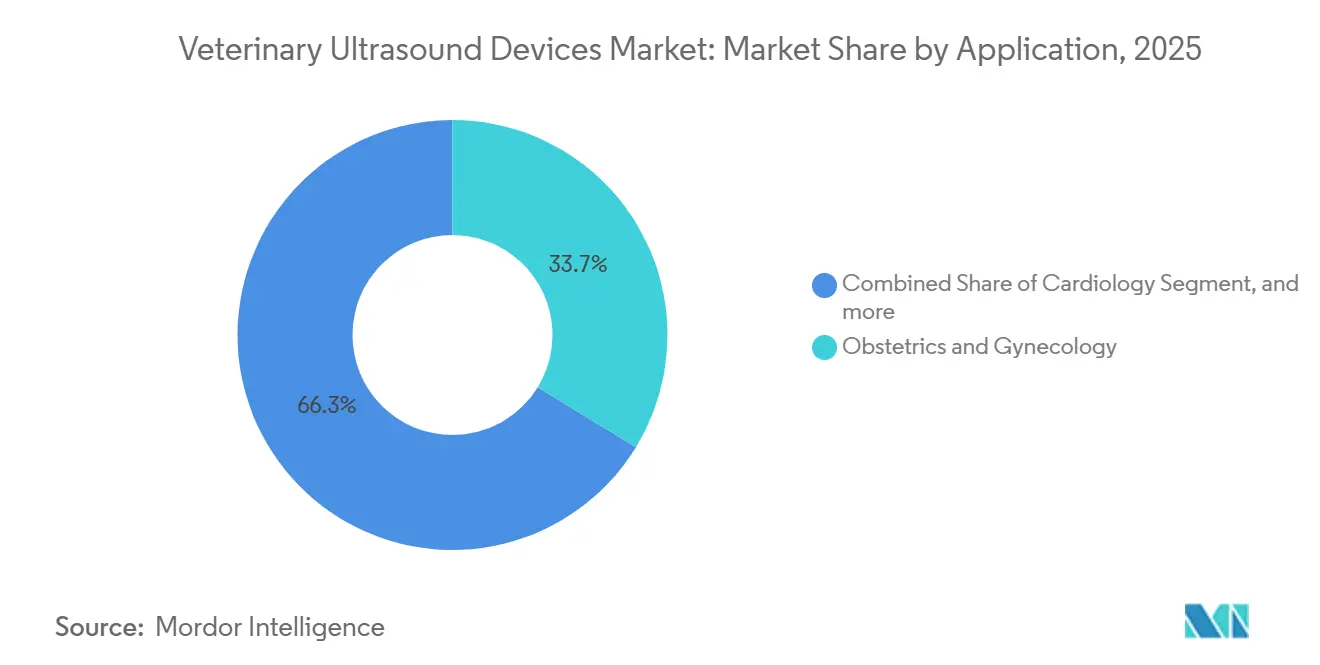
- By application, obstetrics and gynecology accounted for 33.74% of revenue in 2025, whereas cardiology is advancing at a 10.55% CAGR over 2026-2031.
- By animal type, livestock accounted for 52.98% of the veterinary ultrasound devices market size in 2025, while companion animals registered the fastest 9.54% CAGR to 2031.
- By end user, veterinary hospitals held a 60.54% share in 2025, yet clinics are growing the fastest at a 10.43% CAGR thanks to point-of-care adoption.
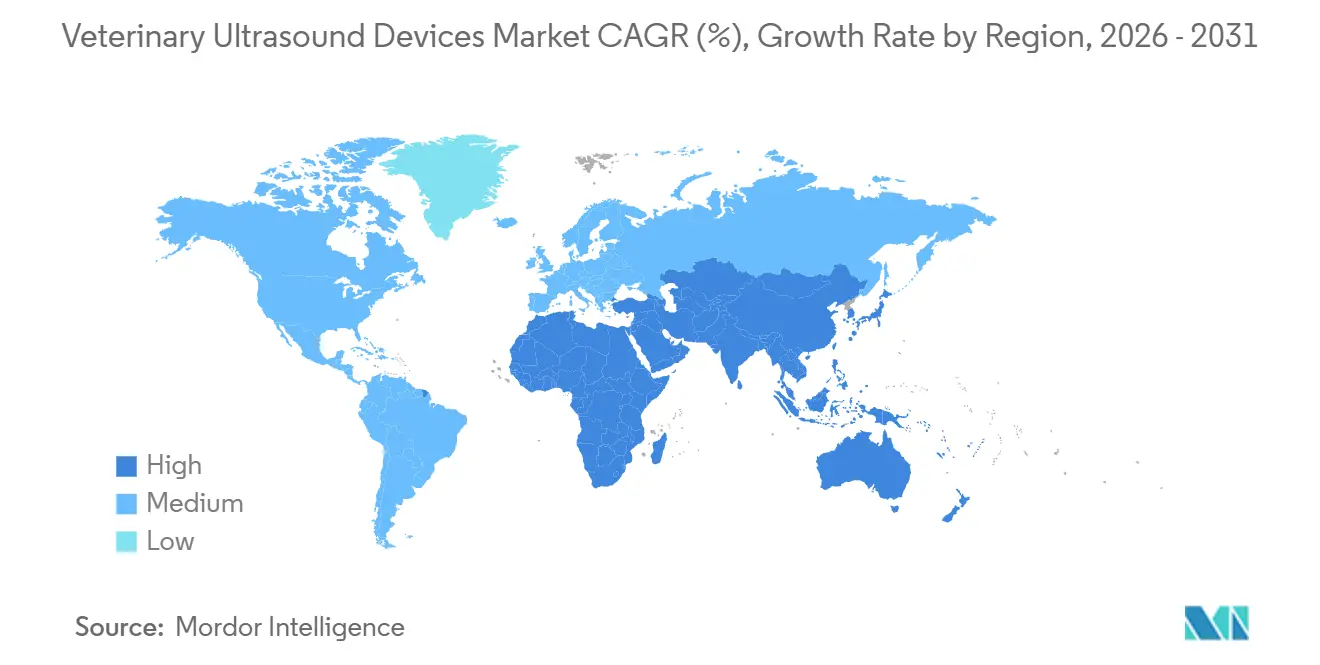
- By geography, North America led with a 42.54% share in 2025, though Asia-Pacific is set to grow at an 8.54% CAGR because of government-backed livestock biotech programs.
Note: Market size and forecast figures in this report are generated using Mordor Intelligence’s proprietary estimation framework, updated with the latest available data and insights as of 2026.
Market Trends and Insights
Drivers Impact Analysis of Veterinary Ultrasound Devices Market*
| Driver | (~) % Impact on CAGR Forecast | Geographic Relevance | Impact Timeline |
|---|---|---|---|
| Rising Companion Animal Healthcare Expenditure | +1.8% | North America, Western Europe, urban Asia-Pacific | Medium term (2-4 years) |
| Increasing Adoption of Handheld Ultrasound Devices | +1.5% | Global, early gains in North America and Europe | Short term (≤ 2 years) |
| Technological Advancements in Veterinary Ultrasound Imaging | +0.9% | Global, led by North America and Western Europe | Medium term (2-4 years) |
| Growing Demand for Reproductive Monitoring in Intensive Livestock Farming | +1.0% | Dairy and beef regions worldwide | Long term (≥ 4 years) |
| Emergence of Subscription-Based Ultrasound Equipment Models | +0.8% | North America, Europe, Australia, urban Latin America | Short term (≤ 2 years) |
| Integration of Artificial Intelligence and Tele-Ultrasound Workflows | +1.2% | North America, Europe, Australia | Medium term (2-4 years) |
| Source: Mordor Intelligence | |||
Rising Companion Animal Healthcare Expenditure
Pet owners in the United States spent USD 38.3 billion on veterinary care in 2023, and insured pets undergo 2.4 times more imaging than uninsured cohorts[1]. Corporate groups now own more than one-quarter of U.S. clinics, enabling fleet procurement and standardized ultrasound protocols. Elective abdominal and cardiac scans for geriatric pets are increasingly routine, yet the 2024 decline in clinic visits shows that discretionary imaging remains sensitive to macroeconomic pressures. Standardized vendor service contracts are helping clinics contain maintenance costs, smoothing revenue during slowdowns. The overall effect is sustained demand for affordable, easy-to-use scanners that preserve diagnostic margins even when visit volumes fluctuate.
Increasing Adoption of Handheld Ultrasound Devices
Handheld probes are expanding at a 9.43% CAGR as chip-based transducers cut manufacturing costs and shrink device footprints. Butterfly’s iQ3, cleared in January 2024, introduced automated 3D models that expedite anatomy identification for non-radiologists, while GE’s Vscan Air, distributed by Sound Technologies, brings wireless imaging to stall-side equine exams. Monthly leasing plans under USD 800 reduce upfront outlays by 80%, encouraging adoption in single-doctor clinics. Portability is most valuable in large-animal practice and in emergency cages, where cart systems are impractical, though image penetration remains limited in obese patients and in deep-abdomen scans. Continuous software upgrades delivered over Wi-Fi help practices avoid technology obsolescence during multi-year repayment schedules.
Integration of Artificial Intelligence and Tele-Ultrasound Workflows
A 2024 joint statement from the American and European Colleges of Veterinary Radiology endorsed AI tools as accuracy enhancers when a trained clinician oversees final interpretation. Butterfly’s AI B-line counter cut interpretation time by 40% in dogs with pulmonary edema, standardizing results across varying skill levels. Cloud platforms now allow residency programs to meet training mandates through remote image review, widening access to specialist oversight. Cybersecurity risk is growing as ransomware groups target clinic PACS; ISO 27001 certification and the EU Cyber Resilience Act push vendors to embed security-by-design. Practices increasingly evaluate encryption, user-access controls, and patch support during procurement.
Growing Demand for Reproductive Monitoring in Intensive Livestock Farming
Ultrasound pregnancy checks as early as 28 days post-breeding shorten calving intervals by up to 15 days compared with palpation. Fetal sexing between 60 and 85 days optimizes heifer retention and cash-flow timing. Doppler scans of corpus luteum vascularization predict progesterone status, improving conception rates in timed artificial insemination. Governments in Asia-Pacific tie livestock grants to the adoption of advanced diagnostics, pushing uptake in dairy and beef operations. Nevertheless, device cost and operator scarcity keep manual methods prevalent among smallholders, leaving room for entry-level scanners coupled with remote training.
Restraints Impact Analysis of Veterinary Ultrasound Devices Market*
| Restraint | (~) % Impact on CAGR Forecast | Geographic Relevance | Impact Timeline |
|---|---|---|---|
| High Capital Cost of Advanced Ultrasound Systems | −0.9% | Latin America, South Asia, Africa | Medium term (2-4 years) |
| Shortage of Ultrasound-Trained Veterinary Professionals | −0.7% | Rural and underserved regions worldwide | Long term (≥ 4 years) |
| Limited Reimbursement for Large-Animal Diagnostic Imaging | −0.6% | Livestock markets in North America, Latin America, Asia-Pacific | Medium term (2-4 years) |
| Cybersecurity Concerns over Cloud-Connected Ultrasound Devices | −0.5% | North America, European Union, Australia | Medium term (2-4 years) |
| Source: Mordor Intelligence | |||
High Capital Cost of Advanced Ultrasound Systems
Premium cart systems with Doppler and contrast modules range from USD 15,000 to USD 50,000, a hurdle for clinics averaging fewer than 10 scans per week. Handheld units retail for USD 3,999–8,000 but lack depth penetration for large-animal abdomen work, forcing practices to compromise between price and capability. Subscription bundles that wrap hardware, software, and service into a single monthly fee lower risk, yet rural clinics with low case volume still struggle to meet breakeven within a typical five-year term. Corporate consolidators negotiate fleet discounts, putting independent practitioners at a relative cost disadvantage.
Shortage of Ultrasound-Trained Veterinary Professionals
The American College of Veterinary Radiology underscores that image quality and interpretation remain operator-dependent and recommends credentialed oversight[2]. Pathways such as the Registered Veterinary Medical Sonographer credential require extensive human-sonography experience and 6 months of veterinary mentorship, limiting the number of graduates each year. Rural mixed-animal practices cannot justify hiring dedicated sonographers, and distance to specialists prolongs referral wait times[3]. AI-assisted presets help standardize acquisition, but liability concerns dissuade clinics from relying solely on algorithms, keeping human expertise in short supply.
*Our forecasts treat driver/restraint impacts as directional, not additive. The impact forecasts reflect baseline growth, mix effects, and variable interactions.
Veterinary Ultrasound Devices Market Segment Analysis
By Portability:
Handheld Devices Gain Ground Despite Cart DominanceCart systems retained 48.53% veterinary ultrasound devices market share in 2025 due to superior image quality, probe diversity, and ergonomic consoles prized by referral hospitals. They remain the platform of choice for deep abdominal, cardiac, and guided interventional studies, especially in obese or large-breed dogs. Vendors bundle multi-frequency probes and integrated PACS links, ensuring compatibility with existing workflows.
Handheld devices are growing at a 9.43% CAGR as sub-USD 8,000 pricing and single-probe versatility attract primary-care clinics. The veterinary ultrasound devices market size for this segment is projected to expand steadily as subscription models allow users to upgrade to newer revisions mid-contract. Image resolution continues to improve through semiconductor transducers, and military-drop specifications make these units viable for barn calls. Limitations in penetration depth and battery life still favor carts for complex cardiology or large-animal abdomen scans.

By Technology:
Doppler Ultrasound Surges as Cardiology Applications ExpandTwo-dimensional systems accounted for 56.92% of revenue in 2025 because they meet routine abdominal and obstetric needs at comparatively low cost. Rapid boot times and familiar interfaces keep workflow efficient for high-volume practices. The veterinary ultrasound devices market for 2-D will continue to grow, though the share will shift incrementally to Doppler platforms.
Doppler units are advancing at a 9.32% CAGR as clinics embrace echocardiography and livestock breeders adopt blood-flow assessment of the corpus luteum. The veterinary ultrasound devices market share for Doppler is set to rise further, with vendors embedding the feature in mid-tier carts and even handheld devices. Training programs now teach Doppler basics early, broadening the user base. Three- and four-dimensional imaging remains niche, limited to teaching hospitals due to equipment cost and longer scan times, yet its volumetric data aids complex cardiac surgical planning.
By Application:
Cardiology Accelerates While Obstetrics MaturesObstetrics and gynecology accounted for 33.74% of revenue in 2025, reflecting decades of use for pregnancy confirmation and fetal viability checks in both livestock and pets. Growth is leveling in mature markets as protocols stabilize and insurance coverage normalizes fees.
Cardiology is the fastest-growing application, with a 10.55% CAGR, driven by greater screening for congenital and acquired heart diseases. Clinics add Doppler-capable handhelds to perform cage-side FAST and basic echo triage. The veterinary ultrasound devices market for cardiac use is forecast to expand rapidly as AI modules automate chamber measurements, enabling non-specialists to capture diagnostic clips. Musculoskeletal and emergency ultrasound rounds out demand, benefiting from portables that fit into tight ICU spaces.
By Animal Type:
Companion Animals Gain as Livestock Dominates VolumeLivestock still accounted for 52.98% of revenue in 2025, buoyed by herd-level fertility programs that justify capital outlays through shorter calving intervals and higher conception rates. Mobile practitioners favor rugged handhelds that withstand harsh outdoor environments.
Companion animals grow at a 9.54% CAGR thanks to rising pet insurance coverage and owner willingness to pay for preventive cardiac and abdominal scans. The veterinary ultrasound devices market size for pets is therefore increasing faster than the production-animal segments. Geriatric care protocols now recommend annual echo checks in predisposed breeds, driving sustained scanner utilization in small-animal clinics.
By End User:
Veterinary Clinics Outpace Hospitals as POCUS ProliferatesReferral hospitals accounted for 60.54% of revenue in 2025, supported by board-certified radiologists who operate high-end carts with Doppler, CEUS, and 3D packages. They handle complex cases and training rotations, maintaining strong replacement demand.
General clinics, however, post a 10.43% CAGR because handheld adoption enables them to retain imaging revenue rather than referring cases. The veterinary ultrasound devices market size for clinics is expanding as consolidators sign fleet contracts that bundle hardware, cloud storage, and services. Mobile services and academia form a smaller but steady niche that values durability and teaching features.
Geography Analysis
North America Veterinary Ultrasound Devices Market
North America led with a 42.54% share in 2025, driven by high per-patient spending and early POCUS adoption. U.S. corporate groups negotiate nationwide equipment deals, boosting vendor volume for integrated archiving. Canada and Mexico are growing steadily as dairy and beef producers formalize reproductive ultrasound protocols. Inflation curtailed elective visits in 2024, but leasing plans soften budget shocks, sustaining replacement cycles.
APAC Veterinary Ultrasound Devices Market
Asia-Pacific is the fastest-growing region, with a 8.54% CAGR, underpinned by government mandates for livestock disease surveillance and expanding pet ownership in megacities. China’s vast swine and dairy sectors drive cart deployments, while Japan and South Korea favor compact Doppler units for small-animal cardiology. India’s cooperative dairies adopt portable scanners, though a shortage of trained users slows rural penetration. Australian clinics act as early adopters, trialing AI modules before regional rollout.
Europe, Middle East and LATAM Veterinary Ultrasound Devices Market
Europe maintains solid demand, spurred by stringent animal welfare rules and high pet ownership. Germany, France, and the United Kingdom dominate revenue, and the EU Cyber Resilience Act will obligate five-year patch support from December 2027, likely consolidating market power among cybersecurity-prepared vendors. Eastern Europe expands as veterinary infrastructure modernizes. The Middle East focuses on equine sports medicine, and Latin America leverages ultrasound for beef herd fertility, though cost constraints hinder mass adoption of handheld ultrasound.
Regulatory Landscape
Regulation for veterinary-only ultrasound devices is more fragmented than for human medical imaging, and it tends to shape labeling, claims, and post-market responsibilities more than formal premarket submissions. In the United States, the FDA Center for Veterinary Medicine (CVM) oversees animal devices under FD&C Act provisions related to adulteration and misbranding. Veterinary-specific devices generally do not follow a human-style 510(k) or PMA pathway, so suppliers typically emphasize compliant labeling, instructions for use, and basic electrical safety alignment (for example, IEC 60601-1) supported by a Supplier Declaration of Conformity.
In Europe, the EU Medical Device Regulation (MDR 2017/745) CE-marking framework is not mandatory when products are marketed exclusively for veterinary use, but many manufacturers still adopt human-medical-style quality systems, commonly ISO 13485, to support cross-border commercialization and buyer assurance. Separately, cybersecurity requirements are increasingly treated as both a product and documentation issue for connected platforms. The EU Cyber Resilience Act is influencing software support and vulnerability-handling expectations for devices that ship with digital components and cloud connectivity.
Value Chain Analysis
The value chain runs from component suppliers (semiconductors, transducer materials, precision electronics) to ultrasound OEM design and assembly, followed by software and connectivity layers (including cloud storage and tele-ultrasound sharing). Commercialization then depends on veterinary-focused distributors and service organizations that install, train, and maintain systems. OEM differentiation is tied to probe ecosystems, presets by species and application (for example, cardiology and reproduction), and software updates delivered over Wi-Fi for handhelds and networked carts. Clinics and hospitals increasingly consider service contracts, uptime, and cybersecurity patch support alongside image quality.
Downstream, distributors and channel partners influence veterinary ultrasound adoption by bundling financing, onboarding, and clinical education, especially for point-of-care handheld probes in general practice and ruggedized systems in field livestock work. Supply-side cost exposure is shaped by global sourcing and trade friction, including tariff-driven pressure on electronics inputs and finished diagnostic equipment, which affects landed costs and inventory decisions. Training partnerships also strengthen adoption outcomes, as shown by a February 2026 Samsung Medison MOU with the Korea Animal Hospital Association to build a nationwide ultrasound education network, reflecting how OEM-led academies and association links can support utilization and standardize clinical practice.
Competitive Landscape
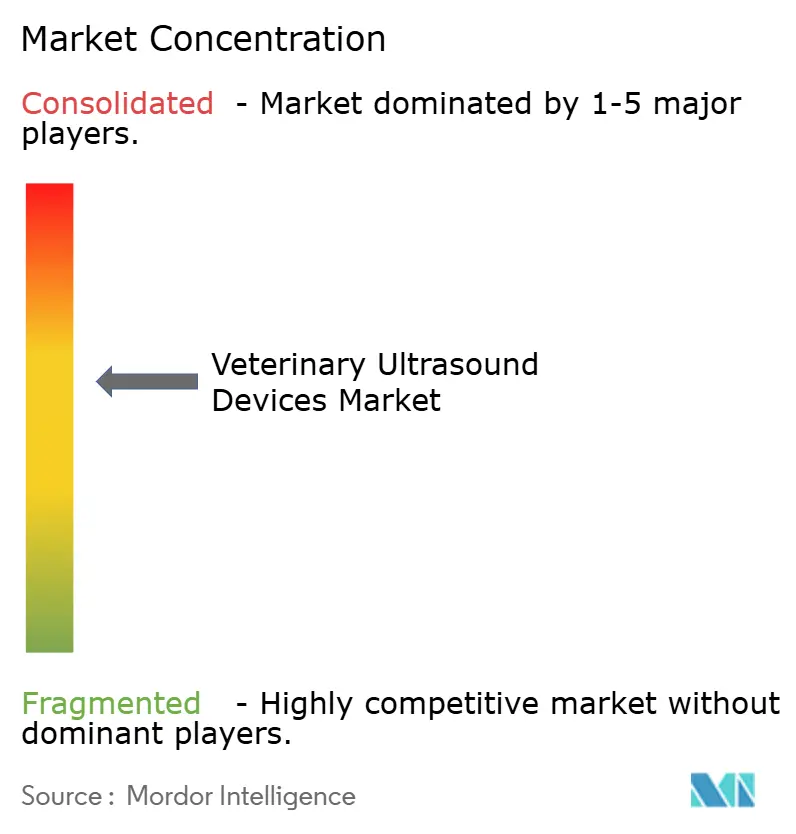
The market is moderately fragmented. Multinational imaging companies—GE HealthCare, FUJIFILM Sonosite, Mindray, Canon, and Siemens Healthineers—cross-sell veterinary-tuned versions of their human units, leveraging global service networks. Specialized firms such as Heska and IMV Imaging emphasize species-specific presets and rugged housings. Butterfly Network disrupts with semiconductor-based handhelds priced below USD 8,000, bundling AI features that simplify scanning for primary-care clinicians. GE’s 2023 partnership with Sound Technologies channels the Vscan Air into U.S. clinics via an established veterinary distributor, accelerating market penetration.
Cybersecurity compliance is emerging as a differentiator as the EU regulation mandates long-term patching and vulnerability reporting. Vendors with mature DevSecOps processes can absorb the added cost, squeezing smaller rivals. Consolidation among clinic groups concentrates purchasing power, favoring suppliers able to integrate hardware with enterprise PACS and electronic records. Chinese manufacturers, including Mindray and SonoScape, compete aggressively on price, forcing incumbents to highlight training, service, and AI workflow advantages rather than pure hardware specs.
Veterinary Ultrasound Devices Industry Leaders
-
Esaote SpA
-
IMV Imaging
-
Canon Inc.
-
Siemens Healthcare GmbH
-
FUJIFILM Sonosite Inc.
- *Disclaimer: Major Players sorted in no particular order
Veterinary Ultrasound Devices Market Companies Covered in this Report
- Butterfly Network Inc.
- Canon
- Chison Medical Technologies Co. Ltd
- Clarius Mobile Health Corp.
- DRAMI?SKI SA
- E.I. Medical Imaging
- Edan Instruments Inc.
- Esaote
- FUJIFILM Sonosite Inc.
- GE Healthcare
- Healcerion Co. Ltd
- Heska
- IMV Imaging
- Kaixin Electronic Instrument Co. Ltd
- Mindray Bio-Medical Electronics Co. Ltd
- Samsung Group
- Siemens Healthineers
- Sonostar Technologies Co. Ltd
- SonoScape Medical Corp.
- Telemed Medical Systems
- Xuzhou Palmary Electronics Co. Ltd
Market Opportunities and Future Outlook
One clear whitespace is the convergence of ultrasound hardware with remote interpretation and workflow software, which can help smaller clinics and mobile practitioners obtain specialist-level reads without owning referral-grade infrastructure. Zoetis agreement (announced July 2026) to acquire the VitalRADS teleradiology platform highlights demand for connected diagnostic ecosystems where point-of-care acquisition is paired with rapid expert review and AI-assisted reporting. This setup increases the value of ultrasound systems that integrate clean DICOM workflows, secure sharing, and structured reporting.
A second opportunity is multimodality integration and vendor consolidation around imaging platforms used by specialty and referral providers. That trend supports demand for interoperability between ultrasound and other modalities, plus unified service coverage. The February 2026 merger of Hallmarq Veterinary Imaging with OR Technology to form a global multimodality imaging group underscores buyer preference for consolidated portfolios and cross-modality software alignment, creating a path for ultrasound suppliers to bundle probe families, training, and connectivity into broader imaging ecosystems. Procurement is also shifting toward product assurance beyond core performance, including cybersecurity and long-term software maintenance, reinforced in this report by EU Cyber Resilience Act requirements. Vendors that can document patch support, access controls, and secure cloud connectivity for tele-ultrasound workflows are positioned to win more of these expanded evaluations.
Recent Industry Developments in Veterinary Ultrasound Devices Market
- June 2026: Canon Medical Systems launched the Aplio me X ultrasound system at Euroson 2026, adding AI-assisted workflows through its Altivity platform. The release continues the push toward workflow automation that can be adapted into veterinary-tuned presets and protocols, particularly for time-sensitive cardiology and emergency scanning.
- August 2025: Esaote North America and Epica International announced a strategic partnership to expand access to MRI and CT solutions across human and veterinary markets. The collaboration supports multimodality imaging packages for specialty providers, raising expectations for vendors that can provide integrated service, training, and modality-adjacent workflows alongside ultrasound.
- April 2024: A major veterinary imaging distributor announced a nationwide rollout agreement to stock and service portable ultrasound systems, expanding access in rural clinics and field settings. This strengthens channel coverage and service support for point-of-care ultrasound, improving uptime and adoption in livestock and general practice markets.
Veterinary Ultrasound Devices Market Report Scope and Research Methodology
Market Definition and Coverage
This market covers ultrasound imaging systems used in veterinary settings to visualize internal organs and tissues in animals, and it includes the device hardware that enables diagnostic scanning across common clinical use cases.
Scope exclusions: The sizing excludes ultrasound services, software-only tools, and non-ultrasound veterinary imaging modalities.
Segments Covered in This Report
- By Portability
- Handheld Ultrasound
- Table-Top Ultrasound
- Cart/Trolley-Based Ultrasound
- By Technology
- 2-Dimensional Ultrasound
- Doppler Ultrasound
- 3-D/4-D Ultrasound
- Contrast-Enhanced Ultrasound
- By Application
- Obstetrics & Gynecology
- Cardiology
- Musculoskeletal
- Abdominal & Internal Medicine
- Emergency & Critical Care
- By Animal Type
- Companion Animals
- Dogs
- Cats
- Other Small Companion Animals
- Livestock Animals
- Horse
- Cattle
- Other Livestock Animals
- Other Animals
- Companion Animals
- By End User
- Veterinary Clinics
- Veterinary Hospitals
- Other End Users
- Geography
- North America
- United States
- Canada
- Mexico
- Europe
- Germany
- United Kingdom
- France
- Italy
- Spain
- Rest of Europe
- Asia-Pacific
- China
- Japan
- India
- Australia
- South Korea
- Rest of Asia-Pacific
- Middle East & Africa
- GCC
- South Africa
- Rest of Middle East & Africa
- South America
- Brazil
- Argentina
- Rest of South America
- North America
Data Sources, Market Sizing, and Validation
Desk Research
Desk work was used to set the facts around animal health demand, clinic readiness, and equipment availability before any numbers were modeled. We referenced public sources such as the USDA and APHIS livestock statistics, the US FDA device and safety communications where relevant, World Organisation for Animal Health (WOAH) animal health updates, and trade data series published by UN Comtrade. Peer reviewed veterinary imaging and small animal medicine journals were also reviewed to understand where ultrasound is used most often and how usage is changing over time.
On the supply side, company annual reports, regulatory statements, product brochures, and investor presentations were read to map device formats and typical selling routes. Paid subscriptions were used selectively for company financials and intelligence, patent lookups, and shipment level import and export checks to sanity test production and distribution footprints. This desk source list is illustrative only, and many other public and paid references were used for data collection, cross checks, and clarification.
Primary Interviews and Surveys
Primary calls and surveys were completed with a mix of device channel participants and veterinary end users to validate adoption, pricing bands, and replacement behavior. To avoid regional bias, inputs were checked across major veterinary markets in APAC, EMEA, and the Americas, and then assumptions were adjusted where local caseload mix and spending patterns differed.
Distribution of primary research fieldwork respondents
| Company type | Respondent position | Region |
|---|---|---|
| Top tier: 31% | CXOs: 19% | APAC: 39% |
| Mid tier: 47% | Functional/Unit leaders: 31% | EMEA: 36% |
| Smaller Players: 22% | Managers: 50% | Americas: 25% |
Market-Sizing & Forecasting
Sizing starts from a top down build where the demand pool is reconstructed using veterinary visit intensity and imaging penetration, which is then filtered by typical ultrasound utilization per clinic and adjusted for equipment replacement cycles. Those totals are corroborated with selective bottom-up approximations, including sampled average selling price times unit volume checks by portability format, along with distributor and clinic level sense checks, so the model does not drift away from what is actually being purchased.
Key inputs used in the model include the split of companion animals versus livestock caseload, the share of scans performed in clinics versus hospitals, the mix shift toward handheld and cart based systems, and the way Doppler and 3-D or 4-D capability influences pricing. Because price and mix move together, we use scenario analysis supported by interview consensus to shape the forward curve, and then we test it against expected clinic investment capacity and animal health spend trends. When bottom-up signals were incomplete for smaller geographies, gaps were handled by applying validated proxy ratios from comparable markets and then re-checking the outputs with regional respondents.
Data Validation & Update Cycle
Outputs are cross-checked through multiple steps so unusual jumps are caught early and explained before sign-off. We compare the final totals against independent signals such as device price bands, expected replacement timing, and trade flow direction, and then we review variances by region and format to confirm they still match what practitioners described.
A second analyst review is performed to stress test the assumptions and math, and re-contact is triggered when any key input changes materially or when the modeled trend conflicts with a reliable external indicator. The report is refreshed annually, and interim updates are completed when major market events shift pricing, availability, or demand. Before delivery, we do a final pass so clients receive the most current view that can be supported by traceable inputs.
Mordor Intelligence's Veterinary Ultrasound Devices Market Size Compared Against Other Published Estimates
Published market values for veterinary ultrasound devices can look different even when everyone is talking about similar products, because the count can change with geography coverage, what is treated as device revenue, and the timing used for currency conversion. Differences also come from how quickly pricing and product mix are updated, particularly as handheld systems gain share.
The main gap comes from whether the model counts only ultrasound device hardware across formats and clinical applications, or if adjacent imaging items and service revenues are blended into the same total. This is where Mordor Intelligence treats the scope more strictly while keeping pricing tied to format mix shifts such as handheld versus cart based systems.
Benchmark comparison
| Source | Market Size | Gaps in Research Methodology |
|---|---|---|
| Mordor Intelligence | USD 481.68 M (2025) | |
| Industry Research Group A | USD 474.90 M (2024) | Uses a different base year and can compress the value by holding pricing flatter across the forecast build, and country coverage and format mix assumptions are not clearly reconciled to veterinary end user purchase patterns. |
| Global Advisory B | USD 434.27 M (2025) | A narrower product and animal type cut is highlighted, which can undercount multi-application systems used across departments, and the growth curve reflects a slower refresh of ASP and handheld adoption assumptions. |
The spread across the three figures is mainly explained by scope tightness, base year choice, and how pricing is carried forward as the format mix changes. By keeping the variables explicit and re-checking totals against practical demand signals, our estimate stays easier to replicate and easier to challenge when new information appears.
Key Questions Answered in the Report
What is driving the fastest growth segment in veterinary ultrasound?
Handheld devices, growing at 9.43% CAGR, gain traction through lower pricing, AI presets, and leasing plans that fit clinic budgets.
Which application area is expanding the quickest?
Cardiology leads with 10.55% CAGR as Doppler echocardiography becomes standard for pre-anesthetic screening and chronic disease management.
Why is Asia-Pacific the most attractive growth region?
Government livestock surveillance mandates and rising urban pet ownership push demand, resulting in an 8.54% regional CAGR.
How are cybersecurity rules affecting product design?
The EU Cyber Resilience Act obliges at least five years of security patches and rapid vulnerability reporting, favoring vendors with mature DevSecOps.
What financing options help small clinics acquire ultrasound?
Subscription and leasing programs cut upfront costs by up to 80% and allow mid-contract hardware upgrades as technology improves.
How significant is AI in veterinary ultrasound today?
AI tools now reduce scan interpretation time by up to 40% and enable remote specialist oversight, though professional judgment remains essential.