
Veterinary Scales Market Size and Share
Market Overview
| Study Period | 2020 - 2031 |
|---|---|
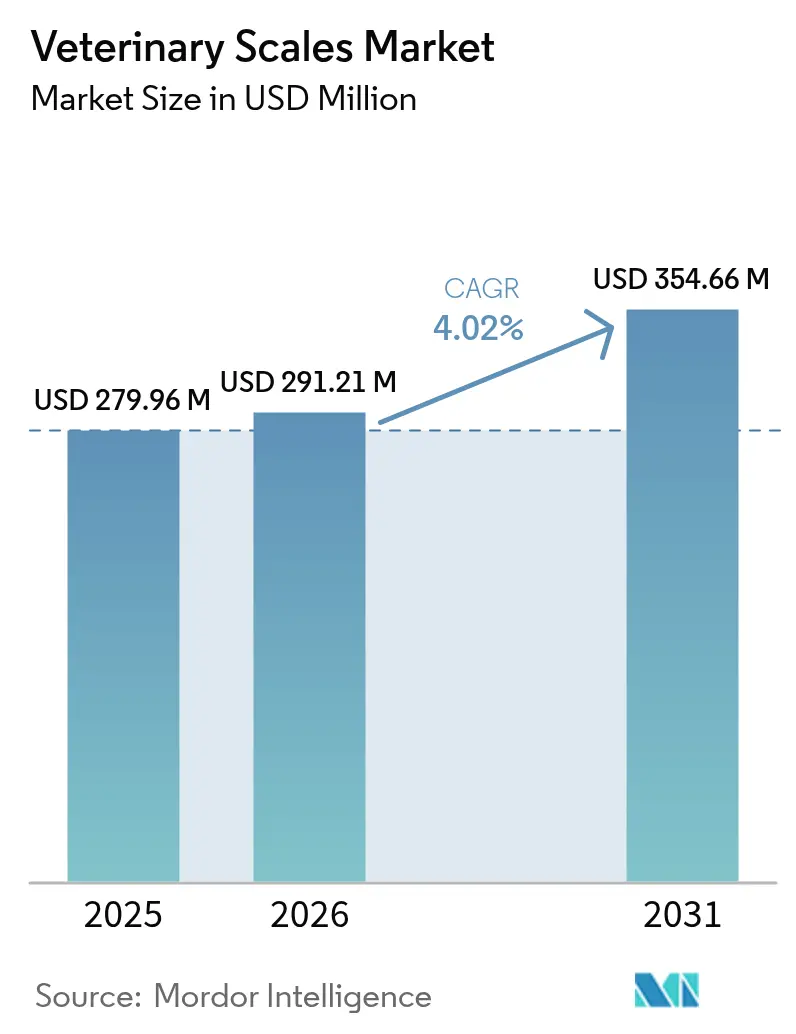
| Market Size (2026) | USD 291.21 Million |
| Market Size (2031) | USD 354.66 Million |
| Growth Rate (2026 - 2031) | 4.02 % |
| Fastest Growing Market | Asia Pacific |
| Largest Market | North America |
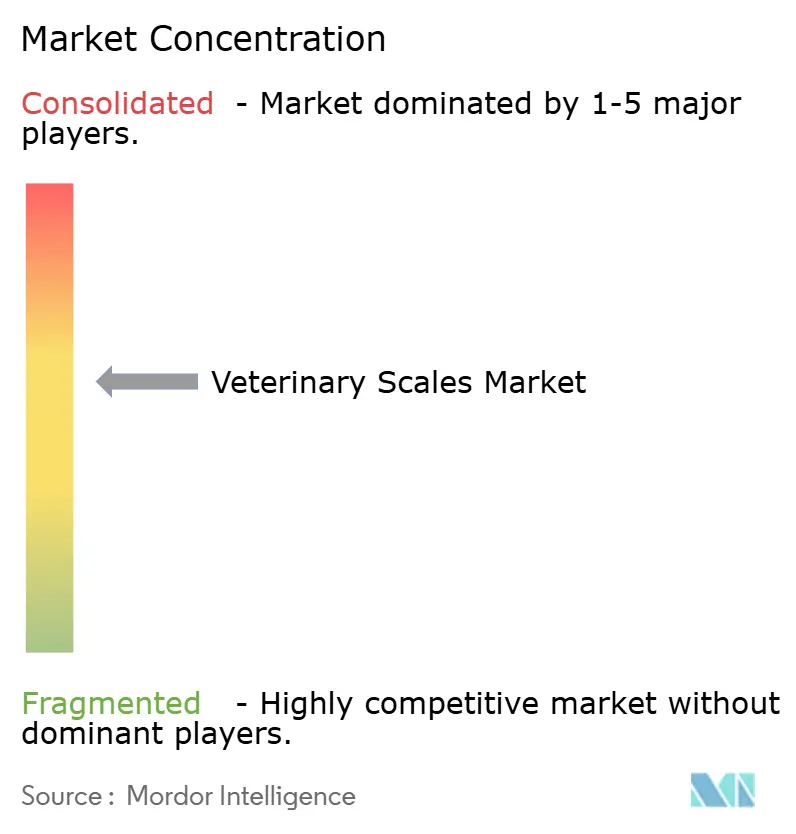
| Market Concentration | Medium |
Major Players *Disclaimer: Major Players sorted in no particular order Image © Mordor Intelligence. Reuse requires attribution under CC BY 4.0. | |
Veterinary Scales Market Analysis by Mordor Intelligence
The veterinary scales market size was valued at USD 279.96 million in 2025 and estimated to grow from USD 291.21 million in 2026 to reach USD 354.66 million by 2031, at a CAGR of 4.02% during the forecast period (2026-2031). Steady growth stems from a combination of rising companion-animal spending, advances in IoT-enabled weighing technology, and regulatory requirements for precise weight records in clinical settings. Increased pet longevity, higher diagnostic frequency, and livestock farm modernization collectively expand the installed base of connected weighing equipment across clinics, farms, and home-use environments. Competitive intensity remains moderate as traditional scale makers add cloud connectivity while specialist start-ups push subscription and data-analytics models. Consolidation among veterinary service providers further stimulates equipment upgrades as chains seek standardized, traceable devices to satisfy compliance audits.
Key Report Takeaways
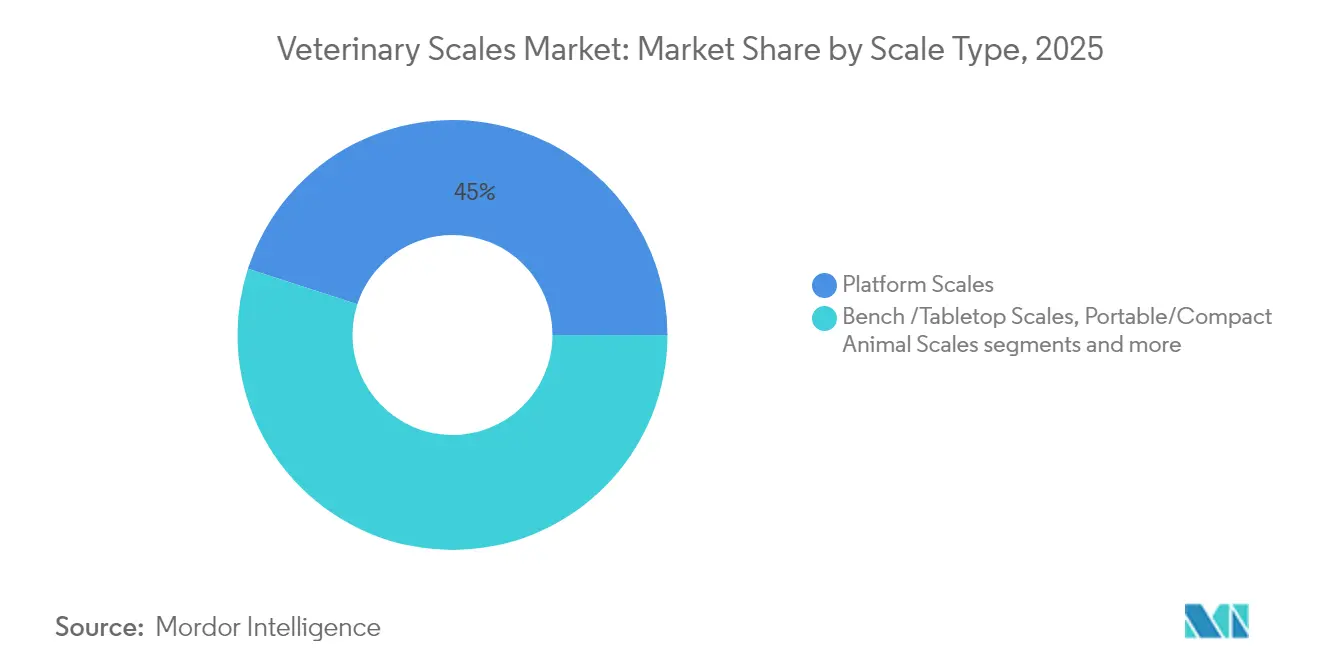
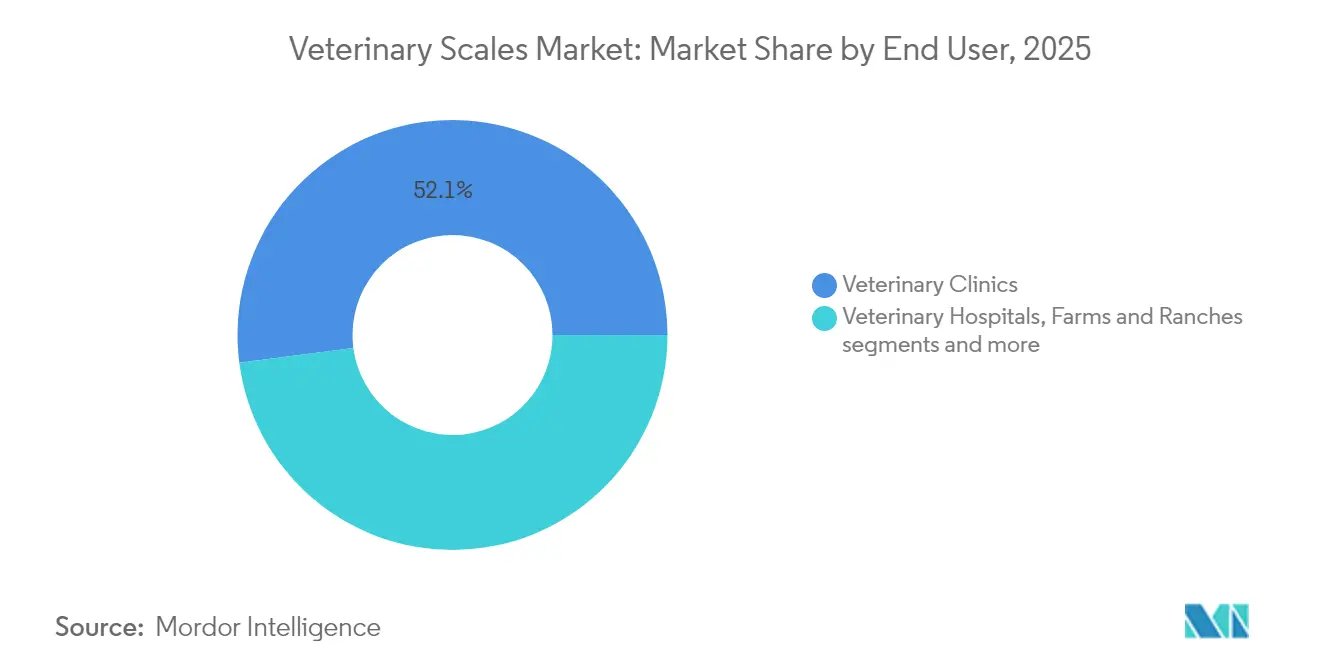
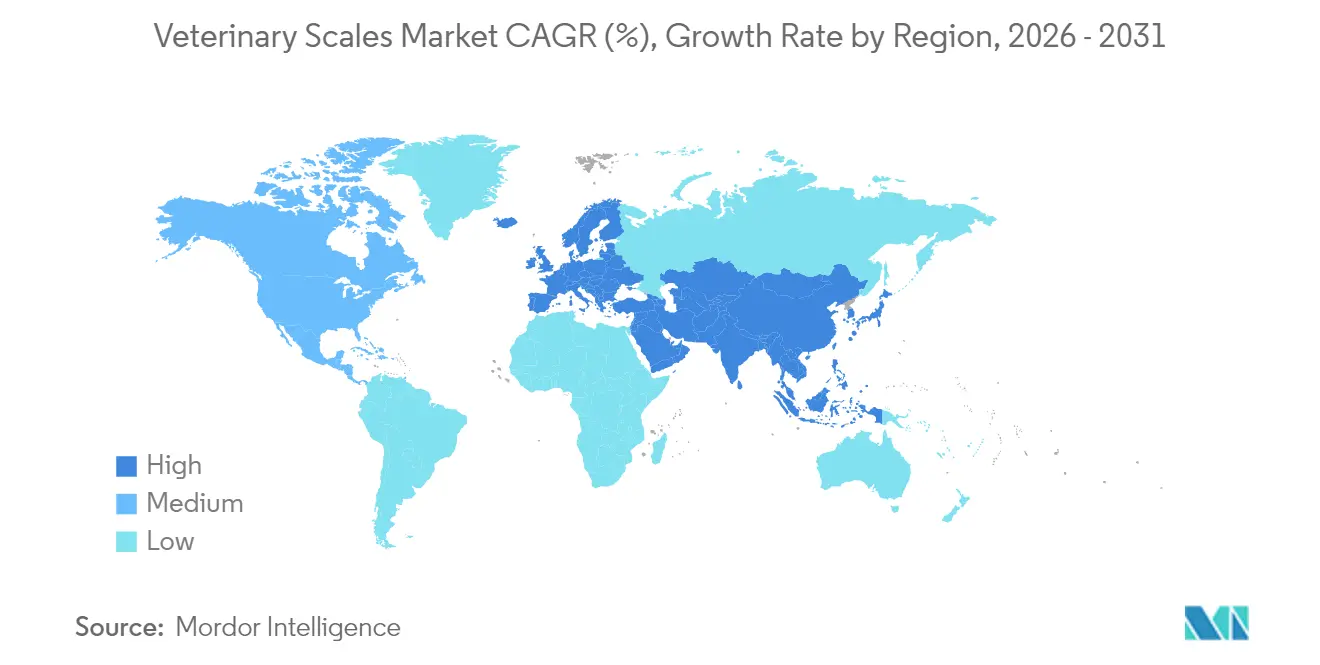
- By product type, platform scales led with 45.02% of veterinary scales market share in 2025; portable and compact scales are growing fastest at 5.54% CAGR to 2031. By animal type, companion animals accounted for 53.12% of the veterinary scales market size in 2025 and are projected to expand at 5.75% CAGR through 2031. By end user, veterinary clinics held 52.06% share of the veterinary scales market size in 2025, while home use applications are set to rise at 5.94% CAGR to 2031. By geography, North America dominated with 36.22% revenue share in 2025; Asia-Pacific is the fastest-growing region at 6.14% CAGR through 2031.
Note: Market size and forecast figures in this report are generated using Mordor Intelligence’s proprietary estimation framework, updated with the latest available data and insights as of 2026.
Market Trends and Insights
Drivers Impact Analysis of Veterinary Scales Market*
| Driver | (~) % Impact on CAGR Forecast | Geographic Relevance | Impact Timeline |
|---|---|---|---|
| Rising pet ownership & companion-animal expenditure | +1.2% | North America, Europe, global spill-over | Long term (≥ 4 years) |
| Growth in livestock farming & weight-based dosing norms | +0.9% | Asia-Pacific core, South America spill-over | Medium term (2-4 years) |
| Adoption of digital, IoT-enabled veterinary scales | +0.8% | North America, EU, expanding to APAC | Medium term (2-4 years) |
| Regulatory focus on accurate weight records for veterinary drugs | +0.6% | Global, led by FDA and EU regulators | Short term (≤ 2 years) |
| Telehealth-integrated mobile scales for home monitoring | +0.4% | North America, Europe | Long term (≥ 4 years) |
| Subscription-based “scale-as-a-service” for clinic chains | +0.3% | North America first movers | Medium term (2-4 years) |
| Source: Mordor Intelligence | |||
Rising Pet Ownership & Companion-Animal Expenditure
In 2024 United States households spent USD 1,733 per pet on average, positioning veterinary services as the fastest-growing cost line at 7.1% year over year. Higher spending underpins continuous demand for reliable weight measurement because accurate dosing and early disease detection require routine, precise checks. As pets age, chronic disorders such as diabetes and osteoarthritis demand tighter weight control, prompting clinics to install multi-platform systems that seamlessly feed data into electronic medical records for trend analysis. Premium service positioning makes integrated scales a standard item in full-service practices where clinical accuracy and client experience reinforce repeat visits. Clinics increasingly connect every weight session to automatic alerts, enabling real-time intervention where sudden changes flag potential health decline[1].
Growth in Livestock Farming & Weight-Based Dosing Norms
Precision livestock programs now rely on automated weighing stations that achieve around 95% accuracy when linked to calf feeders, waterers, and RFID ear tags. Modern dairy units and feedlots transmit continuous weight data to cloud dashboards that predict growth curves, flag underperforming animals, and calibrate antibiotic doses to new stewardship rules. Asian growers lead adoption because scale data supports export certification and premium branding for residue-free meat. National action plans on antimicrobial resistance further tighten weight-based prescription norms, making connected scales an operational necessity across large herds
Adoption of Digital, IoT-Enabled Veterinary Scales
Connected platforms feed weight, activity, and environmental data to practice management or farm ERP software. Narrowband-IoT radios maintain stable links in remote barns while edge processors deliver instant analytics even where broadband coverage is thin. Companion-animal clinics now integrate scales with automated reminders and API feeds to teleconsultation portals, allowing veterinarians to adjust diet plans without an in-person visit. Edge devices that pair weight pads with blood pressure cuffs and temperature sensors illustrate how the scale evolves into a multi-parameter vital station.
Regulatory Focus on Accurate Weight Records for Veterinary Drugs
The FDA’s revised Veterinary Feed Directive highlights weight documentation as a central compliance element for antimicrobial prescription audits. Similar language appears in EU Regulation 2019/6, obliging veterinarians to prove that dosages follow per-kilogram guidance. Devices certified to NTEP or CE metrology standards simplify inspections because each reading carries a secure audit trail. Clinics that fail to digitize records now risk financial penalties and reputational damage[2].
Restraints Impact Analysis of Veterinary Scales Market*
| Restraint | (~) % Impact on CAGR Forecast | Geographic Relevance | Impact Timeline |
|---|---|---|---|
| High upfront cost for small practices | -0.7% | Global, particularly acute in emerging markets | Short term (≤ 2 years) |
| Limited awareness in emerging markets | -0.5% | Asia-Pacific, South America, Middle East & Africa | Medium term (2-4 years) |
| Calibration & maintenance compliance burden | -0.4% | Global, with highest impact in regulated markets | Medium term (2-4 years) |
| Cyber-security risks around connected scale data | -0.3% | North America & Europe, expanding to connected markets | Long term (≥ 4 years) |
| Source: Mordor Intelligence | |||
High Upfront Cost for Small Practices
Independent hospitals with annual revenue below CNY 2.4 million in China and similar income tiers elsewhere often delay equipment renewal because advanced digital scales can cost several thousand dollars plus annual calibration. Financing options remain scarce, and many owners prioritize visible imaging upgrades that promise faster payback. Pay-per-use or rental schemes exist but tend to target corporate groups where volume offsets administrative overhead. As a result, smaller sites keep older mechanical or entry-level digital units lacking connectivity, restricting their access to data-driven care.
Limited Awareness in Emerging Markets
In regions where livestock management still relies on visual body-condition scoring, the benefits of quantitative weight monitoring remain underappreciated. Limited access to training, language barriers, and scarce technical support blunt adoption, while the absence of local metrology rules reduces compliance pressure. Distributors struggle to justify service hubs in rural areas, prolonging downtime when devices fail. Manufacturers now partner with agricultural extension programs to run live demonstrations, but coverage remains patchy and progress incremental.
*Our forecasts treat driver/restraint impacts as directional, not additive. The impact forecasts reflect baseline growth, mix effects, and variable interactions.
Veterinary Scales Market Segment Analysis
By Product Type:
Platform Scales Lead Despite Portable InnovationPlatform and walk-on units generated the largest revenue slice at 45.02% in 2025. Their dominance rests on high throughput capability, durable construction, and seamless integration with handling chutes that reduce animal stress. Clinics use them to weigh dogs, cats, and exotics in quick succession, whereas farms employ oversized platforms to capture cattle weights inside raceways. Platform devices increasingly ship with Wi-Fi or Bluetooth modules that post readings to the cloud in real time, aligning with broader digitization goals across the veterinary scales market. Portable and compact models, though representing a smaller base, will record the fastest volume gains through 2031 because mobile veterinarians and telehealth programs value lightweight, battery-powered pads that travel easily between locations.The migration toward smart design is redefining the competitive map.
Manufacturers now attach RFID or QR code readers to platforms to auto-identify animals and prevent transcription errors. Smart feeders with embedded load cells illustrate category expansion into husbandry equipment that automatically adjusts ration size based on real-time weights. Automated alleyway solutions such as C-Lock’s SmartScale collect continuous weight data through water or feed stations, freeing staff for higher-value tasks. This broadening functionality enlarges the total addressable portion of the veterinary scales market, encouraging providers to bundle software and analytics with hardware rather than compete solely on build quality.

By Animal Type:
Companion Animals Drive GrowthDogs and cats remained the primary revenue contributors with 53.12% share in 2025. Their standing reflects rising pet populations, growing preventive-care budgets, and the clinical importance of precise dosing for chronic diseases. Across urban markets, clinics record multiple weight checks per pet each year, leading to intensive scale utilization and frequent replacement cycles as accuracy standards tighten. The trend is amplified by wellness plans that bundle routine weigh-ins with vaccinations and bloodwork, embedding measurement into the care pathway. Livestock species still account for substantial unit shipments, yet their revenue share trails companion animals because per-device pricing is lower and procurement decisions hinge on farm-wide return on investment metrics. Exotic, avian, and zoo patients form a small but technically demanding niche that commands premium, custom-engineered solutions.Connected health ecosystems are reshaping expectations even within the companion segment.
AI-enabled behavior scoring tools correlate weight shifts with activity and feeding patterns, generating actionable alerts for veterinarians and owners. Such multi-parameter dashboards increase the perceived value of a connected scale, supporting subscription revenue that supplements device sales. On the farm side, integrated sensors log weight alongside ambient temperature, humidity, and feed intake, creating holistic dashboards that underpin predictive medicine and welfare certification.
By End User:
Home Use Accelerates Amid Clinic DominanceVeterinary clinics held 52.06% of 2025 revenue, reflecting the central role of in-house diagnostics during wellness visits, surgery prep, and medication dosing checks. Clinics typically deploy a mix of platform, bench, and infant scales to cover species varying from reptiles to Great Danes. Digital transformation drives upgrades because practice-management systems increasingly require automated weight import to avoid manual entry errors and maintain audit trails. Corporate practice consolidators negotiate frame contracts with leading scale vendors, accelerating fleet renewal cycles and cementing standards for connectivity and calibration.Home-use devices will post the quickest CAGR at 5.94% through 2031.
Affordable Bluetooth pads synchronize with smartphone apps that forward trends to veterinarians, enabling remote monitoring for obesity, renal disease, or oncology cases. Pharmacies and insurers encourage frequent at-home weigh-ins by offering premium discounts linked to data sharing. Veterinary hospitals, zoos, and rehabilitation centers complete the end-user matrix, favoring specialized scales with higher capacities or rugged construction to handle sedated wildlife or critical-care patients. Farms and ranches expand adoption of corridor-mounted units that capture large-animal weights during normal movement, minimizing labor costs and stress.
Geography Analysis
North America Veterinary Scales Market
North America retained the leading 36.22% revenue share in 2025. High pet ownership, established veterinary infrastructure, and rigorous FDA dosage rules foster repeat purchases and fast replacement of obsolete equipment. Extensive dealer networks ensure prompt calibration, bolstering customer trust and underpinning the sizable regional slice of the veterinary scales market. Investment by corporate practice groups and the rise of subscription offerings further reinforce demand by smoothing capital outlays and standardizing equipment fleets.
APAC Veterinary Scales Market
Asia-Pacific is the growth locomotive, projected to expand at 6.14% CAGR to 2031. Livestock modernization programs in China, India, and Southeast Asia embed automated weighing into broader precision-farming rollouts. The Chinese pet medical sector, already valued at CNY 106.2 billion in 2022 and climbing at 19% CAGR, signals strong downstream demand for clinic-grade scales as service providers align with international quality norms. Urban families adopt tele-consultation apps that include weight tracking, boosting sales of consumer-grade pads with veterinary-level accuracy. Government initiatives supporting smart agriculture contribute parallel momentum as producers procure connected systems to meet sustainability and residue-control targets.
Europe Veterinary Scales Market
Europe shows steady, regulation-driven demand. The continent’s welfare rules mandate documented weight entries for drug records and transport certificates, ensuring a stable baseline replacement cycle. Sustainability policy under the European Green Deal nudges farms toward data-rich husbandry, where automated scales feed CO₂ and feed-conversion metrics into compliance reports. Consolidation of companion-animal clinics under pan-European chains harmonizes buying criteria across markets, encouraging suppliers to certify devices to both CE and OIML standards, adding another layer of complexity and opportunity within the veterinary scales market.
Regulatory Landscape
Veterinary scales operate under a split framework, with animal devices facing less centralized premarket regulation than human medical devices, but still subject to safety and labeling oversight. In the United States, the FDA Center for Veterinary Medicine (CVM) notes that animal medical devices do not follow the same premarket pathways as human devices (for example, no 510(k) process). Enforcement action can still apply to misbranded or adulterated products, which has pushed suppliers toward stronger quality controls and traceable documentation.
Outside the United States, compliance is driven primarily by metrology and calibration rules rather than a single veterinary-device regime. In the European Union, the Medical Device Regulation (MDR) 2017/745 applies to human-use devices, so veterinary weighing equipment typically aligns to non-automatic weighing instrument requirements and recognized standards such as OIML R 76-1 implementations (for example EN 45501) for accuracy and performance. Calibration competence is commonly demonstrated through ISO/IEC 17025-accredited laboratories, which supports acceptance in regulated professional settings such as clinical chains, laboratories, and export-oriented livestock operations.
Value Chain Analysis
The veterinary scales value chain starts with component sourcing (load cells, strain gauges, indicators, housings, and wireless modules) and moves through OEM design, assembly, and veterinary-specific configuration. This includes dynamic weighing filters, animal-safe platforms, ingress protection, and firmware that supports clinical workflows. Established manufacturers such as Adam Equipment and Cardinal/Detecto, along with other weighing specialists, supply platform, bench, and portable form factors, while product differentiation increasingly comes from connectivity, serviceability, and integration into practice-management or farm software.
Route-to-market is handled through direct sales to clinic groups and farms, authorized dealer networks, and specialized veterinary equipment distributors that bundle scales with cages, tables, and other fit-out needs for new builds and expansions. After-sales services (installation, verification, periodic recalibration, and repairs) are key value capture points, particularly where calibration needs are formalized through ISO/IEC 17025 lab practices and national rules for non-automatic weighing instruments. Regional requirements can also shape the chain, for example South Africa's SAHPRA framework introduces establishment licensing requirements for entities manufacturing, importing, or distributing veterinary medical devices, increasing compliance workload for distributors and encouraging more structured documentation and service support.
Competitive Landscape
Traditional weighing brands such as Mettler-Toledo, Rice Lake Weighing, and Detecto use broad portfolios, nationwide service technicians, and trusted calibration protocols to protect share. They update legacy platforms with Wi-Fi modules and API kits to remain relevant. Mid-tier challengers focus on veterinary-specific firmware and lighter chassis designs, prioritizing ergonomics vital to high-volume small-animal clinics. Several IoT start-ups position the scale as a data node inside a larger health ecosystem, selling predictive analytics dashboards that identify outlier growth curves before clinical signs emerge.
Business models evolve alongside technology. Scale-as-a-service contracts bundle devices, cloud access, periodic recalibration, and firmware updates for a monthly fee, easing budget pressures in multi-location groups. Hardware revenue therefore blends with analytics and maintenance income, creating annuity streams for suppliers. Patent filings concentrate on non-contact load cell alignment, vibration filtering, and sensor fusion, aiming to improve accuracy under field conditions. Competitive pressure also arrives from adjacent categories: smart feeders, automatic milking stations, and kennel flooring with embedded sensors all encroach on traditional scale territory by baking in weighing capability.
M&A remains active as suppliers broaden their diagnostics footprint. Zoetis’ imminent launch of the AI-driven Vetscan OptiCell analyzer indicates how device makers bundle weight with hematology to deliver one-stop workflows. Patterson Companies’ recent acquisitions add infusion and supply-chain reach, positioning it to offer integrated equipment kits. EQT’s deal for VetPartners underscores buyer appetite for scalable platforms where upgraded diagnostics, including connected scales, boost service differentiation. Fragmentation persists, yet top-tier firms collectively account for almost half of global revenue, giving them leverage to set connectivity and interoperability standards across the veterinary scales market.
Veterinary Scales Industry Leaders
-
Adam Equipment Co. Ltd.
-
apexx Veterinary Equipment, Inc.
-
Bosche GmbH & Co. KG
-
Brecknell
-
Detecto Scales
- *Disclaimer: Major Players sorted in no particular order
Veterinary Scales Market Companies Covered in this Report
- Mettler Toledo
- Rice Lake Weighing Systems
- Detecto Scale Company
- Adam Equipment
- Marsden Weighing Machine Group
- Avery Weigh-Tronix
- Prime Scales
- Shor-Line (Schroer Mfg.)
- Cardinal Scale Manufacturing Co.
- Doran Scales Inc.
- A&D Weighing
- Arlyn Scales
- Brecknell
- TriStar Vet
- Bosche
- Tanita
- Kern & Sohn GmbH
- Jiangsu Exact Weighing Systems
- LAICA S.p.A.
- Digi-Star LLC (Topcon)
Market Opportunities and Future Outlook
A major whitespace sits in scaling connected, audit-ready weighing workflows across fragmented end users, especially independent clinics and smaller farms that face high upfront costs and calibration burdens. Demand is also closely tied to compliance-driven documentation, such as per-kilogram dosing records referenced in the report context (for example, FDA Veterinary Feed Directive guidance and EU Regulation 2019/6). That creates a pull for devices that store secure weight logs and integrate cleanly with practice-management systems.
This supports opportunities for subscription and bundled service models that include scheduled recalibration and digital record retention, reducing the operational friction that keeps legacy mechanical or entry-level devices in use. There is also room for metrology-led differentiation and cross-border acceptance, where manufacturers and service partners align to recognized requirements for non-automatic weighing instruments and calibration competence (for example, EN 45501/OIML-derived performance expectations and ISO/IEC 17025-accredited calibration). Government metrology frameworks reinforce this direction: NIST Handbook 44 (2025) specifies technical requirements for weighing and measuring devices in commercial applications, and legal-for-trade programs such as NTEP create a clear procurement signal for accuracy and repeatability. In parallel, farms modernizing husbandry and clinic consolidators standardizing equipment fleets expand demand for rugged platforms and low-stress animal designs that can feed weight data into broader dashboards rather than remain a standalone device.
Recent Industry Developments in Veterinary Scales Market
- June 2026: Adam Equipment published guidance content focused on selecting pet scales for lower-stress clinic workflows, emphasizing fit-for-purpose designs for routine weighing. The messaging underscores how vendors are positioning ergonomics, repeatability, and ease of use as differentiators alongside accuracy. It also supports demand for standardized procurement in clinics that want consistent weighing protocols across staff and rooms.
- January 2025: Tractor Supply completed its acquisition of Allivet, expanding further into veterinary care products and fulfillment. A broader veterinary-focused distribution footprint can influence bundled purchasing and promotions that pair consumables with clinic equipment. The move also highlights the role of retail and e-commerce channels in shaping procurement behavior for smaller practices and pet owners.
- November 2024: Mission Veterinary Partners and Southern Veterinary Partners announced a merger that combined more than 730 practices under a larger network. Larger practice platforms typically centralize purchasing, which can accelerate replacement cycles and standardize requirements for connected, traceable weighing devices. The consolidation increases the importance of supplier readiness for multi-site rollouts, service coverage, and recurring calibration support.
Veterinary Scales Market Report Scope and Research Methodology
Market Definition and Coverage
For this methodology, the veterinary scales market covers purpose-built weighing devices designed for live animals, including electronic and mechanical units used across veterinary clinics, hospitals, farms, research labs, zoos, and at-home care.
Scope exclusions: We exclude general industrial or food-processing scales even if they are sometimes used to weigh animals.
Segments Covered in This Report
- By Product Type (Value)
- Platform / Walk-on Scales
- Bench / Tabletop Scales
- Portable / Compact Animal Scales
- Others
- By Animal Type (Value)
- Companion Animals (Dogs, Cats)
- Large Animals (Cattle & Buffalo)
- Others (Avian, Exotic)
- By End User (Value)
- Veterinary Clinics
- Veterinary Hospitals
- Farms & Ranches
- Home Use / Pet Owners
- Zoos & Wildlife Rehabilitation Centers
- By Geography (Value)
- North America
- United States
- Canada
- Mexico
- Europe
- Germany
- United Kingdom
- France
- Italy
- Spain
- Rest of Europe
- Asia-Pacific
- China
- India
- Japan
- South Korea
- Australia
- Rest of Asia-Pacific
- South America
- Brazil
- Argentina
- Rest of South America
- Middle East and Africa
- GCC
- South Africa
- Rest of Middle East and Africa
- North America
Data Sources, Market Sizing, and Validation
Desk Research
Desk work is used to map the demand setting and to keep assumptions realistic before we model revenue. We typically refer to public sources such as the USDA and similar agriculture statistics bodies, CDC and WHO animal health publications where relevant, FAO livestock datasets, and trade or veterinary association websites that discuss clinic activity and equipment needs.
On the supply side, we review manufacturer product catalogs and technical sheets to understand weight capacity bands, calibration needs, and common features (like portability or connectivity). We also use company filings, investor presentations, credible press coverage, and selected paid subscriptions for company financials and news context, plus patent databases to spot product innovation cycles. These desk sources are illustrative and not exhaustive, and many other public references are used for cross-checking and clarification.
Primary Interviews and Surveys
Primary discussions are run with people who buy, sell, service, or specify veterinary weighing equipment, so the assumptions from desk work can be adjusted with real purchase behavior. We typically cover distributors, clinic and hospital procurement staff, farm operators, and service technicians across major regions, and then we re-check topics like pricing ranges, replacement timing, and feature-driven upsell patterns until the model stops moving meaningfully.
Distribution of primary research fieldwork respondents
| Company type | Respondent position | Region |
|---|---|---|
| Top tier: 29% | CXOs: 15% | APAC: 45% |
| Mid tier: 55% | Functional/Unit leaders: 41% | EMEA: 37% |
| Smaller Players: 16% | Managers: 44% | Americas: 18% |
Market-Sizing & Forecasting
Sizing starts with a top-down build that reconstructs the addressable installed base of veterinary care and animal handling points, and then applies purchase and replacement behavior to estimate unit demand by year. To keep it grounded, the total is corroborated with selective bottom-up approximations, such as sampled average selling price (ASP) by scale type and capacity, distributor channel checks, and a limited roll-up of identifiable supplier revenues where disclosures allow it.
Key model inputs include the mix of companion animal versus livestock use settings, average replacement cycles for weighing devices, calibration and service intensity, typical capacity ranges demanded (small animal tables versus large animal platforms), and regional clinic and farm modernization trends that influence ASP progression. Forecasting is done using scenario analysis supported by directional consensus from primary respondents, where drivers like pet care spending, livestock herd economics, and technology adoption (for example, connected scales) are varied within reasonable bounds. When bottom-up signals are incomplete, gaps are handled by using conservative penetration assumptions and then validating them against utilization and procurement feedback from interviews.
Data Validation & Update Cycle
Validation is done in layers so that outliers do not slip into the final market size. Model outputs are checked against independent signals such as equipment import trends where visible, category-level company revenue disclosures, and observable pricing bands for common scale configurations, and then any large variances are reviewed and corrected.
A second analyst review is completed before sign-off, focusing on year-over-year step changes, currency consistency, and whether assumptions match what respondents said about purchase timing. The report is refreshed annually, and interim updates are made when material events change demand or pricing, followed by a final pre-delivery pass so clients receive the latest updated view.
Mordor Intelligence's Veterinary Scales Market Sizing Compared With Other Published Estimates
Published market numbers for veterinary scales can differ widely, even when the topic looks similar on the surface, because the boundaries and pricing logic are not always aligned. Differences usually come from what gets counted as a veterinary scale, how replacement demand is modeled, and how quickly ASPs are allowed to rise over the forecast window.
By tracking calibration-ready veterinary use cases and excluding general industrial devices, Mordor Intelligence keeps the 2026 total tied to real animal-weighing demand rather than broader scale revenues, which narrows scope drift and reduces over-counting in mixed-use channels.
Benchmark comparison
| Source | Market Size | Gaps in Research Methodology |
|---|---|---|
| Mordor Intelligence | USD 291.21 M (2026) | |
| Global Consultancy A | USD 311.48 M (2025) | Uses a different base year and applies a broader growth setup, which can lift the near-term value if adjacent use cases and faster ASP increases are assumed. |
| Industry Publisher B | USD 264.66 M (2024) | Anchors on an earlier year and may treat replacement demand and channel pricing more conservatively, which can pull the modeled total down versus a later-year baseline. |
Overall, the spread in the table is mainly explained by base-year choice and how strictly the product boundary is applied, plus how ASP progression is handled across regions. When the market is rebuilt from clear demand settings and then cross-checked with pricing and procurement feedback, the result is a number that is easier to trace and repeat year after year.
Key Questions Answered in the Report
What is the current value of the veterinary scales market?
The market was valued at USD 291.21 million in 2026 and is forecast to reach USD 354.66 million by 2031 at a CAGR of 4.02% during the forecast period (2026-2031).
Which product category holds the largest share?
Platform and walk-on scales lead with 45.02% revenue share, driven by high throughput needs in clinics and farms.
Why is Asia-Pacific the fastest-growing region?
Rapid livestock modernization, growing urban pet ownership, and supportive government programs fuel a 6.14% CAGR through 2031.
How are regulations influencing purchasing decisions?
FDA and EU rules demand documented weight records for drug dosing, prompting clinics to invest in certified, connected scales.
What business models are emerging in the veterinary scales industry?
Subscription “scale-as-a-service” contracts bundle hardware, calibration, and analytics, converting capital costs to predictable operating fees.