
Veterinary Pain Management Market Size and Share
Market Overview
| Study Period | 2022 - 2031 |
|---|---|
| Forecast Data Period | 2026 - 2031 |
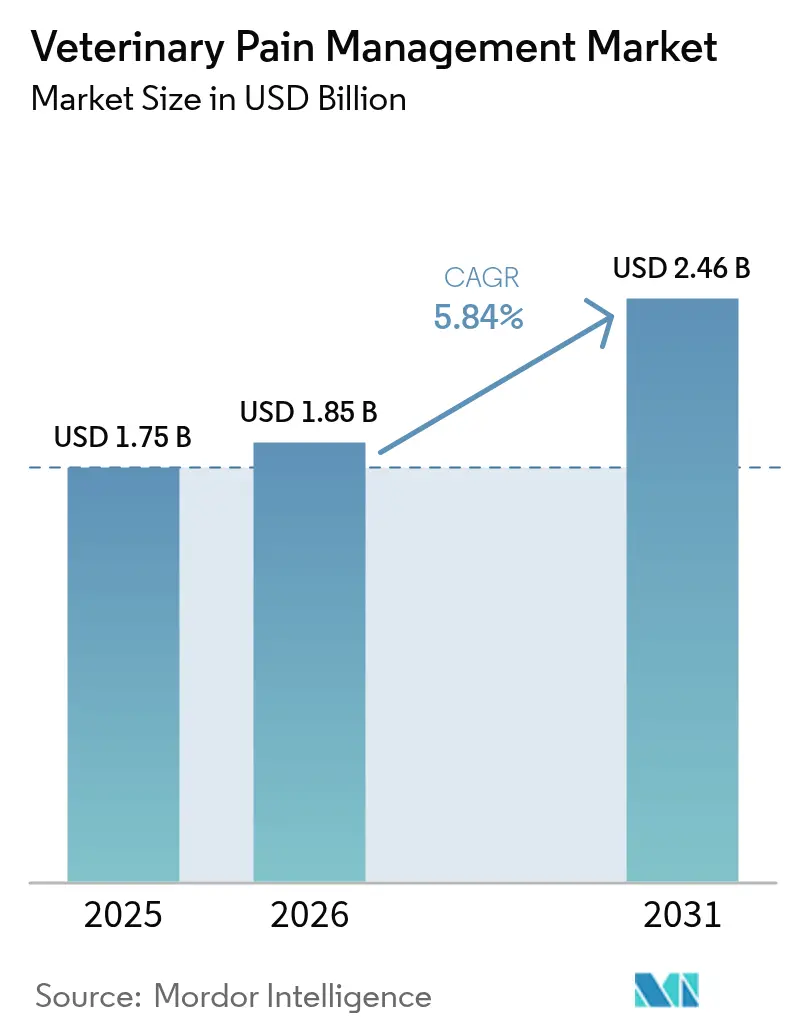
| Market Size (2026) | USD 1.85 Billion |
| Market Size (2031) | USD 2.46 Billion |
| Growth Rate (2026 - 2031) | 5.84 % |
| Fastest Growing Market | Asia Pacific |
| Largest Market | North America |
Major Players *Disclaimer: Major Players sorted in no particular order Image © Mordor Intelligence. Reuse requires attribution under CC BY 4.0. | |
Veterinary Pain Management Market Analysis by Mordor Intelligence
The veterinary pain management market size was valued at USD 1.75 billion in 2025 and estimated to grow from USD 1.85 billion in 2026 to reach USD 2.46 billion by 2031, at a CAGR of 5.84% during the forecast period (2026-2031). Growing pet humanization, tightening livestock welfare rules, and sustained product launches underpin this trajectory. Drug-based modalities still dominate value contribution, but device therapies are moving rapidly from adjunct to mainstream status as adverse-event scrutiny pushes veterinarians toward non-pharmaceutical tools. Monoclonal antibodies, AI-enabled pain-scoring platforms, and cannabinoid candidates illustrate a pipeline that is broadening beyond legacy NSAIDs and opioids. Simultaneously, mandatory multimodal analgesia protocols in the United States and the European Union are fostering demand for combination regimens that lower opioid exposure while sustaining efficacy.
Key Report Takeaways
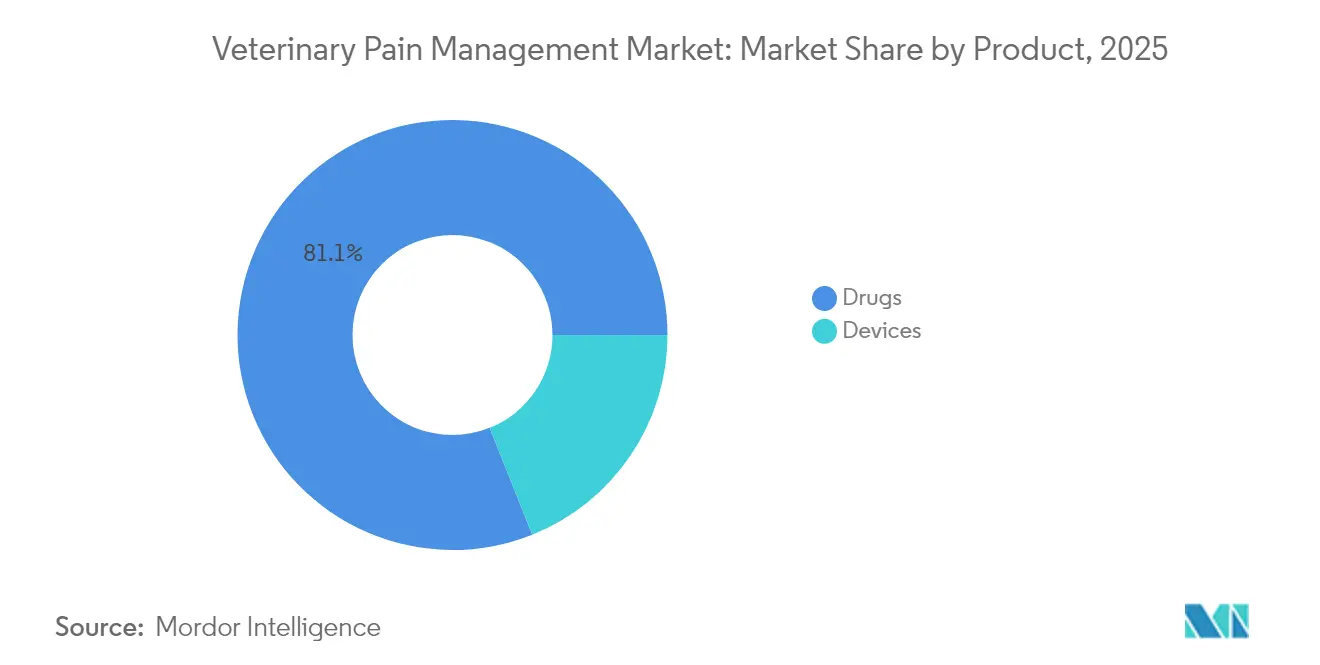
- By product category, pharmaceuticals commanded an 81.05% revenue share in 2025 while devices are projected to expand at a 6.03% CAGR through 2031, marking the fastest trajectory in the portfolio.
- By animal type, livestock retained 55.31% of the veterinary pain management market share in 2025, yet companion animal treatments are poised to grow at 6.78% CAGR to 2031 on the back of discretionary pet-care spending.
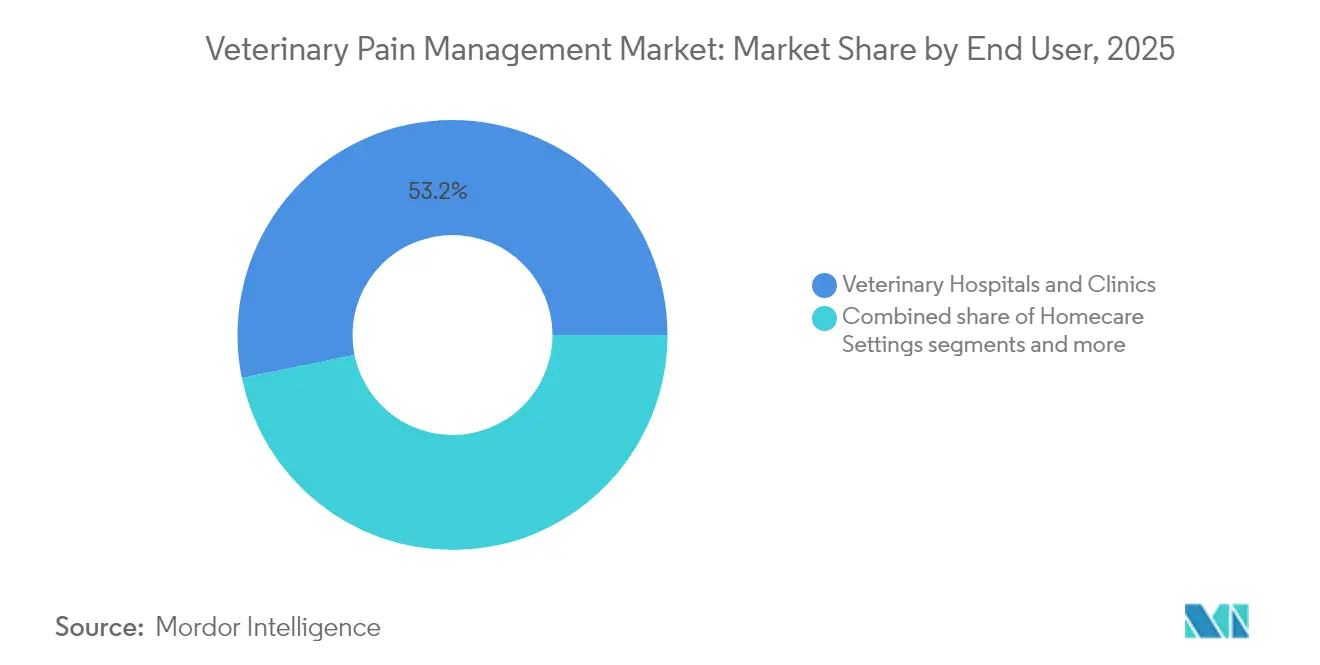
- By end user, veterinary hospitals and clinics held 53.21% of the veterinary pain management market size in 2025; home-care settings lead growth with a 6.46% CAGR thanks to telemedicine and owner-administered products.
- By geography, North America accounted for 41.78% revenue in 2025, whereas Asia-Pacific is advancing at a 7.18% CAGR supported by rising incomes and evolving welfare standards.
Note: Market size and forecast figures in this report are generated using Mordor Intelligence’s proprietary estimation framework, updated with the latest available data and insights as of 2026.
Global Veterinary Pain Management Market Trends and Insights
Drivers Impact Analysis*
| Driver | (~) % Impact on CAGR Forecast | Geographic Relevance | Impact Timeline |
|---|---|---|---|
| Rising pet ownership & humanization | +1.2% | Global, strongest in North America & Europe | Medium term (2-4 years) |
| Growing osteoarthritis & post-operative pain incidence | +0.8% | Global, aging pet populations in developed markets | Long term (≥ 4 years) |
| Expansion of livestock welfare regulations | +0.9% | EU, North America, expanding to APAC | Short term (≤ 2 years) |
| Mandatory multimodal analgesia protocols (EU, US) | +0.7% | EU, US, with spillover to other developed markets | Medium term (2-4 years) |
| Commercialization of cannabinoid-based vet therapeutics | +0.6% | North America, selective EU markets | Long term (≥ 4 years) |
| AI-powered pain-scoring tools boosting early treatment | +0.5% | Global, led by North America & Europe | Medium term (2-4 years) |
| Source: Mordor Intelligence | |||
Rising Pet Ownership & Humanization
Pet owners increasingly expect human-level clinical standards, prompting premium adoption of innovations such as Zoetis’ bedinvetmab injections. The American Animal Hospital Association’s 2024 guidelines codify multimodal regimens, legitimizing antibody use alongside NSAIDs. Retailers of welfare-certified livestock products likewise seek credible analgesia claims to justify price premiums, widening overall demand.
Growing Osteoarthritis & Post-Operative Pain Incidence
Osteoarthritis affects 20% of dogs older than one year and nearly 90% of cats above 12 years. FDA approval of bedinvetmab established biologics as viable long-term solutions, with trial success rates of 43.5% versus 16.9% for placebo. Long-acting bupivacaine formulations such as Elanco’s Nocita deliver 72-hour coverage, curbing readmission rates and owner burden. Productivity losses in untreated livestock further amplify the economic argument for effective analgesia.
Expansion of Livestock Welfare Regulations
The European Union’s 2024 rules oblige analgesia during dehorning, castration, and tail docking, with fines for non-compliance. The United States Department of Agriculture increased inspection frequencies 40% since 2023, pressuring producers to adopt label-approved drugs over off-label low-cost options. Such mandates convert compliance costs into recurring revenue streams for suppliers.
Mandatory Multimodal Analgesia Protocols (EU, US)
European Medicines Agency guidance insists veterinarians justify high-dose monotherapies, nudging clinics toward combination approaches and device adjuncts. Companies possessing both drug and device assets can therefore bundle solutions, whereas single-product firms must forge partnerships or broaden their pipelines.
Restraints Impact Analysis*
| Restraint | (~) % Impact on CAGR Forecast | Geographic Relevance | Impact Timeline |
|---|---|---|---|
| Adverse-event profile of NSAIDs & opioids | -0.4% | Global, particularly in geriatric populations | Short term (≤ 2 years) |
| Stringent regulatory approval timelines | -0.3% | Global, most restrictive in EU & US | Long term (≥ 4 years) |
| Shortage of veterinary anesthesiologists | -0.2% | North America, expanding to other regions | Medium term (2-4 years) |
| AMR-linked scrutiny curbing NSAID usage | -0.1% | Global, led by EU regulatory initiatives | Long term (≥ 4 years) |
| Source: Mordor Intelligence | |||
Adverse-Event Profile of NSAIDs & Opioids
Veterinarians weigh renal, hepatic, and gastrointestinal risks when prescribing NSAIDs, and diversion concerns complicate opioid dispensing. Post-marketing surveillance of bedinvetmab documented 17,162 adverse reports from 18 million doses, reminding clinicians that even innovative biologics carry safety obligations. FDA approval of suzetrigine for human use underscores momentum toward non-opioid classes that may cross into veterinary care.
Stringent Regulatory Approval Timelines
Average review cycles exceed five years, and combination products require parallel device and drug dossiers, lifting costs above USD 10 million. VICH streamlining efforts have yielded uneven national adoption, compelling companies to fund multiple submissions or delay market entry.
*Our forecasts treat driver/restraint impacts as directional, not additive. The impact forecasts reflect baseline growth, mix effects, and variable interactions.
Segment Analysis
By Product: Devices Gain Ground Despite Drug Dominance
The pharmaceutical segment captured 81.05% of the veterinary pain management market size in 2025, anchored by NSAIDs such as meloxicam, yet device revenues are growing at a 6.03% CAGR. NSAIDs persist as first-line therapy because of cost efficiency, whereas opioid use retreats under diversion scrutiny. Long-acting local anesthetics like Nocita extend analgesia to 72 hours and mitigate readmission. Alpha-2 agonists retain niche roles in large animal sedation. Early cannabinoid entrants address chronic pain that resists conventional classes, despite regulatory headwinds.
Portable diode-laser units, PEMF mats, and shockwave systems are carving out space as stand-alone or adjunct solutions. Clinics promote these technologies for geriatric pets intolerant of NSAIDs, while equine practitioners leverage PEMF for musculoskeletal recovery. Manufacturers now bundle software analytics that log session parameters, enabling veterinarians to document compliance with multimodal mandates. The device trajectory signals that the veterinary pain management market will increasingly balance pharmacology with non-pharmacologic modalities.

By Animal Type: Companion Animals Drive Future Growth
Livestock held 55.31% of the veterinary pain management market share in 2025, reflecting mandatory compliance across large herds. Nevertheless, the companion segment is projected to expand at 6.78% CAGR, lifted by a global pet economy valued at USD 261 billion. Livestock buyers emphasize cost-per-head and withdrawal periods, favoring proven molecules in bulk packaging. Conversely, dog and cat owners fund antibody injections and laser packages that prioritize quality of life over minimum viable care.
Breakthrough NGF-targeting antibodies Librela and Solensia showcase pet-owner willingness to pay USD 75–115 monthly, pushing lifetime value per patient higher than typical NSAID regimes. Livestock producers are integrating automated dosing units to comply with welfare audits without inflating labor costs, indicating an efficiency-driven adoption model separate from the emotionally motivated companion sector.
By End User: Homecare Settings Emerge as Growth Driver
Hospitals and clinics accounted for 53.21% of revenue in 2025, yet homecare channels are accelerating at a 6.46% CAGR. Teleconsult platforms permit real-time video triage, and courier services deliver refill packs within hours. Transdermal buprenorphine (ZORBIUM) and chewable NSAIDs create regimens owners can administer without clinic visits. Monitoring apps link wearable activity trackers to veterinarian dashboards, flagging deviations that may indicate breakthrough pain. For chronic conditions, subscription models bundle monthly antibody injections, AI-powered pain-scoring assessments, and periodic telecheckups. Clinics retain a supervisory role but shift toward consultancy rather than direct administration, realigning revenue from procedure fees to service packages.
Academic and research institutes, while modest in revenue, furnish critical validation for new modalities. Universities refine feline grimace scales via machine learning and map cannabinoid pharmacokinetics in species-specific studies. Collaborative grants between universities and manufacturers fast-track concept-to-clinic timelines, reducing commercial risk.
Geography Analysis
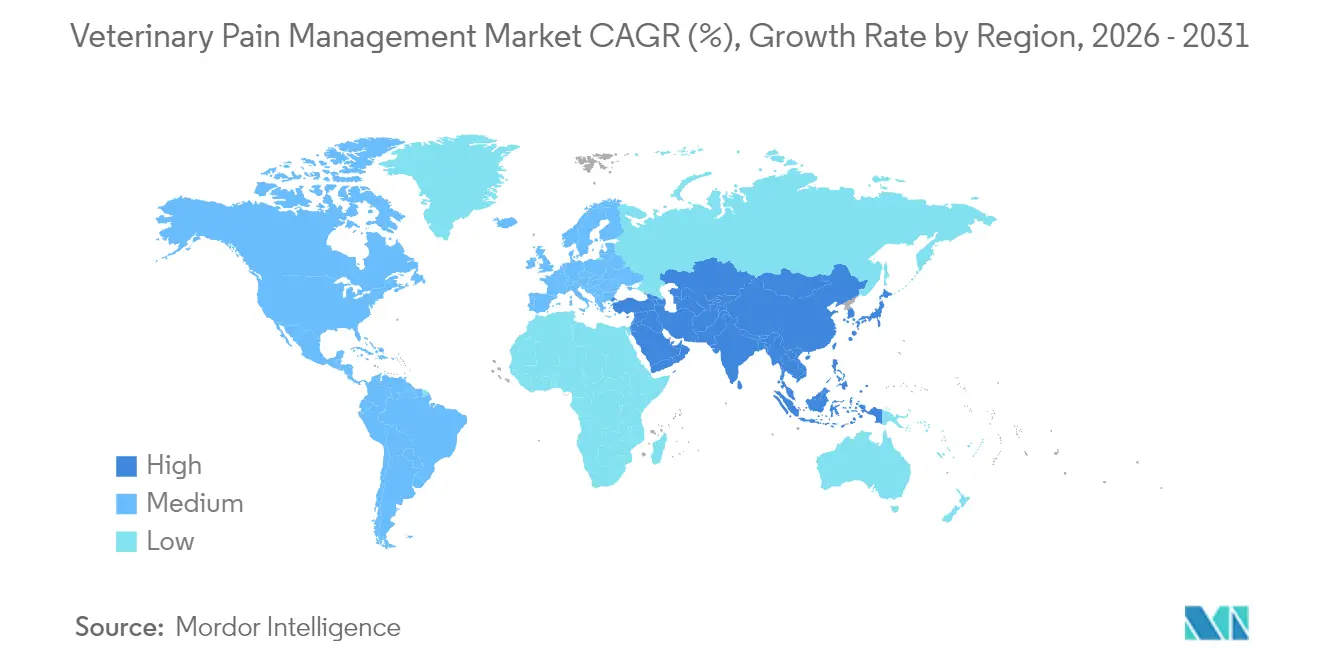
North America contributed 41.78% of global revenue in 2025, underpinned by high pet insurance penetration and a regulatory climate that enables rapid first-to-market approvals. Monoclonal antibody pioneers capitalized on FDA review efficiencies, securing early brand recognition. Canada’s cautious stance on controlled substances has, however, catalyzed investment in non-opioid drugs and cannabinoid research pipelines.
Europe follows closely, shaped by some of the world’s strictest welfare legislation. Mandatory multimodal analgesia elevates demand for diverse product kits, pushing suppliers to hold broader formularies. Antimicrobial stewardship programs restrain NSAID courses, indirectly prompting uptake of laser and electromagnetic therapy devices. The United Kingdom’s post-Brexit regulatory autonomy is allowing accelerated pathways for niche products, giving smaller firms an entry door ahead of pan-EU approvals.
Asia-Pacific is the fastest-expanding region with a projected 7.18% CAGR. Urban pet ownership in China rose sharply after pandemic-era lifestyle shifts, while Japan’s aging pet cohort parallels that of Western markets. South Korea’s reform of its Animal Protection Act stipulates pain relief during cosmetic surgery and disease treatment, creating new baseline demand. Emerging Southeast Asian economies deploy welfare upgrades to align with export certification criteria, translating policy into accessible market volume for globally established brands.
Regulatory Landscape
Regulation of veterinary pain therapies focuses on drug authorization, controlled-substance handling, and food-animal residue limits. In the European Union, Regulation (EU) 2019/6 governs authorization, distribution, and pharmacovigilance for veterinary medicinal products across Member States and EEA-aligned markets, shaping post-market safety reporting requirements relevant to NSAIDs, opioids, and newer biologics. The European Medicines Agency (EMA) also implemented guidance effective May 1, 2025 on efficacy and target-animal safety data requirements for certain non-immunological products intended for limited markets, creating a defined pathway for niche indications.
In the United States, the FDA Center for Veterinary Medicine (CVM) regulates new animal drugs under the FD&C Act via NADA/ANADA processes, and the agency updated animal drug regulations in January 2025 to reflect approval actions. Opioid stewardship is tightening through professional model guidance such as the American Association of Veterinary State Boards (AAVSB) 2026 model documents, which recommend limiting initial opioid prescriptions for acute pain to a 14-day supply with re-evaluation for continued need. For food-producing animals, EMA actions in 2025 to extend maximum residue limits (MRLs) for select substances reinforce the need for label-aligned use and compliance documentation in livestock analgesia protocols.
Value Chain Analysis
The veterinary pain management value chain starts with active pharmaceutical ingredients (APIs) and biologic raw materials, then moves through formulation and fill-finish (including sterile injectables and monoclonal antibodies). It then proceeds to quality release and regulatory compliance, followed by distribution to veterinary hospitals and clinics, retail and e-commerce pharmacies, and, increasingly, homecare fulfillment linked to telemedicine. Biologics and certain injectable products add complexity through validated cold-chain requirements, which raises the role of specialized temperature-controlled logistics providers and clinic-level storage controls.
Manufacturing scale and compliant distribution networks influence product availability and launch cadence across regions. Large suppliers such as Zoetis operate broad manufacturing and supply footprints (including dozens of global centers) that support multi-country launches and replenishment, while smaller innovators often rely on external manufacturing and staged regulatory routes. On the market access side, regulatory events in 2026 highlight multiple entry points: the UK Veterinary Medicines Directorate approval of Zoetis Lenivia (izenivetmab) and FDA conditional approval for Pegasus/PRN Pharmacal Liavium-CA1 (pregabalin) show how country-specific authorizations and conditional pathways feed downstream wholesaler onboarding, clinic formulary inclusion, and education-driven adoption. Device modalities (laser, PEMF, shockwave) follow a parallel chain from OEM manufacturing and software updates to clinic installation, training, and service contracts, with increasing emphasis on session logging to support multimodal protocol documentation.
Competitive Landscape
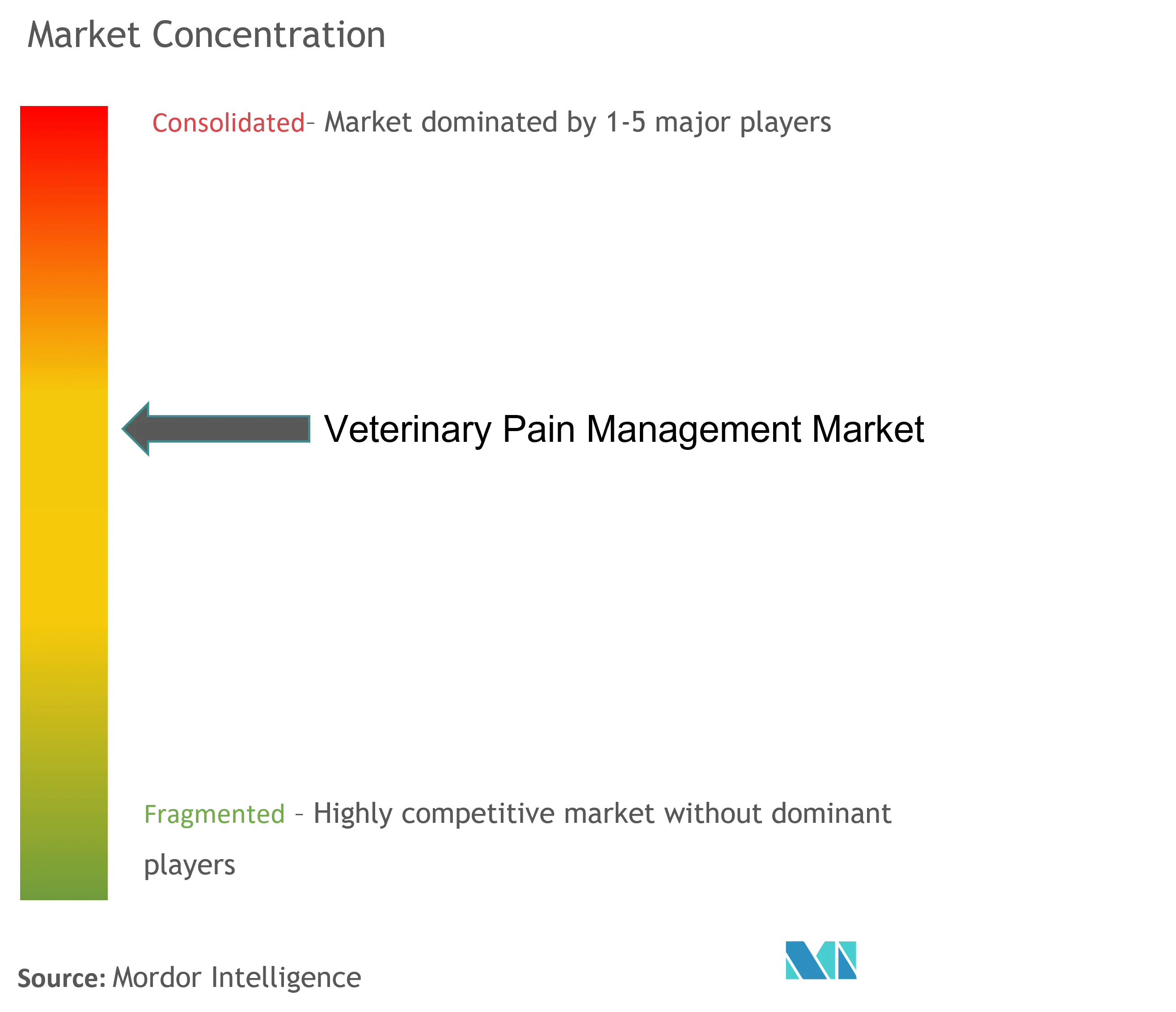
The veterinary pain management market hosts a moderately fragmented set of players. Zoetis, Boehringer Ingelheim, and Elanco command significant prescription volume through wide distribution footprints and robust in-house R&D, yet device specialists such as LiteCure and PulseVet Technologies carve defensible niches in non-pharmacologic therapy. Consolidation pressures are rising; acquisitions like Boehringer Ingelheim’s 2024 purchase of Saiba Animal Health illustrate intent to diversify beyond small-molecule franchises.
Technology convergence is a distinguishing factor. Zoetis links antibody treatments with AI diagnostics that triage cases eligible for biologics, thereby maximizing uptake. Device makers embed Bluetooth connectivity, enabling clinics to track at-home session compliance and justify package renewals. Biotechnology startups pioneering veterinary cannabinoids find licensing agreements with larger incumbents attractive to offset regulatory cost hurdles.
Price competition persists among generic NSAID suppliers, but innovation is gravitating toward differentiated modalities that support premium positioning. Manufacturers also develop veterinary-specific delivery formats—long-acting injectables, single-dose otic suspensions, and extended-release chewables—that simplify compliance and add value beyond active ingredient parity. Collectively, these strategic pivots position the veterinary pain management market for sustained product life-cycle innovation.
Veterinary Pain Management Industry Leaders
-
Ceva Sante Animale
-
Elanco Animal Health Incorporated
-
Zoetis Inc.
-
Vetoquinol SA
-
Boehringer Ingelheim International Gmbh
- *Disclaimer: Major Players sorted in no particular order
Market Opportunities and Future Outlook
White space persists in long-acting, drug-sparing regimens for chronic osteoarthritis and neuropathic pain, especially where adverse-event concerns and opioid stewardship narrow prescribing flexibility. In 2026, Zoetis expanded the geographic availability of canine osteoarthritis biologics with Lenivia (izenivetmab) approvals and launches, illustrating clinic demand for longer dosing intervals and differentiated efficacy profiles versus legacy NSAIDs. At the same time, FDA conditional approval of Liavium-CA1 (pregabalin chewable tablets) for dogs with Chiari-like malformation and syringomyelia points to labeled neuropathic pain options that reduce reliance on off-label protocols while sponsors collect additional effectiveness data.
Non-pharmacologic modalities and data-enabled pain assessment provide a second commercialization lane, supported by multimodal analgesia practices and owner demand for at-home or clinic-packaged therapies. The 2026 launch of Enovis Companion Animal Health CT-RevitL, which incorporates intelligent treatment guidance, highlights product development aimed at standardized dosing and repeatable clinical workflows for laser therapy. Pipeline activity in disease-modifying osteoarthritis approaches also widens the opportunity set: VetrixBio disclosed 2026 clinical data for a bispecific antibody program (VTX-304) targeting both pain (NGF) and joint pathology (ADAMTS-5), positioning pain relief alongside cartilage protection as a differentiation axis. In livestock, academic findings that single-modality NSAID interventions can leave residual physiological stress in piglets reinforce demand for validated multi-modal protocols and administration-friendly formats that fit welfare audit requirements.
Recent Industry Developments
- July 2026: Zoetis announced the commercial launch of Lenivia (izenivetmab injection) in Canada and European Union member states. The rollout expands access to a long-acting monoclonal antibody option for canine osteoarthritis pain, supporting clinic adoption of longer dosing intervals within multimodal regimens.
- May 2026: Zoetis received approval from the UK Veterinary Medicines Directorate (VMD) for Lenivia (izenivetmab injection) for alleviation of pain associated with osteoarthritis in dogs. The authorization adds a major European reference market for biologic pain control and strengthens competitive positioning against established NSAID-based portfolios.
- July 2024: CatsMe! reported clinical validation of its AI-powered feline pain assessment application, citing over 95% accuracy in pain-state identification and more than 200,000 global downloads. Wider use of owner-facing pain scoring tools supports earlier intervention and follow-up monitoring, which can increase utilization of chronic pain therapies and clinic-led care plans.
Research Methodology Framework and Report Scope
Market Definition and Coverage
This market covers products used to prevent, reduce, or control pain in animals when care is delivered through veterinary settings. It includes pharmaceutical therapies and pain-management devices used for common indications like joint, postoperative, and cancer-related pain.
Scope exclusions: We exclude general animal health products that are not intended for pain control, plus non-veterinary wellness items sold without a pain-management claim.
Segmentation Overview
- By Product (Value)
- Drugs
- NSAIDs
- Opioids
- Local Anesthetics
- Alpha-2 Agonists
- Cannabinoid-based Therapeutics
- Devices
- Laser Therapy
- Electromagnetic Therapy
- Drugs
- By Animal Type (Value)
- Companion Animals
- Livestock
- By End User (Value)
- Veterinary Hospitals & Clinics
- Homecare Settings
- Academic & Research Institutes
- By Region (Value)
- North America
- United States
- Canada
- Europe
- Germany
- United Kingdom
- France
- Italy
- Spain
- Rest of Europe
- Asia-Pacific
- China
- India
- Japan
- South Korea
- Australia
- Rest of Asia-Pacific
- South America
- Brazil
- Argentina
- Rest of South America
- Middle East and Africa
- GCC
- South Africa
- Rest of Middle East and Africa
- North America
Data Sources, Market Sizing, and Validation
Desk Research
Desk research is used to ground the model in real-world animal health demand signals and the operating footprint of veterinary care. We reference public sources such as USDA animal health and livestock statistics, FDA Center for Veterinary Medicine releases, European Medicines Agency veterinary updates, World Organisation for Animal Health (WOAH) resources, and OECD economic indicators to keep assumptions realistic.
We also review company filings, investor presentations, product labels, veterinary association publications, and reputable press coverage to map therapy classes, route shifts, and launch timing. Where needed, analysts use paid subscriptions for company financials and intelligence, patent databases, and shipment-level import and export tracking to validate supply availability and trade flows for key active ingredients and finished products. These desk sources are not exhaustive, and additional references are used for data collection, validation, and clarification during the work.
Primary Interviews and Surveys
Primary work is used to translate broad signals into a usable pricing and adoption model, especially when public reporting is limited. We speak with manufacturers, distributors, veterinary hospitals and clinics, and practitioner networks across major regions so assumptions on prescribing mix, device attachment rates, and channel margins can be checked, then adjusted when the input diverges from desk research.
Distribution of primary research fieldwork respondents
| Company type | Respondent position | Region |
|---|---|---|
| Top tier: 37% | CXOs: 14% | APAC: 52% |
| Mid tier: 45% | Functional/Unit leaders: 42% | EMEA: 30% |
| Smaller Players: 18% | Managers: 44% | Americas: 18% |
Market-Sizing & Forecasting
Sizing starts with a top-down demand pool build using animal population and care access signals, then translating that into treatment volumes for pain indications and converting into value using price ladders by therapy class. We check the model with selective bottom-up approximations such as sampled price per treatment course, clinic purchasing channel checks, and supplier-side sanity checks on category mix, then adjust totals where needed.
Key inputs tracked include companion and livestock population trends, veterinary visit rates and procedure volumes (including surgery related demand), indication mix such as osteoarthritis and postoperative pain, therapy mix shifts across NSAIDs, opioids, local anesthetics and emerging options, device usage as an adjunct, and average selling price movement by route of administration. Where country-level inputs are incomplete, we fill gaps using peer-market proxies based on similar care intensity and product access, and then re-test the results with expert feedback.
For forecasting, scenario analysis is used to reflect different adoption speeds for newer therapies, price progression, and changes in welfare and prescribing expectations, and then the final path is smoothed using time-series checks so the curve does not change abruptly without a clear driver.
Data Validation & Update Cycle
Validation is done through multiple checks so the final number does not depend on a single source. Analysts compare outputs against independent signals like animal health spending direction, therapy mix trends, and reported category growth markers, and then review any outliers until the underlying reason is clear.
Before sign-off, assumptions and calculations go through a multi-step analyst review, and follow-up calls are triggered when a variance looks too large to be explained by scope or timing. Reports are refreshed annually, and interim updates are made when material events occur, followed by a final pre-delivery pass so clients receive the latest updated view.
Mordor Intelligence's Veterinary Pain Management Market Estimate Compared With Other Published Estimates
Published market values for veterinary pain management can differ even when the topic name looks identical, since the included products, pricing basis, and time cutoffs vary across studies. Differences also show up when one estimate leans more on broad animal health spending, while another anchors more tightly to pain-indication treatment volumes.
Procedure volumes in veterinary hospitals and clinics, along with the observed therapy mix across drug classes and device add-ons, are used to keep Mordor Intelligence's 2026 value tied to a defined pain-treatment demand pool instead of a wider animal health basket.
Benchmark comparison
| Source | Market Size | Gaps in Research Methodology |
|---|---|---|
| Mordor Intelligence | USD 1.85 B (2026) | |
| Global Consultancy A | USD 2.75 B (2025) | Uses an earlier base year and a broader revenue capture that can pull in adjacent anesthesia and wider animal health purchasing tied to pain-related care, which tends to lift the starting value. |
| Industry Publisher B | USD 2.80 B (2025) | Applies a different year and price basis, and the scope description is less specific on how devices and non-drug modalities are separated from general treatment revenues, which can inflate totals through overlap. |
The spread across published numbers is mostly explained by year selection and how tightly revenues are mapped to pain-specific indications, routes, and end-user channels. By keeping the model traceable to treatment volume, therapy mix, and pricing logic, we can explain each step and re-run updates when the underlying market signals move.
Key Questions Answered in the Report
How large is the global veterinary pain management market in 2026?
The market is valued at USD 1.85 billion in 2026 and is projected to reach USD 2.46 billion by 2031 at a 5.84% CAGR.
Which treatment category is expanding fastest?
Device-based therapies, including laser and PEMF systems, are expected to grow at 6.03% CAGR through 2031 as clinics seek non-pharmaceutical options.
What regional market is growing most quickly?
Asia-Pacific leads in growth with a 7.18% CAGR, supported by rising incomes and evolving animal welfare mandates.
How are regulatory changes affecting product demand?
EU and US multimodal analgesia protocols create obligatory demand for bundled solutions while stricter welfare laws in livestock farming increase baseline analgesic usage.
Which companies dominate new product launches?
Zoetis, Boehringer Ingelheim, Elanco, Merck Animal Health, and Dechra are introducing monoclonal antibodies, AI diagnostics, long-acting injectables, and antibiotic-free therapies.
What alternatives are emerging to NSAIDs and opioids?
Monoclonal antibodies, cannabinoids in development, long-acting local anesthetics, and device-based modalities deliver pain control with reduced systemic risk profiles.