
Veterinary Anti-infectives Market Size and Share
Market Overview
| Study Period | 2020 - 2031 |
|---|---|
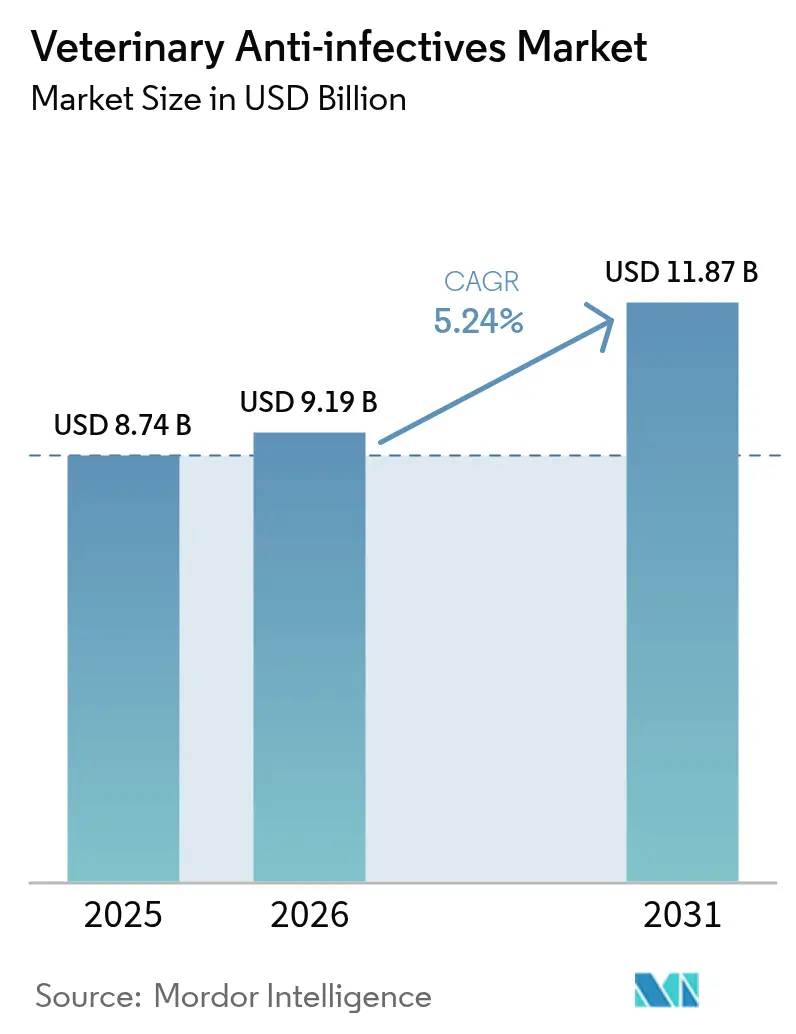
| Market Size (2026) | USD 9.19 Billion |
| Market Size (2031) | USD 11.87 Billion |
| Growth Rate (2026 - 2031) | 5.24 % |
| Fastest Growing Market | Asia Pacific |
| Largest Market | North America |
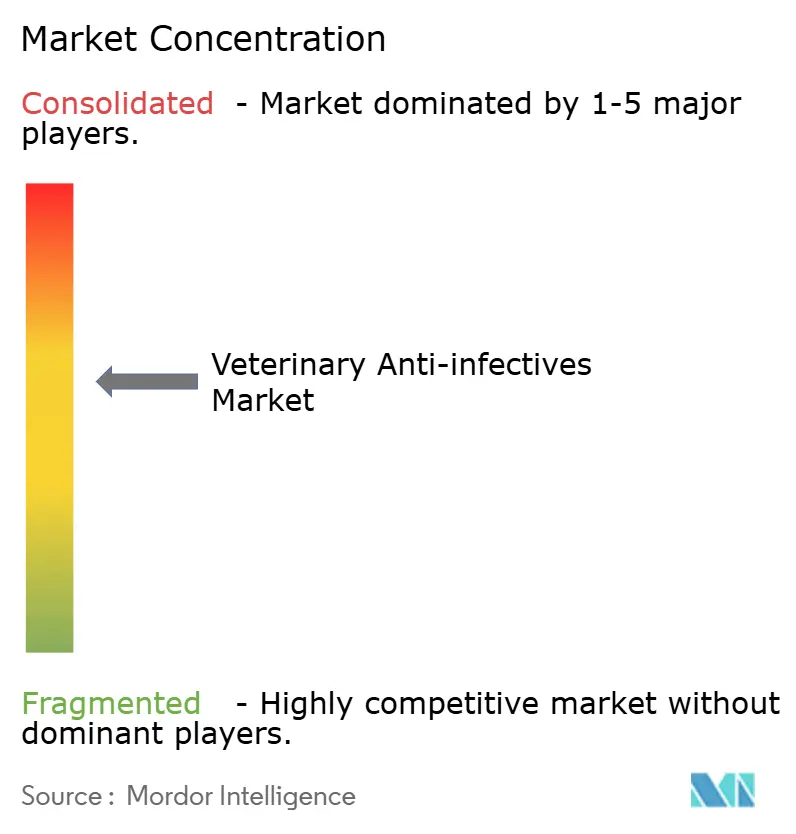
| Market Concentration | Medium |
Major Players *Disclaimer: Major Players sorted in no particular order Image © Mordor Intelligence. Reuse requires attribution under CC BY 4.0. | |
Veterinary Anti-infectives Market Analysis by Mordor Intelligence
The veterinary anti-infectives market size was valued at USD 8.74 billion in 2025 and estimated to grow from USD 9.19 billion in 2026 to reach USD 11.87 billion by 2031, at a CAGR of 5.24% during the forecast period (2026-2031). Robust demand spans both food-producing and companion animals as antimicrobial agents remain essential for managing respiratory, enteric, and dermatological infections. Livestock intensification, especially in Asia Pacific, is lifting volume needs, while rising pet ownership and “humanization” trends are expanding premium product sales in developed economies. Governments are simultaneously tightening antimicrobial stewardship rules, stimulating investment in precision-dosing technologies, targeted formulations, and alternatives that mitigate resistance. Consolidation among manufacturers and a pivot toward digital pharmacy channels further shape competitive strategies as companies seek scale, regulatory expertise, and direct-to-consumer reach within the veterinary anti-infectives market.
Key Report Takeaways
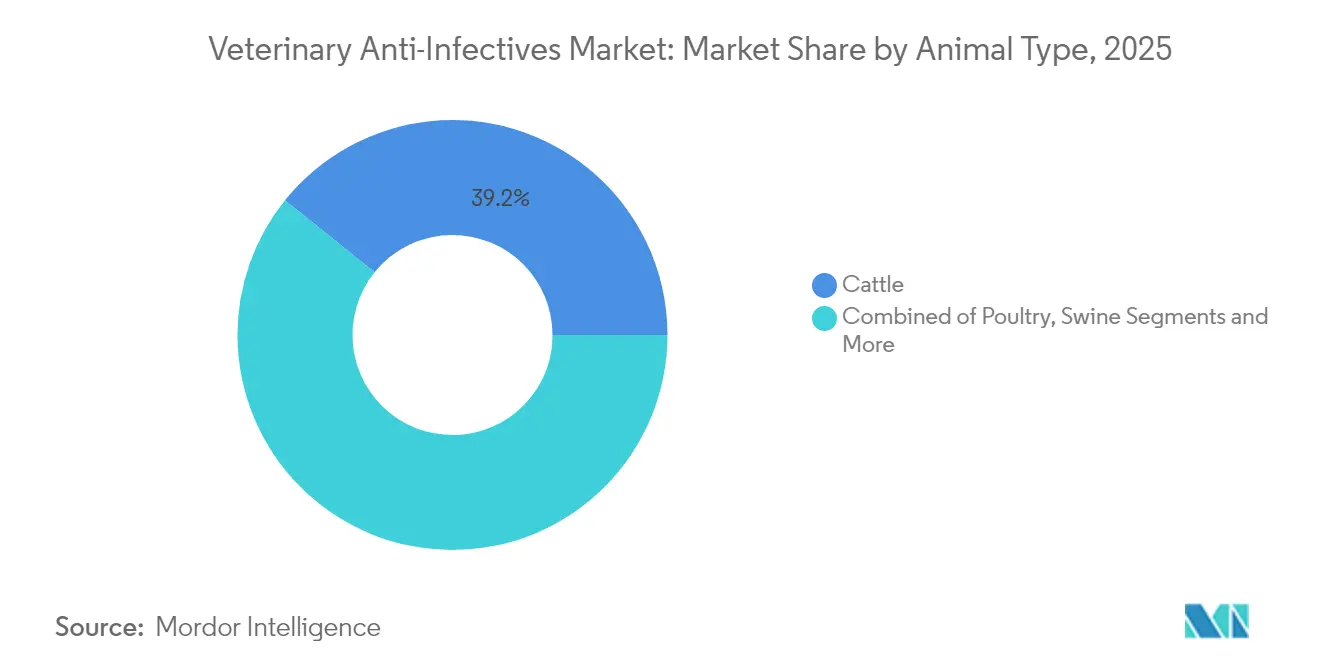
- By animal type, cattle led with 39.22% veterinary anti-infectives market share in 2025; poultry is projected to advance at a 6.22% CAGR through 2031.
- By product type, antibacterials commanded 28.95% of the veterinary anti-infectives market size in 2025, while antivirals are expected to grow at an 8.05% CAGR to 2031.
- By mode of administration, oral solutions accounted for 50.05% of the veterinary anti-infectives market size in 2025; injectables are set to expand at a 6.31% CAGR between 2026 and 2031.
- By distribution channel, veterinary hospitals held 45.55% of the veterinary anti-infectives market share in 2025, while online platforms are forecast to post a 11.74% CAGR through 2031.
- By geography, North America commanded a 31.95% share in 2025, whereas Asia-Pacific is advancing at a 7.05% CAGR through 2031.
Note: Market size and forecast figures in this report are generated using Mordor Intelligence’s proprietary estimation framework, updated with the latest available data and insights as of 2026.
Market Trends and Insights
Drivers Impact Analysis of Veterinary Anti-infectives Market*
| Driver | (~) % Impact on CAGR Forecast | Geographic Relevance | Impact Timeline |
|---|---|---|---|
| Rising prevalence of zoonotic & food-borne diseases | +1.20% | Global, acute in APAC & Sub-Saharan Africa | Medium term (2-4 years) |
| Growing companion-animal ownership & spend | +0.90% | North America & EU core; urban APAC expanding | Long term (≥ 4 years) |
| Expansion of intensive livestock systems | +0.80% | APAC core; Latin America & MEA spill-over | Medium term (2-4 years) |
| Pipeline of novel antimicrobial classes | +0.60% | North America & EU led | Long term (≥ 4 years) |
| Precision-livestock tools enabling dosing | +0.40% | North America & EU; early Australia adoption | Medium term (2-4 years) |
| Aquaculture regulations spurring innovation | +0.30% | Norway, Chile & APAC | Short term (≤ 2 years) |
| Source: Mordor Intelligence | |||
Rising Prevalence of Zoonotic & Food-Borne Diseases
Frequent H5N1 outbreaks in poultry and recent detections in US dairy herds have heightened awareness of cross-species transmission risks, prompting emergency vaccine collaborations between Elanco and Medgene. Surveillance reports show 75% of emerging infectious diseases are zoonotic, leading veterinary authorities to boost monitoring budgets and fast-track rapid diagnostic approvals. Zoetis introduced an AI-enabled in-clinic hematology analyser that delivers reference-lab quality results, accelerating therapy decisions and supporting data-driven antimicrobial stewardship. Demand for broad-spectrum and long-acting drugs consequently increases across the veterinary anti-infectives market. Governments are also funding One-Health initiatives that merge human and animal epidemiological data, creating sustained procurement pipelines for anti-infective stockpiles. As biosecurity investments rise, suppliers with scalable manufacturing and regulatory fluency gain competitive leverage.
Growing Companion-Animal Ownership & Spending
Pet ownership rates climbed again in 2025, yet more than half of US pet owners deferred at least one medical service primarily due to cost concerns. This affordability gap fuels interest in long-acting injectables such as cefovecin, which provide two-week coverage from a single dose and reduce repeat clinic visits. Corporate practice groups and insurers are piloting wellness-plan models that bundle diagnostics and prescriptions, supporting predictable uptake of premium therapeutics in the veterinary anti-infectives market. Boehringer Ingelheim’s 2024 acquisition of Saiba Animal Health added a virus-like-particle platform that aims to produce therapeutic vaccines for chronic canine diseases, reflecting broader demand for novel modalities. Tele-triage and e-prescribing services are scaling rapidly, bringing previously underserved owners into the formal care pathway and expanding the prescription base for anti-infectives. Digital pharmacies integrate seamlessly with these services, offering overnight delivery and automated refill reminders that enhance compliance.
Expansion of Intensive Livestock Production Systems
FAO modelling indicates global antibiotic use in food animals could jump 30% by 2040 without intervention, underscoring the tension between productivity goals and antimicrobial conservation. Large dairies and feedlots post the highest treatment intensities, pushing the veterinary anti-infectives market toward precision dosing and targeted formulations. Merck Animal Health’s SenseHub Feedlot platform harnesses biometric sensors to detect bovine respiratory disease earlier, cutting therapeutic courses and mortality. Producers adopting similar systems report up to 57% reductions in drug volumes, illustrating the commercial incentive to link performance analytics with antibiotic stewardship. Asia Pacific mega-farms, especially in China and India, invest heavily in automated drinker and feeder medicators that ensure accurate drug delivery, mitigating under- or over-dosing risks. These trends spur demand for high-concentration soluble powders and water-stable premixes engineered for modern production environments.
Pipeline of Novel Antimicrobial Classes & Formulations
Artificial-intelligence screening has rapidly expanded the discovery universe, unveiling nearly 900,000 antimicrobial peptide candidates from microbial genomic data. Halicin, an AI-identified small molecule, demonstrates bactericidal activity against 13 prominent veterinary pathogens with low resistance development profiles. University of Saskatchewan scientists isolated porcine β-defensin-5 that shows promise against swine dysentery, hinting at species-specific biologics. Nanotechnology carriers, such as microbubble-encapsulated oxytetracycline, improve tissue penetration and reduce drug quantities, aligning with stewardship aims. Phage therapy advances are particularly relevant for poultry and aquaculture sectors grappling with multi-drug-resistant E. coli, and early trials demonstrate protective benefits in broiler models. These discoveries ensure a vibrant research pipeline that will diversify the veterinary anti-infectives market beyond conventional small molecules.
Restraints Impact Analysis of Veterinary Anti-infectives Market*
| Restraint | (~) % Impact on CAGR Forecast | Geographic Relevance | Impact Timeline |
|---|---|---|---|
| Proliferation of counterfeit veterinary medicines | -0.80% | Sub-Saharan Africa, Asia & Latin America | Short term (≤ 2 years) |
| Escalating cost of veterinary care services | -0.60% | Global, acute in developed markets | Medium term (2-4 years) |
| AMR-driven usage caps reducing prophylaxis | -0.90% | EU & North America, expanding globally | Long term (≥ 4 years) |
| API supply shocks from environmental rules | -0.40% | India & China manufacturing hubs | Short term (≤ 2 years) |
| Source: Mordor Intelligence | |||
Proliferation of Counterfeit Veterinary Medicines
The WHO estimates that antimicrobial and antimalarial agents dominate global counterfeit seizures, with veterinary channels particularly vulnerable in regions lacking robust regulatory oversight.[3]World Organization for Animal Health, “Global Antimicrobial Resistance Strategy,” woah.orgStudies indicate one-fifth of medicines in sub-Saharan Africa fail quality specifications, threatening treatment outcomes and accelerating resistance. Fragmented supply chains that rely on informal agro-vet stores invite infiltration by falsified products bearing popular brand names. Serialization and blockchain track-and-trace pilots launched by multinational producers demonstrate technical feasibility but remain costly for low-margin rural markets. Regional economic blocs, including ECOWAS, have begun harmonizing registration processes to block unlicensed imports, yet enforcement capacity lags. This proliferation depresses brand equity and complicates stewardship, restraining value growth within the veterinary anti-infectives market.
Escalating Cost of Veterinary Care Services
Veterinary fees in North America and Western Europe rose faster than consumer inflation between 2020 and 2024, resulting in delayed consultations and prescription abandonment. Surveys reveal 71% of US pet owners cite cost as the top barrier to recommended treatments. Higher practice overhead, wage pressures, and investment in diagnostic equipment contribute to rising invoices. Consequently, budget-constrained owners may demand lower-priced generics or forego therapy, limiting premium product uptake in the veterinary anti-infectives market. Insurers respond with expanded accident-and-illness policies that reimburse medications, but adoption remains below 5% of the dog and cat population. Subsidized community clinics and tele-health triage alleviate some access gaps, yet macroeconomic uncertainty keeps price sensitivity high.
*Our forecasts treat driver/restraint impacts as directional, not additive. The impact forecasts reflect baseline growth, mix effects, and variable interactions.
Veterinary Anti-infectives Market Segment Analysis
By Animal Type:
Cattle Scale Meets Poultry MomentumCattle generated the most significant revenue within the veterinary anti-infectives market in 2025, with a 39.22% share, as dairy and beef operations relied on antimicrobials for mastitis and respiratory disease control. The veterinary anti-infectives market size for bovine therapeutics is forecast to grow steadily as large herd operations adopt precision-dosing tools that increase value per dose while containing volumes. Poultry, however, is projected to outpace all other species at a 6.22% CAGR through 2031, propelled by expanding broiler capacity in China, India, and Brazil. Avian-specific formulations with short withdrawal times gain uptake as exporters comply with tighter residue limits. Swine producers continue to grapple with post-weaning diarrhea and African swine fever threats, supporting demand for both antibiotics and immune-modulating feed additives. Companion animals remain a premium niche as owners prioritize convenience formulations, though cost sensitivity shapes purchasing decisions in lower-income brackets.
The segmental outlook is increasingly shaped by digital surveillance, with cattle feedlots integrating RFID ear tags connected to cloud dashboards that alert veterinarians to subclinical illnesses. These systems shift purchases toward high-potency injectables used earlier in disease cycles, enhancing therapeutic outcomes while reducing course length. Poultry integrators invest in waterline medication controllers that adjust dosing based on real-time flock metrics, raising demand for soluble powders designed for variable pH environments. Aquaculture, though still modest in revenue, emerges as a strategic frontier as Atlantic salmon producers trial phage biocontrol and nano-encapsulated antibiotics to combat sea lice and vibrio infections. The diversified species mix ensures resilience in the veterinary anti-infectives market even as stewardship pressure alters individual usage patterns.


By Product Type:
Antibacterials Dominate, Antivirals AccelerateAntibacterials retained a 28.95% share of the veterinary anti-infectives market size in 2025, supported by a broad catalogue of β-lactams, tetracyclines, and macrolides cleared across multiple species. Stewardship initiatives now favor narrow-spectrum and combination products aimed at specific pathogens, prompting reformulation activity among leading brands. Antivirals are forecast to register the fastest 8.05% CAGR as H5N1, porcine reproductive and respiratory syndrome, and koi herpesvirus outbreaks expose gaps in preventive measures. R&D pipelines feature nucleoside analogues and virus-like particle vaccines that promise shorter treatment courses and lower resistance development potential. Antifungals, while representing a smaller revenue pool, address rising incidences of Malassezia and Aspergillus infections in pets, with single-dose otic gels such as Otiserene and Mometamax Single gaining adoption due to simplified compliance. Antiprotozoals maintain relevance in endemic regions battling coccidiosis and babesiosis, and ongoing trials of toltrazuril combinations highlight a shift toward multi-target therapies.
The innovation pipeline concentrates on delivery enhancements. Long-acting injectable suspensions deliver steady plasma levels for up to two weeks, boosting adherence while limiting clinic revisits. Water-stable micropellets allow uniform dispersion in poultry and shrimp ponds, reducing sediment wastage. Companies also explore biodegradable implant matrices for slow-release antiviral peptides in swine, bridging prophylaxis and treatment. Collectively, these advances ensure the veterinary anti-infectives market retains a balanced mix of established classes and breakthrough modalities that respond to species-specific disease burdens.
By Mode of Administration:
Oral Convenience, Injectable PrecisionOral solutions dominated with a 50.05% share of the veterinary anti-infectives market size in 2025, as mass-medication via drinking systems or feed remains economical for herd and flock settings. Soluble antibiotics such as oxytetracycline succeed because they integrate seamlessly with automated waterlines and permit rapid flock-wide exposure following pathogen detection. Yet bioavailability variability and palatability issues drive interest in micro-encapsulated powders that bypass upper-gut degradation. Injectable formulations are predicted to post the highest 6.31% CAGR, driven by long-acting cephalosporins and macrolides that deliver therapeutic coverage from a single shot. Veterinarians value such precision for valuable breeding stock, where treatment timing directly affects reproductive and performance metrics.
Topical applications fill niche roles in dermatology and ontology, with once-a-week ear gels eliminating owner errors and boosting cure rates. Intramammary infusions have seen formulation revisions that marry anti-inflammatory agents with antibiotics, cutting mastitis downtime in high-yield dairy cows. Looking forward, transdermal patches under exploration for feline viral infections could expand options for cats that resist oral dosing. These advances maintain clinician flexibility and reinforce stewardship goals by matching drug exposure to infection site and severity across the veterinary anti-infectives market.

By Distribution Channel:
Hospitals Hold, E-commerce ScalesVeterinary hospitals captured 45.55% of prescription sales in 2025, leveraging trust relationships and regulatory requirements mandating veterinary oversight. Their embedded diagnostic assets enable same-visit prescriptions, a convenience particularly valued by pet owners facing acute conditions. However, e-commerce is the fastest mover at a 11.74% CAGR as platforms such as Amazon Pharmacy integrate with vet-validation partners to meet prescription rules while offering doorstep delivery. The shift benefits chronic therapy categories where refill frequency is predictable.
Rural mixed-practice clinics remain vital for livestock segments, especially in regions where mobile-vet services cover expansive geographies. Their competitive posture now hinges on stocking broad portfolios and offering telemedicine follow-ups that limit producer travel. Brick-and-mortar drug stores lose share because over-the-counter access to medically important antimicrobials has vanished under FDA Guidance #263.Distributors increasingly bundle software portals that automate veterinary script approvals and compliance logs, smoothing the path for online retailers while ensuring stewardship data capture within the veterinary anti-infectives market.
Geography Analysis
North America Veterinary Anti-infectives Market
North America retained the largest revenue in 2024, anchored by advanced veterinary infrastructure and high per-animal spending. FDA prescription-only reforms curtailed hobby-farmer antibiotic purchases, but stimulated demand for diagnostics and refined dosing tools that help practitioners justify therapies in stewardship-scrutinized environments. Canada’s Veterinary Drugs Directorate aligns closely with US regulations, easing cross-border trade and encouraging harmonized label expansions for new molecules. Mexico benefits from integrated supply chains, though varied enforcement capacity leads multinational firms to emphasize training and quality-assurance initiatives to safeguard brand integrity.
Europe Veterinary Anti-infectives Market
Europe showcases the world’s strictest antimicrobial-usage controls, achieving a 50% reduction in veterinary antibiotic sales over 12 years through the ESVAC surveillance network. Distributors now report usage volumes into a centralized EU database, a transparency measure that influences purchasing and supplier negotiations. Category-B caps reorient sales toward first-line products, prompting companies to divulge robust stewardship arguments when submitting new dossiers. Post-Brexit, the UK introduced fast-track procedures for innovative veterinary medicines, accelerating launches but maintaining follow-up pharmacovigilance to guard against resistance.
APAC Veterinary Anti-infectives Market
Asia Pacific is the fastest-growing arena at 7.05% CAGR, propelled by China and India’s expanding protein appetites and maturing companion-animal markets. Government programs to modernize dairy and broiler sectors prioritize biosecurity, elevating orders for high-quality injectable ceftiofur and florfenicol. Simultaneously, environmental crackdowns on pharmaceutical-plant effluent in China periodically tighten API exports, adding volatility to regional supply of tetracyclines and macrolides. Japan’s Ministry of Agriculture requires annual farm-level antibiotic reporting from 2026, a precedent that could inspire similar mandates across ASEAN and further evolve the veterinary anti-infectives market.
Regulatory Landscape
Regulation continues to tighten antimicrobial stewardship and market access requirements, which in turn reshapes product labeling and surveillance obligations for veterinary anti-infectives. In the United States, the FDA Center for Veterinary Medicine published Final Guidance for Industry (GFI) #273 in February 2026 on defining durations of use for approved medically important antimicrobial drugs administered in feed to food-producing animals, complementing the agency multi-year antimicrobial stewardship plan for FY 2024-2028 that was still being tracked through 2026.
In Europe, Regulation (EU) 2019/6 remains the core framework for veterinary medicinal products, with the European Medicines Agency (EMA) running centralized procedures, issuing pre-authorization guidance, and handling maximum residue limit (MRL) assessments using established submission schedules. The CVMP Work Plan 2026 (adopted in December 2025) prioritizes innovation and streamlined benefit-risk assessment for new veterinary medicines, including antimicrobials. In Great Britain, the Veterinary Medicines (Amendment etc.) Regulations 2024 updated elements of the national framework, reinforcing ongoing definitional and compliance changes for antimicrobial products.
Value Chain Analysis
The veterinary anti-infectives value chain runs from discovery and development (R&D, translational science, and formulation) through chemistry, manufacturing, and controls (CMC), GMP production, and regulatory submissions, then into wholesale distribution and dispensing via veterinary hospitals, clinics, pharmacies, and online channels. Large animal-health companies typically integrate clinical development, pharmacovigilance, and regulatory affairs to manage antimicrobial stewardship requirements as they evolve. Commercial scaling also depends on reliable access to APIs, fermentation-derived intermediates, specialized excipients, packaging (including cold-chain configurations where required), and single-use manufacturing consumables.
Downstream, global and regional distributors and veterinary wholesalers (for example, MWI, Covetrus, and Patterson) handle inventory positioning, last-mile delivery, and compliance documentation for prescription-only supply. Key bottlenecks include API volatility (including disruptions linked to environmental compliance in major manufacturing hubs), cold-chain and rural logistics constraints, and rising documentation needs for antimicrobial-use monitoring. As a result, manufacturers increasingly pursue multi-sourcing, dual sourcing, and long-term supplier agreements to reduce stock-out risk and maintain consistent quality across markets.
Competitive Landscape
The veterinary anti-infectives market is moderately concentrated. Zoetis, Boehringer Ingelheim, and Merck Animal Health anchor global revenues with broad species portfolios and strong regulatory affairs capacity. These leaders exploit comprehensive pharmacovigilance datasets to expedite label extensions and satisfy stewardship reporting.
Strategic M&A continues as incumbents fill portfolio gaps in aquaculture and companion-animal niches. Merck Animal Health’s 2025 acquisition of Elanco’s aqua unit added vaccines and antibiotics, positioning it for Chilean and Norwegian regulations. Boehringer Ingelheim’s purchase of Saiba Animal Health underscores a shift toward therapeutic vaccines that could offset declining prophylactic antibiotic volumes. AI-focused biotechs partner with majors for peptide and phage candidates, exchanging discovery algorithms for clinical and manufacturing muscle.
Technology integration is now pivotal. Diagnostics firms align with drug makers to create closed-loop ecosystems where early detection prompts targeted prescription of branded therapeutics, strengthening customer stickiness. Cloud-connected dosing guns automatically log treatment data, easing compliance audits and feeding population-level analytics that inform R&D priorities. Generics manufacturers remain competitive on unit cost, but stewardship reporting requirements and compliance audits raise fixed costs, potentially squeezing smaller players. Consequently, the competitive arena favors firms that marry novel science, regulatory proficiency, and digital services within the veterinary anti-infectives market.
Veterinary Anti-infectives Industry Leaders
Boehringer Ingelheim GmbH
Ceva Santé Animale
Zoetis Inc.
Merck & Co., Inc.
Elanco Animal Health Inc.
- *Disclaimer: Major Players sorted in no particular order
Veterinary Anti-infectives Market Companies Covered in this Report
- Zoetis
- Boehringer Ingelheim
- Merck
- Elanco Animal Health Inc.
- Ceva
- Virbac
- Vetoquinol
- Phibro Animal Health
- Dechra Pharmaceuticals
- Huvepharma EOOD
- Bimeda Holdings PLC
- Norbrook Laboratories Ltd.
- HIPRA SA
- Kyoritsu Seiyaku Corp.
- Orion Animal Health
- Ourofino Saude Animal
- Zydus Animal Health

Market Opportunities and Future Outlook
Stewardship-driven policy changes are creating commercial whitespace for products and services that reduce unnecessary antimicrobial exposure while preserving therapeutic outcomes. In February 2026, the FDA finalized GFI #273 defining durations of use for medically important antimicrobials in livestock feed. In May 2026, WOAH adopted an updated Global Action Plan on AMR (2026-2036), which raises demand for tighter indication targeting, improved diagnostics-to-therapy workflows, and alternatives that can reduce reliance on broad metaphylaxis in food-producing animals.
Investment and capacity actions around biologics and novel modalities reinforce this direction, and they also expand partnering opportunities adjacent to anti-infectives, especially where programs combine prevention, rapid detection, and targeted treatment. Akston’s opening of a 31,000-square-foot manufacturing facility in Shreveport, Louisiana in February 2026 for USDA-regulated animal health protein therapeutics is one example. In Germany, Dopharma/Ripac-Labor is advancing a new autogenous vaccine facility in Potsdam with an end-2026 commissioning target (topping-out held in April 2026). Alongside larger expansions announced by major animal-health manufacturers (such as Merck Animal Health investment in De Soto, Kansas) and European vaccine capacity projects (such as Ceva construction in Monor, Hungary), these efforts support co-development and commercialization pathways for antibiotic-sparing disease management approaches. They also raise expectations for compliant manufacturing, batch traceability, and integrated supply planning across regions.
Recent Industry Developments in Veterinary Anti-infectives Market
- July 2026: Zoetis received European Commission marketing authorization for Poulvac Procerta HVT-ND, expanding its poultry portfolio in a market where flock health programs are increasingly tied to preventive strategies and reduced therapeutic antibiotic exposure. The authorization strengthens Zoetis position with integrators managing Newcastle disease risk under tightening stewardship and residue expectations.
- November 2025: Boehringer Ingelheim reported two EU CVMP positive opinions for its avian influenza vaccines VAXXITEK HVT-IBD-H5 and VAXXINACT H5, supporting additional tools for outbreak management in poultry. The opinions point to regulator willingness to progress preventive solutions that can lower secondary infection pressure and downstream anti-infective use during high-impact disease events.
- April 2025: Animab entered an exclusive distribution agreement with Huvepharma to commercialize Nanoprotec, an oral antibody product for ETEC protection in piglets in Europe. The agreement advances an antibiotic-sparing approach for managing enteric disease in swine production systems, aligning with EU antimicrobial reduction priorities and creating a new commercialization route for non-traditional anti-infective modalities.


Veterinary Anti-infectives Market Report Scope and Research Methodology
Market Definition and Coverage
For this study, the veterinary anti-infectives market covers prescription and OTC medicines used to treat infectious diseases in animals, including antibacterial, antiviral, antifungal, and antiparasitic therapies sold through veterinary and pharmacy channels across major regions.
Scope exclusions: We exclude vaccines, farm disinfectants and hygiene chemicals, and feed-grade growth promoters that are not prescribed as therapeutic anti-infectives.
Segments Covered in This Report
- By Animal Type
- Cattle
- Poultry
- Swine
- Cats
- Dogs
- Other Animals
- By Product Type
- Antibacterials
- Antivirals
- Antifungals
- Antiprotozoals & Others
- By Mode of Administration
- Oral
- Parenteral
- Topical
- Others
- By Distribution Channel
- Veterinary Hospitals
- Veterinary Clinics
- Pharmacies & Drug Stores
- Online Channels
- By Geography
- North America
- United States
- Canada
- Mexico
- Europe
- Germany
- United Kingdom
- France
- Italy
- Spain
- Rest of Europe
- Asia Pacific
- China
- Japan
- India
- South Korea
- Australia
- Rest of Asia Pacific
- Middle East and Africa
- GCC
- South Africa
- Rest of Middle East and Africa
- South America
- Brazil
- Argentina
- Rest of South America
- North America
Data Sources, Market Sizing, and Validation
Desk Research
Desk work started by mapping the animal health value chain and the points where anti-infectives are purchased and used, so volumes and pricing could be connected to a real treatment setting. We referenced public sources such as USDA and other agriculture ministries, OIE-WOAH animal health publications, FDA Center for Veterinary Medicine updates, EMA veterinary medicine pages, and peer reviewed veterinary pharmacology and antimicrobial stewardship literature.
To build the market math, we also reviewed company annual reports, product labels and public regulatory documents, association websites, and reputed press coverage on supply disruptions and antimicrobial use guidance. Where it improved consistency, we used paid subscriptions for company financial intelligence and patent screening to validate active portfolios, launches, and expiry timelines without over relying on any single dataset. The desk sources listed here are illustrative only, and many other public and subscription sources were also used for collection, cross checks, and clarification.
Primary Interviews and Surveys
Primary validation was done through expert interviews and structured surveys with veterinary practitioners, animal health distributors, procurement and quality teams, and product or sales leaders across companion and food-producing animal categories. Since this is a global market, our fieldwork aimed to capture pricing and adoption differences across regions, and then reconcile them with disease incidence, treatment protocols, and availability constraints that are usually not clear in public sources.
Distribution of primary research fieldwork respondents
| Company type | Respondent position | Region |
|---|---|---|
| Top tier: 37% | CXOs: 13% | APAC: 41% |
| Mid tier: 44% | Functional/Unit leaders: 32% | EMEA: 36% |
| Smaller Players: 19% | Managers: 55% | Americas: 23% |
Market-Sizing & Forecasting
Sizing was built using top-down, where animal population and disease burden signals were translated into an addressable treated pool and then into annual therapy demand by major anti-infective classes. Once that demand pool was shaped, price points were applied using region specific patterns observed in interviews, and the totals were reconciled back to the overall animal health spend and prescribing intensity seen in the market.
To make the model practical, we used inputs such as livestock and companion animal populations, incidence and recurrence of common bacterial and parasitic infections, typical course length and dosage frequency, shifts toward narrow spectrum protocols, and the share of parenteral versus oral treatment depending on species and care setting. A selective bottom-up check was then run using sampled product price ranges and channel feedback (ASP times implied volume) to adjust obvious gaps, especially where informal distribution or tender driven pricing can distort averages.
Forecasting used scenario analysis supported by expert views on antimicrobial stewardship rules, resistance trends, and veterinary visit rates, and then refined with smoothing on historical demand to avoid sharp swings. When data was thin for a country or class, proxy ratios from similar markets were applied and then re tested with local interviews so the final totals stayed reasonable.
Data Validation & Update Cycle
Outputs were validated through triangulation across the treated pool build up, pricing logic, and independent signals such as animal health spending direction, regulatory actions on antimicrobial use, and product availability changes. If an outlier appeared, the assumption was traced back to its driver (volume, mix, or price), and then corrected after a second analyst review and, when needed, a re contact with a relevant respondent.
The report is refreshed annually, and material events such as major label changes, supply interruptions, or policy shifts trigger interim checks on key assumptions. Before delivery, a final freshness pass is completed so clients receive the most up to date view that still follows the same repeatable calculation steps.
Mordor Intelligence's Veterinary Anti Infectives Market Sizing Compared With Other Published Estimates
Published numbers for veterinary anti-infectives often vary because the scope of what counts as an anti-infective is not consistent, and because pricing and mix assumptions are handled differently by each publisher. Differences also show up when one estimate uses a treated animal demand build up, while another leans more on high level pharma revenue splits.
The main gap comes from whether antiparasitics and related therapeutic anti-infectives are counted alongside antibacterial, antiviral, and antifungal drugs, and how stewardship driven mix shifts are reflected in pricing, which is where Mordor Intelligence keeps the estimate tied to prescription and OTC veterinary therapeutics while excluding vaccines, disinfectants, and non therapeutic feed additives.
Benchmark comparison
| Source | Market Size | Gaps in Research Methodology |
|---|---|---|
| Mordor Intelligence | USD 9.19 B (2026) | |
| Industry Research Publisher A | USD 8.26 B (2024) | Uses an earlier base year and may apply a broader average price curve without fully adjusting for class mix changes and stewardship driven shifts in use across species. |
| Industry Research Publisher B | USD 8.90 B (2025) | May include adjacent infection related treatments and apply different currency timing and regional weighting, which can lift or compress the global total versus a treated pool based build. |
Looking across the three figures, most of the spread is explained by what is included in scope, which base year is used, and how the model moves prices and class mix over time. By keeping the steps traceable to animal population, treated incidence, course assumptions, and region level pricing checks, the final number stays easier to reproduce and stress test when assumptions change.


Key Questions Answered in the Report
What is the current Veterinary Anti-infectives Market size?
The Veterinary Anti-infectives Market size is estimated at USD 9.19 billion in 2026 and is projected to register a CAGR of 5.24% during the forecast period (2026-2031)
Who are the key players in Veterinary Anti-infectives Market?
Bayer AG, Boehringer Ingelheim GmbH, Ceva Santé Animale, Elanco and Zoetis Inc. are the major companies operating in the Veterinary Anti-infectives Market.
Which is the fastest growing region in Veterinary Anti-infectives Market?
Asia Pacific is estimated to grow at the highest CAGR over the forecast period (2026-2031).
Which region has the biggest share in Veterinary Anti-infectives Market?
In 2025, the North America accounts for the largest market share in Veterinary Anti-infectives Market.
What years does this Veterinary Anti-infectives Market cover?
The report covers the Veterinary Anti-infectives Market historical market size for years: 2019, 2020, 2021, 2022, 2023 and 2024. The report also forecasts the Veterinary Anti-infectives Market size for years: 2026, 2027, 2028, 2029, 2030 and 2031.
Page last updated on:


 Your data is secure and never sold or shared.


