
Veterinary Active Pharmaceutical Ingredients Manufacturing Market Size and Share
Market Overview
| Study Period | 2020 - 2031 |
|---|---|
| Market Size (2026) | USD 8.29 Billion |
| Market Size (2031) | USD 11.63 Billion |
| Growth Rate (2026 - 2031) | 6.99 % |
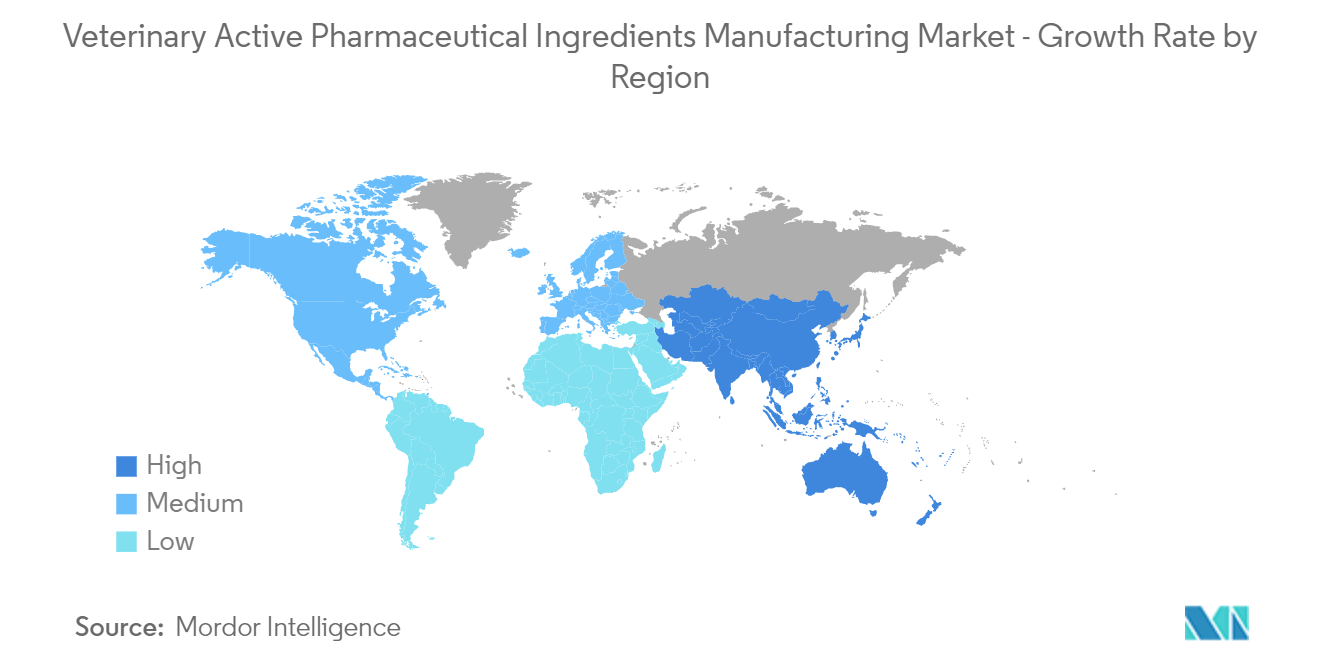
| Fastest Growing Market | Asia-Pacific |
| Largest Market | North America |
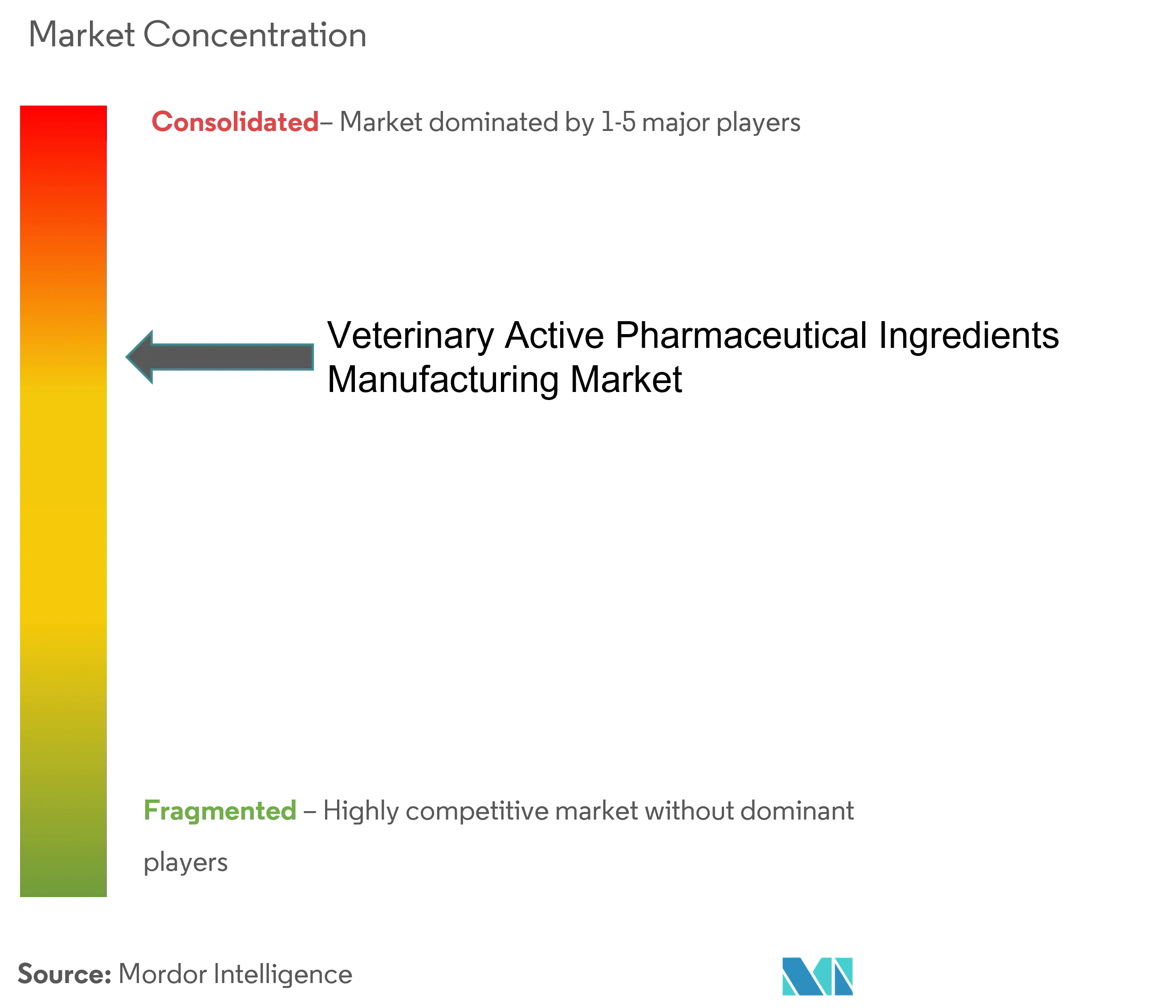
| Market Concentration | Medium |
Major Players *Disclaimer: Major Players sorted in no particular order Image © Mordor Intelligence. Reuse requires attribution under CC BY 4.0. | |
Veterinary Active Pharmaceutical Ingredients Manufacturing Market Analysis by Mordor Intelligence
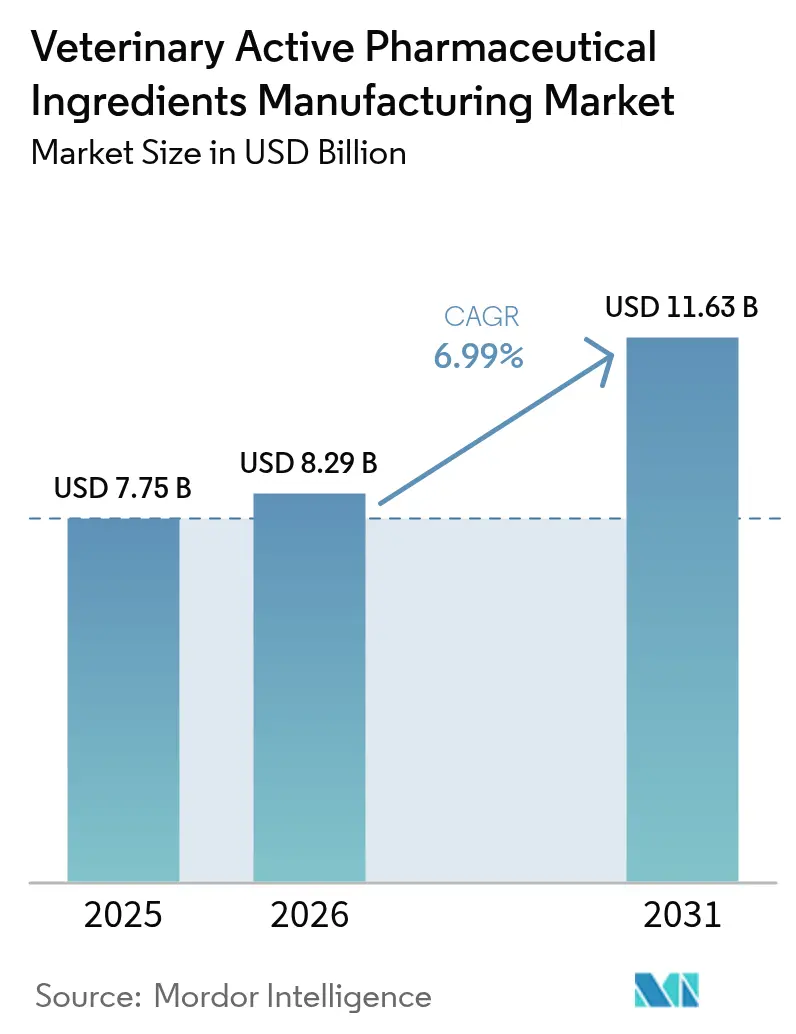
Veterinary Active Pharmaceutical Ingredients Manufacturing Market size in 2026 is estimated at USD 8.29 billion, growing from 2025 value of USD 7.75 billion with 2031 projections showing USD 11.63 billion, growing at 6.99% CAGR over 2026-2031.
The COVID-19 epidemic has had a significant impact on the market. Several animals, including cats, gorillas, dogs, farmed mink, otters, and others, were infected with the virus, which resulted in an increased risk of viral spread among domesticated animals, in turn boosting the demand for veterinary drugs. However, amid the pandemic, the prices of some veterinary APIs and feed additives rose sharply. According to a publication by Hangzhou DE Mark Industrial Co. Ltd., a manufacturer of veterinary pharmaceutical raw materials and specialty feed additives, in January 2022, the price of vitamin C grew dramatically, reaching roughly 30 RMB (USD 4.19) per kg, an almost 50% increase. While the cost of Vitamin D3 nearly doubled. Thus, such an increase associated with the prices of veterinary manufacturing products adversely impacted the market's growth during the pandemic. However, increasing incidences of COVID-19 among animals have surged the demand for several drugs to combat the SARS-CoV-2 virus, which is anticipated to have a positive impact on the market's growth. For instance, as per CDC and NCEZID data published in March 2022, more than 200 pets, including dogs, ferrets, and cats, were infected by the SARS-CoV-2 virus in the United States. Therefore, as per the analysis, such incidences are projected to augment market growth over the coming years.
The factors expected to drive the market growth include the increasing prevalence of zoonotic diseases, increasing animal populations and pet ownership, and rising numbers of veterinarians and veterinary visits. The market is highly propelled by the elevated prevalence of zoonotic diseases. Since human-animal connections are necessary for existence, this makes zoonoses easier to spread. Human-animal cohabitation is more common in poorer nations, particularly among rural populations. This inextricable relationship is evidenced by the higher occurrence of zoonoses in underdeveloped countries.
For instance, the Indian Journal of Medical Research in 2021 stated that animals are responsible for 70% of emerging infectious diseases; every year, five new diseases are generated, three of which are of animal origin, and zoonotic infections account for 80% of agents with potential bioterrorism use. In May 2022, the USDA Animal and Plant Health Inspection Service (APHIS) and the New Jersey Department of Agriculture (NJDA) confirmed New Jersey's first highly pathogenic avian influenza case in a Monmouth County non-commercial backyard poultry flock. As a result of the increasing prevalence of infectious diseases, there is a greater need for effective treatment options, which increases the demand for active pharmaceutical ingredient manufacturing and supports market growth.
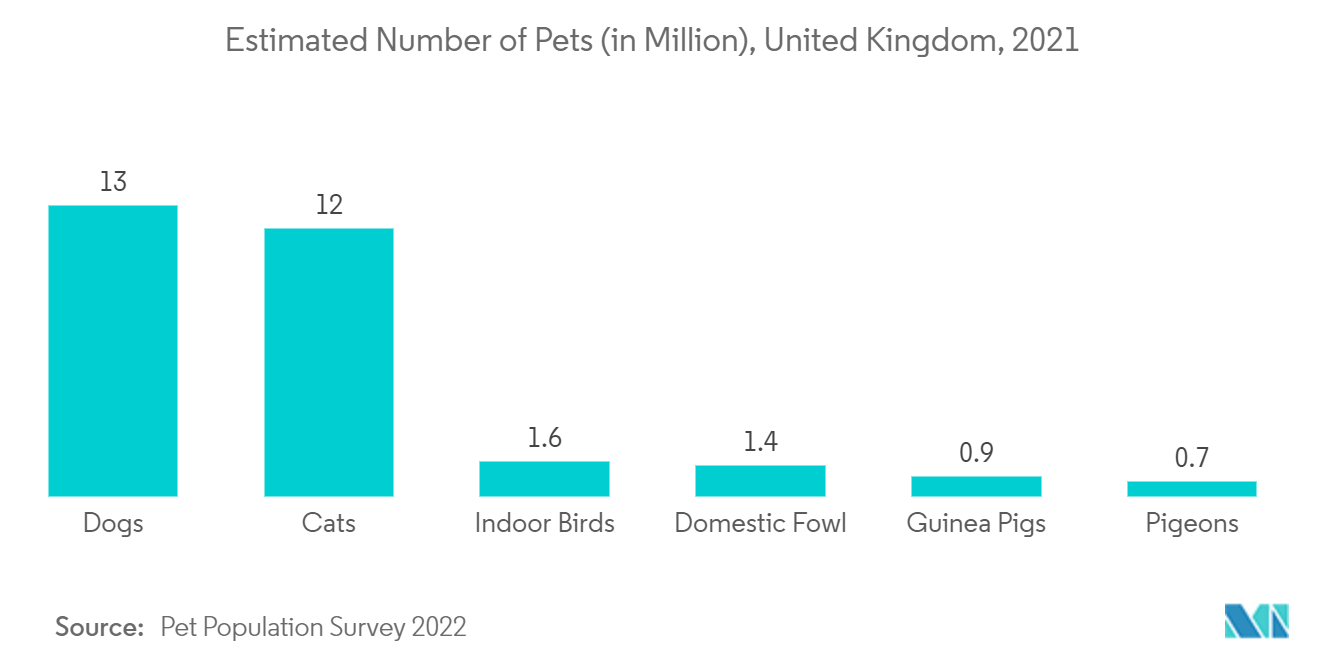
Moreover, the increasing pet population and pet adoption are expected to propel the market's growth. For instance, according to the People's Dispensary for Sick Animals (PDSA) PAW Report 2021, there were 9.6 million pet dogs, 10.7 million pet cats, and 900,000 pet rabbits in the United Kingdom. The same source also reported 2 million pets being adopted since March 2020 in the United Kingdom. The pet population is susceptible to several diseases, and thus, increased adoption of this population is expected to raise demand for veterinary drugs, ultimately boosting the market's growth.
Various strategies adopted by the key market players, such as product launches, mergers, and acquisitions, are expected to boost the market over the forecast period. For instance, in November 2021, ArchiMed acquired the majority of its stake in Madrid-based SuanPharma, a provider of veterinary active pharmaceutical ingredients. The goal was to finance ambitious industrial consolidation and organic expansion to position it as a leader in the API industry.
Thus, all the above-mentioned factors, such as the growing prevalence of zoonotic diseases and the rising adoption of animals, are expected to boost market growth over the forecast period. However, lack of awareness and the high cost of animal care coupled with stringent regulations may restrain the market over the forecast period.
Note: Market size and forecast figures in this report are generated using Mordor Intelligence’s proprietary estimation framework, updated with the latest available data and insights as of 2026.
Global Veterinary Active Pharmaceutical Ingredients Manufacturing Market Trends and Insights
The Vaccines Segment is Expected to Hold a Significant Market Share in the Veterinary Active Pharmaceutical Ingredients Manufacturing Market
The vaccine segment is expected to hold a significant market share in the veterinary active pharmaceutical ingredients manufacturing market.
The increased need for vaccines due to the high frequency of chronic diseases in animals is credited to the segment's growth. Furthermore, rising livestock populations and animal husbandry, as well as the commercialization of animal products, are likely to raise vaccine demand, propelling segment growth forward. Rabies vaccinations, equine influenza virus vaccines, and foot-and-mouth disease vaccines are the most commonly used animal vaccines, which inhibit the transfer of infectious pathogens by replicating naturally acquired immunity.
According to the study published in Infection Ecology & Epidemiology in September 2021, one of the most dangerous zoonotic diseases in the world is salmonellosis. Salmonella prevalence in animals and risk factors for increased transmission of Salmonella spp. from animals to people were evident. In Spain, the prevalence of salmonella in dogs accounted for 1.85%. In China, 243 dogs were found to have a slightly higher prevalence of salmonella at 9.47%. Salmonellosis is effectively treated with vaccines, and the rising prevalence of salmonellosis is expected to increase demand for vaccines, thereby boosting the segment's growth.
Furthermore, the establishment of an animal vaccine manufacturing plant to fulfill the global need for veterinary drugs tends to increase API demand to make the finished product that successfully treats animal diseases. For instance, in October 2022, Indian Immunologicals Ltd. (IIL) announced an INR 700 crore (USD 85.6 million) investment in Genome Valley, Hyderabad, to establish a new animal vaccine manufacturing facility.
The constant development of technologically superior vaccines, as well as the spread of diseases, have all contributed to changing market dynamics, thereby augmenting the segment's growth.


North America is Expected to Hold a Significant Share in the Market and Expected to do Same in the Forecast Period
North America is expected to hold a major market share in the veterinary active pharmaceutical ingredients manufacturing market. Zoonoses pose a concern for human health since animals are frequently the natural source of disease. The rising frequency of zoonotic diseases is a major factor driving market expansion in the region.
According to the 2021-2022 National Pet Owners Survey, conducted by the American Pet Products Association (APPA), around 70% of United States households own a pet, which equates to 90.5 million homes, including 45.3 million cats and 69 million dogs. The same source also reports that the annual expenditure on a routine visit for dogs accounts for USD 242, whereas it is USD 178 for cats in the country. Moreover, factors such as a rise in R&D investments, advancements in procedures, increased consumption of meat, and mandatory vaccination is anticipated to boost market growth during the forecast period.
An article by the Mainstreet Animal Hospital in Canada on Primary Veterinary Care in March 2022 discussed the various complications faced by pets and their management. The article indicated that old age is a major factor contributing to the onset of various chronic diseases such as osteoarthritis, heart issues, kidney issues, endocrinological problems, etc. The rise in the number of chronic diseases in veterinary animals and the requirement for proper medical management, such as providing effective medications for affected animals, is likely to propel the growth of the studied market in the region.
Thus, all the above-mentioned factors, such as rising pet adoption and the growing burden of chronic disease in animals, are expected to boost the market in the region over the forecast period.

Regulatory Landscape
Veterinary API manufacturers are operating under tightening GMP and establishment-licensing requirements across major markets, with regulators increasingly outlining API-specific expectations for supplier qualification, quality agreements, and verified testing strategies. In the United States, FDA CVM issued draft guidance in January 2024 (GFI #286) to align GMP expectations for veterinary APIs with VICH GL60. In Canada, Health Canada requires parties fabricating, importing, packaging/labeling, or testing veterinary-use APIs to hold a Drug Establishment Licence (DEL) and comply with GMP requirements under Part C, Division 2 of the Food and Drugs Regulations.
In the European Union, the framework for veterinary medicinal products under Regulation (EU) 2019/6 is supported by a legally binding GMP regime introduced through Commission Implementing Regulations (EU) 2025/2091 and (EU) 2025/2154, which apply from 16 July 2026 for veterinary medicinal products and their active substances. Oversight in emerging markets is also tightening, as shown by Nigeria's NAFDAC draft Active Pharmaceutical Ingredient (API) Regulations 2026, which set requirements across manufacturing, import/export, and handling, along with reference registration and recognized quality evidence such as WHO prequalification or European Pharmacopoeia CEPs.
Competitive Landscape
The veterinary active pharmaceutical ingredients manufacturing market is consolidated and competitive and consists of several major players. In terms of market share, a few of the major players are currently dominating the market. Some of the companies that are currently dominating the market are Alivira Animal Health Limited, Excel Industries Limited, Ofichem Group, Menadiona, SUANFARMA, NGL Fine-Chem Ltd., FIS (Fabbrica Italiana Sintetici S.p.A.), Zoetis, Indukern, Huvepharma, and Ourofino.
Veterinary Active Pharmaceutical Ingredients Manufacturing Industry Leaders
Zoetis
SUANFARMA
Grupo Indukern S.L.
Sequent Scientific Ltd. (Alivira Animal Health Limited)
Ofichem Group
- *Disclaimer: Major Players sorted in no particular order

Market Opportunities and Future Outlook
The move toward animal-specific compliance frameworks, alongside investments in vaccine and biologics manufacturing, is creating room for veterinary API and intermediate supply, especially where sponsors and CDMOs need regionally compliant sourcing and documentation packages. The EU's binding veterinary GMP framework taking effect on 16 July 2026 under Implementing Regulations (EU) 2025/2091 and (EU) 2025/2154 also raises near-term demand for gap assessments, remediation, and requalification of API supply chains supporting Europe, with opportunities for manufacturers that can support audits, technical agreements, and traceable quality data across multi-site networks.
Capacity buildouts linked to vaccines, biologics, and specialized animal-health modalities add practical pull for API production and outsourcing. Merck Animal Health's May 2025 announcement of an USD 895 million expansion in De Soto, Kansas, focused on manufacturing and R&D capabilities for biologics and vaccine operations; MEVAC's July 2025 inauguration of a large-scale veterinary vaccine industrial complex in New Salhia City, Egypt (investment exceeding EGP 3 billion); Sai Life Sciences' September 2025 opening of a dedicated veterinary API facility (Unit VI) in Bidar, India to support contract manufacturing demand; and Dopharma's April 2026 milestone (topping-out) for an autogenous vaccine production facility in Potsdam, Germany, scheduled for commissioning by end-2026, all point to pull-through for contract development and contract manufacturing services, including suppliers of animal-specific APIs (including biological APIs and HPAPIs) that can meet tightened GMP and documentation requirements.
Recent Industry Developments
- April 2026: Dopharma and Ripac-Labor marked the topping-out of a new production facility in Potsdam, Germany, focused on autogenous vaccines, with commissioning targeted for the end of 2026. The added vaccine manufacturing footprint strengthens European supply chains and increases demand for qualified inputs and compliant manufacturing services supporting veterinary biologics.
- November 2025: Zoetis announced a USD 600 million expansion of its Douglasville, Georgia manufacturing site to add capacity for monoclonal antibodies and vaccines, with construction planned through 2029. The scale of investment underscores the shift toward larger biologics footprints in animal health and affects upstream needs for specialized starting materials and API-related capabilities aligned to biologics production.
- March 2024: Zoetis announced the purchase of a 21-acre manufacturing site in Melbourne, Australia to expand local production capacity for livestock and companion animal vaccines. Building sovereign manufacturing capacity in Australia supports regional supply resilience and can shift procurement toward locally qualified API and intermediate supply chains.


Research Methodology Framework and Report Scope
Market Definition and Coverage
This market covers the manufacturing value of veterinary active pharmaceutical ingredients (APIs) used to make animal medicines, across key regions and traded supply chains. Our sizing follows API output that ultimately supports commercial veterinary drug products.
Scope exclusions: Finished veterinary drug formulations, veterinary services, diagnostics, feed additives that are not regulated as APIs, and distribution markups are excluded.
Segmentation Overview
- By Product
- Antiparasitic
- Anti-infectives
- Vaccines
- NSAIDs
- Others
- By Synthesis Type
- Chemical Based API
- Biological API
- Highly Potent API (HPAPI)
- By Service Type
- In House
- Contract Outsourcing
- Contract Development
- Contract Manufacturing
- Geography
- North America
- United States
- Canada
- Mexico
- Europe
- Germany
- United Kingdom
- France
- Italy
- Spain
- Rest of Europe
- Asia-Pacific
- China
- Japan
- India
- Australia
- South Korea
- Rest of Asia-Pacific
- Middle-East and Africa
- GCC
- South Africa
- Rest of Middle East and Africa
- South America
- Brazil
- Argentina
- Rest of South America
- North America
Data Sources, Market Sizing, and Validation
Desk Research
Desk research starts by mapping the API demand pool to animal health activity that can be tracked consistently across countries. We leaned on public sources such as the U.S. FDA Center for Veterinary Medicine approvals and compliance updates, European Medicines Agency datasets, and the World Organisation for Animal Health disease reporting for context on therapy demand (anti-infectives, antiparasitics, and vaccines).
To make the model measurable, we also used trade and industrial statistics such as UN Comtrade, national customs releases, and broad manufacturing output indicators, then cross-checked them using company annual reports, investor presentations, and reputable press coverage on capacity expansions. Where helpful, we referenced paid databases for company financials, patent lookups, and shipment-level import and export screening to validate country-to-country flow assumptions. These desk sources are illustrative, and we used additional public and paid references during data collection, validation, and clarification.
Primary Interviews and Surveys
Primary work was used to confirm what portion of veterinary drug demand is typically served by in-house versus outsourced API manufacturing, and how pricing and mix shifts are handled in annual planning. We spoke with a spread of API producers, contract manufacturing teams, distributors that track veterinary pharma inputs, and technical leaders who understand synthesis choices (chemical, biological, and potent APIs) across regions, and we adjusted the assumptions where the responses converged.
Distribution of primary research fieldwork respondents
| Company type | Respondent position | Region |
|---|---|---|
| Top tier: 25% | CXOs: 19% | APAC: 42% |
| Mid tier: 56% | Functional/Unit leaders: 27% | EMEA: 37% |
| Smaller Players: 19% | Managers: 54% | Americas: 21% |
Market-Sizing & Forecasting
Market sizing uses a top-down approach where veterinary medicine demand and therapy mix are reconstructed into an API requirement pool, then translated into manufacturing value using conversion factors and observable pricing patterns. In practice, the model is anchored on variables such as livestock and companion animal treatment intensity, disease and outbreak frequency signals, the share of therapies that are API-driven versus biologics-heavy, outsourcing rates for veterinary APIs, and regional manufacturing utilization shifts.
To keep the totals realistic, we corroborate them with selective bottom-up approximations, such as rolling up a sample of manufacturer revenues tied to veterinary API lines, checking outsourced volumes through channel discussions, and stress-testing implied ASPs by therapy class and synthesis type. When coverage is thin in certain countries, gaps are handled through regional proxy ratios, then reviewed with interviews, rather than forcing a full supplier-by-supplier build.
Forecasting relies mainly on scenario analysis because the market is sensitive to regulatory actions, animal disease cycles, and sudden capacity additions. Scenarios are tied to expected changes in veterinary drug approvals, protein consumption and livestock health spend, companion animal care intensity, and planned API capacity ramp-ups, and then smoothed to avoid one-time spikes being treated as long-term trends.
Data Validation & Update Cycle
Validation is done by comparing outputs against independent signals, including trade directionality, country manufacturing indicators, and consistency checks across therapy mix and synthesis type shares. Outliers are flagged when growth rates diverge from known triggers, like new animal drug approvals, policy tightening on antimicrobials, or major capacity changes, then assumptions are re-checked through follow-up outreach.
Before sign-off, the model goes through multi-step analyst reviews where inputs, formulas, and year-to-year bridges are checked so the story matches the math. Reports are refreshed annually, and we also run interim updates when material events occur. Before delivery, a final review pass is done so clients receive the latest updated view.
Mordor Intelligence's Veterinary Active Pharmaceutical Ingredients Manufacturing Market Sizing Compared With Other Published Estimates
Published market values for veterinary API manufacturing can look far apart, even when they sound like they track the same topic. The main reasons are usually what is counted as manufacturing value, which therapies are included, and how outsourcing and pricing are treated across regions.
The biggest gap drivers in this market tend to be whether estimates include finished formulations along with APIs, whether vaccine inputs are treated as API value or biologics value, and how fast ASP changes are applied when trade prices move year to year. Another common difference comes from timing, since some publishers use older base years or apply currency conversion at a different point in the modeling flow, which can swing global totals.
Benchmark comparison
| Source | Market Size | Gaps in Research Methodology |
|---|---|---|
| Mordor Intelligence | USD 7.75 B (2025) | |
| Trade Journal A | USD 8.05 B (2025) | This figure appears to lean on a faster near-term growth path and a tighter forecast window, which can amplify ASP progression and outsourcing growth without the same regional utilization cross-checks. |
| Global Consultancy B | USD 10.56 B (2025) | This estimate likely includes a wider definition that can pull in adjacent veterinary pharma manufacturing value beyond APIs, which raises the 2025 total compared with an API-only manufacturing view. |
The table mainly shows that scope choices and pricing refresh timing explain most of the spread. By separating API manufacturing from finished veterinary medicines and then testing the implied volumes and ASPs against trade and capacity signals, the 2025 value stays tied to a repeatable demand pool, which is a modeling choice applied by Mordor Intelligence.


Key Questions Answered in the Report
How big is the Veterinary Active Pharmaceutical Ingredients Manufacturing Market?
The Veterinary Active Pharmaceutical Ingredients Manufacturing Market size is expected to reach USD 8.29 billion in 2026 and grow at a CAGR of 6.99% to reach USD 11.63 billion by 2031.
What is the current Veterinary Active Pharmaceutical Ingredients Manufacturing Market size?
In 2026, the Veterinary Active Pharmaceutical Ingredients Manufacturing Market size is expected to reach USD 8.29 billion.
Who are the key players in Veterinary Active Pharmaceutical Ingredients Manufacturing Market?
Zoetis, SUANFARMA, Grupo Indukern S.L., Sequent Scientific Ltd. (Alivira Animal Health Limited) and Ofichem Group are the major companies operating in the Veterinary Active Pharmaceutical Ingredients Manufacturing Market.
Which is the fastest growing region in Veterinary Active Pharmaceutical Ingredients Manufacturing Market?
Asia-Pacific is estimated to grow at the highest CAGR over the forecast period (2026-2031).
Which region has the biggest share in Veterinary Active Pharmaceutical Ingredients Manufacturing Market?
In 2025, the North America accounts for the largest market share in Veterinary Active Pharmaceutical Ingredients Manufacturing Market.
What years does this Veterinary Active Pharmaceutical Ingredients Manufacturing Market cover, and what was the market size in 2025?
In 2025, the Veterinary Active Pharmaceutical Ingredients Manufacturing Market size was estimated at USD 8.29 billion. The report covers the Veterinary Active Pharmaceutical Ingredients Manufacturing Market historical market size for years: 2019, 2020, 2021, 2022, 2023 and 2024. The report also forecasts the Veterinary Active Pharmaceutical Ingredients Manufacturing Market size for years: 2026, 2027, 2028, 2029, 2030 and 2031.
Page last updated on:


 Your data is secure and never sold or shared.


