
Vegan Cosmetics Market Size and Share
Market Overview
| Study Period | 2021 - 2031 |
|---|---|
| Market Size (2026) | USD 5.75 Billion |
| Market Size (2031) | USD 11.13 Billion |
| Growth Rate (2026 - 2031) | 14.12 % |
| Fastest Growing Market | Asia Pacific |
| Largest Market | Europe |
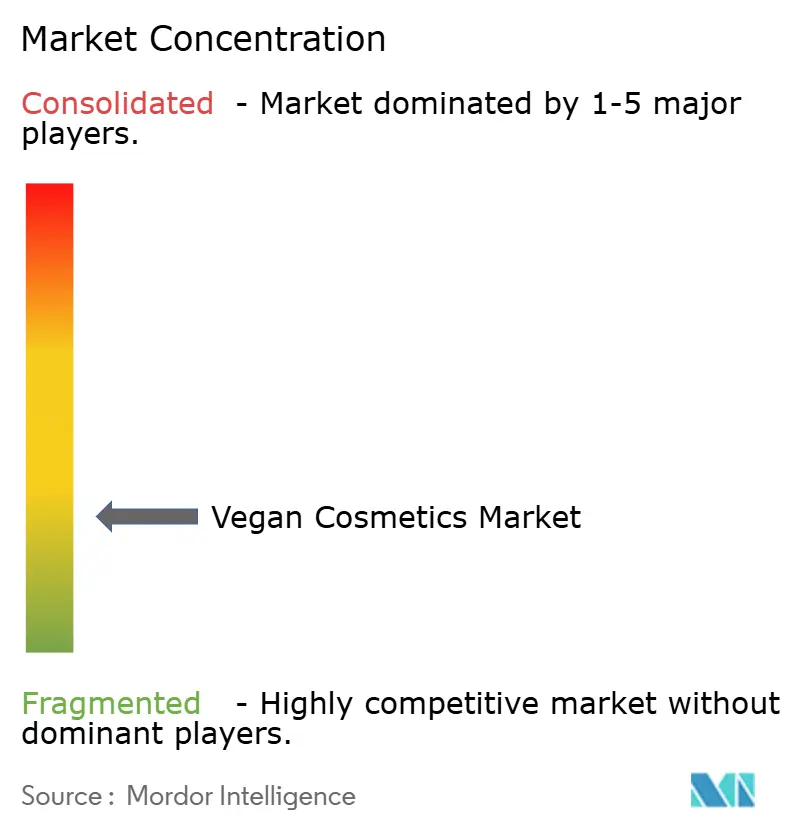
| Market Concentration | Low |
Major Players
*Disclaimer: Major Players sorted in no particular order Image © Mordor Intelligence. Reuse requires attribution under CC BY 4.0. |
|
Vegan Cosmetics Market Analysis by Mordor Intelligence
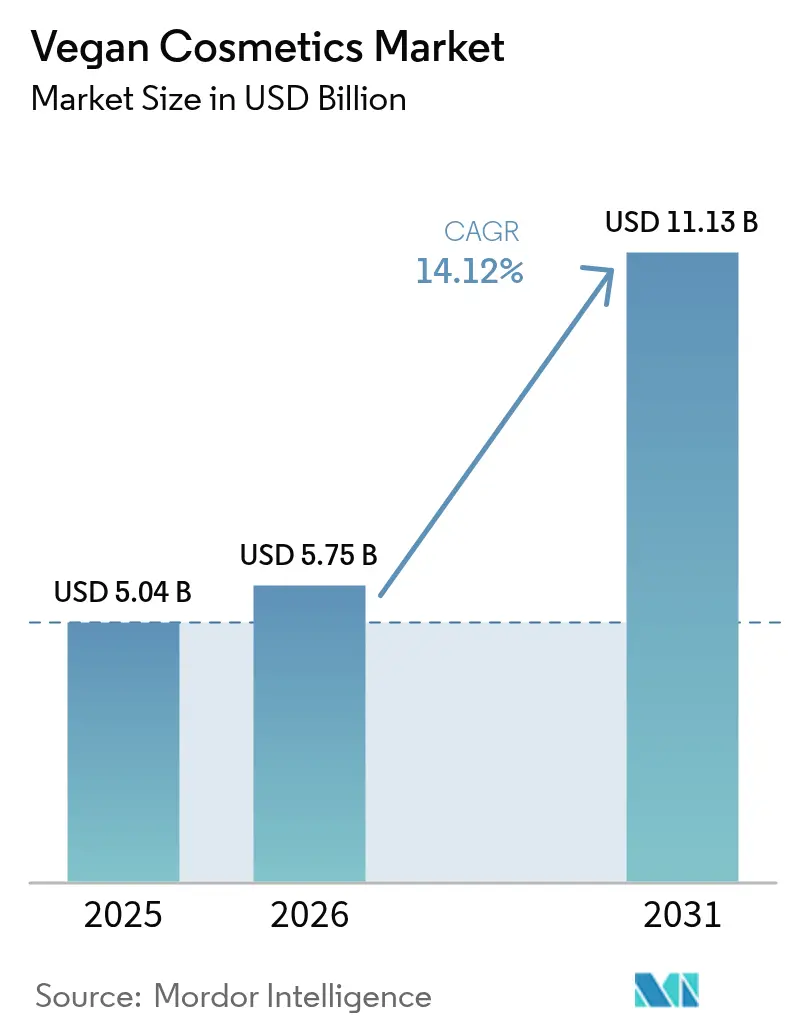
The global vegan cosmetics market size in 2026 is estimated at USD 5.75 billion, growing from 2025 value of USD 5.04 billion with 2031 projections showing USD 11.13 billion, growing at 14.12% CAGR over 2026-2031. The market growth is driven by increasing consumer awareness of natural, chemical-free products and environmental sustainability. Vegan cosmetics exclude animal-derived ingredients, including beeswax, collagen, gelatin, milk, and others. Millennials and Gen Z consumers are the primary market drivers, showing a preference for products that avoid chemical-based ingredients and animal testing. In response, major cosmetic manufacturers are expanding their vegan product lines through new launches and acquisitions, while incorporating natural and organic ingredients to align with clean beauty preferences. The market is expected to maintain its growth trajectory, driven by increasing consumer awareness and favorable regulatory frameworks that support sustainable practices.
Key Report Takeaways
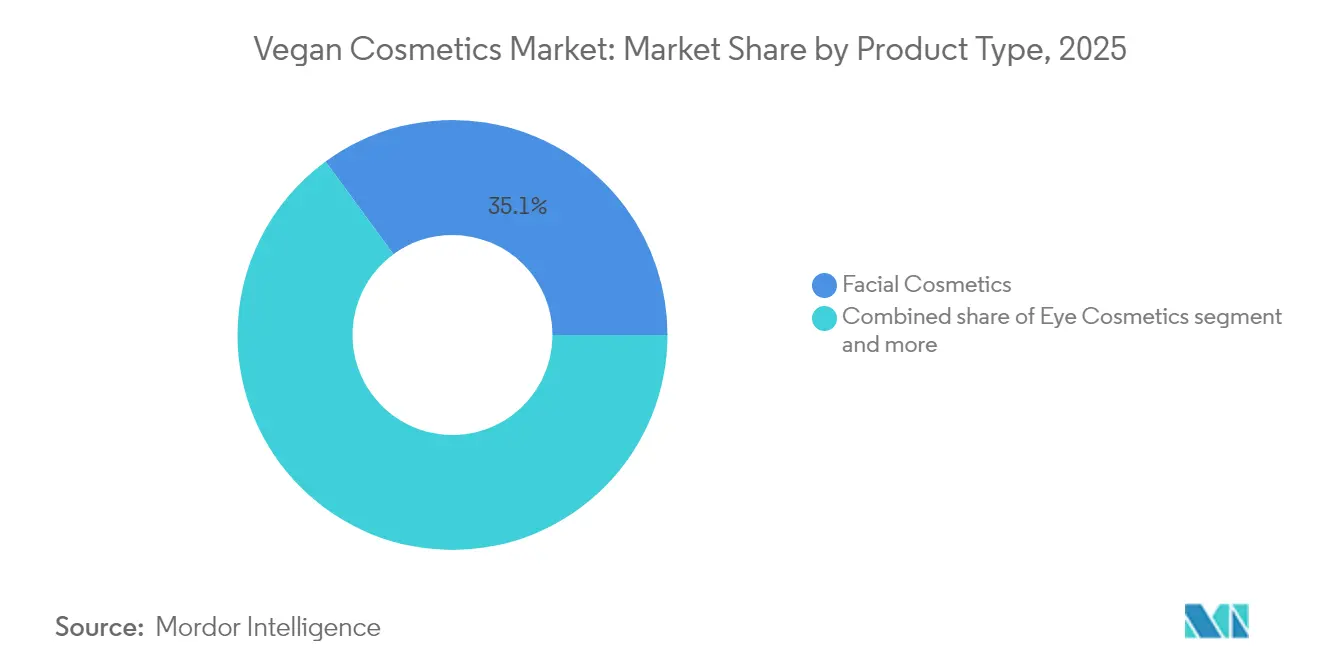
- By product type, facial cosmetics led with 35.05% of the vegan cosmetics market share in 2025; lip and nail make-up products are projected to expand at a 16.22% CAGR through 2031.
- By category, mass products held 55.10% of the vegan cosmetics market, while the premium products segment is poised for a 15.01% CAGR through 2031.
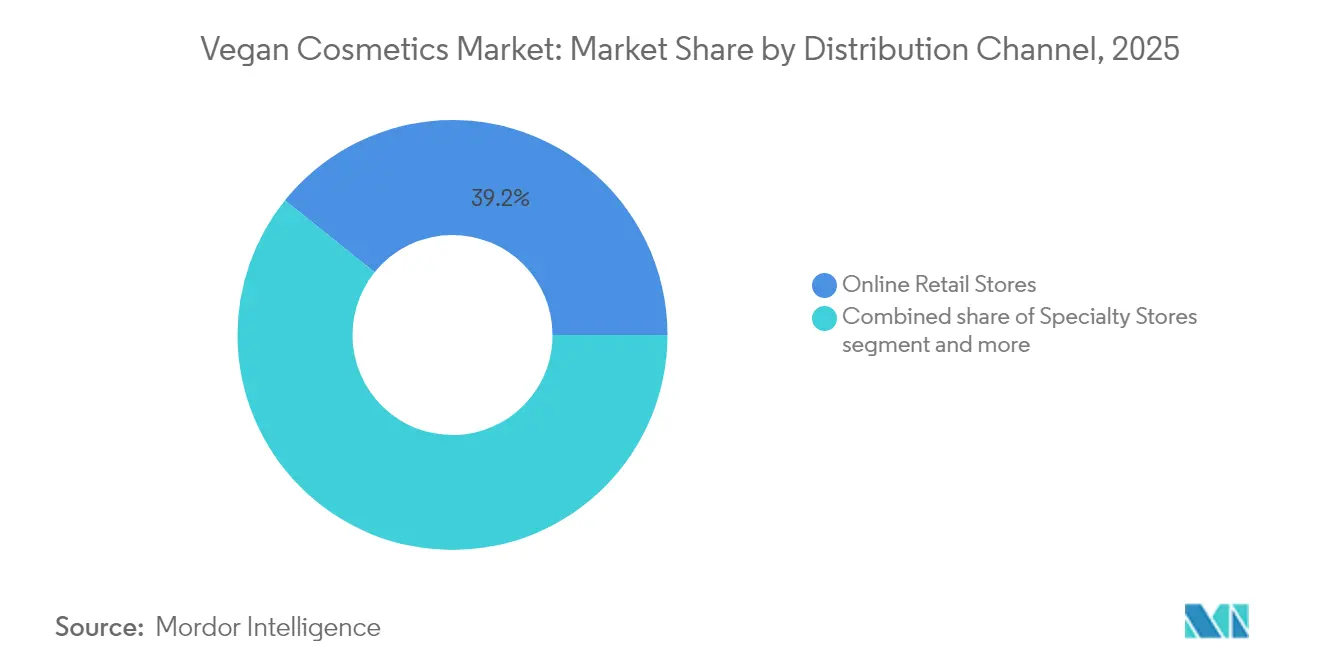
- By distribution channel, online retail stores commanded a 39.22% share of the vegan cosmetics market in 2025 and remain the fastest-growing segment at 17.45% CAGR through 2031.
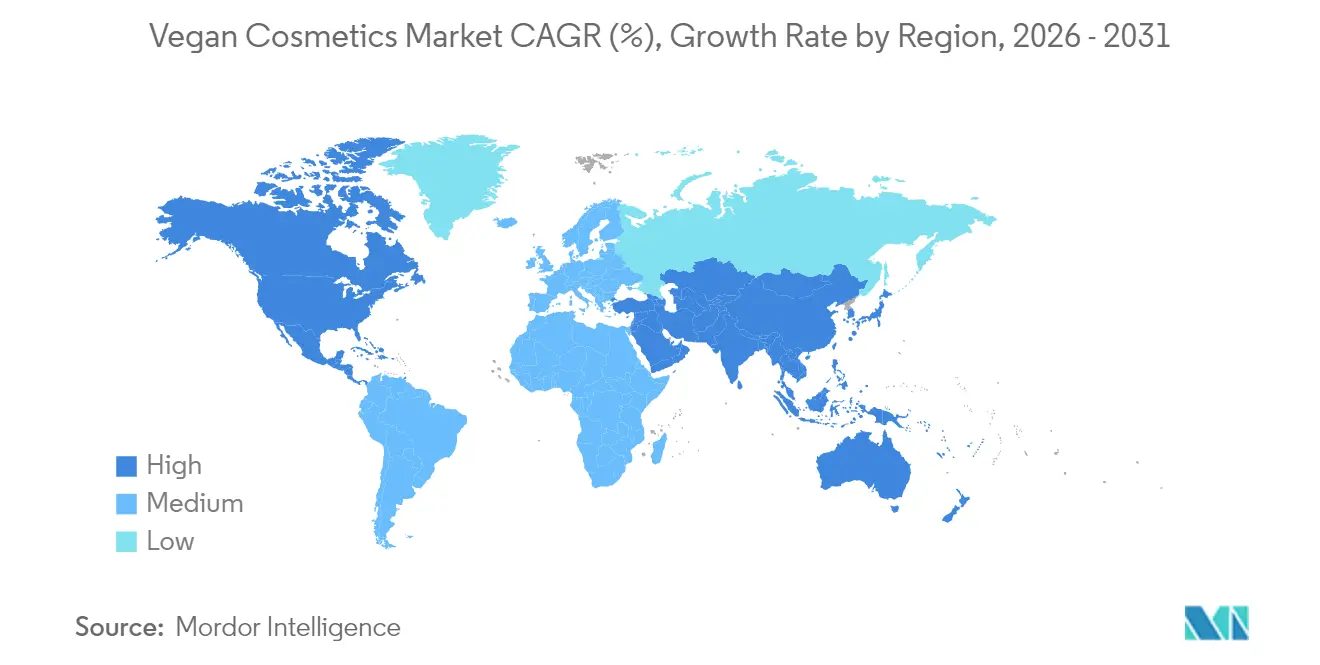
- By geography, Europe captured 41.10% of the market share in 2025, while Asia-Pacific is growing at a 21.05% CAGR through 2031.
Note: Market size and forecast figures in this report are generated using Mordor Intelligence’s proprietary estimation framework, updated with the latest available data and insights as of 2026.
Market Trends and Insights
Drivers Impact Analysis of Vegan Cosmetics Market*
| Driver | (~) % Impact on CAGR Forecast | Geographic Relevance | Impact Timeline |
|---|---|---|---|
| Rising demand for cruelty-free products | +3.2% | Global, most pronounced in Europe and North America | Medium term (3-4 years) |
| Celebrity endorsements and influencer marketing power | +1.1% | North America, Europe, Asia-Pacific | Short term (≤ 2 years) |
| Sustainability trends gaining traction | +2.5% | Global, with early Asia-Pacific/Western Europe | Long term (≥ 5 years) |
| Innovative botanical ingredients boost the market demand | +1.8% | Global, with Asia-Pacific and Europe leading | Medium term (3-4 years) |
| Rising consumer awareness of synthetic chemicals | +1.6% | Global, notably North America and Europe | Short term (≤ 2 years) |
| Increasing research and development investments for vegan alternatives | +1.3% | Global, innovation hubs (United States, Europe, Asia-Pacific) | Medium term (3-4 years) |
| Source: Mordor Intelligence | |||
Rising Demand for Cruelty-Free Products
Consumer preferences in the vegan cosmetics market are evolving beyond ingredient selection to encompass the entire product development process. A Global Cosmetics Industry survey for 2025 indicates that 37% of consumers will prioritize "no animal testing" in their skincare product purchases, while 41% emphasize natural ingredients. In response to this consumer shift, major companies like Unilever are collaborating with European regulatory authorities to eliminate animal testing practices. The certification process for vegan cosmetics, managed by organizations such as BeVeg, implements rigorous verification procedures, including ingredient analysis, factory inspections, and testing validation. This market evolution is furthered by the use of ed by new product launches, such as singer SZA's Not Beauty vegan lip collection in April 2025, featuring three signature shades. The combination of increasing consumer demand, strict certification requirements, corporate commitments to sustainable practices, and celebrity-driven product launches continues to drive the expansion of the vegan cosmetics market.
Celebrity Endorsements and Influencer Marketing Power The Vegan Cosmetic Revolution
Celebrity-launched vegan cosmetics brands are transforming the market by accelerating consumer adoption and establishing a strong presence. The industry is witnessing an increase in consumer expectations for celebrities to demonstrate a genuine commitment to vegan principles, making transparent ingredient sourcing and formulation essential for maintaining brand credibility. Generation Z consumers have a significant influence on the vegan cosmetics market, as evidenced by their emphasis on peer recommendations and word-of-mouth validation. Moreover, a 2024 University of Portsmouth survey found that 60% of consumers trusted influencer recommendations, with nearly half of all purchasing decisions being influenced by these endorsements [1]Source: University of Portsmouth, “Influencer Impact on Consumer Skincare Choices,” port.ac.uk. Source: . The market continues to expand, driven by celebrity endorsements, the ethical product preferences of Generation Z, and growing environmental awareness among consumers.
Sustainability Trends Gaining Traction
Consumer expectations for vegan cosmetics have evolved beyond animal-free ingredients to encompass comprehensive sustainability practices. Companies are implementing environmental initiatives across their operations, as demonstrated by e.l.f. Cosmetics' Project Unicorn, which reduces packaging waste while maintaining vegan formulations. The market emphasizes sustainable packaging and responsible ingredient sourcing, reflecting the principles of a circular economy. This approach resonates particularly with younger consumers, who consistently opt for sustainable products and are willing to pay higher prices for environmentally responsible options. Recent market developments reflect this trend, as seen in October 2023, when Organic Harvest launched its 100% vegan organic makeup line featuring toxin-free and cruelty-free formulations. The combination of environmental awareness and demand for sustainable practices continues to drive market growth, benefiting companies that incorporate these values throughout their operations.
Innovative Botanical Ingredients Boost the Market Demand
Advances in botanical extraction and stabilization technologies are transforming the vegan cosmetics industry, enabling formulations that match the performance of conventional products. This technological progress is evident in developments such as Unilever's Hourglass brand, creating a vegan alternative to carmine red pigment, traditionally sourced from cochineal insects. The industry's collaborative approach is demonstrated by Unilever's decision to open-source this technology. Similarly, Givaudan Active Beauty's launch of the [N.A.S.]™ Vibrant Collection in October 2024 showcases the evolution of vegan botanical extracts, offering color stability and longevity in hybrid makeup products. The integration of biotechnology facilitates the production of nature-identical compounds, which provide consistent performance while avoiding the supply chain vulnerabilities typically associated with plant-derived ingredients. These technological capabilities, combined with increasing consumer demand for ethical and sustainable products, indicate strong growth potential for the vegan cosmetics market.
Restraints Impact Analysis of Vegan Cosmetics Market*
| Restraint | (~) % Impact on CAGR Forecast | Geographic Relevance | Impact Timeline |
|---|---|---|---|
| Stringent regulations and compliance challenges | -1.9% | Europe, North America, Asia-Pacific | Short term (≤ 2 years) |
| High production costs limit market accessibility and growth | -2.3% | Global, more acute in emerging markets | Medium term (3-4 years) |
| Complex ingredient sourcing and supply chain management | -1.4% | Global, especially Asia-Pacific and Europe | Medium term (3-4 years) |
| Limited shelf life of natural ingredients | -1.0% | Global, with higher impact in tropical regions | Medium term (3-4 years) |
| Source: Mordor Intelligence | |||
Stringent Regulations and Compliance Challenges
The regulatory environment for vegan cosmetics presents market entry challenges, especially for small brands. Regional compliance requirements, such as the European Union's Regulation (EC) No 1223/2009, establish specific guidelines for cosmetic safety assessment, ingredient limitations, and labeling [2]Source: European Union, "Regulation 1223/2009: Regulatory Framework for Cosmetic Products in the European Union," Belab Services, belabservices.com. The absence of universal standards for "vegan" cosmetics results in market fragmentation, as brands must obtain multiple certifications for international distribution. The rise in misleading environmental claims has led to stricter requirements for transparency in sustainability reporting and marketing, which in turn affects market expansion. These complex and evolving regulations increase operational costs and delay product launches, discouraging new entrants from investing in the sector.
High Production Costs Limit Market Accessibility and Growth
The high costs associated with vegan cosmetics production restrict market growth. The sourcing of plant-based and cruelty-free ingredients is more expensive than conventional alternatives. Additionally, specialized manufacturing processes, rigorous quality control measures, and third-party certifications increase production expenses. These elevated costs are passed on to consumers through higher retail prices, making vegan cosmetics less accessible to price-sensitive consumers and limiting market penetration in developing regions. The limited availability of cost-effective raw materials further intensifies pricing challenges, while small and emerging brands struggle to achieve economies of scale, constraining their competitiveness in the global market.
*Our forecasts treat driver/restraint impacts as directional, not additive. The impact forecasts reflect baseline growth, mix effects, and variable interactions.
Vegan Cosmetics Market Segment Analysis
By Product Type:
Facial Products Lead Innovation WaveFacial cosmetics dominate the market, accounting for a 35.05% share in 2025, as consumers increasingly opt for vegan alternatives due to their skin health benefits. The segment maintains its leading position because consumers typically start their vegan beauty journey with facial products, which has led companies to focus their product development in this category. In March 2024, Ilia introduced the New Blurring Complexion Stick. This emphasis on facial products enables companies to showcase the effectiveness of their products and establish consumer confidence in vegan formulations.
The lip and nail makeup segments are projected to grow at a 16.22% CAGR from 2026 to 2031, driven by advancements in vegan pigment technology. The growing trend of clean beauty and natural ingredients has driven up consumer demand for vegan lip and nail products. These technological developments have improved performance qualities and widened the color selection of vegan lip and nail products, making them comparable to conventional cosmetic formulations.


By Category:
Premium Segment Accelerates Despite Value ConstraintsThe mass segment dominates the vegan cosmetics market, accounting for a 55.10% share in 2025. This segment's accessibility enables broader market penetration beyond dedicated ethical consumers. The mass market effectively serves price-conscious consumers while maintaining vegan and cruelty-free certifications. Key brands in this segment include e.l.f. Cosmetics, including CoverGirl and Revolution Beauty, and others.
The premium segment is projected to grow at a CAGR of 15.01% during 2026-2031. This growth stems from consumer demand for advanced formulations and enhanced brand experiences. Premium segment customers exhibit higher basket values and more frequent multi-category purchasing patterns, leading to stronger customer lifetime value. In August 2024, Anastasia Beverly Hills introduced the Blurring Serum Blush, a hydrating liquid blush that provides a soft-matte, radiant, and blurred finish.
By Distribution Channel:
Digital Commerce Reshapes AccessOnline retail stores dominate the vegan cosmetics distribution landscape with a 39.22% market share in 2025 and are projected to grow at a CAGR of 17.45% through 2031. These platforms effectively showcase ingredient details and ethical certifications, which are essential for selecting vegan products. Digital marketplaces facilitate community interaction and customer reviews, particularly resonating with Generation Z consumers who prioritize peer recommendations and reviews. For instance, Korean vegan beauty brand Heimish enhanced its U.S. market reach through Amazon distribution.
Specialty stores maintain their significance by offering personalized assistance and expert recommendations, while supermarkets and hypermarkets provide widespread product availability. The distribution network is evolving into an omnichannel model, with companies integrating technology to deliver uniform educational content across digital and physical retail channels. Additionally, the growing influence of social media and e-commerce platforms is enhancing brand visibility and enabling direct consumer engagement, further strengthening the retail ecosystem.
Geography Analysis
Europe Vegan Cosmetics Market
Europe holds the largest regional market share at 41.10% in 2025, supported by strict regulations and high consumer awareness of ethical consumption. The European Union's Regulation establishes comprehensive standards for cosmetic safety assessment and prohibits animal testing, thereby creating a regulatory environment that is favorable to vegan formulations. Germany and the United Kingdom serve as innovation centers within the European market, where consumers demonstrate strong awareness of ingredient sourcing and sustainability metrics. Unilever PLC's commitment to eliminating animal testing in Europe further strengthens the region's market position.
APAC Vegan Cosmetics Market
Asia-Pacific exhibits the highest growth potential with a 21.05% CAGR from 2026-2031, driven by increasing disposable income, environmental awareness, and digital commerce adoption. Japan and Australia lead the regional adoption of vegan cosmetics, with Japanese consumers prioritizing the skin health benefits of plant-based formulations. In April 2024, a German beauty brand entered the Southeast Asian market by launching a new range of vegan makeup products.
North America Vegan Cosmetics Market
North America maintains steady growth as a mature market, characterized by high consumer awareness and a strong direct-to-consumer brand ecosystem. The United States market benefits from an established vegan consumer base and advanced manufacturing capabilities. Gen Z consumers drive market expansion, with 61% prioritizing their appearance and spending an average of USD 84 on health and beauty products per quarter, according to a 2024 survey by the Global Cosmetics Industry . This demographic shift prompts established companies to develop vegan product lines and reformulate existing offerings.

Regulatory Landscape
Regulation for vegan cosmetics is anchored in general cosmetics safety, labeling, and claims rules, rather than a single globally harmonized legal definition of "vegan". In Europe, Regulation (EC) No 1223/2009 governs cosmetic product safety and labeling and also underpins the EU animal-testing ban, which influences how cruelty-free and related marketing statements are substantiated. A further labeling change comes from Commission Implementing Decision (EU) 2025/1175, which establishes a glossary of common ingredient names and applies from 30 July 2026, prompting brands to align EU packs and ingredient declarations to the updated naming conventions.
In North America, compliance is driven by labeling and claims substantiation obligations with different enforcement structures. In the United States, FDA cosmetics labeling rules under 21 CFR Part 701 and the broader FD&C Act framework apply, but "vegan" and "cruelty-free" are not defined terms for cosmetics, leaving brands responsible for ensuring claims are not false or misleading and for maintaining supporting documentation. In Canada, Cosmetic Regulations (CRC, c 869) require bilingual (English/French) labeling and INCI-based ingredient lists, and place emphasis on evidence to support cosmetic claims, reinforcing the need for robust internal substantiation files and consistent cross-market labeling controls.
Value Chain Analysis
The vegan cosmetics value chain begins with sourcing plant, mineral, and certified synthetic inputs, then moves through ingredient processing and formulation stability work, manufacturing and packaging, and finally multi-channel distribution through specialty retail, mass retail, and online platforms. A distinguishing layer is third-party verification and auditing, with bodies such as The Vegan Society (Vegan Trademark), Cruty Free International (Leaping Bunny), and V-Cert shaping documentation requirements for ingredient origin, processing aids, and testing policies. This verification step adds time and cost, but it improves retail acceptance and supports cross-border commercialization where regulators do not define "vegan" in law.
Operational pinch points tend to concentrate in ingredient verification and manufacturing controls. Common cosmetic components such as glycerin or stearic acid can be plant- or animal-derived, which means brands rely on supplier declarations, traceability, and ongoing change control to prevent inadvertent non-vegan inputs. Manufacturing risk centers on cross-contamination in shared facilities and limited availability of dedicated lines that meet strict vegan production standards, pushing brands toward specialized contract manufacturers or rigorous cleaning validation. Downstream, online retail plays a large role in vegan cosmetics by making ingredient lists and certification marks highly visible at the point of purchase, while omnichannel distribution increases the need for consistent labeling, claims substantiation, and batch-level traceability across geographies.
Competitive Landscape
The vegan cosmetics market encompasses a fragmented, competitive landscape with conglomerates, established natural brands, and digital-first companies. Industry leaders like L'Oréal, Unilever, MuLondon, Coty Inc., and Beauty Without Cruelty are expanding their global presence through strategic acquisitions, brand development, and ingredient innovation. L'Oréal's 2024 Universal Registration Document highlights investments in in-vitro safety testing and green chemistry to eliminate animal-derived components, while Unilever has implemented science-based targets for ingredient transparency.
The market presents specific technical challenges, particularly in full-coverage color cosmetics, where manufacturers must balance the stability of opacifying pigments with ethical sourcing requirements. Companies that effectively address these technical requirements gain competitive advantages, especially in the professional makeup artist segment. Market leaders are implementing technological solutions, such as L'Oréal's Garnier Skin Coach, which utilizes AI diagnostics to enhance customer education and product accessibility.
Companies continue to expand their product portfolios through new launches and strategic acquisitions in emerging markets. For instance, in July 2023, TryHealthyLips.com introduced a vegan cosmetic line featuring five fruit-inspired colors with formulations containing shea butter and vitamin E. These developments demonstrate the industry's commitment to addressing evolving consumer needs and strengthening market positions through product innovation and market expansion.
Vegan Cosmetics Industry Leaders
-
MuLondon
-
Beauty Without Cruelty
-
Loreal SA
-
Cottage Holdco B.V. (Coty Company)
-
E.L.F. Cosmetics Company
- *Disclaimer: Major Players sorted in no particular order
Vegan Cosmetics Market Companies Covered in this Report
- L'Oreal S.A.
- Unilever PLC
- e.l.f. Beauty, Inc.
- Coty Inc.
- Groupe Rocher
- Estee Lauder Companies
- Amorepacific Corporation
- Pacifica Beauty, LLC
- MuLondon
- Beauty Without Cruelty
- Gabriel Cosmetics, Inc.
- Milani Cosmetics
- Tarte Cosmetics
- Aurea Group
- Aveda Corporation
- Urban Decay
- Weleda AG
- PHB Ethical Beauty
- Seed Beauty
- Typsy Beauty

Market Opportunities and Future Outlook
Retail scaling through major beauty and department-store doors is a near-term opportunity pathway, as brands use national store footprints to move beyond direct-to-consumer limits. In April 2026, Herbivore Botanicals launched a 15-piece Body Collection across more than 850 Ulta Beauty stores in the United States, and in June 2026 LAMIK Beauty announced a rollout with JCPenney across 20 locations in parts of the South Central US. These moves indicate that vegan-positioned assortments are being integrated into mainstream retail planograms, which increases demand for repeatable, audited supply chains (ingredient origin records, claims files, and consistent pack copy) that can support retailer compliance reviews and faster replenishment.
Manufacturing localization and capacity investment also create whitespace, particularly when brands want tighter control over freshness, lead times, and documentation for vegan and sustainability claims. In June 2026, RINGANA announced an USD 85 million investment tied to acquiring a 160,000-square-foot facility in Roanoke, Virginia, with manufacturing operations scheduled to begin in November 2026. This points to in-market infrastructure that can reduce dependency on long, multi-country ingredient and finished-goods routes. At the same time, tightening expectations around ingredient disclosure and claims substantiation in Europe under Regulation (EC) No 1223/2009, alongside the July 2026 effective date for the EU ingredient-name glossary under Implementing Decision (EU) 2025/1175, raises the value of suppliers and brands that can deliver standardized INCI naming, traceable sourcing, and documentation-ready formulations across multiple product types, including higher-performance color cosmetics and hybrid skincare-makeup formats.
Recent Industry Developments in Vegan Cosmetics Market
- July 2026: AORA Mexico announced a retail launch at Sephora, with availability on Sephora.com starting July 17, 2026, positioning plastic-free packaging alongside vegan-formula compatibility. The move places a sustainability-led proposition into a major prestige channel, raising competitive pressure on packaging choices and end-to-end claims substantiation for newer entrants.
- June 2026: LAMIK Beauty announced a retail partnership with JCPenney, rolling out across 20 locations in Texas, Louisiana, Arkansas, and Oklahoma. Expanding beyond direct channels increases the importance of retailer-ready compliance documentation and repeatable supply planning for vegan certified assortments.
- October 2024: Givaudan Active Beauty launched the [N.A.S.] Vibrant Collection, highlighting botanical extract-based solutions aimed at color stability and longevity in hybrid makeup formats. Ingredient innovation from major suppliers supports brands trying to close performance gaps versus conventional cosmetics while keeping formulations aligned with vegan positioning.


Vegan Cosmetics Market Report Scope and Research Methodology
Market Definition and Coverage
This market covers beauty and personal care products that are formulated without animal-derived ingredients and are positioned and sold as vegan cosmetics across retail and professional channels.
Scope exclusions: We exclude products that may look similar (for example, natural or organic cosmetics) if they still use animal-derived inputs such as beeswax, lanolin, or carmine.
Segments Covered in This Report
-
By Product Type
- Facial Cosmetics
- Eye Cosmetics
- Lip and Nail Make-up Products
-
By Category
- Premium Products
- Mass Products
-
By Distribution Channel
- Specialty Stores
- Supermarkets/Hypermarkets
- Online Retail Stores
- Other Channels
-
By Geography
-
North America
- United States
- Canada
- Mexico
- Rest of North America
-
Europe
- Germany
- France
- United Kingdom
- Spain
- Netherlands
- Italy
- Sweden
- Poland
- Belgium
- Rest of Europe
-
Asia-Pacific
- China
- India
- Japan
- Australia
- South Korea
- Indonesia
- Thailand
- Singapore
- Rest of Asia-Pacific
-
South America
- Brazil
- Argentina
- Chile
- Colombia
- Peru
- Rest of South America
-
Middle East and Africa
- United Arab Emirates
- South Africa
- Nigeria
- Saudi Arabia
- Egypt
- Morocco
- Turkey
- Rest of Middle East and Africa
-
North America
Data Sources, Market Sizing, and Validation
Desk Research
Desk work starts with building a clean fact base on cosmetics demand, trade, and regulation, so the model does not rely on one single dataset. Public sources such as U.S. FDA cosmetics guidance, the European Commission cosmetics regulation pages, UN Comtrade trade statistics, and the U.S. International Trade Commission data help us sanity check category movement and cross-border flows for relevant finished goods.
We also review sources such as national statistics offices for consumer spending series, peer reviewed journals that track ingredient substitution trends, and patent databases to understand where vegan formulations are moving (for example pigments, waxes, and emollients). Annual reports, investor decks, and credible press interviews are used to capture brand focus, channel mix, and pricing direction. A paid subscription database is then used selectively for company financials and structured news screening. These sources are illustrative, and many other public references were reviewed for data collection, validation, and clarification.
Primary Interviews and Surveys
Primary interviews and surveys are used to pressure-test what is actually counted as vegan on shelves and in professional use, and to confirm how pricing and channel shares are shifting. We speak with manufacturers, ingredient-focused experts, distributors, retailers, and informed buyers across APAC, EMEA, and the Americas to close gaps left by public data and to align assumptions with real market behavior.
Distribution of primary research fieldwork respondents
| Company type | Respondent position | Region |
|---|---|---|
| Top tier: 32% | CXOs: 15% | APAC: 45% |
| Mid tier: 49% | Functional/Unit leaders: 42% | EMEA: 35% |
| Smaller Players: 19% | Managers: 43% | Americas: 20% |
Market-Sizing & Forecasting
Sizing is built using a top-down approach where cosmetics category demand and trade signals are reconstructed into a vegan-only demand pool through adoption and assortment checks, and then translated into value using price bands. To keep it realistic, the totals are then corroborated with selective bottom-up approximations, such as sampled brand and channel price points multiplied by observed volume proxies, followed by supplier and retailer checks, and then adjusted when the implied numbers drift from known constraints.
Key inputs used in the model include: share of vegan claims within color cosmetics and personal care assortments, online retail contribution for beauty, premium versus mass mix, average selling price progression by category (skin care, hair care, color cosmetics, and fragrance), and region-level growth signals tied to new launches and consumer preference shifts. Forecasts are developed using scenario analysis supported by short series trend smoothing. Adoption rates and price movements are varied within ranges confirmed by interviews. When a bottom-up view is incomplete for smaller channels or informal retail, we bridge the gap using channel share benchmarks and conservative penetration assumptions that are then rechecked with experts.
Data Validation & Update Cycle
Validation is done through repeated cross-checks so one weak assumption does not decide the final number. We compare outputs against independent signals like category growth, trade movement, and pricing direction, and then review outliers at the country and region level before sign-off. If a variance cannot be explained by a clear scope or data reason, assumptions are revisited and selective re-contacts are triggered to confirm what changed.
Reports are refreshed annually, and interim updates are made when a material event affects demand, channel access, or pricing. Before delivery, an analyst performs a fresh pass across core inputs, ensuring clients receive the most current view while keeping the same repeatable steps.
Mordor Intelligence's Vegan Cosmetics Market Size Compared With Other Published Estimates
Published market sizes for vegan cosmetics do not always match because each publisher draws the boundary in a slightly different way, and then picks different evidence to support adoption and pricing. The gap usually becomes visible when one estimate is compared against observable category signals, and the underlying scope choices are put side by side.
Trade movement for relevant beauty product categories, combined with cross-checks on retail assortment and price band direction, are the evidence points that keep Mordor Intelligence's USD 5.75 B (2026) estimate tied to vegan-only products and not adjacent clean beauty revenue. Differences also come from whether figures include broader personal care items, how premium versus mass pricing is projected over the forecast period, and whether currency conversion is done using a single-year average or rolling rates that move with inflation and exchange shifts.
Benchmark comparison
| Source | Market Size | Gaps in Research Methodology |
|---|---|---|
| Mordor Intelligence | USD 5.75 B (2026) | |
| Global Consultancy A | USD 21.88 B (2026) | Uses a broader revenue pool that appears to include wider beauty and personal care items labeled with vegan positioning, and the value base reflects higher aggregate pricing across categories beyond strict vegan-ingredient screening. |
| Regional Consultancy B | USD 18.20 B (2024) | Anchors the base year earlier and applies a wider inclusion set for vegan cosmetics that can blend closely related claim-led products, which can lift totals when assortment screening and channel boundaries are not stated clearly. |
The table shows that the spread is mainly driven by scope control and how vegan qualification is enforced at the product level, followed by pricing and currency timing choices. By keeping the demand pool traceable to clear market signals and by rechecking assumptions with channel and product reality checks, our estimate stays practical to replicate and easier to compare across years.


Key Questions Answered in the Report
What is the projected vegan cosmetics market size in 2031?
The market is expected to reach approximately USD 11.13 billion by 2031, nearly doubling from its 2026 level.
Which product segment currently commands the largest vegan cosmetics market share?
Facial cosmetics dominate the category, accounting for 35.05% of the total market share in 2025.
What regional market is growing fastest for vegan beauty products?
Asia-Pacific region demonstrates the highest growth rate at 21.05% CAGR, driven by increasing disposable income levels and the growing integration of vegan products with overall wellness trends.
Are premium vegan cosmetics outpacing mass-market alternatives?
The premium segment is widening its revenue contribution due to higher average basket sizes and consumer willingness to trade up for verifiable ethical benefits, with a CAGR of 15.01%.
Page last updated on:


 Your data is secure and never sold or shared.


