
Vascular Guidewires Market Size and Share
Market Overview
| Study Period | 2020 - 2031 |
|---|---|
| Market Size (2026) | USD 1.72 Billion |
| Market Size (2031) | USD 2.37 Billion |
| Growth Rate (2026 - 2031) | 6.66 % |
| Fastest Growing Market | Asia Pacific |
| Largest Market | North America |
| Market Concentration | Medium |
Major Players *Disclaimer: Major Players sorted in no particular order Image © Mordor Intelligence. Reuse requires attribution under CC BY 4.0. | |
Vascular Guidewires Market Analysis by Mordor Intelligence
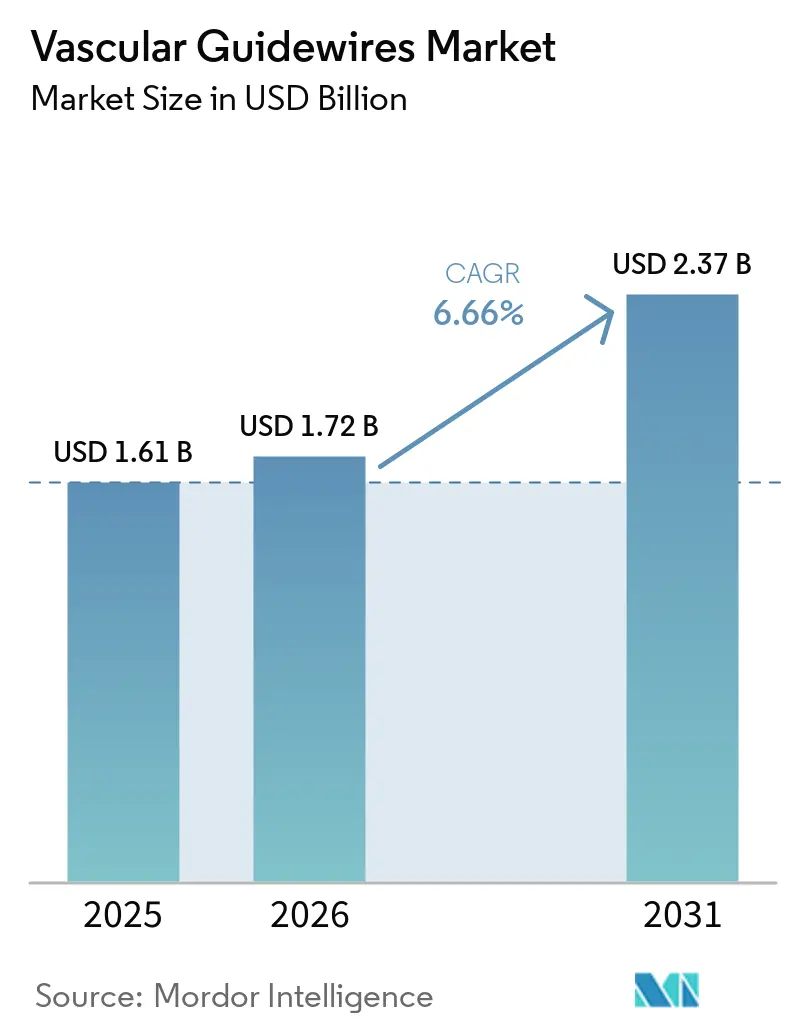
The vascular guidewires market size is expected to grow from USD 1.61 billion in 2025 to USD 1.72 billion in 2026 and is forecast to reach USD 2.37 billion by 2031 at 6.66% CAGR over 2026-2031. Rising cardiovascular disease prevalence, the global pivot toward minimally invasive interventions, and continuous improvements in steerability and torque response are sustaining demand. Device makers are also benefiting from expanding catheterization lab capacity, broader reimbursement for outpatient vascular procedures, and the commercialization of robotic-assisted endovascular suites. Supply-chain localization of medical-grade nitinol and investments in PFAS-free coatings illustrate how manufacturers are de-risking production while aiming for long-term sustainability. Regionally, North America remains the leading revenue contributor, whereas Asia-Pacific shows the most rapid growth owing to healthcare infrastructure development and higher procedure volumes.
Key Report Takeaways
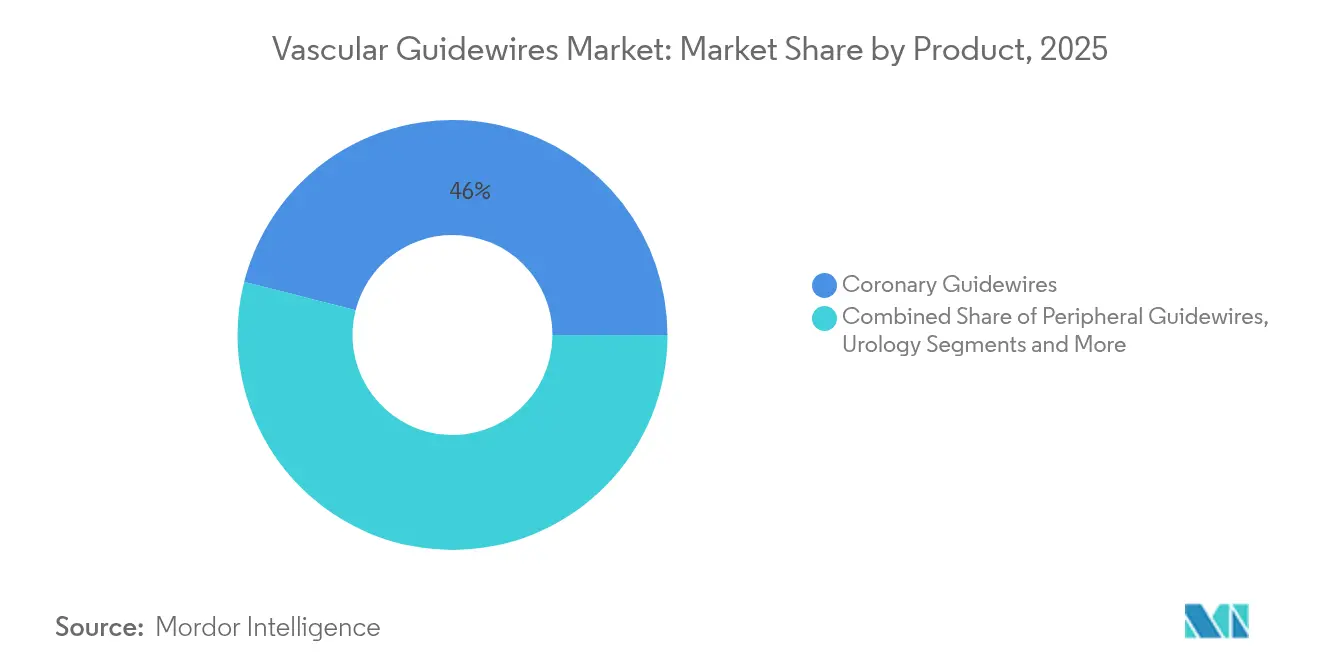
- By product category, coronary guidewires held 46.02% vascular guidewires market share in 2025, while neurovascular guidewires are forecast to expand at an 8.14% CAGR through 2031.
- By coating, coated guidewires accounted for 62.48% of the vascular guidewires market size in 2025; non-coated guidewires are advancing at a 7.69% CAGR to 2031.
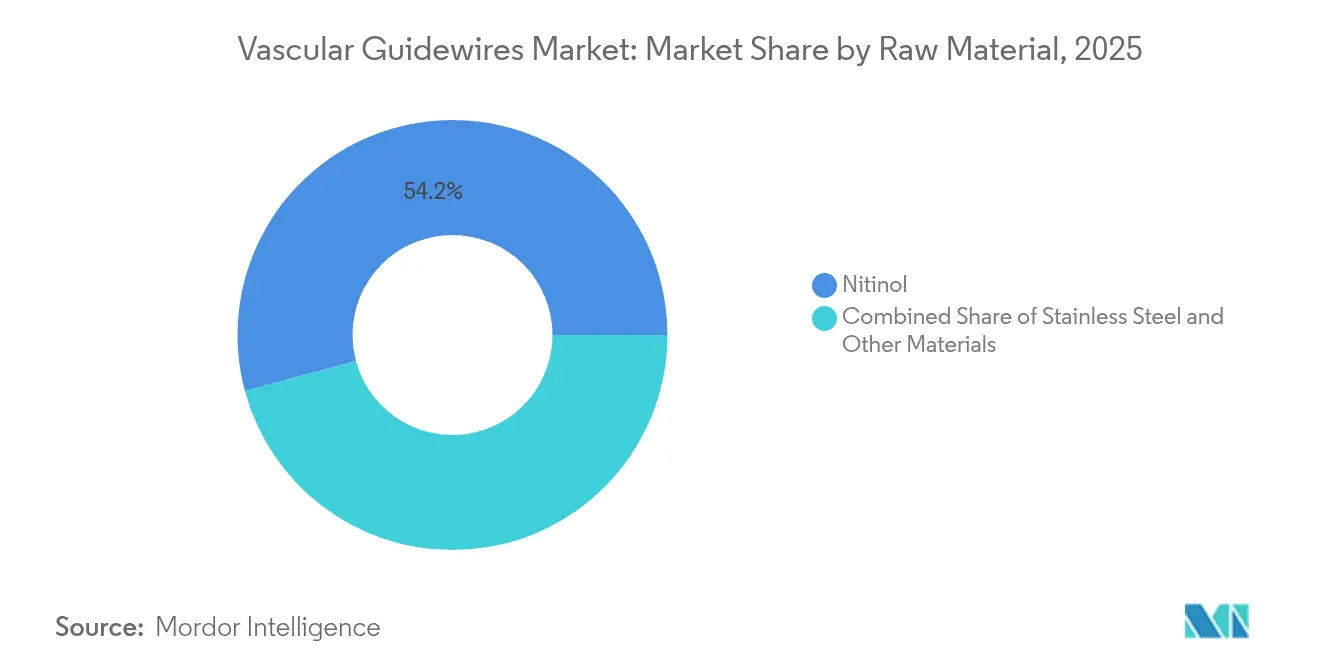
- By raw material, nitinol led with 54.20% share of the vascular guidewires market size in 2025, whereas stainless steel is projected to grow at a 7.46% CAGR during 2026-2031.
- By end user, hospitals commanded 69.52% of vascular guidewires market share in 2025, yet ambulatory surgical centers are set to record the highest CAGR of 8.17% up to 2031.
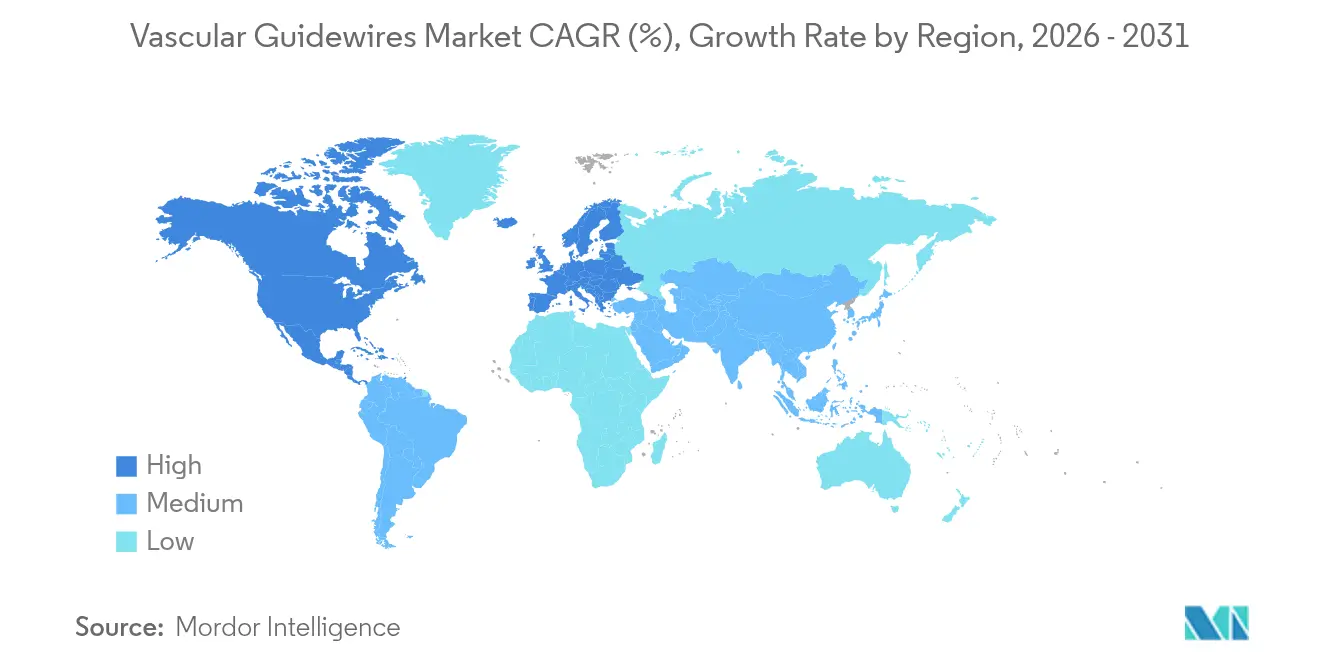
- By geography, North America contributed 44.88% revenue in 2025, while Asia-Pacific is set to expand at an 8.47% CAGR through 2031.
Note: Market size and forecast figures in this report are generated using Mordor Intelligence’s proprietary estimation framework, updated with the latest available data and insights as of 2026.
Market Trends and Insights
Drivers Impact Analysis of Vascular Guidewires Market*
| Driver | ( ~ ) % Impact on CAGR Forecast | Geographic Relevance | Impact Timeline |
|---|---|---|---|
| Rising cardiovascular disease burden | +1.8% | Global, notably North America & Europe | Long term (≥ 4 years) |
| Growing preference for minimally invasive surgeries | +1.5% | Global, led by North America & Asia-Pacific | Medium term (2-4 years) |
| Technological breakthroughs in steerable & torque-enhanced wires | +1.2% | North America & Europe, expanding to Asia-Pacific | Medium term (2-4 years) |
| Ageing population expanding interventional case-load | +1.0% | Global, strongest in developed markets | Long term (≥ 4 years) |
| Hospital adoption of robotic-assisted endovascular suites | +0.8% | North America & Europe, emerging in Asia-Pacific | Medium term (2-4 years) |
| Supply-chain localisation of medical-grade nitinol | +0.5% | North America & Europe with spillover to Asia-Pacific | Short term (≤ 2 years) |
| Source: Mordor Intelligence | |||
Rising Cardiovascular Disease Burden
Global hypertension prevalence is forecast to climb from 51.2% in 2020 to 61.0% by 2050, while diabetes rises from 16.3% to 26.8%. These epidemiological shifts elevate procedure volumes for coronary, peripheral, and neurovascular interventions, positioning guidewires as essential access tools. Stroke-related costs alone are anticipated to increase 535% to USD 423 billion by 2050, underscoring long-term demand for neurovascular devices. Hospital systems are expanding cath-lab capacity and procuring torque-responsive wires that address complex anatomy in older patients. Preventive interventions are also gaining traction, enlarging the overall addressable vascular guidewires market [1].
Growing Preference for Minimally Invasive Surgeries
Ambulatory surgical centers (ASCs) are expected to handle more than half of US outpatient surgeries by 2028, representing a USD 33 billion opportunity at a 6.9% CAGR. Only 1.8% of percutaneous coronary interventions currently occur in ASCs, leaving headroom for growth[2]. Cost savings, faster recovery, and comparable safety records are compelling payers and providers to favor outpatient endovascular care, thereby increasing demand for versatile guidewires that perform reliably across procedural settings.
Technological Breakthroughs in Steerable & Torque-Enhanced Wires
Steerable devices such as the SideEye catheter have reduced target vessel cannulation time to 199 seconds versus 703 seconds for conventional options. Innovations combining nitinol cores with variable cross-section shafts deliver high torque without sacrificing flexibility. Hybrid designs, exemplified by Terumo’s Runthrough wire, are challenging incumbents by lowering the need for buddy wires in complex lesions.
Ageing Population Expanding Interventional Case-Load
Patients aged 80 years and above register the highest rehospitalization rates for heart failure within 36 months of coronary angiography. Frailty-informed procedural planning is shifting device selection toward wires offering sensitive tactile feedback and improved pushability. Specialty training programs and guidewire refinements aim to mitigate the anatomical challenges posed by calcified and tortuous vessels prevalent in elderly cohorts.
Hospital Adoption of Robotic-Assisted Endovascular Suites
The CorPath GRX system achieved 94% completion without unplanned manual conversion during cerebral aneurysm embolizations, highlighting the precision advantages of robotic navigation. Hospitals adopting robotics seek lower radiation exposure and enhanced workflow efficiency, creating demand for guidewires optimized for robotic interfaces.
Restraints Impact Analysis of Vascular Guidewires Market*
| Restraint | ( ~ ) % Impact on CAGR Forecast | Geographic Relevance | Impact Timeline |
|---|---|---|---|
| Rising incidence of product recalls & FDA warning letters | -1.2% | Global, most severe in North America | Short term (≤ 2 years) |
| Price erosion amid commoditization in mature markets | -0.8% | North America & Europe | Medium term (2-4 years) |
| Global nitinol feedstock shortages | -0.6% | Global, acute in North America & Europe | Short term (≤ 2 years) |
| PFAS-linked regulation of hydrophilic coatings | -0.4% | North America & Europe, expanding globally | Medium term (2-4 years) |
| Source: Mordor Intelligence | |||
Rising Incidence of Product Recalls & FDA Warning Letters
Class I recalls in 2024-2025, including coating separation events, have affected leading manufacturers and hundreds of thousands of devices. The heightened regulatory environment is prompting providers to diversify suppliers, while manufacturers strengthen quality controls to preserve market confidence.
Price Erosion Amid Commoditization in Mature Markets
Group purchasing organizations use consolidated buying power to negotiate lower prices, pressuring margins in standard guidewire categories. New entrants from Asia-Pacific offer cost-competitive substitutes, amplifying price competition in North America and Europe.
*Our forecasts treat driver/restraint impacts as directional, not additive. The impact forecasts reflect baseline growth, mix effects, and variable interactions.
Vascular Guidewires Market Segment Analysis
By Product:
Expanding Clinical Breadth Drives DifferentiationCoronary guidewires held a 46.02% share of the vascular guidewires market in 2025 owing to high global PCI volumes. Neurovascular guidewires, though smaller in revenue, are forecast for an 8.14% CAGR, reflecting rising stroke awareness and improvements in distal access devices. Advanced hybrid wires are influencing clinician preferences by combining soft tips with proximal stiffness, reducing reliance on multiple wire exchanges. Artificial intelligence integration is under exploration, pointing to future smart guidewires capable of real-time vessel mapping.
The peripheral segment continues stable growth fuelled by increasing peripheral artery disease incidence. Urology guidewires benefit from the broader shift toward minimally invasive stone management, although they remain niche compared with cardiovascular applications.

By Coating:
Hydrophilic Performance Meets Regulatory HeadwindsCoated guidewires represented 62.48% of vascular guidewires market size in 2025 as hydrophilic layers improve lubricity in tortuous anatomy. PFAS-related regulatory scrutiny is accelerating R&D into alternative chemistries, prompting manufacturers to file new patents for fluorine-free or biodegradable coatings. Non-coated guidewires are expanding at a 7.69% CAGR as operators value direct tactile feedback in certain coronary and peripheral cases, and as price-sensitive markets re-evaluate premium coating benefits.
By Raw Material:
Nitinol Superelasticity Under Supply ConstraintsNitinol accounted for 54.20% share because its shape memory characteristics support complex vessel navigation. Recent feedstock shortages and price increases are influencing sourcing strategies, including localized melt facilities near major device hubs. Stainless steel remains appealing for its cost profile and reliable torque, posting a 7.46% CAGR. Polymer-metal hybrids and PEEK cores are gaining attention for pediatric and neurovascular specialties where ultra-low profiles are critical.
By End User:
Outpatient Shift Reshapes ProcurementHospitals absorbed 69.52% of 2025 demand due to their ability to manage complex emergencies. Yet the vascular guidewires market is witnessing rapid ASC expansion at 8.17% CAGR, driven by favorable reimbursement and demonstrated safety equivalence in PCIs. Specialty clinics and dedicated cath labs fill a growing niche for high-volume routine interventions, emphasizing standardization and cost control.
Geography Analysis
North America Vascular Guidewires Market
North America retained a 44.88% revenue share in 2025. Robust reimbursement, early adoption of robotic platforms, and broad clinical training networks sustain demand. However, stricter FDA post-market surveillance is lengthening approval cycles and raising compliance costs. Value-based care contracts increasingly require outcome evidence, pressuring suppliers to link device performance with total cost of care.
APAC Vascular Guidewires Market
Asia-Pacific is projected for an 8.47% CAGR through 2031. China’s device market, targeted to reach USD 55.67 billion by 2029, benefits from policies such as Made in China 2025 that foster domestic production. Indonesia reached USD 2.3 billion in 2024 and continues to leverage TKDN rules that mandate local content. India’s new marketing conduct codes are improving transparency, though they require short-term adjustments for multinational suppliers. Rising procedure volumes, expanding insurance coverage, and government investments in cardiovascular care position the region as the key driver for incremental vascular guidewires market revenue.
Europe Vascular Guidewires Market
Europe exhibits steady demand amid rigorous regulatory frameworks. Harmonized standards updated in 2024 introduce clearer pathways for CE marking, albeit with higher documentation requirements . The continent’s aging demographic keeps procedure numbers high, while cost-effectiveness evaluations encourage adoption of guidewires that balance performance with economic value. Brexit-induced divergence still complicates UK-EU supply logistics but is gradually being mitigated through mutual recognition agreements.
MEA and South America Vascular Guidewires Market
Middle East & Africa and South America show emerging potential. Gulf Cooperation Council countries invest in cardiovascular centers of excellence, whereas Brazil and Argentina expand cath-lab networks despite reimbursement hurdles. Market access relies heavily on distributor partnerships and compliance with evolving local regulations.
Regulatory Landscape
Vascular guidewires are regulated as invasive cardiovascular devices, with approval and surveillance requirements centered on performance and labeling. In the United States, market entry commonly follows the FDA 510(k) pathway, supported by FDA guidance on performance tests and recommended labeling for coronary, peripheral, and neurovascular guidewires. Manufacturers also operate under the Quality System Regulation (21 CFR Part 820) and applicable expectations for biocompatibility, sterilization, and packaging.
In Europe, vascular guidewires fall under Regulation (EU) 2017/745 (MDR), which requires technical documentation and notified body assessment for CE marking. Manufacturers typically align submissions to MDR annex requirements, with Medical Device Coordination Group (MDCG) guidance used as an implementation reference. Internationally, ISO 11070:2014 (including Amendment 1:2018) remains a core performance standard for sterile single-use intravascular guidewires, supporting test methods such as tensile strength and flex testing that underpin design verification and ongoing compliance.
Value Chain Analysis
The value chain begins with specialty materials and components, including medical-grade nitinol and stainless steel cores, distal coils (often with radiopaque alloys such as platinum-iridium), and low-friction surface chemistries such as hydrophilic coatings or PTFE liners. Component and contract manufacturing capabilities, such as precision wire processing, coil winding, and guidewire assembly services, support OEMs and branded device companies by supplying finished subassemblies, coating services, and sterile packaging inputs.
Manufacturing is engineering-intensive, and commonly includes steps such as centerless grinding for tapers, micro-coiling for consistent distal behavior, laser welding for tip attachment, electropolishing, and coating application with controlled curing, followed by sterilization and packaging validation. Regulatory and quality requirements, including FDA 510(k) expectations and ISO-aligned verification for biocompatibility, sterilization, packaging, and guidewire performance, shape supplier qualification and process validation. On the go-to-market side, channel strategy spans direct hospital and cath-lab accounts and distributor models for emerging markets, with commercial partnerships influencing downstream access, such as the July 2025 exclusive US distribution agreement Medtronic announced for Future Medical Design peripheral guidewires (F-14 and F-18).
Competitive Landscape
The vascular guidewires market displays moderate consolidation. Boston Scientific’s USD 1.26 billion takeover of Silk Road Medical in 2024 strengthened its carotid portfolio. Teleflex bolstered its presence by acquiring BIOTRONIK’s vascular intervention unit for EUR 760 million, gaining entry to a USD 10 billion addressable space.
Alongside acquisitions, leading firms intensify R&D on steerable and robotic-compatible wires. Patent filings highlight variable cross-section shafts and switchable stiffness zones enabling single-wire procedures across lesion morphologies.
Emerging disruptors exploit additive manufacturing to tailor microstructure geometry for improved torque response. Start-ups specializing in pediatric and neurovascular niches secure FDA clearances, as seen with the Minima Stent System designed for neonates weighing at least 1.5 kg. Established brands defend share by scaling integrated solutions—bundling guidewires, catheters, and robotic platforms to offer end-to-end procedural ecosystems. Quality track records and supply resilience are increasingly decisive as providers scrutinize vendors following recent recalls.
Vascular Guidewires Industry Leaders
-
Boston Scientific Corporation
-
Stryker Corporation
-
Terumo Medical Corporation
-
Abbott Laboratories
-
B. Braun Melsungen AG
- *Disclaimer: Major Players sorted in no particular order

Vascular Guidewires Market Companies Covered in this Report
- Boston Scientific
- Abbott Laboratories
- Terumo
- Asahi Intecc
- Medtronic
- Cardinal Health
- B. Braun
- AngioDynamics
- Stryker
- Cook Group
- Integer Holdings
- Lepu Medical
- FMD Co. Ltd
- Teleflex
- Merit Medical Systems
- Cordis (Hellman & Friedman)
- Penumbra
- MicroPort
- Nipro
- Bentley InnoMed GmbH
Market Opportunities and Future Outlook
Opportunities are clustering around two gaps reflected in current market signals: supply resilience for nitinol-based platforms and faster portfolio refresh cycles for specialized micro and neurovascular use cases. Capacity localization and vertical integration initiatives create room for suppliers and OEMs that can shorten lead times for cores, coatings, and sterile-ready assemblies. This is particularly relevant given that nitinol remains the leading raw material by share (54.20% in 2025) and coated guidewires dominate by coating type (62.48% in 2025).
A tangible indicator is Confluent Medical Technologies opening a 26,000 sq ft Nitinol Wire Center of Excellence in Hyderabad, India in May 2026, with the company stating it would double its nitinol wire output. On the product side, the 2026 cadence of US clearances points to active innovation and differentiation potential in smaller-diameter, specialty micro and complex navigation segments. FDA 510(k) clearances during March to April 2026 for multiple guidewire families, including Peijia Medicals DCwire Micro Guidewire, Arbor Endovaculars Willow 24 Guidewire, Scientia Vasculars Aristotle and Zoom Wire 14 series, and Suzhou Zenith Vascular SciTechs Zenith Micro Guidewire, signal ongoing entry and portfolio expansion in specialty wires. At the same time, PFAS-linked scrutiny around hydrophilic coatings is pushing development of alternative surface chemistries, opening space for suppliers that can provide validated, compliant coating systems and for brands that can document performance and particulate integrity as recall sensitivity rises.
Recent Industry Developments in Vascular Guidewires Market
- May 2026: Confluent Medical Technologies opened a 26,000 sq ft Nitinol Wire Center of Excellence in Hyderabad, India and stated it would double its nitinol wire output. The added upstream capacity supports guidewire and broader interventional-device supply chains that depend on consistent medical-grade nitinol availability and processing.
- July 2025: Medtronic announced an exclusive US distribution agreement for Future Medical Design peripheral guidewires, including the F-14 and F-18 stainless steel models used in transradial access. The agreement expands Medtronics reach in peripheral interventions through portfolio extension and leverages its commercial channel strength to scale a specialized wire offering.
- September 2024: Philips obtained US FDA clearance for the enhanced LumiGuide guidewire and reported treating its 1000th patient using 3D device guidance technology. The clearance and utilization milestone reinforces adoption of image-guided and workflow-enabled guidewire solutions that differentiate beyond mechanical performance alone.
Vascular Guidewires Market Report Scope and Research Methodology
Market Definition and Coverage
This market covers revenue generated from vascular guidewires used to access and navigate blood vessels during endovascular diagnostic and interventional procedures, across hospital and outpatient care settings, and counted at the manufacturer level in USD.
Scope exclusions: Excludes non-vascular guidewires used only in urology or gastroenterology procedures and excludes catheter, stent, balloon, and imaging console revenues.
Segments Covered in This Report
- By Product
- Peripheral Guidewires
- Coronary Guidewires
- Urology Guidewires
- Neurovascular Guidewires
- By Coating
- Coated
- Non-Coated
- By Raw Material
- Nitinol
- Stainless Steel
- Other Materials (PEEK, Polymer Hybrids)
- By End User
- Hospitals
- Ambulatory Surgical Centres
- Specialty Clinics & Cath Labs
- By Geography
- North America
- United States
- Canada
- Mexico
- Europe
- Germany
- United Kingdom
- France
- Italy
- Spain
- Rest of Europe
- Asia-Pacific
- China
- Japan
- India
- Australia
- South Korea
- Rest of Asia-Pacific
- Middle East & Africa
- GCC
- South Africa
- Rest of Middle East & Africa
- South America
- Brazil
- Argentina
- Rest of South America
- North America
Data Sources, Market Sizing, and Validation
Desk Research
Desk work started with building a clean demand map for endovascular procedures and the care settings where vascular guidewires are routinely used. We referenced public, non-paywalled sources such as the US FDA device databases and safety communications, the US CDC and WHO for cardiovascular and diabetes burden indicators, OECD health statistics for utilization proxies, and sources like the World Bank for macro and health spend context.
We then used company annual reports, investor presentations, earnings call transcripts, and pages from credible medical societies and associations to understand product positioning, pricing direction, and adoption of coated versus non-coated designs. Where needed, we supplemented with paid subscriptions for company financials and intelligence, news and financials, patent databases, and shipment-level import and export data to sense-check supply signals and timing. The above desk sources are illustrative only, since many other public and paid references were also used for data collection, validation, and clarification.
Primary Interviews and Surveys
Primary inputs were captured through expert interviews and structured surveys with manufacturers, distributors, cath lab and vascular lab stakeholders, and procurement and clinical users who purchase or specify guidewires. Because this is a global market, we balanced feedback across the Americas, EMEA, and APAC to validate regional procedure mix, typical price bands, and the pace of coating and material shifts that are not always visible in public statistics.
Distribution of primary research fieldwork respondents
| Company type | Respondent position | Region |
|---|---|---|
| Top tier: 25% | CXOs: 17% | APAC: 44% |
| Mid tier: 58% | Functional/Unit leaders: 41% | EMEA: 34% |
| Smaller Players: 17% | Managers: 42% | Americas: 22% |
Market-Sizing & Forecasting
Sizing was built using a top-down approach where procedure volumes and treated patient pools are reconstructed by geography, and then translated into guidewire demand using usage rates per case and typical replacement behavior. Once that demand pool was built, pricing was applied using blended average selling prices that reflect coating type, material, and clinical complexity, then adjusted for inflation and mix change.
To keep the model realistic, a few inputs were tracked closely, such as annual angioplasty and stenting procedure counts, catheterization lab throughput indicators, prevalence trends for peripheral artery disease and coronary artery disease, hospital versus ambulatory case share, and the spread of hydrophilic coatings that can shift price points. Results were corroborated with selective bottom-up approximations, including supplier revenue cross-checks, distribution-channel checks, and sampled ASP-times-volume logic in markets where disclosures were clearer. When bottom-up signals were incomplete, gaps were handled by using adjacent-country analogs, then re-checked with primary feedback before finalizing.
Forecasting relied mainly on scenario analysis supported by a light multivariate view of procedure growth drivers (aging, chronic disease prevalence, capacity additions, and reimbursement stability). The final growth path was aligned to what practitioners and commercial teams expected for adoption and price movement over the next few years.
Data Validation & Update Cycle
Validation was done in several passes, starting with internal consistency checks across volumes, ASPs, and implied spend per procedure so unusual jumps could be flagged early. We also compared outputs against independent signals such as public procedure trend lines, import and export movements in key manufacturing hubs, and major regulatory or reimbursement changes that could shift purchasing.
Before sign-off, assumptions and calculations were reviewed by another analyst, and re-contacts were triggered when primary feedback and modeled outputs showed large variance in any major region. Reports are refreshed annually, and interim updates are made when material events occur, after which a final pre-delivery review is completed so clients receive the latest view available.
Mordor Intelligence's Vascular Guidewires Market Size Measured Against Other Published Estimates
Published market sizes for vascular guidewires can look far apart, even when they sound like they cover the same product, because the counted devices and the year definitions are not always aligned. Differences also come from how procedure volumes are translated into unit demand, how pricing is blended across coated and non-coated products, and how currencies are handled during inflationary periods.
Non-vascular guidewires that are primarily used in urology procedures sit outside Mordor Intelligence's scope, which reduces the total versus estimates that group all guidewires together under a wider device basket. Gaps also show up when some publications start from broader cardiovascular device spending and apply a simple share, since that can miss guidewire usage-rate differences by procedure type and care setting. Another common driver is refresh cadence, because older base-year prices can overstate or understate current revenues when product mix changes quickly.
Benchmark comparison
| Source | Market Size | Gaps in Research Methodology |
|---|---|---|
| Mordor Intelligence | USD 1.72 B (2026) | |
| Industry Publisher A | USD 3.08 B (2026) | Uses a broader definition that appears to capture a wider guidewire set and applies blended pricing without clearly separating vascular-only demand from adjacent non-vascular procedures, which can inflate the total. |
| Global Publisher B | USD 1.43 B (2026) | Anchors on a smaller base-year pool and a longer forecast horizon, and it provides limited visibility on how procedure counts, usage per case, and coated versus non-coated ASP mixing were validated across regions. |
Reading the three figures together, the spread is mostly explained by what is included in the product basket and how demand is translated from procedures into revenues. Our method stays traceable because each region is built from volumes, usage rates, and pricing mix, and then checked against supply and interview signals before the totals are finalized.
Key Questions Answered in the Report
What is the current Vascular Guidewires Market size?
The vascular guidewires market size stands at USD 1.72 billion in 2026 and is forecast to reach USD 2.37 billion by 2031 with a 6.66% CAGR.
Who are the key players in Vascular Guidewires Market?
Boston Scientific Corporation, Stryker Corporation, Terumo Medical Corporation, Abbott Laboratories and B. Braun Melsungen AG are the major companies operating in the Vascular Guidewires Market.
Which segment is growing fastest within the vascular guidewires market?
Neurovascular guidewires post the highest growth, expanding at an 8.14% CAGR through 2031 due to rising stroke interventions and technology advances.
Which region has the biggest share in Vascular Guidewires Market?
North America holds the largest regional share at 44.88% thanks to advanced infrastructure and broad reimbursement for vascular interventions.