
Vaccine Packaging Market Size and Share
Market Overview
| Study Period | 2020 - 2031 |
|---|---|
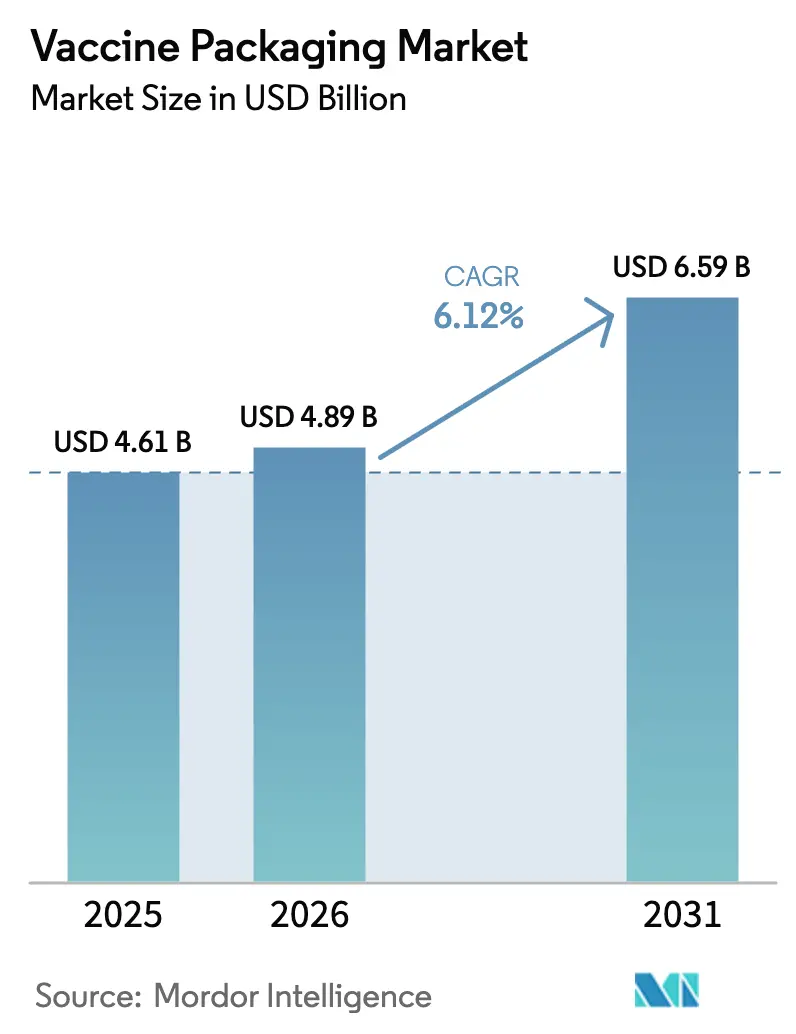
| Market Size (2026) | USD 4.89 Billion |
| Market Size (2031) | USD 6.59 Billion |
| Growth Rate (2026 - 2031) | 6.12 % |
| Fastest Growing Market | Asia-Pacific |
| Largest Market | Europe |
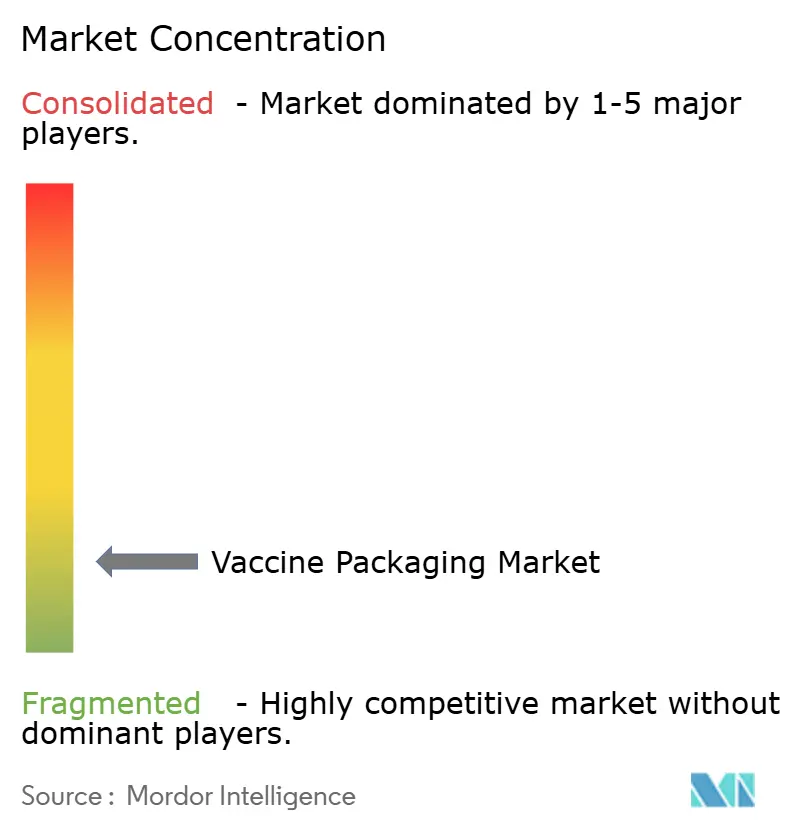
| Market Concentration | Low |
Major Players *Disclaimer: Major Players sorted in no particular order Image © Mordor Intelligence. Reuse requires attribution under CC BY 4.0. | |
Vaccine Packaging Market Analysis by Mordor Intelligence
The vaccine packaging market size was valued at USD 4.61 billion in 2025 and estimated to grow from USD 4.89 billion in 2026 to reach USD 6.59 billion by 2031, at a CAGR of 6.12% during the forecast period (2026-2031). Growth is anchored in aggressive national immunization drives, recurring booster campaigns, and heightened vigilance toward emerging infectious diseases. Demand for packaging able to protect increasingly temperature-sensitive biologics, including mRNA platforms stored at –80 °C, is reshaping material choices and cold-chain logistics. Healthcare providers are gravitating toward ready-to-use (RTU) formats that cut preparation time and reduce contamination risk, while regulators tighten expectations around extractables, leachables, and container-closure integrity. Sustainability pressures are also steering investment into recyclable materials and low-carbon manufacturing. In this environment, the vaccine packaging market is balancing large-scale production economics with the need for nimble response to sudden disease outbreaks and variant-specific reformulations.
Key Report Takeaways
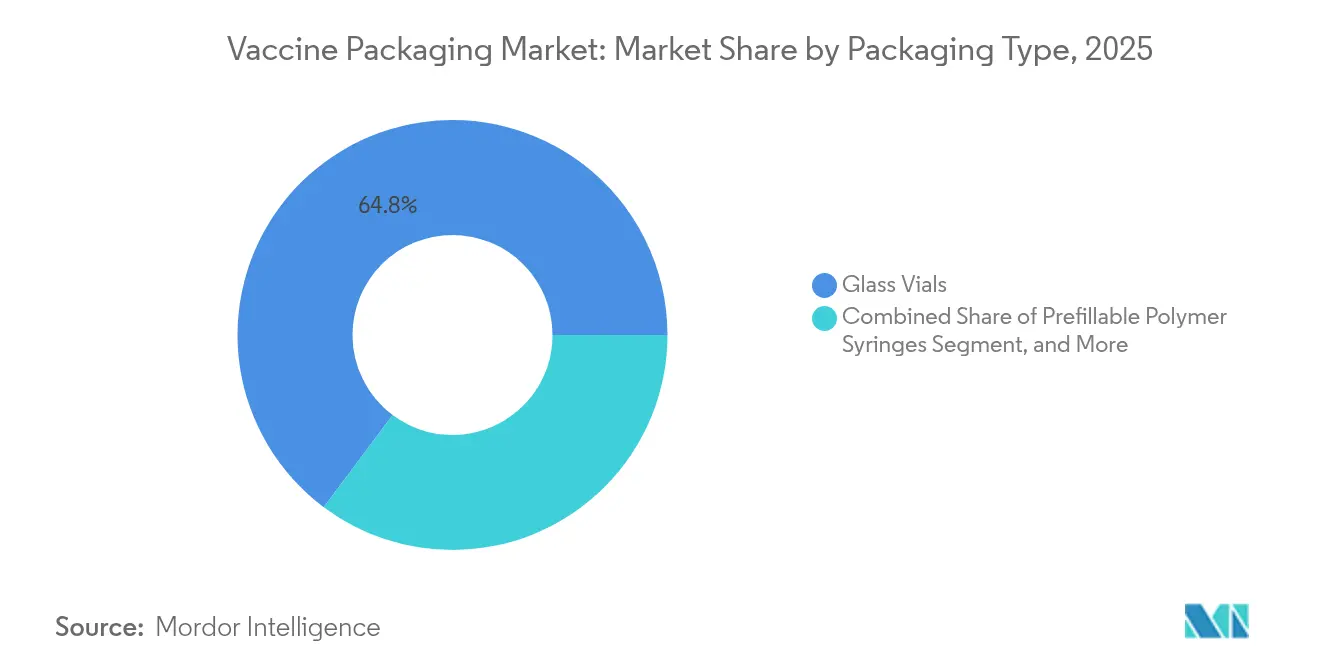
- By primary packaging type, glass vials held 64.78% of the vaccine packaging market share in 2025, whereas prefillable polymer syringes are forecast to expand at a 9.65% CAGR through 2031.
- By material, glass accounted for 67.72% revenue in 2025, while COP/COC polymers are projected to grow fastest at 8.86% CAGR to 2031.
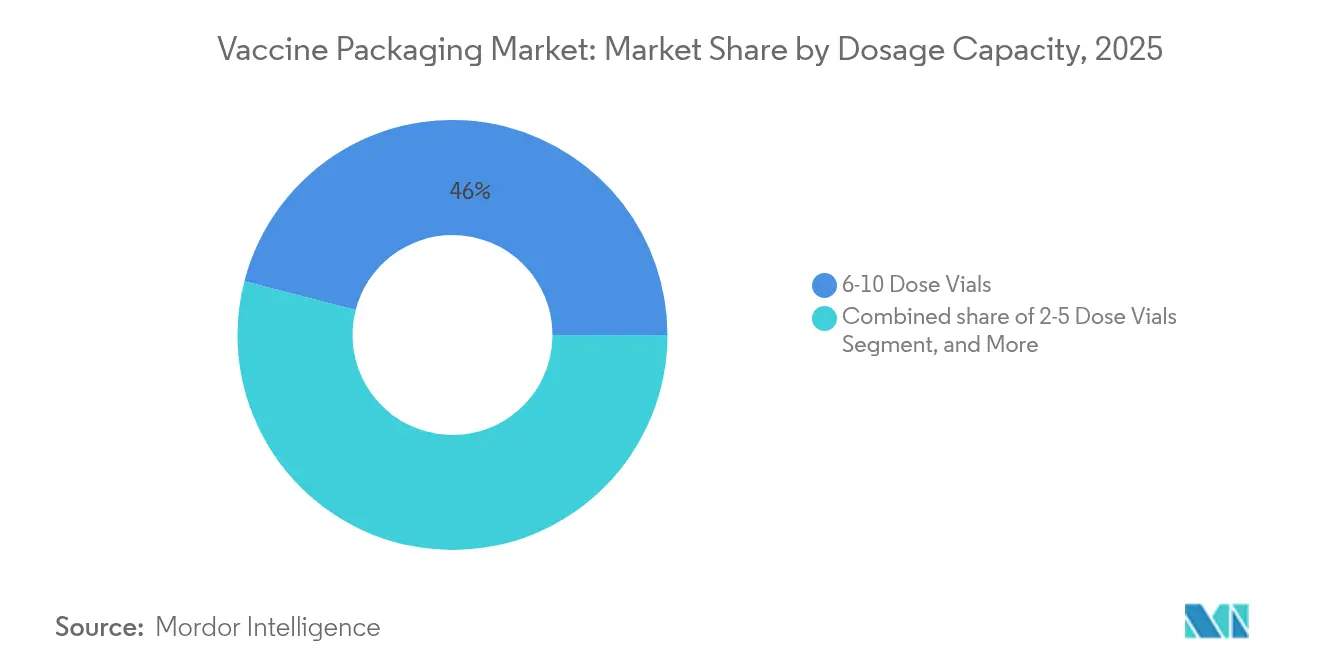
- By dosage capacity, 6-10 dose vials represented 45.98% of the vaccine packaging market size in 2025, yet 2-5 dose vials are on track for a 7.36% CAGR.
- By end user, CDMOs commanded 47.84% share in 2025 and lead growth with an 8.03% CAGR thanks to heightened outsourcing.
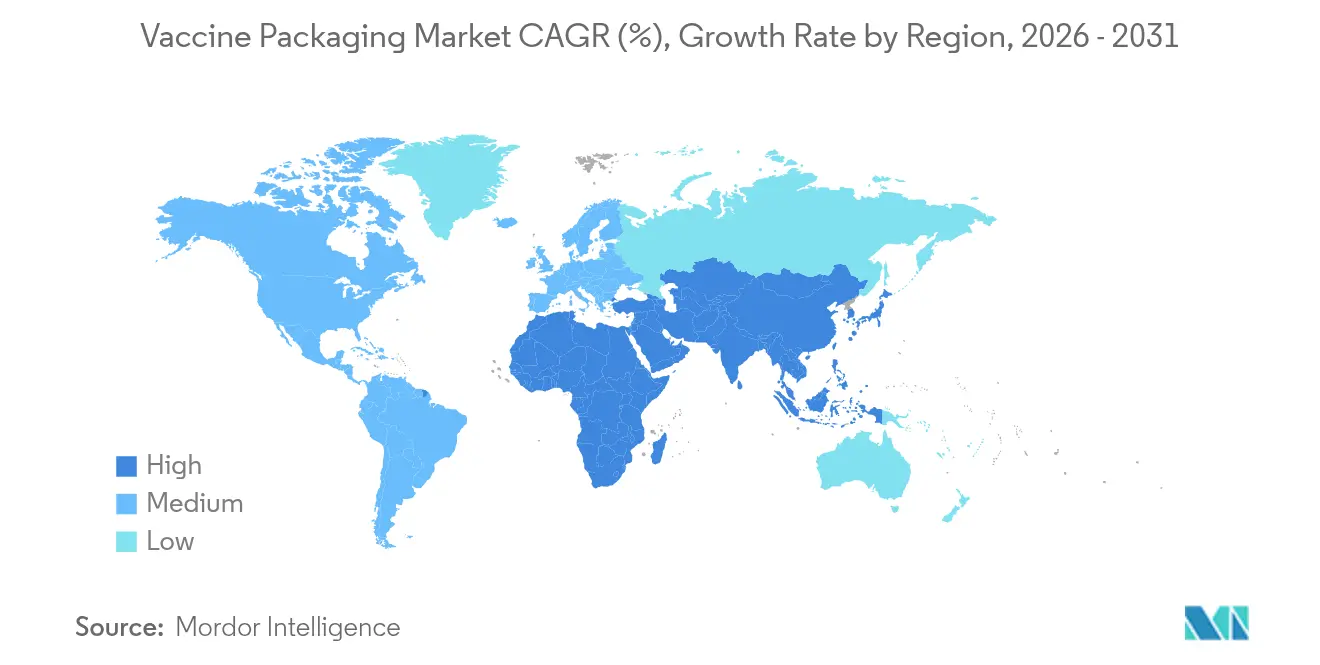
- By region, Europe dominated with 37.42% share in 2025, while Asia-Pacific is the fastest-growing geography at a 9.18% CAGR.
Note: Market size and forecast figures in this report are generated using Mordor Intelligence’s proprietary estimation framework, updated with the latest available data and insights as of 2026.
Market Trends and Insights
Drivers Impact Analysis of Vaccine Packaging Market*
| Driver | (~) % Impact on CAGR Forecast | Geographic Relevance | Impact Timeline |
|---|---|---|---|
| Intensified immunization campaigns and booster drives | +1.2% | Global, with emphasis on emerging markets | Medium term (2-4 years) |
| Rising prevalence of emerging infectious diseases | +0.8% | Global, concentrated in high-risk regions | Short term (≤ 2 years) |
| Expansion of cold-chain capacity in emerging markets | +1.0% | Asia-Pacific, Africa, Latin America | Long term (≥ 4 years) |
| Shift toward single-dose RTU formats (prefillable syringes) | +0.9% | North America, Europe, developed APAC | Medium term (2-4 years) |
| Regulatory push for low-siliconization, delamination-resistant containers | +0.7% | Global, led by FDA and EMA jurisdictions | Long term (≥ 4 years) |
| ESG-led demand for low-carbon / recyclable vial solutions | +0.6% | Europe, North America | Long term (≥ 4 years) |
| Source: Mordor Intelligence | |||
Intensified Immunization Campaigns and Booster Drives
National vaccination programs are scaling rapidly to close immunity gaps, illustrated by WHO’s call to reach 14.5 million previously unvaccinated children worldwide.[1]World Health Organization, “New Report Highlights Need for Redoubled Efforts to Reach 2030 Global Immunization Targets,” who.int Advisory bodies such as the CDC recommend thimerosal-free single-dose presentations for children and pregnant women, pushing demand for specialized containers. India’s Mission Indradhanush cut zero-dose prevalence to 0.06% in 2024, requiring enormous packaging throughput for 5.46 crore administered doses. UNICEF’s emergency mpox vaccine tender covering up to 12 million doses underscores the need for flexible vial formats that can ship quickly to crisis regions. Veterinary immunization is joining mainstream schedules as Elanco’s H5N1 cattle vaccine gains routine status, broadening packaging demand beyond human health.
Rising Prevalence of Emerging Infectious Diseases
Frequent pathogen evolution drives continuous package-ready reformulations. EMA’s recommendation to tailor COVID-19 vaccines to the LP.8.1 variant requires containers certified for accelerated stability studies. WHO-prequalified nOPV2 has already crossed 1 billion administered doses, highlighting enormous packaging volumes borne by a single manufacturer pipeline. During New York City’s 2023-2024 RSV season, 45% of nirsevimab doses were given in week 1 of life, affirming the requirement for neonatal-friendly, low-dead-space syringes. Resurgent measles and cholera outbreaks create unpredictable spikes that stretch fill-finish capacity. Merck Animal Health’s USD 895 million production expansion signals how zoonotic threats are also steering capital toward versatile packaging lines.
Expansion of Cold-Chain Capacity in Emerging Markets
Low- and middle-income countries are installing new refrigeration, enabling broader vaccine reach yet imposing stricter container-closure standards. WHO guidance on multi-dose-vial storage times elevates the role of vial coatings and stopper quality. Thermo Fisher’s tamper-evident cartons rated to –80 °C show how secondary packaging must survive extreme conditions for mRNA platforms. Healthcare IoT spending, projected to surpass USD 550 billion by 2031, is pulling smart labels with embedded sensors into routine shipments. Avery Dennison’s Saga Card IoT tag integrates directly with shipper boxes, reducing spoilage and supporting audit readiness. Indonesia’s standardized immunization guidelines evidence how emerging economies are institutionalizing best practices, fortifying long-term vaccine packaging demand.
Shift Toward Single-Dose RTU Formats (Prefillable Syringes)
RTU containers shorten clinic workflows and lower accidental contamination. Moderna advocates pre-filled syringes to streamline mRNA administration and secure exact dosing during high-volume campaigns. Nipro’s expansion in Germany adds forming lines dedicated to D2F™ pre-fillable glass syringes, reflecting capital pouring into RTU scalability. Its D2F™ RTU vial, produced with Stevanato’s EZ-fill® process, merges familiar glass chemistry with aseptic-ready convenience. West’s Daikyo PLASCAP® closures remove aluminum parts and arrive E-beam-sterilized, avoiding in-house sterilization steps and easing compliance with revised EU GMP Annex 1. Zoetis’s intranasal 0.5 mL kennel cough vaccine proves that single-nostril RTU designs can improve animal patient comfort while keeping inventory lean
Restraints Impact Analysis of Vaccine Packaging Market*
| Restraint | (~) % Impact on CAGR Forecast | Geographic Relevance | Impact Timeline |
|---|---|---|---|
| High capex for glass tubing and fill-finish lines | -0.9% | Global, particularly affecting smaller manufacturers | Medium term (2-4 years) |
| Volatile borosilicate glass and aluminosilicate supply chain | -0.7% | Global, with acute impact in Europe and North America | Short term (≤ 2 years) |
| Regulatory delays over extractables/leachables in COP/COC polymers | -0.5% | FDA and EMA jurisdictions | Long term (≥ 4 years) |
| CCIT failures at –80°C hindering novel vial adoption | -0.4% | Global, affecting mRNA vaccine packaging | Medium term (2-4 years) |
| Source: Mordor Intelligence | |||
High Capex for Glass Tubing and Fill-Finish Lines
Modern vial plants produce tens of millions of containers daily, demanding automated inspection and strict quality control. Schott runs over 3,000 inspection stations across sites to achieve this scale . Thermo Fisher earmarked USD 1.5 billion of a larger USD 2 billion program solely for new life-science capital assets in the United States, highlighting the monetary hurdle to stay competitive . Secondary packaging is not exempt: Nosco’s new press boosts carton output by 125 million units yet required sizable upfront spend . Schott’s Perfexion inspection for tubing uses lasers and high-speed cameras, adding both cost and technical complexity. The capital intensity favors scale players and can slow adoption of niche materials or specialized vial designs.
Volatile Borosilicate Glass and Aluminosilicate Supply Chain
Specialty glass relies on a small group of global tubing producers, making the supply chain susceptible to disruption. Packaging buyers therefore explore sustainable alternatives that also promise steadier availability, a trend underpinning the 15.4% CAGR forecast for eco-friendly pharma packaging through 2027. SCHOTT Pharma markets EVERIC® pure and Type I plus® vials with hydrophilic barriers to stretch raw-material yield while enhancing performance. AdaptiQ® sterilized vials further help differentiate glass amid commodity volatility. Dedecke supplies Fiolax®-based vials in small batches, serving specialized needs but depending on the same narrow feedstock funnel. Continued material swings encourage dual-sourcing strategies and accelerate polymer adoption where regulations permit.
*Our forecasts treat driver/restraint impacts as directional, not additive. The impact forecasts reflect baseline growth, mix effects, and variable interactions.
Vaccine Packaging Market Segment Analysis
By Packaging Type:
RTU Formats Drive InnovationThe vaccine packaging market size for primary containers remains anchored in glass vials, which secured 64.78% share in 2025, yet prefillable polymer syringes are outperforming at a 9.65% CAGR. Glass endures because of its chemical inertness and regulatory familiarity, particularly for lyophilized antigens. Meanwhile, demand for RTU convenience fuels syringe line investments that cut on-site washing, depyrogenation, and sterilization. Prefillable glass syringes act as a hybrid bridge, merging established glass chemistry with RTU workflow benefits. Vial closures and stoppers are evolving in parallel; metal-free PLASCAP® RUV seals eliminate secondary sterilization steps while meeting Annex 1 upgrades. On the secondary side, smart cartons and RFID-enabled labels transform boxes from passive protectors into real-time data hubs, aiding clinical trials, recalls, and patient engagement. Aluminium seals persist due to tamper evidence and recyclability, while emerging digital display labels remove manual relabeling and ensure protocol compliance.
Secondary packaging innovation supports broader supply-chain transparency. Schreiner MediPharm’s connected syringe boxes enable investigators to reconcile returned doses automatically, lowering error rates. NFC-embedded labels allow clinicians to tap a smartphone for real-time temperature logs, enhancing pharmacovigilance. Complementary advances in shipper insulation and GPS tracking minimize excursions and reduce spoilage insurance costs. Together, these developments reinforce the competitive edge of RTU formats, even as bulk glass vials remain fundamental during mass-vaccination surges.


By Material:
Glass Dominance Challenged by Polymer InnovationGlass controlled 67.72% of revenue in 2025, yet COP/COC containers are expanding at an 8.86% CAGR as barrier performance improves. Delamination-resistant formulations such as EVERIC® pure address protein adsorption concerns, helping glass retain a dominant role for sensitive biologics. Nonetheless, polymer vials offer break resistance, weight savings, and lower extractables—appealing for field campaigns in remote areas. Polypropylene supplies lower-cost veterinary programs where temperature demands are less severe. Elastomer closure science is advancing in tandem, targeting reduced extractables and compatibility with ultra-low temperatures.
COP/COC can endure -80 °C storage while maintaining container-closure integrity, making them attractive for next-generation mRNA vaccines. Their glass-like transparency reassures clinicians during dose inspection, while reduced siliconization simplifies downstream analytical testing. Aluminum remains indispensable for flip-off caps, with suppliers tweaking alloys and coatings to support recyclability without sacrificing torque performance. Paperboard is winning back share in secondary cartons because EU regulations curb single-use plastics, and biobased films are gaining acceptance as inner liners in cold-chain shippers. Material selection is thus a dynamic trade-off between regulatory familiarity, performance, and sustainability.
By Dosage Capacity:
Multi-Dose Efficiency Versus Waste ReductionMulti-dose 6-10 vial formats captured 45.98% of the vaccine packaging market share in 2025 due to efficient cold-chain utilization during national campaigns. However, 2-5 dose vials are the fastest risers at 7.36% CAGR as programs seek to curb open-vial wastage. WHO’s multi-dose vial policy stipulates strict beyond-use dating once punctured, a driver for smaller fills where usage per session is unpredictable. Single-dose formats serve neonatal and immunocompromised cohorts, where preservative-free formulations and contamination risk avoidance outweigh higher unit costs.
Large >10 dose vials still play a niche role in mass livestock immunization and outbreak stockpiles where field administrators can exhaust full vials quickly. UNICEF market guidance advocates tailoring vial size to logistics realities, balancing storage footprint with wastage economics. Flexible dosage concepts, such as Merck’s mix-on-site SEQUIVITY® platform, may inspire new human vaccine presentations where antigens and adjuvants are combined at the point of care, distributing cold-chain load across smaller, lighter secondary components. Data analytics and electronic stock dashboards help planners match vial capacity to clinic throughput, reducing the environmental and financial cost of discarded doses.
By End User:
CDMO Dominance Reflects Outsourcing TrendCDMOs accounted for 47.84% revenue in 2025 and are poised for an 8.03% CAGR, reflecting biopharma’s preference for asset-light strategies. Outsourcing offers rapid access to high-grade aseptic suites, specialized fill-finish know-how, and regulatory filing support. Public immunization programs remain critical volume anchors, but their price sensitivity pushes packaging suppliers toward standard vial formats and bulk purchase agreements. The CDC’s Vaccines for Children program provides a predictable yet cost-focused pipeline requiring data-rich labels and robust secondary packaging.
Private hospitals prioritize workflow efficiency and are willing to pay premiums for RTU syringes that reduce nursing time. Veterinary producers, governed by USDA biological product licensing, demand packaging that withstands diverse storage and field conditions; clear differentiation in color coding and label durability helps prevent species mis-administration. Convergence between human and veterinary packaging is increasing as both segments adopt similar cold-chain monitoring and contamination controls, widening addressable demand for suppliers that master cross-segment regulatory nuances.
Geography Analysis
Europe Vaccine Packaging Market
Europe led with 37.42% of 2025 revenue, underpinned by mature pharmaceutical manufacturing clusters, strict regulatory oversight, and entrenched cold-chain logistics. Germany illustrates rising downstream demand: pneumococcal vaccinations climbed 23% between 2018 and 2024, while meningococcal B uptake jumped 52% following new STIKO guidelines. EMA’s proactive variant-specific vaccine guidance compels local packaging lines to remain configurable for quick formulation changes. Sanofi’s 2025 European Immunization Week pointed to just 38% flu coverage in adults over 60, signaling room for packaging-driven access initiatives.
APAC Vaccine Packaging Market
Asia-Pacific is the fastest growing at 9.18% CAGR as governments invest heavily in production autonomy and distribution infrastructure. India’s reduction of zero-dose children demonstrates effective program execution, demanding large yet agile packaging volumes suited to varied climates. China’s expanding biologics sector and Japan’s precision engineering elevate regional standards, while ASEAN nations roll out new domestic plants, often through joint ventures with European glass makers. Improved port and road logistics help maintain cold-chain integrity, further lifting market potential.
The Americas and MEA Vaccine Packaging Market
North America maintains robust demand through innovation leadership and stringent FDA oversight. Thermo Fisher’s multibillion-dollar investment strengthens domestic supply resilience, while CDC recommendations continue shaping container specifications, particularly around preservative-free pediatric doses. The Middle East & Africa and South America collectively form an emerging opportunity as they upgrade immunization schedules and deploy new regional manufacturing hubs, often supported by multilateral funding. Packaging suppliers focusing on cost-efficient glass/polymer hybrids and rugged shippers are well-positioned to capture incremental share.

Regulatory Landscape
Vaccine packaging is shaped by product-quality and distribution requirements across major agencies, with GMP obligations for packaging operations anchored in the United States under FDA 21 CFR Parts 210 and 211. These frameworks expect container systems to show compatibility with the drug product, adequate barrier performance, mechanical robustness, and validated controls that protect sterility and product quality through filling, storage, and distribution.
On the distribution side, WHO updated its Guidelines for the international packaging and shipping of vaccines (7th edition, 2025), incorporating ultra-low temperature shipping considerations that affect shipper design, insulation choice, and qualification activities. In Europe, a packaging-adjacent compliance change is the EMA ePI implementation roadmap published in March 2026, which sets a pathway for electronic Product Information with voluntary submissions for vaccines (ATC J07) beginning in Q3 2026, strengthening the need for data-ready labeling and controlled information management alongside physical packaging performance.
Value Chain Analysis
The vaccine packaging value chain runs from upstream drug development (R&D and clinical trials) through drug substance manufacturing, formulation, and fill-finish, then to secondary packaging, validated cold-chain distribution, and in-market handling. In the packaging layer, primary container supply (glass vials, polymer vials, and prefillable syringes) feeds automated fill-finish lines, where RTU/RTF platforms designed for high-speed processing (for example, Gerresheimer EZ-fill Smart) reduce washing and sterilization steps while tightening control of contamination risk.
Downstream, secondary packaging providers supply cartons, labels, and insulation systems, while logistics specialists deliver qualified shipper solutions and refurbishment or revalidation services for reusable assets. Cold-chain monitoring and data integration (track-and-trace and temperature logging) act as enabling services across the chain, connecting packaging performance to compliance expectations such as WHO international shipping guidance (7th edition, 2025) and GMP documentation requirements in major regulatory jurisdictions.
Competitive Landscape
The vaccine packaging market is Fragmented. Gerresheimer, Schott, and Stevanato Group leverage large-scale glass melting, proprietary vial coatings, and expanding RTU portfolios to defend share. Continuous investment in high-speed inspection, such as Schott’s 3,000+ system array, underpins quality leadership. These incumbents also diversify into polymer offerings to hedge against glass supply swings.
Mid-tier challengers and material innovators are targeting sustainability and digitization. SiO2 Materials Science promotes hybrid glass-polymer containers claimed to reduce breakage and weight, while Avery Dennison’s smart labels provide end-to-end visibility for cold-chain compliance. Patent activity clusters around tamper-evident secondary packs and ultra-cold-resistant closures; Thermo Fisher’s Tamper Evident Carton exemplifies intellectual-property-backed differentiation.[3]Patheon (Thermo Fisher Scientific), “Tamper-Evident Packaging for Clinical Supply Protection,” patheon.com
White-space opportunities align with ESG mandates. Recyclable glass compositions with lower melt temperatures cut scope 1 emissions, while bio-based polymers meet single-use-plastic directives. Smart packaging that integrates RFID, NFC, or temperature sensors opens premium niches for clinical trials and traceability-heavy pediatric vaccines. Agile regional converters capable of small-batch RTU fills for orphan or veterinary vaccines can capture underserved corners as big players focus on high-volume lines.
Vaccine Packaging Industry Leaders
Gerresheimer AG
Nipro Corporation
Piramal Glass Private Limited
Catalent, Inc.
Schott AG
- *Disclaimer: Major Players sorted in no particular order
Vaccine Packaging Market Companies Covered in this Report
- Gerresheimer AG
- Schott AG
- Stevanato Group
- Becton, Dickinson & Co.
- Corning Inc.
- West Pharmaceutical Services
- SGD Pharma
- Nipro Corporation
- SiO2 Materials Science
- DWK Life Sciences
- Thermo Fisher Scientific
- Aptar Group
- Owens-Illinois (O-I)
- WestRock
- Catalent Inc.
- Ardagh Group
- Piramal Glass
- Shandong Pharmaceutical Glass
- Copan Italia
- SiCortex BioSystems

Market Opportunities and Future Outlook
A near-term whitespace is expanding capacity for RTU/RTF primary containers that integrate cleanly into high-throughput fill-finish operations, particularly for biologics where contamination control and faster line changeovers are central. Buyers are addressing this with disclosed, large-scale investments, including Gerresheimer starting construction in October 2025 on a new 4,000 sq m production hall in Wertheim, Germany, backed by a EUR 30 million investment to manufacture ready-to-fill vials on its EZ-fill Smart platform (operations targeted for mid-2027). These projects indicate a shift toward standardized RTU container formats that reduce reliance on site-sterilized components.
Another opportunity involves complete, validated shipping systems and the qualification services around them. WHO updated its international packaging and shipping guideline (7th edition, 2025) to reflect ultra-low temperature distribution needs, increasing the documentation and performance burden for shippers and insulating materials. At the same time, digital product information and data-ready packaging workflows are gaining traction as the EMA published an ePI implementation roadmap in March 2026, with voluntary ePI submissions for vaccines (ATC J07) starting in Q3 2026, creating space for label and packaging-system providers that can align physical packaging with controlled, regulator-facing information management.
Recent Industry Developments in Vaccine Packaging Market
- April 2026: Nipro Corporation completed a new vial-based injectable drug building at its Omi plant in Shiga, Japan, designed as a dual-use facility that can switch from standard injectable production to vaccine manufacturing within three months. The added flexibility supports surge response planning and increases the availability of vial-based packaging supply aligned with vaccine fill-finish needs.
- October 2025: Gerresheimer AG began construction of a new 4,000 sq m production facility at its Wertheim, Germany site to expand ready-to-fill vial output based on the EZ-fill Smart platform, supported by a EUR 30 million investment. The project strengthens supply security for RTU/RTF vial formats used by vaccine and biologics manufacturers and supports higher automation compatibility at customer fill-finish lines.
- May 2025: Nipro Group expanded syringe capacity at its Muennersadt facility in Germany by adding new forming lines and a 4,000 sq m building for D2F prefillable syringes. The expansion increases availability of RTU-friendly delivery formats that reduce preparation steps for vaccinators and aligns with the market shift toward single-dose and workflow-efficient presentations.


Vaccine Packaging Market Report Scope and Research Methodology
Market Definition and Coverage
This market is defined as the revenue earned from packaging components and packs that are used to store, protect, and distribute vaccines from fill finish through to administration, including labeling and cold chain related handling packs where they are sold as part of the vaccine pack.
Scope exclusions: We exclude the vaccine drug substance value, routine medical consumables not specific to vaccine packs, and standalone logistics services that are contracted separately from packaging.
Segments Covered in This Report
- By Packaging Type
- Primary Packaging
- Glass Vials
- Polymer Vials (COP, COC, PP)
- Prefillable Glass Syringes
- Prefillable Polymer Syringes
- Vial Closures and Stoppers
- Aluminum Seals and Caps
- Secondary Packaging (cartons, labels, shippers)
- Primary Packaging
- By Material
- Glass (Borosilicate, Aluminosilicate)
- Cyclic Olefin Polymer / Copolymer
- Polypropylene (PP)
- Elastomers (bromobutyl, chlorobutyl)
- Aluminum
- Paper and Paperboard
- By Dosage Capacity
- Single-Dose Containers
- 2–5 Dose Vials
- 6–10 Dose Vials
- More than 10 Dose Vials
- By End User
- Public Immunization Programs
- Private Hospitals and Clinics
- Contract Manufacturing / CDMOs
- Veterinary Vaccine Producers
- By Geography
- North America
- United States
- Canada
- Mexico
- Europe
- Germany
- United Kingdom
- France
- Italy
- Spain
- Russia
- Rest of Europe
- Asia-Pacific
- China
- India
- Japan
- South Korea
- Australia and New Zealand
- ASEAN
- Rest of Asia-Pacific
- Middle East and Africa
- Middle East
- Saudi Arabia
- United Arab Emirates
- Turkey
- Africa
- South Africa
- Nigeria
- Egypt
- Rest of Africa
- Middle East
- South America
- Brazil
- Argentina
- Rest of South America
- North America
Data Sources, Market Sizing, and Validation
Desk Research
Desk research was used to build the base layer of the model and to set realistic ranges for volumes, materials, and compliance needs. We leaned on public sources such as the World Health Organization, UNICEF supply and procurement updates, the US FDA and EMA packaging and biologics guidance, and the US CDC immunization and vaccine handling information to understand how packaging choices link to storage and administration requirements.
Along with this, we reviewed annual reports, investor presentations, and product catalogs to map packaging formats and typical use cases. Where needed, a paid subscription for company financials and news was used to cross check revenue exposure, and a patent database was referenced to spot activity around vial materials, closures, and ready to use formats. This list is illustrative only, since many other public documents and reference sources were also checked for data collection, validation, and clarification.
Primary Interviews and Surveys
Primary interviews and surveys were done with packaging suppliers, fill finish and CDMO linked experts, quality and regulatory specialists, and procurement stakeholders who influence pack selection. Inputs were used to confirm what is counted as vaccine packaging spend, validate average selling price direction for key components, and pressure test regional demand drivers tied to immunization programs and cold chain needs.
Distribution of primary research fieldwork respondents
| Company type | Respondent position | Region |
|---|---|---|
| Top tier: 36% | CXOs: 13% | APAC: 46% |
| Mid tier: 43% | Functional/Unit leaders: 42% | EMEA: 32% |
| Smaller Players: 21% | Managers: 45% | Americas: 22% |
Market-Sizing & Forecasting
Sizing starts from a top-down build where vaccine dose demand, campaign intensity, and storage temperature needs are translated into packaging units required, which are then converted into value using format level pricing. To keep totals grounded, we corroborate results with selective bottom-up checks such as sampled supplier revenues by packaging line, channel feedback on vial and closure shipments, and a price times volume sanity check for high volume pack types.
Key inputs used in the model include immunization coverage trends, shifts between multi dose and single dose presentations, the mix of glass versus polymer containers, cold chain intensity for temperature sensitive vaccines, and changes in quality requirements like container closure integrity expectations. Forecasting is primarily done using scenario analysis supported by expert views on funding cycles, booster demand, and new vaccine introductions, and then refined using simple time series smoothing where demand is stable. When direct volume signals are missing for smaller end uses, we apply conservative penetration assumptions and reconcile back to regional vaccine program indicators so gaps do not overstate demand.
Data Validation & Update Cycle
Validation is handled through multiple checks across the model so unusual jumps are caught early and corrected with evidence. Outputs are compared against independent signals such as vaccine production capacity moves, public procurement activity, and packaging material availability indicators, and then reviewed by another analyst before sign off.
If interview feedback or desk signals show a material change (for example, a new storage requirement or a sudden program expansion), the assumptions are rechecked and relevant experts are recontacted. The report is refreshed annually, and interim updates are made when major events affect pricing, volumes, or regulation. Before delivery, a final pass is completed to make sure the latest public data and confirmed industry inputs are reflected.
Mordor Intelligence's Vaccine Packaging Market Size Versus Other Published Estimates
Published market values for vaccine packaging can look far apart because sources do not always count the same spending lines, and because they use different price and volume anchors for vials, closures, and secondary packs. Differences also come from the year chosen for the base, currency conversion timing, and whether pandemic era demand is treated as a one off spike or a longer demand floor.
Some published figures fold in broader pharmaceutical packaging or add separate cold chain logistics and distribution services into the total. In Mordor Intelligence, the total is limited to packaging components and packaging led packs tied to vaccine products, and it is kept aligned to dose demand signals and interview checked ASP movement so adjacent services do not inflate the value.
Benchmark comparison
| Source | Market Size | Gaps in Research Methodology |
|---|---|---|
| Mordor Intelligence | USD 4.61 B (2025) | |
| Trade Journal A | USD 3.60 B (2025) | Uses a narrower lens that largely tracks primary containers only, which can undercount secondary packs, labeling, and higher value ready to use packaging formats. |
| Industry Tracker B | USD 3.30 B (2025) | Blends different packaging definitions across regions and applies a simplified price ramp, which can miss mix shifts toward higher performance materials driven by cold chain and integrity requirements. |
The table shows that most of the spread is explained by what gets included beyond primary containers, and how pricing is updated as material and format mix changes. By keeping the scope tied to vaccine specific packaging spend and then validating the main value drivers with interviews and simple cross checks, the final number stays traceable and repeatable from clear inputs.


Key Questions Answered in the Report
What is the current size of the vaccine packaging market?
The market is valued at USD 4.89 billion in 2026 and is projected to reach USD 6.59 billion by 2031.
Which primary packaging format is growing fastest?
Prefillable polymer syringes lead growth at a 9.65% CAGR thanks to ready-to-use convenience and contamination control advantages.
Why are COP/COC polymers gaining ground over glass?
They offer break resistance, low extractables, and reliable container-closure integrity at ultra-low temperatures, driving an 8.86% CAGR through 2031.
Which region presents the strongest growth opportunity?
Asia-Pacific shows the highest CAGR at 9.18%, propelled by large immunization programs and expanding local manufacturing capacity.
How are sustainability goals influencing vaccine packaging?
Regulations and corporate ESG targets are accelerating adoption of recyclable glass, bio-based polymers, and low-carbon manufacturing processes, opening new competitive niches.
Page last updated on:


 Your data is secure and never sold or shared.


