
US Organic Skin Care Market Size and Share
Market Overview
| Study Period | 2021 - 2031 |
|---|---|
| Forecast Data Period | 2026 - 2031 |
| Base Year Market Size (2025) | USD 9.09 Billion |
| Market Size (2026) | USD 9.48 Billion |
| Market Size (2031) | USD 11.70 Billion |
| Growth Rate (2026 - 2031) | 4.30 % |
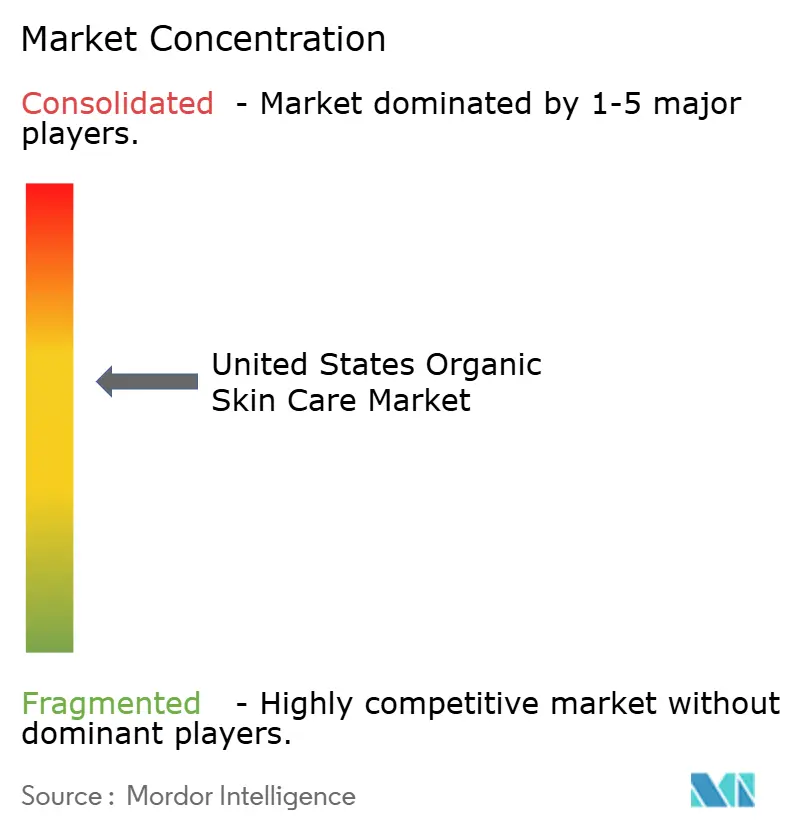
| Market Concentration | Medium |
Major Players *Disclaimer: Major Players sorted in no particular order Image © Mordor Intelligence. Reuse requires attribution under CC BY 4.0. | |
US Organic Skin Care Market Analysis by Mordor Intelligence
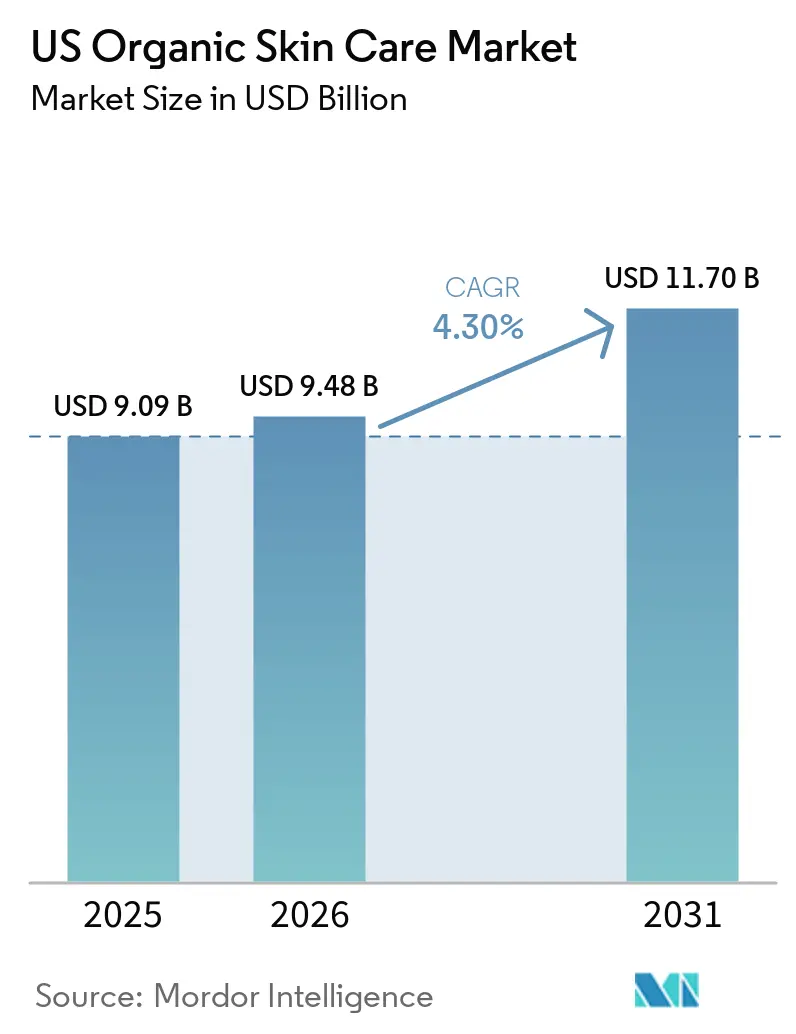
The US organic skincare market size was valued at USD 9.09 billion in 2025 and estimated to grow from USD 9.48 billion in 2026 to reach USD 11.7 billion by 2031, at a CAGR of 4.30% during the forecast period (2026-2031). In the U.S. organic skincare market, rising consumer scrutiny over product ingredients and tighter regulatory oversight under MoCRA are driving expansion. Facial care, aligning with premium positioning and a heightened demand for ingredient transparency, stands out as the dominant and fastest-growing category. Digital engagement, bolstered by influencer advocacy, is pivotal in accelerating online adoption, making it the leading distribution route. While tariffs and fragmented chemical regulations present sourcing challenges, they inadvertently bolster the competitive edge of certified organic producers who can validate their purity and safety claims. While mass-market products dominate in volume, premium-tier offerings, buoyed by biotechnology-led innovation and supply chain traceability, are on the rise. Adults are the primary users, but the children's segment, spurred by parental safety concerns, is expanding even more rapidly. As major players grow through acquisitions and direct-to-consumer brands like Youth to the People and Honest Company broaden their reach, they increasingly depend on regulatory adaptability and investments in clean-label infrastructure.
Key Report Takeaways
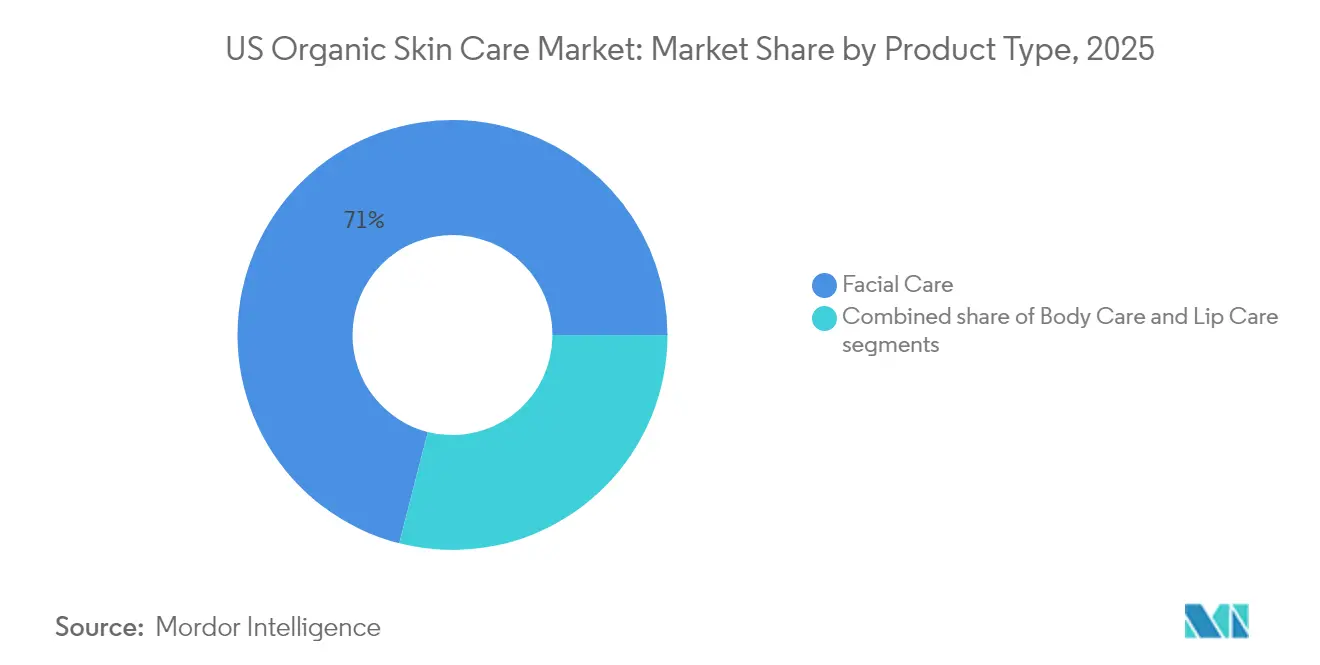
- By product type, the facial care segment commanded 71.02% of the US organic skincare market share in 2025 and is set to grow at a 4.66% CAGR through 2031.
- By category, the mass products segment led with 67.71% revenue share in 2025, whereas the premium products segment is forecast to expand at a 4.84% CAGR between 2026-2031.
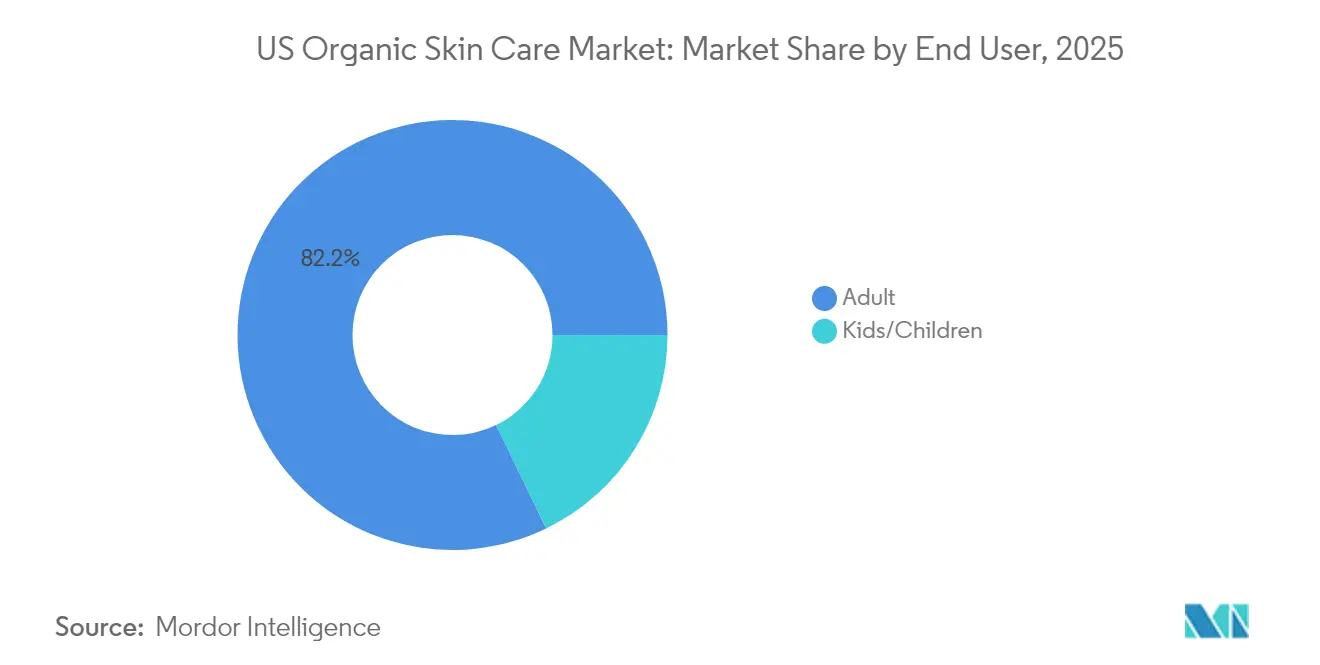
- By end user, the adult segment accounted for 82.18% of the US organic skincare market size in 2025, but the kid/children products segment represents the fastest trajectory, advancing at a 5.09% CAGR to 2031.
- By distribution channel, online retail captured 49.02% share of the US organic skincare market in 2025 and is projected to progress at a 5.38% CAGR through 2031.
Note: Market size and forecast figures in this report are generated using Mordor Intelligence’s proprietary estimation framework, updated with the latest available data and insights as of 2026.
Worldwide, activity is shaped by contributions from multiple countries and regions, with United states representing one among them. The global report on organic skin care market by Mordor Intelligence reflects how these countries and regional layers combine into a single system.
US Organic Skin Care Market Trends and Insights
Drivers Impact Analysis*
| Driver | (~) % Impact on CAGR Forecast | Geographic Relevance | Impact Timeline |
|---|---|---|---|
| Growing awareness about environmental sustainability | +0.8% | Global, with strongest impact in coastal United States | Medium term (2-4 years) |
| Influence of social media platforms on purchasing decisions | +1.2% | National, concentrated in urban areas with high Gen Z population | Short term (≤ 2 years) |
| Growing concerns over the effects of synthetic products on the body | +0.9% | National, with premium segments leading adoption | Medium term (2-4 years) |
| Growth of organic skincare in men's and gender-neutral categories | +0.4% | National, with early gains in metropolitan areas | Long term (≥ 4 years) |
| Millennial and Gen Z preference for ethical products | +0.7% | National, strongest in college towns and tech hubs | Short term (≤ 2 years) |
| Awareness of vegan and cruelty-free beauty products | +0.5% | National, with higher penetration in California and Northeast | Medium term (2-4 years) |
| Source: Mordor Intelligence | |||
Growing Awareness About Environmental Sustainability
Environmental consciousness has evolved beyond surface-level marketing to drive fundamental purchasing decisions, with consumers willing to pay more for personal care products with natural ingredients. This shift reflects deeper concerns about climate change and resource depletion, prompting brands to invest heavily in sustainable sourcing and circular economy principles. L'Oréal's commitment to source 95% of its formula ingredients from bio-based sources by 2030 exemplifies this transformation, supported by partnerships with biotechnology firms like Abolis to develop next-generation sustainable ingredients [1]. The sustainability imperative is reshaping supply chains, with companies like Unilever investing USD 120 million in joint ventures to create plant-based alternatives to palm oil derivatives. This trend extends beyond ingredients to packaging innovation, where brands are adopting biodegradable materials and refillable containers to address consumer demands for comprehensive environmental responsibility. The regulatory landscape is reinforcing this shift, with Extended Producer Responsibility laws in multiple states requiring companies to manage packaging waste disposal, creating additional incentives for sustainable practices.
Influence of Social Media Platforms on Purchasing Decisions
Social media platforms have transformed how consumers discover and purchase products, with TikTok becoming a significant influence on organic skincare preferences among younger consumers. According to the Organic Trade Association, social media's impact has helped drive a 7% increase in sustainable personal care product sales, reaching USD 1.3 billion [2]. These platforms facilitate rapid trend dissemination and enable consumers to share authentic product experiences. TikTok's algorithm-based content distribution system allows smaller organic brands to gain widespread visibility without substantial marketing investments, creating more market access opportunities and increasing competition for established companies. Research indicates that social media engagement directly influences purchase decisions for natural cosmetics by enhancing consumer perception of product quality and value. A 2024 University of Portsmouth survey indicated that 60% of consumers trusted influencer recommendations, while nearly half of all purchasing decisions were influenced by these endorsements [3]. Consumer preference for genuine, relatable influencer content over traditional brand messaging has prompted companies to revise their marketing approaches. This shift has created a market environment where effective social media presence and influencer partnerships have become essential factors alongside product quality in determining market position.
Growing Concerns Over the Effects of Synthetic Products on the Body
Concerns over harmful chemicals such as parabens, sulfates, and artificial fragrances, which are linked to skin irritation, allergic reactions, and possible long-term health risks, are prompting consumers to seek safer, natural alternatives. This concern is driving demand for transparency in ingredient sourcing and formulation, with consumers actively seeking products free from parabens, sulfates, and artificial fragrances. The trend reflects broader health consciousness where skincare is viewed as an extension of wellness routines rather than purely cosmetic enhancement. Research indicates that consumers are increasingly educated about ingredient safety, with many using apps and online resources to verify product compositions before purchase. According to the NSF survey 2025, 74% of U.S. consumers consider organic ingredients important in personal care products such as skincare, soaps, and shampoos. Additionally, 45% are willing to pay more for certified organic products, rising to 62% among those aged 18–29 [4]. This knowledge empowerment is forcing brands to reformulate existing products and invest in cleaner alternatives, creating opportunities for organic brands positioned as safer options. The regulatory response is evident in state-level chemical bans, with California, Colorado, and Minnesota prohibiting cosmetics containing intentional PFAS, while Washington State's Toxic-Free Cosmetics Act bans lead and other harmful substances. These regulatory changes are accelerating the shift toward organic formulations as brands seek to avoid compliance complexities associated with synthetic ingredients.
Growth of Organic Skincare in Men's and Gender-Neutral Categories
In the U.S., the surge in organic skincare, particularly in men's and gender-neutral categories, is driven by evolving social norms and a growing appetite for inclusive, natural personal care. As grooming expectations shift, an increasing number of men and non-binary individuals are gravitating towards skincare products that prioritize their needs and eschew harsh synthetic ingredients. The men's skincare market is witnessing a rapid expansion, significantly propelled by platforms like TikTok and Instagram, where influencers and dermatologists are championing skincare routines for male audiences. Brands such as Bevel and Ursa Major are capitalizing on this trend, rolling out clean, gender-inclusive skincare lines that cater to a spectrum of skin concerns. This demographic evolution is presenting fresh avenues for organic brands, especially as consumers lean towards health-conscious and sustainable choices. In alignment with this trend, companies are debuting unisex formulations and adopting minimalist packaging, underscoring both inclusivity and organic authenticity. The shifting perceptions of masculinity, now embracing self-care and grooming, further bolster the sustained demand for organic men's skincare. Together, these developments signal a significant cultural shift in the U.S. personal care market, championing inclusivity, wellness, and sustainability.
Restraints Impact Analysis*
| Restraint | (~) % Impact on CAGR Forecast | Geographic Relevance | Impact Timeline |
|---|---|---|---|
| Regulatory gaps fuel growth of uncertified organic and natural products | -0.6% | National, with varying state-level enforcement | Long term (≥ 4 years) |
| Strong penetration of synthetic products in the retail shelves | -0.8% | National, concentrated in mass retail channels | Medium term (2-4 years) |
| Competitive pressure from "naturally inspired" but non-organic brands | -0.5% | National, strongest in premium and mass market segments | Short term (≤ 2 years) |
| Scalability issues for certified organic ingredient supply chains | -0.7% | Global supply chains affecting United States market | Long term (≥ 4 years) |
| Source: Mordor Intelligence | |||
Regulatory Gaps Fuel Growth of Uncertified Organic and Natural Products
The personal care sector operates with less stringent regulations compared to the food industry regarding organic certification, which allows brands to market products as organic or natural without formal certification. This regulatory environment has resulted in a significant increase of uncertified products that specifically target the growing consumer demand for clean beauty alternatives without meeting verified organic standards, leading to potential market distortions and authenticity concerns in the industry. The lack of a legal definition for "natural" in US cosmetics regulations creates substantial market ambiguity and uncertainty. This regulatory gap enables non-organic products to compete using unclear claims, which significantly affects the premium positioning of certified organic brands. Companies frequently use terms like "naturally inspired" or "natural-based" without meeting organic certification requirements, creating intense price competition that impacts authentic organic brands in the marketplace. The United States Department of Agriculture (USDA)'s National Organic Program faces considerable resource constraints for comprehensive market oversight, delegating much of the regulation to organic certifiers and trade associations. This delegation results in inconsistent enforcement across the market segments. The widespread confusion between organic and natural claims reduces consumer willingness to pay premium prices for certified products, as many consumers continue to struggle with differentiating between genuine organic formulations and marketing-based natural claims in the personal care sector.
Strong Penetration of Synthetic Products in the Retail Shelves
Established synthetic skincare products maintain dominant shelf space in mass retail channels through long-standing relationships with major retailers and superior marketing budgets, creating significant barriers for organic brand visibility and consumer trial. The entrenched position of synthetic products is reinforced by their lower production costs and longer shelf life, enabling aggressive pricing strategies that challenge organic alternatives on value perception. Major retailers often prioritize high-turnover synthetic products due to established consumer habits and proven sales performance, limiting shelf space allocation for organic alternatives despite growing consumer interest. The distribution challenge is particularly acute for smaller organic brands lacking the resources to compete for premium shelf positioning or fund extensive marketing campaigns required to educate consumers about organic benefits. Supply chain disruptions and rising costs from tariffs are exacerbating this challenge, with beauty brands facing tough choices between absorbing increased costs or raising prices, potentially making organic products less competitive against synthetic alternatives. The competitive pressure is intensified by synthetic brands' ability to quickly reformulate and launch new products, while organic brands face longer development cycles due to ingredient sourcing constraints and certification requirements.
*Our forecasts treat driver/restraint impacts as directional, not additive. The impact forecasts reflect baseline growth, mix effects, and variable interactions.
Segment Analysis
By Product Type: Facial Care Dominance Drives Innovation
In 2025, facial care products took the lead in the organic skincare market, capturing a dominant 71.02% share. Projections indicate a steady growth at a CAGR of 4.66% through 2031. This dominance underscores a shift in consumer behavior, with face-specific formulations now viewed as daily essentials. The influence of social media is evident, promoting multi-step skincare regimens and boosting the demand for potent organic cleansers, moisturizers, and serums. Brands like Juice Beauty and OSEA are at the forefront, offering clinically backed natural solutions targeting acne, aging, and sensitive skin, in tune with rising consumer expectations. Meanwhile, body care products, including organic lotions and washes, enjoy consistent demand due to their everyday utility. Lip care, though a niche, remains steady, with seasonal lip balms and natural tints riding the wave of clean cosmetic trends.
Personalized skincare is rapidly emerging as the industry's fastest-growing segment, driven by technological advancements and a surge in demand for bespoke, clean formulations. Innovations like L’Oréal’s Cell BioPrint device, which delivers rapid skin diagnostics through proteomic analysis, are reshaping the engagement strategies of organic skincare brands. This evolution is fueling a heightened demand for smart, ingredient-focused formulations that promise visible results. Brands such as Typology and Herbivore Botanicals are pioneering this shift, seamlessly blending organic ingredients with scientific precision to cater to individual skin concerns. With consumers placing a premium on transparency, safety, and customization, this segment is set for explosive growth, mirroring a broader industry trend towards efficacy-driven organic beauty solutions that harmonize wellness with performance.

By Category: Mass Market Leadership Amid Premium Growth
In 2025, mass-market organic skincare products captured a commanding 67.71% market share, underscoring their widespread availability and seamless integration into daily retail outlets. This surge in dominance is largely attributed to mass retailers, such as Walmart, broadening their organic selections. By introducing a variety of certified, affordable brands, these retailers have made organic skincare more accessible, especially to budget-conscious consumers. Heightened awareness regarding ingredient safety has bolstered this segment, with brands like Burt’s Bees and Avalon Organics leading the charge, offering effective yet wallet-friendly formulations. A notable shift in retail dynamics sees mass-premium and mid-range brands eclipsing traditional luxury lines, further propelling this trend. As the appetite for clean and transparent products grows, mass-market organic brands are leveraging expansive retail collaborations. They manage to uphold their organic ethos and competitive pricing, positioning them as pivotal players in the category's growth.
Premium organic skincare is emerging as the fastest-growing segment, boasting a 4.84% CAGR. Digital advancements, a commitment to sustainable sourcing, and a brand focus on transparency drive this growth. U.S. consumers are increasingly gravitating towards high-performance products that resonate with their wellness ideals. In response, premium brands are bolstering their omnichannel approaches. A testament to this trend, Origins unveiled over 70 products on Amazon’s Premium Beauty platform in May 2025, illustrating how digital avenues can enhance visibility while maintaining a luxury allure. Brands such as Herbivore Botanicals and True Botanicals are at the forefront of this expansion, presenting clinically validated organic solutions paired with compelling brand narratives. Certifications in clean beauty and eco-conscious packaging amplify consumer confidence. With a pronounced shift towards online shopping and an emphasis on product integrity, the premium organic segment is poised for rapid acceleration, harmonizing elegance, efficacy, and environmental mindfulness.
By End User: Adult Dominance with Kids/Children's Segment Acceleration
Adult consumers accounted for 82.18% of the organic skincare market in 2025, maintaining dominance due to well-established routines, higher disposable income, and growing demand for premium, health-conscious formulations. Millennials and Gen Z are driving this segment through values-based purchasing, seeking products that align with sustainability, wellness, and ingredient transparency. Social media continues to influence skincare habits, reinforcing trends like anti-aging, hydration, and preventive care. Organic brands targeting adults have responded with clinically backed, natural formulations that deliver visible results without synthetic additives. The integration of skincare into broader wellness lifestyles alongside fitness, diet, and mental health has also supported premium pricing and brand loyalty, making the adult segment the cornerstone of category revenue and innovation.
The kids/children’s organic skincare segment is the fastest-growing, expanding at a 5.09% CAGR through 2031, driven by parents' increasing awareness of ingredient safety and long-term skin health. Modern parenting emphasizes clean, non-toxic personal care, fueling demand for certified organic products suitable for sensitive, developing skin. Regulatory tightening around children’s product safety further boosts consumer preference for vetted, trustworthy brands. This shift has created fertile ground for niche players like Earth Mama Organics and prompted adult-focused companies to diversify into child-friendly lines. From gentle cleansers to fragrance-free moisturizers, the segment is seeing innovation in formulation and packaging that appeals to health-conscious parents. As education and label scrutiny grow, this category represents a high-potential growth avenue for organic skincare brands committed to safety, purity, and performance.
By Distribution Channel: Online Retail Transformation
Online retail channels hold 49.02% market share in 2025 and are projected to grow at 5.38% CAGR through 2031, reflecting shifts in consumer shopping preferences and beauty retail digitalization. The dominance of online channels stems from their convenience, extensive product selection, and transparent ingredient information that helps consumers make informed decisions about organic products. E-commerce enables brands to implement direct-to-consumer approaches, resulting in better profit margins and stronger customer relationships through personalized experiences and subscription offerings. Social commerce integration on platforms like TikTok and Instagram has enhanced online channel growth by creating direct paths from product discovery to purchase, particularly benefiting organic brands that use influencer collaborations and consumer-created content.
While specialty stores and supermarkets/hypermarkets continue to serve important roles through hands-on shopping experiences and professional guidance, their growth rates remain below online channels. The distribution landscape is shifting toward hybrid approaches, with brands maintaining digital presence while forming strategic partnerships with physical retailers that complement their organic values and consumer base. This evolution in distribution channels helps organic brands by lowering market entry costs and facilitating direct consumer education about product benefits and sustainability initiatives. The transformation of retail channels continues to provide organic brands with expanded opportunities to reach and educate consumers while optimizing their distribution strategies for maximum market penetration and growth.
Geography Analysis
Affluent consumers, stringent regulations, and a health-conscious populace fuel the dominance of California, New York, and Massachusetts in the U.S. premium organic skincare market. California’s Toxic-Free Cosmetics Act and Proposition 65 not only shape local brands but also set a nationwide gold standard, compelling companies to embrace safer, non-toxic formulations. Leading the charge in eco-conscious trends, these states witness a surging demand for carbon-neutral logistics, refillable packaging, and locally sourced botanicals. Manufacturers often tap into native ingredients like cedar, lavender, and seaweed, appealing to both eco-tourists and wellness aficionados. For example, OSEA Malibu from California, which crafts ocean-inspired, certified-organic skincare using locally harvested seaweed, underscoring the region's leadership in clean beauty innovation.
Outdoor enthusiasts in the Pacific Northwest and Mountain West, who prioritize skincare and environmental stewardship, are driving rapid growth in these regions. Cities like Seattle, Portland, and Denver are witnessing a notable uptick in sales of certified organic products, signaling a rising consumer interest. Local brands are not just sourcing nearby botanicals but are also creating products that resonate with wellness principles and regional heritage. Wildcraft Skincare in Portland, for instance, champions eco-consciousness by utilizing locally foraged ingredients and sustainable practices. This intensified commitment to sustainability and environmental consciousness is transforming product design, packaging, and brand narratives, facilitating wider acceptance in both direct-to-consumer and retail arenas.
Though the South and Midwest are still emerging in the organic skincare landscape, they hold significant promise as awareness and accessibility expand. National retailers are broadening their organic offerings, and social media is instrumental in educating budget-conscious consumers about ingredient safety and the advantages of clean beauty. Additionally, agricultural tech hubs in states like Missouri and Georgia are delving into localized ingredient sourcing, aiming to cut production and logistics costs and bolster regional competitiveness. Brands like Farmstead Apothecary, which utilize fruit-based, vegan ingredients from U.S. farms, exemplify the growing resonance of clean skincare in these developing regions.
Regulatory Landscape
The United States organic skin care market operates under FDA oversight, with requirements tightened under the Modernization of Cosmetics Regulation Act of 2022 (MoCRA). MoCRA mandates cosmetic facility registration and product listing, requires reporting of serious adverse events within 15 business days, and gives the FDA authority to suspend facility registrations when products pose serious health risks. A key compliance anchor for manufacturers and importers is the first biennial facility registration renewal deadline on July 1, 2026, which increases the need for documentation, supplier traceability, and readiness across contract manufacturers and brand-owned facilities.
Alongside federal oversight, state actions continue to shape formulation choices and claim substantiation for clean and organic positioning, including state-level restrictions on specific substances such as intentional PFAS in cosmetics (notably in states referenced in the report context such as California, Colorado, and Minnesota) and Washington State's Toxic-Free Cosmetics Act provisions for heavy metals and other restricted chemicals. Separately, the absence of a single federal legal definition for "natural" in cosmetics sustains claim ambiguity, while brands differentiate through third-party frameworks and standards, including USDA Organic-related practices and emerging regenerative standards such as Regenerative Organic Certified associated with Dr. Bronner's.
Competitive Landscape
The U.S. organic skincare market is witnessing a blend of established giants and a surge of independent, direct-to-consumer brands. Historically, multinationals like L'Oréal, Unilever, and Clorox have dominated through acquisitions. However, the current landscape boasts a robust presence of companies such as Dr. Bronner’s, Beautycounter, Juice Beauty, The Honest Company, and Youth to the People. These brands, with their niche positioning and innovative approaches, enhance the market's diversity. They prioritize transparent ingredient sourcing, certified organic formulations, and clean-label ethics, fostering trust and loyalty among consumers.
Independent players like Dr. Bronner’s and Weleda utilize vertically integrated operations and established certification frameworks to not only meet MoCRA requirements but also to achieve environmental benchmarks. These benchmarks include standards like cruelty-free, carbon-neutral, and biodegradable. Meanwhile, digital-first brands such as OSEA, Indie Lee, and True Botanicals are revolutionizing distribution. By harnessing the power of social media and e-commerce, they're tapping into high-growth consumer segments and broadening their reach, all without the need for traditional retail channels.
In response to trade instability and escalating tariffs on Asian botanical extracts, companies are diversifying their supply chains. Many are pivoting to Latin American sources or pouring investments into U.S.-based biotechnology fermentation. Brands like Tata Harper, Phyt’s, and Thesis Beauty are making strides by adopting low-carbon, traceable ingredient systems. They often achieve this through collaborations in synthetic biology or direct sourcing. In this dynamic landscape, success hinges on the ability to meld product innovation, sustainable practices, and regulatory adherence with the values of health-conscious consumers.
US Organic Skin Care Industry Leaders
-
Dr. Bronner’s Magic Soaps, Inc.
-
The Honest Company, Inc.
-
Juice Beauty, Inc.
-
Beautycounter (Counter Brands, LLC)
-
Weleda Inc.
- *Disclaimer: Major Players sorted in no particular order
Market Opportunities and Future Outlook
MoCRA compliance creates space for brands and manufacturers to operationalize stronger quality systems and ingredient documentation, particularly as the FDA develops mandatory cosmetic GMP rules that reference established standards such as ISO 22716. The July 1, 2026 biennial facility registration renewal milestone also increases demand for compliant contract manufacturing, testing, and documentation services, and it raises the value of brands that can show traceable supply chains and disciplined product stewardship to retailers and consumers.
Differentiation is also expanding beyond "organic" into verifiable sustainability and ingredient-screening systems that influence supplier selection and product narratives. Dr. Bronner's participation in Regenerative Organic Certified and its March 2026 Purpose Pledge supports premium positioning through soil health, fair labor, and climate transition budgeting, while The Honest Companys NO List (over 3,500 chemicals) illustrates how company-defined restricted substance lists can drive upstream supplier compliance and clean-label claims. On the go-to-market side, prestige and digital channel gatekeepers are opening new access points for certified-organic propositions, highlighted by Ogee bringing certified organic skincare-infused makeup to Sephora.com in June 2026, supporting expansion for brands that can meet retailer ingredient, safety, and claims requirements at scale.
Recent Industry Developments
- July 2026: PharmaResearch agrees to acquire U.S.-based Cosmetic Group USA (CG USA) to establish a local manufacturing base for REJURAN cosmetics. The acquisition expands U.S. cosmetic production capacity, strengthening domestic supply chain and regulatory alignment for its organic skincare brand portfolio.
- June 2026: Ogee launched certified organic skincare infused makeup on Sephora.com with nationwide in-store rollout planned. The move broadens prestige distribution for organic skincare and increases consumer accessibility through an established beauty retailer.
- June 2026: Liht Organics partnered with International Brand Builders to expand distribution across the Americas; new fulfillment center in New Jersey. The collaboration widens cross-border reach and adds a North American fulfillment hub to bolster supply chain resilience.
Research Methodology Framework and Report Scope
Market Definition and Coverage
This market covers sales of finished organic skin care products in the United States, where the product is positioned with an organic certification or equivalent compliant organic claim and is bought for everyday skin care use.
Scope exclusions: We exclude spa and salon service revenue, therapeutic drug-like treatments, and DIY ingredient sales such as oils or butters sold as raw inputs.
Segmentation Overview
- By Product Type
- Skin Care
- Facial Care
- Cleansers
- Moisturizers and Oils/Serums
- Other Facial Care Product
- Body Care
- Body Lotions
- Body Wash
- Other Body Care Products
- Lip Care
- Facial Care
- Skin Care
- By Category
- Premium Products
- Mass Products
- By End User
- Adult
- Kids/Children
- By Distribution Channel
- Supermarkets/Hypermarket
- Specialty Stores
- Online Retail Stores
- Others Distribution Channel
Data Sources, Market Sizing, and Validation
Desk Research
Desk research was used to frame the category, build a consistent set of assumptions, and identify measurable demand signals that could be tracked every year. For the United States, we leaned on public and official sources such as USDA organic program references, U.S. Census Bureau retail trade and e-commerce releases, U.S. International Trade Commission trade statistics for relevant cosmetic product codes, and published methods notes from the Bureau of Labor Statistics price data.
We also reviewed ingredient and labeling guidance from sources such as the FDA cosmetics portal, along with association and retailer education pages that clarify how organic claims are used in skin care. Company filings, investor presentations, and reputable business press were used to understand pricing ladders, channel mix shifts, and launch intensity. Where helpful, paid subscriptions for company financials, news screening, patent lookups, and shipment-level import and export checks were used to stress-test a few uncertain inputs. The desk sources named here are illustrative, and other public references were used for data collection, cross-checking, and clarification.
Primary Interviews and Surveys
Primary work focused on validating what is counted as organic skin care at the point of sale, and then confirming how price points and channel margins behave across mass, premium, and specialty shelves. We spoke with a mix of brand-side teams, contract manufacturers, ingredient and packaging participants, and retail-facing stakeholders across the United States to resolve gaps that are not clear from public data alone.
Distribution of primary research fieldwork respondents
| Company type | Respondent position |
|---|---|
| Top tier: 27% | CXOs: 12% |
| Mid tier: 57% | Functional/Unit leaders: 40% |
| Smaller Players: 16% | Managers: 48% |
Market-Sizing & Forecasting
Sizing starts with a demand-pool build using a top-down approach, where US retail and digital beauty and skin care spend is reconstructed into an organic-claim skin care slice using observed channel mix and pricing ladders. To keep the totals realistic, we then corroborate results using selective bottom-up approximations, such as sampled brand and retailer shelf checks, approximate unit volumes from category benchmarks, and average selling price bands by product form.
Inputs that matter for this market include the share of skin care sold through online versus store-based channels, the organic-claim penetration within clean-label skin care, price gaps between mass and premium organic items, promo intensity patterns around major retail events, and the pace of new product introductions tied to organic certifications. Forecasts were developed using scenario analysis, where the core path is adjusted up or down based on expected price progression, channel expansion, and consumer trade-down or trade-up behavior that was consistently raised in interviews. When bottom-up signals were missing for smaller labels, gaps were handled through conservative ranges anchored to observable shelf presence and typical price bands, and then reconciled back to the demand model.
Data Validation & Update Cycle
Model outputs are checked against independent signals, including channel growth rates, visible price movement, and whether implied per-capita spend sits within a realistic range for skin care. Outliers are flagged, traced back to the assumption causing the jump, and then reviewed again before totals are finalized.
We run multi-step internal reviews so the same estimate can be recreated from the stated inputs, and re-contact is triggered when a major mismatch appears between interview feedback and the modeled trend. Reports are refreshed annually, and interim updates are made when material events occur, such as major regulation-related claim shifts, step changes in pricing, or sudden channel disruptions. Before delivery, a final analyst pass is completed so clients receive the latest updated view.
Mordor Intelligence's United States Organic Skin Care Market Size Compared Against Other Published Estimates
Published market sizes for United States organic skin care can look far apart, even when the topic name sounds the same. The biggest reasons usually come down to what is counted as organic, what parts of skin care are included, and how pricing and channel mix are handled in the base year.
In practice, gaps show up when one estimate mixes in wider clean beauty items that are not certified organic, or when services and professional treatments are bundled into product sales. The year chosen for the estimate also matters because heavy promotions and online mix shifts can change realized prices, and some publishers update FX timing and inflation inputs differently even for a US-only view. The spread below is largely explained by counting only finished certified-organic facial, body, and lip care products sold in the United States, with retail and direct-to-consumer channel checks used to keep average selling prices grounded, a scoping choice applied by Mordor Intelligence.
Benchmark comparison
| Source | Market Size | Gaps in Research Methodology |
|---|---|---|
| Mordor Intelligence | USD 9.09 B (2025) | |
| Industry Publisher A | USD 3.44 B (2025) | Often applies a narrower counted set and can treat organic skincare as a limited subset of labeled cleansers and moisturizers, which can undercount broader certified-organic facial, body, and lip care sold across channels. |
| Research Platform B | USD 9.83 B (2022) | Uses an older point-in-time value and may carry forward price and channel structure without fully re-basing to recent e-commerce mix and promotion patterns, which can shift realized revenue when updated to 2025. |
Taken together, the comparison shows that scope selection and base-year treatment drive most of the difference, more than simple math or rounding. When the counted product set is clearly stated and then checked against channel pricing behavior, the final number becomes easier to trace, explain, and update year to year.
Key Questions Answered in the Report
What is the current size of the US organic skincare market?
The market is valued at USD 9.48 billion in 2026 and is forecast to reach USD 11.7 billion by 2031.
Which product segment leads US organic skincare sales?
Facial care products hold 71.02% share and should grow at a 4.66% CAGR through 2031.
How fast is online retail growing in organic skincare
Online channels are advancing at a 5.38% CAGR, the fastest among all distribution options.
What regulations most influence organic skincare in the US?
MoCRA’s facility registration rules and state-level bans on PFAS and lead drive formulation and compliance decisions.