Market Overview
| Study Period | 2021 - 2031 |
|---|---|
| Forecast Data Period | 2026 - 2031 |
| Base Year Market Size (2025) | USD 1.86 Billion |
| Market Size (2026) | USD 2.10 Billion |
| Market Size (2031) | USD 3.82 Billion |
| Growth Rate (2026 - 2031) | 12.70 % |
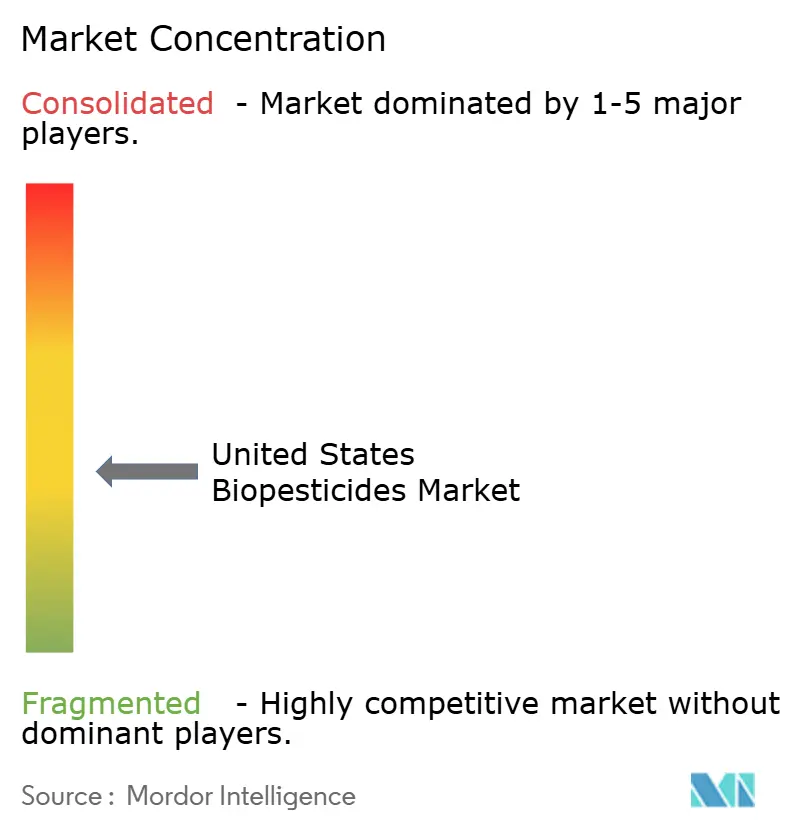
| Market Concentration | Medium |
Major Players *Disclaimer: Major Players sorted in no particular order Image © Mordor Intelligence. Reuse requires attribution under CC BY 4.0. | |
United States Biopesticides Market Analysis by Mordor Intelligence
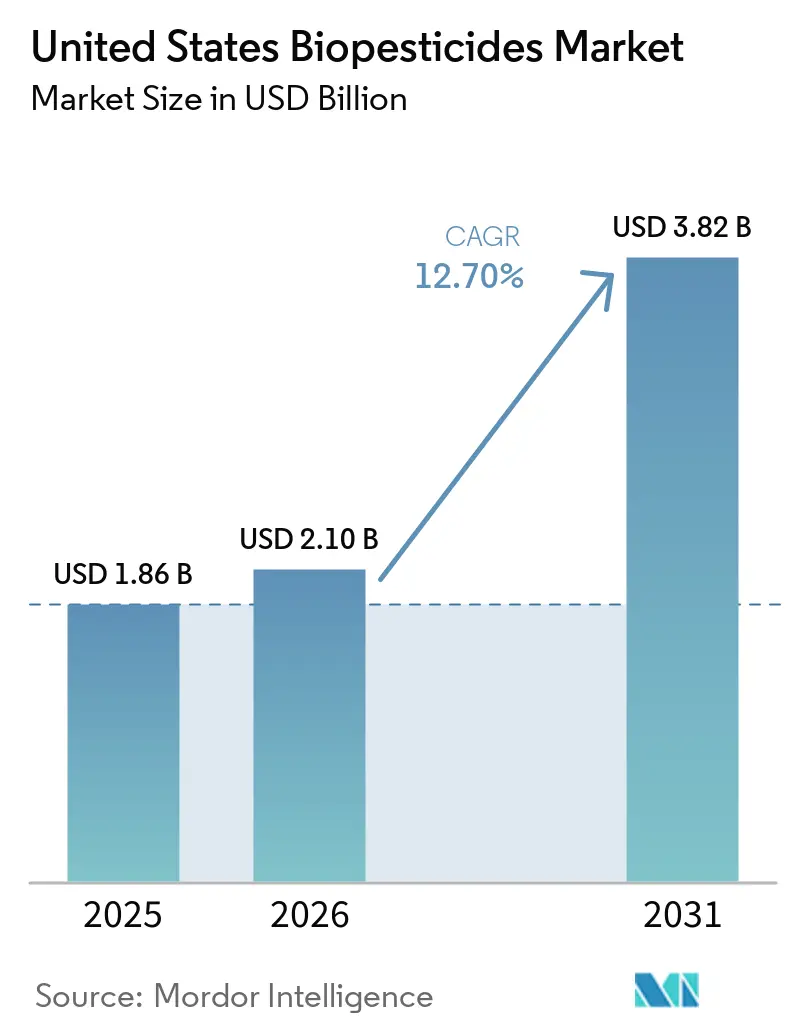
The United States biopesticides market size was valued at USD 1.86 billion in 2025 and is estimated to grow from USD 2.10 billion in 2026 to USD 3.82 billion by 2031, at a CAGR of 12.7% during the forecast period (2026–2031). The market is expanding beyond organic agriculture as biological inputs are increasingly incorporated into pest management programs for corn, soybean, cotton, and specialty crops. Registration activity at the Environmental Protection Agency (EPA) reflects a growing product pipeline for biological solutions, including new active ingredients and emerging technologies. Investment in domestic fermentation capacity is strengthening the local supply base and reducing dependence on imported inputs. Resistance management requirements and stricter residue standards are influencing how growers evaluate crop protection programs. These conditions present opportunities for suppliers that can demonstrate reliable field performance, offer practical agronomic support, and improve product availability.
Key Report Takeaways
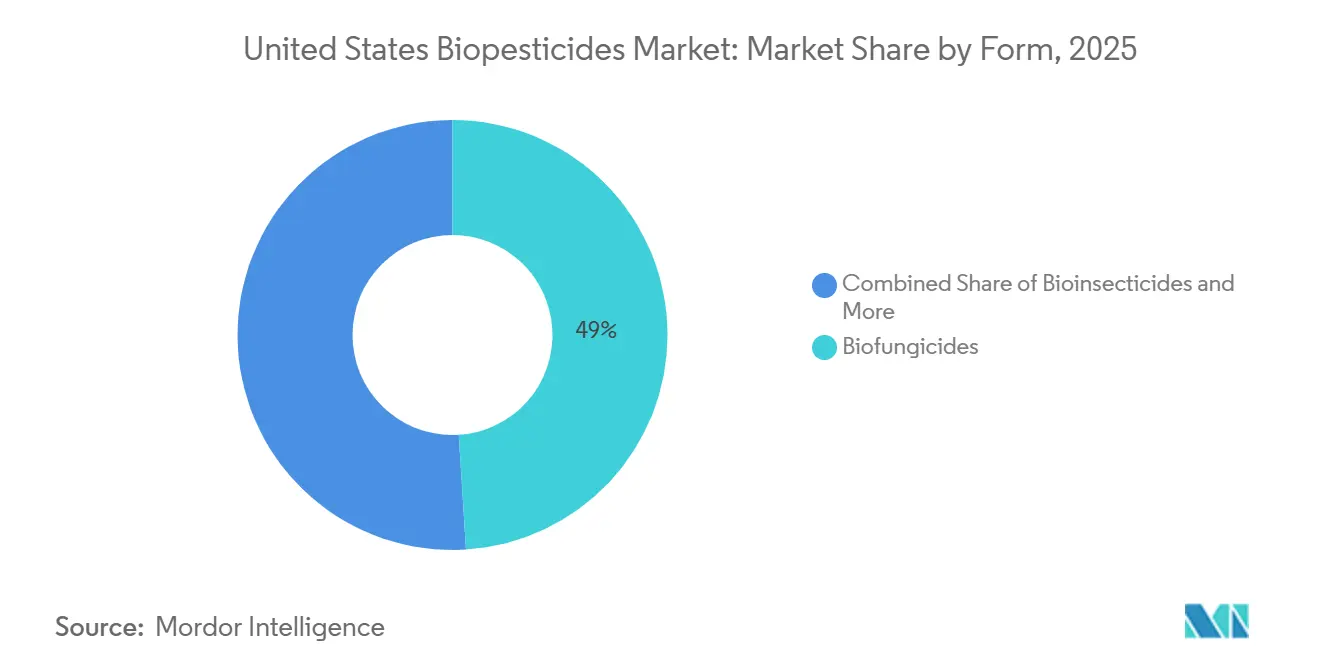
- By form, biofungicides are the largest segment and held 49.0% of the United States biopesticides market share in 2025, while bioinsecticides are the fastest-growing segment and are anticipated to expand at a 15.0% CAGR between 2026 and 2031.
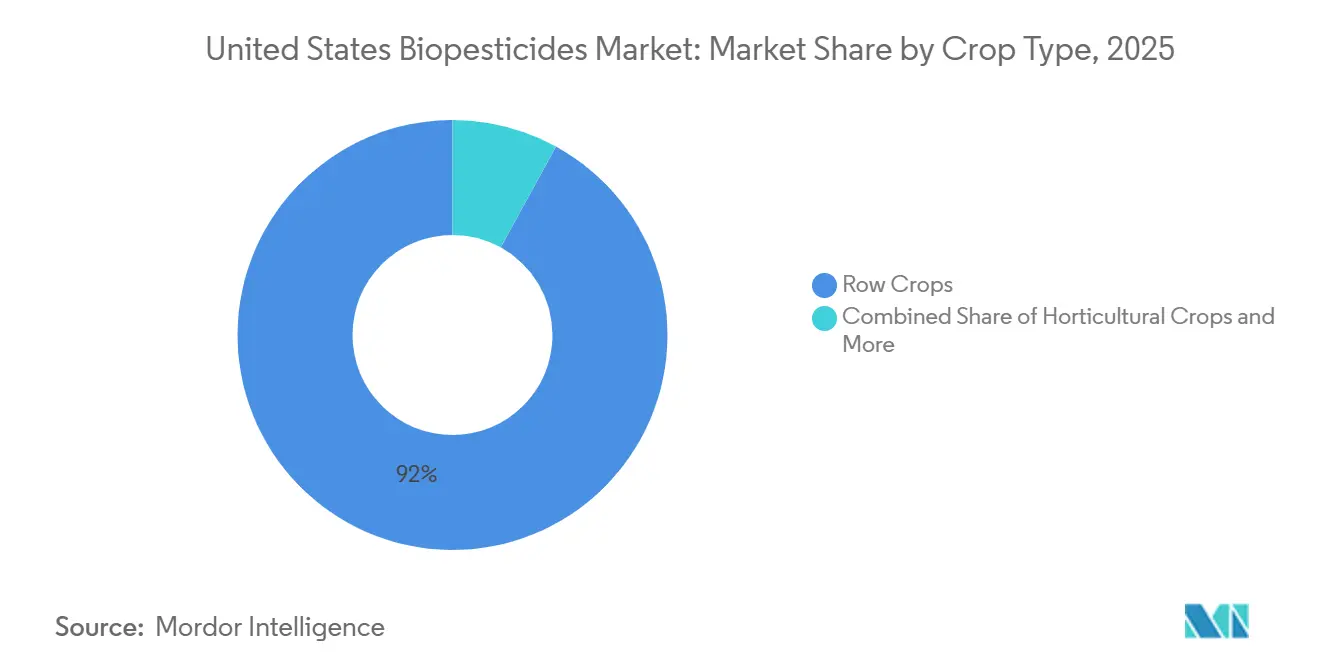
- By crop type, row crops are the largest segment and held 92.0% of the United States biopesticides market size in 2025, while horticultural crops are the fastest-growing segment and are anticipated to expand at a 13.5% CAGR between 2026 and 2031.
Note: Market size and forecast figures in this report are generated using Mordor Intelligence’s proprietary estimation framework, updated with the latest available data and insights as of January 2026.
United States Biopesticides Market Trends and Insights
Drivers Impact Analysis*
| Driver | (~) % Impact on CAGR Forecast | Geographic Relevance | Impact Timeline |
|---|---|---|---|
| Expansion of United States organic and residue-sensitive crop production | +2.8% | National, concentrated in California, Pacific Northwest, and Northeast | Medium term (2-4 years) |
| Adoption of biologicals in corn, soybean, specialty-crop, and cotton programs | +3.2% | National, core in Corn Belt and Southeast | Medium term (2-4 years) |
| Retail and food-processor requirements for residue management | +2.5% | National, highest impact in California and export-facing markets | Short term (≤ 2 years) |
| Domestic fermentation capacity and supply-chain localization | +1.8% | National, manufacturing concentrated in Midwest and Mid-Atlantic | Long term (≥ 4 years) |
| United States university, extension, and on-farm trial networks improving grower confidence | +1.5% | National, with density in Corn Belt and California | Medium term (2-4 years) |
| Demand for alternatives to conventional pesticides in resistance-management programs | +2% | National, highest pressure in Southeast vegetable belt and California | Short term (≤ 2 years) |
| Source: Mordor Intelligence | |||
Expansion of United States Organic and Residue-Sensitive Crop Production
The expansion of organic farming and increasing demand for residue-compliant agricultural products are driving the adoption of biopesticides in the United States. Organic production standards prohibit most synthetic pesticides, while export-oriented fruit, vegetable, tree nut, and specialty crop growers are increasingly incorporating biological crop protection products to comply with maximum residue limit (MRL) requirements and retailer sustainability programs. Biopesticides are also being integrated into conventional farming systems as part of integrated pest management (IPM) strategies to reduce chemical residues while maintaining crop productivity. According to the United States Department of Agriculture (USDA) Economic Research Service (ERS), United States organic food sales reached a record USD 65.4 billion in 2024, reflecting continued growth in consumer demand for organically produced food and supporting the expansion of organic production systems[1]. This trend is encouraging wider adoption of biopesticides across high-value crops, strengthening long-term growth in the United States biopesticides market.
Adoption of Biologicals in Corn, Soybean, Specialty-Crop, and Cotton Programs
The United States biopesticides market is supported by broader adoption of biological products across mainstream cropping systems. A 2025 Frontiers study in Insect Science reported that 45% of row-crop producers used biologicals in 2024, an increase of 8 percentage points from past 2 years. The same study found that 63% of leading agricultural retailers reported biological product sales growth during 2024[2]. Seed treatments for Bt-resistant corn rootworm areas and foliar programs for soybean rust indicate that biological products are gaining roles beyond organic production. Southeast cotton programs are incorporating biofungicides for seedling disease management and bioinsecticides for bollworm populations with pyrethroid resistance. Bacillus-based products registered for multiple crops under a single label can reduce registration costs per acre and expand product access across corn, soybean, and specialty-crop systems.
Retail and Food-Processor Requirements for Residue Management
Retailers and food processors are increasingly embedding low-residue and zero-residue requirements in supplier contracts. The United States Food and Drug Administration (FDA) updated its residue-monitoring program "Pesticides in Human Foods – Domestic and Import" in 2026, retaining the framework under which the Environmental Protection Agency (EPA) establishes tolerances and the FDA enforces them. Exporters selling to the European Union and Japan face residue limits that can be stricter than United States thresholds for many active ingredients. Biopesticides with residue exemptions or negligible residue profiles can therefore support supply-chain compliance for export-facing farms. Vegetable growers in California's Central Valley and Florida are already receiving retailer scorecards that measure residue performance. The United States biopesticides market has near-term exposure to this shift as retailer sustainability reporting moves toward auditable supplier commitments.
Demand for Alternatives to Conventional Pesticides in Resistance-Management Programs
The increasing incidence of pesticide resistance is driving the adoption of biopesticides as part of integrated resistance-management programs in the United States. Repeated use of conventional pesticides with the same mode of action has reduced their effectiveness against several insect, weed, and fungal pests, encouraging growers to diversify crop protection strategies. Biopesticides, including microbial and biochemical products, provide alternative modes of action that can be integrated with conventional chemistries to delay resistance development while maintaining pest control efficacy. The United States Environmental Protection Agency (EPA) recognizes biopesticides as an important component of pesticide resistance-management programs and recommends their integration into both conventional and organic production systems to help slow the development of pest resistance. Growers are therefore increasingly incorporating biological crop protection products into integrated pest management (IPM) programs, particularly in high-value fruit, vegetable, tree nut, and specialty crop production, supporting long-term growth in the United States biopesticides market.
Restraints Impact Analysis*
| Restraint | (~) % Impact on CAGR Forecast | Geographic Relevance | Impact Timeline |
|---|---|---|---|
| Higher per-acre cost compared with conventional pesticides | -2.4% | National, most acute in large-scale commodity crops across the Midwest | Medium term (2-4 years) |
| Variable product performance across United States climatic and cropping zones | -1.8% | National, most pronounced in the hot-arid Southwest and humid Southeast | Long term (≥ 4 years) |
| Cold-chain and shelf-life constraints for living microbial products | -1.2% | National, amplified in high-temperature states such as Arizona, Texas, and Florida | Medium term (2-4 years) |
| Limited standardization of United States field-efficacy and return-on-investment metrics | -1% | National | Long term (≥ 4 years) |
| Source: Mordor Intelligence | |||
Higher Per-Acre Cost Compared with Conventional Pesticides
The higher per-acre cost of biopesticides compared with conventional chemical pesticides remains a key barrier to adoption, particularly in broad-acre row crops where profit margins are relatively low. Microbial biopesticides often require specialized fermentation, formulation, and quality-control processes that increase production costs, while certain biological products also require more frequent applications to maintain efficacy under field conditions. As a result, growers in crops such as corn, soybean, and wheat may be reluctant to replace lower-cost synthetic pesticides unless clear economic benefits are demonstrated. Although improvements in domestic fermentation capacity, strain development, and manufacturing efficiency are anticipated to reduce production costs over time, price competitiveness remains a challenge. Consequently, suppliers in the United States biopesticides market must demonstrate measurable value through yield protection, resistance management, residue compliance, or premium market access to justify the higher treatment cost.
Cold-Chain and Shelf-Life Constraints for Living Microbial Products
Maintaining the viability of living microbial biopesticides throughout storage, transportation, and on-farm handling remains a significant challenge for the United States biopesticides market. Many microbial products are highly sensitive to temperature fluctuations and prolonged storage, requiring controlled handling to preserve the viability of their active microorganisms until application. A 2026 study by the USDA Agricultural Research Service (ARS) demonstrated that exposure of commercial bacterial and fungal microbial biopesticides to heat stress resulted in measurable declines in viable microbial populations, confirming that improper storage conditions can reduce product efficacy before field application. These stability constraints increase distribution costs, complicate inventory management, and can reduce grower confidence in product performance, particularly where temperature-controlled logistics are limited. Consequently, manufacturers continue to invest in improved formulations, packaging technologies, and shelf-life enhancement to overcome one of the key commercial barriers in the United States biopesticides market.
*Our forecasts treat driver/restraint impacts as directional, not additive. The impact forecasts reflect baseline growth, mix effects, and variable interactions.
Segment Analysis
By Form: Biofungicides Lead While Bioinsecticides Reshape Growth
Biofungicides accounted for 49.0% of the United States biopesticides market share in 2025, making them the largest product segment. Their widespread adoption is driven by applications in seed treatment, soil drench, and foliar disease management across row crops, fruits, vegetables, and specialty crops. Biofungicides are widely used in certified organic production and increasingly integrated into conventional farming systems to manage diseases while supporting residue compliance and resistance-management strategies. Their established role in controlling soybean sudden death syndrome, corn seedling diseases, and cotton Rhizoctonia has reinforced their commercial position. By contrast, bioherbicides and other product categories remain smaller because achieving consistent weed control under diverse climatic and agronomic conditions continues to be a technical challenge.
Bioinsecticides are projected to expand at a 15.0% CAGR between 2026 and 2031, making them the fastest-growing product segment in the United States biopesticides market. Growth is driven by increasing demand for alternative modes of action to address insecticide resistance and support integrated pest management (IPM) programs. Product innovation and regulatory approvals continue to strengthen the segment's commercial potential. In February 2026, Vestaron received United States Environmental Protection Agency (EPA) approval for BASIN for outdoor agricultural use against lepidopteran pests and soft-bodied insects. This development expands biological insect-control options and supports the continued growth of the United States biopesticides market.

By Crop Type: Row Crops Anchor Volume While Horticultural Crops Lead Growth
Row crops accounted for 92.0% of the United States biopesticides market share in 2025, making them the largest application segment. Extensive cultivation of corn, soybean, wheat, and rice provides the primary demand base for biological crop protection products. Biopesticides are increasingly incorporated into seed treatment, foliar spray, and soil application programs alongside conventional crop protection products to support integrated pest management and resistance management strategies. Cash crops, including cotton, tobacco, and sugar crops, also contribute to demand where residue compliance and export market requirements are stringent. According to the USDA National Agricultural Statistics Service (NASS), United States farmers planted approximately 95.2 million acres of corn and 83.4 million acres of soybeans in 2025, highlighting the large acreage available for biological crop protection products[3]. This extensive production base continues to support the commercial adoption of biopesticides across row-crop agriculture.
Horticultural crops are projected to expand at a 13.5% CAGR between 2026 and 2031, making them the fastest-growing application segment in the United States biopesticides market. Fruits, vegetables, nuts, and specialty crops experience high pest and disease pressure while facing stringent retailer residue standards and export maximum residue limit (MRL) requirements. States such as California, Florida, and Washington are witnessing increasing adoption of biological crop protection products because of their high-value crop production and greater emphasis on integrated pest management programs. Protected cultivation systems are also combining biopesticides with beneficial insects and biological control agents to improve pest management while reducing reliance on conventional chemical pesticides, supporting continued growth in the horticultural segment.
Geography Analysis
The Midwest and broad-acre row-crop belt held the largest share of the United States biopesticides market in 2025. Extensive corn and soybean cultivation across Iowa, Illinois, Indiana, Nebraska, and Minnesota provides the country's primary demand base for biological crop protection products. Seed-treatment biofungicides and biological seed treatments are widely adopted to manage early-season diseases and improve crop establishment in large-scale row-crop production. The region also benefits from established agricultural research networks, fermentation infrastructure, and strong collaboration between universities, input suppliers, and growers, supporting the commercialization and adoption of biological crop protection technologies.
The Southeast is emerging as the fastest-growing regional market, supported by the expansion of high-value fruit, vegetable, citrus, and specialty crop production. Greater pest and disease pressure, increasing resistance to conventional pesticides, and stricter residue requirements for domestic and export markets are encouraging growers to incorporate biopesticides into integrated pest management programs. In July 2026, Biocontrol Technologies and Wilbur-Ellis Agribusiness signed a United States distribution agreement for T34 Biocontrol, expanding commercial availability of biological disease-control products across major agricultural regions and supporting broader adoption in specialty crop production.
The West Coast, particularly California, represents a significant market for biopesticides due to its concentration of high-value horticultural crops, stringent environmental regulations, and strong retailer sustainability requirements. Export-oriented fruit, vegetable, and nut producers increasingly rely on biological crop protection products to comply with residue standards and integrated pest management practices. The Southwest benefits from intensive vegetable production in California's Central Valley and Arizona's Yuma growing region, while the Northeast contributes demand through its high concentration of organic farms, greenhouse operations, and local food supply chains. These regional differences continue to diversify demand across the United States biopesticides market.
Competitive Landscape
The United States biopesticides market is moderately competitive, with participation from multinational crop protection companies, biological crop protection specialists, and emerging biotechnology firms. Competition is driven by product innovation, proprietary microbial strains, formulation technologies, regulatory approvals, research and development capabilities, and established distribution networks. Companies are expanding their biological portfolios to address growing demand for sustainable crop protection, resistance-management solutions, and integrated pest management (IPM) programs across row crops and specialty crops.
Market participants continue to strengthen their competitive positions through acquisitions and strategic technology investments. In March 2026, BASF completed the acquisition of AgBiTech, adding nucleopolyhedrovirus (NPV)-based biological insecticide technology for caterpillar control. In 2025, ICL Group acquired a 68% stake in Lavie Bio, expanding its microbial bioinsecticide and biofungicide portfolio. Suterra also acquired Vestaron Crop Protection's assets in 2025, including peptide-based bioinsecticide products and registered active ingredients. These developments reflect the industry's focus on expanding biological crop protection capabilities through both acquisitions and internal innovation.
Competitive differentiation in the United States biopesticides market increasingly depends on formulation technologies, microbial stability, and advanced biological discovery platforms. Companies are investing in technologies that improve product shelf life, enhance field performance, and accelerate the discovery of novel biological active ingredients using artificial intelligence and gene-editing tools. In July 2026, Agragene licensed Pairwise's Fulcrum CRISPR platform to advance biological insect-control solutions for spotted wing Drosophila. Suppliers with strong research capabilities, diversified biological product portfolios, regulatory expertise, and extensive commercial networks are better positioned to strengthen their presence in the United States biopesticides market.
United States Biopesticides Industry Leaders
-
Valent BioSciences LLC
-
Corteva Agriscience LLC (Corteva, Inc.)
-
Bayer AG
-
BASF SE
-
Certis USA LLC (Mitsui & Co., Ltd.)
- *Disclaimer: Major Players sorted in no particular order
Recent Industry Developments
- July 2026: Biocontrol Technologies and Wilbur-Ellis Agribusiness signed a United States distribution agreement for T34 Biocontrol biofungicide, leveraging Wilbur-Ellis's national retail network to expand biological disease management access across key United States agricultural regions.
- April 2026: AgroSpheres opened a commercial biomanufacturing facility in Charlottesville, Virginia, with USD 10 million invested to date in a 12,500-square-foot commercial-scale fermentation operation capable of treating hundreds of thousands of acres annually, addressing the United States domestic biological crop input capacity shortage.
- March 2026: BASF Agricultural Solutions completed the acquisition of AgBiTech, a global leader in nucleopolyhedrovirus (NPV) technology for caterpillar pest control in soybean, corn, cotton, and specialty crops, following the January 2026 agreement with private equity firm Paine Schwartz Partners.
United States Biopesticides Market Report Scope
Biopesticides are pest management agents derived from natural sources, including microorganisms such as bacteria, fungi, and viruses. Unlike synthetic chemicals, they are typically biodegradable, target-specific, and pose minimal risks to non-target organisms and humans. These characteristics make biopesticides integral to sustainable agriculture and integrated pest management (IPM) practices.
The United States Biopesticides Market Report is Segmented by Form (Biofungicides, Bioherbicides, Bioinsecticides, and More) and by Crop Type (Cash Crops, Horticultural Crops, and Row Crops). The Market Forecasts are Provided in Terms of Value (USD) and Volume (Metric Tons).
By Form
| Biofungicides |
| Bioherbicides |
| Bioinsecticides |
| Other Biopesticides |
By Crop Type
| Cash Crops |
| Horticultural Crops |
| Row Crops |
| By Form | Biofungicides |
| Bioherbicides | |
| Bioinsecticides | |
| Other Biopesticides | |
| By Crop Type | Cash Crops |
| Horticultural Crops | |
| Row Crops |
Market Definition
- AVERAGE DOSAGE RATE - The average application rate is the average volume of biopesticides applied per hectare of farmland in the respective region/country.
- CROP TYPE - Crop type includes Row crops (Cereals, Pulses, Oilseeds), Horticultural Crops (Fruits and vegetables) and Cash Crops (Plantation Crops, Fibre Crops and Other Industrial Crops)
- FUNCTION - The Crop Protection function of agirucultural biological include products that prevent or control various biotic and abiotic stress.
- TYPE - Biopesticides prevent or control various pests, including insects, diseases, and weeds, from causing crop damage and yield loss.
| Keyword | Definition |
|---|---|
| Cash Crops | Cash crops are non-consumable crops sold as a whole or part of the crop to manufacture end-products to make a profit. |
| Integrated Pest Management (IPM) | IPM is an environment-friendly and sustainable approach to control pests in various crops. It involves a combination of methods, including biological controls, cultural practices, and selective use of pesticides. |
| Bacterial biocontrol agents | Bacteria used to control pests and diseases in crops. They work by producing toxins harmful to the target pests or competing with them for nutrients and space in the growing environment. Some examples of commonly used bacterial biocontrol agents include Bacillus thuringiensis (Bt), Pseudomonas fluorescens, and Streptomyces spp. |
| Plant Protection Product (PPP) | A plant protection product is a formulation applied to crops to protect from pests, such as weeds, diseases, or insects. They contain one or more active substances with other co-formulants such as solvents, carriers, inert material, wetting agents or adjuvants formulated to give optimum product efficacy. |
| Pathogen | A pathogen is an organism causing disease to its host, with the severity of the disease symptoms. |
| Parasitoids | Parasitoids are insects that lay their eggs on or within the host insect, with their larvae feeding on the host insect. In agriculture, parasitoids can be used as a form of biological pest control, as they help to control pest damage to crops and decrease the need for chemical pesticides. |
| Entomopathogenic Nematodes (EPN) | Entomopathogenic nematodes are parasitic roundworms that infect and kill pests by releasing bacteria from their gut. Entomopathogenic nematodes are a form of biocontrol agents used in agriculture. |
| Vesicular-arbuscular mycorrhiza (VAM) | VAM fungi are mycorrhizal species of fungus. They live in the roots of different higher-order plants. They develop a symbiotic relationship with the plants in the roots of these plants. |
| Fungal biocontrol agents | Fungal biocontrol agents are the beneficial fungi that control plant pests and diseases. They are an alternative to chemical pesticides. They infect and kill the pests or compete with pathogenic fungi for nutrients and space. |
| Biofertilizers | Biofertilizers contain beneficial microorganisms that enhance soil fertility and promote plant growth. |
| Biopesticides | Biopesticides are natural/bio-based compounds used to manage agricultural pests using specific biological effects. |
| Predators | Predators in agriculture are the organisms that feed on pests and help control pest damage to the crops. Some common predator species used in agriculture include ladybugs, lacewings, and predatory mites. |
| Biocontrol agents | Biocontrol agents are living organisms used to control pests and diseases in agriculture. They are alternatives to chemical pesticides and are known for their lesser impact on the environment and human health. |
| Organic Fertilizers | Organic fertilizer is composed of animal or vegetable matter used alone or in combination with one or more non-synthetically derived elements or compounds used for soil fertility and plant growth. |
| Protein hydrolysates (PHs) | Protein hydrolysate-based biostimulants contain free amino acids, oligopeptides, and polypeptides produced by enzymatic or chemical hydrolysis of proteins, primarily from vegetal or animal sources. |
| Biostimulants/Plant Growth Regulators (PGR) | Biostimulants/Plant Growth Regulators (PGR) are substances derived from natural resources to enhance plant growth and health by stimulating plant processes (metabolism). |
| Soil Amendments | Soil Amendments are substances applied to soil that improve soil health, such as soil fertility and soil structure. |
| Seaweed Extract | Seaweed extracts are rich in micro and macronutrients, proteins, polysaccharides, polyphenols, phytohormones, and osmolytes. These substances boost seed germination and crop establishment, total plant growth and productivity. |
| Compounds related to biocontrol and/or promoting growth (CRBPG) | Compounds related to biocontrol or promoting growth (CRBPG) are the ability of a bacteria to produce compounds for phytopathogen biocontrol and plant growth promotion. |
| Symbiotic Nitrogen-Fixing Bacteria | Symbiotic nitrogen-fixing bacteria such as Rhizobium obtain food and shelter from the host, and in return, they help by providing fixed nitrogen to the plants. |
| Nitrogen Fixation | Nitrogen fixation is a chemical process in soil which converts molecular nitrogen into ammonia or related nitrogenous compounds. |
| ARS (Agricultural Research Service) | ARS is the U.S. Department of Agriculture's chief scientific in-house research agency. It aims to find solutions to agricultural problems faced by the farmers in the country. |
| Phytosanitary Regulations | Phytosanitary regulations imposed by the respective government bodies check or prohibit the importation and marketing of certain insects, plant species, or products of these plants to prevent the introduction or spread of new plant pests or pathogens. |
| Ectomycorrhizae (ECM) | Ectomycorrhiza (ECM) is a symbiotic interaction of fungi with the feeder roots of higher plants in which both the plant and the fungi benefit through the association for survival. |
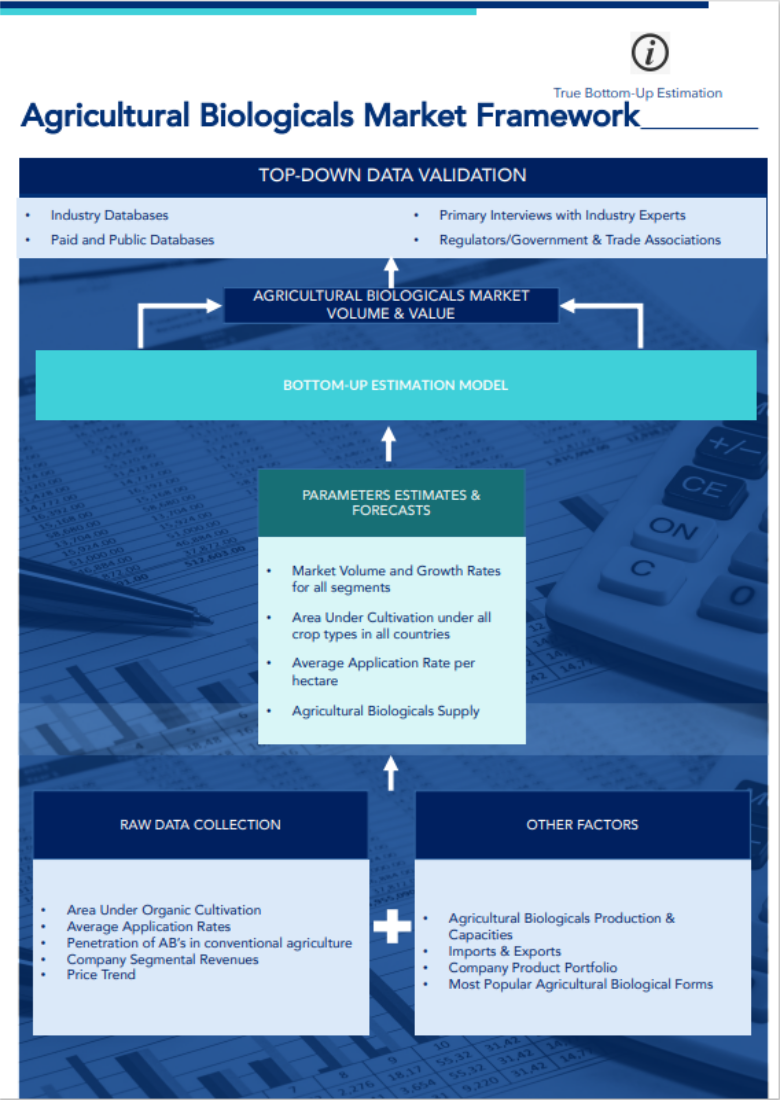
Research Methodology
Mordor Intelligence follows a four-step methodology in all our reports.
- Step-1: Identify Key Variables: In order to build a robust forecasting methodology, the variables and factors identified in Step-1 are tested against available historical market numbers. Through an iterative process, the variables required for market forecast are set and the model is built on the basis of these variables.
- Step-2: Build a Market Model: Market-size estimations for the forecast years are in nominal terms. Inflation is not a part of the pricing, and the average selling price (ASP) is kept constant throughout the forecast period.
- Step-3: Validate and Finalize: In this important step, all market numbers, variables and analyst calls are validated through an extensive network of primary research experts from the market studied. The respondents are selected across levels and functions to generate a holistic picture of the market studied.
- Step-4: Research Outputs: Syndicated Reports, Custom Consulting Assignments, Databases & Subscription Platforms.