
Market Overview
| Study Period | 2020 - 2031 |
|---|---|
| Forecast Data Period | 2026 - 2031 |
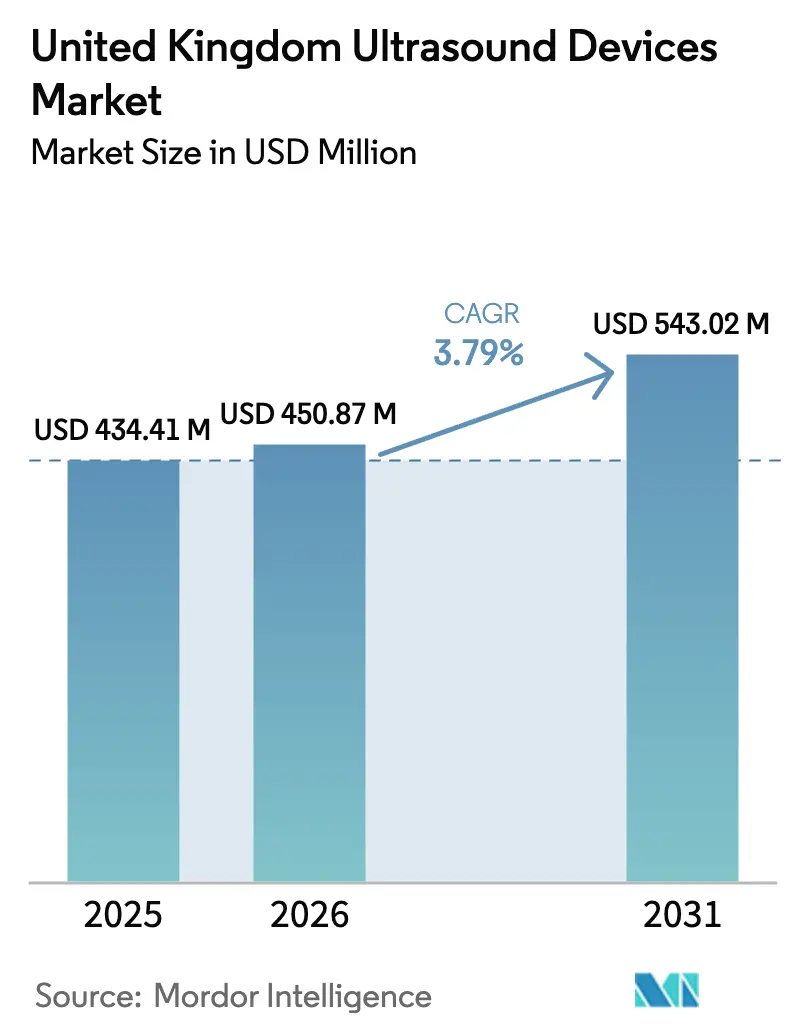
| Base Year Market Size (2025) | USD 434.41 Million |
| Market Size (2026) | USD 450.87 Million |
| Market Size (2031) | USD 543.02 Million |
| Growth Rate (2026 - 2031) | 3.79 % |
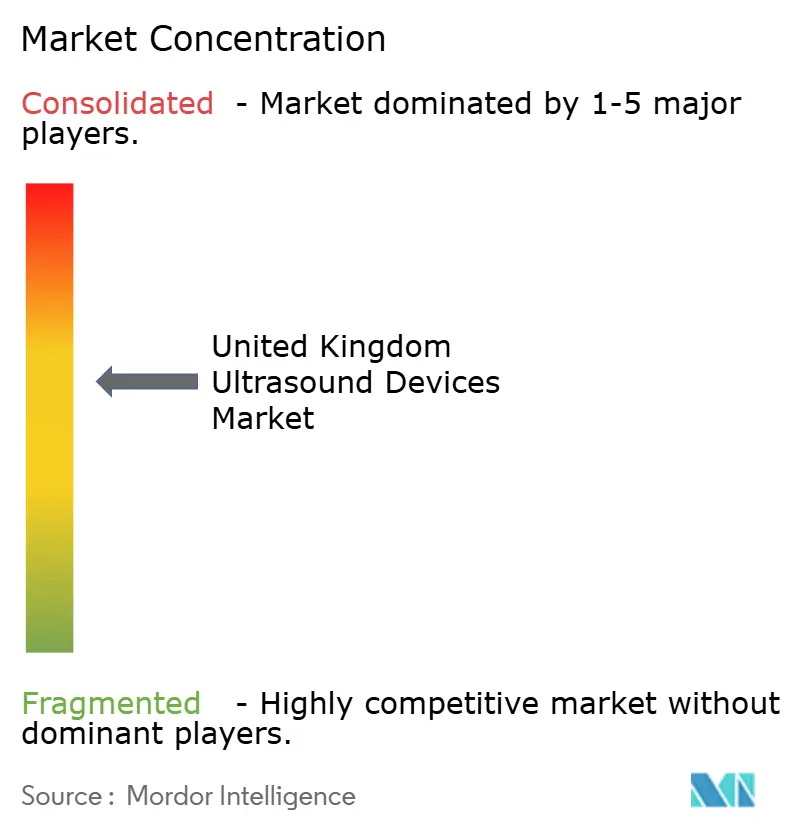
| Market Concentration | Medium |
Major Players *Disclaimer: Major Players sorted in no particular order Image © Mordor Intelligence. Reuse requires attribution under CC BY 4.0. | |
United Kingdom Ultrasound Devices Market Analysis by Mordor Intelligence
The United Kingdom Ultrasound Devices Market size is expected to grow from USD 434.41 million in 2025 to USD 450.87 million in 2026 and is forecast to reach USD 543.02 million by 2031 at 3.79% CAGR over 2026-2031.
A favourable reimbursement climate for point-of-care imaging, coupled with sustained investments in NHS modernization programmes, underpins this steady trajectory. AI-driven workflow enhancements, expanding home-care deployments, and rising chronic disease diagnoses are accelerating replacement demand even as budgetary pressures persist in some community settings. Hand-held ultrasound models are redefining primary and emergency care pathways, while high-intensity focused ultrasound (HIFU) widens therapeutic opportunities in oncology and urology. Meanwhile, corporate consolidation around AI capabilities epitomised by GE HealthCare’s 2024 acquisition of Intelligent Ultrasound signals a transition toward fully integrated imaging ecosystems.
Key Report Takeaways
- By application, radiology accounted for 32.42% of the ultrasound devices market size in 2025; cardiology is forecast to expand at 6.73% CAGR to 2031.
- By technology, 3D & 4D ultrasound held 47.85% revenue share in 2025, whereas HIFU records the highest projected CAGR at 8.09% through 2031.
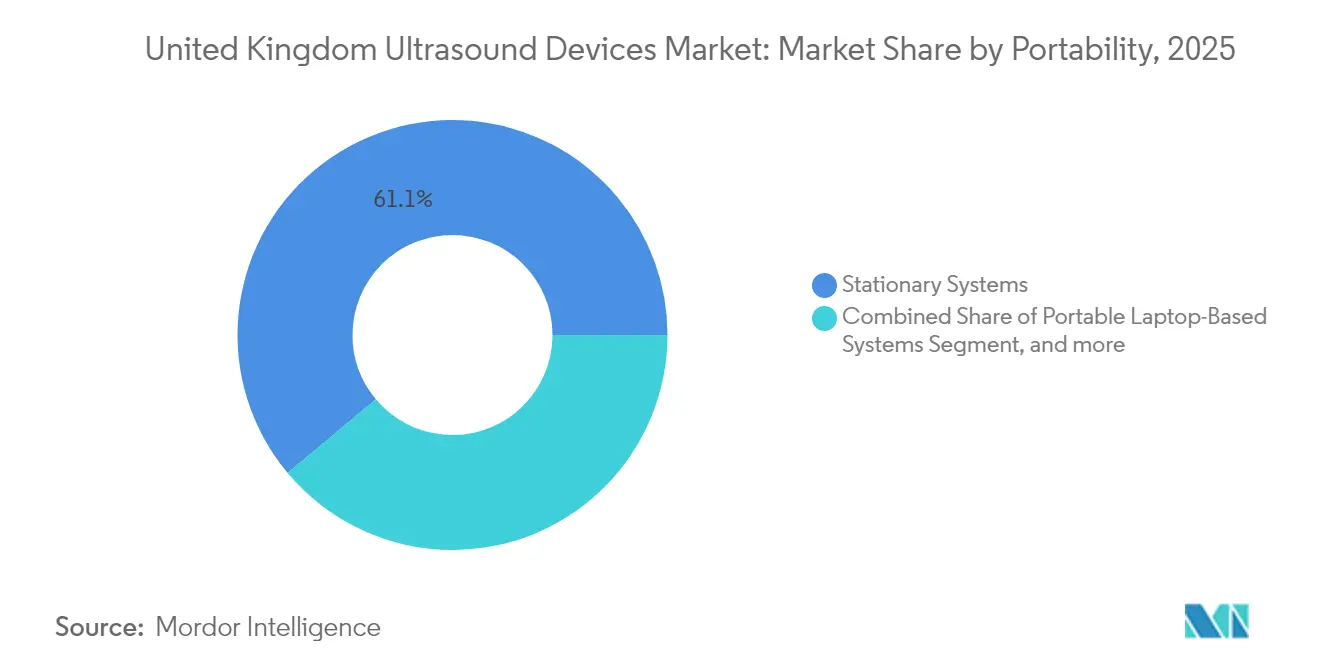
- By portability, stationary systems commanded 61.10% of ultrasound devices market share in 2025, whereas hand-held devices are projected to grow at 11.18% CAGR through 2031.
- By end user, NHS hospitals held 55.30% share of the ultrasound devices market in 2025, while home-care settings advance at a 9.88% CAGR to 2031.
Note: Market size and forecast figures in this report are generated using Mordor Intelligence’s proprietary estimation framework, updated with the latest available data and insights as of 2026.
United Kingdom Ultrasound Devices Market Trends and Insights
Drivers Impact Analysis*
| Driver | (~) % Impact on CAGR Forecast | Geographic Relevance | Impact Timeline |
|---|---|---|---|
| Increasing burden of chronic diseases | +1.2% | National; highest in deprived urban & coastal areas | Long term (≥ 4 years) |
| Rapid adoption of hand-held ultrasound for rural & home diagnostics | +1.0% | National; early gains in rural regions | Medium term (2-4 years) |
| Technological advancements in ultrasound devices & rising diagnostic usage | +0.8% | National; concentrated in academic medical centres | Medium term (2-4 years) |
| Growing private fertility clinic segment & OB/GYN upgrades | +0.6% | Urban hubs with private care clusters | Short term (≤ 2 years) |
| Expansion of NHS diagnostic imaging modernisation programmes | +0.5% | National; phased roll-out via NHS Trusts | Short term (≤ 2 years) |
| Rising focus on women’s health & fertility monitoring | +0.4% | National; amplified in metropolitan areas | Long term (≥ 4 years) |
| Source: Mordor Intelligence | |||
Increasing Burden of Chronic Diseases
England is projected to have 9.3 million residents living with major illness by 2040, with deprived communities bearing 80% of the additional burden. Cardiovascular conditions alone affect about 2.3 million people, prompting greater reliance on echocardiography and vascular studies. Cancer incidence is expected to climb from 420,000 new cases in 2025 to 506,000 by 2040, reinforcing the centrality of ultrasound in non-invasive tumour staging and therapy monitoring.[1] The cumulative effect is sustained demand for advanced transducers, contrast-enhanced studies, and AI-guided acquisition routines across secondary and primary care.
Rapid Adoption of Hand-Held Ultrasound for Rural & Home Diagnostics
Miniaturisation combined with real-time AI feedback is encouraging remote scanning in paramedic units, care homes, and patient residences. Twenty percent of UK clinicians already use AI in diagnostics, and 35% of NHS AI implementations now sit in imaging workflows. Caption Health’s home-based heart scan pilot illustrates how integrated algorithms reduce operator dependency, bridging workforce shortages while cutting hospital footfall.
Technological Advancements in Ultrasound Devices & Rising Diagnostic Usage
University College London’s photoacoustic tomography scanner creates 3-D vascular maps in minutes, capturing microvascular changes invisible to conventional 2-D imaging.[2] Ultrasound localisation microscopy offers myocardial resolution superior to CT angiography for coronary microvascular disease detection. Layering AI on these modalities automates measurements, streamlines reporting, and trims exam times by up to 40%, multiplying throughput without proportionate head-count growth.
Growing Private Fertility Clinic Segment Driving OB/GYN Ultrasound Upgrades
Private fertility centres are scaling capacity as 43% of workers aged 24-34 prioritise fertility benefits when choosing employers. Samsung Medison’s acquisition of prenatal AI firm Sonio reflects a race to standardise early-trimester measurements and improve anomaly detection. Clinics increasingly market 3D/4D and AI-guided fetal assessments as differentiators to attract self-pay patients, boosting turnover of premium obstetrics consoles.
Restraints Impact Analysis*
| Restraint | (~) % Impact on CAGR Forecast | Geographic Relevance | Impact Timeline |
|---|---|---|---|
| Stringent regulations prolonging product approvals | –0.5% | National | Short term (≤ 2 years) |
| Shortage of sonographers causing under-utilisation of installed base | –1.0% | National; acute in rural settings | Long term (≥ 4 years) |
| Budget constraints in community & rural healthcare | –0.6% | Selected rural & community hospitals | Medium term (2-4 years) |
| Competition from lower-cost imaging alternatives | –0.4% | National; highest in primary care | Short term (≤ 2 years) |
| Source: Mordor Intelligence | |||
Stringent Regulations Prolonging Product Approvals
The MHRA’s new device framework, effective from Summer 2025, mandates risk-proportionate surveillance and formalises international recognition pathways. While alignment with Australian, Canadian, US, and EU certificates may shorten duplicate assessments, additional post-market reporting can extend total time-to-market for novel probes and software. Firms with deep regulatory benches will absorb the complexity more easily than start-ups, potentially tempering innovation velocity.[3]
Shortage of Sonographers Causing Under-utilisation of Installed Base
Sonographers retire at 60.8 years on average, well before the general retirement age, leaving high-spec scanners idle during surge periods. The NHS has broadened scope-of-practice for physiotherapists to perform bedside musculoskeletal scans, yet throughput gaps persist. GE HealthCare’s ScanNav tools now guide non-expert operators to acceptable views, demonstrating how embedded AI can partly offset the human capital deficit.
*Our forecasts treat driver/restraint impacts as directional, not additive. The impact forecasts reflect baseline growth, mix effects, and variable interactions.
Segment Analysis
By Application: Cardiology Gains Momentum Amidst Stable Radiology Demand
Radiology/general imaging retained 32.42% ultrasound devices market share in 2025, anchored by abdominal and small-parts examinations across NHS hospitals. Cardiology, however, is projected to outpace all other specialties at a 6.73% CAGR, propelled by microvascular imaging breakthroughs and increasing heart-failure screening in primary care. Ultrasound localisation microscopy enables wall-motion and perfusion analysis once reserved for MRI, broadening echocardiography’s clinical utility. Over the forecast, cardiology’s contribution to ultrasound devices market size is expected to add nearly USD 18 million, intensifying competition among vendors for premium cardiac probes.
Obstetrics & gynecology remains a mature but lucrative field. Home-based fetal growth monitoring trials underline how widespread AI integration may unlock new consumer-direct revenue streams. Critical care and anesthesiology segments increasingly rely on point-of-care systems for fast-track procedural guidance, sustaining baseline demand for robust portable consoles.


By Technology: HIFU Challenges the Dominance of 3D & 4D Systems
3D & 4D modalities commanded 47.85% share of ultrasound devices market size in 2025, supported by obstetric and structural-heart imaging workflows. Yet their growth is moderating as replacement cycles lengthen. By contrast, HIFU will expand at 8.09% CAGR, capturing oncology centres seeking organ-sparing alternatives to surgery. Ablatherm and Sonablate 500 platforms demonstrate 95% freedom from clinically significant prostate cancer, accelerating adoption in both private and NHS settings.
Doppler and contrast-enhanced imaging maintain relevance for hepatic lesions and vascular assessments, while AI post-processing packages elevate 2-D systems through automated vessel tracking and plaque quantification. Vendors are bundling advanced software to retain customers transitioning to mid-range consoles as budget pressures persist.
By Portability: Hand-Held Scanners Redraw Care Pathways
Stationary systems still represent 61.10% of ultrasound devices market share, particularly within tertiary referral centres requiring advanced elasticity imaging and multi-probe configurations. Nonetheless, hand-held devices will generate the highest incremental revenue, growing 11.18% each year. Comparative assessments highlight probe ergonomics, battery life, and secure cloud storage as decisive factors for procurement. The NHS Tech Devices framework, worth GBP 1.5 billion over four years, earmarks mobile imaging for accelerated rollout, signalling long-term institutional commitment to portability.
Cart-based units occupy a middle ground, balancing mobility with upgrade paths for AI modules and contrast packages. Integration with electronic patient records via secure Wi-Fi bolsters their relevance in high-turnover outpatient clinics.
By End User: Home-Care Settings Emerge as the Next Growth Frontier
NHS hospitals captured 55.30% of spending in 2025, fuelling core demand for replacement consoles and specialty transducers. Yet home-care environments will post a 9.88% CAGR as reimbursement policies evolve to support remote cardiac, obstetric, and pulmonary assessments. Caption Care’s home echocardiogram service illustrates how AI-guided acquisition democratises imaging for non-expert carers, reshaping follow-up protocols.
Private hospitals and fertility clinics capitalise on premium 3D/4D and AI-measured follicle tracking, while diagnostic imaging centres diversify into interventional ultrasound suites. General practitioners adopting compact scanners for abdominal complaints exemplify the device’s move toward the point of first contact.
Geography Analysis
London and the Southeast remain the epicentre of advanced ultrasound adoption, driven by teaching hospitals and a dense network of private fertility providers. These regions also host most early-stage trials for AI-enabled modalities, reinforcing their role as reference sites for vendor demonstrations. The North of England and Scotland are closing the technology gap via NHS modernisation funds that subsidise portable platforms in community diagnostic centres.
Rural Wales and parts of Northern Ireland still face limited sonographer availability, hindering full utilisation of installed scanners. Hand-held devices, supported by remote interpretation networks, are mitigating access gaps by allowing community nurses to capture images for off-site review.
Health inequality metrics show deprived coastal towns recording higher cardiovascular and metabolic disease incidence, prompting targeted deployment of point-of-care ultrasound programmes. The projected 9.3 million people with major illness by 2040 underscores the importance of equitable imaging dispersion, aligning national procurement frameworks with population-health objectives.
Regulatory Landscape
Ultrasound systems and related software marketed in Great Britain (England, Wales, Scotland) are regulated by the Medicines and Healthcare products Regulatory Agency (MHRA) under the UK Medical Devices Regulations 2002. Product registration and conformity assessment requirements underpin access to the GB market and UKCA marking as the domestic product marking. The framework also places emphasis on ongoing vigilance, with post-market surveillance and reporting obligations applying across device classes and increasingly shaping evidence planning for new probes and AI-enabled workflow software.
From Summer 2025, the MHRA device framework introduced risk-proportionate surveillance and formalized international recognition pathways, including reliance routes for devices certified by regulators such as the TGA, Health Canada, and the FDA. At the same time, UK purchasing practices are tightening around structured evaluation, with national value-based procurement guidance for medical technology prompting buyers to scrutinize total cost, outcomes, and supply chain resilience. This, in turn, affects how ultrasound vendors position service models, software updates, and lifecycle support in public tenders.
Competitive Landscape
The market exhibits moderate concentration. GE HealthCare leads through inorganic expansion and deep AI integration, holding sizeable footprints in cardiology and anesthesiology consoles. Siemens Healthineers and Philips leverage broad modality portfolios to cross-sell ultrasound into radiology and oncology pathways, while Canon Medical Systems focuses on software-driven image harmonisation to compete on diagnostic precision.
Samsung Medison’s 2024 purchase of Sonio highlights intensifying competition in the prenatal AI domain, a segment where accurate anomaly screening directly influences reimbursement rates. Disruptors such as Butterfly Network and Clarius Mobile Health court primary-care physicians with subscription-based software upgrades, threatening incumbent pricing power. Regulatory harmonisation efforts may level entry barriers for these agile players, but heightened post-market obligations favour enterprises with robust compliance infrastructures.
White-space opportunities persist in AI-guided workflow tools that shorten scan times, especially for nursing staff assuming ultrasound responsibilities. Therapeutic ultrasound sub-segments like HIFU and histotripsy also offer high-margin expansion paths as clinical trial data validates long-term outcomes.
United Kingdom Ultrasound Devices Industry Leaders
-
Canon Medical Systems Corporation
-
Fujifilm Holdings Corporation
-
GE Healthcare
-
Siemens Healthineers AG
-
Koninklijke Philips N.V.
- *Disclaimer: Major Players sorted in no particular order
Market Opportunities and Future Outlook
The most tangible opportunity is at the overlap of workforce constraints and throughput targets, where AI-assisted acquisition and automation can widen the operator pool and standardize exams across NHS hospitals and community settings. The UK already shows measurable proof points for this direction, including Intelligent Ultrasound reporting that SonoLystlive cut keystrokes by up to 65% and reduced exam time by up to 40% in mid-trimester workflows. It also aligns with Canon Medical Research Europe in Edinburgh working on AI-based smart solutions to automate scanning tasks. For vendors, this supports software attachment and upgrade demand across installed bases, particularly in high-volume radiology and obstetric pathways and in point-of-care deployments where non-expert users need guided workflows.
Commercial models and procurement reforms also create room for long-term fleet renewal and standardization. Managed equipment service approaches are increasingly used to bundle replacement, service, and training, supported by GE HealthCare and Nuffield Health entering a 20-year managed equipment service collaboration valued at GBP 200 million that includes ultrasound among nearly 800 devices to be installed, and by NHS purchasing moving toward clearer commercial pathways via the NHS MedTech Commercial Strategy 2026. In parallel, MHRA Early Access and international reliance routes provide structured mechanisms for bringing innovative ultrasound hardware and software into controlled clinical use while building an evidence base for broader NHS adoption, supporting earlier uptake of capabilities such as advanced AI measurement, portable connectivity, and therapeutic ultrasound applications.
Recent Industry Developments
- June 2026: Canon Medical Systems global launch of Aplio me X diagnostic ultrasound system with AI-assisted workflows announced at Euroson 2026 in Lublin. The AI-enabled ultrasound workflow integration accelerates image analysis and decision support, expanding the use of AI-enabled diagnostic platforms in the UK market and potentially enhancing NHS throughput.
- March 2026: Fujifilm Healthcare unveiled ARIETTA DeepInsight x ultrasound technology platforms (850, 750, 650 models) at ECR 2026 in Vienna. The DeepInsight platform expansion strengthens Fujifilm’s competitive position in UK radiology and ultrasound with AI-assisted capabilities, with potential to influence procurement decisions.
- February 2026: GE HealthCare was awarded a contract by Northumbria Healthcare NHS Foundation Trust for Voluson ultrasound systems. The public healthcare procurement of Voluson systems enables scale-up of GE HealthCare’s presence in UK NHS ultrasound deployments and affects market dynamics and replacement cycles.
Research Methodology Framework and Report Scope
Market Definition and Coverage
This market covers the value of ultrasound systems sold and used in the United Kingdom for diagnostic imaging and ultrasound-based therapeutic use, across hospital and non-hospital care settings. The sizing is built in USD terms and reflects equipment demand across major clinical use cases.
Scope exclusions: We exclude consumables and services, such as gels, extended warranties, service contracts, and routine maintenance.
Segmentation Overview
- By Application
- Anesthesiology
- Cardiology
- Gynecology/Obstetrics
- Radiology
- Critical Care & Emergency Medicine
- Other Applications
- By Technology
- 2-D Ultrasound Imaging
- 3-D & 4-D Ultrasound Imaging
- Doppler Imaging
- High-Intensity Focused Ultrasound (HIFU)
- Other Technologies
- By Portability
- Stationary Systems
- Portable Laptop-Based Systems
- Handheld/Pocket Ultrasound Devices
- By End User
- NHS Hospitals
- Private Hospitals & Clinics
- Diagnostic Imaging Centres
- Ambulatory Surgical Centres
- Other End Users
Data Sources, Market Sizing, and Validation
Desk Research
Desk research was used to map the demand pool and to set practical boundaries around where ultrasound spending sits inside the wider imaging budget. We leaned on public healthcare and procurement signals, along with clinical activity indicators that influence scan volumes and device utilization over time.
Common reference points included NHS England publications, UK government health statistics (including the Office for National Statistics), MHRA medical device guidance, and OECD health data for imaging and workforce context. We also reviewed peer-reviewed clinical journals to understand how use is shifting across point-of-care settings and routine diagnostics. For market normalization checks, we used company filings and investor presentations, trusted press coverage, and selectively used paid subscriptions for company financials and market intelligence, patent databases, and shipment-level import and export visibility where it helped clarify equipment flows. The desk sources listed above are illustrative only, and additional public and paid references were used to collect, cross check, and clarify inputs.
Primary Interviews and Surveys
Primary work focused on validating what drives annual equipment demand in the United Kingdom, including replacement cycles, portability shifts, and how budgets differ between NHS settings and private providers. Respondent input clarified where desk assumptions on buying patterns diverged between procurement teams, distributors, and service partners versus day-to-day clinical use.
Distribution of primary research fieldwork respondents
| Company type | Respondent position |
|---|---|
| Top tier: 38% | CXOs: 12% |
| Mid tier: 46% | Functional/Unit leaders: 34% |
| Smaller Players: 16% | Managers: 54% |
Market-Sizing & Forecasting
The core sizing logic uses a top-down build that starts from the United Kingdom imaging and diagnostic activity environment, then reconstructs ultrasound demand by linking likely procedure throughput to installed base needs and replacement timing. Because real-world purchasing does not follow a neat pattern every year, the totals were corroborated through selective bottom-up approximations, such as sampled unit shipments multiplied by average selling prices, distributor channel checks, and sanity checks against reported equipment revenue exposure.
A few inputs that mattered most were the mix shift toward portable and handheld systems, typical replacement cycles for cart-based units versus point-of-care devices, changes in scan volumes by key clinical areas, and public versus private budget pressure that influences capex timing. We also tracked average selling price bands by device class, since a small change in portability mix can move the value trend even when unit volumes remain stable. For forecasting, scenario analysis was used to keep the forward view realistic, where assumptions on replacement timing and ASP movement were stress tested with feedback from interviewed experts. Where bottom-up indicators had gaps, we filled them using conservative proxy relationships, such as using similar hospital footprint clusters and adjusting for portability adoption rather than forcing missing unit data.
Data Validation & Update Cycle
Outputs are checked against independent signals, such as procurement activity patterns, installed base expectations, and the implied unit volumes that the value model would require. When a number looks unusual, the drivers are traced back to the underlying assumptions, then reviewed again by another analyst before sign off.
We refresh the report annually, and we also revisit key inputs after material events that can shift pricing, budgets, or delivery lead times. Before delivery, we do a final pass to align currency conversion timing, recheck the ASP logic by device class, and recontact sources when variances fall outside expected ranges.
Mordor Intelligence's United Kingdom Ultrasound Devices Market Size Versus Other Published Estimates
Different published estimates for ultrasound devices in the United Kingdom can vary even when everyone is tracking the same healthcare system, because scope and timing choices differ more than most readers expect. The year picked for currency conversion, what gets counted as a device sale versus a service add-on, and how average selling prices are updated can each change the final value.
A refresh-led difference is also common in this market, since price bands for portable and handheld systems can move quickly with procurement cycles and mix shifts. The model is kept consistent by rechecking device class ASPs and validating implied unit demand against replacement cadence signals close to the publication cut, which is why the spread tends to narrow after updates are applied in Mordor Intelligence.
Benchmark comparison
| Source | Market Size | Gaps in Research Methodology |
|---|---|---|
| Mordor Intelligence | USD 434.41 M (2025) | |
| Industry Data Portal A | USD 410.00 M (2025) | Uses a narrower device definition that leans toward radiology focused systems, and applies a single blended ASP without separating stationary versus handheld price bands. |
| Healthcare Spending Monitor B | USD 490.00 M (2025) | Rolls in service and warranty revenue with equipment value and uses a different currency conversion timing, which can lift the reported USD total in years with exchange-rate swings. |
The table shows that most of the gap comes from what is counted as equipment revenue and how pricing is refreshed by device class in the chosen year. By keeping scope to systems and stress testing ASP and implied unit totals against replacement and purchasing signals, the estimate stays traceable to inputs that can be repeated and updated.
Key Questions Answered in the Report
What is the current size of the United Kingdom ultrasound devices market?
The ultrasound devices market size stands at USD 450.87 million in 2026 and is projected to reach USD 543.02 million by 2031.
Which segment is growing fastest by portability?
Hand-held devices are set to expand at 11.18% CAGR, driven by home-care and rural diagnostic use cases.
How will AI influence ultrasound usage over the next five years?
AI is expected to automate measurement, shorten scan times by up to 40%, and widen operator pools, supporting broader deployment across primary and community care.
What regulatory changes should manufacturers track?
The MHRA’s 2025 medical device framework introduces risk-proportionate post-market surveillance and mutual recognition routes, affecting approval timelines and compliance costs.
How significant is the sonographer shortage?
Earlier retirement ages create workforce gaps that lower scanner utilisation; AI-guided tools and expanded roles for allied professionals are being deployed to mitigate the shortfall.