
Market Overview
| Study Period | 2021 - 2031 |
|---|---|
| Forecast Data Period | 2026 - 2031 |
| Base Year Market Size (2025) | USD 490.97 Million |
| Market Size (2026) | USD 520.84 Million |
| Market Size (2031) | USD 699.46 Million |
| Growth Rate (2026 - 2031) | 6.08 % |
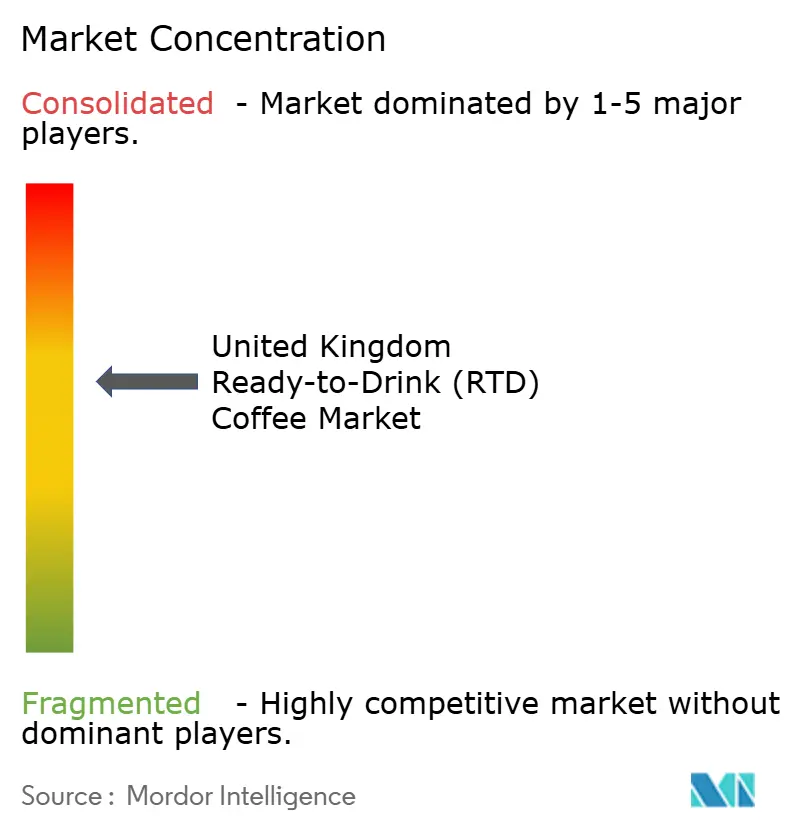
| Market Concentration | Medium |
Major Players *Disclaimer: Major Players sorted in no particular order Image © Mordor Intelligence. Reuse requires attribution under CC BY 4.0. | |
United Kingdom Ready-to-Drink (RTD) Coffee Market Analysis by Mordor Intelligence
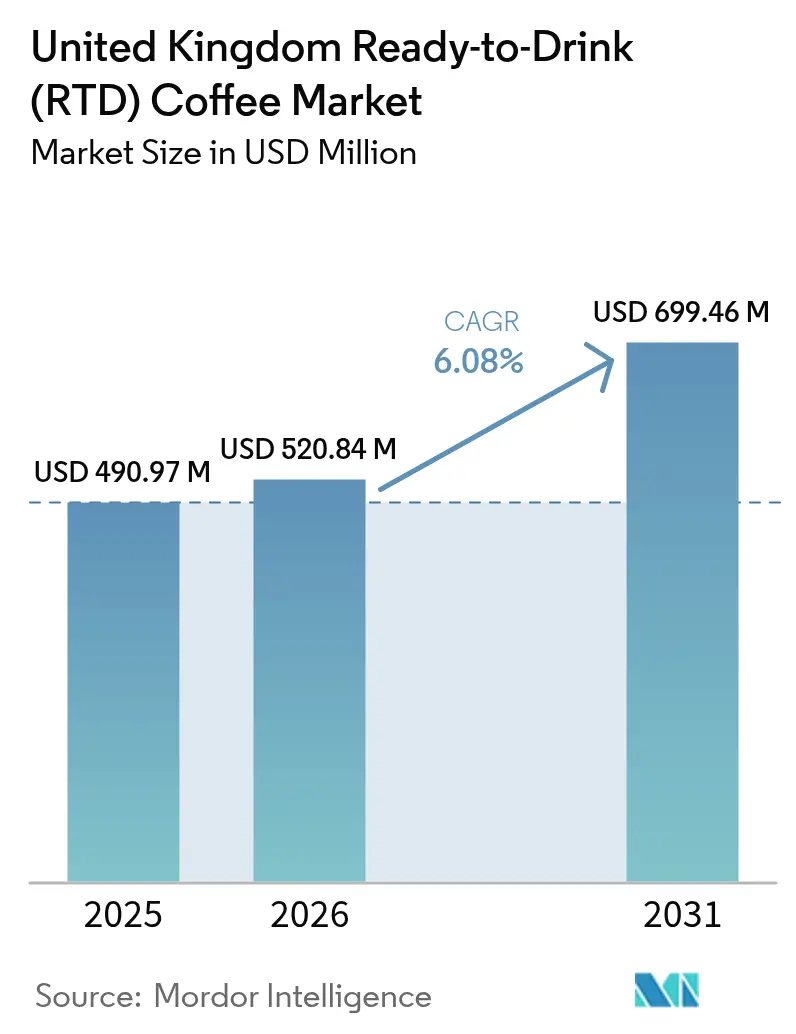
United Kingdom Ready-to-Drink (RTD) coffee market size in 2026 is estimated at USD 520.84 million, growing from 2025 value of USD 490.97 million with 2031 projections showing USD 699.46 million, growing at 6.08% CAGR over 2026-2031. The market expansion is attributed to the increasing consumer preference for convenient, health-conscious, and premium portable beverages. The primary market drivers are Millennial and Generation Z consumers, who demonstrate significant demand for efficient, functional products aligned with contemporary urban lifestyles. The Ready-to-Drink (RTD) coffee segment continues to acquire substantial market share from traditional carbonated beverages and hot brewed coffee through the incorporation of functional elements, including energy-enhancing ingredients, plant-based formulations, and reduced-sugar alternatives. Market advancement is further facilitated by product development initiatives in flavor diversification and health-oriented formulations, implementation of sustainable packaging solutions, and expansion of e-commerce distribution channels.
Key Report Takeaways
- By packaging type, cans retained 48.25% revenue share in 2025, whereas cartons are forecast to climb at a 5.05% CAGR to 2031.
- By product type, iced latte captured 51.62% of the UK RTD coffee market size in 2025; cold brew is poised for a 7.29% CAGR over 2026-2031.
- By ingredient base, dairy options accounted for 70.55% of the RTD coffee market size in 2025, but plant-based drinks will expand at an 8.19% CAGR.
- By distribution channel, supermarkets/hypermarkets commanded 57.68% of 2025 sales, while online retail is set to post a 11.75% CAGR.
- By flavor profile, plain/classic formulations captured 51.74% share in 2025; flavored variants are forecast to accelerate at a 6.97% CAGR to 2031.
- By price positioning, mass-market SKUs held 62.41% revenue share in 2025, whereas the premium segment is projected to register a 6.26% CAGR through 2031.
- By geography, England led with 84.35% of RTD coffee market share in 2025; Northern Ireland is projected to log a 7.46% CAGR through 2031.
Note: Market size and forecast figures in this report are generated using Mordor Intelligence’s proprietary estimation framework, updated with the latest available data and insights as of 2026.
United Kingdom Ready-to-Drink (RTD) Coffee Market Trends and Insights
Drivers Impact Analysis*
| Driver | (~) % Impact on CAGR Forecast | Geographic Relevance | Impact Timeline |
|---|---|---|---|
| Convenience and on-the-go consumption on the rise | +1.8% | National, with stronger adoption in England and urban Scotland | Medium term (2-4 years) |
| Health trends spotting in RTD coffee beverages | +1.2% | National, with premium segments in England leading adoption | Long term (≥ 4 years) |
| Augmented expenditure on advertising and promotional activities | +0.9% | National, concentrated in England and Wales metropolitan areas | Short term (≤ 2 years) |
| Product innovation experiences notable surge | +1.1% | National, with Research and Development centers primarily in England | Medium term (2-4 years) |
| Brand-retailer partnerships strengthen market presence | +0.7% | National, with strongest impact in England through major retail chains | Medium term (2-4 years) |
| Cold brew variants appeal to younger demographics | +0.6% | National, with urban concentration in England and Scotland | Long term (≥ 4 years) |
| Source: Mordor Intelligence | |||
Convenience and On-the-Go Consumption on the Rise
The United Kingdom's Ready-to-Drink (RTD) coffee market exhibits substantial expansion, propelled by increasing consumer preferences for convenient and portable caffeine solutions. The market trajectory demonstrates a strong correlation with transforming workplace dynamics, particularly the widespread implementation of hybrid working models. This fundamental shift in consumer behavior exemplifies broader societal transitions in work-life integration and heightened requirements for efficient caffeine consumption methods. For instance, Starbucks and Costa increased their ready-to-drink (RTD) coffee portfolio in UK retail stores through the addition of chilled lattes and espresso drinks in response to growing market demand. According to Costa Coffee's 'Lattenomics' report, a 15% increase in Drive-Thru locations and increased mobile consumption indicate the United Kingdom's shift toward flexible, on-the-go consumption patterns [1]. This consumer behavior trend drives the expansion of Ready-to-Drink (RTD) coffee, as customers demand convenient caffeine options outside traditional cafes.
Health Trends Spotting in RTD Coffee Beverages
The United Kingdom ready-to-drink (RTD) coffee market is experiencing a significant transformation driven by increasing health consciousness among consumers, as manufacturers develop reduced-sugar formulations and functional additives that elevate coffee from a conventional caffeine delivery system to a wellness-oriented beverage. The protein-enhanced segment demonstrates this transformation in the market. For instance, in June 2024, Starbucks, in partnership with dairy company Arla, introduced a new line of high-protein coffee-based RTD beverages to the United Kingdom market. The Starbucks Protein Drink with Coffee range contains 20g of protein per bottle, utilizing low-fat milk with zero added sugar. This product development corresponds with the substantial growth in the United Kingdom protein beverage market. The wellness-oriented product development extends beyond protein to incorporate prebiotic fibers, marine collagen, and adaptogenic mushrooms.
Augmented Expenditure on Advertising and Promotional Activities
The intensifying competition for retail shelf space and consumer attention within the United Kingdom ready-to-drink (RTD) coffee market has necessitated substantial marketing investments across traditional and digital channels, with market participants implementing comprehensive strategic initiatives to enhance category awareness and establish distinct brand positioning in the competitive landscape. This strategic imperative is exemplified by Starbucks' significant investment of USD 507.8 million in advertising during its fiscal year ending in 2023, demonstrating the market's increasing emphasis on brand visibility and consumer engagement. Subsequently, this market development has prompted organizations to prioritize sophisticated packaging solutions that seamlessly integrate functionality with aesthetic appeal, thereby fostering meaningful consumer engagement and facilitating sustained purchase behavior in the United Kingdom's dynamic RTD coffee market environment.
Product Innovation Experiences Notable Surge
The United Kingdom's Ready-to-Drink (RTD) coffee market is experiencing significant transformation through strategic innovation initiatives across product development, packaging solutions, and consumption patterns. The market demonstrates substantial evolution, particularly in the cold brew segment, which has emerged as a key growth driver. For instance, in April 2025, UK functional beverage company Unconform introduced three new ready-to-drink (RTD) cold brew coffee beverages with wellness-focused ingredients. The vegan drinks combined oat milk with Arabica beans and nootropics - compounds associated with cognitive health benefits, including enhanced mood, focus, and sleep. The product line featured three variants: Flat White containing ashwagandha, ginkgo biloba, and vitamin B12; Salted Caramel Latte with inulin and turmeric; and Mocha enriched with niacin and biotin. Moreover, the market's infrastructure development is evident through Westrock Coffee's investments in advanced production capabilities, enabling diverse packaging formats, including multi-serve PET bottles and single-serve options in glass and aluminum cans.
Restraints Impact Analysis*
| Restraint | (~) % Impact on CAGR Forecast | Geographic Relevance | Impact Timeline |
|---|---|---|---|
| High amount of HFSS sugar limiting iced coffee growth | -1.4% | National, with stricter enforcement in England and Wales | Short term (≤ 2 years) |
| Arabica cost volatility post-brexit tariffs | -0.8% | National, affecting all United Kingdom regions equally | Medium term (2-4 years) |
| RTD coffee faces stiff competition for shelf space from emerging alternatives | -0.9% | National, with intensified competition in England's dense retail market | Medium term (2-4 years) |
| Caffeine concerns curbing RTD coffee | -0.5% | National, with health-conscious segments in urban England leading concern | Long term (≥ 4 years) |
| Source: Mordor Intelligence | |||
High Amount of HFSS Sugar Limiting Iced Coffee Growth
High sugar content in Ready-to-Drink (RTD) coffee products constrains market growth in the United Kingdom, despite the category's increasing popularity. Health-conscious consumers examining ingredient labels find that many RTD coffee products contain sugar levels similar to soft drinks. This conflicts with the current consumer preference for wellness and clean-label products, especially among Millennials and Gen Z consumers. The UK's Soft Drinks Industry Levy and public health initiatives have increased consumer awareness about sugar consumption risks, leading many to avoid high-sugar beverages. RTD coffee products from major United Kingdom chains reveal substantial sugar content - a Starbucks caramel frappuccino contains 48.5g of sugar, while a Caffe Nero Belgian chocolate frappe contains 44.5g. These sugar levels highlight the disconnect between current product offerings and consumer health preferences in the United Kingdom RTD coffee market.
Arabica Cost Volatility Post-Brexit Tariffs
The implementation of post-Brexit tariff structures has significantly increased arabica coffee price volatility, substantially impacting operational margins and supply chain dynamics within the United Kingdom's ready-to-drink (RTD) coffee manufacturing sector. The prevailing global climate conditions affecting coffee-growing regions have intensified market challenges. Tchibo, a significant European coffee roaster, has announced price adjustments of 50 cents to EUR 1 per pound commencing April 2025, attributing the increase to elevated world market costs. These price modifications particularly affect the United Kingdom's premium RTD coffee segment, which relies heavily on high-quality arabica beans, potentially constraining expansion in these rapidly growing market segments. Beyond raw material cost implications, supply chain disruptions have necessitated Tchibo to restructure its e-commerce logistics operations to optimize cost efficiency. United Kingdom manufacturers must additionally navigate complex post-Brexit import protocols, creating strategic advantages for organizations maintaining diversified sourcing frameworks and vertical integration capabilities.
*Our forecasts treat driver/restraint impacts as directional, not additive. The impact forecasts reflect baseline growth, mix effects, and variable interactions.
Segment Analysis
By Packaging Type: Cans Dominate While Cartons Accelerate
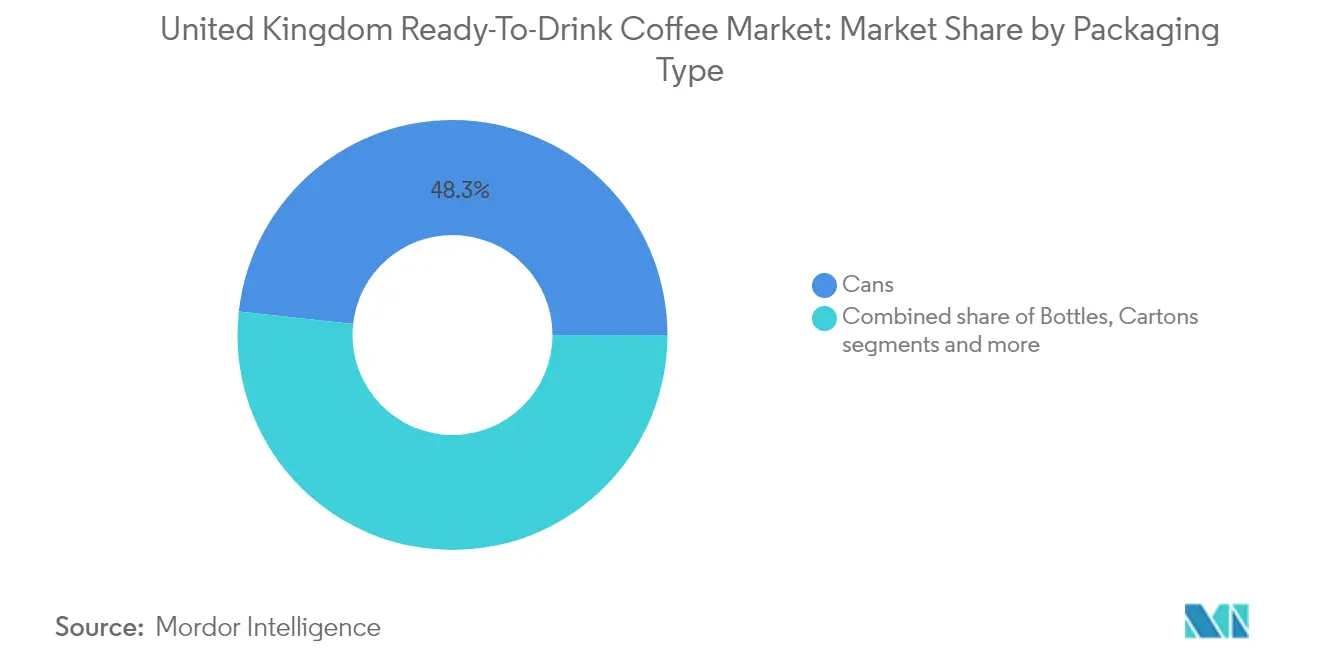
Cans hold 48.25% of the UK RTD coffee market in 2025, making them the dominant packaging format due to their portability, extended shelf life, and premium positioning capabilities. This dominance aligns with consumer demand for on-the-go consumption. The Automatic Vending Association (AVM) reported that the Coffee-to-Go segment generated EUR 758 million in product revenue in 2023, underlining the importance of convenience in packaging choices . Cartons are expected to grow at a 5.05% CAGR from 2026-2031, driven by their environmental benefits and cost efficiency in a market increasingly focused on sustainability.
Bottles, including glass and PET formats, retain a substantial market share despite moderate growth rates. Premium RTD coffee brands use glass bottles to emphasize quality and sustainability. In 2024, Jimmy's Iced Coffee introduced its SlimCan range priced at EUR 1.39, targeting convenience stores and impulse purchases. The packaging market is advancing with the integration of smart packaging features, including QR codes and NFC technology, which enable digital interaction with physical products.

By Product Type: Cold Brew Challenges Iced Latte Dominance
In the United Kingdom, Iced Latte/Cappuccino products maintain a 51.62% market share in 2025, as British consumers demonstrate a preference for these familiar flavours when transitioning from hot coffee to RTD formats. Cold Brew RTD Coffee has established itself as the fastest-growing segment in the UK market, with a projected CAGR of 7.29% during 2026-2031. This growth is attributed to its refined taste profile and higher caffeine content, particularly resonating with the British youth demographic.
The Functional/Protein-Enhanced RTD Coffee segment represents a significant innovation frontier in the United Kingdom market, addressing British consumers' evolving preferences for beverages that deliver multiple nutritional benefits beyond refreshment and caffeine. Nitro RTD Coffee maintains a specialised position in the United Kingdom market, with its distinctive characteristics creating differentiation opportunities, particularly in premium British retail establishments where experiential factors influence purchasing behaviour.
By Flavor Profile: Plain Classics Lead While Flavored Options Accelerate
In the United Kingdom ready-to-drink coffee market, Plain/Classic flavors maintain a dominant 51.74% market share in 2025, demonstrating British consumers' strong preference for authentic coffee taste profiles. The flavored variants segment in the ready-to-drink coffee market is projected to grow at a 6.97% CAGR during 2026-2031, primarily driven by younger British consumers seeking new taste experiences and sweeter profiles that reduce coffee's natural bitterness. Ready-to-drink coffee ranks among the top categories for flavor experimentation among United Kingdom consumers.
The United Kingdom's ready-to-drink coffee market has expanded beyond basic vanilla and caramel offerings into more complex flavor combinations. In May 2025, Jimmy's Iced Coffee introduced a limited-edition Donut flavor to target consumers seeking differentiated coffee varieties. While flavor innovation presents growth opportunities, manufacturers in the United Kingdom must address increasing consumer concerns regarding sugar content and health considerations.
By Ingredient Base: Plant-Based Alternatives Challenge Dairy Dominance
In the United Kingdom's RTD coffee market, dairy-based products maintain a 70.55% market share in 2025, capitalising on milk's natural compatibility with coffee and its established position in British consumer preferences for creamy textures. Plant-based milk alternatives in the United Kingdom market are advancing at 8.19% CAGR (2026-2031), driven by the rising prevalence of lactose intolerance among British consumers, ethical considerations, and increasing health awareness. Oatly's introduction of "Barista Organic Oat Drink" in February 2024 in the United Kingdom retail channels exemplifies how plant-based manufacturers are emphasising premium offerings and health benefits to expand their presence in the British market.
The expansion of plant-based alternatives in the United Kingdom has fostered strategic partnerships between established British coffee brands and plant-based milk producers for co-branded products. The United Kingdom market is further diversifying beyond traditional dairy and plant-based segments to incorporate functional ingredients such as prebiotic fibers and adaptogens, aligning with British consumer preferences for health-enhanced beverages.
By Distribution Channel: Online Growth Outpaces Traditional Retail
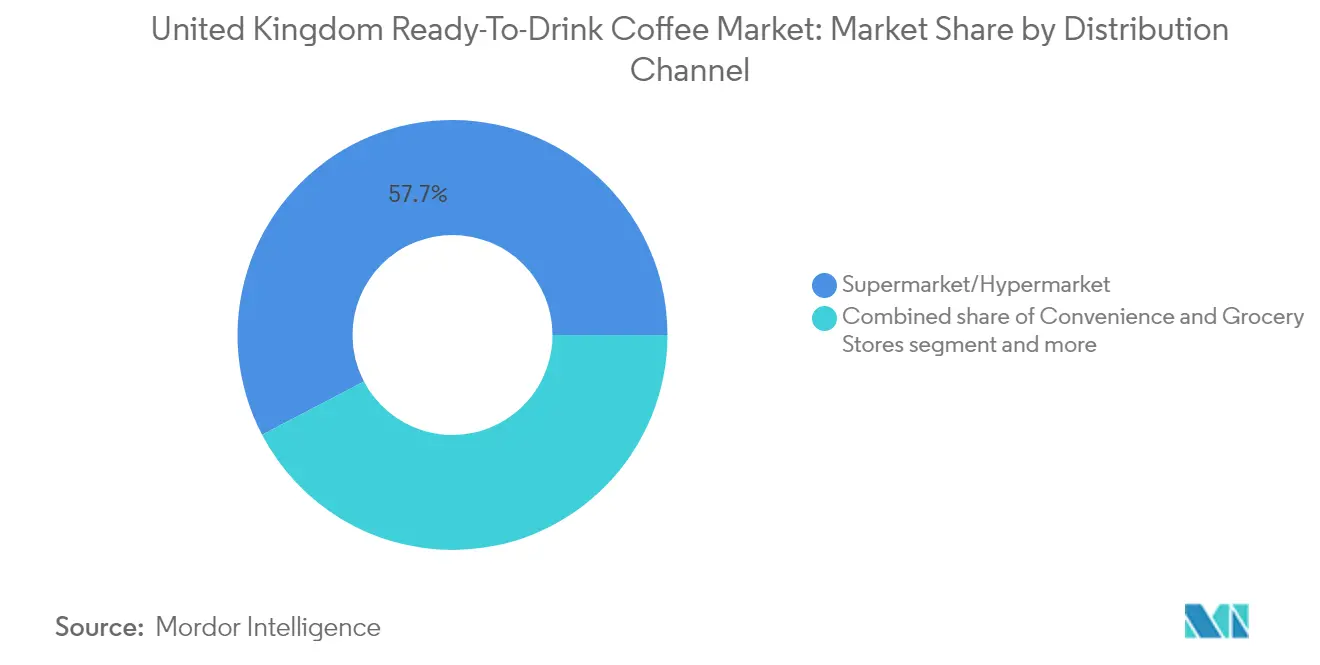
Supermarkets/Hypermarkets hold the dominant position in RTD coffee distribution with a 57.68% market share in 2025, supported by their extensive retail presence and cold chain infrastructure that enables them to maintain the broadest RTD coffee product selection. The online retail channel projects significant expansion at 11.75% CAGR during 2026-2031, transforming consumer RTD coffee purchasing patterns in response to broader e-commerce adoption. According to the Office for National Statistics (UK), e-commerce sales constituted 26.8% of total retail sales in Great Britain as of March 2025, with food-related online sales representing over 9% . This market development demonstrates the increasing importance of online retail channels for Ready-to-Drink (RTD) coffee products. Companies are utilizing e-commerce platforms to expand their distribution networks, implement subscription-based revenue models, and provide direct-to-consumer beverage delivery services.
Convenience and grocery stores serve as key distribution points, with their consumer proximity generating spontaneous purchase opportunities for RTD coffee brands. The expansion of vending solutions offers additional distribution channels, exemplified by Lavazza Professional UK's introduction of 'Lavazza on the Move' self-serve coffee machines in May 2024, targeting high-traffic locations through partnerships with convenience stores and petrol stations (World Coffee Portal, 2024). This distribution expansion necessitates comprehensive omnichannel strategies from brands to maintain a consistent market presence across physical and digital platforms.
By Price Positioning: Premium Segment Narrows Gap with Mass Market
Mass-market products hold a 62.41% market share in 2025, supported by extensive distribution networks and competitive pricing that drive high sales volumes. The Premium segment is experiencing growth at 6.26% CAGR (2026-2031), as consumers demonstrate increased preference for higher quality products, unique flavors, and enhanced functional benefits.
The expanding premium segment has created market entry opportunities for specialty coffee brands moving from foodservice into retail channels. In 2024, Grind's nationwide launch in Tesco supermarkets exemplifies this shift, introducing café-quality RTD coffee products to mass retail environments. The market's price structure continues to evolve with super-premium products targeting luxury consumption and gift-giving segments. This market segmentation establishes distinct competitive environments across price tiers, where mass-market companies compete on price and distribution capabilities, while premium brands emphasize quality and brand identity.
Geography Analysis
England holds 84.35% of the UK RTD coffee market share in 2025, driven by its larger population, higher concentration of urban professionals, and established specialty coffee culture. London functions as the category's innovation center, where new product launches typically occur before national rollout. England maintains market leadership as Europe's largest specialty coffee market, driven by high out-of-home consumption of specialty-grade coffee, according to the Center for the Promotion of Imports.
Northern Ireland shows the highest growth rate with a projected 7.46% CAGR for 2026-2031, exceeding the national average despite its smaller population. This growth stems from Belfast's increasing urbanization and expanding retail distribution networks that enhance product accessibility. The region's growth is supported by its younger population and the trade opportunities arising from its unique post-Brexit trading position.
Scotland and Wales maintain modest but growing market shares, each with distinct consumption patterns. Scotland's market shows stronger performance in Edinburgh and Glasgow, while Wales demonstrates consumption across both urban and rural regions. Both areas offer growth opportunities for companies that customize their marketing and distribution approaches to regional preferences. The expansion of specialty coffee culture beyond London creates additional market opportunities, with regional events such as the Manchester Coffee Festival increasing specialty coffee awareness.
Competitive Landscape
The United Kingdom's ready-to-drink (RTD) coffee market is moderately consolidated, with major beverage manufacturers controlling distribution networks, while specialty coffee producers maintain market share through premium product offerings. The market structure encompasses major corporations, including Starbucks Corporation, The Coca-Cola Company, Carlsberg Group (Britvic plc), Emmi AG, and Luigi Lavazza S.p.A., each maintaining significant market presence.
These market leaders capitalize on their substantial economies of scale and comprehensive marketing infrastructure to implement rapid market responses and strategic product launches across diverse consumer demographics. Their competitive position is fortified through extensive manufacturing capabilities, established global procurement networks, and substantial resources for executing comprehensive marketing initiatives that create significant barriers to entry for smaller market participants.
The dominant market players consistently implement facility expansion strategies and production capacity enhancement programs to maintain their market position. Additionally, these corporations engage in strategic collaborations to develop innovative product portfolios aligned with evolving consumer preferences. Product innovation remains the primary competitive strategy employed by market participants to address dynamic market conditions and maintain competitive advantage.
United Kingdom Ready-to-Drink (RTD) Coffee Industry Leaders
-
Starbucks Corporation
-
The Coca-Cola Company
-
Luigi Lavazza S.p.A.
-
Carlsberg Group (Britvic plc)
-
Emmi AG
- *Disclaimer: Major Players sorted in no particular order
Market Opportunities and Future Outlook
Functional differentiation is creating visible whitespace in the UK RTD coffee aisle, particularly around better-for-you positioning that avoids high sugar while attaching credible benefits. Newer propositions in functional decaf and cold brew formats, including a prebiotic-fiber functional decaffeinated cold-brew RTD introduced in January 2026, suggest brands are using ingredient cues (for example, fiber blends) to extend RTD coffee beyond energy into gut-health and wellness claims without leaving the ready-to-drink format. Alongside this, larger coffee players continue to refresh the category with new RTD ranges and flavor-led concepts, which keeps openings for faster SKU rotation, seasonal editions, and premium multipacks across grocery and convenience.
Packaging and compliance-linked cost-to-serve is also becoming a more direct innovation and margin lever, particularly for suppliers that can redesign packs and labels to align with UK recycling scoring and upcoming deposit policy changes. In April 2026, the UK Extended Producer Responsibility (EPR) framework moved into its second year with packaging scored via Recycling Assessment Methodology (RAM) for modulated fees, while Wales approved Deposit Scheme for Drinks Containers (Wales) Regulations 2026 with a target launch date of October 2027, including glass containers. These changes support near-term opportunities in lightweighting, recyclable materials, and on-pack claims and traceability that help brands and retailers manage packaging obligations while keeping RTD coffee competitive in chillers and e-commerce fulfillment.
Recent Industry Developments
- February 2026: Starbucks, via its partnership with Arla Foods, launched two limited-edition RTD chilled coffee products in the United Kingdom, Starbucks Frappuccino Sip of Joy (Caramel Brownie) and Starbucks Summer Escape (Pistachio). The rollout reinforced seasonal and flavor-led innovation in chilled cabinets and helped sustain shelf visibility across major grocers through an established dairy manufacturing and distribution route.
- January 2025: Carlsberg Group completed the acquisition of Britvic plc, adding a major UK soft drinks bottler and distributor to its portfolio. The combination expanded route-to-market scale and cold-chain execution potential across UK retail, supporting broader cross-category negotiations and promotional reach for ready-to-drink beverages.
- June 2024: Starbucks, in partnership with Arla, introduced a high-protein RTD coffee range in the United Kingdom positioned around 20g protein per bottle and zero added sugar. The launch reinforced the shift toward functional RTD coffee and increased competitive pressure on incumbents to deliver HFSS-aware reformulation and clearer nutritional value propositions.
Research Methodology Framework and Report Scope
Market Definition and Coverage
This market is defined as ready-to-consume coffee beverages sold in the United Kingdom in pre-packaged formats, where the drink is consumed without extra brewing. It covers shelf-stable products packed in cans, bottles, or cartons, sold through retail and on-premise points.
Scope exclusions: Freshly brewed cafe drinks, foodservice coffee concentrates, and powdered coffee mixes are excluded from the market value.
Segmentation Overview
- By Packaging Type
- Bottles
- Glass Bottles
- PET Bottles
- Cans
- Cartons
- Others
- Bottles
- By Product Type
- Cold Brew RTD Coffee
- Iced Latte/Cappuccino
- Nitro RTD Coffee
- Functional/Protein-Enhanced RTD Coffee
- By Flavor Profile
- Plain/Classic
- Flavored
- By Ingredient Base
- Dairy-Based
- Plant-Based Milk
- By Price Positioning
- Mass
- Premium
- By Distribution Channel
- Supermarkets/Hypermarkets
- Convenience and Grocery Stores
- Online Retail Stores
- Others (Vending Machine, Forecourt Stores, etc)
- By Geography
- England
- Scotland
- Wales
- Northern Ireland
Data Sources, Market Sizing, and Validation
Desk Research
Desk research was used to build the base structure of the UK demand picture and to keep assumptions tied to observable signals. We relied on public sources such as the UK Office for National Statistics for household spending context, HM Revenue and Customs trade statistics for packaged beverage flows, and Food Standards Agency materials for category and labeling cues. We also reviewed UK retail and beverage association publications (where available) and peer reviewed nutrition and consumer studies to understand shifts such as lower sugar claims and dairy alternatives.
On top of that, company annual reports, investor presentations, and credible press coverage were used to map brand activity, distribution expansion, and packaging moves that can affect volumes and pricing in the United Kingdom. In a few places, we also used our paid subscriptions for company financials and for patent activity checks to validate innovation intensity around cold coffee formats and packaging. The desk sources listed here are not exhaustive, and many other public references were used to cross-check, fill gaps, and clarify points during the work.
Primary Interviews and Surveys
Primary work focused on interviews and short surveys with participants across the RTD coffee value chain, including brand teams, packaging and distribution specialists, and retail-facing roles. Because this is a UK-only market, discussions stayed focused on local channel mix, price laddering, and how chilled versus ambient placement changes turnover, and then the findings were used to test and adjust desk assumptions.
Distribution of primary research fieldwork respondents
| Company type | Respondent position |
|---|---|
| Top tier: 37% | CXOs: 12% |
| Mid tier: 49% | Functional/Unit leaders: 35% |
| Smaller Players: 14% | Managers: 53% |
Market-Sizing & Forecasting
Sizing starts with a top-down build where packaged beverage spend and category penetration cues are translated into an RTD coffee demand pool for the UK, and then filtered by channel availability and typical pack sizes. Once that structure is in place, the totals are corroborated through selective bottom-up approximations, such as sampled shelf prices by format, estimated unit velocities by channel type, and checks against disclosed brand performance where it is public.
A few inputs that matter in this market are the split between chilled and ambient placement, average pack size and multipack mix, the share of dairy-based versus plant-based formulations, and the pace of price increases at retail driven by coffee and packaging costs. We also track distribution channel shifts (convenience and grocery versus on-premise), promotion intensity, and the rate of new product launches, since these move both volume and realized prices. Forecasts are built using scenario analysis supported by expert views on pricing and penetration trends, with a simple time series overlay to keep growth paths consistent with recent momentum. Where bottom-up detail is not available for smaller channels, gaps are handled by applying conservative channel weights that are validated through interview feedback and public channel trends.
Data Validation & Update Cycle
Outputs are checked in several passes so that the final number matches the story UK market signals are indicating. We compare the model against independent indicators like category growth commentary, trade movement direction for packaged coffee drinks, and observed shelf pricing bands, and then investigate any large variances before sign-off.
If an input shifts suddenly, such as a meaningful price reset, a packaging regulation change, or a visible distribution expansion, analysts re-contact sources to confirm what changed and whether it affects volume, value, or both. Reports are refreshed annually, and interim updates are made when a material event can shift the near-term trajectory. Before delivery, a final review is completed so clients receive the latest updated view rather than an older locked draft.
Mordor Intelligence's United Kingdom Ready to Drink Rtd Coffee Market Size Measured Against Other Published Estimates
Published market numbers for UK RTD coffee often do not match, even when the titles look similar. The differences usually come from what is counted as RTD coffee, whether values are taken at retail selling price or a net revenue proxy, and how pricing is carried forward during inflationary periods.
Another common driver is channel coverage, since some estimates fold in broader out-of-home beverage sales or include adjacent products that sit near cold coffee on shelves. Currency timing also plays a role because USD conversions can shift the reported value if the exchange rate month is not stated, and some publications refresh assumptions less frequently when raw material costs move quickly.
Benchmark comparison
| Source | Market Size | Gaps in Research Methodology |
|---|---|---|
| Mordor Intelligence | USD 490.97 M (2025) | |
| Market Data Publisher A | USD 1.10 B (2024) | This figure appears to use a broader value basis that can align closer to retail selling prices, and it does not clearly state exclusions for cafe-prepared coffee or non-RTD adjacent items, which can lift the total. |
| Industry Research Outlet B | USD 1.39 B (2025) | The scope description is high-level and may include a wider set of ready-to-drink coffee occasions and formats, while also applying different channel coverage assumptions that can raise the market value for the same year. |
The benchmark table shows a wide spread mainly because the counted boundary and value basis change across publications, and then pricing and channel choices amplify that gap. In Mordor Intelligence's model, only shelf-stable, pre-packaged RTD coffee in cans, bottles, or cartons is counted, while freshly brewed cafe drinks, coffee concentrates, and powdered mixes are kept outside the total so the number stays traceable to observable packaged-beverage signals.
Key Questions Answered in the Report
What is the current value of the United Kingdom Ready-to-Drink (RTD) coffee market?
The United Kingdom Ready-to-Drink (RTD) coffee market is worth USD 520.84 million in 2026 and is projected to reach USD 699.46 million by 2031.
Which packaging format is growing fastest?
Carton packs are expanding at a 5.05% CAGR as consumers reward recyclable materials and longer shelf life.
How big is the plant-based RTD coffee segment?
Plant-based variants are rising at an 8.19% CAGR, challenging dairy’s 70.55% share by offering vegan and lactose-free options.
Which region in the UK is experiencing the fastest market growth?
Northern Ireland leads with a 7.46% CAGR through 2031, driven by urbanisation and rising demand for convenience beverages.