
Market Overview
| Study Period | 2021 - 2031 |
|---|---|
| Forecast Data Period | 2026 - 2031 |
| Base Year Market Size (2025) | USD 26.32 Billion |
| Market Size (2026) | USD 27.43 Billion |
| Market Size (2031) | USD 33.71 Billion |
| Growth Rate (2026 - 2031) | 4.22 % |
| Market Concentration | Medium |
Major Players
*Disclaimer: Major Players sorted in no particular order Image © Mordor Intelligence. Reuse requires attribution under CC BY 4.0. |
|
UK Luxury Goods Market Analysis by Mordor Intelligence
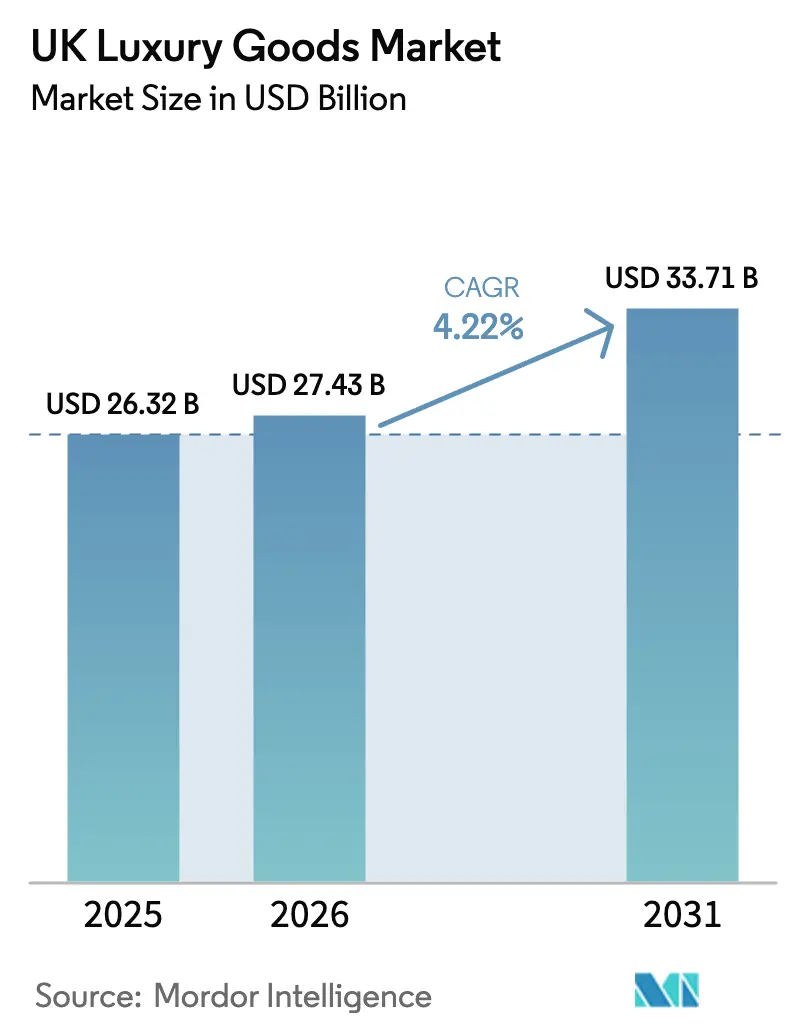
UK luxury goods market size in 2026 is estimated at USD 27.43 billion, growing from 2025 value of USD 26.32 billion with 2031 projections showing USD 33.71 billion, growing at 4.22% CAGR over 2026-2031. The UK luxury fashion market is evolving through innovation in materials and design, with sustainability and ethical sourcing becoming central priorities. This evolution is further reinforced by social media and celebrity influence, which continue to shape consumer perceptions and amplify brand visibility through curated digital storytelling. Clothing and apparel, central to luxury identity and seasonal trends, continue to dominate. Women continue to anchor the luxury segment, but men are emerging as a fast-growing demographic, driven by rising interest in high-end streetwear, grooming, and premium accessories. This shift presents brands with opportunities to diversify their offerings and refine their marketing strategies. Distribution strategies are evolving as well. Single-brand boutiques remain vital for reinforcing brand identity and offering curated in-store experiences that deepen customer loyalty.
Key Report Takeaways
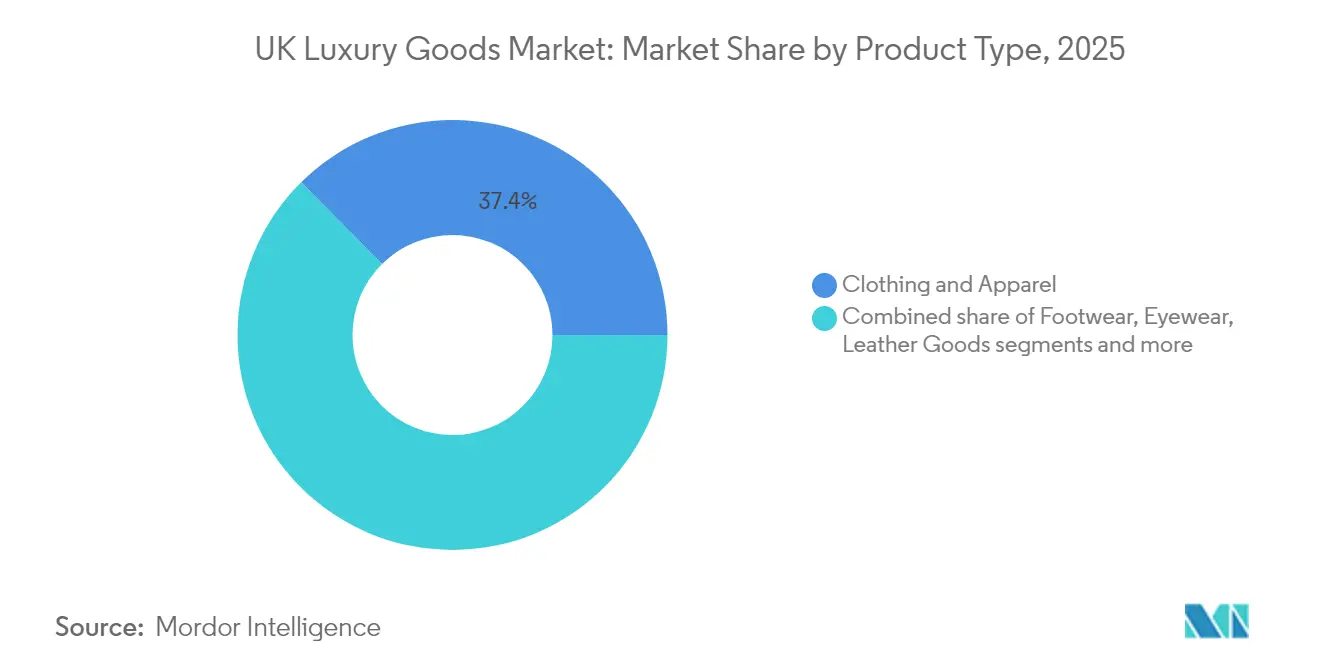
- By product type, clothing and apparel held the largest market share in 2025 at 37.43%, while leather goods are projected to be the fastest-growing segment from 2026 to 2031 at a CAGR of 4.56%.
- By end user, women dominated the market with 54.35% of the share in 2025, although the men’s segment is expected to grow faster at a CAGR of 4.92%.
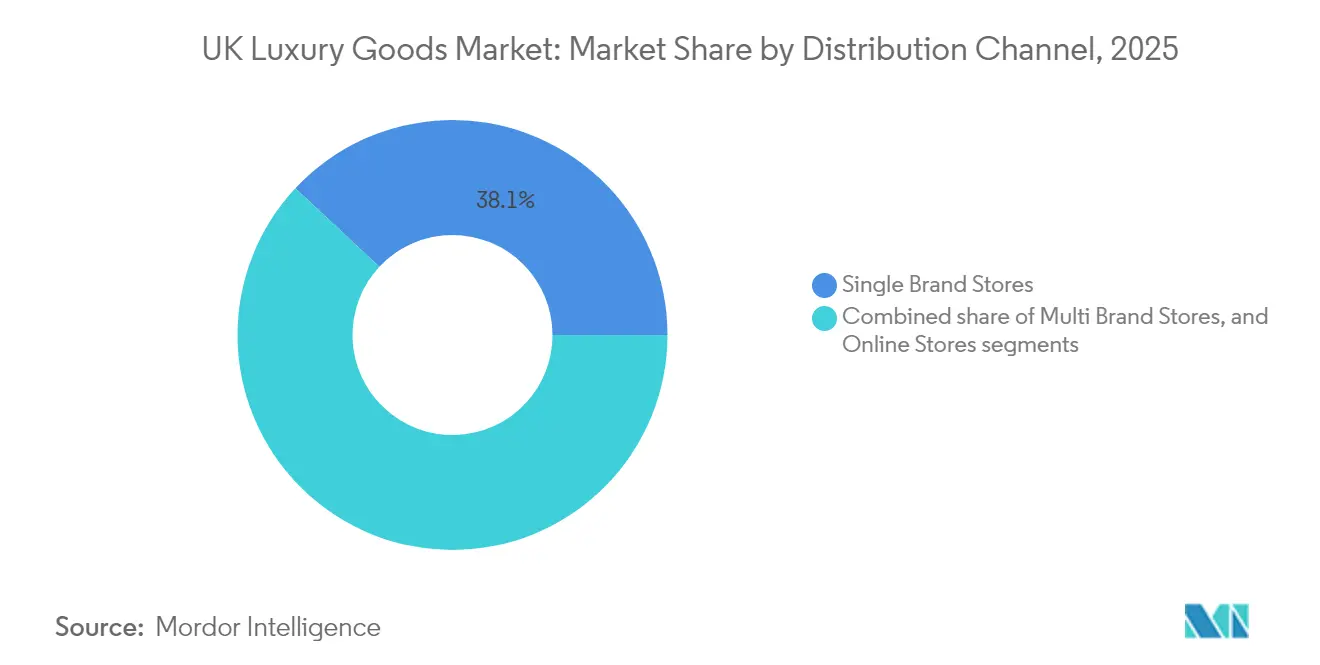
- By distribution channel, single brand stores led with 38.05% share in 2025; however, online stores are forecasted to grow the fastest at 5.32% CAGR.
Note: Market size and forecast figures in this report are generated using Mordor Intelligence’s proprietary estimation framework, updated with the latest available data and insights as of 2026.
UK Luxury Goods Market Trends and Insights
Drivers Impact Analysis*
| Drivers | (~) % Impact on CAGR Forecast | Geographic Relevance | Impact Timeline |
|---|---|---|---|
| Product innovation in terms of raw material and design | +1.2% | United Kingdom, with influence across European luxury markets | Medium term (2-4 years) |
| Influence of social media and celebrity endorsement | +0.9% | United Kingdom-wide, with concentration in urban centers | Short term (≤ 2 years) |
| Increasing strategic investment and initiatives propelling the market | +0.8% | United Kingdom-wide, with focus on London and other major cities | Medium term (2-4 years) |
| Consumer emphasis on sustainability | +0.6% | United Kingdom-wide, with stronger impact in affluent urban areas | Long term (≥ 4 years) |
| Digital transformation and e-commerce adoption enhance accessibility for affluent consumers. | +0.5% | United Kingdom-wide, with stronger penetration in metropolitan areas | Short term (≤ 2 years) |
| Technology integration in luxury retail improves shopping experiences. | +0.4% | United Kingdom-wide, with concentration in flagship stores and premium locations | Medium term (2-4 years) |
| Source: Mordor Intelligence | |||
Product innovation in terms of raw material and design
In the UK, luxury brands are merging time-honored craftsmanship with a commitment to sustainability, reshaping the landscape of high-end goods. Brands are adopting innovative materials that balance design excellence with environmental responsibility. A notable instance is Uncaged Innovations, which unveiled 'Elevate' in November 2024. This bio-based leather alternative boasts a remarkable 95% reduction in greenhouse gas emissions, 93% less water consumption, and 72% lower energy use compared to its traditional counterpart. Furthermore, Uncaged’s collaboration with ten independent fashion labels, including the UK-based Stow, reflects a growing shift in the industry. Sustainability-led innovation is no longer confined to major luxury houses. Independent, design-driven labels are also finding creative ways to merge aesthetics with accountability. As the EU gears up to enforce its Ecodesign for Sustainable Products Regulation, mandating Digital Product Passports for textiles by mid-2027, UK luxury houses are taking proactive steps [1]Source: CBI Ministry of Foreign Affairs, "The European market potential for leather bags,"cbi.eu . Many of these efforts also reflect strategic foresight, ensuring continued access to European markets post-Brexit.
Influence of social media and celebrity endorsement
In the UK luxury market, brand perception and purchase intent are increasingly swayed by celebrity endorsements, especially among the digitally-savvy younger audience. Short-form celebrity-led content on platforms such as Instagram and TikTok now plays a pivotal role in shaping brand image and influencing purchase intent. A 2024 University of Portsmouth survey indicated that 60% of consumers trusted influencer recommendations, while nearly half of all purchasing decisions were influenced by these endorsements [2]Source: University of Portsmouth, “New research unveils the ‘dark side’ of social media influencers and their impact on marketing and consumer behaviour,”port.ac.uk . Campaigns like Burberry's "Art of the Trench" underscore the potency of digital engagement in bolstering brand equity and nurturing customer loyalty. These campaigns highlight the growing importance of social media integration in luxury marketing, translating digital engagement into measurable business outcomes.
Increasing strategic investment and initiatives propelling the market
Luxury brands in the UK are embedding sustainability into their core operations, transitioning from marketing-driven claims to measurable action. The UK's fashion industry is a significant contributor and is increasingly turning to circular economy models. These include garment recycling, resale platforms, and the use of regenerative materials, all aimed at minimizing environmental impact. British luxury brand Stella McCartney stands out, leading the charge with innovations like bio-based textiles and collaborations with entities such as the Ellen MacArthur Foundation. Meanwhile, a new wave of affluent, digitally savvy luxury buyers is emerging in the UK. These "new luxury consumers" are younger, prioritize authenticity and craftsmanship, and seek brands that resonate with their values. For these consumers, luxury extends beyond status, it represents individuality, craftsmanship, and purpose. Millennials, in particular, are championing this movement, gravitating towards brands with genuine commitments to environmental and social causes.
Consumer emphasis on sustainability
Sustainability has evolved from a marketing theme into a fundamental business strategy across the UK luxury segment. Brands now weave environmental considerations into their design, sourcing, and production processes. Consumers are responding: affluent UK households increasingly seek luxury goods that resonate with ethical and environmental values. This emerging generation of luxury consumers is younger, digitally connected, and values authenticity, craftsmanship, and social responsibility over traditional notions of prestige. Millennials, in particular, are at the forefront of this shift, showcasing heightened eco-awareness and a preference for brands that mirror their values. For example, Stella McCartney redefined sustainable luxury with innovations like mushroom-based leather (Mylo™) and a commitment to cruelty-free collections. Meanwhile, Burberry aims for net-zero emissions across its supply chain by 2040 and has already phased out plastic packaging
Restraints Impact Analysis*
| Restraint | (~) % Impact on CAGR Forecast | Geographic Relevance | Impact Timeline |
|---|---|---|---|
| Availablity of counterfeit products | -0.7% | United Kingdom-wide, with concentration in urban centers and online channels | Medium term (2-4 years) |
| Lesser demand from price sensitive consumers | -0.5% | United Kingdom-wide, with stronger impact in regions with lower disposable income | Short term (≤ 2 years) |
| Brexit-related trade barriers increase operational costs and retail prices. | -0.4% | United Kingdom-wide, with particular impact on import-dependent luxury categories | Long term (≥ 4 years) |
| Labor shortages in specialized craftsmanship | -0.3% | United Kingdom-wide, with concentration in traditional manufacturing regions | Medium term (2-4 years) |
| Source: Mordor Intelligence | |||
Availablity of counterfeit products
Counterfeit products are posing a growing challenge to brand integrity and revenues in the UK. Improved imitation quality has made them harder to detect, heightening risks for both brands and consumers, posing a significant threat to the luxury market. Social media platforms further amplify the issue by providing a space for counterfeit promotion. According to research from the Intellectual Property Office, as of February 2024, 24% of male consumers, influenced by social media endorsements, are inclined to purchase counterfeit goods, compared to only 10% of female consumers [3] Source: Intellectual Property Office, "The impact of complicit social media influencers on counterfeit purchasing among male consumers in the UK," gov.uk. The study highlights four main reasons why people buy counterfeit products which includes influence from trusted figures like influencers, personal justifications for the purchase, lack of awareness about the risks involved, and a higher willingness to take risks. Younger males aged 16-33 are particularly vulnerable to these influences. Moreover, the widening income inequality has led some consumers to attribute an 'egalitarian value' to counterfeit goods.
Lesser demand from price sensitive consumers
In the UK, the luxury market is witnessing a significant transformation. Price-sensitive consumers, once pivotal to the growth of entry-level luxury, are now reevaluating their priorities. With inflation and economic uncertainties weighing heavily, these consumers are shifting their focus from status-driven purchases to value, durability, and practicality. Consequently, sales of accessible luxury items like affordable handbags, small leather goods, and beauty products have seen a downturn. These items, once favorites among aspirational buyers, are now facing reduced demand. This trend has created a market divide high-net-worth consumers continue to drive ultra-premium sales, while mid-tier segments face slower growth amid changing spending priorities. such as fine jewelry, watches, and bespoke fashion, the mid-tier luxury segments find it challenging to sustain their momentum
*Our forecasts treat driver/restraint impacts as directional, not additive. The impact forecasts reflect baseline growth, mix effects, and variable interactions.
Segment Analysis
By Product Type: Clothing and Apparel Dominates
In 2025, clothing and apparel took center stage in the UK's luxury goods market, seizing a dominant 37.43% share. This dominance reflects apparel’s central role in personal luxury, serving as both a symbol of status and a means of self-expression. British consumers are increasingly linking luxury apparel with top-notch quality and artisanal craftsmanship. Moreover, the sector is undergoing a digital metamorphosis, with e-commerce now commanding major segment in the market. Augmented reality and virtual try-on tools are enriching the digital shopping experience, driving engagement, and reshaping how consumers purchase luxury products.
Leather goods are carving out a significant niche in the UK luxury scene, with projections indicating a CAGR of 4.56% from 2026 to 2031. This growth trajectory is largely attributed to innovations in sustainable materials, especially bio-based leather alternatives. These alternatives boast a staggering reduction in greenhouse gas emissions, less water consumption, and decreased energy use compared to their conventional counterparts. Responding to this trend, traditional players are pivoting. Gruppo Mastrotto, for instance, launched its FW25/26 line themed “Leather Forward,” emphasizing sustainability, nature-centric design, and ethical principles.


By End User: Men's Segment Accelerates Growth Trajectory
In 2025, women dominated the UK's luxury goods market, holding a commanding 54.35% share. Their strong affinity for fashion, accessories, and beauty drives this trend. The market thrives on a diverse range of offerings tailored for women, from apparel and fine jewelry to handbags and cosmetics. Historically, these offerings have been central to luxury brand strategies, attracting hefty investments in product innovation and marketing. This shift is evident in the rising demand for timeless, high-quality items, especially in fine jewelry and leather goods, which promise both durability and investment potential.
On the other hand, the men's segment is swiftly becoming the growth engine of the UK's luxury market, with projections indicating a CAGR of 4.92% from 2026 to 2031. This growth is driven by evolving perceptions of masculinity and the increasing significance of fashion in male identity. For example, the European market has witnessed a surge in demand for men's leather bags, highlighting a diversification in male product categories. In response, luxury brands are broadening their menswear collections and tailoring campaigns to resonate with this changing demographic.
By Distribution Channel: Digital Acceleration Reshapes Retail Landscape
In 2025, single-brand stores command a dominant 38.05% share of the country's luxury market, solidifying their status as the favored distribution channel. These exclusive outlets empower brands with total control over customer interactions, merchandising, and narrative crafting. More than just product showcases, these physical venues immerse customers in the brand's identity, heritage, and values. Brands are intensifying their presence in iconic locales such as Bond Street and Regent Street. For instance, Perry Ellis Europe is set to debut five standalone stores for its menswear labels, Farah and Original Penguin, by 2025, eyeing prime spots in London and Manchester.
Online stores are emerging as the swiftest-growing channel for luxury distribution, with projections indicating a CAGR of 5.32% from 2026 to 2031. This rapid growth underscores a significant digital evolution in the luxury sector, driven by shifting consumer demands for convenience, accessibility, and tailored experiences. The ascent of luxury e-commerce is bolstered by tools like data analytics and artificial intelligence, crafting personalized shopping journeys. Major brands are amplifying their digital investments, aiming to refine customer experiences, optimize logistics, and diversify product lines.
Geography Analysis
London remains the center of the UK’s luxury goods market, supported by its high concentration of wealth, global visitors, and strong fashion heritage. The city attracts affluent shoppers with its mix of flagship stores, premium services, and well-known areas like Bond Street, Mayfair, and Knightsbridge. For most luxury brands, having a strong physical presence in London is still essential. Many are investing in more personalized experiences, such as private shopping, exclusive events, and creative brand showcases, to strengthen customer relationships and keep physical retail relevant alongside digital platforms.
Cities like Manchester, Birmingham, Edinburgh, and Glasgow are becoming key regional markets. Manchester’s redevelopment and growing professional base have drawn global names like Selfridges and Burberry. Birmingham’s Bullring & Grand Central and Mailbox areas are seeing more luxury retailers, catering to high-end consumers across the Midlands. In Scotland, Edinburgh’s heritage appeal and Glasgow’s vibrant shopping culture continue to attract both domestic and international shoppers.
These cities benefit from lower operating costs and a growing number of affluent and younger consumers who value modern, accessible luxury. E-commerce has also helped expand luxury shopping beyond London, giving consumers in cities such as Leeds and Bristol easier access to high-end products. These developments highlight how the UK’s luxury market is evolving into a more regionally balanced and digitally connected landscape.
Regulatory Landscape
The UK luxury goods market is operating within a tightening consumer and product-compliance framework covering product safety, advertising, and consumer protection enforcement. The Product Regulation and Metrology Act 2025 sets out the statutory basis for updates to product safety requirements and market surveillance. It is supported by government consultations on a new product safety framework and a new market surveillance and enforcement framework, both open until 23 June 2026. This is expanding the compliance runway for luxury categories sold via boutiques and online channels, including documentation, traceability, and conformity expectations that affect importers, brand owners, and marketplaces.
On marketing conduct and claims, regulators and self-regulatory bodies are increasing scrutiny of practices that influence luxury purchasing decisions, especially sustainability and authenticity signals. The Competition and Markets Authority (CMA) has strengthened consumer protection enforcement powers, with potential fines up to 10% of global turnover, and has prioritized areas such as greenwashing and fake reviews. Separately, the Advertising Standards Authority (ASA) is expanding AI-enabled monitoring to identify non-compliant advertising, which heightens the need for substantiated environmental claims and clearer pricing information in digital and social-first luxury marketing.
Competitive Landscape
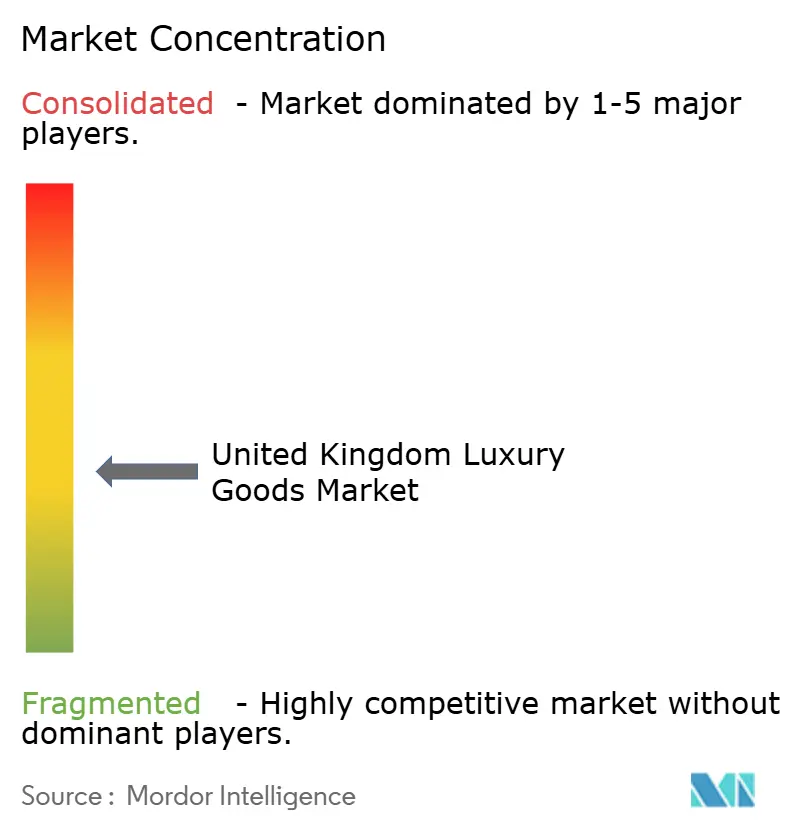
The UK luxury goods market is moderately fragmented, characterized by a diverse range of international and domestic players operating across key segments such as apparel, watches, jewelry, beauty, and accessories. Leading global brands, including LVMH (which encompasses Louis Vuitton and Dior), Kering (parent company of Gucci), and Richemont (owner of Cartier), dominate with strong brand recognition and significant market shares. This mix of international and domestic players, alongside the rising demand for bespoke and sustainable products, reflects the market’s diverse and competitive character.
Consumer behavior in the UK is undergoing a significant transformation, driven by a growing preference for digital channels and ethical consumption. Luxury brands are adapting by implementing robust omnichannel strategies that seamlessly integrate immersive in-store experiences with advanced digital platforms. Luxury brands are using these platforms to deliver greater personalization, virtual experiences, and on-demand customer service enhancing the overall buying journey. Furthermore, the demand for limited-edition collections, influencer-led marketing campaigns, and direct-to-consumer business models is gaining traction, particularly among Gen Z and millennial shoppers who value exclusivity, authenticity, and convenience.
Technology adoption is playing an increasingly pivotal role in shaping the competitive landscape of the luxury goods market. Innovations such as digital product passports are not only addressing regulatory compliance but also enhancing transparency and fostering deeper customer engagement. For example, the EU's Ecodesign for Sustainable Products Regulation, which will require Digital Product Passports for textile products by mid-2027, highlights the growing emphasis on sustainability and the role of technology in meeting these evolving consumer and regulatory demands. This shift is likely to shape strategic priorities for luxury brands over the next several years.
UK Luxury Goods Industry Leaders
-
LVMH Moet Hennessy Louis Vuitton
-
Compagnie Financière Richemont S.A.
-
Burberry Group plc
-
Kering SA
-
Chanel Limited
- *Disclaimer: Major Players sorted in no particular order

Market Opportunities and Future Outlook
Cross-border demand expansion remains a clear opportunity for UK luxury brands and distributors, supported by new trade architecture and ongoing export-promotion activity. The UK-India Free Trade Agreement entered into force on 15 July 2026, lowering tariffs and barriers and creating a more defined route for British luxury exports into India. Industry body Walpole, working with the Department for Business and Trade (DBT), has been convening engagement to help member brands navigate market entry and partnerships, offering a practical pathway for UK labels across apparel, accessories, and beauty to scale beyond domestic demand.
International travel retail and experiential luxury also provide a second opportunity set that connects product categories (beauty, fragrance, leather goods, watches, and jewelry) with high-margin distribution. DBT is organizing a delegation for UK companies to attend the TFWA World Exhibition and Conference in Cannes (27 September to 1 October 2026), which is positioned as a focused channel for securing listings and travel-retail partnerships with airport and duty-free operators. At the same time, ongoing regulatory consultations on a modernized UK product safety and enforcement framework (open until 23 June 2026) create room for compliance-led differentiation, including improved traceability, authenticated resale support, and higher-confidence online purchasing experiences that also target counterfeit exposure in digital channels.
Recent Industry Developments
- July 2026: Burberry highlighted continued volatility in European demand, citing external geopolitical disruption and softer tourist-led spending patterns, while pointing to stronger momentum in the United States and China. The update reinforced how global demand mix and tourism flows can shift performance for London-centric luxury retail and brand activation, increasing focus on resilient channels and markets.
- June 2026: LVMH expanded its experiential luxury portfolio by acquiring the Penha Longa Resort in Sintra. The deal underlined the strategic value of hospitality assets for premium customer experiences, and it points to a direction that affects luxury positioning and partnerships for UK-facing brands that depend on international visitors.
- May 2026: Burberry reported that it had 410 directly operated stores globally as of 28 March 2026, following 9 store openings and 21 closures during FY2026. The footprint optimization signaled ongoing network recalibration to align store economics with changing demand by location, while protecting flagship and service-led formats central to luxury retail.


Research Methodology Framework and Report Scope
Market Definition and Coverage
For this study, the market covers the value of luxury goods sold in the United Kingdom across major personal luxury categories, counted at the point of sale to consumers through physical retail and online channels.
Scope exclusions: This sizing excludes non-goods luxury spending such as luxury travel, hotels, fine dining, and luxury services.
Segmentation Overview
-
By Product Type
- Clothing and Apparel
- Footwear
- Eyewear
- Leather Goods
- Jewelry
- Watches
- Beauty and Personal Care
-
By End User
- Men
- Women
- Unisex
-
By Distribution Channel
- Single Brand Stores
- Multi Brand Stores
- Online Stores
Data Sources, Market Sizing, and Validation
Desk Research
Desk work starts with building a clean fact base on consumer demand, retail dynamics, and trade flows connected to luxury goods in the United Kingdom. We review public statistics and references such as Office for National Statistics releases, HM Revenue and Customs trade data, UK government macro indicators, Bank of England consumer credit trends, and trade association publications such as Walpole (to frame the broader luxury economy).
To translate that context into a sizing-ready structure, we also screen company annual reports, investor presentations, retail and brand press releases, and reputable business journalism. Where needed, paid subscriptions supporting company financials and news help us keep timelines consistent, and patent databases are checked to understand product innovation signals that can affect mix and pricing. The sources listed here are illustrative and not exhaustive, since additional references are used for data collection, cross-checking, and clarification.
Primary Interviews and Surveys
Primary work is used to pressure-test the desk assumptions that usually move the market value, including category mix, pricing ladders, discounting intensity, and the share split between boutiques, department stores, and online. We speak with a mix of brands, distributors, retailers, and industry specialists so the model reflects what is actually being seen in UK demand. Interviews also helped us account for tourism-led buying patterns and shifts in local consumer confidence that can show up differently by channel.
Distribution of primary research fieldwork respondents
| Company type | Respondent position |
|---|---|
| Top tier: 33% | CXOs: 15% |
| Mid tier: 50% | Functional/Unit leaders: 32% |
| Smaller Players: 17% | Managers: 53% |
Market-Sizing & Forecasting
Sizing begins with a top-down build where national demand signals and category splits are used to reconstruct the luxury goods value pool for the United Kingdom. We then reconcile that pool to channel structure and shopper behavior so the totals align with how sales are reported at retail and online.
To keep the totals realistic, selective bottom-up checks are run using sampled price points across categories, observed volume proxies in key channels, and supplier and retailer feedback on run rates. These checks help adjust outliers rather than letting them drive the final estimate.
A few inputs that matter in this market are tracked carefully, such as inbound tourism trends into the United Kingdom (which can lift luxury sales in London), consumer confidence and inflation, online penetration for premium categories, category-level mix shifts between apparel, leather goods, jewelry, watches, and beauty, and typical markdown patterns during promotional periods. When direct public numbers are thin, gaps are handled by using conservative ranges from interviews and anchoring them to observed category shares and retail indicators.
Forecasting relies on scenario analysis supported by simple multivariate relationships, where demand is linked to macro conditions, tourism recovery, and channel migration. The final forward view is then rechecked with expert expectations on pricing progression and category momentum so the year-to-year path stays believable.
Data Validation & Update Cycle
Before sign-off, outputs are triangulated against independent signals such as retail trade indicators, import trends for relevant goods groups, and reported performance commentary from major luxury-facing retailers. Variance checks are run at category and channel level so unusually high growth or share shifts are questioned and corrected.
If a mismatch persists, assumptions are revisited and, where needed, experts are re-contacted to confirm what changed on the ground. Reports are refreshed annually, and interim updates are made when material events occur. Right before delivery, a final analyst pass is completed so clients receive the latest consistent view.
Mordor Intelligence's United Kingdom Luxury Goods Market Size Compared With Other Published Estimates
Published market sizes for UK luxury goods often disagree because the included categories and counting points are not the same. Some estimates also mix consumer goods with broader luxury services. Timing also matters, since currency conversion, base year choice, and how fast prices are assumed to move can change the value even when demand looks similar.
Luxury services and experiences (such as high-end hospitality) sit outside Mordor Intelligence's scope here, which keeps the figure focused on personal luxury goods sold through UK retail and online channels. Differences also come from whether tourism-led purchases are treated as part of domestic sales, how markdowns are netted out, and how category shares are refreshed when trends shift between watches, jewelry, and beauty.
Benchmark comparison
| Source | Market Size | Gaps in Research Methodology |
|---|---|---|
| Mordor Intelligence | USD 26.32 B (2025) | |
| Trade Journal A | USD 22.90 B (2025) | Uses a narrower set of personal luxury categories and commonly omits beauty and premium eyewear, which pulls down the total. It also applies a more cautious price growth path, which reduces value growth in inflationary periods. |
| Industry Association B | USD 32.80 B (2022) | Represents a wider luxury economy view and can blend goods with adjacent luxury spending and visitor-driven activity, so it is not directly comparable to a retail goods-only value. The year is earlier and is often reported in local currency, which can widen gaps after conversion. |
The spread in the table is mainly explained by category coverage and whether the estimate is counting only retail goods or a broader luxury economy. By keeping the inputs tied to observable category mix, channel splits, and realistic pricing, the resulting value stays traceable and easier to replicate year after year.


Key Questions Answered in the Report
What is the current size of the UK luxury goods market?
The market stands at USD 27.43 billion in 2026 and is projected to reach USD 33.71 billion by 2031.
Which product type leads sales in the UK luxury goods market?
Clothing and apparel leads with a 37.43% share, followed by rapidly expanding leather goods.
How fast is the online channel growing for luxury goods in the UK?
Online stores are forecast to post a 5.32% CAGR between 2026 and 2031, the fastest among all retail formats.
Which end-user segment is projected to grow fastest?
The men’s segment is expected to expand at a 4.92% CAGR through 2031, driven by younger male shoppers embracing premium fashion and accessories.
Page last updated on:


 Your data is secure and never sold or shared.


