
Ultrasonic Scalpel Market Size and Share
Market Overview
| Study Period | 2020 - 2031 |
|---|---|
| Market Size (2026) | USD 2.91 Billion |
| Market Size (2031) | USD 4.23 Billion |
| Growth Rate (2026 - 2031) | 7.75 % |
| Fastest Growing Market | Asia Pacific |
| Largest Market | North America |
| Market Concentration | Medium |
Major Players *Disclaimer: Major Players sorted in no particular order Image © Mordor Intelligence. Reuse requires attribution under CC BY 4.0. | |
Ultrasonic Scalpel Market Analysis by Mordor Intelligence
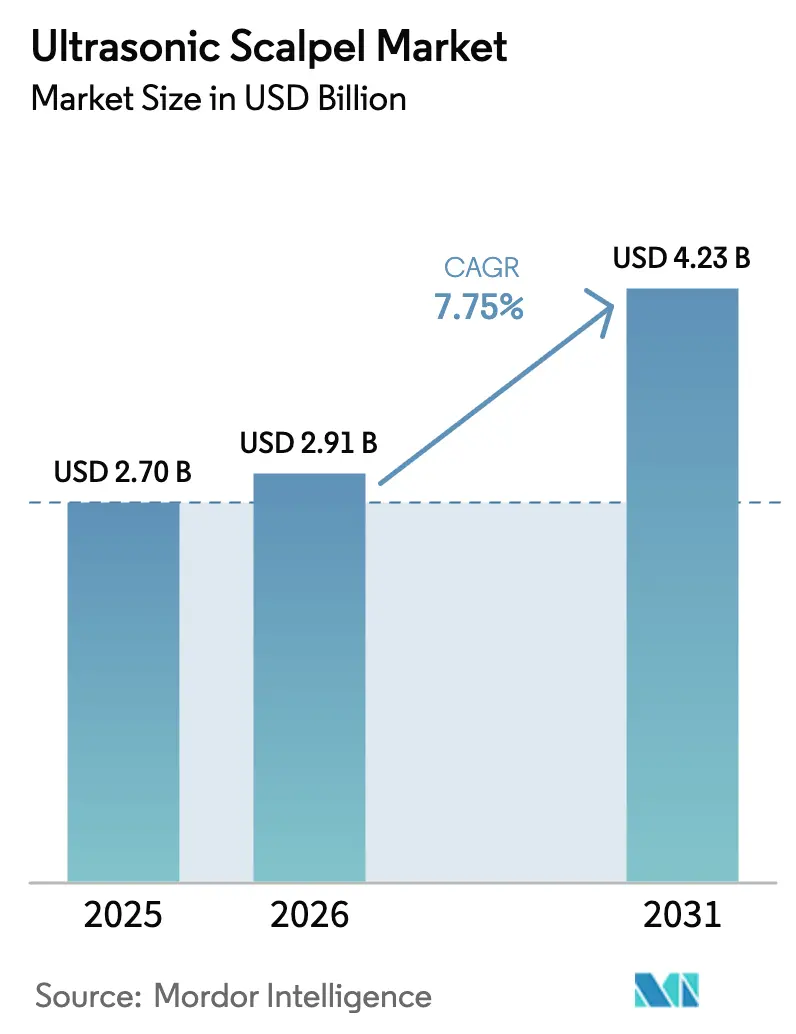
The Ultrasonic Scalpel Market size was valued at USD 2.70 billion in 2025 and is estimated to grow from USD 2.91 billion in 2026 to reach USD 4.23 billion by 2031, at a CAGR of 7.75% during the forecast period (2026-2031).
Rising adoption of robotic surgery, localization incentives in China and India, and value-based purchasing models that reward reloadable handpieces are accelerating procurement decisions across high-volume surgical centers. Fixed-frequency systems still dominate routine procedures, yet adaptive tissue-sensing and cordless platforms are redefining ergonomic and cost expectations. Tariffs on piezo-ceramic inputs, sustainability mandates favoring reusable instruments, and bundled payment pressures are reshaping total cost-of-ownership calculations, prompting hospitals to look beyond upfront capital pricing. Rapid regulatory clearances for hybrid generators that merge ultrasonic and bipolar modes are expanding the addressable ultrasonic scalpel market, particularly for complex oncology and cardiovascular cases that demand reliable vessel sealing.
Key Report Takeaways
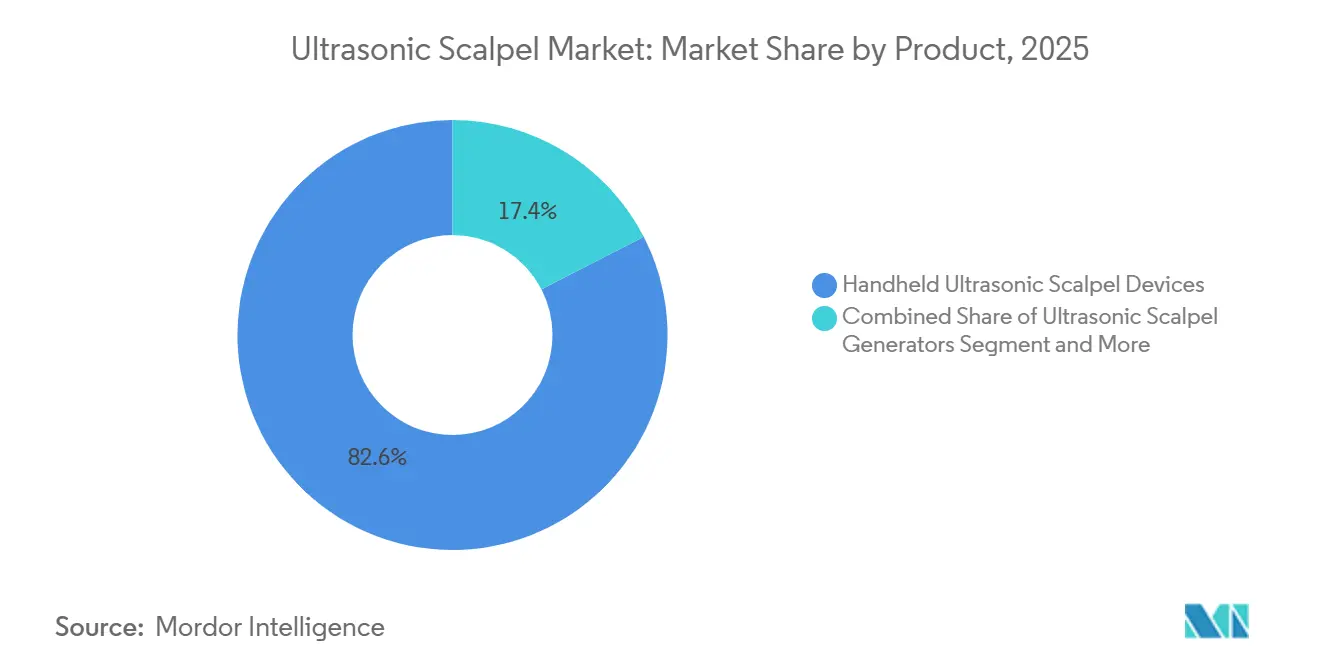
- By product, handheld ultrasonic devices led with 82.56% revenue share in 2025; generators are projected to post an 8.25% CAGR through 2031.
- By technology, fixed-frequency platforms captured 42.53% of 2025 revenue, while cordless battery systems are forecast to expand at a 10.85% CAGR to 2031.
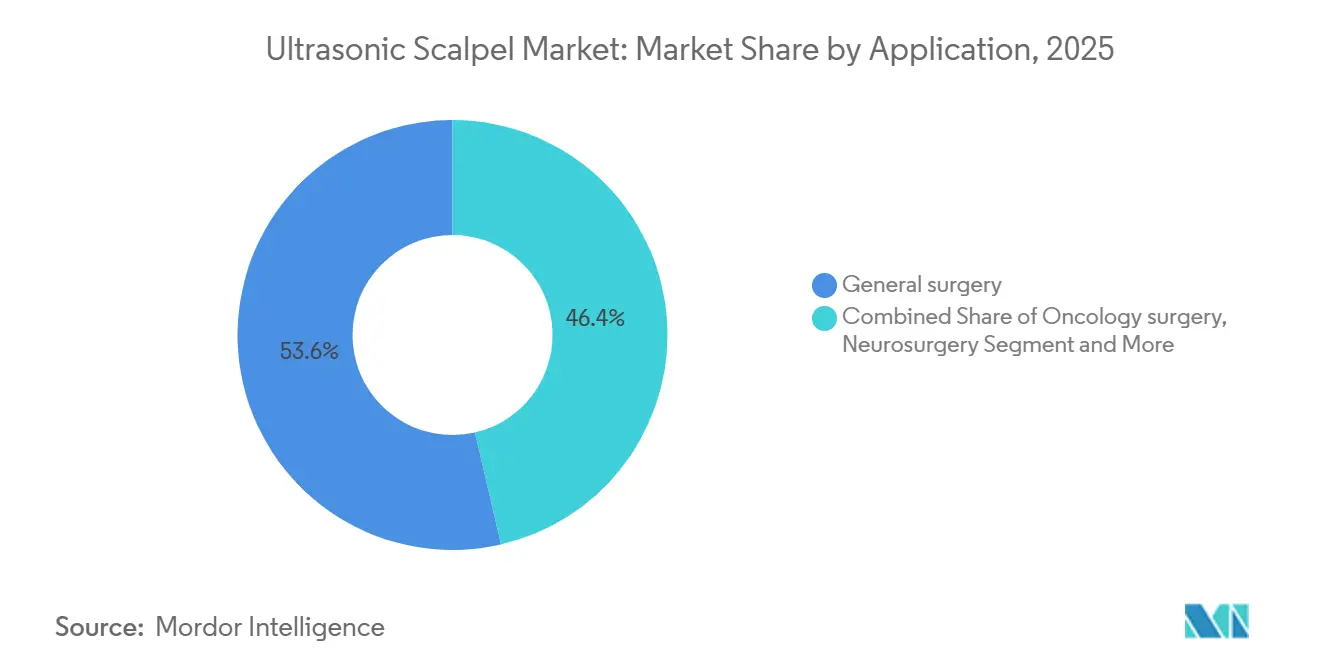
- By application, general surgery accounted for 53.63% of the ultrasonic scalpel market share in 2025 and neurosurgery is advancing at a 9.87% CAGR through 2031.
- By end-user, hospitals held 68.33% of 2025 spending; ambulatory surgical centers are growing at an 8.7% CAGR to 2031.
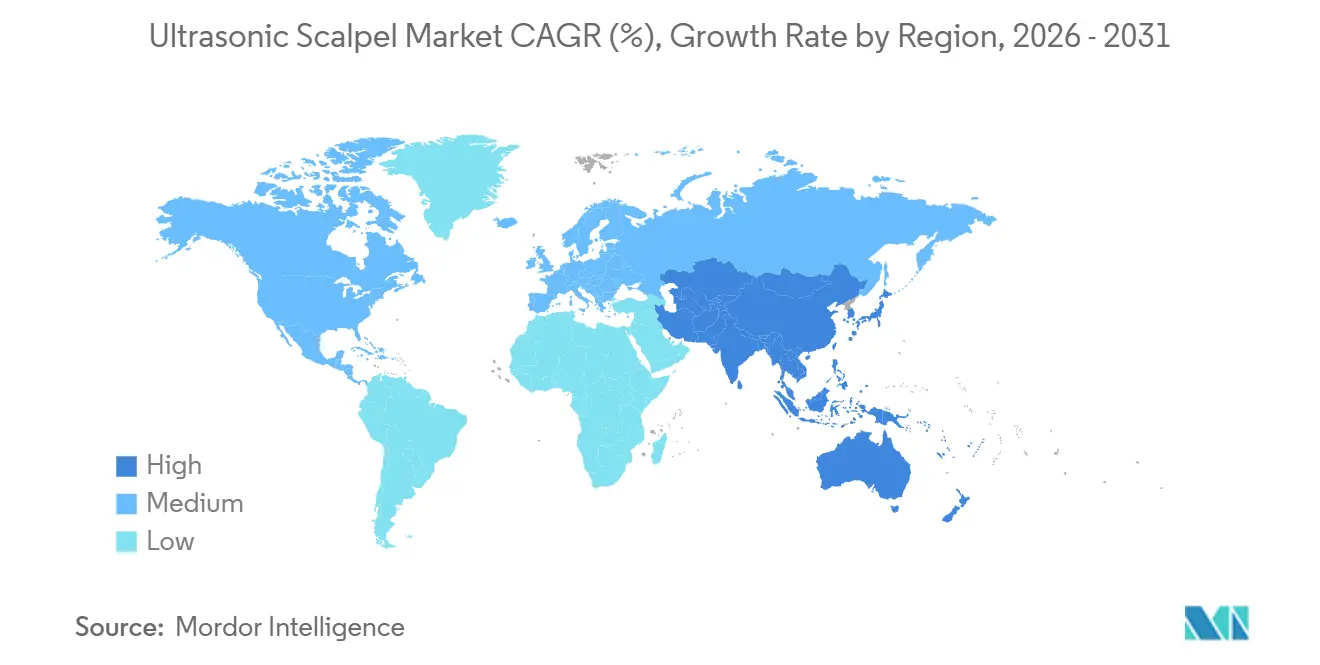
- By geography, North America retained 38.13% share in 2025, whereas Asia-Pacific is set to climb at a 9.51% CAGR to 2031.
Note: Market size and forecast figures in this report are generated using Mordor Intelligence’s proprietary estimation framework, updated with the latest available data and insights as of January 2026.
Market Trends and Insights
Drivers Impact Analysis of Ultrasonic Scalpel Market*
| Driver | (~) % Impact on CAGR Forecast | Geographic Relevance | Impact Timeline |
|---|---|---|---|
| Rising burden of chronic diseases | +1.2% | Global, strongest in North America, Europe, urban Asia-Pacific | Long term (≥ 4 years) |
| Increased demand for minimally invasive procedures | +1.5% | Global, led by North America and Western Europe, rising in Asia-Pacific | Medium term (2-4 years) |
| Rapid technology upgrades in ultrasonic energy platforms | +1.3% | North America, Europe, Japan, South Korea | Medium term (2-4 years) |
| Integration with robotic surgical systems accelerates adoption | +1.8% | North America, Europe, Japan, South Korea, Australia | Short term (≤ 2 years) |
| Value-based purchasing bundles boost reloadable handpiece uptake | +0.9% | North America, select European markets | Medium term (2-4 years) |
| China / India localization incentives lowering device costs | +1.1% | China, India, spill-over to Southeast Asia and Middle East & Africa | Long term (≥ 4 years) |
| Source: Mordor Intelligence | |||
Rising Burden of Chronic Diseases
Growing incidence of cancer, cardiovascular disease, and metabolic disorders is lifting surgical volumes worldwide. The World Health Organization projects that non-communicable diseases will account for 73% of global deaths by 2030[1]. Rising case counts translate into more oncologic and bariatric procedures, both of which depend on energy devices that combine cutting and coagulation with minimal thermal spread. A 2024 systematic review showed that ultrasonic scalpels delivered higher lymph-node yields in thyroid and colorectal cancer cases than conventional electrosurgery. Higher nodal harvest improves staging accuracy, encouraging oncology departments to standardize on ultrasonic platforms. Demand is most pronounced in countries with robust screening programs that detect early-stage tumors amenable to curative surgery.
Increased Demand for Minimally Invasive Procedures
Patient preference for faster recovery drives the migration from open to laparoscopic and robotic approaches, boosting the ultrasonic scalpel market. These procedures require devices that seal vessels up to 7 mm within confined spaces. Ultrasonic platforms meet the threshold reliably while limiting collateral thermal damage. FDA clearance of Intuitive Surgical’s Vessel Sealer Curved in July 2025 demonstrates how robotic accessories tailor ultrasonic energy to unique dissection planes. Hospital buyers now bundle energy devices with multi-year robotic service contracts, locking manufacturers into long-tail consumable revenue.
Rapid Technology Upgrades in Ultrasonic Energy Platforms
Second-generation systems modulate power based on tissue impedance, improving efficiency. Olympus launched its THUNDERBEAT II in October 2025, enabling surgeons to toggle among ultrasonic, bipolar, and hybrid modes. Cordless handpieces such as Medtronic’s Sonicision remove cable clutter and simplify sterilization, key benefits for outpatient centers. Shorter instrument exchange times, estimated at 8–12 minutes per case, improve throughput in high-volume operating rooms.
Integration with Robotic Surgical Systems Accelerates Adoption
Robotic platforms are becoming essential for complex minimally invasive procedures. CMR Surgical’s Versius and Medtronic’s Hugo gained FDA clearance in late 2024, both allowing third-party ultrasonic devices. Hospitals favor open-architecture systems that avoid vendor lock-in and standardize energy sources across procedures. Early regulatory clearance and surgeon training programs give leading device makers a first-mover edge in high-throughput robotic suites.
Restraints Impact Analysis of Ultrasonic Scalpel Market*
| Restraint | (~) % Impact on CAGR Forecast | Geographic Relevance | Impact Timeline |
|---|---|---|---|
| Stringent global regulatory pathways | -0.8% | U.S., China, Japan | Medium term (2-4 years) |
| High capital & consumable costs | -0.6% | Latin America, Southeast Asia, budget-constrained Europe | Long term (≥ 4 years) |
| New tariffs on piezo-ceramic crystals inflate BOM costs | -0.5% | North America, Europe | Short term (≤ 2 years) |
| Procedure-bundled payment cuts squeeze hospital budgets | -0.4% | North America, select Europe | Medium term (2-4 years) |
| Source: Mordor Intelligence | |||
Stringent Global Regulatory Pathways
FDA 510(k) clearances average 6–10 months when a suitable predicate exists, while De Novo routes can extend beyond 18 months. Ethicon’s Total Energy System, cleared in January 2025, illustrates the time and data requirements even for incremental upgrades. China’s NMPA adds another 18–24 months of local clinical trials for Class III devices, raising entry hurdles for smaller firms. Europe’s Medical Device Regulation imposes unannounced audits that have forced some legacy models off the market. These layered reviews delay product launches and inflate development budgets.
High Capital & Consumable Costs
Ultrasonic generators cost USD 25,000–60,000, reusable handpieces USD 3,000–8,000, and single-use devices USD 200–400 per procedure. Hospitals in Latin America and Southeast Asia often default to monopolar electrosurgery, requiring only a USD 5,000–10,000 generator. Reusable ultrasonic systems achieve cost parity at 300 cases per year, but many facilities lack sterilization capacity. As a result, adoption in emerging markets lags despite falling hardware prices, capping near-term growth.
*Our forecasts treat driver/restraint impacts as directional, not additive. The impact forecasts reflect baseline growth, mix effects, and variable interactions.
Ultrasonic Scalpel Market Segment Analysis
By Product:
Reusable Handpieces Drive Sustainability ShiftThe ultrasonic scalpel market size for handheld devices dominated with an 82.56% share in 2025, underscoring their central role in hemostasis across surgical specialties. Hospitals are pivoting toward reusable configurations, encouraged by lifecycle studies that report a 69% lower carbon footprint and six-digit cost savings after 200 uses. Single-use disposables remain prevalent in ambulatory centers lacking sterilization infrastructure, yet their slice of the ultrasonic scalpel market is narrowing as modular designs let users replace blades while retaining the core handpiece.
Ultrasonic generators are forecast to expand at an 8.25% CAGR through 2031, fueled by hybrid towers that combine ultrasonic and bipolar radiofrequency modes. These multipurpose consoles reduce operating-room clutter and simplify staff training. Accessories—blades, tips, irrigation tubing, and footswitches—sustain high-margin recurring revenue. Hospitals increasingly bundle these consumables within long-term capital contracts, guaranteeing supply continuity and predictable per-case economics.

By Technology:
Cordless Systems Redefine ErgonomicsFixed-frequency units still accounted for 42.53% of 2025 technology revenue, valued for predictable performance and lower capital costs. Adaptive tissue-sensing platforms, however, are carving share by automatically adjusting blade amplitude to tissue impedance, a feature prized in complex oncology resections. Cordless battery-powered devices, the fastest-growing subsegment at a 10.85% CAGR, are reshaping workflow expectations as surgeons demand cable-free ergonomics in laparoscopic and robotic settings[3].
Battery innovations now permit 60–80 activations per charge while keeping handpiece weight under 250 grams, satisfying outpatient case requirements. Limitations persist for marathon bariatric or hepatobiliary cases, yet iterative battery density upgrades are closing the gap. Premium adaptive platforms, priced up to 50% above fixed-frequency systems, justify their premium by shaving 8–12 minutes off average procedure durations, a critical benefit for high-turnover sites.
By Application:
Neurosurgery Leads Growth Amid Robotic IntegrationGeneral surgery generated 53.63% of ultrasonic scalpel market revenue in 2025, reflecting high procedure volumes of cholecystectomy, hernia repair, and colorectal resection. Oncologic procedures rank second, buoyed by evidence that ultrasonic dissection improves lymph-node harvest and staging accuracy. Neurosurgery, though smaller in absolute value, is forecast to expand at a 9.87% CAGR through 2031, outpacing all other applications. The rise of robotic navigation paired with intraoperative ultrasound is broadening the use of ultrasonic aspirators for brain and spinal tumor debulking[2].
Bariatric surgery demand is climbing on the back of epidemic obesity and payer coverage expansion, pushing ultrasonic scalpels into sleeve gastrectomy workflows. Cardiovascular and thoracic applications, while niche, are growing steadily as minimally invasive valve repair and lobectomy techniques proliferate. Plastic, gynecologic, and urologic procedures complete the portfolio, each tracking overall surgical volume growth with a tilt toward outpatient settings that favor cordless devices.
By End-User:
ASCs Capture Outpatient MigrationHospitals represented 68.33% of 2025 spending, anchored by complex oncology, cardiovascular, and neurosurgical volumes that rely on sophisticated energy platforms. Budget pressure from bundled payments, however, is driving consignment models in which vendors retain generator ownership and charge per activation, mitigating capital outlay. Ambulatory surgical centers are projected to grow at an 8.7% CAGR as same-day bariatric, general, and gynecologic surgeries migrate from inpatient floors.
ASCs value equipment portability and intuitive user interfaces that shorten staff training curves, making cordless systems attractive. Specialty clinics, though the smallest segment, are rising as physicians capture facility fees by shifting procedures in-house. Single-use ultrasonic devices dominate in these settings to avoid sterilization investment, but their share may erode as compact tabletop sterilizers gain traction.
Geography Analysis
North America Ultrasonic Scalpel Market
North America commanded 38.13% of 2025 revenue, propelled by widespread robotic surgery use and reimbursement models that reward reusable handpieces. Medicare’s BPCI-Advanced covers 32 surgical episodes, influencing hospital procurement toward devices that minimize consumable spending. Intuitive Surgical’s Vessel Sealer Curved clearance in July 2025 strengthened the pull-through effect for compatible ultrasonic consumables. Tariff-induced cost increases on rare-earth components have squeezed supplier margins, prompting accelerated qualification of Japanese and Vietnamese crystal vendors.
Europe Ultrasonic Scalpel Market
Europe’s share has flattened due to the June 2025 International Procurement Instrument, which limits China-origin devices to 50% of public tender value. Germany, the United Kingdom, and France lead adoption of reusable platforms that dovetail with sustainability targets. Olympus posted 9.8% revenue growth in its EMEA region for fiscal 2024 on the back of THUNDERBEAT rollouts. Central and Eastern European countries are upgrading from monopolar electrosurgery using EU structural funds, creating a two-step adoption path that begins with fixed-frequency units before migrating to adaptive systems.
APAC, MEA and South America Ultrasonic Scalpel Market
Asia-Pacific is forecast to post a 9.51% CAGR, the highest of any region. China and India account for the bulk of demand, underpinned by localization incentives that compress device pricing by up to 30%. Medtronic recorded 8.8% revenue growth in China and 8.4% in wider emerging markets during fiscal 2025 Q2, illustrating the payoff of regional manufacturing. Japan, Australia, and South Korea continue to upgrade to adaptive, robot-compatible platforms, while Southeast Asia sees rising demand from medical tourism. Middle East & Africa and South America remain nascent but show pockets of acceleration in Gulf Cooperation Council states and Brazil, where private hospitals differentiate through advanced minimally invasive capabilities.
Regulatory Landscape
Ultrasonic scalpels and related ultrasonic surgical systems are predominantly regulated as Class II medical devices in the United States under FDA 510(k), commonly aligned to product code LFL (Instrument, Ultrasonic Surgical) when substantial equivalence can be demonstrated. Recent clearances also point to sustained review throughput for new entrants and platform updates, including Hunan Handlike Minimally Invasive Surgery Co., Ltd. (June 2024, K233036) and Shanghai Saints Sages Surgical Co., Ltd. (June 2025, K242894). In May 2026, FDA 510(k) clearance for Asensus Surgicals Senhance Ultrasonic System (K254192) reinforces regulatory momentum around computer-controlled and integrated surgical instrumentation.
In Europe, ultrasonic scalpels fall under the EU Medical Device Regulation (MDR), where classification is risk-based and manufacturers use Medical Device Coordination Group (MDCG) guidance to determine the applicable conformity assessment and clinical evidence requirements for surgical instruments. MDR expectations, together with heightened scrutiny of labeling and device performance risks (including thermal safety and end-effector integrity), increase documentation and post-market obligations for suppliers aiming for broad rollouts across hospitals and ambulatory settings.
Competitive Landscape
The top suppliers, including Ethicon, Medtronic, Olympus, Stryker, and Integra LifeSciences, control a significant percentage of the global ultrasonic scalpel market revenue, indicating moderate market concentration. Ethicon’s Harmonic line remains the clinical standard, yet its tight coupling with the da Vinci ecosystem limits cross-platform reach and opens space for Medtronic’s Hugo and CMR Surgical’s Versius, both of which accept third-party handpieces. Smaller challengers such as Söring, BOWA, Lepu Medical, and Wuhan BBT compete on price, offering fixed-frequency systems at 30–40% discounts.
Innovation clusters around cordless architecture and hybrid energy towers. Ethicon’s recent patent covers jaw clamping pressures between 60 and 210 psi, creating formidable materials-science barriers for entrants. FDA’s Safety and Performance Based Pathway accelerates submissions that prove substantial equivalence, shaving 3–6 months off time-to-market. Tariff headwinds have spurred sourcing diversification, but validation timelines temper quick pivots. Meanwhile, sustainability agendas push vendors to emphasize reusable designs, shifting competition toward sterilization protocol robustness and service-contract economics rather than headline device price.
Emerging disruptors concentrate on ambulatory surgical center needs, marketing cordless ultrasonic scalpels with simplified user interfaces and disposable sheaths that eliminate reprocessing. Nami Surgical, for instance, opened a USD 10 million Series A round in August 2025 to commercialize a miniaturized ultrasonic scalpel tailored to robotic arms. Strategic alliances between robot manufacturers and energy-device specialists are likely as interoperability becomes a prime purchasing criterion.
Ultrasonic Scalpel Industry Leaders
-
Medtronic PLC
-
Olympus Corporation
-
Stryker Corporation
-
Ethicon (J&J)
-
Integra LifeSciences
- *Disclaimer: Major Players sorted in no particular order

Ultrasonic Scalpel Market Companies Covered in this Report
- Advanced Instrumentations
- B. Braun
- BOWA-electronic
- Conmed
- Ethicon (J&J)
- Integra LifeSciences
- Karl Storz
- Lepu Medical
- Medtronic
- Misonix (Bioventus)
- Olympus
- Reach Surgical
- Soring GmbH
- Stryker
- Surgnova Healthcare
- Wuhan BBT Medical
Market Opportunities and Future Outlook
Interoperability with robotic surgery platforms and expansion into open-surgery and specialty workflows are leading whitespace areas for ultrasonic scalpel suppliers, supported by recent product introductions and regulatory actions. CMR Surgical launched an Ultrasonic Dissector for its Versius system in December 2024, and robot-native advanced energy instruments of this type support energy device standardization within robotic suites without relying only on legacy configurations. On the open-surgery side, Reach Surgical (Genesis MedTech) received CE Mark approval in June 2026 for SOUND REACH Swift ultrasonic shears, indicating an active product refresh cycle beyond laparoscopic use cases and providing hospitals and surgeons additional procurement options under MDR.
Hybridization and miniaturization also create upgrade paths for installed bases that already own generators, especially where buyers weigh total cost of ownership and instrument exchange time. Olympus introduced THUNDERBEAT II in Europe in October 2025, reflecting ongoing convergence of ultrasonic and bipolar modalities within a single platform to reduce tool changes and simplify staff training. In parallel, continued FDA 510(k) clearances for portable controllers and new ultrasonic systems (for example, June 2025 for Shanghai Saints Sages and June 2024 for Hunan Handlike) show scope for additional competitors entering with cost-optimized systems, while academic work integrating miniature ultrasonic devices with industrial robotic arms (March 2026) highlights a broader pipeline of robotic-compatible ultrasonic architectures that can translate into next-generation surgical instruments.
Recent Industry Developments in Ultrasonic Scalpel Market
- June 2026: Reach Surgical (Genesis MedTech) announced CE Mark approval for SOUND REACH Swift, an ultrasonic shear designed for open surgical procedures. The approval expands its addressable footprint in EMEA by adding an ultrasonic option positioned around integrated transducer and curved-tip blade design, widening competitive choice beyond laparoscopic-first portfolios.
- November 2025: Integra LifeSciences announced FDA 510(k) clearance for expanded use of its CUSA Clarity Ultrasonic Surgical Aspirator System in cardiac surgeries, including valve repair and replacement. Broadening labeled indications supports deeper penetration in specialized operating rooms and strengthens the consumables and service pull-through tied to installed systems.
- October 2024: CMR Surgical introduced its Ultrasonic Dissector as an advanced energy instrument for the Versius surgical robot, including vessel sealing capability up to 5 mm. Adding a robotic ultrasonic dissector expands more of the energy toolkit inside a single robotic ecosystem and supports hospital efforts to standardize instruments across minimally invasive programs.
Ultrasonic Scalpel Market Report Scope and Research Methodology
Market Definition and Coverage
This market covers ultrasonic scalpel systems used in surgery to cut, dissect, and seal tissue using ultrasonic vibration energy, including the device platform and the parts needed to perform procedures across hospitals and outpatient settings.
Scope exclusions: This sizing excludes unrelated surgical energy tools that do not use ultrasonic vibration for tissue cutting and coagulation, and it also excludes broader operating room capital items not tied to ultrasonic scalpel use.
Segments Covered in This Report
- By Product
- Handheld Ultrasonic Scalpel Devices
- Reusable systems
- Single-use (disposable) devices
- Ultrasonic Scalpel Generators
- Hybrid energy generators (ultrasonic + bipolar)
- Standalone ultrasonic generators
- Accessories & Consumables
- Blades / tips
- Irrigation & suction sets
- Footswitches & cables
- Handheld Ultrasonic Scalpel Devices
- By Technology
- Fixed-frequency systems
- Adaptive tissue-sensing systems
- Cordless battery-powered systems
- By Application
- General surgery
- Oncology surgery
- Cardiovascular & thoracic surgery
- Bariatric & metabolic surgery
- Neurosurgery
- Other applications
- By End-User
- Hospitals
- Ambulatory surgical centres
- Specialty clinics
- Geography
- North America
- United States
- Canada
- Mexico
- Europe
- Germany
- United Kingdom
- France
- Italy
- Spain
- Rest of Europe
- Asia-Pacific
- China
- India
- Japan
- Australia
- South Korea
- Rest of Asia-Pacific
- Middle East and Africa
- GCC
- South Africa
- Rest of Middle East and Africa
- South America
- Brazil
- Argentina
- Rest of South America
- North America
Data Sources, Market Sizing, and Validation
Desk Research
Desk research helped us set the clinical and commercial boundaries before any modeling started. We reviewed public sources such as the US FDA device databases, the US Centers for Medicare and Medicaid Services procedure volumes, and CDC health statistics to understand surgical volumes and setting shifts.
To ground technology and adoption signals, we also referred to sources such as peer reviewed clinical journals on ultrasonic energy outcomes, World Health Organization health system indicators, and international trade statistics that show medical device shipment direction by region. These were supplemented with company filings, investor presentations, press releases, and reputable healthcare news to capture product launches, pricing signals, and distribution changes. We also used a paid subscription for company financials and another for patent intelligence to cross check revenue exposure and innovation cadence. The sources listed above are illustrative only, since many other public references were also used for collection, validation, and clarification.
Primary Interviews and Surveys
Primary work focused on validating the demand pool and price progression across regions where procedure mix and reimbursement differ. We spoke with a mix of manufacturers, distributors, hospital procurement teams, ambulatory surgery center decision makers, and clinicians so assumptions on utilization per procedure, attach rates for accessories, and replacement cycles could be confirmed and adjusted.
Distribution of primary research fieldwork respondents
| Company type | Respondent position | Region |
|---|---|---|
| Top tier: 26% | CXOs: 15% | APAC: 48% |
| Mid tier: 58% | Functional/Unit leaders: 41% | EMEA: 29% |
| Smaller Players: 16% | Managers: 44% | Americas: 23% |
Market-Sizing & Forecasting
The core model is built using a top-down approach where surgical procedure volumes and setting mix are used to reconstruct the addressable use of ultrasonic scalpels, which is then converted into revenue using region level pricing. We then corroborate totals with selective bottom-up approximations, such as sampled average selling price ranges for generators and handpieces, channel checks on accessory attach rates, and a limited supplier roll up to ensure the output stays realistic.
Key inputs that were tracked include overall surgical volumes by major specialties, penetration of minimally invasive procedures, the split between hospitals and ambulatory surgery centers, reusable versus disposable handpiece usage patterns, and generator installed base replacement timing. Forecasting relies on scenario analysis supported by multivariate regression checks, where procedure growth, site of care shift, and ASP movement are treated as the main drivers and are pressure tested with what interviewees expect by region. Where direct data is thin, gaps are handled by using proxy procedure groups and applying conservative adoption ranges that are later rechecked in follow up calls.
Data Validation & Update Cycle
Outputs are validated through multiple checks so unusual spikes do not slip into the final numbers. We compare results against independent signals like procedure growth trends, import and shipment direction, and the implied installed base economics before the model is signed off.
Variance checks are run across regions and major use settings, followed by a second analyst review for logic and arithmetic consistency. If a mismatch is seen, experts are re contacted to confirm whether the change is driven by pricing, utilization, or product mix. The report is refreshed annually, and interim updates are made when material events shift demand, pricing, or regulations, and a final pre delivery pass is completed to ensure the latest currency assumptions and inputs are reflected.
Mordor Intelligence's Ultrasonic Scalpel Market Sizing Compared With Other Published Estimates
It is normal to see different market size numbers for ultrasonic scalpels, even when the same product name is used. The biggest reasons are usually the time of currency conversion, how average selling prices are trended, and whether accessories are counted consistently with the installed base and procedure volumes.
A refresh led gap shows up when one study updates procedure and pricing assumptions to the latest year, while another holds older ASPs or uses a single global price point across regions. The table differences also reflect whether estimates validate unit demand using procedure mix, ambulatory shift, and reusable versus disposable usage, and then reconcile that with what manufacturers and channels are seeing in current bids and replenishment.
Benchmark comparison
| Source | Market Size | Gaps in Research Methodology |
|---|---|---|
| Mordor Intelligence | USD 2.91 B (2026) | |
| Industry Publisher A | USD 3.47 B (2026) | Uses a higher starting ASP set for equipment and a broader revenue bucket that can pull accessories and consumables forward without tying volumes back to specialty level procedure mix in each region. |
| Industry Publisher B | USD 2.70 B (2024) | Anchors the estimate to an earlier year and may not fully carry forward currency timing and recent price movements, which can understate the latest value when procedure recovery and outpatient shift are included. |
What matters most is choosing a scope and update cadence that matches how hospitals buy and use these devices, and then making sure prices and volumes move together in the model. By refreshing currency timing and ASP progression alongside procedure volume checks, Mordor Intelligence reduces drift that can happen when older price points or loose accessory assumptions are kept in the same total.
Key Questions Answered in the Report
How large is the ultrasonic scalpel market in 2026?
The ultrasonic scalpel market size stands at USD 2.91 billion in 2026.
What is the expected growth rate for ultrasonic scalpels through 2031?
The market is projected to expand at a 7.75% CAGR, reaching USD 4.23 billion by 2031.
Which product segment grows fastest over the forecast horizon?
Ultrasonic generators, enabled by hybrid energy platforms, are forecast to grow at an 8.25% CAGR.
Why are ambulatory surgical centers important for future demand?
ASCs are shifting same-day bariatric and general surgery volumes from hospitals, driving an 8.7% CAGR in ultrasonic scalpel spending among these facilities.
Which region exhibits the highest growth potential?
Asia-Pacific leads with a projected 9.51% CAGR, fueled by localization incentives in China and India.