
Market Overview
| Study Period | 2020 - 2031 |
|---|---|
| Forecast Data Period | 2026 - 2031 |
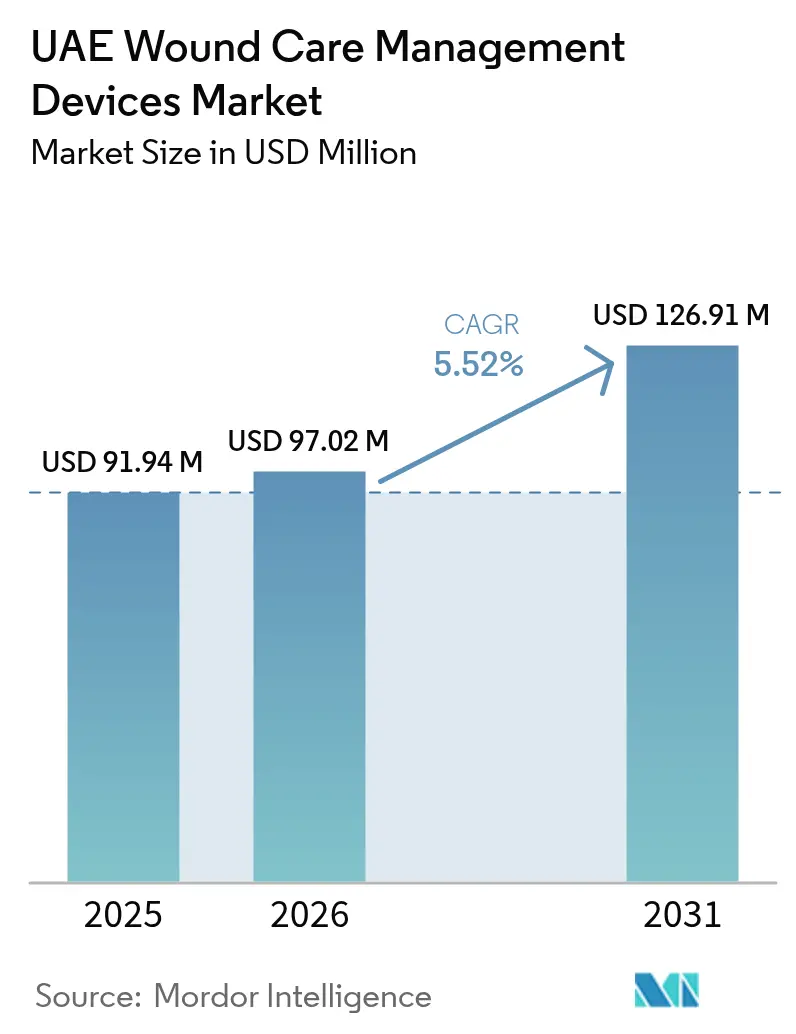
| Base Year Market Size (2025) | USD 91.94 Million |
| Market Size (2026) | USD 97.02 Million |
| Market Size (2031) | USD 126.91 Million |
| Growth Rate (2026 - 2031) | 5.52 % |
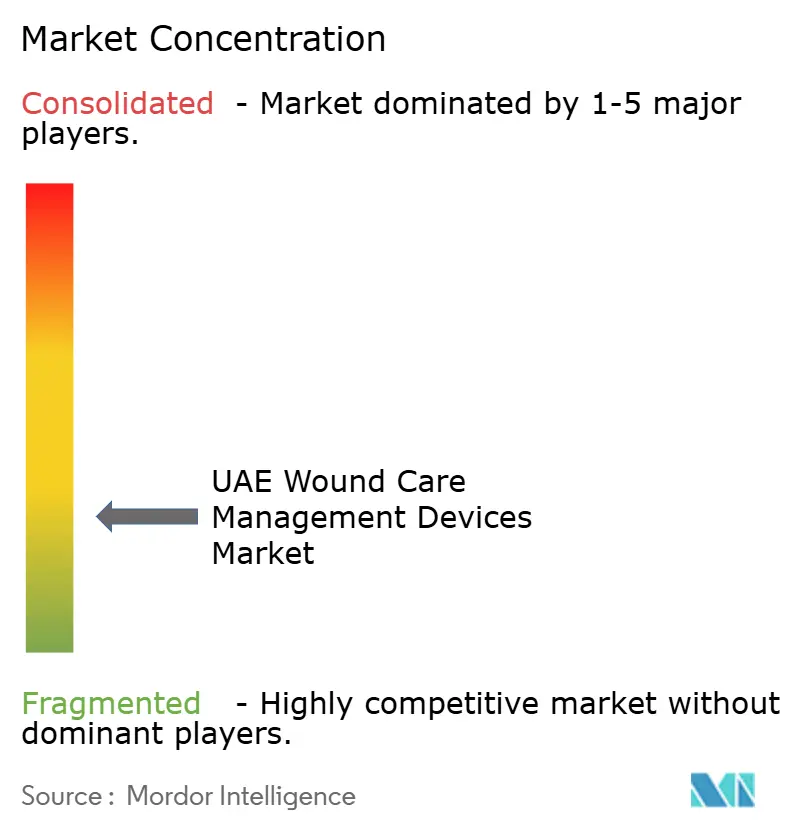
| Market Concentration | Low |
Major Players *Disclaimer: Major Players sorted in no particular order Image © Mordor Intelligence. Reuse requires attribution under CC BY 4.0. | |
UAE Wound Care Management Devices Market Analysis by Mordor Intelligence
The UAE wound care management devices market size is expected to grow from USD 91.94 million in 2025 to USD 97.02 million in 2026 and is forecast to reach USD 126.91 million by 2031 at 5.52% CAGR over 2026-2031. Demand growth mirrors the country’s dual role as a regional healthcare hub and a destination for medical tourists seeking sophisticated wound management. Uptake of advanced dressings, neuromuscular electro-stimulation devices, and 4D-bioprinted grafts is accelerating as hospitals compete on clinical outcomes and speed of healing. Rising surgical volumes, a high diabetes prevalence, and new home-care quality mandates add further momentum, while extreme heat logistics and reimbursement gaps temper the pace of adoption. Market competition remains fragmented, with multinationals, regional specialists, and technology start-ups pursuing hospital contracts, home-care partnerships, and product localization initiatives.
Key Report Takeaways
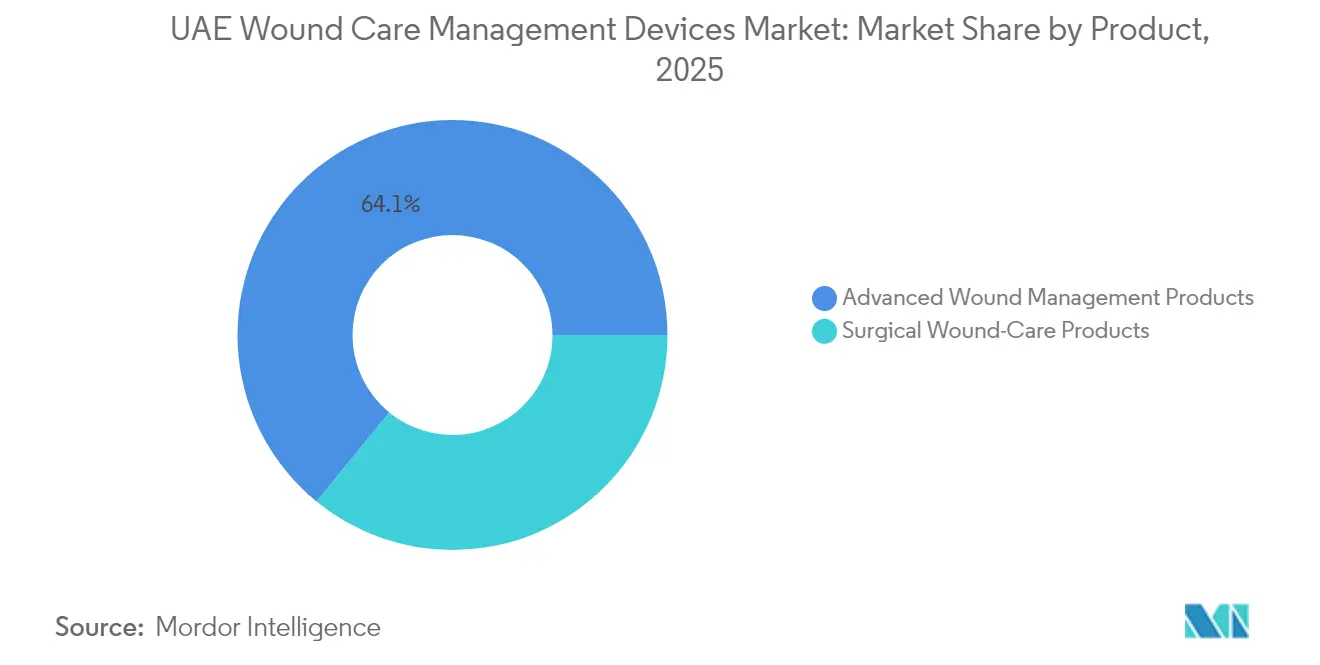
- By product category, Advanced Wound Management Products led with 64.10% revenue share in 2025; Surgical Wound-Care Products are projected to expand at a 6.28% CAGR through 2031.
- By wound type, Chronic Wounds accounted for 60.85% of the UAE wound care management devices market share in 2025, whereas Acute Wounds are advancing at a 6.63% CAGR to 2031.
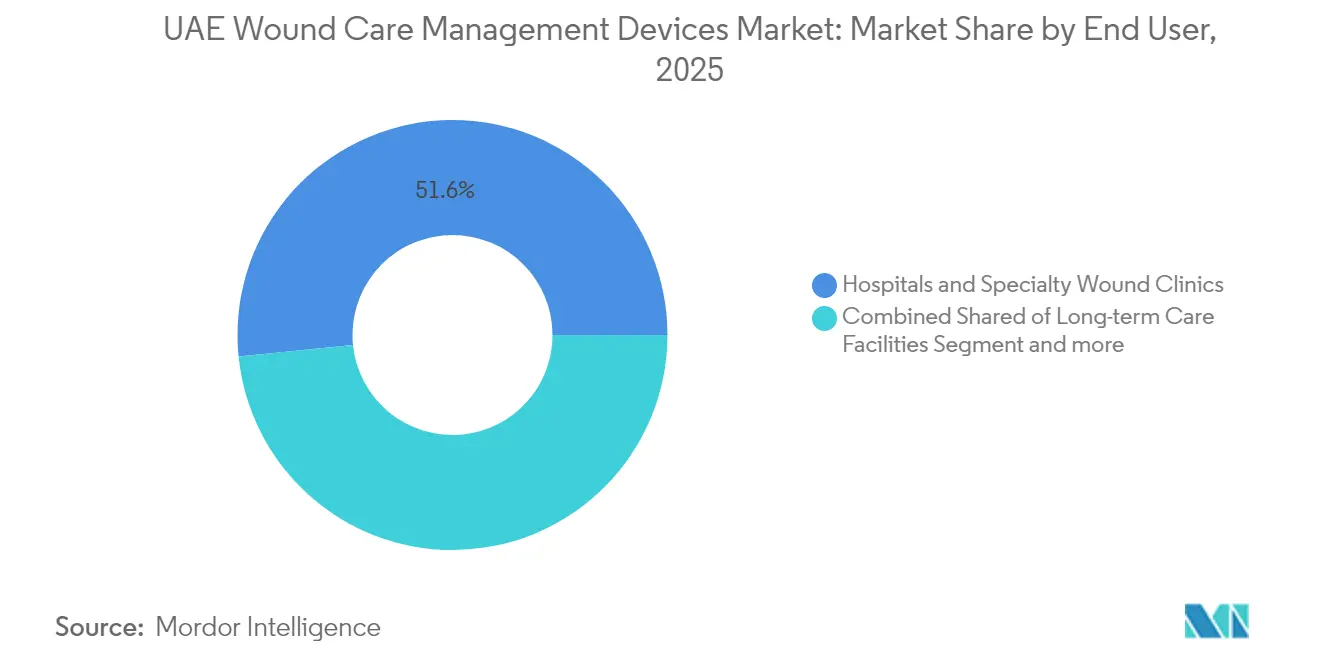
- By end-user setting, Hospitals & Specialty Wound Clinics held 51.60% of the UAE wound care management devices market size in 2025, but Home-Healthcare Settings are growing fastest at a 6.72% CAGR.
- By mode of purchase, Institutional Procurement captured 65.80% of demand in 2025, yet the Retail/OTC Channel is rising at a 6.19% CAGR through 2031.
Note: Market size and forecast figures in this report are generated using Mordor Intelligence’s proprietary estimation framework, updated with the latest available data and insights as of 2026.
UAE Wound Care Management Devices Market Trends and Insights
Drivers Impact Analysis*
| Driver | (~) % Impact on CAGR Forecast | Geographic Relevance | Impact Timeline |
|---|---|---|---|
| Rising incidence of chronic wounds (diabetic foot ulcers, pressure ulcers) | +1.8% | National, concentrated in Dubai and Abu Dhabi | Long term (≥ 4 years) |
| Growth in surgical & trauma procedures | +1.2% | National, with Dubai and Abu Dhabi leading | Medium term (2-4 years) |
| Rapid increase in UAE's ageing/expatriate population & healthcare spend | +1.0% | National, with spillover to Northern Emirates | Long term (≥ 4 years) |
| Federal investments under Dubai Health Strategy | +0.8% | Dubai-centric, with regional expansion | Medium term (2-4 years) |
| DHA-mandated wound-healing Key Performance Indicators for hospitals | +0.5% | Dubai-specific, potential national adoption | Short term (≤ 2 years) |
| Accelerating medical-tourism inflow for advanced wound care | +0.4% | Dubai and Abu Dhabi focused | Medium term (2-4 years) |
| Source: Mordor Intelligence | |||
Rising Incidence of Chronic Wounds Drives Market Expansion
High diabetes prevalence underpins a steady rise in diabetic foot ulcers, while plantar-pressure studies recording 911 kPa peak forces link gait mechanics to ulcer risk. Multidrug-resistant organisms complicate care, with methicillin-resistant Staphylococcus aureus rates reaching 25–35% across GCC hospitals. In response, the Ministry of Health and Prevention introduced 4D bioprinting to create patient-specific grafts for diabetic wounds, reinforcing the UAE wound care management devices market’s technology leadership. Nursing staff—63,366 professionals across 19,102 beds—now follow enhanced pressure-injury protocols that improve outcomes in acute and home settings. Collectively, these factors lift demand for advanced dressings, antimicrobial gels, and remote-monitoring solutions.
Growth in Surgical & Trauma Procedures Spurs Product Uptake
A national network of hospitals delivers rising volumes of orthopedic, cardiovascular, and bariatric surgeries that require specialized closure materials and infection prevention systems. Dubai’s emergency department KPI framework mandates time-bound wound management [1], steering hospitals toward faster-acting tissue adhesives and negative-pressure wound therapy devices. Medical tourists add further volume, as facilities such as American Hospital Dubai promote complex surgical packages across 30 overseas offices. Surgical growth, therefore, catalyzes the uptake of antimicrobial sutures, collagen dressings, and post-operative compression systems.
Ageing Expatriate Demographics Elevate Long-Term Care Needs
An older expatriate workforce raises the prevalence of venous leg ulcers and pressure injuries, driving demand beyond tertiary hospitals into long-term and community settings. Abu Dhabi’s JAWDA quality program now requires quarterly reporting of pressure-injury incidence in home-care services, positioning data-enabled dressings, and tele-wound platforms as essential for compliance. This demographic shift sustains a structural need for preventative foam dressings, silicone heel protectors, and nurse training programs nationwide.
Federal Investments Under Dubai Health Strategy Accelerate Technology Adoption
Targeted capital projects add 5,770 licensed facilities, including 5,021 private clinics, creating scale for wound-care procurement. The Dubai Health Authority’s outpatient standards mandate infection-control audits and evidence-based wound protocols, prompting health systems to upgrade to moisture-balancing dressings and digital documentation tools. Procurement cycles favor suppliers able to bundle training, data dashboards, and local warehousing, accelerating market penetration of integrated wound-care kits.
Restraints Impact Analysis*
| Restraint | (~) % Impact on CAGR Forecast | Geographic Relevance | Impact Timeline |
|---|---|---|---|
| High cost of advanced consumables & devices | -0.9% | National, stronger in Northern Emirates | Medium term (2-4 years) |
| Limited reimbursement for outpatient modalities | -0.7% | Nationwide, insurer-dependent | Long term (≥ 4 years) |
| Extreme-heat logistics risk to biologic dressings | -0.4% | Nationwide, peak summer | Short term (≤ 2 years) |
| Shortage of certified wound-care nurses | -0.3% | Northern Emirates focus | Long term (≥ 4 years) |
| Source: Mordor Intelligence | |||
Cost Barriers Limit Advanced Technology Adoption
Premium hydrofiber dressings, negative-pressure pumps, and hyperbaric chambers raise procurement budgets at smaller clinics, especially in the Northern Emirates with tighter funding envelopes. Storage and cold-chain requirements inflate operating costs during 45 °C summer peaks, prompting selective roll-outs and reliance on bulk tenders in Dubai and Abu Dhabi. Providers, therefore, weigh clinical gains against pay-out ratios when adopting next-generation modalities such as growth-factor gels and bioengineered skin substitutes.
Reimbursement Limitations Restrict Outpatient Care Access
Insurance adjudication rules often bundle wound cleansing with evaluation fees, constraining standalone billing for advanced modalities. Home-care nurses must document stringent criteria before payers authorize negative-pressure therapy, delaying initiation and shifting costs to patients [2]. As a result, uptake of portable pumps, smart dressings, and single-use NPWT units remains concentrated in premium plans and self-funded expatriate segments.
*Our forecasts treat driver/restraint impacts as directional, not additive. The impact forecasts reflect baseline growth, mix effects, and variable interactions.
Segment Analysis
By Product: Advanced Technologies Drive Premium Segment Growth
Advanced Wound Management Products accounted for 64.10% of the UAE wound care management devices market in 2025, reflecting strong demand for alginate, hydrocolloid, and antimicrobial foam dressings used in chronic and post-surgical settings. Deployment of 4D-bioprinted grafts for diabetic foot ulcers underscores hospitals’ preference for regenerative therapies that shorten healing cycles. Surgical Wound-Care Products, though smaller, are set to advance at a 6.28% CAGR as laparoscopic and orthopedic volumes climb, driving sales of absorbable sutures, tissue sealants, and hemostatic patches.
Local manufacturing moves—such as Ayu Life Sciences’ AED 33 million factory in Jebel Ali—promise import substitution, potentially stabilizing prices and insulating hospitals from supply-chain shocks. The UAE wound care management devices industry continues to prize products that integrate moisture control, antimicrobial action, and data capture for KPI reporting.

By Wound Type: Chronic Care Dominance Meets Acute Growth Acceleration
Chronic wounds represented 60.85% of the UAE wound care management devices market share in 2025, driven by diabetic foot ulcers, venous leg ulcers, and pressure injuries common among older expatriates. Hospitals invest in collagen matrices, silver alginates, and compression systems that address biofilm challenges and venous insufficiency.
Acute wounds are projected to expand faster, at a 6.63% CAGR, supported by rising surgical throughput and trauma services that require rapid-closure adhesives and advanced hemostats. As the UAE wound care management devices market size for acute wound supplies grows, vendors highlight ease-of-use kits suited to emergency settings where DHA KPIs specify strict door-to-closure timelines. The UAE wound care management devices industry, therefore, balances chronic protocols with trauma-ready products across its multi-tier health system.
By End-User: Home Healthcare Transformation Challenges Hospital Dominance
Hospitals and specialty clinics held 51.60% of 2025 revenues, benefiting from multidisciplinary teams and reimbursement pathways tailored to inpatient care. They remain the primary customers for negative-pressure consoles, hyperbaric suites, and biosynthetic grafts.
Home-Healthcare Settings, however, will post a 6.72% CAGR as tele-consults, portable NPWT pumps, and adhesive-free dressings such as HidraWear gain traction. The UAE wound care management devices market size for home-based services is widening as JAWDA metrics tie insurer payments to pressure-injury avoidance and rehospitalization rates . Investor interest centers on digital platforms that connect nurses, physicians, and pharmacists in real time, positioning the UAE wound care management devices industry for hybrid care pathways.
By Mode of Purchase: Retail Growth Challenges Institutional Procurement
Institutional procurement commanded 65.80% of purchases in 2025, reflecting centralized tenders by Dubai Health Authority, SEHA and private chains. Bulk orders lock in supply for foam dressings, antimicrobial gels and closure devices across inpatient wards and OR suites.
The retail/OTC channel is forecast to grow at 6.19% CAGR as pharmacies broaden inventories of silicone gel sheets, hydrocolloid patches and wound moisturizers for post-discharge regimens. Consumer education campaigns, coupled with pharmacist training, expand access while easing pressure on outpatient clinics. Nevertheless, insurer copays for OTC items remain limited, capping volume until reimbursement frameworks evolve.
Geography Analysis
Dubai and Abu Dhabi form the commercial heart of the UAE wound care management devices market, housing flagship facilities such as Rashid Hospital and Cleveland Clinic Abu Dhabi that attract regional and international patients. Both emirates leverage medical-tourism branding, with Dubai Healthcare City and American Hospital’s overseas offices funneling complex wound cases into local centers. Investment in data-linked wound programs aligns with DHA outpatient standards and emergency KPIs, ensuring consistent adoption of integrated dressings, digital photography, and outcome dashboards.
Abu Dhabi complements this by enforcing JAWDA quality benchmarks across its public and private sectors, compelling providers to log pressure-injury rates and healing times. These mandates require electronic health record integration and analytics-ready dressings that upload exudate trends for clinician review. As a result, software-enabled wound platforms gain a foothold alongside traditional consumables.
The Northern Emirates—Sharjah, Ajman, Ras Al Khaimah, Fujairah, and Umm Al Quwain—present lower facility density and workforce challenges. Scholarship graduates often relocate south, leaving shortages of certified wound nurses that restrict advanced-therapy adoption. Nonetheless, Ministry of Health and Prevention initiatives such as portable 4D-bioprint labs aim to extend cutting-edge care nationwide, signalling longer-term convergence in service levels.
Regulatory Landscape
Medical devices used in wound care in the UAE are regulated under the federal framework that transitioned key oversight from the Ministry of Health and Prevention (MOHAP) to the Emirates Drug Establishment (EDE) following Federal Decree-Law No. (38) of 2024. EDE became the central federal authority for medical device registration, classification, and import-related permissions, with a unified digital workflow for registration, renewal, and variations used in-market as of 2026. Marketing authorizations are valid for five years from committee approval, and foreign manufacturers generally require a UAE-based Local Authorized Representative to manage submissions and compliance.
At the emirate level, provider-side compliance requirements shape device adoption and facility readiness. In Dubai, Dubai Health Authority (DHA) requirements for medical equipment lifecycle management (installation, preventive maintenance, and inventory controls) influence how hospitals and clinics deploy wound therapy assets such as NPWT systems and other electronically connected equipment. For electronic biomedical devices, Dubai also applies cybersecurity-related requirements, including security standards that apply to higher-risk connected devices, adding another compliance layer for digital wound documentation tools and sensor-enabled wound technologies used in DHA-licensed facilities.
Competitive Landscape
The UAE wound care management devices market is moderately fragmented. Global leaders like Mölnlycke, ConvaTec and Smith+Nephew supply broad portfolios of dressings, NPWT and biosurgeries used in institutional tenders. They compete with technology innovators such as Sky Medical Technology, whose geko neuromuscular-stimulation device has been adopted by Genesis Healthcare, Dubai London Hospital and Mediclinic Parkview Hospital, accelerating post-operative microcirculation.
Local manufacturing is emerging as a differentiator. Ayu Life Sciences’ forthcoming Jebel Ali facility will produce Velgraft and Velvert artificial skin lines, potentially reducing import reliance and customs lead times. Distribution alliances also shape competition; Hidramed Solutions granted Razan Medical a three-year exclusive for its adhesive-free dressings, broadening access across pharmacy and home-care channels.
Digital health capabilities offer additional competitive levers. Vendors integrating wound-image AI, exudate sensors and auto-generated KPI reports align closely with DHA and DoH compliance needs. As home-care volumes mount, suppliers that bundle tele-nursing platforms with consumables are poised to gain share, particularly in insurer-backed chronic-care programs.
UAE Wound Care Management Devices Industry Leaders
-
Smith & Nephew Plc
-
Medtronic Plc
-
Coloplast A/S
-
ConvaTec Group plc
-
Solventum
- *Disclaimer: Major Players sorted in no particular order
Market Opportunities and Future Outlook
Procurement whitespace is being created by hospital and specialty capacity build-out, alongside provider efforts to standardize quality and documentation across care settings. UAE healthcare expansion plans cited in public reporting include large multi-year commitments to new facilities and beds, and private operators such as Aster DM Healthcare have announced sizable UAE expansion programs, widening the addressable base for institutional tenders for advanced dressings, NPWT systems, and infection-control oriented surgical wound-care products. This capacity expansion reinforces a market structure where institutional procurement remains the dominant purchase mode, and it raises the value of vendors that can provide training, servicing, and availability assurances for high-throughput surgical and chronic-care pathways.
Regulatory and industrial shifts also create room for supply localization and broader channel reach. The EDE-led federal transition under Federal Decree-Law No. (38) of 2024 standardizes national device authorization processes and refresh cycles, supporting portfolio upgrades and line extensions for multinational suppliers when paired with UAE-based authorized representation. Separately, rising prominence of UAE-made medical products in the national register and announced local manufacturing investments in wound-related skin substitute and dressing production (for example, Jebel Ali-based capacity plans referenced in-market) support shorter lead times and heat-resilient distribution models, which are particularly relevant for biologic or performance-sensitive advanced dressings and home-care kits. Home-care quality reporting programs and pharmacy-channel growth further expand opportunities for portable NPWT, adhesive-free dressings, and digital documentation tools that fit outpatient and retail workflows where reimbursement constraints increase the importance of simplified use and value demonstration.
Recent Industry Developments
- June 2026: Smith+Nephew launched the next-generation LEAF Patient Monitoring System in the United States, expanding its data-driven platform for pressure injury prevention. The update strengthens the companys connected-care offering that can be paired with preventive dressings and hospital protocols, relevant to UAE providers that track pressure-injury outcomes across inpatient and home-care services.
- April 2025: Ayu Life Sciences committed AED 33 million to develop a manufacturing facility in Jebel Ali Free Zone for Velgraft, Velvert, and VelNez artificial-skin products. The project supports local supply availability and can reduce lead times for advanced wound solutions used in chronic wound settings, particularly where import logistics and summer temperature controls are operational constraints.
- September 2024: Hidramed Solutions signed a three-year distribution agreement with Razan Medical for its adhesive-free HidraWear dressings following UAE regulatory approval. The partnership expands in-country distribution reach into pharmacy and home-care channels, supporting broader access to advanced dressings beyond large hospital tenders.
Research Methodology Framework and Report Scope
Market Definition and Coverage
This market covers revenue earned in the UAE from wound care management devices used to prevent, treat, and manage acute and chronic wounds across care settings. It includes device-based and dressing-based solutions used by clinicians and, where applicable, monitored home care.
Scope exclusions: The sizing excludes wound care pharmaceuticals and topical drugs, along with general hygiene supplies that are not used as wound care devices.
Segmentation Overview
- By Product
- Advanced Wound Management Products
- Advanced Wound Dressings
- Foam Dressings
- Hydrocolloid Dressings
- Film Dressings
- Alginate Dressings
- Hydrogel Dressings
- Other Advanced Dressings
- Wound Therapy Devices
- Pressure-relief Devices
- Negative Pressure Wound Therapy (NPWT) Systems
- Oxygen & Hyperbaric Oxygen Equipment
- Electrical Stimulation Devices
- Other Therapy Devices
- Advanced Wound Dressings
- Surgical Wound-Care Products
- Sutures & Staples
- Tissue Adhesives / Sealants / Glues
- Advanced Wound Management Products
- By Wound Type
- Chronic Wounds
- Diabetic Foot Ulcers
- Venous Leg Ulcers
- Pressure Ulcers
- Acute Wounds
- Surgical / Traumatic Wounds
- Burns
- Chronic Wounds
- By End-User
- Hospitals & Specialty Wound Clinics
- Long-term Care Facilities
- Home-Healthcare Settings
- By Mode of Purchase
- Institutional Procurement
- Retail / OTC Channel
Data Sources, Market Sizing, and Validation
Desk Research
Desk work starts with building the healthcare and wound burden context for the UAE, and then mapping what part of that demand is realistically served by devices. We rely on public sources such as UAE health authority publications and national statistics, World Health Organization updates, World Bank indicators, UN Comtrade trade tables for relevant device categories, and peer reviewed clinical literature on diabetic foot ulcers and pressure injuries.
On the supply side, we review company annual reports, UAE regulatory and standards notes, product catalogs, and audited press releases to understand what is actively marketed and reimbursed locally. We also use select paid subscriptions that support company financials and intelligence, patents, and shipment-level import and export checks, which helps cross-check the addressable device pool. These desk sources are not exhaustive, and many other public references were used for data collection, validation, and clarification.
Primary Interviews and Surveys
Primary work is used to confirm what is actually purchased and used in the UAE across hospitals, clinics, and home care channels, and then to pressure-test the pricing and utilization assumptions behind each device bucket. We speak with a mix of manufacturers and distributors, procurement and clinical stakeholders, and care providers across the Emirates so gaps in secondary data can be filled and assumptions can be aligned to real usage patterns.
Distribution of primary research fieldwork respondents
| Company type | Respondent position |
|---|---|
| Top tier: 36% | CXOs: 16% |
| Mid tier: 46% | Functional/Unit leaders: 33% |
| Smaller Players: 18% | Managers: 51% |
Market-Sizing & Forecasting
The core sizing is built using a top-down, demand-pool approach, where UAE wound prevalence indicators are converted into a treated cohort and then linked to typical device usage by setting of care. Once the demand pool is framed, we apply UAE-relevant adoption levels for advanced dressings and device therapies, and then translate them into value using observed price bands and channel markups.
To keep the totals realistic, we corroborate with selective bottom-up approximations, including distributor channel checks and sampled volume times average selling price calculations for common dressing formats and therapy systems. Key inputs used in the model include diabetic and aging population signals, estimated chronic wound mix (including diabetic foot ulcers and pressure injuries), hospital procedure volumes that influence surgical wounds, import intensity for wound care devices, and the shift toward outpatient and home care protocols. For forecasting, we use scenario analysis supported by simple regression checks, where the growth path is linked to indicators such as diabetes burden, healthcare capacity expansion, and adoption of advanced therapies, and then tuned using expert views on procurement cycles and pricing behavior. Where direct volume proxies are thin, gaps are handled by using adjacent device category shares and then validating the implied spend per treated patient with interview feedback.
Data Validation & Update Cycle
Validation is done by triangulating the modeled spend against independent signals such as import movement patterns, procurement intensity in major care settings, and plausible per patient usage levels for key wound types. Outliers are flagged, assumptions are revisited, and where needed respondents are re-contacted to confirm whether changes came from pricing, therapy mix, or one-time tenders.
Before sign-off, the full model is reviewed in steps so calculations, currency handling, and year mapping stay consistent across the historical and forecast period. The report is refreshed annually, and interim updates are triggered when material events occur, such as reimbursement changes, tender shifts, or major therapy adoption moves. Right before delivery, a final analyst pass is completed so clients receive the most current view available at that time.
Mordor Intelligence's UAE Wound Care Management Devices Market Size Compared With Other Published Estimates
Published market values for UAE wound care devices can look far apart, even when they appear to talk about the same topic. Differences usually come from what is counted as a device versus a product, which year is treated as the base, and how prices and utilization are projected forward.
The main gap comes from whether broader wound care spending is included, where antiseptics, topical items, and wider disposable wound supplies can be rolled into the total. This can inflate the number versus a device focused view. Some sources also assume faster therapy penetration or apply a uniform price uplift across all products, which can overstate value in years when tenders and mix shift pull pricing in the other direction. In the approach used by Mordor Intelligence, surgical closure tools and advanced device therapies are counted only when they are part of wound care device use, and general pharmaceuticals are left out, which keeps the spend aligned to what procurement teams actually buy under device lines.
Benchmark comparison
| Source | Market Size | Gaps in Research Methodology |
|---|---|---|
| Mordor Intelligence | USD 91.94 M (2025) | |
| Industry Publisher A | USD 776.99 M (2024) | This figure appears to capture a much wider wound care revenue pool and uses a different base year, which can pull in adjacent consumables and non-device items that are not consistently purchased under device budgets in the UAE. |
| Regional Consultancy B | USD 61.20 M (2025) | This estimate is narrower in device scope and emphasizes therapy-device categories, which can undercount dressing-led revenue and some facility-driven device spending when those items are bundled under broader wound care procurement. |
The spread across the three values mostly comes down to what is included in scope and how treated patients are translated into device spend. By keeping the build tied to clear demand indicators, realistic adoption levels, and locally checked price bands, the final number stays transparent and repeatable when assumptions are revisited.
Key Questions Answered in the Report
What is the current value of the UAE wound care market?
The market stands at USD 97.02 million in 2026 and is projected to grow to USD 126.91 million by 2031.
Which product segment leads the UAE wound care market?
Advanced Wound Management Products hold the largest share at 64.10% and dominate procurement in hospitals and specialty clinics.
Why are home-healthcare services growing rapidly in UAE wound care?
Home-care growth stems from patient convenience, quality mandates such as Abu Dhabi’s JAWDA indicators, and portable technologies that enable complex wound management outside hospitals.
What factors restrain wider adoption of advanced wound technologies?
High device costs, limited outpatient reimbursement, extreme-heat logistics and a shortage of certified wound nurses in smaller emirates are key barriers.
How does medical tourism influence demand?
Medical tourists seeking complex surgeries in Dubai and Abu Dhabi amplify demand for premium dressings, NPWT systems and regenerative therapies that speed recovery and minimize scarring.
Which emirates generate most UAE wound care revenue?
Dubai and Abu Dhabi lead, backed by advanced infrastructure, regulatory KPIs and targeted federal investment that drive consistent adoption of cutting-edge wound solutions.