
Thyroid Cancer Diagnostics Market Size and Share
Market Overview
| Study Period | 2020 - 2031 |
|---|---|
| Market Size (2026) | USD 260.94 Billion |
| Market Size (2031) | USD 357.01 Billion |
| Growth Rate (2026 - 2031) | 6.47 % |
| Fastest Growing Market | Asia Pacific |
| Largest Market | North America |
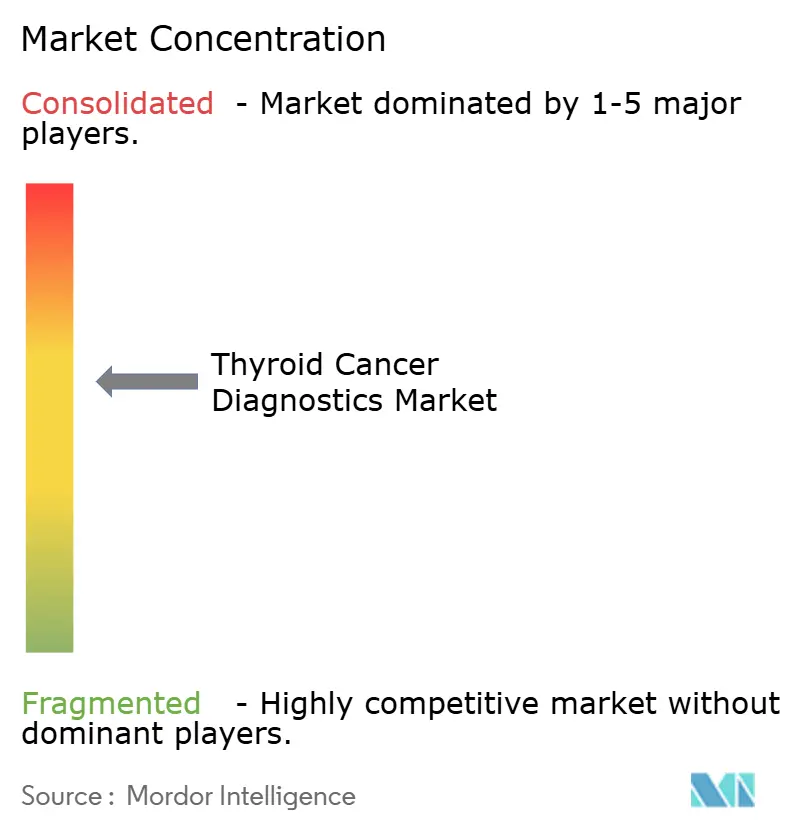
| Market Concentration | Medium |
Major Players *Disclaimer: Major Players sorted in no particular order Image © Mordor Intelligence. Reuse requires attribution under CC BY 4.0. | |
Thyroid Cancer Diagnostics Market Analysis by Mordor Intelligence
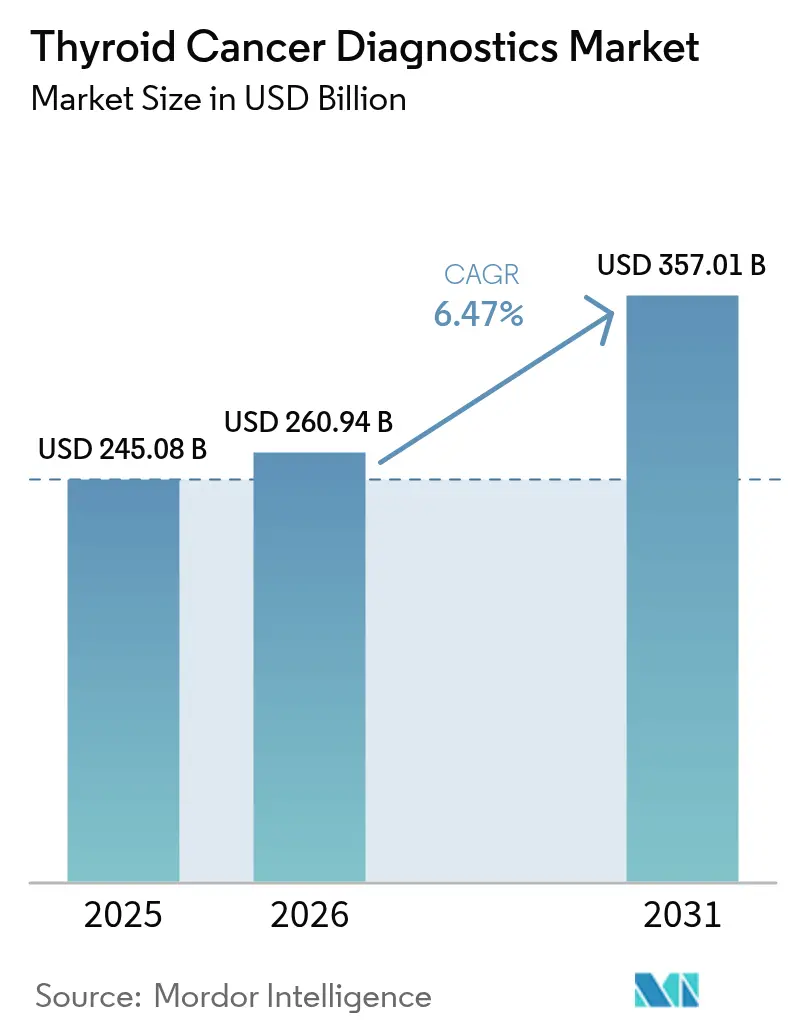
The thyroid cancer diagnostics market size in 2026 is estimated at USD 260.94 billion, growing from 2025 value of USD 245.08 billion with 2031 projections showing USD 357.01 billion, growing at 6.47% CAGR over 2026-2031. Consistent demand for earlier and more accurate detection, widespread availability of next-generation sequencing (NGS) assays, and rapid integration of artificial intelligence (AI) in imaging workflows invigorate the thyroid cancer diagnostics market. Continued gains in reimbursement for molecular panels across the United States, Canada, Germany, Japan and Australia further widen clinical acceptance. Meanwhile, liquid biopsy advances enable non-invasive surveillance, expanding testing volume beyond initial diagnosis. Competitive momentum is fueled by partnerships between imaging vendors and semiconductor companies that deliver real-time decision support, easing the shortage of endocrine cytopathologists. Against this backdrop, regulatory agencies now fast-track companion diagnostics, shortening time-to-market for genomic assays that pair with targeted therapies.
Key Report Takeaways
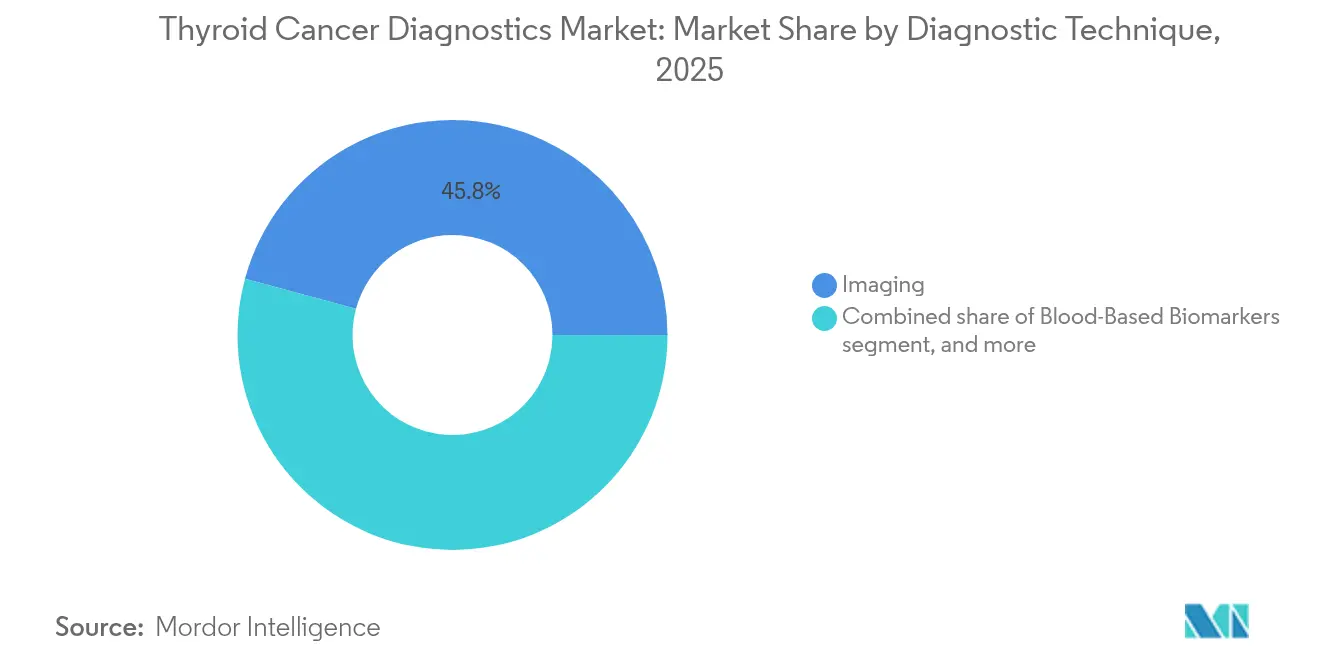
- By diagnostic technique, imaging modalities led with 45.78% revenue share in 2025, while liquid biopsy is poised to accelerate at a 10.10% CAGR through 2031.
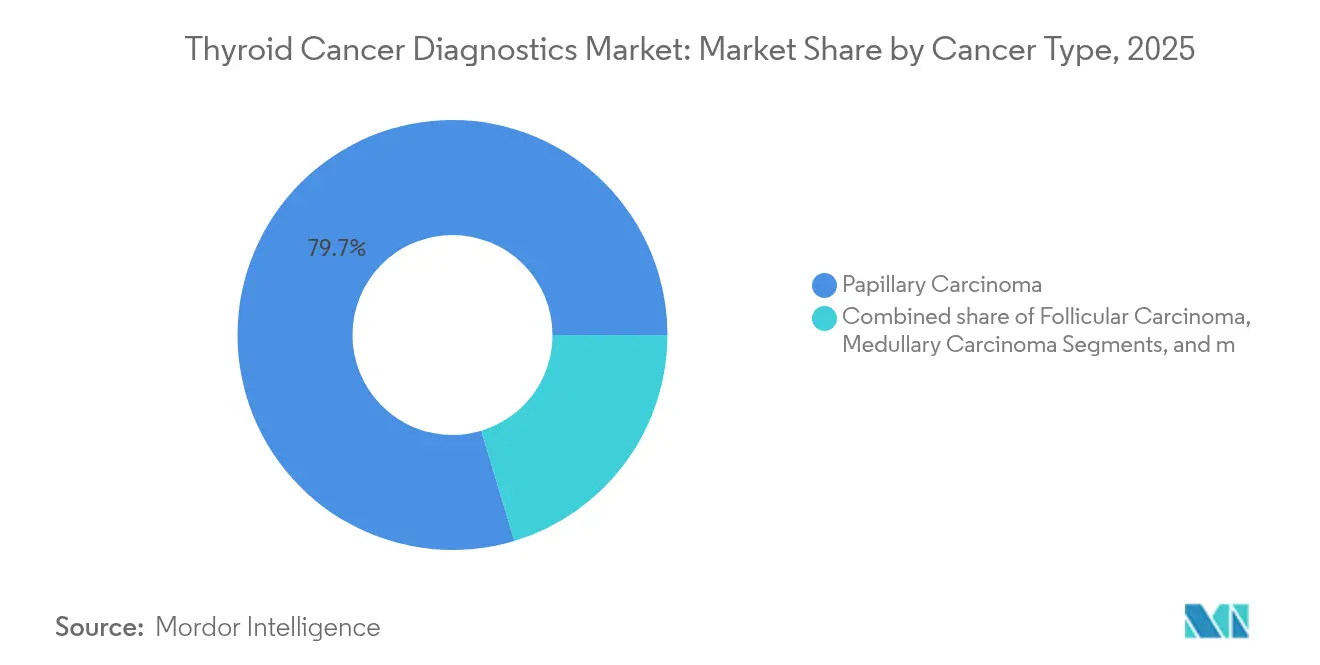
- By cancer type, papillary carcinoma captured 79.65% of thyroid cancer diagnostics market share in 2025; anaplastic carcinoma is projected to record the fastest 7.88% CAGR during 2026-2031.
- By end user, hospital laboratories controlled 53.64% of the thyroid cancer diagnostics market size in 2025, whereas independent reference laboratories are forecast to expand at 9.12% CAGR through 2031.
- By geography, North America held 38.74% of 2025 revenue, while Asia-Pacific is anticipated to advance at a 7.90% CAGR through 2031.
Note: Market size and forecast figures in this report are generated using Mordor Intelligence’s proprietary estimation framework, updated with the latest available data and insights as of 2026.
Market Trends and Insights
Drivers Impact Analysis of Thyroid Cancer Diagnostics Market*
| Drivers Impact Analysis | (~) % Impact on CAGR Forecast | Geographic Relevance | Impact Timeline |
|---|---|---|---|
| Rising incidence from improved imaging sensitivity | +1.2% | North America, Europe | Medium term (2-4 years) |
| Government-led thyroid cancer screening & awareness programs | +0.8% | Asia-Pacific, MEA, Latin America | Long term (≥ 4 years) |
| Rapid adoption of NGS-based genomic classifiers | +1.5% | OECD markets, expanding to emerging economies | Short term (≤ 2 years) |
| Expanding reimbursement for molecular tests in OECD markets | +1.1% | North America, EU, selective APAC | Medium term (2-4 years) |
| AI-driven ultrasound triage tools in primary care | +0.9% | Global, early adoption in developed markets | Short term (≤ 2 years) |
| Shift toward PET/MRI hybrid restaging protocols | +0.7% | North America & EU, limited penetration in emerging markets | Long term (≥ 4 years) |
| Source: Mordor Intelligence | |||
Rising Incidence from Improved Imaging Sensitivity
AI-enabled ultrasound probes now detect sub-centimeter nodules with 89% accuracy, narrowing the gap between community clinics and tertiary centers[1]. Siemens Healthineers’ Acuson Sequoia platform adds automated organ labeling, cutting scan-to-report time and driving referral rates to endocrine surgeons[2]. Increased sensitivity boosts biopsy volume, which lifts utilization of genomic classifiers and liquid biopsy tests that follow in the diagnostic cascade. While earlier capture fuels revenue, clinicians remain vigilant about over-diagnosis and overtreatment, spurring adoption of risk-stratification algorithms that flag indolent lesions for active surveillance instead of immediate surgery.
Government-Led Thyroid Cancer Screening & Awareness Programs
National initiatives in China, Japan and South Korea incorporate thyroid palpation and ultrasound into multi-cancer campaigns, standardizing referral pathways and lifting testing adherence. Japan’s Cancer Center publishes granular incidence maps that guide mobile screening vans toward underserved prefectures[3]. Mandatory reporting feeds regional cancer registries, creating large datasets that validate AI triage models. Screening regulations typically reference guideline-endorsed molecular panels, putting pressure on local laboratories to acquire NGS workflows. The programs’ long-term funding ensures recurring demand while encouraging manufacturers to localize production for cost efficiencies.
Rapid Adoption of NGS-Based Genomic Classifiers
The FDA-cleared TruSight Oncology Comprehensive kit underscores regulatory confidence in broad genomic profiling for indeterminate nodules. Veracyte processed 15,700 Afirma samples in Q2 2024 after U.S. Medicare extended coverage to Bethesda V nodules. ThyroSeq v3 demonstrated 89.6% sensitivity in Southeast Asian cohorts, signaling cross-ethnic reliability. These assays reduce unnecessary thyroidectomies by 42.0%, saving hospital resources and accelerating pay-for-performance models. AI-assisted variant curation cuts reporting time, allowing laboratories to scale without linear head-count expansion.
Expanding Reimbursement for Molecular Tests in OECD Markets
The U.S. MolDX program codifies payment for genetic classifiers, and European payers adopt similar fee schedules that stabilize laboratory cash flow[4]. UnitedHealthcare now reimburses ThyroSeq, ThyGenNEXT and ThyraMIR, expanding private-sector backing. FoundationOne Liquid CDx secured multiple companion-diagnostic indications, paving a path for blood-based profiling in thyroid cancer. Broader coverage narrows out-of-pocket costs, prompting community endocrinologists to order molecular panels earlier in the care pathway.
Restraints Impact Analysis of Thyroid Cancer Diagnostics Market*
| Restraints Impact Analysis | (~) % Impact on CAGR Forecast | Geographic Relevance | Impact Timeline |
|---|---|---|---|
| Shortage of skilled endocrine cytopathologists | −0.9% | Global, most acute in rural/emerging markets | Long term (≥ 4 years) |
| High out-of-pocket cost for advanced molecular panels | −0.6% | Emerging markets, uninsured populations | Medium term (2-4 years) |
| Guideline pushback on over-diagnosis & active-surveillance preference | −0.4% | North America & EU, limited impact in APAC | Short term (≤ 2 years) |
| Regulatory uncertainty for AI decision-support algorithms | −0.3% | Global, varying regulatory frameworks | Medium term (2-4 years) |
| Source: Mordor Intelligence | |||
Shortage of Skilled Endocrine Cytopathologists
Anatomic pathology vacancy rates rise annually; only 3.0% of U.K. laboratories meet recommended staffing levels. The shortage lengthens biopsy-to-report cycles and delays treatment decisions. Hospitals adopt cloud-based AI slide reviewers from Roche to triage low-risk smears, yet confirmatory reads still need board-certified experts. Training programs expand fellowship seats, but incumbents face retirement cliffs, extending the constraint well into the next decade.
High Out-Of-Pocket Cost for Advanced Molecular Panels
Comprehensive panels cost USD 3,000–5,000 per test, burdening patients without robust insurance. The American Thyroid Association notes that biopsy reimbursement cuts shift fine-needle aspiration toward hospital settings, inflating procedural costs. Liquid biopsy monitoring compounds expenditure because serial draws are recommended for aggressive disease. Manufacturers pilot tiered pricing and subscription models, yet broad affordability remains elusive in lower-income countries, restraining the thyroid cancer diagnostics market in those regions.
*Our forecasts treat driver/restraint impacts as directional, not additive. The impact forecasts reflect baseline growth, mix effects, and variable interactions.
Thyroid Cancer Diagnostics Market Segment Analysis
By Cancer Type:
Papillary Carcinoma Volume Sustains GrowthPapillary carcinoma generated the bulk of testing demand, holding 79.65% of the thyroid cancer diagnostics market in 2025. This dominance ensures steady baseline volume for ultrasound, cytology and NGS classifiers. Papillary lesions present favorable outcomes, so clinicians increasingly deploy molecular risk panels to spare low-risk patients from surgery, channeling them to active surveillance instead. Anaplastic carcinoma, despite accounting for less than 2% of incidence, drives a 7.88% CAGR by necessitating broad genomic profiling and liquid biopsy monitoring for rapid therapeutic adjustments. RET-fusion positivity now guides use of selpercatinib, which in turn mandates companion diagnostics at diagnosis and relapse.
The thyroid cancer diagnostics market size for rare subtypes such as medullary and follicular carcinoma is projected to scale steadily on the back of calcitonin assays and core-needle biopsy adoption. Follicular lesions still evade cytology, so ThyroSeq and Afirma uptake is brisk in endocrine clinics. Targeted testing for RET and RAS mutations refines prognostication and follow-up strategies, widening the overall serviceable market. Rising investigator-initiated trials for kinase inhibitors further entrench comprehensive genomic profiling across all histologies, sustaining long-term revenue.

By Diagnostic Technique:
Imaging Remains Cornerstone, Liquid Biopsy Gains PaceImaging accounted for 45.78% revenue in 2025, underlining ultrasound’s ubiquity as first-line triage. Integration of AI contouring into handheld probes allows primary-care physicians to grade TI-RADS risk levels accurately. PET/MRI hybrid scanners, while costly, produce high-contrast maps that guide re-operations in recurrent disease. As PET tracer availability widens, tertiary centers refine patient selection, minimizing unnecessary explorations.
Liquid biopsy, logging a 10.10% CAGR, is the fastest-rising technique within the thyroid cancer diagnostics market. Guardant Health expands its cfDNA panel to include rearranged during transfection (RET) and BRAF mutations, extending applicability across main subtypes. The thyroid cancer diagnostics market size for liquid biopsy could reach a double-digit share by 2030, driven by oncologists who favor blood-based surveillance over repeated tissue biopsies in surgically altered necks. Meanwhile, conventional fine-needle aspiration endures as a confirmatory test, especially where blood-based tests lack payer coverage. Core-needle biopsy emerges for large nodules that need architectural detail, bridging cytology and histology. Multiplex immunohistochemistry on core tissue complements NGS panels, creating a layered diagnostic workflow.
By End User:
Hospital Laboratories Anchor Demand, Reference Labs Outpace in GrowthHospital laboratories produced 53.64% of market revenue in 2025 given their embedded position in surgical pathways and immediate turnaround requirements. Integrated health-system labs invest in closed-tube NGS sequencers that run barcode-heavy workflows overnight, returning results within 48 hours. Surgical oncologists value in-house cytopathology during intraoperative consultations, a capability less accessible in independent facilities.
Reference laboratories, advancing at 9.12% CAGR, tap multi-hospital contracts, ship-to-lab logistics and economies of scale in reagent procurement. Quest Diagnostics’ acquisition of LifeLabs augments its Canadian footprint, enabling specimen routing to high-throughput genomic hubs in Ontario and British Columbia. The thyroid cancer diagnostics market size serviced by reference labs rises as community hospitals outsource complex assays. Academic medical centers play a pivotal role in early adoption of AI digital pathology suites, validating algorithms before wider roll-out. Cancer specialty centers round out demand by bundling diagnostic, therapeutic and follow-up services, streamlining patient journeys and amplifying test volume.
Geography Analysis
North America Thyroid Cancer Diagnostics Market
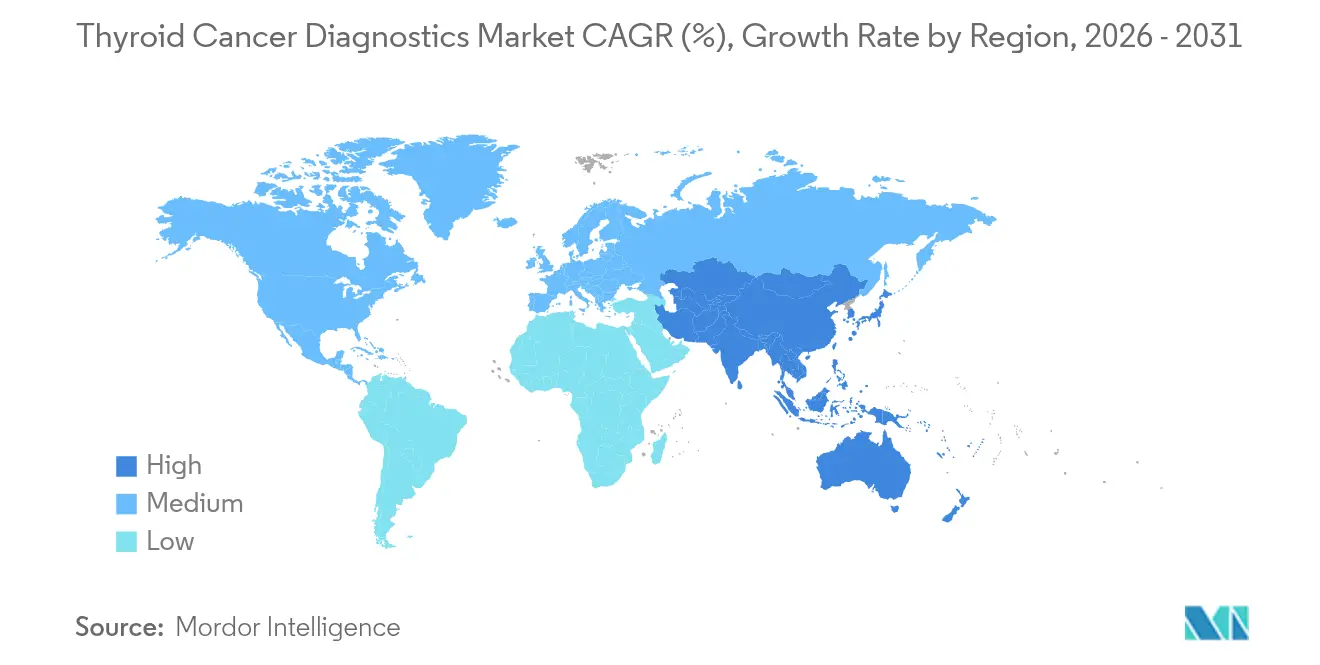
North America generated 38.74% of 2025 revenue, cementing its status as the largest regional contributor to the thyroid cancer diagnostics market. Medicare’s MolDX coverage and private payer alignment underpin broad access, while U.S. clinical guidelines promote molecular classifiers for Bethesda III-V nodules. Canada covers ultrasound and cytology through provincially funded plans but reimburses genomic sequencing selectively, creating mixed public-private demand. Mexico improves urban oncology services through federal investment, although rural disparities persist. The region’s innovation ecosystem propels AI model development, with GE HealthCare and NVIDIA co-engineering real-time ultrasound triage that mitigates pathologist shortages.
APAC Thyroid Cancer Diagnostics Market
Asia-Pacific posts the fastest 7.90% CAGR. China’s tiered cancer screening initiatives embed thyroid ultrasound in community clinics, escalating specimen submission to regional molecular hubs. Japan’s population-based registry supports precision screening thresholds that reduce unnecessary biopsies yet ensure high testing volume where risk is elevated. India’s rapid expansion of private oncology chains increases access to NGS panels, although pricing remains a hurdle. South Korea’s insurance-backed check-up culture produces high scan rates, encouraging AI start-ups to commercialize triage platforms domestically before seeking U.S. Food and Drug Administration (FDA) clearance. The thyroid cancer diagnostics market share in Asia-Pacific will grow as local manufacturers release cost-optimized sequencing kits.
Europe Thyroid Cancer Diagnostics Market
Europe maintains mature uptake of advanced diagnostics, guided by the European Medicines Agency’s centralized review that clarifies companion-diagnostic pathways. Germany pilots nationwide AI ultrasound quality registries, while the United Kingdom’s National Health Service (NHS) uplifts genomic classifier adoption through the Genomic Medicine Service. Southern European nations accelerate procurement of hybrid PET/MRI scanners, supported by EU recovery funds. Pan-European reimbursement parity remains a work in progress; however, collaborative procurement reduces per-unit reagent costs, benefiting smaller member states. These dynamics collectively boost the thyroid cancer diagnostics market, albeit at lower relative growth than Asia-Pacific.
Regulatory Landscape
In the United States, thyroid cancer diagnostic assays and decision-support software commonly route through FDA Class II pathways, with multiple thyroid-related immunoassays and AI ultrasound tools cleared via 510(k). Recent clearances include Beckman Coulter's Access Thyroglobulin Antibody II (July 2024, K240996), See-Mode Technologies' SMART-T augmented reporting tool for thyroid ultrasound (September 2024, K240697), Siemens Healthcare Diagnostics' ADVIA Centaur Anti-Thyroglobulin II (December 2025, K250816), and Siemens Healthcare Diagnostics' Atellica IM TSH3-Ultra II (February 2026, K251543). Companion diagnostics for targeted therapies remain governed by FDA's CDx framework, reinforcing the need for analytically validated biomarker testing (for example, RET-related indications) in advanced disease workflows.
In Europe, the move to the EU IVDR (2017/746) and MDR (2017/745) continues to raise conformity assessment and evidence requirements, with additional implementation detail added in 2026. The European Commission published Implementing Regulation (EU) 2026/977 (May 2026), which standardizes notified body and conformity assessment procedures, with applicability from 25 February 2027, and updated the set of harmonized standards referenced for MDR/IVDR in June 2026 (including EN ISO 10993-1:2025 and EN ISO 15223-1:2021/A1:2025). In China, the National Medical Products Administration (NMPA) has been tightening the clinical evaluation expectations for AI-assisted diagnostic medical devices, including thyroid nodule characterization software, supported by 2026 draft guidance aimed at higher-risk (Class III) diagnostic AI and aligned with the broader use of priority review mechanisms for malignant tumor diagnostics that address urgent clinical needs.
Competitive Landscape
The thyroid cancer diagnostics market features moderate concentration. Roche Diagnostics, Abbott and Thermo Fisher Scientific leverage broad assay portfolios spanning immunochemistry, cytology staining and NGS panels, reinforced by long-standing distributor networks. Roche’s cobas 5800 platform targets mid-volume hospitals looking for consolidated molecular workloads. Abbott integrates free thyroxine (T4) and thyroglobulin immunoassays on the Alinity ci series, ensuring high throughput for large laboratories.
Disruptive entrants amplify competition. Veracyte, with Afirma and the recently acquired C2i minimal-residual-disease technology, pushes into longitudinal monitoring niches. Guardant Health expands beyond ctDNA to include multiomic readouts, differentiating on biomarker breadth. AI champions such as PathAI and Paige collaborate with scanner manufacturers to automate follicular lesion classification, tackling the cytopathologist gap. Strategic collaborations flourish: GE HealthCare signs a multi-year pact with NVIDIA to embed GPU-accelerated models in ultrasound carts, reducing inference latency to sub-second.
Mergers and acquisitions intensify as incumbents pursue end-to-end capabilities. LabCorp bought assets from Incyte Diagnostics to deepen oncology testing expertise. Quest Diagnostics absorbed LifeLabs to expand specimen volume in Canada, unlocking cross-border logistics synergies. RadNet’s acquisition of See-Mode adds AI vascular and thyroid modules to its imaging chain, signaling vertical integration from scanning to interpretation. Competitive differentiation now hinges on the depth of AI integration, turnaround speed, and payer-aligned test menus rather than hardware alone.
Thyroid Cancer Diagnostics Industry Leaders
-
F. Hoffmann-La Roche Ltd
-
Siemens Healthineers
-
Abbott
-
Thermo Fisher Scientific, Inc.
-
GE HealthCare
- *Disclaimer: Major Players sorted in no particular order
Thyroid Cancer Diagnostics Market Companies Covered in this Report
- Abbott Laboratories
- Thermo Fisher Scientific
- Eli Lilly and Company
- Siemens Healthineers
- GE Healthcare
- Bio-Rad Laboratories
- Agilent Technologies
- Koninklijke Philips
- Roche
- Illumina
- Daiichi Sankyo
- Quest Diagnostics
- Veracyte
- Guardant Health
- Myriad Genetics
- Exact Sciences
- Fulgent Genetics
- Hologic
- Thyrocare Technologies
- Beckton Dickinson
- PerkinElmer
Market Opportunities and Future Outlook
There is a clear whitespace at the intersection of ultrasound triage, indeterminate cytology, and molecular reflex testing, where providers want fewer repeat biopsies and fewer unnecessary thyroidectomies while maintaining diagnostic confidence. The market is already moving toward multi-modal pathways (ultrasound plus cytology plus molecular profiling), reinforced by guideline support for molecular testing of indeterminate nodules from professional bodies such as the American Thyroid Association (ATA) and the European Thyroid Association (ETA). Product and clearance activity further validates this workflow, for example FDA clearance of Siemens Healthcare Diagnostics' Atellica IM Thyroglobulin (Tg) device (June 2025, K242981) for differentiated thyroid cancer monitoring and the growing number of FDA-cleared AI platforms that assess thyroid nodule sonograms (six platforms referenced as cleared as of 2026).
Opportunities also center on scaling advanced molecular methods into routine practice, particularly where current cost and capacity barriers limit access. Clinical evaluations cited for multiplex droplet digital PCR (ddPCR) combined with fine-needle aspiration show very high diagnostic performance, supporting laboratories that want faster, more targeted panels alongside broader NGS classifiers. At the same time, precision oncology in advanced thyroid cancer keeps expanding the need for standardized biomarker testing (including RET, BRAF, and NTRK) as companion diagnostic labeling broadens, with established platforms such as the Oncomine Dx Target Test carrying thyroid-relevant RET indications. As reimbursement frameworks mature for molecular panels in major OECD markets and as hospitals and reference laboratories expand in-house capability, vendors that integrate assay menus, automation, and interpretive software (including AI decision support for imaging and digital pathology triage) have a practical path to capture incremental testing volume across initial diagnosis, risk stratification, and longitudinal surveillance.
Recent Industry Developments in Thyroid Cancer Diagnostics Market
- June 2026: The European Commission published updated harmonized standards referenced for MDR and IVDR, including EN ISO 10993-1:2025 and updates to EN ISO 15223-1 symbol requirements. This raises the compliance bar for manufacturers of in-vitro diagnostics and related software labeling and risk management documentation, influencing time-to-market and technical file readiness for thyroid cancer diagnostic solutions in Europe.
- June 2025: Siemens Healthcare Diagnostics, Inc. received FDA 510(k) clearance for the Atellica IM Thyroglobulin (Tg) device (K242981) for thyroid cancer monitoring. The clearance supports broader deployment of high-sensitivity thyroglobulin testing on automated immunoassay systems, strengthening post-treatment surveillance workflows in hospital and reference laboratories.
- September 2024: See-Mode Technologies obtained FDA 510(k) clearance for its See-Mode Augmented Reporting Tool, Thyroid (SMART-T) (K240697). This added a regulated route for AI-assisted thyroid ultrasound reporting in the United States, accelerating adoption of software that standardizes measurements and reporting across imaging sites and helps address specialist capacity constraints.
Thyroid Cancer Diagnostics Market Report Scope and Research Methodology
Market Definition and Coverage
For this study, the market covers revenues generated from diagnostic procedures and related test solutions used to detect, characterize, or monitor thyroid cancer in clinical practice, across pre-testing, confirmatory testing, and follow-up decision making.
Scope exclusions: We exclude diagnostics done purely for benign thyroid nodules, therapeutic radio-iodine use, and surgical devices used during thyroid procedures.
Segments Covered in This Report
- By Cancer Type
- Papillary Carcinoma
- Follicular Carcinoma
- Medullary Carcinoma
- Anaplastic Carcinoma
- Other Cancer Types
- By Diagnostic Technique
- Imaging
- Ultrasound
- CT / MRI
- PET / SPECT
- Blood-Based Biomarkers
- TSH / T4 / T3 Panel
- Thyroglobulin & Anti-Tg
- Calcitonin / CEA
- Tissue Biopsy
- Fine-Needle Aspiration Cytology
- Core Needle Biopsy
- Liquid Biopsy
- Other Diagnostic Techniques
- Imaging
- By End User
- Hospital Laboratories
- Cancer Diagnostic Centers
- Independent Reference Labs
- Other End Users
- Geography
- North America
- United States
- Canada
- Mexico
- South America
- Brazil
- Argentina
- Rest of South America
- Europe
- Germany
- United Kingdom
- France
- Spain
- Italy
- Russia
- Rest of Europe
- Asia-Pacific
- China
- Japan
- India
- Australia
- South Korea
- Rest of Asia-Pacific
- Middle East & Africa
- GCC
- South Africa
- Rest of Middle East & Africa
- North America
Data Sources, Market Sizing, and Validation
Desk Research
Desk research was used to build the starting structure for the model and to set clear boundaries around what is counted as thyroid cancer diagnostics. The approach relied on public healthcare and cancer burden indicators, mapped procedure pathways, and diagnostic standards so the demand pool stays tied to actual testing behavior.
Key inputs were gathered from reputable non-paywalled sources such as the World Health Organization, the International Agency for Research on Cancer, the US CDC, the US National Cancer Institute, and peer-reviewed clinical guideline publications and journals. We also reviewed company filings, investor presentations, regulatory and reimbursement notes where available, and reputed press for product launches and adoption signals. In a few places, we supplemented this with paid subscriptions for company financials and for patents to understand where product innovation could shift the test mix assumptions. These examples are not exhaustive, and many other public sources were also checked to collect, validate, and clarify data points.
Primary Interviews and Surveys
Primary work was used to pressure-test the model assumptions that are hard to observe in public data, especially how the diagnostic pathway is followed in real hospitals and labs. We spoke with clinicians involved in thyroid nodule evaluation, lab and imaging leaders, and operational managers who see test volumes and referral patterns. Their input was then used to refine utilization rates and typical test sequencing across APAC, EMEA, and the Americas.
Distribution of primary research fieldwork respondents
| Company type | Respondent position | Region |
|---|---|---|
| Top tier: 33% | CXOs: 15% | APAC: 39% |
| Mid tier: 51% | Functional/Unit leaders: 41% | EMEA: 37% |
| Smaller Players: 16% | Managers: 44% | Americas: 24% |
Market-Sizing & Forecasting
Sizing was developed using both a top-down and bottom-up logic. First, we reconstructed the demand pool from disease incidence and diagnostic work-up rates, then cross-checked totals using sampled price and volume reality checks. In practice, the top-down side tied together thyroid cancer case load, the share of patients moving through ultrasound and fine needle aspiration steps, the rate of repeat testing, and the proportion of cases receiving ancillary testing (such as molecular or immunoassay support). Those volumes were then translated into spend using typical pricing levels.
To keep the estimate grounded, selective bottom-up approximations were used. These included supplier revenue roll-ups where financial splits were available, channel discussions on test mix, and sampled ASP times volume checks for high-usage procedures. When company disclosures were incomplete, gaps were handled through proxy ratios based on comparable peers and then adjusted back to the pathway totals so the model does not overcount.
For forecasting, we used scenario analysis supported by expert views on how guideline adoption, reimbursement comfort, and lab capacity change over time. Key variables used in the outlook included changes in diagnosis rates, ultrasound use intensity, biopsy conversion rates, molecular test penetration in indeterminate nodules, and pricing movement after new assay introductions.
Data Validation & Update Cycle
Outputs were validated through triangulation across the pathway build-up, supplier checks, and independent healthcare signals, and then outliers were reviewed until the variance was explainable. We also checked for logical breaks such as sudden jumps in implied tests per patient or unrealistic pricing drift, and where needed we reworked the assumptions using follow-up calls.
Before sign-off, the model and assumptions go through multiple analyst review steps so key inputs are consistent across regions and across years. Reports are refreshed annually, with interim updates triggered by material events such as guideline changes, reimbursement shifts, or step-changes in test availability. Before delivery, a final review pass is done so clients receive the latest updated view.
Mordor Intelligence's Thyroid Cancer Diagnostics Market Sizing Compared With Other Published Estimates
It is common to see different market sizes for thyroid cancer diagnostics because sources may mix screening and benign work-ups with confirmed cancer testing. They may also treat procedure revenue and test kit revenue differently. Differences also come from how each publisher converts local pricing to USD and how often assumptions are refreshed.
By tracking pathway level procedure counts and the refresh timing for pricing inputs, Mordor Intelligence is able to keep the total tied to thyroid cancer specific work-ups rather than broader thyroid testing bundles. This explains why some estimates land far above or below this study.
Benchmark comparison
| Source | Market Size | Gaps in Research Methodology |
|---|---|---|
| Mordor Intelligence | USD 260.94 B (2026) | |
| Trade Journal A | USD 2.97 B (2024) | Uses a narrower scope that reads like selected test kit revenues and excludes a large share of procedure-linked diagnostic spend, so the total stays much smaller. |
| Industry Commentary B | USD 3.10 B (2024) | Anchors on a single recent base year and applies broad growth without reconciling to procedure volumes or regional pathway differences, which can understate follow-up and repeat testing intensity. |
The spread in published values mainly comes down to what is counted as diagnostics revenue and how the patient pathway is translated into volumes and prices. When the scope is locked to cancer specific work-ups and the pricing and utilization assumptions are checked against observed clinical flow, the output becomes easier to reproduce and defend over time.
Key Questions Answered in the Report
What is the current size of the thyroid cancer diagnostics market?
The thyroid cancer diagnostics market is valued at USD 260.94 billion in 2026 and is projected to reach USD 357.01 billion by 2031.
Which diagnostic technique generates the most revenue?
Imaging modalities led the market with 45.78% revenue share in 2025, driven by widespread ultrasound use and AI image-analysis upgrades.
Which region is expanding fastest?
Asia-Pacific shows the highest growth, advancing at an 7.90% CAGR through 2031 due to government-backed screening programs and rising healthcare investment.
How are liquid biopsy tests influencing clinical practice?
Liquid biopsy panels enable non-invasive tumor profiling and treatment monitoring, supporting a 10.10% CAGR and reducing dependence on repeat tissue biopsies.
Why is the shortage of cytopathologists a concern?
Limited specialist availability lengthens diagnostic turnaround times and forces laboratories to adopt AI triage tools, slightly constraining market growth until workforce gaps narrow.
What competitive strategies are top players adopting?
Established vendors pursue acquisitions and AI partnerships, such as GE HealthCare’s alliance with NVIDIA, while molecular specialists like Veracyte and Guardant Health broaden their assay menus to capture emerging liquid biopsy demand.