
Tendonitis Treatment Market Size and Share
Market Overview
| Study Period | 2021 - 2032 |
|---|---|
| Market Size (2027) | USD 252.71 Billion |
| Market Size (2032) | USD 298.94 Billion |
| Growth Rate (2027 - 2032) | 3.42 % |
| Fastest Growing Market | Asia-Pacific |
| Largest Market | North America |
| Market Concentration | Medium |
Major Players *Disclaimer: Major Players sorted in no particular order Image © Mordor Intelligence. Reuse requires attribution under CC BY 4.0. | |
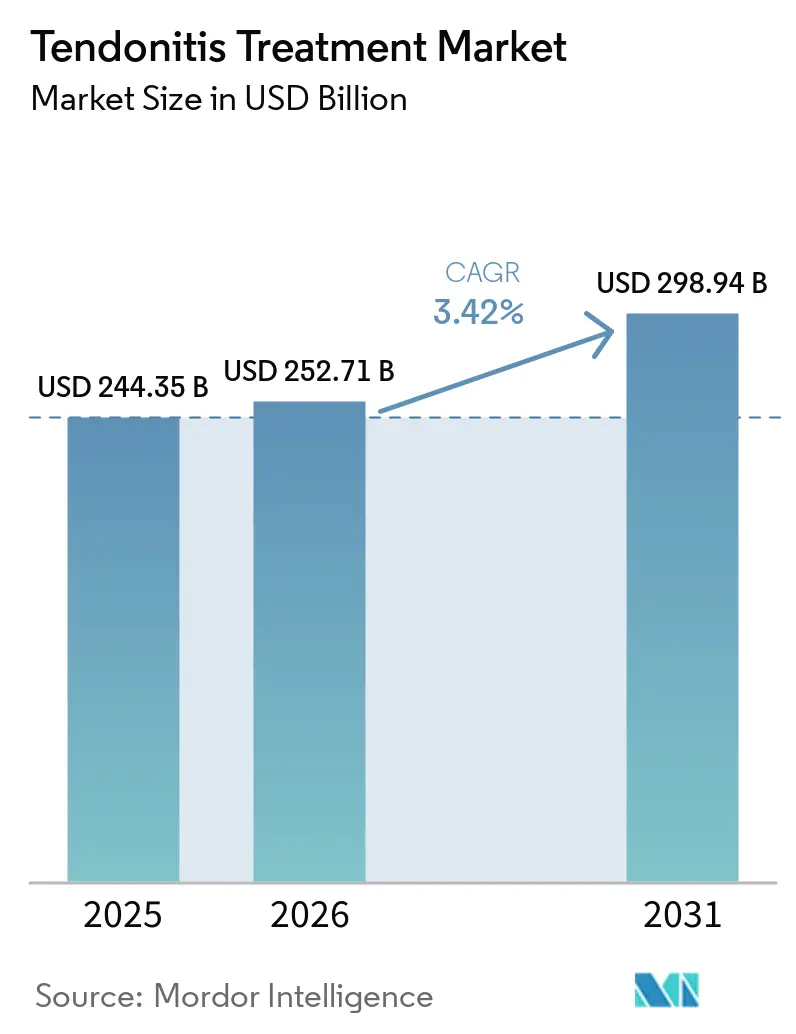
Tendonitis Treatment Market Analysis by Mordor Intelligence
The Tendonitis Treatment Market size was valued at USD 244.35 billion in 2026 and is estimated to grow from USD 252.71 billion in 2027 to reach USD 298.94 billion by 2032, at a CAGR of 3.42% during the forecast period (2027-2032).
The growth reflects a rise in sports‐related injuries, persistent workplace ergonomics issues, and wider access to AI-enabled imaging that catches tendon damage earlier than legacy modalities. Military-grade biomaterials are also crossing into civilian orthopedics, enhancing healing outcomes and stimulating premium product adoption. On the regional front, North America continues to command spending power, yet Asia-Pacific is outpacing the global average thanks to rapid hospital build-outs and widespread uptake of digital rehabilitation platforms. Across conditions, Achilles injuries remain numerically dominant while patellar tendinopathy leads future volume gains as ultrasound guidance improves diagnostic accuracy. Non-surgical care[1] now anchors treatment decisions, supported by validated regenerative and photobiomodulation options that shorten recovery, keep athletes on the field, and lower payer costs.
Key Report Takeaways
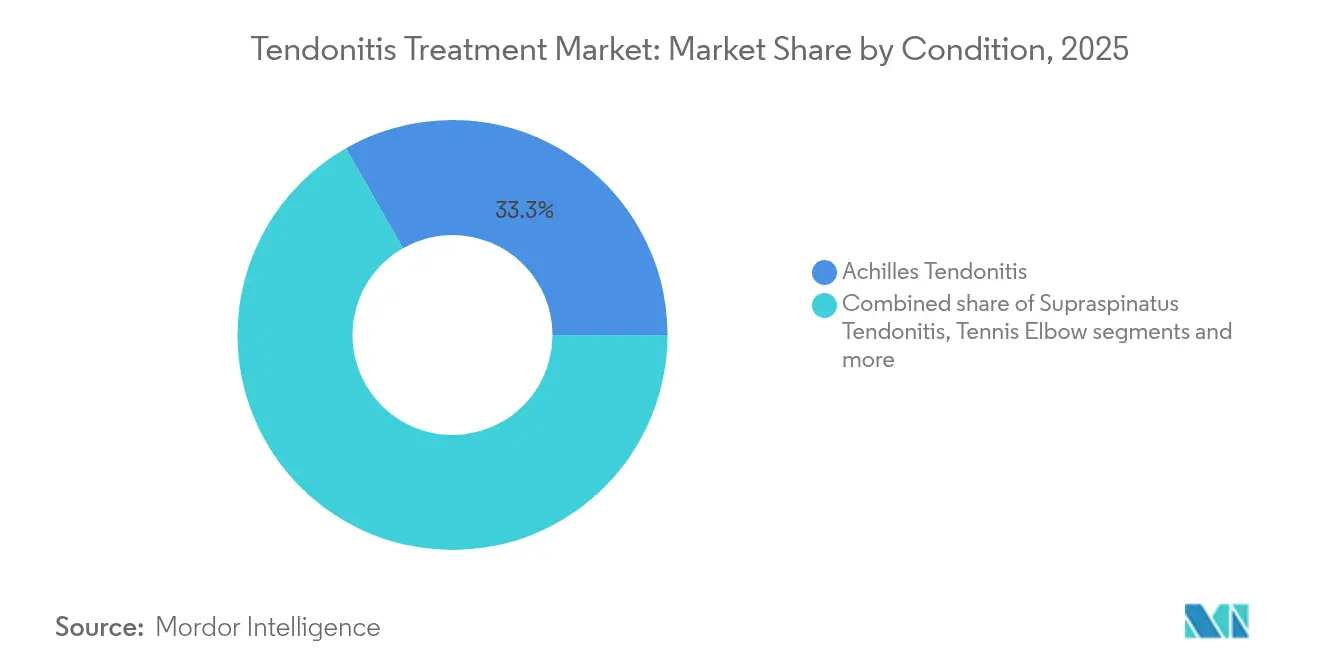
- By condition, Achilles tendonitis captured 33.25% of the tendonitis treatment market share in 2026, while patellar tendinopathy is projected to grow at a 4.78% CAGR through 2032.
- By treatment modality, non-surgical care held 61.48% of the tendonitis treatment market in 2026; surgical alternatives trailed but advanced at a 3.75% CAGR through 2032.
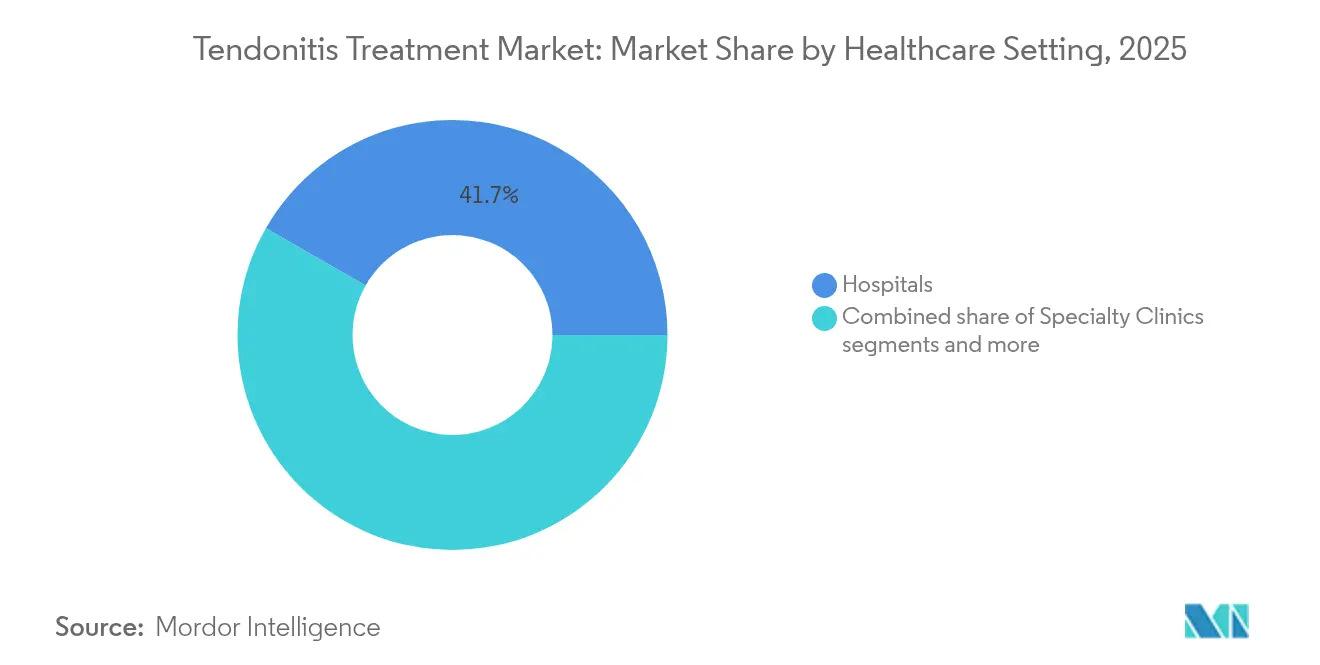
- By healthcare setting, hospitals accounted for 41.74% share of the tendonitis treatment market size in 2026, whereas rehabilitation centers are expanding at a 4.18% CAGR between 2027 to 2032.
- By geography, North America led with 38.17% revenue share in 2026; Asia-Pacific is forecast to post the highest regional CAGR at 4.28% through 2032.
Note: Market numbers in this report are based on Mordor Intelligence's proprietary estimation framework, which combines nine months of actuals with Q4 projections for base year 2026.
Market Trends and Insights
Drivers Impact Analysis of Tendonitis Treatment Market*
| Driver | (~) % Impact on CAGR Forecast | Geographic Relevance | Impact Timeline |
|---|---|---|---|
| Sports & occupational injury incidence boom | +0.8% | Global; most acute in North America & Europe | Medium term (2-4 years) |
| AI-powered ultrasound enabling early diagnosis | +0.6% | North America & Asia-Pacific core; spill-over to EU | Short term (≤ 2 years) |
| Reimbursement expansion for outpatient repair | +0.5% | North America & EU; select Asia-Pacific markets | Medium term (2-4 years) |
| Military-grade biomaterials in civilian care | +0.4% | North America; scaling to Asia-Pacific | Long term (≥ 4 years) |
| Direct-to-Consumer Tele-Physiotherapy Platforms | +0.4% | Global, with APAC showing highest adoption | Short term (≤ 2 years) |
| Wearable Neuromodulation for Pain-Free Rehab | +0.3% | Global, led by North America & Europe | Medium term (2-4 years) |
| Source: Mordor Intelligence | |||
Sports & Occupational Injury Incidence Boom
Rising participation in organized sports among adults over 40 and worsening desk-bound work habits inflate global tendon injury risk. Musculoskeletal diseases now affect 1.7 billion people, and tendon problems account for up to 40% of game-related incidents. Corporate wellness programs have begun treating tendon health as a productivity metric, incentivizing earlier intervention. As a result, providers are extending clinic hours, payers are adding preventive coverage, and device firms are launching pre-emptive bracing products tailored for older weekend athletes.
AI-Powered Ultrasound Enabling Early Diagnosis
Machine-learning image analysis identifies micro-tears long before they trigger overt symptoms, boosting conservative cure rates above 80% for early-stage cases. Hospitals in the United States and Japan have added portable AI scanners to standard sport-medicine workups, reducing unnecessary MRI referrals and lowering per-episode costs. Vendors are embedding predictive algorithms into cloud dashboards that notify therapists when image patterns suggest pre-rupture stress, reinforcing proactive care models.
Reimbursement Expansion for Outpatient Tendon Repair
Commercial insurers now reimburse minimally invasive bioinductive implantation in outpatient suites, citing Smith+Nephew's economic analysis[2] that linked the approach to faster return-to-work and lower mid-term re-tear rates. This policy shift lifts patient throughput in ambulatory surgery centers and encourages surgeons to adopt regenerative implants earlier in the care pathway.
Military-Grade Biomaterials Entering Civilian Care
Materials first deployed for battlefield injuries demonstrate superior load-bearing strength[3] and biocompatibility in chronic tendon tears, yielding near-complete functional restoration in early civilian case series. Government dual-use grants accelerate regulatory submissions, and orthopedic firms are co-branding next-generation grafts with defense labs to highlight durability for tendon repair.
Restraints Impact Analysis of Tendonitis Treatment Market*
| Restraint | (~) % Impact on CAGR Forecast | Geographic Relevance | Impact Timeline |
|---|---|---|---|
| Low clinician awareness of biologic options | −0.4% | Global; most pronounced in emerging markets | Medium term (2-4 years) |
| High failure rates of first-line conservative therapy | −0.3% | Global; variation by local protocol | Short term (≤ 2 years) |
| Supply-Chain Bottlenecks for Medical-Grade Collagen Grafts | -0.2% | Global, with acute impact in North America & Europe | Medium term (2-4 years) |
| Limited Long-Term Data on Emerging Energy-Based Devices | -0.1% | North America & Europe, expanding to APAC | Long term (≥ 4 years) |
| Source: Mordor Intelligence | |||
Low Clinician Awareness of Biologic/Regenerative Options
A 2024 survey showed only 66.1% of sports physicians offered at least one orthobiologic, citing limited training and inconsistent reimbursement. In low-resource settings, physicians rely on legacy anti-inflammatory regimens, delaying uptake of platelet-rich plasma or stem-cell injections. Device sponsors are funding fellowship programs and open-access outcome registries to close knowledge gaps.
High Failure Rates of First-Line Conservative Therapy
Systematic reviews reveal[4] that standard rest-and-brace protocols underperform in chronic distal biceps tears, forcing many patients toward surgery after months of deterioration. The added cost and frustration erode confidence in conservative care and drive demand for improved initial modalities such as photobiomodulation or high-energy shockwave.
*Our forecasts treat driver/restraint impacts as directional, not additive. The impact forecasts reflect baseline growth, mix effects, and variable interactions.
Tendonitis Treatment Market Segment Analysis
By Condition:
Achilles Dominance Masks Patellar SurgeAchilles tendonitis held a 33.25% tendonitis treatment market share in 2026, reflecting its high prevalence among runners, basketball players, and occupations that demand prolonged standing. Patellar tendinopathy is advancing at a 4.78% CAGR, outpacing overall tendonitis treatment market growth as volleyball, soccer, and pickleball gain popularity worldwide. Supraspinatus tears maintain steady volumes due to aging demographics and repetitive overhead activity, while tennis elbow benefits from renewed recreational sports uptake among middle-aged consumers. De Quervain’s tenosynovitis growth links to the widespread use of smartphones that encourage repetitive thumb extension.
Ultrasound-guided interventions now underpin many condition-specific pathways. Percutaneous needle tenotomy systems such as Tenex deliver significant functional gains for lateral epicondylitis, documented in short- and long-term follow-up cohorts. Bioinductive collagen implants accelerate mid-foot and lower-limb tendon healing, helping athletes resume play sooner. These advances suggest precision protocols will differentiate providers and spur premium pricing.

By Treatment:
Non-Surgical Supremacy ReinforcedNon-surgical options commanded 61.48% of the tendonitis treatment market size in 2026 and are expanding at 3.75% CAGR as patients favor less invasive therapy. Wearable neuromodulation and photobiomodulation are entering mainstream guidelines after meta-analyses confirmed pain score reductions and faster functional recovery. Surgical demand persists for full-thickness tears, yet minimally invasive procedures—arthroscopy or percutaneous repair—are displacing open surgery because of shorter rehabilitation and lower infection risk.
Grafts and implants represent the fastest surgical subsegment, powered by bioinductive and synthetic scaffold breakthroughs. The tendonitis treatment market size for grafts is projected to scale in tandem with sports medicine fellowship adoption of these materials. AI tools that match patient variables with optimal treatment algorithms further improve outcomes, reinforcing the non-surgical lead.
By Healthcare Setting:
Rehabilitation Centers AccelerateHospitals retained 41.74% share of the tendonitis treatment market size in 2026, supported by emergency capacity and operating rooms. Rehabilitation centers, however, are expanding at 4.18% CAGR on the back of technology-enhanced environments that combine robotics, virtual reality, and tele-monitoring. Specialty clinics carve out niches by focusing on single-joint or athlete-centric programs that promise quicker return-to-sport metrics.
The proliferation of digital health applications fuels the rehabilitation boom. Centers now pair smartphone-based range-of-motion tracking with AI analytics to flag suboptimal progress and adjust plans instantly. Direct-to-consumer studio models offer bundled assessments, home equipment rentals, and live virtual coaching, expanding access and compressing downstream hospital volumes.
Geography Analysis
North America Tendonitis Treatment Market
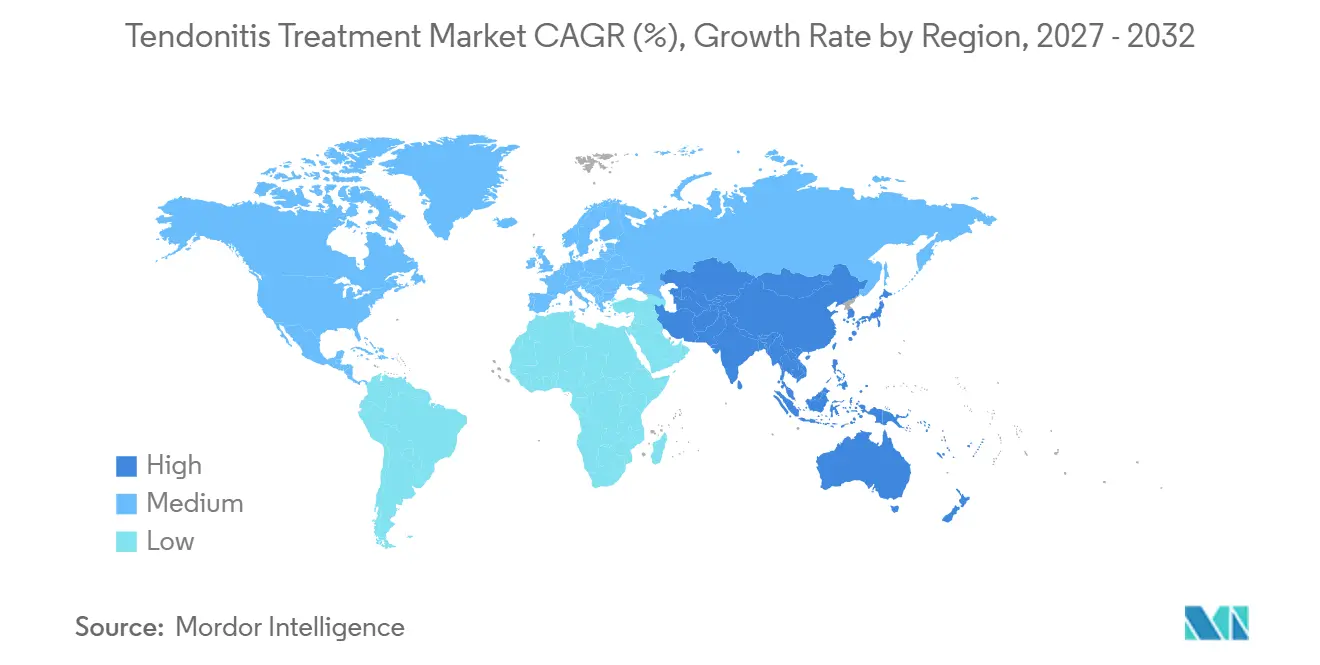
North America commanded 38.17% of the tendonitis treatment market share in 2026 and is projected to progress at a 3.18% CAGR to 2032. Strong insurer coverage, high sports participation, and early adoption of regenerative implants keep procedure volumes elevated. The United States accounts for the bulk of spending, while Canada’s universal payer system is opening tendinopathy centers of excellence to accommodate an aging worker base. Mexico offers growth upside as private hospitals upgrade imaging fleets and promote weekend sports packages.
APAC Tendonitis Treatment Market
Asia-Pacific is the fastest-growing geography, advancing at a 4.28% CAGR through 2032. China leads capital deployment into smart hospitals and musculoskeletal AI startups, driving procedure expansion beyond tier-one cities. Japan leverages its robotics leadership to refine post-operative rehab protocols, supporting premium pricing. India’s vast population and digital health push create a fertile market for smartphone-delivered physio programs, lowering entry barriers for rural consumers. Australia and South Korea showcase high elective surgery rates, fueling graft and implant sales.
EMEA and South America Tendonitis Treatment Market
Europe records a 3.43% CAGR as Germany, the United Kingdom, and France emphasize evidence-based protocols and cross-border value-based care pilots. Providers prioritize regenerative treatments backed by randomized controlled trials, accelerating biologic penetration. Middle East and Africa deliver 2.57% CAGR; Gulf Cooperation Council states invest in sports medicine hubs to capture medical tourism spill-over. South America shows 2.88% CAGR, with Brazil and Argentina expanding private orthopedic suites and partnering with device makers to pilot AI ultrasound services.
Regulatory Landscape
Tendonitis treatment covers regulated devices, biologics, and pharmaceuticals, and a large share of innovation continues to move through Class II device pathways in the United States. Multiple U.S. FDA 510(k) clearances in 2026 support this approach, including sutureless fixation (ArthroTAK Tendon Anchor Kit, May 2026) and expanded soft tissue repair indications (Inovedis SINEFIX, April 2026), reinforcing the importance of substantial equivalence for tendon fixation and reinforcement products. Similar dynamics apply to pain-relief adjuncts, including the FDA-cleared laser indication for lateral epicondylitis (Multi Radiance Medical, June 2026). Adoption is also shaped by guidance and coverage signaling, including NICE HealthTech Guidance 426 (January 2026) for extracorporeal shockwave therapy in Achilles tendinopathy and the American Physical Therapy Association revised Achilles tendinopathy clinical practice guideline (December 2024).
Safety communications influence treatment choices as well. The European Medicines Agency has reiterated risk-mitigation measures for fluoroquinolone antibiotics due to long-lasting and potentially irreversible side effects, which supports ongoing caution where tendon injury risk is elevated. In Australia, the Repatriation Medical Authority Statement of Principles No. 86 of 2024 (November 2024) links Achilles tendinopathy to eligible service-related factors for veterans, anchoring claim evaluation and reinforcing standardized documentation requirements in care pathways.
Value Chain Analysis
The tendonitis treatment value chain blends pharmaceutical and device innovation with rehabilitation delivery. Upstream inputs include medical-grade polymers, collagen, and other biomaterials used in meshes, scaffolds, and reinforcement patches, alongside drug substances and excipients for analgesics and emerging injectables. Midstream participants include orthopedic device manufacturers (fixation systems, grafts, bioinductive implants), pharmaceutical developers (small molecules and biologics), and specialized CROs and CDMOs that support preclinical work, clinical operations, and manufacturing scale-up for advanced materials and injectable platforms.
Downstream, products flow through hospital procurement, specialized medical distributors, and pharmacy channels into hospitals, ambulatory surgery centers, specialty clinics, and rehabilitation centers, where physiotherapy and device-enabled modalities (ESWT, photobiomodulation, orthotics) are delivered. Supply risk concentrates around single-source or capacity-constrained advanced biomaterials, consistent with bottlenecks reported for medical-grade collagen grafts in this market. Clinical development also feeds the chain by validating new modalities for adoption and reimbursement, illustrated by Novartis completing a Phase 2 study (NCT05592990) in February 2026 for NGI226 microparticle injections in Achilles tendinopathy, which can inform future sourcing and manufacturing planning for injectable regenerative options if they advance.
Competitive Landscape
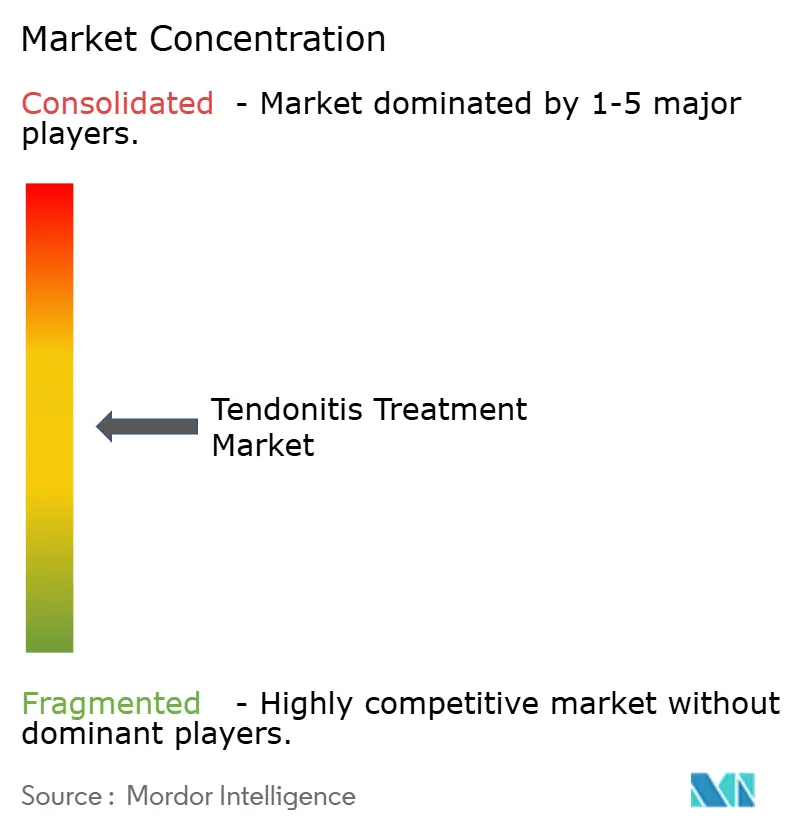
The tendonitis treatment market features moderate fragmentation. Top orthopedic device manufacturers integrate surgical implants, regenerative patches, and imaging software to provide end-to-end solutions. Smith + Nephew’s REGENETEN implant cuts re-tear risk by 68% compared with standard care, giving the firm a credentialed flagship in biologic repair. Johnson & Johnson MedTech’s November 2024 deal with Responsive Arthroscopy extends its reach into shoulder, foot, and ankle soft-tissue solutions, highlighting the importance of portfolio breadth.
Emerging contenders target digital rehabilitation and minimally invasive devices. Platforms such as TENZR supply motion-tracking biosensors that quantify tendon load and transmit alerts to therapists, while CoNextions Medical promotes a suture-based ligament repair system optimized for outpatient settings. Investors reward models that combine hardware, software, and services to lock in data-driven recurring revenue.
White-space prospects center on AI-guided personalized care, integrated remote-to-in-clinic treatment pathways, and collated real-world evidence registries that underpin faster reimbursement for novel biologics. Partnerships among material scientists, sports leagues, and payer analytics teams will likely accelerate product validation cycles and tip competitive advantage toward data-rich incumbents.
Tendonitis Treatment Industry Leaders
-
Enovis Corporation
-
Ossur hf
-
Smith+Nephew plc
-
Stryker Corporation
-
Zimmer Biomet Holdings, Inc.
- *Disclaimer: Major Players sorted in no particular order
Tendonitis Treatment Market Companies Covered in this Report
- Arthrex
- Corin Group
- Enovis Corporation
- GlaxoSmithKline
- Inceler Medikal
- Integra LifeSciences Holdings
- Johnson & Johnson
- Medtronic
- Orthofix
- Ossur
- Pfizer
- Smith+Nephew plc
- Solventum Corporation
- Storz Medical
- Stryker
- Teikoku Pharma USA
- Teva Pharmaceutical Industries
- Tynor Orthotics Pvt Ltd.
- Xiros plc
- Zimmer Biomet
Market Opportunities and Future Outlook
The clearest opportunity sits in products that combine mechanical stabilization with biologic or regenerative augmentation, along with solutions that expand across anatomical sites without requiring entirely new delivery infrastructure. The U.S. FDA clearance in April 2026 for expanded clinical applications of the SINEFIX implant across multiple joints (shoulder, foot and ankle, knee, elbow, hip) shows how fixation platforms can scale through indication expansion, creating whitespace for complementary reinforcement meshes, anchors, and surgeon workflow kits in outpatient settings. FDA 510(k) clearance for Kerecis Tendon Protect (K243843, June 2025) also points to sustained demand for collagen-based reinforcement in tendon repair, supporting portfolio extensions aimed at surgeon preference, sizing, and instrumentation.
Non-surgical and minimally invasive care pathways create adjacent growth lanes where evidence strength and workflow convenience influence uptake. Regenerative injectables remain a visible research focus, including Novartis completing a Phase 2 trial for NGI226 microparticles in Achilles tendinopathy (February 2026), which reinforces continued investment in restorative approaches beyond symptomatic management. On the rehabilitation side, standardization and governance continue to shape adoption of modalities such as ESWT, as reflected by NICE HealthTech Guidance 426 (January 2026). Training and real-world evidence registries are still practical gaps to address low clinician awareness of biologic options in multiple markets.
Recent Industry Developments in Tendonitis Treatment Market
- July 2026: Enovis Companion Animal Health launched CT-RevitL, a next-generation photobiomodulation laser therapy system for veterinary musculoskeletal and soft tissue conditions in the United States. The launch expands Enovis exposure to energy-based pain and tissue-healing modalities that are also used in human tendon rehabilitation, strengthening its position across adjacent care settings and customer segments.
- March 2025: Atreon Orthopedics received U.S. FDA 510(k) clearance to expand indications for its ROTIUM Bioresorbable Wick to tendon repairs beyond rotator cuff, including procedures such as Achilles and patellar repairs. The expanded label increases the addressable procedural footprint for resorbable scaffold augmentation and supports broader hospital and ambulatory surgery center adoption.
- November 2024: Johnson & Johnson MedTech entered a strategic agreement with Responsive Arthroscopy to expand sports soft tissue solutions across areas such as shoulder, foot, and ankle. The partnership deepens portfolio breadth for sports medicine accounts and reinforces bundling strategies that link arthroscopy workflow with soft tissue repair and biologic-adjacent offerings.
Tendonitis Treatment Market Report Scope and Research Methodology
Market Definition and Coverage
In this report, we define the tendonitis treatment market as the total spending on diagnosing and managing tendon inflammation and tendinopathy across care settings, including non-surgical care, procedures, and related clinical services used to relieve pain and restore function.
Scope exclusions: The model excludes general pain management that is not linked to a tendonitis diagnosis and excludes unrelated orthopedic conditions that do not involve tendon inflammation.
Segments Covered in This Report
- By Condition
- Achilles Tendonitis
- Supraspinatus Tendonitis
- Tennis Elbow (Lateral Epicondylitis)
- Patellar Tendinopathy
- de Quervain's Tenosynovitis
- Other Conditions
- By Treatment
- Surgical Treatment
- Open Surgery
- Minimally-Invasive Surgery
- Grafts & Implants
- Non-Surgical Treatment
- Physiotherapy & Rehabilitation
- Extracorporeal Shock-Wave Therapy (ESWT)
- Orthotics & Supports
- Regenerative Therapies
- Photobiomodulation & Red-light Therapy
- Pharmacologic Pain Management
- Other Treatments
- Nutraceuticals & Anti-inflammatory Supplements
- Wearable Neuromodulation Devices
- Surgical Treatment
- By Healthcare Setting
- Hospitals
- Specialty Clinics
- Rehabilitation Centers
- Others
- By Geography
- North America
- United States
- Canada
- Mexico
- Europe
- Germany
- United Kingdom
- France
- Italy
- Spain
- Rest of Europe
- Asia-Pacific
- China
- Japan
- India
- Australia
- South Korea
- Rest of Asia-Pacific
- Middle East and Africa
- GCC
- South Africa
- Rest of Middle East and Africa
- South America
- Brazil
- Argentina
- Rest of South America
- North America
Data Sources, Market Sizing, and Validation
Desk Research
Desk research starts by building a clear view of how common tendonitis is, how patients enter care, and which treatment steps are typically used in practice. We leaned on public health and clinical evidence sources such as the US Centers for Disease Control and Prevention, National Institutes of Health resources like MedlinePlus, the World Health Organization, and peer-reviewed clinical literature indexed in PubMed to understand diagnosis patterns and treatment pathways.
To ground the market math, we also reviewed sources such as national health statistics portals, regulatory and reimbursement related publications, and hospital and specialty clinic disclosures where available, followed by company annual reports and investor presentations to understand product exposure and therapy emphasis. In parallel, a paid subscription for company financials and a patent database were used to cross-check product focus areas and timing of innovation signals. The sources listed here are illustrative only, and many other references were used for data collection, validation, and clarification during the work.
Primary Interviews and Surveys
Primary work was used to pressure-test the patient flow logic and confirm how care differs by condition and setting, which is where many secondary sources stay too general. We spoke with a mix of clinicians, rehabilitation professionals, distributors, and executives to validate usage splits between conservative therapy and procedures, and we ensured coverage across major regions so regional access and pricing effects could be reflected in assumptions.
Distribution of primary research fieldwork respondents
| Company type | Respondent position | Region |
|---|---|---|
| Top tier: 27% | CXOs: 13% | APAC: 41% |
| Mid tier: 57% | Functional/Unit leaders: 31% | EMEA: 32% |
| Smaller Players: 16% | Managers: 56% | Americas: 27% |
Market-Sizing & Forecasting
The core market size is built using a top-down, care pathway based demand pool assessment where diagnosed patients are mapped by major condition, routed into typical lines of care, and then valued using setting level pricing and utilization patterns. To keep the totals realistic, we corroborate results with selective bottom-up checks such as sampled therapy volumes times average price points, procedure mix checks from provider inputs, and revenue exposure sense checks for companies active in tendon related care.
A few of the key inputs we used include diagnosed incidence and prevalence by region, the share of cases moving into imaging and specialist consults, the split of non-surgical therapy versus surgical intervention, average number of physical therapy sessions per episode, and country level price ranges by site of care. Where bottom-up datapoints were missing, gaps were handled by using proxy markets with similar reimbursement structures and then adjusting using interview based multipliers.
For forecasting, we used scenario analysis supported by trend curves on sports participation, aging population mix, workplace related overuse patterns, and expected adoption of newer approaches (such as biologic or regenerative options where they are actually reimbursed). Growth rates were not pushed uniformly across regions, and they were moderated using expert feedback on guideline adoption speed and capacity constraints in rehabilitation services.
Data Validation & Update Cycle
Triangulation is applied by comparing the model outputs against independent demand signals, such as procedure volumes, outpatient visit trends, and broad healthcare expenditure direction, and then reconciling differences before finalizing results. Outliers are flagged when a country level value implies unrealistic treatment intensity or price jumps, which triggers a re-check of assumptions and follow-up questions to primary respondents.
Each deliverable goes through multiple analyst reviews, where unit logic, currency conversion timing, and regional splits are checked and documented before sign-off. Reports are refreshed annually, with interim updates when there are material changes such as guideline shifts, reimbursement moves, or notable clinical adoption changes. Before delivery, we do a final pass to make sure late breaking events are reflected in the narrative and the numbers.
Mordor Intelligence's Tendonitis Treatment Market Size Compared Against Other Published Estimates
Published market sizes for tendonitis treatment can look far apart because the underlying boundaries are not always aligned, and because some models mix broad musculoskeletal pain spending with condition specific treatment demand. Differences also come from how countries are covered, what is counted as a treatment cost versus a procedure cost, and whether price levels are updated to the same year.
By tracking condition level patient routing, site of care utilization, and annual price refreshes, Mordor Intelligence keeps the sizing tied to treated demand rather than broad orthopedic spend, which is why some estimates that bundle wider inflammation care or adjacent soft tissue categories land at different totals.
Benchmark comparison
| Source | Market Size | Gaps in Research Methodology |
|---|---|---|
| Mordor Intelligence | USD 244.35 B (2025) | |
| Trade Journal A | USD 228.07 B (2025) | This estimate appears to follow a macro spend trend approach that can understate episodes treated in specialty clinics and rehabilitation centers, and it may apply a single average price progression without refreshing setting level prices. |
| Regional Consultancy B | USD 221.21 B (2024) | This number likely uses a different base year and may assume a more conservative treated rate, especially for non-surgical therapy, and it may not fully separate tendonitis from broader tendinopathy or general musculoskeletal care in outpatient settings. |
Overall, the spread is mainly explained by what is included as tendonitis specific demand, the year used for pricing and currency timing, and how conservatively treatment intensity is modeled. When the model is anchored to patient episodes, care setting utilization, and refreshed price points, the market size is easier to trace and repeat across countries and forecast years.
Key Questions Answered in the Report
What was the Tendonitis Treament Market in 2026
Tendonitis treatment market stood at USD 244.35 in 2026 and grow at CAGR 3.42% over 2027-2032.
How are tele-physiotherapy platforms reshaping post-injury rehabilitation?
App-based programs now combine real-time motion tracking with AI coaching, enabling continuous monitoring outside the clinic and reducing the need for frequent in-person sessions, which improves adherence and lowers overall treatment costs.
Why are military-grade biomaterials gaining traction in civilian tendon repair?
These advanced scaffolds offer superior load-bearing strength and biocompatibility, delivering faster tissue integration and reduced inflammatory response compared with legacy graft materials, which improves long-term functional outcomes.
How are reimbursement policies influencing outpatient tendon repair procedures?
Insurers are expanding coverage for minimally invasive tendon repairs that demonstrate faster return-to-activity and fewer revision surgeries, prompting providers to shift surgical volumes from hospital operating rooms to cost-efficient ambulatory centers.
In what way is artificial intelligence improving tendon injury diagnosis?
AI-enhanced ultrasound algorithms detect micro-tears and early tendinopathy changes that conventional imaging often misses, enabling earlier intervention and reducing progression to complex, hard-to-treat cases.