
Suture Needles Market Size and Share
Market Overview
| Study Period | 2020 - 2031 |
|---|---|
| Market Size (2026) | USD 652 Million |
| Market Size (2031) | USD 869.32 Million |
| Fastest Growing Market | Asia-Pacific |
| Largest Market | North America |
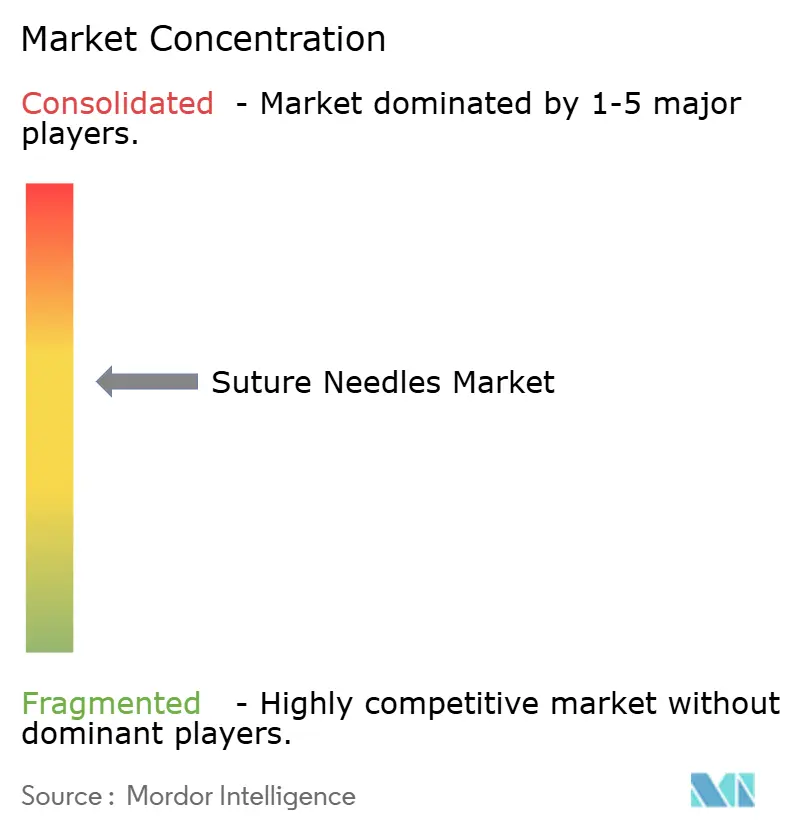
| Market Concentration | Medium |
Major Players *Disclaimer: Major Players sorted in no particular order Image © Mordor Intelligence. Reuse requires attribution under CC BY 4.0. | |
Suture Needles Market Analysis by Mordor Intelligence
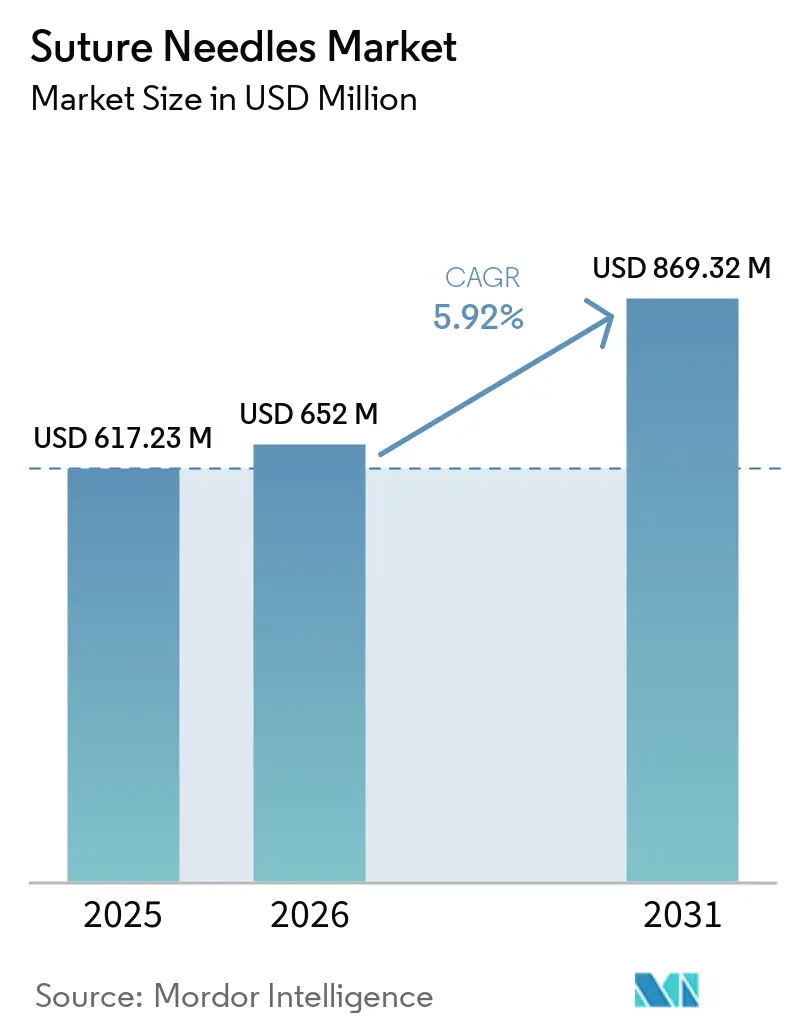
The Suture Needles Market size is expected to increase from USD 617.23 million in 2025 to USD 652 million in 2026 and reach USD 869.32 million by 2031, growing at a CAGR of 5.92% over 2026-2031.
The suture needles market is supported by sustained surgical demand across general, cardiovascular, and ophthalmic care. Higher-acuity procedures require more specialized needle geometry, materials, and packaging, which increases the value carried by each procedure. The shift toward outpatient surgery also changes purchasing patterns because ambulatory sites need dependable, procedure-specific closure supplies. Manufacturers are responding through broader specialty portfolios, automated inspection, and OEM supply arrangements. These changes give established suppliers an advantage where hospitals require validated products and a reliable sterile supply.
Key Report Takeaways
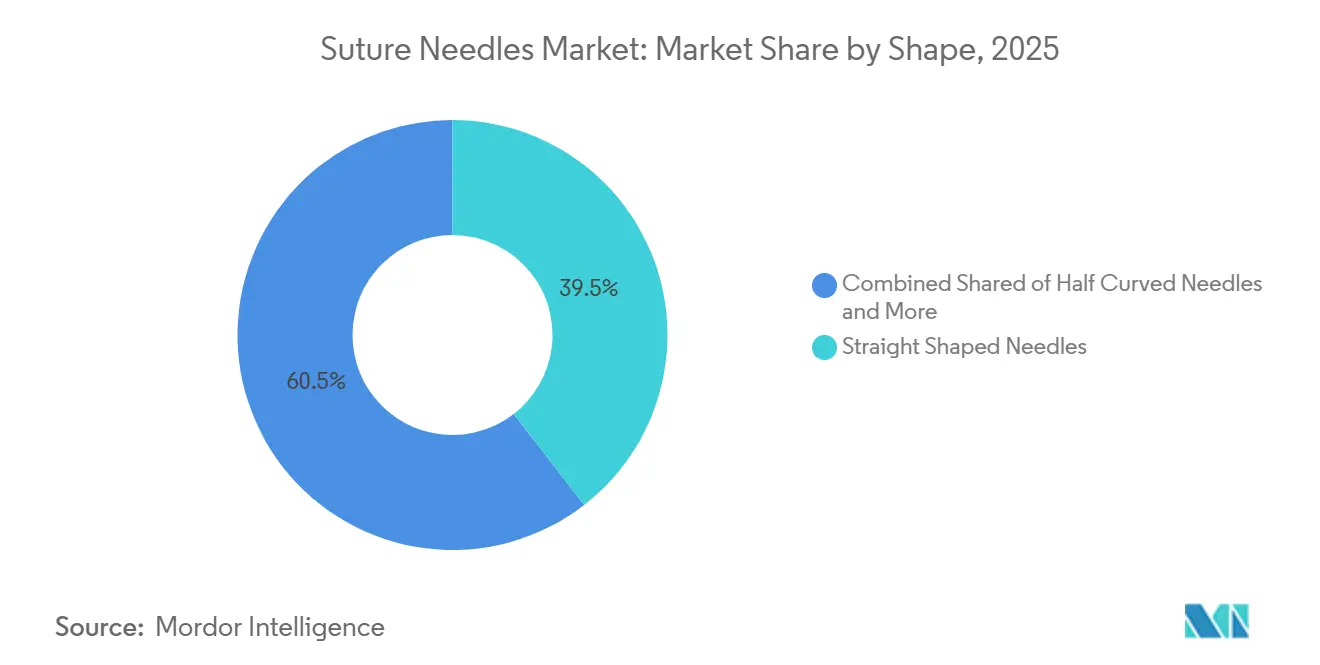
- By shape, straight needles held 39.49% of the suture needle market share in 2025, while half curved needles are forecast to grow at a 7.33% CAGR through 2031.
- By needle point type, taper point needles accounted for 35.30% of 2025 revenue, while tapercut needles are projected to expand at a 9.96% CAGR through 2031.
- By form, eyeless swaged needles held 80.71% of 2025 revenue, and the same segment is expected to expand at a 6.44% CAGR through 2031.
- By material, 300-series stainless steel accounted for 60.19% of 2025 revenue, while titanium and specialty alloys are projected to grow at a 9.82% CAGR through 2031.
- By needle curvature, 3/8 circle needles held 34.07% of 2025 revenue, while 1/2 circle needles are forecast to grow at an 7.45% CAGR through 2031.
- By application, general surgery held 31.13% of 2025 revenue, while cardiovascular surgery is projected to expand at a 10.10% CAGR through 2031.
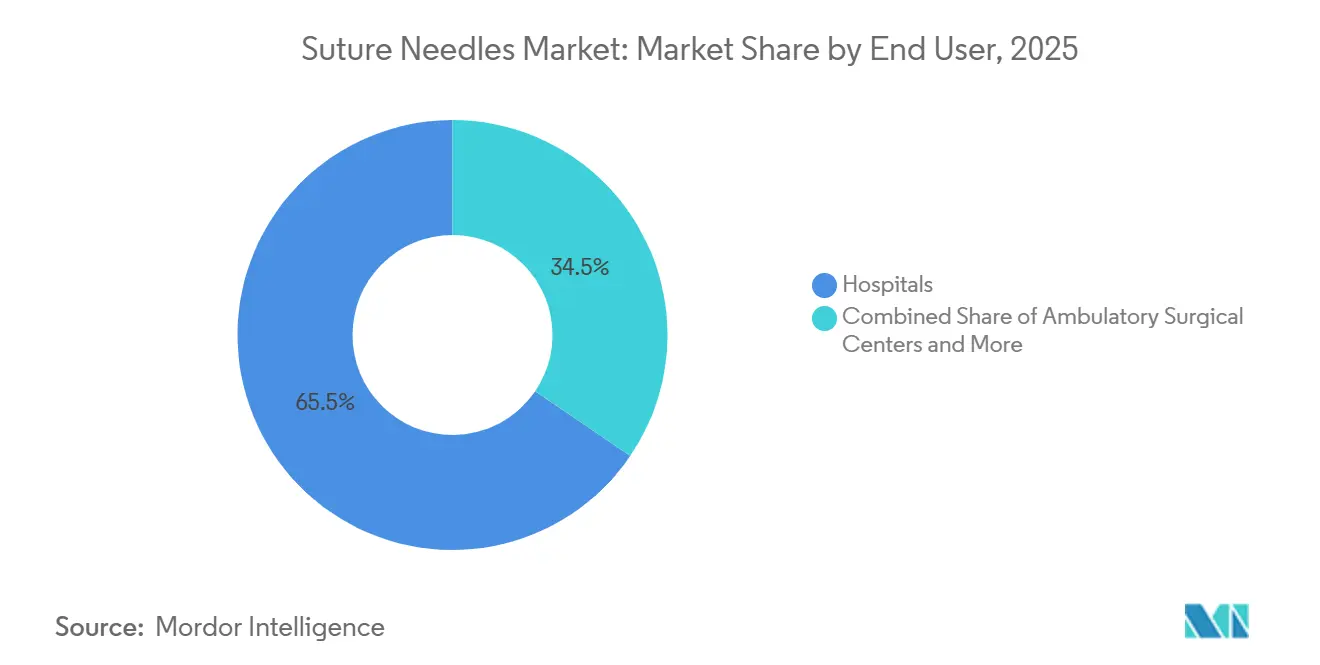
- By end user, hospitals accounted for 65.51% of 2025 revenue, while ambulatory surgical centers are forecast to grow at a 8.05% CAGR through 2031.
- By distribution channel, direct hospital and health-system procurement held 56.90% of 2025 revenue, while OEM and private-label outsourcing is projected to grow at a 9.29% CAGR through 2031.
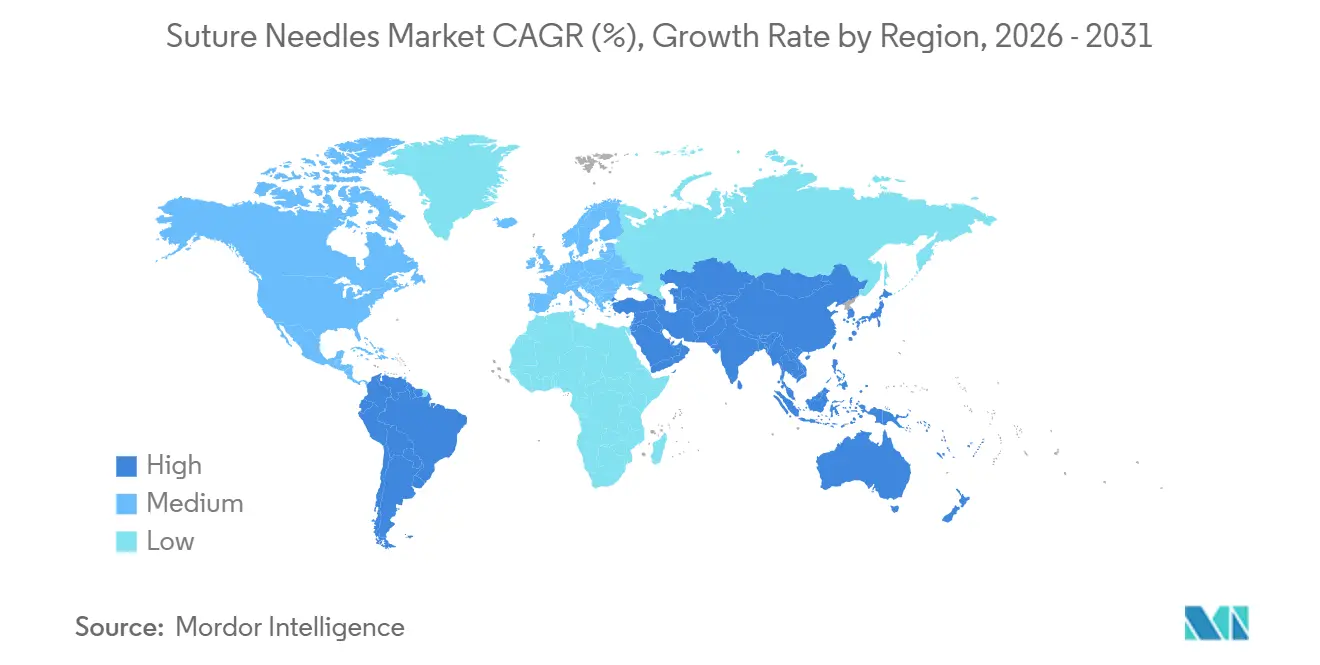
- By geography, the North America region held 39.06% of 2025 revenue, while the Asia-Pacific is projected to grow at an 8.16% CAGR through 2031.
Note: Market size and forecast figures in this report are generated using Mordor Intelligence’s proprietary estimation framework, updated with the latest available data and insights as of January 2026.
Market Trends and Insights
Drivers Impact Analysis of Suture Needles Market*
| Driver | (~) % Impact on CAGR Forecast | Geographic Relevance | Impact Timeline |
|---|---|---|---|
| Rising Surgical Procedure Volumes | +2.0% | Global | Short term (≤ 2 years) |
| Expansion of Minimally Invasive and Microsurgical Procedures | +1.5% | North America, Europe, APAC core | Medium term (2-4 years) |
| Hospital Modernization and Surgical Infrastructure Expansion | +1.2% | North America, Europe, India, GCC | Medium term (2-4 years) |
| Demand for Precision Needles That Reduce Tissue Trauma | +0.8% | Global, with premium demand in North America and Europe | Long term (≥ 4 years) |
| OEM and Private-Label Needle Outsourcing | +0.5% | APAC, with spillover to MEA and South America | Medium term (2-4 years) |
| Digitally Controlled Needle Geometry and Inspection | +0.3% | Japan, Germany, North America | Long term (≥ 4 years) |
| Source: Mordor Intelligence | |||
Rising Surgical Procedure Volumes
The suture needles market benefits from the continuing need to address unmet surgical care. The Lancet Commission’s 2025 review placed unmet surgical need at no fewer than 160 million operations each year[1]The Lancet, “Surgical Health Policy 2025–35: Strengthening Essential Services,” The Lancet, thelancet.com.. This need supports recurring demand for closure products across hospitals and outpatient settings, where procurement teams must balance common-use products with the specialized formats needed for different tissue types and surgical access conditions. Ambulatory procedures can require a high level of direct wound closure because they often use fewer inpatient wound-management products. That pattern increases the importance of having the right needle type available at the point of care. Suppliers that maintain broad, ready-to-use portfolios are better placed to serve facilities with fast procedure turnover.
Expansion of Minimally Invasive and Microsurgical Procedures
The suture needles market is changing as minimally invasive and microsurgical procedures require more controlled needle handling. Smaller access points and restricted working spaces place greater importance on flexibility, ductility, and geometry. Specialty materials and designs are therefore becoming more relevant where standard stainless steel products do not meet procedural requirements, particularly when a procedure requires a combination of controlled flexibility, sharpness, visibility, and resistance to deformation. Robotic procedures also require needles that work with wristed instruments and defined access paths. These requirements support demand for precision products in North America, Germany, South Korea, and other established robotic surgery settings. The resulting specifications favor suppliers that can develop purpose-designed products with OEM partners.
Hospital Modernization and Surgical Infrastructure Expansion
The suture needles market gains from investment in new operating rooms, outpatient centers, and surgical capacity. UC Davis Health opened its 48X outpatient surgical complex in Sacramento in June 2025, reflecting continued investment in procedure capacity. Cleveland Clinic announced a USD 340 million expansion at Avon Hospital in June 2025, including surgical infrastructure. New operating rooms require stock across curvatures, point types, and sterile packaging formats, so facility expansions can create immediate portfolio-level purchasing needs beyond the regular replenishment of high-volume general surgical supplies. This produces initial procurement demand as well as recurring replenishment needs. Digitally controlled geometry and inspection also help manufacturers meet tighter consistency requirements in these modern surgical environments.
OEM and Private-Label Needle Outsourcing
The suture needles market is supported by medical device companies that source components rather than build dedicated needle plants. Specialist manufacturers can provide needle blanks or complete sterile assemblies through validated cleanroom operations. This model lets branded suture and instrument companies add product options without owning all production assets, allowing them to focus their internal resources on product selection, customer relationships, and the clinical applications they intend to serve. It also makes the needle a separately specified component rather than only part of a branded suture bundle. Elevaris introduced its CDMO services and procedural needle portfolio to the EMEA region in November 2025. Such offerings increase the importance of quality systems, documentation, and the ability to serve both standard and low-volume specialty products.
Restraints Impact Analysis of Suture Needles Market*
| Restraint | (~) % Impact on CAGR Forecast | Geographic Relevance | Impact Timeline |
|---|---|---|---|
| Needlestick Injury and Occupational Exposure Risk | -0.7% | Global, pronounced in North America and Europe | Short term (≤ 2 years) |
| Regulatory and Quality-Validation Burden | -0.5% | Europe, North America | Medium term (2-4 years) |
| Substitution by Adhesive Closure, Staples, and Automated Suturing | -0.4% | North America, Europe, APAC core | Long term (≥ 4 years) |
| Sterile Supply and Traceability Complexity for Low-Volume Specialty SKUs | -0.3% | Global | Medium term (2-4 years) |
| Source: Mordor Intelligence | |||
Needlestick Injury and Occupational Exposure Risk
Occupational exposure remains a constraint for the Suture needles market, particularly for standard sharp products. The CDC states that hospital-based health care personnel in the United States experience an estimated 385,000 needlestick and other sharps-related injuries each year. A 2026 longitudinal study reported more than 2 million occupational needlestick injuries annually among health care workers worldwide. Safety concerns can increase demand for passive safeguards and needle-retraction systems, which can raise unit costs and require hospitals to evaluate safety benefits alongside product availability, staff training needs, and established clinical practice. Hospitals may also consider adhesive closure, staples, or needle-free options for some superficial wounds. These alternatives limit volume growth in lower-complexity closure use while preserving demand for procedures where suturing remains necessary.
Regulatory and Quality-Validation Burden
The suture needles market faces a lasting compliance burden in Europe and North America. The European Association of the Surgical Suture Industry states that sutures are well-established technologies under the EU Medical Device Regulation, while manufacturers must still maintain post-market clinical follow-up and supporting documentation. These continuing obligations can weigh more heavily on small manufacturers serving low-volume specialty products, because the same quality, evidence, and documentation expectations must be maintained even when a product serves a limited procedural niche. The same issue applies to sterile supply and traceability, because many specialty swaged products require manual steps and detailed documentation. In the United States, quality system requirements and ISO 13485 certification further narrow the number of suppliers able to meet large health system expectations. The burden favors larger suppliers and specialist manufacturers with mature quality and regulatory capabilities. It also makes dependable sterile supply, traceability, and documentation important commercial considerations for hospital customers that purchase diverse product portfolios across multiple clinical departments.
*Our forecasts treat driver/restraint impacts as directional, not additive. The impact forecasts reflect baseline growth, mix effects, and variable interactions.
Suture Needles Market Segment Analysis
By Shape:
Straight Needles Retain Volume, While Half Curved Products Gain UseStraight needles held 39.49% of the suture needles market share in 2025, supported by skin closure and surface-level tendon repair. Their use remains practical when surgeons have direct line-of-sight access to the tissue and require a familiar product for straightforward surface closure tasks in routine operating room workflows. The large base does not prevent diversification into shapes designed for restricted access. Half curved needles are forecast to grow at a 7.33% CAGR through 2031. Their geometry supports laparoscopic and single-port procedures where conventional curved products can be difficult to place through trocar access. J-shaped needles also serve for precise work in ophthalmic and reconstructive procedures.
Half curved and J-shaped products are increasingly relevant in abdominal cavity closure after laparoscopic procedures. Compact entry geometry can help surgeons close trocar port sites that are poorly suited to straight needles. Compound curve needles remain useful in cardiovascular and thoracoscopic work where anatomy requires movement through more than 1 plane. These products command attention because instrument control matters more than a standardized shape in confined spaces. Manufacturers are expanding shape-specific product libraries under OEM agreements. This lets hospital systems procure a broader set of shapes through a smaller number of supplier relationships.


By Needle Point Type:
Taper Points Hold the Base While Tapercut Products ExpandTaper point needles accounted for 35.30% of 2025 revenue, making them the leading point type in the suture needles market. They remain widely used in gastrointestinal, urological, and soft-tissue repair. Tapercut needles are projected to expand at a 9.96% CAGR through 2031. Their cutting entry edge and tapered body can support work in calcified or fibrotic tissue while helping surgeons manage demanding penetration requirements in sensitive cardiovascular and thoracic settings. This design is relevant in adult cardiac surgery when conventional taper points can deflect. Reverse cutting products continue to support skin closure in dermatology and plastic surgery.
Cardiovascular and thoracic procedures support the premium position of tapercut products. The Society of Thoracic Surgeons’ Adult Cardiac Surgery Database covered more than 8.6 million procedures in its 2026 update[2]Society of Thoracic Surgeons, “The STS Adult Cardiac Surgery Database: 2026 Update on Outcomes and Research,” PubMed, pubmed.ncbi.nlm.nih.gov.. This large clinical base supports continued demand for differentiated needle points. Round-bodied products retain a specialist role in ophthalmic and neurological procedures where tissue splitting is preferred. Blunt-tipped products are also used for selected fascial and peritoneal closure procedures. The result is a broader clinical need for point types rather than a single point design across all uses. Hospitals, therefore, need portfolios that distinguish between tissue characteristics, surgical access, clinical specialty requirements, and the handling preferences of their surgical teams.
By Form:
Swaged Needles Remain the Institutional StandardEyeless swaged needles captured 80.7% of 2025 revenue, establishing the dominant form within the suture needles market and is expected to grow at a CAGR of 6.44% through 2031. The format is widely used in institutional settings because it provides a consistent needle-suture assembly, supports predictable handling, and aligns with standardized product preparation across many procedure rooms. It also removes the time and variability associated with threading in the operating room. Single-use sterile workflows reinforce this preference. Automated inspection can verify swaging quality and attachment strength. These benefits align with the operating practices of hospitals and ambulatory surgical centers, where staff need predictable handling during a demanding schedule of procedures.
Eyed products retain a specialized role where single-use infrastructure is less developed. They are also used in veterinary work and forensic pathology, which supports a stable but smaller demand base. Healthium offers more than 46,000 SKUs across channel-type, drilled-end, eyed, and specialty formats. Its portfolio illustrates how end-use complexity has widened product specifications. Low-volume specialty swaged products can still involve manual production steps, which adds operational complexity even when customers value the precise specification, sterile presentation, and reliable suture attachment that these products are intended to provide. That operating complexity can limit margin expansion even where specialty products carry higher unit values.
By Material:
Stainless Steel Holds Scale While Titanium Gains Specialty Demand300-series stainless steel held 60.19% of 2025 revenue and remained the leading material in the Suture needles market. Its position is supported by cost efficiency, established tooling, familiar clinical performance, and the ability of manufacturers to produce large volumes for common procedural requirements. Titanium and specialty alloys are forecast to grow at a 9.82% CAGR through 2031. They are relevant to robotic surgery, MRI-guided procedures, and minimally invasive cardiac access. These applications require strength and nonmagnetic performance that are not always available from standard stainless steel. 400-series stainless steel remains useful where higher hardness and edge retention are needed.
Polymer-coated products form a smaller but growing group because lubrication can reduce insertion force and tissue drag. MANI states that its research focuses on bending strength and incision performance across running sutures. The company also uses its Hard-Fiber Stainless Steel formulation to balance ductility and sharpness. Such work reflects the need to avoid intraoperative breakage while retaining consistent penetration. Titanium needle blanks are increasingly suitable for outsourced precision manufacturing. This supports a shift from captive production toward specialist supply in high-performance materials.
By Needle Curvature:
3/8 Circle Products Lead While 1/2 Circle Products Grow FasterThe 3/8 circle curvature held 34.07% of 2025 revenue, maintaining a leading position in the Suture needles market. Its versatility supports general surgery, gynecological closure, and surface wound repair, allowing facilities to use a recognized design across several commonly performed procedural categories. The curvature works where moderate depth and controlled hand rotation are needed. The 1/2 circle is forecast to grow at a 7.45% CAGR through 2031. It is used in deep-cavity procedures where a tighter arc can reduce conflict with nearby anatomy. This makes it relevant as laparoscopic and robotic procedures expand, because surgeons need a curvature that can move through tissue within limited access conditions while working around instruments and nearby anatomical structures.
Straight needles remain a distinct curvature category in gastrointestinal and tendon work. They can be manipulated directly when a needle holder is not needed. One-quarter circle products serve highly precise ophthalmic work. Five-eighths circle products are used in restricted areas such as the pelvis and rectum. These use cases show why curvature remains an important selection factor rather than a simple product attribute. OEM suppliers are responding with curvature-specific product development for robotic procedure settings.
By Application:
General Surgery Provides Volume While Cardiovascular Work Adds ValueGeneral surgery held 31.13% of 2025 revenue, giving it the largest application position in the Suture needles market. Abdominal, hernia, and gastrointestinal procedures create a broad demand for closure products, and their wide procedural base makes general surgery important for recurring product replenishment cycles. Cardiovascular surgery is forecast to grow at a 10.10% CAGR through 2031. This rate reflects procedure recovery, specialized needle requirements, and higher value per case. Cardiac procedures often require point types and materials suited to vascular and fibrotic tissue. The application, therefore, contributes strongly to the demand for premium products.
Orthopedic procedures and plastic and reconstructive surgery also support demand for more specialized products. Aging populations support orthopedic procedure volumes and related closure needs. Plastic and reconstructive settings place importance on controlled handling and scar outcomes. Gynecological and obstetric procedures provide a stable base across emerging settings and urban hospitals. Ophthalmic surgery has a lower total volume but requires sub-millimeter precision in retinal and corneal work. That requirement gives the application a high value relative to its procedure count.
By End User:
Hospitals Lead Procurement While Ambulatory Centers ExpandHospitals accounted for 65.51% of 2025 revenue, making them the leading end-user group in the Suture needles market. They remain the main location for high-complexity procedures and broad surgical case loads, requiring suppliers to provide multiple needle formats through dependable and closely managed supply arrangements. Their purchasing models favor validated products, sterile supply, and complete portfolios. Ambulatory surgical centers are forecast to grow at an 8.05% CAGR through 2031. Site-of-care migration is moving more procedures away from traditional hospital operating rooms, requiring suppliers to adapt portfolio planning and service levels to a larger number of sites with changing procedure mixes and purchase volumes. This broadens the number of facilities that purchase procedure-specific closure supplies.
Specialty clinics serving ophthalmology, plastic surgery, and dermatology are another growing end-user group. Office-based procedure suites support their demand for focused product ranges. Academic and research institutions use specialty configurations in simulation, cadaveric studies, and surgical robotics testing. Their overall volume is small, but they remain relevant for technology validation. Ambulatory centers can have more flexible purchasing processes than large hospital formularies. That creates opportunities for smaller suppliers able to demonstrate reliable performance and availability.
By Distribution Channel:
Direct Procurement Leads While OEM Supply GrowsDirect hospital and health-system procurement held 56.90% of 2025 revenue, making it the leading distribution channel in the Suture needles market. Group purchasing organizations and integrated delivery networks retain strong pricing influence, which makes portfolio breadth, validated quality, and service reliability important alongside unit price in supplier selection. Their multihospital contracts support direct relationships with established manufacturers. OEM and private-label outsourcing is forecast to grow at a 9.29% CAGR through 2031. Medical device companies increasingly purchase needle blanks or finished assemblies from specialized suppliers. This channel gives them access to validated production without building captive manufacturing capacity.
Medical device distributors remain important where direct manufacturer relationships are not efficient for individual hospitals. This role is especially relevant in Southeast Asia, South America, and the Middle East and Africa. Corza Medical and Healthium maintain OEM offerings across the needle supply chain. Elevaris has also entered the EMEA market with a procedural needle and CDMO offering. OEM growth allows performance-differentiated needles to be specified independently from the final branded suture. This can support premium pricing where clinical requirements are clear, and procurement teams can identify measurable performance differences between needle designs.
Geography Analysis
North America Suture Needles Market
North America held 39.06% of 2025 revenue, the largest regional position in the Suture needles market. The region combines high procedure volumes with advanced hospitals and a premium product mix, creating a setting in which specialty materials and carefully designed geometries can gain acceptance. Cardiovascular and robotic surgery support demand for specialty designs. Cleveland Clinic announced a USD 340 million Avon Hospital expansion in June 2025. Piedmont Athens Regional also began a USD 56 million surgical services expansion in September 2025. These projects add surgical capacity and require new consumable inventories, including a range of point configurations, curvatures, and packaging options that allow clinicians to use products suited to the procedures performed at each site.
Europe Suture Needles Market
Europe has a substantial position because Germany, the United Kingdom, France, Italy, and Spain have mature surgical programs. The Suture needles market size in the region is shaped by strong demand for single-use, sterile-packaged products. EU MDR requirements influence procurement because suppliers need continuing documentation and post-market clinical follow-up, making regulatory readiness an important part of supplier qualification and ongoing contract support. EASSI confirms that sutures retain well-established technology status while those obligations continue EASSI.EU. This environment favors suppliers with established technical and regulatory capabilities, since buyers must consider the supplier’s ability to maintain records, support post-market responsibilities, and provide consistent products across both routine and specialty requirements. It can limit access for small regional companies that serve low-volume specialty products.
APAC, MEA and South America Suture Needles Market
Asia-Pacific is forecast to grow at an 8.16% CAGR through 2031, the highest regional rate in the Suture needles market. India’s capacity additions, China’s outpatient migration, and Japan’s aging population contribute to the region’s demand base, while manufacturers also seek local operating structures to serve varied national purchasing needs. Japan also retains a strong position in precision needle manufacturing through companies such as MANI. MANI repositioned its Malaysian entity as MANI Asia in 2025, making Kuala Lumpur its regional headquarters. GCC investment in private hospitals expands surgical capacity in the Middle East and Africa. Brazil and Argentina support South American demand, although import logistics and currency conditions can slow adoption of premium products.

Competitive Landscape
The suture needles market is moderately concentrated at the premium end. Johnson & Johnson, through Ethicon, B. Braun Melsungen AG, and Medtronic, holds strong positions through integrated manufacturing, branded suture-needle products, and established hospital relationships. B. Braun reported EUR 9.4 billion (USD 10.90 billion) in 2025 group sales and EUR 584 million (USD 677.01 million) in R&D spending, equal to 6.2% of sales. The company commissioned its automated ACTIVE plant in Melsungen in October 2025. Its Technology Factory in Tuttlingen is intended to support surgical product pre-production. These investments strengthen the position of vertically integrated suppliers that can control production quality and supply continuity, especially when large health systems expect stable availability across standard and specialty products.
Healthium Medtech, MANI, Surgical Specialties Corporation, DemeTECH, and Peters Surgical form an important second group of competitors. They compete through product precision, specialty coverage, and the ability to support OEM customers, offering alternatives to large integrated groups when buyers need flexible development or specialized product specifications. Healthium states that it has more than 100 patents across the United States, Europe, and India. Its wide SKU range lets it serve both branded suture customers and private-label programs. MANI completed construction of its Hanaoka Factory in 2025 and uses AI-assisted inspection for dimensional control. This focus on precision production helps suppliers compete where consistency and inspection records are central to customer qualification.
Opportunity areas include products designed for robotic platforms, titanium products compatible with imaging, and inline inspection systems that can help manufacturers show product consistency before sterile products move into the wider supply chain. These areas require specialized development rather than only high-volume production, since suppliers must demonstrate compatibility, performance consistency, inspection capability, and dependable regulatory documentation for demanding clinical uses. B. Braun completed its acquisition of True Digital Surgery in September 2025, adding digital robotic-assisted 3D surgical microscopy capabilities. Teleflex Medical OEM introduced ContrasPoint Black Needles in 2025, using 302 stainless steel and a black finish to improve contrast and reduce glare. Elevaris entered EMEA with a full-service procedural needle portfolio for OEM customers. These moves show that manufacturing control, product visibility, and OEM service breadth are becoming important competitive factors.
Suture Needles Industry Leaders
B. Braun Melsungen AG
Healthium Medtech Limited
Johnson & Johnson Services, Inc.
Medtronic plc
Surgical Specialties Corporation
- *Disclaimer: Major Players sorted in no particular order
Suture Needles Market Companies Covered in this Report
- Advin Health Care
- Alfresa Pharma Corporation
- Aurolab
- B. Braun
- Bear Medic Corporation
- DemeTECH
- FSSB Chirurgische Nadeln GmbH
- Futura Surgicare Pvt. Ltd.
- Healthium Medtech Limited
- Johnson & Johnson
- Kono Seisakusho Co., Ltd.
- MANI, INC.
- Medtronic
- Natsume Seisakusho Co., Ltd.
- Peters Surgical
- Smiths Group
- Surgical Specialties
- SUTUREX & RENODEX
- Teleflex
- UNIK SURGICAL SUTURES MFG. CO.
- WEGO Medical

Recent Industry Developments in Suture Needles Market
- January 2026: Healthium Medtech inaugurated an expanded facility at its Sri City, Andhra Pradesh campus, more than doubling monthly suture and mesh production capacity from 130,000 to 280,000 dozen. The expansion strengthens Healthium's OEM supply position for export markets spanning 90+ countries in Europe, Africa, Latin America, and the Middle East.
- October 2025: B. Braun commissioned the ACTIVE plant at its Melsungen headquarters, a fully automated facility for single-use infusion and consumable products.


Global Suture Needles Market Report Scope
As per the report’s scope, a suture needle is a critical medical device designed to enable the passage of suture thread through tissue for wound or surgical incision closure. It comprises three core components: the point, which facilitates tissue penetration; the body, which supports handling and grip; and the swage, which connects the needle to the thread.
The suture needles market is segmented by shape, needle point type, form, material, needle curvature, application, end user, distribution channel, and geography. By shape, the market is segmented into straight shaped needles, half curved needles, j-shaped needles, and compound curve shaped needles. By needle point type, the market is segmented into taper point needles, tapercut needles, round bodied needles, reverse cutting needles, and other needle point types. By form, the market is bifurcated into eyeless, swaged needles and eyed needles. By material, the market is segmented into 300-series stainless steel, 400-series stainless steel, titanium and specialty alloys, and polymer-coated needles. By needle curvature, the market is segmented into straight, 1/4 circle, 3/8 circle, 1/2 circle, 5/8 circle, and other needle curvatures.
By application, the market is segmented into general surgery, cardiovascular surgery, orthopedic procedures, gynecological and obstetric procedures, ophthalmic surgery, plastic and reconstructive surgery, and other applications. By end user, the market is segmented into hospitals, ambulatory surgical centers, specialty clinics, and academic and research institutions. By distribution channel, the market is segmented into direct hospital and health-system procurement, medical device distributors, and original equipment manufacturer and private label. Geographically, the market is segmented across North America, Europe, the Asia-Pacific region, the Middle East and Africa, and South America. The market report also covers the estimated market sizes and trends for 17 countries across major regions globally. For each segment, the market size and forecast are provided in terms of value (USD).
| Straight Shaped Needles |
| Half Curved Needles |
| J-Shaped Needles |
| Compound Curve Shaped Needles |
| Taper Point Needles |
| Tapercut Needles |
| Round Bodied Needles |
| Reverse Cutting Needles |
| Other Needle Point Types |
| Eyeless, Swaged Needles |
| Eyed Needles |
| 300-Series Stainless Steel |
| 400-Series Stainless Steel |
| Titanium and Specialty Alloys |
| Polymer-Coated Needles |
| Straight |
| 1/4 Circle |
| 3/8 Circle |
| 1/2 Circle |
| 5/8 Circle |
| Other Needle Curvatures |
| General Surgery |
| Cardiovascular Surgery |
| Orthopedic Procedures |
| Gynecological and Obstetric Procedures |
| Ophthalmic Surgery |
| Plastic and Reconstructive Surgery |
| Other Applications |
| Hospitals |
| Ambulatory Surgical Centers |
| Specialty Clinics |
| Academic and Research Institutions |
| Direct Hospital and Health-System Procurement |
| Medical Device Distributors |
| Original Equipment Manufacturer and Private Label |
| North America | United States |
| Canada | |
| Mexico | |
| Europe | Germany |
| United Kingdom | |
| France | |
| Italy | |
| Spain | |
| Rest of Europe | |
| Asia-Pacific | China |
| Japan | |
| India | |
| Australia | |
| South Korea | |
| Rest of Asia-Pacific | |
| Middle East and Africa | GCC |
| South Africa | |
| Rest of Middle East and Africa | |
| South America | Brazil |
| Argentina | |
| Rest of South America |
| By Shape | Straight Shaped Needles | |
| Half Curved Needles | ||
| J-Shaped Needles | ||
| Compound Curve Shaped Needles | ||
| By Needle Point Type | Taper Point Needles | |
| Tapercut Needles | ||
| Round Bodied Needles | ||
| Reverse Cutting Needles | ||
| Other Needle Point Types | ||
| By Form | Eyeless, Swaged Needles | |
| Eyed Needles | ||
| By Material | 300-Series Stainless Steel | |
| 400-Series Stainless Steel | ||
| Titanium and Specialty Alloys | ||
| Polymer-Coated Needles | ||
| By Needle Curvature | Straight | |
| 1/4 Circle | ||
| 3/8 Circle | ||
| 1/2 Circle | ||
| 5/8 Circle | ||
| Other Needle Curvatures | ||
| By Application | General Surgery | |
| Cardiovascular Surgery | ||
| Orthopedic Procedures | ||
| Gynecological and Obstetric Procedures | ||
| Ophthalmic Surgery | ||
| Plastic and Reconstructive Surgery | ||
| Other Applications | ||
| By End User | Hospitals | |
| Ambulatory Surgical Centers | ||
| Specialty Clinics | ||
| Academic and Research Institutions | ||
| By Distribution Channel | Direct Hospital and Health-System Procurement | |
| Medical Device Distributors | ||
| Original Equipment Manufacturer and Private Label | ||
| By Geography | North America | United States |
| Canada | ||
| Mexico | ||
| Europe | Germany | |
| United Kingdom | ||
| France | ||
| Italy | ||
| Spain | ||
| Rest of Europe | ||
| Asia-Pacific | China | |
| Japan | ||
| India | ||
| Australia | ||
| South Korea | ||
| Rest of Asia-Pacific | ||
| Middle East and Africa | GCC | |
| South Africa | ||
| Rest of Middle East and Africa | ||
| South America | Brazil | |
| Argentina | ||
| Rest of South America | ||


Key Questions Answered in the Report
What is the forecast value of the suture needles market by 2031?
The suture needles market is forecast to reach USD 869.32 million by 2031, growing at a 5.92% CAGR from 2026. Demand is supported by surgical volumes, specialty procedures, and the need for reliable closure products in hospitals and outpatient settings.
Which suture needle material is growing fastest?
Titanium and specialty alloys are forecast to grow at a 9.82% CAGR through 2031 because of demand from robotic, imaging-guided, and minimally invasive procedures. These uses value strength, nonmagnetic performance, and controlled handling in limited working spaces.
Which application will grow fastest through 2031?
Cardiovascular surgery is projected to grow at a 10.10% CAGR through 2031, supported by premium needle requirements and cardiac procedure demand. Tapercut designs and other specialized products are particularly relevant where tissue characteristics require careful penetration.
Why are swaged needles widely used in hospitals?
Eyeless swaged needles held 80.71% of 2025 revenue because they provide consistent needle-suture assemblies and fit single-use sterile workflows. They also remove the threading variability that can slow operating room preparation and complicate stock management.
Which region has the largest demand for suture needles?
North America held 39.06% of 2025 revenue because of high surgical volumes, advanced hospital infrastructure, and a premium product mix. Surgical capacity projects and the growing role of outpatient procedure sites continue to support purchases across needle types and sterile formats.
How do OEM suppliers affect suture needle purchasing?
OEM and private-label outsourcing is projected to grow at a 9.29% CAGR through 2031 because device companies can source validated needle components without building captive manufacturing. It allows branded companies to add specialized designs while relying on suppliers with cleanroom, inspection, and documentation capabilities.
Page last updated on:


 Your data is secure and never sold or shared.


