
Market Overview
| Study Period | 2020 - 2031 |
|---|---|
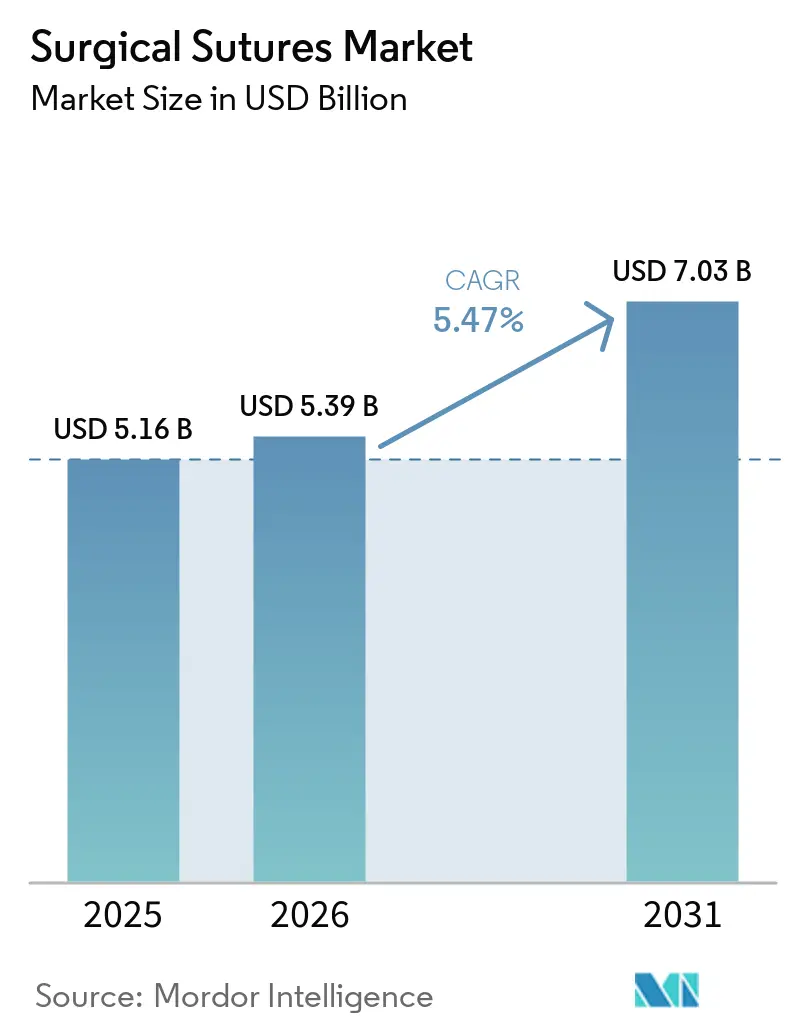
| Market Size (2026) | USD 5.39 Billion |
| Market Size (2031) | USD 7.03 Billion |
| Growth Rate (2026 - 2031) | 5.47 % |
| Fastest Growing Market | Asia Pacific |
| Largest Market | North America |
| Market Concentration | Medium |
Major Players *Disclaimer: Major Players sorted in no particular order Image © Mordor Intelligence. Reuse requires attribution under CC BY 4.0. | |
Surgical Sutures Market Analysis by Mordor Intelligence
The Surgical Sutures Market size is expected to increase from USD 5.16 billion in 2025 to USD 5.39 billion in 2026 and reach USD 7.03 billion by 2031, growing at a CAGR of 5.47% over 2026-2031.
The market’s growth is tied to hospitals and ambulatory surgical centers adopting absorbable, antimicrobial-coated, fast-absorbing filaments that lower infection-monitoring costs and shorten operating-room turnover times. Absorbable polyglycolic-acid and polydioxanone sutures, single-strand monofilaments, and predictable synthetic polymers are displacing legacy options because they eliminate suture-removal visits, cut infection risks, and fit value-based care models. At the same time, elective-surgery volumes tied to chronic conditions, an aging global population, and robust investment in private-sector hospital capacity in Asia-Pacific continue to expand the addressable base for the surgical suture market. Supply-chain consolidation in North America and Europe pushes vendors toward bundled contracts that pair sutures with staplers and hemostats, squeezing standalone margins yet encouraging product innovation to protect pricing power. Countervailing pressures stem from robotic stapling platforms, tissue adhesives, and raw-material volatility, but these forces have not derailed the surgical suture market’s overall expansion trajectory.
Key Report Takeaways
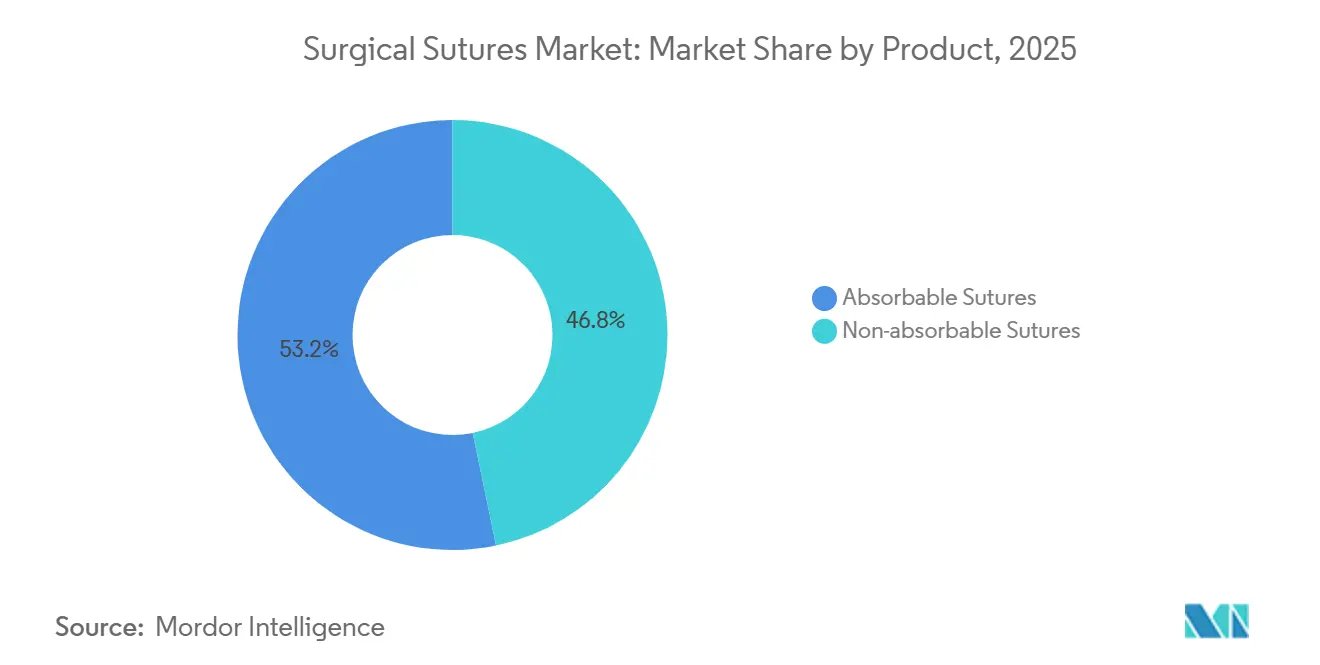
- By product, absorbable sutures captured 53.24% of the surgical suture market share in 2025 and are projected to expand at a 7.56% CAGR through 2031.
- By filament structure, monofilament designs held 58.46% revenue share in 2025 and are advancing at an 8.02% CAGR over the forecast horizon.
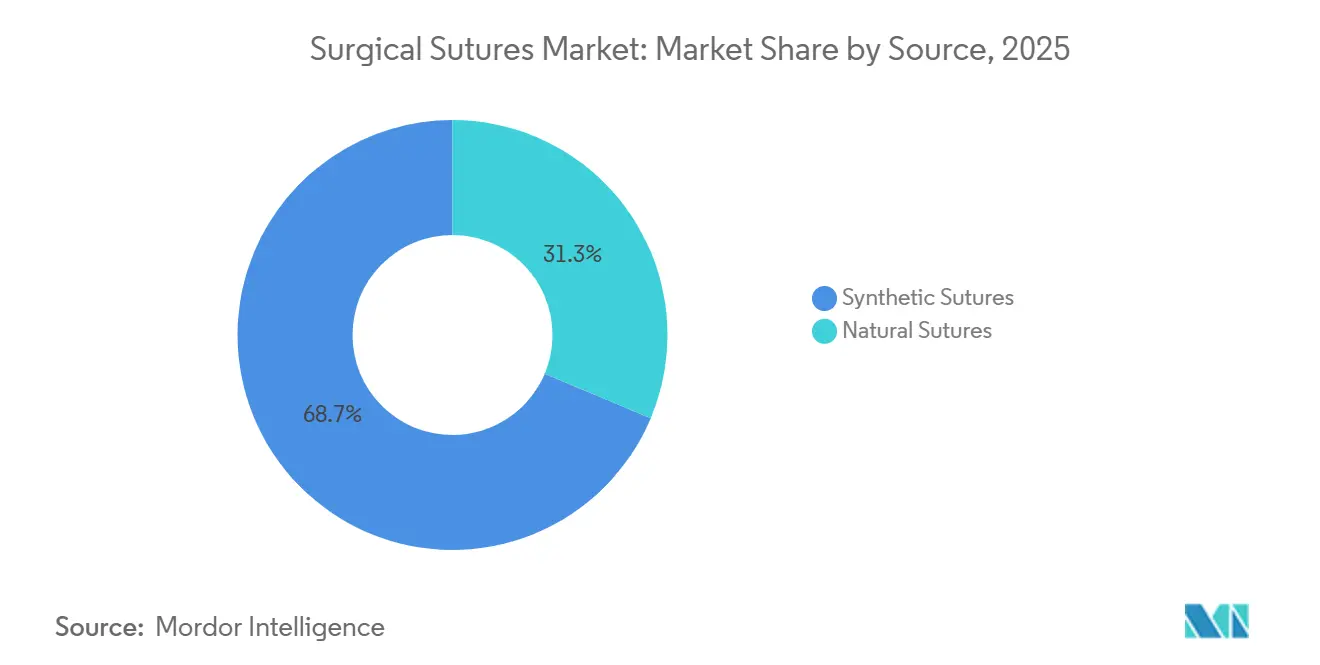
- By source, synthetic polymers commanded 68.68% revenue in 2025 and remain the fastest-growing category at a 6.46% CAGR to 2031.
- By coating, antimicrobial-coated sutures accounted for 64.24% of 2025 revenue and are progressing at a 7.01% CAGR across the projection period.
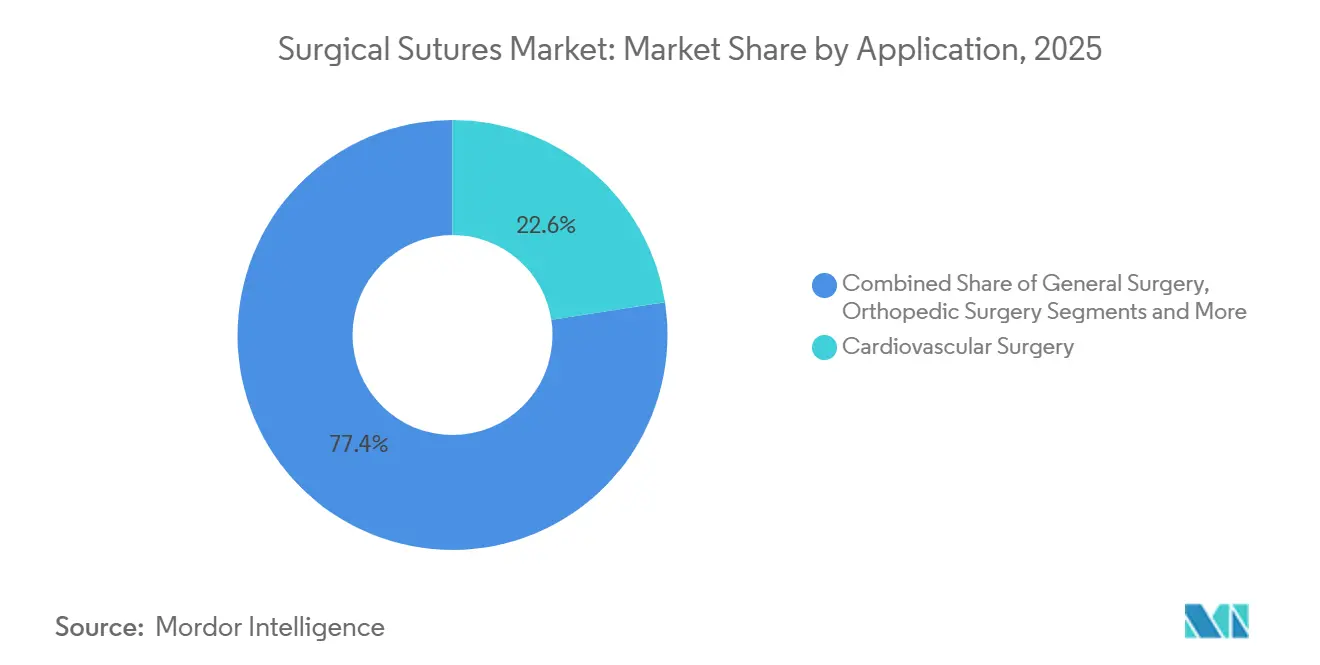
- By application, cardiovascular surgery led with a 22.57% share in 2025, while plastic and reconstructive surgery records the strongest 8.73% CAGR through 2031.
- By end user, hospitals retained 65.36% share in 2025, whereas ambulatory surgical centers post the highest 8.46% CAGR toward 2031.
- By geography, North America dominated with 37.47% revenue share in 2025, yet Asia-Pacific registers the quickest 7.36% CAGR heading to 2031.
Note: Market size and forecast figures in this report are generated using Mordor Intelligence’s proprietary estimation framework, updated with the latest available data and insights as of January 2026.
Market Trends and Insights
Drivers Impact Analysis of Surgical Sutures Market*
| Driver | (~) % Impact on CAGR Forecast | Geographic Relevance | Impact Timeline |
|---|---|---|---|
| Rising surgical procedure volumes among aging populations | +1.2% | North America, Europe, Japan | Long term (≥4 years) |
| Growing chronic-disease burden driving elective surgeries | +0.9% | North America, Western Europe | Medium term (2-4 years) |
| Technological advances in bio-absorbable & antimicrobial yarns | +0.8% | North America, Europe, spill-over Asia-Pacific | Medium term (2-4 years) |
| Expansion of healthcare infrastructure in emerging economies | +1.0% | China, India, MEA, South America | Long term (≥4 years) |
| Boom in ambulatory surgeries demanding fast-absorbing sutures | +0.7% | North America, Europe, urban Asia-Pacific | Short term (≤2 years) |
| Early R&D in smart sensor-enabled sutures | +0.3% | North America, Europe | Long term (≥4 years) |
| Source: Mordor Intelligence | |||
Rising Surgical Procedure Volumes Among Ageing Populations
Geriatric demographics are reshaping suture demand by boosting orthopedic, spinal, and cardiovascular case volumes, including procedures requiring cardiac sutures, while requiring longer-lasting absorbable filaments that retain tensile strength for 60–90 days. U.S. adults aged ≥65 will constitute 21.6% of the population by 2040, increasing annual hip and knee arthroplasties toward 4.7 million procedures. Over 90% of arthroplasty patients during the study period were aged 50 and above. The average age for total hip replacement (THR) patients was 70, and for total knee replacement (TKR) patients, it was 67. Projections indicate a 65% rise in total hip arthroplasties and a 49% increase in knee arthroplasties by 2036.[1] In 2023, Japan's National Clinical Database recorded 895,606 gastroenterological and abdominal surgical procedures. Laparoscopic cholecystectomy led with 118,825 procedures, followed by laparoscopic inguinal hernia surgery (82,669) and open inguinal hernia surgery (63,234).[2] Infection rates double in patients over 75, prompting hospitals to mandate triclosan-coated sutures for high-risk geriatric procedures.
Growing Chronic-Disease Burden Driving Elective Surgeries
Diabetes, obesity, cardiovascular disease, and cancer are pushing predictable high-volume surgeries that favor standardized suture lines. Bariatric procedures in the United States reached 270,089 in 2023, consuming 30% more suture material than standard abdominal cases.[3] Coronary artery bypass grafts totaled 371,000 in 2024, anchoring demand for braided polyester vascular sutures. Oncology resections increasingly rely on absorbable subcuticular closures that avoid follow-up removal in immunosuppressed patients.
Technological Advances in Bio-Absorbable & Antimicrobial Yarns
Silver-nanoparticle-doped poly(3-hydroxybutyrate-co-4-hydroxybutyrate) sutures cut Staphylococcus aureus colonization by 94% while retaining 80% tensile strength at 28 days. Faropenem-eluting threads release bactericidal levels for 14 days, extending antimicrobial windows beyond first-generation triclosan coatings. Polybutylene succinate formulations under clinical evaluation promise carbon-neutral footprints that satisfy hospital sustainability mandates.
Expansion of Healthcare Infrastructure in Emerging Economies
India added 10,000 private hospital beds in 2024 and streamlined device approvals through the MedTech Mitra program. Saudi Arabia’s Vision 2030 privatization of 290 hospitals requires USD 65 billion in device procurement, including sutures. China’s 14th Five-Year Plan budgets USD 75 billion for new county-level hospitals and approved 23 domestic suture manufacturers in 2024, intensifying price competition.
Restraints Impact Analysis of Surgical Sutures Market*
| Restraint | (~) % Impact on CAGR Forecast | Geographic Relevance | Impact Timeline |
|---|---|---|---|
| Shift toward staplers, sealants & robotic closure systems | -0.6% | North America, Europe | Medium term (2-4 years) |
| Infection risks prompting switch to adhesive dressings | -0.3% | Global pediatric and ophthalmic surgery | Short term (≤2 years) |
| Heightened scrutiny of antimicrobial-coated filaments | -0.2% | North America, Europe | Short term (≤2 years) |
| Geopolitical raw-material supply disruptions | -0.4% | Global single-source regions | Medium term (2-4 years) |
| Source: Mordor Intelligence | |||
Shift Toward Staplers, Sealants & Robotic Closure Systems
Robotic stapling on da Vinci platforms cut suture use 20% per colorectal case in 2024 as procedure counts hit 2.289 million. Fibrin sealants and cyanoacrylate adhesives replace sutures in pediatric and hepatic cases, aided by FDA clearances of eight new tissue-adhesive variants in 2024. CMS raised stapled bariatric surgery reimbursements by USD 220, reinforcing substitution economics.
Infection Risks Prompting Switch to Adhesive Dressings
CDC surveillance logged 157,500 surgical-site infections in 2024, with sutures implicated in 18%. Multifilament threads carry a 2.3-fold higher infection-risk profile, motivating guideline revisions that prefer monofilaments in contaminated wounds. JAMA Surgery showed clean-contaminated abdominal cases closed with adhesives reduced infections from 4.7% to 2.9% versus absorbable sutures.
*Our forecasts treat driver/restraint impacts as directional, not additive. The impact forecasts reflect baseline growth, mix effects, and variable interactions.
Surgical Sutures Market Segment Analysis
By Product:
Absorbables Dominate as Reimbursement Favors Elimination VisitsAbsorbable sutures’ 53.24% share in 2025 underscores a structural reimbursement shift. Medicare’s 2024 Physician Fee Schedule cut payments for suture-removal visits, driving surgeons toward polyglycolic-acid and polydioxanone options. Within the surgical suture market size for absorbables, barbed designs shortened OR time 6–9 minutes, and adoption in orthopedic repairs rose 14%. Non-absorbables persist in vascular and corneal applications demanding permanent tensile strength, but their 3.12% CAGR lags as payors reward elimination of follow-up appointments.
ISO 13485 certifications climbed 9% year-on-year to 1,247 suture manufacturers in 2024, making quality compliance a threshold for GPO contracts. Carbon-neutral bio-based absorbables could rewrite purchasing criteria despite 40%–60% price premiums, limiting early uptake to academic centers.
By Filament Structure:
Monofilament Gains on Infection-Control MandatesMonofilament sutures seized 58.46% revenue in 2025 and pace at an 8.02% CAGR as hospital protocols ban multifilaments in contaminated settings. A Lancet meta-analysis covering 47,000 patients proved single-strand closures cut infections by 52% in colorectal and biliary surgeries. Multifilaments still appeal for knot security in microsurgery, yet antimicrobial coatings on braided threads are stop-gap solutions amid infection-control mandates. Barbed designs blur structural lines by offering knotless closures that shave OR minutes and reduce glove fatigue in repetitive closures.
By Source:
Synthetic Polymers Marginalize Natural MaterialsSynthetic sutures occupy 68.68% of 2025 revenue and expand at 6.46% CAGR, thanks to engineered hydrolysis that matches tissue-healing timelines. Polydioxanone maintains 70% tensile strength at 28 days, perfect for fascial repairs. Natural catgut, still favored for mucosal layers, faces 18% supply contraction amid EU sourcing bans, limiting its 3.87% CAGR. Silk’s high tissue reactivity also advances its gradual displacement by braided polyester.
By Coating:
Antimicrobial Formulations Face Regulatory HeadwindsCoated sutures held 64.24% revenue share in 2025, and their 7.01% CAGR persists as hospitals tie reimbursements to infection-rate metrics. Triclosan-coated formulations reduced infection risk 31% across 15,000 patients in a 2024 Cochrane meta-analysis. Yet FDA resistance warnings are prompting next-generation coatings such as silver nanoparticles and faropenem-eluting layers designed to mitigate long-term antimicrobial exposure.
By Application:
Plastic Surgery Surges as Aesthetics NormalizeCardiovascular surgery’s 22.57% share remains anchored by 371,000 annual CABG cases requiring polyester sutures. Plastic and reconstructive surgery accelerates at 8.73% CAGR on 28.2 million U.S. procedures in 2024. Barbed polydioxanone facilitates knotless facelifts, while absorbable subcuticular closures minimize scarring in breast reconstructions. Orthopedic surgeries ride joint-replacement momentum at 6.89% CAGR in Japan and the United States.

By End User:
ASCs Gain as Outpatient Migration AcceleratesHospitals hold 65.36% share but face margin compression from bundled purchasing agreements. ASCs grow 8.46% CAGR, demanding pre-sterilized packs and 90-day payment terms. Specialty clinics expand 5.23% CAGR on in-office dermatologic and varicose-vein interventions.
Geography Analysis
North America Surgical Sutures Market
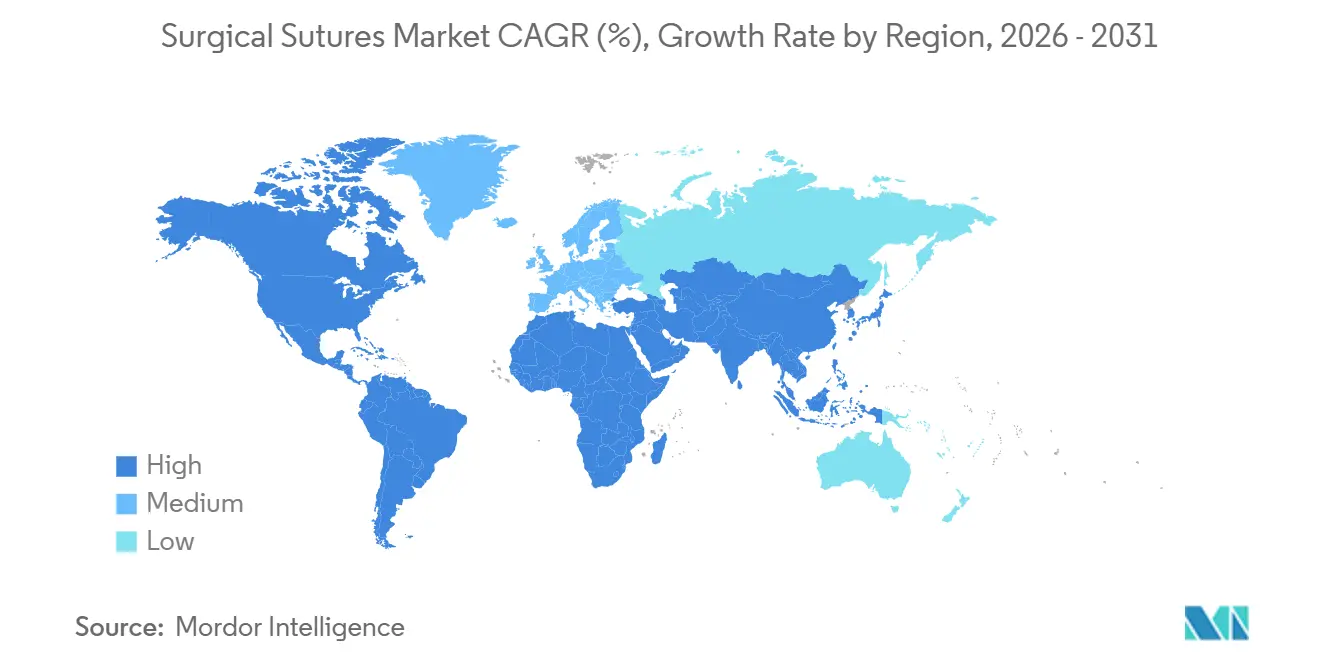
North America’s 37.47% share stems from 51 million annual procedures and premium adoption of coated and barbed sutures. GPOs controlling USD 84 billion in contracts enforce bundled deals that shaved 200–300 basis points off standalone suture margins by 2025.
APAC, EMEA and South America Surgical Sutures Market
Asia-Pacific posts a 7.36% CAGR, lifted by India’s bed count expansion, China’s hospital build-out, and Japan’s aging orthopedic demand. Europe is tempered by MDR recertification hurdles that sidelined 14% of manufacturers and by EMA reviews restricting triclosan usage. The Middle East and Africa grows as Saudi Arabia’s Vision 2030 privatization drives centralized procurement. South America’s share remains price-sensitive under Brazil’s SUS tenders that emphasize lowest-cost supply.
Regulatory Landscape
Surgical sutures follow mature, standards-driven regulatory pathways, with requirements centered on biocompatibility, sterility assurance, and quality systems. In the United States, the FDA regulates sutures primarily as medical devices under the 510(k) framework (with higher bars for select products), and antimicrobial-coated sutures can face additional scrutiny because of their drug component. Globally, biological evaluation under ISO 10993-1 within an ISO 14971 risk management process remains a core expectation for demonstrating safety across absorbable and non-absorbable materials.
In Europe, sutures are treated as well-established technologies under the EU Medical Device Regulation (MDR), which supports conformity assessment routes that rely heavily on established clinical evaluation, post-market surveillance, and recognized monographs (including European Pharmacopoeia references), rather than de novo clinical investigations. Beyond device rules, trade policy is increasingly relevant to compliance and pricing for global suppliers, with a US Department of Commerce Section 232 investigation into medical consumable imports initiated in September 2025 and a USTR Section 301 proposal in June 2026 introducing potential additional duties affecting medical technology imports from parts of Europe.
Value Chain Analysis
The surgical suture value chain runs from upstream polymer and stainless-steel inputs to precision conversion into filaments and needles, then to downstream sterile finishing, packaging, and distribution to hospitals, ambulatory surgical centers, and tenders. Many manufacturers operate across multiple specialized sites, separating polymer production, needle manufacturing, and final assembly (needle attachment), along with sterilization and labeling to meet stringent clean-room and sterility requirements. This setup increases switching costs for critical inputs such as specialty monomers for synthetic absorbables (including polyglycolic acid and PDO) and tight-tolerance needles, and it heightens the importance of validated packaging materials and temperature-controlled logistics.
Downstream, purchasing is increasingly shaped by consolidated procurement and bundled contracting, which can pressure standalone suture pricing and favors suppliers with broader catalogs and consistent service levels. Recent supply continuity signals point to where bottlenecks form: NHS Supply Chain noted ongoing supply issues affecting Johnson & Johnson Medical Limited surgical sutures, with updates in June 2026 citing manufacturing delays, raw material shortages, and capacity constraints, and targeting resolution for certain shortages by July 31, 2026. On the provider side, FDA communications around device shortages reinforce operational responses such as conserving inventory and diversifying sources for critical surgical consumables when disruptions occur.
Competitive Landscape
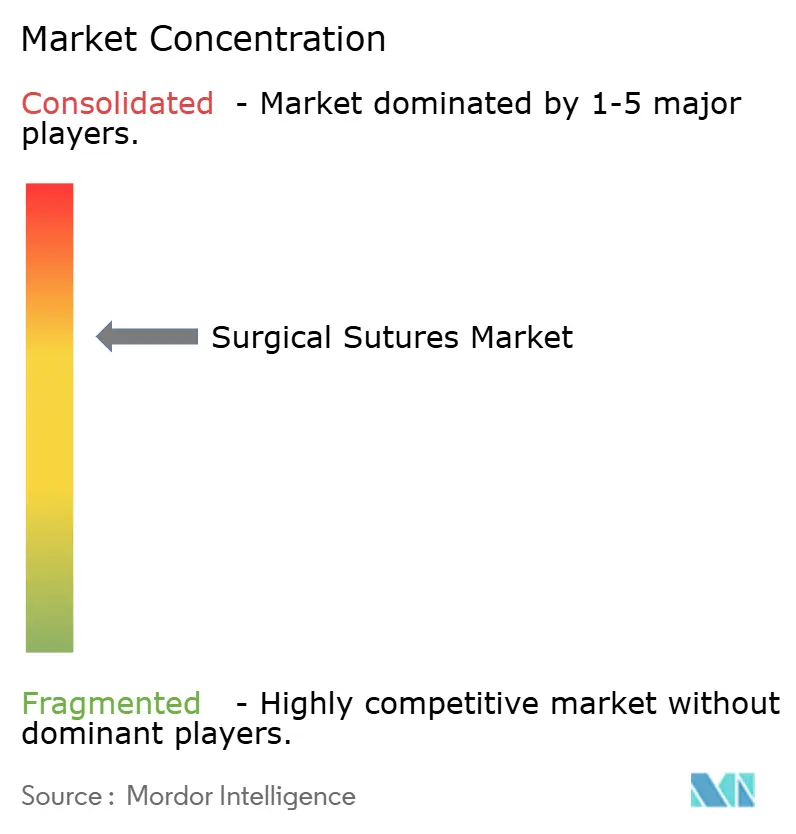
Ethicon, Medtronic, and B. Braun command nearly half of global revenue, yet local manufacturers in India and China underprice imports by 30%–40% in public tenders, preserving fragmentation. Ethicon’s raw-material integration supports 15%–20% margin premiums, while Medtronic’s Covidien acquisition bolstered cardiovascular niche breadth. B. Braun’s Malaysian plant trims 25% landed costs for Asia-Pacific demand. Surgical Specialties’ Sharpoint dominates ultra-fine ophthalmic categories on ±2 µm tolerances, and DemeTech’s direct-to-ASC model holds 8% U.S. ambulatory share. Forty-seven new 510(k) clearances in 2024 signal fast innovation cycles, but six Class II recalls expose manufacturing risks.
Surgical Sutures Industry Leaders
-
B. Braun Melsungen AG
-
Johnson & Johnson Services, Inc.
-
Medtronic plc
-
Smith & Nephew plc
-
Teleflex Incorporated
- *Disclaimer: Major Players sorted in no particular order
Surgical Sutures Market Companies Covered in this Report
- Assut Medical Sàrl
- B. Braun
- Boston Scientific
- Conmed
- DemeTech Corporation
- Internacional Farmacéutica
- Johnson & Johnson
- Kono Seisakusho Co., Ltd.
- Lotus Surgicals Pvt Ltd
- Medtronic
- Mellon Medical
- Meril Life Sciences
- Peters Surgical
- Samyang Biopharm
- Smiths Group
- Surgical Specialties
- Sutures India (Healthium)
- Teleflex
- W. L. Gore & Associates
Market Opportunities and Future Outlook
Procedure-optimized and platform-compatible sutures remain a practical whitespace as operating rooms adopt microsurgery robotics and time-saving closure workflows. In April 2026, Medical Microinstruments (MMI) announced the US commercial launch of a Robotic Suture for the Symani Surgical System, developed with Kono Seisakusho (Crownjun), signaling product formats tailored to robotic manipulation, needle geometry, and consistent handling at very small scales. That supports suture portfolios designed for robotics-enabled microsurgery and high-precision specialties where performance consistency and instrument compatibility are part of purchasing criteria.
A second opportunity track centers on multifunctional infection-control and drug-eluting suture designs that respond to surgical-site infection pressures while navigating heightened scrutiny of antimicrobial coatings. Research activity has broadened around biodegradable, multi-drug-eluting sutures and alternative antimicrobial coatings, with the intent to deliver localized antibiotic and anti-inflammatory release without relying only on legacy triclosan approaches. Commercial device innovation in adjacent suture-use workflows also supports demand for improved suture handling and fixation constructs, including new all-suture and knotless fixation releases in 2025-2026 for sports medicine and soft tissue procedures, which strengthens incentives for suppliers to co-develop sutures, anchors, and passing instruments as a workflow bundle for surgeons and outpatient settings.
Recent Industry Developments in Surgical Sutures Market
- June 2026: Medtronic completed its acquisition of Scientia Vascular for USD 550 million, adding neurovascular access capabilities to its portfolio. While the target is not a suture manufacturer, the transaction broadens Medtronic's procedural footprint and supports more comprehensive contracting across interventional and surgical product categories, which can influence how wound-closure lines are positioned in bundled negotiations.
- May 2026: Medtronic received FDA 510(k) clearance (K253530) for the Trexon monofilament synthetic absorbable suture. The clearance adds a new synthetic absorbable offering aligned with the market shift toward monofilament designs for infection-control protocols and gives Medtronic a fresher platform for competing in high-volume hospital and ASC accounts.
- October 2025: Mesh Suture, Inc. secured EU MDR and MDSAP certifications for DURAMESH. The certifications expand the company's ability to commercialize across Europe and other regulated markets that recognize MDSAP, increasing competitive intensity in procedure-specific and reinforced suture categories where clinical and quality documentation can be a key barrier to entry.
Surgical Sutures Market Report Scope and Research Methodology
Market Definition and Coverage
This market covers revenue earned from surgical sutures that are used to close surgical incisions and to ligate blood vessels or tissue after procedures. The value is tracked at the point of sale for suture materials used across common surgical settings.
Scope exclusions: Staples, surgical sealants, topical adhesives, and wound dressings are excluded. Suturing devices are counted only when they are bundled with sutures in the selling unit.
Segments Covered in This Report
- By Product
- Absorbable Sutures
- Non-absorbable Sutures
- By Filament Structure
- Monofilament Sutures
- Multifilament Sutures
- By Source
- Natural Sutures
- Synthetic Sutures
- By Coating
- Coated Sutures
- Uncoated Sutures
- By Application
- Cardiovascular Surgery
- General Surgery
- Orthopedic Surgery
- Gynecology & Obstetrics
- Ophthalmic Surgery
- Dental Surgery
- Plastic & Reconstructive Surgery
- Other Applications
- By End User
- Hospitals
- Ambulatory Surgical Centers
- Specialty Clinics
- Other End Users
- By Geography
- North America
- United States
- Canada
- Mexico
- Europe
- Germany
- France
- United Kingdom
- Italy
- Spain
- Rest of Europe
- Asia-Pacific
- China
- Japan
- India
- South Korea
- Australia
- Rest of Asia-Pacific
- Middle East & Africa
- GCC
- South Africa
- Rest of Middle East & Africa
- South America
- Brazil
- Argentina
- Rest of South America
- North America
Data Sources, Market Sizing, and Validation
Desk Research
Desk work starts by building the demand and supply context for surgical sutures, and then mapping it back to procedure volumes, care settings, and country-level healthcare activity. We rely on open sources such as the World Health Organization, the World Bank, OECD health statistics, CDC publications, and national health ministries for surgery and health system indicators that influence suture usage.
On the industry side, we review public company filings, annual reports, investor presentations, product brochures, and references from medical societies or hospital associations that describe usage patterns by specialty. Where needed, paid subscriptions are used for company financials and news coverage, patent search, and shipment-level import and export checks to validate country-level availability and pricing direction. The sources listed here are illustrative and not exhaustive, and other references were also used to collect data, validate findings, and clarify assumptions.
Primary Interviews and Surveys
Primary work is used to pressure-test the sizing logic and close gaps where public data is not granular enough, such as mix shifts between absorbable and non-absorbable sutures and typical unit usage per procedure. We speak with a spread of manufacturers, distributors, procurement teams, surgeons, and ambulatory surgical center stakeholders across major regions, so regional price bands, tender behavior, and adoption of coated and specialty sutures can be checked against how orders are placed in practice.
Distribution of primary research fieldwork respondents
| Company type | Respondent position | Region |
|---|---|---|
| Top tier: 39% | CXOs: 16% | APAC: 44% |
| Mid tier: 44% | Functional/Unit leaders: 37% | EMEA: 29% |
| Smaller Players: 17% | Managers: 47% | Americas: 27% |
Market-Sizing & Forecasting
Sizing is built using top-down logic where procedure volumes and specialty mix are converted into an addressable suture demand pool, then filtered by care setting and country-level access. Once the demand pool is built, average sutures used per procedure, absorbable versus non-absorbable mix, and coated versus uncoated penetration are applied, which then feeds into an average selling price layer by region.
To keep the model practical, we corroborate totals using selective bottom-up approximations, such as supplier revenue splits disclosed in filings, distributor channel checks, and sampled price points from hospital and ambulatory surgical center procurement. When some countries lack reliable procedure series, proxies are used, such as inpatient and outpatient surgery rates, cesarean section trends, orthopedic and cardiovascular caseload signals, and healthcare spending growth, and then adjusted after expert feedback. Forecasts are shaped using multivariate regression, combining assumptions for procedure growth, aging demographics, hospital infrastructure expansion, and price movement, and then checked through scenario analysis for elective surgery swings and inflation-driven ASP changes.
Data Validation & Update Cycle
Validation is done by checking whether the modeled market direction matches independent signals, including procedure growth, import and export movement, and reported pricing commentary from the field. Outliers are reviewed country by country, and when a variance cannot be explained by mix or price, assumptions are revisited and respondents are re-contacted for clarification.
Before sign-off, the model and narrative go through multi-step analyst reviews, with a focus on consistency in inputs, units, and currency conversions. The report is refreshed annually, and interim updates are triggered when material events occur, such as major regulatory changes, sharp demand shifts in elective procedures, or notable pricing moves. Right before delivery, a final pass is completed so clients receive the latest updated view.
Mordor Intelligence's Surgical Sutures Market Estimate Compared With Other Published Estimates
Published market sizes for surgical sutures can vary widely because each publisher draws the line differently on what counts as sutures, what base year is used, and how prices are carried forward. Differences also show up depending on whether a model relies more on procedure-based demand build-ups or on reported revenues and broader medical consumables groupings.
The benchmark table shows a lower 2025 value than one external figure and a higher value than another. In Mordor Intelligence's model, this spread is mostly explained by counting only suture materials used for surgical closure and ligation, rather than including adjacent closure items such as staples, sealants, and topical adhesives. Other gaps come from how quickly ASPs are allowed to rise across tender-driven hospital channels, and from whether ambulatory surgical center volume growth is scaled at the same pace as inpatient procedures.
Benchmark comparison
| Source | Market Size | Gaps in Research Methodology |
|---|---|---|
| Mordor Intelligence | USD 5.16 B (2025) | |
| Global Consultancy A | USD 6.03 B (2025) | Uses a broader closure framing that can include adjacent wound-closure spending, and it also applies a higher price ramp in regions where tenders often limit annual increases. |
| Industry Publisher B | USD 4.75 B (2024) | Uses an earlier base year and a slower growth path, and it leans heavily on a high-level absorbable versus non-absorbable split without fully scaling procedure mix and ambulatory volume expansion by country. |
Taken together, the spread is mainly explained by inclusion choices around adjacent closure products, base year selection, and the way prices are updated over time. Our method stays traceable because procedure demand, mix, and pricing are linked in clear steps and then checked against independent signals before the totals are finalized.
Key Questions Answered in the Report
What is the current value of the surgical suture market?
The surgical suture market size stands at USD 5.39 billion in 2026.
How fast is global revenue expected to grow?
Revenue is projected to reach USD 7.03 billion by 2031, reflecting a 5.47% CAGR.
Which product type leads sales?
Absorbable sutures held a 53.24% share in 2025 and are projected to outpace non-absorbables at a 7.56% CAGR through 2031.
Why are monofilament sutures gaining traction?
Monofilaments reduce surgical-site infections by more than 50% versus braided alternatives.
Which application area is growing the fastest?
Plastic and reconstructive surgeries are forecast to expand at an 8.73% CAGR through 2031.
What region offers the strongest growth outlook?
Asia-Pacific is expected to advance at a 7.36% CAGR through 2031 on hospital-capacity expansion.