
Surgical Dressing Market Size and Share
Market Overview
| Study Period | 2020 - 2031 |
|---|---|
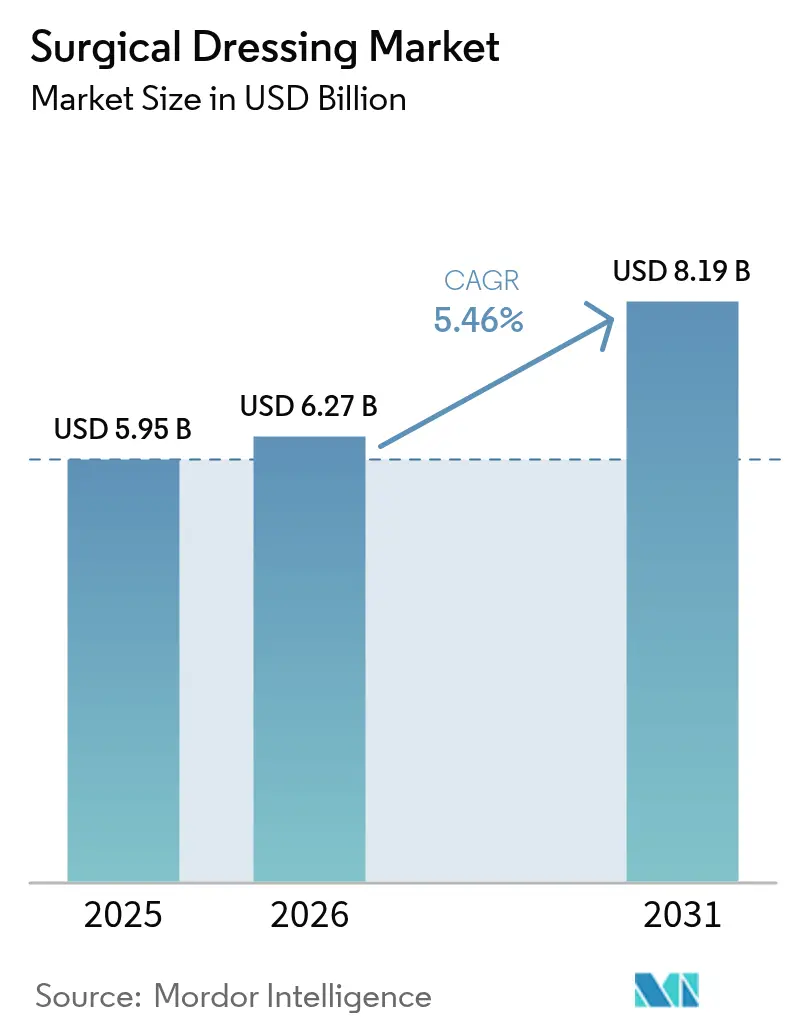
| Market Size (2026) | USD 6.27 Billion |
| Market Size (2031) | USD 8.19 Billion |
| Growth Rate (2026 - 2031) | 5.46 % |
| Fastest Growing Market | Asia-Pacific |
| Largest Market | North America |
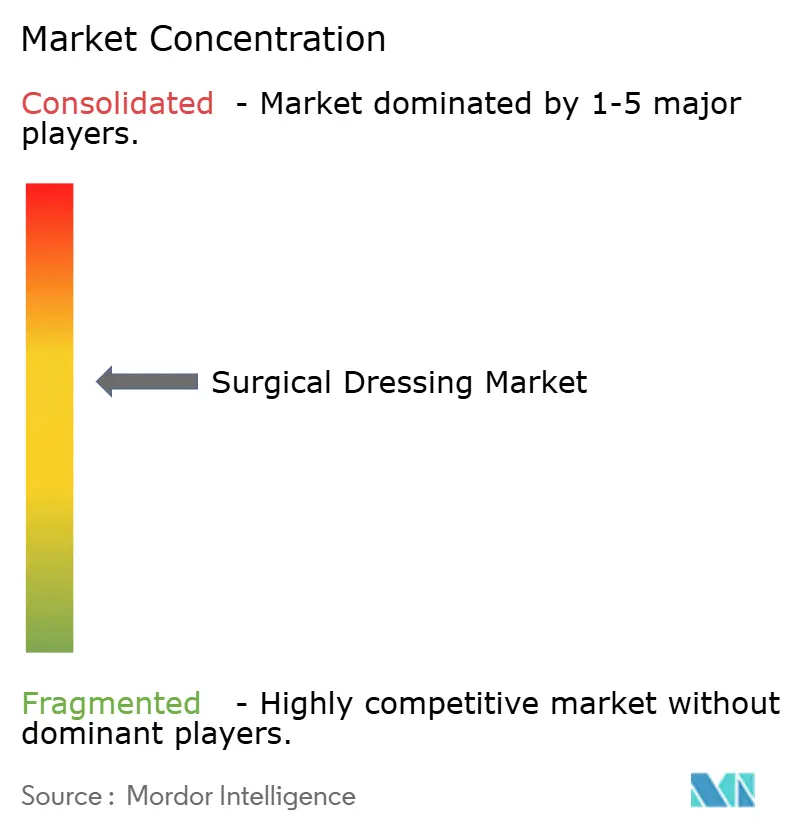
| Market Concentration | Medium |
Major Players *Disclaimer: Major Players sorted in no particular order Image © Mordor Intelligence. Reuse requires attribution under CC BY 4.0. | |
Surgical Dressing Market Analysis by Mordor Intelligence
The surgical dressings market size is expected to grow from USD 5.95 billion in 2025 to USD 6.27 billion in 2026 and is forecast to reach USD 8.19 billion by 2031 at 5.46% CAGR over 2026-2031. Demand growth rests on three pillars: the accelerating incidence of chronic wounds among older adults, the migration of procedures to outpatient settings, and steady innovation in smart, antimicrobial, and bio-active dressings. Real-time sensor integration, such as Caltech’s iCares bandage that measures biomarkers in exudate, signals a shift from passive coverage to active therapy. Regulatory reforms in China, India, and the United States lower adoption barriers for premium products, while payer policies that now reimburse skin-substitute dressings broaden market access. Supply chain risks in specialty polymers and possible FDA reclassification of antimicrobial dressings temper optimism, yet the underlying demographic and clinical need continues to anchor the surgical dressings market trajectory.
Key Report Takeaways
- By application, ulcer treatment accounted for 31.02% of the surgical dressings market size in 2025 and diabetes-related surgery is advancing at a 5.79% CAGR through 2031.
- By end-user, hospitals and clinics held 53.88% of the surgical dressings market share in 2025, whereas ambulatory surgical centers record the highest projected CAGR at 5.92% to 2031.
- By wound type, chronic wounds captured 57.63% share of the surgical dressings market size in 2025 and acute wounds are growing at a 6.12% CAGR through 2031.
- By material, synthetic polymers retained 38.41% share in 2025, while bio-engineered composites are forecast to grow at 6.55% CAGR to 2031.
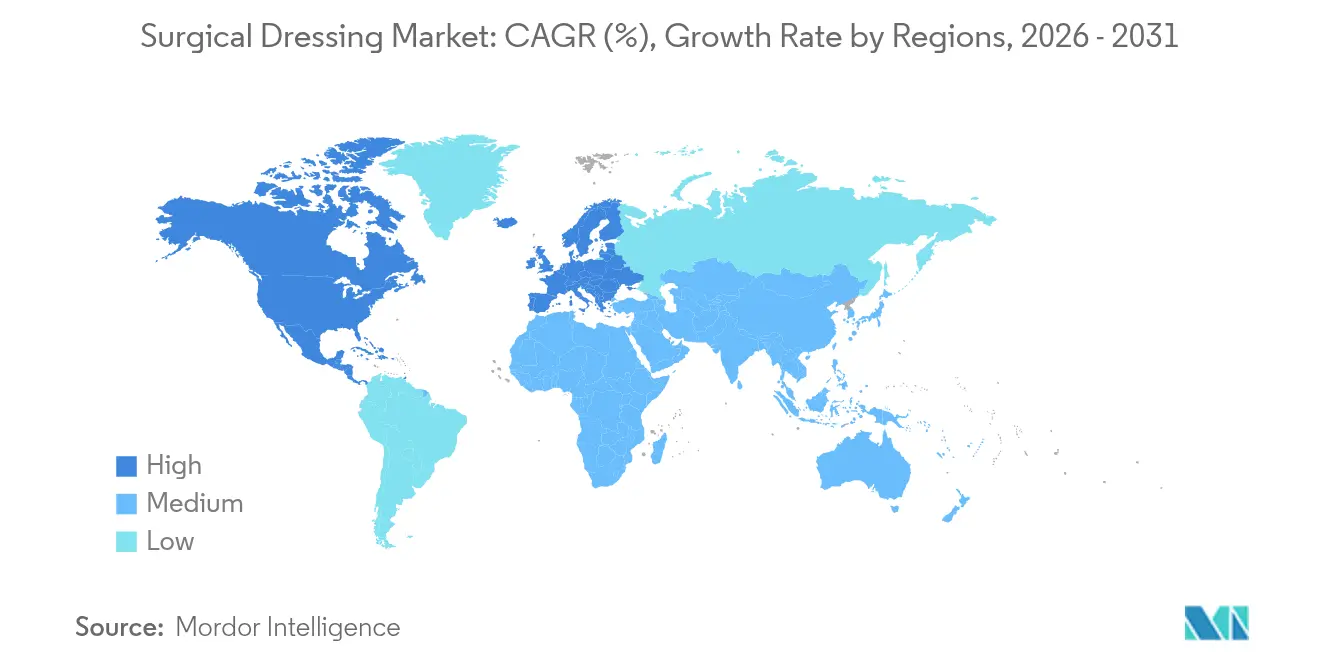
- By geography, North America commanded 41.72% share of the surgical dressings market in 2025; Asia-Pacific is the fastest-growing region, expanding at 6.88% CAGR to 2031.
Note: Market size and forecast figures in this report are generated using Mordor Intelligence’s proprietary estimation framework, updated with the latest available data and insights as of 2026.
Market Trends and Insights
Drivers Impact Analysis of Surgical Dressing Market*
| Driver | (~) % Impact on CAGR Forecast | Geographic Relevance | Impact Timeline |
|---|---|---|---|
| Aging population and rise in chronic wounds | +1.8% | Global, strongest in North America & Europe | Long term (≥ 4 years) |
| Shift toward outpatient and home-based care | +1.2% | North America & EU, spreading to APAC | Medium term (2-4 years) |
| Product innovation in antimicrobial and bio-active dressings | +1.0% | Global, led by North America & Europe | Medium term (2-4 years) |
| Reimbursement expansion for advanced dressings | +0.8% | North America & EU | Short term (≤ 2 years) |
| Growth of surgical volumes in emerging Asia | +0.6% | APAC core, spill-over to MEA | Long term (≥ 4 years) |
| Integration of smart or IoT sensors in dressings | +0.4% | North America & EU, early APAC | Long term (≥ 4 years) |
| Source: Mordor Intelligence | |||
Aging Population & Rise in Chronic Wounds
Chronic wounds already affect more than 40 million people worldwide and cost the United States healthcare system over USD 28 billion each year [1]. Diabetes and peripheral arterial disease elevate ulcer risk, prompting the International Working Group on the Diabetic Foot to recommend sucrose octasulfate dressings for non-healing ulcers [2]. Medicare reports that 10.5% of beneficiaries present with chronic wounds but generate outsized resource use, so payers welcome therapies that shorten healing time. Meta-analyses show advanced dressings can accelerate closure by an average of 1.09 days and lower pain scores versus traditional gauze. This demographic driver supports steady, recession-resistant demand across advanced and standard products in the surgical dressings market.
Shift Toward Outpatient & Home-Based Care
Procedure migration to ambulatory sites raises need for dressings that stay in place longer and simplify self-care. Remote monitoring platforms such as WoundConnect help clinicians oversee healing progress without daily visits, reducing hospital utilization by up to 15%. New CMS codes (G0541, G0542) pay for caregiver wound-care training delivered via telehealth, incentivizing home-based management. Solventum’s V.A.C. Peel & Place dressing, designed for seven-day wear and two-minute application, typifies products tailored to the outpatient shift. These factors collectively lift demand across the surgical dressings market for extended-wear, low-skill solutions.
Product Innovations in Antimicrobial & Bio-Active Dressings
Composite materials that combine antimicrobial action with bio-active healing stimulate premium adoption. Bacterial cellulose loaded with cerium-dioxide nanoparticles blocks both E. coli and B. subtilis while releasing drugs in a controlled profile. The FDA approval of NexoBrid for enzymatic burn debridement after a prolonged review validates appetite for specialized therapies. Trials indicate alginate dressings shorten healing by more than one day on average and reduce pain significantly. Research into artificial spider-silk scaffolds produced via engineered microbes shows faster wound closure in diabetic models and points to a new generation of sustainable biomaterials.
Reimbursement Expansion for Advanced Dressings (US, EU)
Regulators now treat cellular and tissue-based products as wound management tools rather than skin substitutes, bringing them under the physician fee schedule and adding clarity to payment pathways. Local Coverage Determinations allow up to four applications per ulcer within 12 weeks if the wound contracts at least 50% in the first month of treatment. In Europe, the Medical Device Regulation harmonizes evidence requirements while granting transition time for legacy devices to December 2027, rewarding firms with robust clinical dossiers. Clearer reimbursement encourages hospitals to adopt premium dressings that promise lower overall cost of care.
Restraints Impact Analysis of Surgical Dressing Market*
| Restraint | (~) % Impact on CAGR Forecast | Geographic Relevance | Impact Timeline |
|---|---|---|---|
| Stringent multi-jurisdiction regulatory pathways | −0.9% | Global, pronounced in EU & APAC | Medium term (2-4 years) |
| Price erosion from tender-driven procurement | −0.7% | Global, acute in Europe & emerging markets | Short term (≤ 2 years) |
| Supply-chain volatility in specialty polymers | −0.5% | Global, concentrated in APAC sourcing | Short term (≤ 2 years) |
| Clinical evidence gaps for smart dressings | −0.3% | North America & EU | Long term (≥ 4 years) |
| Source: Mordor Intelligence | |||
Stringent Multi-Jurisdiction Regulatory Pathways
The EU Medical Device Regulation now demands comprehensive clinical evaluation and post-market surveillance, adding 12-18 months and significant expense to approval timelines. The FDA is consulting on reclassifying antimicrobial dressings from Class I to Class II or III, which could shift many legacy products into a stricter pre-market review. Japan continues to post the longest med-tech approval lag among G7 countries, averaging 24-36 months according to its Pharmaceuticals and Medical Devices Agency. Smart dressings that incorporate software draw additional cybersecurity scrutiny, challenging smaller firms. These hurdles slow roll-out of novel technologies within the surgical dressings market.
Price Erosion from Tender-Driven Hospital Procurement
Public hospitals in Europe and parts of Asia award bulk tenders based mainly on price, compressing gross margins for commodity gauze and film products. Company filings show Paul Hartmann’s traditional wound portfolio faced 20-30% price undercutting by private labels in 2024, even as demand stayed strong. Integrated delivery networks in the United States increasingly request risk-share contracts in which suppliers refund part of the product cost if healing targets are missed. Without high-quality health-economic data, many mid-tier suppliers struggle to defend premium pricing, exerting near-term drag on the surgical dressings market growth rate.
*Our forecasts treat driver/restraint impacts as directional, not additive. The impact forecasts reflect baseline growth, mix effects, and variable interactions.
Surgical Dressing Market Segment Analysis
By Product:
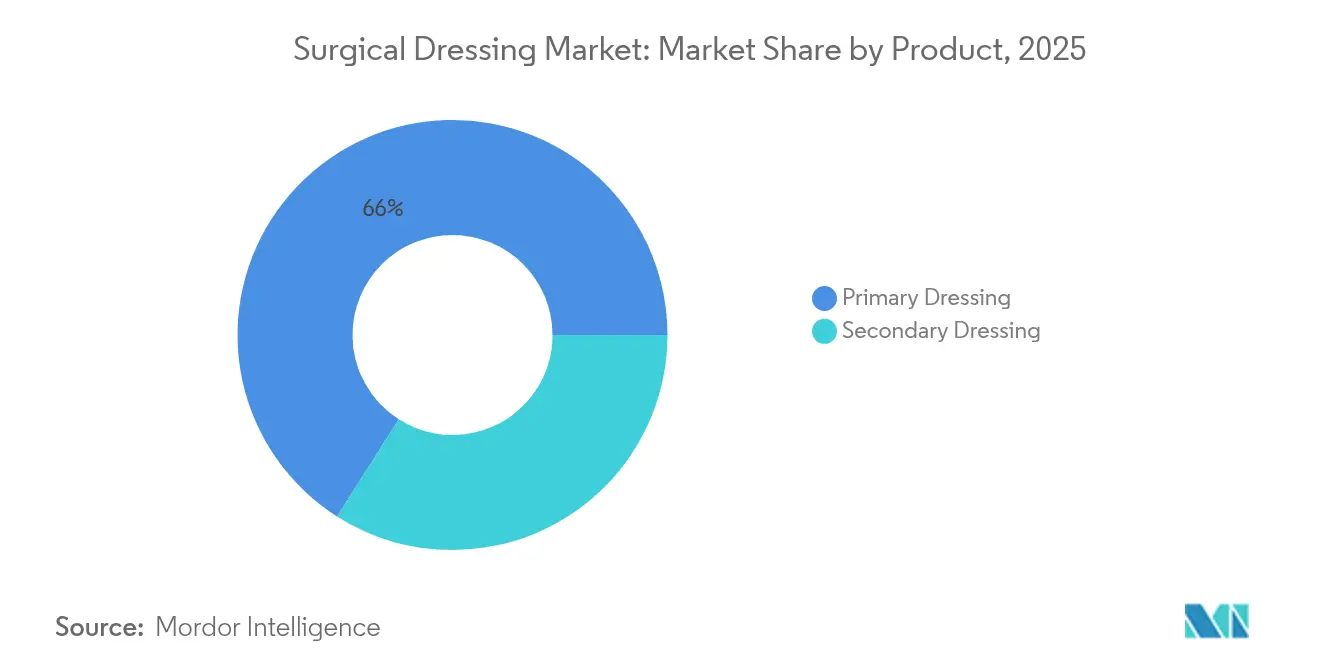
Primary Dressings Lead InnovationPrimary dressings generated 65.98% of surgical dressings market revenue in 2025 due to their central role at the wound bed. Hydrogel and alginate variants maintain an ideal moisture balance, and recent trials show a 1.09-day faster closure versus gauze. Film dressings now house printed pH sensors that flag infection ahead of visible symptoms, giving clinicians an early-warning advantage. Foam dressings with super-absorbent polymers gained share after Paul Hartmann reported EUR 608.9 million in wound revenue on strong silicone-foam uptake. Secondary dressings grow fastest at 5.98% CAGR because layered protocols call for added absorption and securement. Companies refine adhesive borders to reduce skin trauma in frail patients while retaining seal integrity for seven-day wear.
Smart primary dressings capable of Bluetooth connectivity remain a niche, limited by battery life and cost, yet pilot studies in veteran hospitals show high patient satisfaction. Synthetic polymer films still dominate volume but bio-engineered cellulose composites that release antimicrobials on demand capture clinician interest. As value-based contracts reward lower readmissions, purchasers weigh the higher unit price of active dressings against demonstrated reductions in total care costs. Continuous innovation keeps primary dressings at the forefront of the surgical dressings market.

By Application:
Diabetes-Related Surgery Drives GrowthUlcer care contributed 31.02% to the surgical dressings market size in 2025, reflecting the ongoing burden of pressure and venous ulcers among aging populations. Yet diabetes-related surgery represents the fastest-growing use case at 5.79% CAGR. The International Working Group on the Diabetic Foot now endorses sucrose octasulfate dressings when neuro-ischemic ulcers stall after four weeks of standard care. Negative-pressure therapy after cardiovascular procedures further broadens application scope.
Burn treatment remains dependent on silver-impregnated options, but debate over optimal ion release persists. Organ‐transplant recipients demand high-performance dressings that guard against opportunistic infections while promoting granulation. Payers increasingly require photographic proof and digital planimetry to authorize multiple high-cost dressing applications, pushing suppliers to embed image-capture tools within smart products. These evolving needs reinforce growth prospects for specialty segments within the wider surgical dressings market.
By End-User:
Ambulatory Centers Accelerate AdoptionHospitals and clinics accounted for 53.88% of surgical dressings market share in 2025, anchored by complex trauma and surgical workloads. Ambulatory surgical centers, however, are expanding at a 5.92% CAGR as insurers favor same-day procedures. Extended-wear foams that tolerate showering and gentle movement suit outpatient recovery. Telehealth follow-up reduces skilled-nursing visits, and CMS now compensates virtual wound assessments, enhancing center economics .
Home health services employ caregiver education codes to train family members in basic dressing changes, widening adoption of intuitive, color-coded packaging. Long-term care facilities deploy prophylactic sacral dressings for pressure-ulcer prevention, an approach that evidence shows can lower Stage III ulcer incidence by 43%. End-user mix diversification supports balanced expansion across the surgical dressings market.
By Wound Type:
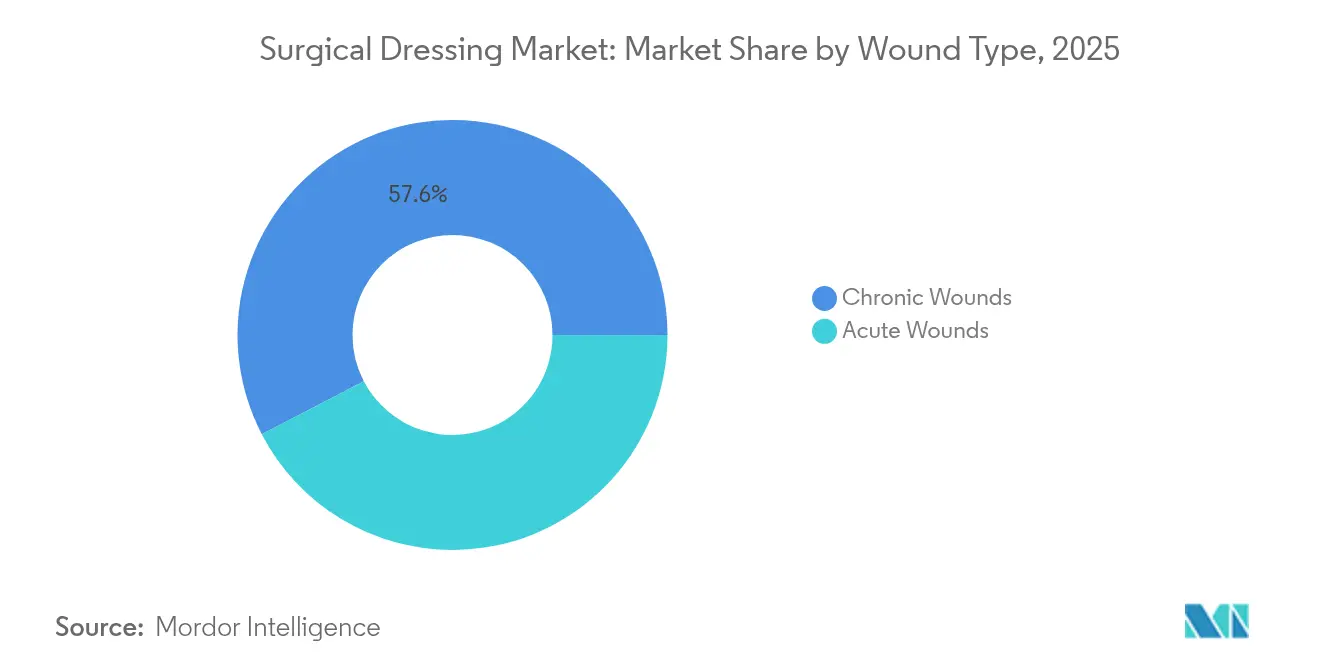
Chronic Wounds Command PremiumChronic wounds captured 57.63% of market revenue in 2025 because of their prolonged care cycles and need for advanced therapy. Smart dressings that track nitric oxide or glucose levels help clinicians detect early deterioration, preventing costly debridement. AI models trained on wound-bed images now predict healing likelihood with 98% accuracy, guiding timely treatment escalation.
Acute wound management is growing at 6.12% CAGR on rising elective surgeries and trauma cases. Evidence from Sub-Saharan Africa shows multimodal bundles that pair modern dressings with antimicrobial stewardship can cut surgical site infection rates by up to 95%. Device makers therefore promote combined toolkits that include pre-op cleansers, intra-op incise drapes, and post-op dressings, strengthening share capture across the surgical dressings market.
By Material:
Bio-Engineered Solutions Gain TractionSynthetic polymers still hold 38.41% revenue share, supported by mature supply chains and consistent properties demanded in high-volume production. However, composite and bio-engineered materials post the highest growth at 6.55% CAGR, driven by sustainability and performance. Bacterial cellulose paired with cerium oxide shows potent antibacterial action without cytotoxicity, while chitosan hydrogels exhibit self-healing behavior that conforms to irregular defects.
Collagen-based scaffolds, such as Integra’s dermal template, now have FDA clearance for diabetic ulcers, marking regulatory acceptance of biologics in mainstream care. Artificial spider silk harvested from engineered microbes delivers high tensile strength and biocompatibility, with early studies showing superior wound closure times in diabetic mice. Continued material science advances will push higher-margin segments of the surgical dressings market toward bio-derived options over the coming decade.
Geography Analysis
North America Surgical Dressing Market
North America maintains leadership, holding 41.72% of the surgical dressings market in 2025. Robust reimbursement under Medicare and private payers rewards technologies that shorten healing or reduce clinic visits. The Department of Defense in 2025 awarded Smith+Nephew a USD 75 million contract for negative-pressure systems, signaling government confidence in advanced modalities. Recent CMS policy shifts that classify certain skin substitutes as wound management products simplify billing, fostering faster uptake of premium offerings. FDA fast-track designations for cellular therapies such as Aurase Wound Gel indicate regulatory support for biologic innovation.
APAC Surgical Dressing Market
Asia-Pacific is the fastest-growing region, expanding at a 6.88% CAGR through 2031. China’s 2024 medical device law tightens quality management while setting accelerated review lanes for urgently needed products via its National Medical Products Administration. India’s voluntary code on medical device promotion encourages ethical marketing and clearer labeling, improving clinician trust. Japan’s USD 40 billion device market grows as its aging population and universal coverage sustain demand, although lengthy approval timelines constrain rapid launches. Australia’s recognition of select overseas approvals speeds registration for dressings that already hold FDA clearance, benefiting exporters.
Europe Surgical Dressing Market
Europe records steady growth under the Medical Device Regulation despite higher compliance costs. Companies that invested early in clinical data and post-market surveillance now gain a competitive edge. Hartmann reported 4.4% organic wound-care growth in 2024, aided by silicone foam uptake, even as hospital tenders drove pricing pressure. Sustainability goals in Nordic countries have prompted pilots of biodegradable dressings, aligning with circular-economy policies. Post-Brexit, UK manufacturers must file separate CE and UKCA submissions, adding complexity but also stimulating domestic innovation grants. Across all sub-regions, diverse reimbursement schemes require localized economic evidence, compelling suppliers to tailor value dossiers to each payer system.
Regulatory Landscape
Surgical dressings are regulated as medical devices across major markets, with classification determining evidence requirements, labeling, and post-market duties. In the European Union, Regulation (EU) 2017/745 (MDR) applies, and the framework continued to be operationally refined through 2025-2026 via Medical Device Coordination Group (MDCG) guidance updates (including 2026 updates linked to EMDN usage) and Implementing Regulation (EU) 2026/977, which details conformity assessment-related procedures and affects notified bodies and quality management expectations.
In the United States, surgical dressings fall under FDA medical device oversight (including 21 CFR Part 878 device classifications). The agency also maintained a proposed rule (published November 2023) to reclassify certain solid wound dressings, including some antimicrobial dressings and related wound wash products, into higher-risk categories that would bring broader 510(k) and potentially more stringent premarket requirements. This pending shift, together with MDR-driven clinical evaluation and post-market surveillance obligations in Europe, keeps regulatory planning and documentation readiness central for suppliers expanding premium antimicrobial, bio-active, and software-adjacent dressing concepts.
Value Chain Analysis
The surgical dressings value chain starts with upstream feedstocks and substrates, notably natural fibers (cotton and related textiles) and synthetic polymers (polypropylene, polyurethane, polyester) that are converted into nonwoven webs, films, foams, and hydrogel or alginate structures. Converters and dressing manufacturers then perform coating and lamination (for adhesives, antimicrobials, or barrier layers), cutting and die-stamping, sterile packaging, and validation under clean-room conditions before releasing finished SKUs. Regulatory compliance steps, including device classification, sterility assurance, labeling, and post-market vigilance, are embedded throughout, with FDA device classification under 21 CFR Part 878 and the ongoing US proposal to reclassify certain antimicrobial-containing dressings influencing documentation, testing, and supplier qualification requirements.
Midstream operations increasingly emphasize process efficiency and material security. Suppliers optimize production around higher-absorbency nonwoven approaches and silicone-coated or multilayer constructions that reduce skin trauma while maintaining wear time. Downstream, distribution flows through hospitals and clinics, ambulatory surgical centers, and home-care channels, where tendering and payer documentation requirements shape product mix and inventory strategy. Manufacturers with greater vertical integration in core substrates (for example, cotton gauze and nonwoven fabrics) and localized capacity can reduce lead-time and input volatility exposure, supporting more consistent service levels to institutional buyers.
Competitive Landscape
The surgical dressings market is moderately fragmented. Smith+Nephew plans to invest USD 1.24 billion in wound care between 2025 and 2030, including a new United Kingdom R&D center that will focus on smart dressings and regenerative matrices. The USD 660 million acquisition of Osiris Therapeutics added viable allograft products and underlines an industry trend toward combining biologics with traditional dressings.
3M leverages its polymer science platform to engineer silicone adhesive films that reduce skin stripping in elderly patients, while Mölnlycke expands its Exufiber range with gelling technology that locks in exudate under compression. ConvaTec and Coloplast compete in negative-pressure therapy through portable, single-use pumps aimed at ambulatory patients. Collaboration between academics and industry accelerates innovation: Caltech works with venture partners to move the iCares sensor bandage toward FDA clearance, demonstrating the pull of digital health inside the surgical dressings market.
Supply chain resilience now factors into competitive positioning. Cardinal Health diversified gauze sourcing across two continents after cotton shortages in 2024, and Medline added domestic foam capacity to cut lead times for U.S. hospitals. Firms also pursue environmental, social, and governance goals, with Urgo Medical piloting bio-based polyurethane foams that lower carbon footprint by 38% relative to petrochemical counterparts. As reimbursement ties payment to outcomes, manufacturers race to publish real-world evidence linking their dressings to lower readmissions and total cost of care, a strategy expected to reshape share allocation over the next five years.
Surgical Dressing Industry Leaders
-
3M
-
Smith and Nephew
-
ConvaTec Inc.
-
Johnson and Johnson
-
Cardinal Health, Inc.
- *Disclaimer: Major Players sorted in no particular order
Surgical Dressing Market Companies Covered in this Report
- 3M
- Smiths Group
- Molnlycke Health Care
- Convatec
- Coloplast
- Cardinal Health
- Medtronic
- Medline Industries
- Johnson & Johnson
- B. Braun
- Hollister
- Hartmann Group
- Lohmann & Rauscher GmbH
- Urgo Medical
- BSN medical (Essity)
- Acelity (KCI) – 3M Advanced Wound Care
- Derma Sciences (Integra LifeSciences)
- Winner Medical Co.
- Advancis Medical
- Medipur
Market Opportunities and Future Outlook
Opportunity formation increasingly hinges on two simultaneous shifts: tighter coverage and documentation requirements on one side, and rising product sophistication and localized supply on the other. In the United States, Aetna updated Clinical Policy Bulletin 0526 in January 2026, adding stricter medical-necessity, quantity-limit, and billing criteria across HCPCS and CPT codes for dressings and wound-care supplies. That change raises the value of products and services that support compliant prescribing, including clear indications, wear-time guidance, and evidence-backed utilization. At the same time, FDA De Novo clearance activity for newer antimicrobial approaches, including a synthetic antimicrobial peptide platform dressing cleared in February 2026, supports a pathway for differentiated technologies beyond commodity gauze and basic films.
Manufacturing localization and portfolio expansion create whitespace in high-growth and supply-constrained pockets, particularly in Asia-Pacific and in advanced foam and fiber categories. In 2026, Molnlycke formed a joint venture with Zhende Medical to expand access to advanced wound care solutions in China, and it also advanced capacity actions across multiple sites, including a wound-care facility in Changshu, China. In parallel, Convatec completed a production expansion at its Rhymney plant in South Wales that added a new Hydrofiber production line. These moves expand regional availability of advanced dressings and shorten replenishment cycles for institutional accounts, while sharpening competition around high-exudate management, extended wear, and performance claims that can withstand outcome- and documentation-driven procurement.
Recent Industry Developments in Surgical Dressing Market
- May 2026: Mölnlycke Health Care and Zhende Medical formed a joint venture, Mölnlycke Zhende (Shanghai) Medical Technology Co Ltd, to expand access to advanced wound care solutions in China. The partnership targets local market reach and speed of commercialization for advanced dressings through an on-the-ground operating structure. It strengthens competitive positioning in Asia-Pacific where procurement, distribution access, and localized execution shape adoption.
- February 2026: FDA De Novo clearance was granted for a synthetic antimicrobial peptide platform dressing, enabling a differentiated approach to infection management in wound care. This regulatory approval unlocks a pathway for new materials-based solutions beyond traditional gauze and film dressings.
- December 2025: Solventum completed the acquisition of Acera Surgical for an upfront payment of USD 725 million, adding synthetic tissue matrix capabilities for regenerative wound care. The deal broadens Solventum's wound portfolio beyond traditional dressings toward advanced biomaterials and surgical wound reconstruction adjacencies. It also raises the bar for mid-tier suppliers competing for accounts that want integrated solutions spanning dressings and regenerative matrices.
Surgical Dressing Market Report Scope and Research Methodology
Market Definition and Coverage
This market covers products used to protect a surgical incision or wound and support healing by absorbing fluid, managing moisture, and reducing infection risk, from first application through follow-up care, and across hospital and outpatient settings.
Scope exclusions: Items such as surgical drapes and gowns, wound cleansing fluids, and negative-pressure wound therapy devices are excluded.
Segments Covered in This Report
- By Product
- Primary Dressing
- Film Dressing
- Hydrogel Dressing
- Hydrocolloid Dressing
- Foam Dressing
- Alginate Dressing
- Other Primary Dressings
- Secondary Dressing
- Absorbents
- Bandages
- Adhesive Tapes
- Protectives
- Other Secondary Dressings
- Primary Dressing
- By Application
- Ulcers
- Burns
- Organ Transplants
- Cardiovascular Surgery
- Diabetes-Related Surgery
- Other Applications
- By End-User
- Hospitals & Clinics
- Ambulatory Surgical Centers
- Home-Care & Other End-Users
- By Wound Type
- Acute Wounds
- Chronic Wounds
- By Material
- Natural Fibers
- Synthetic Polymers
- Bio-engineered / Composite
- By Geography
- North America
- United States
- Canada
- Mexico
- Europe
- Germany
- United Kingdom
- France
- Italy
- Spain
- Rest of Europe
- Asia-Pacific
- China
- Japan
- India
- Australia
- South Korea
- Rest of Asia-Pacific
- Middle East & Africa
- GCC
- South Africa
- Rest of Middle East & Africa
- South America
- Brazil
- Argentina
- Rest of South America
- North America
Data Sources, Market Sizing, and Validation
Desk Research
To build the base structure for the model, we start with public healthcare and trade references that help us size procedure demand and typical dressing usage. Sources used for this step include, such as the US CDC and NHS procedure statistics, OECD health indicators, WHO health expenditure and disease burden dashboards, and UN Comtrade for relevant medical goods trade flows.
We also review supporting materials like company annual reports, investor presentations, product brochures, and hospital procurement tenders to understand packaging formats and how product mix is changing. Where it helps, paid subscriptions for company financials, patent databases, and import/export shipment-level signals are used to sanity check the direction of volumes and pricing. These desk sources are not exhaustive, and many other public documents were also referred to for clarification and cross-checking.
Primary Interviews and Surveys
Primary work is used to test assumptions that desk sources cannot fully answer, such as average dressings per procedure, typical change frequency by wound type, and how pricing shifts with advanced materials. We speak with manufacturers, distributors, clinicians, and procurement roles across major regions so the unit-use and price logic stays realistic, and we re-contact the same expert set when the model shows unusual jumps or regional mismatches.
Distribution of primary research fieldwork respondents
| Company type | Respondent position | Region |
|---|---|---|
| Top tier: 35% | CXOs: 19% | APAC: 48% |
| Mid tier: 44% | Functional/Unit leaders: 27% | EMEA: 29% |
| Smaller Players: 21% | Managers: 54% | Americas: 23% |
Market-Sizing & Forecasting
Sizing is built using a top-down approach where procedure volumes and treated wound pools are reconstructed by region, then converted into dressing demand using usage rates and replacement patterns. In practice, we rely on inputs such as surgical procedure counts, post-surgical infection and complication rates that influence dressing intensity, the share of outpatient surgeries, mix shift between traditional gauze versus advanced films and foams, and average selling price ranges by care setting.
Once those totals are formed, they are corroborated with selective bottom-up checks like sampled price per unit times estimated units sold for key product groups, plus channel feedback on how much volume moves through hospitals versus retail and home care. Gaps are handled by using conservative defaults that are agreed with interview feedback, and then adjusted only when multiple signals point in the same direction.
For forecasting, scenario analysis is used around a core trend line, since procedure growth, outpatient migration, and premiumization of advanced dressings do not move evenly across regions. The scenarios are anchored to expert consensus on rate of adoption and pricing progression, which keeps the forecast practical to revisit each year.
Data Validation & Update Cycle
Outputs are checked against independent signals, including implied spend per procedure, trade flow direction, and whether regional shares match what channel participants describe. When the model produces large variances, assumptions are reviewed step by step, and outliers are traced back to inputs such as procedure counts, dressing intensity, or pricing bands.
A second analyst review is completed before sign-off so calculation logic, units, and currency timing are consistent across the full spreadsheet. Reports are refreshed annually, and interim updates are made when major events materially change procedure volumes, regulations, or pricing. Before delivery, we do a final pass to ensure the latest publicly available data and expert feedback are reflected.
Mordor Intelligence's Surgical Dressing Market Sizing Compared With Other Published Estimates
Published market sizes for surgical dressings often do not match exactly, even when the topic label looks the same, because the counted product basket and the timing of price assumptions can differ. Differences also show up when one estimate builds from procedure demand and another leans more on company revenue allocations or broad wound care totals.
Negative-pressure wound therapy devices sit outside Mordor Intelligence's scope for this market, and that single exclusion can create a noticeable spread when other publications bundle device revenue with dressings or mix surgical and broader wound care categories. Gaps also come from whether estimates include drapes and gowns, how they convert local pricing into USD, and how recently they refreshed procedure and outpatient share assumptions.
Benchmark comparison
| Source | Market Size | Gaps in Research Methodology |
|---|---|---|
| Mordor Intelligence | USD 6.27 B (2026) | |
| Global Consultancy A | USD 6.00 B (2022) | Uses an earlier base year and a broader surgical use context, which can understate recent outpatient-driven volume growth and advanced dressing mix shifts. |
| Industry Tracker B | USD 5.46 B (2024) | Covers surgical dressings together with wider disposables, and the combined scope can change product weights and pricing progression versus a dressings-only build. |
In this table, the main drivers of spread are what is included with dressings and which year is used as the starting point for pricing and volume. When scope is kept tight and the conversion from procedures to units is made explicit, the final number is easier to trace back to real demand signals and update without reworking the entire model.
Key Questions Answered in the Report
What is the current Surgical Dressing Market size?
The market stands at USD 6.27 billion in 2026 and is projected to reach USD 8.19 billion by 2031.
Who are the key players in Surgical Dressing Market?
3M, Smith and Nephew, ConvaTec Inc., Johnson and Johnson and Cardinal Health, Inc. are the major companies operating in the Surgical Dressing Market.
Which is the fastest growing region in Surgical Dressing Market?
Asia-Pacific is advancing at a 6.88% CAGR through 2031, outpacing all other regions.
Which region has the biggest share in Surgical Dressing Market?
In 2025, the North America accounts for the largest market share in Surgical Dressing Market.
Which segment holds the largest surgical dressings market share?
Primary dressings lead, generating 65.98% of 2025 revenue.