
Sports Betting Market Size and Share
Market Overview
| Study Period | 2021 - 2031 |
|---|---|
| Market Size (2026) | USD 82.31 Billion |
| Market Size (2030) | USD 125.56 Billion |
| Growth Rate (2026 - 2031) | 8.81 % |
| Fastest Growing Market | North America |
| Largest Market | Europe |
| Market Concentration | Low |
Major Players *Disclaimer: Major Players sorted in no particular order Image © Mordor Intelligence. Reuse requires attribution under CC BY 4.0. | |
Sports Betting Market Analysis by Mordor Intelligence
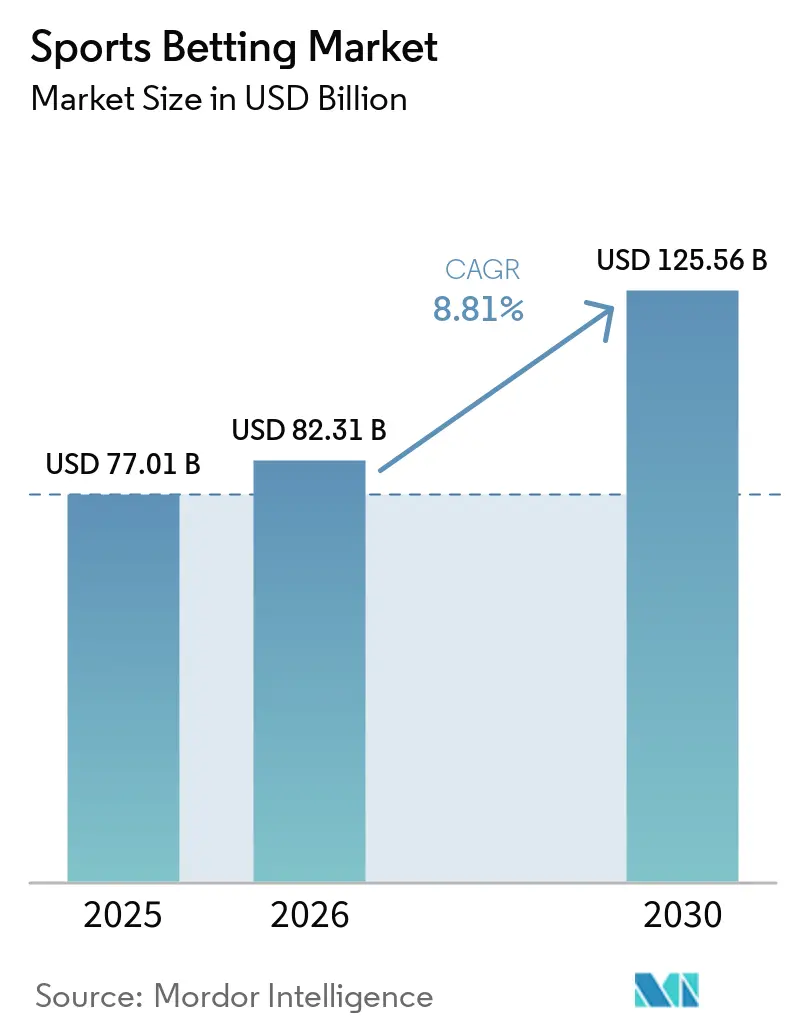
The Sports betting market size was valued at USD 77.01 billion in 2025 and is estimated to grow from USD 82.31 billion in 2026 to reach USD 125.56 billion by 2031, at a CAGR of 8.81% during the forecast period from 2026 to 2031. Legalization in North America is moving wagering activity into regulated channels, while faster data systems support frequent in-play bets. The 2026 FIFA World Cup created a large acquisition opportunity for operators serving North American customers. Smartphone use, disposable income, and a broad sports audience support demand across regions. The Sports betting market is also moving toward product depth, as operators focus on data, payments, and customer retention rather than market entry alone.
Key Report Takeaways
- By sports type, football held 34.61% revenue share in 2025, while tennis is forecast to grow at a 10.31% CAGR through 2031.
- By betting platform, online betting held 60.43% revenue share in 2025, while offline betting is forecast to grow at a 10.52% CAGR through 2031.
- By event type, live and in-play betting held 65.78% revenue share in 2025, while virtual sports betting is forecast to grow at an 11.71% CAGR through 2031.
- By geography, Europe held 39.51% revenue share in 2025, while North America is forecast to grow at a 10.03% CAGR through 2031.
Note: Market size and forecast figures in this report are generated using Mordor Intelligence’s proprietary estimation framework, updated with the latest available data and insights as of January 2026.
Global Sports Betting Market Trends and Insights
Drivers Impact Analysis*
| Driver | (~) % Impact on CAGR Forecast | Geographic Relevance | Impact Timeline |
|---|---|---|---|
| Growing global viewership of major sporting events | +1.6% | Global; peak impact in North America and Europe | Medium term (2–4 years) |
| Expansion of online sports betting platforms | +2.1% | Global; fastest adoption in North America, Asia-Pacific, and South America | Short to medium term (≤ 3 years) |
| Growing sports sponsorships, partnerships, and promotional activities | +0.9% | Europe and North America; spill-over to South America and Asia-Pacific via league deals | Long term (≥ 4 years) |
| Rising demand for live and in-play betting options | +1.7% | Global; densest in the United Kingdom, United States, Australia, and Brazil | Short term (≤ 2 years) |
| Increasing adoption of digital and cashless payment solutions | +0.7% | North America, Asia-Pacific, and South America; compliance-dependent in the European Union | Medium term (2–4 years) |
| Advancements in data analytics and personalised betting experiences | +0.9% | Global; most operationally advanced in the United States and United Kingdom | Long term (≥ 4 years) |
| Source: Mordor Intelligence | |||
Growing Global Viewership of Major Sporting Events
Growing global viewership of major sporting events is a key driver of the sports betting market, as large-scale competitions attract audiences and increase interest in sports-related wagering. According to the International Olympic Committee (IOC), approximately 5 billion people, representing 84% of the potential global audience, followed the Paris 2024 Olympic Games. The event also generated an estimated 412 billion social media engagements, reflecting the growing role of digital platforms in expanding sports visibility[1]. This extensive audience reach creates opportunities for betting operators to attract new customers through event-specific markets, live odds, and mobile betting services. Major tournaments also encourage frequent wagering on match outcomes, player performances, and in-play developments. Consequently, increasing sports viewership across television and digital channels is expected to support betting participation and market growth.
Expansion of Online Sports Betting Platforms
The expansion of online sports betting platforms is a key driver of the sports betting market, as digital channels improve accessibility and enable consumers to place wagers without visiting physical betting establishments. The increasing adoption of smartphones, improved internet connectivity, and secure digital payment systems has supported the growth of mobile and web-based betting services. Online platforms provide access to multiple sports, real-time odds, live and in-play betting, and personalized wagering options, enhancing customer convenience. Operators are also investing in user-friendly mobile applications, live streaming, and data-driven features to attract and retain customers. This shift highlights the role of digital platform availability and market expansion in supporting sports betting growth.
Growing Sports Sponsorships, Partnerships, and Promotional Activities
Growing sports sponsorships, partnerships, and promotional activities are key drivers of the sports betting market, as they increase brand visibility and connect betting operators with established sports audiences. Sportsbooks collaborate with professional leagues, sports teams, athletes, and broadcasters to promote their platforms through sponsorship agreements, digital campaigns, and event-based advertising. According to the NFL, in August 2025, the league expanded its sports betting partnerships by naming FanDuel an official sports betting partner, strengthening the connection between professional sports and regulated wagering services. These partnerships enable operators to integrate betting-related content, real-time odds, and match insights into sports coverage, enhancing customer engagement. Additionally, promotional campaigns, referral incentives, and event-specific offers help operators attract new users and encourage platform participation.
Rising Demand for Live and In-Play Betting Options
Rising demand for live and in-play betting options is a key driver of the sports betting market, as consumers increasingly seek interactive wagering experiences during ongoing sporting events. Unlike pre-match betting, in-play betting allows users to place wagers on changing match situations, including the next goal, player performance, point outcomes, and final results. The expansion of online betting platforms and mobile applications has improved access to real-time wagering opportunities across football, tennis, cricket, and basketball. Additionally, advancements in live data feeds, automated odds calculation, and match-tracking technologies enable operators to update betting markets rapidly as events unfold. Live streaming and real-time statistics further enhance user engagement by allowing bettors to follow matches while placing wagers.
Restraints Impact Analysis*
| Restraint | (~) % Impact on CAGR Forecast | Geographic Relevance | Impact Timeline |
|---|---|---|---|
| Legal restrictions and regulatory uncertainty across countries | -1.2% | Global; most acute in the United States, Germany, and South-East Asia | Short to medium term (≤ 3 years) |
| Rising concerns regarding gambling addiction and financial harm | -0.7% | United Kingdom, United States, Australia; regulatory influence concentrated in mature markets | Long term (≥ 4 years) |
| Match-fixing risks and concerns over sporting event integrity | -0.3% | Global; most concentrated in lower-tier leagues in Asia and Eastern Europe | Medium to long term |
| Increasing cybersecurity threats and data privacy concerns | -0.5% | Global; most acute in newly regulated markets such as Brazil | Short term (≤ 2 years) |
| Source: Mordor Intelligence | |||
Legal Restrictions and Regulatory Uncertainty Across Countries
Regulatory fragmentation is a material restraint on the sports betting market, as differences in legal frameworks create uncertainty for operators across jurisdictions. The ongoing dispute over whether sports event contracts fall under federal derivatives oversight or state gambling laws in the United States has prompted license-suitability reviews and regulatory scrutiny in several jurisdictions. This uncertainty can delay investment decisions, complicate product launches, and increase legal compliance costs for betting operators. Companies operating across multiple countries must also navigate varying requirements for licensing, advertising, payment processing, data reporting, anti-money laundering measures, and customer verification. These differences increase operational complexity and may limit the speed of geographic expansion, particularly for smaller operators with fewer financial and legal resources.
Rising Concerns Regarding Gambling Addiction and Financial Harm
Consumer harm is becoming an increasingly important operational issue in the sports betting market, as regulators and stakeholders place greater emphasis on player protection and responsible gambling practices. Research from UCLA Anderson found that average consumer credit scores declined by 2.75 points following the launch of mobile sports betting in legalized states, highlighting potential financial risks associated with expanded access to betting platforms. The UK Gambling Commission reported that 2.7% of recent gamblers experienced at least one severe gambling-related consequence in 2025[2]. In Great Britain, the statutory gambling levy requires licensed operators to contribute to research, education, and treatment initiatives designed to prevent and address gambling-related harm[3]. These requirements increase the importance of affordability checks, safer gambling tools, and clear customer communication to help identify and support at-risk consumers.
*Our forecasts treat driver/restraint impacts as directional, not additive. The impact forecasts reflect baseline growth, mix effects, and variable interactions.
Segment Analysis
By Sports Type: Football Leads Revenue While Tennis Grows Fastest
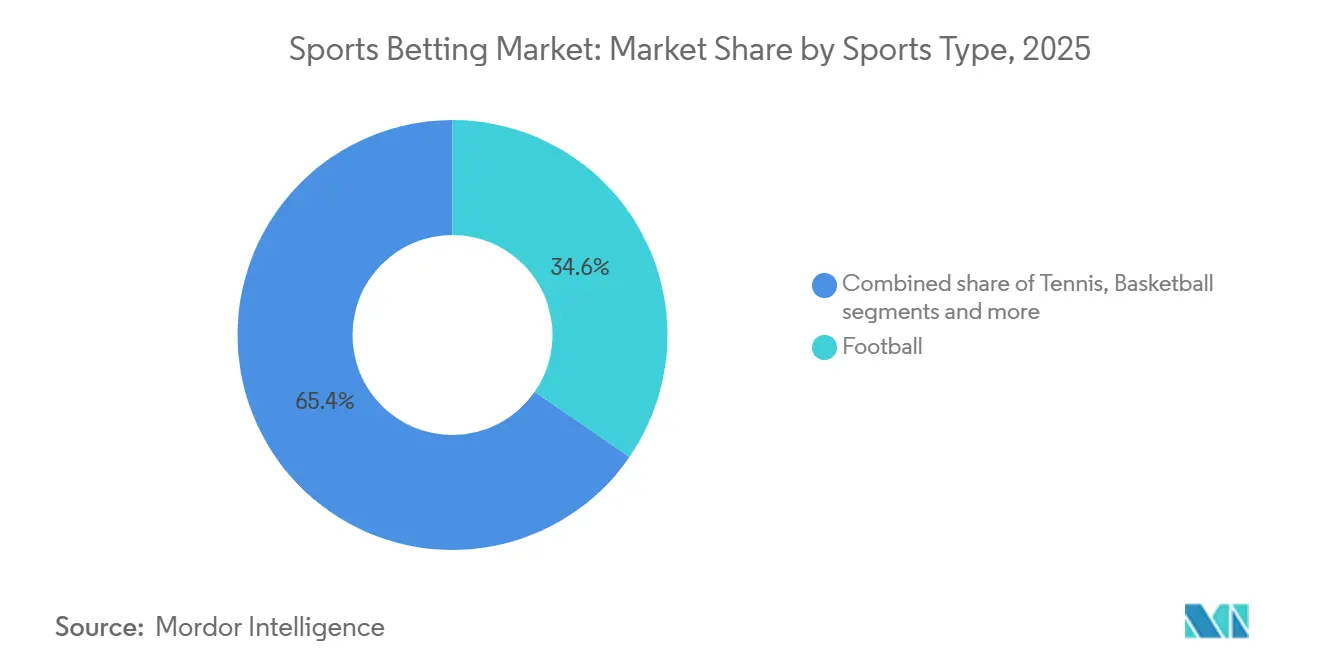
Football held the largest share of the sports betting market, accounting for 34.61% of revenue in 2025. The segment's leading position is supported by its extensive global fan base and widespread popularity across Europe, South America, Asia-Pacific, and other regions. The sport attracts substantial betting activity across major domestic leagues, international tournaments, and club competitions. The availability of diverse wagering options, including match outcomes, goal totals, handicaps, and in-play betting, further contributes to its revenue generation. Major sporting events such as the FIFA World Cup, UEFA Champions League, and leading domestic leagues create recurring opportunities for betting operators to attract and retain customers.
Tennis is projected to be the fastest-growing sports type in the sports betting market, registering a CAGR of 10.31% through 2031. The segment's growth is supported by the sport's international reach and the year-round schedule of professional tournaments. Major competitions, including the Australian Open, French Open, Wimbledon, and US Open, generate significant betting interest among sports enthusiasts. Unlike team sports, tennis offers frequent betting opportunities across individual matches, sets, games, and player-specific outcomes. The availability of live betting further supports engagement by allowing customers to place wagers as match conditions and player performances change.

By Betting Platform: Online Leads While Offline Recovers
Online betting held the largest share of the sports betting market, accounting for 60.43% of revenue in 2025. The segment's dominance is supported by the widespread adoption of smartphones, improved internet connectivity, and the growing availability of digital betting platforms. Online channels enable users to place wagers conveniently across multiple sports and events without visiting physical betting establishments. These platforms also offer diverse betting options, real-time odds updates, live betting, and digital payment facilities, enhancing the overall user experience. Additionally, betting operators are investing in mobile applications, personalized promotions, and user-friendly interfaces to attract and retain customers.
Offline betting is projected to be the fastest-growing segment of the sports betting market, registering a CAGR of 10.52% through 2031. The segment continues to attract customers who prefer physical betting establishments for their accessibility, familiarity, and in-person interactions. Retail betting outlets and licensed sportsbooks provide opportunities for customers to place wagers with assistance from staff and access established betting services. In certain markets, physical locations also benefit from established customer relationships and a strong presence around major sporting events. The expansion and modernization of licensed betting venues may further support customer engagement and improve the in-person wagering experience.
By Event Type: Live Betting Leads While Virtual Sports Expands
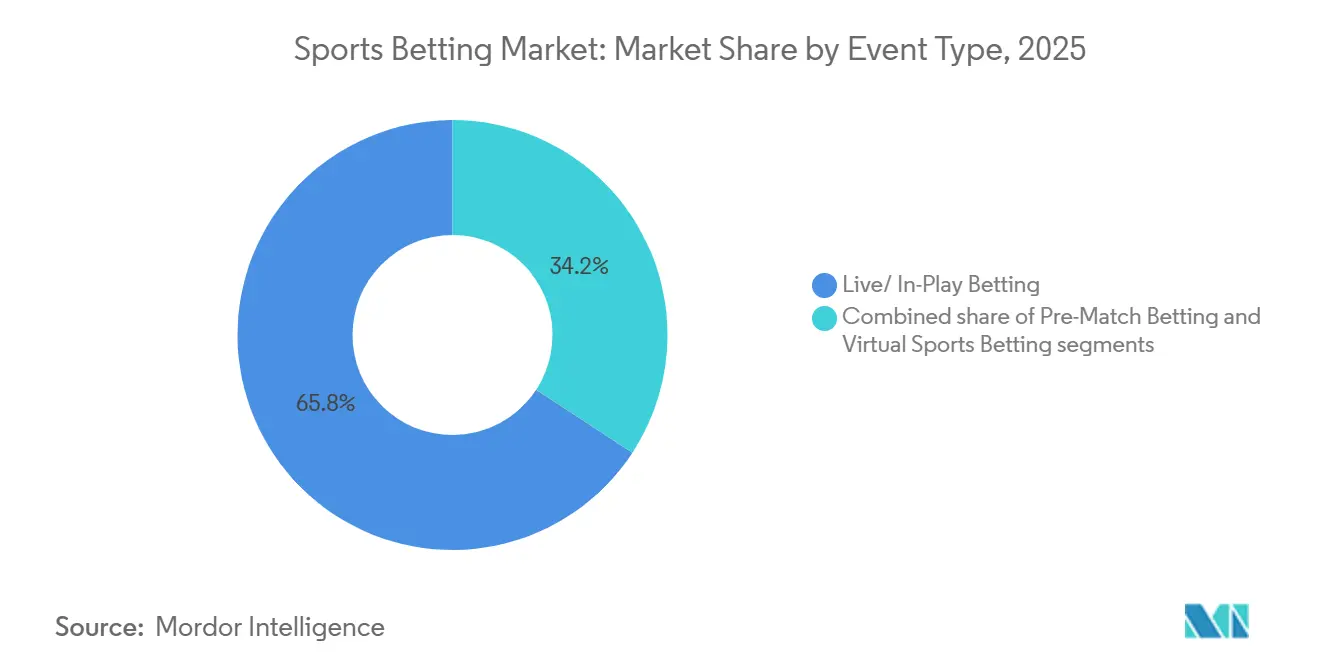
Live and in-play betting held the largest share of the sports betting market, accounting for 65.78% of revenue in 2025. The segment's leading position is driven by growing consumer interest in placing wagers while sporting events are in progress. Unlike pre-match betting, live betting allows users to respond to changing match conditions, player performance, and real-time developments. The availability of dynamic odds and diverse wagering options, such as the next goal, upcoming points, and match outcomes, further enhances user engagement. The expansion of online betting platforms and mobile applications has improved access to live betting services across different sports.
Virtual sports betting is projected to be the fastest-growing segment of the sports betting market, registering a CAGR of 11.71% through 2031. The segment's growth is supported by the availability of computer-generated sporting events that can be played and wagered on independently of actual sports schedules. Virtual football, horse racing, basketball, and other simulated competitions provide frequent betting opportunities throughout the day. Unlike conventional sports betting, this format is not dependent on live fixtures, weather conditions, or the performance of real-world athletes. Betting operators can offer short-duration events with rapid outcomes, appealing to customers seeking continuous wagering opportunities.
Geography Analysis
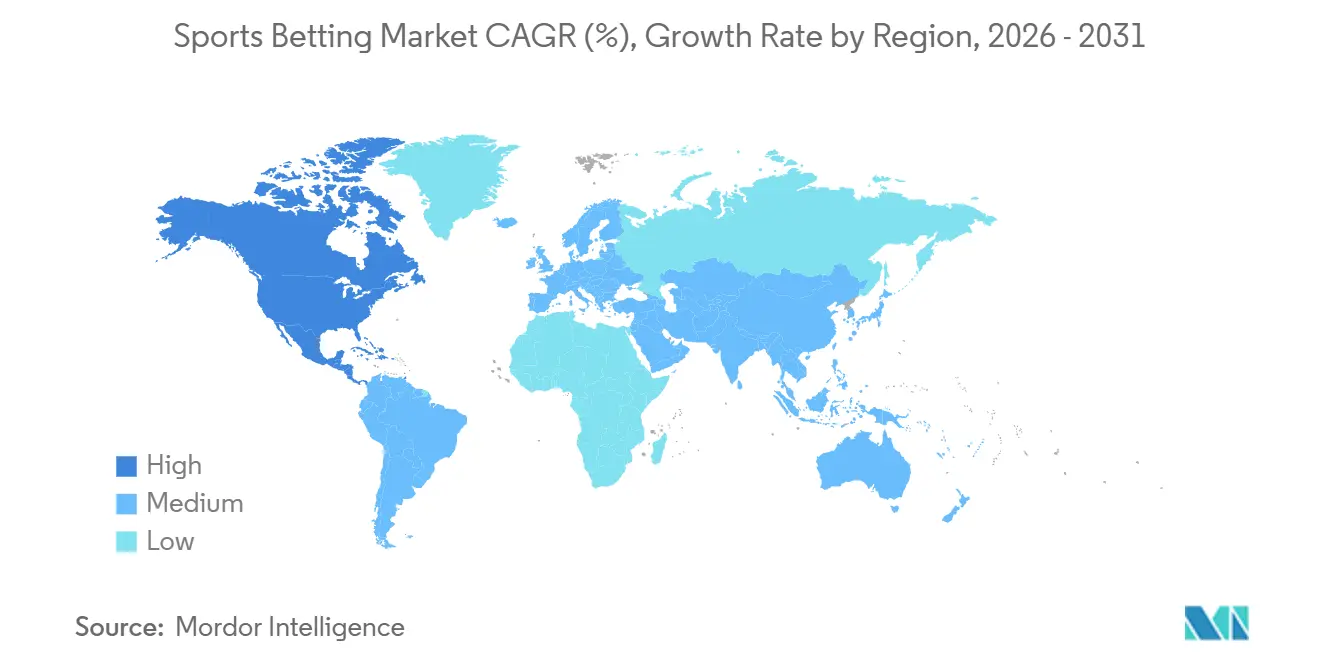
Europe held the largest share of the sports betting market, accounting for 39.51% of revenue in 2025. The region's leading position is supported by the widespread popularity of sports such as football, tennis, horse racing, and basketball. Established professional leagues and international sporting competitions generate consistent betting activity across major European markets. Countries such as the United Kingdom, Italy, Spain, and Germany benefit from developed betting ecosystems and established operator networks. The availability of regulated online platforms and retail betting outlets further supports market participation. Additionally, the presence of established operators and the expansion of mobile betting services contribute to customer engagement. These factors are expected to sustain Europe's significant contribution to the global sports betting market.
North America is projected to be the fastest-growing regional market for sports betting, registering a CAGR of 10.03% through 2031. The region's growth is supported by the expansion of legal sports betting across the United States following the 2018 repeal of the federal prohibition on state-authorized sports wagering. The growing availability of regulated online platforms and mobile applications has improved access to betting services. Major sporting competitions, including the National Football League (NFL), National Basketball Association (NBA), Major League Baseball (MLB), and National Hockey League (NHL), generate substantial consumer interest. Sports betting operators are also investing in partnerships, digital marketing, and user engagement initiatives to expand their customer bases. In Canada, the availability of single-event sports betting and regulated provincial services further supports market development. These factors are expected to drive North America's growth throughout the forecast period.
Asia-Pacific, the Middle East and Africa, and South America represent diverse growth opportunities for the sports betting market, supported by varying levels of digital adoption, sports participation, and regulatory development. In Asia-Pacific, the popularity of cricket, football, and basketball, alongside expanding smartphone usage, supports interest in digital sports wagering in markets where it is legally permitted. South America benefits from football's strong regional following, with domestic leagues and international tournaments generating betting interest across countries such as Brazil and Argentina. The gradual development of regulated betting frameworks in selected South American markets may further support formal market expansion. In the Middle East and Africa, increasing internet penetration and growing access to digital payment infrastructure are improving the reach of online betting services in jurisdictions where such activities are permitted.
Competitive Landscape
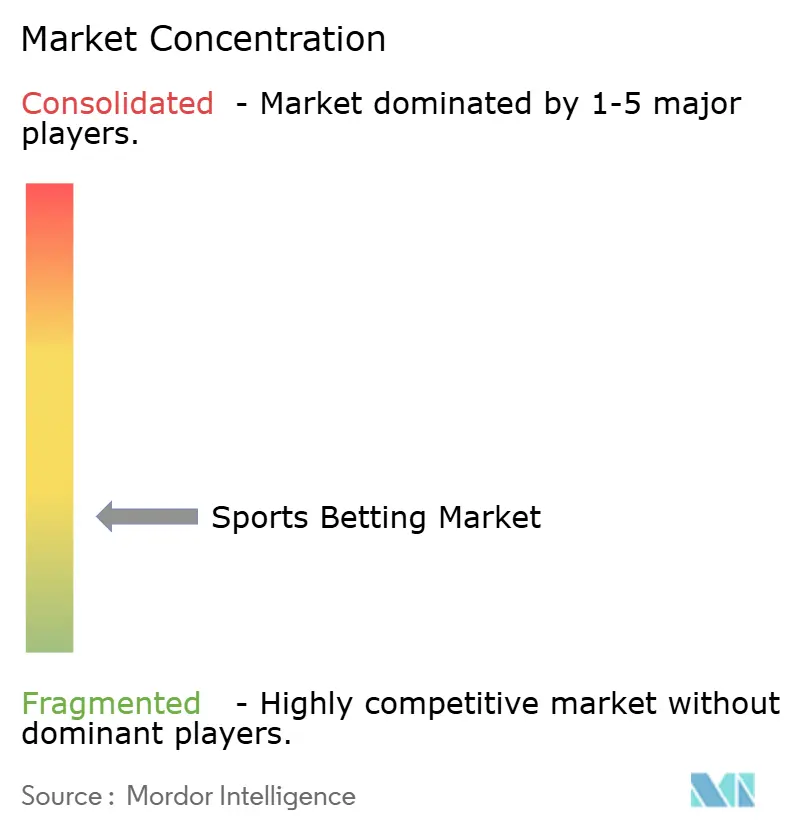
The sports betting market is highly fragmented, with numerous international and regional operators competing across regulated and emerging markets. Flutter Entertainment, Entain, DraftKings, and bet365 are prominent participants, supported by their established brands, extensive betting platforms, and diverse sports wagering offerings. Competition is driven by platform accessibility, betting odds, product innovation, customer acquisition, and the ability to retain users. Operators are increasingly investing in mobile applications, live and in-play betting features, personalized promotions, and real-time sports data to enhance customer engagement.
Flutter Entertainment maintains a broad international presence through brands such as FanDuel, Paddy Power, Sky Bet, and Sportsbet, serving customers across multiple regulated markets. Entain competes through established brands, including Ladbrokes, Coral, bwin, and BetMGM, with a portfolio spanning online and retail betting services. Both companies leverage their brand recognition, technological capabilities, and diversified geographic presence to strengthen their market positions. Their strategies include improving digital customer experiences, expanding product offerings, and enhancing operational efficiency.
DraftKings and bet365 strengthen competition through their digital-first platforms and broad sports betting offerings. DraftKings has a significant presence in the United States, where it offers online sports wagering in eligible jurisdictions and competes through platform development, customer engagement, and sports-related digital products. Meanwhile, bet365 operates internationally and offers extensive sports coverage, live betting, and real-time odds across multiple markets. Other regional and international operators also compete by adapting their offerings to local sports preferences and regulatory frameworks.
Sports Betting Industry Leaders
-
Flutter Entertainment plc
-
Entain plc
-
DraftKings Inc.
-
Bet365 Group Ltd
-
Super Group (SGHC) Limited
- *Disclaimer: Major Players sorted in no particular order
Recent Industry Developments
- May 2026: Fertitta Entertainment announced a USD 17.6 billion all-cash agreement to acquire Caesars Entertainment, including USD 11.9 billion in assumed debt, combining 60 domestic casino resorts, 200+ William Hill retail sportsbooks, and Caesars' digital betting platform into a single entity.
- March 2026: bet365 and UFC announced a multiyear partnership naming bet365 the official sports betting partner of UFC in the United States and Canada. The agreement includes broadcast integrations, fighter odds, same-game parlays, and live-event activations.
- February 2026: Genius Sports announced a definitive agreement to acquire Legend, a digital sports and gaming media network, in a transaction valued at up to USD 1.2 billion, including an earnout. The acquisition is intended to combine official sports data with digital media, advertising, and betting-related content.
Global Sports Betting Market Report Scope
Sports betting is the activity of predicting sports results and placing a wager on the outcome. The global sports betting market is segmented based on the sport type, betting platform, event type and geography. By the sport type, the market is segmented into football, basketball, cricket, tennis, horse racing and other sports. By betting platforn, the market is segmented into online and offline. By event type, the market is segmented into pre-match betting, live/ in-play betting, and virtual sports betting. By geography, the market is segmented into North America, Europe, Asia-Pacific, South America, and Middle-East and Africa. The market sizing has been done in value terms in USD for all the above-mentioned segments.
| Football |
| Basketball |
| Cricket |
| Tennis |
| Horse Racing |
| Other Sports |
| Online |
| Offline |
| Pre-Match Betting |
| Live/ In-Play Betting |
| Virtual Sports Betting |
| North America | United States |
| Canada | |
| Mexico | |
| Rest of North America | |
| Europe | United Kingdom |
| Germany | |
| Spain | |
| France | |
| Italy | |
| Sweden | |
| Ireland | |
| Austria | |
| Rest of Europe | |
| Asia-Pacific | China |
| Japan | |
| South Korea | |
| New Zealand | |
| Australia | |
| Rest of Asia-Pacific | |
| South America | Brazil |
| Argentina | |
| Rest of South America | |
| Middle East and Africa | United Arab Emirates |
| South Africa | |
| Rest of Middle East and Africa |
| By Sports Type | Football | |
| Basketball | ||
| Cricket | ||
| Tennis | ||
| Horse Racing | ||
| Other Sports | ||
| By Betting Platform | Online | |
| Offline | ||
| By Event Type | Pre-Match Betting | |
| Live/ In-Play Betting | ||
| Virtual Sports Betting | ||
| By Geography | North America | United States |
| Canada | ||
| Mexico | ||
| Rest of North America | ||
| Europe | United Kingdom | |
| Germany | ||
| Spain | ||
| France | ||
| Italy | ||
| Sweden | ||
| Ireland | ||
| Austria | ||
| Rest of Europe | ||
| Asia-Pacific | China | |
| Japan | ||
| South Korea | ||
| New Zealand | ||
| Australia | ||
| Rest of Asia-Pacific | ||
| South America | Brazil | |
| Argentina | ||
| Rest of South America | ||
| Middle East and Africa | United Arab Emirates | |
| South Africa | ||
| Rest of Middle East and Africa | ||
Key Questions Answered in the Report
What is the forecast growth rate for sports betting through 2031?
The sector is forecast to grow at an 8.81% CAGR from 2026 to 2031, reaching USD 125.56 billion.
Which sport has the largest betting revenue share?
Football leads the sports-type segment with 34.61% share in 2026, supported by broad global event coverage.
Which sports type is expected to grow fastest?
Tennis is forecast to grow at a 10.31% CAGR through 2031 because in-play betting is central to its wagering activity.
Why is live betting important for operators?
Live and in-play betting held 65.78% of event-type revenue in 2026 and supports multiple betting opportunities during one event.
Which region has the biggest share in Sports Betting Market?
In 2025, the Europe accounts for the largest market share in Sports Betting Market.