
Sports Supplement Market Size and Share
Market Overview
| Study Period | 2021 - 2031 |
|---|---|
| Market Size (2026) | USD 27.97 Billion |
| Market Size (2031) | USD 41.73 Billion |
| Growth Rate (2026 - 2031) | 8.33 % |
| Fastest Growing Market | Asia-Pacific |
| Largest Market | North America |
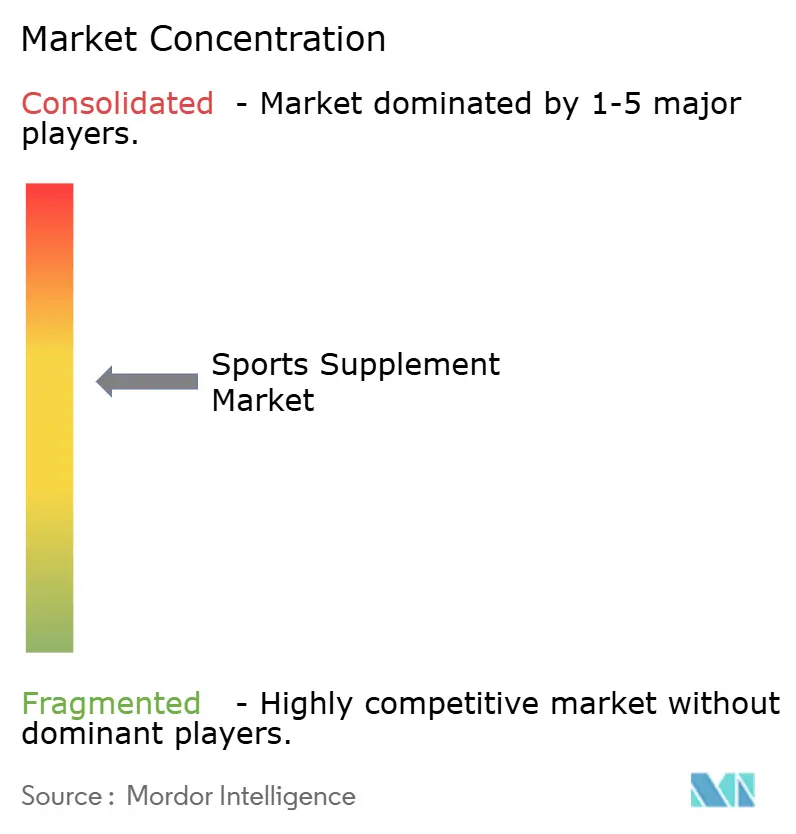
| Market Concentration | Medium |
Major Players *Disclaimer: Major Players sorted in no particular order Image © Mordor Intelligence. Reuse requires attribution under CC BY 4.0. | |
Sports Supplement Market Analysis by Mordor Intelligence
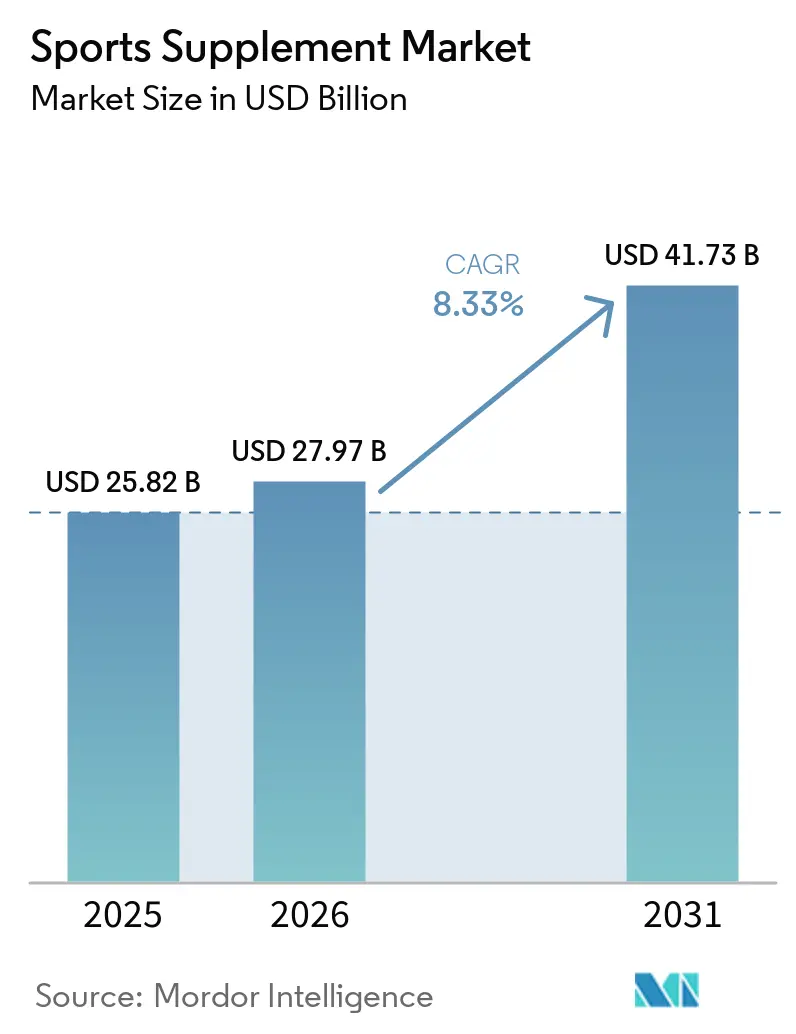
The sports supplement market is projected to grow from USD 25.82 billion in 2025 to USD 27.97 billion in 2026, and is forecast to reach USD 41.73 billion by 2031, at a compound annual growth rate (CAGR) of 8.33% during 2026-2031. This growth is driven by increasing consumer awareness of health, fitness, and preventive nutrition, alongside a growing emphasis on active lifestyles across diverse age groups. Rising participation in recreational sports, strength training, endurance activities, and wellness-focused routines has expanded the consumer base for sports nutrition products beyond professional athletes. The market is also benefiting from increasing scientific validation of plant-based proteins and other functional ingredients, which is encouraging broader adoption of alternative protein sources. The expansion of digital commerce, personalized marketing, and social media has improved product accessibility and consumer engagement, enabling brands to reach wider audiences. Stronger regulatory frameworks, improved quality certifications, and greater transparency in ingredient sourcing are further strengthening consumer trust and supporting long-term market growth. Additionally, ongoing innovations in precision nutrition are contributing to the emergence of premium and customized sports supplement offerings, creating new opportunities for market expansion.
Key Report Takeaways
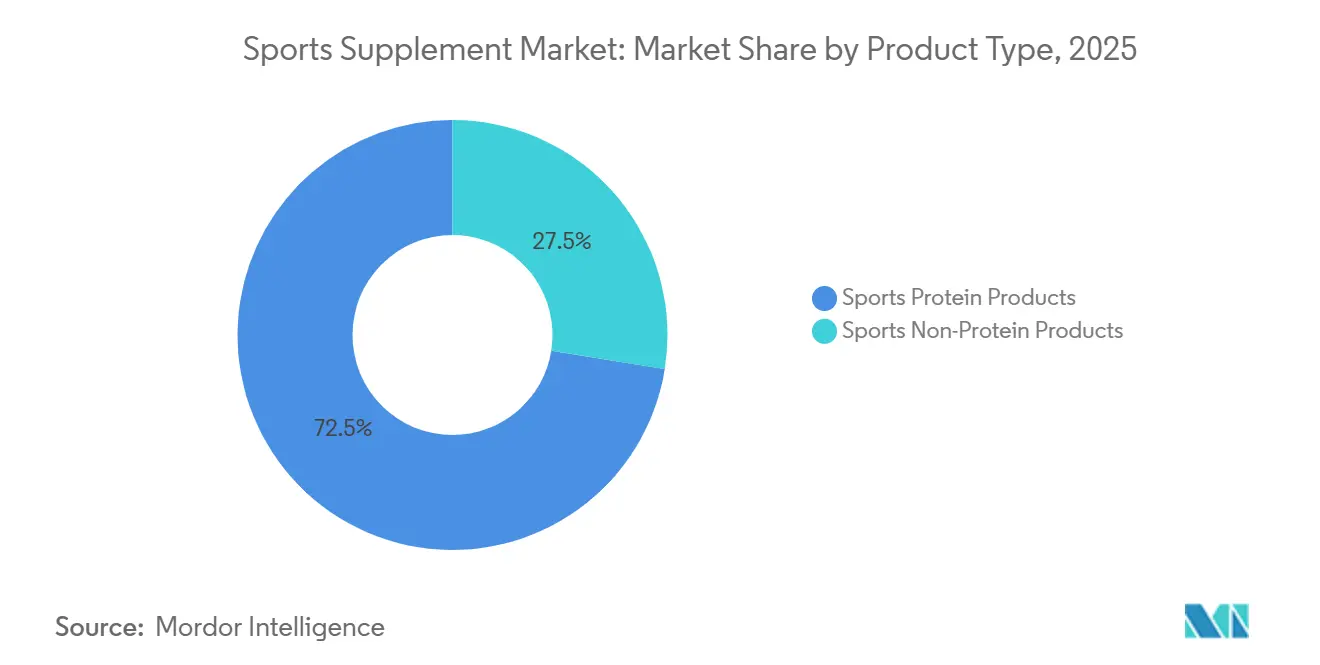
- By product type, sports protein products held the largest segment share at 72.48% in 2025 . Sports non-protein products are the fastest-growing category at a 9.73% CAGR over 2026–2031.
- By source, animal-based products dominated with a 68.87% share in 2025. Plant-based products are forecast to grow at the fastest rate of 9.12% CAGR over 2026–2031.
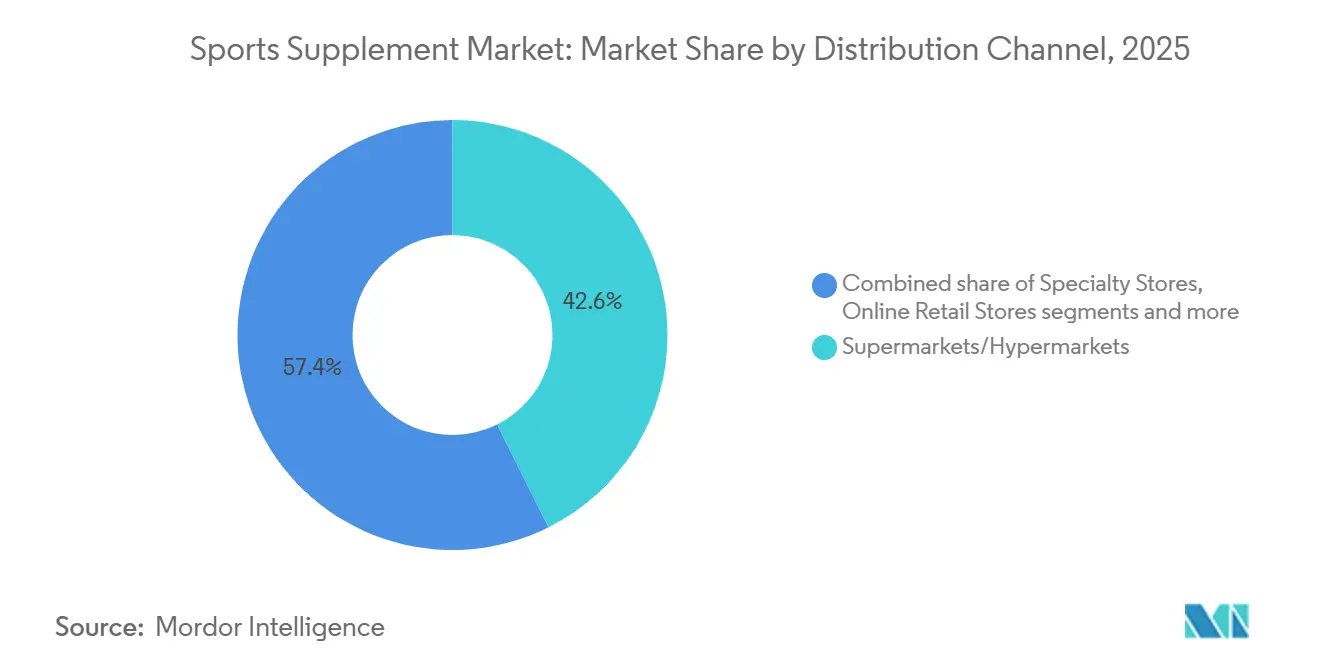
- By distribution channel, supermarkets and hypermarkets led distribution with a 42.61% share in 2025 . Online retail stores are the fastest-growing channel at a 10.03% CAGR over 2026–2031.
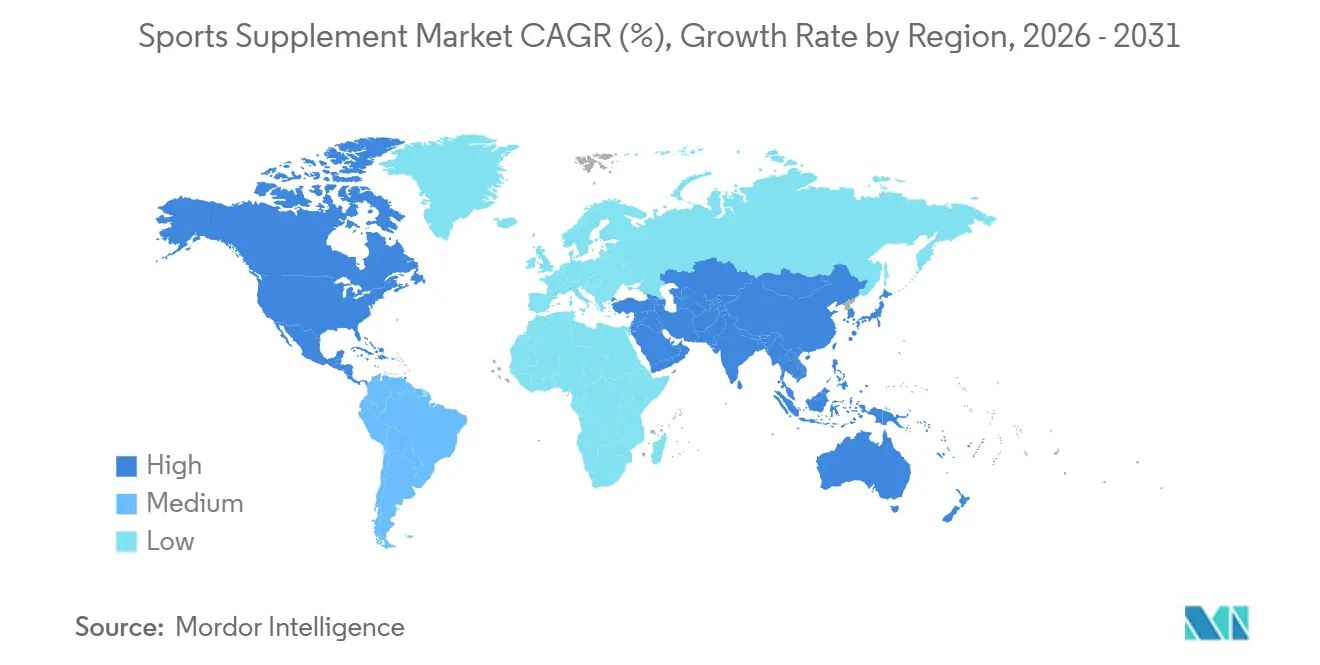
- By geography, North America accounted for the largest regional share at 38.15% in 2025. Asia-Pacific is the fastest-growing region at a 9.43% CAGR over 2026–2031.
Note: Market size and forecast figures in this report are generated using Mordor Intelligence’s proprietary estimation framework, updated with the latest available data and insights as of January 2026.
Global Sports Supplement Market Trends and Insights
Drivers Impact Analysis*
| Driver | (~) % Impact on CAGR Forecast | Geographic Relevance | Impact Timeline |
|---|---|---|---|
| Fitness club and gym membership expansion | +1.8% | Global, concentrated gains in North America, Europe, and urban Asia-Pacific centers | Medium term (2–4 years) |
| Increasing health and fitness awareness | +1.5% | Global, highest impact in emerging Asia-Pacific and Middle East and Africa markets | Long term (≥ 4 years) |
| Rising demand for plant-based protein | +1.2% | North America and Europe primarily; spill-over to Asia-Pacific | Medium term (2–4 years) |
| Growing preference for convenience, on-the-go recovery formats | +1.0% | Global, fastest adoption in North America, United Kingdom, and East Asia | Short term (≤ 2 years) |
| The impact of social media and fitness influencers | +0.9% | Global, concentrated in markets with high smartphone and social platform penetration | Short term (≤ 2 years) |
| Scientific advances and product innovations | +0.7% | North America, Europe; increasing in Asia-Pacific premium segments | Long term (≥ 4 years) |
| Source: Mordor Intelligence | |||
Fitness club and gym membership expansion
The growth of the sports supplement market is closely linked to the expanding fitness landscape, driven by increased awareness, technological advancements, and evolving consumer preferences. As more individuals prioritize health and wellness, the demand for organized fitness activities and specialized nutrition continues to rise. The proliferation of fitness centers, coupled with offerings such as boutique studios, is supporting overall market growth, particularly as consumers seek personalized and community-oriented fitness experiences. In populous examples like India, this trend presents significant untapped potential. In 2024, only about 0.8% of the adult population are members of fitness facilities, totaling roughly 12.3 million members, according to the Health and Fitness Association. With nearly 820 million Indians aged 18–62 remaining inactive, the market has considerable room for growth[1]. By 2030, memberships are expected to nearly double to 23.2 million, highlighting the opportunity to expand access through affordable models that reach smaller towns, women, and lower-income households.
Rising demand for plant-based protein
The sports supplement market is experiencing strong growth, driven by increasing consumer interest in plant-based protein products. This trend is shaped by health, sustainability, and dietary preference considerations. As more consumers adopt vegan, vegetarian, and flexitarian eating patterns, manufacturers are expanding their portfolios of pea, soy, rice, hemp, and blended plant-protein supplements to meet demand for clean-label, allergen-friendly, and environmentally conscious sports nutrition products. Ongoing improvements in taste, texture, and amino acid formulations are further enhancing the appeal of plant-based sports supplements among both athletes and recreational fitness consumers. Consumer preference surveys highlight the growing acceptance of plant-based protein sources. According to the International Food Information Council (IFIC) Spotlight Survey conducted in the United States in July 2025 among 1,000 adults, 40% of Americans reported preferring to obtain protein from beans, peas, and lentils, making legumes one of the most preferred non-animal protein sources[2]. The same survey found that 18% of respondents preferred meat alternatives, reflecting increasing openness toward plant-based protein options. This growing consumer acceptance is encouraging sports nutrition companies to invest in plant-based formulations, supporting long-term growth of the sports supplement market.
Growing preference for convenience, on-the-go recovery formats
The growing preference for convenient, on-the-go recovery formats is shaping the sports supplement market. Modern consumers, particularly busy professionals and active individuals, prioritize quick, easy-to-consume products that fit into their daily routines. Ready-to-drink protein beverages and portable energy bars are gaining popularity as they eliminate the need for preparation or mixing, providing immediate nutrition at any time and place. This shift toward on-the-go formats reflects the increasing demand for fast, effective solutions that support training, recovery, and daily energy needs without disrupting schedules. Innovations in sports supplement are also expanding the variety and flavors of convenient products, catering to diverse dietary preferences and fitness goals. These recovery formats offer precise dosing, high-quality ingredients, and added benefits such as vitamins, minerals, and fiber, making them more appealing than traditional snacks or powders. As consumers seek effective ways to sustain energy, enhance muscle recovery, and maintain mobility while managing busy schedules, the demand for portable, ready-to-consume sports supplements is expected to grow.
Increasing health and fitness awareness
Growing health and fitness awareness is a significant driver of growth in the sport supplement market. The Global Wellness Institute reports that the wellness economy grew at 6.5% annually from 2013 to 2024, surpassing global GDP growth, which reflects increased focus on personal health and well-being worldwide[3]. This expansion has been accompanied by rising spending on physical activity, healthy eating, nutrition, and weight management, reflecting a stronger emphasis on exercise, fitness, and preventive healthcare. As consumers increasingly prioritize regular exercise, balanced nutrition, and long-term health management, demand for products that support athletic performance, muscle recovery, and daily protein intake continues to rise. The growth of the physical activity and nutrition segments within the wellness economy indicates that more individuals are incorporating fitness into their lifestyles, creating favorable conditions for the sports supplement market, as consumers seek evidence-based nutritional products to complement their health and performance goals.
Restraints Impact Analysis*
| Restraint | (~) % Impact on CAGR Forecast | Geographic Relevance | Impact Timeline |
|---|---|---|---|
| Growing presence of grey-market products in the market | -0.5% | Asia-Pacific core, spill-over to Middle East and Africa; observable in Europe cross-border e-commerce | Medium term (2–4 years) |
| Increasing scrutiny around peptide regulations | -0.4% | United States and Europe primarily; spill-over to markets adopting United States/Europe labeling frameworks | Short term (≤ 2 years) |
| Price sensitivity concerns in emerging markets | -0.4% | South America, Middle East and Africa, and Southeast Asia | Long term (≥ 4 years) |
| Potential side effects and health risks associated with sport supplements | -0.3% | Global, amplified in markets with lower health literacy | Medium term (2–4 years) |
| Source: Mordor Intelligence | |||
Increasing scrutiny around peptide regulations
Increasing scrutiny around peptide regulations presents a significant challenge for the sports supplement market. As regulatory agencies such as the FDA tighten controls on unapproved peptides, companies face the risk of legal consequences and product recalls, which can affect consumer trust and market stability. The evolving regulatory landscape requires manufacturers to maintain compliance and transparency, often necessitating substantial adjustments to product formulations and marketing strategies. Growing regulatory oversight also highlights the need for greater transparency in ingredient sourcing and approval status. As unapproved peptides face increasing scrutiny, market participants must adapt by prioritizing research-backed, approved substances to ensure safety and legal compliance. This regulatory shift is likely to result in a more cautious and compliant industry environment going forward.
Growing presence of grey-market products in the market
The growing presence of grey-market products in the global sports supplement market poses significant challenges for consumers, brands, and regulatory authorities. As the market expands across regions, the rise of unverified and unregulated products has increased concerns over quality, safety, and authenticity. Many grey-market products bypass official distribution channels, making it difficult to ensure adherence to established standards for raw material quality and manufacturing practices. This increases the risk of contaminated, mislabeled, or substandard supplements reaching consumers, which erodes trust in the market. The absence of independent verification and certification for grey-market products compounds these issues. Consumers and retailers are increasingly demanding transparency, safety, and reliable quality assurance, which grey-market products often fail to provide. Without proper oversight, these products contribute to regulatory non-compliance, product recalls, and potential health hazards. Strengthening verification frameworks and promoting certified, compliant products are necessary steps toward protecting consumer interests and maintaining integrity within the global sports supplement market.
*Our forecasts treat driver/restraint impacts as directional, not additive. The impact forecasts reflect baseline growth, mix effects, and variable interactions.
Segment Analysis
By Product Type: Protein Leads; Non-Protein Compounds Grow Faster
Sports protein products held the largest market share in 2025, accounting for approximately 72.48%. This dominance is driven by popular formats such as whey and casein powders, protein ready-to-drink (RTD) beverages, and protein/energy bars, which benefit from established consumer adoption, clinical credibility, and extensive retail distribution. Among these, protein bars and RTD formats are gaining additional volume share by reducing preparation barriers, making protein supplementation more accessible for non-gym and everyday use.
In contrast, sports non-protein products such as creatine, BCAAs, and collagen peptides are projected to grow at the fastest CAGR of 9.73% from 2026 to 2031. This growth is driven by expanding scientific evidence supporting their benefits beyond athletic performance, including cognitive enhancement and joint health. Creatine, in particular, is shifting its positioning toward general wellness, with clinical studies linking it to improved cognitive function under fatigue. Collagen peptides are also gaining traction as recovery ingredients, appealing to both sports and healthy-aging markets, as regulatory acceptance continues to grow.
By Source: Plant-based Acceleration Challenges Animal Dominance
Animal-based products held the largest share of the market in 2025, accounting for approximately 68.87% of revenue. This dominance is largely attributed to the proven clinical benefits of whey protein, particularly its high leucine content and rapid gastric-emptying profile, which appeal to competitive athletes and regular gym-goers. Despite the rising popularity of plant-based options, animal-based proteins continue to hold a strong position due to their established performance credentials and consumer trust.
Plant-based products, on the other hand, are forecast to grow at the highest CAGR of 9.12% through 2031. This growth is driven by an increasing flexitarian consumer base and rising prevalence of lactose intolerance, both of which are contributing to a sustained shift from animal-based to plant-based protein sources. Within the animal-based segment, precision fermentation-derived whey proteins are beginning to enter the premium market. Across both segments, manufacturers are investing in third-party testing and ingredient transparency to address consumer concerns over ingredient provenance, a trend reinforced by social media scrutiny of proprietary formulations.
By Distribution Channel: Supermarkets Lead Market Value; Online Channels Expand Rapidly
Supermarkets/hypermarkets accounted for 42.61% of distribution revenue in 2025, reflecting the successful integration of vitamins and supplements into routine weekly grocery shopping. This channel offers stable revenue generation and consistent shelf space, making it a dominant point of sale for vitamins and supplements. Consumers benefit from the convenience of purchasing health products alongside everyday groceries, and retailers benefit from high foot traffic and repeat purchase cycles. It remains the primary channel for consumers purchasing everyday health products during routine shopping trips.
Online retail stores are projected to post the fastest channel growth, at a CAGR of 10.03% from 2026 to 2031, driven by subscription models, AI-driven replenishment recommendations, and social commerce discovery that reduce the time between product awareness and first purchase. Subscription models, in particular, support recurring revenue and improve customer retention by automating replenishment cycles. AI-driven recommendations further personalize the shopping experience, increasing basket size and purchase frequency. The growing influence of social commerce platforms is reshaping how consumers discover and purchase supplements, compressing the traditional purchase funnel and expanding the online channel's reach beyond conventional e-commerce platforms.

Geography Analysis
North America holds the largest share of the sports supplement market in 2025, accounting for 38.15% of global revenue. This position is supported by a mature, health-conscious consumer base that is actively engaged in fitness activities. The region benefits from a well-established retail infrastructure, including specialty stores, gyms, and online platforms, which ensures widespread product availability. Established brands in North America also drive product innovation and marketing efforts that reinforce consumer loyalty.
Asia-Pacific is expected to be the fastest-growing region from 2026 to 2031, with a CAGR of 9.43%. Rapid urbanization and rising disposable incomes are increasing consumer spending on health and wellness products. Countries such as China, India, and nations across Southeast Asia are experiencing growing fitness awareness and sports participation. This growth is further supported by expanding retail channels and the adoption of Western fitness trends, positioning Asia-Pacific to capture a larger share of the global market.
Other regions, including Europe, South America, and the Middle East and Africa, are expected to grow at a more moderate pace. These markets are gradually expanding their share as awareness of sports supplements increases and retail access improves. Factors such as rising sports participation, growing health consciousness, and expanding retail networks are expected to support steady growth. Over time, these regions are expected to become significant contributors to the global sports supplement market.
Competitive Landscape
The sports supplement market is moderately consolidated, with a few key players holding a significant share. While numerous smaller companies and niche brands operate in the market, major corporations dominate through widespread distribution and strong brand recognition. These companies use their resources to expand their product portfolios and maintain their competitive positions. The consolidated nature of the market allows these players to influence industry trends and pricing strategies, though opportunities remain for smaller entrants to establish niche segments.
Leading players such as Glanbia PLC, PepsiCo, Abbott Laboratories, Nestlé S.A., and Otsuka Pharmaceutical Co., Ltd. are expanding their sports supplement offerings through product launches, acquisitions, and strategic partnerships. Some of these companies have recently introduced new product lines targeting specific consumer needs, such as plant-based or functional supplements. They are also investing in marketing campaigns and sponsorships to strengthen brand visibility and consumer engagement. These activities reflect a focus on innovation, global expansion, and capturing a larger share of the growing sports supplement market.
Emerging players are gaining traction by focusing on specialized niches such as organic, plant-based, or clean-label supplements. These companies often adopt innovative formulations and capitalize on rising consumer demand for health-conscious products. Many are also leveraging online platforms and social media to reach their target audiences. Although they currently hold smaller market shares, their agility and focus on market trends position them for growth in the coming years. These emerging brands are increasingly influencing market dynamics and pushing major players to innovate further.
Sports Supplement Industry Leaders
-
Glanbia Plc
-
Abbott Laboratories
-
PepsiCo Inc.
-
Nestlé S.A.
-
Otsuka Pharmaceutical
- *Disclaimer: Major Players sorted in no particular order
Recent Industry Developments
- June 2026: Lactalis acquired United Kingdom-based Protein Works, a sports nutrition brand offering protein powders, meal replacements, supplements, and performance nutrition products. The acquisition strengthens Lactalis' position in the protein nutrition segment and expands its sports nutrition portfolio across Europe.
- June 2026: Applied Nutrition acquired Nutrablend Group's manufacturing facility in Buffalo, New York, for USD 16 million, establishing a production and innovation site in the United States. The facility supports an estimated annual capacity of up to USD 300 million and is intended to improve supply chain efficiency, reduce logistics costs, and expand white label manufacturing across North America. This acquisition is part of the company's strategy to strengthen its operational capabilities in the region.
- March 2026: Myprotein announced the launch of MARS Impact Whey Protein as part of its ongoing partnership with Mars Wrigley. The product offers 20 grams of whey protein per serving and is available in chocolate, caramel, and malt flavors. The launch follows the earlier introduction of SNICKERS protein products and is planned for distribution through online channels and retail stores, including major grocery outlets, in 2026. The partnership aims to combine sports nutrition with established flavors to expand market reach.
- August 2025: THG PLC announced a licensing partnership between its sports nutrition brand, Myprotein, and SG Safety Corporation, a subsidiary of CJ Group, to expand Myprotein's presence in South Korea. Under the agreement, SG Safety Corporation will manufacture and distribute Myprotein-branded sports nutrition supplements, protein powders, ready-to-drink beverages, and protein snacks, while extending the brand's reach into offline retail channels and new online marketplaces across the country.
Global Sports Supplement Market Report Scope
This report analyzes the sports supplement market, segmented by product type, source, distribution channel, and geography. By product type, the report covers sports protein products, including powders such as whey and casein, plant-based protein powders, and other sports protein powders, along with protein ready-to-drink beverages and protein/energy bars. It also covers sports non-protein products, such as creatine, BCAA (Branched-Chain Amino Acids), collagen peptides, and other related supplements that support athletic performance and recovery.
By source, the market is segmented into animal-based and plant-based ingredients, providing insights into consumer preferences and the growing shift toward plant-based nutrition. The report also covers distribution channels, including supermarkets and hypermarkets, specialty stores, online retail outlets, and other channels such as direct sales, examining their roles in product accessibility and consumer purchasing behavior, particularly in the context of e-commerce growth.
Geographically, the report covers North America (United States, Canada, Mexico, and rest of North America), Europe (Germany, United Kingdom, Italy, France, Spain, Netherlands, Poland, Belgium, Sweden, and rest of Europe), Asia-Pacific (China, India, Japan, Australia, Indonesia, South Korea, Thailand, Singapore, and rest of Asia-Pacific), South America (Brazil, Argentina, Colombia, Chile, Peru, and rest of South America), and Middle East and Africa (South Africa, Saudi Arabia, UAE, Nigeria, Egypt, Morocco, Turkey, and rest of Middle East and Africa). The report analyzes regional market dynamics, growth drivers, challenges, and opportunities across these regions.
| Sports Protein Products | Powder | Whey and Casein Powder |
| Plant-Based Protein Powder | ||
| Other Sports Protein Powder | ||
| Protein Ready-To-Drink | ||
| Protein/Energy Bars | ||
| Sports Non-Protein Products | Creatine | |
| BCAA | ||
| Collagen Peptide | ||
| Other Sports Non-Protein Products |
| Animal-Based |
| Plant-Based |
| Supermarkets/Hypermarkets |
| Specialty Stores |
| Online Retail Stores |
| Other Distribution Channels |
| North America | United States |
| Canada | |
| Mexico | |
| Rest of North America | |
| Europe | Germany |
| United Kingdom | |
| Italy | |
| France | |
| Spain | |
| Netherlands | |
| Poland | |
| Belgium | |
| Sweden | |
| Rest of Europe | |
| Asia-Pacific | China |
| India | |
| Japan | |
| Australia | |
| Indonesia | |
| South Korea | |
| Thailand | |
| Singapore | |
| Rest of Asia-Pacific | |
| South America | Brazil |
| Argentina | |
| Colombia | |
| Chile | |
| Peru | |
| Rest of South America | |
| Middle East and Africa | South Africa |
| Saudi Arabia | |
| United Arab Emirates | |
| Nigeria | |
| Egypt | |
| Morocco | |
| Turkey | |
| Rest of Middle East and Africa |
| By Product Type | Sports Protein Products | Powder | Whey and Casein Powder |
| Plant-Based Protein Powder | |||
| Other Sports Protein Powder | |||
| Protein Ready-To-Drink | |||
| Protein/Energy Bars | |||
| Sports Non-Protein Products | Creatine | ||
| BCAA | |||
| Collagen Peptide | |||
| Other Sports Non-Protein Products | |||
| By Source | Animal-Based | ||
| Plant-Based | |||
| By Distribution Channel | Supermarkets/Hypermarkets | ||
| Specialty Stores | |||
| Online Retail Stores | |||
| Other Distribution Channels | |||
| By Geography | North America | United States | |
| Canada | |||
| Mexico | |||
| Rest of North America | |||
| Europe | Germany | ||
| United Kingdom | |||
| Italy | |||
| France | |||
| Spain | |||
| Netherlands | |||
| Poland | |||
| Belgium | |||
| Sweden | |||
| Rest of Europe | |||
| Asia-Pacific | China | ||
| India | |||
| Japan | |||
| Australia | |||
| Indonesia | |||
| South Korea | |||
| Thailand | |||
| Singapore | |||
| Rest of Asia-Pacific | |||
| South America | Brazil | ||
| Argentina | |||
| Colombia | |||
| Chile | |||
| Peru | |||
| Rest of South America | |||
| Middle East and Africa | South Africa | ||
| Saudi Arabia | |||
| United Arab Emirates | |||
| Nigeria | |||
| Egypt | |||
| Morocco | |||
| Turkey | |||
| Rest of Middle East and Africa | |||
Key Questions Answered in the Report
Which product category leads revenue today?
Sports protein products lead the category with 72.48% of 2025 revenue, supported by powder, ready to drink beverages, and bars.
Why are plant-based formulas gaining more traction?
Plant-based products are projected to grow at 9.12% CAGR because demand is supported by flexitarian habits, dairy intolerance, and better taste and texture performance.
Which sales channel is rising the fastest?
Online retail stores are expected to grow at the fastest 10.03% CAGR through 2031, helped by subscription models, broader assortment, and easier repeat purchase behavior.
What is changing competition in this space?
The competitive landscape is being shaped by product innovation, capacity expansion, and portfolio diversification. Companies such as Glanbia, Abbott Laboratories, PepsiCo, Nestlé, and Otsuka Pharmaceutical are investing in sports nutrition product development, expanding manufacturing capabilities, and strengthening distribution networks to enhance their competitive positions.