
Spine Biologics Market Size and Share
Market Overview
| Study Period | 2020 - 2031 |
|---|---|
| Market Size (2026) | USD 4.01 Billion |
| Market Size (2031) | USD 5.14 Billion |
| Growth Rate (2026 - 2031) | 5.08 % |
| Fastest Growing Market | Asia Pacific |
| Largest Market | North America |
| Market Concentration | Medium |
Major Players *Disclaimer: Major Players sorted in no particular order Image © Mordor Intelligence. Reuse requires attribution under CC BY 4.0. | |
Spine Biologics Market Analysis by Mordor Intelligence
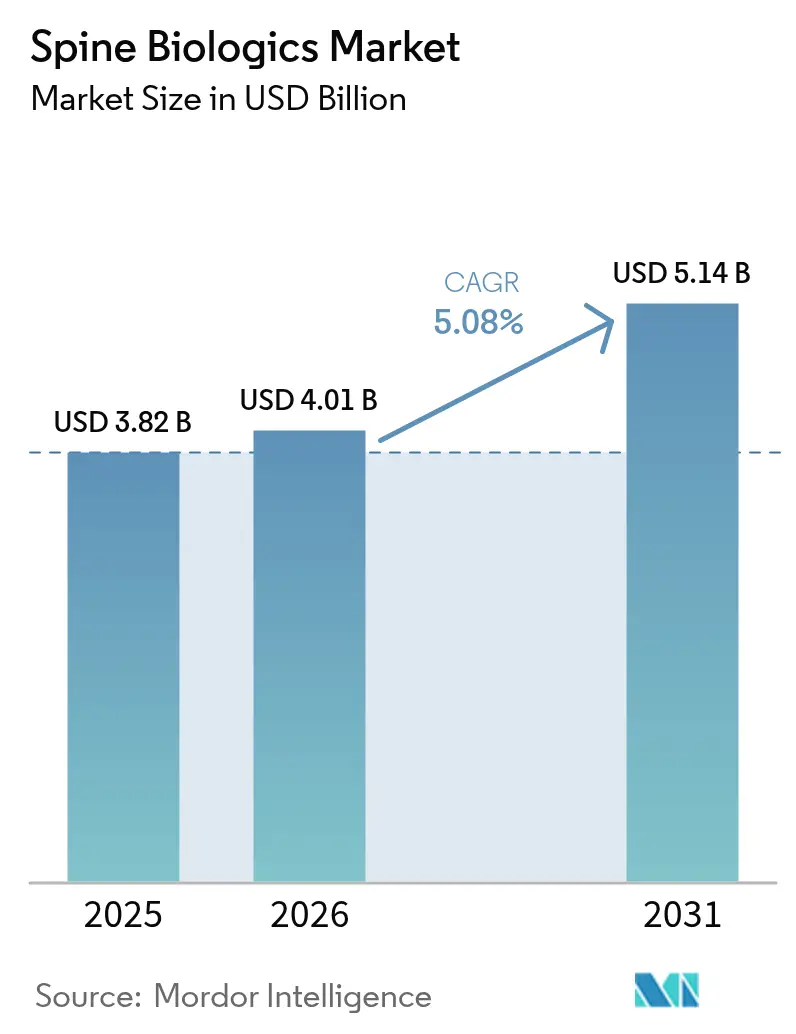
The Spine Biologics market size is expected to grow from USD 3.82 billion in 2025 to USD 4.01 billion in 2026 and is forecast to reach USD 5.14 billion by 2031 at 5.08% CAGR over 2026-2031.
Expansion reflects a clear shift away from autograft-only spine fusion toward advanced biological formulations that shorten operating times, reduce donor-site morbidity and improve fusion reliability. Population aging continues to raise the incidence of degenerative spine disease, while outpatient-friendly minimally-invasive techniques are urging surgeons to adopt fast-setting biologics that suit ambulatory surgical centers. Regional momentum differs: North America remains the revenue leader, yet Asia-Pacific grows meaningfully faster on the back of robust infrastructure upgrades and rising surgical volumes. Competitive intensity is moderate; three firms—Medtronic, Johnson & Johnson and NuVasive—control a decisive share, though ongoing mergers and new peptide-based entrants are redrawing rank order. Reimbursement scrutiny and safety alerts around certain recombinant proteins temper adoption, creating a parallel push toward synthetic peptides, 3-D printed scaffolds and rigorously screened allografts.
Key Report Takeaways
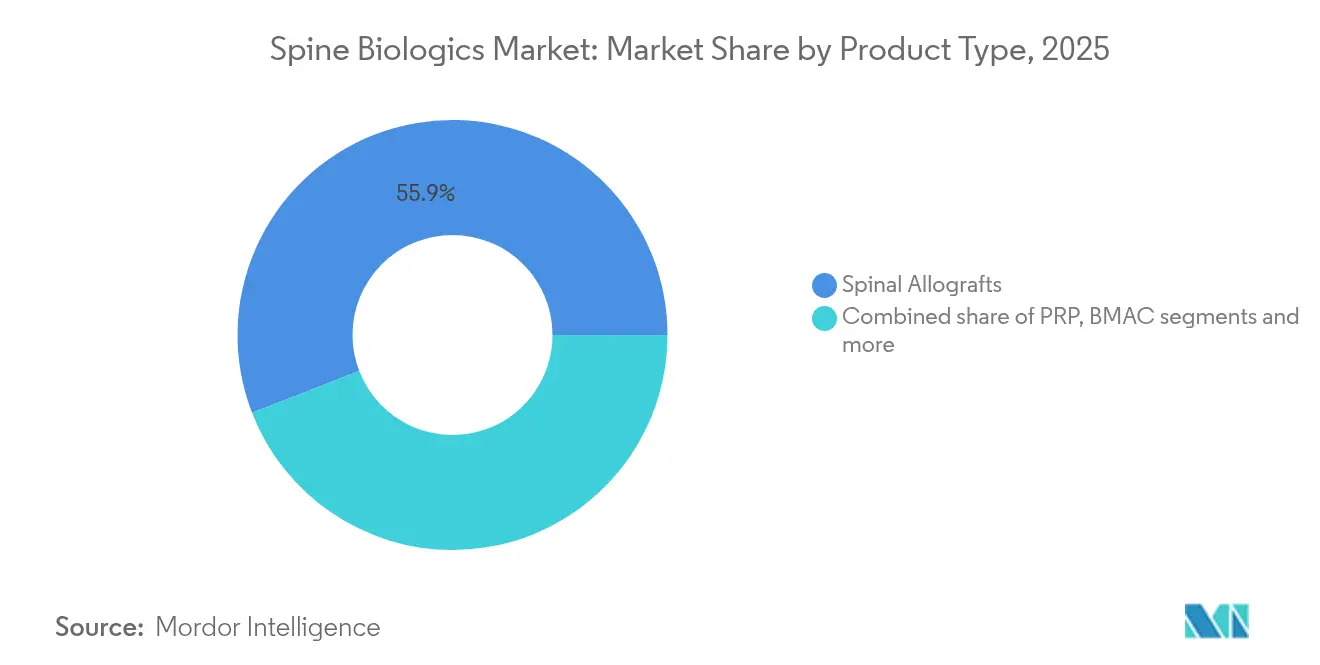
- By product type, spinal allografts led with 55.88% spine biologics market share in 2025, whereas cell-based matrices are projected to record the 6.55% CAGR through 2031.
- By surgery type, anterior cervical discectomy and fusion accounted for 34.97% of the spine biologics market size in 2025, while minimally invasive transforaminal lumbar interbody fusion shows the fastest growth, with 6.32% CAGR to 2031.
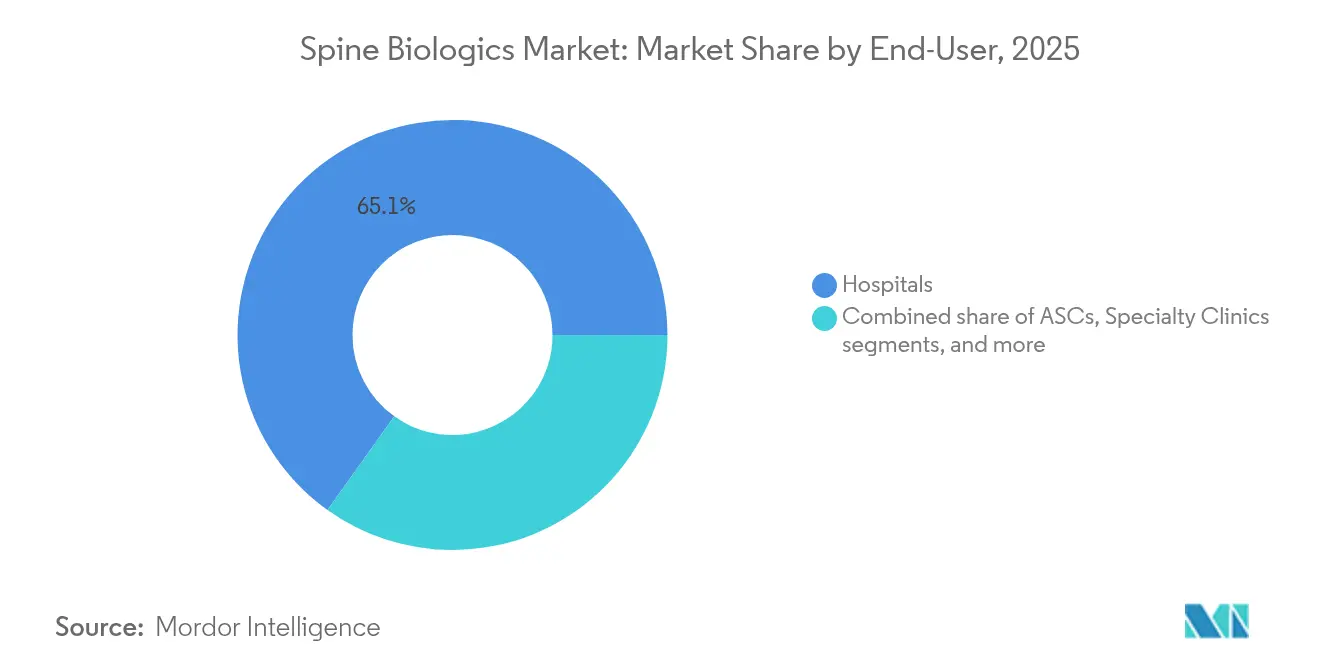
- By end-user, hospitals retained a 65.12% share in 2025; ambulatory surgical centers are expanding at 6.08% CAGR due to average USD 2,000–3,500 per-case savings.
- By region, North America remained the largest contributor with 41.98 % of the spine biologics market size in 2025, whereas Asia-Pacific is forecast to grow at a 6.21% CAGR to 2031.
Note: Market size and forecast figures in this report are generated using Mordor Intelligence’s proprietary estimation framework, updated with the latest available data and insights as of 2026.
Market Trends and Insights
Drivers Impact Analysis of Spine Biologics Market*
| Driver | (~) % Impact on CAGR Forecast | Geographic Relevance | Impact Timeline |
|---|---|---|---|
| Aging population with degenerative spine disorders | +1.8% | Global, with highest impact in Asia-Pacific and North America | Long term (≥ 4 years) |
| Surge in minimally-invasive spine procedures | +1.5% | North America & EU leading, expanding to Asia-Pacific | Medium term (2-4 years) |
| Rising prevalence of spinal deformities & trauma | +1.2% | Global, concentrated in developed markets | Medium term (2-4 years) |
| Rapid ASC adoption demanding fast-setting biologics | +1.1% | North America core, emerging in EU and select Asia-Pacific markets | Short term (≤ 2 years) |
| Regulatory approvals of next-gen BMPs | +0.8% | North America & EU primary, gradual Asia-Pacific adoption | Long term (≥ 4 years) |
| 3-D bioprinted patient-specific grafts | +0.4% | North America & EU early adoption, limited Asia-Pacific penetration | Long term (≥ 4 years) |
| Source: Mordor Intelligence | |||
Aging Population with Degenerative Spine Disorders
More individuals live beyond 65 and present multi-level degenerative pathology, underpinning recurrent demand across the spine biologics market. In China, annual spine surgery volumes surged 12.32% between 2003 and 2016, with mean patient age rising by almost five years. Older bone biology imposes longer healing times, so surgeons increasingly prefer recombinant proteins and cellular matrices with stronger osteoinductive cues. Osteoporosis-related complications already influence 80% of Latin American spine practices, illustrating demographic reach. Manufacturers respond with lower-dose, collagen-binding BMPs and stem-cell-enriched matrices that compensate for poor host biology. As aging intersects with lifestyle-related disc degeneration in urban Asia-Pacific, overall procedure volumes—and biologic graft consumption—remain on an upward path over the entire forecast window.
Surge in Minimally-Invasive Spine Procedures
More fusions now rely on tubular retractors and endoscopic corridors that limit graft volume and visibility. Among Medicare beneficiaries, spine cases in ambulatory surgical centers climbed 193%[1] while hospital outpatient volumes grew 9.9% in the same period. Shorter incisions necessitate biologics that deliver rapid, predictable fusion in smaller packages, catalyzing R&D in moldable putties and ready-to-use strip formats. Cost models reinforce the trend: minimally-invasive pathways trim 9.6% from 45-day episode costs, translating to USD 2,563 in average savings. Robotic navigation further standardizes implant alignment, prompting graft makers to develop cartridges and syringes that integrate with power-assisted delivery arms. The blended effect is a durable boost to demand for premium yet workflow-friendly biologics across the spine biologics market.
Rising Prevalence of Spinal Deformities & Trauma
Rising deformity and trauma volumes stem from lifestyle changes, workplace strain and better imaging that spots conditions once missed, pushing surgeons toward biological grafts rather than traditional bone harvests. Revision operations, where earlier fusions have failed, particularly benefit from cellular bone matrices that delivered 95.3% fusion[2] at 24 months in prospective trials, outperforming standard graft options. Modern trauma algorithms now build biologic augmentation into first-line care, shifting practice from a reactive patch to a planned regenerative strategy. The financial hit of a failed spinal fusion—each revision costs an average USD 23,702—gives hospitals a clear incentive to invest in premium biologics that cut repeat surgery risk. Younger trauma patients feel the greatest impact because they need constructs that last for decades, so clinicians increasingly favour next-generation biologics designed for durable, lifelong stability.
Regulatory Approvals of Next-Gen BMPs
After a decade of caution, the FDA has started granting breakthrough status to safer osteoinductive proteins such as Renovos’ nanoclay-bound BMP and Amphix Bio’s peptide analog. Collagen-binding domains keep proteins local, enabling half-dose protocols that slash ectopic bone risks reported in earlier formulations. Six-year follow-up data on peptide-based i-FACTOR revealed 98.6% fusion while sidestepping inflammatory complications. Regulatory harmonization in Europe speeds CE marking, letting suppliers roll out kits in multiple regions concurrently. Although reimbursement negotiations remain tough, new coding pathways for “synthetic osteoinductive peptide” solutions mark a turning point and bolster the long-term growth trajectory of the spine biologics market.
Restraints Impact Analysis of Spine Biologics Market*
| Restraint | (~) % Impact on CAGR Forecast | Geographic Relevance | Impact Timeline |
|---|---|---|---|
| High cost & limited reimbursement | -1.4% | Global, most severe in emerging markets | Medium term (2-4 years) |
| Safety concerns around recombinant proteins | -0.9% | North America & EU primary, emerging in Asia-Pacific | Long term (≥ 4 years) |
| Tissue-donor supply bottlenecks | -0.7% | Global, acute in North America | Short term (≤ 2 years) |
| Surgeon learning curve for cell-based matrices | -0.5% | Global, concentrated in markets with rapid technology adoption | Medium term (2-4 years) |
| Source: Mordor Intelligence | |||
High Cost & Limited Reimbursement
Payers increasingly demand head-to-head cost-effectiveness data before approving expensive biologics add-ons in elective spine surgery. Medicare bundling has compressed separate billing for recombinant proteins, while several private insurers list BMP-2 as “investigational” for one-level cervical fusions. In emerging economies, list prices already consume a high proportion of procedure budgets, curbing adoption outside Tier-1 hospitals. Economic modeling shows revision surgeries for failed fusions average USD 23,702, yet insurers often focus on immediate invoice totals rather than downstream savings. These dynamics restrict premium uptake and lower the achievable CAGR for the spine biologics market over the medium term.
Safety Concerns Around Recombinant Proteins
Post-marketing surveillance uncovered adverse events ranging from ectopic bone growth to inflammatory edema, leading surgeons to limit dosage or abandon recombinant proteins for specific indications. The 2023 CDC alert on tuberculosis-contaminated allografts, which affected 36 recipients in 13 centers, renewed attention on biologic safety. Although tissue banks upgraded culture protocols and BMP makers reformulated carriers, some clinicians remain cautious, particularly for cervical work, where airway swelling can be catastrophic. Publicity around 44.4% revision-rate statistic in adverse-event filings for BMP-2 maintains scrutiny. The reputational drag reduces overall utilization, thereby shaving CAGR potential from the spine biologics market in mature economies.
*Our forecasts treat driver/restraint impacts as directional, not additive. The impact forecasts reflect baseline growth, mix effects, and variable interactions.
Spine Biologics Market Segment Analysis
By Product Type:
Allografts Retain Lead While Cell-Based Matrices AccelerateAllografts captured 55.88% of spine biologics market share in 2025, reflecting stable reimbursement and long clinical track records that keep surgeons loyal to demineralized bone matrix sheets and machined cortical spacers. Within this pool, processed structural grafts dominate because standard dimensions streamline instrument pairing and reduce theatre time. Manufacturers refine freeze-drying techniques that preserve osteoinductive proteins, further defending share within the spine biologics market.
Cell-based matrices, however, are posting the fastest growth, with a 6.55% CAGR to 2031. Mesenchymal stem cell-seeded putties showed 100% fusion in prospective trials, outperforming legacy grafts and drawing interest at high-miss centers managing smokers and osteoporotic patients. Peptide-enhanced synthetics such as i-FACTOR deliver 98.6% six-year fusion while bypassing recombinant protein complications, signalling a near-term pivot. Synthetic ceramics and bioactive glass, boosted by 3D printing that permits patient-specific porosity, extend options for surgeons seeking fully mineral solutions. Collectively these innovations are reshaping buying algorithms across the spine biologics market.

By Surgery Type:
ACDF Dominates but Minimally-Invasive TLIF SurgesAnterior cervical discectomy and fusion comprised 34.97% of the 2025 spine biologics market size. Its confined corridor allows surgeons to pack demineralized chips or BMP-soaked sponges with predictable radiographic union, sustaining leadership in the spine biologics market share. Demand also stems from a rising base of office workers with cervical disc herniation, which feeds patient flow into one- or two-level ACDFs.
Transforaminal lumbar interbody fusion is the fastest riser, with a 6.32% CAGR over the forecast period, thanks to expandable titanium cages that need moldable biologics to backfill graft windows. MIS-TLIF volume growth aligns with outpatient migration, sparking the usage of preloaded syringe kits that set within minutes and permit same-day discharge. Posterior lumbar interbody fusion and extreme lateral interbody fusion segments likewise pivot to faster, lower-dose proteins optimized for tubular access. Taken together, these shifts place a premium on handling and kinetics throughout the spine biologics market.
By End-User:
Hospitals Command but ASCs Gain GroundHospitals generated 65.12% of the spine biologics market size, given their capacity to manage complex, multilevel cases requiring intraoperative neuromonitoring and extensive biologic combinations. Integrated trauma centers also hold most acute burst and fracture surgeries that consume sizeable graft volumes. Hospital buying groups continue to negotiate tiered contracts that bundle plates, screws and biologics, sustaining their procurement leverage within the spine biologics market.
Ambulatory surgical centers, though smaller today, are recording the fastest growth, with a 6.08% CAGR to 2031, as they increasingly perform single-level lumbar and two-level cervical fusions. Payment models reward procedures completed under eight hours with same-day discharge, driving ASC surgeons toward fast-setting synthetics that cut anesthesia time. Specialty spine clinics blend outpatient efficiencies with boutique care, often deploying cutting-edge cellular matrices as a market differentiator. Academic institutes remain vital to first-in-human trials, shaping the next wave of spine biologics market entrants even if their direct purchasing stays modest.
Geography Analysis
North America Spine Biologics Market
North America presently generates 41.98% of the global spine biologics market share. Widespread insurance coverage for elective spine interventions, paired with robust ASC penetration, sustains high biologic use per capita. Mature reimbursement, however, slows value growth to 4.29% CAGR as cost-containment policies and safety debates restrain premium adoption.
APAC Spine Biologics Market
Asia-Pacific records the strongest 6.21% CAGR, driven by rising life expectancy, middle-class expansion, and hospital investment across China, India, and Southeast Asia. China alone experienced a 12.32% average annual rise in spine surgeries, fueling graft demand that now outpaces global averages. Japan and Australia bring sophisticated regulatory frameworks that clear advanced peptides and 3-D printed scaffolds, while emerging ASEAN countries emphasize cost-sensitive synthetics and locally processed allografts.
Europe Spine Biologics Market
Europe posts a 4.91% growth rate, balancing stringent MDR compliance costs with consistent procedure volume in Germany, France, and the United Kingdom. CE mark alignment grants suppliers access across 27 states, yet reimbursement differs by payer, nudging firms toward tiered product lines.
LATAM Spine Biologics Market
Latin America shows a 5.39% trajectory as Brazil and Argentina update trauma guidelines to include biologic augmentation, though currency volatility modulates average selling prices.
MEA Spine Biologics Market
Middle East and Africa achieve 5.73% growth through medical tourism in the Gulf and state-funded centers in South Africa, albeit from a lower starting base.

Regulatory Landscape
Spine biologics operate across multiple regulatory pathways, with device-led bone graft substitutes typically moving through FDA 510(k) routes, while higher-risk osteoinductive growth factor products are assessed under PMA requirements. A notable 2026 inflection point was the FDA approval of Medtronic's INFUSE Bone Graft for one and two-level TLIF procedures (February 13, 2026), which underscores the need for indication-specific labeling and post-market monitoring for recombinant protein-based grafting solutions.
Regulators have also tightened expectations for osteoinductive claims, including the use of real-world evidence and clearer fusion endpoints. These requirements affect trial design and time-to-market for next-generation peptide and BMP alternatives, and they shape commercialization strategies that rely on region-specific compliance and registration. For example, DePuy Synthes (Johnson & Johnson) entered an exclusive distribution agreement with CGBIO for the bone graft substitute NOVOSIS across the United States, Canada, and Australia (May 2026).
Value Chain Analysis
The spine biologics value chain starts with inputs that vary by product class: human donor tissue procurement and tissue-bank processing for allografts and cellular bone matrices, and specialized materials plus biologic manufacturing for synthetics, ceramics, and recombinant or peptide-based solutions. Manufacturing and processing are tightly controlled, because sterilization, preservation, carrier formulation, and validated handling directly determine performance in fusion procedures such as ACDF and TLIF.
On the commercial side, sales typically combine direct efforts with distributor-led coverage, and large OEMs often bundle biologics with implants, navigation and robotics, and surgeon workflows to drive pull-through in hospitals and ambulatory surgical centers. Supply reliability is a core constraint for tissue-derived products because donor availability and geographic variability affect consistency, while procurement teams also face cost volatility and contract renegotiations linked to tariff-related pressures that became more visible in 2025. Exclusive distribution models, such as DePuy Synthes partnering with CGBIO for NOVOSIS (May 2026), illustrate how channel control can widen reach while standardizing training and inventory across multiple countries.
Competitive Landscape
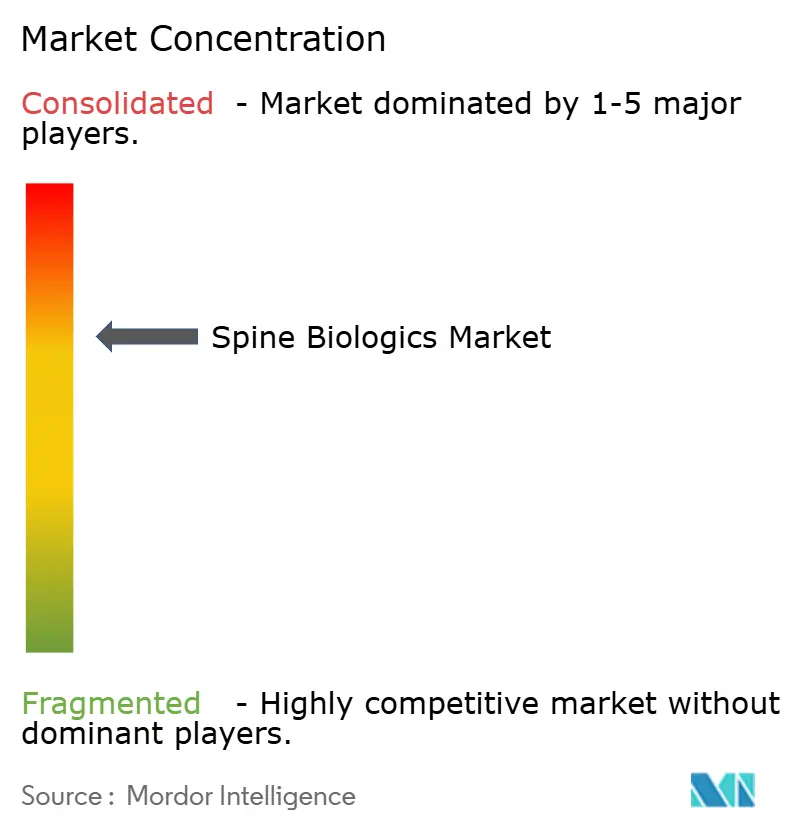
The spine biologics market exhibits moderate consolidation. Medtronic’s large share comes from a broad BMP, allograft and synthetic ceramic portfolio that aligns with its enabling technologies. Johnson & Johnson’s Depuy Synthes contributes 16% via its ViviGen cellular matrix and FiberCel strips. NuVasive held 13% until Globus Medical disclosed a USD 615.5 million takeover that will vault the combined entity to second place by revenue.
Strategic moves center on ecosystem integration. Medtronic’s AiBLE platform couples AI planning, robotics and surface-modified implants with proprietary grafts, locking hospitals into a procedural suite that protects consumable pull-through. Stryker divested[4] its US spine implants franchise to VB Spine, freeing capital to deepen robotics and cranial portfolios while licensing its Mako guidance know-how to the new buyer. Meanwhile, Cerapedics, Renovos and Amphix Bio leverage FDA breakthrough status to speed synthetic peptide entries and carve niches around lower-dose, high-safety constructs.
Technology frontiers include 3-D bioprinted, patient-matched scaffolds and nano-coated carriers that trigger stem-cell homing. Patent filings covering hybrid ceramic-peptide compositions rose 27% in 2024, signalling intensified R&D investment. Manufacturers increasingly sign risk-sharing contracts where biologic cost is rebated if radiographic union lags, echoing value-based care norms. Vendors that can merge clinical efficacy, procedural efficiency and documented cost savings are poised to capture incremental wallet share across the spine biologics market.
Spine Biologics Industry Leaders
-
Arthrex Inc.
-
Globus Medical
-
Johnson & Johnson Services, Inc.
-
Medtronic plc
-
Zimmer Biomet Holdings
- *Disclaimer: Major Players sorted in no particular order
Spine Biologics Market Companies Covered in this Report
- AlloSource
- Alphatec Holdings
- Arthrex
- B. Braun
- Baxter
- BioHorizons Vivigen
- Biosenic SA
- CoreLink Holdings, LLC
- Globus Medical
- Highridge Inc.
- Johnson & Johnson
- Kuros Biosciences
- Medtronic
- Orthofix
- RTI Surgical Holdings
- SeaSpine Holdings
- Spinal Elements, Inc.
- Spine Wave Inc.
- Stryker
- Tissue Regenix Group
- Xtant Medical Holdings
- Zimmer Biomet
Market Opportunities and Future Outlook
A clear opportunity area is products and evidence packages designed for payer review, including comparative clinical data, standardized fusion definitions, and episode-level cost transparency that informs purchasing decisions at both hospitals and ambulatory surgical centers. Alongside this, labeled indication expansion and improved procedural fit can support adoption in fast-growing minimally invasive fusion workflows, reinforced by the FDA approval expanding Medtronic's INFUSE Bone Graft use into one and two-level TLIF procedures (February 2026).
Whitespace is also visible in portfolio expansion and channel strategies that broaden access to bone graft substitutes and newer synthetic options across geographies, particularly where regulatory and distribution alignment can speed rollout. The May 2026 exclusive distribution agreement between DePuy Synthes and CGBIO for NOVOSIS in the United States, Canada, and Australia highlights ongoing investment in cross-border commercialization for bone graft substitutes. Supply-chain resilience remains a practical differentiator as manufacturers and providers emphasize supplier redundancy, inventory optimization, and contractual protection against tariff-driven cost shifts to stabilize pricing and availability, especially for imported components and tissue-derived logistics.
Recent Industry Developments in Spine Biologics Market
- May 2026: DePuy Synthes (Johnson & Johnson) entered an exclusive distribution agreement with CGBIO for the bone graft substitute NOVOSIS in the United States, Canada, and Australia. The deal expands access to an additional bone graft substitute option through a major spine distribution platform. It also signals continued use of channel partnerships to widen biologics portfolios without fully internalizing early commercialization complexity.
- February 2025: Globus Medical announced the acquisition of Nevro Corp. for USD 250 million to add spinal cord stimulation and pain management assets. The transaction broadens Globus Medical's spine-adjacent offering around patient pathways that extend beyond fusion hardware. A larger installed commercial footprint can strengthen cross-selling leverage for procedural ecosystems that include implants and biologic graft consumption.
- October 2024: Amphix Bio received FDA Breakthrough Device designation for its bone regeneration peptide product. The designation provides a prioritized regulatory engagement mechanism that can shorten iteration cycles for novel osteoinductive approaches. It also underscores the ongoing shift toward peptide-based entrants positioned around safety and dosing control versus legacy recombinant protein concerns.
Spine Biologics Market Report Scope and Research Methodology
Market Definition and Coverage
For this study, the spine biologics market covers revenue from biologic products used to support bone formation and fusion in spine procedures, including graft substitutes, spinal allografts, cell-based matrices, and biologic adjuncts used alongside surgery.
Scope exclusions: We exclude purely mechanical spinal fixation devices and biologics used for non-spine joints.
Segments Covered in This Report
- By Product Type
- Bone Graft Substitutes
- Bone Morphogenetic Proteins
- Synthetic Ceramics & Bioactive Glass
- Peptide-based & PTH-enhanced Grafts
- Spinal Allografts
- Machined Structural Allografts
- Demineralized Bone Matrix (DBM)
- Cellular Bone Matrices
- Cell-Based Matrices
- Platelet-Rich Plasma (PRP)
- Bone Marrow Aspirate Concentrate (BMAC)
- Others
- Bone Graft Substitutes
- By Surgery Type
- Anterior Cervical Discectomy & Fusion (ACDF)
- Transforaminal/Posterior Lumbar Interbody Fusion (TLIF/PLIF)
- Anterior/Extreme Lumbar Interbody Fusion (ALIF/XLIF)
- Minimally-Invasive Posterolateral Fusion
- Cervical Disc Replacement with Biologics Adjuncts
- By End-User
- Hospitals
- Ambulatory Surgical Centers
- Specialty Clinics
- Academic & Research Institutes
- By Geography
- North America
- United States
- Canada
- Mexico
- Europe
- Germany
- United Kingdom
- France
- Italy
- Spain
- Rest of Europe
- Asia-Pacific
- China
- India
- Japan
- Australia
- South Korea
- Rest of Asia-Pacific
- Middle East and Africa
- GCC
- South Africa
- Rest of Middle East and Africa
- South America
- Brazil
- Argentina
- Rest of South America
- North America
Data Sources, Market Sizing, and Validation
Desk Research
Desk work started by mapping the spine surgery demand pool and the product categories that typically fall under spine biologics, then aligning that basket with what is visible in public reporting. We relied on official health statistics and procedure context from sources such as the US CDC, the US National Library of Medicine, the WHO, and the OECD, since these datasets help show how spine conditions and surgery volumes shift over time.
To make the revenue model more realistic, we also reviewed sources such as US FDA databases for biologic and device-related clearances and safety communications, clinical guideline write-ups in peer-reviewed journals, and tender or procurement notices where available. Company annual reports, investor decks, and reputable healthcare press were used to sanity-check product mix and pricing direction, and then patent databases and an import-export shipment-level dataset were used selectively to confirm innovation intensity and trade signals. The sources named here are illustrative rather than exhaustive, and many other public and paid references were also used to collect, validate, and clarify inputs.
Primary Interviews and Surveys
Primary interviews and short surveys focused on spine surgeons, hospital procurement staff, biologics distributors, and product and reimbursement specialists across major regions, so gaps from desk sources could be closed. The goal was to validate what is used in the operating room, how often premium biologics are selected versus graft extenders, and how pricing differs by setting of care.
We also re-contacted a subset of respondents when early model outputs did not match procedure-volume signals or when a country showed unusual price or mix changes, which helped tighten assumptions before finalizing totals.
Distribution of primary research fieldwork respondents
| Company type | Respondent position | Region |
|---|---|---|
| Top tier: 29% | CXOs: 18% | APAC: 40% |
| Mid tier: 53% | Functional/Unit leaders: 23% | EMEA: 37% |
| Smaller Players: 18% | Managers: 59% | Americas: 23% |
Market-Sizing & Forecasting
Sizing starts with a top-down build where spine procedure volumes and the typical biologics attach rate are reconstructed by region, then converted into value using realistic average selling prices by product group and care setting. Once the demand pool is formed, we corroborate it with selective bottom-up checks, including sampling supplier revenues where public splits are available, distributor channel checks, and volume times ASP spot checks for high-use graft categories.
A few practical inputs keep the model grounded, including spinal fusion procedure mix (for example, ACDF and lumbar fusion approaches), adoption of DBM and cellular matrices in elective cases, pricing differences between hospitals and ambulatory surgical centers, and the pace of substitution between autograft, allograft, and synthetics. In countries where procedure reporting is sparse, gaps are handled using proxy indicators such as spine surgery capacity, surgeon feedback on average weekly caseloads, and conservative price bands that are then compared back to known reimbursement and tender signals.
For forecasting, we use scenario analysis so the model can reflect different trajectories for procedure growth, biologics penetration, and pricing pressure, then align them to what clinicians and procurement leaders expect for the next few years. The final forecast is adjusted only after scenario outputs agree with near-term pipeline inputs, the regulatory environment, and observable shifts in site-of-care.
Data Validation & Update Cycle
Validation happens in layers, since single-source numbers can drift in healthcare markets. Analysts compare model outputs against independent signals such as procedure growth direction, regional spend patterns, and observable shifts in product mix, then review any large jumps that do not match clinical practice or reimbursement realities.
Before sign-off, the model runs structured variance checks across regions and product groups, followed by a second analyst review that challenges key assumptions such as attach rates and ASP movement. Reports are refreshed annually, and interim updates are made when material events occur, such as major safety actions or sharp reimbursement shifts. Right before delivery, we run a final pass so clients get the most current view available.
Mordor Intelligence's Spine Biologics Market Size Versus Other Published Estimates
Published market sizes for spine biologics can look far apart, even when the growth direction is similar, because teams mix different product boundaries, procedure coverage, and pricing logic. The spread is usually explained by what gets counted as a biologic versus an implant, which year is treated as the current value, and how much real-world usage is validated with clinical and procurement feedback.
A main gap driver is whether fixation systems and fusion enabling implants are bundled into the total. Mordor Intelligence counts only biologic products such as allografts, DBM, cellular matrices, PRP, and BMAC, and keeps mechanical fixation out of the market total so the revenue reflects biologics purchasing.
Benchmark comparison
| Source | Market Size | Gaps in Research Methodology |
|---|---|---|
| Mordor Intelligence | USD 4.01 B (2026) | |
| Global Advisory A | USD 3.40 B (2025) | Uses a different base year and appears to bundle fusion enabling technologies (such as cages) with biologics, which can shift the biologics-only total depending on pricing and mix assumptions. |
| Industry Portal B | USD 2.36 B (2024) | Leans on a narrower product basket and shorter time window, and the pricing logic appears closer to list prices without consistent adjustment for channel and site-of-care mix. |
The table indicates that timing and scope choices explain most of the variance, not just math. When totals are tied back to procedure mix, attach rates, and realistic pricing by care setting, updates become easier to repeat as procedure and adoption signals change.
Key Questions Answered in the Report
Why are ambulatory surgical centers central to spine biologics adoption?
They favor fast-setting, ready-to-use grafts that align with cost savings and same-day discharge workflows.
How are AI and robotics shaping product requirements for spine biologics?
Integrated platforms such as Medtronic’s AiBLE pair navigation with cartridge-based graft delivery, prompting suppliers to design biologics compatible with precision guidance systems.
What steps are manufacturers taking to improve the safety profile of recombinant proteins?
Next-generation formulations use collagen-binding domains and peptide analogs that localize dosing and cut ectopic bone risks while maintaining fusion efficacy.
Which regulatory actions are accelerating innovation in spine biologics?
FDA breakthrough device designations for companies like Renovos and Amphix Bio shorten approval timelines for advanced osteoinductive peptides and nanoclay carriers.
How does population aging influence demand for spine biologics?
A growing cohort of patients over 65 presents bone-healing challenges that drive surgeon preference for biologics with enhanced osteoinductive properties.
In what way are cost pressures altering supplier strategies in this market?
Vendors increasingly bundle biologics with value-based contracts and risk-sharing guarantees that tie payment to confirmed fusion outcomes.