
Global Sperm Bank Market Size and Share
Market Overview
| Study Period | 2020 - 2031 |
|---|---|
| Market Size (2026) | USD 6.12 Billion |
| Market Size (2031) | USD 7.2 Billion |
| Growth Rate (2026 - 2031) | 3.31 % |
| Fastest Growing Market | Asia Pacific |
| Largest Market | North America |
| Market Concentration | Medium |
Major Players *Disclaimer: Major Players sorted in no particular order Image © Mordor Intelligence. Reuse requires attribution under CC BY 4.0. | |
Global Sperm Bank Market Analysis by Mordor Intelligence
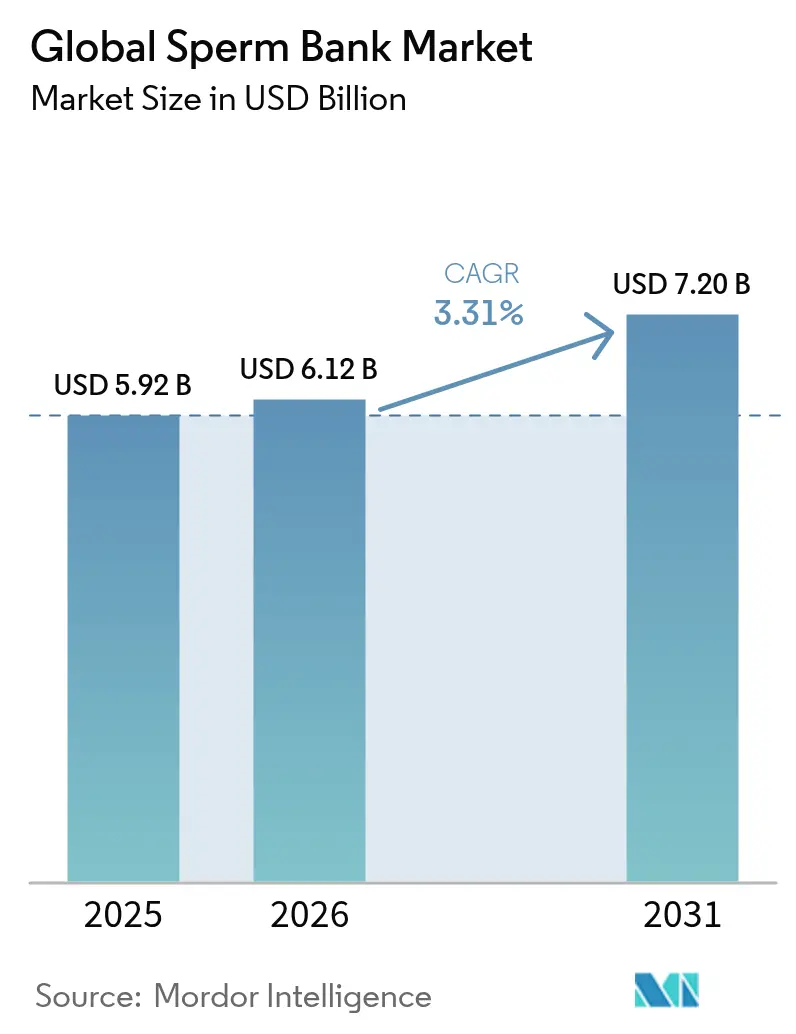
The sperm bank market size is expected to grow from USD 5.92 billion in 2025 to USD 6.12 billion in 2026 and is forecast to reach USD 7.2 billion by 2031 at 3.31% CAGR over 2026-2031. Sustained demand stems from a mix of biological pressures—declining sperm quality—and sociocultural changes that normalize diverse family structures. Recent regulatory shifts, including the Food and Drug Administration’s decision to allow donations from gay and bisexual men, could expand the donor pool by an estimated 15% and help close long-standing shortages among underrepresented ethnic groups. Employer health plans are broadening coverage for fertility preservation, and large financial-services firms now pay up to USD 24,000 for qualified fertility expenses plus USD 7,500 for medications, effectively lowering out-of-pocket costs for salaried employees. Technological improvements in vitrification are raising post-thaw survival rates above 86%, and room-temperature storage research hints at future operating-cost reductions of 40-60%. The convergence of these forces positions the sperm bank market for steady mid-single-digit growth through the end of the decade.
Key Report Takeaways
- By service type, sperm storage held 45.90% of sperm bank market share in 2025, while genetic consultation is on track for a 4.58% CAGR to 2031.
- By donor type, known donor arrangements accounted for 58.10% of the sperm bank market size in 2025; other/directed donors are growing fastest at 4.89% CAGR.
- By end-user, cancer patients represented 30.20% of the overall volume in 2025 and anchor recurring demand, whereas the “other end-users” segment is pacing ahead at 5.02% CAGR.
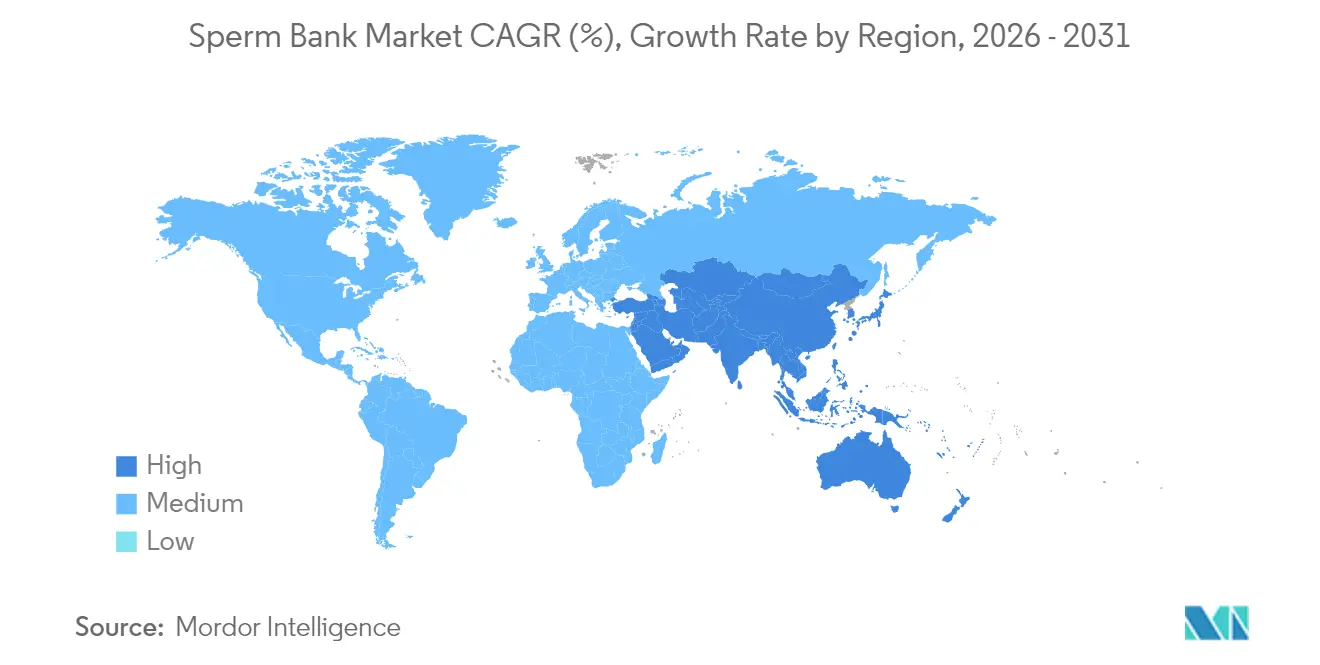
- By region, North America led with a 35.10% revenue share in 2025; Asia–Pacific is the fastest-expanding geography, with a 4.55% CAGR through 2031.
Note: Market size and forecast figures in this report are generated using Mordor Intelligence’s proprietary estimation framework, updated with the latest available data and insights as of 2026.
Market Trends and Insights
Drivers Impact Analysis of Global Sperm Bank Market*
| Driver | (~) % Impact on CAGR Forecast | Geographic Relevance | Impact Timeline |
|---|---|---|---|
| Rising infertility rates and delayed parenthood | +1.2% | Global—highest in advanced economies | Long term (≥ 4 years) |
| Growing acceptance of LGBTQ+ and single-parent families | +0.8% | North America and Europe; expanding to Asia–Pacific | Medium term (2-4 years) |
| Employer-sponsored fertility benefits | +0.7% | North America; emerging in Europe and Asia–Pacific | Short term (≤ 2 years) |
| Advances in cryopreservation and genetic screening | +0.6% | Global—innovation led by the United States and Europe | Medium term (2-4 years) |
| Direct-to-consumer sperm-freezing start-ups | +0.4% | North America and Europe, expanding globally | Short term (≤ 2 years) |
| Fertility tourism to donor-friendly hubs | +0.3% | Global; flows from restrictive to permissive states | Long term (≥ 4 years) |
| Source: Mordor Intelligence | |||
Rising Infertility Rates and Delayed Paternity/Maternity
Male fertility has deteriorated sharply, with peer-reviewed studies[1]Hai, E. “Sperm freezing damage: the role of regulated cell death.” Cell Death Discovery, nature.com showing sperm concentrations falling 2.64% per year since 2000. At the same time, the average age of first-time fathers has climbed above 31 years, creating a widening gap between peak reproductive ambition and biological reality. As a result, healthy men are banking sperm earlier in life, a behavior that was marginal a decade ago but now forms a notable slice of the sperm bank market. Clinics report that many of these clients are professionals with time-sensitive career plans who view storage as an insurance policy against age-related decline. This secular demand, layered atop medical-necessity volumes, underpins a resilient baseline for revenue growth.
Growing Acceptance of LGBTQ+ and Single-Parent Families
Same-sex couples and single individuals now comprise roughly one-quarter of patients at urban fertility centers. Forthcoming federal rule changes that eliminate historic donor restrictions are expected to broaden donor diversity and temper premium pricing for scarce profiles. Insurers are beginning to treat family-building for non-heterosexual members as a basic health need; for instance, a major national payer recently extended intrauterine insemination coverage to all eligible plans irrespective of sexual orientation. Together, these shifts expand the addressable population for the sperm bank market and encourage further normalization of donor sperm use.
Employer-Sponsored Fertility Benefits
Large US employers have upgraded fertility packages from limited in-network reimbursements to full “family-building” programs that include sperm freezing, genetic testing, and multiple assisted-reproduction cycles. Progyny, a publicly traded benefit administrator, disclosed USD 787 million in 2022 revenue, underscoring demand from corporate clients. Employers favor bundled, predictable pricing, while employees gain elective coverage that previously required personal financing. The new B2B2C channel reroutes patient traffic away from traditional clinics and into networks curated by benefit managers, giving the sperm bank market a more diversified revenue base.
Advances in Cryopreservation and Genetic Screening
Modern vitrification yields post-thaw viability rates above 86%[2]Jing Shen, “Oocytes Vitrification Using Automated Equipment Based on Microfluidic Chip,” ResearchGate, researchgate.net, compared with 60-70% for older slow-freeze protocols. Concurrently, polygenic risk scoring is moving from research labs into commercial pilots, letting prospective parents rank embryo cohorts for specific health markers. Although clinical utility remains contested, the service fetches premium pricing. Researchers are also testing freeze-dried sperm stored at ambient temperature that retains fertilization capacity in animal models. If validated in humans, the method could cut ongoing storage costs in half, altering long-term profitability assumptions for the sperm bank market.
Restraints Impact Analysis of Global Sperm Bank Market*
| Restraint | (~) % Impact on CAGR Forecast | Geographic Relevance | Impact Timeline |
|---|---|---|---|
| Limited awareness and stigma in emerging markets | −0.9% | Asia–Pacific, Middle East & Africa, Latin America | Long term (≥ 4 years) |
| Regulatory variability on donor anonymity and quotas | −0.6% | Global—highest in Europe and Asia–Pacific | Medium term (2-4 years) |
| Donor supply pressures from DNA de-anonymization | −0.5% | North America and Europe | Medium term (2-4 years) |
| Ethical pushback on expanded genetic screening | −0.3% | Developed markets with active bioethics committees | Long term (≥ 4 years) |
| Source: Mordor Intelligence | |||
Limited Awareness and Social Stigma in Emerging Markets
Cultural taboos leave many men unwilling to seek evaluation, limiting penetration despite rising disposable income. Outside large metropolitan centers, clinics struggle to recruit diverse donors; in the United States, Black men make up fewer than 3% of available donors, a deficit that restricts matching options for intended parents of color. Community-focused outreach and localized education campaigns are necessary to unlock the full potential of the sperm bank market in these regions, though progress is likely to be gradual.
Regulatory Variability on Donor Anonymity and Quotas
Colorado’s Donor-Conceived Persons Protection Act, effective January 2025, caps family units per donor at 25 and mandates identification-option donors over the age of 21, compelling sperm banks to segment inventory by jurisdiction. The European Union’s forthcoming rules on substances of human origin, slated for August 2027, will standardize several compliance areas but also impose new documentation burden. Maintaining separate operational protocols for each market drains resources and complicates cross-border scale-up, tempering the global growth curve for the sperm bank market.
*Our forecasts treat driver/restraint impacts as directional, not additive. The impact forecasts reflect baseline growth, mix effects, and variable interactions.
Global Sperm Bank Market Segment Analysis
By Service:
Storage Dominance with Consultation GrowthSperm storage retained 45.90% of sperm bank market share in 2025 as patients prioritize safeguarding fertility ahead of chemotherapy, vasectomy, or age-related decline. Because storage fees recur annually and are often bundled with transport or thawing charges, the category contributes a disproportionate share of margin to the sperm bank market. Genetic consultation, while only a midsized revenue stream today, is expanding at a 4.58% CAGR to 2031, propelled by rising uptake of expanded carrier screening and polygenic risk tools. The growing importance of genetic literacy means clinics now employ in-house counselors to translate complex results into actionable recommendations. Over time, consultation revenue is expected to anchor higher-value packages that blend testing, counseling, and storage, reinforcing customer stickiness.
Semen analysis still forms a baseline diagnostic step, yet novel algorithms can derive fertility probabilities from routine blood tests with 74% accuracy. If commercialized at scale, such tools could shift basic analysis from laboratory microscopes to telehealth kits, forcing laboratories to reposition as advanced-testing providers. Specialty retrieval procedures—such as microsurgical epididymal sperm aspiration—and hormone modulation therapies round out the service mix. Operators that integrate these disparate offerings into seamless, app-based journeys may capture a larger share of wallet from tech-savvy patients. As such, the sperm bank market is gradually evolving from a single-product niche to a multilayer clinical services ecosystem.


By Donor Type:
Known Donors Lead Amid Transparency PressuresKnown donors accounted for 58.10% of the sperm bank market size in 2025, reflecting an enduring preference for medical and genetic transparency. DNA databases make true anonymity tenuous, prompting many recipients to select donors open to contact once offspring reach adulthood. Directed or other donor categories, registering a 4.89% CAGR, capture patients seeking granular control over donor ethnicity, education, and phenotype. Because these arrangements are often bespoke, they command higher pricing that offsets smaller volume.
Anonymity rules continue to tighten: several Australian states now require donor identity disclosure upon request, and similar bills are under debate in U.S. state legislatures. Banks must therefore design consent frameworks that balance donor privacy with evolving legal norms. Expanded eligibility, including the FDA’s removal of bans on gay and bisexual donors, is expected to relieve supply constraints and diversify profiles. Providers that streamline onboarding, automate infectious-disease testing, and offer clear counseling will likely capitalize on the shift, bolstering long-term resilience of the sperm bank market.
By End-User:
Oncology Leads; Elective Preservation AcceleratesCancer patients represented 30.20% of the sperm bank market share in 2025, underpinned by guidelines that mandate fertility counseling ahead of gonadotoxic treatment. Partnering with oncology networks secures predictable referrals, and some banks station mobile collection units near radiation centers to simplify logistics. Because long-term storage is commonplace for this cohort, average revenue per user skews higher than for elective cases. Meanwhile, the “other end-users” category—covering healthy men, transgender patients pre-transition, and high-risk occupation workers—exhibits a 5.02% CAGR and captures lifestyle-driven motivations. Marketing pivots toward convenience, privacy, and empowerment resonate strongly with this segment, nurturing brand loyalty.
Pre-vasectomy banking forms a stable but modest pillar; surgeons frequently recommend storage as a hedge against regret. Taken together, these trends indicate that the sperm bank market is shifting from reactive, medically dictated usage toward proactive life-planning behavior. Clinics that segment messaging by life stage and design modular packages stand to deepen share of household reproductive spending.

Geography Analysis
North America Sperm Bank Market
North America controlled 35.10% of the sperm bank market in 2025 and is projected to expand at a 3.18% CAGR through 2031. State mandates such as California’s SB 729 are broadening insurance coverage, and a February 2025 executive order promises streamlined federal benefits and enhanced facility security after a high-profile clinic attack. The FDA’s new donor-eligibility rules should ease diversity shortages, reducing wait times for minority families. A mature digital-health ecosystem lets clinics integrate direct shipping kits, teleconsults, and automated reminders, lowering friction for repeat transactions.
Europe Sperm Bank Market
Europe exhibits slower 2.98% growth but benefits from forthcoming harmonization under the 2027 substances-of-human-origin regulation. Denmark remains a prolific exporter, leveraging liberal compensation guidelines to supply global demand, while the United Kingdom’s cap on family units pushes surplus inventory abroad. Regulatory arbitrage has created intricate supply routes; operators that master cross-border compliance may unlock new revenues, though higher documentation costs could squeeze smaller labs out of the sperm bank market.
APAC Sperm Bank Market
Asia–Pacific is the standout growth engine at 4.55% CAGR. Middle-class expansion, rising female workforce participation, and competitive procedure pricing are attracting intra-regional medical tourists. For example, complete IVF cycles cost USD 2,700 in India compared with USD 10,200 in Singapore, prompting patients to travel for both treatment and donor sperm. Yet fragmented regulation and a shortage of trained embryologists cap immediate capacity. Public-private partnerships that subsidize laboratory certification programs and accelerate technology transfer could unlock latent demand, reinforcing the long-run opportunity set for the sperm bank market.

Regulatory Landscape
Regulation is tightening and diverging across major geographies, which pushes sperm banks to maintain jurisdiction-specific controls for consent, traceability, and distribution. In the United States, donor eligibility is governed by the FDA under 21 CFR Part 1271 (HCT/P donor screening and testing), with FDA guidance updates in January 2025 reinforcing establishment responsibilities for eligibility determinations. At the state level, Colorado adds a clear compliance anchor through its Donor-Conceived Persons Protection Act framework, implemented via 5 CCR 1005-6, which requires licensure for gamete banks and clinics matching gametes in Colorado and applies screening, testing, and traceability requirements for gametes collected or matched on or after January 1, 2025, together with a 25-family limit per donor.
In Europe, the EU SoHO Regulation (Regulation (EU) 2024/1938) entered into force on August 6, 2024, replacing the legacy Tissue and Cells Directive framework with a more harmonized approach for substances of human origin, including donor sperm, with full application starting August 7, 2027. This transition raises the need for standardized documentation, vigilance, and traceability systems across EU/EEA operations, even though sensitive issues like donor anonymity and family limits remain largely set at the national level. The United Kingdom continues to rely on the HFEA Code of Practice and related guidance, with 2025 updates for donor procurement and laboratory practice aligning more explicitly with the direction of the European SoHO framework and established donor selection criteria.
Competitive Landscape
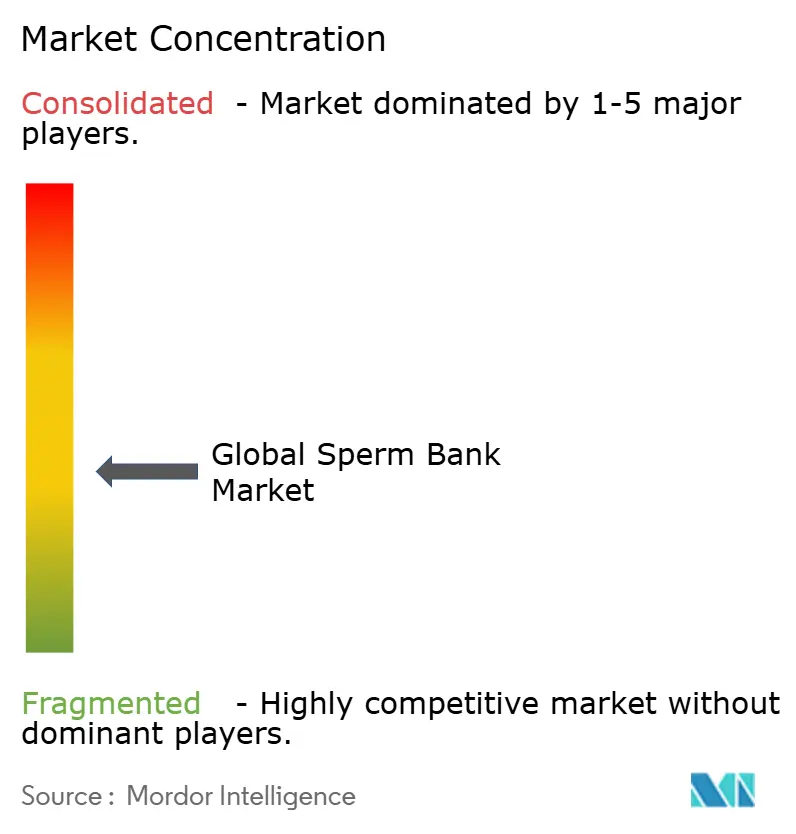
The sperm bank market remains fragmented. No player controls more than a mid-single-digit share, leaving ample room for consolidation. Legacy operators such as Fairfax Cryobank and California Cryobank maintain comprehensive donor screening pipelines, nationwide shipping, and relationships with over 400 reproductive endocrinology clinics, giving them scale in compliance and logistics. Digital-first entrants like Legacy, Fellow, and Posterity Health compete primarily on user experience; direct-to-consumer kits, subscription-style storage, and transparent ancestry reports appeal to millennials comfortable managing healthcare online.
Technology now defines competitive edges. AI-assisted imaging platforms can rank motile sperm in seconds, promising improved selection for intracytoplasmic sperm injections. Devices such as the Q300 deploy optical coherence tomography to isolate top-quality cells, and early clinical data associate usage with higher fertilization rates. Larger laboratories deploy automated cryogenic monitoring systems that trigger real-time alerts if liquid-nitrogen levels fluctuate outside tolerance bands. Capital expenditures for these systems run into the millions, creating a barrier that smaller operators struggle to clear.
Financial sponsors are already shaping market structure. In December 2024, private-equity firm Astorg closed a USD 228 million purchase of Hamilton Thorne’s fertility-equipment division, citing cross-sell potential into cryobank customers. Analysts expect similar roll-ups targeting specialized retrieval centers or regional player clusters. Over time, firms with robust donor databases, proprietary analytics, and diversified service lines may emerge as “platform” consolidators, pushing the sperm bank market toward moderate concentration.
Global Sperm Bank Industry Leaders
California Cryobank
Cryos International
European Sperm Bank
Fairfax Cryobank
Seattle Sperm Bank
- *Disclaimer: Major Players sorted in no particular order
Global Sperm Bank Market Companies Covered in this Report
- Androcryos
- California Cryobank
- CryoGam Colorado
- Cryos International
- Denmark Nordic Cryobank
- European Sperm Bank
- Fairfax Cryobank
- FNCB (French National Cryobank)
- Guangzhou Sun Yat-sen Cryobank
- Indian Spermtech
- Legacy (Digital Sperm Banking)
- London Sperm Bank
- New England Cryogenic Center
- NW Cryobank
- Reproductive Medicine Associates (RMA)
- ReproTech Ltd.
- Seattle Sperm Bank
- Shanghai Human Sperm Bank
- SpermFreez Israel
- Xytex

Market Opportunities and Future Outlook
Cross-border distribution and platform-led access expansion are creating practical whitespace for banks that can operate within fragmented donor-identification and family-limit rules. A concrete example is Fairfax Cryobank's May 2026 strategic partnership with Donor Network ApS, aimed at distributing screened donor sperm across European markets via the Donor Network digital platform, which can reduce friction in ordering, logistics, and compliance documentation between clinics and suppliers. Consolidation tied to donor transparency also shows up in March 2026, when Fertio acquired Cascade Cryobank and integrated Cascade's early donor disclosure program into a broader international fertility network, supporting demand for identity-release oriented inventory and interoperable recordkeeping.
Technology and quality differentiation are becoming commercial focus areas beyond baseline storage. Peer-reviewed work in the report points to progress in AI-enabled morphology classification and optimized cryostorage modeling, along with specialized approaches such as individual micro-drop cryopreservation for severe oligozoospermia, which supports premium service packages for difficult-to-treat cohorts. Governance and risk controls around genetic screening and donor limits are also turning into differentiators: in July 2026, ESHRE called for a Europe-wide donor family limit discussion (initially proposing 50 families per donor, with advocacy for eventual reduction). For multi-jurisdiction operators, that agenda increases the value of rigorous donor tracking, auditable traceability, and inventory segmentation.
Recent Industry Developments in Global Sperm Bank Market
- May 2026: Cryos International initiated a scientific collaboration with Laboratoire Drouot focused on epigenetic profiling of donor sperm to identify biomarkers associated with sperm quality. The effort supports differentiation in donor screening and quality assurance beyond conventional semen analysis, and it feeds into premium positioning for banks competing on measurable quality signals.
- December 2025: European Sperm Bank reported that it identified a donor with a rare TP53 gene mutation linked to nearly 200 children across Europe and stated it immediately blocked the donor upon discovery. The incident heightened attention on genetic risk management, traceability, and post-release monitoring practices in donor programs, influencing how banks communicate safety and transparency to clinics and recipients.
- November 2024: European Sperm Bank announced leadership changes, appointing David T. Hansen as CEO and moving former CEO Annemette Arndal-Lauritzen to the board to lead a Regulatory, ESG, and Ethics committee. The governance update underscored increasing board-level emphasis on regulatory compliance and ethics as donor identity rules and safety scrutiny intensify across markets.


Global Sperm Bank Market Report Scope and Research Methodology
Market Definition and Coverage
In this methodology, the sperm bank market covers the revenues earned by licensed facilities that recruit donors, run screening and testing, process semen, cryopreserve it, store it, and release vials for use in assisted reproduction (including donor insemination and IVF).
Scope exclusions: We exclude animal genetics banking and direct-to-consumer home insemination kits from this market total.
Segments Covered in This Report
- By Service
- Sperm Storage
- Semen Analysis
- Genetic Consultation
- Other Services
- By Donor Type
- Known Donor
- Anonymous Donor
- Other / Directed Donors
- By End-User
- Pre-vasectomy Patients
- Cancer Patients
- Other End-Users
- By Geography
- North America
- United States
- Canada
- Mexico
- Europe
- Germany
- United Kingdom
- France
- Italy
- Spain
- Rest of Europe
- Asia-Pacific
- China
- India
- Japan
- Australia
- South Korea
- Rest of Asia-Pacific
- Middle East and Africa
- GCC
- South Africa
- Rest of Middle East and Africa
- South America
- Brazil
- Argentina
- Rest of South America
- North America
Data Sources, Market Sizing, and Validation
Desk Research
Desk research was used to set clear boundaries for what counts as sperm bank revenue, and to build the first demand and price anchors that the model can be checked against. We mainly reviewed public health statistics and clinical guidance to understand how donor sperm is used across assisted reproduction pathways, and how screening and storage practices shape the service mix.
The public inputs came from sources such as the Centers for Disease Control and Prevention (ART surveillance), the World Health Organization (infertility and reproductive health context), the U.S. FDA (donor eligibility and tissue product rules), and ESHRE publications and registries (treatment practice signals). We also reviewed peer-reviewed fertility medicine journals for changes in testing protocols and cryostorage practices, along with company filings, investor presentations, and credible press reporting to track service offerings and pricing narratives. Paid subscriptions for company financials and news intelligence, patent databases, and shipment-level import or export checks were used selectively where public series were not granular enough. The sources listed here are not exhaustive, and many other public documents and references were used for cross-checking, clarification, and validation.
Primary Interviews and Surveys
Primary work focused on interviews and short surveys with clinic administrators, lab directors, reproductive endocrinology practice staff, cryostorage service teams, and distributor or channel participants involved in donor gamete logistics. We used these discussions to confirm how often donor sperm is used by procedure type, what vial counts per patient journey look like, and how prices move by donor type, screening package, and storage duration. For a global view, input was balanced across major demand centers so our assumptions could be checked against real-world utilization patterns and buying behavior.
Distribution of primary research fieldwork respondents
| Company type | Respondent position | Region |
|---|---|---|
| Top tier: 37% | CXOs: 18% | APAC: 40% |
| Mid tier: 41% | Functional/Unit leaders: 22% | EMEA: 34% |
| Smaller Players: 22% | Managers: 60% | Americas: 26% |
Market-Sizing & Forecasting
The core sizing logic uses a top-down build that reconstructs demand from assisted reproduction activity and then converts it into revenue using practical unit economics. We start from country-level ART and donor insemination procedure volumes, apply donor sperm usage rates, and then estimate vials used per cycle before translating volumes into value using median vial pricing and service add-ons.
To keep the model grounded, several market fingerprints were used as inputs, including ART cycle volumes by geography, donor eligibility and screening requirements that shape testing bundles, average storage duration patterns for fertility preservation cases, donor type mix (known versus anonymous or directed), and service attach rates for semen analysis and genetic consultation. After that, selective bottom-up approximations were used as checks, including sampled price points across service menus, channel checks on vial pricing and storage fees, and provider revenue roll-ups where public financial disclosures were available. When there were data gaps, ranges were built from interview consensus and then tightened using consistency checks across procedure volumes and plausible service uptake.
Forecasts were produced using scenario analysis with a base case reflecting how clinicians and operators expect demand to evolve by region, and then adjusted for likely changes in procedure volume, donor pool access, and pricing progression. The scenarios were kept simple so each assumption can be traced back to an observable signal, and updated quickly when new health statistics or regulatory changes are published.
Data Validation & Update Cycle
Model outputs were triangulated across independent signals so the final totals do not depend on one single data series. We checked for anomalies such as unrealistic vial-per-cycle values, sharp price jumps that were not supported by interviews, and regional totals that did not align with observed ART activity and clinic throughput.
Before sign-off, the work is reviewed in steps, where assumptions, calculations, and unit conversions are rechecked by another analyst and then reconciled against prior-year patterns. If an outlier is detected, we re-contact relevant respondents or revisit the underlying public statistic before locking the number. Reports are refreshed annually, with interim updates triggered by material events like regulatory changes, major reimbursement shifts, or sharp demand swings, and a final pre-delivery review is completed so clients receive the latest updated view.
Mordor Intelligence's Sperm Bank Market Size Versus Other Published Estimates
Published market sizes for sperm banks can vary even when the topic name sounds identical, and that is usually because the counted revenue items are not the same, and the demand build is not tied to the same clinical activity signals. Differences also come from how firms treat donor screening and storage revenue, which geographies are included, and which year they use for currency conversion and price levels.
Key gaps typically show up when some estimates blend in broader fertility clinic services, or when they treat direct-to-consumer offerings as part of the same market despite different regulatory and pricing structures. ART procedure volumes, vial usage per treatment pathway, and median vial and storage pricing are the signals that keep Mordor Intelligence's estimate anchored to an identifiable demand pool, instead of being pushed up or down by loose category overlap or aggressive price inflation assumptions.
Benchmark comparison
| Source | Market Size | Gaps in Research Methodology |
|---|---|---|
| Mordor Intelligence | USD 5.92 B (2025) | |
| Trade Journal A | USD 5.90 B (2024) | This estimate is reported on a 2024 base and appears to use a broader service menu that can blend adjacent fertility support services into the total, which can shift the number depending on what is counted as sperm bank revenue and how price levels are normalized. |
| Global Consultancy B | USD 5.15 B (2025) | This estimate is lower partly because the counted scope seems tighter on ancillary service revenues such as consultations and certain testing packages, and it may apply more conservative vial-per-cycle and storage attach-rate assumptions that reduce modeled value for the same procedure base. |
The spread in published totals is mainly explained by how service boundaries are drawn and how procedure-linked demand is converted into vial volumes and revenue. By tying the model to observable treatment activity, realistic vial usage, and transparent price inputs that can be rechecked, the approach produces a balanced number that clients can update when any one of those inputs changes.


Key Questions Answered in the Report
What is driving employer interest in offering sperm banking as an employee benefit?
Employers are adding sperm banking because it helps them attract and retain talent, positions them as family-friendly, and can reduce long-term medical costs by supporting early fertility preservation.
How are advances in cryopreservation technology changing service offerings at sperm banks?
New vitrification and monitoring systems improve post-thaw survival and reduce storage risks, allowing banks to market longer storage terms and bundled preservation packages with greater confidence.
Why are known-donor programs gaining popularity over anonymous donations?
DNA ancestry websites make anonymity difficult to guarantee, and many intended parents prefer transparent medical histories and the option for future contact, leading clinics to expand identity-release options.
What role does genetic counseling play in modern sperm bank services?
Genetic counselors guide patients through expanded carrier screening and risk assessment, helping them understand potential hereditary conditions and make informed donor selections.
How are digital-first startups influencing competitive dynamics in the sperm bank industry?
App-based collection kits, telehealth consultations, and AI-driven sperm analysis tools give newcomers a convenience edge, prompting traditional clinics to upgrade their user experience and technology stack.
How do emerging donor anonymity laws influence inventory management strategies at sperm banks?
Laws that cap family limits or require identity-release donors force banks to segment inventory by jurisdiction and maintain parallel tracking systems, increasing operational overhead while making flexible sourcing agreements with partner clinics more valuable.
Page last updated on:


 Your data is secure and never sold or shared.


