
Market Overview
| Study Period | 2021 - 2032 |
|---|---|
| Forecast Data Period | 2027 - 2032 |
| Base Year Market Size (2026) | USD 561.17 Million |
| Market Size (2027) | USD 571.27 Million |
| Market Size (2032) | USD 624.57 Million |
| Growth Rate (2027 - 2032) | 1.80 % |
| Market Concentration | Medium |
Major Players *Disclaimer: Major Players sorted in no particular order Image © Mordor Intelligence. Reuse requires attribution under CC BY 4.0. | |
Spain Insulin Drugs and Delivery Devices Market Analysis by Mordor Intelligence
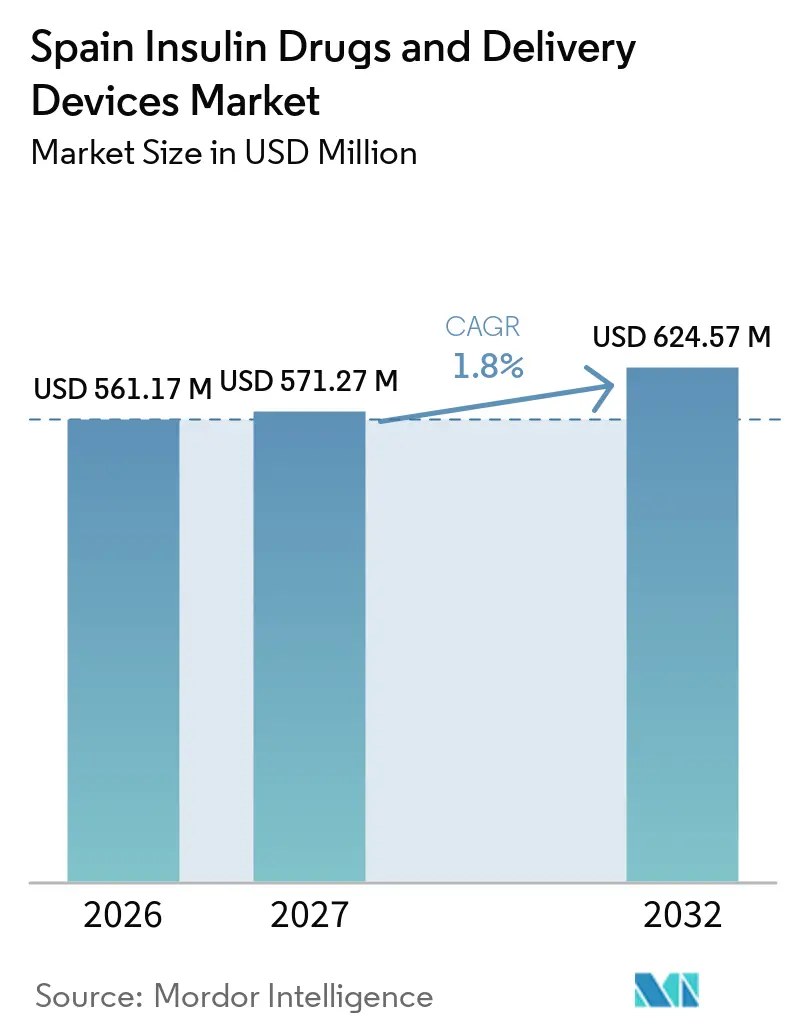
The Spain Insulin Drugs And Delivery Devices Market size is expected to increase from USD 561.17 million in 2026 to USD 571.27 million in 2027 and reach USD 624.57 million by 2032, growing at a CAGR of 1.8% over 2027-2032.
Spain was among the European countries most severely affected during the early stages of the COVID-19 pandemic, which resulted in significant pressure on healthcare services and the postponement of routine diabetes care. To ensure continuity of treatment for insulin-dependent patients, hospitals and community pharmacies strengthened medicine dispensing and prescription renewal processes, helping maintain access to insulin therapies and supporting stable demand for insulin products throughout the pandemic.
The pandemic increased awareness of the importance of glycemic control among diabetes patients, as individuals with poorly managed diabetes were considered particularly vulnerable to adverse health outcomes. This encouraged greater adherence to insulin treatment regimens and diabetes monitoring practices among insulin-dependent patients in Spain. Consequently, demand for insulin drugs and related delivery devices remained resilient despite healthcare system disruptions.
The pandemic also highlighted opportunities for continuing and expanding innovations in the delivery of diabetes care, through virtual consultations between healthcare providers and people with diabetes, and the use of diabetes technology. Crisis management has created unprecedented interest in remote care from both patients and providers and removed many long-standing regulatory barriers. Thus, the COVID-19 outbreak increased the insulin market's growth.
Note: Market numbers in this report are based on Mordor Intelligence's proprietary estimation framework, which combines nine months of actuals with Q4 projections for base year 2026.
Spain Insulin Drugs and Delivery Devices Market Trends and Insights
Rising diabetes prevalence
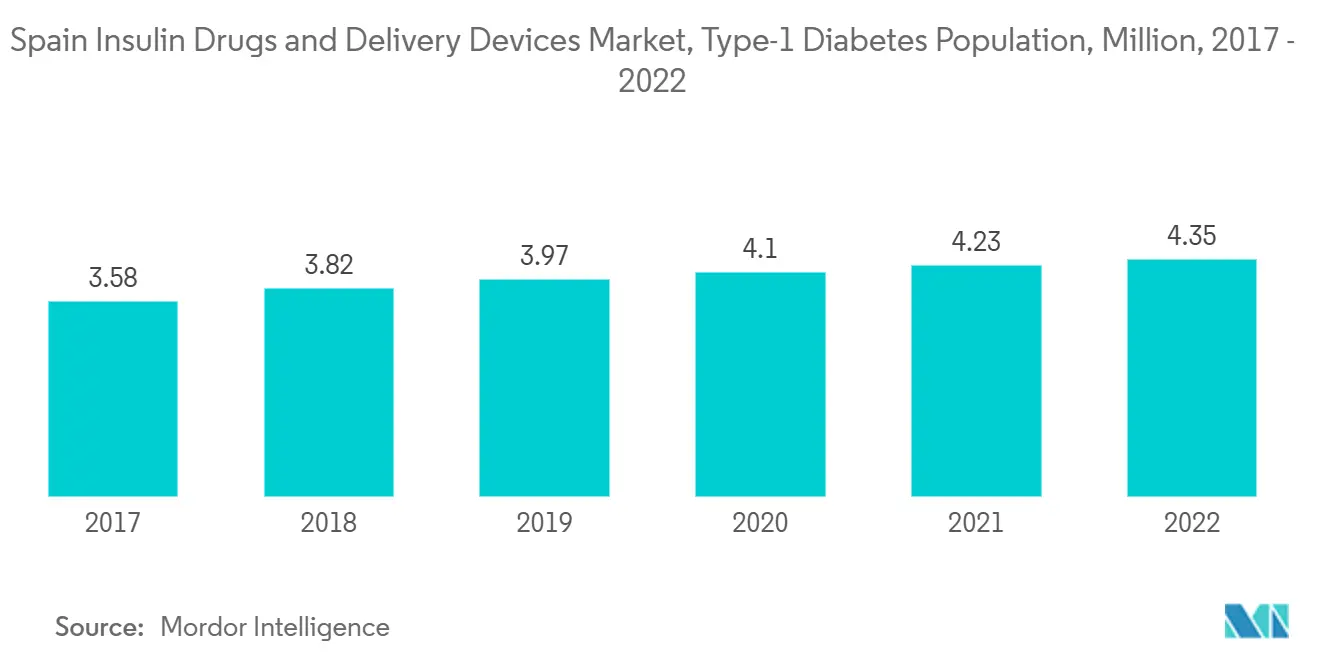
In Spain, the diabetes population is expected to increase by more than 2.5% over the forecast period.
According to the IDF 2021 report, diabetes prevalence in Spain reached 14.8%, or one in seven adults, the second highest rate in Europe. In addition, diabetes-related health expenditures in Spain reached 15.5 billion USD. Almost 30.3% of people living with diabetes in Spain were undiagnosed.
Spain has continued to expand access to advanced diabetes management technologies for insulin-treated patients. For instance, several regional health systems, including Andalusia, have broadened the use of flash glucose monitoring (FGM) for patients with type 2 diabetes undergoing intensive insulin therapy. A 2026 assessment of the Andalusian Public Health System reported more than 25,000 active FGM users among adults with type 2 diabetes on basal-bolus insulin treatment, highlighting the sizeable population requiring daily insulin administration and ongoing disease management.
Furthermore, Spain's Ministry of Health continues to prioritize diabetes prevention, early diagnosis, self-care, and reduction of diabetes-related complications through its National Diabetes Strategy. In June 2025, Spain also hosted the CARE4DIABETES Joint Action initiative to strengthen diabetes self-management and improve patient outcomes across multiple regions. As healthcare authorities increase efforts to optimize long-term diabetes care, the growing number of patients requiring insulin therapy is expected to support sustained demand for insulin syringes across hospitals, clinics, and home-care settings.
Therefore, the studied market is anticipated to witness growth over the analysis period due to rising prevalence and the aforementioned factors.
The insulin pumps segment is expected to witness the highest growth rate over the forecast period
An insulin pump is a device that delivers insulin continuously or automatically whenever required. The pump mimics the human pancreas. The insulin infusion pump works as an alternative to the traditional system of daily injections or an insulin pen.
Insulin pumps are expected to hold a major market share in the insulin delivery devices market and are expected to grow, registering a CAGR of more than 2.8% in the market over the forecast period because of their increasing technological advancement and their preference over other traditional methods due to continuous insulin administration. Insulin pump therapy is a well-established insulin administration method for people with type-1 diabetes. Pumps are a validated, time-tested therapeutic option for type-1 diabetes at all ages, enabling near-physiological insulin delivery in situations where the pancreas does not produce insulin. There are even pump models with remote controls, enabling parents of young children to either suspend or bolus insulin from a distance when the child is playing or eating. The insulin infusion pumps reduce the large swings in blood glucose levels, induce less pain, and deliver more accurately when compared to injections. These advantages of insulin pumps over the traditional delivery system are expected to boost the market.
Recent advancements in automated insulin delivery technologies are strengthening the adoption of insulin pumps globally. For example, manufacturers such as Medtronic, Tandem Diabetes Care, and Insulet have expanded commercial availability of insulin pump systems integrated with CGM sensors and advanced dosing algorithms, enabling more personalized insulin management. The growing availability of these smart pump technologies is improving treatment outcomes and patient convenience, encouraging a shift from multiple daily injections toward pump-based insulin delivery. Consequently, increasing technological sophistication and broader acceptance of automated insulin delivery systems are expected to support the growth of the insulin pump segment during the forecast period.
The roll-out of many new products, increasing international research collaborations in technological advancement, and increasing awareness about diabetes among people are expected to drive the market.
Competitive Landscape
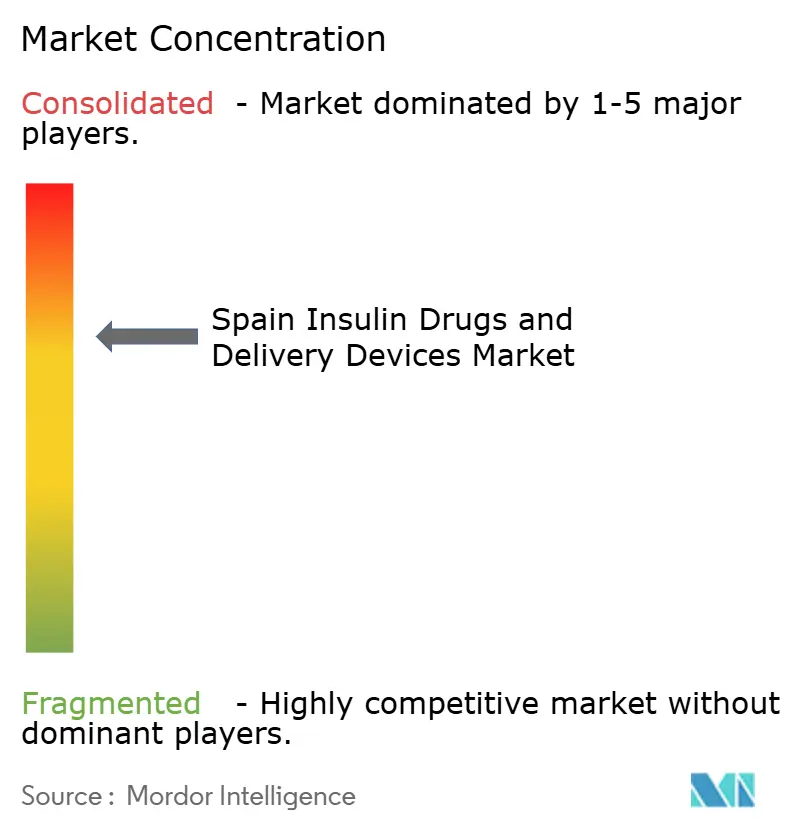
The Spanish insulin drug and delivery devices market is moderately consolidated, with a few significant and generic players. Mergers and acquisitions that have happened between the players in the recent past have helped the companies strengthen their market presence. Eli Lilly and Boehringer Ingelheim have an alliance to develop and commercialize Basaglar (Insulin Glargine). Additionally, the players in the recent past helped the companies strengthen their market presence; for example, Novo Nordisk collaborated with Ypsomed to provide better insulin therapy solutions.
Spain Insulin Drugs and Delivery Devices Industry Leaders
-
Eli Lilly
-
Novo Nordisk
-
Sanofi
-
Ypsomed
-
Medtronic
- *Disclaimer: Major Players sorted in no particular order
Recent Industry Developments
- November 2022: Ypsomed's mylife Loop is now authorized to work with Abbott's FreeStyle Libre 3 sensor in Germany. The mylife YpsoPump and the FreeStyle Libre 3, combined with the mylife CamAPS FX algorithm from CamDiab, form an automated insulin delivery system designed to help people with type-1 diabetes better control their glucose levels and alleviate the burden of daily diabetes management.
- August 2022: Lilly received CE (Conformité Européenne or European Conformity) marking certification for the Tempo Smart Button and planned to begin small-scale pilots in selected countries through partnerships with existing diabetes management ecosystems.
Spain Insulin Drugs and Delivery Devices Market Report Scope
Insulin is mainly used to treat type 1 diabetes but can also be used in people with type-2 diabetes if insulin levels remain low despite using other medications. There are different ways to inject insulin into a patient's body using syringes, pens, pumps, and jet injectors, giving them various options for insulin delivery. The Spain Insulin Drugs and Delivery Devices Market is segmented into Drugs (Basal or Long-acting Insulins, Bolus or Fast-acting Insulins, Traditional Human Insulins, Combination Insulins, and Biosimilar Insulins) and Devices (Insulin Pens, Insulin Pumps, Insulin Syringes, and Jet Injectors). The report offers the value (in USD) and volume (in mL) for insulin drugs and (in unit) for the devices for the above segments.
Drug
| Basal or Long-acting Insulins | Lantus (Insulin Glargine) |
| Levemir (Insulin Detemir) | |
| Toujeo (Insulin Glargine) | |
| Tresiba (Insulin Degludec) | |
| Basaglar (Insulin Glargine) | |
| Bolus or Fast-acting Insulins | NovoRapid/Novolog (Insulin aspart) |
| Humalog (Insulin lispro) | |
| Apidra (Insulin glulisine) | |
| FIASP (Insulin aspart) | |
| Admelog (Insulin lispro Sanofi) | |
| Traditional Human Insulins | Novolin/Mixtard/Actrapid/Insulatard |
| Humulin | |
| Insuman | |
| Combination Insulins | NovoMix (Biphasic Insulin aspart) |
| Ryzodeg (Insulin degludec and Insulin aspart) | |
| Xultophy (Insulin degludec and Liraglutide) | |
| Soliqua/Suliqua (Insulin glargine and Lixisenatide) | |
| Biosimilar Insulins | Insulin Glargine Biosimilars |
| Human Insulin Biosimilars |
Device
| Insulin Pumps | Insulin Pump Devices |
| Insulin Pump Reservoirs | |
| Insulin Infusion sets | |
| Insulin Pens | Cartridges in reusable pens |
| Disposable insulin pens | |
| Insulin Syringes | |
| Insulin Jet Injectors |
| Drug | Basal or Long-acting Insulins | Lantus (Insulin Glargine) |
| Levemir (Insulin Detemir) | ||
| Toujeo (Insulin Glargine) | ||
| Tresiba (Insulin Degludec) | ||
| Basaglar (Insulin Glargine) | ||
| Bolus or Fast-acting Insulins | NovoRapid/Novolog (Insulin aspart) | |
| Humalog (Insulin lispro) | ||
| Apidra (Insulin glulisine) | ||
| FIASP (Insulin aspart) | ||
| Admelog (Insulin lispro Sanofi) | ||
| Traditional Human Insulins | Novolin/Mixtard/Actrapid/Insulatard | |
| Humulin | ||
| Insuman | ||
| Combination Insulins | NovoMix (Biphasic Insulin aspart) | |
| Ryzodeg (Insulin degludec and Insulin aspart) | ||
| Xultophy (Insulin degludec and Liraglutide) | ||
| Soliqua/Suliqua (Insulin glargine and Lixisenatide) | ||
| Biosimilar Insulins | Insulin Glargine Biosimilars | |
| Human Insulin Biosimilars | ||
| Device | Insulin Pumps | Insulin Pump Devices |
| Insulin Pump Reservoirs | ||
| Insulin Infusion sets | ||
| Insulin Pens | Cartridges in reusable pens | |
| Disposable insulin pens | ||
| Insulin Syringes | ||
| Insulin Jet Injectors | ||
Key Questions Answered in the Report
What is the Spain Insulin Drugs and Delivery Devices Market size?
The Spain Insulin Drugs and Delivery Devices Market size is expected to reach USD 561.17 million in 2026 and grow at a CAGR of 1.80% to reach USD 624.57 million by 2032.
Who are the key players in Spain Insulin Drugs and Delivery Devices Market?
Eli Lilly, Novo Nordisk, Sanofi, Ypsomed and Medtronic are the major companies operating in the Spain Insulin Drugs and Delivery Devices Market.
What years does this Spain Insulin Drugs and Delivery Devices Market cover?
The report covers the Spain Insulin Drugs and Delivery Devices Market historical market size for years: 2021, 2022, 2023, 2024, 2025, and 2026. The report also forecasts the Spain Insulin Drugs and Delivery Devices Market size for years: 2027, 2028, 2029, 2030, 2031, and 2032.