
Market Overview
| Study Period | 2020 - 2031 |
|---|---|
| Forecast Data Period | 2026 - 2031 |
| Base Year Market Size (2025) | USD 247.38 Million |
| Market Size (2026) | USD 266.62 Million |
| Market Size (2031) | USD 387.82 Million |
| Growth Rate (2026 - 2031) | 7.78 % |
| Market Concentration | Medium |
Major Players *Disclaimer: Major Players sorted in no particular order Image © Mordor Intelligence. Reuse requires attribution under CC BY 4.0. | |
South Korea Blood Glucose Monitoring Devices Market Analysis by Mordor Intelligence
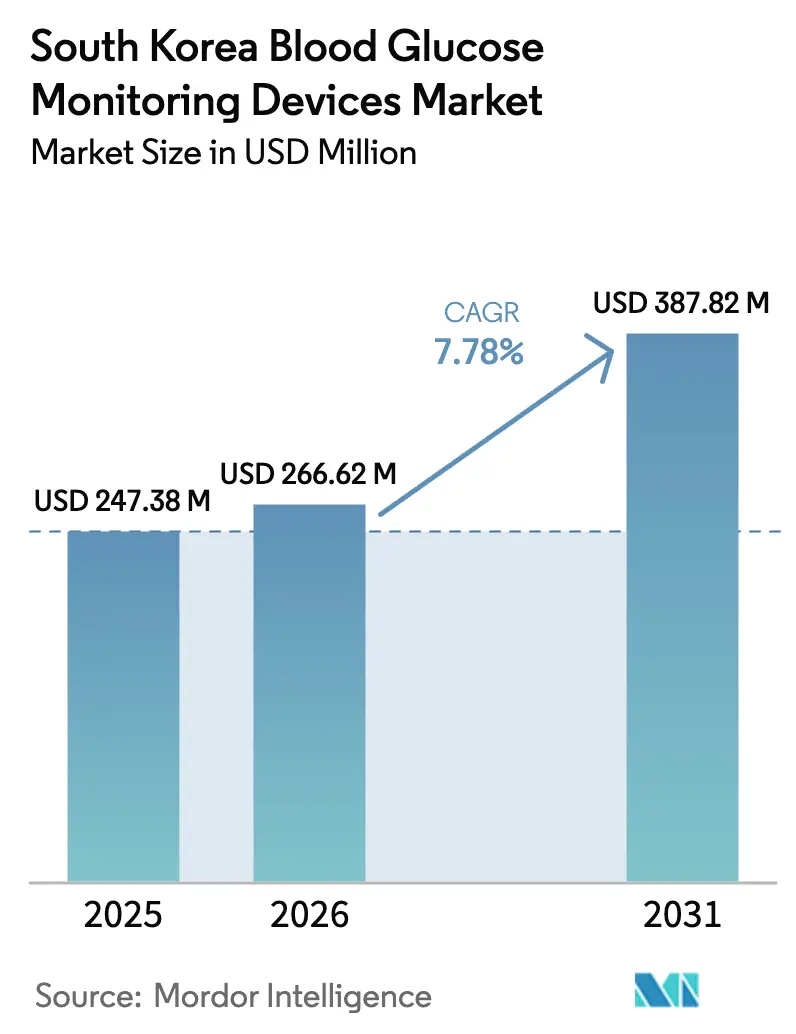
The South Korea Blood Glucose Monitoring Devices Market size was valued at USD 247.38 million in 2025 and estimated to grow from USD 266.62 million in 2026 to reach USD 387.82 million by 2031, at a CAGR of 7.78% during the forecast period (2026-2031).
The blood glucose device market in South Korea has experienced significant growth in recent years, largely driven by the increasing population of individuals with diabetes. Similar to other developed countries, South Korea has witnessed a rise in diabetes prevalence due to factors such as an aging population, urbanization, and changes in lifestyle habits including dietary patterns and reduced physical activity.
With the rising number of diabetes diagnoses in South Korea, there is a growing demand for blood glucose monitoring devices to aid patients in effectively managing their condition. These devices play a crucial role in diabetes management by allowing individuals to regularly monitor their blood sugar levels and make informed decisions regarding their diet, exercise, and medication adjustments.
The South Korean blood glucose device market offers a wide range of products, including traditional blood glucose meters, continuous glucose monitoring (CGM) systems, and flash glucose monitoring systems. Traditional blood glucose meters remain popular among many patients due to their affordability and ease of use. However, there has been an increasing interest in CGM systems, which provide continuous, real-time glucose monitoring without the need for frequent fingerstick tests.
The growing adoption of blood glucose monitoring devices in South Korea signifies a shift towards personalized and proactive approaches to diabetes management. These devices not only assist individuals with diabetes in maintaining better control of their blood sugar levels but also empower them to make lifestyle changes that can reduce the risk of diabetes-related complications in the long run.
Therefore, owing to the aforementioned factors the studied market is anticipated to witness growth over the analysis period.
Note: Market size and forecast figures in this report are generated using Mordor Intelligence’s proprietary estimation framework, updated with the latest available data and insights as of 2026.
South Korea Blood Glucose Monitoring Devices Market Trends and Insights
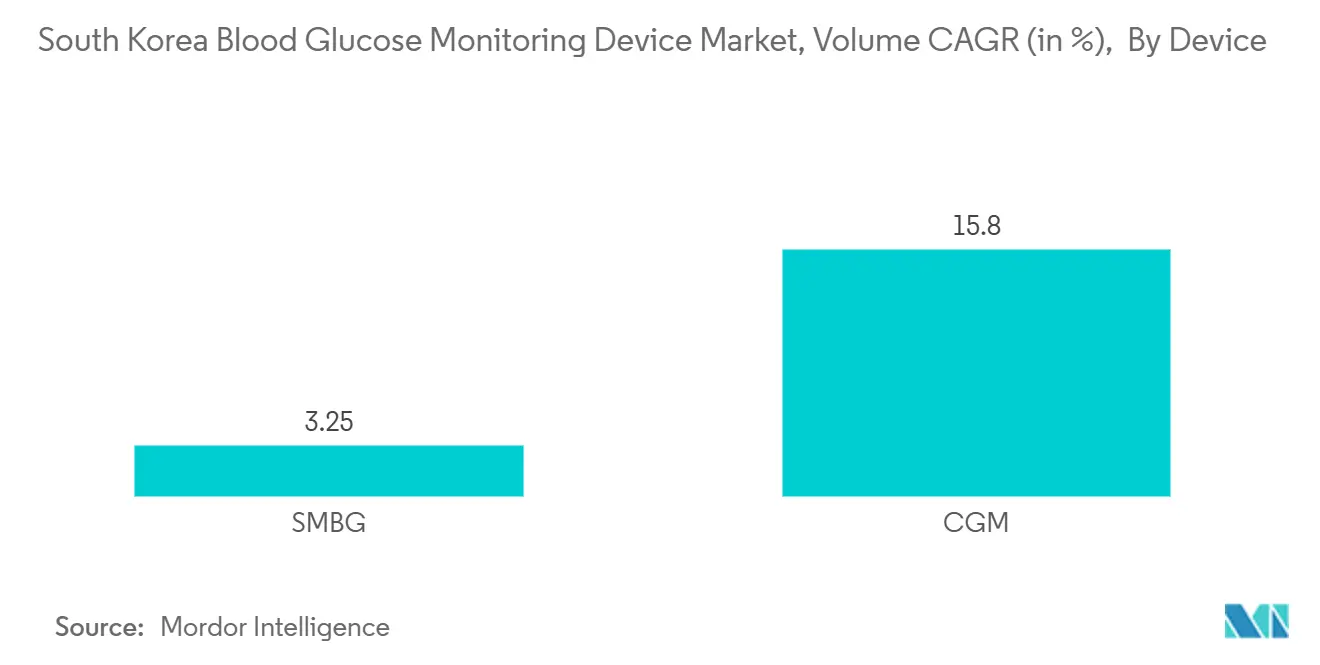
Increasing Type-1 diabetes population across South Korea
Diabetes is a metabolic disorder marked by hyperglycemia and impaired insulin function. Diabetes is becoming more common all over the world, including in Korea. Furthermore, the age of onset of diabetes is shifting toward a younger population, particularly in Asian countries. In the twenty-first century, the prevalence of type 2 diabetes in adolescence rapidly increases, posing major clinical challenges and public health burdens worldwide.
Type 1 diabetes was previously thought to be the most common type of diabetes in young people. However, the prevalence of type 2 diabetes is rising among Asians. The increasing prevalence of diabetes is a health problem that most countries are concerned about. The prevalence varies by race, but overall, it has increased compared to the past.
Diabetes mellitus is widespread and imposes a significant socioeconomic burden on individuals and society through high medical costs. The total economic burden of diabetes in South Korea has been estimated to be USD 18,293 million, or approximately 1.14% of Korea's GDP (GDP). Medical costs accounted for the greatest proportion of total costs, accounting for 42.7% of total economic costs for inpatient services.
In South Korea, the prevalence of diabetes in adults is higher and the economic burden of diabetes is higher than that of overall cancer. Diabetic complications or related comorbidities and hospitalization are associated with high costs for diabetes as a cost driver. Effective strategies are needed to manage patients with diabetic complications to reduce the use of healthcare resources and economic burden. It is expected that increased information regarding both the magnitude and the specific components of the economic burden of diabetes in Korea will influence health policymakers to prioritize its prevention and management and to allocate more healthcare resources to diabetes.
As a result of the factors above, the growth of the studied market in Russia is anticipated.
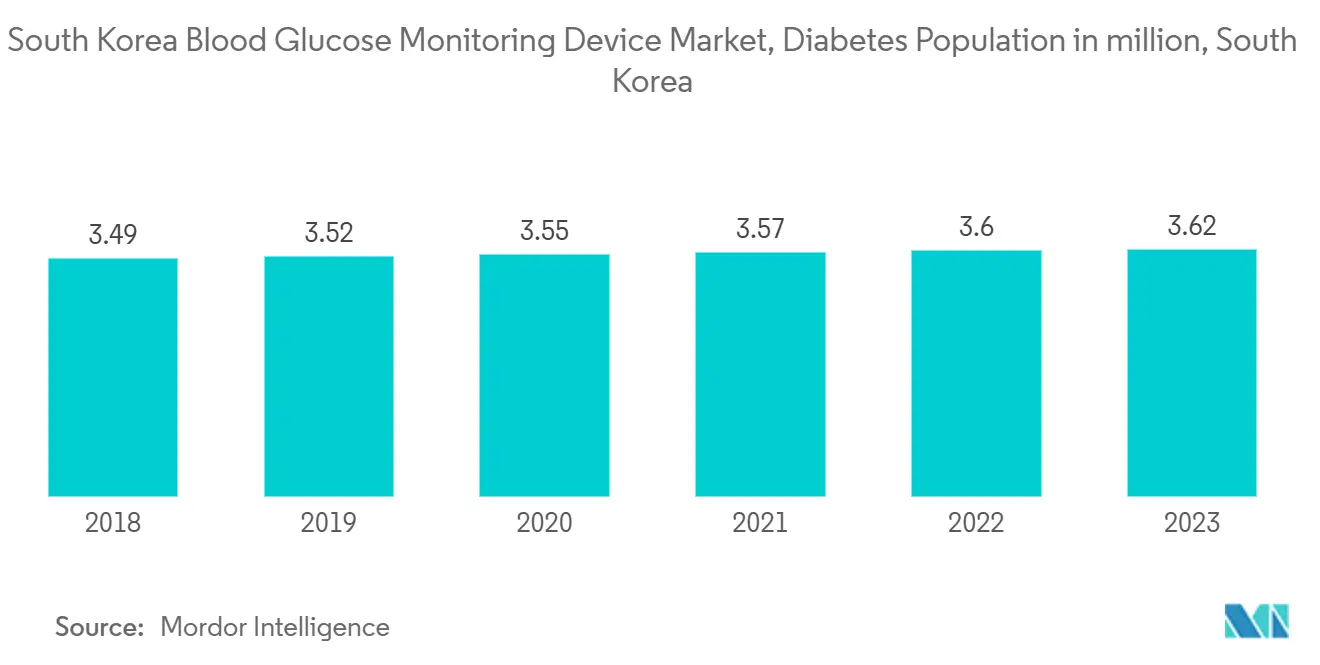
Continuous Glucose Monitoring Holds Highest CAGR in South Korea Blood Glucose Monitoring Device Market.
Diabetes is a complex and chronic disease that can cause blindness, neuropathy, kidney disease, myocardial infarction, or stroke. It is critical for patients to control their glucose levels on a daily basis to avoid aggravation and the onset of complications. Apps for real-time continuous glucose monitoring (CGM) on smartphones and other devices linked to CGM systems have recently been developed, and such CGM apps are being used in Japan as well. When compared to traditional retrospective CGM, using CGM apps improves patients' own blood glucose control, which is expected to help slow the progression of type 2 diabetes mellitus (DM) and prevent complications.
Diabetes is a significant health problem and one of the astounding challenges for healthcare systems all over South Korea. The prevalence of known type 1 & 2 diabetes in the South Korean adult population is very high along with a high number of patients who are not yet diagnosed with the disease. Due to an aging population and unhealthy lifestyle (the percentage of energy intake from carbohydrates is higher in diabetes patients than in those without diabetes, while that from protein and fat is lower in subjects with diabetes), the prevalence of type 2 diabetes is expected to increase steadily over the next few years.
High-quality care, including adequate monitoring, control of risk factors, and active self-management are the key factors for preventing complications in South Korean patients with type 2 diabetes. The Ministry of Food and Drug Safety (MFDS), South Korea's medical device market regulator, plans to roll out several amendments to the country's Medical Devices Act and has also expanded its list of devices eligible for electronic indications for use. Penetration of remote patient monitoring devices in the South Korean market supports local clinical research organizations (CROs) in their clinical research trials and ensures ease of monitoring, which facilitates the discovery process.
The increased diabetic prevalence in Russia and the aforementioned factors are likely to drive segment growth during the forecast period.
Competitive Landscape
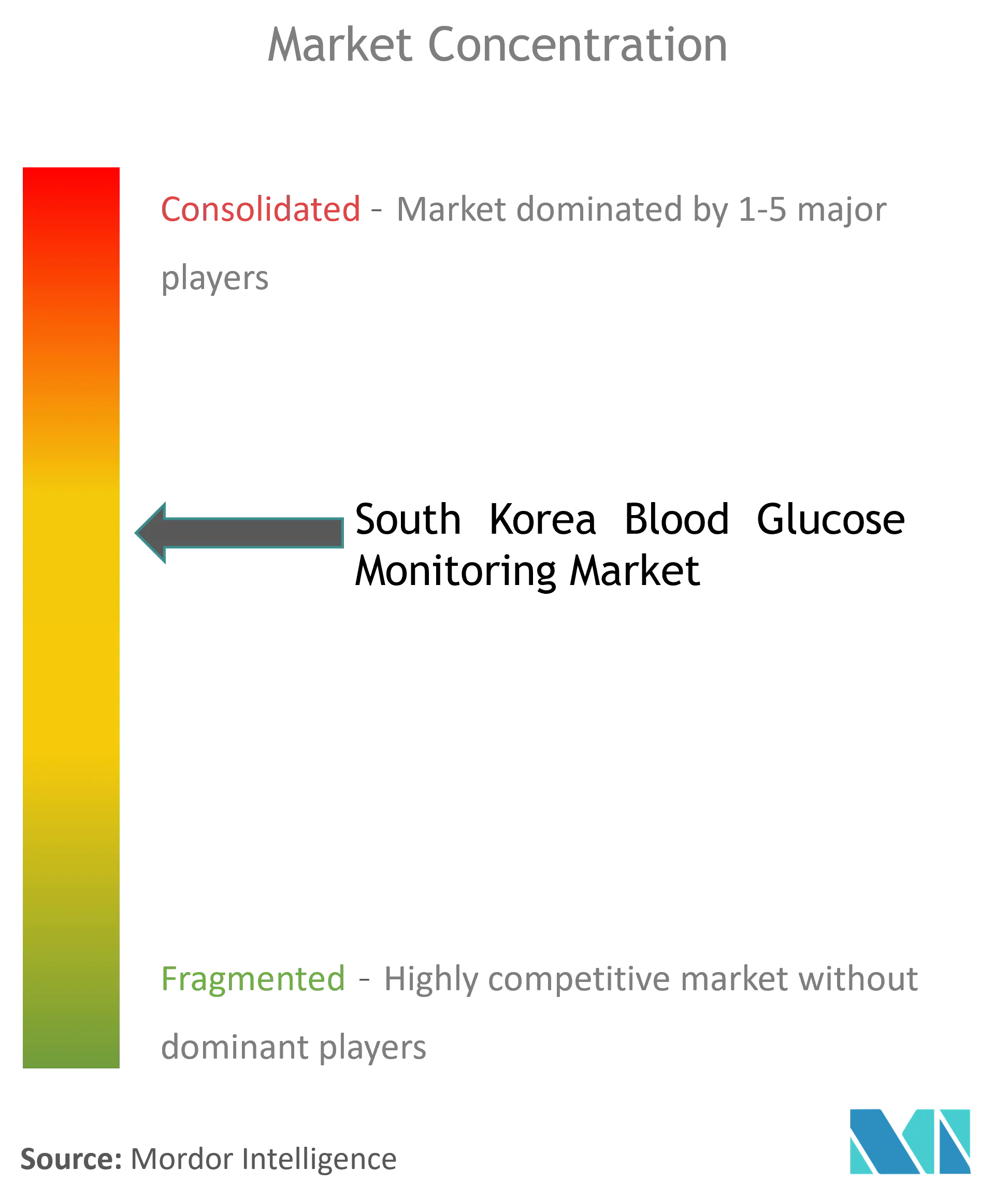
The blood glucose monitoring device market is highly fragmented, with few major manufacturers present in the market. The CGM devices market is dominated by major players like Dexcom, Medtronics, Abbott, and Senseonics. The market for BGM devices comprises more generic players like Roche, LifeScan, Arkray, Ascensia, etc. Technological innovations in the recent past helped companies to strengthen their market presence.
South Korea Blood Glucose Monitoring Devices Industry Leaders
-
Roche
-
Abbott
-
Medtronics
-
Dexcom
-
LifeScan
- *Disclaimer: Major Players sorted in no particular order
Market Opportunities and Future Outlook
The shift toward continuous glucose monitoring (CGM) creates a clear whitespace in South Korea where scale, local supply, and payer access intersect. Reported CGM spending increased from KRW 6.3 billion in 2020 to KRW 57.5 billion in 2024, while imports accounted for about 92.5% of the CGM market in 2024, indicating room for additional local manufacturing participation and localized product portfolios. Activity by domestic players such as i-SENS (CareSens Air) and continued competition from global leaders (Abbott, Dexcom, Medtronic) keep the segment innovation-led, while also raising the importance of differentiated sensors, ecosystem tie-ups, and channel access for both CGM and SMBG.
Near-term opportunity is also linked to reimbursement and eligibility expansion initiatives that can broaden the addressable monitored population beyond current user cohorts. Policy signals referenced in-market include recognition of pancreatic disorders as a disability category starting July 1, 2026, and an expansion of CGM insurance support for adult type 1 diabetes patients scheduled for the second half of 2026. For suppliers, these developments elevate the value of building evidence packages that fit payer requirements, integrating monitoring with digital health workflows, and aligning launches with MFDS-regulated approvals and labeling pathways to accelerate uptake across hospitals, diabetes clinics, and home-use settings.
Recent Industry Developments
- July 2026: MicroTech Medical received South Korean marketing approval for its LinX continuous glucose monitoring system for adult patients. The approval expands domestic CGM options and enlarges South Korea's CGM footprint, potentially reducing reliance on imports in the market.
- June 2026: i-SENS received approval for reimbursement of CareSens Air under Belgium's INAMI. This milestone boosts access and opens potential export opportunities for i-SENS CGM in Europe, signaling a domestic supplier strengthening its leadership position.
- April 2026: i-SENS achieved insurance reimbursement listings for its CareSens Air CGM in Germany (GKV) and the United Kingdom (NHS). The listings broaden payer coverage in major European health systems, boosting adoption potential beyond Korea and reinforcing i-SENS's position in the global CGM supply chain.
Research Methodology Framework and Report Scope
Market Definition and Coverage
This market is defined as the revenue generated in South Korea from devices and consumables used to measure and track blood glucose for diabetes management in home and clinical settings, including both fingerstick testing and sensor-based monitoring.
Scope exclusions: Diabetes drugs, lab diagnostics, and standalone digital coaching services are excluded unless they are bundled and priced as part of an eligible monitoring device kit.
Segmentation Overview
- Self-monitoring blood glucose devices
- Glucometer Devices
- Test Strips
- Lancets
- Continuous blood glucose monitoring devices
- Sensors
- Durables (Receivers and Transmitters)
Data Sources, Market Sizing, and Validation
Desk Research
Desk research sets the market boundary and helps us map demand drivers, pricing reference points, and reimbursement conditions in South Korea. Public statistics and policy documents were used to frame how many people are monitored, how care is delivered, and how often consumables are replaced, which are then translated into volumes.
Key public and official sources referenced include the Korea Disease Control and Prevention Agency (KDCA) for diabetes burden indicators, National Health Insurance Service (NHIS) publications for coverage context, Health Insurance Review and Assessment Service (HIRA) materials for reimbursed pricing signals, and the Ministry of Food and Drug Safety (MFDS) for device approvals and safety updates. We also used Korea Health Industry Development Institute (KHIDI) briefs for category-level market signals, along with peer-reviewed clinical publications on SMBG frequency and CGM wear behavior. Company filings, investor presentations, association websites, and reputable press were reviewed to understand product and channel mix changes, and a paid subscription was used for company financials and news tracking. These desk sources are illustrative and not exhaustive, and additional public references were used for data collection, validation, and clarification.
Primary Interviews and Surveys
Primary interviews focused on validating adoption and replacement cycles for SMBG and CGM, the practical pricing corridors by channel, and how reimbursement and prescribing norms shape uptake. We spoke with manufacturers, distributors, diabetes clinics, and pharmacy and retail stakeholders across South Korea so gaps from desk research could be filled, then re-checked through assumptions that can be applied consistently across segments.
Distribution of primary research fieldwork respondents
| Company type | Respondent position |
|---|---|
| Top tier: 39% | CXOs: 12% |
| Mid tier: 47% | Functional/Unit leaders: 39% |
| Smaller Players: 14% | Managers: 49% |
Market-Sizing & Forecasting
Sizing starts from a demand pool built from diabetes prevalence and the treated, monitored population in South Korea, which is then converted into expected testing and sensor wear behavior under local care pathways. A top-down approach is used where diagnosis and monitoring rates are translated into annual unit demand for meters, strips, lancets, lancing devices, and CGM sensors, followed by price bands observed in the country.
To keep totals grounded, selective bottom-up approximations are used, including supplier revenue roll ups for the larger categories, channel checks for retail versus hospital pricing, and sampled average selling price times volume for strips and sensors. When product or channel splits are not fully visible, gaps are handled using conservative share ranges validated through interviews, and then sensitivity checks are run before final totals are signed off.
Forecasts are built using scenario analysis, since reimbursement adjustments, affordability, and patient adoption can change faster than long-cycle hardware replacement. Key inputs include the diabetes population trend, CGM penetration versus SMBG usage, testing frequency per patient, average sensor wear duration and replacement cadence, reimbursement eligibility signals, and component level price progression.
Data Validation & Update Cycle
Outputs are validated through multiple checks so outliers are flagged early, including cross-checks between implied patient counts and unit volumes, price sanity checks by channel, and year-over-year variance reviews at the component level. When the model shows a sharp step change, the assumption is re-tested through a follow-up conversation or additional desk verification before sign-off.
A second analyst review is used to challenge scope, math, and key inputs, followed by a final pre-delivery pass so the latest public signals are reflected. Reports are refreshed annually, with interim updates when major reimbursement, regulatory, or demand shifts can affect volumes or pricing materially.
Mordor Intelligence's South Korea Blood Glucose Monitoring Devices Market Estimate Compared With Other Published Estimates
Published market values for South Korea can differ even when the topic is described similarly, because the counted basket is not always consistent and the pricing basis is not aligned. Differences also show up depending on whether an estimate is built from local reimbursement and usage behavior, or from limited sales snapshots and broader regional assumptions.
By tracking reimbursed component pricing and refreshing annualized sensor and strip consumption assumptions with field validation, Mordor Intelligence keeps the total linked to recurring demand across SMBG and CGM, rather than drifting toward device-only totals or narrow value snapshots. Gaps typically come from whether strips, lancets, and sensors are fully included, how CGM sensors are converted into annual units using wear duration, and what currency timing is used when converting local values into USD.
Benchmark comparison
| Source | Market Size | Gaps in Research Methodology |
|---|---|---|
| Mordor Intelligence | USD 247.38 M (2025) | |
| Health Industry Brief A | USD 87.60 M (2024) | Represents a single-year local value snapshot that can undercount the full recurring ecosystem if sensor wear and consumable refills are not annualized consistently across users and channels. |
| Regional Consultancy B | USD 283.59 M (2026) | Uses a higher near-term starting point that may assume faster CGM penetration or broader pricing, and it can overstate totals if utilization and replacement cycles are not reconciled back to reimbursed patterns. |
The spread across sources is mainly explained by scope choices at the component level and the way recurring usage is converted into yearly value. A demand-linked build that is checked against channel pricing and adoption realities helps keep the estimate traceable to measurable inputs and repeatable steps.
Key Questions Answered in the Report
How big is the South Korea Blood Glucose Monitoring Device Market?
The South Korea Blood Glucose Monitoring Device Market size is expected to reach USD 266.62 million in 2026 and grow at a CAGR of 7.78% to reach USD 387.82 million by 2031.
What is the current South Korea Blood Glucose Monitoring Device Market size?
In 2026, the South Korea Blood Glucose Monitoring Device Market size is expected to reach USD 266.62 million.
Who are the key players in South Korea Blood Glucose Monitoring Device Market?
Roche, Abbott, Medtronics, Dexcom and LifeScan are the major companies operating in the South Korea Blood Glucose Monitoring Market.
What years does this South Korea Blood Glucose Monitoring Device Market cover, and what was the market size in 2025?
In 2025, the South Korea Blood Glucose Monitoring Device Market size was estimated at USD 266.62 million. The report covers the South Korea Blood Glucose Monitoring Device Market historical market size for years: 2019, 2020, 2021, 2022, 2023, 2024 and 2025. The report also forecasts the South Korea Blood Glucose Monitoring Device Market size for years: 2026, 2027, 2028, 2029, 2030 and 2031.