
Market Overview
| Study Period | 2021 - 2031 |
|---|---|
| Forecast Data Period | 2026 - 2031 |
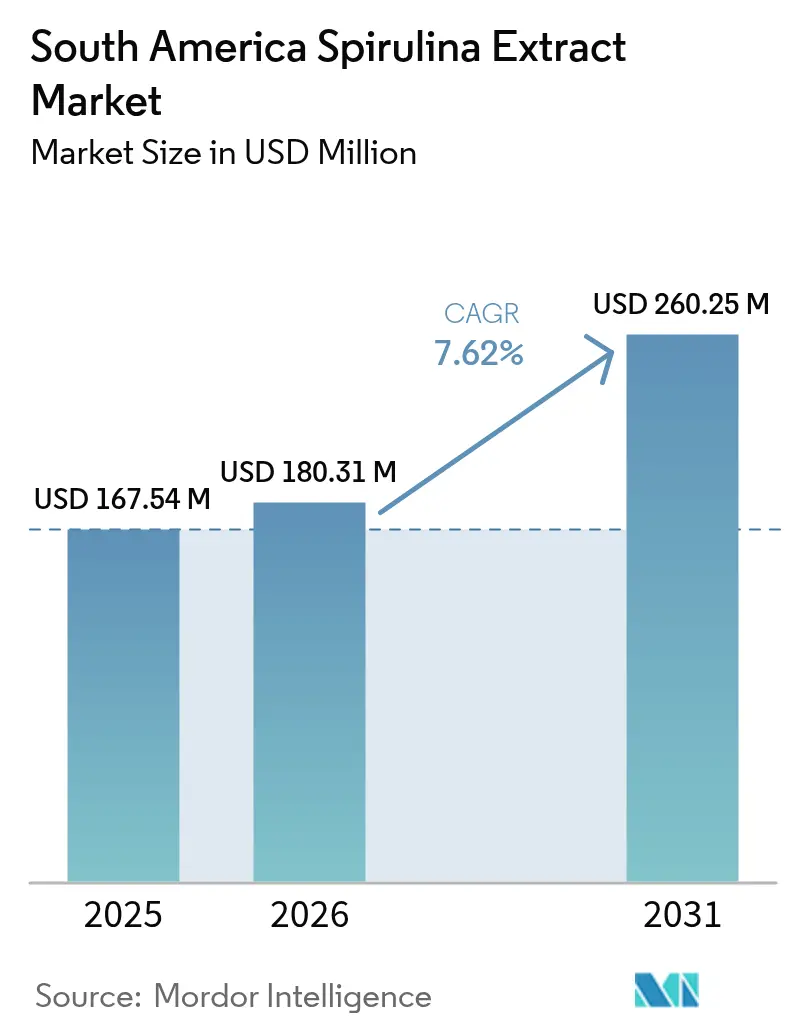
| Base Year Market Size (2025) | USD 167.54 Million |
| Market Size (2026) | USD 180.31 Million |
| Market Size (2031) | USD 260.25 Million |
| Growth Rate (2026 - 2031) | 7.62 % |
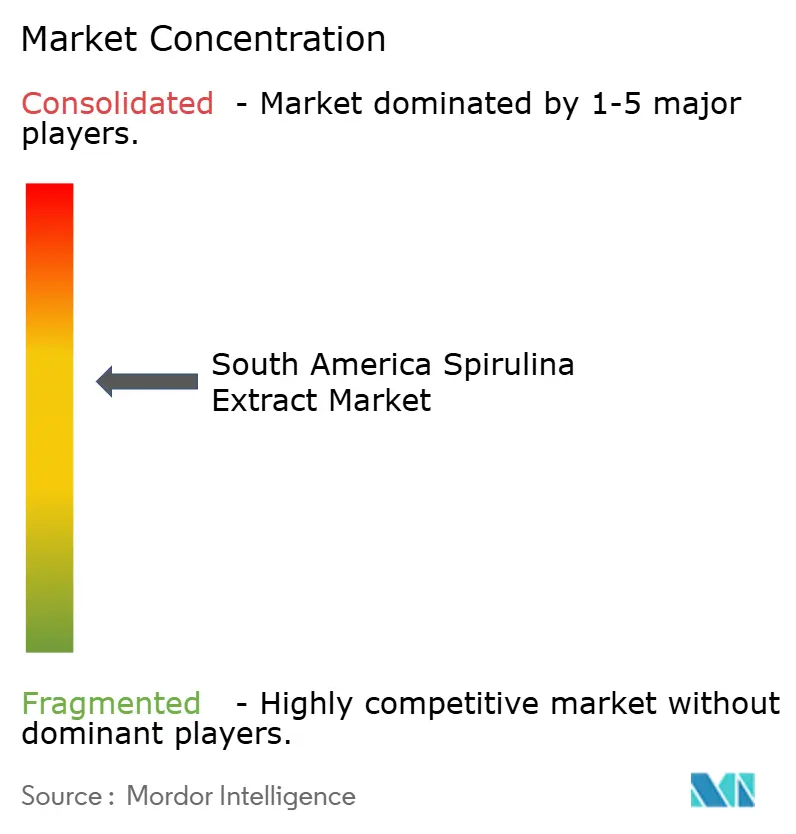
| Market Concentration | Medium |
Major Players *Disclaimer: Major Players sorted in no particular order Image © Mordor Intelligence. Reuse requires attribution under CC BY 4.0. | |
South America Spirulina Extract Market Analysis by Mordor Intelligence
The South America spirulina extract market size was valued at USD 167.54 million in 2025 and estimated to grow from USD 180.31 million in 2026 to reach USD 260.25 million by 2031, at a CAGR of 7.62% during the forecast period (2026-2031). The region offers ideal conditions for spirulina cultivation, including ample sunlight, naturally alkaline water sources, and low labor costs, which make production efficient and cost-effective. The growing popularity of plant-based protein and natural colorants among urban consumers is a key factor driving market growth. Brazil leads the market due to its well-developed infrastructure, strong domestic demand, and government support for the industry. Meanwhile, Chile is emerging as a rapidly growing market, supported by organic farms focused on exports and benefiting from trade agreements with countries in the Asia-Pacific region. The market is moderately consolidated, with companies actively expanding their production capabilities to meet the rising demand for sustainable and natural products. Additionally, businesses are exploring innovative applications of spirulina in food, beverages, and cosmetics to tap into new consumer segments.
Key Report Takeaways
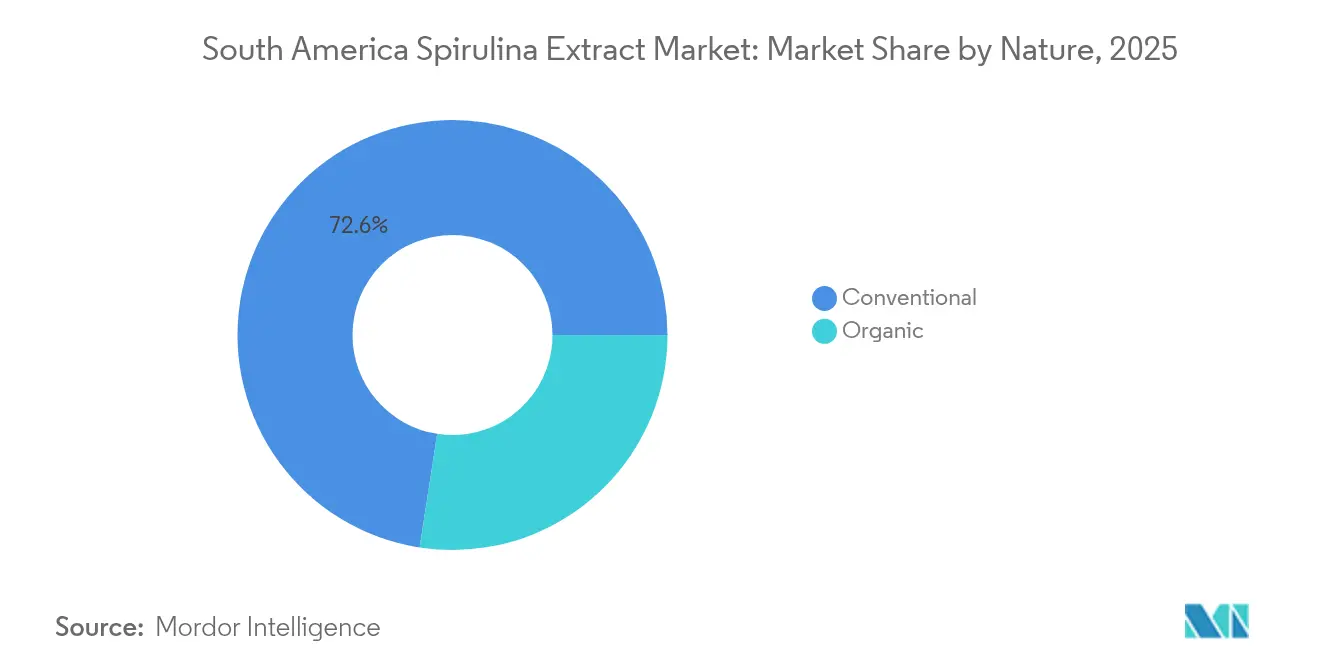
- By nature, conventional formats accounted for 72.56% of the South American spirulina extract market share in 2025, while certified-organic variants are forecast to expand at an 8.62% CAGR through 2031.
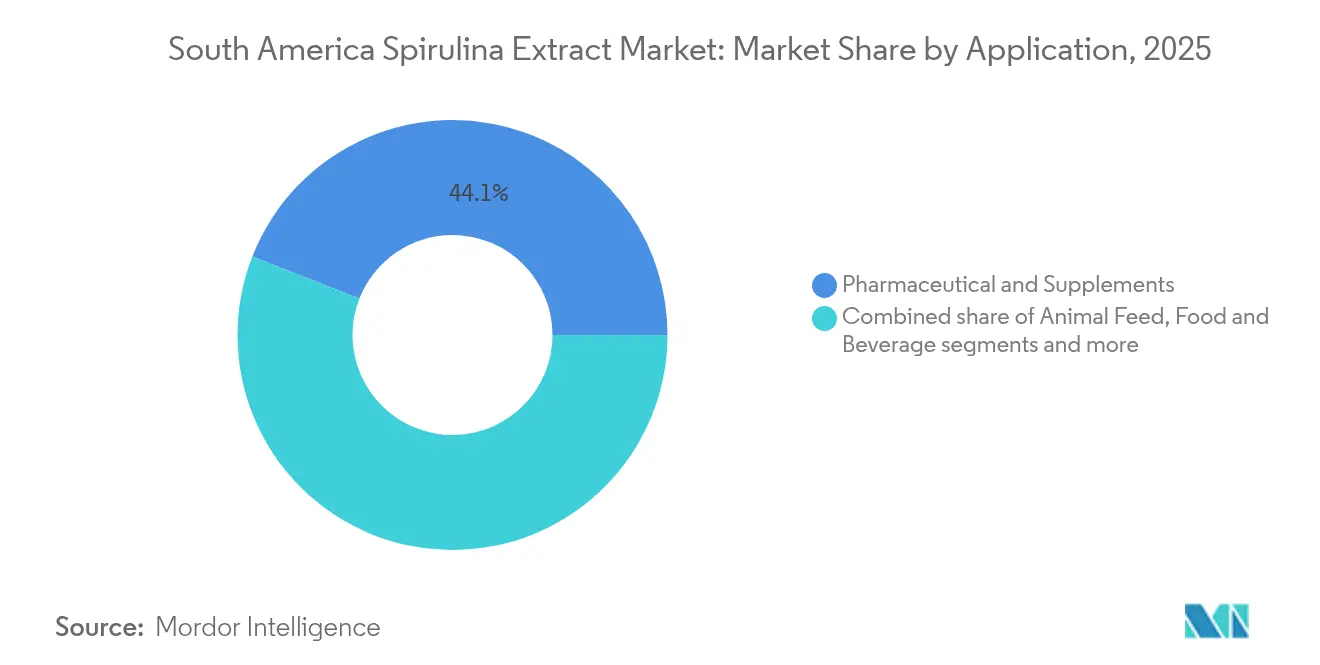
- By application, pharmaceutical and supplement uses accounted for 44.05% of the South American spirulina extract market size in 2025, whereas cosmetics and personal care are projected to advance at a 9.12% CAGR to 2031.
- By country, Brazil captured a 47.10% revenue share of the South American spirulina extract market in 2025; Chile is poised for the fastest growth at a 9.18% CAGR through 2031.
Note: Market size and forecast figures in this report are generated using Mordor Intelligence’s proprietary estimation framework, updated with the latest available data and insights as of 2026.
South America Spirulina Extract Market Trends and Insights
Drivers Impact Analysis*
| Driver | (~) % Impact on CAGR Forecast | Geographic Relevance | Impact Timeline |
|---|---|---|---|
| Rising consumer focus on health and preventive nutrition | +1.8% | Brazil, Chile, Argentina; spillover to Colombia and Peru | Medium term (2-4 years) |
| Increasing awareness of spirulina's high protein, antioxidant, and immunity-supporting properties | +1.5% | Pan-regional, with strongest adoption in urban centers (São Paulo, Santiago, Buenos Aires) | Short term (≤ 2 years) |
| Growing preference for natural, clean-label, and plant-based ingredients | +1.4% | Brazil and Chile (export-driven); Argentina (domestic and MERCOSUR trade) | Medium term (2-4 years) |
| Use of spirulina as a natural blue colorant in beverages and dairy alternatives | +1.2% | Brazil, Chile; export corridors to North America and Europe | Short term (≤ 2 years) |
| Favorable climatic conditions and rising local cultivation capacity | +1.0% | Brazil (Northeast and Central-West), Chile (Atacama region), Argentina (Mendoza, San Juan) | Long term (≥ 4 years) |
| Growth of lactose intolerance and dairy-free consumption trends | +0.9% | Brazil, Argentina, Chile; urban millennials and Gen Z cohorts | Medium term (2-4 years) |
| Source: Mordor Intelligence | |||
Increasing awareness of spirulina’s high protein, antioxidant, and immunity-supporting properties
The South America spirulina extract market is growing steadily, driven by increasing scientific research and the rising demand for clean-label, functional ingredients. Spirulina is highly valued for its exceptional protein content, which comprises 50–70% of its dry weight, as reported by PubMed Central in November 2024[1]. This high protein density has made spirulina a popular ingredient in sports nutrition products, fortified beverages, and supplements designed to boost immunity. In response to this demand, producers in the region, particularly in Chile, are moving away from selling bulk spirulina powder. Instead, they are focusing on creating standardized, high-purity extracts that meet the quality requirements of international markets, allowing for premium pricing. As brands prioritize consistent quality and nutrient potency, South American suppliers with advanced analytical capabilities and ISO-certified processing facilities are gaining a competitive edge.
Growth of lactose intolerance and dairy-free consumption trends
The increasing prevalence of lactose intolerance and the growing preference for dairy-free diets are driving the demand for spirulina extracts in South America. For instance, in Brazil, lactose intolerance is expected to affect 0.63% of the population by 2025, as per the World Population Review[2]. This has encouraged beverage manufacturers to develop more non-dairy products while also adhering to regulatory requirements, such as avoiding Argentina’s ANMAT octagonal warning seals. Plant-based eating habits are gaining momentum in the region. As of June 2025, 8.8% of university students in Latin America were reported to follow plant-based diets, according to the Multidisciplinary Digital Publishing Institute[3]. This trend has increased the need for clean-label and nutrient-rich ingredients. Spirulina, renowned for its high protein content, is gaining popularity as a fortifier for plant-based milk alternatives. It enables manufacturers to meet nutritional standards without relying on dairy ingredients.
Use of spirulina as a natural blue colorant in beverages and dairy alternatives
The use of spirulina-derived phycocyanin as a natural blue colorant is gaining popularity in South America, particularly in the beverage and dairy-alternative industries. Phycocyanin stands out because it offers better stability under varying pH levels and high temperatures compared to butterfly-pea extract. This makes it especially suitable for products like carbonated sodas and ultra-high-temperature (UHT) processed oat milks. Recent innovations are further driving this trend. For instance, Givaudan’s Ultimate Blue Spirulina line provides highly pure concentrates with 98% purity. These concentrates require only half the dosage compared to older versions, which helps maintain the original taste of the product while achieving vibrant and consistent blue coloring. This combination of efficiency, stability, and visual appeal has made spirulina a preferred choice for natural blue coloring in premium beverage formulations across the region.
Growing preference for natural, clean-label, and plant-based ingredients
The demand for natural, clean-label, and plant-based ingredients is driving the increased use of spirulina extracts across South America. This trend is further supported by the United States' Food and Drug Administration's plan to phase out six synthetic dyes by 2026 and expedite approvals for natural colorants, including those derived from spirulina. As a result, global manufacturers are reformulating their products to align with these changes. Consumer preferences are also shifting, with 26% of Brazilians consuming plant-based meats at least once a month and 48% opting for plant-based dairy alternatives, according to the Good Food Institute in May 2024[4]. To meet this growing demand, many companies are entering long-term agreements with South American spirulina farms that already hold USDA-NOP and European organic certifications. The region offers a mix of traditional extraction facilities and emerging fermentation hubs, providing a diversified and sustainable supply chain.
Restraints Impact Analysis*
| Restraint | (~) % Impact on CAGR Forecast | Geographic Relevance | Impact Timeline |
|---|---|---|---|
| Competition from other plant-based superfoods like chia, maca, etc. | -0.7% | Argentina, Peru (chia and maca production hubs); competitive pressure across South America | Medium term (2-4 years) |
| Concerns about contamination with heavy metals or micro-toxins | -0.9% | Brazil, Argentina (regulatory scrutiny); export markets (Europe, North America) | Short term (≤ 2 years) |
| Variability in water availability and rising drought events in certain regions | -1.1% | Southern Brazil, northern Argentina, central Chile; episodic impact in Colombia | Short term (≤ 2 years) |
| Use of spirulina as a natural blue colorant in beverages and dairy alternatives | -0.3% | Regional; competitive pressure from fermentation-derived pigments | Long term (≥ 4 years) |
| Source: Mordor Intelligence | |||
Concerns about contamination with heavy metals or micro-toxins
Concerns about contamination with heavy metals and micro-toxins are becoming a major challenge in the South America spirulina extract market as governments enforce stricter quality and safety regulations. Current regional standards limit cadmium to 3 mg/kg, lead to 120 mg/kg, and mercury to 1 mg/kg. Finished products must be completely free of harmful bacteria, such as Salmonella and E. coli. In Brazil, regulations have become even more stringent, requiring producers to implement batch-level traceability. This means they must provide detailed records of the origin, handling, and testing of every batch of spirulina they produce. These tighter regulations have increased production costs, estimated to rise by USD 0.50–0.80 per kg, as producers need to invest in advanced testing equipment, quality assurance systems, and compliance processes. Smaller farms and processors, in particular, are struggling to meet these requirements due to limited resources.
Competition from other plant-based superfoods like chia, maca, etc.
Competition from other plant-based superfoods, such as chia and maca, is creating challenges for the spirulina extract market in South America. Argentina produces and exports over 60,000 tonnes of chia annually. These superfoods are gaining popularity in health-food stores and functional beverage formulations, directly competing with spirulina for consumer attention. As consumers become more price-conscious, they are comparing superfoods based on their cost-effectiveness, such as the cost per gram of protein. This trend is pushing standard spirulina powder closer to being viewed as a basic commodity. To address this, spirulina producers are focusing on strategies to stand out, such as obtaining organic certifications and offering products with higher phycocyanin content. These efforts aim to maintain spirulina’s premium image, even as more affordable superfood options, such as chia and maca, continue to gain popularity across the region.
*Our forecasts treat driver/restraint impacts as directional, not additive. The impact forecasts reflect baseline growth, mix effects, and variable interactions.
Segment Analysis
By Nature: Organic Certification Drives Premium Positioning
Conventional spirulina was the largest segment in the South America spirulina extract market in 2025, accounting for 72.56% of the total market share. Its widespread use is due to its affordability, easy availability, and established role in products like dietary supplements, beverages, and natural colorants. Countries such as Chile and Brazil have played a crucial role in supporting this segment through large-scale cultivation and efficient supply chains. However, with growing concerns about product safety and the need for better traceability, producers are focusing on improving quality control measures to meet stricter regulations and rising consumer expectations for safer and more reliable products.
Organic spirulina, on the other hand, is witnessing rapid growth and is the fastest-growing segment in the market. This growth is fueled by increasing consumer preference for clean-label, eco-friendly, and certified products. The segment is projected to grow at a CAGR of 8.62% from 2026 to 2031, as it finds applications in premium products like functional foods, plant-based beverages, and high-purity phycocyanin extracts. The expansion of farms in South America that adhere to USDA-NOP and EU standards is improving the availability of organic spirulina. This has encouraged multinational companies to establish long-term supply agreements, as sustainability and transparency become key factors driving consumer choices. Organic spirulina is expected to capture a larger share of the market in the coming years.

By Application: Cosmetics Surge as Pharma Matures
The pharmaceutical and supplement segment led the South American spirulina extract market in 2025, accounting for 44.05% of the total market share. This is primarily due to spirulina's widespread use in health-related products such as protein powders, multivitamin supplements, immunity-boosting capsules, and sports nutrition drinks. Its rich protein content and antioxidant properties make it a preferred ingredient for these applications. Moreover, the segment benefits from well-established distribution networks and consistent consumer demand, both through retail outlets and direct-to-consumer sales, which have enabled it to maintain its strong market position.
The cosmetics and personal care segment is projected to grow at the fastest rate, with a CAGR of 9.12% from 2026 to 2031. This growth is driven by the increasing demand for natural and sustainable ingredients in beauty and personal care products. Spirulina extract, valued for its natural pigments, anti-inflammatory properties, and antioxidant-rich composition, is increasingly being incorporated into products such as face masks, serums, and other clean-label skincare and haircare items. As more premium beauty brands adopt plant-based and eco-friendly formulations, spirulina extract is emerging as a key ingredient to meet the growing demand for innovative and sustainable beauty solutions in the region.
Geography Analysis
Brazil remained the largest market for spirulina extracts in South America in 2025, accounting for 47.10% of the regional revenues. This leadership is driven by its well-established cultivation areas, a growing number of health-conscious consumers, and consistent export activities to major global markets. Recent regulatory changes have made it easier for producers to enter the market by reducing approval times and simplifying labeling requirements. Despite challenges such as weather-related issues, Brazil continues to maintain its strong position through improvements in efficiency and innovation in production processes.
Chile is expected to witness the fastest growth in the region, with a projected CAGR of 9.18% through 2031. The country benefits from favorable climatic conditions that support high-quality spirulina production, making it a preferred supplier for premium global buyers. Chile’s ability to produce high-purity spirulina and phycocyanin formats has strengthened its export competitiveness. Additionally, its advanced technical capabilities and market-access advantages are attracting long-term interest from international buyers, positioning Chile as a key driver of growth in the South American spirulina extract market.
Other countries like Argentina, Colombia, and Peru, along with smaller markets in the Southern Cone, also contribute significantly to the regional spirulina extract landscape. Argentina leverages its strong agricultural expertise and robust regulatory framework, although economic instability poses some challenges. Colombia and Peru are emerging as promising players with growing cultivation initiatives and increasing interest from niche supplement brands. Meanwhile, smaller markets such as Paraguay, Uruguay, and Ecuador are gradually developing opportunities in organic and clean-label spirulina products, adding diversity and depth to the regional market.
Regulatory Landscape
Regulation for spirulina extracts in South America is handled through national food, supplement, and additive frameworks, with growing influence from MERCOSUR harmonization. In Brazil, spirulina-based products can be regulated under ANVISA food supplement rules (RDC 243/2018) or treated as ingredients that require additional safety assessment when positioned as novel. This makes early product classification and claims substantiation important for time-to-market.
Regional alignment continues through MERCOSUR updates, including Resolution GMC No. 3/2025. Brazil incorporated it via ANVISA Normative Instruction No. 370 (June 5, 2025), updating authorized food additive conditions of use. Alongside list-based authorization approaches used by national authorities, ANVISA also advanced sector discussions in 2025 through draft guidance focused on the framing and regularization of plant extracts and concentrates, which is relevant for spirulina extract and phycocyanin suppliers aiming to sell standardized, export-grade formats.
Value Chain Analysis
The value chain begins with input supply, including culture and strain management, nutrients, alkaline water access, and monitoring tools. Cultivation takes place in open ponds or controlled systems (greenhouses and photobioreactors), followed by harvesting and dewatering. Downstream drying and extraction then shape the commercial formats, such as powders, pastes, flakes, and higher-purity extracts including phycocyanin. Because buyers in supplements, food and beverage, and cosmetics require consistent potency and contaminant control, production commonly includes microbiological and heavy-metal testing, batch documentation, and process steps aimed at preserving pigment and protein integrity.
After processing, product moves through ingredient distributors and direct B2B supply into supplement brands, beverage and dairy-alternative formulators, and personal care manufacturers. Export channels are favored by producers holding international certifications. Bottlenecks include limited large-scale regional processing capacity for standardized extracts and the compliance burden created by differing country requirements, which can lead to duplicative registrations and slower cross-border commercialization. To reduce technical and quality risk, regional producers and projects have relied on partnerships with universities and applied-industry institutes for cultivation know-how, analytics, and process optimization. Companies such as Bella Spirulina (Brazil), Spirulina Mater (Chile), and agreen.pe (Peru) also illustrate the presence of local cultivation-to-processing nodes serving both domestic demand and outward-facing buyers.
Competitive Landscape
The South America spirulina extract market is moderately consolidated. Major multinational companies, such as DIC Corporation’s Earthrise Nutritionals and Sensient Technologies, dominate the market. These companies utilize advanced certifications, such as ISO 17025 and FSSC 22000, to maintain high-quality standards. Their ability to offer a wide range of natural-color products helps them attract global clients and strengthen their presence in the region. As demand for high-purity spirulina extracts grows, these large players are well-positioned to capitalize on their scale and certification advantages.
Regional companies, such as Fazenda Tamanduá, Andes Spirulina, and Bella Spirulina, focus on differentiation rather than competing on scale. These firms emphasize unique offerings such as fresh biomass formats, customized phycocyanin concentrates, and transparent farm-to-jar production stories. Their approach appeals to premium supplement brands and manufacturers of clean-label products. As the market shifts toward standardized extracts with higher purity levels, these mid-sized producers are gaining traction in niche, high-margin segments. Their focus on transparency and origin-specific attributes makes them attractive to buyers looking for specialized products.
Technological advancements are becoming a key factor in gaining a competitive edge in the market. Investments in innovations like photobioreactors, solvent-free CO₂ extraction, and blockchain traceability are helping producers meet strict Europe and United States certification requirements. These technologies also create barriers for less advanced competitors. For example, Zinzino’s 2025 acquisition of a stake in Xion International highlights the growing interest in closed-system cultivation, which reduces risks related to drought and contamination. Argentina’s REDLAB network now offers domestic ISO IEC 17025 testing, reducing reliance on foreign labs and improving cost efficiency for local producers. Overall, advancements in technology, readiness for certifications, and a focus on high-purity products are shaping the competitive landscape in South America.
South America Spirulina Extract Industry Leaders
-
Sensient Technologies Corporation
-
DIC Corporation – Earthrise Nutritionals
-
Nutrialgo
-
Botanic Healthcare
-
Bella Spirulina
- *Disclaimer: Major Players sorted in no particular order
Market Opportunities and Future Outlook
An opportunity remains in scaling standardized, traceable spirulina extracts, including high-purity phycocyanin for natural blue, that align with tighter contaminant expectations and export documentation requirements. This is particularly relevant as buyers shift from bulk powder toward specification-led ingredients. In Brazil, evolving compliance expectations, including batch-level traceability practices referenced in the market context and broader updates to additive conditions (ANVISA Normative Instruction No. 370, June 2025), are pushing suppliers toward stronger QA/QC systems and ISO-aligned lab capability. That direction creates room for processors positioned around export-ready Certificates of Analysis and stable, repeatable color performance.
Investment activity is also supporting geographic expansion of cultivation and product-format innovation across the region. In January 2026, Algatex established a spirulina biofactory in Santa Cruz, Bolivia, designed around local solar radiation advantages, and also operationalized a cultivation facility in Iquitos, Peru, focused on functional food integration with local ingredients. Together, these developments support a pathway where new capacity is paired with application-driven formats, such as granular spirulina, concentrates, and tailored extracts, for functional foods, beverage coloration, and clean-label cosmetics. The goal is to reduce reliance on imports while improving responsiveness to regional and export customer specifications.
Recent Industry Developments
- June 2026: Nutrialgo Private Limited announced availability of a new spirulina batch (No. OSPS2606018) positioned for nutraceutical and food and beverage manufacturing, with specifications including 21% phycocyanin content and 64% protein. The company emphasized batch-defined composition and documentation, aligning with tighter buyer requirements for traceability and standardized potency for extracts used in supplements and color-driven formulations.
- March 2025: Sensient Food Colors launched Marine Blue Capri, a spirulina-based natural blue color designed for improved performance in low-pH, ready-to-drink beverage applications. The launch targets one of spirulina colorants key technical barriers, supporting reformulation away from synthetic blues and expanding beverage use cases where acid stability is required.
- August 2024: Argentina introduced updates to supplement ingredient lists through Joint Resolution 2/2024, providing clearer guidance for the inclusion of novel spirulina derivatives. The change reduces ambiguity for product developers and importers by clarifying acceptable ingredient positioning and the compliance path for spirulina-based supplement formats.
Research Methodology Framework and Report Scope
Market Definition and Coverage
This market covers the value of spirulina extract sold for use across South America, captured as commercial demand from food, supplements, feed, and related ingredient use where spirulina extract is the active input.
Scope exclusions: We do not count finished consumer products where spirulina is only one of many ingredients and the extract value cannot be reasonably separated.
Segmentation Overview
- By Nature
- Organic
- Conventional
- By Application
- Food and Beverage
- Pharmaceutical and Supplements
- Animal Feed
- Cosmetics and Personal Care
- Others
- By Country
- Brazil
- Colombia
- Chile
- Peru
- Argentina
- Rest of South America
Data Sources, Market Sizing, and Validation
Desk Research
Desk research started with building a clean view of supply, demand, and regulation for spirulina-derived ingredients in South America, and then aligning definitions so each data point fits the same market basket. Public sources such as national statistics offices and customs agencies were used to read import and export flows of algae-based ingredients, which helped us sense-check local production versus reliance on inflows.
We also referred to official food and supplement regulators (for example, national health surveillance bodies), agriculture ministries, and trade association publications to understand permitted uses, labeling expectations, and the typical application mix for natural colorants and nutrition ingredients. Company annual reports, investor presentations, and credible press were used to identify capacity additions, route-to-market shifts, and pricing commentary. In a few places, paid subscriptions for company financials and patent databases were used to support coverage and clarify product positioning. These examples are illustrative, and many other public sources were reviewed to collect, validate, and clarify the analysis.
Primary Interviews and Surveys
Our fieldwork uses expert interviews and surveys with producers, processors, distributors, food and supplement buyers, and technical specialists active in South America. Their input tests secondary data, fills country-level gaps, and checks prices, capacity use, channel mix, and demand timing before final analysis. Conflicting responses are rechecked against independent evidence.
Distribution of primary research fieldwork respondents
| Company type | Respondent position |
|---|---|
| Top tier: 28% | CXOs: 20% |
| Mid tier: 47% | Functional/Unit leaders: 32% |
| Smaller Players: 25% | Managers: 48% |
Market-Sizing & Forecasting
Sizing was built using top-down and bottom-up checks. From the top down, we reconstructed the demand pool by country using trade indicators, local production signals, and the share of spirulina extract that typically goes into food and beverage, supplements, and feed, and then converted that into value using country-level pricing ranges shared during interviews.
To keep the totals realistic, we corroborated them with selective bottom-up approximations, such as rolling up a sampled set of supplier and distributor revenues, and then scaling using channel coverage and application mix splits. Where company disclosures were limited, gaps were handled through peer benchmarking by product grade and by typical conversion factors from biomass to extract, and then validated again with regional experts.
Key model inputs included: organic versus conventional mix, the application split (food and beverage, animal feed, and other uses), import dependency by country, average selling price bands by specification, and country-level growth signals tied to functional food and supplement launches. Forecasting leaned on scenario analysis supported by a simple multivariate regression overlay, where demand was linked to disposable income trends, health and wellness adoption, and natural colorant substitution signals, and then tuned with primary feedback on likely pricing and supply expansion.
Data Validation & Update Cycle
Outputs were checked in several passes so outliers could be addressed before finalizing. First, we compared modeled totals against independent signals like trade movements, announced capacity changes, and the implied per-capita consumption range for key countries, which helped flag any numbers that were too high or too low.
Next, assumptions were reviewed by a second analyst and then re-tested against interview notes, especially when price or application mix drove most of the variance. If a material mismatch appeared, respondents were re-contacted to clarify definitions and timing, and the model was updated with the corrected logic. Reports are refreshed annually, with interim updates when a material event occurs, and a final pre-delivery review is completed so clients receive the most current view.
Mordor Intelligence's South America Spirulina Extract Market Size Measured Against Other Published Estimates
Published numbers for this market can look far apart because firms often use different geography buckets, treat product forms differently, and apply different pricing logic when converting volumes to USD values. In our checks, the biggest differences usually come from whether the study is truly limited to South America and whether it is pricing spirulina extract as an ingredient or counting the value of finished goods.
Finished spirulina tablets and capsules sit outside Mordor Intelligence's scope, which keeps the market tied to ingredient sales into food and beverage, animal feed, and other applications, instead of retail product revenue. Differences can also come from the base year chosen, how organic premiums are applied, and whether trade flows are adjusted for re-exports and currency timing when converting local sales into USD.
Benchmark comparison
| Source | Market Size | Gaps in Research Methodology |
|---|---|---|
| Mordor Intelligence | USD 167.54 M (2025) | |
| Industry Publisher A | USD 271.00 M (2023) | Uses a broader product basket that includes finished forms like tablets and capsules, and it anchors sizing to an earlier base year that can lift totals when later demand growth is applied. |
| Regional Publisher B | USD 45.81 M (2025) | Uses a wider Latin America geography definition and a narrower application and form coverage that can undercount South America ingredient demand, especially where uses beyond supplements are not fully captured. |
The table shows that most of the spread is explained by what is counted as the product and which year is used as the starting point, not by a single demand assumption. By keeping the scope anchored to ingredient revenue and then validating country totals with trade signals plus interview-based price bands, we can produce a market size that is easier to trace back to clear inputs and repeatable steps.
Key Questions Answered in the Report
How large is the South America spirulina extract market in 2026?
The South America spirulina extract market size is USD 180.31 million in 2026.
What is the expected growth rate for South American spirulina extracts?
The market is forecast to record an 7.62% CAGR, taking total value to USD 260.25 million by 2031.
Which country leads regional sales of spirulina extracts?
Brazil holds the largest revenue share, accounting for 47.10% of 2025 turnover.
How are drought risks being mitigated by producers?
Farms invest in closed photobioreactors, seawater-adapted strains, and wastewater recycling to secure year-round output despite water scarcity.