
Market Overview
| Study Period | 2021 - 2031 |
|---|---|
| Forecast Data Period | 2026 - 2031 |
| Base Year Market Size (2025) | USD 286.23 Million |
| Market Size (2026) | USD 308.07 Million |
| Market Size (2031) | USD 445.34 Million |
| Growth Rate (2026 - 2031) | 7.63 % |
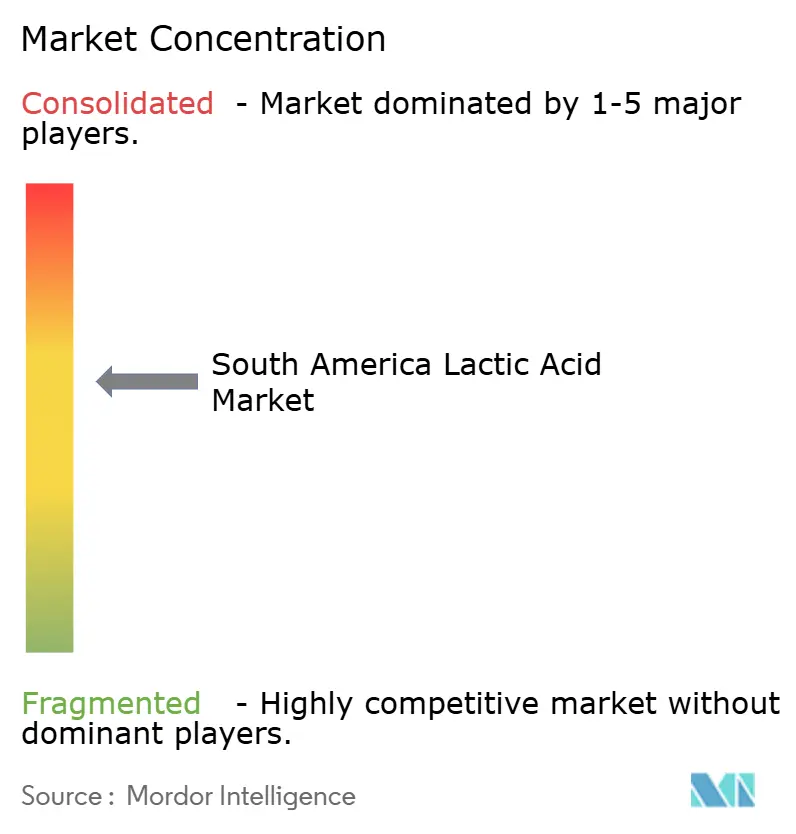
| Market Concentration | Medium |
Major Players *Disclaimer: Major Players sorted in no particular order Image © Mordor Intelligence. Reuse requires attribution under CC BY 4.0. | |
South America Lactic Acid Market Analysis by Mordor Intelligence
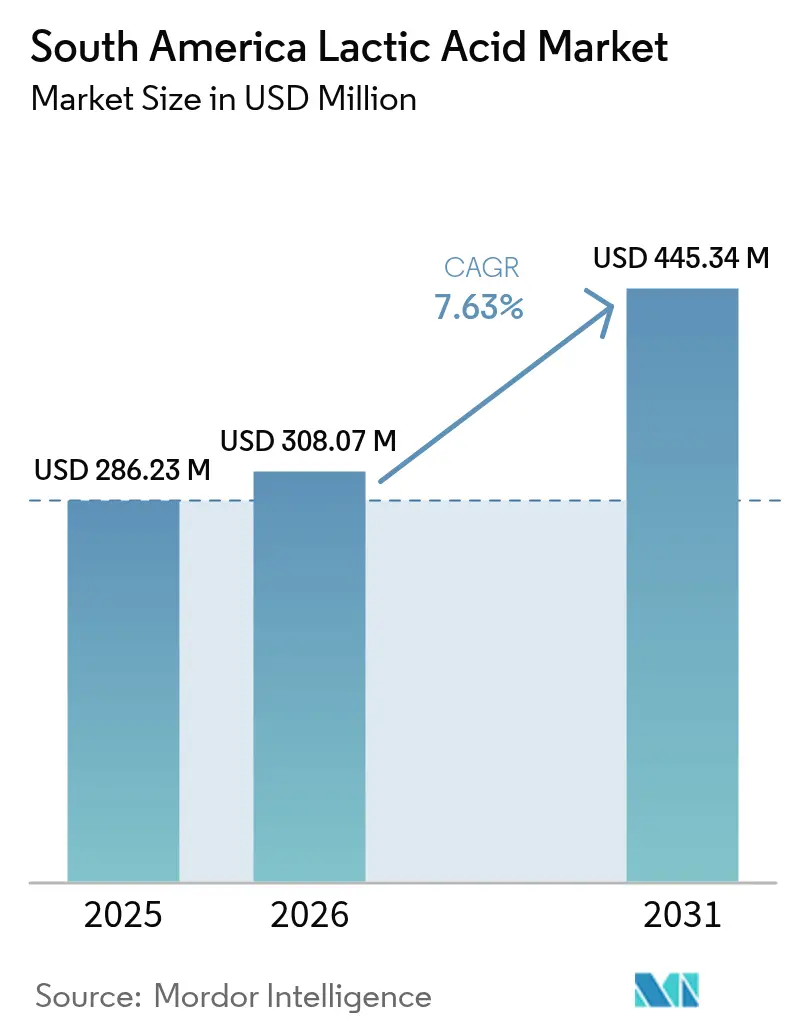
The South America lactic acid market size is expected to grow from USD 286.23 million in 2025 to USD 308.07 million in 2026 and is forecast to reach USD 445.34 million by 2031 at 7.63% CAGR over 2026-2031. This surge is largely driven by a rising demand for bio-based chemicals, bolstered by the region's rich reserves of sugarcane and corn feedstocks. Additionally, Brazil's supportive energy and industrial policies play a pivotal role. The food processing sector is gravitating towards clean-label formulations, while the pharmaceutical and personal care industries are broadening their application spectrum, fueling the market's growth. Geographical nuances significantly influence the market dynamics. Brazil's integrated sugarcane complex stands as the backbone of the regional supply, guaranteeing a consistent feedstock. Colombia is rapidly emerging as the quickest-growing consumer market, spurred by heightened demand across diverse sectors. In contrast, Argentina and Chile are honing in on premium-priced niches, catering to specific applications. The competitive arena is moderately intense, presenting avenues for both regional entities and global corporations to stake their claim. Companies are zeroing in on high-value grades and applications, aiming to solidify their presence in this burgeoning market.
Key Report Takeaways
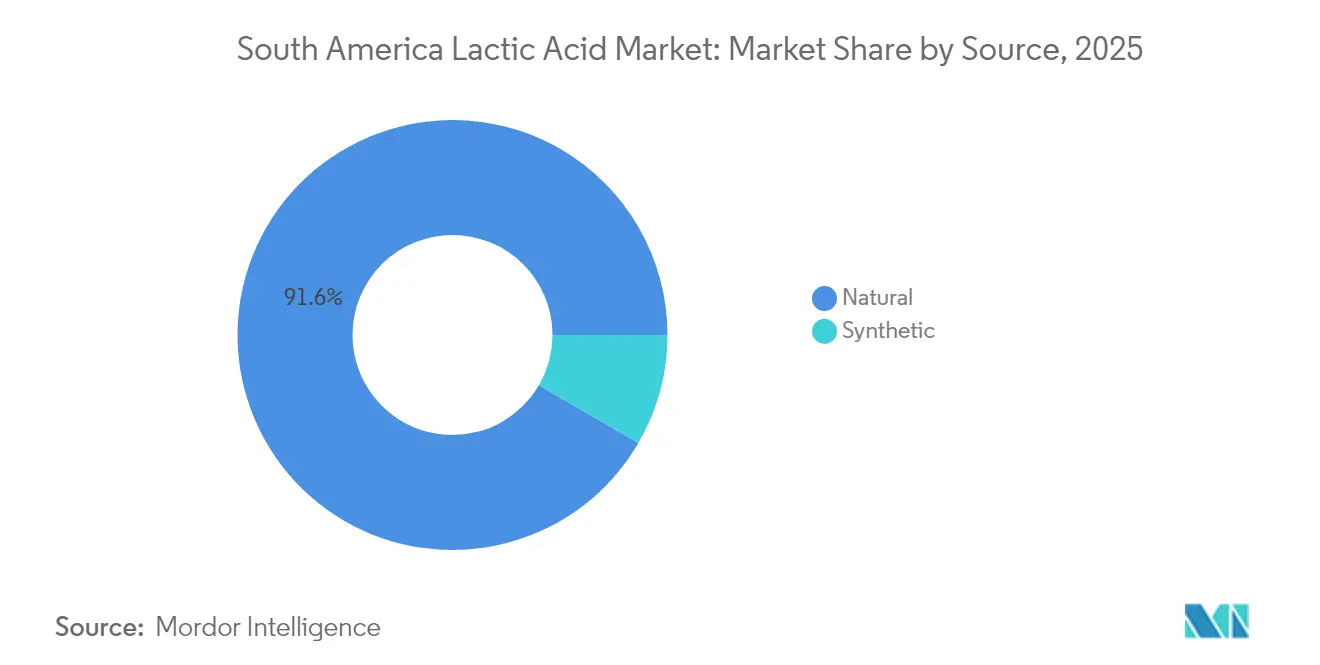
- By source, natural lactic acid held 91.62% of the South America lactic acid market share in 2025 and is projected to grow at a 8.11% CAGR to 2031.
- By form, the liquid segment accounted for 59.58% of the South America lactic acid market size in 2025; powder/granules is projected to grow at a 9.02% CAGR to 2031.
- By grade, food grade captured 64.78% revenue share in 2025, while pharmaceutical grade is set to expand at a 9.41% CAGR through 2031.
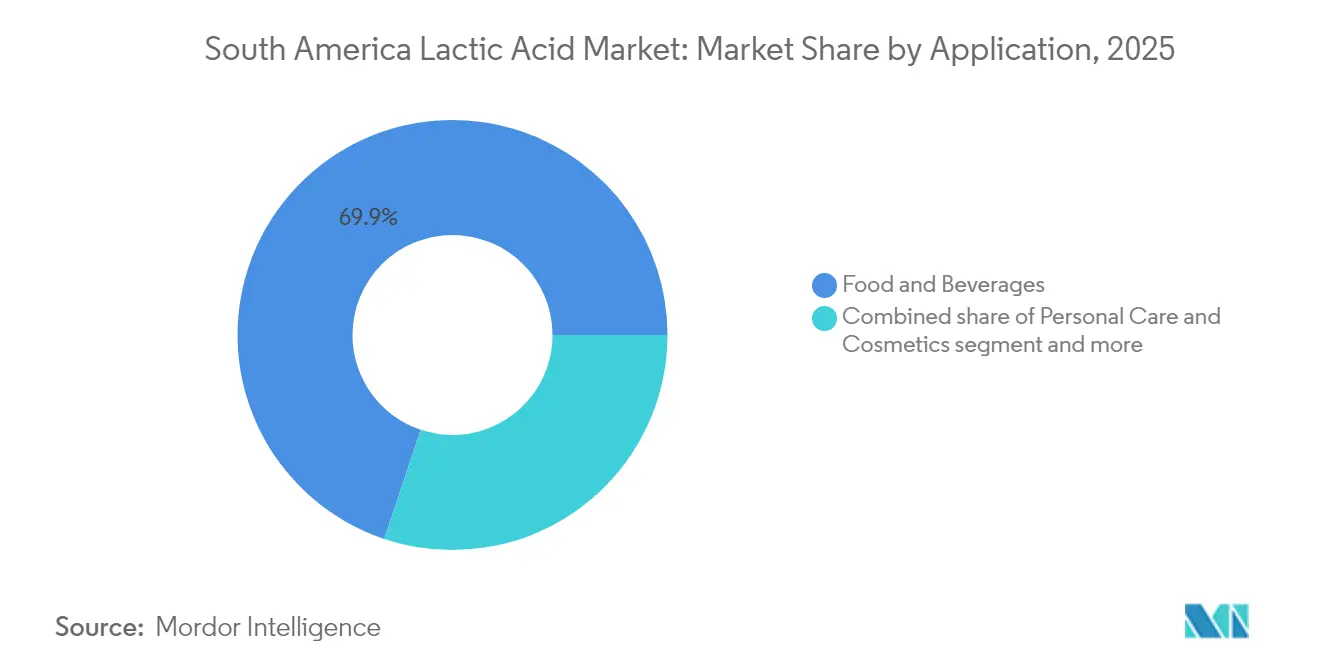
- By application, food and beverages commanded 69.86% of the South America lactic acid market size in 2025; personal care and cosmetics leads growth at 9.06% CAGR to 2031.
- By geography, Brazil led with a 47.62% revenue share in 2025, whereas Colombia posts the fastest 8.74% CAGR to 2031.
Note: Market size and forecast figures in this report are generated using Mordor Intelligence’s proprietary estimation framework, updated with the latest available data and insights as of 2026.
Market Trends and Insights
Drivers Impact Analysis of South America Lactic Acid Market*
| Driver | (~) % Impact on CAGR Forecast | Geographic Relevance | Impact Timeline |
|---|---|---|---|
| Growth of plant-based food processing in Brazil boosting demand for natural acidulants | +1.8% | Brazil, with spillover to Argentina and Colombia | Medium term (2-4 years) |
| Rising consumer preference for clean-label preservatives in bakery segment | +1.4% | Regional, with strongest adoption in Brazil and Chile | Short term (≤ 2 years) |
| Government incentives for sugarcane bio-based chemicals production in Brazil | +1.2% | Brazil, with competitive pressure on neighboring markets | Long term (≥ 4 years) |
| Increasing utilization of lactic acid in livestock feed acidifiers to combat antibiotic ban | +1.0% | Regional, with early gains in Brazil, Argentina, Colombia | Medium term (2-4 years) |
| Pharmaceutical companies adopting lactic acid for topical drug formulations in dermatology | +0.9% | Urban markets across Brazil, Argentina, Chile | Long term (≥ 4 years) |
| Rising demand for fermented dairy alternatives in urban South American markets | +0.7% | Urban centers in Brazil, Argentina, Colombia | Medium term (2-4 years) |
| Source: Mordor Intelligence | |||
Growth of plant-based food processing in brazil boosting demand for natural acidulants
Brazil's plant-based food sector is witnessing significant regulatory advancements, which are expected to drive the adoption of natural acidulants in manufacturing processes. Regulatory bodies such as ANVISA and MAPA are actively refining their frameworks for plant-based products. These updates aim to eliminate consumer confusion while establishing clear minimum identity and quality standards. This regulatory shift is fostering a standardized demand for natural preservatives, with lactic acid emerging as a key solution[1]. The proposed regulations mandate clear labeling to distinguish plant-based products from animal-based ones, encouraging manufacturers to adopt natural acidulants that align with clean-label and sustainability-focused strategies. Processing facilities are increasingly integrating lactic acid into their operations, leveraging its benefits for pH control and shelf-life extension across various applications, including plant-based meat alternatives, dairy substitutes, and fermented products. The sector's emphasis on innovation, particularly in developing plant-based and clean-label offerings, is further fueling the demand for natural acidulants. These ingredients not only comply with evolving regulatory requirements but also meet growing consumer expectations for sustainable and transparent product formulations. This dual alignment with regulatory and market trends positions natural acidulants as essential components in the continued growth of Brazil's plant-based food sector.
Rising consumer preference for clean-label preservatives in bakery segment
The clean-label movement is driving significant changes in South American bakery formulations as consumers increasingly demand transparency and natural ingredients over synthetic alternatives. Organic acids, particularly lactic acid, are emerging as key components due to their dual functionality. Lactic acid effectively combats foodborne pathogens such as E. coli and Salmonella through its dual mechanism of pH reduction and direct antimicrobial action, all while maintaining the sensory quality of baked goods. This capability enables formulators to replace synthetic preservatives without compromising food safety standards. In response to this growing demand, Brazilian bakery manufacturers are adopting lactic acid-based solutions that not only extend shelf life but also align with clean-label claims. Beyond preservation, lactic acid derivatives, such as PURACAL® PP, are being utilized to reduce acrylamide formation—a harmful compound generated during baking processes. This additional functionality highlights the versatility of lactic acid, making it a strategic ingredient for bakery manufacturers. By addressing consumer preferences for natural ingredients and adhering to stringent food safety regulations, lactic acid is playing a pivotal role in reshaping the bakery market in South America.
Government incentives for sugarcane bio-based chemicals production in brazil
Brazil's robust biofuel policy framework is driving significant opportunities for lactic acid production through the development of integrated biorefineries and the optimization of feedstocks. The "Fuel of the Future" law mandates an increase in ethanol blending from 22% to 27% and biodiesel blending from 14% to 20% by 2030, strengthening the sugarcane value chain and promoting sustainable energy practices[2]. This policy's focus on enhancing the renewable energy matrix creates downstream opportunities for chemical producers to capitalize on sugarcane-derived feedstocks for high-value applications beyond fuel production, such as bioplastics and other biochemical products. Additionally, Brazil's National Green Mobility and Innovation Program (Mover) has allocated BRL 3.5 billion in tax incentives for 2024, with planned annual increases to encourage environmentally friendly industrial practices. These incentives specifically target companies adopting sustainable production methods and relocating operations to Brazil, offering competitive advantages to lactic acid producers utilizing bio-based feedstocks. By integrating biofuel and biochemical production, manufacturers can achieve economies of scale, reduce production costs, and benefit from shared infrastructure investments, further solidifying Brazil's position as a global leader in sustainable chemical production.
Increasing utilization of lactic acid in livestock feed acidifiers to combat antibiotic ban
In South America, evolving livestock regulations are driving the adoption of lactic acid-based feed acidifiers as producers shift away from growth-promoting antibiotics. Countries such as Argentina, Brazil, Chile, Colombia, and Uruguay have implemented marketing authorization systems for veterinary medical products. Among these, four countries have banned the use of growth promoters derived from critically important antibiotics, creating a regulatory environment that encourages the use of organic acid alternatives. These alternatives not only support animal performance but also align with antimicrobial resistance (AMR) prevention strategies, which are becoming a priority across the region. Brazil, in particular, is poised for significant growth in its animal nutrition market during the forecast period. ADM, a key player in the industry, expands its production capacity by 40% in 2024 by establishing new premix facilities in Paraná. This expansion is strategically designed to serve both domestic and regional markets, with a focus on customized formulations for the poultry and aquaculture sectors. Lactic acid plays a pivotal role in these formulations, offering dual benefits of pathogen control and improved feed conversion efficiency. Additionally, lactic acid bacteria fermentation is recognized for its ability to enhance nutrient bioavailability while reducing the formation of harmful compounds. This process supports animal health and improves production economics, making it a valuable solution for intensive farming operations. As regulatory frameworks continue to evolve, the demand for such sustainable and performance-enhancing feed solutions is expected to grow, further shaping the market dynamics in South America.
Restraints Impact Analysis of South America Lactic Acid Market*
| Restraint | (~) % Impact on CAGR Forecast | Geographic Relevance | Impact Timeline |
|---|---|---|---|
| Volatility in feedstock (corn, sugarcane) prices impacting production margins | -1.6% | Brazil primarily, with secondary effects in Argentina | Short term (≤ 2 years) |
| Limited availability of food-grade fermentation infrastructure outside Brazil | -1.2% | Argentina, Colombia, Chile, Peru | Medium term (2-4 years) |
| Stringent effluent disposal norms increasing operating costs in Andean countries | -0.8% | Chile, Peru, Colombia | Long term (≥ 4 years) |
| Competition from cheaper imported acidulants such as citric acid from Asia | -0.9% | Regional, with strongest impact in Argentina and Chile | Short term (≤ 2 years) |
| Source: Mordor Intelligence | |||
Volatility in feedstock (corn, sugarcane) prices impacting production margins
South American lactic acid producers are facing significant margin pressures due to feedstock price instability, driven by heightened volatility in agricultural commodity markets influenced by climate and policy factors. In Brazil, sugarcane production remains under strain from adverse weather conditions. The 2025/26 harvest is projected to decline by 2% compared to the previous season, despite a stable cultivation area. This decline is attributed to a 2.3% drop in productivity caused by drought conditions in key producing regions, which is driving up feedstock costs for manufacturers reliant on sugarcane-derived substrates. Simultaneously, the rapid expansion of corn ethanol production is intensifying competition for corn feedstocks. Brazil's corn consumption is expected to reach 3,464 million bushels in 2024/25, as 25 operational ethanol plants compete with traditional feed and food applications. This dual challenge of reduced sugarcane availability and heightened corn demand has pushed domestic feedstock prices to their highest levels since 2022. To navigate these pressures, lactic acid producers are optimizing their feedstock sourcing strategies and actively exploring alternative substrate options. These measures are critical for maintaining competitive positioning in a market increasingly shaped by supply chain disruptions and rising input costs.
Limited availability of food-grade fermentation infrastructure outside brazil
Brazil's neighboring countries face significant infrastructure challenges, which impede regional market growth. Established industrial hubs in the region dominate food-grade fermentation capacity, while Brazil's integrated sugar mill infrastructure, designed to support biochemical production, highlights a stark disparity. In contrast, neighboring nations lack the industrial foundation necessary for large-scale fermentation processes. Argentina enforces strict regulations for animal feed production facilities, requiring registration and compliance with rigorous hygiene and sanitary standards. These regulatory demands significantly increase infrastructure investment requirements. Smaller operations aiming to enter the lactic acid production market face substantial barriers, including high upfront costs for technical oversight and quality control systems. As of 2023, the U.S. Department of Commerce reports that Colombia's processed food sector contributes 28% to its manufacturing output but remains heavily reliant on imports[3]. This dependency is primarily due to limited domestic capacity for producing specialized chemicals, such as pharmaceutical-grade lactic acid. While this infrastructure gap creates opportunities for established players to expand regionally, it simultaneously poses significant challenges for new entrants. Without access to food-grade fermentation facilities and robust quality assurance systems, these newcomers face considerable obstacles in competing within the market.
*Our forecasts treat driver/restraint impacts as directional, not additive. The impact forecasts reflect baseline growth, mix effects, and variable interactions.
South America Lactic Acid Market Segment Analysis
By Source:
Natural Segment DominanceIn 2025, natural lactic acid commands a dominant 91.62% market share and is set to expand at a robust CAGR of 8.11% through 2031. This growth is largely driven by Brazil's rich agricultural feedstock and a rising consumer appetite for bio-based ingredients. Brazil's sophisticated sugarcane processing infrastructure, easily adaptable for biochemical production, provides a notable cost edge over synthetic counterparts. Furthermore, the Brazilian Ministry of Agriculture's stringent safety and efficacy standards for natural feed ingredients bolster the adoption of naturally derived lactic acid in animal nutrition. The recent enactment of Law #15,070/2024 further fortifies the natural segment, instituting rigorous quality benchmarks for microbial and biotechnological products in agriculture and livestock, thereby ensuring product consistency and market expansion.
Moreover, bolstered by government initiatives championing bio-based chemical production and the surging use of natural lactic acid in clean-label food products, the market is witnessing significant growth. In 2023, Brazil's Energy Research Office highlighted a record sugarcane processing volume of 713 million tons, buoyed by both sugarcane and corn-based ethanol production. This achievement guarantees a reliable feedstock supply for natural lactic acid producers. Additionally, the Development Bank of Latin America's commitment to sustainable development and enhancing environmental quality further propels the preference for natural chemicals over synthetic ones across diverse industrial applications.

By Form:
Liquid Form LeadershipIn 2025, liquid lactic acid secures a significant 59.58% share of the market, driven by its operational efficiency in large-scale food processing and its seamless incorporation into beverage formulations. The liquid form offers ease of handling and precise dosing, which are critical for applications such as dairy acidification, meat preservation, and beverage pH control. These attributes make it indispensable in South America's expansive food processing industry. Additionally, Argentina's stringent food code, which outlines specific standards for dairy products and food additives, has fostered a standardized demand for liquid acidulants. These acidulants integrate effortlessly into existing processing systems, further solidifying their market dominance.
The powder and granules segment is poised for rapid growth, with a projected CAGR of 9.02% through 2031. This growth is fueled by the increasing preference for shelf-stable formulations in dry mix applications and export markets, where concentrated forms reduce transportation costs. The segment also benefits from industrial applications, particularly in water treatment. The World Bank has highlighted the need for significant investments in Latin America's wastewater infrastructure, estimating USD 80 billion for sewerage and USD 33 billion for wastewater treatment between 2010 and 2030. These investments create opportunities for powder forms in industrial water treatment processes. Moreover, the powder segment is gaining traction in the animal feed industry, where its dry mixing capabilities and extended shelf life provide operational advantages. These features are particularly valuable for feed manufacturers catering to the region's growing livestock sector, further driving the segment's expansion.
By Grade:
Food Grade DominanceIn 2025, food-grade lactic acid holds a commanding 64.78% share of the market, highlighting its pivotal role in South America's thriving food processing industry. This dominance is supported by well-established regulatory frameworks that ensure clarity and compliance for food applications. Argentina's food code provides precise specifications for food additives, while Brazil's ANVISA offers clear guidelines for food ingredient approvals, fostering confidence among manufacturers. Additionally, the U.S. Department of Commerce reports that Colombia's processed food sector accounts for 28% of the country's manufacturing production, with a growing focus on healthy and organic products driving demand for natural acidulants like food-grade lactic acid. Chile, as the second-largest market for U.S. agricultural exports in Latin America, further contributes to the rising demand for food-grade ingredients in processed food applications, solidifying the segment's market position.
Pharmaceutical-grade lactic acid is emerging as the fastest-growing segment, with a projected CAGR of 9.41% through 2031. This growth is fueled by its expanding applications in topical drug formulations and dermatological treatments, particularly in urban markets where demand for advanced healthcare solutions is increasing. Peru's ongoing regulatory modernization, led by agencies such as MINSA, is enhancing pharmaceutical and food safety standards, creating a favorable environment for the adoption of pharmaceutical-grade lactic acid. The segment's rapid growth is also driven by its use in parenteral applications and nutraceuticals, where stringent quality requirements enable premium pricing opportunities. Established suppliers with strong quality assurance capabilities are well-positioned to capitalize on this trend, further accelerating the segment's expansion.
By Application:
Food and Beverages LeadershipIn 2025, food and beverage applications dominate the market with a 69.86% share, emphasizing lactic acid's indispensable role in food preservation, acidification, and flavor enhancement across South America. This segment includes bakery applications that extend product shelf life, dairy processing to regulate pH levels, meat preservation to inhibit spoilage, and beverage formulations that enhance taste profiles. The U.S.-Colombia Trade Promotion Agreement has streamlined market entry for food ingredients, significantly driving the adoption of lactic acid in Colombia's growing processed food sector. Additionally, the rising demand for convenience foods and clean-label products further supports the expansion of lactic acid applications in the region.
The personal care and cosmetics segment is poised to grow at an impressive 9.06% CAGR through 2031, fueled by increasing consumer preference for natural moisturizing agents and anti-aging formulations, particularly in urban areas of South America. This growth is underpinned by heightened awareness of natural alternatives to synthetic ingredients, with premium skincare products gaining popularity among urban consumers. Chile, with its high per capita GDP and strong inclination toward imported, high-quality products, presents lucrative opportunities for premium personal care applications. Furthermore, the country's environmental assessment system promotes sustainable ingredient sourcing, while regulatory clarity for cosmetic ingredients and rapid urbanization across major South American cities create a favorable environment for market growth. The rising focus on eco-friendly and ethically sourced products also aligns with evolving consumer preferences, further driving the segment's expansion.
Geography Analysis
Brazil Lactic Acid Market
Brazil's dominance in the market is attributed to its vast agricultural resources, advanced industrial infrastructure, and strong policy framework supporting bio-based chemical production. In 2025, Brazil holds a commanding 47.62% market share, primarily due to its integrated sugarcane processing capabilities. Sugar mills in the country have transitioned into biorefineries, enabling the production of multiple biochemicals from a single feedstock stream. According to the USDA's 2024 market assessment report, Brazil's food processing sector contributes approximately 10.8% to the GDP, driving substantial demand for lactic acid in applications such as preservation, acidification, and flavor enhancement. However, the sector faces challenges from sugarcane production volatility. The 2024/25 harvest saw a 4.8% decline due to adverse climatic conditions, resulting in increased feedstock costs for lactic acid producers.
Argentina and Chile Lactic Acid Market
Argentina and Chile are well-established markets with unique regulatory frameworks and competitive dynamics influencing lactic acid adoption. Argentina's comprehensive food code enforces strict standards for dairy products and food additives, ensuring consistent demand for high-quality acidulants while increasing compliance costs for producers. The livestock sector in Argentina benefits from MERCOSUR's harmonized trade policies, which facilitate regional trade while maintaining stringent food safety standards. In Chile, a high per capita GDP and a strong preference for premium imported products create significant market opportunities. The country ranks as the second-largest market for U.S. agricultural exports in Latin America. However, Chile's rigorous environmental assessment system, requiring an average of 386 days for Environmental Impact Declarations, poses challenges for new production facilities, thereby favoring established players in the market.
South America Lactic Acid Market
Colombia is emerging as the fastest-growing market, with a projected CAGR of 8.74% through 2031. This growth is fueled by the expansion of food processing capabilities and rising consumer demand for natural ingredients. Colombia's processed food sector accounts for 28% of the country's manufacturing production, with an increasing focus on healthy and organic products that favor natural acidulants over synthetic alternatives. In Peru, market growth is supported by regulatory modernization efforts. Agencies such as MINSA, SENASA, and INACAL are working collaboratively to enhance food safety standards and streamline ingredient approval processes. Furthermore, Peru's extensive network of free trade agreements with countries like the USA, China, and the European Union creates opportunities for both ingredient imports and export-oriented production growth. The rest of South America consists of smaller markets where demand is shaped by urbanization and growing consumer awareness of clean-label ingredients. However, infrastructure limitations outside major industrial hubs continue to restrict local production capabilities.
Regulatory Landscape
Food additive compliance in South America is shaped by MERCOSUR technical regulations issued through the Common Market Group (GMC), which are then internalized by national authorities. This results in a dual layer of regional harmonization and country-specific enforcement. In Brazil, ANVISA maintains and periodically updates the consolidated list of permitted food additives, their technological functions, and maximum limits under Normative Instruction (IN) No. 211/2023, with additional amendments published in 2025, including IN No. 395/2025 and IN No. 407/2025, that update authorized additive provisions aligned to MERCOSUR changes.
Across the region, country-level registration and approvals remain important for market access. Argentina requires approval and registration of food additives and processing aids under the Argentine Food Code via SENASA processes, while other markets apply their own internalization and compliance pathways even when MERCOSUR lists are referenced. For suppliers of lactic acid across food, pharma, and feed uses, this framework increases the importance of dossier readiness, including intended function, use conditions, and limits, along with consistent specifications that can satisfy both MERCOSUR-aligned lists and national administrative requirements.
Competitive Landscape
In South America, the lactic acid market is moderately consolidated with a mix of national and international players competing for dominance. Major competitors are investing in product development and broadening application markets, while also adopting strategic marketing to counteract commodity cost volatility. Key players in this arena include Corbion NV, Cargill, Incorporated, BASF SE, and Archer-Daniels-Midland Company.
Technological differentiation plays a pivotal role in the competitive landscape. For instance, Corbion leverages specialized production methods and boasts quality certifications, including the exclusive Certificate of Suitability for calcium lactate from the European Directorate for the Quality of Medicines. Strategic focuses diverge, with some players catering to commodity-grade applications and others pursuing the lucrative pharmaceutical and cosmetic segments.
Pharmaceutical-grade production outside Brazil presents white-space opportunities. Here, infrastructure challenges deter new entrants but offer expansion avenues for established players with the requisite technical expertise. The market structure supports both horizontal integration, allowing companies to diversify across grades and applications, and vertical integration, which emphasizes feedstock security and access to downstream markets.
South America Lactic Acid Industry Leaders
-
Corbion NV
-
Cargill, Incorporated
-
BASF SE
-
Archer-Daniels-Midland Company
-
Henan Jindan Lactic Acid Co., Ltd.
- *Disclaimer: Major Players sorted in no particular order
South America Lactic Acid Market Companies Covered in this Report
- Corbion NV
- Cargill, Incorporated
- BASF SE
- Archer-Daniels-Midland Company
- Galactic Holdings, Inc
- Henan Jindan Lactic Acid Co., Ltd.
- Jungbunzlauer Suisse AG, Basel
- Arshine Food Additives Co., Ltd.
- Cellulac plc,
- Brenntag AG
- Dsm-Firmenich AG
- Futerro SA
- Univar Solutions LLC.
- Shenzhen Esun Industrial Co., Ltd.
- BBCA Group Corporation
- International Flavors & Fragrances (Danisco)
- Natureworks LLC
- Musashino Chemical Laboratory, Ltd.
- DuPont de Nemours, Inc.
- Tokyo Chemical Industry Co., Ltd.
Market Opportunities and Future Outlook
One clear opportunity is localized technical support and supply assurance for clean-label preservation and pH control applications across bakery, meat, dairy, and beverages. This is particularly relevant as regional manufacturers standardize formulations around permitted additive functions and limits. Corbion has reinforced this direction through actions that strengthen Latin America support infrastructure, including a major facility upgrade announced in September 2024 in Queretaro, Mexico. The upgrade doubled production capacity and added dedicated R&D laboratory space for bakery, meat, and confectionery customers, complementing its South America footprint, including a lactic acid manufacturing facility in Campos dos Goytacazes, Rio de Janeiro, Brazil. These moves are geared toward faster application development, troubleshooting, and tailored ingredient systems for customers operating under evolving national and MERCOSUR-aligned compliance.
A second whitespace sits in higher-value grades and downstream bio-based materials tied to circular-economy packaging initiatives, where lactic acid serves as an upstream input for polylactic acid (PLA) and related derivatives. In Brazil, industrial policy signals that support the sugarcane value chain and integrated biorefinery economics, including the Fuel of the Future law and the Mover incentive framework referenced in the market context, keep attention on bio-based chemical routes beyond fuels. That creates room for suppliers to secure fermentation substrates and deliver consistent food, cosmetic, and pharmaceutical specifications. Outside Brazil, limited food-grade fermentation infrastructure and tighter environmental permitting in some countries lift the importance of established producers and distributors that can provide compliant imported supply, documentation, and quality assurance for regulated end uses.
Recent Industry Developments in South America Lactic Acid Market
- July 2026: Corbion outlined its growth strategy for sustainable ingredients, including its lactic acid and bio-based solutions portfolio, in a public investor-facing update. The communication reinforced its positioning in food and biochemical applications that rely on fermentation-based inputs, supporting customer engagement and longer-term supply planning across regions that import or source from Latin America.
- April 2025: Cargill described a restructuring of its South American operations into a unified Latin America division while also referencing significant local investment activity in Brazil. The organizational shift supports tighter coordination across agriculture, fermentation-adjacent inputs, and downstream customer sectors such as food processing and animal nutrition, influencing how capacity, sourcing, and commercial coverage are managed in the region.
- September 2024: Corbion announced a major facility upgrade in Queretaro, Mexico, doubling production capacity and adding dedicated R&D laboratory space to support bakery, meat, and confectionery customers in Latin America. Expanded regional technical and production capability strengthens formulation support for preservative and acidulant systems where lactic acid and derivatives are used, reducing reliance on long-distance supply chains for functional ingredients.
South America Lactic Acid Market Report Scope and Research Methodology
Market Definition and Coverage
This market is defined as the value of lactic acid sold for use across food, beverage, industrial, and other end uses within South America, counted at the point of commercial sale and reported in USD for the stated year.
Scope exclusions: It excludes downstream product values (such as finished foods or PLA packaging), internal transfers without a sale price, and unrelated organic acids.
Segments Covered in This Report
- By Source
- Natural
- Synthetic
- By Form
- Liquid
- Solid (Powder/Granules)
- By Grade
- Food Grade
- Industrial Grade
- Pharmaceutical Grade
- Cosmetic Grade
- By Application
- Food and Beverages
- Bakery
- Confectionery
- Dairy Products
- Meat, Poultry and, Seafood
- Beverages
- Other Food and Beverage Applications
- Personal Care and Cosmetics
- Pharmaceutical
- Animal Feed
- Industrial and Chemical Processing
- Food and Beverages
- By Geography
- Brazil
- Argentina
- Colombia
- Chile
- Peru
- Rest of South America
Data Sources, Market Sizing, and Validation
Desk Research
Desk research was used to build a clean starting structure for the market and to cross-check how demand signals typically look across South America. We relied on public sources such as national statistics agencies and customs authorities for import and export trends, FAO data for feedstock availability, and central bank releases for inflation and currency context.
To anchor application demand, we also reviewed sources such as food and beverage regulation notices, pharmacopoeia references where relevant, peer reviewed articles on fermentation and organic acids, and trade association publications tied to food ingredients and biochemicals. Company annual reports, investor presentations, and reputable press were used to understand capacity announcements and price movement narratives. Where needed, paid subscriptions for company financials and intelligence, patent databases, and shipment-level trade datasets were used to fill gaps that are hard to resolve from public data alone. These sources are illustrative, and other references were used for data collection, validation, and clarification during the work.
Primary Interviews and Surveys
Interviews and surveys with producers, distributors, formulators, and purchasing managers in South America clarify local pricing, available capacity, product grades, and purchasing patterns. Respondent input is used to test secondary data, address gaps in country-level evidence, and triangulate assumptions before the final analysis.
Distribution of primary research fieldwork respondents
| Company type | Respondent position |
|---|---|
| Top tier: 22% | CXOs: 15% |
| Mid tier: 58% | Functional/Unit leaders: 30% |
| Smaller Players: 20% | Managers: 55% |
Market-Sizing & Forecasting
The core sizing logic uses a top-down build where production and trade data are used to reconstruct the regional availability of lactic acid, then adjusted using consumption indicators linked to key end uses in South America. These totals are corroborated with selective bottom-up approximations, including sampled supplier and distributor revenue checks, and an ASP times volume sense-check across major application baskets.
Key inputs that shaped the model include fermentation feedstock cost direction (such as sugarcane and corn), import dependence by country, capacity utilization expectations, the share of food grade versus industrial grade material, and application pull from beverages, dairy, meat processing, and industrial uses. Since pricing can move with both feedstock and FX, we used scenario analysis for forecasting, then aligned scenarios to expert consensus gathered in interviews so the base case remains practical. Where bottom-up data was incomplete for smaller channels, gaps were handled using mix-based proxies from trade and distributor insights, followed by a review of whether the implied per-capita use was reasonable for each country cluster.
Data Validation & Update Cycle
Validation was done in layers so single-source bias did not drive the outcome. Model outputs were checked against independent signals such as country-level trade balances, announced plant changes, and implied application demand intensity, and then outliers were reviewed and corrected with follow-up calls when needed.
Before sign-off, the work goes through multi-step analyst reviews that re-check unit consistency, FX treatment, and the year-to-year movement of ASP and volume. The report is refreshed annually, and interim updates are triggered when material events occur, such as sharp currency swings, major capacity shifts, or policy changes that impact food and industrial consumption. Right before delivery, a fresh pass is completed so clients receive the latest updated view.
Mordor Intelligence's South America Lactic Acid Market Size Compared With Other Published Estimates
Published market sizes for South America lactic acid often vary, even when the topic sounds the same, because the pricing year, currency timing, and what gets counted as market value are not handled consistently across sources. Differences also come from whether estimates lean more on reported trade flows versus broader demand assumptions that may not be tested with buyers.
A common gap driver is refresh cadence, since recent FX moves and feedstock-linked price changes can shift USD market value even when volumes stay steady, and the timing of the conversion rate matters. Another driver is ASP logic, where some estimates apply a single regional average price across all grades and uses, while others separate food grade and industrial pricing and then weight by application mix. By forcing annual refresh checks on FX timing and re-validating the implied ASP range with regional interviews, Mordor Intelligence keeps the 2025 market size closer to what suppliers and buyers recognized during fieldwork.
Benchmark comparison
| Source | Market Size | Gaps in Research Methodology |
|---|---|---|
| Mordor Intelligence | USD 286.23 M (2025) | |
| Regional Consultancy A | USD 358.71 M (2024) | This figure appears to be set on a different base year and may reflect a broader price assumption for the region, so the USD value can look higher if FX timing and grade mix are not rechecked for South America specific applications. |
| Trade Journal B | USD 165.80 M (2024) | This estimate is published for a wider Latin America scope label but with a smaller stated total, which often happens when the counted scope is narrower (for example, focusing on select feedstock pathways or revenue definitions) and when price refresh is not aligned to country mix inside South America. |
Taken together, the spread is mainly explained by year alignment, currency conversion timing, and whether ASP is split by grade and end use before weighting. With clear scope boundaries and repeatable checks tied to trade, capacity signals, and interview-led price ranges, our model provides a practical number that can be updated consistently as the region changes.
Key Questions Answered in the Report
What is the current value of the South America lactic acid market?
The market stands at USD 308.07 million in 2026.
How fast is the market expected to grow?
It is forecast to reach USD 445.34 million by 2031, showing an 7.63% CAGR.
Which country holds the largest market share?
Brazil leads with 47.62% revenue share in 2025.
Why is natural lactic acid so prominent in the region?
Natural grades capture 91.62% share because abundant sugarcane and corn feedstocks align with clean-label consumer preferences and supportive Brazilian policies.