
Market Overview
| Study Period | 2021 - 2031 |
|---|---|
| Forecast Data Period | 2026 - 2031 |
| Base Year Market Size (2025) | USD 2.50 Million |
| Market Size (2026) | USD 2.68 Million |
| Market Size (2031) | USD 3.82 Million |
| Growth Rate (2026 - 2031) | 7.31 % |
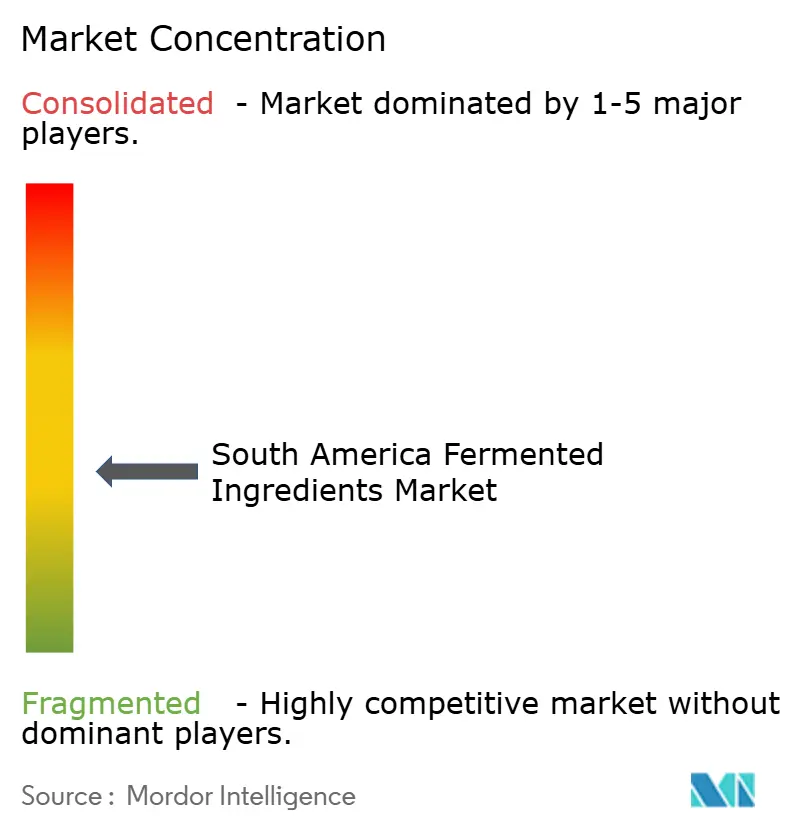
| Market Concentration | Medium |
Major Players *Disclaimer: Major Players sorted in no particular order Image © Mordor Intelligence. Reuse requires attribution under CC BY 4.0. | |
South America Fermented Ingredients Market Analysis by Mordor Intelligence
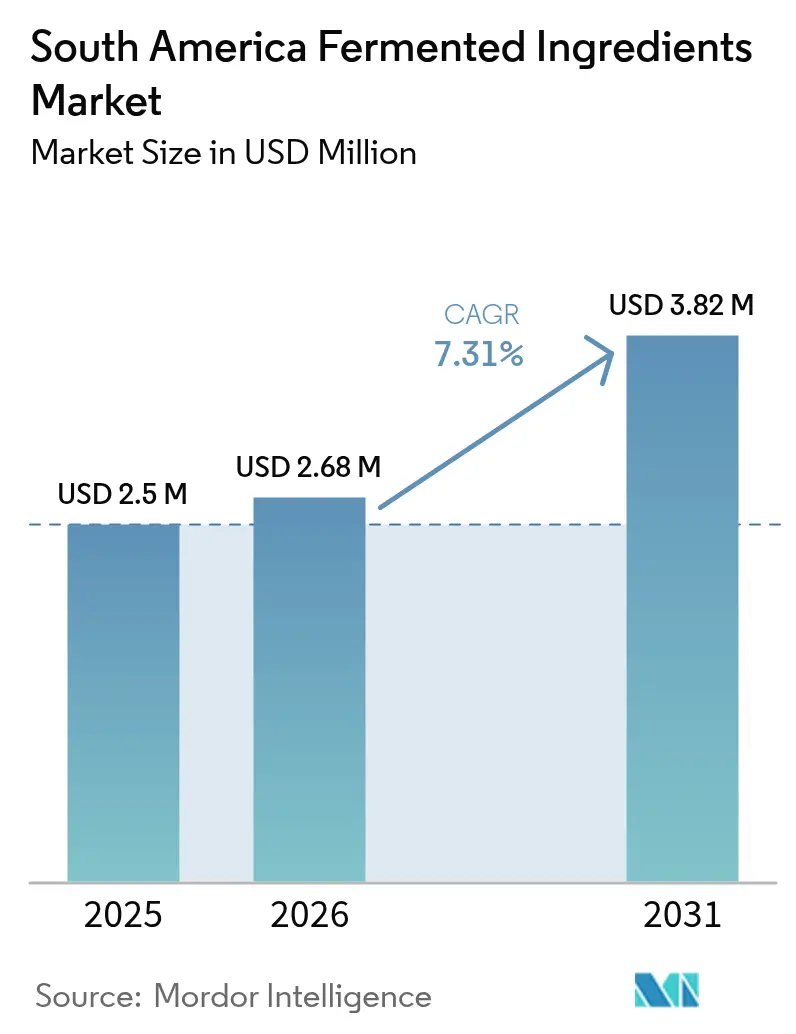
South American fermented ingredients market size in 2026 is estimated at USD 2.68 million, growing from 2025 value of USD 2.50 million with 2031 projections showing USD 3.82 million, growing at 7.31% CAGR over 2026-2031. Expansion rests on the region’s plentiful crop feedstocks, improving bio-inputs legislation, and manufacturers’ pivot toward bio-based solutions in food, feed, and industrial uses. Livestock growth in Brazil and Argentina sustains steady demand for amino-acid feed additives, while national bioeconomy programs funnel public funds into fermentation capacity. Multinational players add scale through green-field factories, yet local start-ups remain agile in specialty niches that leverage indigenous fermentation know-how. Supply-chain resilience is improving as ethanol and sugar co-products are valorized into substrates, but cost parity with petrochemical substitutes remains elusive in capital-intensive polymers and specialty proteins.
Key Report Takeaways
- By product type, amino acids led with 44.12% of the South America fermented ingredients market share in 2025, and polymers are projected to expand at a 9.18% CAGR through 2031.
- By form, dry products accounted for 59.05% share of the South America fermented ingredients market size in 2025, while liquid formulations are set to grow at a 9.88% CAGR through 2031.
- By application, food and beverages held 51.82% of the South America fermented ingredients market in 2025, and industrial uses are forecast to climb at an 8.63% CAGR through 2031.
- By geography, Brazil dominated with a 59.48% share in 2025, whereas Chile is anticipated to register a 8.79% CAGR between 2026-2031.
Note: Market size and forecast figures in this report are generated using Mordor Intelligence’s proprietary estimation framework, updated with the latest available data and insights as of 2026.
Market Trends and Insights
Drivers Impact Analysis of South America Fermented Ingredients Market*
| Drivers | (~) % Impact on CAGR Forecast | Geographic Relevance | Impact Timeline |
|---|---|---|---|
| Booming animal-protein exports fuelling demand for feed-grade amino acids | +1.8% | Brazil, Argentina core, spillover to Uruguay and Paraguay | Medium term (2-4 years) |
| Rising clean-label trend in Food and Beverages driving switch to bio-based additives | +1.5% | Global, with early gains in Brazil, Chile, Colombia | Long term (≥ 4 years) |
| National bio-inputs programs in Brazil and Argentina subsidising fermentation capacity | +1.2% | Brazil and Argentina, limited spillover to MERCOSUR partners | Short term (≤ 2 years) |
| Cultural Affinity for Fermented Foods Supporting Traditional Fermentation Ingredients | +0.9% | Regional, strongest in Peru, Ecuador, Colombia indigenous areas | Long term (≥ 4 years) |
| Rising consumer awareness and demand for natural, healthy foods | +1.1% | Urban centers across South America, led by Brazil and Chile | Medium term (2-4 years) |
| Advancements in Biotechnology Supporting Scalable Fermentation Processes | +1.0% | Brazil core, emerging in Argentina and Chile | Long term (≥ 4 years) |
| Source: Mordor Intelligence | |||
Booming Animal-Protein Exports Fuelling Demand for Feed-Grade Amino Acids
South America's livestock sector expansion creates cascading demand for fermented feed additives, particularly as the region consolidates its position as the world's protein supplier. This protein boom drives amino acid demand beyond traditional lysine and methionine toward specialized fermentation-derived compounds like threonine and tryptophan, essential for optimizing feed conversion ratios in intensive production systems. Brazil's position as the world's largest beef exporter and second-largest poultry producer creates structural demand for fermentation-derived feed additives, particularly as environmental regulations push producers toward bio-based alternatives to synthetic growth promoters. The sector's projected growth to 43.7 billion liters of ethanol demand by 2033 also generates substantial co-product streams suitable for fermentation substrate applications, according to the International Energy Agency data[1]. Argentina's recent reduction in export tariffs on soybean products enhances the region's competitiveness in global protein markets, further amplifying demand for feed-grade fermentation products as producers seek margin optimization through improved feed efficiency.
Rising Clean-Label Trend in Food and Beverages Driving Switch to Bio-Based Additives
Brazil’s food-processing sector generated USD 209 billion in 2022, and updated supplement rules under Normative Instruction 284/2028 clarify the use of enzymes and probiotics in finished products, according to the ANVISA data. Brand owners respond by replacing synthetic preservatives with fermentation-derived lactic and citric acids that deliver recognizable labels and acidic impact. Consumer surveys in major Brazilian and Chilean cities show a willingness to pay premiums for naturally sourced texturizers, spurring uptake of fermented gums and cultures in snacks and dairy lines. Retailers amplify demand by expanding “free-from” aisles, nudging processors toward short-ingredient panels rooted in bio-derived components. Together, regulatory clarity and purchasing shifts translate into sustained, margin-accretive growth for clean-label solutions within the South American fermented ingredients market.
National Bio-Inputs Programs in Brazil and Argentina Subsidising Fermentation Capacity
Brazil’s Federal Law 15,070/2024 mandates registration, inspection, and innovation incentives for bio-inputs factories, opening doors for commercial and on-farm fermentation units. The legislation allows both commercial biofactories and personal-use production units, creating multiple market entry points for fermentation technology providers. Argentina's Agricultural Bio-inputs Program (PROBIAAR) supports domestic companies producing bio-fertilizers and bio-pesticides, with 131 registered companies by 2022, of which 97 are domestic enterprises. These programs reduce regulatory barriers and provide financial incentives that lower the cost of capital for fermentation capacity investments, particularly benefiting small and medium enterprises seeking to commercialize traditional fermentation knowledge.
Cultural Affinity for Fermented Foods Supporting Traditional Fermentation Ingredients
Traditional fermentation practices in South America present opportunities to scale artisanal processes for commercial use, driven by consumer demand for authentic, traditional food experiences. These fermented products contain significant levels of lactic acid bacteria, specifically Lactiplantibacillus plantarum and Lacticaseibacillus species, which demonstrate robust stress tolerance and adhesion properties beneficial for probiotic development. Fermentation's cultural importance in the region encompasses both beverages and dairy products such as kumis and suero costeño, which has established consumer acceptance of fermented ingredients in processed foods. Traditional fermented products function as nutraceuticals, delivering essential nutrients and health benefits to communities while providing models for new product development using traditional ingredients. This established cultural acceptance facilitates market entry for fermentation-derived ingredients, especially when products emphasize their connection to traditional food practices. The increased focus on preserving indigenous food heritage creates opportunities to develop fermentation-derived ingredients that maintain traditional methods while adhering to modern food safety and production standards.
Restraints Impact Analysis of South America Fermented Ingredients Market*
| Restraints | (~) % Impact on CAGR Forecast | Geographic Relevance | Impact Timeline |
|---|---|---|---|
| Price Competition from Synthetic Petrochemical-Based Ingredients | -1.4% | Global, particularly impacting Brazil and Argentina export competitiveness | Short term (≤ 2 years) |
| Limited Research and Development and Technical Expertise | -1.1% | Regional, most acute in Chile, Colombia, and smaller economies | Medium term (2-4 years) |
| Economic and Geopolitical Uncertainties | -0.8% | Argentina core, spillover effects across MERCOSUR trade relationships | Short term (≤ 2 years) |
| Dependence on Imported Raw Materials for Fermentation Processes | -0.6% | Regional, affecting specialized fermentation substrates and equipment | Medium term (2-4 years) |
| Source: Mordor Intelligence | |||
Price Competition from Synthetic Petrochemical-Based Ingredients
Global synthetic amino acids and organic acids benefit from decades-long optimization and large-scale Asian plants that deliver low cost per kilogram. Latin America currently lacks extensive food-grade fermentation infrastructure, forcing many users to import at higher landed costs. Until regional biofactories reach similar economies of scale, price-sensitive feed and industrial buyers will gravitate toward petrochemical alternatives, trimming addressable volumes for the South American fermented ingredients market. Currency volatility in Argentina and local financing costs compound the challenge by inflating capital expenditure for new fermentation lines. Producers mitigate risk through waste-to-substrate programs and regional purchasing agreements, yet cost parity remains a near-term hurdle.
Limited Research and Development and Technical Expertise
Technical capability gaps across South America constrain fermentation industry development, particularly in countries lacking established biotechnology infrastructure and specialized human capital. Brazil, despite strong scientific output in health biotechnology and established institutions like FIOCRUZ and the Butantan Institute, faces challenges from economic volatility and a fragmented private sector that limits sustained research and development investment in fermentation technologies. Technical expertise limitations become particularly evident in precision fermentation applications, where successful commercialization requires transdisciplinary approaches involving multiple stakeholders and sophisticated process optimization capabilities that exceed current regional capabilities. The shortage of qualified professionals creates bottlenecks in scaling fermentation operations, particularly as Brazil's new bioinputs regulations require qualified professionals for commercial production, potentially constraining industry growth until educational institutions expand relevant training programs
*Our forecasts treat driver/restraint impacts as directional, not additive. The impact forecasts reflect baseline growth, mix effects, and variable interactions.
South America Fermented Ingredients Market Segment Analysis
By Product Type:
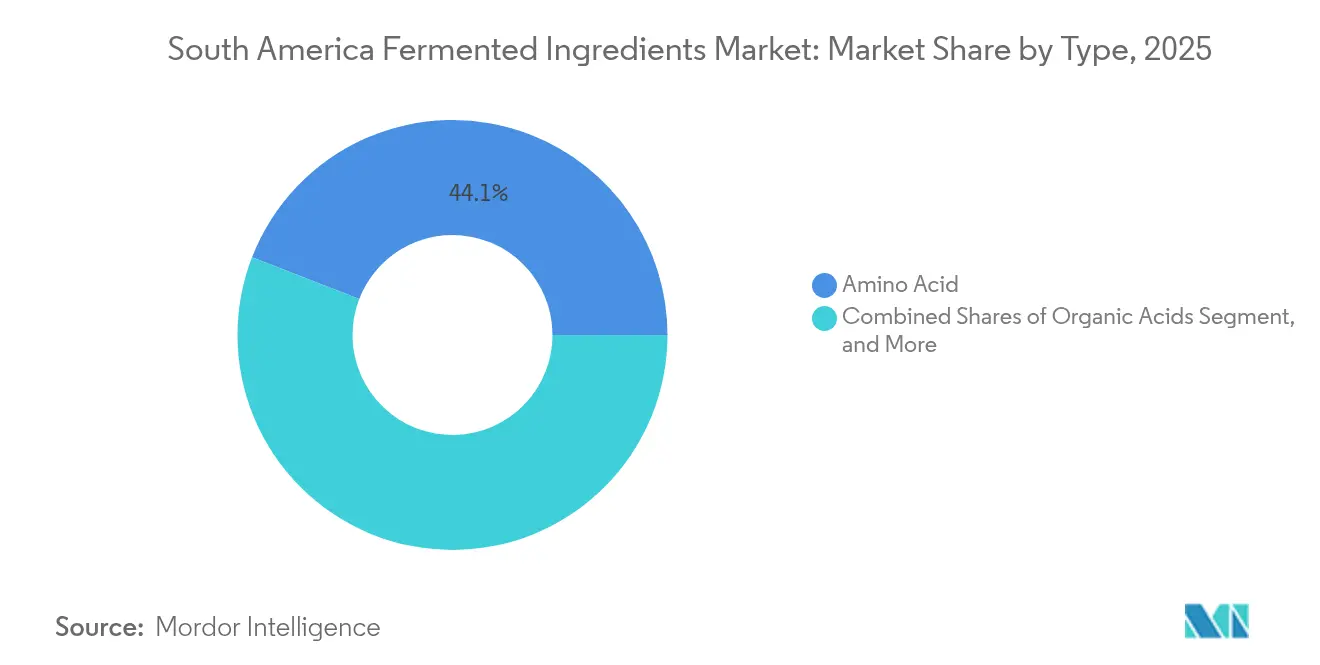
Amino Acids Lead Despite Polymer InnovationAmino acids accounted for 44.12% of the South American fermented ingredients market revenue in 2025. The segment's growth stems from feed optimization requirements in the region's livestock sector. Manufacturers utilize the region's corn and soybean resources to produce lysine, methionine, and threonine, which improve feed-conversion efficiency in poultry and swine production. Brazil's dual role as a protein exporter and ethanol producer provides co-products that reduce glucose production costs, enabling competitive amino acid pricing. The polymer segment is expected to grow at a 9.18% CAGR, driven by new plastic waste regulations that encourage biodegradable packaging adoption. Government purchasing policies in Chile and Colombia favor compostable materials, increasing market opportunities for fermentation-based polyhydroxyalkanoates.
Organic acids and vitamins maintain consistent demand in food and beverage production as natural preservatives and fortification ingredients. Industrial enzymes secure contracts with biofuel and brewing facilities that need specific catalytic properties. While antibiotics represent a smaller market share due to regional restrictions on medicated feed, they maintain steady sales in veterinary applications. Brazil's Center-West region continues to expand amino acid production, with integrated soy processing facilities utilizing fermentation by-products for energy generation. Polymer production attracts investment for pilot facilities that use sugarcane bagasse hydrolysate to reduce raw material costs. Organic acid manufacturers collaborate with fruit processors to utilize peel waste, supporting circular economy initiatives. The vitamin segment faces challenges from global price fluctuations but benefits from domestic blending operations that reduce import costs.

By Form:
Liquid Growth Outpaces Dry DominanceDry offerings accounted for 59.05% of sales in 2025, reflecting superior shelf life, ambient transport, and compatibility with existing feed-mill dosing systems. These attributes make dry formats indispensable for rural supply chains that stretch thousands of kilometers across the Amazon basin. Conversely, liquids are forecast to expand at a 9.88% CAGR, riding investments in refrigerated logistics and automated food-processing lines requiring pumpable concentrates. Marker applications include dairy starters delivered in cryoprotectant liquids and industrial enzyme solutions formulated for in-line dosing. The South American fermented ingredients market size for liquid formats will benefit from urban cold-chain build-outs in São Paulo and Santiago, where same-day grocery platforms demand ready-to-use inputs.
Dry formulations will retain leadership in feed, crop-care, and dietary supplement channels that value ease of handling and dilution flexibility. Powder amino acids integrate seamlessly into mash feeds while dry probiotics upscale into capsules for retail pharmacies. Liquid concentrates gain traction in craft-brew and plant-based beverages, where real-time fermentation speed is critical. Some producers deploy dual-format strategies—spray-drying surplus liquid streams to maximize plant utilization—thereby stabilizing margins and mitigating inventory risks across the South America fermented ingredients market.
By Application:
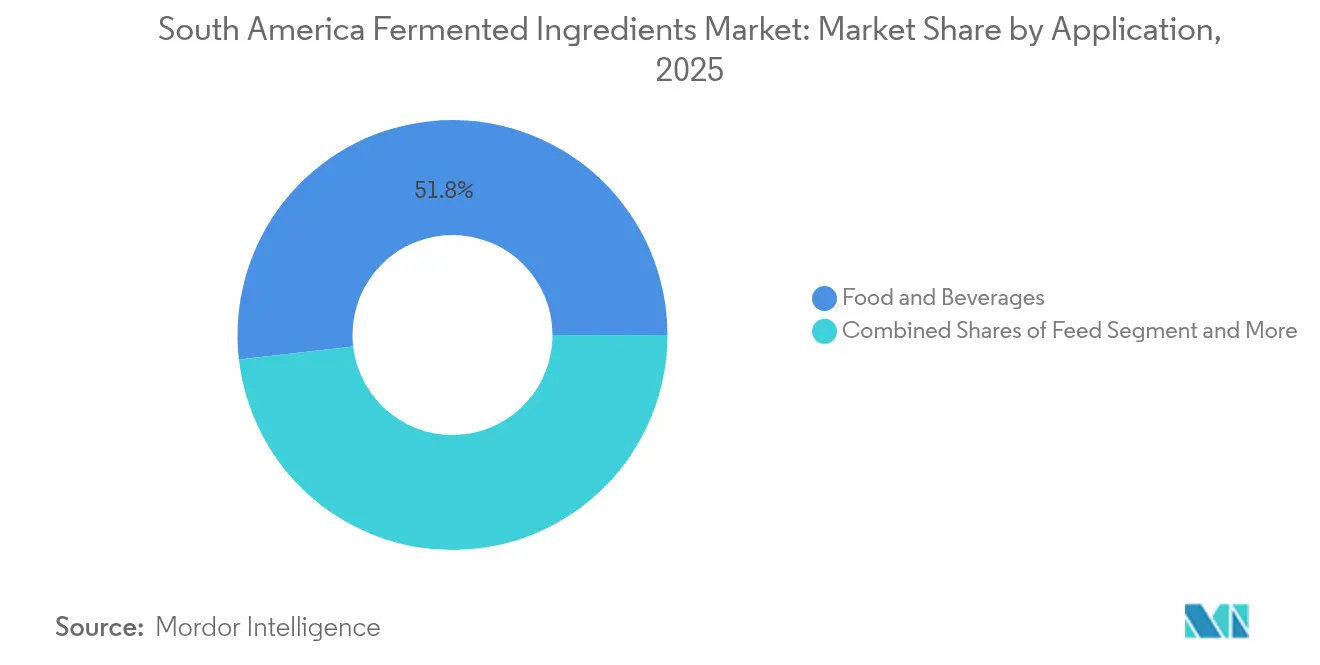
Industrial Growth Challenges Food DominanceFood and beverages maintain market leadership with 51.82% share in 2025, driven by South America's expanding food processing sector, which generated USD 209 billion in Brazil alone during 2022, and increasing consumer demand for natural ingredients and functional foods, according to the Food Export. Fermented ingredients like amino acids and organic acids have applications in various dairy products such as cheese, yogurt, and others. As the consumption of these products is increasing in the region, the demand for these ingredients is increasing. According to the Food and Agriculture Organization data from 2023, per capita consumption of cheese in Brazil was 3.37 kilograms. Industrial applications emerge as the fastest-growing segment with 8.63% CAGR through 2031.
Pharmaceutical applications remain constrained by regulatory complexities and limited local production capabilities, though Brazil's health biotechnology sector shows promise with government prioritization and established research institutions like FIOCRUZ leading development efforts. The industrial segment's rapid growth reflects increasing adoption of fermentation-derived chemicals in manufacturing processes, supported by government initiatives like Brazil's National Bioeconomy Strategy that promotes renewable resource utilization and sustainable manufacturing practices. Other applications, including cosmetics and personal care, show emerging potential as consumer preferences shift toward natural ingredients, though market development remains early-stage compared to established food and feed applications.
Geography Analysis
Brazil Fermented Ingredients Market
Brazil commanded 59.48% of regional revenue in 2025, underpinned by its sophisticated bio-inputs law, the 2nd-largest global ethanol output, and a sizable livestock complex. The country’s ANVISA reforms grant clarity on probiotics and enzymes, enabling food-ingredient launches that align with global clean-label standards. DSM-Firmenich’s 100,000-ton Minas Gerais facility illustrates foreign direct investment confidence and supplies cattle supplements to the Midwest ranch belts. Brazil’s farmers' adoption of bio-inputs surpassing 50% further entrenches domestic demand.
Argentina Fermented Ingredients Market
Argentina ranks second, supported by export-oriented fruit and vegetable processing and a refreshed Food Code that simplifies import-export formalities. According to the UN Comtradedata from 2024, Argentina exported USD 126.36 million worth of citrus fruits. Owing to this, the market players are processing these fruits into citric acid and other fermented ingredients. Macroeconomic stabilization initiatives aim to lower inflation and unlock credit channels, enhancing the investment climate for the South American fermented ingredients market.
South America Fermented Ingredients Market
Chile posts the swiftest trajectory with a 8.79% CAGR forecast to 2031, propelled by aggressive circular-economy mandates and venture-backed precision-fermentation start-ups such as Luyef Cultivated X. Government grants encourage conversion of fruit and viticulture waste into substrates, shrinking raw-material costs, and advancing carbon goals. Colombia and the rest of South America—Peru, Ecuador, and Bolivia—capitalize on traditional fermented beverages that foster consumer acceptance of bio-based ingredients, albeit with limited industrial infrastructure compared to Brazil or Argentina. Cross-border knowledge-sharing alliances seek to elevate pilot plants into commercial clusters, broadening geographic balance within the South American fermented ingredients market.
Regulatory Landscape
Regulation of fermented ingredients in South America is shaped by MERCOSUR harmonized technical regulations (RTMs) for additives, specifications, and labeling, alongside country-level frameworks that cover food safety, identity standards, and registrations. In Brazil, ANVISA is the central authority for conditions of use for food additives and for novel ingredient pathways, while MAPA sets identity and quality standards for certain fermented beverages, including kombucha under MAPA Normative Instruction No. 41/2019.
Recent regulatory activity continues to refine additive permissions and compliance requirements. In April 2026, ANVISA opened Public Consultation CP No. 1394/2026 to update provisions linked to IN No. 211/2023 on technological functions, maximum limits, and conditions of use for food additives and processing aids, aligned with MERCOSUR negotiations. Brazil also has a defined route for new foods and ingredients without a history of safe consumption, with ANVISA RDC No. 839/2023 explicitly covering products derived from fermentation and cell culture, which affects dossier preparation, safety substantiation, and time-to-market planning for new strains and ingredients.
Value Chain Analysis
The value chain starts with carbohydrate-rich feedstocks, where Brazil functions as the primary regional hub due to high availability of sugarcane, corn, and cassava and the presence of large agro-industrial complexes that can supply co-products as fermentation substrates. Inputs also include nutrients, enzymes, and microbial strains, while high-value probiotic strains and some specialized equipment still come from imports. This mix raises landed costs and adds lead-time risk for manufacturers. Upstream and midstream activity is concentrated in Brazil’s Southeast and South, especially Sao Paulo, Parana, and Minas Gerais, given proximity to food, dairy, and meat processing customers.
Core processing steps cover strain selection and inoculum development, industrial fermentation, and downstream purification or concentration, before finishing into dry or liquid formats. Distribution is handled through ingredient distributors and direct supply to large food, feed, and industrial buyers, with cold-chain limitations in parts of northern and northeastern Brazil constraining liquids and live-culture logistics. Industry associations such as ABIAM provide a forum for regulatory dialogue and standards discussions, and consolidation supports scale and application development, including Lesaffre’s June 2025 acquisition of a 70% stake in Zilor’s Biorigin business to expand yeast derivatives and savory ingredient solutions for food and feed markets.
Competitive Landscape
The South American fermented ingredients market is moderately fragmented. Global companies like DSM-Firmenich, BASF, Evonik, and Novonesis leverage their advantages in scale, strain development capabilities, and regulatory expertise to secure profitable contracts. These multinational corporations maintain sophisticated research facilities and quality control systems across the region. Their established presence and technical capabilities enable them to meet stringent requirements for high-value applications.
Regional companies, including Proquiga Biotech and Lesaffre Group (Bio Springer), specialize in producing amino acids, organic acids, and bio-fertilizers adapted to local agricultural needs. These regional players compete with imports through their strong supply chain relationships and faster delivery times. Their understanding of local market dynamics and agricultural practices provides a competitive edge. In emerging segments, companies like Typical and Future Cow use precision fermentation technology to produce mycoprotein and dairy protein alternatives for hybrid meat and beverage products.
Companies in the market compete through three main approaches: integration with raw material sources, proprietary strain development, and customer application support. Companies that integrate fermentation facilities with sugar-ethanol operations secure access to cost-effective raw materials. Those that develop advanced metabolic engineering capabilities can produce specialized molecules that meet strict specifications and command higher prices. Application laboratories in São Paulo and Buenos Aires provide technical support to bakeries, breweries, and feed manufacturers, helping strengthen customer relationships and expand the South American fermented ingredients market.
South America Fermented Ingredients Industry Leaders
-
Evonik Industries AG
-
Novozymes A/S
-
BASF SE
-
Archer Daniels Midland Company
-
Kerry Group plc
- *Disclaimer: Major Players sorted in no particular order
South America Fermented Ingredients Market Companies Covered in this Report
- Evonik Industries AG
- Novozymes A/S
- BASF SE
- Kerry Group plc
- Dohler Group SE
- Lonza Group
- Manuchar Group
- Archer Daniels Midland Company
- Corbion N.V.
- International Flavors and Frangrance Inc
- DSM-Firmenich
- ABF Ingredients
- Ajinomoto Co., Inc.
- Cargill Incorporated
- Givaudan SA
- Tate & Lyle PLC
- Lallemand Inc.
- Lesaffre Group (Bio Springer)
- Ingredion Incorporated
- Tereos S.A.
Read Analysis of South America Fermented Ingredients Companies
Market Opportunities and Future Outlook
A near-term opportunity is emerging around in-region fermentation and application capacity that reduces dependence on imported enzymes, cultures, and specialized ingredients, particularly for brewing, animal nutrition, and biofuels adjacencies that already consume enzymes at scale. IFF’s March 2026 decision to convert its Arroyito site in Argentina into a fermentation-based enzyme production hub, alongside a household care application lab in Brazil, points to a shift toward localized manufacturing and more customer-facing formulation support. Similar gaps exist for ingredient formats that benefit from improved cold-chain logistics and automated processing lines, where liquid starters, enzyme solutions, and concentrates can be configured for industrial dosing and faster-moving food applications.
Higher-value innovation pathways are also gaining momentum around alternative proteins and functional ingredients built around regional biomass streams and bioeconomy programs. In April 2026, JBS inaugurated the JBS Biotech research center in Florianopolis, Brazil, with a USD 37 million investment focused on cultivated protein technologies and functional proteins and bioactive ingredients, expanding the pipeline of fermentation-enabled food ingredients. Additional opportunity is forming at the research-to-industry transfer and local strain development interface, including July 2026 validation work in Argentina where CONICET and UNLP validated a probiotic yeast for pork and transferred the technology to Beneficial Germs S.A., and May 2026 collaboration between Bioinfood and ITAL in Brazil to develop a protein ingredient from babassu flour using strain screening, enzymatic hydrolysis, and automated bioreactor fermentation.
Recent Industry Developments in South America Fermented Ingredients Market
- April 2026: JBS inaugurated the JBS Biotech research center in Florianopolis, Brazil, with a USD 37 million investment to advance cultivated protein technology and develop functional proteins and bioactive ingredients. The facility strengthens in-region R&D for fermentation-enabled and adjacent biotech ingredient platforms, supporting faster iteration from lab work to industrially relevant prototypes for food applications.
- June 2025: Lesaffre finalized a joint venture by acquiring a 70% stake in Biorigin, a yeast-derivatives business unit of Brazil-based Zilor, to expand yeast-based ingredient solutions for food and feed markets. The transaction adds scale and application reach in Brazil, tightening links between local feedstock economics, fermentation processing, and downstream savory and nutrition ingredient portfolios.
- February 2024: Uruguay advanced alignment with MERCOSUR food additive and processing-aid rules through national implementation measures, reinforcing a regional pattern of harmonized specifications and use conditions across member states. This supports cross-border trade in standardized fermented additives while placing greater emphasis on documentation and compliance consistency for suppliers operating across multiple South American markets.
South America Fermented Ingredients Market Report Scope and Research Methodology
Market Definition and Coverage
This market covers fermented ingredients sold in South America that are used as functional inputs in food and beverage, feed, pharmaceutical, and industrial formulations, and the value is captured at the ingredient sales level in USD.
Scope exclusions: It does not count finished consumer products, in-house captive fermentation that is not sold as an ingredient, or non-fermentation chemical substitutes that are not produced through fermentation routes.
Segments Covered in This Report
- By Product Type
- Amino Acids
- Lysine
- Methionine
- Threonine
- Other Amino Acid
- Organic Acids
- Lactic Acid
- Citric Acid
- Others
- Polymers
- Vitamins
- Industrial Enzymes
- Proteases
- Amylases
- Other Industrial Enzymes
- Antibiotics
- Amino Acids
- By Form
- Dry
- Liquid
- By Application
- Food and Beverages
- Dairy
- Bakery and Confectionery
- Beverages
- Meat and Seafood Products
- Functional and Fortified Foods
- Other Food and Beverage Applications
- Feed
- Pharmaceutical
- Industrial Application
- Other Applications
- Food and Beverages
- By Geography
- Brazil
- Argentina
- Chile
- Colombia
- Rest of South America
Data Sources, Market Sizing, and Validation
Desk Research
Desk work started with building a fact base on fermentation-linked ingredient demand and local production signals, then matching those signals to the South America country mix. Public sources such as FAOSTAT, UN Comtrade, national statistics agencies (for example, IBGE in Brazil), and central bank macro series helped anchor food processing output, livestock and feed indicators, trade flows, and inflation trends used for pricing normalization.
We also reviewed regulatory and standards context (for example, ANVISA publications in Brazil) and technical application cues from peer-reviewed journals and patent documents to understand where amino acids, organic acids, vitamins, industrial enzymes, polymers, and antibiotics are being adopted. To cross-check the active company universe and their revenue exposure patterns, we referenced company annual reports, investor presentations, and credible press, and we complemented this with a paid subscription for company financials plus a patent database where it was relevant. These sources are not exhaustive, and we used other public references to collect data points, validate assumptions, and clarify open questions during the research.
Primary Interviews and Surveys
Fieldwork covers ingredient producers, distributors, food and beverage processors, feed buyers, pharmaceutical users, and industrial users in South America. Respondents are asked about purchase volumes, average selling prices, application mix, capacity use, import dependence, and demand changes. These inputs help test secondary data and address country-level gaps in the regional estimate.
Distribution of primary research fieldwork respondents
| Company type | Respondent position |
|---|---|
| Top tier: 27% | CXOs: 22% |
| Mid tier: 48% | Functional/Unit leaders: 33% |
| Smaller Players: 25% | Managers: 45% |
Market-Sizing & Forecasting
Sizing was built using a top-down approach where South America demand pools were reconstructed from application activity, import and export patterns, and country-level production indicators, then converted into ingredient value using realistic price bands. Because category boundaries can blur across ingredients, we kept the model tied to measurable variables like animal feed output trends, processed food production momentum, industrial fermentation-linked usage in adjacent applications, and the observed shift between dry and liquid forms.
To keep totals practical, we corroborated them with selective bottom-up approximations such as sampled supplier revenue exposure checks, distributor channel checks, and an ASP times volume logic for a few high-visibility ingredient lines where public trade and industry signals were clearer. Where direct volume signals were weak, gaps were handled using proxy indicators (for example, feed additive intensity, food and beverage processing growth, and macro-driven pricing movements) and then adjusted based on what interviewees said about substitution and formulation changes.
For forecasting, we used scenario analysis supported by a light multivariate regression on key drivers such as livestock numbers and feed demand, processed food output, currency movement versus USD, and inflation-linked pricing behavior, then aligned the trajectory with consensus ranges obtained during primary discussions. Assumptions were reviewed country by country so that Brazil weight, smaller markets, and different adoption speeds did not get averaged out too aggressively.
Data Validation & Update Cycle
Outputs were checked through triangulation between model totals, independent trade signals, and practical capacity and demand cues gathered during interviews. When a country or application line showed unusual jumps, we rechecked inputs for currency timing, price spikes, or a one-off trade event, then corrected them before internal sign-off.
A second analyst review was completed to test arithmetic consistency, year-on-year variance, and whether assumptions stayed aligned with observed market behavior. Reports are refreshed annually, and interim updates are triggered when material events occur (for example, regulatory shifts, sharp FX moves, or major capacity changes). Before delivery, a final pass is run so clients receive the most current view available at that time.
Mordor Intelligence's South America Fermented Ingredient Market Estimate Compared With Other Published Estimates
Published market sizes for fermented ingredients in South America can differ widely, even when they use similar wording, because scope and counting rules are not always the same. The biggest differences usually come from which ingredient families are included, whether adjacent biotech and industrial fermentation uses are folded in, and how prices are converted to USD across volatile currencies.
The main gap comes from how broadly industrial and biofuel-related fermentation outputs are counted, where Mordor Intelligence keeps the scope limited to the ingredient categories stated for South America and sizes them through application-linked demand signals with USD conversion aligned to the base-year timing.
Benchmark comparison
| Source | Market Size | Gaps in Research Methodology |
|---|---|---|
| Mordor Intelligence | USD 2.50 M (2025) | |
| Regional Consultancy A | USD 3.03 B (2025) | Uses a much wider basket that explicitly adds yeast extracts, probiotics, vitamins and antioxidants, and also includes additional applications such as personal care and biofuels, which expands the counted revenue pool beyond ingredient demand tied to the core application set. |
| Industry Publisher B | USD 26.00 B (2024) | Shows a very large figure for a prior base year, and the size is likely driven by broader inclusion rules and higher value capture across the chain, along with different inflation and FX conversion handling, which can materially lift USD values in South America. |
The spread across the three figures is mostly explained by what gets included outside the core fermented ingredient set and by how USD values are normalized across countries and years. By keeping inputs traceable to application demand indicators and making currency and pricing steps explicit, the final number remains easier to replicate and stress-test when assumptions change.
Key Questions Answered in the Report
What is the current size of the South America fermented ingredients market?
The South America fermented ingredients market stands at USD 2.68 million in 2026 with a projection of USD 3.82 million by 2031.
Which country holds the largest share of the South America fermented ingredients market?
Brazil leads with 59.48% revenue share in 2025.
Which product segment grows the fastest?
Polymers are projected to expand at a 9.18% CAGR through 2031 on mounting demand for biodegradable packaging.
How fast is the industrial application segment growing?
Industrial uses such as bio-based chemicals are forecast to climb at an 8.63% CAGR between 2026-2031 as circular-economy policies take hold.