
Sirolimus Market Size and Share
Market Overview
| Study Period | 2020 - 2031 |
|---|---|
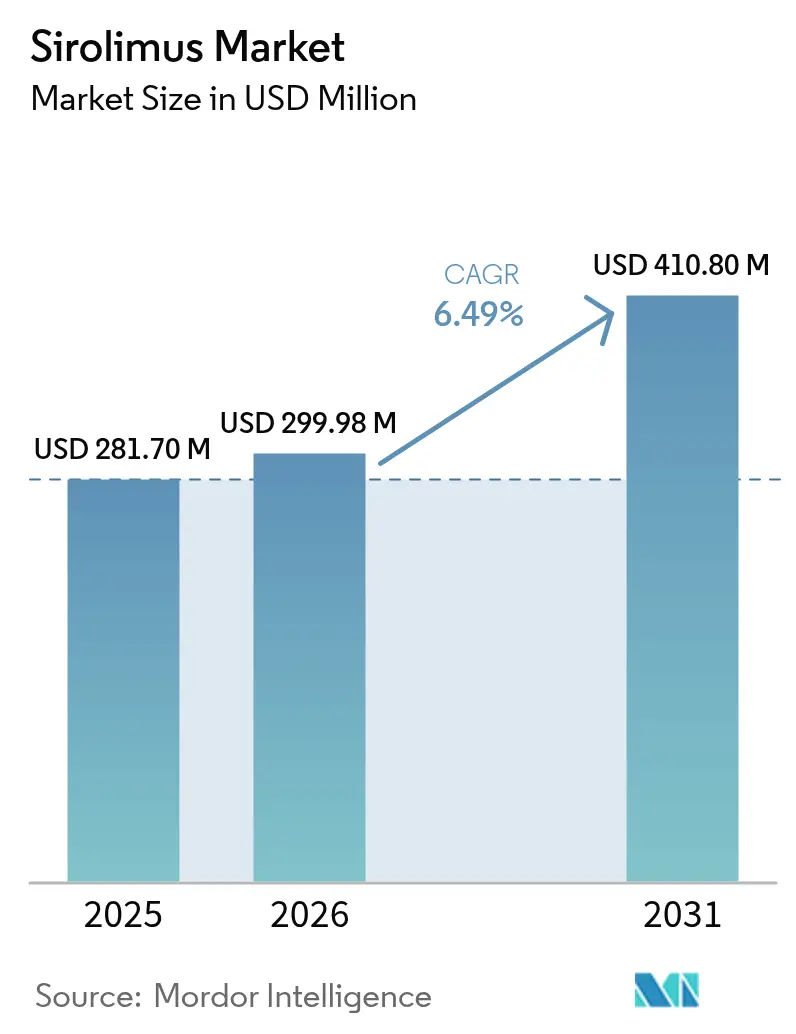
| Market Size (2026) | USD 299.98 Million |
| Market Size (2031) | USD 410.8 Million |
| Growth Rate (2026 - 2031) | 6.49 % |
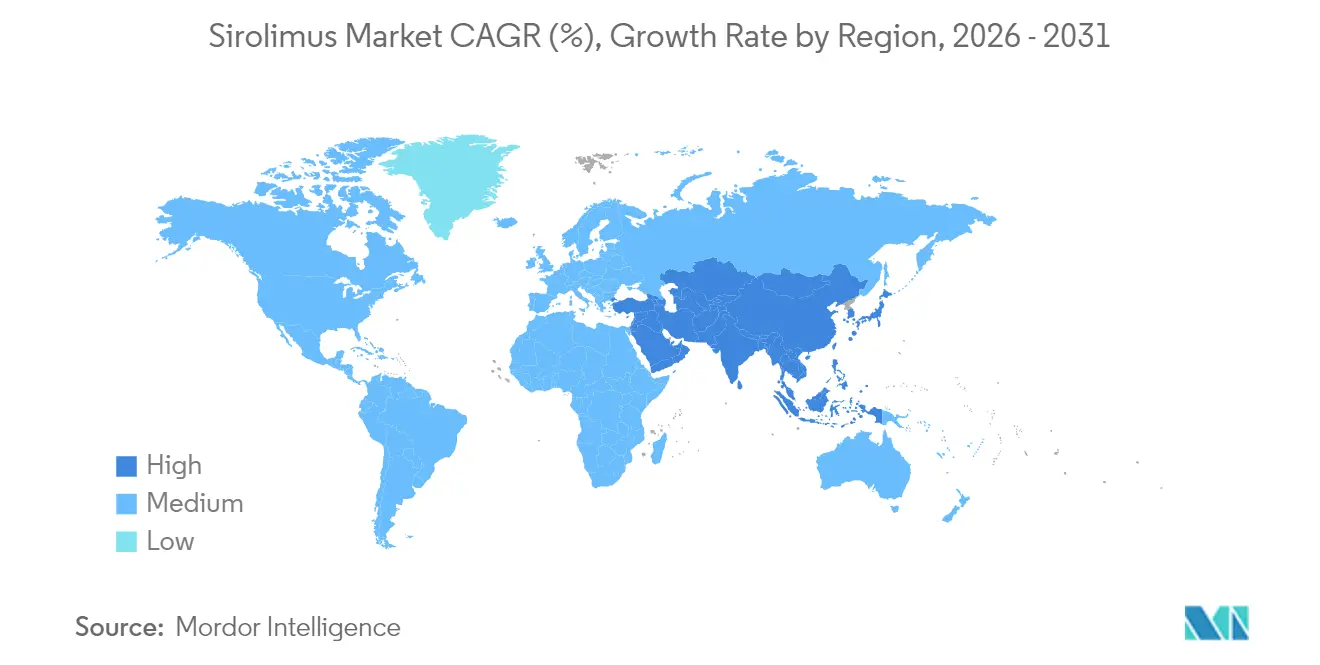
| Fastest Growing Market | Asia Pacific |
| Largest Market | North America |
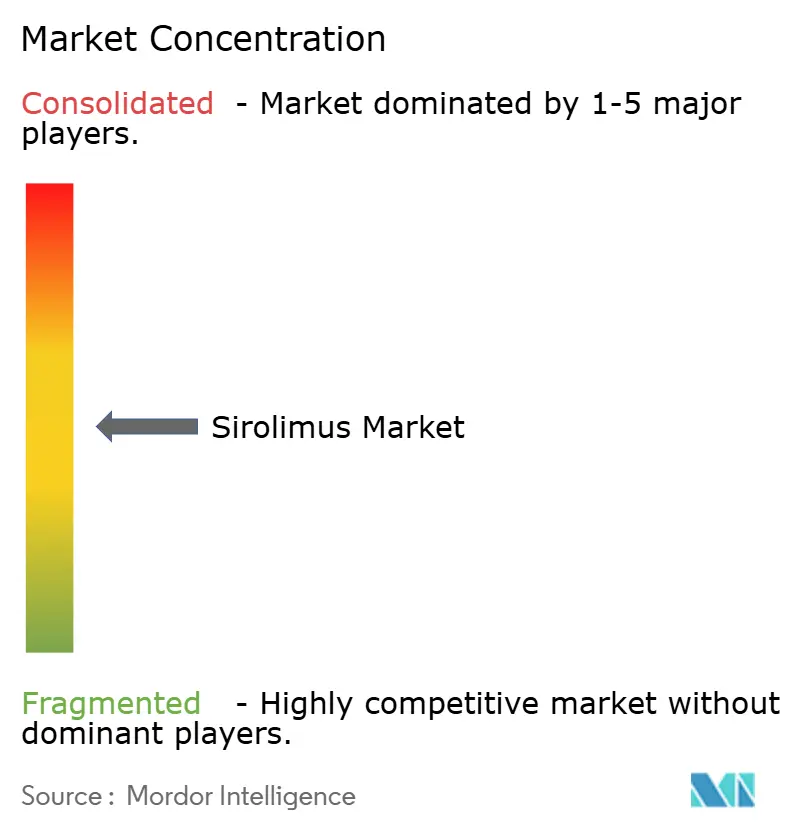
| Market Concentration | Medium |
Major Players *Disclaimer: Major Players sorted in no particular order Image © Mordor Intelligence. Reuse requires attribution under CC BY 4.0. | |
Sirolimus Market Analysis by Mordor Intelligence
The Sirolimus market size is expected to grow from USD 281.70 million in 2025 to USD 299.98 million in 2026 and is forecast to reach USD 410.8 million by 2031 at 6.49% CAGR over 2026-2031.
Rapid uptake of drug-eluting devices, precision-oncology approvals, and expanding generic penetration are steering sustained revenue gains. Steady growth in global transplant volumes, coupled with maturing evidence for sirolimus’s cardiovascular and antiproliferative benefits, keeps immunosuppression the economic backbone of the sirolimus market. Device makers now leverage the compound’s mTOR-inhibition profile to curb restenosis, while specialty pharma firms pursue rare-disease and tumor indications that command premium pricing. Intensifying competition among Indian and Chinese manufacturers boosts affordable access yet heightens quality-control scrutiny, prompting originators to differentiate through nanotechnology-based formulations and depot systems.
Key Report Takeaways
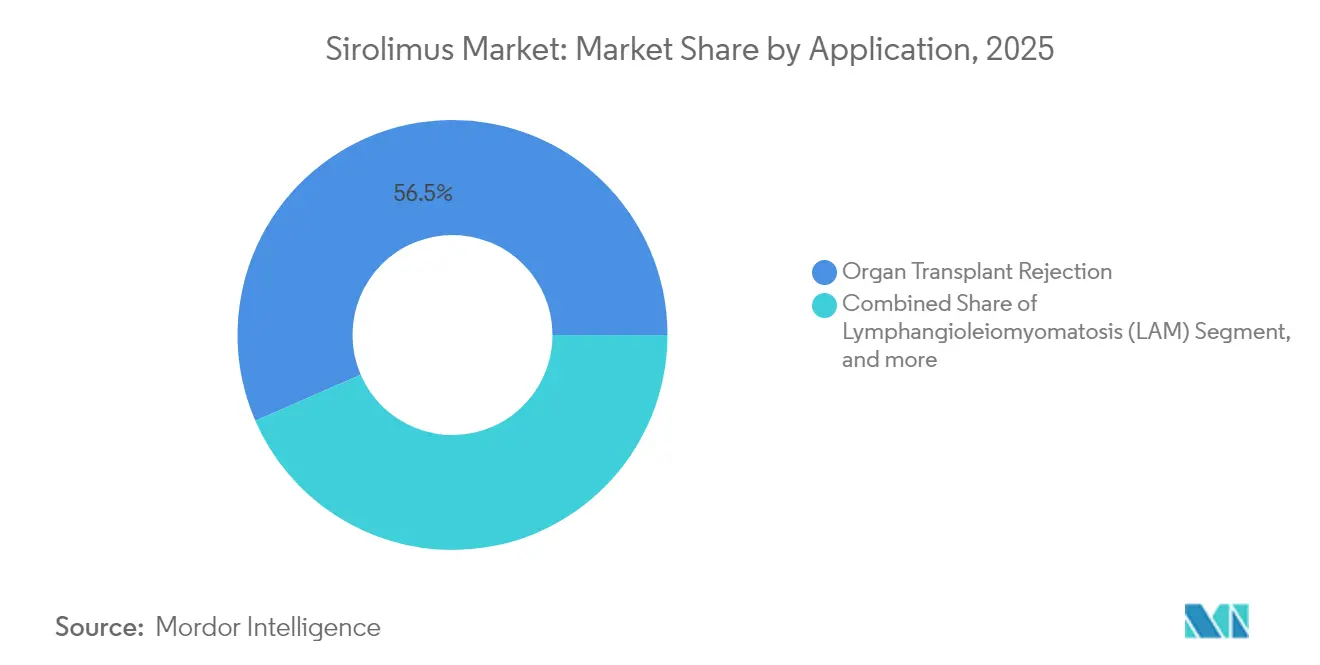
- By application, organ transplant rejection held 56.52% of the sirolimus market share in 2025, whereas sirolimus-coated medical devices are advancing at a 9.54% CAGR through 2031.
- By route of administration, oral formulations commanded 69.25% share of the sirolimus market size in 2025, while drug-coated devices are growing at an 8.41% CAGR to 2031.
- By region, North America led with 41.60% revenue share in 2025; Asia-Pacific is forecast to expand at an 7.89% CAGR to 2031.
Note: Market size and forecast figures in this report are generated using Mordor Intelligence’s proprietary estimation framework, updated with the latest available data and insights as of 2026.
Market Trends and Insights
Drivers Impact Analysis of Sirolimus Market*
| Driver | (~) % Impact on CAGR Forecast | Geographic Relevance | Impact Timeline |
|---|---|---|---|
| Rising Transplant Procedures and Lifestyle-Driven Organ Failure | +1.2% | Global, with concentration in North America & Europe | Medium term (2-4 years) |
| Proliferation of Generic Sirolimus Products | +0.8% | APAC core, spill-over to MEA and South America | Short term (≤ 2 years) |
| Widening Use of Sirolimus-Coated Balloons and Stents | +1.5% | North America & EU, expanding to APAC | Long term (≥ 4 years) |
| Advancements In Nanotechnology and Depot Delivery Systems | +0.9% | Global, early adoption in US and EU | Long term (≥ 4 years) |
| Growing Off-Label Use in Treating Rare Cancers and Vascular Anomalies | +0.7% | North America & EU | Medium term (2-4 years) |
| Increasing Utilization of Sirolimus in Drug-Eluting Devices | +1.3% | Global | Medium term (2-4 years) |
| Source: Mordor Intelligence | |||
Rising Transplant Procedures and Lifestyle-Driven Organ Failure
Higher prevalence of diabetes, obesity, and hypertension accelerates chronic kidney and liver failure, leading to a visible rise in transplant volumes. Clinical experience shows that sirolimus-based regimens safeguard graft function and reduce calcineurin-inhibitor nephrotoxicity, encouraging protocol revisions at large transplant centers.[1]Siemens Healthineers Clinical Insights Team, “Advances in Transplant Care,” siemens-healthineers.com Post-transplant cardiovascular benefits linked to mTOR inhibition further underscore sirolimus’s appeal within multidisciplinary care teams.
Proliferation of Generic Sirolimus Products
Patent expiry has triggered robust generic supply, notably from India and China, where lower manufacturing costs support aggressive pricing. Hospital formularies in Southeast Asia report double-digit uptake of generics, broadening access for cost-sensitive patient groups. Regulatory agencies tighten active-pharmaceutical-ingredient inspections to ensure purity, prompting larger firms to invest in quality-management certifications.
Widening Use of Sirolimus-Coated Balloons and Stents
Interventional cardiology now favors sirolimus-eluting devices to mitigate restenosis in complex lesions. Twelve-month clinical data show target-lesion failure rates near 5% with sirolimus-coated balloons, matching drug-eluting stents while avoiding permanent implants.[2]EuroIntervention Editorial Board, “BIOFLOW-IV Five-Year Outcomes,” eurointervention.com Biodegradable polymer stents sustain comparable safety out to five years, reinforcing adoption in Europe and the United States.
Advancements in Nanotechnology and Depot Delivery Systems
Albumin-bound nanoparticles, cyclodextrin microparticles, and self-micro-emulsifying matrices markedly enhance sirolimus solubility and tissue targeting. The FDA’s approval of nab-sirolimus (FYARRO) for malignant PEComa illustrates how nanoformulations unlock oncology applications.[3]U.S. Food and Drug Administration, “FDA Approves Nab-Sirolimus for Malignant PEComa,” fda.gov Pipeline programs explore weekly depot injections that maintain therapeutic levels without daily oral dosing, reducing therapeutic-drug-monitoring frequency.
Restraints Impact Analysis of Sirolimus Market*
| Restraint | (~) % Impact on CAGR Forecast | Geographic Relevance | Impact Timeline |
|---|---|---|---|
| Negative Effects on Metabolism and Delayed Wound Healing | -0.6% | Global | Short term (≤ 2 years) |
| Significant Costs Associated with Therapeutic Drug Monitoring (TDM) | -0.4% | North America & EU primarily | Medium term (2-4 years) |
| Stringent Regulatory Barriers Surrounding Use in Liver and Lung Transplant Cases | -0.3% | Global | Long term (≥ 4 years) |
| Fermentation-Based Active Ingredient (API) Supply Challenges | -0.5% | Global, particularly affecting generic manufacturers | Short term (≤ 2 years) |
| Source: Mordor Intelligence | |||
Negative Effects on Metabolism and Delayed Wound Healing
Routine clinical observation confirms elevated cholesterol, triglycerides, and impaired wound repair in patients receiving sirolimus. Surgeons often switch to alternative immunosuppression for peri-operative periods to mitigate wound-healing risk. Endocrinology consults add complexity and cost, especially in elderly or diabetic cohorts.
Significant Costs Associated with Therapeutic Drug Monitoring
A narrow therapeutic window requires frequent serum assays, each costing more than USD 200 in tertiary hospitals. Over a typical first-year post-transplant regimen, monitoring expenses can contribute nearly one-fifth of total treatment spending. Rural centers in Latin America and Africa struggle with assay availability, restraining sirolimus adoption despite falling generic prices.
*Our forecasts treat driver/restraint impacts as directional, not additive. The impact forecasts reflect baseline growth, mix effects, and variable interactions.
Sirolimus Market Segment Analysis
By Application:
Device Applications Drive Innovation Beyond Transplant MedicineOrgan transplant rejection generated the highest revenue, reflecting 56.52% of the sirolimus market size in 2025 and growing steadily alongside global transplant volumes. Sirolimus’s long-term graft-survival benefit cements its position in kidney, heart, and combined-organ protocols, even as centers integrate newer induction agents. On the growth front, sirolimus-coated balloons and stents post an impressive 9.54% CAGR through 2031 as interventional cardiologists favor polymer-free drug delivery that avoids permanent implants. Real-world registries document target-lesion revascularization under 3% at three years, supporting procedural reimbursement in Europe. Oncology indications, spearheaded by FYARRO for malignant PEComa, generate high average selling prices, though current patient pools remain niche. Investigators test sirolimus in TSC1/2-mutant solid tumors and vascular sarcomas, potentially broadening future addressable demand. Off-label deployments in systemic lupus erythematosus and refractory vascular anomalies depict the therapeutic versatility that underpins steady pipeline expansion.
A secondary cohort, lymphangioleiomyomatosis, benefits from Rapamune’s orphan-drug designation, supplying predictable albeit limited volume, particularly in the United States and Japan. Small proof-of-concept trials explore sirolimus for post-acute sequelae of COVID-19, and early data suggest improvement in fatigue and exercise tolerance, hinting at untapped revenue streams if late-phase outcomes prove positive. Autoimmune specialists examine low-dose regimens in systemic sclerosis and inflammatory myopathies, further amplifying long-term optionality. Collectively, the widening application slate reinforces multi-year demand visibility that supports a diversified sirolimus market.


By Route of Administration:
Device Delivery Challenges Oral DominanceOral formulations captured 69.25% of the sirolimus market size in 2025 due to entrenched prescription habits, convenient at-home dosing, and straightforward reimbursement pathways. Tablets and solutions remain first-line in chronic transplant management, where decades of clinical evidence back dosing protocols. Yet growth momentum shifts toward drug-coated devices, the fastest-rising delivery approach at an 8.41% CAGR to 2031. Coronary and peripheral balloons leverage micro-porous coatings that release sirolimus into vessel walls within minutes, reducing systemic exposure. Early success in de-novo small-vessel coronary disease prompts trials in intracranial and renal arteries, reinforcing cross-specialty enthusiasm.
Parenteral infusions retain relevance for hospital-initiated therapy in acute oncology or in patients with severe gastrointestinal dysfunction. Intravenous nano-suspensions demonstrate predictable pharmacokinetics and permit weight-based dosing adjustments during neutropenic episodes. Topical gels, highlighted by HYFTOR for tuberous-sclerosis angiofibromas, open dermatology revenue niches. Development pipelines feature biodegradable implants made of polylactic acid fibers that deliver sirolimus for six months, targeting glaucoma filtration surgeries and orthopedic implants. Collectively, diversified delivery modes stabilize supply-chain risk and future-proof sirolimus market positioning against formulation-specific disruptions.

Geography Analysis
North America Sirolimus Market
North America dominated with 41.60% revenue in 2025, owing to sophisticated transplant networks, early oncology approvals, and high per-capita procedural volumes. United States academic centers maintain more than 300 active sirolimus trials, cementing clinical leadership and accelerating physician confidence. Canadian reimbursement agencies accept drug-eluting device premiums after cost-effectiveness reviews demonstrated fewer repeat interventions. Mexico, while smaller, records double-digit unit growth as generics lower barriers to immunosuppression.
APAC and Africa Sirolimus Market
Asia-Pacific is the fastest-growing territory, posting an 7.89% CAGR through 2031 as transplant capacity in China and India expands. Japanese cardiologists rapidly transition from paclitaxel to sirolimus coatings following favorable late-lumen-loss data. Indian contract-development-and-manufacturing organizations produce fermentation-based APIs at scale, enabling competitively priced finished-dose exports to Southeast Asia and Africa. Australia channels public-health budgets toward drug-eluting balloons for below-the-knee critical-limb-ischemia, reflecting high diabetes incidence in the region.
Europe Sirolimus Market
Europe sustains mid-single-digit growth through universal health coverage that supports transplant and complex-PCI volumes. Germany and France spearhead device adoption driven by outcome data from polymer-free stent registries. The European Medicines Agency streamlines centralized approvals, recently endorsing novel topical and nano-particulate formulations. Southern European countries leverage reference pricing to secure generic supply, widening patient access while preserving budget discipline. Post-Brexit United Kingdom maintains mutual recognition for immunosuppressants, avoiding supply disruption.

Regulatory Landscape
Sirolimus remains subject to mature, high-scrutiny regulatory frameworks for immunosuppressants and specialty oncology formulations, with oversight anchored in U.S. FDA and European Medicines Agency (EMA) labeling and pharmacovigilance requirements. In the United States, FDA approvals and labeling for sirolimus products, including Pfizer's Rapamune and nanoformulated sirolimus such as FYARRO for intravenous use, shape dosing, monitoring, and safety management expectations and keep therapeutic drug monitoring and adverse-event reporting central to routine clinical use.
In Europe, EMA registration for Rapamune under centralized procedures provides a stable reference product framework for national reimbursement and hospital protocol setting, while specialized formulations and orphan-designated uses run through targeted regulatory pathways. Orphan drug designations recorded across 2024-2025 for sirolimus-linked programs in the United States and Europe point to continued regulatory support for rare-disease positioning, even as quality and manufacturing compliance remains a key focus for newer formulations and for a broader generic base.
Competitive Landscape
The sirolimus market displays moderate concentration. Pfizer defends its Rapamune franchise through brand loyalty and post-marketing safety data. Generic entrants such as Dr. Reddy’s Laboratories, Zydus Lifesciences, and Biocon compete on price and regional distribution heft, collectively capturing meaningful oral-tablet volume. Boston Scientific and Surmodics lead the device arm via proprietary micro-porous coating technologies, each holding extensive clinical registries supporting reimbursement for complex lesions. Medtronic pursues polymer-free coronary stent designs aiming to displace incumbent everolimus platforms.
Specialty biotech players emphasize oncology and rare-disease white spaces. Aadi Bioscience’s nab-sirolimus secured FDA approval for malignant PEComa with orphan exclusivity and twelve issued United States patents valid through 2040. Annual treatment costs exceed USD 400,000, underpinning premium revenue per patient. Chimeric vector firms evaluate rapalog conjugates to cross the blood-brain barrier, while start-ups in Israel and Singapore explore inhaled formulations for bronchiolitis obliterans syndrome after lung transplantation. Supply-chain resilience forms a key battleground as fermentation yields above 8 g/L differentiate low-cost producers. Technology platforms that integrate drug and device expertise command strategic importance, evident in Boston Scientific’s Virtue balloon IDE pivotal trial and Concept Medical’s positive SIRONA randomized data.
Sirolimus Industry Leaders
Pfizer, Inc
Stentys SA
Dr. Reddy’s Laboratories Ltd.
Biocon Ltd.
Concept Medical Inc.
- *Disclaimer: Major Players sorted in no particular order
Sirolimus Market Companies Covered in this Report
- Pfizer
- Biocon
- Dr. Reddy’s Laboratories Ltd.
- Concept Medical
- Stentys
- Torrent Pharmaceuticals
- Zydus Lifesciences Ltd.
- Intas Pharmaceutical
- Concord Biotech Ltd.
- Glenmark Pharmaceuticals
- Amneal Pharmaceuticals
- Surmodics Inc.
- MedAlliance SA
- Boston Scientific
- Aadi Bioscience Inc.
- Novartis
- Astellas Pharma
- Hikma Pharmaceuticals
- Sun Pharmaceuticals Industries
- Mylan

Market Opportunities and Future Outlook
A practical near-term opportunity is improving availability and continuity of care across low-volume strengths and formulations, particularly oral solutions and specific low-dose tablets that can face localized stocking constraints despite multi-source generics. The 2025 and 2026 commencements of additional marketed generic presentations, including Remedyrepack Inc. in August 2025 and American Health Packaging in June 2026 for generic sirolimus NDCs, provide concrete evidence of ongoing channel and label expansion that can reduce single-supplier dependence and support hospital formulary resilience.
Beyond core transplant and lymphangioleiomyomatosis indications, differentiated delivery platforms and device-led use cases that reduce systemic exposure represent the clearest whitespace. The market already shows momentum in drug-eluting applications, including balloons and stents, and in nanoformulations supported by FDA approval of nab-sirolimus (FYARRO) for malignant PEComa, which improves the commercialization pathway for companies that can pair new indications with robust CMC and supply-chain readiness. As of mid-2026, sirolimus not appearing on active U.S. FDA or ASHP drug shortage listings supports planning for broader institutional standardization, while providers continue bridge-therapy protocols for transient retail-level access gaps.
Recent Industry Developments in Sirolimus Market
- June 2026: Swedish Orphan Biovitrum AB (Sobi) received a Complete Response Letter from the U.S. FDA for NASP (nanoencapsulated sirolimus plus pegadricase) submitted for uncontrolled gout. The agency cited the need for additional chemistry, manufacturing, and controls (CMC) information and contract manufacturing facility-related data, without raising clinical safety or efficacy issues that would preclude approvability. The decision increases the competitive value of compliant, scalable manufacturing for advanced sirolimus-based delivery systems.
- September 2025: Swedish Orphan Biovitrum AB (Sobi) announced that the U.S. FDA accepted its Biologics License Application for NASP (nanoencapsulated sirolimus plus pegadricase) for adult patients with uncontrolled gout and set an initial target action date of June 27, 2026. The acceptance moved sirolimus-based nanotechnology into a late-stage regulatory review outside transplant and oncology, broadening the innovation narrative around rapamycin-class platforms.
- July 2024: Elixir Medical obtained U.S. FDA breakthrough-device designation for its DynamX sirolimus-eluting coronary bioadaptor system for symptomatic ischemic heart disease. The designation supports prioritized engagement with FDA and can accelerate evidence generation and adoption pathways for next-generation sirolimus-eluting coronary technologies.


Sirolimus Market Report Scope and Research Methodology
Market Definition and Coverage
For this methodology, the sirolimus market covers revenues generated from sirolimus as an active pharmaceutical ingredient (API) and as a finished product, across approved and commonly used clinical applications and drug delivery formats, and counted at the manufacturer level in USD.
Scope exclusions: We do not include downstream hospital procedure costs, broader transplant care services, or revenue for other immunosuppressant molecules that are not sirolimus.
Segments Covered in This Report
- By Application
- Organ Transplant Rejection
- Lymphangioleiomyomatosis (LAM)
- Sirolimus-Coated Balloons & Catheter Devices
- Oncology
- Auto-immune & Other Emerging Uses
- By Route of Administration
- Oral
- Parenteral / Intravenous
- Topical
- Drug-Coated Devices
- By Geography
- North America
- United States
- Canada
- Mexico
- Europe
- Germany
- United Kingdom
- France
- Italy
- Spain
- Rest of Europe
- Asia-Pacific
- China
- Japan
- India
- Australia
- South Korea
- Rest of Asia-Pacific
- Middle East & Africa
- GCC
- South Africa
- Rest of Middle East & Africa
- South America
- Brazil
- Argentina
- Rest of South America
- North America
Data Sources, Market Sizing, and Validation
Desk Research
Desk work was used to build the initial demand and supply picture, and then to anchor assumptions that are relatively easy to verify. We relied on public health statistics and clinical reference points, such as transplant activity reports from national registries, World Health Organization indicators, and epidemiology published in peer reviewed journals for conditions where sirolimus is used.
On the supply and trade side, import and export statistics, including customs and UN trade datasets, helped validate the direction of flows for APIs and finished dosages. Regulatory and safety signals were also checked using sources such as the US FDA and comparable public agencies in Europe and Asia. Company filings, investor presentations, and reputed press were used to sense check product availability, label changes, and capacity commentary, supported by paid subscriptions for company financials and patent databases when disclosures were limited. These sources are illustrative, and other public references were also consulted for data collection, validation, and clarification.
Primary Interviews and Surveys
Primary work focused on converting the desk assumptions into practical ranges that fit how sirolimus is procured and prescribed. We spoke with a mix of manufacturers, distributors, hospital pharmacists, transplant clinicians, and device side experts across major regions so that regional utilization, pricing behavior, and channel splits could be cross checked before finalizing the model.
Distribution of primary research fieldwork respondents
| Company type | Respondent position | Region |
|---|---|---|
| Top tier: 29% | CXOs: 13% | APAC: 42% |
| Mid tier: 51% | Functional/Unit leaders: 37% | EMEA: 31% |
| Smaller Players: 20% | Managers: 50% | Americas: 27% |
Market-Sizing & Forecasting
Sizing started with a top-down build where patient and procedure pools were reconstructed, then converted into sirolimus demand using treatment duration and usage rates by indication. For example, organ transplant volumes, prevalence for lymphangioleiomyomatosis, and procedure counts for drug coated devices were translated into annualized units, which were then priced using region specific average selling price ranges.
To keep the output realistic, we corroborated it with selective bottom-up checks, such as supplier and channel feedback on regional volume splits, and sampling ASP by dosage form and route (oral, topical, parenteral, and drug coated devices). Where a country lacked usable public indicators, we used proxy markets with similar transplant rates, reimbursement maturity, and access to specialty pharmacies, then adjusted the proxy with expert inputs.
For forecasting, we used scenario analysis supported by trend lines on transplant waitlists, guideline driven adoption, generic penetration, and expected price erosion, then refined the curves using primary views on the timing of tenders and formulary decisions. A small set of variables was kept consistent across regions so the model stays repeatable and can be explained clearly on a call.
Data Validation & Update Cycle
Validation was done through multiple checks so a single weak data point would not move the outcome too far. We compared modeled demand against independent signals such as transplant activity growth, trade direction, and channel feedback on stock cycles, and then investigated large variances before sign off.
A second analyst review is used to test arithmetic, assumptions, and year over year movements, followed by re contact with experts when the model shows abrupt shifts in pricing, adoption, or route mix. Reports are refreshed annually, and interim updates are made when material events occur, including major label changes or supply disruptions. Before delivery, a final pass is completed so clients receive the latest updated view.
Mordor Intelligence's Sirolimus Market Size Compared Against Other Published Estimates
Published market sizes for sirolimus can differ even when they use the same currency, because the counted scope and the build logic are not consistent. The spread usually comes from how drug coated devices are treated, which indications are counted as active demand, and how pricing is normalized across regions.
The main gap comes from whether drug coated devices and non systemic uses are counted as full sirolimus revenue or only the drug value component, where Mordor Intelligence counts device related demand only when sirolimus content is explicitly attributable and priced separately, instead of using the device procedure value. Differences also show up when some publishers anchor demand mainly on procurement channels, which can overstate volumes in countries with stock build cycles, or when FX timing and base year inflation assumptions are not refreshed with recent tender outcomes.
Benchmark comparison
| Source | Market Size | Gaps in Research Methodology |
|---|---|---|
| Mordor Intelligence | USD 299.98 M (2026) | |
| Market Research Publisher A | USD 295.58 M (2024) | Uses a 2024 base and a broader segmentation that can blend device related uses with pharma demand, and the base year pricing may not reflect later tender resets or generic erosion patterns. |
| Market Research Publisher B | USD 303.42 M (2026) | Publishes a similar year but appears to apply a wider set of end user and drug class cuts, which can cause overlap risk, and the pricing curve assumptions may lean on forward growth without consistent channel level validation. |
The table shows that the gap is not only the year label, it is also about what is being monetized and how price and volume are kept in sync. By keeping demand tied to procedure and patient indicators and then checking pricing against what buyers and suppliers report, we arrive at a balanced number that can be traced back to clear inputs and repeated steps.


Key Questions Answered in the Report
What is the current size of the sirolimus market?
The sirolimus market stands at USD 299.98 million in 2026 and is projected to reach USD 410.8 million by 2031, reflecting a 6.49% CAGR.
Which application generates the highest revenue?
Organ transplant rejection remains the largest application, accounting for 56.52% of 2025 revenue.
Which sirolimus delivery route is growing the fastest?
Drug-coated devices are expanding at an 8.41% CAGR through 2031 as interventional cardiology shifts to polymer-free coatings.
Why is Asia-Pacific the fastest-growing region?
Rising transplant volumes in China and generics-led affordability in India support an 7.89% CAGR for Asia-Pacific.
What is FYARRO and why is it important?
FYARRO is an FDA-approved albumin-bound nanoparticle formulation of sirolimus for malignant PEComa, demonstrating how nanotechnology opens oncology opportunities.
What limits wider sirolimus adoption?
Metabolic side effects and the high cost of therapeutic drug monitoring curb usage in select patient groups, particularly in cost-constrained health systems.
Page last updated on:


 Your data is secure and never sold or shared.


