
Sinusitis Treatment Market Size and Share
Market Overview
| Study Period | 2020 - 2031 |
|---|---|
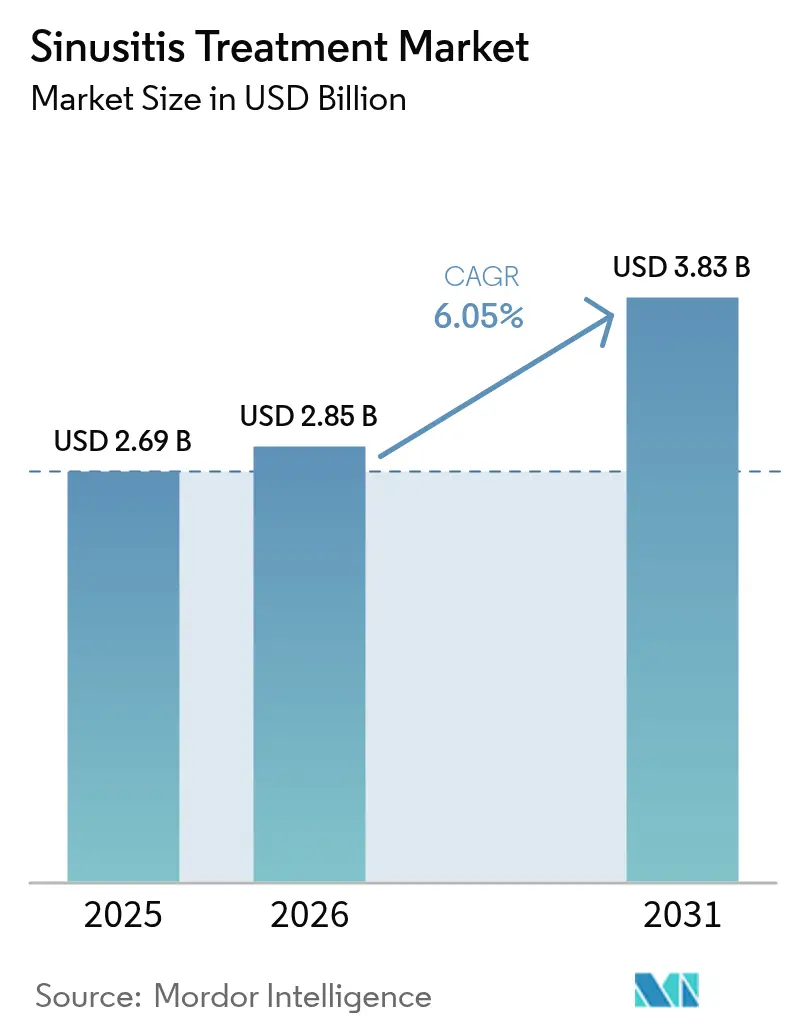
| Market Size (2026) | USD 2.85 Billion |
| Market Size (2031) | USD 3.83 Billion |
| Growth Rate (2026 - 2031) | 6.05 % |
| Fastest Growing Market | Asia-Pacific |
| Largest Market | North America |
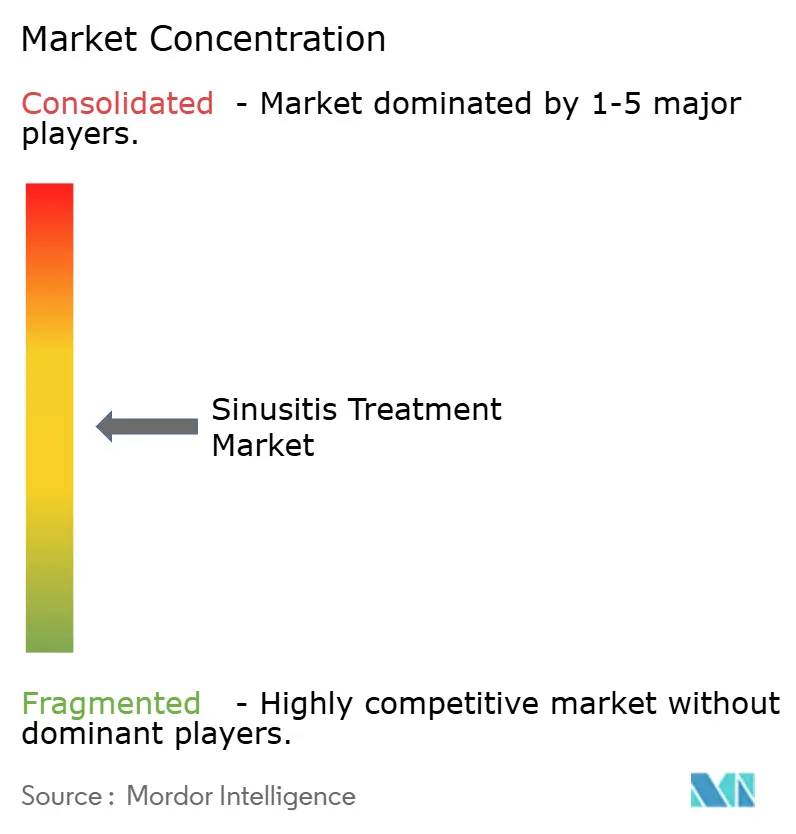
| Market Concentration | Medium |
Major Players *Disclaimer: Major Players sorted in no particular order Image © Mordor Intelligence. Reuse requires attribution under CC BY 4.0. | |
Sinusitis Treatment Market Analysis by Mordor Intelligence
The Sinusitis Treatment Market size is expected to grow from USD 2.69 billion in 2025 to USD 2.85 billion in 2026 and is forecast to reach USD 3.83 billion by 2031 at 6.05% CAGR over 2026-2031. Rising chronic rhinosinusitis prevalence, fast uptake of balloon sinuplasty, and the approval of precision biologics such as dupilumab are accelerating the sinusitis treatment market across all regions. Rapid technological shifts, especially AI-guided navigation systems and robotic functional endoscopic sinus surgery (FESS) platforms, are sharpening surgical accuracy while lowering complication rates, thereby raising procedure volumes and broadening the sinusitis treatment market. At the same time, combination drug regimens and microbiome-modulating probiotics are expanding therapeutic choice, even as antibiotic-resistance pressures and generic competition intensify pricing risk. Post-COVID shifts in sinonasal bacterial ecosystems are creating novel probiotic niches, further reshaping the sinusitis treatment market.
Key Report Takeaways
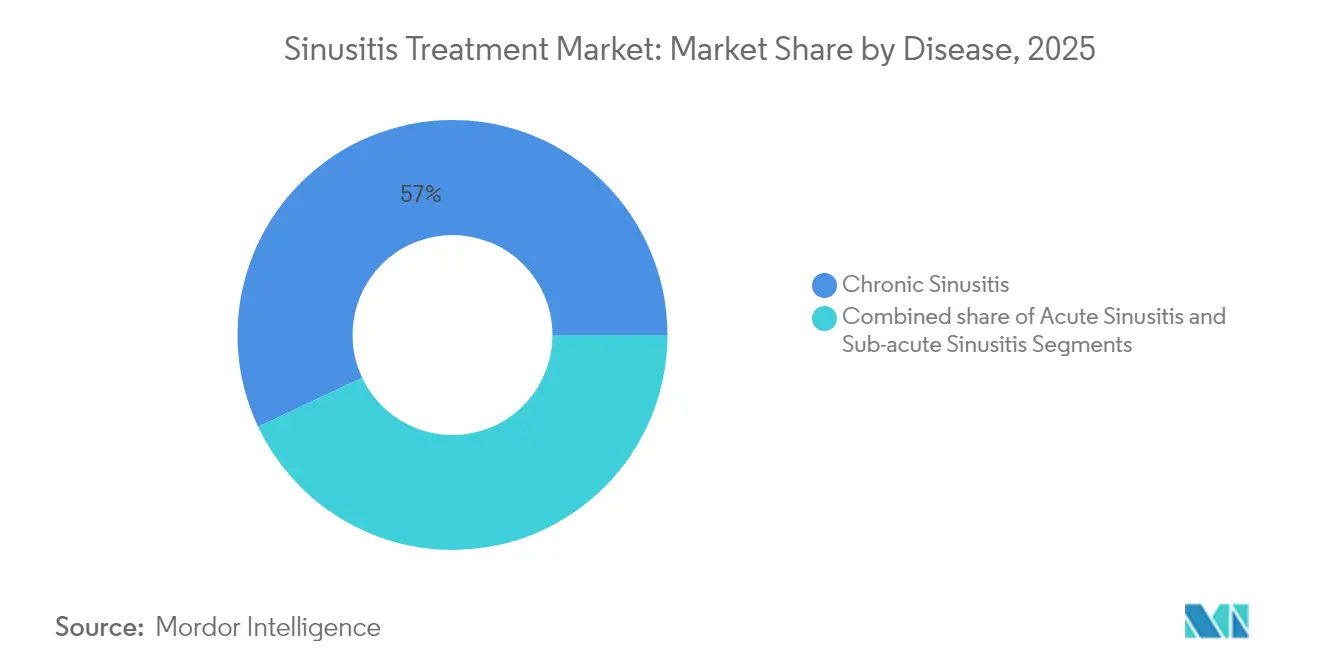
- By disease, chronic sinusitis commanded 57.02% of sinusitis treatment market share in 2025 while acute sinusitis is advancing at a 7.31% CAGR through 2031.
- By modality, antibiotics led with 42.35% revenue share of the sinusitis treatment market size in 2025, whereas analgesics are growing fastest at 7.85% CAGR to 2031.
- By geography, North America held 39.62% share of the sinusitis treatment market size in 2025, while Asia-Pacific records the highest projected CAGR at 8.02% through 2031.
Note: Market size and forecast figures in this report are generated using Mordor Intelligence’s proprietary estimation framework, updated with the latest available data and insights as of 2026.
Market Trends and Insights
Drivers Impact Analysis of Sinusitis Treatment Market*
| Driver | (~) % Impact on CAGR Forecast | Geographic Relevance | Impact Timeline |
|---|---|---|---|
| Rising Prevalence of Chronic & Acute Rhinosinusitis | +1.2% | Global, with higher impact in developed regions | Medium term (2-4 years) |
| Growing Preference for Minimally-Invasive Balloon Sinuplasty | +1.0% | North America & Europe, expanding to APAC | Short term (≤ 2 years) |
| Expanding Access to Combination Drug Regimens | +0.8% | Global, particularly emerging markets | Medium term (2-4 years) |
| Rapid Uptake of Biologics for CRSwNP | +1.5% | North America & Europe primarily | Short term (≤ 2 years) |
| AI-Guided Endoscopic Navigation & Robotic FESS Platforms | +0.7% | Developed markets initially | Long term (≥ 4 years) |
| Microbiome-Modulating Probiotics & Post-Biotics Emerging | +0.5% | Global, research-driven adoption | Long term (≥ 4 years) |
| Source: Mordor Intelligence | |||
Rising Prevalence of Chronic & Acute Rhinosinusitis
Chronic rhinosinusitis now affects up to 12% of the global population, translating to heavier outpatient loads and higher surgical referrals. COVID-related microbial shifts introduced a cohort with persistent inflammatory symptoms, raising hospital admissions for complicated sinusitis. In the United States, productivity losses average 20.6 workdays per patient per year and drive USD 8 billion in annual medical spending. Urban air pollutants and allergens intensify mucosal inflammation, magnifying demand for durable treatments across every sinusitis treatment market segment. Aging populations and longer life expectancy further solidify a multi-year volume base for biologics, image-guided surgery, and probiotic solutions.
Growing Preference for Minimally-Invasive Balloon Sinuplasty
Balloon sinuplasty has been increasing, showing how tissue-preserving techniques are displacing conventional FESS. Current evidence reports 91% clinical success with fewer postoperative complications, positioning balloon dilation as the first-line surgical option for many patients.[1] Office-based execution cuts hospital stay and dovetails with value-based care; Stryker’s analysis shows USD 2,200 per-patient savings compared with traditional FESS, a compelling argument for payers. Image-guided navigation further improves precision, especially inside complex frontal recess anatomy, while disposable microdebriders reduce infection risk and reprocessing costs. These advantages collectively pull incremental procedure volume into the sinusitis treatment market.
Expanding Access to Combination Drug Regimens
First-line therapy increasingly pairs amoxicillin-clavulanate with intranasal corticosteroids, shortening acute exacerbations by up to 66% compared with monotherapy, as demonstrated in the ReOpen program. Optinose’s XHANCE exhalation platform delivers higher steroid deposition into obstructed passages and gained FDA clearance for chronic rhinosinusitis without nasal polyps in March 2024. Updated guidelines in numerous emerging economies now incorporate combination regimens, reflecting better diagnostic capacity and patient education. The trend helps maintain antibiotic efficacy while curbing resistance, supporting sustainable revenue growth for branded formulations despite generic erosion in mature molecules.
Rapid Uptake of Biologics for CRSwNP
Dupilumab drives sustained symptom relief and fewer surgeries, as validated in SINUS-24 and SINUS-52 trials.[2] The September 2024 FDA extension to adolescents ages 12-17 widens the eligible U.S. population by roughly 9,000 patients. Pipeline agents such as tezepelumab and depemokimab attack upstream inflammatory mediators and posted encouraging Phase 3 data that reduced polyp burden and congestion scores. China’s December 2024 authorization of stapokibart, the first domestically developed biologic, underscores regional acceleration in the sinusitis treatment market. Pharmacoeconomic studies show omalizumab currently offers the most favorable cost-effectiveness ratio in Canada, influencing reimbursement decisions.
Restraints Impact Analysis of Sinusitis Treatment Market*
| Restraint | (~) % Impact on CAGR Forecast | Geographic Relevance | Impact Timeline |
|---|---|---|---|
| Escalating Penetration of Low-Cost Generics & OTC Decongestants | -0.9% | Global, particularly price-sensitive markets | Short term (≤ 2 years) |
| Rising Antibiotic-Resistance Pressures Curbing Empirical Scripts | -1.1% | Global, with higher impact in developed regions | Medium term (2-4 years) |
| Post-COVID Shifts in Sinonasal Microbiome Dampening Elective Procedure Demand | -0.6% | Global, temporary effect | Short term (≤ 2 years) |
| Shortage of Trained Otolaryngologists in High-Growth Emerging Regions | -0.8% | APAC, MEA, Latin America | Long term (≥ 4 years) |
| Source: Mordor Intelligence | |||
Escalating Penetration of Low-Cost Generics & OTC Decongestants
Generic launches reduce average selling price of azelastine-fluticasone sprays, with U.S. retail erosion exceeding 45% within 12 months of patent expiry.[3] OTC nasal sprays now match prescription efficacy in shortening symptom duration to 6.5 days, adding retail-channel competition. Herbal alternatives such as Sinupret allow delayed antibiotic strategies that trim antimicrobial use by 43.7% in randomized settings. In emerging economies, generics account for over 70% of total scripts, compressing branded margins and pressuring innovators to demonstrate superior outcomes. This price deflation temporarily caps revenue expansion within certain segments of the sinusitis treatment market.
Rising Antibiotic-Resistance Pressures Curbing Empirical Scripts
Guidelines now advocate watchful waiting for uncomplicated acute rhinosinusitis and restrict antibiotics to severe or persistent cases. Meta-analysis in pediatrics shows antibiotics reduce treatment failure by only 41% and risk fostering resistant pathogens. Studies detect multidrug-resistant Klebsiella pneumoniae in postoperative sinus cultures, elevating concern over empirical broad-spectrum usage. Regulators and insurers link reimbursement to antimicrobial stewardship targets, dampening antibiotic volume but opening pathways for rapid diagnostics and targeted agents. This trend moderates growth in the antibiotic-heavy segment of the sinusitis treatment market.
*Our forecasts treat driver/restraint impacts as directional, not additive. The impact forecasts reflect baseline growth, mix effects, and variable interactions.
Sinusitis Treatment Market Segment Analysis
By Disease:
Chronic Sinusitis Drives Market DominanceChronic sinusitis controlled 57.02% of sinusitis treatment market share in 2025 thanks to its recurrent profile and higher resource utilization. The segment absorbs biologic spending and revision FESS volumes, underpinning robust revenue streams. Acute sinusitis, while smaller, is projected to expand at a 7.31% CAGR, reflecting better primary-care diagnostics and refined antibiotic protocols. Sub-acute sinusitis serves as the bridge phenotype, often migrating into chronic classification when inadequately resolved.
Chronic disease heterogeneity continues to steer precision medicine. Eosinophilic variants respond strongly to IL-4/IL-13 blockade, whereas non-eosinophilic phenotypes common in Asian populations need alternative pathways. Tissue eosinophilia scoring during surgery now guides postoperative pharmacotherapy, cutting revision risk. Parallel development of biomarkers and next-generation biologics secures long-term growth for the sinusitis treatment market size linked to chronic disease management.

By Drug Class:
Antibiotics Lead Despite Analgesic AccelerationAntibiotics held 42.35% of the sinusitis treatment market size in 2025, driven by the continued burden of bacterial acute exacerbations. However, analgesics are advancing at a 7.85% CAGR as patients and clinicians prioritize symptom control amid antibiotic stewardship pressures. Corticosteroids, especially intranasal, remain critical for inflammation suppression, while antihistamines serve allergic subsets. Emerging modalities, biologics, probiotics, and herbal products introduce diversified revenue pools that temper reliance on volume-driven antibiotic sales.
Surgical modalities sustain high single-digit growth. Image-guided balloon sinuplasty and disposable debriders reduce intraoperative risk and lower postoperative revision rates, pulling new referrals and pushing hospitals to upgrade ENT suites. As AI-enhanced navigation matures, procedural throughput increases, reinforcing device sales in the sinusitis treatment market.

Geography Analysis
North America Sinusitis Treatment Market
North America retained 39.62% of the sinusitis treatment market in 2025 due to early biologic adoption and payer support for minimally-invasive surgery. The September 2024 adolescent dupilumab approval and the June 2025 SONU Band pediatric clearance underscore an innovation-friendly regulatory climate. Balloon sinuplasty delivers USD 2,200 average savings per case compared with traditional FESS, further cementing payer backing. Canada’s rigorous pharmacoeconomic evaluations favor omalizumab as the cost-effective biologic for eligible patients. Mexico’s rising middle class and medical tourism growth broaden procedure and drug uptake, extending North American influence across the sinusitis treatment market.
APAC Sinusitis Treatment Market
Asia-Pacific registers the fastest regional CAGR at 8.02%, powered by infrastructure investment and greater awareness of advanced therapies. China demonstrates strong demand for image-guided FESS, showing 100% avoidance of rehospitalization for bleeding and lower overall cost per quality-adjusted life year versus conventional surgery. The December 2024 approval of stapokibart, China’s first indigenous biologic, marks a strategic milestone that improves access and lowers dependence on imported agents. Workforce shortages remain a drag, yet tele-mentoring and robotics partially offset skill gaps, keeping the sinusitis treatment market on a steep trajectory.
Europe Sinusitis Treatment Market
Europe shows steady expansion under tight cost-containment regimes. The European Position Paper on Rhinosinusitis supplies unified diagnostic and therapeutic criteria that drive evidence-based utilization. Major markets—Germany, United Kingdom, France—lead biologic uptake, while southern nations accelerate adoption after positive health-technology assessments. Digital health tools support remote follow-up and specialist consultations, widening reach in rural settings and stabilizing growth for the sinusitis treatment market across the continent.

Regulatory Landscape
The regulatory environment for sinusitis therapies in 2026 shows tighter scrutiny across biologics and device-based symptom-control options, with regulators putting weight on endpoint-driven evidence and cost-effectiveness. On April 16, 2026, the FDA finalized 21 CFR 874.6000 for transcutaneous electrical nerve stimulators for congestion relief, clarifying the regulatory lane for neuromodulation-style approaches that compete with OTC decongestants and prescription drugs in symptom control.
In February 2026, the FDA approved Dupixent for AFRS in adults and children aged 6 years and older with prior sinonasal surgery, extending biologic indications linked to surgical history.
Value Chain Analysis
The sinusitis value chain covers API and finished-dose manufacturing for antibiotics, intranasal corticosteroids, antihistamines, and biologics, then routes products through specialty pharmacies and hospital channels. The February 2026 Dupixent AFRS approval expands specialty-pharmacy onboarding and prior-authorization workloads in the biologics segment.
A parallel lane centers on devices and procedure-linked care, with ENT clinics and ambulatory surgery centers sourcing balloon sinuplasty systems, endoscopes, navigation tools, and disposables via hospital procurement and GPO contracts. Balloon sinuplasty adoption delivers USD 2,200 per-case savings versus traditional FESS, supporting payer backing and higher throughput in ENT suites.
Competitive Landscape
The sinusitis treatment market displays moderate fragmentation, with top pharmaceutical and device players holding overlapping yet differentiated portfolios. Sanofi-Regeneron anchor the biologic segment with dupilumab, now approved for both adult and adolescent CRSwNP populations, and posted head-to-head superiority versus omalizumab in the 2025 EVEREST trial presented at EAACI. Medtronic strengthened its ENT offering through the Intersect ENT acquisition, adding Propel steroid-eluting implants that reduce postoperative adhesions. Stryker leverages an integrated toolkit that spans balloon dilation, navigation, and absorbable implants, supported by real-world economic data that highlights payer savings.
Emerging entrants accelerate innovation. Keymed’s stapokibart introduces a local biologic option for Chinese patients, while Amgen-AstraZeneca’s tezepelumab broadens anti-TSLP coverage after Phase 3 success. Digital and bioelectronic startups, SoundHealth with its FDA-cleared SONU device and Tivic Health’s ClearUP neuromodulation platform, address congestion without drugs, differentiating on safety and adherence.
Olympus’s CELERIS single-use debrider taps into infection-control priorities, giving hospitals a disposables-based cost model. Competitive advantage hinges on proving clinical benefit alongside economic value, forcing incumbents and newcomers alike to pair efficacy data with cost-offset narratives to win formulary acceptance.
Sinusitis Treatment Industry Leaders
-
Medtronic plc
-
Cipla Inc.
-
Dr. Reddy’s Laboratories Ltd.
-
Stryker Corporation
-
Sanofi SA
- *Disclaimer: Major Players sorted in no particular order
Sinusitis Treatment Market Companies Covered in this Report
- Acclarent Inc (J&J)
- AstraZeneca
- Aurobindo Pharma
- Bayer
- Cipla
- Dr Reddy’s Laboratories
- Entellus Medical
- GlaxoSmithKline
- Medtronic
- NeilMed Pharmaceuticals
- Novartis
- Olympus
- OptiNose Inc
- Pfizer
- Regeneron Pharmaceuticals
- Sanofi
- SinuSys
- Smiths Group
- Stryker
- Teva Pharmaceutical Industries
Market Opportunities and Future Outlook
Biologics expansion broadens the treatable pool for chronic rhinosinusitis with nasal polyps and AFRS. The February 2026 Dupixent AFRS approval and the October 2025 Tezspire CRSwNP expansion support endotype-driven care pathways and raise the bar for diagnostic enrichment, as well as for payer real-world evidence around surgery deferral, steroid-sparing outcomes, and revision procedures.
In the procedural space, integrated ENT setups that pair AI-guided navigation with balloon sinuplasty and FESS infrastructure create opportunity in bundled capital equipment, disposables, and service contracts. Balloon sinuplasty also remains a pricing-relevant lever given the USD 2,200 savings per case in North America, which helps explain its traction in settings focused on utilization and cost-offsets. WAYPOINT trial data showing reductions in nasal polyp size and congestion further informs formulary and sequencing decisions where reimbursement is restrictive.
Recent Industry Developments in Sinusitis Treatment Market
- June 2026: Medtronic received CE mark for the Stealth AXiS surgical system expanding ENT navigation platform to European markets. The launch expands ENT navigation adoption in Europe. Strengthens Medtronic's connected ENT ecosystem and global deployment.
- June 2026: Medtronic and KARL STORZ announced a strategic collaboration to integrate visualization tech with the AiBLE ENT ecosystem to expand U.S. access to sinus surgical solutions. Broadens integrated visualization-enabled ENT workflow in U.S. . Advances a unified, image-guided sinus surgery platform with potential formulary and adoption advantages.
- February 2026: Sanofi Dupixent approved in the US as the first and only medicine for allergic fungal rhinosinusitis AFRS in adults and children ≥6 with prior sino-nasal surgery. First FDA-approved systemic biologic for AFRS. Expands indications footprint in sinusitis-related diseases and patient access.
Sinusitis Treatment Market Report Scope and Research Methodology
Market Definition and Coverage
This market covers the value of products and procedures used to diagnose, manage, and treat sinusitis in routine clinical care, including drug therapies and minimally invasive surgical interventions used for symptom relief and disease control.
Scope exclusions: We exclude general allergy care that is not prescribed or performed specifically for sinusitis, along with broad respiratory remedies sold for common cold without a sinusitis-linked treatment intent.
Segments Covered in This Report
- By Disease
- Acute Sinusitis
- Sub-acute Sinusitis
- Chronic Sinusitis
- By Modality
- Drug Class
- Analgesics
- Antihistamines
- Corticosteroids
- Antibiotics
- Others
- Minimally-invasive Surgery (Balloon Sinuplasty, FESS)
- Drug Class
- By Geography
- North America
- United States
- Canada
- Mexico
- Europe
- Germany
- United Kingdom
- France
- Italy
- Spain
- Rest of Europe
- Asia-Pacific
- China
- Japan
- India
- Australia
- South Korea
- Rest of Asia-Pacific
- Middle East and Africa
- GCC
- South Africa
- Rest of Middle East and Africa
- South America
- Brazil
- Argentina
- Rest of South America
- North America
Data Sources, Market Sizing, and Validation
Desk Research
Desk work started with publicly available disease and care-delivery signals so we could anchor the demand pool and care pathways before any modeling. Inputs such as CDC burden indicators, NIH and NCBI clinical publications, WHO health statistics, and OECD health data helped us frame prevalence ranges, how often patients seek care, and where treatment choices typically diverge between acute and chronic cases.
We then used regulatory and market-access references to keep product assumptions realistic, including sources such as FDA drug and device databases and public payer or reimbursement references where available. Company filings and investor materials were used to confirm portfolio focus and commercialization footprint, and non-paywalled press coverage helped track new launches and procedure adoption. Select paid subscriptions for company financials and news, along with patent databases, were used mainly to fill gaps and cross-check timelines. These examples are not exhaustive, and many other public sources were also referred to for data collection, validation, and clarification.
Primary Interviews and Surveys
Primary calls and surveys were used to stress-test the care-pathway assumptions and the split between drug management and minimally invasive surgery, followed by validation of pricing logic. We spoke with clinicians, distributors, and industry stakeholders across major regions so that regional treatment preferences, procedure uptake (including balloon-based approaches), and prescription behavior could be reflected in the final totals.
Distribution of primary research fieldwork respondents
| Company type | Respondent position | Region |
|---|---|---|
| Top tier: 34% | CXOs: 14% | APAC: 43% |
| Mid tier: 47% | Functional/Unit leaders: 32% | EMEA: 31% |
| Smaller Players: 19% | Managers: 54% | Americas: 26% |
Market-Sizing & Forecasting
The core sizing model is built from the demand side, where prevalence by sinusitis type is translated into treated patients and then into therapy and procedure volumes by region and year. Once the treated pool is formed, average annual therapy intensity and procedure penetration are applied, and then converted to value using region-appropriate pricing and currency timing.
To keep the totals grounded, we corroborated outputs with selective bottom-up approximations. For key drug classes, we used sampled price-per-course multiplied by implied volumes, and we also ran channel checks around procedure pricing in major countries. Key inputs used in the model include chronic rhinosinusitis prevalence ranges, antibiotic prescribing tendency, uptake of intranasal corticosteroids, minimally invasive surgery penetration, and price progression patterns for drugs versus procedures. Where a variable was not consistently available by country, we used a transparent proxy, for example regional care seeking rates, and then reviewed it in interviews before finalizing.
Forecasting used scenario analysis supported by short-run smoothing on historical indicators, followed by expert-led adjustments for adoption curves in minimally invasive surgery and therapy mix shifts in chronic disease. Assumptions were kept traceable so a junior analyst can reproduce the steps and update single variables without rebuilding the full model.
Data Validation & Update Cycle
We validate outputs through several checks, starting with internal consistency tests that confirm patient counts, procedure penetration, and implied spending per treated case remain realistic across years and regions. Outliers are reviewed against independent signals, such as procedure adoption commentary, regulatory milestones, and changes in prescribing guidance, and then corrected if the driver is not supported.
A second analyst reviews the calculation chain and the assumptions log before sign-off, and we re-contact interviewees when the model shows a variance that cannot be explained by public evidence. Reports are refreshed annually, with interim updates triggered by material events like major approvals, reimbursement shifts, or clear changes in procedure uptake. Before delivery, a final pass is completed so clients receive the most current view available at that time.
Mordor Intelligence's Sinusitis Treatment Market Size Measured Against Other Published Estimates
Published market values for sinusitis treatment can differ because authors do not always count the same care settings, do not align on what qualifies as a sinusitis-specific intervention, and may use different base years and currency timing. We also see variation when procedure value is blended with drug spending without clearly explaining the split.
Key gaps usually come from how chronic cases are handled versus acute episodes, whether minimally invasive surgery is treated as a core value driver or kept secondary, and how price changes are carried forward year to year. If an estimate leans on a single historical anchor year or uses aggressive mix shifts without clinician validation, the projection path can drift even when the endpoint year looks similar.
Benchmark comparison
| Source | Market Size | Gaps in Research Methodology |
|---|---|---|
| Mordor Intelligence | USD 2.85 B (2026) | |
| Health Media Outlet A | USD 3.00 B (2020) | Uses an earlier base year and does not clearly show how procedure value and drug therapy value are normalized across regions, which can shift the implied current-year run rate. |
| Newswire Research Summary B | USD 2.10 B (2022) | Starts from a lower base and applies broad treatment buckets, with limited transparency on treated-patient conversion and how chronic therapy intensity is separated from episodic acute care. |
The spread mainly reflects base-year selection and the way chronic management and minimally invasive surgery are priced and carried forward. When the treated pool is built separately for acute and chronic care, and procedure uptake is validated country by country, the 2026 total stays closer to real-world care delivery patterns, which is the approach applied by Mordor Intelligence.
Key Questions Answered in the Report
What is the current value of the global sinusitis treatment market?
The sinusitis treatment market size is USD 2.85 billion in 2026.
How fast is the sinusitis treatment market expected to grow?
It is projected to expand at a 6.05% CAGR through 2031.
Which region will record the highest growth in sinusitis treatments?
Asia-Pacific is forecast to post the fastest CAGR at 8.02% through 2031.
Which therapeutic class is growing fastest within sinusitis care?
Analgesics show the highest projected growth at 7.85% CAGR as patients seek better symptom relief.
Why are biologics important in chronic rhinosinusitis?
Agents like dupilumab reduce polyp size, improve symptoms, and diminish surgery need, providing transformative outcomes for severe cases.