
Schizophrenia Drugs Market Size and Share
Market Overview
| Study Period | 2020 - 2031 |
|---|---|
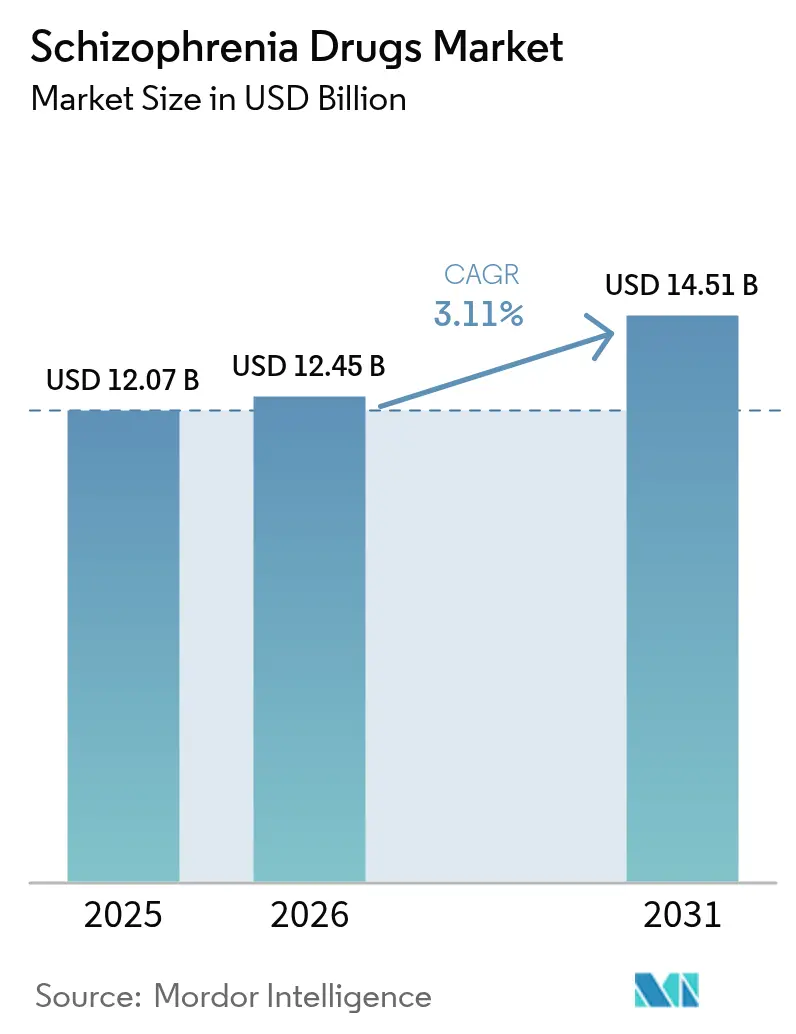
| Market Size (2026) | USD 12.45 Billion |
| Market Size (2031) | USD 14.51 Billion |
| Growth Rate (2026 - 2031) | 3.11 % |
| Fastest Growing Market | Asia Pacific |
| Largest Market | North America |
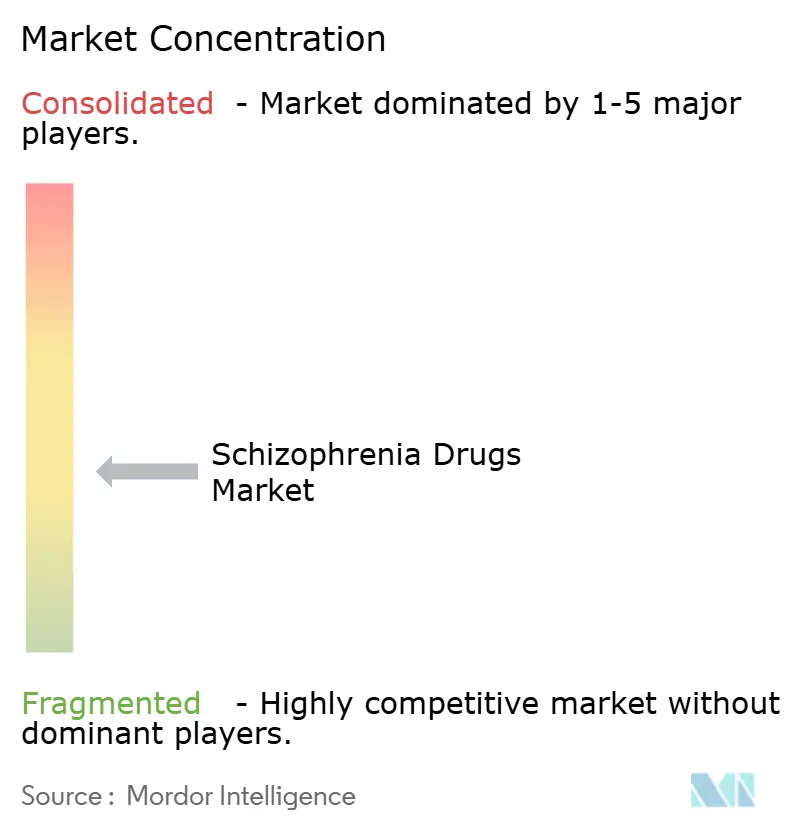
| Market Concentration | Medium |
Major Players *Disclaimer: Major Players sorted in no particular order Image © Mordor Intelligence. Reuse requires attribution under CC BY 4.0. | |
Schizophrenia Drugs Market Analysis by Mordor Intelligence
The global schizophrenia drugs market size in 2026 is estimated at USD 12.45 billion, growing from 2025 value of USD 12.07 billion with 2031 projections showing USD 14.51 billion, growing at 3.11% CAGR over 2026-2031. Behind this steady headline figure, the schizophrenia drugs market is rapidly evolving as muscarinic agonists, glutamate modulators, and dopamine partial agonists compete with decades-old dopamine-antagonist therapies. Long-acting injectables (LAIs) are growing at 8% CAGR as health systems seek to counter 50% non-adherence rates, while Asia-Pacific’s 8.5% CAGR underscores widening diagnosis and insurance coverage. Portfolio realignment is accelerating: Bristol Myers Squibb acquired Karuna Therapeutics for USD 14 billion to secure KarXT, and Johnson & Johnson followed with a USD 14.6 billion purchase of Intra-Cellular Therapies to add lumateperone, signaling that differentiated mechanisms now dictate competitive advantage. Heightened payer focus on outcomes is also lifting demand for formulations that cut hospitalization, a trend favoring LAIs and third-generation agents.
Key Report Takeaways
- By therapeutic class, second-generation antipsychotics held 69.35% of the schizophrenia drugs market share in 2025, while third-generation agents are advancing at a 7.18% CAGR through 2031.
- By treatment type, oral products commanded 84.05% share of the schizophrenia drugs market size in 2025, whereas long-acting injectables are expanding at an 7.72% CAGR over 2026-2031.
- By distribution channel, retail pharmacies accounted for 54.72% of the market size in 2025; online pharmacies to grow at a 8.82% CAGR between 2026-2031.
- By drug mechanism of action, dopamine-serotonin antagonists led with 79.35% revenue share in 2025; dopamine D2/D3 partial agonists grow at a 6.55% CAGR through 2031.
- By geography, North America led with 45.05% revenue in 2025; Asia-Pacific is projected to post the fastest 8.17% CAGR to 2031.
Note: Market size and forecast figures in this report are generated using Mordor Intelligence’s proprietary estimation framework, updated with the latest available data and insights as of 2026.
Market Trends and Insights
Drivers Impact Analysis of Schizophrenia Drugs Market*
| Driver | (~) % Impact on CAGR Forecast | Geographic Relevance | Impact Timeline |
|---|---|---|---|
| Growing Global Prevalence & Earlier Diagnosis of Schizophrenia | +1.2% | Global, with concentration in Asia-Pacific | Medium term (2-4 years) |
| Rising Adoption of Long-Acting Injectable Formulations for Improved Adherence | +0.9% | North America & Europe, emerging in Asia-Pacific | Short term (≤ 2 years) |
| Launch of Novel Third-Generation & Multi-Target Agents Expanding Treatment Options | +0.7% | North America, followed by Europe & Japan | Medium term (2-4 years) |
| Expansion of Mental-Health Insurance Coverage & Government Funding Worldwide | +0.5% | North America, Europe, developed Asia-Pacific | Medium term (2-4 years) |
| Affordable Generics & Public Procurement Programs Enhancing Access in Emerging Markets | +0.4% | Emerging markets in Asia-Pacific, Latin America, MEA | Short term (≤ 2 years) |
| Source: Mordor Intelligence | |||
Growing Global Prevalence & Earlier Diagnosis of Schizophrenia
Global prevalence has climbed to 24 million in 2025, and improved screening in primary care means more patients enter treatment earlier. Early intervention programs now stretch from Japan’s nationwide EIP network to pilot schemes in Chile, shortening the prodromal phase and enlarging the treated population. The economic burden reached USD 343.2 billion in the United States in 2024, intensifying payer appetite for drugs that cut relapse-driven hospital stays. Academic centers in Australia and Singapore are sharing longitudinal data sets that aid biomarker discovery, a move that may soon refine segment-specific prescribing. Taken together, rising prevalence and proactive diagnosis underpin volume growth for the schizophrenia drugs market.
Rising Adoption of Long-Acting Injectable Formulations for Improved Adherence
Up to half of patients discontinue oral therapy within one year, yet LAIs slash treatment-failure risk by 26-45% and materially lower rehospitalization. Payers now reimburse paliperidone every three months and olanzapine once monthly at parity with oral regimens, bolstering uptake in U.S. and German outpatient clinics. Chinese guidelines added LAIs to first-episode care pathways in 2025, cementing Asia-Pacific demand. R&D momentum is shifting to subcutaneous depots; Teva’s TEV-749 delivered >92% patient satisfaction in Phase 3, indicating convenience can translate into sustained adherence. The cumulative effect of these developments is a steady expansion of LAI penetration within the schizophrenia drugs market.
Launch of Novel Third-Generation & Multi-Target Agents Expanding Treatment Options
FDA approval of xanomeline-trospium in September 2024 ushered in the first muscarinic-based antipsychotic class, marking a pivotal moment after 35 years of dopamine complacency[1]. Muscarinic agonists, TAAR-1 agonists, and glutamatergic modulators now populate the most diversified pipeline in decades. Brexpiprazole and cariprazine already show superior efficacy for negative symptoms while mitigating weight gain, and early Phase 2 data for evenamide signal promise in treatment-resistant subgroups. Investors funneled more than USD 3 billion into late-stage trials during 2024-2025, catalyzing broader therapeutic choice and invigorating competition in the schizophrenia drugs market.
Expansion of Mental-Health Insurance Coverage & Government Funding Worldwide
The U.S. Medicare Payment Advisory Commission moved to abolish the 190-day inpatient cap, extending psychiatric coverage for severe schizophrenia cases. New Jersey mandated inpatient reimbursement parity for LAIs, a template other states are studying. Japan’s 2025 mental-health law broadened reimbursement for community-based care, including home LAI administration. In Europe, the EU4Health program earmarked EUR 825 million for digital mental-health initiatives, indirectly supporting tele-psychiatry prescriptions. Collectively, these policy moves enlarge payor budgets, creating fertile ground for premium-priced innovations in the schizophrenia drugs market.
Restraints Impact Analysis of Schizophrenia Drugs Market*
| Restraint | (~) % Impact on CAGR Forecast | Geographic Relevance | Impact Timeline |
|---|---|---|---|
| Persistent Safety Concerns (Metabolic, Cardiovascular, Neurological) Limiting Long-Term Use | -0.8% | Global | Long term (≥ 4 years) |
| High Stigma & Low Treatment-Seeking Behavior Curtailing Uptake | -0.6% | Global, particularly severe in emerging markets | Long term (≥ 4 years) |
| Complex Regulatory & Reimbursement Pathways Delaying Launch of Novel Therapies | -0.4% | Global, with varying impact by region | Medium term (2-4 years) |
| Patent Expiries Triggering Price Erosion & Revenue Decline for Innovator Brands | -0.3% | Global, with higher impact in developed markets | Short term (≤ 2 years) |
| Source: Mordor Intelligence | |||
Persistent Safety Concerns (Metabolic, Cardiovascular, Neurological) Limiting Long-Term Use
Up to 60% of patients on second-generation drugs develop weight gain or glucose abnormalities that double cardiovascular mortality versus the general population[2]. Fear of tardive dyskinesia and metabolic syndrome drives frequent switching, eroding persistence rates. While third-generation molecules reduce metabolic load, clinicians still monitor QT prolongation and akathisia, complicating long-term adherence plans. These unresolved safety issues dampen uptake of chronic therapy across the schizophrenia drugs market.
High Stigma & Low Treatment-Seeking Behavior Curtailing Uptake
Stigma delays care in over 70% of cases across low-income regions; cultural norms label schizophrenia as spiritual affliction, steering families to traditional healers first. Even in the U.S., patients reporting high internalized stigma exhibit 40% higher non-adherence, shrinking real-world demand. Reluctance to disclose illness hampers employer-sponsored insurance enrollment, especially among gig-economy workers. The result is an under-penetrated treated population that suppresses revenue potential for the schizophrenia drugs market.
*Our forecasts treat driver/restraint impacts as directional, not additive. The impact forecasts reflect baseline growth, mix effects, and variable interactions.
Schizophrenia Drugs Market Segment Analysis
By Therapeutic Class:
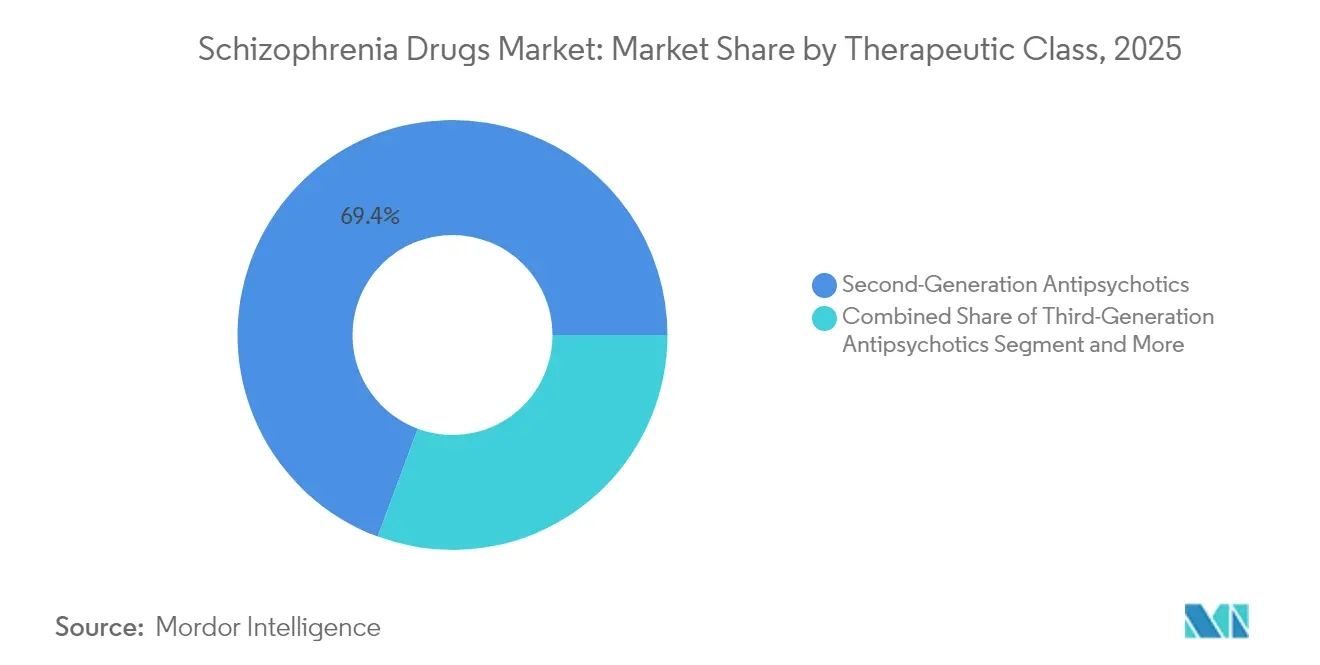
Shift Toward Third-Generation Agents Broadens ChoiceSecond-generation medicines captured 69.35% of schizophrenia drugs market share in 2025 on the back of proven efficacy. However, third-generation therapies recorded the fastest 7.18% CAGR and are projected to carve deeper inroads as favorable metabolic profiles resonate with payers and physicians. The schizophrenia drugs market size attributable to third-generation products could top USD 3.15 billion by 2031 if current uptake trends hold. First-generation drugs still serve cost-constrained settings but gradually relinquish volume amid side-effect worries.
Developers now pursue muscarinic, TAAR-1, and glutamatergic avenues, fragmenting the once-stable class landscape. As biomarkers emerge, prescribers anticipate algorithm-guided selection, accelerating mechanism-specific growth nodes inside the schizophrenia drugs market.

By Drug Mechanism of Action:
Receptor Diversity Enables Personalized PrescribingDopamine-serotonin antagonists once monopolized treatment, yet their dominance fell below 79.35% of 2025 revenue as partial agonists and novel modulators gained share. Cariprazine’s D3 preference enhances negative-symptom relief, while NMDA modulators offer hope for cognitive deficits. The schizophrenia drugs market size linked to dopamine D2/D3 partial agonists is forecast to rise at 6.55% CAGR through 2031.
Regulators now encourage mechanism-rich pipelines, expediting fast-track designations for first-in-class agents. Greater heterogeneity boosts the likelihood that prescribers tailor regimens to symptom clusters, fostering nuanced competition within the schizophrenia drugs market.
By Treatment Type:
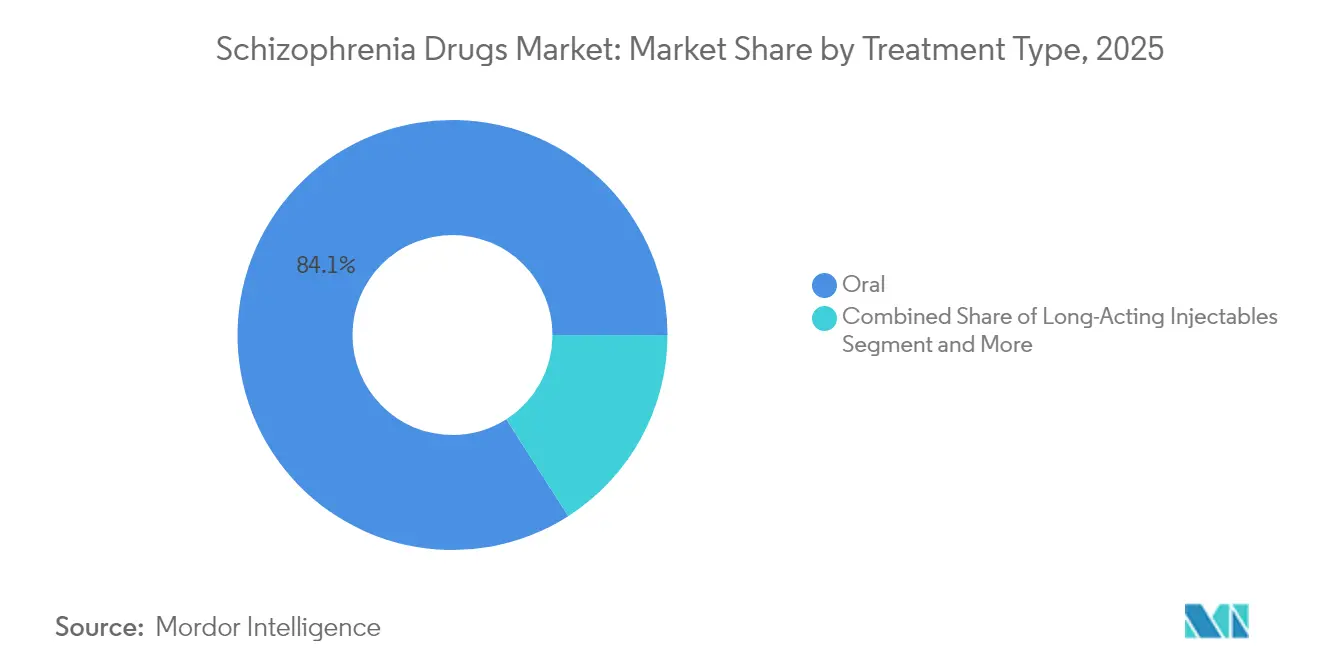
Long-Acting Injectables Cement Growth TrajectoryOral tablets dominated 84.05% revenue in 2025, yet LAIs are set to expand share as subcutaneous products lower administration barriers. LAI revenue in the schizophrenia drugs market size is expected to approach USD 3.62 billion by 2031, driven by payer recognition of their relapse-prevention economics. Short-acting injectables and transdermal options fill niche needs such as acute agitation or needle-averse patients.
Manufacturers emphasize real-world evidence: three-monthly paliperidone cut Medicare hospital days by 32%, and six-monthly formulations are in Phase 2. These data support broader guidelines recommending LAIs after first relapse, potentially accelerating their diffusion across the schizophrenia drugs market.
By Distribution Channel:
Digital Commerce Reshapes Access PathwaysRetail pharmacies held 54.72% share, yet online channels grew 8.82% CAGR as tele-psychiatry prescriptions surged. China’s “Internet+” pharmacies dispensed 38% more antipsychotic packs in 2024, and U.S. mail-order volumes rose 22%. Hospital pharmacies preserve importance for LAI initiation but ceded routine refills to community outlets.
FTC scrutiny of PBMs may realign rebate flows, affecting net prices across the schizophrenia drugs market. Meanwhile, Amazon’s RxPass and CVS Health’s digital clinic integrate mental-health consultations, signaling that distribution competition now hinges on platform reach and patient engagement.
Geography Analysis
North America Schizophrenia Drugs Market
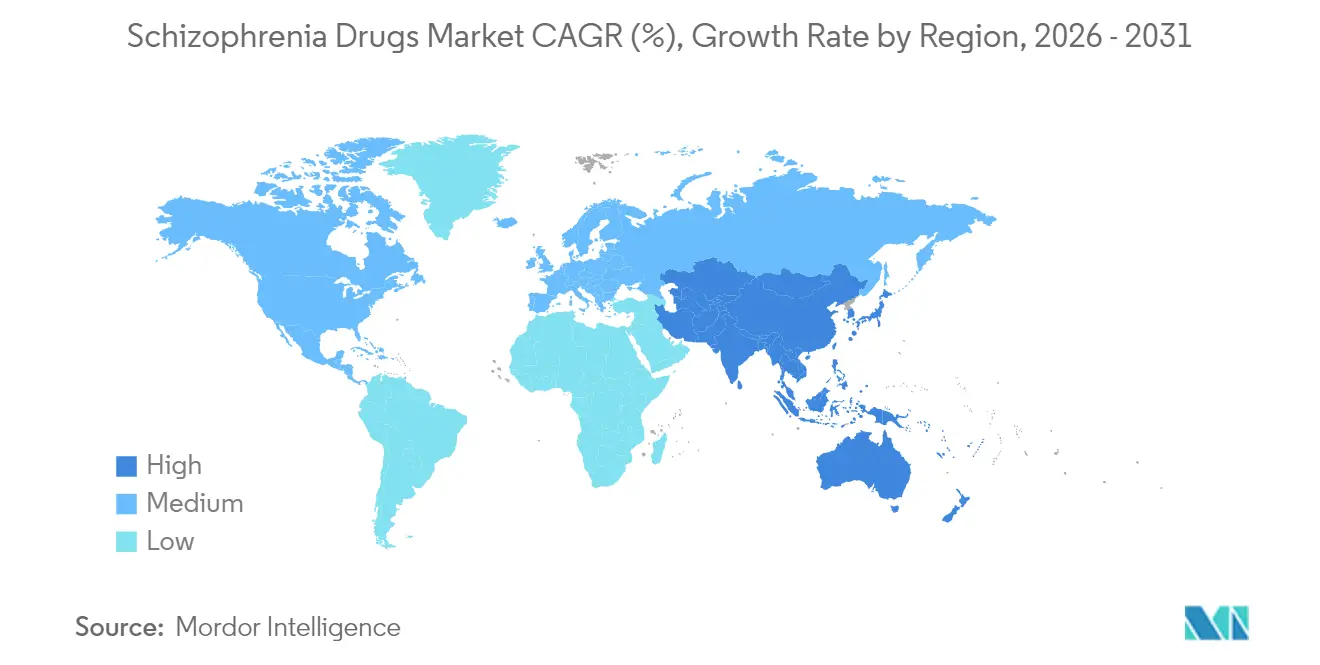
North America accounted for 45.05% of schizophrenia drugs market revenue in 2025, anchored by high diagnosis, robust insurance, and early adoption of novel agents. The region also fields the majority of pivotal trials, reinforcing first-to-market advantages. However, specialty drug inflation outpaced wage growth, prompting payers to tighten prior-authorizations that could temper future volume growth.
APAC Schizophrenia Drugs Market
Asia-Pacific posted the fastest 8.17% CAGR and is projected to lift its share to 27.35% by 2031. Drivers include rising disposable income, government insurance expansion, and early-intervention programs in Japan and South Korea. China’s bulk-procurement policy slashed prices, enabling provincial roll-outs of LAIs in 2025. Strategic deals, such as Newron’s evenamide licenses for Japan and Korea, illustrate how localization accelerates penetration in the schizophrenia drugs market.
Europe Schizophrenia Drugs Market
Europe retained substantial volume on the back of universal coverage and integrated care models. Germany led LAI adoption, while Spain’s digital prescription initiative cut refill gaps by 18%. The continent also houses several manufacturing sites for active pharmaceutical ingredients, offering supply-chain resilience that can buffer price shocks within the schizophrenia drugs market.
Regulatory Landscape
Regulatory oversight for schizophrenia therapies continues to tighten around benefit-risk evidence, long-term outcomes (relapse prevention), and safety monitoring for chronic use, with the US FDA and the European Medicines Agency (EMA) serving as key reference agencies for global launch sequencing. A notable mechanism shift followed the US FDA approval of Cobenfy (xanomeline-trospium) in September 2024, which introduced a non-dopaminergic (muscarinic) option for schizophrenia and reshaped expectations for novel pharmacology in late-stage pipelines.
In 2025-2026, regulators expanded access while maintaining strict evidentiary standards. The EMA expanded RXULTI (brexpiprazole) to include adolescents aged 13 to 17 years (March 2025), and it also signaled continued scrutiny by recommending refusal of iloperidone for schizophrenia on robustness grounds (February 2026). In the United States, the FDA approved Bysanti (milsaperidone) for adults with schizophrenia (February 2026) and cleared a Johnson & Johnson supplemental NDA for CAPLYTA (lumateperone) for relapse prevention in schizophrenia (April 2026), reinforcing the importance of relapse-focused endpoints and post-approval label optimization.
Competitive Landscape
The schizophrenia drugs market displays moderate concentration: the top companies controls the significant market revenue. Johnson & Johnson, Eli Lilly, and Alkermes plc anchor the leaderboard through Invega, Zyprexa, and Cobenfy, respectively. Recent M&A reshaped the field: Bristol Myers Squibb’s USD 14 billion buyout of Karuna Therapeutics secured KarXT, and Johnson & Johnson’s USD 14.6 billion acquisition of Intra-Cellular Therapies brought CAPLYTA into its neuroscience stable[3].
Pipeline diversity fuels rivalry. Teva is advancing TEV-749, while Neurocrine’s TAAR-1 agonist NBI-1117568 posted positive Phase 2 data. Small-cap firms like Newron target add-on strategies, positioning evenamide for resistant cases. Generic makers, including Sunshine Biopharma, launched lurasidone generics in 2025, intensifying price pressure on mature brands. Strategic differentiation now hinges on clinical outcomes, dosing convenience, and safety profiles.
Regional entrants add complexity: Zai Lab filed a KarXT NDA in China, aiming to leverage rapid NRDL inclusion. Japanese firms, backed by the Pharmaceuticals and Medical Devices Agency’s Sakigake pathway, seek accelerated domestic approvals. Competitive dynamics therefore balance global scale with localized execution inside the schizophrenia drugs market.
Schizophrenia Drugs Industry Leaders
-
Eli Lilly and Company
-
Alkermes PLC
-
Johnson & Johnson (Janssen)
-
AbbVie Inc. (Allergan)
-
Otsuka Pharmaceutical Co.
- *Disclaimer: Major Players sorted in no particular order
Schizophrenia Drugs Market Companies Covered in this Report
- Alkermes plc
- Abbvie
- AstraZeneca
- Eli Lilly and Company
- Johnson & Johnson
- Pfizer
- Sumitomo Dainippon Pharma
- Vanda Pharmaceuticals
- Bristol-Myers Squibb
- Otsuka Pharmaceutical Co.
- Acadia Pharmaceuticals
- Karuna Therapeutics
- H. Lundbeck
- Teva Pharmaceutical Industries
- Dr Reddy's Laboratories
- Sun Pharmaceuticals Industries
- Sunovion Pharmaceuticals
- Amneal Pharmaceuticals
- Lupin
- Aurobindo Pharma
- Takeda Pharmaceuticals
- Sandoz Group
Market Opportunities and Future Outlook
White space is widening in differentiated mechanisms and outcomes-based labeling, as prescribers and payers look for options that address adherence gaps, relapse prevention, and tolerability limits associated with long-term dopamine antagonism. The September 2024 FDA approval of Cobenfy (xanomeline-trospium) validated muscarinic targeting in schizophrenia and was followed by continued pipeline and program momentum in muscarinic agents, including Neurocrine Biosciences moving NBI-1117568 (muscarinic M4 selective orthosteric agonist) into a Phase 3 registrational program in 2025. That trajectory supports portfolio strategies that compete on symptom-domain differentiation and side-effect tradeoffs, not incremental reformulations alone.
Long-acting injectable innovation also offers a clear commercialization angle around simplifying administration and reducing care burdens that can slow LAI uptake. In February 2026, Teva reported FDA acceptance of its NDA for once-monthly olanzapine extended-release injectable suspension (TEV-749), with the program framed to avoid the need for a REMS program, pointing to developer emphasis on designs that reduce monitoring friction. Label expansions tied to relapse prevention create near-term value-capture pathways for incumbent brands, as reflected in the April 2026 FDA approval of a CAPLYTA sNDA for prevention of relapse in schizophrenia based on Phase 3 evidence, aligning product positioning with payer focus on hospitalization avoidance and persistence.
Recent Industry Developments in Schizophrenia Drugs Market
- April 2026: Johnson & Johnson reported that the US FDA approved a supplemental NDA for CAPLYTA (lumateperone) for the prevention of relapse in schizophrenia based on Phase 3 data. The update strengthens CAPLYTA's clinical positioning beyond symptom control and supports contracting discussions tied to relapse and hospitalization reduction.
- May 2025: Newron Pharmaceuticals initiated the ENIGMA-TRS Phase 3 program for evenamide in more than 1,000 treatment-resistant schizophrenia patients. Advancing a large registrational study in a hard-to-treat segment increases competitive pressure around add-on strategies and could expand options for treatment-resistant care pathways.
- September 2024: The US FDA approved Cobenfy (xanomeline and trospium chloride) for schizophrenia in adults, introducing the first antipsychotic mechanism in decades that targets cholinergic receptors rather than dopamine blockade. This approval reset R&D and partnering priorities toward non-dopaminergic mechanisms and added a new premium segment for differentiated efficacy and tolerability profiles.
Schizophrenia Drugs Market Report Scope and Research Methodology
Market Definition and Coverage
For this study, the schizophrenia drugs market is defined as the prescription medicines value used to manage schizophrenia, covering oral and injectable formulations, tracked as sales value in each covered geography.
Scope exclusions: We exclude non-pharmacological care, diagnostic services, and psychiatric drugs that are not primarily used to treat schizophrenia.
Segments Covered in This Report
- By Therapeutic Class
- Second-Generation (Atypical) Antipsychotics
- Third-Generation (D2/D3 Partial Agonists)
- First-Generation (Typical) Antipsychotics
- Other Therapeutic Classes
- By Drug Mechanism of Action
- Dopamine-Serotonin Antagonists
- Dopamine D2/D3 Partial Agonists
- NMDA-Receptor Modulators
- Novel Multi-Target Modulators
- By Treatment Type
- Oral (Tablets, Capsules, Solutions)
- Long-Acting Injectables (Depot)
- Short-Acting Injectables
- Transdermal Patch
- By Distribution Channel
- Hospital Pharmacies
- Retail Pharmacies
- Online Pharmacies
- Geography
- North America
- United States
- Canada
- Mexico
- Europe
- Germany
- United Kingdom
- France
- Italy
- Spain
- Rest of Europe
- Asia-Pacific
- China
- Japan
- India
- South Korea
- Australia
- Rest of Asia-Pacific
- Middle East and Africa
- GCC
- South Africa
- Rest of Middle East and Africa
- South America
- Brazil
- Argentina
- Rest of South America
- North America
Data Sources, Market Sizing, and Validation
Desk Research
Desk research was used to set the market boundaries and build the base fact set that feeds model inputs. We referenced public and official sources, including the World Health Organization (WHO) for schizophrenia burden context, the US FDA and European Medicines Agency (EMA) for approval and label checks, and the US CDC for supporting mental health indicators.
To keep assumptions grounded, we also reviewed OECD health statistics, national health ministry publications, and peer reviewed clinical literature that discusses treatment patterns and adherence. Company annual reports, investor presentations, and reputable press coverage were used to sense check portfolio focus and major lifecycle events. In a few cases, paid access for company financials and a patent database helped validate timing signals. The sources listed here are illustrative, and many other public references were also used for data collection, validation, and clarification during analysis.
Primary Interviews and Surveys
Primary work focused on validating how schizophrenia treatment is used in routine practice, and how payer access and prescribing habits affect uptake across oral therapies and long acting injectables. We spoke with a mix of clinical stakeholders, payers, distributors, and industry experts across APAC, EMEA, and the Americas, so gaps from desk research could be filled and then checked against reported market behavior.
Distribution of primary research fieldwork respondents
| Company type | Respondent position | Region |
|---|---|---|
| Top tier: 37% | CXOs: 14% | APAC: 46% |
| Mid tier: 46% | Functional/Unit leaders: 29% | EMEA: 32% |
| Smaller Players: 17% | Managers: 57% | Americas: 22% |
Market-Sizing & Forecasting
Market sizing starts with a top-down demand pool build that links treated patient counts to therapy use, then translates that to value using observed price bands by formulation. In practice, we built country totals using prevalence and diagnosis visibility, treatment seeking rates, the split of oral versus long acting injectables, and typical therapy duration, followed by currency normalization to USD.
Those totals were corroborated with selective bottom-up approximations so the outcome stays realistic. Examples include sampled class-level price points, channel feedback on prescription mix shifts, and revenue exposure cues from public disclosures where schizophrenia is a visible line item. Where a country has limited public indicators, we used proxy markets with similar access and reimbursement rules, then refined the result using interview feedback.
For forecasting, scenario analysis was used, supported by trend smoothing when the recent trajectory is stable. Key inputs included expected improvements in diagnosis and treatment coverage, the pace of switching to long acting injectables, genericization and price erosion timing, and changes in therapy persistence that affect ongoing demand.
Data Validation & Update Cycle
Validation is done through stepwise cross-checks across the model so each large move has a clear driver. We compare outputs with independent signals, such as antipsychotic utilization direction, reimbursement access changes, and major product lifecycle events, then review any variance that looks too large for the underlying patient and pricing logic.
Before sign-off, another analyst checks the calculation flow, unit consistency, and whether assumptions match what interviews and public documents indicate. Reports are refreshed annually, and interim updates are added when there are material events like major approvals, safety actions, or reimbursement shifts. Right before delivery, we do a fresh pass so clients receive the latest updated view of the market.
Mordor Intelligence's Schizophrenia Drugs Market Size Compared Against Other Published Estimates
Published market sizes for schizophrenia drugs can look far apart even when the studies appear to cover the same topic. In most cases, the difference comes from what year is used as the starting point, what gets included as a schizophrenia drug, and how pricing and uptake are projected when generics and long acting injectables are both in play.
By tracking treated patient pools, formulation mix, and currency timing, Mordor Intelligence keeps the measure tied to schizophrenia-labeled demand, which can shift when some scopes broaden into wider antipsychotic use or apply faster price progression without the same access checks.
Benchmark comparison
| Source | Market Size | Gaps in Research Methodology |
|---|---|---|
| Mordor Intelligence | USD 12.45 B (2026) | |
| Global Consultancy A | USD 9.08 B (2025) | Uses an earlier base year and may apply a narrower capture of sales tied to reported therapeutic values, which can undercount injectable mix where uptake differs sharply by country and channel. |
| Regional Consultancy B | USD 8.40 B (2024) | Starts from an older base and appears to emphasize broad antipsychotic class totals without clearly normalizing for cross country access differences and FX timing, which can pull totals away from treated demand. |
The spread in the table mainly reflects base year choice and whether revenue is counted only for schizophrenia-labeled use versus broader class sales, followed by different assumptions on injectable adoption and price erosion. When the inputs are stated clearly and cross-checked with demand and access signals, the final market value is easier to reproduce and defend across regions.
Key Questions Answered in the Report
What is the current value of the schizophrenia drugs market?
It is USD 12.45 billion in 2026 and is projected to reach USD 14.51 billion by 2031.
Which region is growing fastest for schizophrenia treatment sales?
Asia-Pacific is expanding at an 8.17% CAGR through 2031 due to broader insurance coverage and rising diagnosis.
Why are long-acting injectables gaining traction?
LAIs cut treatment-failure risk by up to 45% and reduce hospitalizations, improving adherence and payer economics.
What makes third-generation antipsychotics different?
They offer improved metabolic profiles and better control of negative symptoms compared with older dopamine antagonists.
How concentrated is competition in this therapeutic area?
The top five firms hold roughly 62% of revenue, reflecting moderate concentration that is declining as new entrants appear.