
Russia Self-monitoring Blood Glucose Devices Market Size and Share
Market Overview
| Study Period | 2021 - 2032 |
|---|---|
| Forecast Data Period | 2027 - 2032 |
| Historical Data Period | 2021 - 2025 |
| Base Year Market Size (2026) | USD 251.16 Million |
| Market Size (2027) | USD 264.68 Million |
| Market Size (2032) | USD 343.96 Million |
| Growth Rate (2027 - 2032) | 5.38 % |
Major Players *Disclaimer: Major Players sorted in no particular order Image © Mordor Intelligence. Reuse requires attribution under CC BY 4.0. | |
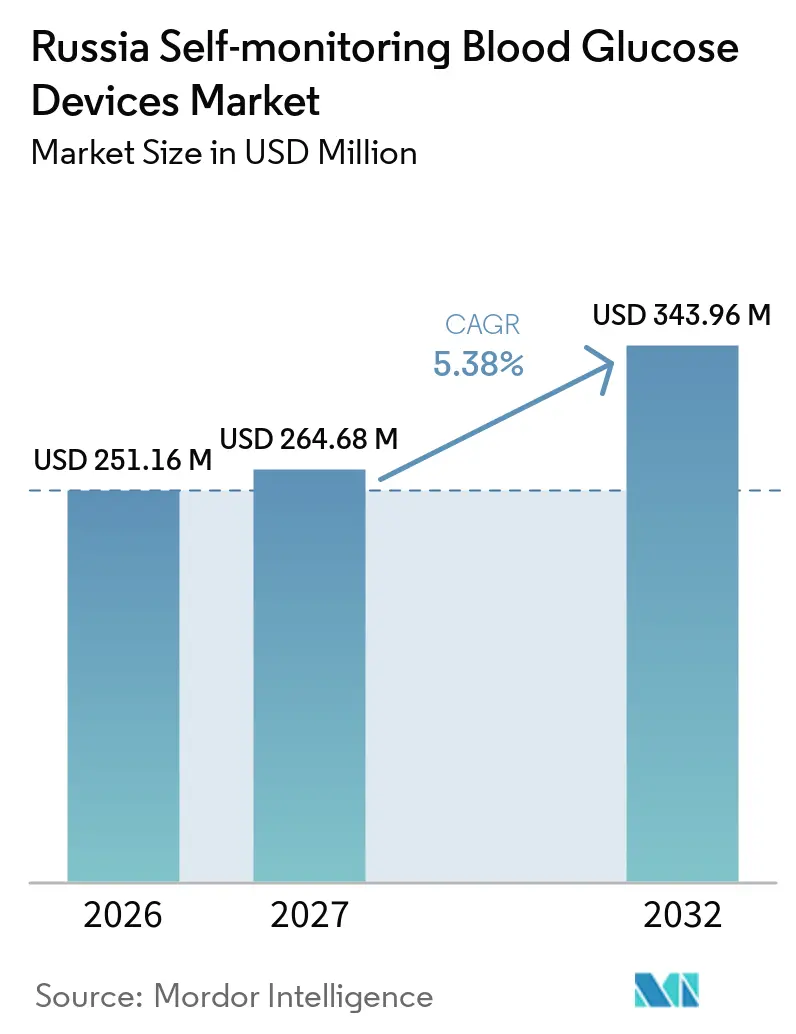
Russia Self-monitoring Blood Glucose Devices Market Analysis by Mordor Intelligence
The Russia Self-monitoring Blood Glucose Devices Market size is expected to increase from USD 251.16 million in 2026 to USD 264.68 million in 2027 and reach USD 343.96 million by 2032, growing at a CAGR of 5.38% over 2027-2032.
Diabetes patients were at a higher risk of being extremely unwell if infected with the virus during the COVID-19 pandemic. Diabetes was a risk factor for developing severe and critical forms of infection and was among the most frequently reported comorbidities in patients infected with COVID-19. Obesity, the main risk factor for incident type-2 diabetes, was more common in patients with critical forms of COVID-19 requiring invasive mechanical ventilation. As a result, the demand for self-monitoring blood glucose devices to monitor and maintain optimum blood glucose levels increased during the pandemic.
The measurement of blood glucose is necessary to keep the blood glucose levels within a specified target range. Blood monitoring glucose devices help understand the effectiveness of blood glucose metabolism and guide in achieving optimal glucose control within the body. Self-monitoring blood glucose devices allow a patient to check their blood glucose levels as often as they need to or as recommended by their doctor. Over time, the readings provide the patient and their health professionals with the information required to determine the best management strategy for diabetes.
According to the Diabetes UK report on diabetes in Russia published in September 2022, about fifty percent of diabetes cases are undiagnosed. The gaps in diabetes management by undiagnosed patients are expected to be filled through government support and initiatives over the forecast period. The growing diabetic population is expected to act as a driver for diabetes care devices. In obese individuals, the fat cells in the body release pro-inflammatory chemicals, which may make the body less sensitive to the insulin it produces by disrupting the function of insulin-responsive cells. Thus, these individuals need external insulin shots and must use a monitoring device, such as a glucometer. Technological advancements have increased over the period in Diabetes care devices for safer and more accurate administration of insulin. These therapies are only possible through proper Self-monitoring of blood glucose devices and self-care.
Note: Market numbers in this report are based on Mordor Intelligence's proprietary estimation framework, which combines nine months of actuals with Q4 projections for base year 2026.
Russia Self-monitoring Blood Glucose Devices Market Trends and Insights
Rising diabetes prevalence
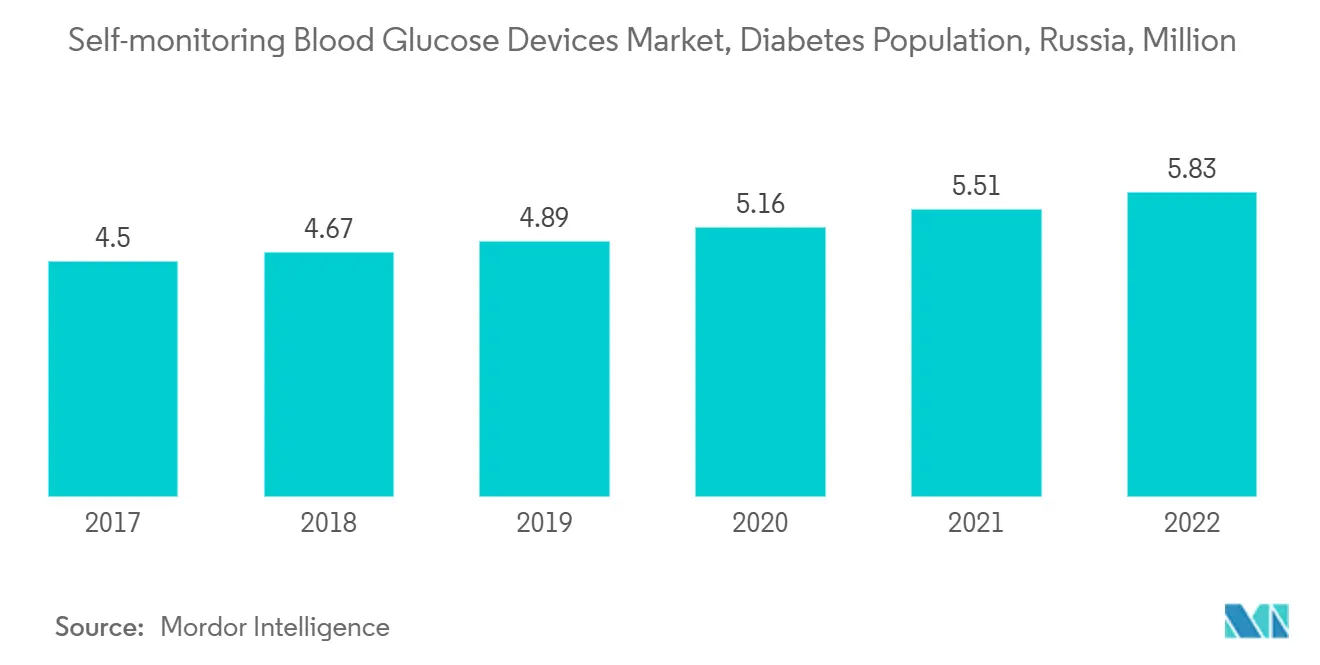
In Russia, the diabetes population is expected to increase by 6.4% over the forecast period.
According to the Diabetes UK 2022 estimates, Russia may be placed the third number in the register of countries with the highest number of diabetics in the world, with an estimated 9,613 thousand cases. The Russian Government instructed the Cabinet to launch a large-scale program to combat diabetes in 2023 by the Council for Strategic Development and National Projects.
In 2022, the Federal Project Combating diabetes mellitus 2023–2030 was developed and submitted for approval to the Government of Russia, which is expected to significantly improve the practice of working with patients with diabetes mellitus, ensuring maximum access to medical care, including in updated and technologically re-equipped regional endocrinology centers, Diabetic Foot rooms, diagnostic laboratories, new forms of communication with patients, including the use of personal physician assistants.
Diabetes poses an emerging healthcare burden across the country and is one of the leading causes of premature death, morbidity, and loss of economic growth. Technological development is gaining momentum in the glucose monitoring market. Over the years, several technological innovations have been developed that have led to the creation of new types of devices that are much less cumbersome and more comfortable for patients compared to traditional ones. Such advantages have helped the rise in the adoption of these products in the market.
The Glucometer Devices Segment is expected to register the highest CAGR over the forecast period
The glucometers segment is expected to register for the highest CAGR of about 6.25% in the market over the forecast period owing to the increasing adoption of glucometers in home care settings, growing preference for home-based self-monitoring, and recent product launches of advanced glucometers.
Glucose monitoring helps people living with diabetes understand their blood glucose patterns, enabling informed short- and long-term treatment decisions and better health outcomes. It allows individuals and healthcare providers to evaluate glycemic control, monitor potential adverse effects, and assess the performance of glucose-lowering therapies. Effective glucose monitoring supports improved blood glucose control and quality of life, offering physical, social, emotional, and functional benefits. Self-monitoring of blood glucose allows individuals to check and evaluate their glucose levels by using a small blood sample obtained through a finger prick with a blood glucose meter, or glucometer.
According to the Federal Law of the President of the Russian Federation dated December 5, 2022, on the federal budget for 2023 and for the planning period of 2024 and 2025 approved the financing of activities in a separate line within the framework of the federal project Combating diabetes mellitus for 2023–2025. Diabetes is a costly chronic illness that needs control of blood sugar levels using medical devices. The Government of Russia is strategically planning to contain the growing burden of diabetes and invest to control it. Thus, with the rising prevalence, the market for self-monitoring blood glucose devices is expected to grow in Russia over the forecast period.
Competitive Landscape
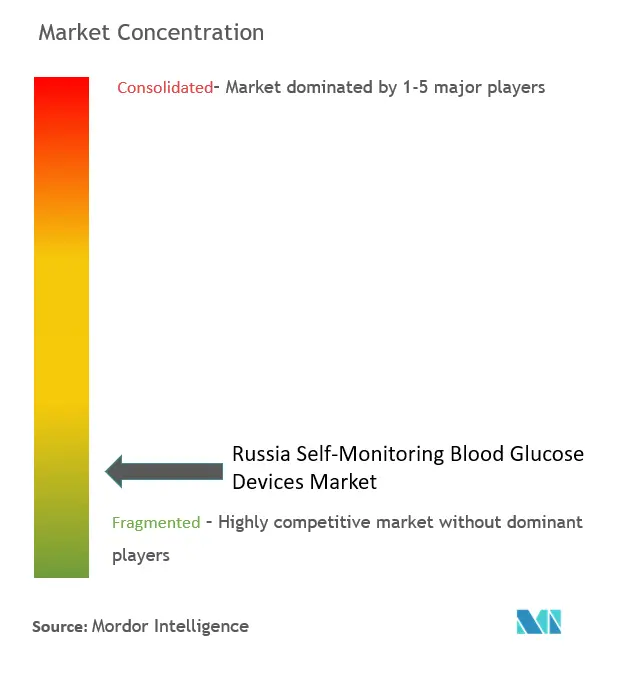
The Russian self-monitoring blood glucose devices market is fragmented, with few significant and other generic players. Manufacturers like Abbott, LifeScan, Ascensia, etc. occupy a major share.
Russia Self-monitoring Blood Glucose Devices Industry Leaders
-
Abbott
-
Lifescan
-
Roche
-
i-Sens
-
Ascensia
- *Disclaimer: Major Players sorted in no particular order
Recent Industry Developments
- May 2023: LifeScan announced positive data from a study of real-world evidence supporting its Bluetooth-connected blood glucose meter. Evidence from more than 55,000 people with diabetes demonstrated sustained improvements in readings in range. The analysis focuses on changes over 180 days. LifeScan published results in the peer-reviewed journal Diabetes Therapy. The company’s OneTouch Bluetooth-connected blood glucose meter and mobile diabetes app provide simplicity, accuracy, and trust.
- January 2023: LifeScan announced that the peer-reviewed Journal of Diabetes Science and Technology published Improved Glycemic Control Using a Bluetooth Connected Blood Glucose Meter and a Mobile Diabetes App: Real-World Evidence from Over 144,000 People with Diabetes, detailing results from a retrospective analysis of real-world data from over 144,000 people with diabetes – one of the largest combined blood glucose meter and mobile diabetes app datasets ever published.
Russia Self-monitoring Blood Glucose Devices Market Report Scope
Self-monitoring blood glucose devices are used for measuring the concentration of glucose in the blood for effective diabetes management. The Russian market for self-monitoring blood glucose devices is segmented into components (glucometer devices, test strips, and Lancets).
The report offers the value (in USD) and volume (in Units) for the above segments.
| Glucometer Devices |
| Test Strips |
| Lancets |
| Component | Glucometer Devices |
| Test Strips | |
| Lancets |
Key Questions Answered in the Report
How big is the Russia Self-monitoring Blood Glucose Devices Market?
The Russia Self-monitoring Blood Glucose Devices Market size is expected to reach USD 264.68 million in 2027 and grow at a CAGR of 5.38% to reach USD 343.96 million by 2032.
What is the current Russia Self-monitoring Blood Glucose Devices Market size?
In 2026, the Russia Self-monitoring Blood Glucose Devices Market size is expected to reach USD 251.16 million.
Who are the key players in Russia Self-monitoring Blood Glucose Devices Market?
Abbott, Lifescan, Roche, i-Sens and Ascensia are the major companies operating in the Russia Self-monitoring Blood Glucose Devices Market.
What years does this Russia Self-monitoring Blood Glucose Devices Market cover, and what was the market size in 2025?
In 2025, the Russia Self-monitoring Blood Glucose Devices Market size was estimated at USD 238.34 million. The report covers the Russia Self-monitoring Blood Glucose Devices Market historical market size for years: 2021, 2022, 2023, 2024, and 2025. The report also forecasts the Russia Self-monitoring Blood Glucose Devices Market size for years: 2027, 2028, 2029, 2030, 2031, and 2032.