
Protein Shot Market Size and Share
Market Overview
| Study Period | 2021 - 2031 |
|---|---|
| Market Size (2026) | USD 1.39 Billion |
| Market Size (2031) | USD 1.87 Billion |
| Growth Rate (2026 - 2031) | 6.10 % |
| Fastest Growing Market | Asia-Pacific |
| Largest Market | North America |
| Market Concentration | Medium |
Major Players *Disclaimer: Major Players sorted in no particular order Image © Mordor Intelligence. Reuse requires attribution under CC BY 4.0. | |
Protein Shot Market Analysis by Mordor Intelligence
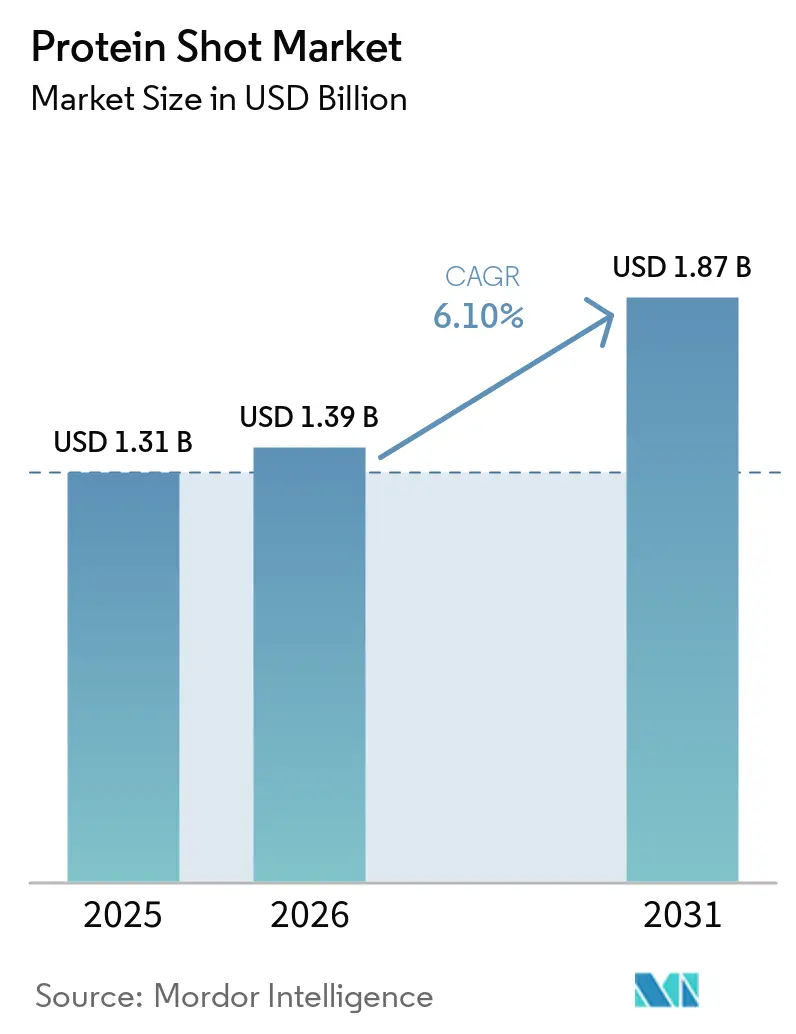
The protein shot market size is expected to grow from USD 1.31 billion in 2025 to USD1.39 billion in 2026 and is forecast to reach USD 1.87 billion by 2031 at a 6.10% CAGR over 2026-2031. The market has expanded beyond sports recovery applications and increasingly addresses broader daily nutrition needs, particularly where convenience and portion-controlled protein intake are priorities. Manufacturers are positioning protein shots for metabolic health, satiety, healthy aging, and general wellness, broadening their appeal beyond fitness-focused consumers. This shift is widening the consumer base to include older adults, individuals pursuing weight management, and working consumers seeking compact, ready-to-drink nutrition without powders or bars. The market is also benefiting from stronger direct-to-consumer and online repeat purchase models, cleaner-label product positioning, and more targeted digital marketing strategies. At the same time, evolving labeling requirements, regulatory compliance pressures, and dependence on concentrated dairy protein ingredients are encouraging companies to strengthen traceability, optimize formulations, and diversify into alternative protein sources.
Key Report Takeaways
- By source, animal-based protein held 89.36% of the protein shot market share in 2025, while plant-based protein is forecast to grow at a 6.73% CAGR through 2031.
- By distribution channel, supermarkets/hypermarkets accounted for 43.28% of the protein shot market size in 2025, while online retail stores are projected to record the fastest growth at a 7.13% CAGR through 2031.
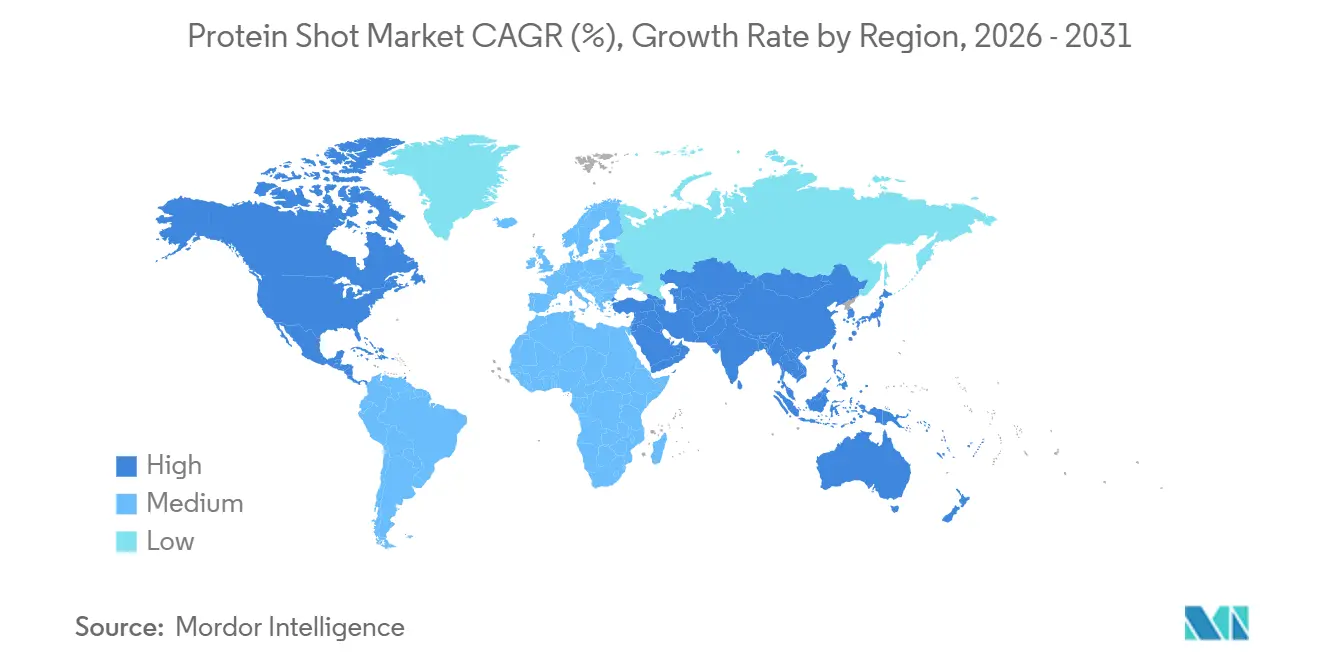
- By geography, North America held 41.24% of the protein shot market size in 2025, while Asia-Pacific is projected to post the fastest growth at a 6.94% CAGR through 2031.
Note: Market size and forecast figures in this report are generated using Mordor Intelligence’s proprietary estimation framework, updated with the latest available data and insights as of January 2026.
Global Protein Shot Market Trends and Insights
Drivers Impact Analysis*
| Driver | (~) % Impact on CAGR Forecast | Geographic Relevance | Impact Timeline |
|---|---|---|---|
| Rising demand for convenient, on-the-go nutrition solutions | +1.4% | Global, particularly strong in urban centers | Short term (≤ 2 years) |
| Increasing consumer health consciousness and wellness awareness | +1.2% | Global, strongest in North America and Europe | Medium term (2-4 years) |
| Growing popularity of fitness and sports nutrition lifestyles | +1.1% | Global, led by North America, expanding rapidly in Asia-Pacific | Short term (≤ 2 years) |
| Continuous innovation in flavors, formulations, and packaging | +0.8% | Global, early adoption in developed markets | Medium term (2-4 years) |
| Expanding demand for vegan, low-sugar, and high-protein nutrition options | +0.6% | North America and Europe core, spillover to Asia-Pacific urban centers | Long term (≥ 4 years) |
| Expanding omnichannel availability through grocery and e-commerce channels | +0.5% | Global, particularly impactful in Asia-Pacific and Middle East and Africa | Medium term (2-4 years) |
| Source: Mordor Intelligence | |||
Rising Demand for Convenient, On-the-Go Nutrition Solutions
Consumers are increasingly seeking nutrition products that fit into busy lifestyles without requiring preparation or lengthy consumption. Protein shots address this need by delivering a concentrated dose of protein in a compact, single-serve format that can be consumed during commutes, at work, while traveling, or immediately after exercise. Compared with protein powders and larger ready-to-drink beverages, protein shots offer greater portability, precise portion control, and faster consumption. As consumers prioritize convenience alongside nutrition, demand for these compact functional beverages continues to grow across both fitness and general wellness segments. This shift is encouraging manufacturers to develop protein shots tailored to a wider range of health needs beyond sports nutrition. For example, Nestlé began rolling out Boost Pre-Meal Hunger Support in the United States in November 2024. The product is fat-free and is intended to be consumed before meals to help increase satiety by stimulating the body's natural GLP-1 response. It is specifically marketed toward consumers seeking appetite management, including those using GLP-1 weight-loss medications, illustrating how protein shots are expanding into mainstream daily wellness and metabolic health applications.
Increasing Consumer Health Consciousness and Wellness Awareness
Growing consumer awareness of nutrition and preventive health is driving demand for convenient, protein-rich products that support active lifestyles, muscle maintenance, and overall well-being. According to the International Food Information Council's (IFIC) 2025 Spotlight Survey: Americans' Perceptions of Protein, 35% of Americans increased their protein intake over the past year, reflecting a sustained shift toward higher-protein dietary habits. The survey also found that 70% of Americans reported trying to consume more protein in 2025, up from 62% in 2021, highlighting the growing importance of protein in everyday nutrition[1]. This sustained increase in protein-focused dietary behavior is supporting demand for convenient functional protein products. The survey further indicates that 51% of Americans associate protein with muscle health, strength, and endurance, while 45% link it with increased energy and reduced fatigue, reinforcing protein's relevance beyond sports nutrition[2]. Growing interest in functional nutrition is encouraging consumers to seek convenient formats that fit busy lifestyles without compromising nutritional intake. Protein shots address this demand by offering concentrated protein in portable, ready-to-consume servings suitable for active and health-conscious consumers. As wellness-focused consumption continues to expand, these products are expected to benefit from rising demand for convenient protein supplementation.
Growing Popularity of Fitness and Sports Nutrition Lifestyles
The growing adoption of active lifestyles and regular participation in sports and fitness activities is driving demand for convenient, high-protein nutritional products, including protein shots. As consumers increasingly engage in gym workouts, recreational sports, endurance events, and strength training, there is greater emphasis on protein intake to support muscle recovery, performance, and overall physical health. According to the Sports & Fitness Industry Association (SFIA) 2026 Topline Participation Report, 250 million Americans participated in at least one sport, fitness, or leisure activity in 2025, marking the highest participation level since SFIA began tracking[3]. In addition, CORE participation, which represents individuals who participate most frequently, reached 158.8 million, increasing 1.3% year over year, reflecting sustained engagement in physical activity. The expanding fitness culture is also encouraging consumers to integrate sports nutrition products into their everyday routines, rather than limiting their use to professional athletes or bodybuilders. The same SFIA report found that overall participation increased by 1.2% year over year, while team sports participation surpassed 90 million participants for the first time, highlighting continued momentum across organized and recreational activities. Although only 32% of Americans currently meet the federal recommendation of at least 150 minutes of moderate-intensity physical activity per week, the report underscores substantial potential for further growth in sports participation and associated nutritional supplementation. This sustained shift toward active lifestyles is supporting demand for portable, ready-to-consume protein shots that provide a convenient source of protein before or after physical activity.
Continuous Innovation in Flavors, Formulations, and Packaging
Continuous product innovation is expanding the appeal of protein shots to a broader consumer base. Manufacturers are introducing a wider variety of flavors, improving taste and texture, and developing formulations with reduced sugar, fewer artificial ingredients, and cleaner labels to meet evolving consumer preferences. Companies are also incorporating functional ingredients such as vitamins, minerals, electrolytes, collagen, probiotics, and botanical extracts to position protein shots as multifunctional wellness products rather than solely sports nutrition supplements. These innovations are helping brands differentiate their offerings while attracting consumers seeking both nutritional value and a better consumption experience. Advancements in packaging are further supporting market growth by enhancing portability, convenience, and shelf stability. Single-serve bottles with resealable closures, lightweight packaging materials, and improved barrier technologies are making protein shots easier to carry and consume throughout the day. Manufacturers are also focusing on sustainable packaging solutions, including recyclable materials and reduced plastic usage, to align with growing environmental awareness among consumers. Improvements in flavor profiles, nutritional formulations, and packaging design are increasing product acceptance, encouraging repeat purchases, and enabling companies to target a wider range of health and wellness occasions.
Restraints Impact Analysis*
| Restraint | (~) % Impact on CAGR Forecast | Geographic Relevance | Impact Timeline |
|---|---|---|---|
| Competition from established protein delivery formats | -0.9% | Global, most acute in developed markets | Short term (≤ 2 years) |
| Allergen concerns related to dairy and soy proteins | -0.7% | Global, elevated in plant-forward markets like Northern Europe | Medium term (2-4 years) |
| Regulatory complexity and rising compliance costs for product launches | -0.5% | Global, with complexity in cross-border trade | Long term (≥ 4 years) |
| Formulation complexity with plant-based proteins | -0.4% | Global, particularly in developed markets | Medium term (2-4 years) |
| Source: Mordor Intelligence | |||
Competition from Established Protein Delivery Formats
The protein shot market faces strong competition from established protein delivery formats, including protein powders and bars. These products are widely available across supermarkets, convenience stores, specialty nutrition retailers, and online platforms, offering consumers a broader range of serving sizes, flavors, price points, and nutritional profiles. Many of these formats also provide higher protein content per serving along with greater satiety, making them the preferred choice for consumers seeking meal replacements or post-workout nutrition. Established protein formats also benefit from higher consumer familiarity, stronger brand recognition, and extensive retail distribution, making it difficult for protein shots to achieve widespread adoption. While protein shots offer portability and convenience, some consumers perceive their smaller serving size as lower overall value compared to protein powders. As a result, manufacturers must differentiate their products through functional benefits, taste improvements, targeted health positioning, and innovative formulations to compete in an increasingly crowded protein nutrition market.
Allergen Concerns Related to Dairy and Soy Proteins
The protein shot market faces constraints from the widespread use of dairy- and soy-based protein ingredients, which are among the most common food allergens globally. Whey, casein, and soy protein isolates are widely used due to their high protein quality and functionality, but they are unsuitable for consumers with milk or soy allergies or intolerances. This limits the addressable consumer base and increases the need for manufacturers to clearly communicate ingredient composition and allergen information. As consumer awareness of food sensitivities grows, allergen-related purchasing decisions are becoming increasingly important. Addressing these concerns often requires manufacturers to invest in alternative protein sources such as pea, rice, or other plant-based proteins, which can increase formulation complexity and production costs. Preventing cross-contamination demands stringent manufacturing controls, dedicated production lines, and comprehensive quality assurance processes, adding to operational expenses.
*Our forecasts treat driver/restraint impacts as directional, not additive. The impact forecasts reflect baseline growth, mix effects, and variable interactions.
Segment Analysis
By Source: Animal Proteins Lead While Plant-Based Builds Momentum
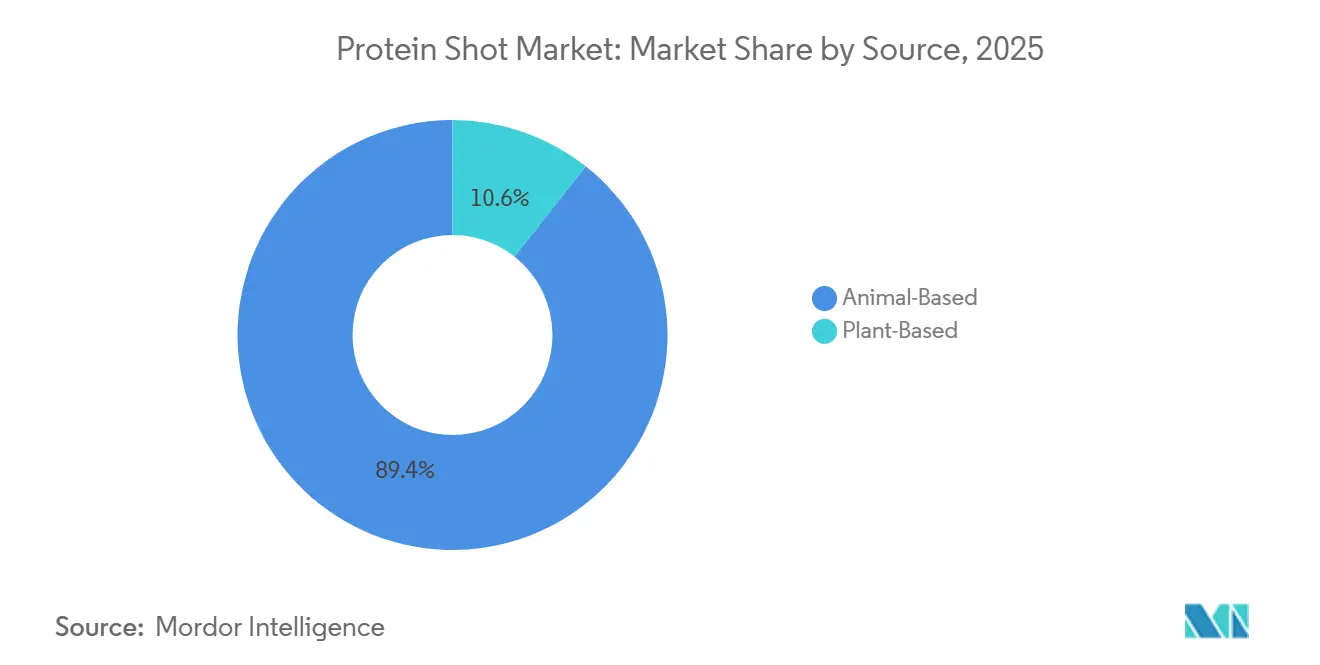
Animal-based protein accounted for 89.36% of the protein shot market in 2025, making it the dominant source segment. Whey and casein proteins continue to lead due to their complete amino acid profiles, high bioavailability, excellent solubility, and strong scientific validation for muscle recovery and protein synthesis. Their widespread use across sports nutrition and clinical nutrition products has strengthened consumer trust and brand familiarity, further supporting the segment's leading position in the market.
Plant-based protein is projected to register the fastest CAGR of 6.73% during the forecast period. Growth is driven by increasing consumer demand for vegan, dairy-free, and allergen-friendly protein products, along with rising interest in sustainable and clean-label nutrition. Manufacturers are expanding their portfolios with proteins derived from pea, rice, fava bean, and other plant sources to appeal to a broader consumer base. Continued improvements in taste, texture, and protein functionality are further supporting the adoption of plant-based protein shots.
By Distribution Channel: Supermarkets Hold Scale While Online Retail Gains Speed
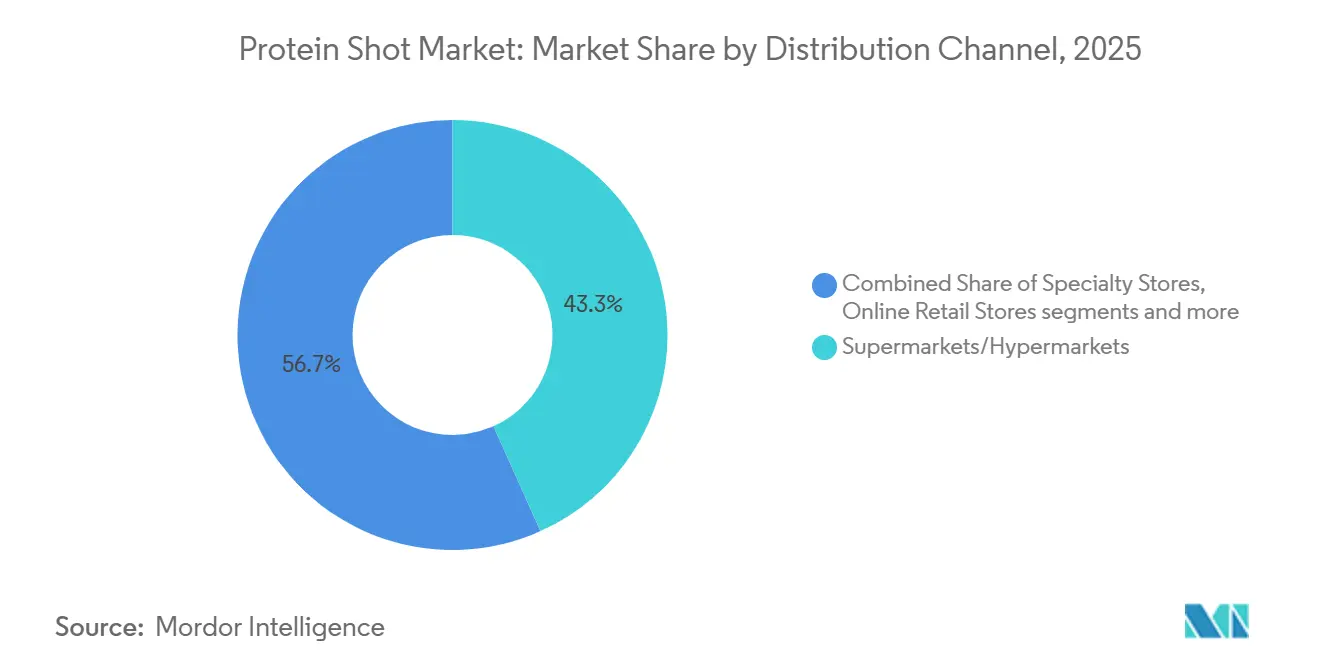
Supermarkets/hypermarkets accounted for 43.28% of the protein shot market in 2025, making them the largest distribution channel. Their dominance is supported by extensive retail networks, high consumer footfall, and strong product visibility alongside other health and functional nutrition products. These stores facilitate impulse purchases and allow consumers to compare brands and product variants in person. Their broad geographic reach and established supply chains continue to make them the primary sales channel for protein shots.
Online retail stores are projected to register the fastest CAGR of 7.13% during the forecast period. Growth is driven by increasing consumer preference for home delivery, subscription-based purchasing, and access to a wider range of products than is typically available in physical stores. Digital platforms also enable brands to reach niche consumer segments through personalized marketing, targeted promotions, and direct-to-consumer sales strategies. As e-commerce adoption continues to grow, online retail is expected to play an increasingly important role in expanding the market reach of protein shot manufacturers.

Geography Analysis
North America accounted for 41.24% of the protein shot market in 2025, making it the largest regional market. The region's position is supported by a well-established sports nutrition industry, high consumer awareness of protein supplementation, and extensive product availability across supermarkets, pharmacies, specialty nutrition retailers, and online channels. Strong demand from fitness enthusiasts, active consumers, and aging populations seeking convenient nutritional solutions continues to support market growth. Ongoing product innovation and widespread adoption of functional beverages further reinforce North America's position.
Asia-Pacific is projected to register the fastest CAGR of 6.94% during the forecast period. Rising disposable incomes, rapid urbanization, expanding health awareness, and increasing participation in fitness activities are driving demand for convenient protein-based nutrition products across the region. Growing e-commerce penetration and the expansion of modern retail channels are improving product accessibility. Consumers in markets such as China, India, Japan, and South Korea are increasingly adopting functional beverages as part of their daily wellness routines. These factors are expected to accelerate regional market expansion.
Europe represents a mature market characterized by strong demand for clean-label, high-quality nutritional products and stringent ingredient transparency standards. South America is gradually expanding, led by increasing fitness participation and improving retail infrastructure in countries such as Brazil. The Middle East and Africa remains at an earlier stage of development but offers long-term growth opportunities, supported by rising health consciousness, expanding modern retail networks, and growing consumer interest in functional nutrition products. These regions are expected to contribute steadily to the global protein shot market as awareness and product availability continue to improve.
Competitive Landscape
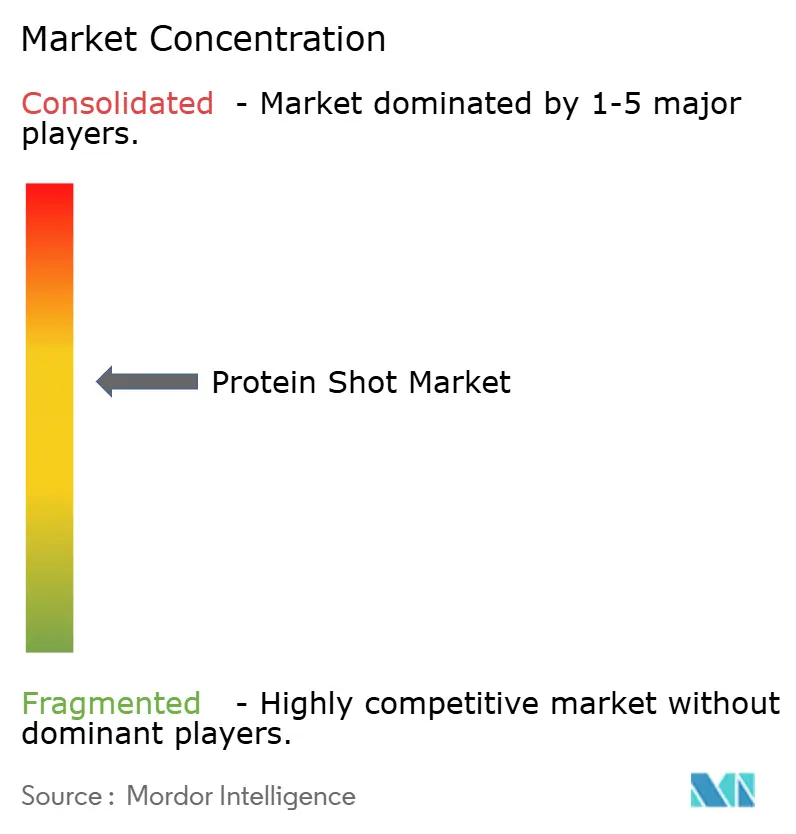
The protein shot market is moderately consolidated, with a handful of multinational nutrition and food companies accounting for a significant share of global revenues. Abbott Laboratories, Nestlé S.A., Danone S.A., Glanbia PLC, and The Simply Good Foods Company are among the key participants, leveraging their brand recognition, extensive distribution networks, and established expertise in clinical and sports nutrition. Their ability to invest in research and development, manufacturing capabilities, and global retail partnerships provides a competitive advantage over smaller manufacturers and new entrants.
Key companies are increasingly focusing on product innovation, portfolio expansion, and strategic channel development to strengthen their market positions. Manufacturers continue to introduce formulations targeting broader consumer needs such as healthy aging, weight management, satiety, and everyday wellness, while also investing in clean-label ingredients and improved flavor profiles. Companies are further expanding their presence through supermarkets, pharmacies, specialty nutrition retailers, and direct-to-consumer e-commerce platforms to improve accessibility and strengthen consumer engagement across multiple purchasing channels.
Alongside established players, emerging brands are gaining traction by addressing niche consumer preferences with differentiated formulations and targeted branding. These companies are focusing on plant-based proteins, allergen-friendly products, functional ingredients, and sustainable packaging to appeal to health-conscious consumers seeking alternatives to traditional protein supplements. Many emerging players also rely on digital-first marketing strategies, influencer partnerships, and online subscription models to build brand awareness and compete effectively despite having smaller product portfolios and more limited retail distribution.
Protein Shot Industry Leaders
-
Danone S.A.
-
Glanbia PLC
-
Abbott Laboratories
-
Nestlé S.A.
-
The Simply Good Foods Company
- *Disclaimer: Major Players sorted in no particular order
Recent Industry Developments
- May 2026: Applied Nutrition expanded its ready-to-drink portfolio with the launch of Protein Shot, a 100 mL protein beverage delivering 25 g of whey isolate and collagen protein. The product also incorporates fiber for digestive support and vitamin C for immune health, offering a high-protein, sugar-free formulation aimed at consumers seeking portable daily nutrition and post-workout recovery.
- October 2025: Vivici showcased its Vivitein BLG On-The-Go Protein Shots at SupplySide Global 2025, featuring 25 g of precision fermentation-derived beta-lactoglobulin (BLG) protein in a compact 100 mL format. Designed to deliver high-quality, lactose-free, vegan-friendly protein with a light mouthfeel, the product demonstrates the company's focus on enabling next-generation, animal-free, lactose-free protein beverages.
- December 2024: Nestlé Health Science launched Boost® Pre-Meal Hunger Support Protein Shots in the U.S., a compact whey-protein shot designed to stimulate GLP-1 release and promote satiety before meals. The launch expands the application of protein shots beyond sports nutrition into weight management and metabolic health.
Global Protein Shot Market Report Scope
The report segments the protein shot market by source into animal-based and plant-based proteins, providing an assessment of market size, growth trends, and the key factors influencing demand for each protein type. It also examines evolving consumer preferences and product innovations shaping the adoption of different protein sources.
It also analyzes the protein shot market by distribution channel, covering supermarkets/hypermarkets, specialty stores, online retail stores, and other distribution channels. It evaluates the contribution of each sales channel, changing consumer purchasing patterns, and the impact of retail and e-commerce expansion on market growth.
The report studies the protein shot market across five regions: North America, Europe, Asia-Pacific, South America, and the Middle East and Africa, with detailed country-level analysis for major markets within each region. It assesses regional market performance, growth opportunities, and the economic, demographic, and consumer trends influencing demand across key countries.
| Animal-Based |
| Plant-Based |
| Supermarkets/Hypermarkets |
| Specialty Stores |
| Online Retail Stores |
| Other Distribution Channels |
| North America | United States |
| Canada | |
| Mexico | |
| Rest of North America | |
| Europe | Germany |
| United Kingdom | |
| Italy | |
| France | |
| Spain | |
| Netherlands | |
| Poland | |
| Belgium | |
| Sweden | |
| Rest of Europe | |
| Asia-Pacific | China |
| India | |
| Japan | |
| Australia | |
| Indonesia | |
| South Korea | |
| Thailand | |
| Singapore | |
| Rest of Asia-Pacific | |
| South America | Brazil |
| Argentina | |
| Colombia | |
| Chile | |
| Peru | |
| Rest of South America | |
| Middle East and Africa | South Africa |
| Saudi Arabia | |
| United Arab Emirates | |
| Nigeria | |
| Egypt | |
| Morocco | |
| Turkey | |
| Rest of Middle East and Africa |
| By Source | Animal-Based | |
| Plant-Based | ||
| By Distribution Channel | Supermarkets/Hypermarkets | |
| Specialty Stores | ||
| Online Retail Stores | ||
| Other Distribution Channels | ||
| By Geography | North America | United States |
| Canada | ||
| Mexico | ||
| Rest of North America | ||
| Europe | Germany | |
| United Kingdom | ||
| Italy | ||
| France | ||
| Spain | ||
| Netherlands | ||
| Poland | ||
| Belgium | ||
| Sweden | ||
| Rest of Europe | ||
| Asia-Pacific | China | |
| India | ||
| Japan | ||
| Australia | ||
| Indonesia | ||
| South Korea | ||
| Thailand | ||
| Singapore | ||
| Rest of Asia-Pacific | ||
| South America | Brazil | |
| Argentina | ||
| Colombia | ||
| Chile | ||
| Peru | ||
| Rest of South America | ||
| Middle East and Africa | South Africa | |
| Saudi Arabia | ||
| United Arab Emirates | ||
| Nigeria | ||
| Egypt | ||
| Morocco | ||
| Turkey | ||
| Rest of Middle East and Africa | ||
Key Questions Answered in the Report
What is the projected value of the protein shot market by 2031?
The protein shot market is projected to reach USD 1.87 billion by 2031 from USD 1.39 billion in 2026, growing at a 6.10% CAGR over 2026 to 2031.
Which region leads global revenue for protein shots?
North America led with 41.24% of global revenue in 2025, supported by mature fitness demand, clinical nutrition brands, and broad retail access.
Which region is growing the fastest for protein shots?
Asia-Pacific is forecast to post the fastest regional CAGR at 6.94% through 2031, driven by urban demand, rising incomes, and digital commerce.
Which sales channel is expanding the fastest?
Online retail stores are expected to grow at a 7.13% CAGR through 2031 as subscription models, targeted nutrition offers, and direct consumer engagement improve repeat purchase.
What is holding back wider adoption of protein shots?
The main constraints are strong competition from larger protein formats, plus allergen and labeling risks that increase compliance costs and slow reformulation work.