
Prosthetic Heart Valve Market Size and Share
Market Overview
| Study Period | 2020 - 2031 |
|---|---|
| Market Size (2026) | USD 14.9 Billion |
| Market Size (2031) | USD 25.76 Billion |
| Growth Rate (2026 - 2031) | 11.58 % |
| Fastest Growing Market | Asia Pacific |
| Largest Market | North America |
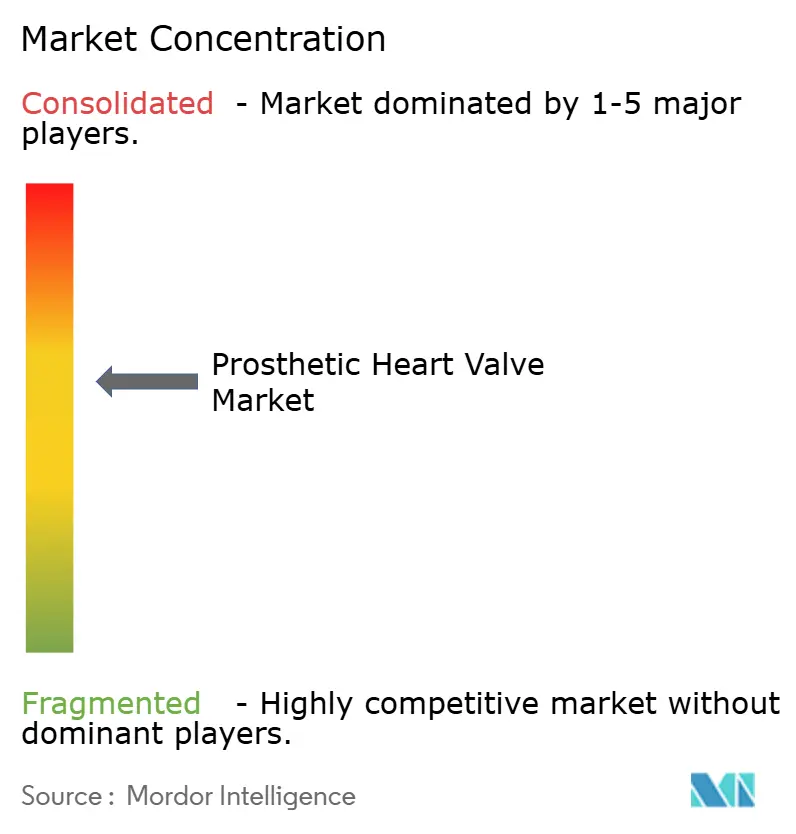
| Market Concentration | Medium |
Major Players *Disclaimer: Major Players sorted in no particular order Image © Mordor Intelligence. Reuse requires attribution under CC BY 4.0. | |
Prosthetic Heart Valve Market Analysis by Mordor Intelligence
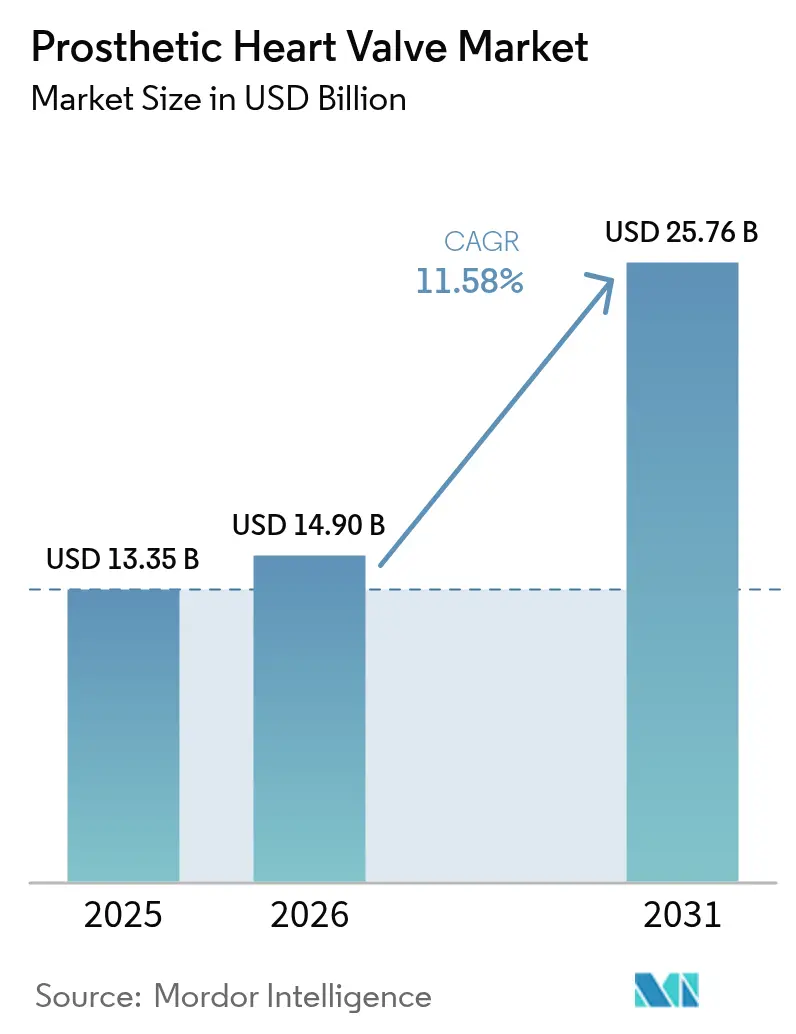
prosthetic heart valve market size in 2026 is estimated at USD 14.9 billion, growing from 2025 value of USD 13.35 billion with 2031 projections showing USD 25.76 billion, growing at 11.58% CAGR over 2026-2031. Demographic ageing, expanded indications for transcatheter aortic valve replacement (TAVR), and faster regulatory reviews position transcatheter innovation as the primary growth engine of the prosthetic heart valve market. Edwards Lifesciences obtained United States Food and Drug Administration (FDA) approval in May 2025 for the SAPIEN 3 platform in asymptomatic severe aortic stenosis, enlarging the treatable population beyond symptomatic patients. Transcatheter heart valves held 45.55% of revenue in 2024, while tricuspid systems such as Edwards’ EVOQUE and Abbott’s TriClip have accelerated into double-digit growth after first-in-class clearances. Hospitals continue to dominate procedure volumes, yet ambulatory surgical centers (ASCs) are expanding fastest as same-day discharge protocols reduce inpatient reliance. North America generates the largest share, but Asia-Pacific is the high-growth frontier thanks to local approvals like MicroPort’s VitaFlow Liberty Flex in China. Portfolio consolidation—exemplified by Edwards’ USD 300 million Innovalve purchase and Johnson & Johnson’s USD 1.7 billion V-Wave deal—further intensifies competition.
Key Report Takeaways
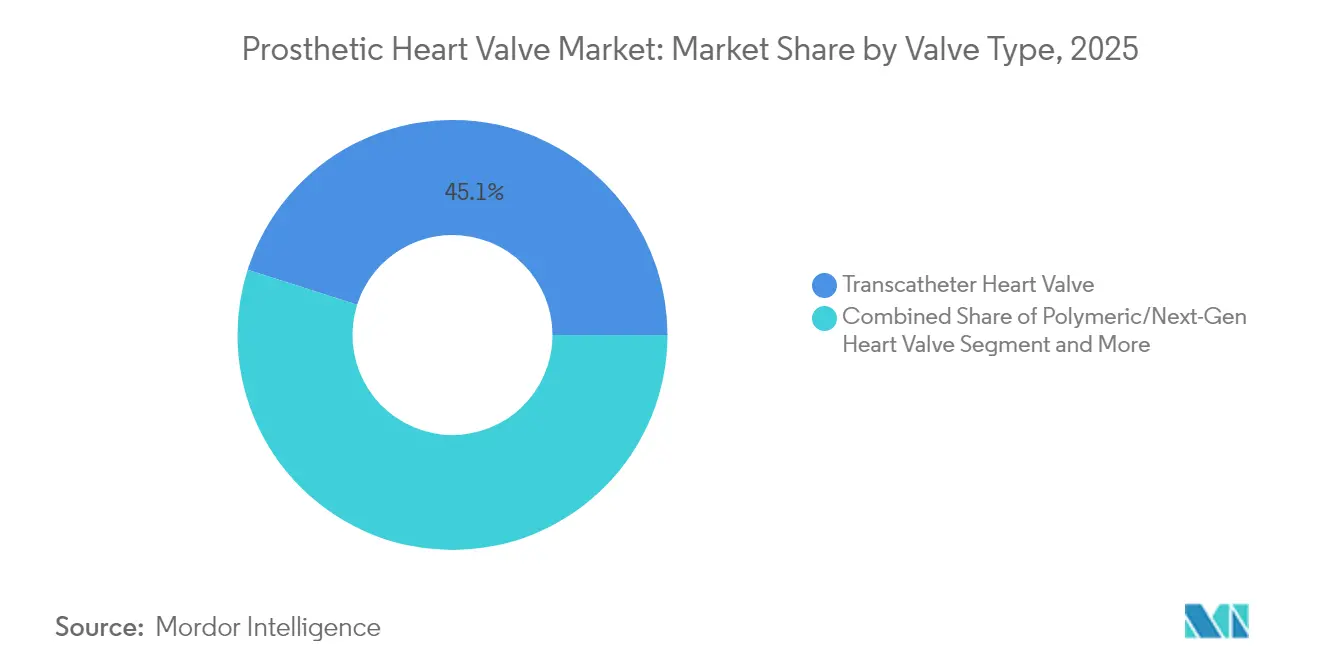
- By valve type, transcatheter heart valves led with 45.10% revenue share in 2025; polymeric valves are forecast to expand at an 17.74% CAGR through 2031.
- By position, aortic procedures accounted for 56.02% of the prosthetic heart valve market share in 2025, while tricuspid interventions register the highest projected CAGR at 14.92% to 2031.
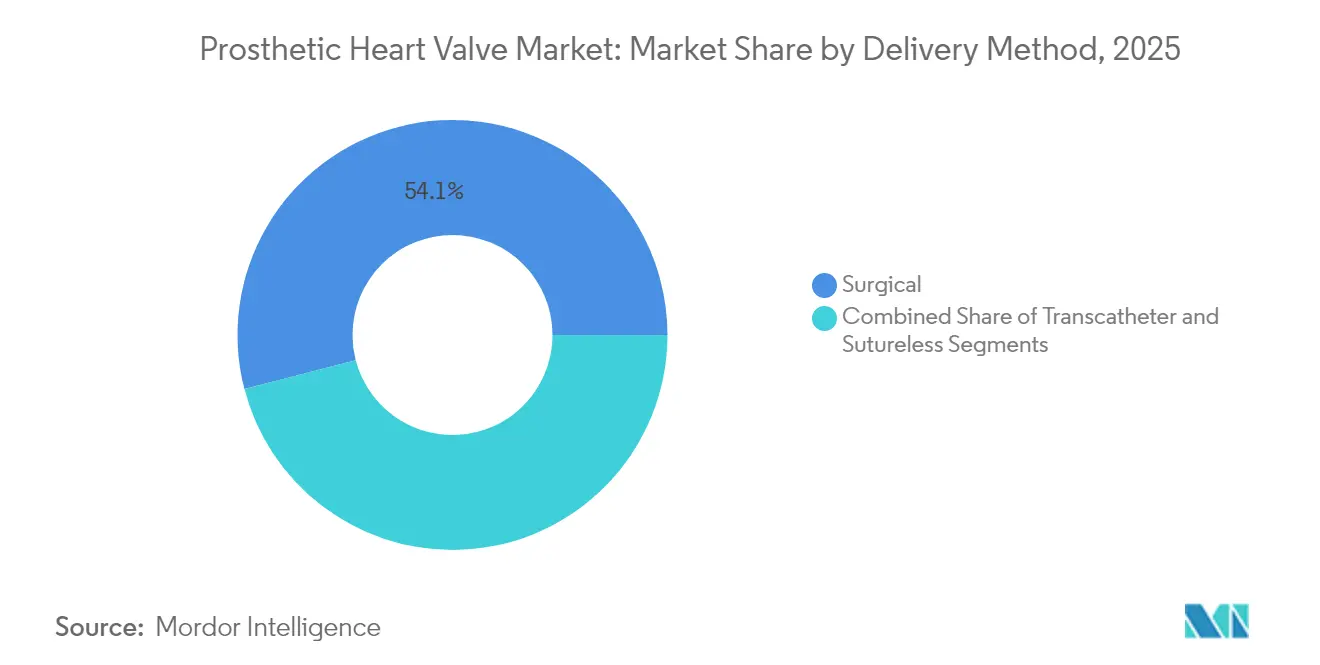
- By delivery method, surgical approaches retained 54.05% share in 2025, yet sutureless/rapid-deployment solutions are expected to grow at 13.31% CAGR to 2031.
- By end-user, tertiary-care hospitals held 45.20% of prosthetic heart valve market size in 2025, whereas ASCs are advancing at a 13.98% CAGR through 2031.
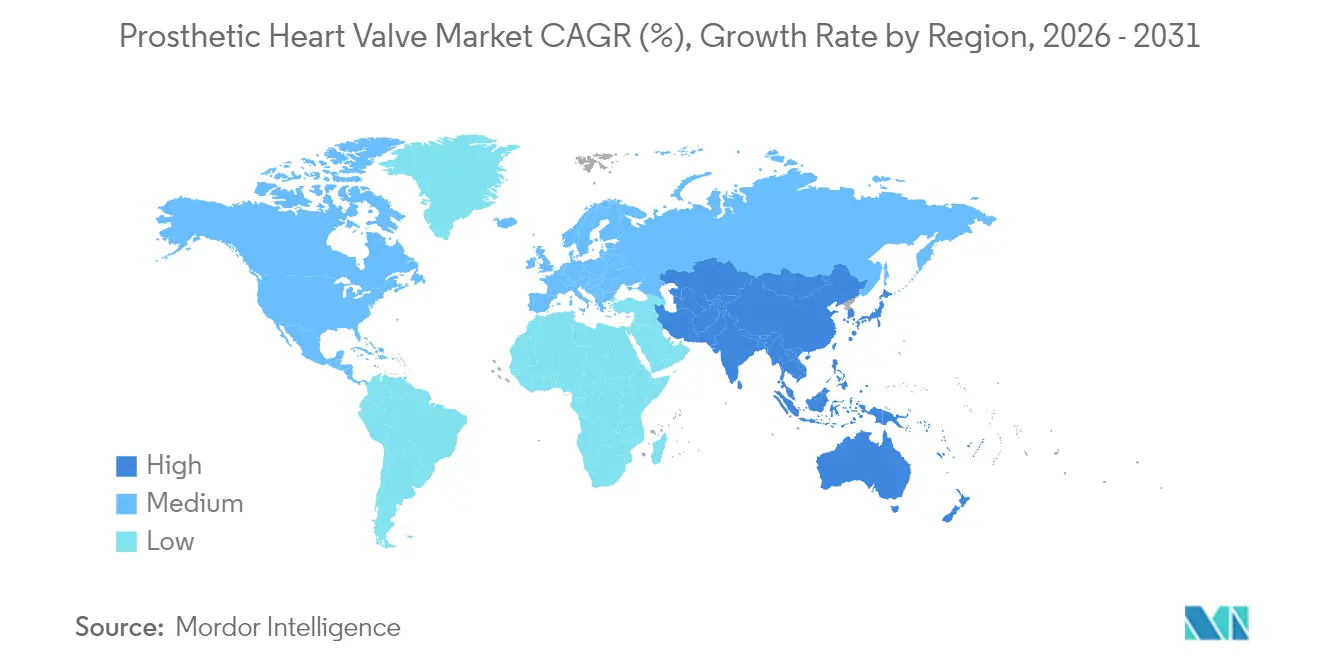
- By geography, North America commanded 42.10% revenue in 2025, but Asia-Pacific is projected to post the fastest 13.90% CAGR over the forecast period.
Note: Market size and forecast figures in this report are generated using Mordor Intelligence’s proprietary estimation framework, updated with the latest available data and insights as of 2026.
Market Trends and Insights
Drivers Impact Analysis of Prosthetic Heart Valve Market*
| Driver | (~) % Impact on CAGR Forecast | Geographic Relevance | Impact Timeline |
|---|---|---|---|
| Aging Population & Rising VHD Prevalence | +2.8% | Global, concentrated in North America & Europe | Long term (≥ 4 years) |
| Expanding Indications For TAVR/TAVI | +3.2% | North America & Europe, expanding to APAC | Medium term (2-4 years) |
| Regulatory Fast-Tracks & Breakthrough Designations | +1.9% | North America & Europe | Short term (≤ 2 years) |
| Reimbursement Expansion In Middle-Income Countries | +1.5% | APAC, Latin America, Middle East | Medium term (2-4 years) |
| Polymeric Valve R&D Breakthroughs | +1.8% | Global, led by North America & Europe | Long term (≥ 4 years) |
| AI-Guided Patient Selection & Sizing Tools | +0.8% | North America & Europe | Short term (≤ 2 years) |
| Source: Mordor Intelligence | |||
Expanding Indications for TAVR/TAVI
The May 2025 FDA approval of Edwards’ SAPIEN 3 platform for asymptomatic severe aortic stenosis removes the “watchful waiting” mindset, allowing clinicians to intervene before symptom onset. EARLY TAVR data showed 26.8% adverse events with early treatment versus 45.3% under surveillance during 3.8-year follow-up, validating proactive therapy and effectively doubling the addressable pool. Edwards forecasts TAVR sales of USD 4.1–4.4 billion in 2025, and rivals such as Abbott have launched the ENVISION trial to capture lower-risk patients. Centers for Medicare & Medicaid Services (CMS) coverage decisions will shape adoption because private payers typically mirror Medicare precedent. As coverage broadens, procedure volumes rise, reinforcing the prosthetic heart valve market’s shift toward transcatheter dominance.
Regulatory Fast-Tracks & Breakthrough Designations
Breakthrough device designations hit a record 1,041 by September 2024; 128 authorized products demonstrate how the pathway compresses approvals from 3-5 years to around 18–24 months[1]. Edwards’ EVOQUE tricuspid valve capitalized on breakthrough status to secure February 2024 clearance, while 4C Medical’s polymer AltaValve holds two breakthrough labels. Europe parallels this urgency, granting the world’s first transfemoral mitral CE mark to SAPIEN M3 in April 2025. Companies that lock in early designations gain speed-to-market advantages, boosting revenue and brand positioning within the prosthetic heart valve market.
Polymeric Valve R&D Breakthroughs
Polymeric technology combines durability with hemocompatibility, addressing a key limitation of bioprosthetic devices that typically require replacement after 10–15 years. Foldax’s TRIA valve reported favorable 2024 outcomes without the need for lifelong anticoagulation. Peijia Medical and dsm-firmenich are tailoring polymers to resist calcification, while Georgia Tech’s 3D-printed bioresorbable valve fosters native tissue regeneration. Institutional investors such as the British Heart Foundation have funded block co-polymer platforms to reduce long-term failure rates[2]. As data accrue, polymeric designs could re-set durability benchmarks and widen the prosthetic heart valve market.
AI-Guided Patient Selection & Sizing Tools
Machine-learning models achieved 82.2% sensitivity and 98.1% specificity in detecting severe aortic stenosis across Medicare cohorts. Early identification shortens time to therapy and improves outcomes. During procedures, AI-based sizing cuts paravalvular leak and conduction disturbance risk, which is critical for transcatheter approaches. Edwards and Medtronic embed algorithms in pre-operative platforms, evidencing convergence between software and hardware. Predictive analytics also flag structural valve deterioration, allowing proactive follow-up. Facilities using AI achieve smoother workflows that lift success rates, fostering wider adoption and fueling prosthetic heart valve market expansion.
Restraints Impact Analysis of Prosthetic Heart Valve Market*
| Restraint | (~) % Impact on CAGR Forecast | Geographic Relevance | Impact Timeline |
|---|---|---|---|
| High TAVR Device & Procedure Costs | -2.1% | Global, most pronounced in emerging markets | Medium term (2-4 years) |
| Durability Concerns In Younger Cohorts | -1.8% | Global, particularly North America & Europe | Long term (≥ 4 years) |
| Limited Cath-Lab Capacity Outside Tier-1 Cities | -1.3% | APAC, Latin America, Africa | Medium term (2-4 years) |
| Surge In Valve-In-Valve Re-Interventions | -0.9% | North America & Europe | Long term (≥ 4 years) |
| Source: Mordor Intelligence | |||
High TAVR Device & Procedure Costs
Commercial US payers reimburse a median USD 71,312 for TAVR, versus Medicare’s USD 37,865; Aetna tops at USD 84,190, and prices vary two-fold between New England and Pacific regions. Europe and North America together spend over USD 2 billion annually on TAVR, pressuring budgets. Emerging markets face larger hurdles, as devices can exceed annual per-capita healthcare outlays. Spain’s incremental cost-effectiveness ratio of EUR 6,952 per QALY is below threshold, but payer constraints limit immediate uptake. Manufacturers are exploring value-based contracts, yet high prices remain a brake on the prosthetic heart valve market.
Durability Concerns in Younger Cohorts
Transcatheter structural deterioration data remain immature for patients under 60. Surgical bioprostheses in individuals ≤50 show 41.9% freedom from failure at 15 years, raising caution. TAVR valves may deteriorate faster, and redo valve-in-valve procedures carry hemodynamic penalties. Edwards’ RESILIA tissue offers 99.3% eight-year durability, yet clinicians await decade-plus outcomes before widely extending indications to younger, low-risk cohorts. Until long-term confidence builds, skepticism may temper the prosthetic heart valve market’s expansion into younger demographics.
*Our forecasts treat driver/restraint impacts as directional, not additive. The impact forecasts reflect baseline growth, mix effects, and variable interactions.
Prosthetic Heart Valve Market Segment Analysis
By Valve Type:
Transcatheter Momentum Drives Portfolio ShiftsTranscatheter heart valves accounted for 45.10% of 2025 revenue, underlining their rapid shift from salvage therapy to first-line option across risk profiles. This segment anchors the prosthetic heart valve market through streamlined procedures that shorten hospital stays and widen eligibility. Polymeric valves represent the fastest-growing niche, delivering an 17.74% CAGR through 2031 because materials resist calcification without anticoagulation, appealing to active patients. Tissue valves retain relevance for conventional surgery, while mechanical devices remain the choice for select younger users who accept lifelong anticoagulation in exchange for durability. Regulatory wins, such as Edwards’ SAPIEN 3 for asymptomatic patients and the EVOQUE tricuspid system, keep transcatheter solutions at the forefront. Polymeric innovators Foldax and 4C Medical are reshaping durability expectations, catalyzing competitive differentiation. Clinical acceptance broadens as device platforms address multiple positions, reinforcing the prosthetic heart valve market’s direction toward catheter-based therapy.
Sutureless platforms blur the line between open surgery and catheter techniques by offering shorter cross-clamp times and facilitating future valve-in-valve interventions. This hybrid evolution attracts surgeons who seek faster procedures without relinquishing operative control. Rapid-deployment valves, such as LivaNova’s Perceval Plus, appeal to institutions balancing throughput and outcomes, prompting incremental share gains within the broader prosthetic heart valve market.

By Position:
Aortic Dominance Meets Tricuspid UpswingAortic valves represented 56.02% of revenue in 2025, buttressed by a mature evidence base and streamlined reimbursement pathways. Patient demand remains strong because aortic stenosis prevalence rises with age, yet growth moderates as penetration in high-income markets stabilizes. Tricuspid interventions recorded a 14.92% forecast CAGR, the fastest among all positions, buoyed by Edwards’ EVOQUE approval and trial success for Abbott’s TriClip. Mitral programs gain momentum as the SAPIEN M3 CE mark unlocks the transfemoral approach. Specialized firms address pulmonary needs with devices such as the Venus P-valve for enlarged outflow tracts.
The prosthetic heart valve market share for aortic products is expected to narrow modestly as tricuspid and mitral growth outpaces traditional volumes. CMS coverage under Evidence Development for transcatheter tricuspid procedures will accelerate US uptake. Simultaneously, Asia-Pacific companies craft position-specific devices suited to local anatomies, such as Venus Medtech’s mitral platform, diversifying competitive dynamics. As position specialization deepens, manufacturers secure regulatory timelines and clinical trials tailored to anatomical nuance, anchoring durable growth within the prosthetic heart valve market.
By Delivery Method:
Open Surgery Retains Relevance Within Hybrid PathwaysSurgical deliveries still generated 54.05% of 2025 sales, demonstrating that open procedures remain important for complex anatomies and younger patients requiring extended durability. The prosthetic heart valve market size for surgical implants is projected to expand at 7.08% CAGR thanks to sutureless and rapid-deployment innovations that compress operative times. Hospitals appreciate predictable outcomes and the ability to accommodate future valve-in-valve options through designs like Edwards’ INSPIRIS RESILIA with VFit. Transcatheter deliveries, meanwhile, grow faster as improved catheter designs allow alternate accesses, including transaxillary and transcaval routes for complex vascular profiles.
Rapid-deployment solutions clock a 13.31% CAGR by blending minimally invasive surgical access with reduced cross-clamp duration, satisfying surgeon preference while lowering resource utilization. Robotic-assisted mitral valve replacement trials underscore the convergence of surgical precision with catheter efficiency, further segmenting the delivery landscape. As institutions evaluate cost, throughput, and workforce constraints, treatment algorithms will integrate multiple delivery methods instead of a binary surgical-versus-catheter choice, helping stabilise market expansion within the prosthetic heart valve market.
By End-user:
Outpatient Transition Reshapes Care PathwaysTertiary centers held 45.20% of 2025 procedures because high-risk cases demand extensive imaging, perfusion support, and multidisciplinary teams. Yet ASCs are registering a 13.98% CAGR as same-day TAVR protocols cut inpatient stays, aligning with payer cost-containment goals. Cardiac specialty hospitals sit between these endpoints, providing focused expertise at lower overheads than large academic sites. Workforce training remains pivotal; individualized cath-lab education programs have improved retention and procedural quality, mitigating looming cardiologist shortages.
Infrastructure gaps outside tier-1 urban areas limit cath-lab capacity, constraining adoption in emerging economies. Health-system investments, such as Highmark’s USD 1 billion Allegheny expansion and Emory’s USD 87.7 million facility upgrade, illustrate concerted responses to capacity bottlenecks. As procedures migrate toward outpatient settings, payers demand outcome-linked reimbursement, reinforcing the trend toward value-based models within the prosthetic heart valve market.
Geography Analysis
North America Prosthetic Heart Valve Market
North America accounted for 42.10% of 2025 revenue, cementing its leadership through established reimbursement, robust clinical infrastructure, and early adopter mindsets. CMS coverage expansions drive procedure growth, and private insurers generally mirror Medicare’s stance, ensuring broad access. The United States faces a looming 8,650-cardiologist shortfall by 2037, a constraint that may dampen procedure growth if training pipelines do not accelerate. Canada benefits from integrated provincial health systems and rising TAVR volumes. Mexico’s modernizing private sector and cross-border medical tourism represent niche growth contributors.
APAC Prosthetic Heart Valve Market
Asia-Pacific delivers the fastest 13.90% CAGR through 2031, propelled by infrastructure investment, regulatory harmonization, and domestic innovation. China’s National Medical Products Administration (NMPA) approval of MicroPort’s VitaFlow Liberty Flex expands home-grown transcatheter options. Japan and South Korea leverage ageing populations and universal coverage to accelerate uptake. India exhibits long-term potential as cardiac programmes expand beyond metro hubs. Anatomical differences, notably smaller aortic annuli in East Asian patients, necessitate region-specific valve sizing and reinforce local R&D. Australia functions as a clinical trial nucleus, supporting regional skill transfer and evidence generation.
EMEA and South America Prosthetic Heart Valve Market
Europe sustains a balanced growth outlook, underpinned by coordinated regulation and strong clinician networks. Germany, United Kingdom, France, Italy, and Spain anchor procedural volumes, supported by long-standing TAVR programmes and standardized curricula. Edwards’ SAPIEN M3 CE mark emphasises Europe’s role as a launch pad for transfemoral mitral solutions. Eastern Europe lags but offers catch-up potential as economies converge. Meanwhile, the Middle East, Africa, and South America grow from a small base; selective investments in centres of excellence create regional hubs that train physicians and demonstrate outcomes, progressively widening access to the prosthetic heart valve market.
Regulatory Landscape
Prosthetic heart valves sit under high-risk medical-device regimes across major markets, keeping clinical evidence and post-market obligations central to commercialization. In the United States, the FDA continues to shape market entry and lifecycle updates through PMA approvals and supplements, including Edwards Lifesciences SAPIEN 3 platform approvals in May 2025 for asymptomatic severe aortic stenosis and an FDA PMA approval for SAPIEN M3 in December 2025, reinforcing the role of indication expansion and first-in-class therapies in accelerating adoption.
Standards alignment is tightening alongside product approvals. The FDA recognized ISO 5840-3 Amendment 1 (2025) for transcatheter heart valve substitutes on May 25, 2026, and also set a transition endpoint of December 20, 2026 for declarations of conformity moving from ISO 5910 First edition (2018-06) to ISO 5910 Second edition (2024-07), creating a clear compliance milestone for manufacturers maintaining US access. In Europe, prosthetic heart valves fall under the EU Medical Device Regulation (EU) 2017/745, where Annex I general safety and performance requirements and ongoing clinical evaluation requirements raise documentation and evidence thresholds for Class III devices, influencing launch sequencing and change-control strategies.
Competitive Landscape
Moderate concentration defines the prosthetic heart valve market, with established multinationals expanding portfolios while nimble entrants target white-space positions. Edwards Lifesciences leads through comprehensive TAVR and transcatheter mitral and tricuspid therapies, reinforced by vertical moves including the USD 300 million Innovalve buyout. Medtronic maintains competitive breadth, whereas Abbott leverages structural heart breadth exemplified by Tendyne’s 2025 FDA clearance. Boston Scientific’s ACURATE neo2 studies add incremental valve options.
Start-ups thrive under breakthrough designations: 4C Medical’s AltaValve, Foldax’s TRIA, and JenaValve’s Trilogy system each advance distinct niches. Asian players, notably MicroPort and Venus Medtech, gain share in domestic markets through NMPA approvals and anatomical customisation. Private-equity consolidation of interventional practices—approaching 50% penetration—shifts purchasing power toward integrated networks able to negotiate bundled deals across portfolios. Competitive focus increasingly revolves around polymer durability, AI-enabled planning, and flexible delivery frames such as the collapsible systems in Edwards’ latest patent. As established and emerging companies compete across risk categories and valve positions, differentiation hinges on clinical evidence, regulatory speed, and ecosystem partnerships, sustaining dynamic rivalry within the prosthetic heart valve market.
Prosthetic Heart Valve Industry Leaders
-
Edwards Lifesciences
-
Medtronic plc
-
Boston Scientific Corp.
-
Abbott Laboratories
-
LivaNova PLC
- *Disclaimer: Major Players sorted in no particular order
Prosthetic Heart Valve Market Companies Covered in this Report
- Edward Lifesciences
- Medtronic
- Abbott Laboratories
- Boston Scientific
- Artivion (CryoLife)
- LivaNova
- MicroPort CardioFlow
- Jenavalve Technology
- Foldax Inc.
- Lepu Medical
- On-X Life Technologies
- Terumo Corp.
- Colibri Heart Valve
- TTK Healthcare
- Meril Life Sciences
- Teleflex (Chordis)
- NaviGate Cardiac Structures
- Peijia Medical
- Xeltis NV
Market Opportunities and Future Outlook
Indication broadening and multi-position transcatheter platforms continue to open addressable patient pools, with the clearest whitespace in mitral and tricuspid replacement where purpose-built systems are moving from trial to regulated commercialization. Edwards Lifesciences SAPIEN M3 milestones in Europe (CE mark in April 2025) and the United States (FDA approval in December 2025) highlight an active pathway for transfemoral/transseptal mitral replacement, while the first-in-class pace in tricuspid intervention (for example, EVOQUE clearance noted in 2024 in the existing report context) supports portfolio expansion beyond aortic dominance.
A second opportunity layer sits in manufacturing and supply resilience, as leading OEMs use FDA PMA supplements to qualify alternate suppliers and update controlled environments, reducing bottlenecks for high-volume franchises and newer platforms. In 2026, Edwards received FDA approvals tied to cleanroom modifications and alternative processing for SAPIEN M3 (April 2026) and to alternate suppliers for manufacturing solutions used in RESILIA-valve production (March 2026), while Medtronic received an FDA approval adjusting tissue logistics for the Avalus bioprosthesis (April 2026). These actions point to near-term whitespace for contract manufacturers, critical-material suppliers, and digital quality systems that help device makers execute frequent, regulator-reviewed process changes without disrupting supply to hospitals and fast-growing outpatient pathways such as ASCs.
Recent Industry Developments in Prosthetic Heart Valve Market
- May 2026: Edwards Lifesciences received US FDA approval for the Triformis Resilia surgical tricuspid valve, expanding RESILIA tissue across another valve position and broadening competition beyond transcatheter-only solutions, influencing hospital procurement strategies and surgical program offerings.
- December 2025: Edwards Lifesciences received US FDA approval for the SAPIEN M3 transcatheter mitral valve replacement system. This adds a regulated TMVR pathway alongside established TAVR franchises and raises the competitive bar in mitral replacement by enabling additional commercial evidence generation and site adoption outside trial-only settings.
- May 2024: EVOQUE transcatheter tricuspid valve system received regulatory clearance in the United States. This landmark clearance expands transcatheter options for treating tricuspid disease and accelerates clinical adoption in catheter-based programs.
Prosthetic Heart Valve Market Report Scope and Research Methodology
Market Definition and Coverage
This market counts the value of prosthetic heart valves that permanently replace a diseased native valve, covering both surgical and transcatheter implants used in routine cardiac care across key regions.
Scope exclusions: We exclude valve repair products and adjacent accessories, such as annuloplasty rings, valved conduits, and temporary support devices that do not function as a permanent replacement valve.
Segments Covered in This Report
- By Valve Type
- Mechanical Heart Valve
- Tissue/Bioprosthetic Heart Valve
- Transcatheter Heart Valve (TAVR/TMVR/TTVR/TPVR)
- Polymeric/Next-Gen Heart Valve
- By Position
- Aortic
- Mitral
- Tricuspid
- Pulmonary
- By Delivery Method
- Surgical (SAVR/SMVR)
- Transcatheter
- Sutureless/Rapid-deployment
- By End-user
- Tertiary-care Hospitals
- Cardiac Specialty Centers
- Ambulatory Surgical Centers
- Geography
- North America
- United States
- Canada
- Mexico
- Europe
- Germany
- United Kingdom
- France
- Italy
- Spain
- Rest of Europe
- Asia-Pacific
- China
- Japan
- India
- South Korea
- Australia
- Rest of Asia-Pacific
- Middle East and Africa
- GCC
- South Africa
- Rest of Middle East and Africa
- South America
- Brazil
- Argentina
- Rest of South America
- North America
Data Sources, Market Sizing, and Validation
Desk Research
Desk research is used to set the starting structure of the model and make sure each assumption can be traced back to a public signal. We lean on sources such as the World Health Organization for cardiovascular disease burden context, the World Bank and OECD for population and aging indicators, and national health statistics agencies for procedure and hospital activity direction where available.
We also review regulator and registry outputs to keep adoption trends grounded, such as FDA safety and approval announcements, clinical guideline updates, and large cardiology registry publications in peer reviewed journals. Company annual reports, investor presentations, and reputable press coverage help us understand product mix shifts and manufacturing scale. In addition, we use paid subscriptions for company financials and for patent databases to track innovation intensity and timing, and then we cross-check these signals against public sources. These examples are not exhaustive, and other references are used for data collection, validation, and clarification during the study.
Primary Interviews and Surveys
Primary work is used to pressure test the model and replace weak assumptions with practical ranges, especially where procedure mix and price realization differ by setting. We speak with participants across the value chain, including clinicians and hospital procurement, distributors, and manufacturing and product teams, and we cover the major regions so adoption timing is not inferred from one geography alone.
Distribution of primary research fieldwork respondents
| Company type | Respondent position | Region |
|---|---|---|
| Top tier: 36% | CXOs: 17% | APAC: 44% |
| Mid tier: 47% | Functional/Unit leaders: 25% | EMEA: 34% |
| Smaller Players: 17% | Managers: 58% | Americas: 22% |
Market-Sizing & Forecasting
The core build uses a top-down approach where procedure volumes and treated patient pools are reconstructed by region, and then translated into valve demand using replacement rates and the split between surgical and transcatheter pathways. To keep it realistic, we focus on a short list of inputs that clinicians and procurement teams actually recognize, such as aortic and mitral replacement procedure counts, the share of transcatheter implants by indication expansion, average valves used per procedure, and the setting split between hospitals and ambulatory surgical centers.
Pricing is handled through typical realized ASP bands by valve type and delivery approach, and then adjusted for mix shifts over time as transcatheter penetration rises and next generation materials move from limited use to wider adoption. We corroborate the totals with selective bottom-up approximations, including sampled ASP times volume checks and supplier revenue sanity checks, and then adjust for gaps where reported revenue includes services or non-valve components. For forecasting, scenario analysis is used because the market is sensitive to guideline updates, reimbursement clarity, and capacity constraints in cath labs, which are better represented as adoption pathways than as one straight line trend.
Data Validation & Update Cycle
Validation is done through stepwise checks so the final number is not dependent on one dataset or one assumption. We compare outputs against independent signals, including procedure growth direction, publicly visible regulatory events, and the implied ASP and volume mix, and then investigate any sharp jumps that do not match clinical adoption patterns.
Before sign-off, the model is reviewed by another analyst who rechecks definitions, currency handling, and year alignment, followed by a final pass for internal consistency across regions and valve types. Reports are refreshed annually, and if a material event occurs (such as a major approval, recall, or reimbursement shift), the key assumptions are re-contacted with experts and updated so the published view stays current.
Mordor Intelligence's Prosthetic Heart Valve Market Size Compared With Other Published Estimates
Published market values for prosthetic heart valves can look far apart because the counting rules are not always the same, even when the title sounds identical. The biggest differences usually come from what is included with the valve sale, which procedures are counted, and how pricing is carried forward year to year.
By tracking procedure based demand, refreshing ASP ranges with channel and hospital checks, and separating permanent valve replacements from repair and accessory revenues, Mordor Intelligence ends up with a 2026 total that can sit above estimates that start from older base years or that blend in adjacent cardiac device categories.
Benchmark comparison
| Source | Market Size | Gaps in Research Methodology |
|---|---|---|
| Mordor Intelligence | USD 14.90 B (2026) | |
| Industry Research Publisher A | USD 9.64 B (2024) | Uses an earlier base year and does not clearly state whether transcatheter valves, polymeric valves, and non-valve service revenue are treated consistently, which can keep the total lower when mix and price are updated differently. |
| Global Research Publisher B | USD 9.72 B (2025) | Runs on a different forecast window and product framing, and the boundary between valve replacement value versus procedure and accessory related revenue is not fully transparent, which can shift the counted market up or down. |
Looking across the three numbers, the spread is mainly explained by year alignment and what is considered part of a valve replacement sale versus adjacent items. Our approach stays traceable because each step ties back to procedure volumes, mix by valve pathway, and a price logic that is rechecked with field inputs before the total is finalized.
Key Questions Answered in the Report
What is the current size of the prosthetic heart valve market?
The prosthetic heart valve market size reached USD 14.9 billion in 2026 and is projected to hit USD 25.76 billion by 2031.
Which valve type leads global sales?
Transcatheter heart valves led with 45.10% of 2025 revenue, reflecting their shift to first-line therapy across risk categories.
Why are polymeric valves attracting attention?
Polymeric valves deliver an 17.74% forecast CAGR because they combine mechanical-like durability with bioprosthetic-level hemocompatibility, potentially eliminating calcification and lifelong anticoagulation.
Which region will grow fastest through 2031?
Asia-Pacific is forecast to expand at a 13.90% CAGR, powered by infrastructure build-outs, regulatory reform, and domestic device approvals such as MicroPort’s VitaFlow Liberty Flex in China.
How are costs influencing market adoption?
High device and procedure prices—commercial US median of USD 71,312 versus Medicare’s USD 37,865—limit penetration in lower-income settings, prompting value-based contracting and cost-effectiveness scrutiny.