
Phospholipids Market Size and Share
Market Overview
| Study Period | 2021 - 2031 |
|---|---|
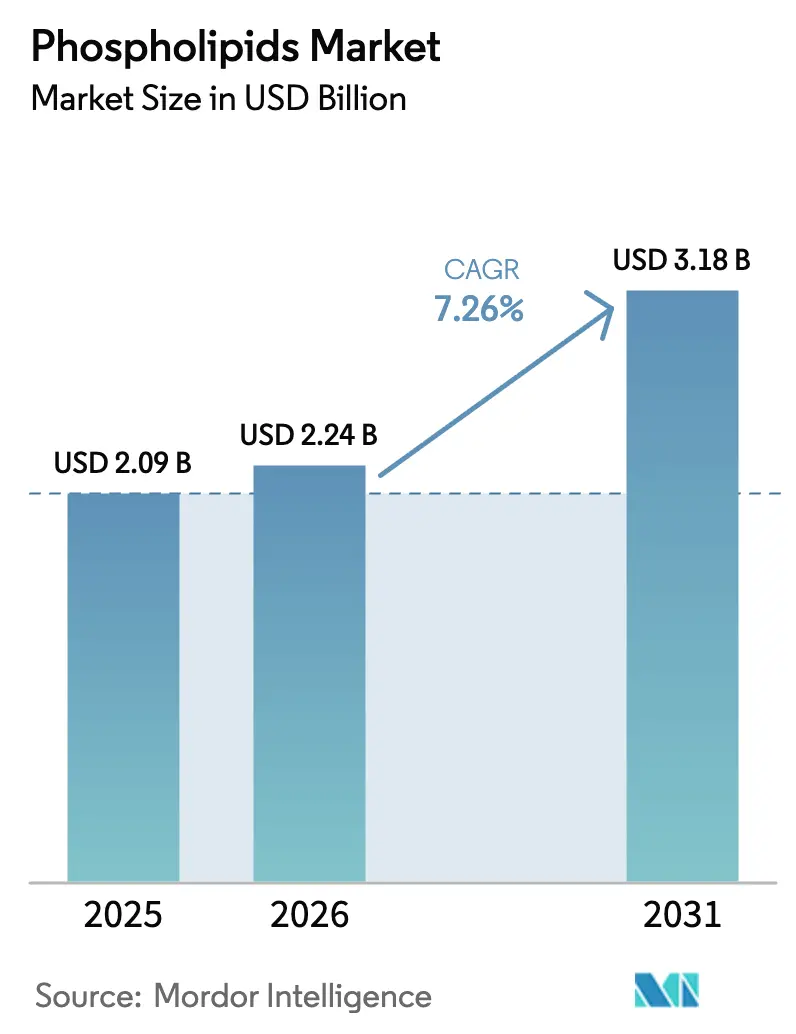
| Market Size (2026) | USD 2.24 Billion |
| Market Size (2031) | USD 3.18 Billion |
| Growth Rate (2026 - 2031) | 7.26 % |
| Fastest Growing Market | Asia-Pacific |
| Largest Market | North America |
| Market Concentration | Medium |
Major Players *Disclaimer: Major Players sorted in no particular order Image © Mordor Intelligence. Reuse requires attribution under CC BY 4.0. | |
Phospholipids Market Analysis by Mordor Intelligence
The phospholipids market size was valued at USD 2.09 billion in 2025 and estimated to grow from USD 2.24 billion in 2026 to reach USD 3.18 billion by 2031, at a CAGR of 7.26% during the forecast period (2026-2031). This growth is driven by increasing demand in nutraceuticals and pharmaceuticals, evolving regulatory frameworks, and advancements in lipid-based delivery systems. The European Commission's 2024 regulation on infant formula, limiting phospholipid content to 2 g/L, establishes safety standards while creating opportunities for high-purity phospholipid products [1]. The market expansion is supported by research demonstrating phospholipids' role in cognitive function and their application in lipid nanoparticles for mRNA therapeutics. The industry is shifting toward non-GMO sunflower and marine-sourced phospholipids in response to sustainability and allergen concerns. Improvements in supercritical and ethanol-based extraction methods are reducing production costs and enhancing product purity, narrowing the quality gap between food and pharmaceutical grades.
Key Report Takeaways
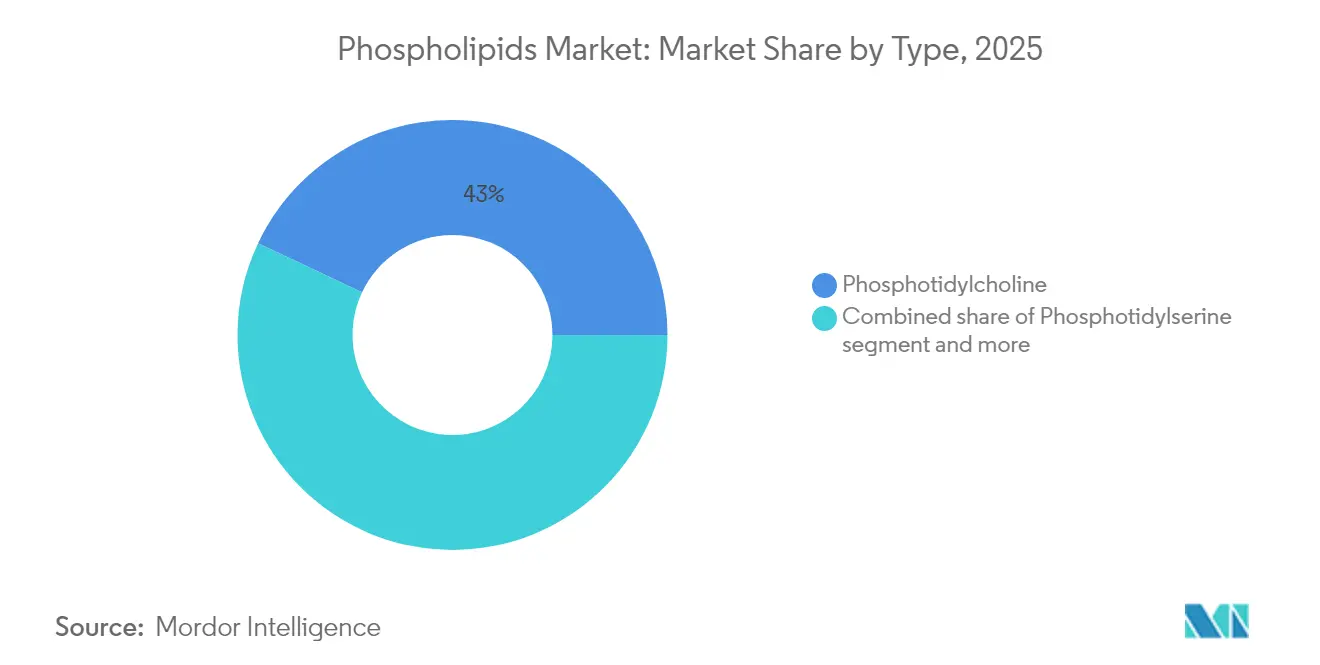
- By type, phosphotidylcholine led with 42.98% phospholipids market share in 2025, while phosphotidylserine is projected to climb at an 7.78% CAGR to 2031.
- By source, soy accounted for 61.02% of the phospholipids market in 2025; sunflower-derived grades exhibit the fastest growth at an 8.49% CAGR through 2031.
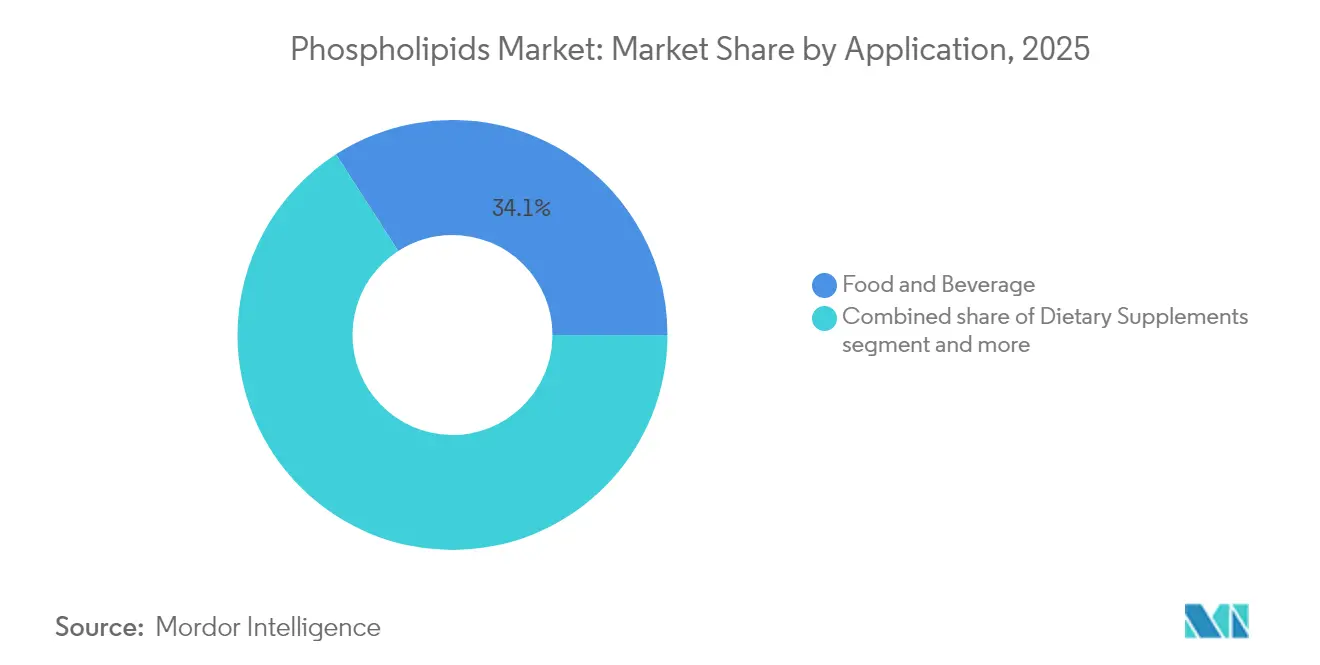
- By application, food and beverage held 34.12% revenue share in 2025, whereas pharmaceutical use is advancing at an 7.95% CAGR between 2026-2031.
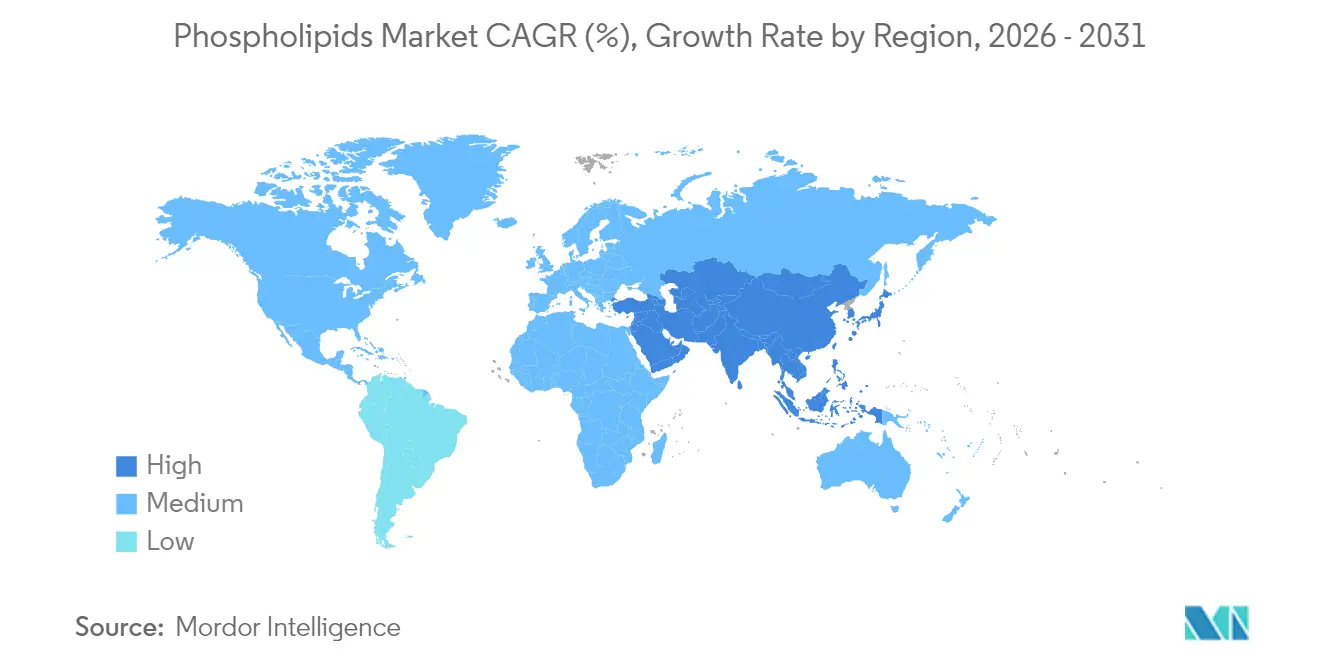
- By geography, North America commanded 32.10% share of the phospholipids market in 2025; Asia-Pacific is expanding at a 7.66% CAGR to 2031.
Note: Market size and forecast figures in this report are generated using Mordor Intelligence’s proprietary estimation framework, updated with the latest available data and insights as of 2026.
Market Trends and Insights
Drivers Impact Analysis of Phospholipids Market*
| Driver | (~) % Impact on CAGR Forecast | Geographic Relevance | Impact Timeline |
|---|---|---|---|
| Growing demand in nutraceuticals for cognitive health support | +1.8% | Global, with a concentration in North America and Europe | Medium term (2-4 years) |
| Surging vegan and plant-based phospholipid sources | +1.2% | Global, particularly strong in Europe and North America | Long term (≥ 4 years) |
| High demand in infant nutrition products | +1.5% | Global, with regulatory leadership in Europe and North America | Short term (≤ 2 years) |
| Rising demand of phospholipids in drug delivery systems | +2.1% | North America and Europe, expanding to Asia-Pacific | Long term (≥ 4 years) |
| Technological advancements in extraction and purification | +0.9% | Global, with innovation centers in North America and Europe | Medium term (2-4 years) |
| Emerging application in tissue engineering and cell culture | +0.7% | North America and Europe, early adoption in Asia-Pacific | Long term (≥ 4 years) |
| Source: Mordor Intelligence | |||
Growing Demand in Nutraceuticals for Cognitive Health Support
The growing recognition of cognitive health importance and changing consumer lifestyles are driving demand for brain health nutraceuticals. Phospholipids have become essential ingredients due to their role in neural function and structure. The European Food Safety Authority recommends a daily choline intake of 400 mg, which is higher than typical dietary consumption, indicating a significant market opportunity for phospholipid supplements. Companies are developing specialized formulations to address various cognitive health requirements. In 2024, Indena introduced Virtiva Plus, which combines Ginkgo biloba extract with phosphatidylserine, illustrating the market's shift toward premium, specialized products. The phospholipids market is expanding into stress management and sports nutrition segments, as younger consumers seek cognitive performance enhancement through phospholipid supplements. This trend strengthens phospholipids' position as high-value, multifunctional ingredients in the global nutraceutical market.
Surging Vegan and Plant-Based Phospholipid Sources
The increasing preference for plant-based phospholipid sources is driven by sustainability concerns and allergen avoidance requirements, which are changing supply chain patterns. The non-GMO foods market is projected to experience significant growth in the forecast period through the end of this decade, supporting the demand for sunflower-derived phospholipids. The adoption of ethanol-based extraction methods instead of hexane extraction aligns with current EU regulations on food processing solvents. This transition in extraction methodology demonstrates the industry's adaptation to regulatory requirements while maintaining production efficiency and product quality. The market continues to evolve as manufacturers invest in sustainable practices and alternative processing methods to meet consumer demands and regulatory standards.
High Demand in Infant Nutrition Products
Infant nutrition is a highly regulated segment where phospholipids play a crucial role in cognitive and immune development. The incorporation of phospholipids in infant formula has gained significant attention due to their proven benefits in brain development, immune system function, and overall infant health. In 2024, Food Standards Australia New Zealand approved milk fat globule membrane (MFGM) as a nutritive substance in infant formula, acknowledging phospholipids' developmental benefits[2]. This regulatory approval represents a significant milestone in the infant nutrition industry, as MFGM-WPC contains glycerophospholipids and sphingolipids at concentrations of 4-7 g/L. The approval also demonstrates the growing recognition of phospholipids' importance in early childhood development and sets a precedent for similar regulatory changes in other regions. Moreover, several clinical trials demonstrate that phospholipid-supplemented infant formulas produced significantly higher cognitive, language, and motor scores at 12 months compared to control formulas, providing evidence-based support for premium positioning
Rising Demand of Phospholipids in Drug Delivery Systems
Pharmaceutical applications represent the fastest-growing segment for phospholipids due to their essential role in advanced drug delivery systems, particularly in gene therapy and precision medicine. Evonik's lipid-based delivery technology supports the encapsulation and cellular uptake of nucleic acid therapies, providing stability and targeted release profiles. Cellectar Biosciences' phospholipid drug conjugate (PDC) platform demonstrates the technology's effectiveness by delivering therapeutic agents to cancer cells while reducing exposure to healthy tissues. The expansion of personalized medicine and biologics increases the demand for phospholipids in pharmaceutical formulations. The rise in regulatory approvals for lipid-enabled therapeutics and vaccine platforms has prompted pharmaceutical manufacturers to increase investments in specialized phospholipid systems, highlighting their importance in targeted drug delivery.
Restraints Impact Analysis of Phospholipids Market*
| Restraint | (~) % Impact on CAGR Forecast | Geographic Relevance | Impact Timeline |
|---|---|---|---|
| High cost of pharmaceutical grade phospholipids | -1.1% | Global, particularly impacting emerging markets | Short term (≤ 2 years) |
| Complex extraction and refining process | -0.8% | Global, with higher impact in regions with limited technical infrastructure | Medium term (2-4 years) |
| Regulatory variability across geography | -0.6% | Global, with particular challenges in emerging markets | Medium term (2-4 years) |
| Low stability in high-temperature food processing | -0.4% | Global, particularly affecting food processing applications | Short term (≤ 2 years) |
| Source: Mordor Intelligence | |||
High Cost of Pharmaceutical Grade Phospholipids
High prices of pharmaceutical-grade phospholipids significantly constrain market growth, particularly in emerging economies where cost concerns restrict their widespread adoption across various therapeutic applications. Croda's Life Sciences segment reported sales of EUR 504.3 million in 2024, representing a 16% decline, with phospholipids contributing only 1% of total sales, demonstrating the substantial challenges in maintaining profitability for high-specification products. The stringent quality-by-design requirements for pharmaceutical lipid formulations impose substantial regulatory compliance costs, which smaller manufacturers find increasingly difficult to manage, ultimately driving consolidation trends among suppliers in the market.
Complex Extraction and Refining Process
The technical complexity of phospholipid extraction and purification processes creates significant production bottlenecks, affecting manufacturing scalability and product quality consistency across various feedstock sources. While ethanol-based extraction methods improve environmental sustainability, they demand precise temperature and pressure control throughout the process to maintain phospholipid molecular integrity. Extraction yields fluctuate considerably based on critical processing parameters such as solvent concentration, contact time, and agitation speed. The industry's mandatory transition from hexane-based extraction to alternative solvents, primarily driven by stringent EU regulations, requires manufacturers to make substantial capital investments in specialized processing equipment and comprehensive operator training programs. This widespread operational transformation has resulted in temporary supply chain constraints as manufacturers systematically modify their production facilities and adapt to new extraction methodologies.
*Our forecasts treat driver/restraint impacts as directional, not additive. The impact forecasts reflect baseline growth, mix effects, and variable interactions.
Phospholipids Market Segment Analysis
By Type:
Phosphotidylcholine Dominance Faces Emerging CompetitionPhosphotidylcholine holds 42.98% of the market share in 2025, primarily due to its use in cognitive health supplements and pharmaceutical formulations. Its function as a choline source for acetylcholine synthesis, which supports memory and learning, has been validated through extensive research. The segment's market position is strengthened by regulatory approvals across multiple regions, making it difficult for alternative phospholipid types to gain significant market share.
Phosphotidylserine is projected to grow at 7.78% CAGR through 2031, driven by increased adoption in sports nutrition products and new research demonstrating its stress management benefits. The compound's growing popularity in athletic performance supplements and mental wellness products has created new opportunities for manufacturers and suppliers in the phospholipid market .

By Source:
Soy Leadership Challenged by Sunflower InnovationSoy-derived phospholipids hold a 61.02% market share in 2025, supported by established supply chains and efficient extraction processes. This dominance stems from mature soybean processing infrastructure and the availability of phospholipid-rich byproducts from oil refining. The extensive processing network and consistent supply of raw materials create economies of scale, enabling manufacturers to maintain competitive pricing in the global market.
Sunflower-derived phospholipids are growing at an 8.49% CAGR through 2031, driven by demand for non-GMO alternatives and higher phosphatidylcholine content. The increasing consumer preference for natural and non-genetically modified ingredients has positioned sunflower phospholipids as a premium alternative. Their superior phosphatidylcholine content enhances functional performance in food applications, making them particularly attractive for manufacturers focused on product quality and clean-label formulations.
By Application:
Food Dominance Shifts Toward Pharmaceutical InnovationThe food and beverage segment holds 34.12% market share in 2025, as phospholipids serve as natural emulsifiers in processed foods, baked goods, and plant-based alternatives. These compounds improve texture and stability in food products. Consumer demand for clean-label ingredients and widespread regulatory approval across global markets sustains the demand for lecithin-based formulations. The increasing adoption of phospholipids in food processing, coupled with their natural origin and functional benefits, continues to drive their use across various food applications.
The pharmaceutical segment is projected to grow at 7.95% CAGR through 2031, primarily due to advancements in drug delivery systems. The growth is particularly notable in lipid nanoparticles used for mRNA vaccines and gene therapy applications, where phospholipids facilitate targeted therapeutic delivery. The expanding research in pharmaceutical applications and the development of novel drug formulations further strengthen the segment's growth potential in the coming years.
Geography Analysis
North America Phospholipids Market
North America holds a dominant 32.10% market share in 2025, driven by advanced pharmaceutical research and development infrastructure, supportive regulatory frameworks, and established nutraceutical markets. The region's prominence is reinforced by investments in mRNA vaccine technologies and drug delivery systems, as evidenced by Moderna's USD 3.1 billion net product sales in 2024, validating the commercial success of phospholipid-based therapeutics. The region's leadership position is further strengthened by its robust supply chain infrastructure, established research institutions, and strong collaboration between industry and academia in developing innovative phospholipid applications.
APAC Phospholipids Market
Asia-Pacific exhibits the highest growth rate at 7.66% CAGR through 2031. This growth stems from expanding middle-class populations, rising health awareness, and improved regulatory frameworks that support market entry for new phospholipid ingredients. China's National Health Commission's 2024 approval of L-alpha-Glycerylphosphorylcholine as a food raw material demonstrates regulatory support that enhances market opportunities. The streamlined approval process in China, featuring reduced review periods and higher acceptance rates, presents significant expansion opportunities for international phospholipid suppliers. The region's rapid industrialization, increasing healthcare expenditure, and growing focus on preventive healthcare further accelerate market growth.
Europe Phospholipids Market
Europe maintains consistent growth despite complex regulations. The European Commission's revised infant formula regulations influence phospholipid applications, while regional sustainability initiatives increase demand for plant-based phospholipid sources that meet environmental standards. The region's mature market characteristics, combined with stringent quality standards and emphasis on sustainable production methods, create a stable but competitive environment for phospholipid manufacturers and suppliers.
Regulatory Landscape
In food applications, lecithin (E322) remains widely permitted across major markets, supporting volume demand for soy- and sunflower-derived phospholipids used as emulsifiers. In the European Union, E322 is authorized under Regulation (EC) No 1333/2008 with use at GMP, and EFSA re-evaluations (notably 2017 and 2020) supported continued use at current intake levels. The European Commission also tightened composition rules in sensitive nutrition, including the 2024 infant formula update that limits phospholipid content to 2 g/L, which pushes manufacturers toward better-defined, higher-purity grades.
In the United States, lecithin is recognized as GRAS, including egg lecithin (21 CFR 184.1400) and soy lecithin (21 CFR 184.1670), supporting broad incorporation in food and dietary supplements. Ingredient-by-ingredient authorizations also shape higher-value niches, including the EU authorization for phosphatidylserine from soy phospholipids as a novel food ingredient (Decision 2011/513/EU), and newer national-level pathways in Asia, such as China National Health Commission approval (2024) of L-alpha-Glycerylphosphorylcholine as a food raw material. This lowers entry friction for specialized phospholipid ingredients in the region.
Value Chain Analysis
The phospholipids value chain starts with oilseed and animal-derived raw materials (primarily soybean, sunflower, and egg), where lecithin is commonly recovered during crude oil degumming in soybean oil refining, then dried, standardized, and sold as commodity lecithin or routed into further fractionation. Integrated agribusiness processors (for example, Cargill) tend to compete on scale, feedstock access, and cost-effective, high-volume lecithin supply, while specialty producers (such as Lipoid GmbH and VAV Life Sciences) focus upstream on tighter raw-material selection and downstream on high-purity fractions.
Midstream processing covers solvent or ethanol-based extraction, enzymatic modification, and purification steps (de-oiling, fractionation, and chromatographic or multi-step refining) to meet application-specific specifications. Downstream, products flow into food and beverage emulsification systems, dietary supplement formulations (including cognitive-health positioning where choline intake guidance from EFSA supports formulation rationale), and pharmaceutical delivery systems that require GMP documentation, low residual solvents, and batch-to-batch control. This creates a clear split in routes-to-market between distributor-led commodity channels and direct technical sales into regulated pharma and infant nutrition customers.
Competitive Landscape
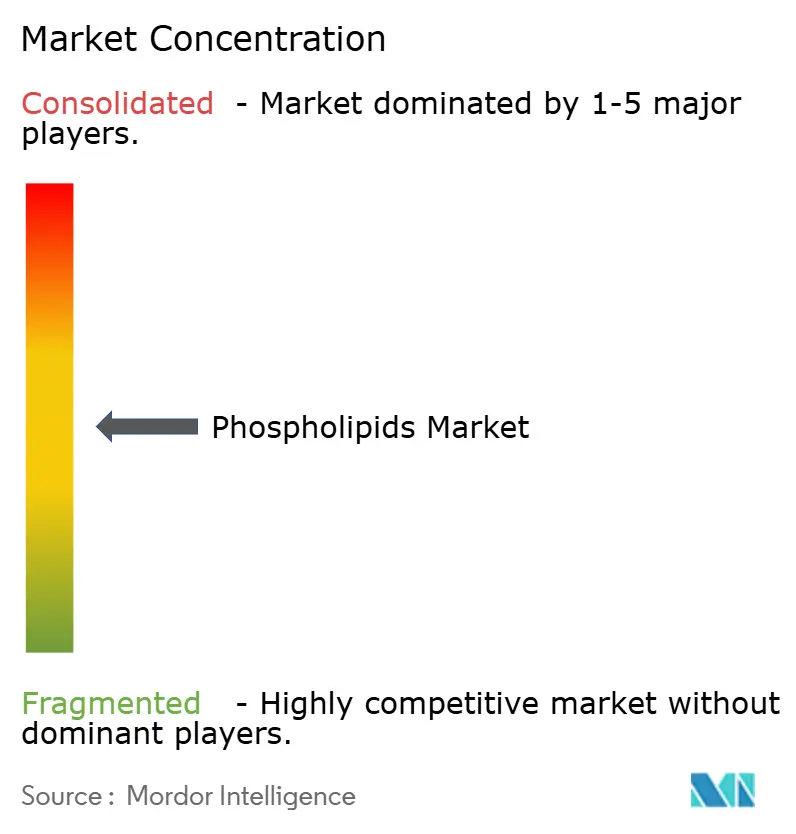
The market maintains moderate fragmentation, with vertically integrated companies optimizing margins through control of soybean crushing, fractionation, and downstream formulation processes. Companies with diverse portfolios across food, feed, and pharmaceutical segments demonstrate resilience against market fluctuations in individual channels. The major players in the market include Cargill Incorporated, VAV Life Sciences, Lipoid GmbH, Kemin Industries, and DSM-Firmenich.
Technological capabilities increasingly determine market position. Companies with patents in zwitterionic phospholipids and microfluidic continuous-flow systems establish competitive advantages in high-value therapeutic applications. Cellectar Biosciences demonstrates this trend through its phospholipid drug conjugate platform, which is currently exploring strategic alternatives, showing how specialized suppliers can evolve into licensors of drug-delivery technologies. Companies focusing on marine and upcycled sources attract sustainability-focused investors but must address scale-up costs and regulatory compliance challenges.
Strategic collaborations continue to shape the market. Lipid manufacturers form partnerships with Contract Development and Manufacturing Organizations (CDMOs) to secure sterile fill-finish capabilities. Food ingredient companies invest in low-solvent or solvent-free extraction technologies to comply with EU regulations. Merger and acquisition discussions focus on international partnerships that combine research and development capabilities with raw material access, particularly as global conflicts affect sunflower oil availability.
Phospholipids Industry Leaders
-
Cargill, Incorporated
-
VAV Life Sciences
-
Lipoid GmbH
-
DSM-Firmenich
-
Kemin Industries
- *Disclaimer: Major Players sorted in no particular order
Phospholipids Market Companies Covered in this Report
- Cargill, Incorporated
- VAV Life Sciences
- Lipoid GmbH
- DSM-Firmenich
- Kemin Industries
- Matlani Group (Sonic Biochem)
- BOC Sciences
- Matrix Life Science
- Botanic Healthcare Pvt. Ltd. (LipsoBio)
- ChemFaces
- Amitex Agro Product Pvt. Ltd.
- Croda International Plc (Croda Pharma)
- Creative Biolabs
- Agro Solvent Products Pvt Ltd (Sun Nutrafoods)
- Fengchen Group Co.,Ltd
- Biosynth
- Merck KGaA
- Chemi S.p.A.
- FUJIFILM Corporation (FUJIFILM Wako Pure Chemical Corporation)
- Nippon Fine Chemical
Market Opportunities and Future Outlook
The most visible opportunity is in compliant, high-purity phospholipids for tightly regulated nutrition and pharma use cases, where documentation, traceability, and GMP-grade manufacturing function as purchasing gates rather than optional differentiators. Suppliers have been building around this whitespace, including VAV Life Sciences upgrading its Ratnagiri site in April 2024 to an EU cGMP-certified capacity of 6,000 kg per year for pharmaceutical egg yolk lecithin, aligned with demand from parenteral applications and advanced delivery platforms that require high-spec lipids.
A second opportunity is product and sourcing innovation that fits clean-label and allergen or traceability constraints, moving formulations away from conventional soybean-only supply in some food, supplement, and personal care applications. Market actions supporting this include Lipoid GmbH introducing non-GMO soybean phospholipids (March 2025) for clean-label supplements and Cargill Beauty launching a non-GMO soy-derived phospholipid emulsification technology (Topcithin OW P IP) in March 2026. Together, these steps suggest active commercialization of differentiated phospholipid systems rather than commodity-only expansion, with cross-application spillover because technologies proven in personal care and supplements can translate into broader demand for standardized functional phospholipid fractions.
Recent Industry Developments in Phospholipids Market
- June 2026: Lipoid Kosmetik AG published a cover story in Personal Care Global (issue 6/2026) on the barrier-supporting benefits of its hydrogenated phospholipid ingredient, Phospholipon 90 H IP. The publication reinforced technical positioning around biomimetic barrier support and helped sustain demand pull for premium, specification-driven phospholipids in personal care formulations.
- October 2025: VAV Life Sciences entered the Turkish pharmaceutical market through a partnership with Arisan Kimya to supply lipid solutions, including phospholipids for pharmaceutical and personal care use. The collaboration broadened local availability and shortened commercial lead times in a market that often relies on qualified import channels for high-purity lipids.
- April 2024: VAV Life Sciences reported that its Ratnagiri, India facility reached EU cGMP-certified annual capacity of 6,000 kg of pharmaceutical egg yolk lecithin. The capacity milestone strengthened supply assurance for pharma-grade phospholipids, supporting customer qualification needs where batch consistency and GMP documentation are prerequisites.
Phospholipids Market Report Scope and Research Methodology
Market Definition and Coverage
This market covers the sales value of phospholipids used as functional ingredients across end uses such as food, supplements, pharmaceuticals, and other industrial applications, tracked across major producing and consuming regions using a consistent USD basis.
Scope exclusions: This sizing excludes lecithin blends and generic lipid ingredients when phospholipid content is not specified as the priced and traded component.
Segments Covered in This Report
- By Type
- Phosphotidylserine
- Phosphotidylcholine
- Others
- By Source
- Soy
- Sunflower
- Egg
- Others
- By Application
- Food and Beverage
- Dietary Supplements
- Pharmaceutical
- Others
- By Geography
- North America
- United States
- Canada
- Mexico
- Rest of North America
- Europe
- Germany
- France
- United Kingdom
- Spain
- Netherlands
- Italy
- Sweden
- Poland
- Belgium
- Rest of Europe
- Asia-Pacific
- China
- India
- Japan
- Australia
- South Korea
- Indonesia
- Thailand
- Singapore
- Rest of Asia-Pacific
- South America
- Brazil
- Argentina
- Chile
- Colombia
- Peru
- Rest of South America
- Middle East and Africa
- United Arab Emirates
- South Africa
- Nigeria
- Saudi Arabia
- Egypt
- Morocco
- Turkey
- Rest of Middle East and Africa
- North America
Data Sources, Market Sizing, and Validation
Desk Research
Desk research was used to build the base map of demand, supply, and pricing signals before shaping the model. Public sources such as the US FDA (ingredient and labeling references), the European Food Safety Authority, and the United States Pharmacopeia helped clarify where phospholipids are used and how grades are described for regulated applications.
To ground volumes and trade movement, we reviewed statistics and bulletins from sources such as UN Comtrade, national customs portals, and FAOSTAT for oilseed and egg supply indicators that influence feedstock availability. We also referenced company annual reports, investor presentations, association websites, and reputed press for capacity notes and application trends. Paid subscriptions were used selectively for company financials and intelligence, patent landscaping, and shipment-level import and export checks. The sources listed here are illustrative, and many other public and paid references were consulted for collection, cross checks, and clarification.
Primary Interviews and Surveys
Primary work focused on verifying how demand splits by end use, how pricing moves by grade, and how sourcing changes by region. We spoke with a mix of producers, distributors, formulators, and downstream users across APAC, EMEA, and the Americas, then used follow-up questions to close gaps identified in desk findings.
Distribution of primary research fieldwork respondents
| Company type | Respondent position | Region |
|---|---|---|
| Top tier: 31% | CXOs: 12% | APAC: 49% |
| Mid tier: 55% | Functional/Unit leaders: 37% | EMEA: 32% |
| Smaller Players: 14% | Managers: 51% | Americas: 19% |
Market-Sizing & Forecasting
Sizing starts with a top-down build where application demand pools are reconstructed from food and supplement consumption signals, pharma manufacturing activity, and regional trade flows, then translated into phospholipid value using grade-level price bands. We corroborate the results with selective bottom-up approximations using supplier revenue splits, sampled ASP times volume for key applications, and channel checks to avoid over counting.
Inputs used in the model include oilseed and egg availability indicators, export and import direction for phospholipid rich intermediates, typical dosage or use rate ranges in supplements and functional foods, pharma excipient adoption for delivery formats, and observed price spreads between standard and high purity grades. Where company disclosures are limited, missing splits are bridged using peer group ranges from interviews and then stress tested so totals still align with trade and demand indicators.
Forecasts are built using scenario analysis supported by expert views, because feedstock prices, regulatory acceptance, and premium grade penetration can move differently by region. In each scenario, we adjust drivers like end use growth, purity mix, and price normalization, and then roll them up into a single expected path.
Data Validation & Update Cycle
Outputs are checked against independent signals such as trade values, disclosed capacity additions, and observed pricing for major grades, and then variances are traced back to the input that drove them. A second analyst review confirms that assumptions, conversions, and regional roll ups stay consistent, and that no segment is double counted.
The report is refreshed annually, and interim updates are triggered when there are material events such as major capacity changes, sharp feedstock swings, or policy shifts that affect use in foods or pharma. Before delivery, we run a final update pass so the model and commentary reflect the latest available information.
Mordor Intelligence's Phospholipids Market Size Compared With Other Published Estimates
Published market sizes for phospholipids often differ because the counted product set, the purity and application boundaries, and the way prices are converted into USD are not consistent from one source to another. Timing also matters, since some estimates are tied to older base years, and others embed faster or slower adoption assumptions for supplements and pharma uses.
Lecithin blends and broad lipid ingredient lines sit outside Mordor Intelligence's scope here, which narrows the counted revenue to phospholipids where the ingredient is explicitly specified and priced. Differences also come from how models treat high purity grades (whether they are scaled up with premium pricing), whether trade values are used as a cross check, and how frequently assumptions are refreshed when feedstock costs move.
Benchmark comparison
| Source | Market Size | Gaps in Research Methodology |
|---|---|---|
| Mordor Intelligence | USD 2.24 B (2026) | |
| Trade Journal A | USD 3.62 B (2024) | Uses a broader product definition that can bundle phospholipids with adjacent lecithin style ingredients, and it reflects an earlier base year with a different purity mix and price basis. |
| Regional Consultancy B | USD 1.28 B (2025) | Appears closer to a producer revenue view that can under capture downstream margin and premium grade pricing, with limited evidence of demand side checks through trade and end use consumption indicators. |
The spread in values is mainly explained by what is counted as phospholipids, how premium grades are priced, and whether trade and end use signals are used to keep totals realistic. By keeping the inputs tied to observable demand indicators and then confirming them with supplier level sense checks, our estimate stays easier to trace and repeat when assumptions are updated.
Key Questions Answered in the Report
What is the value of the phospholipids market today and how fast will it grow by 2031?
The global phospholipids market stands at USD 2.24 billion in 2026 and is projected to reach USD 3.18 billion by 2031, reflecting a 7.26% CAGR
Which phospholipid type currently leads global sales?
Phosphotidylcholine accounts for 42.98% of 2025 revenue, the highest share among all phospholipid types.
Which end-use segment is expanding the quickest?
Pharmaceutical applications show the fastest momentum, advancing at an 7.95% CAGR from 2026-2031
Which region will post the highest growth through 2031?
Asia-Pacific is projected to increase at a 7.66% CAGR, propelled by regulatory approvals.