
Market Overview
| Study Period | 2021 - 2032 |
|---|---|
| Forecast Data Period | 2027 - 2032 |
| Base Year Market Size (2026) | USD 285.26 Million |
| Market Size (2027) | USD 296.38 Million |
| Market Size (2032) | USD 358.85 Million |
| Growth Rate (2027 - 2032) | 3.90 % |
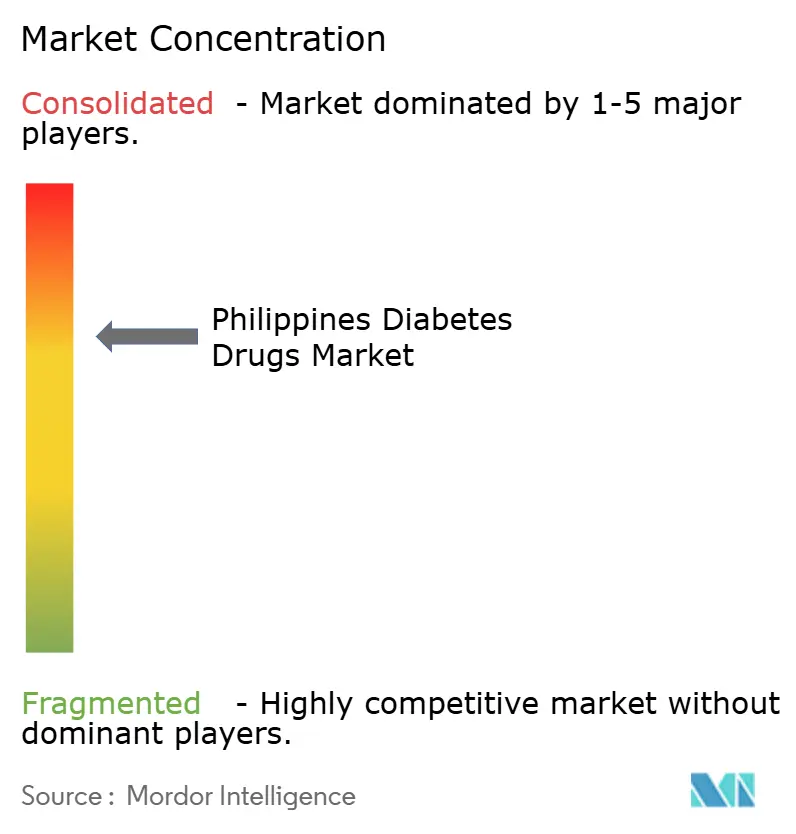
| Market Concentration | Medium |
Major Players *Disclaimer: Major Players sorted in no particular order Image © Mordor Intelligence. Reuse requires attribution under CC BY 4.0. | |
Philippines Diabetes Drugs Market Analysis by Mordor Intelligence
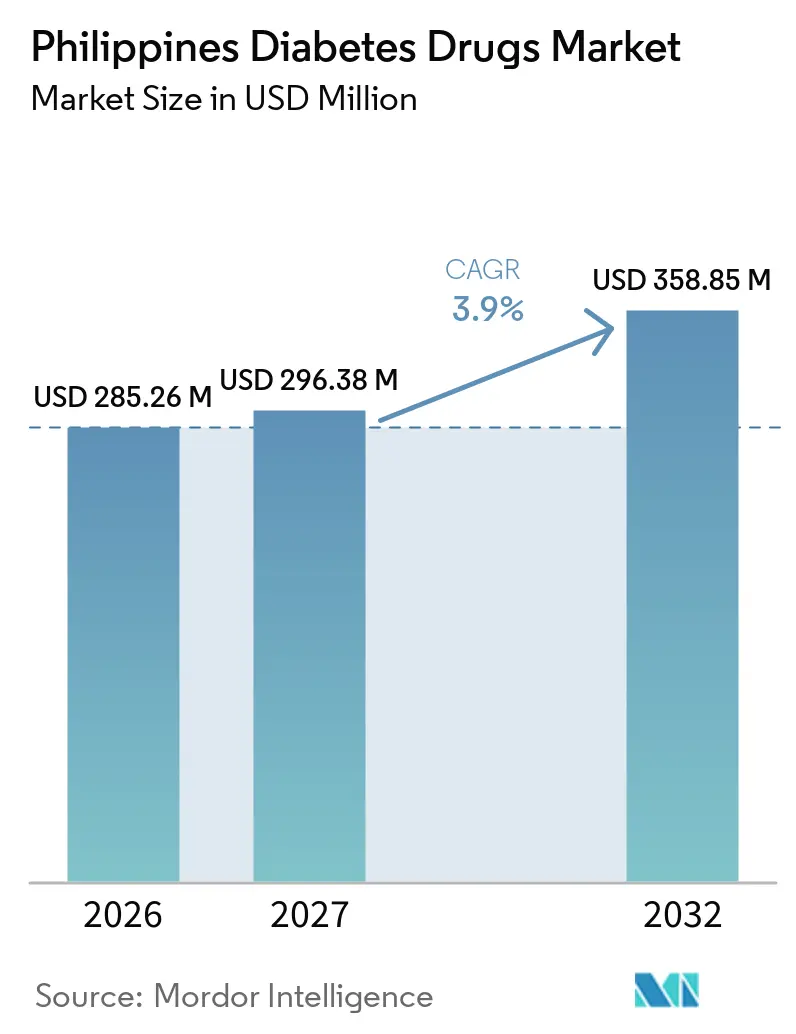
The Philippines Diabetes Drugs Market size was valued at USD 285.26 million in 2026 and is estimated to grow from USD 296.38 million in 2027 to reach USD 358.85 million by 2032, at a CAGR of 3.9% during the forecast period (2027-2032).
COVID-19 is a novel sickness caused by a SARS-CoV-2 virus strain. Most people infected with the virus will develop mild to moderate respiratory illness and recover without special treatment. The aged and those suffering from underlying medical conditions such as diabetes, hypertension, heart disease, lung disease, obesity, and cancer are at a higher risk of developing serious diseases. The virus infiltrates several cells in the body, including the heart and lungs, causing inflammatory changes that cause inflammation and multi-organ damage. Diabetes and systemic inflammation have been connected. According to studies, diabetes patients exhibited higher virus entry, a decreased immune response, less viral clearance, and dysregulated inflammatory markers.
Diabetes patients may be at the same risk of contracting COVID-19 as people who do not have diabetes. People with diabetes, on the other hand, have a higher risk of hospitalization, ICU admissions, severe sequelae, and mortality after getting COVID-19 due to the disease's essential features.
In terms of medicines, the insulin segment accounts for a significant share of the Philippines Diabetes Drugs Market, reflecting the country's growing dependence on pharmacological interventions for diabetes management. The market is characterized by efforts to improve insulin affordability and availability, particularly as a substantial proportion of healthcare expenditure is financed through out-of-pocket payments. Government initiatives aimed at expanding access to essential medicines, along with increasing participation from multinational pharmaceutical companies, are supporting the penetration of insulin products across the Philippines.
Note: Market numbers in this report are based on Mordor Intelligence's proprietary estimation framework, which combines nine months of actuals with Q4 projections for base year 2026.
Philippines Diabetes Drugs Market Trends and Insights
Oral-Anti Diabetes Drugs is having the highest market share in Current Year
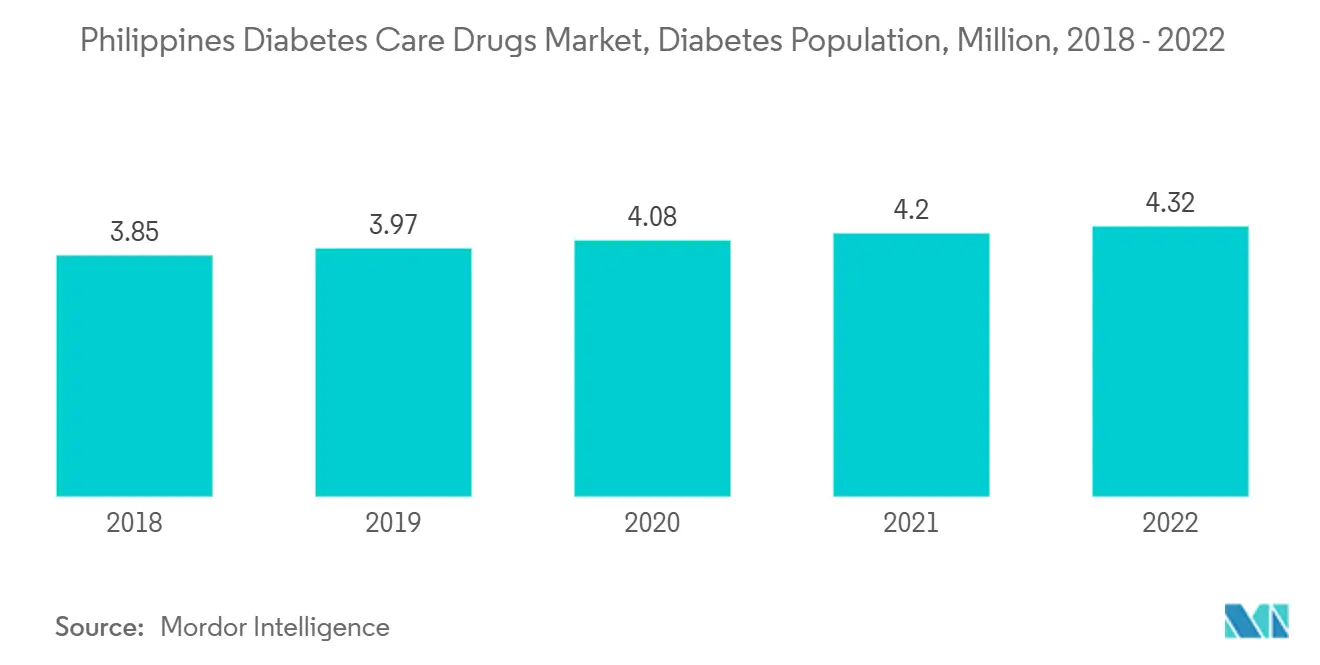
The Oral-Anti Diabetes Drugs segment is expected to increase with a CAGR of over 4.2% during the forecast period, mainly due to the demand from the Type-1 diabetes population, which was more than 4 million by the end 2022.
Diabetes care is restricted in the Philippines due to insufficient resources, government help, and economics. Regarding prevention, the national insurance system does not cover complete diabetic care, and private insurance companies only give limited diabetes coverage. As a result, most patients are forced to pay for "out-of-pocket" expenses such as laboratory tests and daily medications.
The oral anti-diabetic drugs segment is benefiting from the widespread use of community pharmacies as the first point of care for many diabetes patients in the Philippines. Given the financial burden associated with long-term disease management, cost-effective oral therapies remain a preferred treatment option among a large portion of the population. The growing availability of generic anti-diabetic medicines is further supporting segment expansion across both urban and provincial markets.
Through the Philippines government's encouragement, the usage of Management Devices increased over the forecast period.
Increasing Diabetes population in Thailand
Diabetes is a complex disease characterized by elevated blood sugar levels caused by impaired insulin synthesis and action. Insulin is a pancreatic hormone that regulates blood sugar levels. Diabetes, if left unchecked, can lead to a heart attack, stroke, leg amputation, blindness, and renal failure. Prediabetes affects around 14.2% of the population, according to DOST-FNRI statistics. One in every five Filipinos has abnormal glucose levels when diabetes and prediabetes are combined.
Significant barriers to health care exist in the Philippines, including limited health finance, which leads to high out-of-pocket payments and a fragmented referral system from general care to specialized care units. Due to budgetary constraints resulting from the economic slump and major supply shortages, access to diabetic devices became an even greater difficulty for the Philippines during the COVID-19 outbreak. Identifying and removing these roadblocks is crucial to fixing the country's insulin and diabetes treatment access problem.
Millions of people in low- and middle-income countries (LMICs) lack access to insulin and regular diabetes care. The Philippines, a lower-middle-income Southeast Asian country with more than 4 million diabetic adults, is no stranger to this problem.
Thus, the above factors are expected to drive the market growth over the forecast period.
Competitive Landscape
The Philippines Diabetes Drugs Market is characterized by the presence of multinational pharmaceutical companies alongside domestic and regional generic drug manufacturers. Competition is driven by efforts to improve the affordability and accessibility of diabetes medications, as a significant share of healthcare spending in the country remains out-of-pocket. Market participants are expanding their reach through hospital pharmacies, retail pharmacy chains, and community drugstores to strengthen product availability across both urban and provincial areas. In addition, companies are increasingly focusing on generic formulations, patient assistance programs, and strategic partnerships with healthcare providers to enhance market penetration and address the growing burden of diabetes in the Philippines.
Philippines Diabetes Drugs Industry Leaders
-
Eli Lilly
-
Boehringer Ingelheim
-
Astrazeneca
-
Sanofi
-
NovoNordisk
- *Disclaimer: Major Players sorted in no particular order
Recent Industry Developments
- March 2023: The approval of brolucizumab by the Philippine Food and Drug Administration (FDA) for the treatment of visual impairment caused by diabetic macular edema (DME) is a major achievement. DME is a prevalent microvascular complication in diabetic patients that can severely affect their vision and potentially result in blindness. This milestone is particularly significant for working-age individuals with DME, as they often face challenges in adhering to treatment due to the management of various diabetes-related conditions.
- November 2022: The Centers for Disease Control and Prevention (CDC) established an office in the Philippines in 2022 to strengthen and expand existing partnerships with the Philippines Department of Health (DOH). CDC supports the DOH to advance a broad range of health priorities, including increased global health security in Asia.
- May 2022: Tirzepatide (Mounjaro) is approved for the treatment of Type 2 diabetes in adults. Tirzepatide's FDA approval marks the first in a new class of diabetes medications: a dual GIP/GLP-1 receptor agonist.
Philippines Diabetes Drugs Market Report Scope
Diabetes or diabetes mellitus describes a group of metabolic disorders characterized by a high blood sugar level in a person. With diabetes, the body either does not produce enough insulin or the body's cells do not respond properly to insulin, or both. The Philippines Diabetes Care Drugs Market is segmented into Drugs. The report offers the value (in USD) and volume (in Units) for the above segments.
Oral Anti-diabetic drugs
| Biguanides | Metformin |
| Alpha-Glucosidase Inhibitors | Alpha-Glucosidase Inhibitors |
| Dopamine D2 receptor agonist | Bromocriptin |
| SGLT-2 inhibitors | Invokana (Canagliflozin) |
| Jardiance (Empagliflozin) | |
| Farxiga/Forxiga (Dapagliflozin) | |
| Suglat (Ipragliflozin) | |
| DPP-4 inhibitors | Onglyza (Saxagliptin) |
| Tradjenta (Linagliptin) | |
| Vipidia/Nesina(Alogliptin) | |
| Galvus (Vildagliptin) | |
| Sulfonylureas | Sulfonylureas |
| Meglitinides | Meglitinides |
Insulins
| Basal or Long Acting Insulins | Lantus (Insulin Glargine) |
| Levemir (Insulin Detemir) | |
| Toujeo (Insulin Glargine) | |
| Tresiba (Insulin Degludec) | |
| Basaglar (Insulin Glargine) | |
| Bolus or Fast Acting Insulins | NovoRapid/Novolog (Insulin Aspart) |
| Humalog (Insulin Lispro) | |
| Apidra (Insulin Glulisine) | |
| Traditional Human Insulins | Novolin/Actrapid/Insulatard |
| Humulin | |
| Insuman | |
| Biosimilar Insulins | Insulin Glargine Biosimilars |
| Human Insulin Biosimilars |
Combination drugs
| Insulin combinations | NovoMix (Biphasic Insulin Aspart) |
| Ryzodeg (Insulin Degludec and Insulin Aspart) | |
| Xultophy (Insulin Degludec and Liraglutide) | |
| Oral Combinations | Janumet (Sitagliptin and Metformin) |
Non-Insulin Injectable drugs
| GLP-1 receptor agonists | Victoza (Liraglutide) |
| Byetta (Exenatide) | |
| Bydureon (Exenatide) | |
| Trulicity (Dulaglutide) | |
| Lyxumia (Lixisenatide) | |
| Amylin Analogue | Symlin (Pramlintide) |
| Oral Anti-diabetic drugs | Biguanides | Metformin |
| Alpha-Glucosidase Inhibitors | Alpha-Glucosidase Inhibitors | |
| Dopamine D2 receptor agonist | Bromocriptin | |
| SGLT-2 inhibitors | Invokana (Canagliflozin) | |
| Jardiance (Empagliflozin) | ||
| Farxiga/Forxiga (Dapagliflozin) | ||
| Suglat (Ipragliflozin) | ||
| DPP-4 inhibitors | Onglyza (Saxagliptin) | |
| Tradjenta (Linagliptin) | ||
| Vipidia/Nesina(Alogliptin) | ||
| Galvus (Vildagliptin) | ||
| Sulfonylureas | Sulfonylureas | |
| Meglitinides | Meglitinides | |
| Insulins | Basal or Long Acting Insulins | Lantus (Insulin Glargine) |
| Levemir (Insulin Detemir) | ||
| Toujeo (Insulin Glargine) | ||
| Tresiba (Insulin Degludec) | ||
| Basaglar (Insulin Glargine) | ||
| Bolus or Fast Acting Insulins | NovoRapid/Novolog (Insulin Aspart) | |
| Humalog (Insulin Lispro) | ||
| Apidra (Insulin Glulisine) | ||
| Traditional Human Insulins | Novolin/Actrapid/Insulatard | |
| Humulin | ||
| Insuman | ||
| Biosimilar Insulins | Insulin Glargine Biosimilars | |
| Human Insulin Biosimilars | ||
| Combination drugs | Insulin combinations | NovoMix (Biphasic Insulin Aspart) |
| Ryzodeg (Insulin Degludec and Insulin Aspart) | ||
| Xultophy (Insulin Degludec and Liraglutide) | ||
| Oral Combinations | Janumet (Sitagliptin and Metformin) | |
| Non-Insulin Injectable drugs | GLP-1 receptor agonists | Victoza (Liraglutide) |
| Byetta (Exenatide) | ||
| Bydureon (Exenatide) | ||
| Trulicity (Dulaglutide) | ||
| Lyxumia (Lixisenatide) | ||
| Amylin Analogue | Symlin (Pramlintide) | |
Key Questions Answered in the Report
How big is the Philippines Diabetes Care Drugs Market?
The Philippines Diabetes Care Drugs Market size is expected to reach USD 285.26 million in 2026 and grow at a CAGR of 3.9% to reach USD 358.85 million by 2032.
What is the Philippines Diabetes Care Drugs Market size in 2027?
In 2027, the Philippines Diabetes Care Drugs Market size is expected to reach USD 296.38 million.
Who are the key players in Philippines Diabetes Care Drugs Market?
Eli Lilly, Boehringer Ingelheim, Astrazeneca, Sanofi and NovoNordisk are the major companies operating in the Philippines Diabetes Care Drugs Market.
What years does this Philippines Diabetes Care Drugs Market cover, and what was the market size in 2025?
In 2025, the Philippines Diabetes Care Drugs Market size was estimated at USD 274.55 million. The report covers the Philippines Diabetes Care Drugs Market historical market size for years: 2021, 2022, 2023, 2024, 2025, and 2026. The report also forecasts the Philippines Diabetes Care Drugs Market size for years: 2027, 2028, 2029, 2030, 2031, and 2032.