
Personalized Medicine Bioinformatics Market Size and Share
Market Overview
| Study Period | 2020 - 2031 |
|---|---|
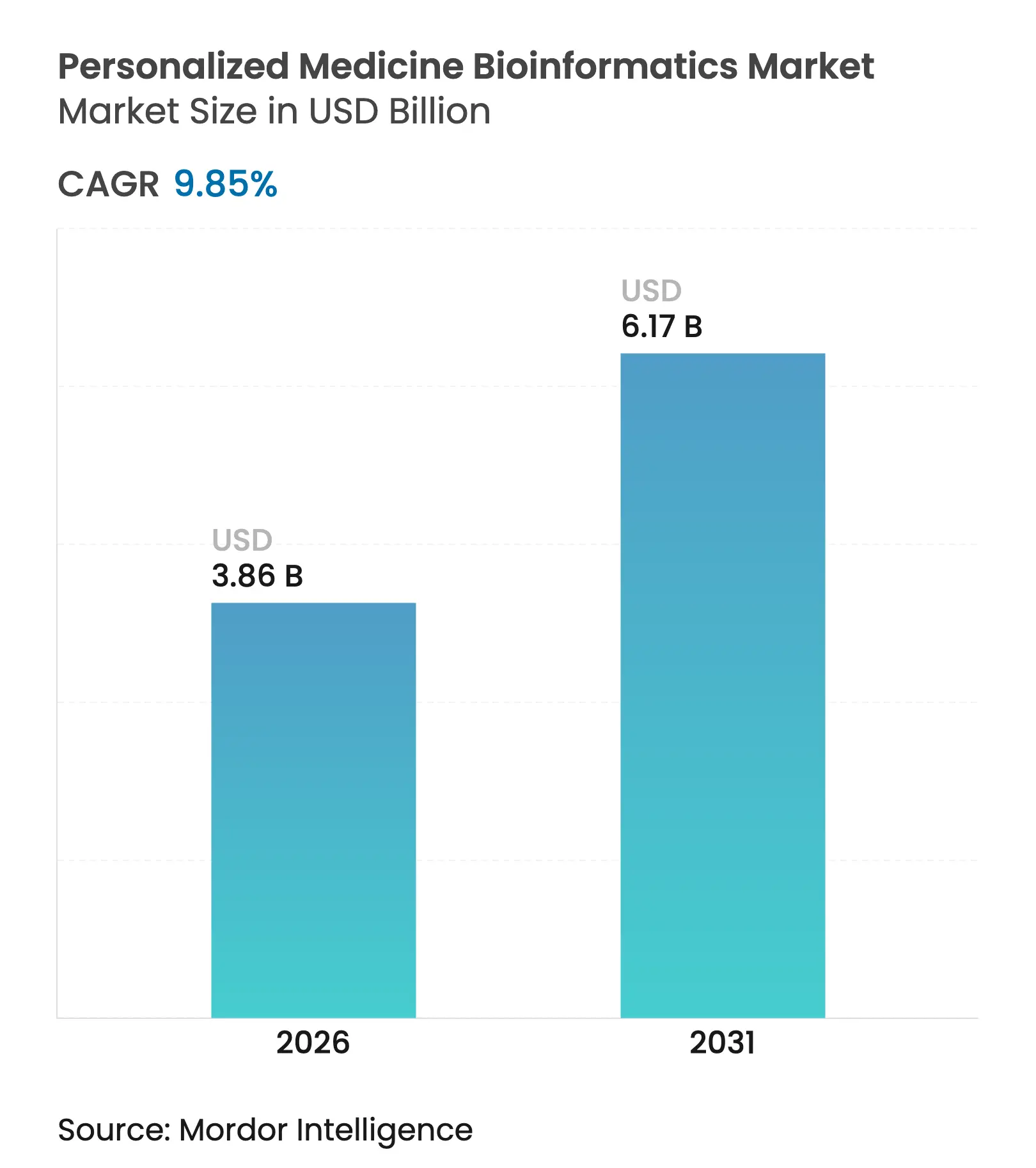
| Market Size (2026) | USD 3.86 Billion |
| Market Size (2031) | USD 6.17 Billion |
| Growth Rate (2026 - 2031) | 9.85 % CAGR |
| Fastest Growing Market | Asia Pacific |
| Largest Market | North America |
| Market Concentration | High |
Major Players *Disclaimer: Major Players sorted in no particular order. Image © Mordor Intelligence. Reuse requires attribution under CC BY 4.0. |

Personalized Medicine Bioinformatics Market Analysis by Mordor Intelligence
The personalized medicine bioinformatics market size in 2026 is estimated at USD 3.86 billion, growing from 2025 value of USD 3.51 billion with 2031 projections showing USD 6.17 billion, growing at 9.85% CAGR over 2026-2031. This momentum is propelled by the steady fall in whole-genome sequencing costs, the maturation of cloud-native architectures, and rapid advances in AI-driven analytics models. North America leads current revenue owing to sustained grant funding, robust electronic health record (EHR) penetration, and early clinical adoption of genomic testing. Meanwhile, favorable reimbursement decisions, liquid-biopsy approvals, and large-scale multi-omics initiatives are broadening the technology’s clinical footprint. In parallel, Asia Pacific is accelerating as the region leverages universal healthcare systems, ambitious national precision-medicine programs, and a fast-growing pool of AI talent. Industry participants are strengthening platform propositions by adding spatial-omics workflows, federated-learning capabilities, and turnkey regulatory compliance modules to address rising data-sovereignty requirements. Heightened demand from life-science researchers, contract research organizations (CROs), and hospital laboratories underscores a global shift toward outsourced, pay-per-use bioinformatics services that can scale with data volumes.
Key Report Takeaways
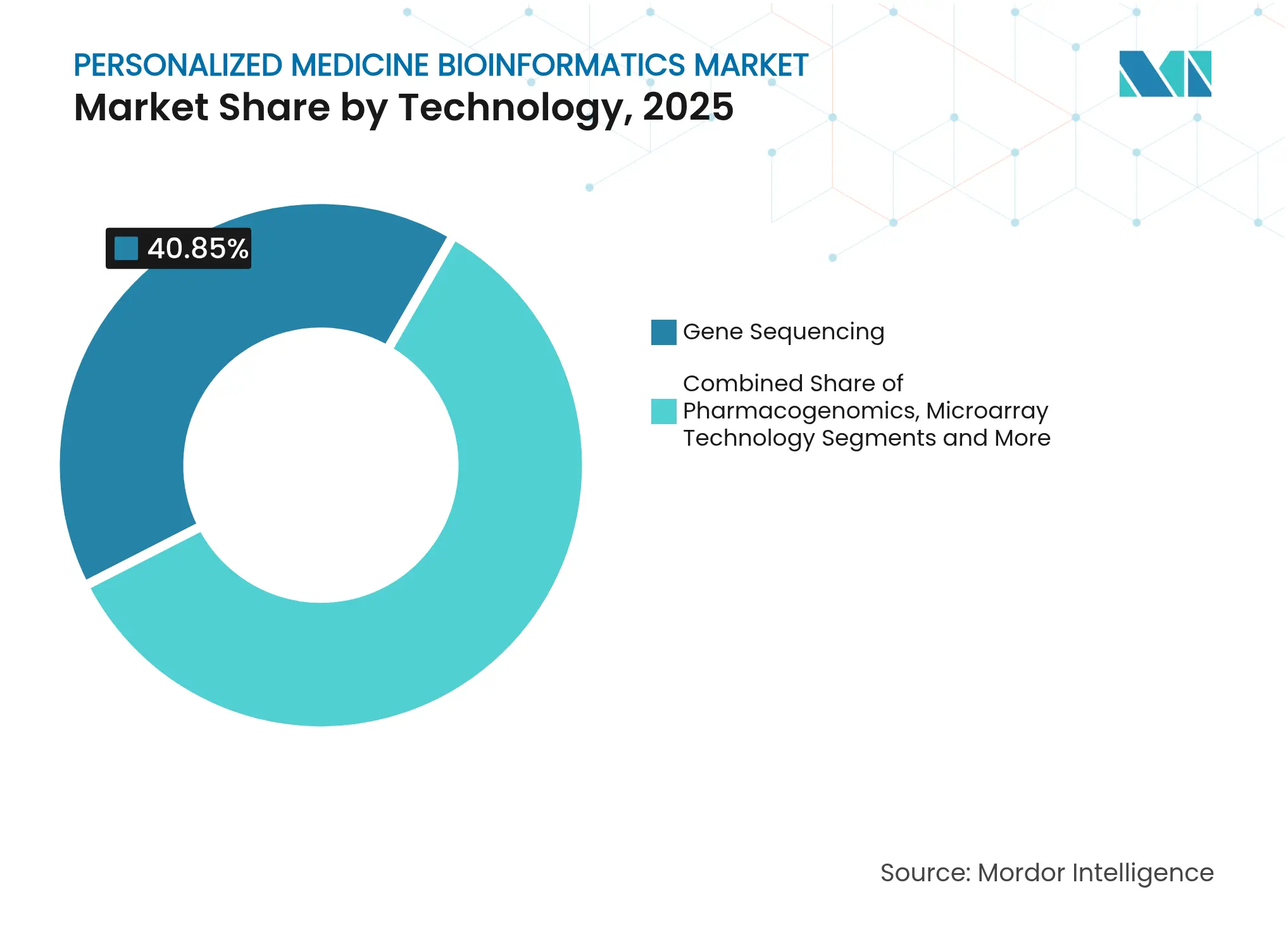
- By technology, Gene Sequencing held 40.85% of the personalized medicine bioinformatics market share in 2025; AI-driven Analytics Platforms are forecast to grow at 17.95% CAGR.
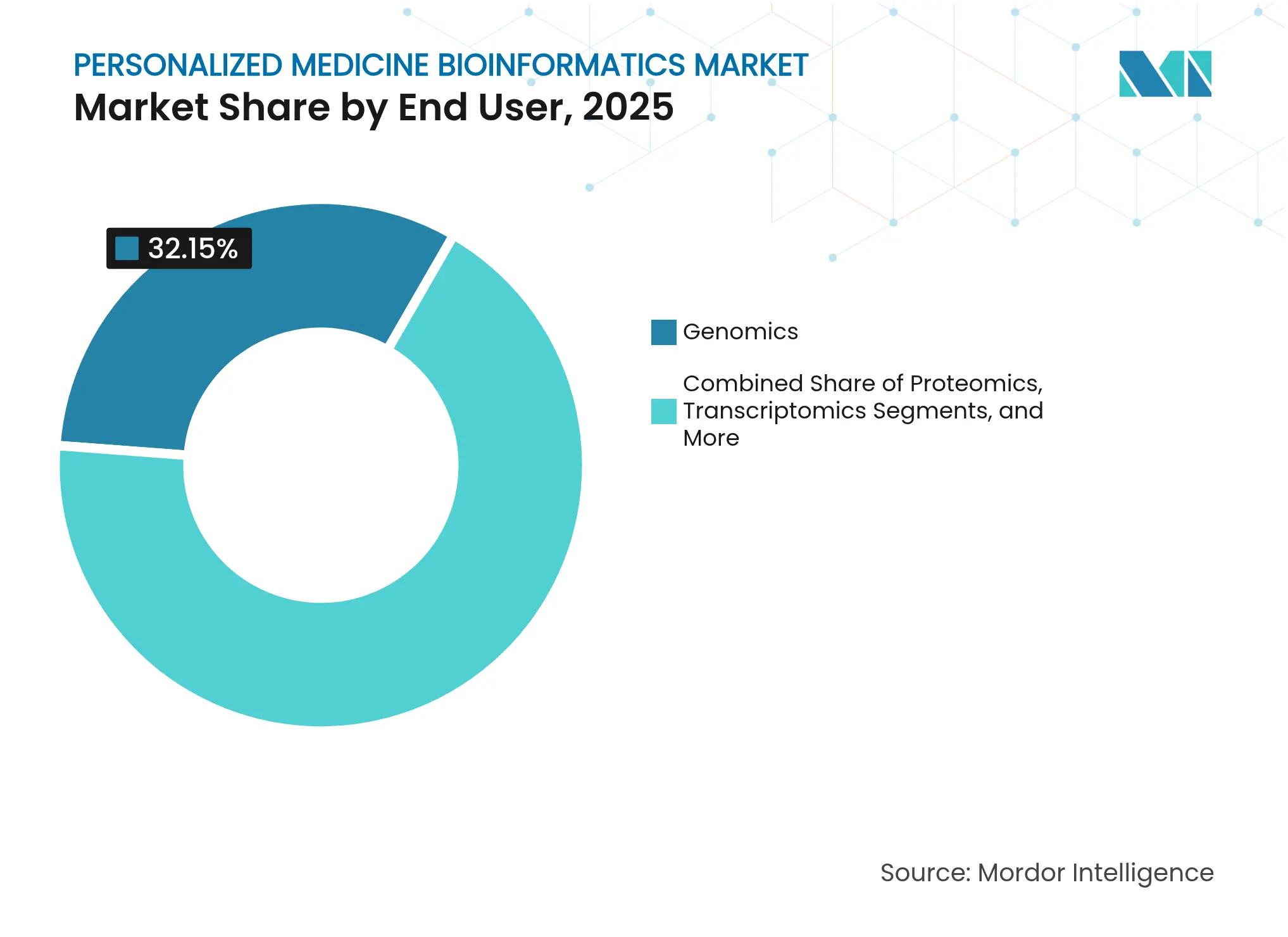
- By application, Genomics captured 32.15% of the personalized medicine bioinformatics market size in 2025, while Spatial-Omics is predicted to expand at a 19.05% CAGR to 2031.
- By end user, Biotechnology and pharmaceutical Companies represented 47.55% of revenue in 2025; CROs and biobanks are set to climb at a 15.35% CAGR over the forecast horizon.
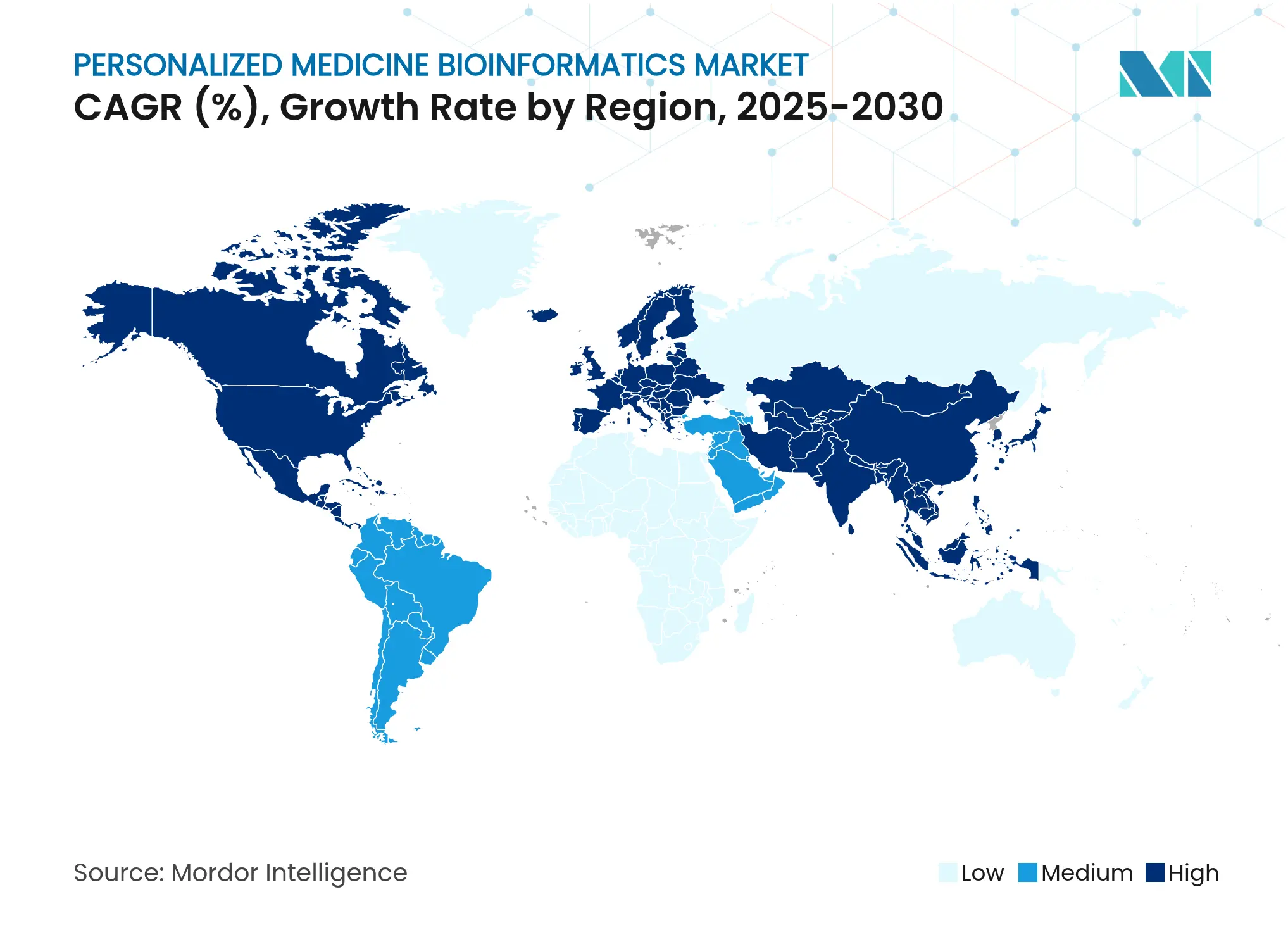
- By geography, North America accounted for 46.05% revenue in 2025, whereas Asia Pacific is projected to advance at a 14.55% CAGR through 2031.
Note: Market size and forecast figures in this report are generated using Mordor Intelligence's proprietary estimation framework, updated with the latest available data and insights as of 2026.
Global Personalized Medicine Bioinformatics Market Trends and Insights
Drivers Impact Analysis
| Driver | (~) % Impact on CAGR Forecast | Geographic Relevance | Impact Timeline |
|---|---|---|---|
Accelerating Adoption Of Precision & Genomic-Guided Care | +2.10% | Global, with North America & EU leading clinical implementation | Medium term (2-4 years) |
Rapid Fall In Sequencing Costs & Data Generation Economics | +1.80% | Global, with strongest impact in emerging markets | Short term (≤ 2 years) |
Expansion Of Cloud-Native Bioinformatics Platforms | +1.50% | Global, with APAC showing highest adoption rates | Medium term (2-4 years) |
Government Mega-Projects Funding Multi-Omics Databases | +1.30% | North America, China, UK primarily | Long term (≥ 4 years) |
Spatial-Omics & Single-Cell Analytics Unlocking New Insights | +1.10% | Global, concentrated in research institutions | Medium term (2-4 years) |
Federated Learning Enabling Secure Distributed Model Training | +0.90% | EU, North America due to data sovereignty requirements | Long term (≥ 4 years) |
| Source: Mordor Intelligence | |||
Accelerating Adoption of Precision & Genomic-Guided Care
FDA approvals for next-generation companion diagnostics in oncology and rare diseases have pushed genomic testing beyond research facilities into routine clinical decision-making. Approvals for FoundationOne Liquid CDx, including indications for BRCA-positive metastatic prostate cancer and MET exon 14-skipping lung cancer, exemplify this trend. Liquid-biopsy workflows address tissue-availability constraints while supporting longitudinal monitoring. Concurrently, personalized RNA cancer vaccines combined with immune checkpoint inhibitors reduced melanoma recurrence by 44% in 2024 trials.[1] Providers now view genomic results as influencing nearly 70% of medical decisions, making tight EHR integration non-negotiable.
Rapid Fall in Sequencing Costs & Data-Generation Economics
The whole-genome price tag dropped from USD 100 million in 2001 to roughly USD 500–600 in 2024 and could plunge to USD 200 by 2030. Nature projects a future floor of USD 10 per genome, accelerating population-scale initiatives across the United Kingdom, Australia, and the United States.[2] Yet analytical costs now dominate spending: as data output soars, compute, storage, and compliance expenses risk outpacing sequencing savings, as per Genetic Engineering & Biotechnology. Firms such as 3billion already market USD 200 genome services to expand access in low-income regions.
Expansion of Cloud-Native Bioinformatics Platforms
Providers are shifting petabyte-scale workloads into elastic clouds that support containerized pipelines, serverless execution, and streamlined accreditation. DNAnexus now manages more than 80 PB of genomic data and recently embedded Intelliseq’s automated variant-interpretation engine within its Precision Health Data Cloud. Canadian researchers adopted the CanDIG federation to analyze sensitive datasets across provinces under national privacy rules. Hyperscale vendors Google Cloud and AWS supply dedicated genomics APIs, while Kubernetes-based workflow engines orchestrate parallel compute tasks for multi-omics studies.
Government Mega-Projects Funding Multi-Omics Databases
The NIH Multi-Omics for Health and Disease Consortium harmonizes genomic, transcriptomic, proteomic, and environmental data into unified resources. China’s 15-year precision-medicine plan commits USD 9.2 billion to sequencing 1 million genomes and curating longitudinal phenotypic records. The NIH AnVIL platform operationalizes FAIR data principles, hosting large shared cohorts and enabling cloud-native analysis without downloading files.[3]
Restraints Impact Analysis
| Restraint | (~) % Impact on CAGR Forecast | Geographic Relevance | Impact Timeline |
|---|---|---|---|
High CAPEX & OPEX For Bioinformatics Infrastructure | -1.40% | Global, with higher impact in emerging markets | Short term (≤ 2 years) |
Shortage Of Skilled Bioinformaticians / Data Scientists | -0.80% | Global, particularly acute in APAC and emerging markets | Medium term (2-4 years) |
EHR–Omics Interoperability Gaps Delaying Clinical Uptake | -0.60% | North America & EU primarily, due to complex healthcare systems | Medium term (2-4 years) |
Data-Sovereignty Laws Limiting Cross-Border Genomics Flows | -0.40% | EU, China, with spillover effects globally | Long term (≥ 4 years) |
| Source: Mordor Intelligence | |||
High CAPEX & OPEX for Bioinformatics Infrastructure
Genomic-data volumes roughly double every 18 months, stressing compute budgets even as sequencing becomes cheaper. Healthcare leaders struggle to capture downstream clinical ROI when justifying large software and hardware outlays, an issue highlighted in the health-IT finance literature. FDA’s 2024 Laboratory-Developed Test rule adds an estimated USD 566 million to USD 3.56 billion industry-wide in compliance outlays, with smaller laboratories facing disproportionate burdens.
Shortage of Skilled Bioinformaticians / Data Scientists
Demand for multidisciplinary talent spanning statistics, computer science, and molecular biology continues to exceed supply. The NIH allocated USD 900,000 for computational genomics education to close diversity gaps in 2025 grants. Pan-African initiatives such as H3ABioNet have trained more than 4,500 professionals, yet large consortia still cite workforce shortfalls as a major execution risk. Academic reports emphasize the need for cross-disciplinary communication skills and project management abilities in big-data medicine.
Segment Analysis
By Technology: AI Platforms Drive Next-Generation Analytics
Gene Sequencing commanded 40.85% revenue in 2025, a position reinforced by continuing demand for flexible short-read and emerging long-read chemistries. However, AI-driven Analytics Platforms are forecast to post a 17.95% CAGR, reflecting surging interest in transformer-based language models trained on genomic tokens and cross-species alignments. QIAGEN’s PGXI knowledgebase automates pharmacogenomic annotations by merging FDA and CPIC references, underscoring the move toward end-to-end clinical interpretation workflows. Integrated stacks that merge variant calling, multi-omic harmonization, and explainable AI are redefining the personalized medicine bioinformatics market. Quantum-inspired optimization prototypes are also under evaluation for accelerating search space exploration in drug repurposing scenarios.
Full-service platforms increasingly couple data-management consoles with modular analytics engines. The personalized medicine bioinformatics market size for AI-enhanced analytics is projected to outpace legacy microarray solutions as institutions transition population-screening programs to sequencing-plus-AI workflows. Meanwhile, microarrays retain a foothold in lower-cost genotyping panels for epidemiological studies where sample throughput outweighs per-sample depth. Vendors differentiate through embedded algorithm libraries, low-code workflow designers, and compliance toolkits that shorten time-to-result for regulated assays.
Note: Segment shares of all individual segments available upon report purchase
By Application: Spatial-Omics Revolutionizes Tissue Analysis
Genomics retained 32.15% revenue in 2025 as oncology, rare-disease diagnostics, and pharmacogenomics remain foundational use cases. Spatial-Omics, however, is predicted to register a 19.05% CAGR by 2031, lifting its contribution to the personalized medicine bioinformatics market size as high-resolution tissue mapping reaches mainstream laboratories. Proteomics has accelerated following the confirmation of 93% of predicted human proteins, enabling richer biomarker discovery pipelines. Transcriptomics benefits from multi-modal protocols such as Spatial-Mux-seq that co-profile RNA, protein, and chromatin states within a single experiment.
Researchers now integrate metabolomics and epigenomics to pinpoint pathway-level perturbations that underlie disease phenotypes. Multi-omics assembly methods like MINDSETS yield 89.25% accuracy in distinguishing Alzheimer’s disease from vascular dementia, illustrating clinical utility. The personalized medicine bioinformatics market continues to reward vendors that harmonize data matrices across omic layers, automate phenotype linkage, and deliver interpretable outputs that clinicians can act on at the point of care. As workflows mature, spatial-omics is expected to permeate translational research centers first, then diffuse into clinical pathology labs pending regulatory guidance on data standards and quality metrics.
By End User: CROs Accelerate Outsourced Analytics
Biotechnology and pharmaceutical Companies contributed 47.55% of 2025 spending as drug discovery pipelines increasingly embed multi-omic biomarkers and adaptive trial designs. CROs and biobanks are forecast to rise at a 15.35% CAGR through 2031, illustrating a pivotal outsourcing shift in the personalized medicine bioinformatics market. Outsourced providers offer turn-key variant-calling, data curation, and federated-analysis services that help smaller biotech entrants avoid heavy capital outlays. Foundation Medicine’s collaborations with Syndax Pharmaceuticals and PMV Pharma for AML and p53-targeted companion diagnostics underline the strategic advantage of specialized service platforms.
Clinical Diagnostics Laboratories continues scaling NGS oncology panels, yet many rely on cloud partners for the heavy lifting of bioinformatics as data-center costs climb. Academic medical centers, meanwhile, form consortia with platform vendors for access to cutting-edge analytics and for beta-testing emerging pipelines, evidenced by QIAGEN’s three-year microbiome collaboration with McGill University. The personalized medicine bioinformatics market share held by CROs is likely to expand further as labor shortages and compliance complexities push hospitals toward managed bioinformatics subscriptions.
Note: Segment shares of all individual segments available upon report purchase
Geography Analysis
North America contributed 46.05% revenue in 2025 due to sustained National Institutes of Health funding, clear reimbursement pathways, and widespread EHR penetration that simplifies integration with clinical workflows. The NIH Computational Genomics program alone consumed roughly 30% of the institute’s FY 2023 research budget, keeping domestic infrastructure at the forefront. Public–private partnerships between sequencing vendors and healthcare networks have extended testing capacity into community oncology and cardiology clinics, further anchoring demand in the region.
Europe follows with a sizeable share, supported by initiatives such as the EUCAN ELSI Collaboratory that tackles GDPR compliance in cross-border data sharing. National health-service funding in the United Kingdom and Nordic countries finances large-scale population sequencing, while federated-learning pilots in Germany and France highlight regulatory-aligned approaches to distributed analytics. The personalized medicine bioinformatics market benefits from the region’s emphasis on interoperability standards, fostering vendor competition around CE-IVD-ready pipelines.
Asia Pacific is projected to grow at a 14.55% CAGR through 2031, the fastest globally. China’s 15-year precision-medicine initiative earmarks USD 9.2 billion for genomics infrastructure and positions domestic firms such as BGI as sequencing powerhouses. Nationwide EHR networks in Japan, South Korea, and Australia expedite clinical data linkage, while Singapore’s federated sandbox programs test secure analytics on de-identified cohorts. The region’s universities graduate a growing cadre of AI specialists, enabling local customization of language models for population-specific polymorphisms.
The Middle East represents an emerging opportunity as governments diversify their economies around knowledge-based sectors. Saudi Arabia’s Vision 2030 invests heavily in biotechnology through entities such as the Hevolution Foundation, focusing on health-span research that relies on multi-omics datasets. Latin America and Africa maintain smaller footprints, but consortia such as H3ABioNet illustrate rising regional capacity for multi-site genomics projects. Multilateral funding and technology-transfer agreements are expected to build foundational infrastructure, unlocking latent demand over the next decade.

Competitive Landscape
Market Concentration
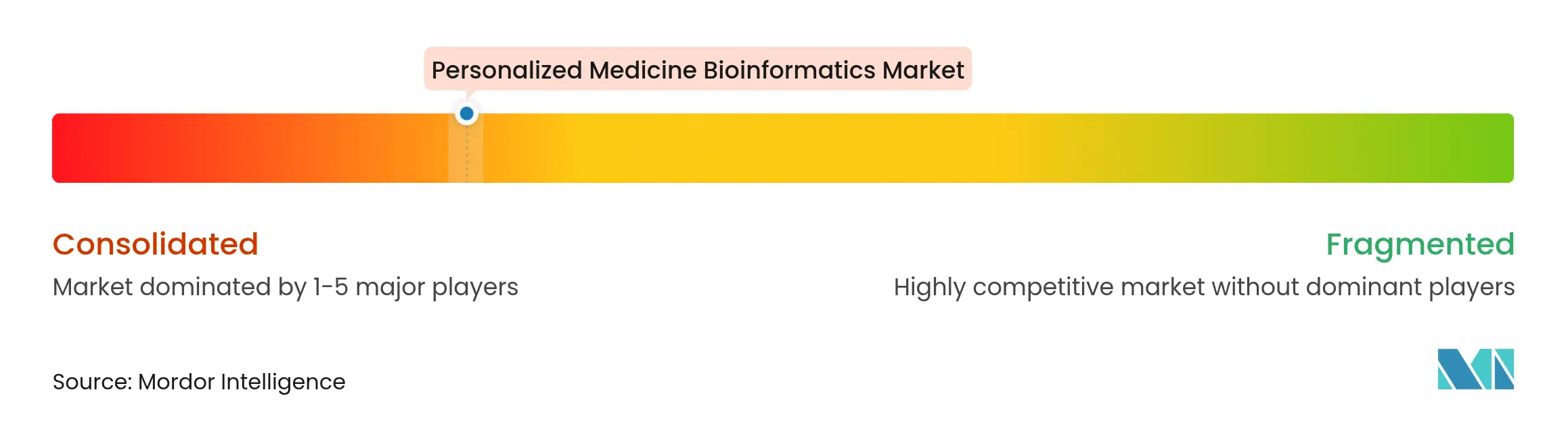
The personalized medicine bioinformatics market remains moderately fragmented. Incumbent sequencing giants Illumina, Thermo Fisher Scientific, and QIAGEN vie with AI-native players such as Tempus Labs and DNAnexus for platform dominance. Strategic partnerships outpace outright acquisitions as firms pursue complementary capabilities: Illumina and NVIDIA jointly optimize DRAGEN variant-calling pipelines on GPU clusters to hasten multi-omic data processing. Tempus inked a USD 200 million data-licensing pact with AstraZeneca to train multi-modal foundation models, demonstrating pharmaceutical appetite for curated, clinically annotated datasets.
Product differentiation centers on algorithmic performance, federated-analysis features, and compliance toolkits. QIAGEN’s AI-derived knowledge graph now spans over 640 million biomedical relationships, enhancing automated pathway interpretation in Ingenuity Pathway Analysis. Seqera’s acquisition of Tinybio aims to democratize AI-powered analytics for mid-tier laboratories by embedding natural-language queries into workflow orchestration tools. bioMérieux added Applied Maths to boost microbiology analytics, signaling interest from clinical-diagnostic incumbents in omics-driven decision support.
White-space opportunities remain in spatial-omics, single-cell analytics, and quantum-enhanced algorithms. Start-ups leverage transformer architectures and self-supervised learning on unlabeled genomic data to rapidly annotate variants of uncertain significance. Larger vendors focus on end-to-end suites that integrate cloud storage, secure compute, and real-time result visualization, simplifying adoption for hospitals with limited in-house expertise. Success increasingly requires demonstrable clinical ROI as hospital systems demand evidence of improved patient outcomes and operational efficiencies before committing to multi-year bioinformatics contracts.
Personalized Medicine Bioinformatics Industry Leaders

*Disclaimer: Major Players sorted in no particular order
Recent Industry Developments
- February 2025: Illumina unveiled a first-of-its-kind spatial transcriptomics technology enabling unbiased whole-transcriptome profiling with cellular resolution. The technology is slated for commercial launch in 2026 and includes a collaboration with the Broad Institute for large-scale spatial datasets.
- February 2025: Foundation Medicine introduced hereditary germline tests, FoundationOne Germline and FoundationOne Germline More, through a partnership with Fulgent Genetics. These tests cover 50 and 154 genes, respectively, for hereditary cancer risk assessment.
- January 2025: Illumina and NVIDIA formalized a collaboration to accelerate precision health by optimizing DRAGEN pipelines on NVIDIA GPUs and co-developing multi-omics analysis workflows.
- January 2025: DNAnexus partnered with Intelliseq to embed automated variant interpretation and clinical reporting in the Precision Health Data Cloud, enhancing somatic-cancer and hereditary-disease applications.
Table of Contents for Personalized Medicine Bioinformatics Industry Report
1. Introduction
- 1.1 Study Assumptions & Market Definition
- 1.2 Scope of the Study
2. Research Methodology
3. Executive Summary
4. Market Landscape
- 4.1 Market Overview
- 4.2 Market Drivers
- 4.2.1 Accelerating Adoption Of Precision & Genomic-Guided Care
- 4.2.2 Rapid Fall In Sequencing Costs & Data Generation Economics
- 4.2.3 Expansion Of Cloud-Native Bioinformatics Platforms
- 4.2.4 Government Mega-Projects Funding Multi-Omics Databases
- 4.2.5 Spatial-Omics & Single-Cell Analytics Unlocking New Insights
- 4.2.6 Federated Learning Enabling Secure Distributed Model Training
- 4.3 Market Restraints
- 4.3.1 High CAPEX & OPEX For Bioinformatics Infrastructure
- 4.3.2 Shortage Of Skilled Bioinformaticians / Data Scientists
- 4.3.3 EHR–Omics Interoperability Gaps Delaying Clinical Uptake
- 4.3.4 Data-Sovereignty Laws Limiting Cross-Border Genomics Flows
- 4.4 Regulatory Landscape
- 4.5 Technological Outlook
- 4.6 Porter's Five Forces Analysis
- 4.6.1 Threat of New Entrants
- 4.6.2 Bargaining Power of Buyers
- 4.6.3 Bargaining Power of Suppliers
- 4.6.4 Threat of Substitutes
- 4.6.5 Intensity of Competitive Rivalry
5. Market Size & Growth Forecasts (Value)
- 5.1 By Technology
- 5.1.1 Gene Sequencing
- 5.1.2 Pharmacogenomics
- 5.1.3 Microarray Technology
- 5.1.4 AI-driven Analytics Platforms
- 5.1.5 Other Technologies
- 5.2 By Application
- 5.2.1 Genomics
- 5.2.2 Proteomics
- 5.2.3 Transcriptomics
- 5.2.4 Metabolomics
- 5.2.5 Epigenomics
- 5.2.6 Other Applications
- 5.3 By End User
- 5.3.1 Biotechnology & Pharmaceutical Companies
- 5.3.2 Clinical Diagnostics Laboratories
- 5.3.3 Hospitals & Academic Medical Centers
- 5.3.4 CROs & Biobanks
- 5.3.5 Other End Users
- 5.4 By Geography
- 5.4.1 North America
- 5.4.1.1 United States
- 5.4.1.2 Canada
- 5.4.1.3 Mexico
- 5.4.2 Europe
- 5.4.2.1 Germany
- 5.4.2.2 United Kingdom
- 5.4.2.3 France
- 5.4.2.4 Italy
- 5.4.2.5 Spain
- 5.4.2.6 Rest of Europe
- 5.4.3 Asia Pacific
- 5.4.3.1 China
- 5.4.3.2 Japan
- 5.4.3.3 India
- 5.4.3.4 South Korea
- 5.4.3.5 Australia
- 5.4.3.6 Rest of Asia Pacific
- 5.4.4 Middle East & Africa
- 5.4.4.1 GCC
- 5.4.4.2 South Africa
- 5.4.4.3 Rest of Middle East & Africa
- 5.4.5 South America
- 5.4.5.1 Brazil
- 5.4.5.2 Argentina
- 5.4.5.3 Rest of South America
6. Competitive Landscape
- 6.1 Market Concentration
- 6.2 Market Share Analysis
- 6.3 Company Profiles (includes Global level Overview, Market level overview, Core Segments, Financials as available, Strategic Information, Market Rank/Share, Services, and Recent Developments)
- 6.3.1 DNAnexus
- 6.3.2 Illumina
- 6.3.3 Thermo Fisher Scientific
- 6.3.4 Flatiron Health
- 6.3.5 Syapse
- 6.3.6 Sophia Genetics
- 6.3.7 Tempus Labs
- 6.3.8 Foundation Medicine
- 6.3.9 Qiagen
- 6.3.10 IBM Watson Health
- 6.3.11 Aster Insights
- 6.3.12 Concert Genetics
- 6.3.13 C4X Discovery
- 6.3.14 Nucleai
- 6.3.15 Protica Bio
- 6.3.16 Verily Life Sciences
- 6.3.17 Genomate Health
- 6.3.18 Assurance Health Data
- 6.3.19 Amazon Web Services (AWS) Genomics
- 6.3.20 Google Cloud Life Sciences
7. Market Opportunities & Future Outlook
- 7.1 White-space & Unmet-need Assessment
Scope and Methodology
As per the scope of the report, the personalized medicine bioinformatics market involves the development and use of advanced computational tools to analyze and interpret biological data specific to individuals, facilitating customized medical treatments based on each patient’s genetic profile.
The precision medicine bioinformatics market is segmented by technology, application, end-user, and geography. The technology segment is divided into gene sequencing, pharmacogenomics, microarray technology, and other technologies. Other technologies include nanotechnology and CRISPR, among others. The application segment is further segmented into genomics, proteomics, transcriptomics, and other applications. Other applications include metabolomics and epigenomics, among others. The end user segment is further divided into biotechnology and pharmaceutical companies, hospitals, and other end users. Other end users include research institutions and diagnostic laboratories, among others. The geography segment is further divided into North America, Europe, Asia-Pacific, and Rest of the World. The market report also covers the estimated market sizes and trends for 17 different countries across major regions, globally. The report offers the value (in USD) for the above segments.
| By Technology | Gene Sequencing | |
| Pharmacogenomics | ||
| Microarray Technology | ||
| AI-driven Analytics Platforms | ||
| Other Technologies | ||
| By Application | Genomics | |
| Proteomics | ||
| Transcriptomics | ||
| Metabolomics | ||
| Epigenomics | ||
| Other Applications | ||
| By End User | Biotechnology & Pharmaceutical Companies | |
| Clinical Diagnostics Laboratories | ||
| Hospitals & Academic Medical Centers | ||
| CROs & Biobanks | ||
| Other End Users | ||
| By Geography | North America | United States |
| Canada | ||
| Mexico | ||
| Europe | Germany | |
| United Kingdom | ||
| France | ||
| Italy | ||
| Spain | ||
| Rest of Europe | ||
| Asia Pacific | China | |
| Japan | ||
| India | ||
| South Korea | ||
| Australia | ||
| Rest of Asia Pacific | ||
| Middle East & Africa | GCC | |
| South Africa | ||
| Rest of Middle East & Africa | ||
| South America | Brazil | |
| Argentina | ||
| Rest of South America | ||
