
Personal Care Wipes Market Size and Share
Market Overview
| Study Period | 2021 - 2031 |
|---|---|
| Market Size (2026) | USD 15.85 Billion |
| Market Size (2031) | USD 20.15 Billion |
| Growth Rate (2026 - 2031) | 4.92 % |
| Fastest Growing Market | Asia Pacific |
| Largest Market | North America |
| Market Concentration | Medium |
Major Players *Disclaimer: Major Players sorted in no particular order Image © Mordor Intelligence. Reuse requires attribution under CC BY 4.0. | |
Personal Care Wipes Market Analysis by Mordor Intelligence
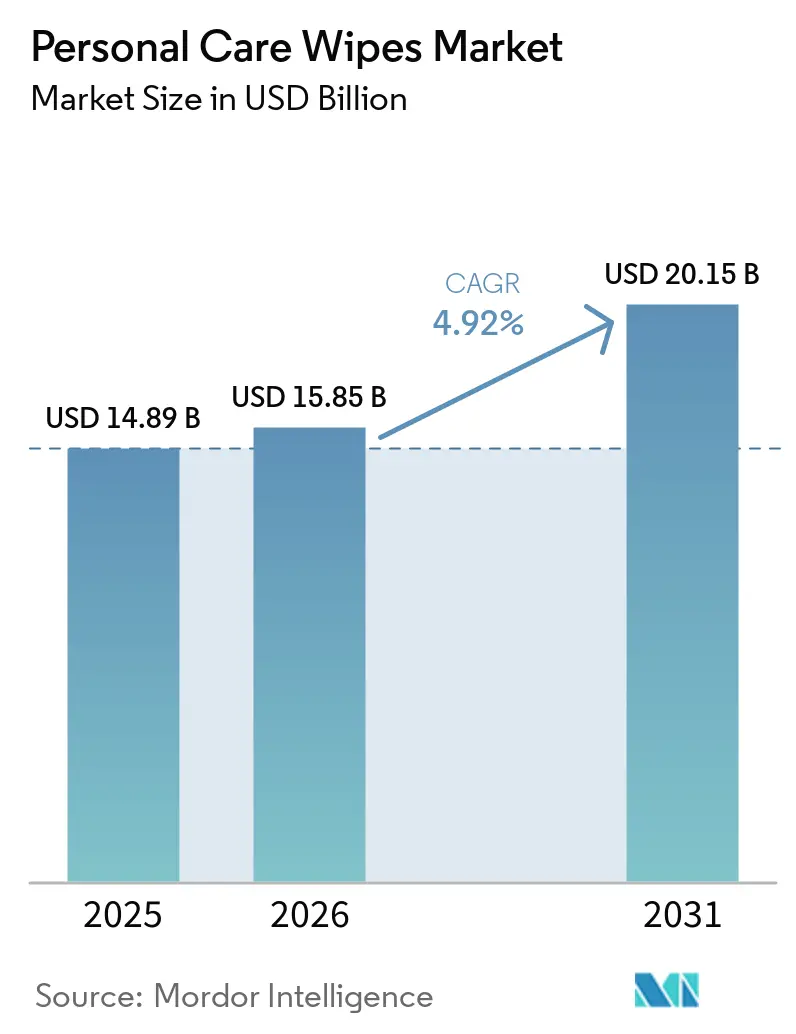
The personal care wipes market size is projected to expand from USD 14.89 billion in 2025 and USD 15.85 billion in 2026 to USD 20.15 billion by 2031, registering a CAGR of 4.92% between 2026 and 2031. Sustained consumer preference for quick, single-use hygiene formats, new regulatory scrutiny over ingredient safety, and accelerating substrate innovation together reinforce the structural momentum behind the personal care wipes market. The U.S. Modernization of Cosmetics Regulation Act now requires facility registration and adverse-event reporting, lifting compliance costs yet raising consumer trust in product safety. Europe’s ban on plastic-containing wet wipes has shifted procurement toward cellulose, lyocell, and PLA, prompting global supply-chain redesigns. Strengthening flushability labeling standards in North America and a pronounced premiumization trend in the Asia-Pacific further differentiate growth pockets inside the personal care wipes market. Finally, direct-to-consumer subscription models help brands bypass shelf-space constraints and gather high-frequency preference data, reinforcing pricing power despite raw-material volatility.
Key Report Takeaways
- By product type, baby wipes led with 53.48% of the personal care wipes market share in 2025, while cosmetic wipes are forecast to advance at a 6.23% CAGR through 2031.
- By ingredient, natural and organic variants captured 34.51% of 2025 volume and are progressing at a 6.68% CAGR to 2031.
- By distribution channel, online retail accounted for the fastest growth, expanding at a 7.05% CAGR between 2026 and 2031 and narrowing the gap with supermarkets that dominated in value terms.
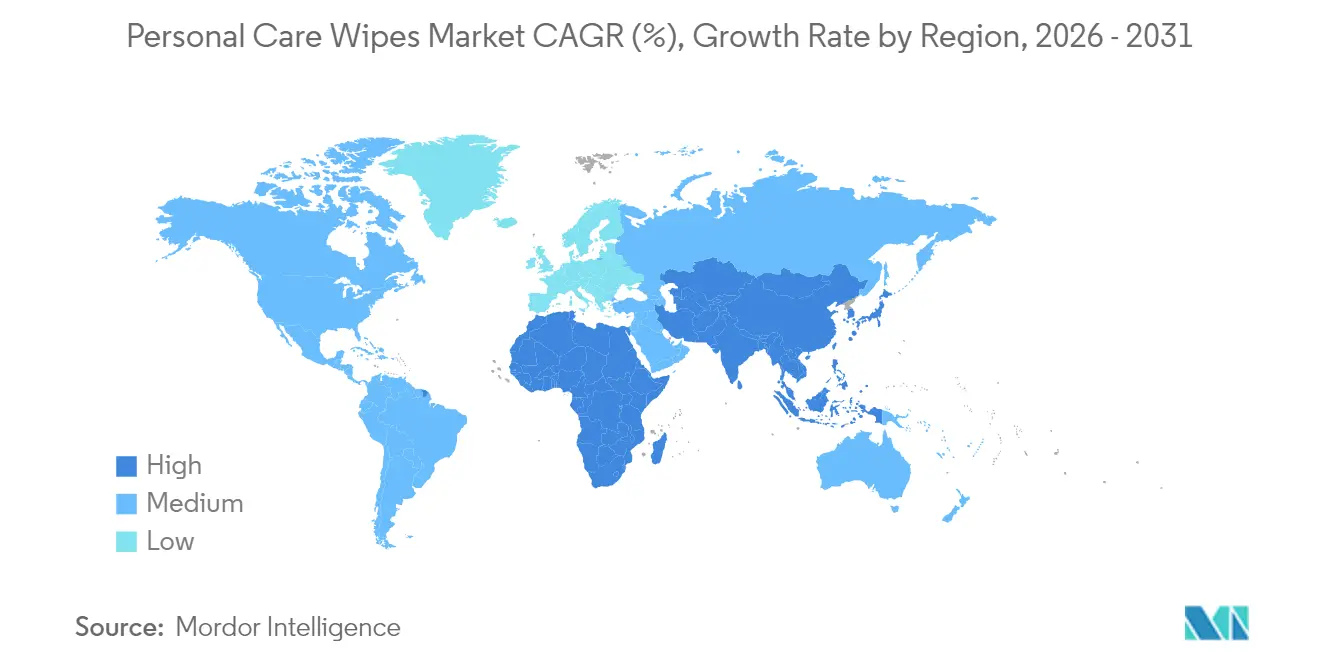
- By geography, North America generated 40.28% revenue in 2025; Asia-Pacific represents the quickest expansion, rising at 6.88% annually through 2031.
Note: Market size and forecast figures in this report are generated using Mordor Intelligence’s proprietary estimation framework, updated with the latest available data and insights as of 2026.
Market Trends and Insights
Drivers Impact Analysis of Personal Care Wipes Market*
| Drivers | (~) % Impact on CAGR Forecast | Geographic Relevance | Impact Timeline |
|---|---|---|---|
| Heightened Health And Hygiene Awareness | +1.2% | Global, with peaks in North America and Asia-Pacific urban centers | Medium term (2-4 years) |
| Rising Demand For Natural, Organic, And Clean Hygiene Products | +1.0% | North America and Europe core, expanding to urban Asia-Pacific | Long term (≥ 4 years) |
| Growing Popularity Of Sustainable And Biodegradable Wipes | +0.8% | Europe leadership, North America adoption, Asia-Pacific emerging | Long term (≥ 4 years) |
| Product Innovation In Functionality And Fragrance | +0.7% | Global, with R&D concentrated in Japan, South Korea, and United States | Medium term (2-4 years) |
| Urbanization Driving Demand For Quick Solutions | +0.9% | Asia-Pacific core, spill-over to Middle East and Africa | Long term (≥ 4 years) |
| Growth In E-Commerce Accessibility | +0.6% | Global, accelerated in North America, Europe, and China | Short term (≤ 2 years) |
| Source: Mordor Intelligence | |||
Heightened Health and Hygiene Awareness
Post-pandemic hygiene protocols have become embedded in daily routines, sustaining demand for single-use wipes even as acute infection fears recede. The U.S. Centers for Disease Control and Prevention continues to recommend surface disinfection in high-traffic environments, which has normalized the use of antimicrobial wipes in households and commercial settings. This behavioral stickiness is particularly pronounced among parents of young children, where baby wipes serve dual purposes, diaper changes and rapid surface cleaning, reducing the price elasticity of demand. Regulatory agencies in Japan and South Korea have tightened microbiological safety standards for wipes intended for infant use, requiring manufacturers to validate preservative efficacy against Pseudomonas aeruginosa and Staphylococcus aureus, which raises formulation complexity but also creates barriers to entry for smaller brands
Rising Demand for Natural, Organic, and Clean Hygiene Products
Consumers are scrutinizing ingredient lists with the rigor once reserved for food labels, driving brands to reformulate around plant-derived surfactants and eliminate parabens, phthalates, and synthetic fragrances. The Honest Company's January 2025 launch of its Pure Aqua wipes line, featuring 99% water and organic cotton substrate, exemplifies this shift and has captured shelf space in premium retail channels despite a 20-30% price premium over conventional alternatives. COSMOS certification, administered by the European Natural and Organic Cosmetics Association, has become a de facto requirement for brands targeting millennial and Gen Z consumers in Western Europe, where 42% of personal-care purchasers report actively seeking certified-organic claims. This trend is now diffusing into Asia-Pacific, where South Korea's Ministry of Food and Drug Safety introduced a "green cosmetics" labeling framework in 2024, creating regulatory tailwinds for natural formulations[1]Source: Ministry of Food and Drug Safety Korea, “Green Cosmetics Policy,” mfds.go.kr.
Growing Popularity of Sustainable and Biodegradable Wipes
The United Kingdom's October 2024 prohibition on plastic-containing wet wipes has catalyzed substrate innovation across the industry, with manufacturers pivoting to lyocell, viscose, and polylactic acid (PLA) blends that meet ISO 14855 aerobic biodegradation standards. Kimberly-Clark de México's 2024 introduction of Honeykeeper biodegradable baby wipes, which achieve 85% biodegradation within 45 days under composting conditions certified by TÜV SÜD, demonstrates that performance parity with conventional non-wovens is now commercially viable. The European Union's Single-Use Plastics Directive, which mandates Extended Producer Responsibility for wipes manufacturers, is pushing brands to invest in closed-loop collection systems and chemical recycling partnerships, with early pilots in France and Germany showing 15-20% recovery rates for used wipes. These infrastructure investments are capital-intensive, but position compliant brands favorably as municipal waste-management authorities tighten landfill acceptance criteria.
Product Innovation in Functionality and Fragrance
Micellar-water technology, initially designed for facial cleansing, has now expanded into cosmetic wipes. This advancement enables quick and easy makeup removal in a single step, appealing to busy consumers. In December 2024, Yuhan Kimberly introduced "Kleenex My Bidet Pure," a flushable toilet wipe featuring a pH-balanced formulation and a plastic-free substrate. Released in South Korea, it is distributed through convenience stores, where limited shelf space favors products with multiple benefits. Fragrance innovation is evolving, with a shift toward microencapsulation techniques that release scents gradually during use. This enhances the perceived effectiveness of products and supports premium pricing. In 2024, Procter & Gamble filed patents for wipes containing probiotic strains aimed at promoting skin-microbiome health. Although this concept remains scientifically debated, it resonates with health-conscious consumers. Furthermore, accumulating clinical evidence could create new regulatory opportunities, as noted in the USPTO Patent Database[2]Source: U.S. Patent and Trademark Office, “Patent Database,” uspto.gov.
Restraints Impact Analysis of Personal Care Wipes Market*
| Restraint | (~) % Impact on CAGR Forecast | Geographic Relevance | Impact Timeline |
|---|---|---|---|
| Environmental Concerns And Waste Management Issues | -0.9% | Global, with regulatory pressure concentrated in Europe and North America | Long term (≥ 4 years) |
| Regulatory And Safety Compliance Challenges | -0.5% | North America and Europe core, expanding to Asia-Pacific | Medium term (2-4 years) |
| Stricter Regulations On Ingredients And Disposal Hindering Market Growth | -0.6% | Europe leadership, North America following, Asia-Pacific selective enforcement | Long term (≥ 4 years) |
| Fluctuating Prices Of Non-Woven Fabrics And Chemicals Impacting Margins | -0.7% | Global, with acute exposure in Asia-Pacific manufacturing hubs | Short term (≤ 2 years) |
| Source: Mordor Intelligence | |||
Environmental Concerns and Waste Management Issues
Municipal wastewater systems in North America and Europe report that non-dispersible wipes are responsible for 20-30% of sewer blockages. These blockages result in annual remediation costs exceeding USD 1 billion and have prompted utilities to file lawsuits against manufacturers to recover these expenses, as noted by the Water Environment Federation[3]Source: Water Environment Federation, “Flushable Wipes and Wastewater,” wef.org. In 2024, the International Water Services Flushability Group revised its flushability test protocols, requiring wipes to disintegrate within 30 minutes under turbulent flow conditions. Most existing products fail to meet this standard, restricting the use of the "flushable" label and hindering growth in the moist toilet wipes segment. Landfill operators in California and New York have introduced surcharges on waste streams with high levels of synthetic textiles, including wipes, leading retailers to reconsider shelf space for non-biodegradable options. Consumer advocacy groups have intensified concerns about microplastic shedding from polypropylene-based wipes. Laboratory studies have identified fiber fragments in 60% of sampled wastewater effluent. This finding has influenced draft legislation in the European Parliament, proposing that wipes be classified as "problematic plastics" subject to phase-out timelines.
Fluctuating Prices of Non-Woven Fabrics and Chemicals Impacting Margins
During 2024-2025, polypropylene resin, the key feedstock for spunbond non-wovens, experienced price volatility of 25-35%. These fluctuations were primarily driven by crude oil price changes and disruptions in petrochemical supply chains across the Middle East and Asia. Manufacturers with limited vertical integration are under pressure, facing margin compression as retail prices remain inflexible due to intense competition and the rising presence of private labels in supermarkets. Kimberly-Clark Corporation's 2024 annual report highlighted that raw material inflation reduced operating margins by 150 basis points in its personal-care segment. To address this, the company expedited its USD 3.4 billion joint venture with Suzano to secure a long-term pulp supply at fixed prices. Smaller brands, particularly those lacking hedging mechanisms or long-term supply agreements, are especially at risk. This has led to market exits or consolidations among several regional players in South America and Southeast Asia in 2025. Furthermore, chemical preservatives such as phenoxyethanol and benzalkonium chloride saw price increases of 15-20%, driven by stricter environmental regulations in China that reduced production capacity and shifted supply-demand dynamics.
*Our forecasts treat driver/restraint impacts as directional, not additive. The impact forecasts reflect baseline growth, mix effects, and variable interactions.
Personal Care Wipes Market Segment Analysis
By Product Type:
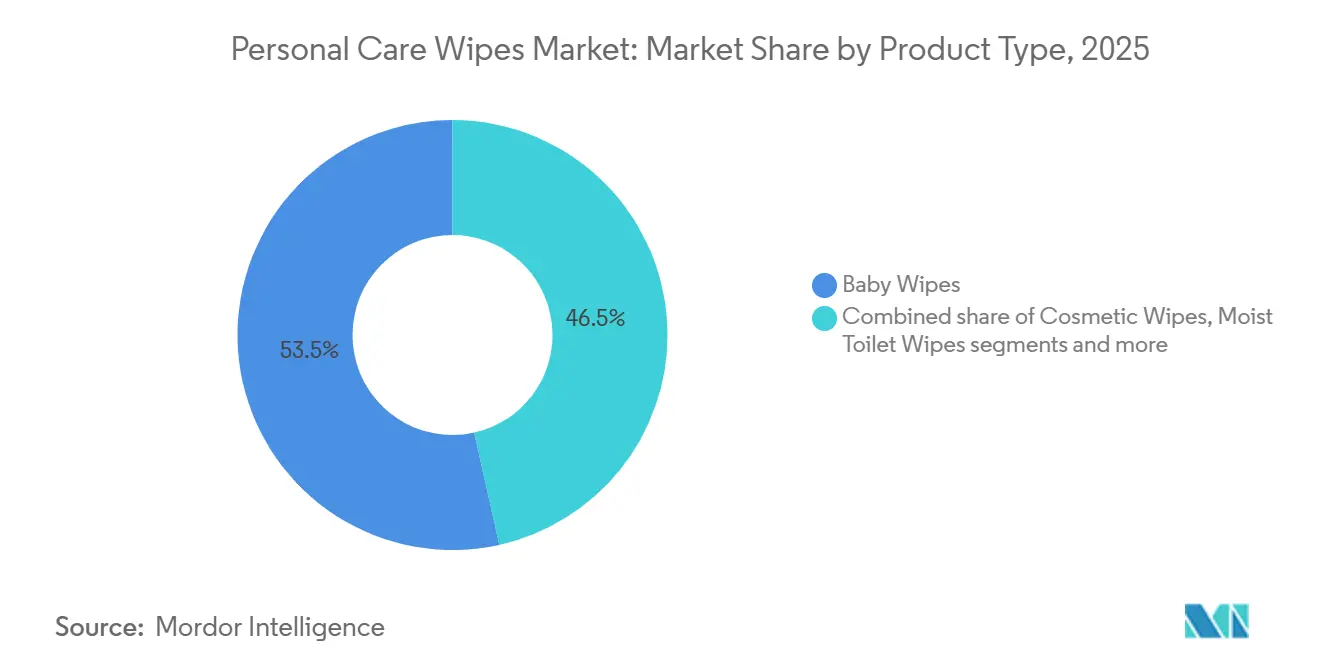
Baby Wipes Dominance Faces Cosmetic Wipes SurgeBaby wipes captured 53.48% of the personal care wipes market size in 2025, supported by established usage for diaper changes and emergent roles in quick household cleaning. Cosmetic wipes, however, are expanding at a 6.23% CAGR through 2031, leveraging micellar-water technologies that compress multi-step Korean-inspired routines into portable sachets. Moist toilet wipes face growth constraints because most products cannot meet the IWSFG 30-minute disintegration standard, limiting their flushable positioning.
General-purpose wipes deliver cross-category utility yet suffer thinner margins, while intimate wipes remain small but are accelerating where pharmacy endorsement destigmatizes purchase. Competitive intensity is rising: Harper Hygienics’ Kindii Water Care launch and Procter & Gamble’s Pampers Pure Aqua extension both rely on plastic-free substrates and 99%-water formulas to resonate with ingredient-minimalist parents. Industry-wide, probiotic, fermented, and active-ingredient wipes illustrate how R&D is redefining value perception in the personal care wipes market. Regulatory scrutiny over preservatives injects further complexity; Europe’s SCCS opinions on formaldehyde-releasing agents are already sending formulators back to the lab.


By Ingredient:
Natural and Organic Variants Outpace Conventional FormulationsNatural and organic wipes, featuring COSMOS or USDA Organic certifications, are experiencing a strong annual growth rate of 6.68%. This growth rate exceeds that of conventional wipes by a significant 176 basis points. However, conventional wipes are projected to maintain a dominant 65.49% share of the personal care wipes market in 2025, primarily due to their cost-effectiveness and better preservation under hot and humid logistical conditions. The COSMOS certification has become a key factor for shelf presence in Western Europe, with 42% of shoppers actively seeking products with certified claims.
Brands are adopting advanced preservation techniques, such as hurdle technology, which incorporates low water activity, chelators, and botanical peptides. These approaches help extend the shelf life of natural product lines while avoiding the use of parabens and phenoxyethanol. Unilever's 2024 patent filings emphasize plant-derived antimicrobial peptides, showcasing their ability to remain effective over 24 months of storage. Nonetheless, the market faces challenges as organic cotton and sustainably sourced cellulose incur feedstock premiums of 40% to 60%. These higher costs create difficulties for brands that cannot effectively pass them along the personal care wipes market value chain.
By Distribution Channel:
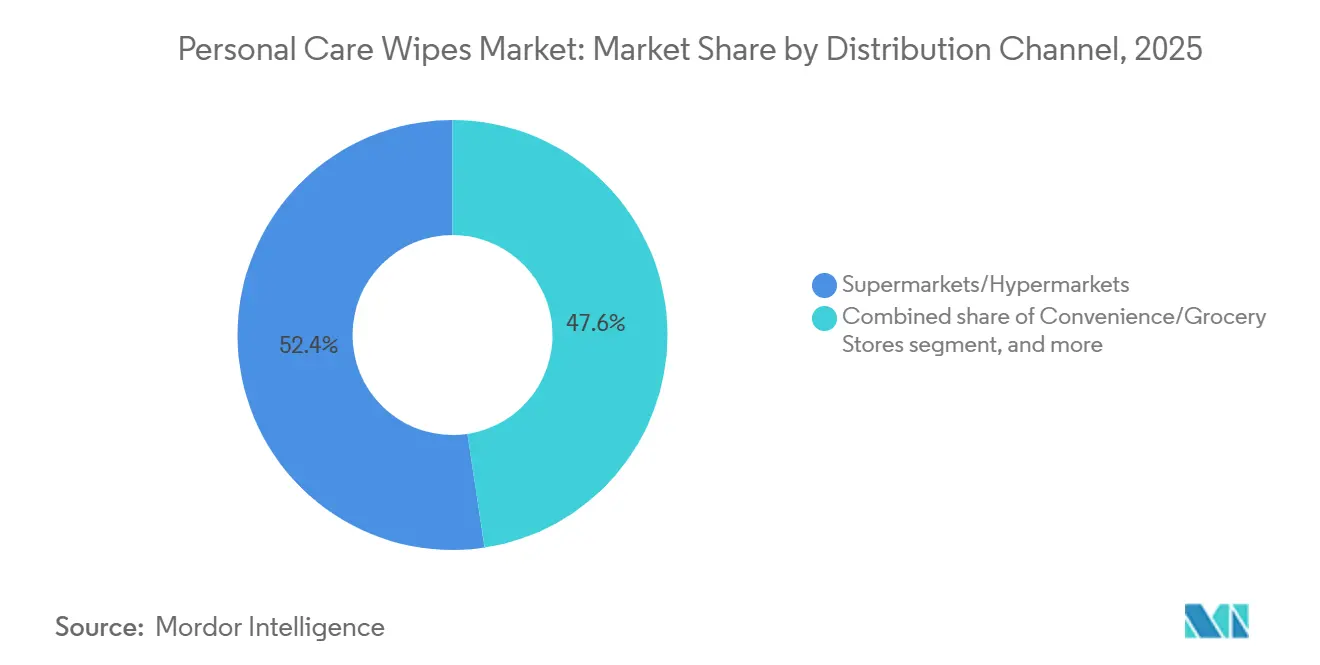
Online Retail Disrupts Traditional Shelf DynamicsOnline retail is expected to grow at an annual rate of 7.05% through 2031, surpassing the growth of the overall personal care wipes market by nearly 200 basis points. The rise of subscriptions and direct-to-consumer platforms not only ensures a steady stream of recurring revenue but also facilitates the creation of extensive data repositories. These data insights enable companies to make swift and precise adjustments to product formulations, catering to evolving consumer preferences. Supermarkets, which accounted for 52.38% of the market's value in 2025, are now facing increasing competition from private-label brands. To address this challenge, major supermarket chains are introducing biodegradable and organic store-brand products, often priced at significant double-digit discounts to attract cost-conscious consumers.
WaterWipes has strategically leveraged Amazon’s auto-replenishment programs to secure long-term customer loyalty and maximize customer lifetime value. This innovative approach was a key factor in 3i Group’s decision to invest EUR 145 million in the company during 2024. Meanwhile, traditional brick-and-mortar retailers are adopting new strategies, such as implementing smart-shelf technology and creating curated premium product displays, to enhance the in-store shopping experience. Despite these efforts, e-commerce platforms continue to dominate as the preferred channel for launching new products. This preference is driven by the lower slotting fees associated with warehousing and the ability to gather rapid consumer feedback, which is critical for success in the highly competitive personal care wipes sector.
Geography Analysis
North America Personal Care Wipes Market
In 2025, North America contributed 40.28% of the revenue, driven by high per-capita usage and robust regulatory frameworks. The EPA's "Do Not Flush" icon, mandated since 2024, has reduced consumer confusion and saved municipalities USD 1 billion annually by preventing blockages. In Canada, the increasing birth rate among immigrant families supports the demand for baby wipes. Meanwhile, in Mexico, the expanding middle class now views wipes as everyday essentials rather than occasional luxuries. Companies are optimizing their portfolios; for example, Procter & Gamble divested in Argentina in 2024, reallocating resources to U.S. and Canadian markets, where premiumization trends help sustain gross margins.
APAC and Africa Personal Care Wipes Market
Asia-Pacific is the fastest-growing region, with an annual growth rate of 6.88% projected through 2031. Urbanization rates exceeding 3% annually in India and Indonesia are driving demand for convenient product formats. Unicharm opened its Ahmedabad plant in February 2025, enhancing domestic production capacity. Concurrently, its Sofy East Africa initiative is transferring expertise from Asia to emerging African markets. In China, the premium segment is expanding as consumers shift to natural or imported brands, while domestic leader Hengan leverages vertical integration to maintain competitive pricing. In Japan, the aging population is fueling demand for adult-incontinence wipes, where gentle formulations and odour-control features are particularly valued.
EMEA and South America Personal Care Wipes Market
Europe exerts significant regulatory influence on the personal care wipes market. The U.K.'s ban on plastic-containing wet wipes is driving a shift toward compostable alternatives. The EU's Extended Producer Responsibility increases production costs by 2-4%, but it also enhances brand reputation among environmentally-conscious consumers. In South America, growth is concentrated in Brazil and Argentina despite currency fluctuations. In contrast, per-capita wipes consumption in the Middle East and Africa remains below 10% of North American levels. However, ongoing investments in logistics and retail infrastructure in the United Arab Emirates and Saudi Arabia are paving the way for a gradual increase in the adoption of premium hygiene products by 2031.

Regulatory Landscape
Regulation of personal care wipes is tightening across two fronts: cosmetic safety and traceability, and the environmental impact of plastics and disposal. In the United States, the FDA treats many personal care wipes (for example, cleansing and makeup-removal wipes) as cosmetics, bringing them under the Modernization of Cosmetics Regulation Act (MoCRA) requirements such as facility registration and adverse-event recordkeeping. Wipes positioned for germ control on inanimate surfaces fall under EPA oversight. Labeling policy is also shifting, as the U.S. Senate passed S.1092 (WIPPES Act) on March 22, 2026, advancing a federal pathway for standardized "Do Not Flush" labeling for certain disposable wipes, though enactment is still in process.
In Europe, policy is becoming more explicit on both labeling and material composition. European Commission Regulation (EU) 2020/2151 mandates specific labeling for certain wet wipes, including "PLASTIC IN PRODUCT" where applicable, and the EU Single-Use Plastics framework extends producer responsibility obligations for wipes in many markets, increasing compliance and reporting requirements across the supply chain. Plastic restrictions are also becoming jurisdiction-specific within the UK. After the UK-wide direction referenced in the report context, Wales has published guidance for a ban on the supply of wet wipes containing plastic starting December 18, 2026, which is expected to accelerate the shift toward cellulosic and other plastic-free substrates for products sold in that market.
Competitive Landscape
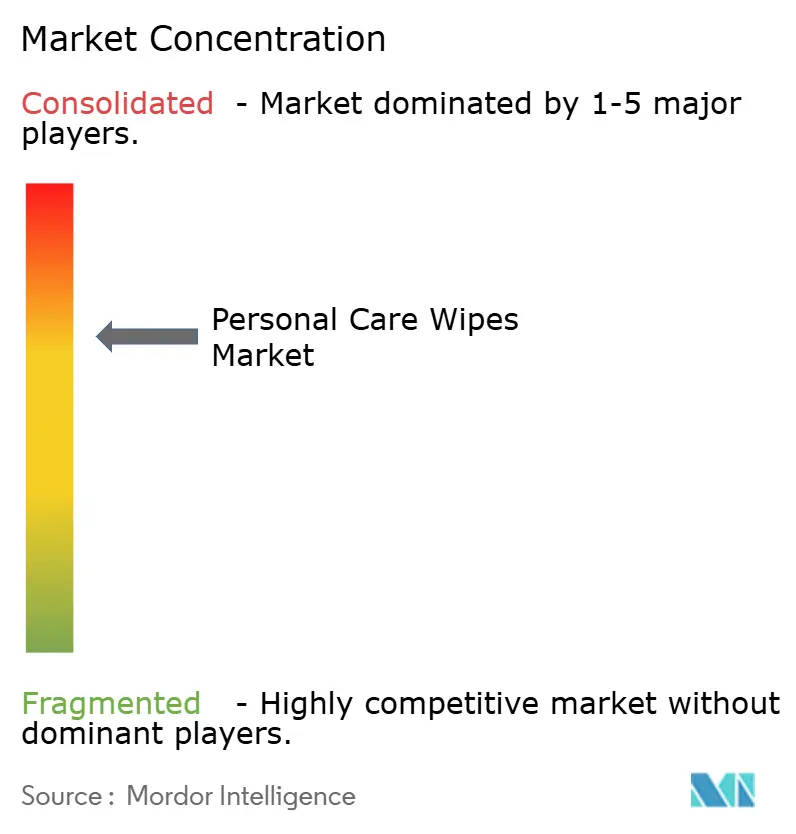
In 2025, Procter & Gamble, Kimberly-Clark, and Kenvue collectively accounted for approximately 45% of global sales in the personal care wipes market, signifying moderate consolidation. Their market dominance is attributed to their economies of scale in non-woven material procurement and well-established relationships with major retailers. In January 2026, Kimberly-Clark and Kenvue obtained regulatory approval for a planned merger, which is anticipated to be finalized later this year. This merger aims to integrate their baby-care and adult-incontinence product portfolios, thereby strengthening their negotiating power for raw materials and enhancing their competitive positioning.
Smaller, niche players such as WaterWipes and The Honest Company capitalize on their use of ultra-pure ingredients and direct-to-consumer strategies, enabling them to charge premium prices that are 30-40% higher than standard offerings. WaterWipes, supported by a capital infusion from 3i Group, is expanding its production capacity and entering new regional markets to solidify its leadership in the ultra-clean product segment. The competitive landscape is further shaped by patent activity, with Procter & Gamble focusing on microbiome-supporting wipes to enhance functionality branding, while Kimberly-Clark's patents on fiber dispersion technology could potentially unlock opportunities in the controversial flushable-wipe segment. Sustainability initiatives are also driving competition, as Essity has committed to using 100% renewable or recycled materials by 2030, putting pressure on other market players to accelerate their efforts in reducing carbon footprints and meeting environmental goals.
Digital commerce capabilities are increasingly becoming a key differentiator between market leaders and followers. Brands experimenting with smart-shelf sensors in convenience stores across Asia have reported a 10-15% reduction in out-of-stock situations, improving on-shelf availability without significantly increasing working capital requirements. Furthermore, subscription-based commerce models not only help reduce customer churn but also generate extensive data insights. These insights enable brands to enhance forecast accuracy and implement agile micro-segmentation strategies, thereby driving growth and efficiency within the personal care wipes market.
Personal Care Wipes Industry Leaders
The Procter & Gamble Company
Kimberly-Clark Corporation
Kenvue Inc.
Essity Hygiene and Health AB
Unilever PLC
- *Disclaimer: Major Players sorted in no particular order
Personal Care Wipes Market Companies Covered in this Report
- The Procter & Gamble Company
- Kimberly-Clark Corporation
- Kenvue Inc.
- Essity Hygiene and Health AB
- Unilever PLC
- Ecolab Inc.
- Edgewell Personal Care Company
- Unicharm Corporation
- Hengan International Group Company Limited
- Robanda International Inc.
- Albaad Massuot Yitzhak Ltd.
- WaterWipes Unlimited Company
- The Honest Company, Inc.
- 3M Company
- GAMA Healthcare Ltd
- Ontex Group NV
- Pigeon Corporation
- Reckitt Benckiser Group plc
- Bodyography Inc.
- A. M. HYGIENE

Market Opportunities and Future Outlook
Substrate substitution and more defensible performance claims are creating room in premium, plastic-free, and dispersible product formats, particularly where regulation is pushing products away from petrochemical-derived fibers and tightening flushability or plastics labeling. The market context already shows procurement shifting toward cellulose, lyocell, and PLA in response to Europe-led restrictions, while the IWSFG 30-minute disintegration benchmark limits how many moist-toilet wipes can use "flushable" positioning. Together, these constraints support differentiated SKUs that can maintain premium pricing while aligning with end-of-life, labeling, and ingredient-safety requirements that brands face under EU labeling rules, EPR obligations, and U.S. MoCRA compliance.
Capacity and equipment signals in 2026 also point to an active build-out aimed at these requirements. In May 2026, ANDRITZ reported orders for Wetlace hybrid technology for Kruger Nonwovens in Canada (targeting sustainable wipes) and a Wetlace line for Dalian Ruiguang in China focused on premium flushable wipes. These awards indicate large-scale producers are committing to pulp-based and hybrid nonwoven approaches to balance softness and strength with disintegration attributes. On the converting side, Shandong Youyue opened a new 40,000 sq m facility in April 2026 with 20 wet-wipes production lines, and Premier Care Industries advanced a new Arlington, Texas manufacturing campus into equipment testing by July 2026, supporting channel expansion and private-label supply as retailers increase shelf space for biodegradable and plastic-free ranges.
Recent Industry Developments in Personal Care Wipes Market
- July 2026: Arbex, the tissue and hygiene joint venture between Kimberly-Clark and Suzano, commenced operations as an independent business with 22 manufacturing sites across 14 countries. The separation of large-scale manufacturing assets into a dedicated platform increases fiber and nonwoven supply optionality for hygiene categories, supporting faster substrate transitions tied to plastic-reduction and EPR requirements.
- June 2025: Kimberly-Clark announced a capital investment exceeding USD 130 million to expand its Mobile, Alabama manufacturing facility with a new production line for hygiene products. The added capacity and modernization are intended to support improved service levels for North American retail customers while enabling quicker scale-up of reformulated wipes and adjacent hygiene formats.
- December 2024: Yuhan Kimberly launched Kleenex My Bidet Pure in South Korea, a flushable toilet wipe positioned with a pH-balanced formulation and a plastic-free substrate. The launch shows how brands are using plastic-free substrates and tighter flushability positioning to defend growth in moist toilet wipes as labeling and wastewater-system scrutiny intensify.


Personal Care Wipes Market Report Scope and Research Methodology
Market Definition and Coverage
For this study, the market covers disposable personal care wipes used for everyday hygiene and cleansing across regular consumer retail channels. The sizing is done in value terms, and it includes common wipe formats sold for baby care, facial use, hand and body use, and intimate hygiene.
Scope exclusions: We exclude durable cloths, reusable cleansing pads, paper tissues, household and industrial surface wipes, and medical disinfecting wipes sold mainly for clinical infection control.
Segments Covered in This Report
- By Product Type
- Baby Wipes
- Cosmetic Wipes
- Moist Toilet Wipes
- General Purpose Wipes
- Intimate Wipes
- By Ingredient
- Conventional
- Natural/Organic
- By Distribution Channel
- Supermarkets/Hypermarkets
- Convenience/Grocery Stores
- Online Retail Stores
- Other Distribution Channels
- By Geography
- North America
- United States
- Canada
- Mexico
- Rest of North America
- Europe
- Germany
- France
- United Kingdom
- Spain
- Netherlands
- Italy
- Sweden
- Norway
- Rest of Europe
- Asia-Pacific
- China
- India
- Japan
- Australia
- South Korea
- Vietnam
- Indonesia
- Rest of Asia-Pacific
- South America
- Brazil
- Argentina
- Chile
- Peru
- Colombia
- Rest of South America
- Middle East and Africa
- United Arab Emirates
- Saudi Arabia
- South Africa
- Nigeria
- Rest of Middle East and Africa
- North America
Data Sources, Market Sizing, and Validation
Desk Research
Desk research helps set the model structure and keep assumptions aligned with observable market behavior before we speak to the market. We relied on public and official sources, including US Census Bureau retail indicators, UN Comtrade trade statistics for nonwovens and related wipe substrates, World Bank macro series, and government environment agency guidance that affects flushability and labeling expectations. We also reviewed association and standards body publications that cover nonwovens and hygiene products, plus peer-reviewed articles on substrate performance and skin safety considerations.
To translate the industry context into measurable inputs, we used company annual reports, investor presentations, and product spec sheets to understand pack sizes, typical price bands, and channel mix signals. In a few places, paid subscriptions for company financials, investor materials, news, patent lookups, and shipment-level import/export data were used to validate directional shifts in capacity, innovation, and cross-border flows. These desk sources are not exhaustive, and many other public references were checked for data collection, validation, and clarification.
Primary Interviews and Surveys
Primary work was used to stress test the desk assumptions and to close gaps around pricing, channel margins, and how demand shifts between baby, facial, and personal hygiene wipe use cases. We spoke with a mix of manufacturers, converters, distributors, raw material participants, and retail and e-commerce stakeholders across APAC, EMEA, and the Americas, so the final view reflects both the supply side and route-to-market realities.
Distribution of primary research fieldwork respondents
| Company type | Respondent position | Region |
|---|---|---|
| Top tier: 26% | CXOs: 12% | APAC: 46% |
| Mid tier: 57% | Functional/Unit leaders: 39% | EMEA: 35% |
| Smaller Players: 17% | Managers: 49% | Americas: 19% |
Market-Sizing & Forecasting
The market model starts with a top-down build where population and hygiene usage patterns are translated into an addressable demand pool, then reconciled with channel-level sales signals and price ladders by region. Once the model is built, selected bottom-up checks are used to corroborate totals, such as sampled average selling prices by pack format multiplied by estimated volumes in key channels, plus limited supplier and distributor roll-ups where coverage is strong.
Key inputs that typically move the personal care wipes value include nonwoven and cellulose substrate costs, pack size and count-per-pack trends, private label versus branded mix, e-commerce share, and regulatory pressure around plastic content and flushability claims. These variables are used because unit demand and average selling prices do not always move together, especially during cost inflation or when consumers trade down. For forecasting, scenario analysis is used alongside exponential smoothing on core demand indicators, and then the outputs are adjusted based on expert feedback on capacity changes, pricing reset cycles, and likely substitution toward alternative hygiene formats. Where bottom-up signals are missing for smaller countries, the gaps are handled through regional proxies that use similar income bands and channel maturity, then cross-checked against trade and production directionality.
Data Validation & Update Cycle
Outputs are checked through triangulation across independent signals, and large variances are investigated before numbers are finalized. The team runs consistency checks across regions, reviews year-over-year movements against known events (cost shocks, regulation changes, and channel disruptions), and re-contacts sources when a key assumption shifts beyond expected ranges. A second analyst review is completed to verify that calculations, currency conversion timing, and scope rules are applied consistently.
The report is refreshed on an annual cycle, and interim updates are made when material events can change demand or pricing assumptions. Before delivery, an analyst completes a fresh pass to confirm that the latest public data and primary feedback have been reflected in the model, so clients receive an updated view.
Mordor Intelligence's Personal Care Wipes Market Size Measured Against Other Published Estimates
It is normal to see different market size values for personal care wipes, even when the topic name looks the same. The main reasons are usually scope choices, which channels and wipe types are counted, the year used for currency conversion, and how pricing is projected during inflationary periods.
By checking pack-level average selling price resets, channel mix shifts, and substrate cost pass-through, Mordor Intelligence keeps the personal care wipes total tied to consumer hygiene wipe demand (and not adjacent household or clinical categories), which is where many estimate spreads start. Differences can also come from how aggressive the forecast base case is, whether private label pricing is treated as a discount or as a separate ladder, and how often assumptions are refreshed after regulations on flushability and plastic labeling change.
Benchmark comparison
| Source | Market Size | Gaps in Research Methodology |
|---|---|---|
| Mordor Intelligence | USD 14.89 B (2025) | |
| Industry Research Group A | USD 13.94 B (2025) | Uses a broader segmentation template that can apply different inclusion rules for flushable and general-purpose wipes, and it can also apply a different channel weighting and price ladder for private label, which pulls the 2025 value down. |
| Industry Publisher B | USD 13.39 B (2024) | Anchors the series on a prior base year and a higher long-term growth rate, and it provides fewer visible checks on currency timing and near-term price resets, which makes the starting point and trajectory less comparable year to year. |
Looking at the three values together, the spread is mainly explained by what gets counted as personal care wipes, how pricing is normalized across channels, and whether the base year is aligned. Our approach stays repeatable because the total is built from clear demand and pricing drivers, then validated against independent signals before the forecast is extended.


Key Questions Answered in the Report
What is the forecast revenue for the personal care wipes market by 2031?
The personal care wipes market is projected to reach USD 20.15 billion by 2031, growing at a 4.92% CAGR during 2026-2031.
Which segment holds the largest personal care wipes market share today?
Baby wipes commanded 53.48% value share in 2025, maintaining the dominant position.
Which region is growing fastest in personal care wipes consumption?
Asia-Pacific is expanding at a 6.88% CAGR through 2031, driven by urbanization and rising middle-class incomes.
How quickly are online channels expanding for wipes sales?
Online retail is advancing at a 7.05% CAGR between 2026-2031, outpacing all other channels.
Page last updated on:


 Your data is secure and never sold or shared.


