
Peripheral Vascular Devices And Accessories Market Size and Share
Market Overview
| Study Period | 2020 - 2031 |
|---|---|
| Market Size (2026) | USD 19.38 Billion |
| Market Size (2031) | USD 25.07 Billion |
| Growth Rate (2026 - 2031) | 5.28 % |
| Fastest Growing Market | Asia-Pacific |
| Largest Market | North America |
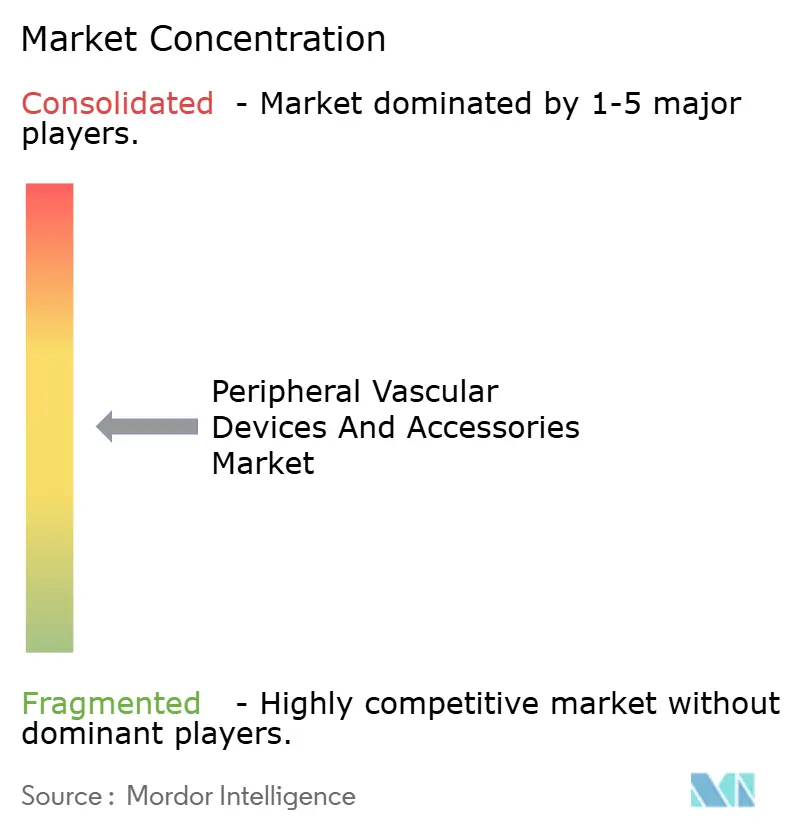
| Market Concentration | Medium |
Major Players *Disclaimer: Major Players sorted in no particular order Image © Mordor Intelligence. Reuse requires attribution under CC BY 4.0. | |
Peripheral Vascular Devices And Accessories Market Analysis by Mordor Intelligence
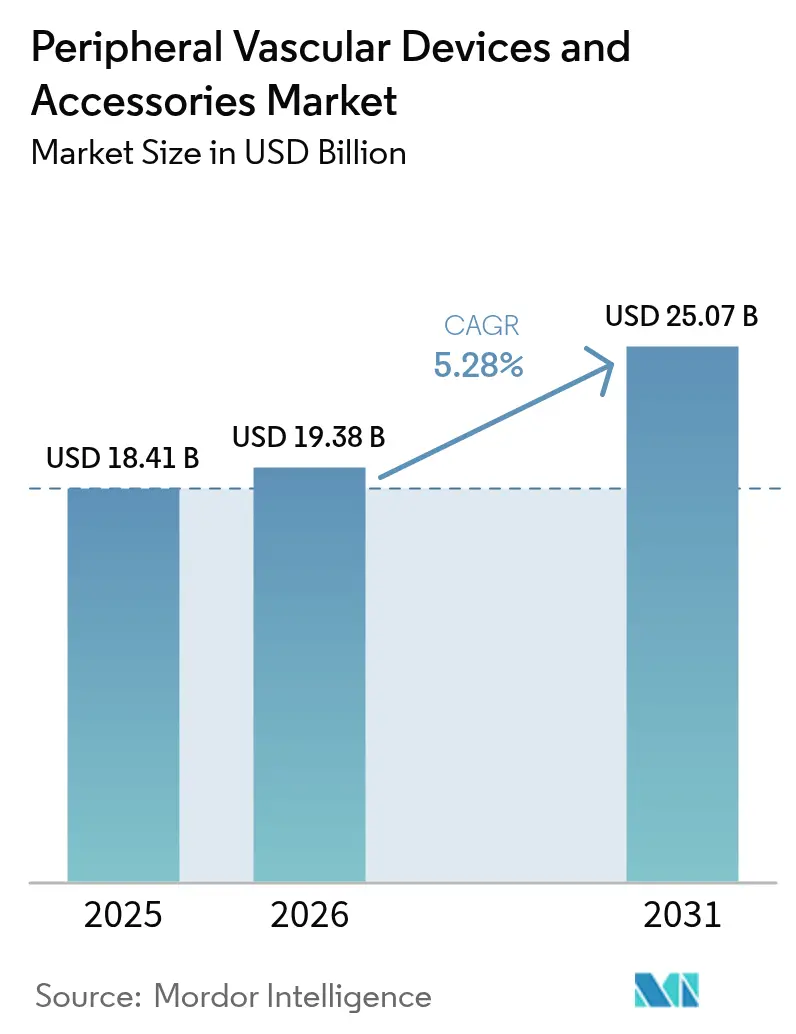
The peripheral vascular devices and accessories market size is expected to grow from USD 18.41 billion in 2025 to USD 19.38 billion in 2026 and is forecast to reach USD 25.07 billion by 2031 at 5.28% CAGR over 2026-2031. The growth path is shifting from pure procedure volume to value-based innovation, with AI-guided imaging, drug-eluting balloons and bio-absorbable scaffolds winning premium reimbursement. Demand escalates as ageing populations swell the pool of peripheral artery disease (PAD) patients who favor minimally invasive endovascular solutions that shorten hospital stays. At the same time, hospital groups and ambulatory surgical centers (ASCs) accelerate the migration of complex vascular procedures to outpatient settings to curb costs and improve patient convenience. Heightened regulatory scrutiny slows small innovators yet advantages scale players that can fund robust evidence generation and navigate the U.S.-FDA and EU-MDR regimes. Intensifying M&A—more than USD 12 billion in disclosed deals during 2024-2025—signals a pivot toward end-to-end product portfolios spanning devices, accessories and connected digital workflows.
Key Report Takeaways
- By product type, devices led with 73.85% of peripheral vascular devices and accessories market share in 2025, while accessories are projected to expand at a 5.94% CAGR through 2031.
- By application, PAD accounted for 44.72% share of the peripheral vascular devices and accessories market size in 2025; varicose-vein treatment is advancing at a 6.55% CAGR to 2031.
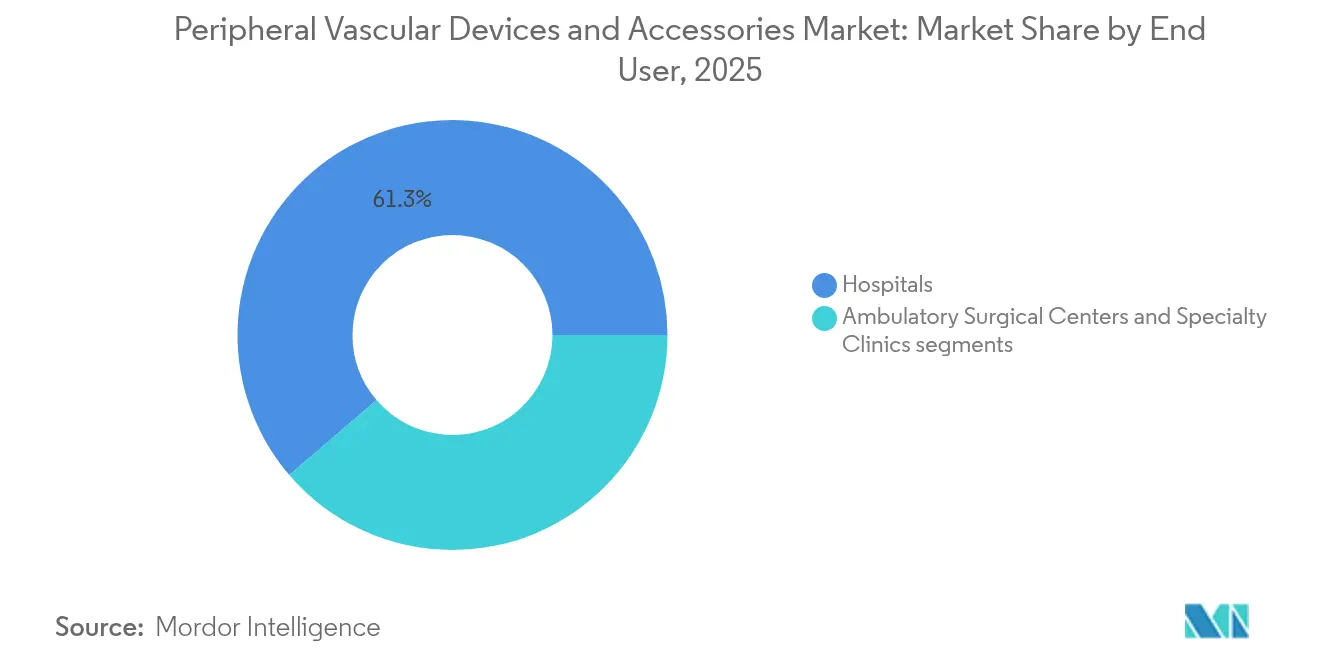
- By end user, hospitals held 61.28% revenue share in 2025, whereas ASCs record the fastest growth at 6.73% CAGR during 2026-2031.
- By geography, North America captured 39.92% share of the peripheral vascular devices and accessories market size in 2025; Asia-Pacific is expanding at a 7.05% CAGR to 2031.
Note: Market size and forecast figures in this report are generated using Mordor Intelligence’s proprietary estimation framework, updated with the latest available data and insights as of 2026.
Market Trends and Insights
Drivers Impact Analysis of Peripheral Vascular Devices And Accessories Market*
| Driver | ( ~ ) % Impact on CAGR Forecast | Geographic Relevance | Impact Timeline |
|---|---|---|---|
| Rising PAD prevalence in ageing population | +1.20% | Global, with concentration in North America & Europe | Long term (≥ 4 years) |
| Preference for minimally-invasive endovascular therapy | +1.00% | Global, led by North America & APAC adoption | Medium term (2-4 years) |
| Favourable reimbursement for drug-eluting stents & balloons | +0.80% | North America & EU core markets | Short term (≤ 2 years) |
| AI-guided intravascular imaging catheters boost procedural success | +0.60% | North America & APAC early adopters | Medium term (2-4 years) |
| 3-D printed, patient-specific vascular grafts enter pilot use | +0.40% | North America & EU research centers | Long term (≥ 4 years) |
| Government cath-lab build-outs in tier-2 Chinese cities from 2025 | +0.30% | APAC, specifically China tier-2 cities | Short term (≤ 2 years) |
| Source: Mordor Intelligence | |||
Rising PAD Prevalence in Ageing Population
More than 20 million U.S. adults live with PAD, and growth in the 65-plus population is increasing procedure volumes. Elderly patients frequently present multivessel, calcified lesions that require premium drug-coated balloons, bio-absorbable scaffolds and advanced atherectomy tools. Medicare reimbursement for outpatient vascular interventions broadens access, and hospital networks lean on same-day discharge pathways to manage capacity. Demand for patient-specific grafts is rising because anatomical variability increases with age, supporting early adoption of 3-D-printed or tissue-engineered options. Collectively, the demographic wave sustains double-digit growth in the high-value device sub-segments of the peripheral vascular devices and accessories market.
Preference for Minimally Invasive Endovascular Therapy
Clinical evidence indicates that endovascular approaches reduce complications and speed recovery compared with open surgery, with ASCs emerging as the fastest-growing site of service and spurring compact, integrated device designs, while drug-coated balloons and intravascular lithotripsy catheters deliver hospital-level outcomes without major capital outlays, and CMS now provides distinct outpatient reimbursement codes for these technologies. As payers lean on bundled payments, suppliers that bundle devices, navigation software and post-procedure monitoring apps gain negotiating leverage.
Favourable Reimbursement for Drug-Eluting Stents & Balloons
In July 2024 CMS created new device pass-through categories that top up payments when facilities use innovative peripheral devices, giving early-mover manufacturers clear economic headroom [1]. U.S. policy aligns with the EU’s hospital funding models that reward lower re-intervention rates, boosting uptake of long-acting drug-eluting stents (DES) and balloons (DEB). Established vendors that published five-year patency data lock in coding advantages, while late entrants face steeper data demands under EU-MDR. Reimbursement certainty also underpins premium pricing, enabling firms to channel margin into next-generation polymer coatings and sustained-release drug platforms for the peripheral vascular devices and accessories market.
AI-Guided Intravascular Imaging Catheters Boost Procedural Success
AI-enabled systems automatically extract vessel diameter, plaque composition and flow reserve data in real time, allowing operators to optimize balloon sizing and stent placement. FDA-cleared platforms such as AVVIGO demonstrated a 26% drop in target-vessel failure when imaging guidance informed therapy choices. The technology simultaneously reduces fluoroscopy time and contrast load, attractive benefits for frail renal patients. AI workflow analytics feed into remote mentoring dashboards, opening skill-transfer pathways in underserved regions. Vendors able to fuse imaging, AI and therapeutic delivery on a single console position themselves as system partners rather than product suppliers in the peripheral vascular devices and accessories market.
Restraints Impact Analysis of Peripheral Vascular Devices And Accessories Market*
| Restraint | ( ~ ) % Impact on CAGR Forecast | Geographic Relevance | Impact Timeline |
|---|---|---|---|
| Stringent US-FDA & EU MDR evidence requirements | -0.70% | North America & EU regulatory markets | Medium term (2-4 years) |
| High device recall incidence hurting clinician confidence | -0.50% | Global, concentrated in established markets | Short term (≤ 2 years) |
| Shortage of trained interventional radiologists in ASEAN & LATAM | -0.40% | ASEAN & LATAM emerging markets | Long term (≥ 4 years) |
| Hospital CAPEX freezes amid value-based procurement in Europe | -0.30% | Europe, with spillover to North America | Medium term (2-4 years) |
| Source: Mordor Intelligence | |||
Stringent US-FDA & EU-MDR Evidence Requirements
Since September 2024 European regulators demand deeper clinical datasets and ongoing post-market surveillance before renewing licenses, lengthening development timelines and raising compliance costs . The U.S. Quality System Regulation rewrite, effective February 2026, mirrors ISO 13485 and obliges manufacturers to document risk-management loops from design through end of life. Mid-size firms struggle to bankroll new randomized trials, which accelerates consolidation as they seek the shelter of multinationals’ regulatory infrastructures. While the bar deters fast followers, first movers with mature quality systems turn the compliance burden into a durable moat within the peripheral vascular devices and accessories market.
High Device Recall Incidence Hurting Clinician Confidence
Recent Class I recalls, such as the 7,820-unit pullback of the Pipeline Vantage Embolization Device, underscore safety concerns in complex delivery systems. Each public alert triggers extra training requirements, slows adoption curves and raises malpractice insurance costs for physicians. Hospitals respond with stricter value-analysis committee reviews, stretching sales cycles. Conversely, suppliers that can show single-digit complaint rates and real-time field-service dashboards win clinician loyalty. The recall climate also fuels demand for AI-driven procedural safeguards that flag atypical pressure gradients or embolic risk during use, supporting premium accessory sales in the peripheral vascular devices and accessories market.
*Our forecasts treat driver/restraint impacts as directional, not additive. The impact forecasts reflect baseline growth, mix effects, and variable interactions.
Peripheral Vascular Devices And Accessories Market Segment Analysis
By Product Type:
Device Dominance Faces Accessory InnovationThe device category accounted for 73.85% of peripheral vascular devices and accessories market share in 2025, anchored by percutaneous transluminal angioplasty (PTA) balloons and self-expanding stents with proven long-term patency. Drug-eluting formulations and next-generation nitinol architectures allow these workhorse products to defend unit prices even as hospitals push bulk-buy contracts. Atherectomy and thrombectomy systems deepen margins by addressing calcific, chronic total occlusion and venous thromboembolism cases that demand specialized toolkits. IVC filters and embolic-protection lines remain smaller niches, yet their critical safety roles secure formulary access.
Accessories, although accounting for only 26.15% of 2025 revenue, are projected to outpace the parent class at a 5.94% CAGR through 2031, thereby lifting the overall peripheral vascular devices and accessories market size trajectory. Hydrophilic-coated guidewires, torque-responsive catheters and steerable sheaths shorten procedure times in tortuous anatomy, directly translating into ASC throughput gains. Vascular closure devices such as MYNX CONTROL cut time-to-ambulation by more than 50%, aligning with value-based metrics. Compression systems and pressure-monitoring kits unlock post-discharge revenue streams and embed vendors deeper into episode-of-care economics.


By Application:
PAD Leadership Challenged by Varicose-Vein InnovationPAD commanded 44.72% of 2025 revenue after decades of clinical guideline support and payer familiarity. Five-year data from the IN.PACT Global study showed 69.4% freedom from target-lesion revascularization, supporting drug-coated balloon use in femoropopliteal disease. Hospitals continue to invest in IVL consoles that safely fracture calcium and expand lumen area without overheating or distal embolization.
Varicose-vein treatment is growing fastest at 6.55% CAGR to 2031, buoyed by office-based radiofrequency and endovenous laser ablation that require minimal capital outlay. Medicare utilization climbed from 0.3 to 2.6 procedures per 1,000 beneficiaries between 2017 and 2024, highlighting a robust shift toward cosmetic–functional hybrid care. Deep-vein thrombosis interventions also gain momentum as mechanical thrombectomy devices such as FlowTriever remove large clot burdens without thrombolytics. Hemodialysis-access maintenance remains a specialized segment; Wrapsody endoprosthesis showed 89.8% six-month primary patency, easing reintervention burdens for vascular surgeons.
By End User:
Hospital Dominance Erodes to ASC EfficiencyHospitals retained 61.28% revenue share in 2025 thanks to imaging suites, hybrid ORs and intensive-care backup needed for multilevel disease. However, fixed-cost pressure and value-based purchasing curb the pace of premium-device adoption. Instead, administrators negotiate multi-year, volume-based agreements that squeeze list prices across the peripheral vascular devices and accessories market.
ASCs capture the highest growth at 6.73% CAGR, catalyzed by physician ownership models and transparent bundled pricing that appeals to commercial insurers. Procedure migration spans from simple superficial venous work to complex iliac angioplasty as low-profile devices and imaging carts mature. Specialty vascular clinics add a third care tier, blending outpatient efficiency with focused expertise. Device makers that package balloons, closure systems and cloud-based reporting tools in single-invoice kits resonate strongly with ASC buyers.
Geography Analysis
North America Peripheral Vascular Devices and Accessories Market
North America delivered 39.92% of global revenue in 2025, powered by early reimbursement for breakthrough devices such as Abbott’s Esprit BTK dissolving scaffold and Humacyte’s SYMVESS tissue-engineered vessel . The region’s hospitals adopt predictive analytics to flag restenosis risk, and payers expand peripheral bundles that reward durable patency. M&A activity—Stryker’s USD 4.9 billion Inari purchase and Boston Scientific’s serial bolt-ons—reflect scale plays to defend share amid price compression. Canada and Mexico trail U.S. adoption curves by two to three years but accelerate catheter-lab capacity expansion under public-private partnership models.
Europe Peripheral Vascular Devices and Accessories Market
Europe balances innovation leadership against intensified regulation. Full EU-MDR enforcement forces companies to run longer pivotal trials, stretching average approval timelines past 24 months. National health systems pivot to value-based procurement, pushing suppliers to package devices with training, registries and remote monitoring. Germany and the United Kingdom remain the top adopters of AI-guided imaging, while France channels stimulus funds into outpatient facility upgrades. Southern European nations emphasize cost-effective DES and guidewire kits to manage rising PAD burden without inflating hospital budgets.
APAC Peripheral Vascular Devices and Accessories Market
Asia-Pacific is the fastest-growing theatre, set to grow at 7.05% CAGR through 2031. China’s central government is underwriting cath-lab rollouts in more than 120 tier-2 cities, directly fueling bulk tenders for balloons, stents and IVL consoles. Local manufacturing incentives reduce tariff barriers and encourage Western OEMs to form joint ventures for value-engineering. Japan’s super-aged society drives demand for low-contrast, low-radiation tools, and insurers reimburse IVL at hospital-outpatient parity to cut length of stay. India expands private cardiac-care chains, seeking mid-price devices that balance cost and durability, while Australia and South Korea prioritize AI-enabled guidance to offset interventional radiologist shortages. Collectively, the region reshapes competitive dynamics by favoring companies that tailor portfolios to diverse price points within the peripheral vascular devices and accessories market.
Regulatory Landscape
The regulatory environment is tightening around clinical evidence and quality-system compliance for peripheral vascular devices and accessories, which favors manufacturers with scale and established post-market infrastructure. In the United States, most peripheral catheters and related tools continue to route through Class II pathways, including 510(k). The FDA Quality Management System Regulation (QMSR) took effect on February 2, 2026, aligning 21 CFR Part 820 more closely with ISO 13485:2016 and increasing the documentation and risk-management bar across design, manufacturing, and lifecycle controls.
In Europe, EU-MDR conformity assessment remains constrained by Notified Body capacity and longer review cycles, adding time and cost to maintain certificates for legacy portfolios. On March 20, 2026, the European Commission adopted delegated regulations expanding the list of Well-Established Technologies (WET), including categories relevant to cardiovascular tools such as certain catheters and guidewires. This provides a clearer route for qualifying technologies to avoid new pre-market clinical investigations while still meeting MDR requirements. Ongoing vigilance remains important, as shown by a March 3, 2026 voluntary Class 2 recall by AngioDynamics for Soft-Vu angiographic catheters tied to a manufacturing defect, which reinforced the market-wide focus on manufacturing controls and post-market surveillance.
Competitive Landscape
Consolidation intensified during 2024-2025, with disclosed deals surpassing USD 12 billion as strategics raced to assemble full-continuum portfolios. Stryker vaulted into venous thrombectomy by buying Inari Medical, capturing high-margin FlowTriever and ClotTriever systems that address pulmonary embolism and DVT. Boston Scientific pursued a platform strategy, adding Silk Road Medical’s TCAR stroke-prevention system and Bolt Medical’s IVL catheter to complement its leading DEB and DES lines. Teleflex broadened reach by purchasing BIOTRONIK’s peripheral portfolio, then announced a corporate split to sharpen focus on vascular access.
Large players leverage supply-chain resilience, omnichannel sales and regulatory scale to defend pricing. They also integrate digital command centers—combining imaging, AI analytics and remote mentoring—to entrench themselves as solution partners. Meanwhile, disruptive entrants target white spaces: Humacyte secured the first FDA clearance for an acellular tissue-engineered vessel that could redefine trauma reconstruction, and several start-ups deploy 3-D-printed grafts tuned to patient anatomy.
Competitive emphasis is shifting toward software-driven ecosystems. AI algorithms that auto-segment vessel morphology, alert to pressure anomalies and suggest balloon sizing may soon become gating features for tenders. Vendors capable of bundling hardware, disposables, analytics and cloud-based case registries can differentiate beyond per-unit discounts. As hospital groups adopt centralized value-analysis committees, suppliers with demonstrable outcome data and low recall incidence win preferred-vendor status across the peripheral vascular devices and accessories market.
Peripheral Vascular Devices And Accessories Industry Leaders
-
Boston Scientific Corporation
-
Abbott
-
Becton, Dickinson and Company
-
Medtronic plc
-
Cook Medical
- *Disclaimer: Major Players sorted in no particular order
Peripheral Vascular Devices And Accessories Market Companies Covered in this Report
- Abbott Laboratories
- Terumo Corp.
- Cook Group
- B. Braun
- Cardinal Health
- Cardinal Health (Access business)
- W. L. Gore & Associates
- Endologix
- Penumbra
- AngioDynamics
- Merit Medical Systems
- Straub Medical
- BIOTRONIK
- Philips (Spectranetics)
- Shockwave Medical
- CSI – Cardiovascular Systems Inc.
- Reflow Medical
- InspireMD
- BD – Becton, Dickinson and Company
- MicroPort
- JOTEC GmbH (CryoLife)
Read Analysis of Peripheral Vascular Devices And Accessories Companies
Market Opportunities and Future Outlook
Opportunities concentrate in higher-acuity peripheral disease segments, where new indications and workflow efficiency can translate into differentiated purchasing value for hospitals and fast-growing ASCs. Deep venous disease stands out after FDA approval in January 2026 for W. L. Gore & Associates GORE VIABAHN FORTEGRA Venous Stent, the first device indicated for treatment of deep venous disease in the inferior vena cava (IVC), iliac, and iliofemoral veins. This expands the addressable population for dedicated venous stenting and lifts demand for compatible access, imaging, and closure accessories.
Below-the-knee chronic limb-threatening ischemia (CLTI) and long-lesion PAD also create whitespace for anatomically specific, procedure-streamlining designs. In July 2026, Abbott received FDA approval for a longer-length (76 mm) Esprit BTK system targeting long BTK lesions with fewer device exchanges and shorter procedural workflows, aligning with outpatient migration and value-based purchasing pressure. Across arterial and venous interventions, manufacturers are also investing in evidence generation and multimodal guidance, with growing emphasis on IVUS-assisted sizing and deployment, and on platforms such as bioresorbable scaffolds and conformable polymer architectures. These trends support integrated portfolios that bundle therapy devices with steerable access, imaging-compatible consumables, and closure systems.
Recent Industry Developments in Peripheral Vascular Devices And Accessories Market
- July 2026: Abbott received US FDA approval for the longer-length (76 mm) Esprit BTK system for below-the-knee chronic limb-threatening ischemia. The longer treatment length is positioned to reduce device exchanges and simplify workflows in long BTK lesions, supporting adoption in centers focused on throughput and consistent outcomes.
- May 2026: Boston Scientific treated the first patient with its Seismiq intravascular lithotripsy (IVL) system in the ELEGANCE registry. The registry-based evidence build supports broader clinical adoption discussions in peripheral artery disease and reinforces IVL as a competitive lesion-preparation segment.
- April 2025: Boston Scientific completed the acquisition of Bolt Medical for up to USD 664 million, adding acoustic-wave IVL technology. The deal broadened Boston Scientific's IVL platform depth and strengthened its ability to offer complementary peripheral therapy and vessel-preparation solutions under one portfolio.
Peripheral Vascular Devices And Accessories Market Report Scope and Research Methodology
Market Definition and Coverage
This market covers revenues from peripheral vascular devices and accessories used to diagnose, access, and treat blood vessel disorders outside the heart and brain. We count the value at the manufacturer selling price, tied to actual procedure use.
Scope exclusions: We exclude implantable cardiac and neuro-interventional products, refurbished equipment, and general hospital consumables that are not specific to peripheral vascular procedures.
Segments Covered in This Report
- By Product Type
- Device (Value)
- Percutaneous Transluminal Angioplasty (PTA) Balloons
- Peripheral Stents (Bare-metal, Drug-eluting, Covered)
- Atherectomy Devices
- Thrombectomy Devices
- Inferior Vena Cava (IVC) Filters
- Embolic Protection Devices
- Accessories (Value)
- Guidewires
- Introducer Sheaths
- Vascular Closure Devices
- Compression Devices
- Device (Value)
- By Application (Value)
- Peripheral Artery Disease
- Deep Vein Thrombosis
- Varicose Veins
- Hemodialysis Access
- By End User (Value)
- Hospitals
- Ambulatory Surgical Centers
- Specialty Clinics
- By Geography (Value)
- North America
- United States
- Canada
- Mexico
- Europe
- Germany
- United Kingdom
- France
- Italy
- Spain
- Rest of Europe
- Asia-Pacific
- China
- Japan
- India
- South Korea
- Australia
- Rest of Asia-Pacific
- Middle East and Africa
- GCC
- South Africa
- Rest of Middle East and Africa
- North America
Data Sources, Market Sizing, and Validation
Desk Research
Desk work starts by building the demand and care pathway logic for peripheral vascular interventions, then mapping which device groups show up in those procedures. We use public sources such as the US FDA device databases, the US Centers for Medicare and Medicaid Services coverage and coding files, CDC health statistics, and OECD health data to understand procedure patterns and related care settings.
To keep the model realistic, we also review sources such as peer-reviewed vascular and interventional radiology journals for clinical utilization trends, and trade association materials that describe device categories and standards. Company annual reports, investor decks, and reputable health press are used to cross-check product mix, regional exposure, and pricing commentary. Where needed, paid subscriptions for company financials and patent databases are used to fill gaps on manufacturer revenue splits and innovation cadence. These are illustrative sources, and many other public and paid references were used for collection, validation, and clarification during the work.
Primary Interviews and Surveys
Primary inputs come from structured interviews and short surveys with device-side leaders, sales and marketing teams, distributors, and clinicians involved in peripheral endovascular procedures. We use these discussions to confirm what is routinely used per case, how prices move by region and tendering patterns, and which product groups are substituted when budgets tighten. Since this is a global market, views are balanced across major regions so assumptions are not driven by a single reimbursement system.
Distribution of primary research fieldwork respondents
| Company type | Respondent position | Region |
|---|---|---|
| Top tier: 36% | CXOs: 14% | APAC: 41% |
| Mid tier: 42% | Functional/Unit leaders: 33% | EMEA: 34% |
| Smaller Players: 22% | Managers: 53% | Americas: 25% |
Market-Sizing & Forecasting
Sizing is built using a top-down approach where procedure volumes and care setting activity are reconstructed from health statistics, reimbursement signals, and clinical adoption patterns, then translated into device demand. To avoid over-counting, we apply usage rules by procedure type so only devices and accessories that are routinely required are included. For instance, guidewires and introducer sheaths are counted when they are part of the standard access and delivery flow.
The totals are then corroborated through selective bottom-up checks, such as rolling up a sample of supplier revenues by product group, and validating implied average selling prices against interview feedback and public pricing signals. Key inputs that move the model include peripheral artery disease and venous thromboembolism treatment trends, angioplasty and stenting procedure mix, adoption of drug-coated balloons and atherectomy, shifts toward outpatient and ambulatory settings, and regional reimbursement or tender pressure that affects pricing.
For forecasts, scenario analysis is used so we can reflect different pathways for procedure growth, technology uptake, and price normalization. When granular splits are not available for smaller categories, we gap-fill using proxy ratios from similar device groups, then re-test those ratios with primary feedback before locking the final market numbers.
Data Validation & Update Cycle
Outputs are validated through triangulation across three layers: procedure-side demand signals, supplier-side revenue direction, and price reasonableness checks. We screen for anomalies such as sudden jumps in implied ASPs, region shares that do not match care capacity, or growth rates that conflict with known reimbursement changes, and those exceptions are reviewed and corrected before sign-off.
Each report goes through multi-step internal review, and assumptions that drive the biggest value pools are re-checked through follow-up outreach when variance is material. Reports refresh annually, and interim updates are made when major regulatory actions, reimbursement shifts, or new product launches materially change adoption. Before delivery, an analyst performs a fresh pass so clients receive the latest updated view.
Mordor Intelligence's Peripheral Vascular Devices and Accessories Market Size Compared With Other Published Estimates
Published market values for peripheral vascular devices and accessories can differ, even when the topic sounds identical, because the included product sets and pricing points are not always aligned. The biggest differences usually come from whether accessory revenues are counted broadly, how refurbished products are treated, and whether the number is built from procedure demand signals or from broad company revenue allocations.
Some estimates also fold in adjacent cardiac or neuro-interventional items, or they report a more aggressive adoption curve for drug-coated technologies across all regions. In Mordor Intelligence, accessory revenues are counted only when they are essential parts of peripheral vascular procedural kits, and cardiac, neuro, and refurbished products are kept out so the value tracks the peripheral intervention demand pool more cleanly.
Benchmark comparison
| Source | Market Size | Gaps in Research Methodology |
|---|---|---|
| Mordor Intelligence | USD 19.38 B (2026) | |
| Global Consultancy A | USD 21.10 B (2026) | Uses a wider bundle that commonly includes cardiac or neuro-adjacent intervention tools and counts a broader set of general access disposables, which inflates accessory-linked revenue. |
| Trade Journal B | USD 17.60 B (2026) | Relies more on manufacturer revenue mapping with conservative assumptions for procedure growth and price realization, and often under-captures smaller accessory categories tied to procedure kits. |
The spread mainly comes down to what gets counted as a peripheral procedure-linked accessory and how closely the model is tied to real intervention volumes. By keeping product inclusion rules explicit and then cross-checking implied prices and growth rates with field feedback, the final value remains traceable to clear inputs and repeatable steps.
Key Questions Answered in the Report
What is the current size of the peripheral vascular devices and accessories market?
The market is valued at USD 19.38 billion in 2026 and is projected to reach USD 25.07 billion by 2031.
Which product segment is growing fastest?
Accessories—such as guidewires, sheaths and closure devices—are forecast to expand at a 5.94% CAGR to 2031, outpacing core devices.
Why are ambulatory surgical centers important for future growth?
ASCs enable complex vascular procedures in lower-cost, outpatient settings, and their share is rising at 6.73% CAGR over 2026-2031 as payers reward same-day discharge pathways.
Which region offers the highest growth opportunity?
Asia-Pacific leads with a 7.05% CAGR through 2031, driven by large patient pools and expanding cath-lab infrastructure in China, India and Southeast Asia.
How are AI technologies influencing the market?
AI-guided imaging platforms reduce procedure time, cut radiation exposure and lower target-vessel failure rates, allowing vendors to command premium prices.