
Peripheral Stent Market Size and Share
Market Overview
| Study Period | 2020 - 2031 |
|---|---|
| Market Size (2026) | USD 6.17 Billion |
| Market Size (2031) | USD 8.73 Billion |
| Growth Rate (2026 - 2031) | 7.24 % |
| Fastest Growing Market | Asia-Pacific |
| Largest Market | North America |
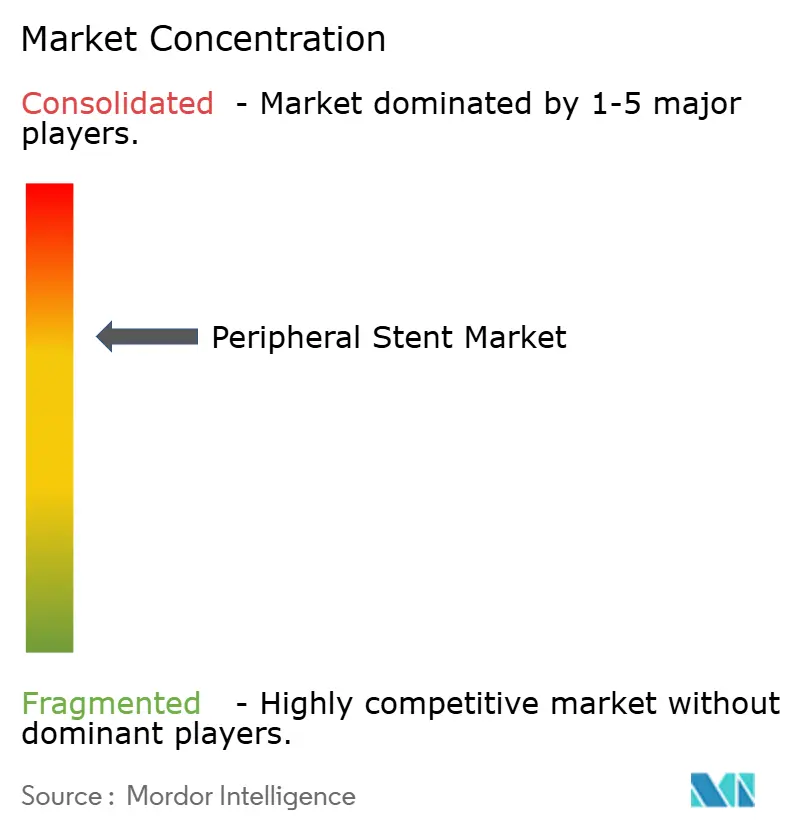
| Market Concentration | Medium |
Major Players *Disclaimer: Major Players sorted in no particular order Image © Mordor Intelligence. Reuse requires attribution under CC BY 4.0. | |
Peripheral Stent Market Analysis by Mordor Intelligence
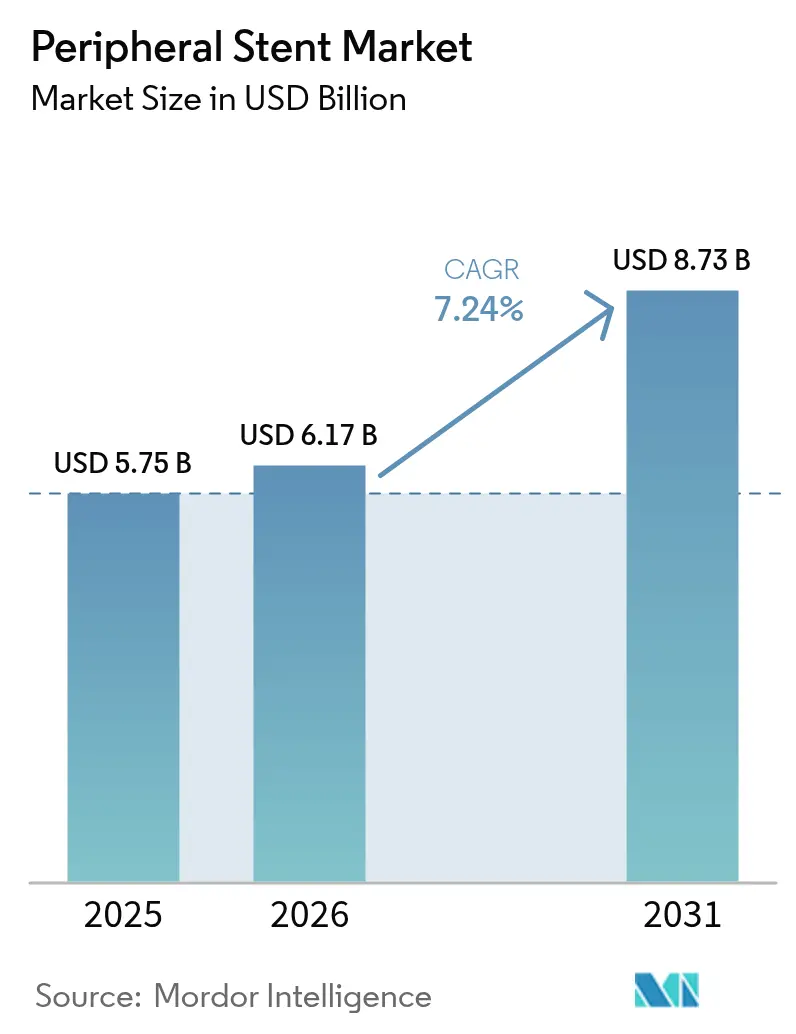
The peripheral stents market size was valued at USD 5.75 billion in 2025 and estimated to grow from USD 6.17 billion in 2026 to reach USD 8.73 billion by 2031, at a CAGR of 7.24% during the forecast period (2026-2031). The upward curve stems from rising peripheral artery disease (PAD) prevalence, rapid product innovation, and greater reliance on minimally invasive treatments that shorten recovery times. Growing life expectancy, steady procedure volume growth, and the expanding footprint of ambulatory surgical centers (ASCs) keep demand steady. The peripheral stents market is also benefiting from breakthrough approvals of drug-eluting and bio-resorbable scaffolds, which broaden therapeutic options and improve long-term patency.[1] Consolidation among leading device makers adds competitive energy as companies scale portfolios and enter new clinical niches.
Key Report Takeaways
- By product, drug-eluting stents led with 51.66% revenue in 2025, while bio-resorbable scaffolds are projected to grow at 10.05% CAGR through 2031.
- By artery type, femoral-popliteal devices held 35.88% of the peripheral stents market share in 2025; infrapopliteal solutions are poised for a 9.32% CAGR to 2031.
- By material, nitinol accounted for 64.02% of segment revenue in 2025, whereas polymer/composite variants will expand at 8.12% CAGR.
- By deployment, self-expanding systems commanded 68.21% of the peripheral stents market size for deployment mechanisms in 2025; balloon-expandable designs are rising at 7.86% CAGR.
- By end user, hospitals controlled 64.85% of the peripheral stents market size in 2025, but ASCs are expected to register 8.54% CAGR as case mix shifts outpatient.
- Regionally, North America retained 38.55% of 2025 revenue, while Asia-Pacific is forecast to outpace all regions at 8.90% CAGR to 2031.
Note: Market size and forecast figures in this report are generated using Mordor Intelligence’s proprietary estimation framework, updated with the latest available data and insights as of 2026.
Market Trends and Insights
Drivers Impact Analysis of Peripheral Stent Market*
| Driver | (~) % Impact on CAGR Forecast | Geographic Relevance | Impact Timeline |
|---|---|---|---|
| Growing burden of PAD and aging population | +1.8% | Global, highest in North America and Europe | Long term (≥ 4 years) |
| Rapid adoption of drug-eluting and bio-resorbable platforms | +1.5% | Global, led by North America, expanding to Asia-Pacific | Medium term (2-4 years) |
| Shift to minimally invasive day-care procedures | +1.2% | North America and Europe, emerging in Asia-Pacific | Short term (≤ 2 years) |
| AI-guided image-based sizing and placement | +0.9% | North America, Europe, select Asia-Pacific markets | Medium term (2-4 years) |
| Development of specialty stents and tech advances | +1.1% | Global, concentrated in developed markets | Long term (≥ 4 years) |
| Hospital value-based purchasing accelerates upgrades | +0.8% | Primarily North America | Short term (≤ 2 years) |
| Source: Mordor Intelligence | |||
Growing Burden of PAD and Aging Population
PAD procedure volumes climbed from 933 in 2023 to 1,422 in 2024 across major systems, underscoring a widening patient pool. Prevalence touches 20% among people over 70, creating a durable base for intervention. Smoking and hypertension remain core risk factors, together accounting for nearly 70% of disease burden. Developed regions show the highest prevalence, but emerging markets such as South Korea recorded incidence growth from 2.68 to 3.09 per 1,000 persons between 2023 and 2024 as diagnostic reach improves. These demographic realities assure sustained demand for interventions and keep the peripheral stents market moving upward.
Rapid Adoption of Drug-Eluting & Bio-Resorbable Platforms
Drug-eluting devices already hold majority share, while bio-resorbable scaffolds log double-digit growth as new evidence accumulates. FDA clearance of Abbott’s Esprit BTK system in 2024 delivered the first below-the-knee dissolving stent in the United States and reduced restenosis 25.8% versus balloon angioplasty. Registry data for magnesium scaffolds showed 4.3% target lesion failure at 12 months, fuelling clinical confidence. The shift supports the broader “leave nothing behind” strategy, pushing the peripheral stents market toward next-generation solutions.[2]
Shift to Minimally-Invasive Day-Care Procedures
ASC revenues are projected to reach USD 59 billion by 2028 as vascular cases exit inpatient settings. Same-day discharge and lower infection risk appeal to patients, while payers reward cost efficiency. Radial-to-peripheral access kits and streamlined stent delivery systems enable shorter case times, aligning with value-based purchasing. These efficiencies incentivize providers to select platforms that quicken turnover, adding momentum to the peripheral stents market.
AI-Guided Image-Based Sizing & Placement Optimisation
AI tools now deliver vessel measurements that mirror ultrasound accuracy while trimming procedure time. Trials such as FLAVOUR II confirmed comparable safety with fewer catheter exchanges, and deep-learning plaque analytics accelerate pre-procedure planning. Predictive sizing increases patency and limits reintervention, improving long-term economics of stent therapy. As hospitals adopt these systems, device makers offering AI-ready stents gain a competitive edge.
Restraints Impact Analysis of Peripheral Stent Market*
| Restraint | (~) % Impact on CAGR Forecast | Geographic Relevance | Impact Timeline |
|---|---|---|---|
| Lengthy regulatory pathways for novel materials | -0.7% | Global, most restrictive in North America and Europe | Long term (≥ 4 years) |
| Price erosion from group purchasing organisations | -0.9% | Primarily North America | Medium term (2-4 years) |
| Long-term data gaps on bio-absorbable scaffold safety | -0.5% | Global, concentrated in developed markets | Medium term (2-4 years) |
| Reimbursement disparities across emerging markets | -0.6% | Asia-Pacific, Latin America, Middle East & Africa | Long term (≥ 4 years) |
| Source: Mordor Intelligence | |||
Lengthy Regulatory Pathways for Novel Materials
The FDA’s Quality Management System Regulation overhaul effective February 2026 adds process layers for magnesium and polymer platforms, prolonging time-to-market. De Novo submissions face demanding evidence rules that favor incumbents familiar with compliance. These hurdles can slow innovation diffusion and dampen growth in the peripheral stents market FDA.[3]
Price Erosion From Group Purchasing Organisations
GPOs steer more than USD 300 billion in annual purchasing, pressing device prices while collecting supplier fees. Novel stents struggle to secure premium reimbursement, and cost-focused tenders pressure margins despite clinical advantages. Developers must balance R&D spending with aggressive price points, a dynamic that can hinder adoption rates in the peripheral stents market.
*Our forecasts treat driver/restraint impacts as directional, not additive. The impact forecasts reflect baseline growth, mix effects, and variable interactions.
Peripheral Stent Market Segment Analysis
By Product:
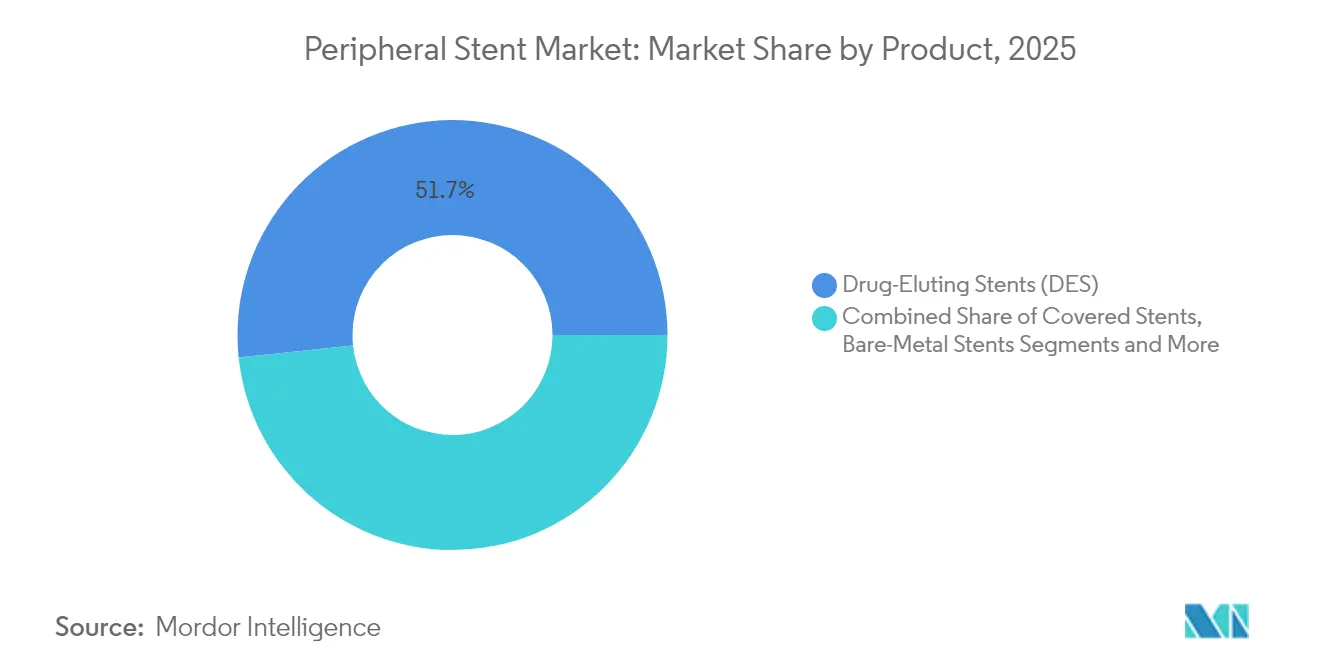
Bio-Resorbable Platforms Drive Innovation Despite DES DominanceDrug-eluting stents retained 51.66% of 2025 revenue and are forecast to advance steadily as clinical familiarity persists. The peripheral stents market size for drug-eluting platforms is projected to rise in line with the overall 7.24% CAGR, supported by ongoing design refinements that boost patency. Bio-resorbable scaffolds, while only a fraction of sales today, are tracking 10.05% CAGR, the fastest within the product mix, thanks to FDA endorsements that validate safety and efficacy. Covered and bare-metal devices meet niche needs but face share migration toward higher-performing alternatives.
Physicians cite the Eluvia system’s one-year patency record and the Esprit BTK scaffold’s dissolving profile as evidence that new chemistry and coatings can outperform legacy metal frames. Growing clinical confidence, combined with reimbursement alignment for innovative therapies, fuels capital budgets aimed at next-generation products. As data matures, the peripheral stents market is likely to rebalance toward platforms that combine proven drug delivery with resorption to minimize long-term complications.

By Artery Type:
Infrapopliteal Segment Gains Momentum as BTK Treatments AdvanceFemoral-popliteal interventions generated 35.88% of 2025 revenue, underscoring their central role in PAD management. That dominance rests on a large installed base of equipment and clinical protocols perfected over decades. Yet infrapopliteal procedures are tipped for 9.32% CAGR, eclipsing all other artery categories. The introduction of purpose-built below-the-knee scaffolds, improved imaging, and rising chronic limb-threatening ischemia awareness underpin that growth. Iliac, renal, and carotid segments maintain steady demand, but incremental gains remain modest relative to infrapopliteal momentum.
Infrapopliteal devices benefit from unmet clinical need, as earlier interventions extend limb salvage and improve quality of life. Successful early outcomes from dissolving platforms are expected to widen physician adoption. That shift will expand the peripheral stents market share devoted to distal limb revascularization, especially as clinical guidelines endorse earlier BTK treatment.
By Material:
Polymer Innovation Challenges Nitinol SupremacyNitinol accounted for 64.02% of 2025 revenue, reflecting its unmatched shape-memory properties that support self-expanding behavior. Supply chain strain and fabrication costs, however, are prompting exploration of alternative materials. Polymer and composite scaffolds are growing 8.12% annually, and cobalt-chromium maintains a foothold in balloon-expandable use cases. Stainless steel remains relevant largely in cost-sensitive markets or specific clinical scenarios.
Bio-resorbable polymers such as PLLA and magnesium composites demonstrate high degradation predictability and respectable radial strength. Registries indicate near-complete absorption by two years, a feature valued by clinicians looking to avoid late-stage complications. The peripheral stents market size allocated to polymer solutions is expected to increase as safety data and volume manufacturing lower per-unit costs.
By Deployment Mechanism:
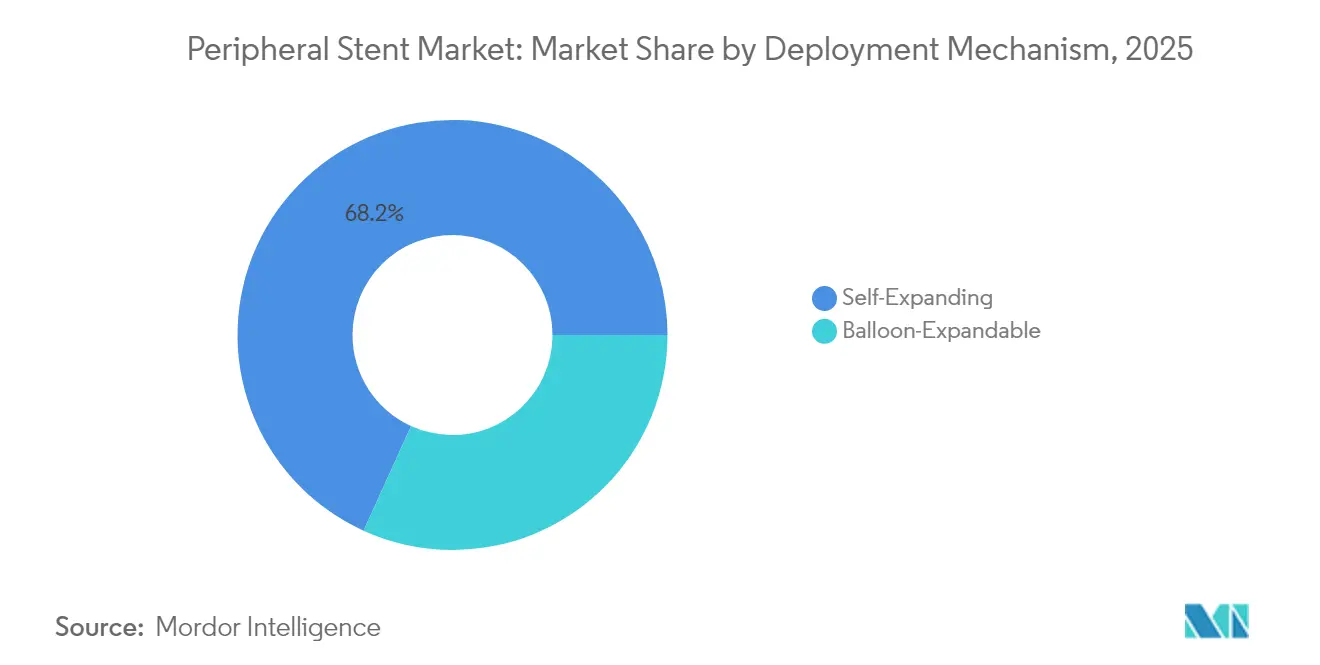
Self-Expanding Systems Leverage Nitinol AdvantagesSelf-expanding devices held 68.21% of revenue in 2025, leveraging nitinol’s elasticity to accommodate vessel motion and chronic outward force. These attributes limit restenosis and fracture risk in tapered or mobile arteries, translating into lower retreatment rates. Balloon-expandable systems, growing at 7.86% CAGR, gain share in calcified or ostial lesions requiring precise placement and immediate high radial force.
Recent delivery-system improvements streamline balloon-expandable deployment, making them more competitive in complex anatomies. Continual refinements in catheter profiles and fluoroscopic markers will sustain unit growth. Still, long-term dominance of self-expanding platforms appears secure, anchoring a large portion of the peripheral stents market.
By End User:
ASC Growth Reshapes Procedural EconomicsHospitals retained 64.85% of global revenue in 2025 as tertiary centers handled the highest-acuity cases and maintained extensive imaging suites. Nonetheless, ASCs, projected for 8.54% CAGR, are gradually absorbing routine and mid-complexity procedures. Same-day discharge, lower overhead, and favorable patient satisfaction scores bolster the ASC value proposition.
Device developers now design packaging and inventory models tailored to outpatient environments. Integrated kits reduce setup time, and single-use delivery systems minimize reprocessing steps. As reimbursement incentives align with site-neutral payment agendas, ASCs are likely to account for a bigger slice of the peripheral stents market.
Geography Analysis
North America Peripheral Stent Market
North America generated 38.55% of 2025 revenue, with the United States representing the largest single market due to well-funded health systems, routine screening, and broad reimbursement for endovascular care. Canada and Mexico contribute incrementally as access widens, though reimbursement and regulatory nuances shape product mix. Successful large-scale adoption of drug-eluting and bio-resorbable solutions solidifies regional leadership.
Europe Peripheral Stent Market
Europe follows closely, propelled by harmonized clinical guidelines and a single-market regulatory environment that speeds cross-border adoption. The European Society for Vascular Surgery emphasizes individualized care and endorses drug-eluting systems, supporting the peripheral stents market across member states. Western European countries benefit from established value-based care frameworks, and Central & Eastern Europe show emerging growth as infrastructure modernizes.
APAC Peripheral Stent Market
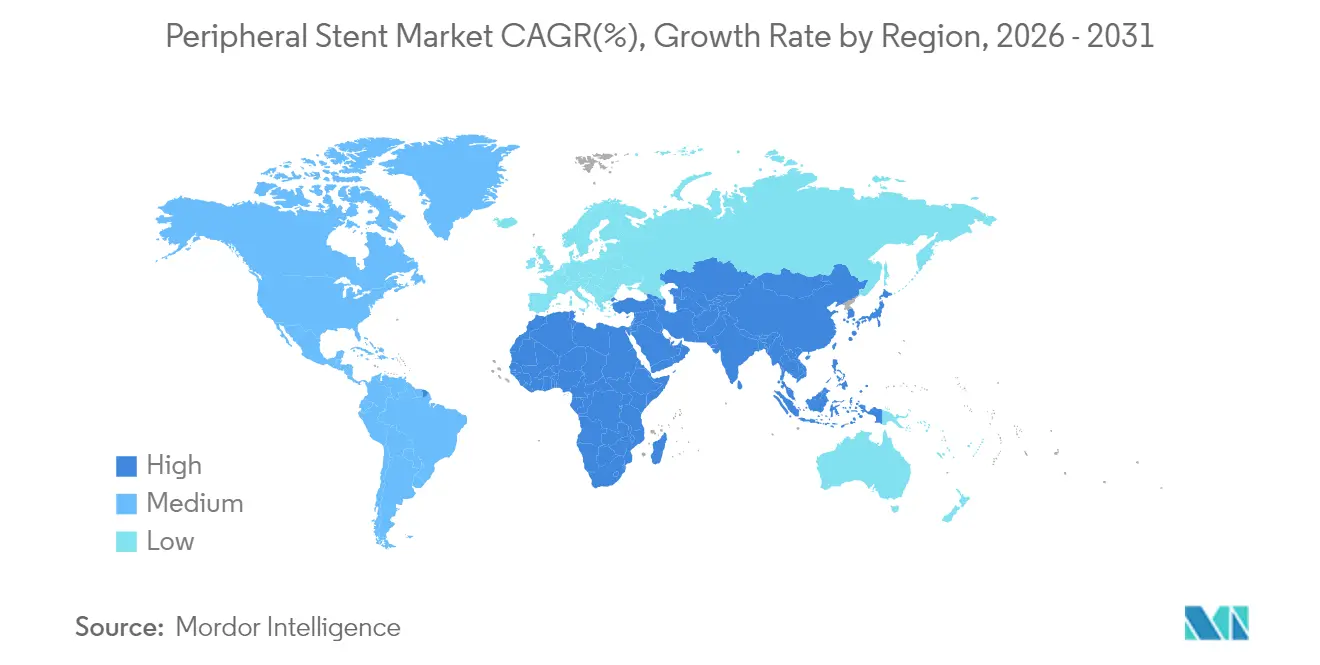
Asia-Pacific is the fastest climber, advancing at a 8.90% CAGR through 2031. China’s target-lesion failure dropped from 6.8% to 4.3% between 2023 and 2024 as advanced stents penetrated tier-one cities. India, aided by updated Medical Device Rules, recorded peripheral interventions rising from 2,850 in 2023 to 3,420 in 2024. South Korea and Japan remain technology-forward, quickly incorporating AI imaging and next-generation materials. Improved payor coverage and government focus on cardiovascular disease drive capacity expansion, lifting the peripheral stents market.
LATAM and MEA Peripheral Stent Market
Latin America and the Middle East & Africa present untapped opportunity. Reimbursement variability and budget constraints slow uptake, but epidemiological transition and public-health campaigns create long-term upside. Pilot projects with cost-sharing models may establish proof-points that unlock broader adoption. As training partnerships and mobile cath-labs proliferate, regional stakeholders anticipate gradual but steady contribution to global volumes.
Regulatory Landscape
Peripheral stents, particularly drug-eluting platforms, sit within high-scrutiny regulatory pathways as implantable, device-drug combination products. In the United States, peripheral drug-eluting stents are regulated by FDA CDRH as Class III combination products and typically require Premarket Approval (PMA), with FDA combination-product jurisdiction governed by the Primary Mode of Action determination and cross-center interaction when drug data are integral to the submission. A major compliance inflection point is the FDA Quality Management System Regulation (QMSR) that takes effect on February 2, 2026, integrating ISO 13485:2016 expectations into device quality systems, while additional FDA combination-product guidance activity in 2025 (including UDI-focused draft guidance for combination products) increases documentation and traceability requirements for manufacturers.
In Europe, the EU Medical Device Regulation (MDR) (EU) 2017/745 remains the core framework for peripheral stents as implantable devices, reinforcing clinical evaluation, post-market surveillance, and, where applicable, post-market clinical follow-up obligations. Commission Delegated Regulation (EU) 2026/1451 (adopted March 20, 2026) updated the list of implantable devices exempted from mandatory clinical investigations, but it does not remove the need to maintain robust clinical evaluation documentation under MDR. Across regions, internationally recognized standards such as ISO 12417-1:2024 for vascular device-drug combination products increasingly anchor technical documentation and test expectations for drug-eluting peripheral stents.
Value Chain Analysis
The peripheral stent value chain begins with upstream specialty raw materials and component manufacturing, most notably nitinol and other fatigue-sensitive alloys for self-expanding frames, polymers/coatings for drug-eluting and bio-resorbable platforms, and catheter-based delivery components that must meet tight dimensional tolerances. Supplier capability and consistency are strategic differentiators, with the PRIME (PRoficient Ingot Material Evaluation) project launched in July 2025 by Fort Wayne Metals, Vascotube, EUROFLEX, ADMEDES, and MeKo MedTech to standardize nitinol material consistency and support yield, performance, and regulatory documentation for stents and related components.
Midstream, OEMs integrate laser-cut or braided scaffolds with drug-polymer coatings, sterilization, packaging, and quality systems aligned to evolving compliance requirements (including FDA QMSR from February 2026 for the US). Downstream, distribution is shaped by large hospital systems and outpatient care expansion, with companies using exclusive distribution agreements to broaden procedural tool access and embed into physician workflows. For example, Medtronic expanded its US commercialization toolkit via exclusive distribution arrangements for specialized peripheral access tools (Future Medical Design peripheral guidewires, announced July 2025) and broader neurovascular portfolios (Contego Medical). Adjacent clinical collaborations also influence future product availability and evidence generation, such as the September 2025 Bentley and Terumo Aortic partnership planning an FDA IDE submission in the first half of 2026 for a combined system study.
Competitive Landscape
The market shows moderate concentration. Abbott, Boston Scientific, and Medtronic anchor the top tier with extensive portfolios and global distribution. Abbott differentiates through interwoven nitinol architecture that yields zero fracture rates in studies, whereas Boston Scientific leverages polymer-coated drug delivery for class-leading patency.
Acquisition activity intensifies rivalry. Teleflex moved to acquire BIOTRONIK’s vascular unit for €760 million in February 2025, broadening its reach in drug-coated balloons and expanding into the peripheral intervention market. Stryker closed its Inari Medical purchase to add venous thromboembolism solutions. These moves stack R&D resources and consolidate hospital relationships, accelerating product launches and cross-selling.
Technology serves as a key battleground. Platforms integrating AI-guided workflow or dissolving scaffolds secure premium positioning. Companies with proven regulatory expertise advance fastest through updated quality standards, raising entry barriers for small challengers. Cost competition remains sharp in commodity segments, yet clinical evidence and outcome-based contracting often tilt purchasing toward brands that reduce reintervention risk.
Peripheral Stent Industry Leaders
-
Medtronic
-
Abbott Laboratories
-
Terumo Medical
-
Becton Dickinson and Company
-
Boston Scientific
- *Disclaimer: Major Players sorted in no particular order
Peripheral Stent Market Companies Covered in this Report
- Abbott Laboratories
- Beckton Dickinson
- Boston Scientific
- Medtronic
- Terumo
- Cook Group
- Lifetech Scientific
- MicroPort
- Stryker
- Gore Medical
- Cordis
- Endologix LLC
- B. Braun
- Getinge
- iVascular S.L.U.
- Elixir Medical
- Alvimedica
Market Opportunities and Future Outlook
A key opportunity area is technology differentiation in drug-eluting and resorbable solutions that reduce device count per procedure and expand treatment options in below-the-knee disease. In July 2026, Abbott received US FDA approval for a longer-length (76 mm) Esprit BTK everolimus-eluting resorbable scaffold, underscoring demand for designs that improve procedural efficiency in chronic limb-threatening ischemia (CLTI) by addressing longer lesion segments with fewer implants. Regulatory acceleration programs also create whitespace for faster market entry of new peripheral drug-eluting stent systems; in May 2026, MicroPort Endovastec received NMPA Green Channel designation in China for its SunFlow drug-eluting peripheral stent system, highlighting an active route for innovative devices to advance in high-growth settings.
Product and evidence strategies are also evolving around antiproliferative drug choice and lesion-specific performance, enabling portfolio breadth across drug-eluting, covered, and combination technologies used in restenosis and complex lesion management. Europe remains a competitive proving ground under MDR where CE Mark achievements can translate into broader tenders and clinical adoption; for instance, Becton, Dickinson and Company received CE Mark approval in March 2026 for the Revello vascular covered stent for iliac artery disease, adding competitive pressure in the covered-stent segment. Alongside these developments, continued attention to long-term outcomes and post-market evidence underpins purchasing decisions across hospitals and ambulatory surgical centers, rewarding manufacturers that pair novel platforms with scalable quality systems and data generation.
Recent Industry Developments in Peripheral Stent Market
- July 2026: Abbott received US FDA approval for a 76 mm, longer-length Esprit BTK everolimus-eluting resorbable scaffold indicated for below-the-knee disease in chronic limb-threatening ischemia. The added length targets workflow efficiency by reducing the number of devices required for long lesions and strengthens Abbott's position in resorbable peripheral scaffolds as procedure volumes expand.
- October 2025: Medtronic commenced full distribution of the Neuroguard IEP System in the United States, expanding access and reinforcing distributor-led market access as a competitive lever. The integrated 3-in-1 platform combines a carotid stent, post-dilation balloon, and embolic protection, supporting a standardized carotid workflow.
- April 2024: Abbott secured US FDA approval for the Esprit BTK Everolimus-Eluting Resorbable Scaffold System, positioned as the first dissolving stent for arteries below the knee in the United States. The approval broadened therapy choices for complex PAD care and accelerated competition around drug-eluting and bio-resorbable platforms in peripheral interventions.
Peripheral Stent Market Report Scope and Research Methodology
Market Definition and Coverage
The peripheral stent market is defined as revenues earned from stents implanted in peripheral arteries to restore blood flow in conditions such as peripheral artery disease, covering common placement sites like iliac, femoropopliteal, and below-the-knee vessels.
Scope exclusions: We exclude coronary stents, aortic stent grafts, and venous stent systems from this sizing.
Segments Covered in This Report
- By Product
- Bare-Metal Stents (BMS)
- Covered Stents
- Drug-Eluting Stents (DES)
- Bio-resorbable Vascular Scaffolds (BVS)
- By Artery Type
- Iliac Artery Stents
- Femoral-Popliteal Stents
- Renal & Related Artery Stents
- Carotid Artery Stents
- Infrapopliteal (Below-knee) Stents
- By Material
- Nitinol
- Cobalt-Chromium
- Stainless Steel
- Polymer / Composite
- By Deployment Mechanism
- Balloon-Expandable
- Self-Expanding
- By End User
- Hospitals
- Ambulatory Surgical Centers (ASCs)
- Others
- By Geography
- North America
- United States
- Canada
- Mexico
- Europe
- Germany
- United Kingdom
- France
- Italy
- Spain
- Rest of Europe
- Asia-Pacific
- China
- Japan
- India
- Australia
- South Korea
- Rest of Asia-Pacific
- Middle East and Africa
- GCC
- South Africa
- Rest of Middle East and Africa
- South America
- Brazil
- Argentina
- Rest of South America
- North America
Data Sources, Market Sizing, and Validation
Desk Research
Desk research helps set the factual base for procedure volume, disease burden, and country level health spending patterns that influence peripheral stent demand. We typically review public sources such as CDC and NIH disease statistics, OECD health data, the World Bank health indicators, and FDA medical device databases for approvals and safety updates.
To keep the model aligned with how the market is bought and used, we also review hospital procurement disclosures where available, peer reviewed vascular journals for utilization and outcomes patterns, and publications from major cardiology and vascular societies (for example, guideline updates and registry summaries). Supporting inputs like company filings, investor presentations, and reputable press are used to track product launches and pricing direction, and selected paid subscriptions help with company financials, news screening, and patent checks. These sources are illustrative only, and other references are used during data collection, validation, and clarification.
Primary Interviews and Surveys
Primary interviews are used to confirm what desk research cannot show clearly, especially average selling price ranges, stocking patterns, and the pace of adoption for newer stent technologies in routine practice. We spoke with a mix of device industry roles, distributors, and clinical users across key regions so assumptions on procedure growth, stent mix, and replacement cycles could be challenged and aligned before finalizing totals.
Distribution of primary research fieldwork respondents
| Company type | Respondent position | Region |
|---|---|---|
| Top tier: 27% | CXOs: 15% | APAC: 42% |
| Mid tier: 57% | Functional/Unit leaders: 42% | EMEA: 37% |
| Smaller Players: 16% | Managers: 43% | Americas: 21% |
Market-Sizing & Forecasting
Sizing starts with a top-down demand pool build where peripheral artery disease prevalence and revascularization practice are translated into addressable procedures by geography, then converted into device value using a stent per procedure factor and realistic ASP bands. Because published procedure series can be uneven by country, the model is adjusted using healthcare access indicators and interventional capacity signals before totals are finalized.
We then cross-check results with selective bottom-up approximations. In this step, sampled supplier and channel feedback is used to roll up plausible revenues for major product groups and to stress test pricing. Practical inputs tracked in the build include peripheral intervention procedure growth, the share of cases treated with stents versus other modalities, average stents used per case, covered versus bare metal mix shifts, and observed ASP erosion or premiumization linked to newer stent formats.
For forecasting, scenario analysis is applied so adoption curves and pricing trends can be expressed under base, conservative, and faster uptake cases, then reviewed with primary respondents to keep projections realistic. Where bottom-up visibility is weak in smaller countries, we fill gaps using regional ratios anchored to procedure capacity, and we recheck the implied per procedure spend against expert feedback.
Data Validation & Update Cycle
Validation is done through repeated variance checks across countries and regions, where modeled spend is compared with independent signals such as procedure intensity, hospital capacity indicators, and known reimbursement direction. If a value looks off, we revisit the underlying drivers (procedure count, stent per case, ASP band, and product mix) and then re-contact sources when the gap cannot be explained using public data.
Before sign-off, the work is reviewed in more than one step so assumptions and calculations remain consistent across the full time series. Reports are refreshed annually, and interim updates are made when material events occur, followed by a final pre-delivery review to ensure clients receive the latest view.
Mordor Intelligence's Peripheral Stent Market Estimate Compared With Other Published Estimates
Published market values for peripheral stents can vary because the counted device set, the procedure pool used, and the way prices are converted into USD are not consistent across sources. Differences also show up when some estimates rely on older base years or project faster adoption without confirming what is happening in cath labs and procurement teams.
The main gap comes from whether adjacent stent categories are blended into the total. Mordor Intelligence counts only peripheral arterial stents and keeps out coronary, venous, and aortic graft products before applying procedure based volume and ASP checks by region. Another driver is how ASP change is handled, since some sources assume flat pricing, while others model rapid premium mix shifts without validating utilization, reimbursement, and stocking realities that shape realized prices.
Benchmark comparison
| Source | Market Size | Gaps in Research Methodology |
|---|---|---|
| Mordor Intelligence | USD 5.75 B (2025) | |
| Trade Journal A | USD 4.26 B (2024) | Uses a broader named market but provides limited clarity on included device types and whether revenue reflects stents only or bundled peripheral vascular products, which can compress the stent-only total when scope is unclear. |
| Industry Tracker B | USD 4.23 B (2024) | Anchors the value to a 2024 base and emphasizes unit and revenue reporting, but the public summary does not explain detailed conversion for ASP by region or how artery coverage and exclusion rules are enforced, which can shift totals versus a procedure led model. |
The table shows that most differences come back to what is included in the stent set and how procedure activity is translated into value through price and mix assumptions. By keeping the scope tight and tying the build to repeatable demand variables, our estimate stays traceable and easier to reconcile when new procedure or pricing signals emerge.
Key Questions Answered in the Report
What is the current value of the peripheral stents market?
The peripheral stents market stands at USD 6.17 billion in 2026 and is projected to grow to USD 8.73 billion by 2031.
Which product type holds the largest peripheral stents market share?
Drug-eluting stents lead with 51.66% revenue in 2025, driven by strong clinical evidence of long-term patency.
Which region is expanding fastest in the peripheral stents market?
Asia-Pacific is estimated to grow at the highest CAGR over the forecast period (2026-2031).
Which region has the biggest share in Global Peripheral Stent Market?
Asia-Pacific is forecast to post a 8.90% CAGR through 2031 on the back of improving healthcare infrastructure and higher PAD detection rates.
Why are bio-resorbable scaffolds gaining attention?
They dissolve after restoring blood flow, lower late-stage complication risk, and deliver drug therapy, leading to a segment CAGR of 10.05% through 2031.
How is the shift to ambulatory surgical centers affecting demand?
ASCs enable same-day discharge and lower procedure costs, encouraging physicians to adopt minimally invasive stents, thus supporting an 8.54% CAGR for this end-user segment.
What challenges could slow the peripheral stents market?
Lengthy regulatory reviews for new materials, price pressure from group purchasing organisations, and incomplete long-term safety data for bio-absorbable scaffolds may temper growth.