
Pastries Market Size and Share
Market Overview
| Study Period | 2021 - 2031 |
|---|---|
| Market Size (2026) | USD 43.76 Billion |
| Market Size (2031) | USD 52.97 Billion |
| Growth Rate (2026 - 2031) | 3.90 % |
| Fastest Growing Market | Asia Pacific |
| Largest Market | Europe |
| Market Concentration | Medium |
Major Players *Disclaimer: Major Players sorted in no particular order Image © Mordor Intelligence. Reuse requires attribution under CC BY 4.0. | |
Pastries Market Analysis by Mordor Intelligence
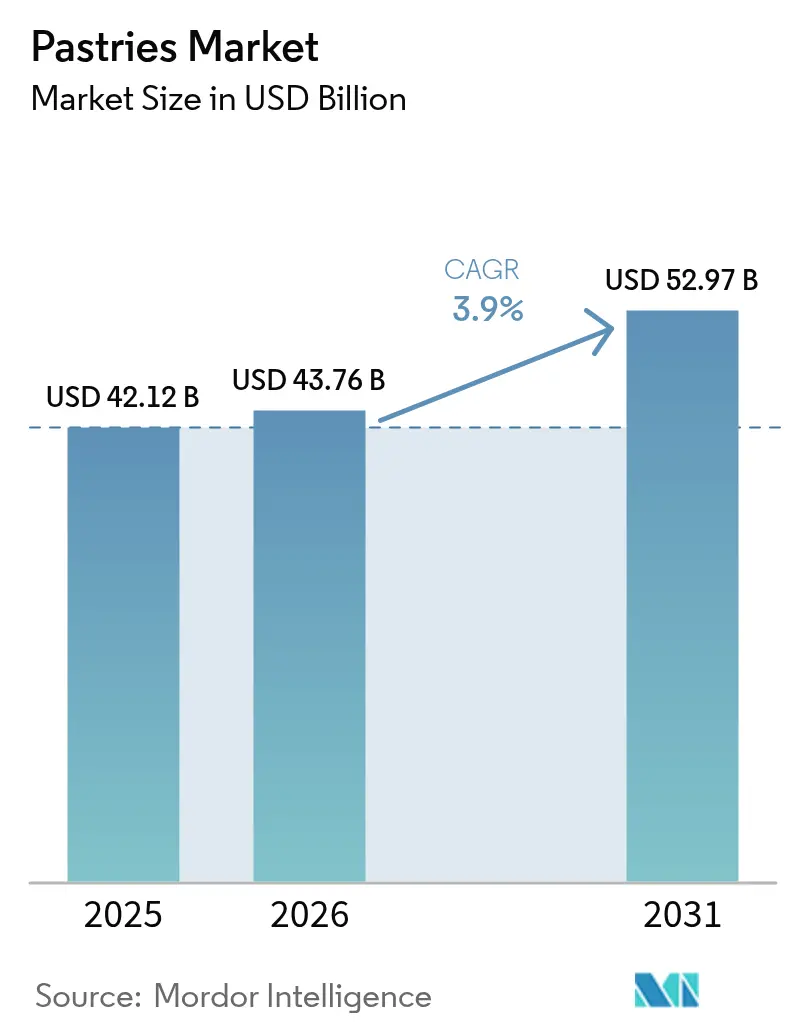
Pastries market size in 2026 is estimated at USD 43.76 billion, growing from 2025 value of USD 42.12 billion with 2031 projections showing USD 52.97 billion, growing at 3.9% CAGR over 2026-2031. The moderate expansion reflects balanced growth drivers: premiumization, clean-label reformulation, and convenience demand offsetting raw-material cost inflation. Retail remains the mainstay as 69.70% of global value flows through supermarkets, hypermarkets, convenience stores, and e-commerce, yet foodservice is regaining momentum as pandemic disruptions fade. Europe leads the pastries market with 39.60% share, thanks to strong artisanal traditions, while Asia-Pacific’s 8.56% CAGR signals rising urban incomes and Western dietary adoption. Technology now underpins competitive advantage; artificial-intelligence systems already cut bakery waste, helping manufacturers protect margins amid volatile egg, cocoa, and sugar prices. Consolidation is accelerating as global players pursue scale and health-centric capabilities, highlighted by Mars’s USD 35.9 billion acquisition of Kellanova in 2024 and Flowers Foods’s USD 795 million purchase of Simple Mills in January 2025.
Key Report Takeaways
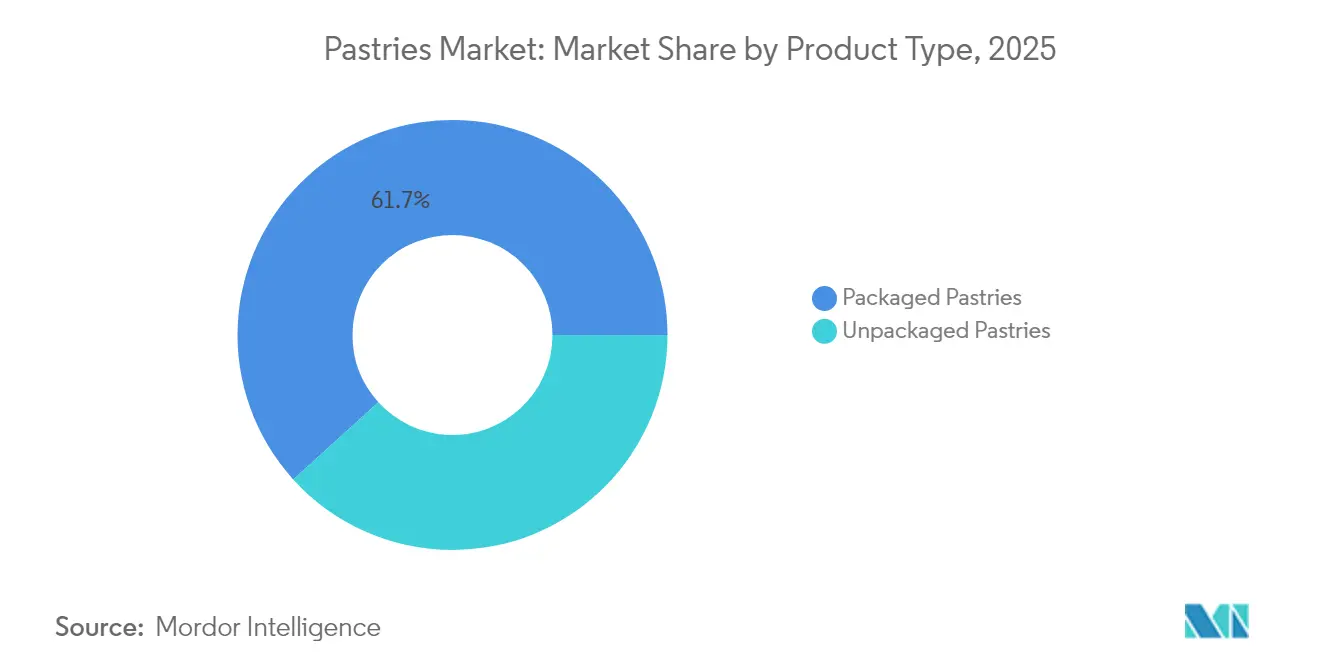
- By product type, packaged pastries captured 61.72% of the pastries market share in 2025, while unpackaged pastries are forecast to expand at a 6.05% CAGR through 2031.
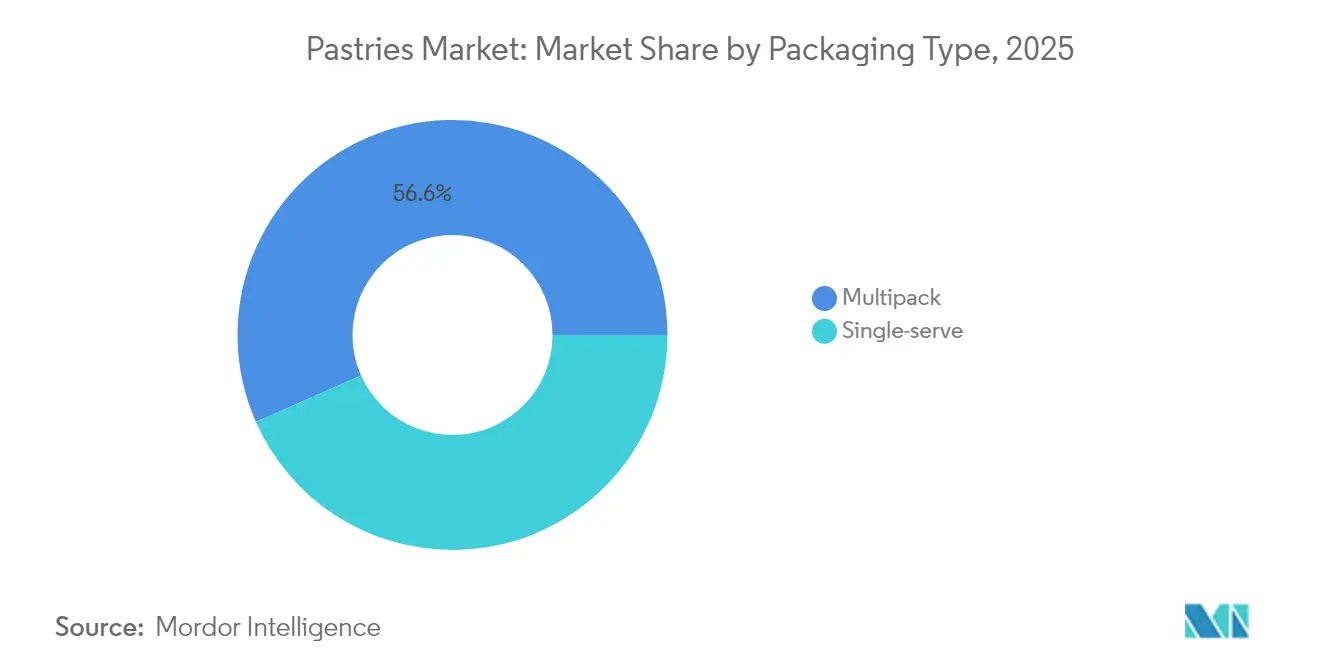
- By Packaging type, multipack formats held 56.64% share of the pastries market size in 2025, and single-serve packaging is advancing at a 7.62% CAGR to 2031.
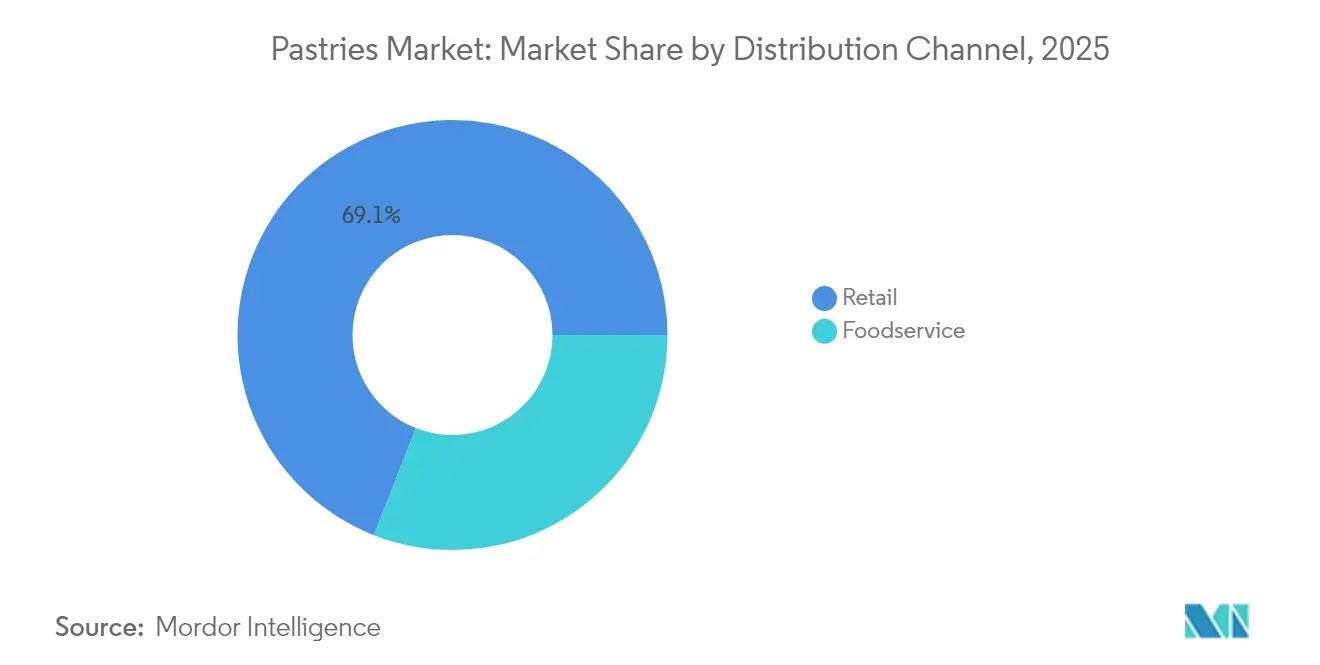
- By distribution channel, retail accounted for 69.05% of global sales in 2025, and foodservice is projected to post the fastest channel growth at 6.88% CAGR during the outlook period.
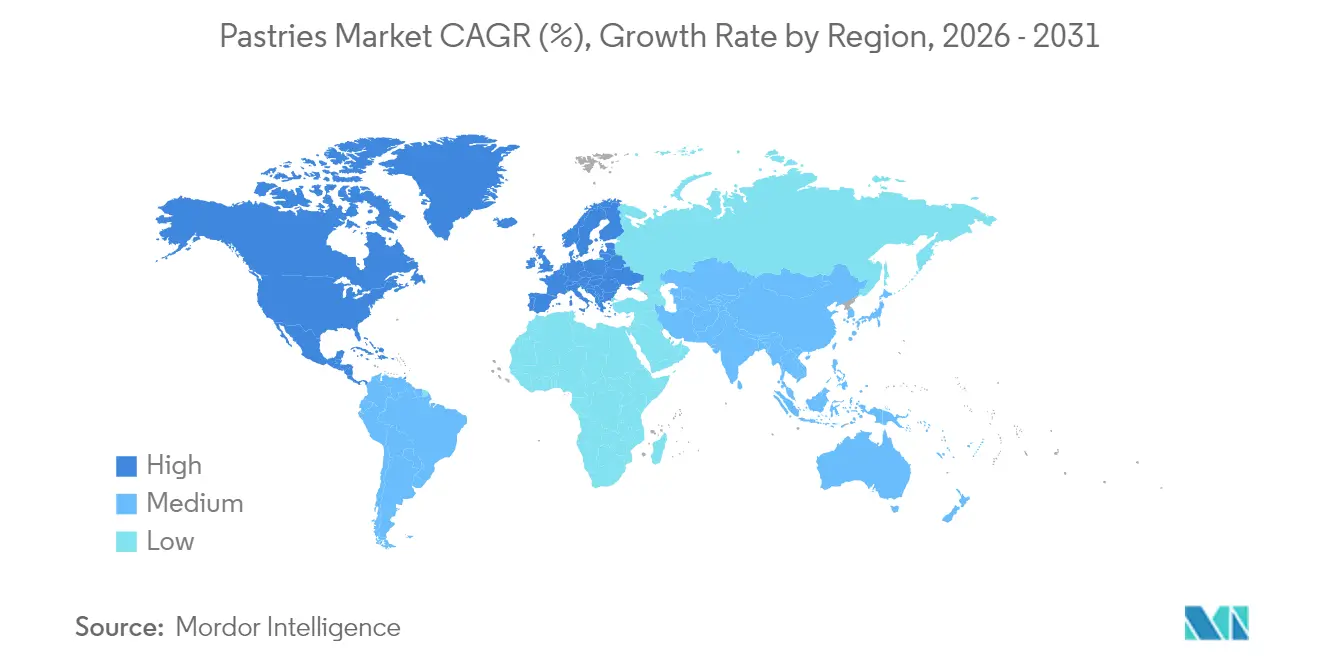
- By geography, Europe commanded 39.22% of global sales in 2025, whereas the Asia-Pacific is set to deliver the highest regional CAGR of 8.21% to 2031.
Note: Market size and forecast figures in this report are generated using Mordor Intelligence’s proprietary estimation framework, updated with the latest available data and insights as of 2026.
Market Trends and Insights
Drivers Impact Analysis of Pastries Market*
| Driver | (~) % Impact on CAGR Forecast | Geographic Relevance | Impact Timeline |
|---|---|---|---|
| Growing demand for convenient, ready-to-eat, and frozen pastry products | +1.2% | Global, with early gains in North America, Europe | Medium term (3-4 years) |
| Rising popularity of premium, artisanal, and gourmet pastries | +0.8% | Europe, North America core, spill-over to Asia-Pacific | Long term (≥ 5 years) |
| Emergence of clean-label and specialty diet products | +0.6% | North America and Europe, expanding to Asia-Pacific | Medium term (3-4 years) |
| Flavor innovation and localization | +0.4% | Asia-Pacific core, with adaptation in Middle East and Africa and South America | Short term (≤ 2 years) |
| Technological advancements in baking and preservation | +0.5% | Global, with early adoption in developed markets | Medium term (3-4 years) |
| Increased focus on sustainability and ethical sourcing | +0.3% | Europe and North America, expanding globally | Long term (≥ 5 years) |
| Source: Mordor Intelligence | |||
Growing demand for convenient, ready-to-eat, and frozen pastry products
Consumer lifestyle acceleration has fundamentally shifted purchasing patterns toward convenience-oriented pastry solutions, with frozen bakery products experiencing robust demand due to the extended shelf life capabilities of 6-18 months without preservatives. Post-COVID consumer behavior reinforced trust in frozen products' safety and hygiene standards, while technological advances in production methods, including unfermented, pre-fermented, par-baked, fully baked, and thaw-and-serve processes, enable manufacturers to cater to diverse preparation preferences. Regulatory compliance frameworks like the FDA's FSMA preventive controls enhance consumer confidence in frozen pastry safety and traceability. In addition, frozen and RTE pastries offer significant convenience and have a much longer shelf life (6-18 months) compared to fresh products, which helps reduce food waste for both consumers and businesses. This longevity allows consumers to stock up and enjoy pastries at their leisure. For instance, according to the Department for Environment, Food and Rural Affairs, in 2022/2023, an average of 95 pence per person per week was spent on cakes, buns, and pastries in the United Kingdom[1]. Moreover, delivery preferences have intensified, with 30% of consumers now favoring delivery for sweet baked goods, while grab-and-go products surged 50% as convenience becomes paramount.
Rising popularity of premium, artisanal, and gourmet pastries
The premiumization trend has transformed pastry consumption from commodity to experiential indulgence, with Sydney's bakery landscape exemplifying this shift through new artisan establishments opening every two weeks in 2024. Innovative pastries like chocolate bar croissants and miso-glazed Portuguese tarts command premium pricing despite quick sellouts, reflecting consumers' willingness to pay for craftsmanship and unique flavor profiles. This evolution extends beyond traditional offerings to include twice-baked croissants, loaded flatbreads, Basque cheesecake, kouign-amann, and croissant-shell tarts, showcasing creativity and technical expertise. The trend aligns with "affordable luxury" psychology during economic uncertainty, where consumers seek small indulgences as emotional comfort. Moreover, culinary fusion has emerged as a defining characteristic, with pastries incorporating cocktail-inspired flavors, exotic citrus fruits, vinegars, fermented products, and spice combinations that stimulate multiple senses. European markets particularly embrace this trend, with EMEA's cakes and pastries segment representing prominent growth, driven by consumer demand for extraordinary experiences and visual appeal.
Emergence of clean-label and specialty diet products
Health-conscious consumption patterns have catalyzed unprecedented innovation in clean-label pastry formulations, with consumers globally actively limiting sugar intake and seeking transparency in ingredient sourcing. According to the International Food Information Council, in 2023, approximately 29% of respondents in the United States mentioned that they buy food and beverages on a regular basis because they are labeled as "clean ingredients"[2]. In line with this, manufacturers are responding through sophisticated reformulation strategies, utilizing natural sweeteners like allulose, monk fruit, and stevia blends to maintain sensory properties while addressing health concerns. Plant-based innovations have gained particular traction, with dedicated facilities like Dee's One Smart Cookie eliminating gluten, dairy, soy, peanuts, and tree nuts while maintaining taste integrity through alternative flours including brown rice, sorghum, and millet. Similarly, functional ingredients are increasingly incorporated, with pastries featuring added proteins, superfoods, and hidden vegetables to deliver guilt-free indulgence. Regulatory frameworks like HFSS regulations in the UK are accelerating this transformation, requiring manufacturers to achieve Health Star Ratings of 3.5 or higher, as demonstrated by Grupo Bimbo's commitment to reformulate 100% of core products by end-2025.
Flavor innovation and localization
Regional taste preferences are driving sophisticated localization strategies that extend beyond traditional flavor profiles to embrace cultural fusion and indigenous ingredients. Asia-Pacific markets demonstrate particular dynamism, creating opportunities for pastry manufacturers to integrate local flavors like red bean, matcha, and tropical fruits. For instance, the number of factories of Grupo Bimbo in Asia and Africa amounted to 25; 12 were located in India, 10 in China, 2 in South Africa, and 1 in Morocco. Indian market evolution showcases similar innovation, with ice cream flavors like chilli basil, betel leaf, and masala chai indicating consumer appetite for adventurous taste combinations that could translate to pastry applications. Technological advancement enables precision in flavor development, with AI systems like Kimuraya Sohonten's AI Romance Bread creating emotion-inspired flavor profiles that resonate with local consumer psychology. Hispanic pastries experienced prominent sales growth in the US market, demonstrating crossover appeal beyond ethnic communities and validating localization strategies. The "newstalgia" trend blends familiar childhood foods with modern interpretations, while seasonal and limited-time offerings enable manufacturers to test innovative combinations before full-scale launches.
Restraints Impact Analysis of Pastries Market*
| Restraint | (~) % Impact on CAGR Forecast | Geographic Relevance | Impact Timeline |
|---|---|---|---|
| Rising input and raw material costs | -0.9% | Global, with acute impact in emerging markets | Short term (≤ 2 years) |
| Health concerns over sugar and additives | -0.5% | North America and Europe primarily, expanding globally | Medium term (3-4 years) |
| Growing competition across market segments | -0.4% | Global, with intensity in mature markets | Medium term (3-4 years) |
| Regulatory uncertainty and compliance complexity | -0.3% | Europe and North America core, expanding to Asia-Pacific | Long term (≥ 5 years) |
| Source: Mordor Intelligence | |||
Rising input and raw material costs
In 2024, egg prices in the U.S. jumped to USD 4.15 per dozen, up from USD 2.51 in 2023, as reported by the Bureau of Labor Statistics[3]. This surge, with forecasts of further increases in 2025, was attributed to supply chain disruptions, avian flu outbreaks, and industry consolidation. Meanwhile, in India, the Office of the Economic Adviser noted that the Wholesale Price Index for eggs, meat, and fish hit around 172 in the financial year 2024, marking a consistent rise since 2013. Cocoa prices soared to crisis levels, nearing USD 10,000 per metric ton, due to adverse weather in West Africa, with the International Cocoa Organization warning of significant production deficits. Sugar prices reached their highest since 2011, with the FAO noting a 0.8% monthly uptick in the Sugar Price Index, driven by climate change's impact on EU sugar beet crops and Brazilian sugar cane production. U.S. bakeries grappled with new tariffs, escalating costs by 25-35% on essential ingredients. In 2024, the U.S. imported USD 977 million from Canada, USD 679 million from Mexico, and USD 395 million from China. Compounding these challenges, labor shortages led to wage inflation in the baking industry, as documented by the U.S. Bureau of Labor Statistics, pushing production costs higher.
Health concerns over sugar and additives
Consumer health consciousness has fundamentally altered pastry consumption patterns, with two-thirds of consumers actively trying to limit sugar intake and demanding transparency in ingredient composition. This shift extends beyond sugar reduction to encompass broader clean-label expectations, with consumers scrutinizing artificial colors, preservatives, and additives in baked goods. The UK's HFSS regulations in September 2023 exemplify regulatory responses, requiring reformulation of sweet products to meet specific nutritional criteria while maintaining consumer appeal. Cross-cultural research reveals varying motivations for sweet baked product consumption, with sensory appeal remaining the primary driver despite health concerns, creating tension between indulgence desires and wellness goals. Manufacturers are responding through sophisticated reformulation strategies, utilizing precision fermentation and molecular farming to produce alternative sweeteners that replicate sugar's functional properties without compromising taste or texture. The challenge intensifies in emerging markets where traditional sweet preferences conflict with growing health awareness, requiring nuanced approaches that balance cultural expectations with nutritional improvements. Moreover, regulatory compliance frameworks like FDA labeling requirements and EU health claims regulations create additional complexity for manufacturers operating across multiple jurisdictions.
*Our forecasts treat driver/restraint impacts as directional, not additive. The impact forecasts reflect baseline growth, mix effects, and variable interactions.
Pastries Market Segment Analysis
By Product Type:
Packaged Dominance Meets Unpackaged InnovationPackaged pastries commanded 61.72% market share in 2025, reflecting consumer preferences for convenience, extended shelf life, and portion control in increasingly busy lifestyles. This dominance stems from packaged products' superior distribution capabilities, enabling manufacturers to reach diverse retail channels while maintaining product integrity and food safety standards. However, unpackaged pastries are experiencing remarkable growth at 6.05% CAGR through 2031, driven by the artisanal movement and consumers' desire for fresh, customizable experiences that packaged alternatives cannot replicate.
The unpackaged segment benefits from the premiumization trend, with artisan bakeries commanding higher margins through craft positioning and local sourcing narratives. Technological innovations are blurring traditional boundaries, with modified atmosphere packaging and smart packaging solutions extending unpackaged pastries' viability while preserving their fresh appeal. Individual wrapping within the packaged segment has gained particular traction, addressing hygiene concerns while maintaining convenience benefits. The foodservice channel increasingly favors unpackaged options for customization capabilities, while retail environments continue gravitating toward packaged solutions for operational efficiency. Regulatory frameworks like the FDA's FSMA preventive controls apply more stringent requirements to packaged products, creating compliance advantages for established manufacturers with robust quality systems.

By Packaging Type:
Single-Serve Surge Challenges Multipack TraditionMultipack formats maintained 56.64% market share in 2025, leveraging cost efficiency and bulk purchasing appeal among value-conscious consumers and families seeking convenient meal solutions. These formats excel in retail environments where shelf space optimization and inventory turnover drive purchasing decisions, while offering manufacturers economies of scale in production and packaging. Single-serve packaging is disrupting this dynamic with 7.62% CAGR growth through 2031, reflecting fundamental shifts in consumption patterns toward portion control, on-the-go consumption, and individual dietary management.
The single-serve surge aligns with health-conscious trends, enabling consumers to practice mindful indulgence while maintaining caloric awareness. Sustainability considerations increasingly favor single-serve formats that reduce food waste, despite packaging material concerns that manufacturers are addressing through recyclable and compostable innovations. Premium positioning opportunities in single-serve formats enable higher per-unit margins, compensating for increased packaging costs. E-commerce growth particularly benefits single-serve formats, which ship more efficiently and appeal to trial-seeking online consumers exploring new products.
By Distribution Channel:
Retail Resilience Meets Foodservice RecoveryRetail channels dominated with 69.05% market share in 2025, demonstrating remarkable resilience through pandemic disruptions and evolving consumer shopping behaviors. Supermarkets and hypermarkets within retail continue leading through extensive product assortments, competitive pricing, and integrated bakery departments that combine convenience with fresh appeal. However, foodservice is experiencing accelerated recovery at 6.88% CAGR through 2031, driven by normalized dining patterns, workplace return trends, and innovative service models that blend retail and foodservice experiences. E-commerce within retail has emerged as a critical growth vector, with online pastry sales benefiting from subscription models, specialty diet categories, and premium product positioning that traditional retail struggles to support.
The convenience store segment within retail demonstrates particular dynamism, with grab-and-go pastry options experiencing 50% growth as consumers seek quick indulgence solutions during daily routines. Foodservice recovery varies by segment, with hotels and catering showing stronger momentum than restaurants, which face ongoing labor challenges and margin pressures. Hybrid models are emerging, with retail bakeries expanding foodservice capabilities through in-store cafes, while foodservice operators develop retail product lines for take-home consumption. Digital integration across both channels enables personalized experiences and loyalty programs that drive repeat purchases and customer lifetime value.
Geography Analysis
EMEA Pastries Market
Europe’s pastries market leadership rests on a 39.22% revenue share in 2025, anchored by centuries-old patisserie culture and consumer willingness to pay premiums for provenance and craftsmanship. The broader EMEA bakery segment has been growing despite tightened environmental and sugar-reduction rules, accelerated recipe innovation, and sustainable packaging adoption. Energy-cost inflation and post-Brexit supply-chain recalibration remain operational challenges but also spur regional sourcing initiatives that reinforce local authenticity narratives.
APAC Pastries Market
Asia-Pacific delivers the fastest pastries market CAGR at 8.21%, propelled by urbanization, rising household incomes, and social-media-driven taste experimentation. China’s snack-food sector is on the growth curve, making localized red-bean croissants and mango-filled Danish staples for Gen Z consumers. India’s middle class multiplies pastry sales as Western-style cafés expand beyond Tier 1 cities, while Southeast Asian markets incorporate pandan, durian, and ube into laminated dough products. Regulatory diversity compels tailored labeling and fortification strategies across countries.
North America and MEA Pastries Market
North America records measured growth as premium, clean-label, and single-serve innovations offset mature category volumes. Mexico’s integration within USMCA supply networks yields raw-material cost advantages, though recent U.S. tariffs inject uncertainty. Canadian markets emphasize organic certification and bilingual labeling that increase compliance costs but enable premium positioning. The Middle East and Africa remain nascent yet promising; the UAE and South Africa anchor investment thanks to tourism, expat populations, and rising modern retail penetration. Infrastructure gaps and currency volatility restrain wider regional uptake for now.
Regulatory Landscape
Global pastries manufacturers operate under food-safety, labeling, and additive-compliance regimes that vary by region, increasing formulation and documentation complexity for packaged and ready-to-eat (RTE) pastries. In the United States, the FDA framework for bakery standards and labeling, including standards of identity in 21 CFR (such as Part 136), works alongside preventive-control expectations under FSMA, reinforcing process controls, sanitation, and traceability requirements for large-scale packaged pastry production.
In Europe, food hygiene requirements anchored in Regulation (EC) 852/2004 continue to shape HACCP-based controls. RTE microbiological compliance tightened as stricter EU Listeria monocytogenes requirements took effect on July 1, 2026, raising the bar for shelf-life validation and environmental monitoring in chilled and extended-shelf-life pastry lines. Region-specific nutrition and health positioning rules, including UK HFSS-related reformulation pressures referenced across sweet bakery, influence recipe renovation, sweetener selection, and pack-format strategies in retail-led channels.
Competitive Landscape
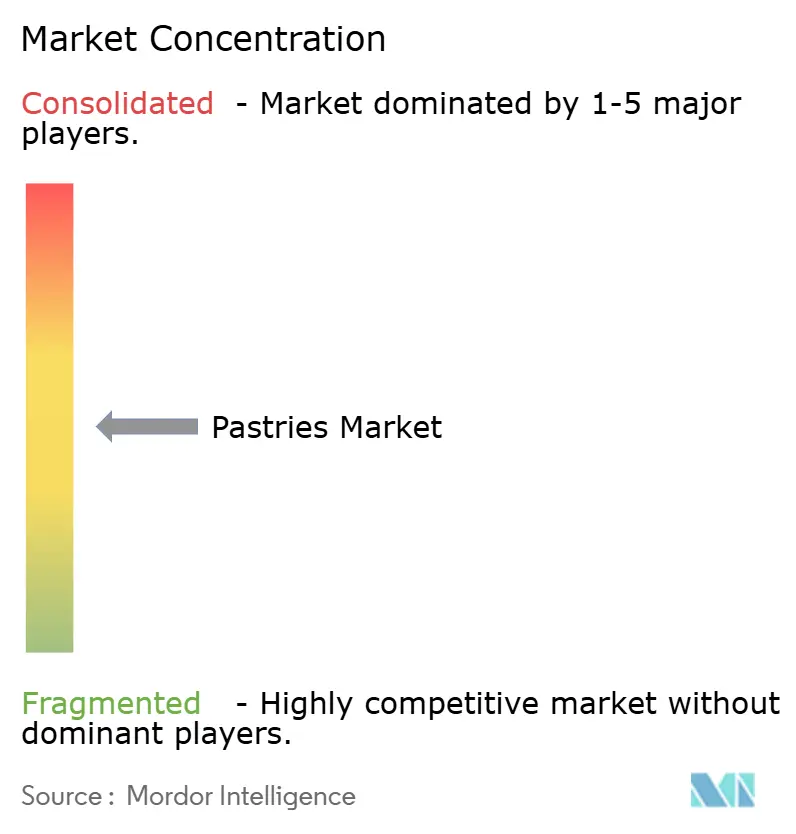
Industry structure remains moderately fragmented; no brand controls more than mid-single-digit global pastries market share, yet consolidation is accelerating. Mars’s USD 35.9 billion bid for Kellanova and Flowers Foods’ USD 795 million Simple Mills deal exemplify strategic moves toward health-oriented, higher-margin snack categories. Similarly, Grupo Bimbo invests USD 2 billion through 2027 in automation and sustainability projects, targeting a 3.5 or higher Health Star Rating for all flagship SKUs.
Technology adoption diverges: multinationals deploy AI root-cause analysis to trim dough waste, while SME bakeries ‘rent’ capacity in shared facilities to access high-speed sheeters without heavy capex. White-space opportunities abound in plant-based, gluten-free, and culturally fused pastries, areas where agile direct-to-consumer brands leverage social commerce and local sourcing stories to scale quickly.
Retailer private labels extend reach through artisan-style launches at value price points, putting margin pressure on branded incumbents. Meanwhile, ingredient suppliers deepen collaboration on sugar-reduced fillings and cocoa-butter equivalents that meet upcoming emission targets. Venture capital targets refrigerated-dough start-ups offering cleaner labels and simplified ingredient decks, underscoring continued innovation potential within the pastries market.
Pastries Industry Leaders
-
Grupo Bimbo
-
Aryzta AG
-
Flowers Foods, Inc.
-
Mondelez International
-
Yamazaki Baking Co.
- *Disclaimer: Major Players sorted in no particular order
Pastries Market Companies Covered in this Report
- Grupo Bimbo
- Aryzta AG
- Flowers Foods
- Finsbury Food Group PLC
- Hostess Brands
- Tyson Foods (Hillshire Brands)
- Europastry S.A.
- Dawn Foods
- Mondelez International (LU)
- Britannia Industries
- McKee Foods
- Yamazaki Baking Co.
- Campbell Soup (Pepperidge Farm)
- General Mills (Pillsbury)
- Lantmännen Unibake
- Barilla Group (Mulino Bianco)
- Patisserie Valerie
- Rich Products Corporation
- Monginis Foods Pvt.
- PT Nippon Indosari (Sari Roti)
- The Cheesecake Factory Bakery
Market Opportunities and Future Outlook
Capacity additions and footprint optimization in industrial and frozen bakery supply chains support expanded assortment in packaged, single-serve, and foodservice-ready pastries, particularly in North America where several large investments and transactions were announced in 2026. These include Grupo Bimbo committing about USD 1 billion for US expansion (2026-2028), and Bauducco Foods opening a 160,000-square-foot manufacturing facility in Zephyrhills, Florida, backed by a USD 200 million investment. Together, these actions expand domestic supply and shorten replenishment cycles for retail and away-from-home pastry occasions.
Opportunities are also tied to breakfast and on-the-go formats, as well as frozen and par-baked capability that supports consistent quality in foodservice and e-commerce fulfillment. Flowers Foods used 2026 innovation rollouts spanning Danishes, donuts, and creme-filled cakes, alongside single-serve items under Tastykake, to target incremental snacking occasions. M&A activity, including Bridor agreeing to acquire Panamar and Europastry announcing the acquisition of Highland Baking Company, highlights continued focus on frozen bakery scale and distribution reach. Smart-factory toolkits, such as sensor-driven process control, vision inspection, and predictive maintenance, along with stronger food-safety management systems, are being adopted to reduce waste and manage labor constraints, reinforcing the case for automation-led modernization in high-throughput pastry lines.
Recent Industry Developments in Pastries Market
- June 2026: ARYZTA completed the acquisition of a French distribution business, expanding its route-to-market capability in a key European bakery hub. The move strengthens downstream coverage for frozen and packaged bakery items, supporting service levels and assortment breadth for retail and foodservice customers.
- May 2026: Grupo Bimbo announced an approximately USD 1 billion investment in the United States to be deployed between 2026 and 2028, covering capacity maintenance, product innovation, and regenerative agriculture partnerships. The program reinforces domestic manufacturing resilience and supports renovation of sweet baked goods portfolios under tighter cost and sustainability constraints.
- January 2025: Flowers Foods completed its acquisition of Simple Mills for USD 795 million, adding a scaled better-for-you platform with clean-label positioning. The deal broadened exposure to health-oriented baked-snacking adjacencies that influence reformulation and premium pricing strategies across pastries.
Pastries Market Report Scope and Research Methodology
Market Definition and Coverage
For this study, the pastries market covers the sales value of sweet and savory pastry products sold through retail and foodservice channels, counted in each country and then aggregated to regional and global totals.
Scope exclusions: We exclude bread, cookies and biscuits, cakes, and other bakery items that are not categorized as pastries in product listings and public reporting.
Segments Covered in This Report
- By Product Type
- Packaged Pastries
- Unpackaged Pastries
- By Packaging Type
- Single-serve
- Multipack
- By Distribution Channel
- Foodservice
- Restaurants
- Hotels
- Catering
- Retail
- Supermarkets/Hypermarkets
- Convenience Stores
- Online Retail Stores
- Other Retail Channels
- Foodservice
- By Geography
- North America
- United States
- Canada
- Mexico
- Rest of North America
- South America
- Brazil
- Argentina
- Colombia
- Chile
- Rest of South America
- Europe
- United Kingdom
- Germany
- France
- Italy
- Spain
- Russia
- Sweden
- Belgium
- Poland
- Netherlands
- Rest of Europe
- Asia-Pacific
- China
- Japan
- India
- Thailand
- Singapore
- Indonesia
- South Korea
- Australia
- New Zealand
- Rest of Asia-Pacific
- Middle East and Africa
- United Arab Emirates
- South Africa
- Saudi Arabia
- Nigeria
- Egypt
- Morocco
- Turkey
- Rest of Middle East and Africa
- North America
Data Sources, Market Sizing, and Validation
Desk Research
Desk research helped us set up the category boundaries and build the first set of country level inputs. We referred to public sources such as USDA and ERS food availability data, Eurostat, FAOSTAT, UN Comtrade trade statistics, and national statistics offices that publish food manufacturing or retail sales series.
These references were then supported with company annual reports, investor presentations, and reputable press coverage to understand mix shifts between packaged and unpackaged pastries and pricing pressure from key ingredients. In selected places, paid subscriptions that track company financials and news were used to cross-check disclosed revenues and major capacity moves, and a patent database was reviewed to spot packaging and formulation activity that can influence premium pricing. The sources listed above are illustrative only, and many other references were also reviewed for data collection, validation, and clarification.
Primary Interviews and Surveys
Primary work included expert interviews and structured surveys with manufacturers, ingredient and packaging participants, retail category teams, and foodservice-linked distributors, which helped validate what is selling and how pricing is moving. Since this is a global market, inputs were checked across APAC, EMEA, and the Americas so regional channel splits and product mix assumptions could be confirmed and adjusted where needed.
Distribution of primary research fieldwork respondents
| Company type | Respondent position | Region |
|---|---|---|
| Top tier: 26% | CXOs: 14% | APAC: 44% |
| Mid tier: 58% | Functional/Unit leaders: 35% | EMEA: 36% |
| Smaller Players: 16% | Managers: 51% | Americas: 20% |
Market-Sizing & Forecasting
Sizing starts with a top-down build where production and trade indicators are used to reconstruct a country demand pool for pastry products, which is then split across retail and foodservice using observed channel weight. After that structure is set, selective bottom-up approximations are used as checks, such as sampling shelf prices by pack type, reviewing typical pack sizes, and rolling up a set of supplier revenues where breakouts are clear.
Inputs tracked in the model (illustrative) include packaged versus unpackaged mix, channel share movement between retail and foodservice, wheat and dairy cost trends that influence shelf pricing, private-label penetration direction, and premiumization cues tied to single-serve versus multipack demand. Where a company does not break out pastries from other bakery lines, the missing split is estimated using product mix disclosures and then verified through primary feedback so gaps do not distort the totals.
For forecasting, scenario analysis is used so the outlook can reflect different paths for inflation, disposable income, and store traffic, and then the final trajectory is aligned to the consensus range heard in expert calls. Results are reported in current USD terms by year so pricing and mix effects remain visible.
Data Validation & Update Cycle
Each country output is checked for logical variance before it is rolled up, and implied per capita spend and price levels are compared against independent signals from official statistics and trade flows. When an anomaly shows up, assumptions are revisited, and follow-up outreach is done with relevant respondents so the correction stays tied to market reality.
Before sign-off, the work goes through internal reviews that check arithmetic, scope consistency, and year-on-year movement against known market events. Reports are refreshed annually, with interim updates for material events like sharp ingredient cost swings or major channel disruptions. Right before delivery, an analyst performs a final pass so clients receive the latest updated view.
Mordor Intelligence's Pastries Market Size Measured Against Other Published Estimates
Published pastries market numbers often do not match because groups do not count the same product set, channel coverage, and base year, and they also differ in how prices and currency timing are handled. So even when the topic name looks similar, the totals can drift once the underlying scope and assumptions are unpacked.
Some outside figures appear to bundle pastries with nearby bakery sweet goods or apply broad application buckets that are hard to validate consistently across countries. For Mordor Intelligence, pastries are counted only when they are sold as pastry products through retail or foodservice, with packaged and unpackaged activity separated so adjacent bakery items do not inflate the total.
Benchmark comparison
| Source | Market Size | Gaps in Research Methodology |
|---|---|---|
| Mordor Intelligence | USD 43.76 B (2026) | |
| Global Consultancy A | USD 72.40 B (2025) | Uses a different base year and a broader segment structure that can pull in adjacent baked sweet categories and wider end-user buckets, which lifts totals beyond pastry-only sales. |
| Trade Publisher B | USD 63.40 B (2024) | Reports an earlier year and generally blends on-trade and off-trade under a broad pastries label, with limited detail on how packaged versus artisanal pricing and mix are normalized across markets. |
The spread mainly comes from year alignment and whether pastries are kept distinct from neighboring bakery categories, followed by how price progression is applied in high-inflation periods. With the scope kept to pastries and the key splits validated through repeatable checks, the final number stays easier to trace and update over time.
Key Questions Answered in the Report
What is the current global value of the pastries market?
The pastries market was valued at USD 43.76 billion in 2026, with projections pointing to USD 52.97 billion by 2031.
Which region leads sales of pastries worldwide?
Europe holds the largest share at 39.22% of 2025 global revenue, thanks to entrenched patisserie traditions and premium consumer preferences.
Which region is growing fastest for pastries?
Asia Pacific posts the highest CAGR at 8.21% through 2031, driven by rising incomes and Western-style snack adoption.
How are health trends influencing pastry formulation?
Brands are reformulating with clean-label ingredients, sugar substitutes, and specialty-diet recipes to meet demand from 83% of consumers seeking lower sugar intake.
What packaging format is gaining traction in pastries?
Single-serve packs are outpacing multipacks with a 7.62% CAGR to 2031 because they support portion control and on-the-go snacking.
How is technology helping pastry manufacturers?
AI-enabled root-cause analysis has reduced production waste by up to 37%, improving margins amid volatile ingredient prices.