
Global Pain Management Devices Market Size and Share
Market Overview
| Study Period | 2020 - 2031 |
|---|---|
| Market Size (2026) | USD 12.79 Billion |
| Market Size (2031) | USD 20.2 Billion |
| Growth Rate (2026 - 2031) | 9.58 % |
| Fastest Growing Market | Asia-Pacific |
| Largest Market | North America |
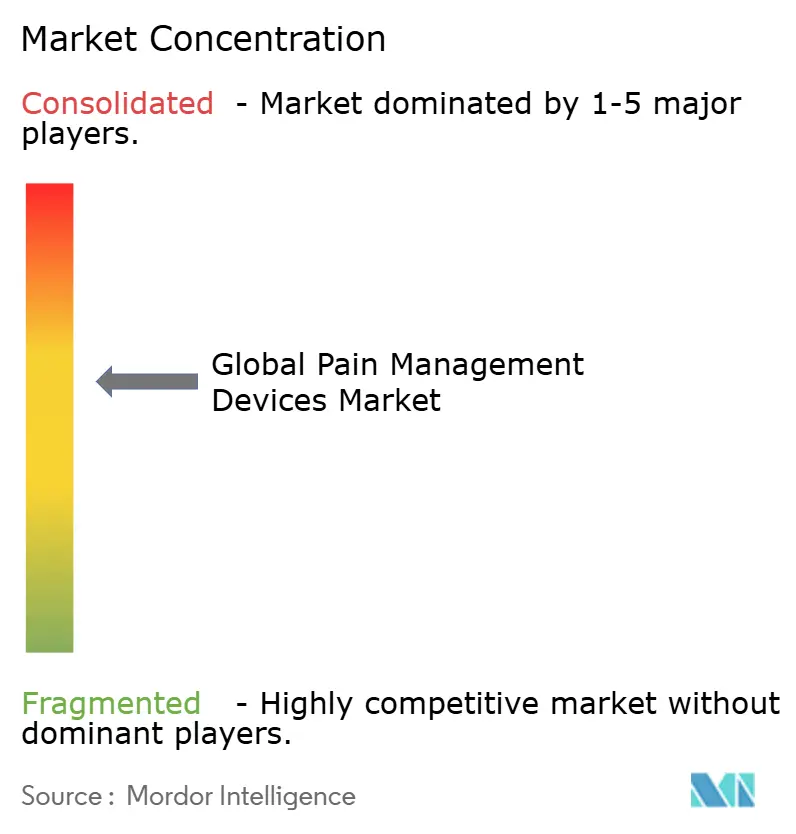
| Market Concentration | Medium |
Major Players *Disclaimer: Major Players sorted in no particular order Image © Mordor Intelligence. Reuse requires attribution under CC BY 4.0. | |
Global Pain Management Devices Market Analysis by Mordor Intelligence
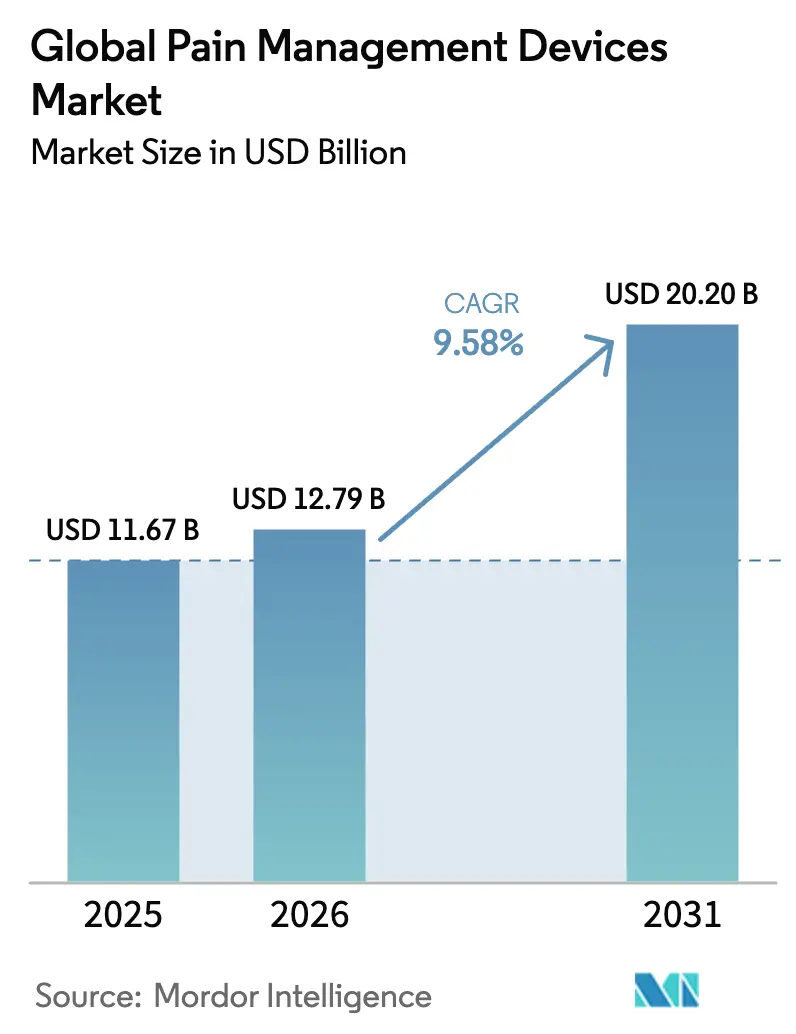
Pain management devices market size in 2026 is estimated at USD 12.79 billion, growing from 2025 value of USD 11.67 billion with 2031 projections showing USD 20.2 billion, growing at 9.58% CAGR over 2026-2031. This trajectory is propelled by an ageing global population, broader reimbursement for neurostimulation, and rapid progress in closed-loop systems that fine-tune stimulation in real time. Neurostimulation devices currently dominate, helped by landmark FDA approvals for adaptive spinal cord stimulators, while ablation systems gain momentum through minimally invasive radiofrequency platforms that promise pain relief lasting up to two years. North America leads adoption amid favorable Medicare policies, whereas Asia-Pacific grows the fastest on the back of Japan’s structured chronic-pain programs and expanding hospital capacity. Intensifying consolidation—typified by Globus Medical’s buyout of Nevro—couples with venture funding for wearable stimulators, deepening both competitive stakes and product innovation. Persistent chip and battery shortages continue to test manufacturers, yet AI-enabled algorithms and sensor ecosystems point to a future of fully personalized pain therapy.
Key Report Takeaways
- By product type, neurostimulation devices led with 58.23% of pain management devices market share in 2025; ablation devices are projected to expand at a 10.17% CAGR to 2031.
- By application, neuropathic pain accounted for 32.08% share of the pain management devices market size in 2025, while cancer pain is advancing at a 10.62% CAGR through 2031.
- By end-user, hospitals and clinics held 66.23% of the pain management devices market share in 2025; physiotherapy centers record the highest projected CAGR at 10.47% to 2031.
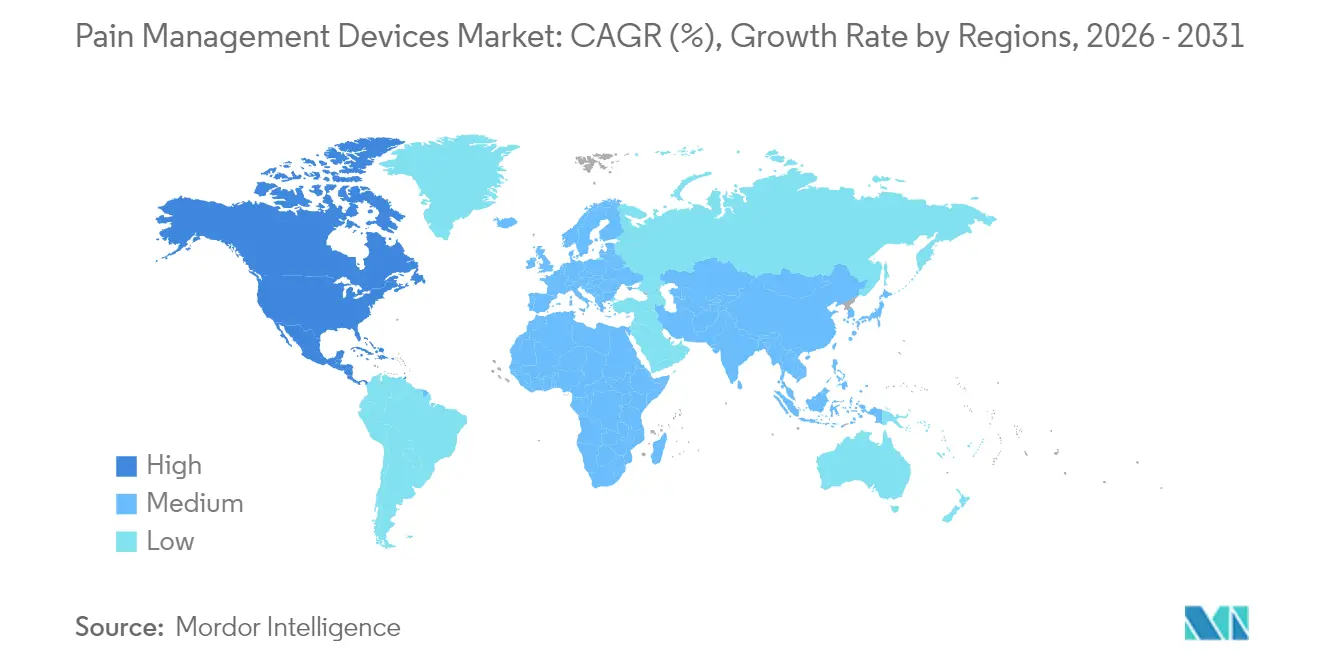
- By geography, North America commanded 43.10% of the pain management devices market in 2025; Asia-Pacific is expected to register an 11.52% CAGR between 2026-2031.
Note: Market size and forecast figures in this report are generated using Mordor Intelligence’s proprietary estimation framework, updated with the latest available data and insights as of 2026.
Market Trends and Insights
Drivers Impact Analysis of Global Pain Management Devices Market*
| Driver | (~) % Impact on CAGR Forecast | Geographic Relevance | Impact Timeline |
|---|---|---|---|
| Rising chronic pain & ageing population | +2.1% | Global, highest in North America & Europe | Long term (≥ 4 years) |
| Technological advances in neuromodulation | +1.8% | Global, led by North America & Europe | Medium term (2-4 years) |
| Favourable reimbursement for SCS | +1.4% | North America primary, expanding to Europe | Short term (≤ 2 years) |
| AI-driven closed-loop stimulation algorithms | +1.2% | North America & Europe, early APAC uptake | Medium term (2-4 years) |
| Wearable–implantable sensor ecosystems | +0.9% | Global, fastest in North America | Medium term (2-4 years) |
| VC surge in peripheral nerve stimulation startups | +0.6% | North America & Europe, spillover to APAC | Short term (≤ 2 years) |
| Source: Mordor Intelligence | |||
Rising Chronic Pain & Ageing Population
Chronic pain now affects one in four adults in the United States, with prevalence climbing from 12.3% in those aged 18-29 to 36.0% among seniors, a demographic tilt that widens the addressable base for the pain management devices market. The economic toll exceeds USD 725 billion per year for chronic pain care, strengthening cost-effectiveness arguments for device-based interventions that lower long-term drug reliance. Japan reports 22.5% adult prevalence and a 2 trillion yen annual burden, prompting the health ministry to fund multidisciplinary pain centers that emphasize non-pharmacologic modalities [1]. Rural populations show higher pain incidence than urban peers, an imbalance that device-guided home programs can help close by reducing travel needs for follow-up therapy.
Technological Advances in Neuromodulation
Closed-loop neurostimulation shifts treatment from fixed settings to adaptive pulses that respond to evoked compound action potentials hundreds of times per second. Medtronic’s Inceptiv system cut overstimulation reports in 93% of study participants while halving low-back pain for 82% within six months[2]. Nevro’s AI-enhanced platform, cleared in 2024, learns individual neural patterns to refine energy delivery, elevating responder rates in trial cohorts. Progress in neuromorphic chips, bioresorbable electrodes, and full-body 3 T MRI-conditional leads widens clinical utility and underpins the premium pricing that sustains high R&D reinvestment.
Favourable Reimbursement for SCS
Medicare’s July 2023 decision to cover spinal cord stimulation for painful diabetic neuropathy instantly opened access for 11 million beneficiaries and set a reference point for commercial insurers. Average payments of USD 1,070 for trial leads and USD 3,726 for permanent systems at ambulatory surgical centers improve provider economics, while new CPT codes streamline billing workflows. Early European adopters, notably Germany’s statutory funds, are assessing similar coverage, signalling a broader reimbursement tailwind that undergirds growth in the pain management devices market.
AI-driven Closed-loop Stimulation Algorithms
Artificial intelligence now predicts pain cycles and pre-emptively adjusts stimulation, converting therapy from reactive to proactive care. Multimodal devices matching implant data with smartwatch metrics have shown correlation with subjective pain diaries, allowing closed-loop triggers that curb symptom flares. In auricular vagus nerve stimulation, AI-optimized timing improved heart-rate variability beyond conventional duty cycles, pointing to broader autonomic benefits in chronic pain cohorts.
Wearable–Implantable Sensor Ecosystems
Next-generation platforms integrate surface electrodes, implant telemetry, and cloud dashboards, creating persistent data loops that fine-tune programming between clinic visits. Battery-free stimulators leveraging inductive power or ultrasonic energy eliminate pulse-generator replacements, reducing surgical burden and life-cycle cost. Such ecosystems expand indications into postoperative, paediatric, and sports-injury pain, further widening the pain management devices market addressable pool.
VC Surge in Peripheral Nerve Stimulation Start-ups
Series A to E rounds topping USD 100 million across multiple firms in 2024-2025 underline investor belief that less-invasive percutaneous leads will move therapy earlier in care pathways. Start-ups focus on miniaturized pulse generators and dissolvable anchors, aiming to deliver two-week outpatient procedures at a fraction of traditional spinal implants, thereby lowering entry costs and accelerating market penetration.
Restraints Impact Analysis of Global Pain Management Devices Market*
| Restraint | (~) % Impact on CAGR Forecast | Geographic Relevance | Impact Timeline |
|---|---|---|---|
| Preference for pharmaceuticals | -1.6% | Global, strongest in emerging markets | Long term (≥ 4 years) |
| High implantation cost & limited implanters | -1.9% | Global, acute in emerging markets | Medium term (2-4 years) |
| Insurer scrutiny over explantations | -1.1% | North America & Europe, expanding | Medium term (2-4 years) |
| Chip & battery supply-chain constraints | -1.3% | Global, highest in North America & Europe | Short term (≤ 2 years) |
| Source: Mordor Intelligence | |||
Preference for Pharmaceuticals
Opioids and NSAIDs remain first-line pain therapies in many health systems because they are inexpensive and widely prescribed, delaying device uptake despite acknowledged long-term drawbacks. Emerging markets, where reimbursement for implants is nascent, sustain higher drug reliance, muting early demand for advanced neuromodulation.
High Implantation Cost & Limited Implanters
Comprehensive procedure expenses for spinal cord stimulation can reach USD 70,000, a hurdle compounded by scarce trained surgeons in rural regions. Revision events cost an added USD 15,000-25,000, and an explantation rate near 10% prompts payors to scrutinize value propositions. Simplified peripheral systems and targeted training fellowships are easing barriers but the constraint persists.
Insurer Scrutiny over Explantations
Clinical studies attribute 38% of explants to inadequate pain relief and 29% to device complications, leading insurers to require prior authorization and documented conservative-therapy failure before approving implantation. Some policies now demand algorithm-guided programming audits to validate optimal use before permitting explant.
*Our forecasts treat driver/restraint impacts as directional, not additive. The impact forecasts reflect baseline growth, mix effects, and variable interactions.
Global Pain Management Devices Market Segment Analysis
By Product Type:
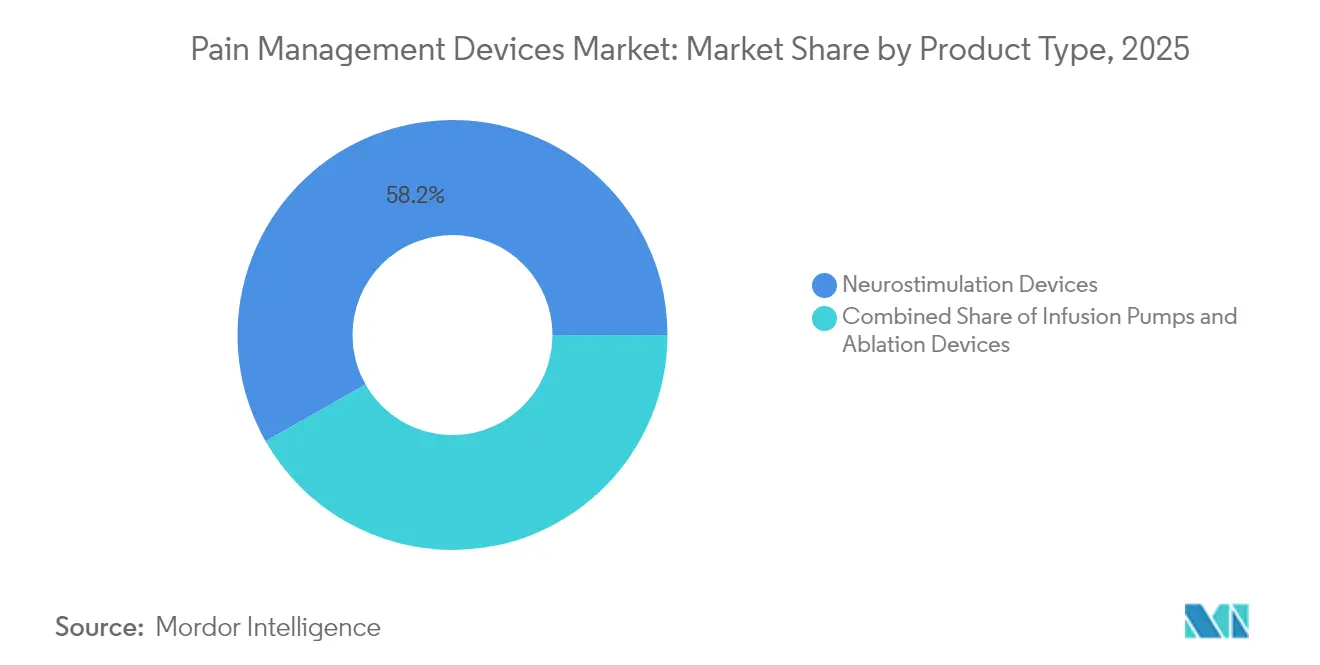
Neurostimulation Dominance Drives InnovationThe pain management devices market size reached USD 11.67 billion in 2025, of which neurostimulation captured 58.23% pain management devices market share in 2025. Closed-loop spinal cord stimulators differentiate through adaptive dosing that halves overstimulation complaints while granting full-body MRI access, features now standard in leading systems. Peripheral nerve stimulators stretch indications to postoperative joints and migraines, aided by outpatient-friendly implants the size of a credit card that house inductive coils. Ablation platforms, advancing at a 10.17% CAGR, leverage cooled RF probes that create larger lesions without charring, producing two-year median relief for facet-mediated back pain. Infusion pumps remain essential for refractory cancer pain, dispensing intrathecal morphine that achieves 87.5% opioid discontinuation at one month, thereby underscoring the multi-modality nature of the pain management devices industry.
Innovation clusters around AI enhancement, with onboard processors parsing compound action potentials thousands of times per minute to tailor amplitude and pulse width. Lead materials shift toward segmented silicone overmoulds that conform to epidural anatomy and cut revision risk. Convergent ecosystems pair implants with wearable accelerometers, enabling automatic posture-based stimulation adjustments that sustain analgesia during daily activities.

By Application:
Neuropathic Pain Leadership Amid Cancer Pain SurgeNeuropathic disorders, notably painful diabetic peripheral neuropathy, topped application demand by accounting for 32.08% of 2025 revenue. The pain management devices market size for neuropathic pain is forecast to grow at upper-single-digit rates through 2031 as Medicare coverage expands. Trials show 70% responder rates versus 6% for best-medical-therapy, a differential that emboldens guideline writers to recommend neuromodulation earlier in algorithms. Cancer pain emerges fastest at a 10.62% CAGR, propelled by increasing survivorship and the opioid-sparing benefit of intrathecal pumps. Musculoskeletal pain continues to rely on radiofrequency ablation of genicular, sacroiliac, and basivertebral nerves, reaching more active-age cohorts. Niche indications such as phantom-limb and complex regional pain syndrome attract novel bioresorbable stimulators that dissolve after six months, avoiding explant surgery and lowering infection exposure, a design that resonates with value-based care priorities within the pain management devices market.
By End-User:
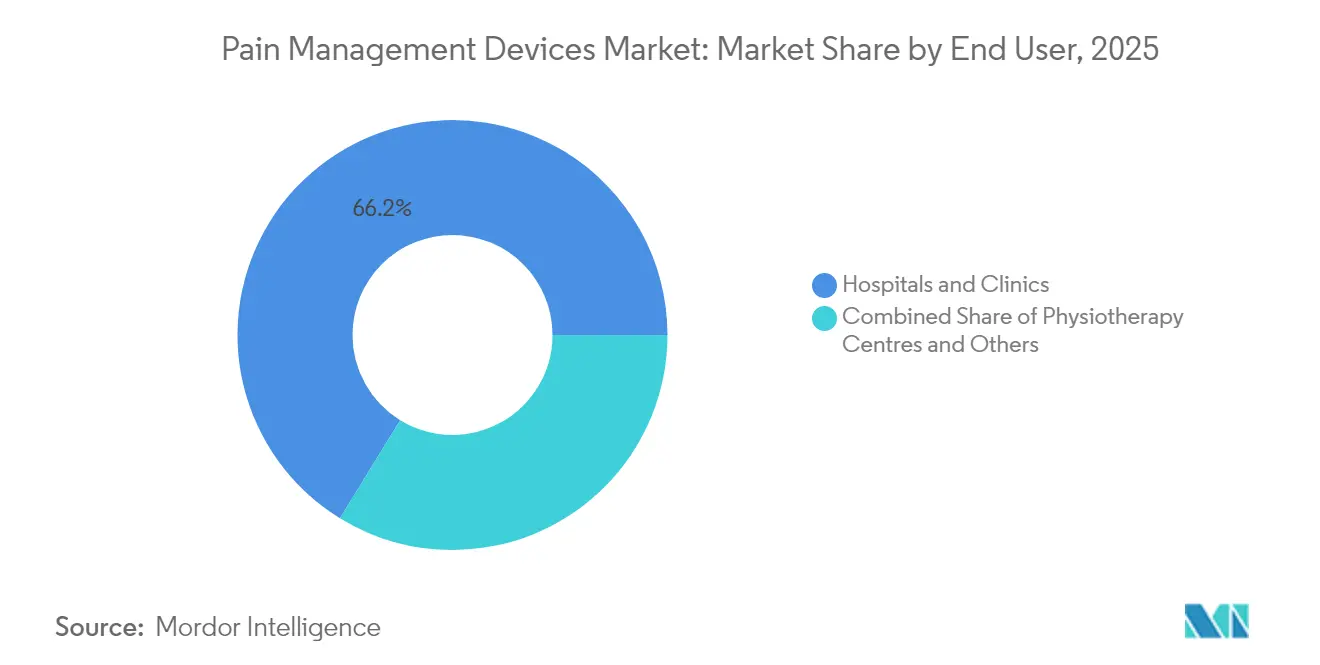
Hospital Dominance Challenged by Physiotherapy GrowthHospitals and clinics held 66.23% pain management devices market share in 2025, anchored by operating rooms equipped for fluoroscopy and the presence of multidisciplinary teams. Large centers increasingly embed AI dashboards that integrate imaging, programming, and outcomes, shortening programming visits by 30% and improving staff productivity. Nevertheless, physiotherapy centers log a 10.47% CAGR by adopting non-invasive pulsed-radiofrequency and high-energy shockwave modalities that require no implantation and can be bundled into rehabilitation packages. Expansion of remote-programming platforms enables post-operative adjustments from patients’ homes, reducing hospital touchpoints and widening the end-user base to ambulatory surgery centers and even private practices, trends that diversify distribution within the pain management devices market.
Geography Analysis
North America Pain Management Devices Market
North America, representing 43.10% of global revenue in 2025, benefits from Medicare’s broadened coverage, robust private-payor alignment, and a mature clinician base accustomed to implantable technologies. The United States anchors R&D pipelines, with the FDA granting breakthrough-device designation to multiple AI-driven stimulators in 2024, accelerating time-to-market and reinforcing the region’s supply-side advantage. Canada follows with growing provincial reimbursements for peripheral stimulation, while Mexico’s cross-border medical travel supports neuromodulation procedure volumes.
Europe Pain Management Devices Market
Europe displays steady, policy-guided uptake governed by the Medical Device Regulation 2017/745, which enforces post-market surveillance and clinical-data verification for every implant class . Germany and the United Kingdom lead implant counts, yet southern states—Italy and Spain—embrace ablation as a cost-contained alternative. The UK’s National Institute for Health and Care Excellence is reviewing outcome-based pricing for closed-loop stimulators, potentially modelling value contracts that could echo across EU payor systems. EUDAMED database roll-out augments transparency for physicians and importers, smoothing device traceability across borders.
APAC Pain Management Devices Market
Asia-Pacific is the fastest-growing territory, with an 11.52% CAGR through 2031. Japan’s health ministry funds multidisciplinary pain centers, channelling public insurance toward device-guided therapy that offsets an estimated 2 trillion yen annual burden. China’s National Medical Products Administration has streamlined Class III device reviews, shortening domestic approval windows to under nine months, which encourages multinationals to localize assembly lines. India’s nascent reimbursement environment still leans on out-of-pocket spending, but pilot inclusion of spinal stimulators in public insurance schemes signals future gains. Australia and South Korea, already early adopters of high-density waveforms, extend regional best practices through professional-society training programs.
MEA and South America Pain Management Devices Market
Middle East & Africa and South America together remain under 10% of 2024 turnover yet show double-digit expansion as private hospitals import turnkey pain-care suites, often staffed by visiting surgeons from Europe and North America. Government initiatives to cut opioid dependency enhance acceptance of device-based solutions, positioning both regions as long-range opportunities for the pain management devices market.
Regulatory Landscape
Pain management devices span implantable neuromodulation systems, infusion pumps, and non-invasive electro-analgesia, so requirements vary by risk class and indication. In the United States, the FDA (CDRH) continues to use 510(k) pathways for many non-invasive stimulators, with multiple 2026 clearances for TENS/EMS-type systems. In May 2026, the FDA finalized a device classification order placing transcutaneous electrical nerve stimulators intended to treat fibromyalgia symptoms into Class II with special controls under 21 CFR 882.5888, tightening performance and labeling expectations for that specific therapeutic claim.
In Europe, conformity assessment remains governed by the Medical Device Regulation (EU) 2017/745 (MDR), which raises clinical evidence and post-market surveillance obligations, particularly for implantable neurostimulation systems and other higher-risk products. Alongside ongoing MDR implementation and EUDAMED-related traceability expectations, the European Commission signaled further evolution with a targeted revision proposal in December 2025. The proposal aims to simplify elements of conformity assessment while maintaining safety oversight for high-risk devices, shaping how manufacturers plan clinical evidence generation and factor in notified-body capacity for global launches.
Value Chain Analysis
The pain management devices value chain starts with specialized inputs and subassemblies, including implant-grade metals and polymers, batteries, microelectronics, leads/electrodes, and software/firmware for programming and sensing. These components feed OEM design and verification, contract manufacturing and sterilization/packaging (where applicable), and then regulatory clearance activities (510(k) or PMA supplements in the United States; CE marking under MDR in Europe) before distribution through hospital procurement, specialty pain clinics, ambulatory surgical centers, and select home-care channels for non-invasive systems.
Two dynamics are reshaping downstream channels and upstream capabilities. Consolidation is pulling minimally invasive peripheral nerve stimulation assets into larger medtech supply chains, illustrated by Medtronic completing its acquisition of SPR Therapeutics in July 2026 and Boston Scientific announcing an agreement to acquire Nalu Medical in October 2025. This expands portfolio breadth and shifts negotiation leverage with provider groups. Separately, compliance operations are becoming a more standardized cross-border function, as the FDA Quality Management System Regulation (QMSR) became effective in February 2026. The QMSR incorporates ISO 13485:2016 by reference and pushes manufacturers and key suppliers toward more harmonized quality documentation, audit execution, and change-control processes across multi-region production networks.
Competitive Landscape
The pain management devices market is moderately concentrated, with Medtronic, Boston Scientific, Abbott, and the newly merged Globus Medical-Nevro. Medtronic leverages versatile closed-loop algorithms across its Inceptiv spine platform and its Evolve workflow software, creating cross-selling synergy with intrathecal pumps. Boston Scientific emphasizes waveform versatility in WaveWriter stimulators that allow simultaneous tonic and burst patterns, a differentiator in patients with complex pain phenotypes. Abbott capitalizes on proprietary design for full-body MRI-compatibility and remote programming via Bluetooth-enabled smart devices.
The Globus Medical acquisition of Nevro in 2025 adds high-frequency 10 kHz waveforms to an orthopedic hardware suite, opening bundled value propositions for hospitals managing spine fusions and stimulators under one vendor. Saluda Medical advances evoked-potential sensing leads that auto-calibrate output in real time and targets European expansion under the CE-mark framework. Smaller players such as SPR Therapeutics and electroCore focus on less-invasive peripheral and vagus pathways, underwritten by venture funding that exceeded USD 100 million across top start-ups in 2024-2025.
Strategic themes coalesce around digital integration—cloud dashboards, predictive analytics, and wearable-implant harmony. Companies also hedge supply-chain risks by dual-sourcing semiconductors and designing battery-free architectures. Partnerships with university labs accelerate biomarker discovery, enabling real-time titration that may unlock value-based reimbursement models centered on objective functional gains rather than subjective pain scores.
Global Pain Management Devices Industry Leaders
-
Abbott
-
Baxter International Inc
-
Nevro Corp
-
DJO Global LLC
-
Stim Wave Technologies
- *Disclaimer: Major Players sorted in no particular order
Global Pain Management Devices Market Companies Covered in this Report
- Medtronic
- Boston Scientific
- Abbott Laboratories
- Stryker
- Baxter
- ICU Medical
- Enovis
- LivaNova
- DJO Global
- SPR Therapeutics
- Nevro
- Stimwave/Curonix
- Avanos Medical
- Smiths Group
- Nalu Medical
- Saluda Medical
- Globus Medical
Market Opportunities and Future Outlook
A near-term whitespace is emerging around clearer, regulated pathways for non-invasive and digitally enabled pain solutions targeting defined indications. The FDA’s May 2026 final order classifying transcutaneous electrical nerve stimulators for fibromyalgia symptoms into Class II with special controls provides a more explicit compliance template for entrants pursuing new claims beyond general pain relief. It also supports product differentiation through validated performance and labeling. In parallel, the EU’s April 2026 pilot for an MDR Breakthrough Device (BtX) designation creates an innovation-facing route to structured scientific advice, which can help novel neuromodulation and connected-therapy developers structure evidence plans under MDR expectations.
On the implantable side, portfolio expansion around adaptive algorithms and procedure-fit hardware continues to create surgeon-specific and care-setting opportunities. Saluda Medical’s June 2026 FDA approval for the CAP24 surgical paddle lead strengthens the product stack for operating-room-based spinal cord stimulation workflows, while industry M&A points to sustained investment in less-invasive peripheral nerve stimulation. Medtronic completed the SPR Therapeutics acquisition in July 2026, and Boston Scientific moved to acquire Nalu Medical in 2025. Together, these developments broaden access points beyond traditional SCS pathways, consistent with a shift toward ambulatory sites and hybrid remote follow-up models supported by manufacturer programming platforms.
Recent Industry Developments in Global Pain Management Devices Market
- July 2026: Medtronic completed its acquisition of SPR Therapeutics, expanding its footprint in percutaneous peripheral nerve stimulation therapies for chronic and acute pain. The deal adds a minimally invasive modality that can be deployed earlier in care pathways than many implantable systems. It also strengthens Medtronic’s ability to bundle neuromodulation offerings across hospital and outpatient channels.
- October 2025: Boston Scientific announced an agreement to acquire Nalu Medical, a company focused on minimally invasive peripheral nerve stimulation solutions. The transaction broadens Boston Scientific’s pain portfolio beyond its established neuromodulation base and increases competitive intensity in outpatient-friendly PNS. It also signals continued consolidation around non-opioid device options as providers seek alternatives to long-term pharmacotherapy.
- September 2024: Nevro began a limited US release of HFX iQ with AdaptivAI, introducing an AI-driven approach to spinal cord stimulation personalization. The release reinforces the shift toward software-led differentiation, including algorithmic tuning intended to improve outcomes and energy management. It also raises the bar for competitors on data-driven programming and closed-loop adjacent capabilities.
Global Pain Management Devices Market Report Scope and Research Methodology
Market Definition and Coverage
This market covers revenues from medical devices used to reduce or control pain through clinically accepted methods such as neurostimulation, electro-analgesia, infusion-based delivery, and radiofrequency ablation, across hospital, clinic, physiotherapy, and home settings.
Scope exclusions: We exclude veterinary pain equipment, beauty or wellness massagers, and disposable consumables that are used alongside systems (such as catheters).
Segments Covered in This Report
- By Product Type
- Neurostimulation Devices
- Infusion Pumps
- Ablation Devices
- By Application
- Musculoskeletal
- Cancer Pain
- Neuropathic Pain
- Facial Pain & Migraine
- Others
- By End-User
- Physiotherapy Centres
- Hospitals & Clinics
- Others
- By Geography
- North America
- United States
- Canada
- Mexico
- Europe
- Germany
- United Kingdom
- France
- Italy
- Spain
- Rest of Europe
- Asia-Pacific
- China
- Japan
- India
- Australia
- South Korea
- Rest of Asia-Pacific
- Middle East & Africa
- GCC
- South Africa
- Rest of Middle East & Africa
- South America
- Brazil
- Argentina
- Rest of South America
- North America
Data Sources, Market Sizing, and Validation
Desk Research
Desk research was used to set the market boundary, build a country and regional demand map, and lock down terminology that often gets mixed up across publications. We rely on public sources such as the US FDA device databases, European Commission medical device information sources, OECD and World Bank health spend series, and the Centers for Disease Control and Prevention for pain-related burden signals that influence procedure volumes.
We also reviewed company annual reports, investor presentations, regulatory filings, and publications from medical societies and hospital associations to understand adoption pathways by care setting. For checks around trade flows and pricing direction, we used import and export shipment-level data selectively, and we used company financials and an intelligence database to normalize revenues by product focus. These examples are illustrative and not exhaustive, and other sources were also used for data collection, validation, and research clarification.
Primary Interviews and Surveys
Primary work was used to pressure-test what we saw in desk research, especially around device mix shifts, typical replacement cycles, and how reimbursement shapes real-world volumes. We spoke with a mix of manufacturers, distributors, hospital and clinic procurement teams, and clinicians across major regions so the assumptions could be validated and then adjusted where gaps were identified.
Distribution of primary research fieldwork respondents
| Company type | Respondent position | Region |
|---|---|---|
| Top tier: 27% | CXOs: 12% | APAC: 42% |
| Mid tier: 58% | Functional/Unit leaders: 43% | EMEA: 31% |
| Smaller Players: 15% | Managers: 45% | Americas: 27% |
Market-Sizing & Forecasting
The core model uses a top-down build where procedure volumes and treated patient pools are reconstructed by region, and then converted into device demand using adoption rates by therapy type, before value is derived using average selling prices adjusted to the selling channel. To keep the totals realistic, we also run selective bottom-up approximations using sampled supplier revenues, channel checks, and ASP times volume for high-visibility device classes, and then reconcile differences.
Key inputs that materially move the numbers include chronic pain prevalence signals, annual counts of relevant procedures (such as neurostimulation implants and ablation procedures), the split of invasive versus noninvasive therapies, replacement and refill cycles for implanted systems, and reimbursement coverage direction by major markets. When country data is thin, we bridge gaps using proxy indicators like healthcare expenditure per capita, specialist density, and import intensity, followed by expert revalidation.
For forecasting, we used scenario analysis supported by short time-series smoothing on the main demand drivers, so the outlook reflects not only historical growth but also expected shifts in care settings and technology adoption. The final forecast is tightened through expert consensus on how fast neuromodulation and ablation adoption can expand without overstating installation capacity and payer acceptance.
Data Validation & Update Cycle
Outputs are checked in layers so that obvious overcounts and undercounts are caught early. We compare region totals against independent signals like procedure trends, regulatory approval momentum, and reported device business performance trends, and then investigate any sharp jumps that do not match the narrative.
Before sign-off, the model and assumptions go through multi-step analyst reviews, and respondents are re-contacted when pricing, reimbursement, or device mix assumptions show high variance. Reports are refreshed annually, and interim updates are made when material events change demand, pricing, or access. Right before delivery, a final review pass is completed so clients receive the most current view available.
Mordor Intelligence's Pain Management Devices Market Size Compared With Other Published Estimates
Published values for pain management devices can look far apart even when the topic sounds the same, because each publisher decides what counts as a device, which years are used as the anchor, and how pricing is treated across hospital, clinic, and home channels.
The benchmark table shows a much higher 2026 value than some widely circulated 2024 numbers, and in Mordor Intelligence's model the scope is tied to clinically cleared systems across neurostimulation, electro-analgesia, infusion, and radiofrequency ablation, with wellness massagers and one-time consumables (such as catheters) kept outside scope.
Benchmark comparison
| Source | Market Size | Gaps in Research Methodology |
|---|---|---|
| Mordor Intelligence | USD 12.79 B (2026) | |
| Trade Journal A | USD 3.77 B (2024) | Uses an earlier base year and a narrower included set that tends to emphasize a subset of device technologies, which lowers the total when multi-therapy clinical systems are not consistently counted across care settings. |
| Regional Consultancy B | USD 3.70 B (2024) | Appears to mix broader segment labels and longer-range horizons, and the pricing build is not clearly normalized to realized ASPs by channel, which can keep 2024 totals conservative versus a model that adjusts for system-level revenues. |
Overall, the spread is largely explained by scope boundaries, the choice of anchor year, and how ASP progression is handled across care settings. By making inclusions and exclusions explicit, and by linking value to observable demand drivers like procedure volumes and adoption rates, our estimate stays traceable and easier to replicate when assumptions are updated.
Key Questions Answered in the Report
How big is the Global Pain Management Devices Market?
The Global Pain Management Devices Market size is expected to reach USD 12.79 billion in 2026 and grow at a CAGR of 9.58% to reach USD 20.2 billion by 2031.
Which product segment generates the highest revenue?
Neurostimulation leads, holding 58.23% of 2025 revenue, backed by widespread adoption of closed-loop spinal cord stimulators.
Who are the key players in Global Pain Management Devices Market?
Abbott, Baxter International Inc, Nevro Corp, DJO Global LLC and Stim Wave Technologies are the major companies operating in the Global Pain Management Devices Market.
Which is the fastest growing region in Global Pain Management Devices Market?
Asia-Pacific shows the highest CAGR at 11.52% between 2026-2031, mainly due to expanding Japanese and Chinese demand.
Which region has the biggest share in Global Pain Management Devices Market?
In 2025, the North America accounts for the largest market share in Global Pain Management Devices Market.